
ポスト新自由主義は可能か?
Is Post-Neoliberalism Possible?
☆ポスト新自由主義?——なんじゃ、それ?ここからはじまるのが、このページの目的である。
★金融危機以降、政治的右派からは新自由主義秩序に対するさまざまな挑戦がみられた。冷戦構造の崩壊により、共産主義や社会主義が「敗北」したと同時に、リベラリズムを「改造強化」した、ある種のサイボーグリベラリズムの旗手であるネオリベラル(新自由主義)に負けはないとみられた。実際、当時、ネオコンの最重要論客と呼ばれたフランシス・フクヤマは「歴史の終わり」をも宣言した。しかしその後、新自由主義は、今度は仲間であったはずの保守主義からは「腑抜け」と呼ばれ、リバタリアニズムとの関係を精査することに迫られた。その後、ペイルオコンサバティヴィズム、ネオリアクション政治、ナショナリズム、リバタリアン・パターナリズム、そしてさまざまな主権形態とエリート権力によって新自由主義秩序に脅威がもたらされていのである。
☆William Davies らの "Post-Neoliberalism? An Introduction,"Theory, Culture & Society, September 15, 2021. https://doi.org/10.1177/02632764211036722 の冒頭から……
| 2008 年以降、新自由主義というカテゴリーに関して、2つの重要な学術的傾向が組み合わさっている。まず、この期間は、新自由主義の歴史的・社会学的分析が著し く拡大、深化、改善された期間であった。2008年に発表されたフーコーによる新自由主義に関する著名な講義の英訳版(Foucault, 2008)は、フーコーによる新自由主義の系譜学(Dardot and Laval, 2014; Brown, 2015)を基にした多数の有力な著作の出版につながった。同時に、経済と思想の歴史家たちは、新自由主義思想のさまざまな学派の形成と相互作用に関する 画期的な出版物をいくつか発表している(ミロフスキーとプレヴェ、2009年、バーギン、2012年、ステッドマン・ジョーンズ、2012年、ミロフス キー、2013年)。さらに最近では、新自由主義思想と政治の歴史は、家族(Cooper, 2017)、国際市場(Slobodian, 2018)、人権(Whyte, 2019)など、さまざまな観点からさらに充実したものとなっている。これらの研究に共通しているのは、新自由主義のルーツを「サッチャリズム」の起源や ケインズ主義の危機をはるかに遡り、1920年代と30年代の知的核まで遡って追跡することに専心していることである。 | |
| 第 二に、この期間は新自由主義の存在意義が繰り返し問われた時期でもあった。新自由主義とは対極にあると思われる方法で対処された銀行危機は、1970年代 後半にマネタリストやその他の新自由主義的な考え方が台頭するきっかけとなった「政策パラダイムの転換」を予兆するかのように見えた(Hall, 1993)。これはすぐに幻であることが判明した。その理由のひとつは、危機を「緊急事態」、「戦争」、あるいは「例外」と位置づけることで、政策エリー トたちが金融の現状を維持するために必要なことを何でも行うことが許されたからである(Davies, 2013; Tooze, 2018)。しかし、その後の数年間で、新自由主義が実際に無傷で生き残ったのか、それとも何か別のものに変異したのかという疑問が生じた。ペックを筆頭 に、学者たちは「ポスト新自由主義」(Peck et al., 2010; Springer, 2014)、「ゾンビ新自由主義」(Peck, 2010)、「変異型新自由主義」(Callison and Manfredi, 2020)の可能性を提起し、それが「依然として新自由主義なのか」(Peck and Theodore, 2019)という問いを投げかけ続けている。2010年代に「ポピュリスト」の指導者や政党が選挙で優勢となったことは、多くの人々によって、テクノク ラート的な新自由主義の政策の拒絶として解釈された(Hopkin and Blyth, 2019など)。新自由主義は、一部の人々には新たに「権威主義的」、「非自由主義的」、あるいは「反民主主義的」な性質を帯びているように見えた (Bruff, 2014; Rose, 2017; Hendrikse, 2018; Brown, 2019)。 | |
| そ れゆえ、私たちは10年以上にわたって、より詳細な「現在の歴史」から恩恵を受けてきたが、同時に、これが本当に私たちの「現在」の状態であるのかどう か、確信が持てなくなっている。「新自由主義」(1920年代以降に発展した一連の思想と政策)と私たちの現在の時代との関係は、少なくとも疑問の余地が ある。新自由主義というカテゴリーは、今日における政治経済や社会を理解するための貴重なツールであり続けている。その理由は、新自由主義に関する研究 が、その豊かさと範囲において成長し続けているからである。しかし、年を追うごとに、新自由主義の内部や対抗勢力として、一見相反する傾向も増え続けてい る。新自由主義とは何かという理解が大幅に深まった今、少なくとも、新自由主義がパラダイムを転換する決定的な危機とともに終焉を迎えることはありそうも ないという点では同意できる。その意味で、「ポスト新自由主義」とは、新自由主義の後にのみ訪れるものを指すのではなく、「ポスト・フォード主義」という 概念と同様に、新自由主義社会に根付き、新自由主義の理念や政治の主要原則を弱体化させたり変容させたりし始めた、新たな合理性、批判、運動、改革を指す ものである。 | |
| ケ インズ主義の危機は、新自由主義的政策のアイデアが採用され実施されるきっかけとなったが、それは古典的なクーンのパラダイムシフトのリズムに従ったもの であった。一連のエリート機関に埋め込まれた一貫した理論と予測は、多くの資本主義社会を苦しめていた問題を説明できなくなった。一方、ライバルとなる一 連の理論は、シカゴ学派と強く関連し、シンクタンクやメディアを通じて広められ、特にインフレという危機を緩和することを約束した。戦時体制の知識と技術 的潜在能力を基盤として構築されたケインズ主義は、同様に計画的で、技術的で、マクロ経済的な野望を持つ代替案と対峙することとなった (Mitchell, 1998)。右派の推進により誕生した体制は、金融政策によるインフレ対策、組織労働力の弱体化、高額所得および資本への減税、公共資産の私有化、独占に 対する規制の緩和、そして労働、家族、そして「個人の責任」を優先させるための福祉国家の着実な再編を優先するものであった(Harvey, 2005)。1990年代には、この体制が政治的な黄金時代を迎え、インフレはほぼ克服され、資本はますます流動的になる中、より中道的な新自由主義モデ ルが西側民主主義諸国でヘゲモニーを握るようになった。このモデルでは、国家の「競争力」を高め、国内投資を誘致することを目的として、積極的な国家が社 会領域に革新性と柔軟性を浸透させようとした。同時に、増大する民間債務が消費、住宅所有、高等教育の成長を促進した。新自由主義のこの段階は、右派より も中道左派の政党によって主導されることが多かったが、これは、政治プロジェクトとして、資本への制約を軽減することと同じくらい、起業家的な方向で「社 会」領域を改革し、刷新する努力を意味している(Dardot and Laval, 2014)。 | |
| し かし、この新自由主義の同じ局面(国家社会主義の終焉後に発生)は、新自由主義が政策パラダイムや制度の雛形であるだけでなく、主観性の様式であり、国家 内外の毛細血管のような権力のネットワークを通じて機能し、中央銀行、政府機関、外注業者、多国間機関といった技術官僚的な準国家機関に特に根付いている という、フーコーの洞察を裏付けるものでもある。それは倫理的かつ社会的な生き方であり、政策のコンセンサスが変化しただけで簡単に置き換えられたり、 取って代わられたりするものではない。 | |
| ケインズ主義が、それと形式的な類似点を持つ「パラダイム」に取って代わられたように、新自由主義は、国家への疑念、地方分権の重視、個人の主観性の再構 築といった、その形式的な性質の一部を共有する論理や合理性によって腐食され、取って代わられつつある。スミスとバロウズがこの特集号で「再分散化」と呼 ぶ、自由主義的かつ技術主導の国家への攻撃を、より本質的な自由の名のもとに再開するさまざまな動きを目撃することができる。この点において、ポスト新自 由主義的な傾向は、政府の統治能力を不安定化させ、私有財産と私的統治の権限を再主張しながら、限界領域で活動している。しかし、私たちはまた、テクノク ラート、多国間、金融当局によって奪われた権限を国家と主権者(その解釈はともかく)に回復させる、さまざまな「再中央集権化」の動きを目撃することもで きる。 | |
| 本 記事で紹介する「ポスト・ネオリベラリズム?」特集号は、2018年から2020年にかけて構想され、編集され、執筆された。大半の論文は、近年、新自由 主義の現状に対する批判をますます活発化させ、世界中で多くの選挙での躍進を遂げている欧米における右派の政治運動や思想の台頭について考察している。し かし、そのタイミングの関係で、どの論文も新自由主義の最も最近の危機、すなわち2020年に世界を襲った新型コロナウイルス(COVID-19)のパン デミックに完全に立ち向かうことも、評価することもできなかった。本稿では、現代の「ポスト新自由主義」を理解することを目的として、2つの観点から論文 を位置づけたい。まず、新自由主義思想の歴史に潜むいくつかの緊張関係について、保守思想やリバタリアン思想の並行する伝統との関連で考察する。今日、新 自由主義的なテクノクラシーやグローバリゼーションに対する強力な挑戦が右派から生じていることを踏まえれば、その対立を形作り、活性化させる長年にわた る相違や違いを明確にすることが重要である。第二に、より思索的に、私たちは、新型コロナウイルス(COVID-19)を巡る政治の「ポスト新自由主義」 的特徴について考察する。2020年から2021年にかけての出来事は、多くの公共サービスや公共財の新たな民営化形態を促進したが、それらが(特にマク ロ経済政策の観点において)過去40年間の新自由主義的オーソドックスからの脱却を告げるものであることも否定できない。本号の論文で取り上げられている 現象や考え方と、これらの出来事がどのように交差する可能性があるかを考察し、社会やグローバルな組織の運営原則としての「市場」と「競争」の自律性の低 下について指摘して結論とする。 | |
| https://journals.sagepub.com/doi/full/10.1177/02632764211036722 |
☆
| Neoliberalism[1]
is a political and economic ideology that advocates for free-market
capitalism, which became dominant in policy-making from the late 20th
century onward.[2][3][4] The term has multiple, competing definitions,
and is most often used pejoratively.[5][6] In scholarly use, the term
is often left undefined or used to describe a multitude of
phenomena.[7][8][9] However, it is primarily employed to delineate the
societal transformation resulting from market-based reforms.[10] Neoliberalism is often associated with a set of economic liberalization policies, including lower taxes, privatization, deregulation, depoliticisation, consumer choice, labor market flexibilization, economic globalization, free trade, monetarism, austerity, and reductions in government spending. These policies are designed to increase the role of the private sector in the economy and society.[11][12][13][14] Additionally, the neoliberal project is oriented towards the establishment of institutions and is inherently political in nature, extending beyond mere economic considerations.[15] |
新自由主義[1]とは、自由市場資本主義を提唱する政治・
経済イデオロギーであり、20世紀後半以降、政策決定において主流となった[2][3][4]。この用語には複数の対立する定義があり、多くの場合、蔑称
として用いられる[5][6]。学術的な文脈では、この用語は定義されずに使われるか、あるいは多様な現象を記述するために用いられることが多い。[7]
[8][9] しかし、主に市場主導の改革に起因する社会変容を区別するために用いられる。[10] 新自由主義は、減税、民営化、規制緩和、非政治化、消費者の選択、労働市場の柔軟化、経済のグローバル化、自由貿易、マネタリズム、緊縮財政、政府支出の 削減など、一連の経済自由化政策と関連付けられることが多い。これらの政策は、経済および社会における民間部門の役割を拡大することを目的としている。 [11][12][13][14] さらに、新自由主義のプロジェクトは制度の確立を志向しており、その本質は政治的であり、単なる経済的配慮の枠を超えている。[15] |
| Neoliberalism
has become an increasingly prevalent term in recent
decades.[16][17][18][19] It has been a significant factor in the
proliferation of conservative and right-libertarian organizations,
political parties, and think tanks, and predominantly advocated by
them.[20][21] The term is largely absent from economics journals.[22] Recent critiques argue that neoliberalism has exacerbated income and wealth inequality by promoting policies that prioritize market efficiency over social welfare. Labor deregulation under neoliberal agendas has led to the rise of nonstandard work arrangements, such as zero-hour contracts, which often lack job security, consistent income, and access to benefits.[23] These conditions disproportionately impact low-wage workers and contribute to broader socioeconomic divides. Research also shows that workers’ performance is influenced not only by their absolute wages but also by their relative income position, which can further entrench inequality.[23] Additionally, neoliberal reforms have encouraged privatization in education and healthcare, intensifying debates about access and affordability.[24] Critics assert that while neoliberalism may aim for economic growth, its implementation often overlooks the structural disadvantages faced by marginalized populations, raising questions about long-term equity and sustainability. These critiques have fueled contemporary policy discussions about balancing market freedom with inclusive economic reforms. |
新自由主義という用語は、ここ数十年の間にますます広く使
われるようになった。[16][17][18][19]
これは、保守派や右派リバタリアン系の団体、政党、シンクタンクの台頭における重要な要因となっており、主にそれらによって提唱されてきた。[20]
[21] 経済学の学術誌では、この用語はほとんど見られない。[22] 近年の批判では、新自由主義は社会福祉よりも市場の効率性を優先する政策を推進することで、所得や富の不平等を悪化させたと指摘されている。新自由主義の 政策に基づく労働規制緩和は、ゼロ時間契約などの非標準的な労働形態の台頭を招いた。こうした形態では、雇用の安定性や安定した収入、福利厚生の利用機会 が欠如していることが多い。[23] こうした状況は低賃金労働者に不釣り合いな影響を与え、社会経済的な格差の拡大に寄与している。また、研究によれば、労働者のパフォーマンスは絶対的な賃 金だけでなく、相対的な所得位置によっても影響を受けることが示されており、これが不平等をさらに固定化させる可能性がある。[23] さらに、新自由主義的な改革は教育や医療分野における民営化を促進し、サービスへのアクセスや費用対効果をめぐる議論を激化させている。[24] 批判派は、新自由主義が経済成長を目的としているとはいえ、その実施過程では周縁化された人々が直面する構造的な不利な立場が見過ごされがちであり、長期 的な公平性や持続可能性に疑問を投げかけていると主張する。こうした批判は、市場の自由と包摂的な経済改革とのバランスをどう取るかという、現代の政策議 論を活発化させている。 |
| The term is rarely used by proponents of free-market policies.[25][26] When the term entered into common academic use during the 1980s in association with Augusto Pinochet's economic reforms in Chile, it quickly acquired negative connotations and was employed principally by critics of market reform and laissez-faire capitalism. Scholars tended to associate it with the theories of economists working with the Mont Pelerin Society, including Friedrich Hayek, Milton Friedman, Ludwig von Mises, and James M. Buchanan, along with politicians and policy-makers such as Margaret Thatcher, Ronald Reagan, and Alan Greenspan.[7][27][28] Once the new meaning of neoliberalism became established as common usage among Spanish-speaking scholars, it diffused into the English-language study of political economy.[7] By 1994, the term entered global circulation and scholarship surrounding the topic has grown over the last few decades.[17][18] | こ
の用語は、自由市場政策の支持者によってほとんど使われない。[25][26]
1980年代、チリのアウグスト・ピノチェトによる経済改革に関連して学術界で一般的に使われるようになると、この用語はすぐに否定的な意味合いを帯びる
ようになり、主に市場改革や自由放任資本主義の批判者たちによって用いられるようになった。学者たちは、この用語を、フリードリヒ・ハイエク、ミルトン・
フリードマン、ルートヴィヒ・フォン・ミーゼス、ジェームズ・M・ブキャナンといったモン・ペレラン・ソサエティに所属する経済学者たちの理論や、マーガ
レット・サッチャー、ロナルド・レーガン、アラン・グリーンスパンといった政治家や政策立案者たちと結びつける傾向があった。[7][27] [28]
ネオリベラリズムの新しい意味がスペイン語圏の学者の間で一般的な用法として定着すると、それは英語圏の政治経済学の研究分野にも広まった。[7]
1994年までに、この用語は世界的に流通するようになり、このテーマをめぐる学術研究はここ数十年で拡大している。[17][18] |
| Neoliberalism
originated among European liberal scholars during the 1930s. It emerged
as a response to the perceived decline in popularity of classical
liberalism, which was seen as giving way to a social liberal desire to
control markets. This shift in thinking was shaped by the Great
Depression and manifested in policies designed to counter the
volatility of free markets.[29] One motivation for the development of
policies designed to mitigate the volatility of capitalist free markets
was a desire to avoid repeating the economic failures of the early
1930s, which have been attributed, in part, to the economic policy of
classical liberalism. In the context of policymaking, neoliberalism is
often used to describe a paradigm shift that was said to follow the
failure of the post-war consensus and neo-Keynesian economics to
address the stagflation of the 1970s, although the 1973 oil crisis, a
causal factor, was purely external, and created policy challenges that
existing economic frameworks struggled to address.[30][1] According to multiple scholars the dissolution of the Soviet Union and the end of the Cold War have facilitated the rise of neoliberalism in the United States, the United Kingdom and around the world.[31][32][33][34] |
新自由主義は、1930年代にヨーロッパの自由主義学者た
ちの間で生まれた。これは、古典的自由主義の人気が低下していると見なされたことへの反応として現れたものであり、古典的自由主義は、市場を統制しようと
する社会自由主義的な志向に道を譲りつつあると見られていた。この考え方の転換は、大恐慌によって形作られ、自由市場の変動性に対抗することを目的とした
政策として具現化された。[29]
資本主義的自由市場の変動性を緩和することを目的とした政策が策定された動機の一つは、1930年代初頭の経済的失敗の再現を避けたいという願望であっ
た。この失敗は、一部において古典的自由主義の経済政策に起因するとされてきた。政策立案の文脈において、新自由主義という用語は、1970年代のスタグ
フレーションに対処できなかった戦後コンセンサスや新ケインズ経済学の失敗に続いて生じたとされるパラダイムシフトを表すためにしばしば用いられる。ただ
し、その原因の一つである1973年の石油危機は純粋に外部要因であり、既存の経済枠組みでは対処が困難な政策上の課題を生み出した。[30][1] 多くの学者によれば、ソビエト連邦の崩壊と冷戦の終結が、米国、英国、そして世界中で新自由主義の台頭を後押しした。[31][32][33][34] |
| Terminology Origins An early use of the term in English was in 1898 by the French economist Charles Gide to describe the economic beliefs of the Italian economist Maffeo Pantaleoni,[35] with the term néo-libéralisme previously existing in French;[36] the term was later used by others, including the classical liberal economist Milton Friedman in his 1951 essay "Neo-Liberalism and its Prospects".[37] In 1938, at the Colloque Walter Lippmann, neoliberalism was proposed, among other terms, and ultimately chosen to be used to describe a certain set of economic beliefs.[38][39] The colloquium defined the concept of neoliberalism as involving "the priority of the price mechanism, free enterprise, the system of competition, and a strong and impartial state".[40] According to attendees Louis Rougier and Friedrich Hayek, the competition of neoliberalism would establish an elite structure of successful individuals that would assume power in society, with these elites replacing the existing representative democracy acting on the behalf of the majority.[41][42] To be neoliberal meant advocating a modern economic policy with state intervention.[43] Neoliberal state interventionism brought a clash with the opposing laissez-faire camp of classical liberals, like Ludwig von Mises.[44] Most scholars in the 1950s and 1960s understood neoliberalism as referring to the social market economy and its principal economic theorists such as Walter Eucken, Wilhelm Röpke, Alexander Rüstow, and Alfred Müller-Armack. Although Hayek had intellectual ties to the German neoliberals, his name was only occasionally mentioned in conjunction with neoliberalism during this period due to his more pro-free market stance.[7] During the military rule under Augusto Pinochet (1973–1990) in Chile, opposition scholars took up the expression to describe the economic reforms implemented there and its proponents (the Chicago Boys).[7] Once this new meaning was established among Spanish-speaking scholars, it diffused into the English-language study of political economy.[7] According to one study of 148 scholarly articles, neoliberalism is almost never defined but used in several senses to describe ideology, economic theory, development theory, or economic reform policy. It has become used largely as a term of abuse and/or to imply a laissez-faire market fundamentalism virtually identical to that of classical liberalism – rather than the ideas of those who attended the 1938 colloquium. As a result, there is controversy as to the precise meaning of the term and its usefulness as a descriptor in the social sciences, especially as the number of different kinds of market economies have proliferated in recent years.[7] |
用語 由来 英語におけるこの用語の初期の使用例は、1898年にフランスの経済学者シャルル・ジードが、イタリアの経済学者マッフェオ・パンタレオーニの経済思想を 説明するために用いたものである[35]。この時点で、フランス語にはすでに「néo-libéralisme」という用語が存在していた[36]。その 後、この用語は他の者たちによっても用いられ、古典的自由主義経済学者ミルトン・フリードマンも1951年の論文『新自由主義とその展望』でこれを使用し た。[37] 1938年、ウォルター・リップマン・コロキウムにおいて、他の用語とともに「ネオリベラリズム」が提案され、最終的に特定の経済思想群を表す用語として 採用された。[38][39] 同コロキウムでは、ネオリベラリズムの概念を「価格メカニズムの優先、自由企業、競争体制、そして強力かつ中立的な国家」を含むものと定義した。[40] 参加者であるルイ・ルジエとフリードリヒ・ハイエクによれば、新自由主義の競争は、社会において権力を掌握する成功者たちによるエリート構造を確立し、こ れらのエリートが、多数派に代わって行動する既存の代表民主制に取って代わるものとなるという。[41][42] 新自由主義者であるということは、国家介入を伴う近代的な経済政策を提唱することを意味した。[43] 新自由主義的な国家介入主義は、ルートヴィヒ・フォン・ミーゼスといった古典的自由主義者からなる、対立する自由放任主義陣営との衝突をもたらした。 [44] 1950年代から1960年代にかけて、ほとんどの学者は、新自由主義を社会市場経済、およびヴァルター・オイケン、ヴィルヘルム・レプケ、アレクサン ダー・リュストウ、アルフレート・ミュラー=アルマックといったその主要な経済理論家たちを指すものと理解していた。ハイエクはドイツのネオリベラリスト たちと知的つながりを持っていたものの、この時代には、彼がより自由市場を支持する立場をとっていたため、ネオリベラリズムと関連してその名が挙げられる ことはまれだった。[7] チリにおけるアウグスト・ピノチェトの軍事政権下(1973年~1990年)において、反体制派の学者たちは、そこで実施された経済改革とその提唱者たち (シカゴ・ボーイズ)を形容するためにこの表現を用い始めた。[7] この新しい意味がスペイン語圏の学者たちの間で定着すると、それは英語圏の政治経済学の研究にも広まった。[7] 148編の学術論文を対象としたある研究によると、ネオリベラリズムはほとんど定義されることなく、イデオロギー、経済理論、開発理論、あるいは経済改革 政策を表すために、いくつかの意味で用いられている。この用語は、1938年のコロキウムに参加した者たちの思想というよりは、主に蔑称として、あるいは 古典的自由主義と実質的に同一の「自由放任主義的市場原理主義」を暗示するために用いられるようになった。その結果、この用語の正確な意味や、社会科学に おける記述用語としての有用性については論争がある。特に近年、異なるタイプの市場経済が急増していることから、その議論はさらに活発化している。[7] |
| Current usage Historian Elizabeth Shermer argued that the term gained popularity largely among left-leaning academics in the 1970s to "describe and decry a late twentieth-century effort by policymakers, think-tank experts, and industrialists to condemn social-democratic reforms and unapologetically implement free-market policies";[45] economic historian Phillip W. Magness notes its reemergence in academic literature in the mid-1980s, after French philosopher Michel Foucault brought attention to it.[46] At a base level we can say that when we make reference to 'neoliberalism', we are generally referring to the new political, economic and social arrangements within society that emphasize market relations, re-tasking the role of the state, and individual responsibility. Most scholars tend to agree that neoliberalism is broadly defined as the extension of competitive markets into all areas of life, including the economy, politics and society. — The Handbook of Neoliberalism[10]  The US federal minimum wage if it had kept pace with productivity compared to the actual wage Neoliberalism is contemporarily used to refer to market-oriented reform policies such as "eliminating price controls, deregulating capital markets, lowering trade barriers" and reducing, especially through privatization and austerity, state influence in the economy.[7] It is also commonly associated with the economic policies introduced by Margaret Thatcher in the United Kingdom and Ronald Reagan in the United States.[13] Some scholars note it has a number of distinct usages in different spheres:[47] As a development model, it refers to the rejection of structuralist economics in favor of the Washington Consensus. As an ideology, it denotes a conception of freedom as an overarching social value associated with reducing state functions to those of a minimal state. As a public policy, it involves the privatization of public economic sectors or services, the deregulation of private corporations, sharp decrease of government budget deficits and reduction of spending on public works. This "second wave of neoliberalism" had "roots...firmly planted in Ronald Reagan's neoliberal" policies and previous academic scholarship. Harbingers of the "second wave" revived and reconfigured the ideas of their "predecessors...[into] market globalism. Identifying themselves with a politically moderate position known as the Third Way, US President Bill Clinton and British Prime Minister Tony Blair embraced this neoliberal ideology" as a new variant of centrism.[48] According to political commentator David Brooks, prominent neoliberal politicians included Al Gore and Bill Clinton of the Democratic Party.[49] The neoliberals coalesced around two magazines, The New Republic and the Washington Monthly;[50] they also supported Third Way policies. The "godfather" of this version of neoliberalism was the journalist Charles Peters,[51] who in 1983 published "A Neoliberal's Manifesto".[52] There is debate over the meaning of the term. Sociologists Fred L. Block and Margaret Somers claim there is a dispute over what to call the influence of free-market ideas which have been used to justify the retrenchment of New Deal programs and policies since the 1980s: neoliberalism, laissez-faire or "free market ideology".[53] Other academics such as Susan Braedley, Meg Luxton, and Robert W. McChesney, assert that neoliberalism is a political philosophy which seeks to "liberate" the processes of capital accumulation.[54] In contrast, Frances Fox Piven sees neoliberalism as essentially hyper-capitalism.[55] Robert W. McChesney, while defining neoliberalism similarly as "capitalism with the gloves off", goes on to assert that the term was largely unknown by the general public in 1998, particularly in the United States.[56] Lester Spence uses the term to critique trends in Black politics, defining neoliberalism as "the general idea that society works best when the people and the institutions within it work or are shaped to work according to market principles".[57] According to Philip Mirowski, neoliberalism views the market as the greatest information processor, superior to any human being. It is hence considered as the arbiter of truth. Adam Kotsko describes neoliberalism as political theology, as it goes beyond simply being a formula for an economic policy agenda and instead infuses it with a moral ethos that "aspires to be a complete way of life and a holistic worldview, in a way that previous models of capitalism did not."[58] Neoliberalism is distinct from liberalism insofar as it does not advocate laissez-faire economic policy, but instead is highly constructivist and advocates a strong state to bring about market-like reforms in every aspect of society.[59] Anthropologist Jason Hickel also rejects the notion that neoliberalism necessitates the retreat of the state in favor of totally free markets, arguing that the spread of neoliberalism required substantial state intervention to establish a global 'free market'.[60] Naomi Klein states that the three policy pillars of neoliberalism are "privatization of the public sphere, deregulation of the corporate sector, and the lowering of income and corporate taxes, paid for with cuts to public spending".[61] Neoliberalism has a history of being used as a pejorative by critics. Additionally, neoliberalism has outpaced similar terms such as monetarism, neoconservatism, the Washington Consensus and "market reform" in scholarly writing.[7] The Handbook of Neoliberalism, for instance, posits that the term has "become a means of identifying a seemingly ubiquitous set of market-oriented policies as being largely responsible for a wide range of social, political, ecological and economic problems".[10] Its use in this manner has been criticized by those who advocate for policies characterized as neoliberal.[62] The Handbook, for example, further argues that "such lack of specificity [for the term] reduces its capacity as an analytic frame. If neoliberalism is to serve as a way of understanding the transformation of society over the last few decades, then the concept is in need of unpacking."[10] Historian Daniel Stedman Jones has similarly said that the term "is too often used as a catch-all shorthand for the horrors associated with globalization and recurring financial crises".[63] Several writers have criticized neoliberal as an insult or slur used by leftists against liberals and varieties of liberalism that leftists disagree with.[64][65][66][67][68] British journalist Will Hutton called neoliberal "an unthinking leftist insult" that "stifle[s] debate."[69] On the other hand, many scholars believe it retains a meaningful definition. Writing in The Guardian, Stephen Metcalf posits that the publication of the 2016 IMF paper "Neoliberalism: Oversold?"[70] helps "put to rest the idea that the word is nothing more than a political slur, or a term without any analytic power".[71] Gary Gerstle argues that neoliberalism is a legitimate term,[72] and describes it as "a creed that calls explicitly for unleashing capitalism's power."[73] He distinguishes neoliberalism from traditional conservatism, as the latter values respect for traditions and bolstering the institutions which reinforce them, whereas the former seeks to disrupt and overcome any institutions which stand in the way.[73] Radhika Desai, director of the Geopolitical Economy Research Group at the University of Manitoba, argues that global capitalism reached its peak in 1914, just prior to the two great wars, anti-capitalist revolutions and Keynesian reforms, and the purpose of neoliberalism was to restore capitalism to the preeminence it once enjoyed. She argues that this process has failed as contemporary neoliberal capitalism has fostered a "slowly unfolding economic disaster" and bequeathed to the world increased inequalities, societal divisions, economic misery and a lack of meaningful politics.[74] |
現在の用法 歴史家のエリザベス・シャーマーは、この用語が1970年代に主に左派系の学者の間で広まったのは、「20世紀後半において、政策立案者、シンクタンクの 専門家、実業家らが、社会民主主義的な改革を非難し、臆することなく自由市場政策を実施しようとした動きを、描写し、非難するため」であったと論じてい る; [45] 経済史家のフィリップ・W・マグネスは、フランスの哲学者ミシェル・フーコーがこの用語に注目を集めた後、1980年代半ばに学術文献において同用語が再 浮上したことを指摘している。[46] 基本的に、「新自由主義」という用語を用いる際、それは一般的に、市場関係を重視し、国家の役割を再定義し、個人の責任を強調する、社会における新たな政 治的・経済的・社会的枠組みを指すと言える。多くの学者は、新自由主義を、経済、政治、社会を含む生活のあらゆる領域への競争市場の拡大として広く定義す ることに同意している。 —『新自由主義ハンドブック』[10] 実際の賃金と比較した場合、生産性の伸びに合わせて引き上げられていたら、米国の連邦最低賃金はこうなっていたはずだ 新自由主義は現在、「価格統制の撤廃、資本市場の規制緩和、貿易障壁の引き下げ」といった市場志向の改革政策、および特に民営化や緊縮財政を通じて経済に おける国家の影響力を縮小することを指す言葉として用いられている。[7] また、一般的には、英国のマーガレット・サッチャーや米国のロナルド・レーガンが導入した経済政策とも関連付けられている。[13] 一部の学者は、分野によっていくつかの異なる用法があることを指摘している。[47] 開発モデルとしては、構造主義経済学を排し、ワシントン・コンセンサスを支持することを指す。 イデオロギーとしては、自由を包括的な社会的価値と捉え、国家機能を最小限の国家の役割に縮小することを意味する。 公共政策としては、公共経済部門やサービスの民営化、民間企業の規制緩和、政府の財政赤字の大幅な削減、公共事業への支出削減を伴う。 この「新自由主義の第2の波」は、「ロナルド・レーガンの新自由主義的」政策やそれ以前の学術研究に「しっかりと根ざしていた」。「第2の波」の先駆者た ちは、「先人」たちの思想を復活させ、再構成して「市場グローバル主義」へと発展させた。「第三の道」として知られる政治的に穏健な立場を自認した米国の ビル・クリントン大統領と英国のトニー・ブレア首相は、この新自由主義イデオロギーを「中道主義の新たな変種」として受け入れた。[48] 政治評論家のデビッド・ブルックスによれば、著名な新自由主義政治家には、民主党のアル・ゴアやビル・クリントンが含まれていた。[49] 新自由主義者たちは、『ザ・ニュー・リパブリック』と『ワシントン・マンスリー』という2つの雑誌を中心に結集し[50]、第三の道の政策も支持した。こ の形態の新自由主義の「生みの親」はジャーナリストのチャールズ・ピーターズであり[51]、彼は1983年に『新自由主義者のマニフェスト』を発表し た。[52] この用語の意味については議論がある。社会学者のフレッド・L・ブロックとマーガレット・ソマーズは、1980年代以降、ニューディール政策やプログラム の縮小を正当化するために用いられてきた自由市場思想の影響を、ネオリベラリズム、ラッセル・フェア、あるいは「自由市場イデオロギー」のどれと呼ぶべき かについて論争があると主張している。[53] スーザン・ブレードリー、メグ・ラクストン、ロバート・W・マチェスニーといった他の学者たちは、新自由主義とは資本蓄積のプロセスを「解放」しようとす る政治哲学であると主張している。[54] 対照的に、フランシス・フォックス・ピヴェンは、新自由主義を本質的に「ハイパー資本主義」と見なしている。[55] ロバート・W・マチェスニーは、新自由主義を同様に「手加減のない資本主義」と定義しつつも、1998年当時、特に米国において、この用語が一般大衆には ほとんど知られていなかったと主張している。[56] レスター・スペンスはこの用語を用いて黒人政治の動向を批判し、新自由主義を「社会は、その中の人々や制度が市場原理に従って機能するか、あるいは機能す るように形作られるときに最もよく機能するという一般的な考え方」と定義している。[57] フィリップ・ミロウスキーによれば、新自由主義は市場を、いかなる人間よりも優れた最大の情報処理装置と見なしている。したがって、市場は真実の仲裁者と みなされる。アダム・コツコは、新自由主義を単なる経済政策アジェンダの定式にとどまらず、「従来の資本主義モデルにはなかった形で、完全な生き方であ り、全体的な世界観となることを志向する」道徳的気風を注入するものであるとして、これを「政治神学」と表現している。[58] 新自由主義は、自由放任主義的な経済政策を提唱しないという点で自由主義とは一線を画しており、むしろ極めて構成主義的であり、社会のあらゆる側面で市場 的な改革をもたらすための強力な国家を提唱している。[59] 人類学者のジェイソン・ヒッケルもまた、新自由主義が完全に自由な市場を優先して国家の撤退を必然とするという見解を退け、新自由主義の普及には、世界的 な「自由市場」を確立するために相当な国家介入が必要だったと論じている。[60] ナオミ・クラインは、新自由主義の3つの政策の柱として、「公共部門の民営化、企業部門の規制緩和、そして公共支出の削減によって賄われる所得税および法 人税の引き下げ」を挙げている。[61] 新自由主義という用語は、批判者によって蔑称として使われてきた歴史がある。さらに、学術文献においては、新自由主義という用語は、マネタリズム、新保守 主義、ワシントン・コンセンサス、あるいは「市場改革」といった類似の用語を凌駕している。[7] 例えば、『新自由主義ハンドブック』は、この用語が「一見至る所に存在する市場志向の政策群を、幅広い社会的、政治的、生態学的、経済的問題の主な原因と して特定する手段となっている」と指摘している。[10] このような用法は、新自由主義的と特徴づけられる政策を提唱する者たちから批判されてきた。[62] 例えば同ハンドブックはさらに、「(この用語における)そのような具体性の欠如は、分析的枠組みとしての能力を低下させる。もし新自由主義が、過去数十年 における社会変容を理解する手段として機能するならば、その概念は詳細に解明される必要がある」と論じている。[10] 歴史家のダニエル・ステッドマン・ジョーンズも同様に、この用語は「グローバル化や繰り返される金融危機に伴う惨状を包括的に表す略語として、あまりにも 頻繁に用いられている」と述べている。[63] 一部の著者は、「ネオリベラル」という用語を、左派が、自分たちが反対するリベラル派や様々なリベラリズムに対して用いる侮蔑語や蔑称であると批判してい る。[64][65][66][67][68] 英国のジャーナリスト、ウィル・ハットンは、「ネオリベラル」を「思考を欠いた左派の侮蔑語」であり、「議論を窒息させる」ものだと指摘した。[69] 一方で、多くの学者は、この用語には依然として意味のある定義が残っていると信じている。『ガーディアン』紙に寄稿したスティーブン・メトカーフは、 2016年にIMFが発表した論文「新自由主義:過大評価されているか?」[70]の公表が、「この言葉が単なる政治的な蔑称に過ぎない、あるいは分析力 を全く持たない用語であるという考えを払拭する」一助になると指摘している。[71] ゲイリー・ガーストルは、新自由主義が正当な用語であると主張し[72]、それを「資本主義の力を解き放つことを明示的に求める信条」と説明している [73]。彼は、新自由主義を伝統的な保守主義と区別している。後者は伝統の尊重と、それを補強する制度の強化を重視するのに対し、前者はその妨げとなる あらゆる制度を破壊し、克服しようとするからだ。[73] マニトバ大学地政経済研究グループの所長であるラディカ・デサイは、世界資本主義が1914年、すなわち二つの大戦争、反資本主義革命、ケインズ主義的改 革の直前にピークに達したと主張し、新自由主義の目的は、資本主義をかつて享受していた優位性へと回復させることだったと論じている。彼女は、現代の新自 由主義的資本主義が「徐々に進行する経済的惨事」を招き、世界に対し、格差の拡大、社会的分断、経済的困窮、そして有意義な政治の欠如という遺産を残した ため、このプロセスは失敗に終わったと論じている。[74] |
| Socialism of the 21st century Socialism of the 21st century (Spanish: Socialismo del siglo XXI; Portuguese: Socialismo do século XXI; German: Sozialismus des 21. Jahrhunderts) is an interpretation of socialist principles first advocated by German sociologist and political analyst Heinz Dieterich and taken up by a number of Latin American leaders. Dieterich argued in 1996 that both free-market industrial capitalism and 20th-century socialism have failed to solve urgent problems of humanity such as poverty, hunger, exploitation of labour, economic oppression, sexism, racism, the destruction of natural resources and the absence of true democracy.[1] Socialism of the 21st century has democratic socialist elements, but it also resembles Marxist revisionism.[2] Leaders who have advocated for this form of socialism include Hugo Chávez of Venezuela, Rafael Correa of Ecuador, Evo Morales of Bolivia, Luiz Inácio Lula da Silva of Brazil and Michelle Bachelet of Chile.[3] Because of the local unique historical conditions, socialism of the 21st century is often contrasted with previous applications of socialism in other countries, with a major difference being the effort towards a more effective economic planning process.[2] |
21世紀の社会主義 21世紀の社会主義(スペイン語: Socialismo del siglo XXI、ポルトガル語: Socialismo do século XXI、ドイツ語: Sozialismus des 21. Jahrhunderts)とは、ドイツの社会学者で政治アナリストのハインツ・ディーターリヒが最初に提唱し、ラテンアメリカの指導者たちによって取り 上げられた社会主義の原則の解釈である。ディートリヒは1996年に、自由市場の産業資本主義も20世紀の社会主義も、貧困、飢餓、労働搾取、経済的抑 圧、性差別、人種差別、天然資源の破壊、真の民主主義の不在といった人類の喫緊の課題を解決できなかったと主張した。[1] 21世紀の社会主義には民主的社会主義の要素があるが、マルクス主義の修正主義にも似ている。[2] この社会主義を提唱する指導者には、ベネズエラのウゴ・チャベス、エクアドルのラファエル・コレア、ボリビアのエボ・モラレス、ブラジルのルイス・イナシ オ・ルーラ・ダ・シルヴァ、チリのミシェル・バチェレなどがいる。[3] 21世紀の社会主義は、その地域独自の歴史的条件により、他の国々で過去に試みられた社会主義と対比されることが多い。大きな違いは、より効果的な経済計 画プロセスに向けた取り組みである。[2] |
| Historical foundations After a series of structural adjustment loans and debt restructuring led by the International Monetary Fund in the late 20th century, Latin America experienced a significant increase in inequality. Between 1990 and 1999, the Gini coefficient, a measure of inequality in the income or wealth distribution, rose in almost every Latin American country.[4] Volatile prices and inflation led to dissatisfaction. In 2000, only 37% of Latin Americans were satisfied with their democracies (20 points less than Europeans and 10 points less than sub-Saharan Africans).[5] In this context, a wave of left-leaning socio-political movements, called the Pink tide, on behalf of indigenous rights, cocaleros, labor rights, women's rights, land rights and educational reform emerged to eventually provide momentum for the election of socialist leaders.[2] Socialism of the 21st century draws on indigenous traditions of communal governance and previous Latin America socialist and communist movements, including those of Salvador Allende, Fidel Castro, Che Guevara and the Sandinista National Liberation Front.[2] |
歴史的基盤 20世紀後半に国際通貨基金(IMF)が主導した一連の構造調整融資と債務再編の後、ラテンアメリカでは格差が大幅に拡大した。1990年から1999年 の間に、所得や富の分配における格差の指標であるジニ係数は、ほぼすべてのラテンアメリカ諸国で上昇した。[4] 価格の変動やインフレは不満につながった。2000年には、ラテンアメリカ人のうち民主主義に満足しているのは37%に過ぎず(ヨーロッパ人より20ポイ ント、サハラ以南のアフリカ人より10ポイント低い)[5]、このような状況下で、 先住民の権利、コカ栽培農家の権利、労働者の権利、女性の権利、土地の権利、教育改革を掲げた左派寄りの社会政治運動の波、いわゆる「ピンクの潮流」が現 れ、最終的には社会主義指導者の当選に弾みをつけた。 21世紀の社会主義は、先住民の伝統的な共同体統治や、サルバドール・アジェンデ、フィデル・カストロ、チェ・ゲバラ、サンディニスタ民族解放戦線などのラテンアメリカにおける過去の社会主義・共産主義運動に由来している。[2] |
| Theoretical tenets According to Dieterich, this form of socialism is revolutionary in that the existing society is altered to be qualitatively different, but the process itself should be gradual and non-violent, instead utilising democracy to secure power, education, scientific knowledge about society and international cooperation. Dieterich suggests the construction of four basic institutions within the new reality of post-capitalist civilisation:[1] Equivalent economy based on the Marxian economic labor theory of value and democratically determined by those who directly create value instead of principles of market economies. Majority democracy which makes use of referendums to decide upon important societal questions. Basic state democracy with a suitable protection of minority rights. Citizens who are responsible, rational and self-determined. |
理論的根拠 ディートリッヒによると、この社会主義の形態は、既存の社会が質的に異なるものへと変化するという点で革命的であるが、そのプロセス自体は段階的かつ非暴 力的であるべきであり、その代わりに民主主義を活用して権力を確保し、教育、社会に関する科学的知識、国際協力を推進すべきである。ディートリッヒは、資 本主義後の文明という新たな現実の中で、4つの基本的な制度の構築を提案している。 マルクス経済学の労働価値説に基づく平等経済であり、市場経済の原則ではなく、価値を直接創造する人々によって民主的に決定される。 国民投票を活用して重要な社会問題を決定する多数決民主主義。 少数派の権利を適切に保護する基本的な国家民主主義。 責任感があり、理性的で、自己決定能力のある市民。 |
| Post-neoliberalism Post-neoliberalism, also known as anti-neoliberalism, is a set of ideals characterized by its rejection of neoliberalism and the economic policies embodied by the Washington Consensus.[6][7][8] While there is scholarly debate about the defining features of post-neoliberalism, it is often associated with economic progressivism as a response to neoliberalism's perceived excesses or failures, ranging from nationalization and wealth redistribution to embracing protectionism and revival of trade unions; it can also refer to left-wing politics more generally.[8][9] The movement has had particular influence in Latin America, where the pink tide brought about a substantial shift towards left-wing governments in the 2000s.[10] Examples of post-neoliberal governments include the former governments of Evo Morales in Bolivia and Rafael Correa in Ecuador.[11] It has also been claimed that the Joe Biden administration in the United States exhibits post-neoliberal characteristics.[12][13][14] History 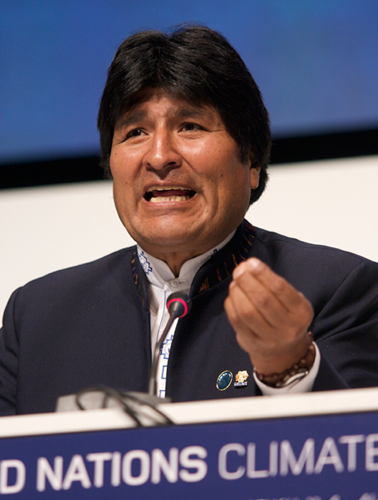 Evo Morales, the former president of Bolivia, is often associated with post-neoliberalism. The idea of post-neoliberalism arose during the pink tide of the 1990s and 2000s, in which left-wing Latin American critics of neoliberalism like Hugo Chávez and Evo Morales were thrust into power. According to researchers, the election of Chávez as the president of Venezuela in 1999 marked a definite start to the pink tide and post-neoliberal movement.[15][16] Following his election, Rafael Correa, Néstor Kirchner, Evo Morales, and numerous other leaders associated with the post-neoliberal movement were elected in Latin America during the 2000s and 2010s.[8] Into the 2020s, the Chilean president-elect Gabriel Boric, who emerged victorious in the 2021 Chilean general election, pledged to end the country's neoliberal economic model, stating: "If Chile was the cradle of neoliberalism, it will also be its grave."[17] While the ideas of post-neoliberalism are not exclusive to Latin America, they are largely associated with the region.[18][19] Post-neoliberalism has drawn criticism from the right of the political spectrum; right-wing and far-right critics have claimed that the term itself is vague and populistic, while also arguing that "post-neoliberal" policies harm international investment and economic development.[11] Ideology Post-neoliberalism seeks to fundamentally change the role of the state in countries where the Washington Consensus once prevailed.[20] To achieve this, post-neoliberal leaders in Latin America have advocated for the nationalization of several industries, notably the gas, mining, and oil industries.[8] Post-neoliberalism also advocates for the expansion of welfare benefits, greater governmental investment in poverty reduction, and increased state intervention in the economy.[21] |
ポスト新自由主義 ポスト新自由主義は反新自由主義とも呼ばれ、新自由主義とワシントン・コンセンサスに体現される経済政策を拒絶する理想主義の集合体である。[6][7] [8] ポスト新自由主義の特徴を定義する上で学術的な議論がある一方で、 、新自由主義の行き過ぎや失敗に対する反応として、経済的進歩主義と関連付けられることが多い。国有化や富の再分配から保護主義の採用や労働組合の復活ま で、その範囲は多岐にわたる。また、より一般的な左派政治を指す場合もある。 この運動は特にラテンアメリカで大きな影響力を持ち、2000年代には「ピンクの波」が左派政権への大幅な転換をもたらした。[10] ポスト新自由主義政権の例としては、ボリビアのエボ・モラレス前大統領やエクアドルのラファエル・コレア前大統領などが挙げられる。[11] また、アメリカ合衆国のジョー・バイデン政権もポスト新自由主義の特徴を示しているという主張もある。[12][13][14] 歴史 ボリビアの元大統領であるエボ・モラレスは、ポスト新自由主義と関連付けられることが多い。 ポスト新自由主義の概念は、1990年代から2000年代にかけてのピンクの波の間に生まれたもので、ウゴ・チャベスやエボ・モラレスといった新自由主義 に批判的なラテンアメリカの左派指導者が政権の座に就いた。研究者によると、1999年のベネズエラ大統領選挙でチャベスが当選したことが、ピンクの波と ポスト新自由主義運動の明確な始まりとなった。[15][16] チャベスに続き、ラファエル・コレア、ネストル・キルチネル、エボ・モラレスなど、ポスト新自由主義運動に関わる多くの指導者が 2000年代から2010年代にかけて、ラテンアメリカではラファエル・コレア、ネストル・キルチネル、エボ・モラレスなど、ポスト新自由主義運動に関わ る多数の指導者が選出された。[8] 2020年代に入ると、2021年のチリ総選挙で勝利したチリの次期大統領ガブリエル・ボリックは、同国の新自由主義経済モデルを終わらせると公約し、 「チリが新自由主義の発祥地であるならば、それは墓場でもある」と述べた。[17] ポスト新自由主義の考え方はラテンアメリカに限ったものではないが、主にこの地域と関連付けられている。[18][19] ポスト新自由主義は政治的スペクトルの右派から批判を集めている。右派および極右の批評家は、この用語自体が曖昧で大衆迎合的であると主張し、また「ポス ト新自由主義」政策は国際投資と経済発展に悪影響を与えると主張している。[11] イデオロギー ポスト新自由主義は、かつてワシントン・コンセンサスが支配的であった国々において、国家の役割を根本的に変えようとしている。[20] この目的を達成するために、ラテンアメリカにおけるポスト新自由主義の指導者たちは、特にガス、鉱業、石油産業などのいくつかの産業の国有化を提唱してい る。[8] ポスト新自由主義はまた、福祉給付の拡大、貧困削減への政府投資の拡大、経済への国家介入の強化も提唱している。[21] |
| Latin American application See also: Pink tide Regional integration The model of socialism of the 21st century encourages economic and political integration among nations in Latin America and the Caribbean. This is often accompanied with opposition to North American influence. Regional organizations like ALBA and CELAC promote cooperation with Latin America and exclude North American countries. ALBA is most explicitly related to socialism of the 21st century while other organizations focus on economic integration, ALBA promotes social, political and economic integration among countries that subscribe to democratic socialism. Its creation was announced in direct opposition to George W. Bush's attempts to establish a Free Trade Area of the Americas that included the United States. In 2008, ALBA introduced a monetary union using the SUCRE as its regional currency. Bolivarian process Further information: Bolivarian Revolution Former Venezuelan President Hugo Chávez initiated a process of social reforms in Venezuela known as the Bolivarian Revolution. This approach was more heavily influenced by the theories of István Mészáros, Michael Lebowitz and Marta Harnecker (who was Chávez's adviser between 2004 and 2011) than by those of Heinz Dieterich. The process draws its name from Latin American liberator Simón Bolívar and is a contemporary example of Bolivarianism.[citation needed] Buen vivir Further information: Sumak kawsay Often translated to good living or living well, the concept of buen vivir is related to the movement for indigenous rights and rights of nature. It focuses on the living sustainably as the member of a community that includes both human beings and Nature.[22] Buen vivir is enshrined in 2008 Constitution of Ecuador as an alternative to neoliberal development. The constitution outlines a set of rights, one of which is the rights of nature.[23] In line with the assertion of these rights, buen vivir seeks to change the relationship between nature and humans to a more bio-pluralistic view, eliminating the separation between nature and society.[23][24] This approach has been applied to the Yasuní-ITT Initiative. Buen vivir is sometimes conceptualised as collaborative consumption in a sharing economy and the term is used to look at the world in way sharply differentiated from natural, social or human capital.[25] |
ラテンアメリカにおける適用 関連項目:ピンクタイド(→「ピンクの潮流」) 地域統合 21世紀の社会主義モデルは、ラテンアメリカおよびカリブ海諸国における経済および政治統合を促している。これはしばしば北米の影響力に対する反対と結び ついている。ALBAやCELACのような地域組織は、ラテンアメリカとの協力を推進し、北米諸国を排除している。ALBAは21世紀の社会主義と最も明 確な関連性があるが、他の組織は経済統合に重点を置いている。ALBAは、民主的社会主義を標榜する諸国間の社会、政治、経済の統合を推進している。 ALBAの創設は、アメリカ合衆国を含む米州自由貿易圏(FTAA)の設立を試みたジョージ・W・ブッシュの試みへの直接的な反対として発表された。 2008年、ALBAは地域通貨としてスクレ(SUCRE)を使用する通貨同盟を導入した。 ボリバル主義のプロセス 詳細情報:ボリバル革命 ベネズエラのウゴ・チャベス前大統領は、ベネズエラにおける社会改革のプロセスを「ボリバル革命」として開始した。このアプローチは、ハインツ・ディート リッヒの理論よりも、イシュトヴァーン・メシュアローシュ、マイケル・レボウィッツ、マルタ・アルネケル(2004年から2011年までチャベスの顧問を 務めた)の理論に強く影響を受けている。このプロセスは、ラテンアメリカの解放者シモン・ボリバルにちなんで名付けられ、ボリバル主義の現代的な例であ る。 善き生き方 詳細は「スーマク・カウサイ」を参照 善き生き方(善き生き方)または善き暮らし(善き暮らし)と訳されることが多いが、善き生き方の概念は、先住民の権利と自然の権利のための運動に関連して いる。それは、人間と自然の両方を含むコミュニティの一員として、持続可能な生活に焦点を当てている。[22] 善き生き方は、新自由主義的な開発に対する代替案として、2008年のエクアドル憲法に盛り込まれている。この憲法は一連の権利を概説しており、その一つ は自然の権利である。[23] これらの権利の主張に沿って、ブエン・ビビールは自然と人間との関係をより生物多様的な見方に変え、自然と社会の分離をなくそうとしている。[23] [24] このアプローチは、ヤスニ・ITTイニシアティブに適用されている。「善き生き方」は、共有経済における共同消費として概念化されることがあり、この用語 は、自然、社会、人的資本から鋭く区別された方法で世界を見るために用いられる。[25] |
| Criticism Authoritarianism Critics claim that socialism of the 21st century in Latin America acts as a façade for authoritarianism. The charisma of figures like Hugo Chávez and mottoes like "Country, Socialism, or Death!" have drawn comparisons to the Latin American dictators and caudillos of the past.[26] According to Steven Levitsky of Harvard University: "Only under the dictatorships of the past [...] were presidents reelected for life", with Levitsky further stating that while Latin America experienced democracy, citizens opposed "indefinite reelection, because of the dictatorships of the past".[27] Levitsky then noted: "In Nicaragua, Venezuela and Ecuador, reelection is associated with the same problems of 100 years ago".[27] The Washington Post also stated in 2014 that "Bolivia's Evo Morales, Daniel Ortega of Nicaragua and the late Venezuelan president Hugo Chávez [...] used the ballot box to weaken or eliminate term limits".[28] In 2015, The Economist stated that the Bolivarian Revolution in Venezuela—now under Nicolás Maduro after Chávez's death in 2013—was devolving from authoritarianism to dictatorship as opposition politicians were jailed for plotting to undermine the government, violence was widespread and opposition media shut down.[29] Western media coverage of Chávez and other Latin American leaders from the 21st-century socialist movement has been criticised as unfair by their supporters and leftist media critics.[30][31] Economics The sustainability and stability of economic reforms associated with governments adhering to socialism of the 21st century have been questioned. Latin American countries have primarily financed their social programs with extractive exports like petroleum, natural gas and minerals, creating a dependency that some economists claim has caused inflation and slowed growth.[32] For the Bolivarian government of Venezuela, their economic policies led to shortages in Venezuela, a high inflation rate and a dysfunctional economy.[33] However, the economic policy of the Hugo Chávez administration and Maduro governments have attributed Venezuela's economic problems to the decline in oil prices, sanctions imposed by the United States and economic sabotage by the opposition.[34] In 2015, Venezuela's economy was performing poorly—the currency had collapsed, it had the world's highest inflation rate and its gross domestic product shrank into an economic collapse in 2016.[35] |
批判 権威主義 批評家たちは、ラテンアメリカにおける21世紀の社会主義は権威主義の仮面を被っていると主張している。ウゴ・チャベスなどの指導者のカリスマ性や、「祖 国か、社会主義か、さもなくば死か!」といった標語は、過去のラテンアメリカの独裁者や軍人指導者たちと比較されている。[26] ハーバード大学のスティーブン・レヴィツキーによると、 「過去に独裁政権下でしか...大統領が終身で再選されることはなかった」と述べ、さらにレヴィツキーは、ラテンアメリカが民主主義を経験する一方で、市 民は「過去の独裁政権を理由に、無期限の再選に反対した」と述べている。[27] レヴィツキーはさらに次のように指摘している。「ニカラグア、ベネズエラ、エクアドルでは、再選は100年前と同じ問題と関連している」と述べた。 [27] ワシントン・ポスト紙も2014年に、「ボリビアのエボ・モラレス、ニカラグアのダニエル・オルテガ、故ウゴ・チャベス・ベネズエラ大統領は[...]投 票箱を利用して任期制限を弱体化させたり、撤廃したりした」と述べた。[28] 2015年、エコノミスト誌は、チャベスが2013年に死去した後、ニコラス・マドゥーロが後を継いだベネズエラのボリバル革命は、政府転覆を企てたとし て野党政治家が投獄され 、暴力が蔓延し、野党系メディアは閉鎖された。[29] チャベスや21世紀の社会主義運動の他のラテンアメリカ指導者に対する欧米メディアの報道は、彼らの支持者や左派系メディアの批評家から不公平であると批 判されている。[30][31] 経済 21世紀の社会主義を支持する政府に関連する経済改革の持続可能性と安定性は疑問視されている。ラテンアメリカ諸国は主に石油、天然ガス、鉱物などの採取 輸出で社会プログラムの財源を賄っており、一部の経済学者は、それがインフレと成長の鈍化の原因となっていると主張している。[32] ベネズエラのボリバル政府にとって、その経済政策はベネズエラ国内での物資不足、 高インフレ率と機能不全に陥った経済をもたらした。[33] しかし、ウゴ・チャベス政権とマドゥーロ政権の経済政策は、ベネズエラの経済問題は原油価格の下落、米国による制裁、野党による経済妨害に起因するものと している。[34] 2015年、ベネズエラの経済は低迷しており、通貨は暴落し、世界で最も高いインフレ率を記録し、国内総生産は2016年の経済崩壊に向けて縮小した。[35] |
| Populism Although democratic socialist intellectuals have welcomed a socialism of the 21st century, they have been skeptical of Latin America's examples. While citing their progressive role, they argue that the appropriate label for these governments is populist rather than socialist.[36][37] Similarly, some of the left-wing pink tide governments were criticised for turning from socialism to authoritarianism and populism.[38][39] |
ポピュリズム 民主的社会主義の知識人は21世紀の社会主義を歓迎しているが、ラテンアメリカの例には懐疑的である。彼らは、これらの政府に適切な呼称は社会主義ではな くポピュリズムであると主張している。[36][37] 同様に、左派のピンクタイド政権の一部は、社会主義から権威主義とポピュリズムに転向したとして批判されている。[38][39] |
| List of anti-neoliberal or post-neoliberal political parties "If Chile was the cradle of neoliberalism, it will also be its grave."[17] —Gabriel Boric, 20 December 2021[40] South America: Argentina: Union for the Homeland, Frente de Todos,[41][42] Front for Victory,[16] Patria Grande Front[43] Bolivia: Movement for Socialism[11] Chile: Social Convergence[44] Ecuador: Citizen Revolution Movement, PAIS Alliance under Rafael Correa[11] Venezuela: Fifth Republic Movement, Great Patriotic Pole, United Socialist Party of Venezuela under Hugo Chávez[15][16] North America: Canada: Québec Solidaire, Green Party of Quebec Mexico: Morena[45] United States: Democratic Socialists of America,[citation needed] Party for Socialism and Liberation[citation needed] Asia Japan: Social Democratic Party[46] South Korea: Progressive Party[47] Turkey: Communist Party of Turkey,[48] Patriotic Party[citation needed], Labour and Freedom Alliance[49] Oceania Australia: Australian Greens[50] |
反新自由主義またはポスト新自由主義の政党の一覧 「チリが新自由主義の発祥地であるならば、それはまたその墓場でもあるだろう。」[17] —ガブリエル・ボリック、2021年12月20日[40] 南アメリカ: アルゼンチン:祖国のための連合、フロンテ・デ・トドス、勝利のための戦線、パトリア・グランデ戦線 ボリビア:社会主義のための運動 チリ:社会合意 エクアドル:市民革命運動、ラファエル・コレア率いるPAIS同盟 ベネズエラ:第五共和運動、大愛国極、ウゴ・チャベス率いるベネズエラ統一社会党 北アメリカ: カナダ: ケベック・ソリデール、ケベック緑の党 メキシコ: モレナ[45] アメリカ合衆国: アメリカ民主社会党(民主党社会主義者)[要出典]、社会主義と解放のための党[要出典] アジア 日本: 社会民主党[46] 韓国: 進歩党[47] トルコ: トルコ共産党[48]、愛国党[要出典]、労働と自由同盟[49] オセアニア オーストラリア:オーストラリア緑の党[50] |
| Anti-capitalism Kirchnerism Millennial socialism Post-capitalism Post-Marxism Project Cybersyn |
反資本主義 キルケネリズム 千年期社会主義 ポスト資本主義 ポスト・マルクス主義 プロジェクト・サイバースン |
| https://en.wikipedia.org/wiki/Socialism_of_the_21st_century |
★
リ ンク
文 献
そ の他の情報
Copyleft,
CC, Mitzub'ixi Quq Chi'j, 1996-2099
