ドナルド・トランプのレトリック
Rhetoric of Donald Trump
☆
第45代および第47代アメリカ合衆国大統領であるドナルド・トランプのレトリック[rhetoric
of
Donald Trump]は、その独特なポピュリスト的、ナショナリスト的、そして対立的なスタイルで広く知られている。これは、言語学者、政
治学者、コミュニケーションの専門家らによって広範に分析されてきた。率直で飾らないアプローチで知られるトランプのレトリックは、危機、分断、忠誠と
いったテーマを強調し、しばしば自身を腐敗した政治体制と戦う「アウトサイダー」として位置づけている。彼のコミュニケーション戦略の中心にあるのは、有
権者の不安に訴えかける感情的なアピール、過去の国家の「偉大さ」を回復するという約束、そして幅広い聴衆に向けてメッセージを強調する、単純で反復的な
言葉の使い方である。
トランプのレトリックは、しばしば複雑な問題を二元論的に捉え、「常に」や「決して」といった絶対的な言葉を用いて、妥協のない姿勢を表現する。この戦略
は二極化した世界観を生み出し、聴衆に政敵や外部からの脅威を国家存亡の危機として捉えるよう促す。トランプのレトリックは、自身の考えや計画を他者と対
比・比較する際、しばしば最上級を用い、「最高」と「最悪」を対比させる。彼のレトリックのスタイルは、大量の虚偽によってさらに特徴づけられ、時にはア
ナリストが「虚偽の洪水」と呼ぶプロパガンダ手法を活用することもある。この情報拡散の手法——その圧倒的な量とスピードが特徴である——は、事実確認の
仕組みを機能不全に陥らせ、支持者層における彼の主張をさらに強固なものにする可能性がある。
トランプは政治家としてのキャリアを通じて、特に移民、犯罪、政治的敵対者について論じる際、暴力的な用語や比喩を含む扇動的な言葉遣いをすることで知ら
れている。彼のレトリックは、敵とみなされる者に対する直接的または暗示的な脅迫を頻繁に含むため、一部の学者からは、政治的敵意や暴力さえも増加させて
いると指摘されている。さらに、彼の演説はしばしばポピュリスト的なテーマを取り上げ、社会問題の責任を特定の集団や個人に転嫁しており、学者たちはこれ
が米国内の不信感と分断の雰囲気を助長していると指摘している。
批判派は、トランプ氏のコミュニケーションスタイルが権威主義的な手法を借用していると主張し、スケープゴート化、ナショナリズムへの訴えかけ、メディア
に対する修辞的な攻撃などをその例として挙げている。支持者は彼のレトリックを、ポリティカル・コレクトネスや既成政治からの新鮮な脱却と捉えている一
方、反対派はそれが民主主義の規範を蝕み、分断を助長すると主張している。このレトリックは、米国政治におけるトランプ氏の影響力を特徴づける要素であり
続けている。
| The rhetoric
of
Donald Trump, the 45th and 47th president of the United States, is
widely recognized for its unique populist, nationalistic, and
confrontational style. It has been the subject of extensive analysis by
linguists, political scientists, and communication experts. Known for
its direct and unfiltered approach, Trump's rhetoric emphasizes themes
of crisis, division, and loyalty, often casting himself as an outsider
fighting against a corrupt political establishment. Central to his
communication strategy are emotional appeals that resonate with voter
insecurity, promises of restoring past national "greatness", and the
use of simple, repetitive language that amplifies his message to broad
audiences. Trump's rhetoric often frames complex issues in binary terms, using absolutes such as "always" and "never" to express uncompromising stances. This strategy creates a polarized worldview, encouraging audiences to see political opponents and external threats as existential dangers to the nation. Trump's rhetoric often uses superlatives to contrast and compare his own ideas and plans to those of others, usually comparing the "Best" to the "Worst". His rhetorical style is further characterized by a high volume of lies, sometimes leveraging what analysts describe as the "firehose of falsehood" propaganda technique. This approach to information dissemination—marked by sheer volume and speed—can overwhelm fact-checking mechanisms and further entrench his narratives among his supporters. Throughout his political career, Trump has been noted for using inflammatory language, including violent terms and metaphors, particularly when discussing immigration, crime, and political adversaries. His rhetoric has been linked by some scholars to an increase in political hostility and even violence, as it often features direct or implied threats against perceived enemies. Additionally, his speeches frequently draw on populist themes, casting blame on specific groups or individuals for societal problems, which scholars argue has contributed to an atmosphere of distrust and division within the U.S. Critics argue that Trump's communication style borrows from authoritarian playbooks, citing his use of scapegoating, appeals to nationalism, and rhetorical attacks on the media. While supporters view his rhetoric as a refreshing departure from political correctness and establishment politics, detractors contend it erodes democratic norms and fuels divisiveness. This rhetoric remains a defining element of Trump's influence on American politics. |
第45代および第47代アメリカ合衆国大統領であるドナルド・トランプ
のレトリック[rhetoric
of
Donald Trump]は、その独特なポピュリスト的、ナショナリスト的、そして対立的なスタイルで広く知られている。これは、言語学者、政
治学者、コミュニケー
ションの専門家らによって広範に分析されてきた。率直で飾らないアプローチで知られるトランプのレトリックは、危機、分断、忠誠といったテーマを強調し、
しばしば自身を腐敗した政治体制と戦う「アウトサイダー」として位置づけている。彼のコミュニケーション戦略の中心にあるのは、有権者の不安に訴えかける
感情的なアピール、過去の国家の「偉大さ」を回復するという約束、そして幅広い聴衆に向けてメッセージを強調する、単純で反復的な言葉の使い方である。 トランプのレトリックは、しばしば複雑な問題を二元論的に捉え、「常に」や「決して」といった絶対的な言葉を用いて、妥協のない姿勢を表現する。この戦略 は二極化した世界観を生み出し、聴衆に政敵や外部からの脅威を国家存亡の危機として捉えるよう促す。トランプのレトリックは、自身の考えや計画を他者と対 比・比較する際、しばしば最上級を用い、「最高」と「最悪」を対比させる。彼のレトリックのスタイルは、大量の虚偽によってさらに特徴づけられ、時にはア ナリストが「虚偽の洪水」と呼ぶプロパガンダ手法を活用することもある。この情報拡散の手法——その圧倒的な量とスピードが特徴である——は、事実確認の 仕組みを機能不全に陥らせ、支持者層における彼の主張をさらに強固なものにする可能性がある。 トランプは政治家としてのキャリアを通じて、特に移民、犯罪、政治的敵対者について論じる際、暴力的な用語や比喩を含む扇動的な言葉遣いをすることで知ら れている。彼のレトリックは、敵とみなされる者に対する直接的または暗示的な脅迫を頻繁に含むため、一部の学者からは、政治的敵意や暴力さえも増加させて いると指摘されている。さらに、彼の演説はしばしばポピュリスト的なテーマを取り上げ、社会問題の責任を特定の集団や個人に転嫁しており、学者たちはこれ が米国内の不信感と分断の雰囲気を助長していると指摘している。 批判派は、トランプ氏のコミュニケーションスタイルが権威主義的な手法を借用していると主張し、スケープゴート化、ナショナリズムへの訴えかけ、メディア に対する修辞的な攻撃などをその例として挙げている。支持者は彼のレトリックを、ポリティカル・コレクトネスや既成政治からの新鮮な脱却と捉えている一 方、反対派はそれが民主主義の規範を蝕み、分断を助長すると主張している。このレトリックは、米国政治におけるトランプ氏の影響力を特徴づける要素であり 続けている。 |
| Overview See also: First presidency of Donald Trump § Leadership style This overview section duplicates the intended purpose of the article's lead section, which should provide an overview of the subject. Please merge it with the introduction, move its content to other sections, or retitle the section to give it a clear scope. (January 2026) Trump's rhetoric has its roots in a populist political method that suggests nationalistic answers to political, economic, and social problems.[1] It employs absolutist framings and threat narratives[2] characterized by a rejection of the political establishment.[3] Trump's rhetoric has been identified as using a three-fold rhetorical strategy, that being "it tells audiences what is wrong with the current state of affairs; it identifies the political agents that are responsible for putting individuals and the country in a state of loss and crisis; and it offers an abstract pathway through which people can restore past greatness by opting for a high-risk outsider candidate". Through the creation of a crisis narrative, Trump's rhetoric relies on creating a sense of insecurity among voters that it promises to eradicate for political gain.[4] His absolutist rhetoric emphasizes non-negotiable boundaries and moral outrage at their supposed violation,[5] and heavily favors crowd reaction over veracity, with a large number of falsehoods which Trump presents as facts,[6] which have been described as using the big lie,[7] and firehose of falsehood propaganda technique.[8]  A Truth Social post by Trump on May 10, 2026 highlighting his rhetorical style Trump's scenic construction (introduction of characters and setting stage depicting an issue) uses black and white terms such as "totally", "absolutely", "every", "complete", and "forever" to describe malevolent forces, or the coming victory. For example, Trump described John Kerry as a "total disaster", and said that Obamacare would "destroy American health care forever". Kenneth Burke referred to this type of "all or none" staging as characteristic of "burlesque" rhetoric.[9] He frequently shifts positions and contradicts himself, sometimes in the same day, in a rhetorical tactic described as presenting him plausible deniability through dueling narratives and allowing the American public the ability to pick and choose what they want to believe about his intentions.[10] By 2024, The New York Times reported that Trump's speeches had grown "darker, harsher, longer, angrier, less focused, more profane and increasingly fixated on the past" and that experts described it as increasingly rambling, tangential, and featuring behavioral disinhibition as a possible consequence of advancing age and cognitive decline. It highlighted an average rally length of 82 minutes compared with 45 minutes in 2016, and a 13% increase in use of all-or-nothing terms such as "always" and "never". It also found 32% more negative words than positive words compared with 21% in 2016, and a 69% increase in swear words.[11] Trump described his rambling, off-script style of speaking as "the weave" and insisted it was both intentional and oratorical genius.[12] During his second presidency, Trump's rhetoric has leaned into likening himself as a higher figure than president. Examples include saying "He who saves his Country does not violate any Law" and comparing himself to a king.[13][14][15] White House social media posted an image depicting Trump with a crown, and Trump and his allies referred to him with monarchical terminology and claims of divine legitimacy.[16] |
概要 関連項目:ドナルド・トランプの第1期大統領任期 § リーダーシップのスタイル この「概要」セクションは、本記事の冒頭セクションが果たすべき役割と重複しています。冒頭セクションは主題の概要を提示するべきものです。このセクショ ンを「序文」と統合するか、その内容を他のセクションに移すか、あるいはセクションのタイトルを変更して明確な範囲を示すようにしてください。(2026 年1月) トランプのレトリックは、政治的、経済的、社会的な問題に対してナショナリズム的な解決策を提示するポピュリスト的な政治手法にそのルーツを持つ。[1] それは、政治的既成勢力への拒絶を特徴とする絶対主義的な枠組みと脅威のナラティブを採用している。[2] [3] トランプのレトリックは、3つの修辞的戦略を用いていると指摘されている。すなわち、「現状の問題点を聴衆に伝えること」、「個人や国を損失や危機の状態 に陥らせた責任のある政治的主体を特定すること」、そして「リスクの高いアウトサイダー候補を選択することで、人々が過去の偉大さを取り戻すための抽象的 な道筋を示すこと」である。危機の物語を構築することで、トランプのレトリックは有権者の間に不安感を醸成し、それを政治的利益のために解消すると約束す ることに依拠している。[4] 彼の絶対主義的なレトリックは、譲歩の余地のない境界線と、その境界線が侵害されたとされることへの道義的憤りを強調し[5]、真実性よりも群衆の反応を 強く重視しており、トランプが事実として提示する多数の虚偽が含まれている[6]。これらは「大嘘」[7]や「虚偽の洪水」というプロパガンダ手法を用い ていると評されている。[8] 2026年5月10日、トランプによるTruth Socialへの投稿。彼のレトリック様式を浮き彫りにしている トランプの情景構築(登場人物の導入や問題を浮き彫りにする舞台設定)では、「完全に」「絶対に」「すべて」「完全な」「永遠に」といった白黒はっきりし た言葉を用いて、悪意ある勢力や、あるいは迫り来る勝利を描写している。例えば、トランプはジョン・ケリーを「完全な惨事」と表現し、オバマケアは「アメ リカの医療制度を永遠に破壊する」と述べた。ケネス・バークは、この種の「全か無か」の演出を、「バーレスク」修辞の特徴であると指摘した。[9] 彼は頻繁に立場を変え、時には同じ日の中でさえ自己矛盾を見せるが、これは対立する物語を通じて「もっともらしい否認」の余地を与え、アメリカ国民が彼の 意図について信じたいことを自由に選別できるようにするという修辞的戦術とされている。[10] 2024年までに、ニューヨーク・タイムズ紙は、トランプの演説が「より暗く、より過激で、より長く、より怒りに満ち、焦点が定まらず、下品になり、過去 に固執する傾向が強まっている」と報じ、専門家たちは、加齢や認知機能の低下による可能性として、ますます支離滅裂で脱線しやすく、行動の抑制が失われて いると評した。同紙は、集会の平均時間が2016年の45分から82分へと延びたこと、「常に(always)」や「決して(never)」といった二極 化表現の使用が13%増加したことを指摘した。また、肯定的な言葉に対する否定的な言葉の割合が2016年の21%から32%に上昇し、罵倒語の使用が 69%増加したことも明らかになった。 |
Analysis Trump speaking at one of his rallies in Arizona, October 2020 Research has identified Trump's rhetoric as heavily using vitriol, demeaning language, false equivalency, exclusion,[17] and fearmongering[18][19][20][21] about immigrants, crime, and minorities as essential to his support.[22][23] In a 2016 interview with Bob Woodward and Robert Costa, Trump said that, "Real power is — I don't even want to use the word — fear."[24] Trump uses rhetoric that political scientists have deemed to be both dehumanizing and connected to physical violence by his followers.[25] Sociologist Arlie Hochschild states that emotional themes in Trump's rhetoric are fundamental, writing that his "speeches—evoking dominance, bravado, clarity, national pride, and personal uplift—inspire an emotional transformation", deeply resonating with their "emotional self-interest".[26][27] One study suggests that the use of spectacular racist rhetoric aided in the significant environmental deregulation that occurred during the first year of the Trump administration. According to the authors, this served political objectives of dehumanizing its targets, eroding democratic norms, and consolidating power by emotionally connecting with and inflaming resentments among the base of followers, but most importantly served to distract media attention from deregulatory policymaking by igniting intense media coverage of the distractions, precisely due to their radically transgressive nature.[28] The New York Times described his vilification of his political opponents and journalists as unlike any modern American president, with him frequently referring to them as "evil".[29] For instance, in 2025, Trump called Democrats "the party of hate, evil, and Satan";[30] in 2024 he called Democrats "demonic",[31] and referred to them at rallies as "so evil", "dangerous", "the enemy within", and that "They're Marxists and communists and fascists, and they're sick".[32] In 2026, Trump called Democrats "traitors" and "human garbage" for not supporting his policies.[33] According to civil rights lawyer Burt Neuborne and political theorist William E. Connolly, Trump's rhetoric employs tropes similar to those used by fascists in Germany[34] to persuade citizens (at first a minority) to give up democracy, by using a barrage of falsehoods, half-truths, personal invective, threats, xenophobia, national-security scares, religious bigotry, white racism, exploitation of economic insecurity, and a never-ending search for scapegoats.[35] Connolly presents a similar list in his book Aspirational Fascism (2017), adding comparisons of the integration of theatrics and crowd participation with rhetoric, involving grandiose bodily gestures, grimaces, hysterical charges, dramatic repetitions of alternate reality falsehoods, and totalistic assertions incorporated into signature phrases that audiences are strongly encouraged to join in chanting.[36] Despite the similarities, Connolly stresses that Trump is no Nazi but "is rather, an aspirational fascist who pursues crowd adulation, hyperaggressive nationalism, white triumphalism, and militarism, pursues a law-and-order regime giving unaccountable power to the police, and is a practitioner of a rhetorical style that regularly creates fake news and smears opponents to mobilize support for the Big Lies he advances".[34] It has been suggested that Trump's Big Lies consist of bullshit rather than of lying as strictly defined.[37][38] According to Harry Frankfurt's 2005 book On Bullshit, the liar cares about the truth and attempts to hide it, while the bullshitter does not care whether what they say is true or false.[39] By ignoring the facts, bullshit has the power to guide group beliefs in a politically desirable direction and thereby to shape group identities.[37] Media ethicist Kelly McBride has commented that it is a difficult task for journalists to convey this rhetoric in a succinct way, which results in criticisms of "sanewashing"; that is, that journalists are "selectively quoting his speeches to make them sound more coherent than they actually are" and "packaging Trump's ideas into news stories as if they are sensible suggestions".[40] |
分析 2020年10月、アリゾナ州での集会で演説するトランプ 研究によると、トランプのレトリックは、移民、犯罪、およびマイノリティに関する激しい非難、侮辱的な言葉、誤った対等性の主張、排除[17]、そして恐 怖をあおる言動[18][19][20][21]を多用しており、これらが彼の支持基盤の要となっていることが明らかになっている。[22][23] 2016年のボブ・ウッドワードおよびロバート・コスタとのインタビューで、トランプは「真の力とは――この言葉を使うのも気が引けるが――恐怖だ」と述 べた。[24] トランプは、政治学者たちが非人間的であり、かつ支持者による身体的暴力と関連していると見なしているレトリックを用いている。[25] 社会学者のアーリー・ホックシャイルドは、トランプのレトリックにおける感情的なテーマが根本的であると述べ、彼の「支配、虚勢、明快さ、国家の誇り、そ して個人の高揚感を喚起する演説は、感情的な変容を促す」ものであり、支持者の「感情的な自己利益」に深く共鳴していると記している。[26][27] ある研究によれば、派手な人種差別的レトリックの使用は、トランプ政権の初年度に起きた大規模な環境規制緩和を後押ししたことが示唆されている。著者らに よれば、これは標的を非人間化し、民主主義の規範を侵食し、支持基盤と感情的に結びつき、その間の憤りを煽ることで権力を強化するという政治的目的に役 立ったが、最も重要なのは、その過激で規範を逸脱した性質ゆえに、メディアの注目を集める「目くらまし」への激しい報道を引き起こし、それによって規制緩 和政策の策定からメディアの関心をそらす役割を果たした点である。[28] 『ニューヨーク・タイムズ』紙は、彼が政敵やジャーナリストを「悪」と頻繁に呼んで中傷した姿勢を、現代のどの米国大統領とも異なるものだと評した。 [29] 例えば、2025年、トランプは民主党を「憎悪、悪、そしてサタンの党」と呼んだ[30]。2024年には民主党を「悪魔的」と呼び[31]、集会で彼ら を「極めて邪悪」「危険」「内部の敵」と表現し、「彼らはマルクス主義者であり、共産主義者であり、ファシストであり、病んでいる」と述べた。[32] 2026年、トランプは自身の政策を支持しなかったとして、民主党員を「裏切り者」や「人間のクズ」と呼んだ。[33] 公民権弁護士のバート・ノイボーンと政治理論家のウィリアム・E・コノリーによれば、 トランプのレトリックは、ドイツのファシストたちが用いたものと同様の修辞的表現を採用しており[34]、虚偽、半真実、個人攻撃、脅迫、外国人排斥、国 家安全保障への恐怖、宗教的偏見、白人至上主義、経済的不安の悪用、そして終わりのないスケープゴート探しを駆使して、市民(当初は少数派)に民主主義を 放棄するよう説得しようとするものである。[35] コノリーは著書『Aspirational Fascism』(2017年)において同様のリストを提示し、さらに、大げさな身振り、しかめっ面、ヒステリックな突進、代替現実の虚偽の劇的な反復、 そして聴衆が合唱に参加するよう強く促される特徴的なフレーズに組み込まれた全体主義的な主張など、演劇的要素や群衆参加がレトリックと融合している点と の比較を加えている。[36] こうした類似点があるにもかかわらず、コノリーは、トランプはナチスではないと強調する。むしろ彼は、「群衆の称賛、過激なナショナリズム、白人至上主 義、軍国主義を追求し、警察に説明責任を問われない権力を与える法と秩序の体制を追求し、自身が推進する『大嘘』への支持を動員するために、定期的にフェ イクニュースを作り出し、敵対者を中傷する修辞スタイルの実践者である」と述べている。[34] トランプの「ビッグ・ライ」は、厳密な定義における嘘というよりは、デタラメから成っているとの指摘がある。[37][38] ハリー・フランクフルトの2005年の著書『On Bullshit』によれば、嘘つきは真実を気にかけ、それを隠そうとするのに対し、でたらめを言う者は、自分の発言が真実か虚偽かを気にしない。 [39] 事実を無視することで、でたらめは集団の信念を政治的に望ましい方向へと導き、それによって集団のアイデンティティを形成する力を持つ。[37] メディア倫理学者のケリー・マクブライドは、ジャーナリストがこのレトリックを簡潔に伝えることは困難であり、その結果、「サン・ウォッシング (sanewashing)」という批判を招いていると指摘している。すなわち、ジャーナリストが「彼の演説を実際よりも首尾一貫しているように聞こえる よう選択的に引用している」ことや、「トランプの考えを、あたかも理にかなった提案であるかのようにニュース記事に盛り込んでいる」ということである。 [40] |
| Trumpisms "Trumpisms" redirects here. For the political movement, see Trumpism. See also: List of United States political catchphrases § 2010s 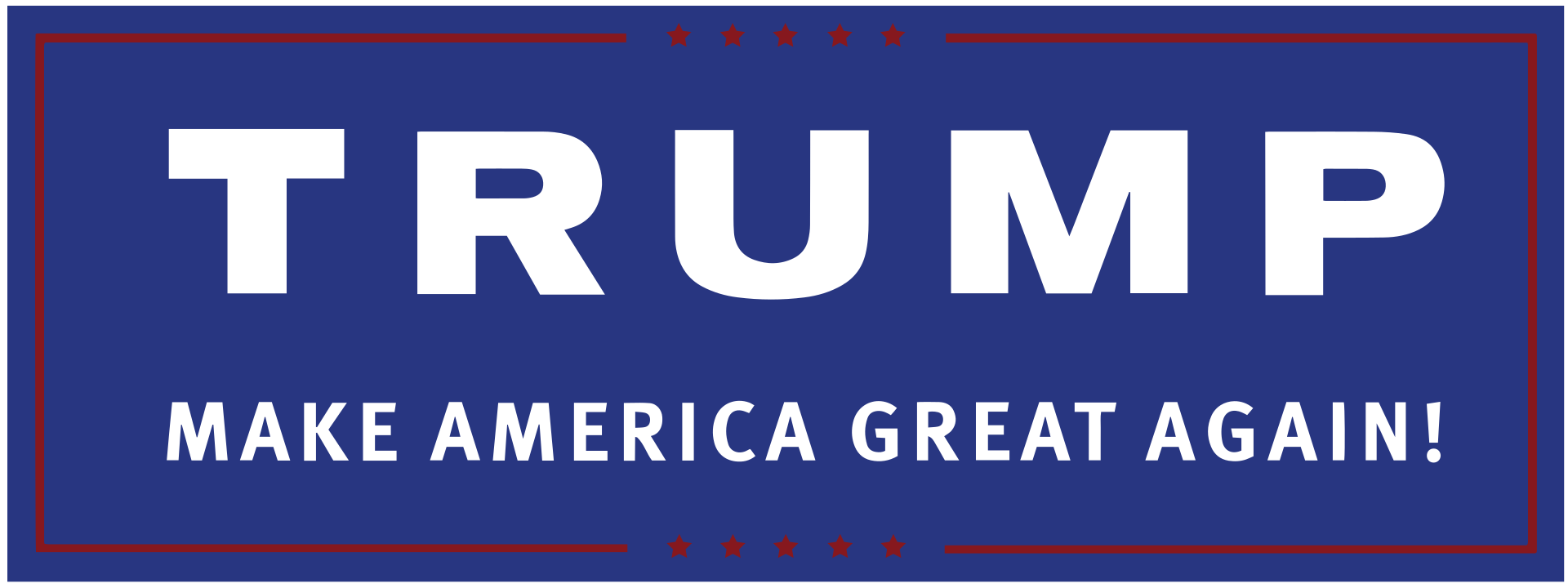 Trump's "Make America Great Again!" sign used during his 2016 presidential campaign before Trump selected Mike Pence as his vice presidential running mate Trumpisms or Trump-speak are the mannerisms, rhetoric, and characteristic phrases or statements of Trump.[41][42] They have been described as colorful comments that "only Trump could get away with".[43][44] By 2016, Politico observed that what used to be called Trump's gaffes now had the official designation of "Trumpisms".[45][46] They have become well-known and are the subject of numerous comedic impersonations that imitate Trump's confident exaggerations and general lack of detail.[47][48] An MIT student built a Twitter bot that used artificial intelligence to parody the President with "remarkably Trump-like statements".[49] Artificial intelligence has also been used to analyze Trump-speak.[50] Trump's children have acknowledged his atypical speech patterns, with both Ivanka and Eric Trump stating that they share some of their father's Trumpisms.[51] Journalist Emily Greenhouse noted in a 2015 Bloomberg article that Trump may be the most quotable man in politics and highlighted the following example:[52] I'm the most successful person ever to run for the presidency, by far. Nobody's ever been more successful than me. I'm the most successful person ever to run. Ross Perot isn't successful like me. Romney—I have a Gucci store that's worth more than Romney.[53] Trumpisms frequently come in the form of insults directed at his critics, labeling them "dogs", "haters and losers", and "enemies of the people".[54][55] He is known for his use of apophasis to this effect.[56] For example, he said of Kim Jong Un, "I would NEVER call him 'short and fat'."[57] |
トランプイズム 「トランプイズム」はここへリダイレクトされます。政治運動については「トランプ主義」を参照してください。 関連項目:アメリカ合衆国の政治スローガンの一覧 § 2010年代 トランプがマイク・ペンスを副大統領候補に指名する前の、2016年の大統領選挙キャンペーン中に使用された「Make America Great Again!」の看板 トランプイズム、あるいはトランプ語とは、トランプ特有の癖、レトリック、そして特徴的なフレーズや発言を指す。[41][42] これらは、「トランプにしか許されない」ような派手な発言として評されてきた。[43][44] 2016年までに、ポリティコは、かつてトランプの失言と呼ばれていたものが、今や「トランプイズム」という正式な呼称を持つようになったと指摘した。 [45][46] これらは広く知られるようになり、トランプの自信に満ちた誇張や、概して詳細を欠く話し方を模倣した数多くのコメディアンによる物まねの題材となってい る。[47][48] MITの学生は、人工知能を用いて「驚くほどトランプらしい発言」で大統領をパロディ化するTwitterボットを開発した。[49] 人工知能は、トランプ氏の話し方を分析するためにも利用されている。[50] トランプ氏の子供たちも、彼の型破りな話し方を認めており、イヴァンカ氏もエリック・トランプ氏も、自分たちには父親の「トランプイズム」の一部が受け継 がれていると述べている。[51] ジャーナリストのエミリー・グリーンハウス氏は、2015年のブルームバーグの記事で、トランプ氏は政界で最も引用される人物かもしれないと指摘し、次のような例を挙げた: [52] 俺は、大統領選に出馬した人間の中で、断トツで最も成功した人物だ。俺ほど成功した人間はいない。出馬した中で最も成功したのは俺だ。ロス・ペローなんて俺ほど成功してない。ロムニーだって――俺には、ロムニーより価値のあるグッチの店があるんだ。[53] トランプ語録は、批判者たちを「犬」「嫌悪者や負け犬」「国民の敵」などとレッテル貼りし、侮辱する形で頻繁に現れる。[54][55] 彼はこの目的でアポファシス(否定による強調)を用いることで知られている。[56] 例えば、彼は金正恩について、「私は決して彼を『背が低く太っている』などとは呼ばない」と述べた。[57] |
| Violence See also: Demagogue  Trump regularly uses social media to criticize his political opponents. Democratic officials have criticized the posts as encouraging political violence.[58] Trump has been identified as a key figure in increasing political violence in America both for and against him.[59][25][60] Trump has embraced extremism, conspiracy theories such as Q-Anon, and far-right militia movements to a greater extent than any modern American president.[61][62] Trump has espoused combative and violent rhetoric and promised retribution against his political enemies.[69] Trump's normalization and revisionist history of the January 6 Capitol attack and grant of clemency to all January 6 rioters including the Proud Boys and Oath Keepers was described by counterterrorism researchers as encouraging future political violence,[70][71] and Trump later suggested the two groups may have a place in the political conversation.[72][73] In 2023, Reuters released a series of reports examining the highest levels of politically motivated violence since the 1970s that started in 2016 when Trump first ran for president, which has seen relatively more violence directed at people instead of property. Reuters notes a few theories for this increase, including the 'coarsening' political rhetoric of the Trump era.[74] They also found that the people who murdered others for political reasons since January 6, 2021, have mostly been associated with the extreme right.[75] Trump's rhetoric has been described as using Argumentum ad baculum, or an appeal to force and intimidation to coerce behavior.[76] Trump has been noted to use either direct or veiled comments with plausible deniability suggesting the possibility of violence by his supporters.[77][78][79][80][81] He has been described as using stochastic terrorism.[82][83] In Politico, Michael Schaffer wrote, "In the 45th and possibly 47th president, America has a leading political figure of unprecedented rhetorical violence."[84] |
暴力 関連項目:デマゴーグ トランプ氏は、ソーシャルメディアを頻繁に利用して政敵を批判している。民主党関係者は、こうした投稿が政治的暴力を助長するものだと批判している。[58] トランプは、自身への支持派・反対派双方において、米国における政治的暴力の増加における主要な人物であると特定されている。[59][25][60] トランプは、現代のどの米国大統領よりも、過激主義、Qアノンなどの陰謀論、そして極右民兵組織の動きを積極的に取り入れてきた。[61][62] トランプは好戦的かつ暴力的な言辞を弄し、政敵に対する報復を約束してきた。[69] 1月6日の連邦議会議事堂襲撃事件に対するトランプ氏の「正常化」と歴史の改竄、およびプラウド・ボーイズやオース・キーパーズを含むすべての襲撃参加者 への恩赦は、テロ対策研究者らによって将来の政治的暴力を助長するものだと指摘された。[70][71] また、トランプ氏は後に、これら2つのグループが政治的議論において一定の役割を果たし得る可能性を示唆した。[72] [73] 2023年、ロイター通信は、トランプ氏が初めて大統領選に出馬した2016年から始まった、1970年代以来最高水準の政治的動機による暴力について検 証する一連の報道を発表した。この期間、財産に対する暴力よりも、人に対する暴力の方が比較的多く見られた。ロイター通信は、この増加の要因として、トラ ンプ時代の政治的レトリックの「粗暴化」を含むいくつかの説を挙げている。[74] また、2021年1月6日以降、政治的動機で他人を殺害した人物のほとんどが、極右勢力と関連していることも判明した。[75] トランプのレトリックは、「Argumentum ad baculum(武力への訴え)」、すなわち、行動を強要するための力や威嚇への訴えを利用していると評されている。[76] トランプは、支持者による暴力の可能性を示唆しつつ、もっともらしい否認の余地を残す直接的または間接的な発言を用いていると指摘されている。[77] [78][79][80][81] 彼は「確率的テロリズム」を用いていると評されている。[82][83] 『ポリティコ』誌のマイケル・シェイファーは、「第45代、そしておそらく第47代大統領において、アメリカは前例のないほど暴力的なレトリックを用いる 主要な政治家を擁している」と記した。[84] |
| 2016 presidential campaign See also: Donald Trump 2016 presidential campaign Donald Trump's 2016 presidential campaign announcement has been criticized for its dehumanizing rhetoric about Mexican immigrants with his comments that, "When Mexico sends its people, they're not sending their best ... They're sending people that have lots of problems, and they're bringing those problems with [them]. They're bringing drugs. They're bringing crime. They're rapists. And some, I assume, are good people."[85][86] On February 1, 2016, in response to an individual throwing two tomatoes at Trump, he told his rally at Cedar Rapids, Iowa that should a similar incident happen, the audience should, "knock the crap out of 'em, would you?"[87][88] On February 23, 2016, after a heckler was removed from one of his rallies at Las Vegas, Nevada, Trump told the audience that, "I'd like to punch him in the face, I tell you."[89] In 2016, stochastic terrorism was an "obscure" academic term according to professor David S. Cohen.[90] During an August 9, 2016, campaign rally, then-candidate Donald Trump remarked, "If [Hillary Clinton] gets to pick her judges, nothing you can do, folks. Although the Second Amendment people, maybe there is. I don't know." These comments were widely condemned as instigating violence, and described by Cohen as "stochastic terrorism", further popularizing the term.[91][90][92] In response to the growing threat of ISIS, Trump called for the targeted killing of terrorists' family members, which drew near-unanimous condemnation.[93][94][95] First presidency See also: First presidency of Donald Trump On July 28, 2017, while giving a speech to police officers, Trump said "don't be too nice" when arresting suspects.[96] His remarks were criticized by NYPD commissioner James O'Neill.[97] On February 5, 2018, Trump implied that Democrats that did not applaud him during his State of the Union address may have committed "treason".[98] His comment was criticized by Senator Dick Durbin.[99] In May 2019, during a Trump campaign rally, an audience member suggested shooting illegal migrants crossing the border, to which Trump responded with a joke, saying, "only in the Panhandle you can get away with that".[100][101][102][103] 2020 presidential campaign See also: Donald Trump 2020 presidential campaign During the COVID-19 pandemic in 2020, Trump routinely used the phrases "China virus" and "Kung flu", which were scrutinized due to their perceived insensitivity to the rising hate crimes against Asian Americans.[104][105] Trump frequently criticized Antifa and BLM protestors in language that some found concerning.[106][107] Trump also repeatedly criticized election methods (especially mail-in voting) in certain states, which led to election workers being harassed.[108] Assaults and threats against election workers by supporters of Trump increased significantly after the election inspired by his false claims that the election was stolen, which Reuters called "a campaign of intimidation that is stressing the foundation of American democracy".[109] Reuters explicitly labeled some of the death threats as inspired by Donald Trump.[110] The Justice Department has reviewed over 2000 threats made to election workers, various jurisdictions have brought charges against some of those threatening election workers and 12 states have strengthened laws protecting election workers.[111][112] On May 30, 2020, ABC News published a story that found 54 instances of violence, alleged assaults and threats where Trump was explicitly invoked in court records or other documents, with 41 echoing Trump and 13 in defiance to Trump.[113] On January 9, 2021, Vox published "a comprehensive timeline of Trump encouraging hate groups and political violence".[114] 2024 presidential campaign Further information: Donald Trump 2024 presidential campaign § Rhetoric Trump's 2024 campaign has been noted for using increasingly violent rhetoric against his political enemies.[25][115][116][117] Trump has attacked the witnesses, judges, juries, and families of individuals involved in his criminal trials.[118][119][120] As with his previous presidential campaigns,[121][122][123] Trump's 2024 campaign has regularly espoused anti-immigrant nativist[124] fearmongering,[a] racial stereotypes,[124] and dehumanized immigrants.[134][135][136][25][115][116] Trump's anti-immigration tone has grown harsher compared to his previous time as president.[137] Several of Trump's statements and actions have been accused of echoing Nazi rhetoric, far-right ideology, antisemitism, and white supremacy.[138][139] According to The New York Times in 2023, scholars are undecided about whether Trump's "rhetorical turn into more fascist-sounding territory is just his latest public provocation of the left, an evolution in his beliefs, or the dropping of a veil". It also reported that some experts concluded that Trump "exhibits traits similar to current strongmen such as Viktor Orbán of Hungary or Recep Tayyip Erdoğan of Turkey".[140] Trump's harsher rhetoric against his political enemies has been described by historians and scholars as populist, authoritarian, fascist,[b] and unlike anything a political candidate has ever said in American history.[141][137] In the 20 rallies since Trump's debate with Kamala Harris, Politico found his rhetoric, especially around immigrants, getting darker, citing experts who found it strongly echoed authoritarian and Nazi ideology.[149] He suggested former General Mark Milley be executed and accused him of disloyalty.[59] Trump's campaign statements were connected to an embrace of right-wing extremism.[61][138][150] He proclaimed that undocumented immigrants were "poisoning the blood of our country" and had "bad genes," which, according to some commentators, strikingly resembled Hitler and white supremacists' racial hygiene rhetoric.[116][151][152] On Veterans Day 2023, he called some of his political opponents "vermin," which also seemed to echo Hitler and Benito Mussolini's language.[117][153][154] Trump demonized his political opponents; Democrats were labelled as "evil" and "demonic",[155][156] and Harris as "the Antichrist".[157] Trump labelled illegal immigrants as subhuman:[158] "vile animals",[159] "savages",[160] "not human",[158] "not people",[161] "stone-cold killers",[132] "monsters",[132] and "predators".[160] At rallies, the former President stated that they will "walk in your kitchen, they'll cut your throat",[159] and "grab young girls and slice them up right in front of their parents".[160] On multiple occasions, Trump and Republicans promoted the conspiracy that Haitian immigrants in Springfield, Ohio, were looting and eating people's pets.[160][162] As a result of their efforts, dozens of bomb threats emerged targeting Springfield schools, hospitals, public buildings, and businesses.[163] |
2016年大統領選挙運動 関連項目:ドナルド・トランプの2016年大統領選挙運動 ドナルド・トランプによる2016年大統領選挙出馬表明は、メキシコ系移民に対する非人間的な言辞が批判された。彼は次のように述べている。「メキシコが 人々を送ってくる時、彼らは最良の人材を送っているわけではない……彼らは多くの問題を抱えた人々を送っており、その問題を(彼ら自身と共に)持ち込んで いる。彼らは麻薬を持ち込んでいる。犯罪も持ち込んでいる。彼らは強姦犯だ。もちろん、中には善良な人々もいるだろうが。」[85][86] 2016年2月1日、アイオワ州シーダーラピッズでの集会で、ある人物がトランプ氏にトマト2個を投げつけた事件を受け、トランプ氏は聴衆に対し、同様の事態が起きた場合は「奴らをボコボコにしてやれ、いいか?」と語った。[87][88] 2016年2月23日、ネバダ州ラスベガスでの集会で野次を飛ばした人物が退場させられた後、トランプは聴衆に対し、「正直言って、あいつの顔を殴ってやりたい」と語った。[89] 2016年当時、デビッド・S・コーエン教授によれば、「確率論的テロリズム」は「あまり知られていない」学術用語であった。[90] 2016年8月9日の選挙集会で、当時の候補者ドナルド・トランプは、「もし[ヒラリー・クリントン]が自分の好きな裁判官を選べるようになれば、皆さ ん、もうどうしようもない。ただし、憲法修正第2条を支持する人々なら、何かできるかもしれない。私には分からない。」と発言した。これらの発言は暴力を 煽るものとして広く非難され、コーエンによって「確率的テロリズム」と形容されたことで、この用語はさらに広まった。[91][90][92] ISISの脅威が高まる中、トランプはテロリストの家族に対する標的殺害を主張し、ほぼ満場一致の非難を浴びた。[93][94][95] 第1期大統領任期 関連項目:ドナルド・トランプの第1期大統領任期 2017年7月28日、警察官に向けた演説の中で、トランプは容疑者を逮捕する際、「あまり優しすぎるな」と述べた。[96] この発言は、ニューヨーク市警(NYPD)のジェームズ・オニール本部長から批判を受けた。[97] 2018年2月5日、トランプは一般教書演説中に自分に拍手を送らなかった民主党議員らが「反逆罪」を犯した可能性があるとほのめかした。[98] この発言は、ディック・ダービン上院議員から批判を受けた。[99] 2019年5月、トランプ氏の選挙集会で、聴衆の一人が国境を越える不法移民を射殺すべきだと提案した。これに対しトランプ氏は、「パンハンドル地域なら、そんなことをしても許されるだろう」と冗談を交えて応じた。[100][101][102][103] 2020年大統領選挙 関連項目: ドナルド・トランプの2020年大統領選挙 2020年のCOVID-19パンデミック中、トランプは「チャイナ・ウイルス」や「クン・フルー」という表現を頻繁に使用したが、これらはアジア系アメ リカ人に対するヘイトクライムが増加している状況下で、配慮に欠けるとして批判された。[104][105] トランプはアンティファやBLMの抗議者たちを頻繁に批判したが、その言葉遣いは一部の人々から懸念を招いた。[106][107] また、トランプは特定の州における選挙方法(特に郵便投票)を繰り返し批判し、その結果、選挙事務員が嫌がらせを受ける事態を招いた。[108] 選挙が「盗まれた」という彼の虚偽の主張に煽られ、選挙後のトランプ支持者による選挙事務員への暴行や脅迫は大幅に増加した。ロイター通信はこれを「アメ リカ民主主義の基盤を脅かす威嚇キャンペーン」と評した。[109] ロイター通信は、一部の殺害予告について、ドナルド・トランプ氏の影響を受けたものであると明確に指摘した。[110] 司法省は選挙事務員に対する2000件以上の脅迫を調査し、各管轄区域では選挙事務員を脅した者の一部に対して起訴が行われ、12の州が選挙事務員を保護 する法律を強化した。[111][112] 2020年5月30日、ABCニュースは、裁判記録やその他の文書においてトランプ氏が明示的に言及された暴力、暴行容疑、脅迫の事例を54件特定した記 事を掲載した。そのうち41件はトランプ氏に同調するものであり、13件はトランプ氏に反発するものであった。[113] 2021年1月9日、Voxは「トランプ氏が憎悪団体や政治的暴力を助長した経緯を示す包括的な年表」を公表した。[114] 2024年大統領選挙運動 詳細情報:ドナルド・トランプの2024年大統領選挙運動 § レトリック トランプの2024年選挙運動は、政敵に対するレトリックがますます暴力的になっていることで注目されている。[25][115][116][117] トランプは、自身の刑事裁判に関与した証人、裁判官、陪審員、および関係者の家族を攻撃している。[118][119] [120] 過去の大統領選挙運動と同様に[121][122][123]、トランプの2024年選挙運動では、反移民・ナショナリスト的な[124]恐怖煽動 [a]、人種的ステレオタイプ[124]、そして移民の人間性を否定する言動が常態化している。[134][135][136] [25][115][116] トランプの反移民的な口調は、前回の大統領在任時と比較してさらに過激化している。[137] トランプの発言や行動のいくつかは、ナチスのレトリック、極右イデオロギー、反ユダヤ主義、白人至上主義を彷彿とさせるものとして非難されている。 [138][139] 2023年のニューヨーク・タイムズ紙によると、学者たちは、トランプの「よりファシズム的な響きを持つ領域へのレトリックの転換が、単に左派に対する最 新の公的な挑発なのか、彼の信念の進化なのか、あるいは仮面を脱いだものなのか」について結論を出せていない。同紙はまた、一部の専門家がトランプ氏につ いて「ハンガリーのヴィクトル・オルバーンやトルコのレジェップ・タイイップ・エルドアンといった現代の強権的指導者と同様の特徴を示している」と結論付 けたと報じた。[140] トランプ氏の政敵に対する過激なレトリックは、歴史家や学者によってポピュリスト的、権威主義的、ファシスト的[b]であると評され、アメリカ史上、政治 候補者がこれまでに発したどの発言とも異なるものとされている。[141][137] トランプとカマラ・ハリスとの討論会以降に行われた20回の集会で、ポリティコは、特に移民をめぐる彼の言辞がより陰鬱なものになっていると指摘し、それ が権威主義的およびナチスのイデオロギーを強く反映していると見なした専門家の見解を引用した。[149] 彼はマーク・ミリー元陸軍参謀総長を処刑すべきだと示唆し、不忠を非難した。[59] トランプの選挙運動における発言は、右派過激主義の擁護と結びついていた。[61][138][150] 彼は、不法移民が「わが国の血を汚染している」とし、「悪い遺伝子」を持っていると宣言したが、一部の評論家によれば、これはヒトラーや白人至上主義者の 「人種衛生」に関するレトリックに驚くほど似ていた。[116][151][152] 2023年の退役軍人の日、彼は一部の政敵を「害虫」と呼んだが、これもまたヒトラーやベニート・ムッソリーニの言辞を彷彿とさせるものだった。 [117][153][154] トランプは政敵を悪魔視し、民主党員を「邪悪」かつ「悪魔的」とレッテル貼りし[155][156]、ハリスを「反キリスト」と呼んだ。[157] トランプは不法移民を人間以下の存在としてレッテル貼りした。[158] 「卑劣な動物」[159]、「野蛮人」[160]、「人間ではない」[158]、「人間ではない」[161]、「冷酷な殺人者」[132]、「怪物」 [132]、「捕食者」などである。[160] 集会で、元大統領は、彼らが「あなたの台所に侵入し、喉を切り裂く」[159]、あるいは「若い少女を捕まえ、両親の目の前で切り刻む」と述べた。 [160] トランプ氏と共和党は、オハイオ州スプリングフィールドのハイチ系移民が略奪を行い、人々のペットを食べているという陰謀説を度々流布した。[160] [162] その結果、スプリングフィールドの学校、病院、公共施設、および企業を標的とした数十件の爆破予告が発生した。[163] |
| Second presidency See also: Second presidency of Donald Trump Asked: Are there limits on your global power? Yeah, there is one thing. My own morality. My own mind. It's the only thing that can stop me. I don't need international law. I'm not looking to hurt people. — Donald Trump, January 7, 2026[164] New York Times White House correspondents wrote that "Mr. Trump’s assessment ... was the most blunt acknowledgment yet of his worldview. At its core is the concept that national strength, rather than laws, treaties and conventions, should be the deciding factor as powers collide."[164] During Trump's second term he has called for political rivals such as California Governor Gavin Newsom and 2025 New York City Democratic mayoral nominee Zohran Mamdani to be arrested.[165][166] During a June 2025 speech Trump referred to participants in the anti-ICE Los Angeles protests as "animals" and "enemies".[167][168] Following the October 18 No Kings protests, Trump reposted an AI generated video of himself flying a plane labelled with "King Trump", and dumping sewage over the protesters.[169][170] In November 2025, Trump made multiple social media posts about six Democrats (Mark Kelly, Elissa Slotkin, Jason Crow, Chrissy Houlahan, Chris Deluzio and Maggie Goodlander) who had recorded a video telling servicemembers to refuse illegal orders,[171] calling them traitors who should to be charged with sedition punishable by death, and shared a social media post calling for Democrats to be hanged.[172][173][174][175][176] In December 2025, following the killing of Rob and Michele Reiner, Trump mocked Rob Reiner in a Truth Social post, writing that "a very sad thing happened" while claiming that Reiner and his wife died "reportedly due to the anger he caused others through his massive, unyielding, and incurable affliction with a mind crippling disease known as Trump derangement syndrome".[177][178][179] In March 2026, following the death of Robert Mueller, a former director of the Federal Bureau of Investigation who led a special counsel investigation investigating Russian interference in the 2016 United States elections and links between Trump associates and Russian officials, Trump responded in a Truth Social post: "Good, I'm glad he's dead. He can no longer hurt innocent people!"[180][181] |
第2期大統領任期 関連項目:ドナルド・トランプの第2期大統領任期 質問:あなたの世界的な権力には限界がありますか? ああ、一つだけある。それは、私自身の道徳観だ。私自身の心だ。私を止めることができるのは、それだけだ。国際法など必要ない。私は人を傷つけようなどとは思っていない。 — ドナルド・トランプ、2026年1月7日[164] ニューヨーク・タイムズのホワイトハウス担当記者らは、「トランプ氏のこの見解は……彼の世界観をこれまでで最も率直に認めたものだ。その核心にあるの は、大国同士が衝突する際、法律や条約、慣習ではなく、国家の力が決定的な要因であるべきだという考え方だ」と記した。[164] トランプ氏の第2期政権中、彼はカリフォルニア州知事ギャビン・ニューサムや2025年ニューヨーク市長選の民主党候補ゾラン・マムダニといった政敵の逮 捕を求めてきた。[165][166] 2025年6月の演説で、トランプ氏はロサンゼルスで行われた移民税関捜査局(ICE)反対デモの参加者を「動物」や「敵」と呼んだ。[167] [168] 10月18日の「No Kings」抗議活動を受けて、トランプは「キング・トランプ」と書かれた飛行機を操縦し、抗議者たちの上に汚水を撒き散らすという、AI生成の自身の動 画を再投稿した。[169][170] 2025年11月、トランプは、軍人に対し違法な命令を拒否するよう呼びかける動画を収録した6人の民主党議員(マーク・ケリー、エリッサ・スロットキ ン、ジェイソン・クロウ、クリシー・ホウラハン、クリス・デルージオ、マギー・グッドランダー)について、ソーシャルメディアに複数の投稿を行い [171]、彼らを「反逆罪で起訴され、死刑に処されるべき裏切り者」と呼び、民主党員を絞首刑に処すよう求める投稿をシェアした。[172][173] [174][175][176] 2025年12月、ロブ・レイナーとミシェル・レイナーの殺害を受けて、トランプはトゥルース・ソーシャルの投稿でロブ・レイナーを嘲笑し、「非常に悲し い出来事が起きた」と書きつつ、レイナー夫妻の死因について「トランプ・デランジメント・シンドローム(トランプ狂気症候群)と呼ばれる、心を蝕む巨大 で、屈服せず、不治の病による彼の行動が他者に引き起こした怒りによるものだと報じられている」と主張した。[177][178] [179] 2026年3月、2016年の米国大統領選挙におけるロシアの干渉や、トランプ陣営の関係者とロシア当局者とのつながりを調査する特別検察官の捜査を指揮 した元連邦捜査局(FBI)長官ロバート・ミューラーの死を受け、トランプはトゥルース・ソーシャルの投稿で次のように反応した。「よし、彼が死んでよ かった。もう無実の人々を傷つけることはできない!」[180][181] |
| Falsehoods Main article: False or misleading statements by Donald Trump  Fact-checkers from The Washington Post[182] (top, monthly), the Toronto Star,[183] and CNN[184][185] (bottom, weekly) compiled data on "false or misleading claims" (orange) and "false claims" (blue), respectively. The peaks corresponded in late 2018 to the midterm elections, in late 2019 to his impeachment inquiry, and in late 2020 to the presidential election. The Post reported 30,573 false or misleading claims in four years,[182] an average of more than 20.9 per day.  Trump escalated use of "rigged election" and "election interference" statements in advance of the 2024 election compared to the previous two elections—the statements described as part of a "heads I win; tails you cheated" rhetorical strategy.[186] During and after his term as President of the United States, Trump made tens of thousands of false or misleading claims. The Washington Post's fact-checkers documented 30,573 false or misleading claims during his presidential term, an average of about 21 per day.[182][187][188][189] The Toronto Star tallied 5,276 false claims from January 2017 to June 2019, an average of 6.1 per day.[183] Commentators and fact-checkers have described the scale of Trump's mendacity as "unprecedented" in American politics,[195] and the consistency of falsehoods a distinctive part of his business and political identities.[196] Scholarly analysis of Trump's tweets found "significant evidence" of an intent to deceive. By June 2019, after initially resisting, many news organizations began to describe some of his falsehoods as "lies".[197] The Washington Post said his frequent repetition of claims he knew to be false amounted to a campaign based on disinformation.[198] Trump campaign CEO and presidency chief strategist Steve Bannon said that the press, rather than Democrats, was Trump's primary adversary and "the way to deal with them is to flood the zone with shit".[199][200] As part of their attempts to overturn the 2020 U.S. presidential election, Trump and his allies repeatedly falsely claimed there had been massive election fraud and that Trump had won the election.[189] Their effort has been characterized as an implementation of the big lie propaganda technique,[7] and has been described as a "firehose of falsehood".[8] On June 8, 2023, a grand jury indicted Trump on one count of making "false statements and representations", specifically by hiding subpoenaed classified documents from his own attorney who was trying to find and return them to the government.[201] In August 2023, 21 of Trump's falsehoods about the 2020 election were listed in his Washington, D.C. indictment,[202] while 27 were listed in his Georgia indictment.[203] Former FBI Director James Comey reflected on what he described as “the psychology of liars” in a discussion of leadership and loyalty. In what journalist Philip Rucker described as “an apparent nod” to Trump, Comey drew comparisons between his experiences prosecuting the Mafia and serving in the Trump administration, including a loyalty pledge he said he was asked to make but refused. Comey wrote: "The silent circle of assent. The boss in complete control. The loyalty oaths. The us-versus-them worldview. The lying about all things, large and small, in service to some code of loyalty that put the organization above morality and above the truth.... [Liars] lose the ability to distinguish between what's true and what's not", Comey writes. "They surround themselves with other liars.... Perks and access are given to those willing to lie and tolerate lies. This creates a culture, which becomes an entire way of life."[204] A 2024 New Republic article examined the relationship between lies Trump tells and his approval among voters, suggesting it has a significant impact on his support.[205] At the beginning of early voting, NPR described Trump as using darker rhetoric including escalating insults, threats and lies.[206] |
虚偽の発言 本記事:ドナルド・トランプによる虚偽または誤解を招く発言 『ワシントン・ポスト』[182](上段、月次)、『トロント・スター』[183]、およびCNN[184][185](下段、週次)のファクトチェッ カーが、それぞれ「虚偽または誤解を招く主張」(オレンジ)と「虚偽の主張」(青)に関するデータをまとめた。ピークは、2018年末には中間選挙、 2019年末には弾劾調査、2020年末には大統領選挙と一致していた。同紙は4年間で30,573件の虚偽または誤解を招く主張を報告しており [182]、1日平均20.9件以上に上る。 トランプ氏は、2024年の選挙を前に、過去2回の選挙と比較して「不正選挙」や「選挙干渉」に関する発言をエスカレートさせた。これらの発言は、「勝てば俺の勝ち、負ければお前が不正をした」というレトリック戦略の一環であると評されている。[186] 米国大統領在任中および退任後、トランプ氏は数万件に及ぶ虚偽または誤解を招く主張を行った。ワシントン・ポスト紙のファクトチェッカーは、大統領在任中 に30,573件の虚偽または誤解を招く主張を記録しており、これは1日平均約21件に相当する。[182][187][188][189] トロント・スター紙は、2017年1月から2019年6月までの間に5,276件の虚偽の主張を集計し、1日平均6.1件であった。[183] 評論家やファクトチェッカーらは、トランプ氏の虚偽発言の規模を米国政治において「前例のない」ものと評し[195]、虚偽の一貫性を彼のビジネスおよび 政治的アイデンティティの顕著な特徴であると指摘している。[196] トランプ氏のツイートに関する学術的分析では、欺瞞の意図を示す「重要な証拠」が発見された。 当初は抵抗していたものの、2019年6月までに、多くの報道機関が彼の虚偽の一部を「嘘」と表現し始めた。[197] 『ワシントン・ポスト』紙は、虚偽であると知りながら主張を頻繁に繰り返す彼の行為は、偽情報に基づく選挙運動に等しいと報じた。[198] トランプ陣営のCEO兼大統領首席戦略官スティーブ・バノンは、民主党ではなくマスコミこそがトランプの主要な敵であり、「彼らに対処する方法は、その領 域をクソで埋め尽くすことだ」と述べた。[199] [200] 2020年の米国大統領選挙の結果を覆そうとする試みの一環として、トランプ氏とその支持者たちは、大規模な選挙不正があったこと、そしてトランプ氏が選 挙に勝利したことを繰り返し虚偽の主張した。[189] 彼らの取り組みは、「ビッグ・ライ(大嘘)」というプロパガンダ手法の実践であると評され[7]、「虚偽の洪水」と形容されている。[8] 2023年6月8日、大陪審は、政府への返還を試みていた自身の弁護士から、召喚状で提出を求められていた機密文書を隠蔽したとして、トランプに対し「虚 偽の陳述および表明」の罪で起訴した。[201] 2023年8月、2020年大統領選挙に関するトランプ氏の虚偽の発言のうち21件がワシントンD.C.での起訴状に列挙され[202]、27件がジョー ジア州での起訴状に列挙された。[203] 元FBI長官のジェームズ・コミーは、リーダーシップと忠誠心に関する議論の中で、自身が「嘘つきの心理」と呼ぶものについて考察した。ジャーナリストの フィリップ・ラッカーが「トランプへの明らかな言及」と評した中で、コミーはマフィアを起訴した経験とトランプ政権での勤務経験を比較し、求められたが拒 否したという忠誠の誓いについても言及した。コミーは次のように記している: 「沈黙の同意の輪。完全な支配下にあるボス。忠誠の誓い。我々対彼らの世界観。組織を道徳や真実よりも優先させるある種の忠誠の規範に従うために、大小あ らゆる事柄について嘘をつくこと……。[嘘つきたちは]何が真実で何がそうでないかを区別する能力を失う」とコミーは記している。「彼らは他の嘘つきたち を周囲に集める……。嘘をつき、嘘を容認する者たちに、特典や特権が与えられる。これにより文化が形成され、それが生活様式そのものとなる。」[204] 2024年の『ニュー・リパブリック』誌の記事は、トランプが吐く嘘と有権者からの支持率との関係を検証し、それが支持率に重大な影響を与えていることを示唆した。[205] 期日前投票の開始にあたり、NPRはトランプについて、侮辱や脅迫、嘘をエスカレートさせるなど、より陰湿なレトリックを用いていると報じた。[206] |
| Incorrectly attributed quotes Trump's rhetoric has been repeated and echoed extensively on social media by both Trump supporters and Trump opponents. Due to the limitations of some platforms, such as the 100 character limit on Twitter, now known as X, Trump quotes often lack context. In rare instances, quotes that could credibly be attributed to Trump did not actually originate from Trump himself.[207] |
誤って帰属された引用 トランプ氏の言説は、支持者・反対者双方によってソーシャルメディア上で広く拡散・引用されてきた。Twitter(現在はX)の100文字制限など、一 部のプラットフォームの制約により、トランプ氏の引用には文脈が欠けていることが多々ある。ごく稀なケースではあるが、トランプ氏の発言として信憑性のあ る引用であっても、実際には彼自身によるものではなかった事例もある。[207] |
| Notes 1. Sources that describe Trump's 2024 campaign as using "fearmongering" and "fear" include:[125][126][127][128][129][130][131][124][132][133] 2. Attributed to multiple references:[141][142][143][144][145][146][147][148] |
注 1. トランプ氏の2024年選挙運動が「恐怖をあおる手法」や「恐怖」を利用していると記述している出典には、以下のものがある:[125][126][127][128][129][130][131][124][132] [133] 2. 複数の出典による:[141][142][143][144][145][146][147][148] |
| References |
|
| Sources Adams, Kenneth Alan (Spring 2021). "The Trump Death Cult". Journal of Psychohistory. 48 (4): 256–276. ISSN 0145-3378. Retrieved November 6, 2024. Berman, Sheri (May 2021). "The Causes of Populism in the West". Annual Review of Political Science. 24: 71–88. doi:10.1146/annurev-polisci-041719-102503. ISSN 1094-2939. Campani, Giovanna; Concepción, Sunamis Fabelo; Soler, Angel Rodriguez; Savín, Claudia Sánchez (November 2, 2022). "The Rise of Donald Trump Right-Wing Populism in the United States: Middle American Radicalism and Anti-Immigration Discourse". Societies. 12 (6): 154. doi:10.3390/soc12060154. Diamond, Michael J. (February 22, 2023). "Perverted Containment: Trumpism, Cult Creation, and the Rise of Destructive American Populism". Psychoanalytic Inquiry. 43 (2): 96–109. doi:10.1080/07351690.2023.2163147. Franks, Andrew S.; Hesami, Farhang (September 18, 2021). "Seeking Evidence of The MAGA Cult and Trump Derangement Syndrome: An Examination of (A)symmetric Political Bias". Societies. 11 (3): 113. doi:10.3390/soc11030113. Hassan, Steven (2019). The Cult of Trump. Simon & Schuster. ISBN 978-1-9821-2733-6. Kakutani, Michiko (2018). "The Firehose of Falsehood: Propaganda and Fake News". The Death of Truth: Notes on Falsehood in the Age of Trump. Crown/Archetype. ISBN 978-0-525-57484-2. Kaufman, Robert R.; Haggard, Stephan (2019). "Democratic Decline in the United States: What Can We Learn from Middle-Income Backsliding?". Perspectives on Politics. 17 (2): 417–432. doi:10.1017/S1537592718003377. S2CID 149457724. Lajevardi, Nazita; Oskooii, Kassra A. R. (2018). "Old-Fashioned Racism, Contemporary Islamophobia, and the Isolation of Muslim Americans in the Age of Trump". Journal of Race, Ethnicity, and Politics. 3 (1): 112–152. doi:10.1017/rep.2017.37. Parker, Christopher Sebastian; Towler, Christopher C. (May 2019). "Race and Authoritarianism in American Politics". Annual Review of Political Science. 22: 503–519. doi:10.1146/annurev-polisci-050317-064519. ISSN 1094-2939. Perry, Samuel L.; Whitehead, Andrew L.; Grubbs, Joshua B. (April 21, 2021). "The Devil That You Know: Christian Nationalism and Intent to Change One's Voting Behavior For or Against Trump in 2020". Politics and Religion. 15 (2): 229–246. doi:10.1017/S175504832100002X. hdl:11244/334967. Reyes, Antonio (May 4, 2020). "I, Trump The cult of personality, anti-intellectualism and the Post-Truth era". Journal of Language and Politics. 19 (6): 869–892. doi:10.1075/jlp.20002.rey. ISSN 1569-2159. Ross, Bertrall L. (October 2024). "Polarization, Populism, and the Crisis of American Democracy". Annual Review of Law and Social Science. 20: 293–308. doi:10.1146/annurev-lawsocsci-041922-035113. ISSN 1550-3631. Rothe, Dawn L.; Collins, Victoria E. (November 17, 2019). "Turning Back the Clock? Violence against Women and the Trump Administration". Victims & Offenders. 14 (8): 965–978. doi:10.1080/15564886.2019.1671284. Stephens-Dougan, LaFluer (May 2021). "The Persistence of Racial Cues and Appeals in American Elections". Annual Review of Political Science. 24: 301–320. doi:10.1146/annurev-polisci-082619-015522. ISSN 1094-2939. Sundahl, Anne-Mette Holmgård (May 4, 2022). "Personality Cult or a Mere Matter of Popularity?". International Journal of Politics, Culture, and Society. 36 (4): 431–458. doi:10.1007/s10767-022-09423-0. PMC 9066393. PMID 35528318. Urbinati, Nadia (May 2019). "Political Theory of Populism". Annual Review of Political Science. 22: 111–127. doi:10.1146/annurev-polisci-050317-070753. ISSN 1094-2939. Retrieved December 20, 2024. |
出典 アダムス、ケネス・アラン(2021年春)。「トランプ・デス・カルト」。『Journal of Psychohistory』48巻4号:256–276頁。ISSN 0145-3378。2024年11月6日閲覧。 バーマン、シェリ(2021年5月)。「西洋におけるポピュリズムの原因」。『政治学年次レビュー』。24: 71–88. doi:10.1146/annurev-polisci-041719-102503. ISSN 1094-2939. カンパニ、ジョヴァンナ;コンセプシオン、スナミス・ファベロ;ソレール、アンヘル・ロドリゲス;サヴィン、クラウディア・サンチェス(2022年11月 2日)。「米国におけるドナルド・トランプの右派ポピュリズムの台頭:中流階級の急進主義と反移民言説」。『Societies』。12 (6): 154. doi:10.3390/soc12060154. ダイヤモンド, マイケル・J. (2023年2月22日). 「歪んだ封じ込め:トランプ主義、カルトの形成、そして破壊的なアメリカポピュリズムの台頭」. 『Psychoanalytic Inquiry』. 43 (2): 96–109. doi:10.1080/07351690.2023.2163147. フランクス、アンドルー・S.; ヘサミ、ファーハング(2021年9月18日)。「MAGAカルトとトランプ・デランジメント・シンドロームの証拠を求めて:非対称的政治バイアスの検 証」。『Societies』11巻3号: 113頁. doi:10.3390/soc11030113. ハッサン, スティーブン (2019). 『トランプ・カルト』. サイモン・アンド・シュスター. ISBN 978-1-9821-2733-6. カクタニ、ミチコ(2018)。「虚偽の洪水:プロパガンダとフェイクニュース」。『真実の死:トランプ時代の虚偽に関する考察』。クラウン/アーキタイプ。ISBN 978-0-525-57484-2。 カウフマン、ロバート・R.;ハガード、ステファン(2019)。「米国における民主主義の衰退:中所得層の後退から何を学べるか?」。 『Perspectives on Politics』. 17 (2): 417–432. doi:10.1017/S1537592718003377. S2CID 149457724. ラジェヴァルディ, ナジタ; オスコイ, カスラ・A・R. (2018). 「昔ながらの人種差別、現代のイスラム嫌悪、そしてトランプ時代におけるアメリカ人ムスリムの孤立」. 『Journal of Race, Ethnicity, and Politics』. 3 (1): 112–152. doi:10.1017/rep.2017.37. パーカー, クリストファー・セバスチャン; トウラー, クリストファー・C. (2019年5月). 「アメリカ政治における人種と権威主義」. 『政治学年次レビュー』. 22: 503–519. doi:10.1146/annurev-polisci-050317-064519. ISSN 1094-2939. ペリー, サミュエル・L.; ホワイトヘッド, アンドルー・L.; グラブス, ジョシュア・B. (2021年4月21日). 「知る悪魔:キリスト教ナショナリズムと2020年のトランプ支持・不支持に向けた投票行動の変更意向」『Politics and Religion』15 (2): 229–246. doi:10.1017/S175504832100002X. hdl:11244/334967. Reyes, Antonio (2020年5月4日). 「I, Trump:個人崇拝、反知性主義、そしてポスト・トゥルース時代」. 『Journal of Language and Politics』. 19 (6): 869–892. doi:10.1075/jlp.20002.rey. ISSN 1569-2159. ロス、バートラル・L.(2024年10月)。「二極化、ポピュリズム、そしてアメリカ民主主義の危機」。『Annual Review of Law and Social Science』。20: 293–308. doi:10.1146/annurev-lawsocsci-041922-035113. ISSN 1550-3631. ロート, ドーン・L.; コリンズ, ビクトリア・E. (2019年11月17日). 「時計の針を戻す? 女性に対する暴力とトランプ政権」. 『Victims & Offenders』. 14 (8): 965–978. doi:10.1080/15564886.2019.1671284. Stephens-Dougan, LaFluer (2021年5月). 「米国選挙における人種的シグナルと訴求の持続」. Annual Review of Political Science. 24: 301–320. doi:10.1146/annurev-polisci-082619-015522. ISSN 1094-2939. Sundahl, Anne-Mette Holmgård (2022年5月4日). 「個人崇拝か、それとも単なる人気問題か?」. 『International Journal of Politics, Culture, and Society』. 36 (4): 431–458. doi:10.1007/s10767-022-09423-0. PMC 9066393. PMID 35528318. ウルビナティ、ナディア(2019年5月)。「ポピュリズムの政治理論」。『政治学年次レビュー』。22: 111–127. doi:10.1146/annurev-polisci-050317-070753. ISSN 1094-2939. 2024年12月20日閲覧。 |
| Further reading de Berg, Henk (2024). "Fives Rules for Understanding Trump's Rhetorical Strategy". Retrieved January 3, 2025. Mercieca, Jennifer (2020). Demagogue for President: The Rhetorical Genius of Donald Trump. Texas A&M University Press. ISBN 978-1-62349-906-8. |
参考文献 de Berg, Henk (2024). 「トランプのレトリック戦略を理解するための5つのルール」。2025年1月3日閲覧。 メルシエカ、ジェニファー(2020)。『大統領を目指すデマゴーグ:ドナルド・トランプの修辞的天才』。テキサスA&M大学出版局。ISBN 978-1-62349-906-8。 |
| https://en.wikipedia.org/wiki/Rhetoric_of_Donald_Trump |
リ ンク
文 献
そ の他の情報
CC
Copyleft,
CC, Mitzub'ixi Quq Chi'j, 1996-2099
