
弥生人
Yayoi people
☆ 弥生人(やよいじん、弥生人)は、弥生時代(紀元前300年~紀元後300年)に日本列島に移住[1]した古代人であり、弥生人の物質文化によって特徴づ けられる。[2][3][4][5]弥生時代の始まりを紀元前1000年~紀元前800年とする説もあるが、この年代については議論がある。 [1]弥生文化の人々は、列島全体に農業とジャポニック言語を広めたとみなされており、地元の縄文人の狩猟採集民とアジア本土からの移住者の両方の祖先を 特徴としていた[6]。
| The
Yayoi people (弥生人, Yayoi jin) were an ancient people that immigrated[1]
to the Japanese archipelago during the Yayoi period (300 BC–300 AD) and
are characterized through Yayoi material culture.[2][3][4][5] Some
argue for an earlier start of the Yayoi period, between 1000 and 800
BC, but this date is controversial.[1] The people of the Yayoi culture
are regarded as the spreaders of agriculture and the Japonic languages
throughout the whole archipelago, and were characterized by both local
Jōmon hunter-gatherer and mainland Asian migrant ancestry.[6] |
弥
生人(やよいじん、弥生人)は、弥生時代(紀元前300年~紀元後300年)に日本列島に移住[1]した古代人であり、弥生人の物質文化によって特徴づけ
られる。[2][3][4][5]弥生時代の始まりを紀元前1000年~紀元前800年とする説もあるが、この年代については議論がある。
[1]弥生文化の人々は、列島全体に農業とジャポニック言語を広めたとみなされており、地元の縄文人の狩猟採集民とアジア本土からの移住者の両方の祖先を
特徴としていた[6]。 |
| Origin The terms Yayoi and Wajin can be used interchangeably, though "Wajin" (倭人) refers to the people of Wa and "Wajin" (和人) is another name for the modern Yamato people.[7] The definition of the Yayoi people is complex: The term Yayoi people describes both farmers and hunter-gatherers exclusively living in the Japanese archipelago, and their agricultural transition. The Yayoi people refers specifically to the mixed descendants of Jomon hunter-gatherers with Mainland Asian migrants, which adopted (rice) agriculture and other continental material culture.[8] There are several hypotheses about the geographic origin of the mainland Asian migrants: immigrants from the Southern or Central Korean Peninsula[9][10][11] immigrants from Jiangnan near the Yangtze River Delta in ancient China[12] multiple origins from various regions of Asia, including Southeast Asia[13][14][15][16][17] According to Alexander Vovin, the Yayoi were present on the central and southern parts of Korea before they were displaced and assimilated by arriving proto-Koreans.[18][19] A similar view was raised by Whitman (2012), further noting that the Yayoi are not closely related to the proto-Koreanic speakers and that Koreanic arrived later from Manchuria to Korea at around 300 BC and coexisted with the Japonic-speakers. Both had influence on each other and a later founder effect diminished the internal variety of both language families.[20] Genetics To date, not much genetic data has been revealed about the Yayoi people. Two samples of "Northwestern Yayoi" from the Shimomotoyama site in northern Kyushu, in the Nagasaki Prefecture, have been analyzed and displayed mixed ancestry with a majority being derived from the local Jōmon hunter-gatherers, and varying degrees of Eastern Asian admixture.[21] Based on studies on modern Japanese people, the Yayoi component makes up the majority ancestry of Japanese.[22][23] Another DNA analysis of four Yayoi remains revealed that the "immigrant Yayoi people were already mixed with the indigenous Jōmon people". The authors noted that "it is necessary to rethink the traditional theory of the formation of the Japanese population". The formation of the Japanese people and their culture is rooted in the local Jōmon hunter-gatherers which adopted Mainland Asian material culture and mixed with continental Asian immigrants, rather than being replaced. The Yayoi people represent the period of transition and formation of "Old Japanese" and their culture before receiving further influence from continental East Asia during the Kofun period.[24] Other geneticists support this reinterpretation.[25][26] Wang and Wang argued in 2022 that Yayoi peoples in Japan had 60% Jōmon ancestry, with the rest being ancient Northeast Asian, which proved the coexistence between Jōmon and Yayoi. But this Jōmon ancestry was diluted to 13%-15% in Kofun peoples and modern Japanese due to subsequent introductions of north Han Chinese-related ancestries.[27] Physical appearance According to many scholars, early Yayoi immigrants resembled Neolithic Chinese. They had wholly large and flat features, large facial height, round orbits and large teeth.[28] Sea People Some historians call the Yayoi people The Sea people (海人族, Kaijinzoku, Amazoku, 海神族, Watatsumizoku) postulating that they migrated to Japan via the sea possibly from elsewhere, especially through the Yellow Sea and East China Sea. |
由来 弥生人と和人という用語は同じ意味で使われることがあるが、「和人」は和の人々を指し、「和人」は現代の大和民族の別名である[7]。 弥生人の定義は複雑である。弥生人という用語は、日本列島にのみ住む農耕民と狩猟採集民の両方、およびその農業の変遷を表す。弥生人とは、特に縄文時代の狩猟採集民と大陸からの移住者との混血の子孫を指し、彼らは(稲)農耕と他の大陸の物質文化を取り入れた[8]。 大陸アジアからの移民の地理的起源についてはいくつかの仮説がある: 1. 朝鮮半島南部または中部からの移民[9][10][11]。 2. 古代中国の長江デルタに近い江南からの移民[12]。 3. 東南アジア[13][14][15][16][17]を含むアジアのさまざまな地域からの複数の出自[13][14][15][16][17]。 アレクサンダー・ヴォヴィンによれば、弥生人は朝鮮半島の中央部と南部に存在していたが、到着した原始朝鮮人に追いやられ、同化されたという。[18] [19]同様の見解がウィットマン(2012)によって提起され、さらに、弥生人は原始朝鮮語話者とは密接な関係がなく、朝鮮語系民族は後に満州から紀元 前300年頃に朝鮮半島に到着し、ヤポニ語系民族と共存していたと指摘している。両者は互いに影響を及ぼし合い、後の創始者効果によって両語族内部の多様 性は減少した[20]。 遺伝学 現在までのところ、弥生人に関する遺伝学的データはあまり明らかにされていない。長崎県にある九州北部の下本山遺跡から採取された「北西弥生人」の2つの サンプルが分析され、大多数が地域の縄文人狩猟採集民に由来し、程度の差はあれ東アジアとの混血を示す混合祖先を示した[21]。 現代日本人の研究によれば、日本人の祖先の大部分は弥生人である[22][23]。また、4体の弥生人の遺骨のDNA分析から、「移住してきた弥生人はす でに土着の縄文人と混血していた」ことが明らかになった。著者らは「日本人の形成に関する従来の説を再考する必要がある」と指摘している。日本人とその文 化の形成は、入れ替わったというよりも、大陸アジアからの移民と混血し、大陸アジアの物質文化を取り入れた地域の縄文人狩猟採集民に根ざしている。弥生人 は、古墳時代に東アジア大陸からのさらなる影響を受ける前の、「古い日本人」とその文化の移行期と形成期を象徴している[24]。他の遺伝学者もこの再解 釈を支持している[25][26]。 王と王は2022年に、日本の弥生人の祖先は60%が縄文人であり、残りは古代の東北アジア人であると主張し、縄文人と弥生人の共存を証明した。しかし、 この縄文人の祖先は、その後の北漢民族関連の祖先の導入により、古墳民族や現代日本人の13%~15%に希釈された[27]。 外見 多くの学者によれば、初期の弥生移民は新石器時代の中国人に似ていたという。彼らは全体的に大きく平らな特徴、大きな顔の高さ、丸い眼窩、大きな歯を持っていた[28]。 海の民 一部の歴史家は弥生人を海人族、海人族、海神族、綿津見族と呼んでいる。 |
| The
Yayoi period (弥生時代, Yayoi jidai) started in the late Neolithic period
in Japan, continued through the Bronze Age, and towards its end crossed
into the Iron Age.[1] Since the 1980s, scholars have argued that a period previously classified as a transition from the Jōmon period should be reclassified as Early Yayoi.[2] The date of the beginning of this transition is controversial, with estimates ranging from the 10th to the 3rd centuries BC.[1][3] The period is named after the neighbourhood of Tokyo where archaeologists first uncovered artifacts and features from that era in the late 19th century. Distinguishing characteristics of the Yayoi period include the appearance of new Yayoi pottery styles, improved carpentry and architecture, and the start of an intensive rice agriculture in paddy fields.[4] A hierarchical social class structure dates from this period and has its origin in China. Techniques in metallurgy based on the use of bronze and iron were also introduced from China via Korea to Japan in this period.[5] The Yayoi followed the Jōmon period and Yayoi culture flourished in a geographic area from southern Kyūshū to northern Honshū. Archaeological evidence supports the idea that during this time, an influx of farmers (Yayoi people) from the Korean Peninsula to Japan overwhelmed and mixed with the native predominantly hunter-gatherer population (Jōmon). |
弥生時代(やよいじだい、弥生時代)は、日本の新石器時代後期に始まり、青銅器時代まで続き、その終わりには鉄器時代に渡る[1]。 1980年代以降、以前は縄文時代からの移行期と分類されていた時期を弥生時代前期と分類し直すべきであると主張する学者が現れた[2]。この移行期の開始時期については議論があり、紀元前10世紀から紀元前3世紀と推定されている[1][3]。 この時代の名前は、19世紀後半に考古学者がその時代の遺物や特徴を初めて発見した東京の近隣にちなんで付けられた。弥生時代の特徴としては、新しい弥生 式土器様式の出現、大工仕事と建築の改良、水田での集約的な稲作農業の開始などが挙げられる[4]。青銅と鉄の使用に基づく冶金の技術も、この時代に中国 から朝鮮半島を経由して日本に伝わった[5]。 弥生人は縄文時代に続き、弥生文化は九州南部から本州北部の地理的地域で栄えた。考古学的証拠は、この時代に朝鮮半島から日本に流入した農耕民(弥生人)が、狩猟採集を主とする先住民族(縄文人)を圧倒し、混血させたという考えを裏付けている。 |
Features Yoshinogari site reconstruction  Reconstructed Yayoi-style dwellings at Yoshinogari The Yayoi period is, generally, accepted to date from circa 300 BC to 300 AD.[6][7][8][9][10] However, although highly controversial, radiocarbon evidence, from organic samples attached to pottery shards, may suggest a date up to 500 years earlier, between ca. 1000 BC and 800 BC.[1][11] During this period, Japan largely transitioned to a more settled, agricultural society, adopting methods of farming and crop production that were introduced to the country (initially in the Kyūshū region) from Korea.[12][13][14] The earliest archaeological evidence of the Yayoi Period is found on northern Kyūshū,[15] though that is still debated. Yayoi culture quickly spread to the main island of Honshū, mixing with native Jōmon culture.[16] The name Yayoi is borrowed from a location in Tokyo, where pottery of the Yayoi period was first found.[14] Yayoi pottery was simply decorated and produced, using the same coiling technique previously used in Jōmon pottery.[17] Yayoi craft specialists made bronze ceremonial bells (dōtaku), mirrors, and weapons. By the 1st century AD, Yayoi people began using iron agricultural tools and weapons. As the Yayoi population increased, the society became more stratified and complex. They wove textiles, lived in permanent farming villages, and constructed buildings with wood and stone. They also accumulated wealth through land ownership and the storage of grain. Such factors promoted the development of distinct social classes. Contemporary Chinese sources described the people as having tattoos and other bodily markings which indicated differences in social status.[18] Yayoi chiefs, in some parts of Kyūshū, appear to have sponsored, and politically manipulated, trade in bronze and other prestige objects.[19] That was made possible by the introduction of an irrigated, wet-rice agriculture from the Yangtze estuary in southern China via the Ryukyu Islands or Korean Peninsula.[10][20] Direct comparisons between Jōmon and Yayoi skeletons show that the two peoples are noticeably distinguishable.[21] The Jōmon tended to be shorter, with relatively longer forearms and lower legs, more deep-set eyes, shorter and wider faces, and much more pronounced facial topography. They also have strikingly raised brow ridges, noses, and nose bridges. Yayoi people, on the other hand, averaged 2.5–5 cm (0.98–1.97 in) taller, with shallow-set eyes, high and narrow faces, and flat brow ridges and noses. By the Kofun period, almost all skeletons excavated in Japan except those of the Ainu are of the Yayoi type with some having small Jōmon admixture,[22] resembling those of modern-day Japanese.[23] |
特徴 吉野ヶ里遺跡復元 復元された吉野ヶ里の弥生式住居群 弥生時代は、一般的には紀元前300年頃から紀元後300年頃と考えられている[6][7][8][9][10]。しかし、非常に議論の多いところではあ るが、土器片に付着した有機物試料から得られた放射性炭素の証拠から、紀元前1000年頃から紀元前800年頃という、最大500年前の年代を示唆する可 能性がある[1][11]。紀元前1000年から紀元前800年の間である[1][11]。この時代、日本は(最初は九州地方で)朝鮮半島から伝わった農 業と作物生産の方法を取り入れ、より定住した農業社会へと大きく移行した[12][13][14]。 弥生時代の最古の考古学的証拠は九州北部で発見されているが[15]、これについてはまだ議論がある。弥生文化はすぐに本州に広がり、土着の縄文文化と混 合した[16]。弥生という名前は、弥生時代の土器が最初に発見された東京の場所から借用された[14]。紀元1世紀には、弥生人は鉄製の農具や武器を使 い始めた。 弥生人の人口が増えるにつれて、社会はより階層化され複雑になっていった。彼らは織物を織り、永続的な農村に住み、木や石で建物を建てた。また、土地の所 有や穀物の貯蔵を通じて富を蓄積した。このような要因が、明確な社会階級の発展を促した。弥生人の首長は、九州のいくつかの地域において、青銅器やその他 の威信を示す品々の貿易を後援し、政治的に操作していたようである[19]。 それは、中国南部の揚子江河口から琉球列島や朝鮮半島を経由して灌漑された湿稲作が導入されたことによって可能となった[10][20]。 縄文人と弥生人の骨格を直接比較すると、この2つの民族は明らかに区別できることがわかる[21]。縄文人は背が低く、前腕と下肢が比較的長く、目はより 深く、顔はより短く、より広く、顔の地形はより顕著である。また、眉尾根、鼻、鼻梁が顕著に隆起している。一方、弥生人の身長は平均2.5~5cmで、目 は浅く、顔は高く、幅は狭く、眉尾根と鼻筋は平らである。古墳時代になると、日本で発掘されたアイヌ以外のほとんどの骨格は弥生人のタイプであり、中には 小さな縄文人との混血を持つものもあり[22]、現代の日本人の骨格に似ている[23]。 |
| History Origin of the Yayoi people Main article: Yayoi people See also: Genetic history of East Asians 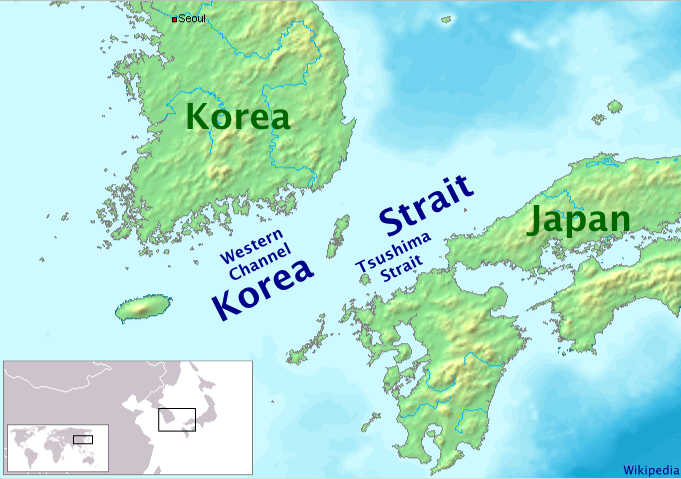 Northern Kyushu is the part of Japan closest to the Asian mainland. The origin of Yayoi culture and the Yayoi people has long been debated. The earliest archaeological sites are Itazuke or Nabata in the northern part of Kyūshū. Contacts between fishing communities on this coast and the southern coast of Korea date from the Jōmon period, as witnessed by the exchange of trade items such as fishhooks and obsidian.[24] During the Yayoi period, cultural features from Korea and China arrived in this area at various times over several centuries, and later spread to the south and east.[25] This was a period of mixture between immigrants and the indigenous population, and between new cultural influences and existing practices.[26] Chinese influence was obvious in the bronze and copper weapons, dōkyō, dōtaku, as well as irrigated paddy rice cultivation. Three major symbols of Yayoi culture are the bronze mirror, the bronze sword, and the royal seal stone. Between 1996 and 1999, a team led by Satoshi Yamaguchi, a researcher at Japan's National Museum of Nature and Science, compared Yayoi remains found in Japan's Yamaguchi and Fukuoka prefectures with those from China's coastal Jiangsu province and found many similarities between the Yayoi and the Jiangsu remains.[27][28]  A Yayoi period dōtaku bell, 3rd century AD Further links to the Korean Peninsula have been discovered, and several researchers have reported discoveries/evidence that strongly link the Yayoi culture to the southern part of the Korean Peninsula. Mark J. Hudson has cited archaeological evidence that included "bounded paddy fields, new types of polished stone tools, wooden farming implements, iron tools, weaving technology, ceramic storage jars, exterior bonding of clay coils in pottery fabrication, ditched settlements, domesticated pigs, and jawbone rituals".[29] The migrant transfusion from the Korean peninsula gains strength because Yayoi culture began on the north coast of Kyūshū, where Japan is closest to Korea. Yayoi pottery, burial mounds, and food preservation were discovered to be very similar to the pottery of southern Korea.[30]  Shinju-kyo bronze mirror excavated in Tsubai-otsukayama kofun, Yamashiro, Kyoto However, some scholars argue that the rapid increase of roughly four million people in Japan between the Jōmon and Yayoi periods cannot be explained by migration alone. They attribute the increase primarily to a shift from a hunter-gatherer to an agricultural diet on the islands, with the introduction of rice. It is quite likely that rice cultivation and its subsequent deification allowed for a slow and gradual population increase.[31] Regardless, there is archaeological evidence that supports the idea that there was an influx of farmers from the continent to Japan that absorbed or overwhelmed the native hunter-gatherer population.[30] Some pieces of Yayoi pottery clearly show the influence of Jōmon ceramics. In addition, the Yayoi lived in the same type of pit or circular dwelling as that of the Jōmon. Other examples of commonality are chipped stone tools for hunting, bone tools for fishing, shells in bracelet construction, and lacquer decoration for vessels and accessories. According to several linguists, Japonic or proto-Japonic was present on large parts of the southern Korean peninsula.[32][33] These Peninsular Japonic languages, now extinct, were eventually replaced by Koreanic languages.[34] Similarly Whitman suggests that the Yayoi are not related to the proto-Koreans but that they (the Yayoi) were present on the Korean peninsula during the Mumun pottery period. According to him and several other researchers, Japonic/proto-Japonic arrived in the Korean peninsula around 1500 BC[35][36] and was brought to the Japanese archipelago by Yayoi wet-rice farmers at some time between 700 and 300 BC.[37][38] Whitman and Miyamoto associate Japonic as the language family of both Mumun and Yayoi cultures.[39][36] Several linguists believe that speakers of Koreanic/proto-Koreanic arrived in the Korean Peninsula at some time after the Japonic/proto-Japonic speakers and coexisted with these peoples (i.e. the descendants of both the Mumun and Yayoi cultures) and possibly assimilated them. Both Koreanic and Japonic had prolonged influence on each other and a later founder effect diminished the internal variety of both language families.[40][41][42] Languages Main article: Classification of the Japonic languages Most linguists and archaeologists agree that the Japonic language family was introduced to and spread through the archipelago during the Yayoi period. Emergence of Wo in Chinese history texts  The golden seal said to have been granted to the "King of Na in Wo" by Emperor Guangwu of Han in 57 AD. It is inscribed King of Na of Wo in Han Dynasty (漢委奴國王) The earliest written records about people in Japan are from Chinese sources from this period. Wo, the pronunciation of an early Chinese name for Japan, was mentioned in 57 AD; the Na state of Wo received a golden seal from the Emperor Guangwu of the Later Han dynasty. This event was recorded in the Book of the Later Han compiled by Fan Ye in the 5th century. The seal itself was discovered in northern Kyūshū in the 18th century.[43] Wo was also mentioned in 257 in the Wei zhi, a section of the Records of the Three Kingdoms compiled by the 3rd-century scholar Chen Shou.[44] Early Chinese historians described Wo as a land of hundreds of scattered tribal communities rather than the unified land with a 700-year tradition as laid out in the 8th-century work Nihon Shoki, a partly mythical, partly historical account of Japan which dates the foundation of the country at 660 BC. Archaeological evidence also suggests that frequent conflicts between settlements or statelets broke out in the period. Many excavated settlements were moated or built at the tops of hills. Headless human skeletons[45] discovered in Yoshinogari site are regarded as typical examples of finds from the period. In the coastal area of the Inland Sea, stone arrowheads are often found among funerary objects. Third-century Chinese sources reported that the Wa people lived on raw fish, vegetables, and rice served on bamboo and wooden trays, clapped their hands in worship (something still done in Shinto shrines today),[46] and built earthen-grave mounds. They also maintained vassal-master relations, collected taxes, had provincial granaries and markets, and observed mourning. Society was characterised by violent struggles.[citation needed] Yamataikoku  Hashihaka kofun, Sakurai, Nara The Wei Zhi (Chinese: 魏志), which is part of the Records of the three Kingdoms, first mentions Yamataikoku and Queen Himiko in the 3rd century. According to the record, Himiko assumed the throne of Wa, as a spiritual leader, after a major civil war. Her younger brother was in charge of the affairs of state, including diplomatic relations with the Chinese court of the Kingdom of Wei.[47] When asked about their origins by the Wei embassy, the people of Wa claimed to be descendants of the Taibo of Wu, a historic figure of the Wu Kingdom around the Yangtze Delta of China. For many years, the location of Yamataikoku and the identity of Queen Himiko have been subject of research. Two possible sites, Yoshinogari in Saga Prefecture and Makimuku in Nara Prefecture have been suggested.[48] Recent archaeological research in Makimuku suggests that Yamataikoku was located in the area.[49][50] Some scholars assume that the Hashihaka kofun in Makimuku was the tomb of Himiko.[51] Its relation to the origin of the Yamato polity in the following Kofun period is also under debate. |
歴史 弥生人の起源 主な記事 弥生人 以下も参照のこと: 東アジア人の遺伝史 北部九州は、アジア大陸に最も近い日本の一部である。 弥生文化と弥生人の起源については、長い間議論されてきた。最古の遺跡は九州北部の板付や鍋田である。この沿岸の漁村と朝鮮半島南岸との接触は、釣り針や 黒曜石などの交易品の交換に見られるように、縄文時代から始まっている[24]。弥生時代には、朝鮮半島や中国からの文化的特徴が数世紀にわたって様々な 時期にこの地域に到来し、その後南方や東方へと広がっていった[25]。 中国の影響は、青銅器、銅器、銅鐸、灌漑水田稲作に顕著であった。弥生文化の三大シンボルは、銅鏡、銅剣、王印石である。 1996年から1999年にかけて、日本の山口県と福岡県で発見された弥生時代の遺跡と、中国沿岸部の江蘇省で発見された弥生時代の遺跡を比較した日本の 国立科学博物館の山口聡研究員率いる研究チームは、弥生時代の遺跡と江蘇省の遺跡の間に多くの類似点があることを発見した[27][28]。 弥生時代の銅鐸、西暦3世紀 朝鮮半島とのさらなるつながりも発見されており、何人かの研究者が弥生文化を朝鮮半島南部と強く結びつける発見や証拠を報告している。マーク・J・ハドソ ン(Mark J. Hudson)は、「境界のある水田、新しいタイプの磨製石器、木製の農耕具、鉄器、織物技術、陶磁器貯蔵壷、土器製作における粘土コイルの外面接着、溝 を掘った集落、家畜化された豚、顎骨祭祀」[29]などの考古学的証拠を挙げている。弥生文化は、日本が朝鮮半島に最も近い九州北岸で始まったため、朝鮮 半島からの渡来人の移入が強まった。弥生土器、古墳、食品保存は朝鮮半島南部の土器と非常によく似ていることが発見された[30]。 京都府山城町椿井大塚山古墳出土の神獣鏡銅鏡 しかし、縄文時代から弥生時代にかけて日本で約400万人が急増したことは、移住だけでは説明できないと主張する学者もいる。その主な原因は、狩猟採集生 活から農耕生活への移行であり、米の導入であるという。稲作とそれに続く神格化によって、人口がゆっくりと徐々に増加した可能性は高い[31]。いずれに せよ、大陸から日本に農耕民が流入し、先住民の狩猟採集民を吸収または圧倒したという考えを裏付ける考古学的証拠がある[30]。 弥生土器の中には、縄文土器の影響がはっきりと見られるものもある。さらに、弥生人は縄文人と同じタイプの竪穴式住居や円形住居に住んでいた。その他の共 通点としては、狩猟用の欠けた石器、漁撈用の骨角器、腕輪を作るための貝殻、器やアクセサリーの漆装飾などが挙げられる。 複数の言語学者によれば、朝鮮半島南部の大部分にはジャポニ語または原ジャポニ語が存在していた[32][33]。これらの半島ジャポニ語は現在では消滅 しているが、やがて朝鮮語に取って代わられた[34]。同様にホイットマンは、弥生人は原朝鮮人とは関係がないが、彼ら(弥生人)は弥生土器時代に朝鮮半 島に存在していたと示唆している。彼や他の複数の研究者によれば、ジャポニック語/原ジャポニック語は紀元前1500年頃に朝鮮半島に到着し[35] [36]、紀元前700年から300年の間のある時期に弥生の水田農民によって日本列島にもたらされた。 [39][36]何人かの言語学者は、朝鮮語/原朝鮮語の話者がジャポニック語/原ジャポニック語の話者より後のある時期に朝鮮半島に到着し、これらの民 族(すなわち、無文文化と弥生文化の両方の末裔)と共存し、おそらくは同化したと考えている。コリア語とジャポニック語は互いに長期にわたって影響を及ぼ し合い、後世の創始者効果によって両語族の内部的な多様性は減少した[40][41][42]。 言語 主な記事 ジャポニック語の分類 ほとんどの言語学者や考古学者は、ジャポニック語族は弥生時代に列島に伝わり広まったという見解で一致している。 中国の歴史書に登場する倭語 紀元57年、漢の光武帝が「禹のナ王」に与えたとされる金印がある。漢委奴國王と刻まれている。 日本の人々について書かれた最古の記録は、この時代の中国の資料による。紀元57年、後漢の光武帝から禹のナ国が金印を授けられた。この出来事は、5世紀 に范曄が編纂した『後漢書』に記録されている。呉は、3世紀の学者陳寿が編纂した『三国志』の一節『魏志』の257章にも記載されている[44]。 中国の初期の歴史家たちは、呉を8世紀に書かれた『日本書紀』(日本の建国を紀元前660年とする、神話的な部分と歴史的な部分を併せ持つ日本書紀)に記 されているような、700年の伝統を持つ統一された土地ではなく、何百もの部族社会が散在する土地と表現した。考古学的な証拠からも、この時代には集落や 国家間の紛争が頻繁に起きていたことがうかがえる。発掘された集落の多くは、環濠や丘の頂上に建てられていた。吉野ヶ里遺跡で発見された首のない人骨 [45]は、この時代の典型的な出土例とされている。瀬戸内海の沿岸部では、石鏃が葬送品の中からしばしば発見される。 3世紀の中国の資料によれば、和人は竹や木の盆に盛られた生魚、野菜、米を食べて生活し、手を叩いて礼拝し(現在でも神社で行われている)[46]、土塁 を築いたという。また、家臣と主人の関係を維持し、税を徴収し、地方に穀倉と市場を持ち、喪に服した。社会は激しい闘争によって特徴づけられていた[要出 典]。 邪馬台国 橋杭古墳(奈良県桜井市 三国志の一部である『魏志』には、3世紀に邪馬台国と卑弥呼女王が初めて登場する。それによると、卑弥呼は大きな内乱の後、精神的指導者として倭の王位に 就いた。卑弥呼の弟は、魏の中国宮廷との外交関係を含む国務を担当していた[47]。魏の大使館からその起源について尋ねられたとき、倭の人々は、中国の 長江デルタ周辺の呉王国の歴史的人物である呉の太保の子孫であると主張した。 邪馬台国の場所と女王卑弥呼の正体については、長年にわたって研究が続けられてきた。佐賀県の吉野ヶ里と奈良県の巻向の2つの可能性が指摘されている [48]。最近の巻向の考古学的研究は、邪馬台国がこの地域にあったことを示唆している[49][50]。 一部の学者は、巻向の橋杭古墳が卑弥呼の墓であったと仮定している[51]。 |
| https://en.wikipedia.org/wiki/Yayoi_people |
|
| Language Main article: Classification of the Japonic languages |
言語 主な記事:日本語族の分類 |
| Japanese people Yayoi culture Doigahama Site |
|
| References 01. Shinya Shōda (2007). "A Comment on the Yayoi Period Dating Controversy". Bulletin of the Society for East Asian Archaeology. 1. Archived from the original on 1 August 2019. "Yayoi Period (300 BCE – 250 AD) | Japan Module". "Timelines: JAPAN | Asia for Educators | Columbia University". "Pitt Rivers Museum Body Arts | Bronze mirror". Keally, Charles T. (3 June 2006). "Yayoi Culture". Japanese Archaeology. Charles T. Keally. Retrieved 19 March 2010. David Blake Willis & Stephen Murphy-Shigematsu: Transcultural Japan: At the Borderlands of Race, Gender and Identity, Archived 6 January 2017 at the Wayback Machine, p. 272: '"Wajin," which is written with Chinese characters that can also be read "Yamato no hito" (Yamato person)'. Boer, Elisabeth de; Yang, Melinda A.; Kawagoe, Aileen; Barnes, Gina L. (2020). "Japan considered from the hypothesis of farmer/language spread". Evolutionary Human Sciences. 2 e13. doi:10.1017/ehs.2020.7. ISSN 2513-843X. PMC 10427481. PMID 37588377. S2CID 218926428. The term Yayoi has four uses, which can create much confusion. First, it is the designation of the period beginning with the introduction of rice agriculture around 1000 BC until the advent of the Mounded Tomb Culture in the third century AD. Yayoi is a period designation exclusive to Japan; it includes both farmers and hunter–gatherers and entails the agricultural transition in a time-transgressive and regionally disparate process. Second, 'Yayoi people' may refer to anyone living in the Japanese Islands in the Yayoi period, or third, Yayoi may refer specifically to admixed people (Mumun + Jōmon in varying in proportions and across great distances). Fourth, Yayoi may indicate acculturation: the adoption of (rice) agriculture (and other continental material culture) by Jōmon-lineage people in the Yayoi period. All of these conflicting aspects of Yayoi must be kept in mind and clearly defined in any discussion. Leipe, Christian; Long, Tengwen; Wagner, Mayke; Goslar, Tomasz; Tarasov, Pavel E. (15 September 2020). "The spread of rice to Japan: Insights from Bayesian analysis of direct radiocarbon dates and population dynamics in East Asia". Quaternary Science Reviews. 244 106507. Bibcode:2020QSRv..24406507L. doi:10.1016/j.quascirev.2020.106507. ISSN 0277-3791. Cooke, Niall P.; Mattiangeli, Valeria; Cassidy, Lara M.; Okazaki, Kenji (2021). "Ancient genomics reveals tripartite origins of Japanese populations". Science Advances. 7 (38) eabh2419. Bibcode:2021SciA....7.2419C. doi:10.1126/sciadv.abh2419. PMC 8448447. PMID 34533991. 10. "【弥生文化の伝播経路】". adeac.jp. Retrieved 21 May 2025. "第6回 縄文人よりずっと多様な弥生人、DNAが語る意外なルーツと影響". natgeo.nikkeibp.co.jp (in Japanese). Retrieved 21 May 2025. "地方別に見た縄文人の影響は? 高めなのは九州・東北:朝日新聞". 朝日新聞 (in Japanese). 14 October 2020. Retrieved 21 May 2025. Diamond, Jared (June 1998). "In Search of Japanese Roots". Discover Magazine. Watanabe, Yusuke; Naka, Izumi; Khor, Seik-Soon; Sawai, Hiromi; Hitomi, Yuki; Tokunaga, Katsushi; Ohashi, Jun (17 June 2019). "Analysis of whole Y-chromosome sequences reveals the Japanese population history in the Jomon period". Scientific Reports. 9 (1): 8556. Bibcode:2019NatSR...9.8556W. doi:10.1038/s41598-019-44473-z. ISSN 2045-2322. PMC 6572846. PMID 31209235. ロシア極東新石器時代研究の新展開 Archived 26 August 2017 at the Wayback Machine (in Japanese) 崎谷満『DNA・考古・言語の学際研究が示す新・日本列島史』(勉誠出版 2009年)(in Japanese) Multiple references: 徳永勝士 (2003)「HLA と人類の移動」『Science of humanity Bensei 』(42), 4–9, 東京:勉誠出版 (in Japanese) "Javanese influence on Japanese". Languages of The World. 9 May 2011. Archived from the original on 25 July 2018. Retrieved 25 July 2018. 鳥越憲三郎『原弥生人の渡来 』(角川書店,1982)、『倭族から日本人へ』(弘文堂 ,1985)、『古代朝鮮と倭族』(中公新書,1992)、『倭族トラジャ』(若林弘子との共著、大修館書店,1995)、『弥生文化の源流考』(若林弘 子との共著、大修館書店,1998)、『古代中国と倭族』(中公新書,2000)、『中国正史倭人・倭国伝全釈』(中央公論新社,2004) 諏訪春雄編『倭族と古代日本』(雄山閣出版、1993)また諏訪春雄通信100 Janhunen, Juha (2010). "Reconstructing the Language Map of Prehistorical Northeast Asia". Studia Orientalia (108): 281–304. there are strong indications that the neighbouring Baekje state (in the southwest) was predominantly Japonic-speaking until it was linguistically Koreanized. Vovin, Alexander (2013). "From Koguryo to Tamna: Slowly riding to the South with speakers of Proto-Korean". Korean Linguistics. 15 (2): 222–240. 20. Whitman, John (1 December 2011). "Northeast Asian Linguistic Ecology and the Advent of Rice Agriculture in Korea and Japan". Rice. 4 (3): 149–58. Bibcode:2011Rice....4..149W. doi:10.1007/s12284-011-9080-0. ISSN 1939-8433. Diamond, Jared (1997). Guns, Germs, and Steel: The Fates of Human Societies. W. W. Norton & Company. Retrieved 13 December 2024. Jonghyun Kim; Fuzuki Mizuno; Takayuki Matsushita; Masami Matsushita; Saki Aoto; Koji Ishiya; Mami Kamio; Izumi Naka; Michiko Hayashi; Kunihiko Kurosaki; Shintaroh Ueda; Jun Ohashi (15 October 2024). "Genetic analysis of a Yayoi individual from the Doigahama site provides insights into the origins of immigrants to the Japanese Archipelago" (PDF). Nature. Archived from the original (PDF) on 20 October 2024. Retrieved 8 July 2025. 水野, 文月 (15 October 2024). "弥生時代人の古代ゲノム解析から渡来人のルーツを探る". 東京大学 大学院理学系研究科・理学部 (in Japanese). Kazuo, Miyamoto (2019). "The spread of rice agriculture during the Yayoi Period: From the Shandong Peninsula to the Japanese Archipelago via the Korean Peninsula". S2CID 209506890. "Ancient vessel depicting 'bird-costume shaman' found for 1st time in eastern Japan". Mainichi Daily News. 19 November 2020. Boer, Elisabeth de; Yang, Melinda A.; Kawagoe, Aileen; Barnes, Gina L. (2020). "Japan considered from the hypothesis of farmer/language spread". Evolutionary Human Sciences. 2 e13. doi:10.1017/ehs.2020.7. ISSN 2513-843X. PMC 10427481. PMID 37588377. S2CID 218926428. Miyamoto, Kazuo (6 January 2022). "The emergence of 'Transeurasian' language families in Northeast Asia as viewed from archaeological evidence". ResearchGate. Miys in Northeast Asia as viewed from archaeological evidence. ResearchGate: 25 https://www.researchgate.net/publication/357634119. {{cite journal}}: Missing or empty |title= (help) Whitman, John (14 December 2011). "Northeast Asian Linguistic Ecology and the Advent of Rice Agriculture in Korea and Japan". Rice. 4 (3): 149–158. Bibcode:2011Rice....4..149W. doi:10.1007/s12284-011-9080-0. ISSN 1939-8433. 30. "Archaeological Explanation for the Diffusion Theory of the Japonic and Koreanic Language | Collections | Kyushu University Library". Japanese Journal of Archeology (in Japanese). hdl:2324/1812319. 弥生人DNAで迫る日本人の起源」 [The origin of Japanese people approaching with Yayoi DNA]. ja:サイエンスZERO (Television production) (in Japanese). NHK. 23 December 2018. Nakao, Hisashi; Kaneda, Akihiro; Tamura, Kohei; Noshita, Koji; Nakagawa, Tomomi (2 April 2024). "Macro-Scale Population Patterns in the Kofun Period of the Japanese Archipelago: Quantitative Analysis of a Larger Sample of Three-Dimensional Data from Ancient Human Crania". Humans. 4 (2): 131–147. doi:10.3390/humans4020008. ISSN 2673-9461. Gelabert, Pere; Blazyte, Asta; Chang, Yongjoon; Fernandes, Daniel M.; Jeon, Sungwon; Hong, Jin Geun; Yoon, Jiyeon; Ko, Youngmin; Oberreiter, Victoria; Cheronet, Olivia; Özdoğan, Kadir T.; Sawyer, Susanna; Yang, Songhyok; Greytak, Ellen McRae; Choi, Hansol (8 August 2022). "Northeastern Asian and Jomon-related genetic structure in the Three Kingdoms period of Gimhae, Korea". Current Biology. 32 (15): 3232–3244.e6. Bibcode:2022CBio...32E3232G. doi:10.1016/j.cub.2022.06.004. ISSN 0960-9822. PMID 35732180. Kim, Jungeun; Jeon, Sungwon; Choi, Jae-Pil; et al. (2020). "The Origin and Composition of Korean Ethnicity Analyzed by Ancient and Present-Day Genome Sequences". Genome Biology and Evolution. 12 (5): 553–565. doi:10.1093/gbe/evaa062. PMC 7250502. PMID 32219389. Ishiya, Koji; Mizuno, Fuzuki; Gojobori, Jun; et al. (2024). "High-coverage genome sequencing of Yayoi and Jomon individuals shed light on prehistoric human population history in East Eurasian". bioRxiv 10.1101/2024.08.09.606917. Kim, Jonghyun; Mizuno, Fuzuki; Matsushita, Takayuki; et al. (2024). "Genetic analysis of a Yayoi individual from the Doigahama site provides insights into the origins of immigrants to the Japanese Archipelago". Journal of Human Genetics. 70 (1): 47–57. doi:10.1038/s10038-024-01295-w. PMC 11700843. PMID 39402381. プレジデント 公式チャンネル (25 December 2024). 【9割は「外来種」日本人のDNA】縄文人と弥生人は違う種だった?/人類は1万年前よりバカになっている?/沖縄3割・アイヌ7割「日本人の二重構造モ デル」/国立科学博物館館長・分子人類学者篠田謙一氏に聞く – via YouTube. "「縄文人」は独自進化したアジアの特異集団だった!: 深読み". 読売新聞オンライン (in Japanese). 15 December 2017. Retrieved 21 February 2019. Bennett, E. Andrew; Liu, Yichen; Fu, Qiaomei (3 December 2024). "Reconstructing the Human Population History of East Asia through Ancient Genomics". Elements in Ancient East Asia. doi:10.1017/9781009246675. ISBN 978-1-009-24667-5. 40. Miyazato, Eri; Yamaguchi, Kyoko; Fukase, Hitoshi; et al. (2014). "Comparative analysis of facial morphology between Okinawa Islanders and mainland Japanese using three-dimensional images". American Journal of Human Biology. 26 (4): 538–548. doi:10.1002/ajhb.22560. PMID 24838439 – via Wiley Online Library. "「のっぺり顔」ではない弥生人 九州北部で発掘された人骨から復元:朝日新聞". 朝日新聞 (in Japanese). 23 February 2025. Retrieved 15 March 2025. Isomura, Yukio; Sakai, Hideya (2012). (国指定史跡事典) National Historic Site Encyclopedia. 学生社. ISBN 978-4-311-75040-3.(in Japanese) 澤田洋太郎『日本語形成の謎に迫る』(新泉社、1999年) 44. 次田真幸『古事記 (上) 全訳注』講談社学術文庫 38刷2001年(初版 1977年)ISBN 4-06-158207-0 p.192 |
参考文献 01. 庄田真也(2007年).「弥生時代の年代設定をめぐる論争に関する一考察」.『東アジア考古学会報』.1号.2019年8月1日にオリジナルからアーカイブされた. 「弥生時代(紀元前300年 – 紀元250年) | 日本モジュール」. 「年表:日本 | 教育者向けアジア | コロンビア大学」。 「ピット・リバーズ博物館 身体装飾 | 青銅鏡」。 キーリー、チャールズ・T.(2006年6月3日)。「弥生文化」。『Japanese Archaeology』。チャールズ・T・キーリー。2010年3月19日閲覧。 デビッド・ブレイク・ウィリス & スティーブン・マーフィー=シゲマツ:『トランスカルチュラル・ジャパン:人種、ジェンダー、アイデンティティの境界地帯』、2017年1月6日ウェイ バックマシンにアーカイブ、p. 272:「『和人』は、漢字で書かれ、『大和の人』とも読める」。 デ・ボーア、エリザベス;ヤン、メリンダ・A.; カワゴエ、アイリーン;バーンズ、ジーナ・L. (2020). 「農耕民/言語拡散の仮説から見た日本」. 『Evolutionary Human Sciences』. 2 e13. doi:10.1017/ehs.2020.7. ISSN 2513-843X. PMC 10427481. PMID 37588377. S2CID 218926428. 「弥生」という用語には4つの用法があり、これが大きな混乱を招くことがある。第一に、これは紀元前1000年頃の稲作導入から、紀元3世紀の古墳文化の 出現に至るまでの時代の呼称である。弥生は日本に特有の時代区分であり、農耕民と狩猟採集民の両方を包含し、時間を超え地域によって異なる過程における農 耕への移行を意味する。第二に、「弥生人」とは弥生時代に日本列島に居住したあらゆる人々を指す場合があり、第三に、弥生とは特に混血集団(ムムン文化と 縄文文化が、比率や地理的な広がりに違いはあるものの混在した人々)を指す場合がある。第四に、弥生とは同化を指す場合もある。すなわち、弥生時代の縄文 系の人々が(稲作)農業(およびその他の大陸由来の物質文化)を取り入れたことを意味する。弥生に関するこれら相反する側面はすべて念頭に置き、いかなる 議論においても明確に定義されなければならない。 Leipe, Christian; Long, Tengwen; Wagner, Mayke; Goslar, Tomasz; Tarasov, Pavel E. (2020年9月15日). 「日本への稲の伝播:東アジアにおける直接放射性炭素年代測定データと人口動態のベイズ分析から得られた知見」. Quaternary Science Reviews. 244 106507. Bibcode:2020QSRv..24406507L. doi:10.1016/j.quascirev.2020.106507. ISSN 0277-3791. クック、ナイアル・P.; マッティアンジェリ、ヴァレリア; キャシディ、ララ・M.; 岡崎、健二 (2021). 「古代ゲノム解析が明らかにした日本人集団の三つの起源」。Science Advances. 7 (38) eabh2419. Bibcode:2021SciA....7.2419C. doi:10.1126/sciadv.abh2419. PMC 8448447. PMID 34533991. 10. 「【弥生文化の伝播経路】」。adeac.jp。2025年5月21日閲覧。 「第6回 縄文人よりずっと多様な弥生人、DNAが語る意外なルーツと影響」。natgeo.nikkeibp.co.jp(日本語)。2025年5月21日閲覧。 「地域別に見た縄文人の影響は? 高いのは九州・東北:朝日新聞」。朝日新聞(日本語)。2020年10月14日。2025年5月21日閲覧。 ダイヤモンド、ジャレッド(1998年6月)。「In Search of Japanese Roots」。Discover Magazine。 渡辺 祐介; 中 泉; コー・セイクソン; 澤井 弘美; 瞳 由紀; 徳永 克志; 大橋 純 (2019年6月17日). 「Y染色体全塩基配列の解析が明らかにした縄文時代の日本人口史」. Scientific Reports. 9 (1): 8556. Bibcode:2019NatSR...9.8556W. doi:10.1038/s41598-019-44473-z. ISSN 2045-2322. PMC 6572846. PMID 31209235. ロシア極東新石器時代研究の新展開 Archived 2017年8月26日 at the Wayback Machine (日本語) 崎谷満『DNA・考古・言語の学際研究が示す新・日本列島史』(勉誠出版 2009年)(日本語) 複数の参考文献: 徳永勝士 (2003)「HLA と人類の移動」『Science of humanity Bensei 』(42), 4–9, 東京:勉誠出版 (日本語) 「Javanese influence on Japanese」. Languages of The World. 2011年5月9日. 2018年7月25日にオリジナルからアーカイブされた。2018年7月25日閲覧。 鳥越憲三郎『原弥生人の渡来』(角川書店、1982年)、『倭族から日本人へ』(弘文堂、1985年)、『古代朝鮮と倭族』(中公新書、1992年)、 『倭族トラジャ』(若林弘子との共著、大修館書店、1995年)、 『弥生文化の源流考』(若林弘子との共著、大修館書店、1998年)、『古代中国と倭族』(中公新書、2000年)、『中国正史倭人・倭国伝全釈』(中央 公論新社、2004年) 諏訪春雄編『倭族と古代日本』(雄山閣出版、1993)また諏訪春雄通信100 Janhunen, Juha (2010). 「Reconstructing the Language Map of Prehistorical Northeast Asia」. Studia Orientalia (108): 281–304. 近隣の百済(南西)は、言語的に朝鮮化されるまで、主に日本語系言語を話していたという強い示唆がある。 Vovin, Alexander (2013). 「From Koguryo to Tamna: Slowly riding to the South with speakers of Proto-Korean」. Korean Linguistics. 15 (2): 222–240. 20. ホイットマン、ジョン(2011年12月1日)。「北東アジアの言語生態学と韓国・日本における稲作の到来」。『Rice』。4 (3): 149–58. Bibcode:2011Rice....4..149W. doi:10.1007/s12284-011-9080-0. ISSN 1939-8433. ダイアモンド、ジャレド(1997年)。『銃・病原菌・鉄:人類社会の運命』。W. W. ノートン・アンド・カンパニー。2024年12月13日閲覧。 キム・ジョンヒョン; 水野 風月; 松下 貴之; 松下 雅美; 青戸 紗希; 石谷 浩司; 神尾 真美; 中 泉; 林 美智子; 黒崎 邦彦; 上田 慎太郎; 大橋 純 (2024年10月15日)。「土井ヶ浜遺跡の弥生時代人に関する遺伝子解析が、日本列島への移民の起源に関する知見を提供する」(PDF)。『ネイ チャー』。2024年10月20日にオリジナル(PDF)からアーカイブされた。2025年7月8日閲覧。 水野 文月(2024年10月15日)。「弥生時代人の古代ゲノム解析から渡来人のルーツを探る」。東京大学 大学院理学系研究科・理学部(日本語)。 宮本和夫(2019年)。「弥生時代における稲作の広がり:山東半島から朝鮮半島を経て日本列島へ」。S2CID 209506890。 「『鳥装のシャーマン』を描いた古代の器、東日本で初発見」。毎日新聞。2020年11月19日。 ボーア、エリザベス・デ;ヤン、メリンダ・A.;川越、アイリーン;バーンズ、ジーナ・L. (2020)。「農耕民・言語拡散仮説から見た日本」。『Evolutionary Human Sciences』。2 e13。doi:10.1017/ehs.2020.7。ISSN 2513-843X。PMC 10427481。PMID 37588377。S2CID 218926428。 宮本和夫(2022年1月6日)。「考古学的証拠から見た北東アジアにおける『トランスユーラシア』語族の出現」。ResearchGate。 考古学的証拠から見た北東アジアのミイ語族。ResearchGate: 25 https://www.researchgate.net/publication/357634119. {{cite journal}}: |title=が欠落しているか空欄である (ヘルプ) ホイットマン, ジョン (2011年12月14日). 「北東アジアの言語生態学と韓国・日本における稲作の到来」. Rice. 4 (3): 149–158. Bibcode:2011Rice....4..149W. doi:10.1007/s12284-011-9080-0. ISSN 1939-8433. 30. 「日本語系・朝鮮語系言語の拡散説に関する考古学的説明 | コレクション | 九州大学図書館」。『日本考古学雑誌』(日本語)。hdl:2324/1812319. 「弥生人のDNAで迫る日本人の起源」 [The origin of Japanese people approaching with Yayoi DNA]。ja:サイエンスZERO(テレビ番組)(日本語)。NHK。2018年12月23日。 中尾久; 金田明弘; 田村耕平; 野下浩司; 中川智美 (2024年4月2日). 「日本列島の古墳時代における大規模な人口パターン:古代人頭蓋骨の3次元データの大規模サンプルを用いた定量的分析」. Humans. 4 (2): 131–147. doi:10.3390/humans4020008. ISSN 2673-9461. ゲラベルト, ペレ; ブラジテ, アスタ; チャン, ヨンジュン; フェルナンデス, ダニエル・M.; チョン, ソンウォン; ホン, ジン・グン; ユン, ジヨン; コ, ヨンミン; オーバーライター, ビクトリア; シェロネ, オリビア; オズドアン、カディル・T.; ソーヤー、スザンナ; ヤン、ソンヒョク; グレイタック、エレン・マクレー; チェ、ハンソル (2022年8月8日). 「韓国・金海における三国時代の北東アジアおよび縄文関連の遺伝的構造」. Current Biology. 32 (15): 3232–3244.e6. Bibcode:2022CBio...32E3232G. doi:10.1016/j.cub.2022.06.004. ISSN 0960-9822. PMID 35732180. キム・ジュンウン; チョン・ソンウォン; チェ・ジェピル; 他 (2020). 「古代および現代のゲノム配列による韓国民族の起源と構成の分析」. Genome Biology and Evolution. 12 (5): 553–565. doi:10.1093/gbe/evaa062. PMC 7250502. PMID 32219389. 石谷 浩司; 水野 風月; 五条堀 純; 他 (2024). 「弥生・縄文時代の個体に対する高カバレッジゲノムシーケンス解析が、東ユーラシアにおける先史時代の人口史に新たな光を当てる」. bioRxiv 10.1101/2024.08.09.606917. キム・ジョンヒョン、水野風月、松下貴之、他(2024)。「土井ヶ浜遺跡の弥生人個体の遺伝学的解析は、日本列島への移民の起源に関する知 見を提供する」。Journal of Human Genetics. 70 (1): 47–57. doi:10.1038/s10038-024-01295-w. PMC 11700843. PMID 39402381. プレジデント 公式チャンネル (2024年12月25日). 【9割は「外来種」日本人のDNA】縄文人と弥生人は違う種だった?/ 人類は1万年前よりバカになっている?/沖縄3割・アイヌ7割「日本人の二重構造モデル」/国立科学博物館館長・分子人類学者篠田謙一氏に聞く – via YouTube. 「『縄文人』は独自に進化したアジアの特異集団だった!:深読み」。読売新聞オンライン(日本語)。2017年12月15日。2019年2月21日閲覧。 Bennett, E. Andrew; Liu, Yichen; Fu, Qiaomei (2024年12月3日). 「Reconstructing the Human Population History of East Asia through Ancient Genomics」. Elements in Ancient East Asia. doi:10.1017/9781009246675. ISBN 978-1-009-24667-5. 40. 宮里恵里; 山口京子; 深瀬仁; 他 (2014). 「3次元画像を用いた沖縄島民と本土日本人の顔貌形態の比較分析」. American Journal of Human Biology. 26 (4): 538–548. doi:10.1002/ajhb.22560. PMID 24838439 – via Wiley Online Library. 「『のっぺり顔』ではない弥生人 九州北部で発掘された人骨から復元:朝日新聞」. 朝日新聞(日本語)。2025年2月23日。2025年3月15日閲覧。 磯村幸雄、酒井秀也(2012)。『(国指定史跡事典)National Historic Site Encyclopedia』。学生社。ISBN 978-4-311-75040-3。(日本語) 澤田洋太郎『日本語形成の謎に迫る』(新泉社、1999年) 44. 次田真幸『古事記 (上) 全訳注』講談社学術文庫 38刷2001年(初版 1977年)ISBN 4-06-158207-0 p.192 |
| https://en.wikipedia.org/wiki/Yayoi_people |
★
| 弥生人(やよいじん)は弥生時代に日本列島に居住した人々。大きく、弥生時代に朝鮮半島とアジア大陸等から日本列島に渡来してきた渡来系弥生人、縄文人が直接新文化を受け入れた結果誕生した在来系弥生人、および両者の混血である弥生人とに分けられる。 概要 縄文人骨の顔立ちや体形は一定しており、あまり大きな時期差や地域差は認められないが、広義の弥生人骨は割合と多様であり、地域差や時期差が大きい。縄文 人そのもののような弥生人や縄文人に似た弥生人(縄文系弥生人)、大陸側(朝鮮半島と中国吉林省近く)にいた人々と身体的特徴が似ている弥生人(渡来系弥 生人)、縄文系と渡来系が混合したような弥生人(混血系弥生人)がいた[1]。 ミトコンドリアDNAハプログループやY染色体ハプログループの研究によって、日本人と朝鮮人と中国人のY染色体には違いがみられ、弥生時代開始以降に断続的に渡来人がやって来たものの、先住の縄文人とは完全に対立していたわけではなく、融和、混血していったものと考えられる[2]。また日本列島には縄文時代以前から各方面から様々な人たちが日本へ流入し、弥生人も複数の系統が存在していたと推定される。 2. 溝口優司(国立科学博物館人類研究部長)『日本人の成り立ちについての3つの仮説(P173)』 |
|
| 起源 一般には、弥生人は朝鮮半島、山東半島から水稲栽培を日本にもたらした集団と考えられてきた。崎谷満によれば、日本に水稲栽培をもたらしたのはY染色体ハ プログループO1b2に属す集団である。O1b2系統は、オーストロアジア語族の民族に高頻度にみられるO1b1系統の姉妹系統であり、満州や朝鮮半島な どの東アジア北東部に多く分布する。崎谷はO1b系統(O1b1/O1b2)はかつては長江文明の担い手であったが、長江文明の衰退に伴い、O1b1およ び一部のO1b2は南下し百越と呼ばれ、残りのO1b2は北東へと移動し、朝鮮半島、日本列島へ渡ったと考えている[3]。 しかしながら、重要なのは長江流域や江南地方などの華中地域においてはO1b2系統はほとんど分布が確認されないため、弥生人の祖先が長江文明の担い手で あったという説を疑問視されている[要出典]。たしかに百越という集団が歴史的に実在したことは確実であるが、O1b2は中国華中地域にはほとんど存在ぜ ず朝鮮半島に非常に多く見られていることから、最近の研究では長江文明ではなく朝鮮半島から水稲栽培をもたらした担い手が弥生人であることが提唱されてい る[要出典]。篠田によるミトコンドリアDNAの研究によると、渡来系弥生人と近いのは日本から比較的近い朝鮮半島、遼寧省、山東半島であるとされ、また 核DNAの主成分分析によると、弥生人は現代日本人と並んで北京の中国人と縄文人の中間に位置し、オロチェンやウリチなど古代北東アジア人と関連の深い沿 海州やアムール川流域の民族とは離れていることが示されている[4][5]。  弥生人に連なる東アジアのY染色体ハプログループと民族移動[要出典] |
|
|
土井ヶ浜遺跡の弥生人が北部モンゴロイドの特徴を持つことや、日本人にみられるミトコンドリアDNAハプログループやGm遺伝子が北方型であることなどか
ら、弥生人の起源地を沿海州南部(ロシア)に求める見方もある。遺伝的にも東アジア北東部にはハプログループO1b2が比較的高頻度に確認され、弥生時代
に広くみられる刻目突帯文土器と似たタイプの土器が沿海州南西部のシニ・ガイ文化にもみられる[6]。民族学からも、類似のルートをとった集団として、岡
正雄は「父系的、「ハラ」氏族的、畑作=狩猟民文化(北東アジア・ツングース方面)」[7][8]、鳥居龍蔵は「固有日本人(朝鮮半島を経由して、あるい
は沿海州から来た北方系民族)」[9]を抽出している。 また、日本人の約20%に見られるO2系統も弥生人に含まれていたと想定されるが、O1b2とO2はルーツが異なると思われ、その渡来時期、ルートなどの詳細はまだまだ不明な点も多い。 福岡県の安徳台遺跡から出土した形質的には典型的な渡来系弥生人と考えられた人骨の核ゲノムの解析を行ったところ、既に弥生時代中期に縄文人との混血があ り、韓国や中国の集団より現代日本人の集団に近いことが判明した[10]。一方で縄文人に遺伝的に近い集団がかつて東アジア沿岸部に広く存在したのではな いかということから古代東アジア沿岸集団の存在が仮定され、朝鮮半島南岸の新石器時代人骨からも古代東アジア沿岸集団あるいは縄文人との混血が見られるこ とから、渡来系弥生人が渡来する前に既に混血した集団であった可能性が考えられるようになっている[11]。 言語学からは、朝鮮半島における無文土器文化の担い手が現代日本語の祖先となる日琉語族に属する言語を話していたという説が複数の学者から提唱されている [12][13][14][15][16]。 これらの説によれば現代の朝鮮語の祖先となる朝鮮語族に属する言語は古代満州南部から朝鮮半島北部にわたる地域で確立され、その後この朝鮮語族の集団は北 方から南方へ拡大し、朝鮮半島中部から南部に存在していた日琉語族の集団に置き換わっていったとしており、この過程で南方へ追いやられる形となった日琉語 族話者の集団が弥生人の祖であるとされる。 なお、渡来した弥生人は単一民族ではなく複数の系統が存在するという説もある[7][17][18]。 「日本人#民族学」、「日本人#HLAハプロタイプの流れ」、および「騎馬民族征服王朝説」も参照 |
|
| 特徴 頭蓋骨の計測値で渡来系弥生人に最も近いのは新石器時代の朝鮮半島の南部人、河南省、青銅器時代の江蘇東周・山東臨淄人であった[19]。 また、眼窩は鼻の付け根が扁平で上下に長く丸みを帯びていて、のっぺりとしている。また、歯のサイズも縄文人より大きい。平均身長も162〜163センチ ぐらいで、縄文人よりも高い。しかしながら、こうした人骨資料のほとんどは、北部九州・山口県・島根県の日本海沿岸にかけての遺跡から発掘されたものであ る。南九州から北海道まで、他の地方からも似た特徴を持つ弥生時代の人骨は発見されているが、それらは人種間の形態とその発生頻度までを確定付けるには 至っていない。近年、福岡県糸島半島の新町遺跡で大陸墓制である支石墓から発見された人骨は縄文的習俗である抜歯が施されていた。長崎県大友遺跡の支石墓 群から多くの縄文的な人骨が発見されている。さらに瀬戸内地方の神戸市新方遺跡からの人骨も縄文的形質を備えているという。ただ、福岡市の雀居(ささい) 遺跡や奈良盆地の唐古・鍵遺跡の前期弥生人は、渡来系の人骨だと判定されている。つまり、最初に渡来系が展開したと考えられている北部九州や瀬戸内・近畿 地方でさえ、弥生時代初期の遺跡からは渡来系の人と判定される人骨の出土数は縄文系とされる人骨より少ない。そのことから、水田稲作の先進地帯でも縄文人 が水稲耕作を行ったのであり、絶対多数の縄文人と少数の大陸系渡来人との協同のうちに農耕社会へと移行したと考えられる[20]。 一方、1960年代になると金関丈夫が、山口県土井ヶ浜遺跡や佐賀県の三津永田遺跡などの福岡平野の前・中期の弥生人骨の研究から、弥生時代の人の身長は 高く、さらに頭の長さや顔の広さなどが朝鮮半島と渤海湾周辺など中国東北の人骨に近く、縄文時代人とは大きな差があると指摘し[21]、縄文人とは違った 人間が朝鮮半島や大陸からやってきて、縄文人と混血して弥生人になったと考えた[22]。その後の調査で、前述のように中国山東省の遺跡から発掘された人 骨との類似も指摘されている。 また、埴原和郎は、アジア南部に由来する縄文人の住む日本列島へ中国東北部にいたツングース系の人々が流入したことにより弥生文化が形成されたとの「二重 構造モデル」を1991年に提唱した。一方古代北東アジア人と密接に関係しているツングース系民族やニブフ人などの生活しているアムール川下流域から来た とみられるオホーツク文化人は、歯冠計測値や頬骨の張り出しなどの特徴が渡来系弥生人やその影響を大きく受けたと思われる現代日本人とは全く異なっていた [23][24]。また覚張らは後述する西北九州弥生人のサンプルを解析し、西北九州弥生人には古代北東アジア人に関連するバイカル湖周辺の古人骨などと の混血が見られるとし、古墳時代の古人骨サンプルが中国など東アジアの集団との混血が加わっていることとあわせて日本人は三重構造であると提唱した [25][26][27]。 埴原は、人口学の推計によれば弥生時代から古墳時代にかけて一般の農耕社会の人口増加率では説明できない急激な人口増加が起きていることから、この間、 100万人規模の渡来人の流入があったはずだとする大量渡来説も提唱していた[28]。一方で中橋らは少量の渡来と高い人口増加率が組み合わされば渡来系 弥生人主体の人口増加は説明可能としている[29]。この問題については国立歴史民俗博物館のチームが弥生時代の開始年代が約500年早いと発表したこと により、少数の渡来であっても高い人口増加率を想定しなくてもよくなり議論が終息していった[4]。 佐原真は福岡平野・佐賀平野などの北九州の一部で、縄文人が弥生人と混血した結果弥生文化を形成して東に進み、混血して名古屋と丹後半島とを結ぶ線まで進み、水稲耕作が定着したとしている[30]。 |
|
|
弥生人の種類(九州) 九州の弥生人は、大陸から北部九州に渡来した「渡来系弥生人」、鹿児島県付近に住み極度な短頭型(絶壁型)の「南九州弥生人」、長崎県付近に住んでいた 「西北九州弥生人」がある[31]。南九州弥生人と西北九州弥生人については、形質的に縄文人の子孫と考えられてきた[32]。 近年の核ゲノム分析によって、西北九州弥生人については、渡来系弥生人との間で混血がかなり進んでいたことが示された[25]。一方前述のように同じサン プルを用いた別の解析では、西北九州弥生人は渡来系弥生人ではなく古代北東アジア人系統と混血しているとの結果が出ている[26][27]。 下戸 弥生人に関連する体質として、下戸が存在する。下戸遺伝子の持ち主は中国南部と日本に集中しており、水耕栽培の発祥と推測される中国南部での、水田農耕地帯特有の感染症に対する自然選択の結果ではないかとも推測されている[33][34]。  |
|
| https://x.gd/vOv4N |
リ ンク
文 献
そ の他の情報
Copyleft, CC, Mitzub'ixi Quq Chi'j, 1996-2099

☆
 ☆
☆
