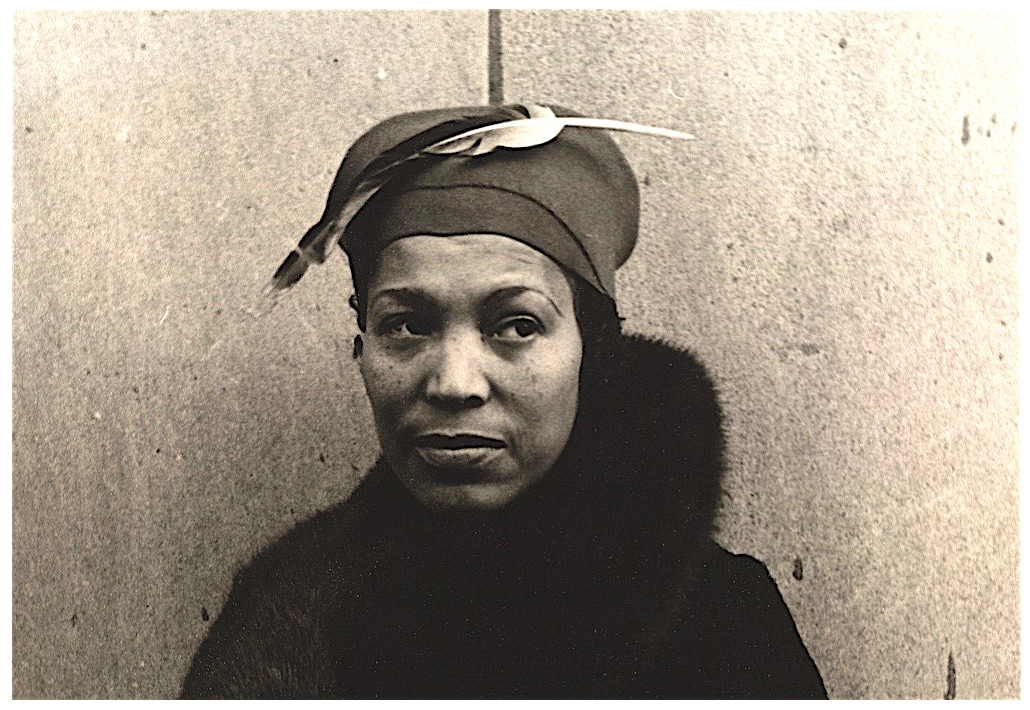
Hurston, Zora Neale: 1891-1960,
from "Zora
Neale Hurston Collection," by Yale University
ゾラ・ニール・ハーストン
Zora
Neale Hurston, 1891-1960
Hurston, Zora Neale: 1891-1960,
from "Zora
Neale Hurston Collection," by Yale University
ゾラ・ ニール・ハーストンの人生は驚異的である。それはすべての人間の人生がかけがえのない固有のもので あり、驚異的であるということと同様に、(我々の思考経験を解体してくれるという意味で)脅威的であるということだ。
彼女の 墓碑は、後年(1973年)、アリス・ウォーカーが建てたものだが、その生年は10年も遅く間違っ ている(ZORA NEALE HURSTON, "A GENIUS OF THE SOUTH" 1901-1960 NOVELIST, FOLKLORIST ANTHROPOLOGIST)。つま り、生年すら不明確で忘れられた存在であったのだ——ただし彼女自身が高校時代に奨学金を得るために9歳のサバを読み、そのまま周りの人に1901年生まれだと伝えていたと、考えられる。
「わたしたちの人種的健康の最高のシンボ
ル。黒人を完全な、複雑な、無傷のまま人間として見る感性を持った人である。そして、これこそ多くの黒人の著作、文学に非常に欠けているものなのだ」——
アリス・ウォーカーによるゾラ・ニール・ハーストン評(ヘンリー・ルイス・ゲーツ・Jr. 1996:321)
しか し、彼女の生き様が(再)発見されるにつれて、この魅力ある人生とはなんであったのか!、という探究 が後の人たちによって重要な鉱脈が発見されるように発掘されるようになってきたのである。
彼女の大学時代の 指導教員は、フランツ・ボアズ(Franz Uri Boas, 1858-1942)であり、彼の助手ルース・ベネディクトとの親交も厚かった。
Zora
Neale Hurston Fieldwork 1928(YouTube)
| Zora Neale
Hurston (January 7, 1891[1]: 17 [2]: 5 – January 28, 1960) was an
American author, anthropologist, and filmmaker. She portrayed racial
struggles in the early-1900s American South and published research on
hoodoo.[3] The most popular of her four novels is Their Eyes Were
Watching God, published in 1937. She also wrote more than 50 short
stories, plays, and essays. Hurston was born in Notasulga, Alabama, and moved with her family to Eatonville, Florida, in 1894. She later used Eatonville as the setting for many of her stories. In her early career, Hurston conducted anthropological and ethnographic research while a student at Barnard College and Columbia University.[4] She had an interest in African-American and Caribbean folklore, and how these contributed to the community's identity. She also wrote about contemporary issues in the black community and became a central figure of the Harlem Renaissance. Her short satires, drawing from the African-American experience and racial division, were published in anthologies such as The New Negro and Fire!![5] After moving back to Florida, Hurston wrote and published her literary anthology on African-American folklore in North Florida, Mules and Men (1935), and her first three novels: Jonah's Gourd Vine (1934); Their Eyes Were Watching God (1937); and Moses, Man of the Mountain (1939).[6] Also published during this time was Tell My Horse: Voodoo and Life in Haiti and Jamaica (1938), documenting her research on rituals in Jamaica and Haiti. Hurston's works concerned both the African-American experience and her struggles as an African-American woman. Her novels went relatively unrecognized by the literary world for decades. In 1975, fifteen years after Hurston's death, interest in her work was revived after author Alice Walker published an article, "In Search of Zora Neale Hurston" (later retitled "Looking for Zora"), in the March issue of Ms. magazine that year.[7][8] Then, in 2001, Hurston's manuscript Every Tongue Got to Confess, a collection of folktales gathered in the 1920s, was published after being discovered in the Smithsonian archives. Her nonfiction book Barracoon: The Story of the Last "Black Cargo", about the life of Cudjoe Lewis (Kossola), was published in 2018. |
ゾラ・ニール・ハーストン(Zora Neale
Hurston、1891年1月7日[1]: 17 [2]: 5 -
1960年1月28日)は、アメリカの作家、人類学者、映画監督。1900年代初頭のアメリカ南部の人種闘争を描き、フゥードゥー教(ヴードゥー)に関する研究を発表した
[3]。4冊の小説の中で最も人気があるのは、1937年に出版された『彼らの目は神を見ていた』である。彼女はまた、50以上の短編小説、戯曲、エッセ
イを書いた。 ハーストンはアラバマ州ノタスルガで生まれ、1894年に家族とともにフロリダ州イートンヴィルに移住。後に彼女はイートンヴィルを多くの物語の舞台とし た。初期のキャリアにおいて、ハーストンはバーナード・カレッジとコロンビア大学在学中に人類学的、民族誌学的研究を行った。 また、黒人社会の現代的な問題についても執筆し、ハーレム・ルネッサンスの中心人物となった。フロリダに戻ったハーストンは、北フロリダのアフリカ系アメ リカ人の民間伝承に関する文学アンソロジー『Mules and Men』(1935年)と、最初の3作を執筆・出版した: Jonah's Gourd Vine』(1934年)、『Their Eyes Were Watching God』(1937年)、『Moses, Man of the Mountain』(1939年)である[6]: Voodoo and Life in Haiti and Jamaica』(1938年)は、ジャマイカとハイチでの儀式に関する彼女の研究を記録したものである。 ハーストンの作品は、アフリカ系アメリカ人の体験とアフリカ系アメリカ人女性としての彼女の葛藤の両方に関わるものであった。彼女の小説は何十年もの間、 文学界では比較的認知されていなかった。ハーストンの死後15年経った1975年、作家のアリス・ウォーカーが同年3月号の『Ms.』誌に「ゾラ・ニー ル・ハーストンを探して」(後に「ゾラを探して」と改題)という記事を掲載したことから、彼女の作品への関心が再び高まった[7][8]。 そして2001年、スミソニアン博物館に保管されていたハーストンの原稿が発見され、1920年代に収集された民話集『Every Tongue Got to Confess』が出版された。彼女のノンフィクション『Barracoon: 2018年には、カドジョー・ルイス(コソラ)の生涯を描いた『The Story of the Last "Black Cargo"』が出版された。 |
| Biography Early life and education Hurston was the fifth of eight children of John Hurston and Lucy Ann Hurston (née Potts). All of her four grandparents had been born into slavery. Her father was a Baptist preacher and sharecropper, who later became a carpenter, and her mother was a school teacher. She was born in Notasulga, Alabama, on January 7, 1891, where her father grew up and her paternal grandfather was the preacher of a Baptist church.[1]: 14–17, 439–440 [2]: 8 When she was three, her family moved to Eatonville, Florida. In 1887, it was one of the first all-black towns incorporated in the United States.[9] Hurston said that Eatonville was "home" to her, as she was so young when she moved there. Sometimes she claimed it as her birthplace.[1]: 25 A few years later, her father was elected as mayor of the town in 1897. In 1902 he was called to serve as minister of its largest church, Macedonia Missionary Baptist. As an adult, Hurston often used Eatonville as a setting in her stories—it was a place where African Americans could live as they desired, independent of white society. In 1901, some northern school teachers had visited Eatonville and given Hurston several books that opened her mind to literature. She later described this personal literary awakening as a kind of "birth".[10]: 3–4 Hurston lived for the rest of her childhood in Eatonville and described the experience of growing up there in her 1928 essay, "How It Feels To Be Colored Me". Eatonville now holds an annual "Zora! Festival" in her honor.[11] Hurston's mother died in 1904, and her father subsequently married Mattie Moge in 1905.[12][13] This was considered scandalous, as it was rumored that he had had sexual relations with Moge before his first wife's death.[1]: 52 Hurston's father and stepmother sent her to a Baptist boarding school in Jacksonville, Florida. They eventually stopped paying her tuition and she was dismissed. Work and study In 1916, Hurston was employed as a maid by the lead singer of the Gilbert & Sullivan theatrical company.[12][14] In 1917, she resumed her formal education, attending Morgan College, the high school division of Morgan State University, a historically black college in Baltimore, Maryland. At this time, apparently to qualify for a free high-school education, the 26-year-old Hurston began claiming 1901 as her year of birth.[12][15] She graduated from the high school of Morgan State University in 1918.[16] College and slightly after When she was in college, she was introduced to viewing life through an anthropological lens away from Eatonville. One of her main goals was to prove similarities between ethnicities.[17] In 1918, Hurston began her studies at Howard University, a historically black college in Washington, DC. She was one of the earliest initiates of Zeta Phi Beta sorority, founded by and for black women, and co-founded The Hilltop, the university's student newspaper.[18] She took courses in Spanish, English, Greek, and public speaking and earned an associate degree in 1920.[10]: 4 In 1921, she wrote a short story, "John Redding Goes to Sea", which qualified her to become a member of Alain Locke's literary club, The Stylus. Hurston left Howard in 1924, and in 1925 was offered a scholarship by Barnard trustee Annie Nathan Meyer[19] to Barnard College of Columbia University, a women's college, where she was the sole black student.[20]: 210 While she was at Barnard, she conducted ethnographic research with noted anthropologist Franz Boas of Columbia University, and later studied with him as a graduate student. She also worked with Ruth Benedict and fellow anthropology student Margaret Mead.[21] Hurston received her B.A. in anthropology in 1928, when she was 37.[22] Hurston had met Charlotte Osgood Mason, a philanthropist and literary patron, who became interested in her work and career. She had supported other African-American authors, such as Langston Hughes and Alain Locke, who had recommended Hurston to her; however, she also tried to direct their work. Mason supported Hurston's travel to the South for research from 1927 to 1932,[1]: 157 with a stipend of $200 per month. In return, she wanted Hurston to give her all the material she collected about Negro music, folklore, literature, hoodoo, and other forms of culture. At the same time, Hurston had to try to satisfy Boas as her academic adviser. Boas was a cultural relativist and wanted to overturn ideas ranking cultures in a hierarchy of values.[23] After graduating from Barnard, Hurston studied for two years as a graduate student in anthropology at Columbia University, working further with Boas during this period.[22] Living in Harlem in the 1920s, Hurston had befriended poets Langston Hughes and Countee Cullen, among several other writers. Her apartment, according to some accounts, was a popular spot for social gatherings. Around this time, Hurston also had a few early literary successes, including placing in short-story and playwriting contests in Opportunity: A Journal of Negro Life, published by the National Urban League. |
生涯 生い立ちと教育 ジョン・ハーストンとルーシー・アン・ハーストン(旧姓ポッツ)の8人兄弟の5番目。彼女の4人の祖父母は全員奴隷として生まれた。父親はバプティストの 伝道師で小作人、後に大工になり、母親は学校の教師だった。彼女は1891年1月7日にアラバマ州ノタスルガで生まれ、父はそこで育ち、父方の祖父はバプ テスト教会の伝道師であった[1]: 14-17, 439-440 [2]: 8 彼女が3歳のとき、家族はフロリダ州イートンヴィルに引っ越した。1887年、イートンヴィルは米国で最初に黒人だけの町として編入された。[9] ハーストンは、イートンヴィルに移り住んだとき幼かった彼女にとって、イートンヴィルは「故郷」であったと語っている。25年後、彼女の父親は1897年 に町長に選出された。1902年には町最大の教会、マセドニア・ミッショナリー・バプティストの牧師として召された。 大人になってからも、ハーストンはしばしばイートンヴィルを物語の舞台として使った。それは、アフリカ系アメリカ人が白人社会から独立して、自分たちの望 むように生きることができる場所だったからである。1901年、北部の学校の教師たちがイートンヴィルを訪れ、ハーストンに何冊かの本を与えた。彼女は後 に、この個人的な文学の目覚めを一種の「誕生」と表現している[10]: 3-4 ハーストンは幼少期の残りをイートンヴィルで過ごし、1928年のエッセイ『How It Feels To Be Colored Me』の中で、そこで育った経験を語っている。イートンヴィルでは現在、彼女を記念して毎年「ゾラ祭」が開催されている[11]!フェスティバル」を開催 している[11]。 ハーストンの母親は1904年に亡くなり、父親はその後1905年にマティ・モゲと結婚した[12][13]。最初の妻の生前にモゲと性的関係を持ったと いう噂があったため、これはスキャンダラスなことだと考えられていた[1]: 52 ハーストンの父と継母は彼女をフロリダ州ジャクソンヴィルにあるバプティストの寄宿学校に通わせた。やがて父と継母は彼女の学費の支払いを止め、彼女は退 学させられた。 仕事と勉強 1916年、ハーストンはギルバート&サリヴァン劇団の主役歌手にメイドとして雇われる[12][14]。 1917年、メリーランド州ボルチモアにある歴史的黒人大学であるモーガン州立大学の高校部門であるモーガン・カレッジに入学し、正式な教育を受ける。こ の時、26歳のハーストンは高校教育を無料で受ける資格を得るため、1901年を自分の生年として主張し始めた[12][15]。1918年にモーガン州 立大学の高校を卒業[16]。 大学とその後 大学時代、彼女はイートンヴィルを離れて人類学のレンズを通して人生を見るようになる。1918年、ハーストンはワシントンDCの歴史的黒人大学であるハ ワード大学で学び始める。彼女は黒人女性によって、また黒人女性のために設立されたゼータ・ファイ・ベータ・ソロリティの初期の入会者の一人であり、大学 の学生新聞であるヒルトップ(The Hilltop)を共同設立した[18]: 4 1921年、短編小説 "John Redding Goes to Sea "を書き、アラン・ロックの文芸クラブ「スタイラス」の会員となる。 ハーストンは1924年にハワードを去り、1925年にバーナードの評議員であるアニー・ネイサン・メイヤー[19]から奨学金を得て、コロンビア大学の バーナード・カレッジに入学する。彼女はまたルース・ベネディクトや同じ人類学の学生であったマーガレット・ミードとも仕事をした[21]。 ハーストンは慈善家で文学パトロンのシャーロット・オズグッド・メイソンと知り合い、彼女の作品とキャリアに興味を持つようになる。彼女はラングストン・ ヒューズやアラン・ロックといった他のアフリカ系アメリカ人作家を支援し、ハーストンを推薦した。メイソンは1927年から1932年まで、ハーストンが 研究のために南部へ行くのを支援した[1]: 157ドル、月給200ドル。その見返りとして、彼女はハーストンに、黒人の音楽、民俗学、文学、フー ドゥー、その他の文化形態について収集したすべての資料を渡すよう求めた。同時にハーストンは、学術顧問であるフランツ・ボアズを満足させるよう努めなければならな かった。ボアズは文化相対主義者で、文化を価値観のヒエラルキーに位置づける考えを覆したがっていた[23]。 1920年代にハーレムに住んでいたハーストンは、詩人のラングストン・ヒューズやカウンティ・カレン、その他何人かの作家と親交があった。いくつかの証 言によれば、彼女のアパートは社交の場として人気があった。この頃、ハーストンは『オポチュニティ』誌の短編小説や戯曲のコンテストで入賞するなど、初期 の文学的成功を収めていた: A Journal of Negro Life』(ナショナル・アーバン・リーグ発行)で短編小説や劇のコンテストに入賞するなど、初期の文学的成功も収めている。 |
| Marriages In 1927, Hurston married Herbert Sheen, a jazz musician and a former teacher at Howard; he later became a physician. Their marriage ended in 1931. In 1935, Hurston was involved with Percy Punter, a graduate student at Columbia University. He inspired the character of Tea Cake in Their Eyes Were Watching God.[24][13] In 1939, while Hurston was working for the WPA in Florida, she married Albert Price. The marriage ended after a few months,[20]: 211 but they did not divorce until 1943. The following year, Hurston married James Howell Pitts of Cleveland. That marriage, too, lasted less than a year.[2]: 27 [1]: 373 Hurston twice lived in a cottage in Eau Gallie, Florida: in 1929 and again in 1951.[25] Patronage and support When foundation grants ended during the Great Depression, Hurston and her friend Langston Hughes both relied on the patronage of philanthropist Charlotte Osgood Mason, a white literary patron.[26][27][28] During the 1930s, Hurston was a resident of Westfield, New Jersey, a suburb of New York, where her friend Hughes was among her neighbors.[26][27][28] Academic institutions In 1934, Hurston established a school of dramatic arts "based on pure Negro expression" at Bethune-Cookman University (at the time, Bethune-Cookman College), a historically black college in Daytona Beach, Florida.[29] In 1956, Hurston received the Bethune-Cookman College Award for Education and Human Relations in recognition of her achievements. The English Department at Bethune-Cookman College remains dedicated to preserving her cultural legacy.[30] In later life, in addition to continuing her literary career, Hurston served on the faculty of North Carolina College for Negroes (now North Carolina Central University) in Durham.[22] |
結婚 1927年、ハーストンはジャズ・ミュージシャンでハワード大学の元教師ハーバート・シーンと結婚。彼は後に医師となる。1935年、コロンビア大学の大 学院生パーシー・パンターと交際。彼は『彼らの目は神を見ていた』のティー・ケーキのキャラクターに影響を与えた[24][13]。 1939年、フロリダでWPAのために働いていたハーストンはアルバート・プライスと結婚。結婚生活は数ヶ月で終わり[20]: 211、しかし1943年まで離婚はしなかった。翌年、ハーストンはクリーヴランドのジェイムズ・ハウエル・ピッツと結婚。この結婚も1年足らずで終わっ た[2]: 27 [1]: 373 ハーストンは1929年と1951年の二度、フロリダ州オー・ギャリーのコテージに住んだ[25]。 後援と支援 1930年代、ハーストンはニューヨーク郊外のニュージャージー州ウェストフィールドに住んでいた。 学術機関 1934年、ハーストンはフロリダ州デイトナビーチの歴史的黒人大学であるベスーン・クックマン大学(当時はベスーン・クックマン・カレッジ)に「純粋な 黒人表現に基づいた」演劇芸術学校を設立した[29]。ベチューン・クックマン・カレッジの英語学科は、彼女の文化的遺産の保存に尽力している[30]。 後年、文学活動を続ける傍ら、ハーストンはダーラムにあるノースカロライナ黒人大学(現ノースカロライナ・セントラル大学)の教員を務めた[22]。 |
| Anthropological and folkloric
fieldwork Hurston traveled extensively in the Caribbean and the American South and immersed herself in local cultural practices to conduct her anthropological research. Based on her work in the South, sponsored from 1928 to 1932 by Charlotte Osgood Mason, a wealthy philanthropist, Hurston wrote Mules and Men in 1935.[1]: 157 She was researching lumber camps in north Florida and commented on the practice of white men in power taking black women as concubines, including having them bear children. This practice later was referred to as "paramour rights", based on the men's power under racial segregation and related to practices during slavery times. The book also includes much folklore. Hurston drew from this material as well in the fictional treatment she developed for her novels such as Jonah's Gourd Vine (1934).[1]: 246–247 In 1935, Hurston traveled to Georgia and Florida with Alan Lomax and Mary Elizabeth Barnicle for research on African American song traditions and their relationship to slave and African antecedent music. She was tasked with selecting the geographic areas and contacting the research subjects.[31]  Hurston playing a hountar, or mama drum, 1937 In 1936 and 1937, Hurston traveled to Jamaica and Haiti for research, with support from the Guggenheim Foundation. She drew from this research for Tell My Horse (1938), a genre-defying book that mixes anthropology, folklore, and personal narrative.[32] In 1938 and 1939, Hurston worked for the Federal Writer's Project (FWP), part of the Works Progress Administration.[1] Hired for her experience as a writer and folklorist, she gathered information to add to Florida's historical and cultural collection.[1] From May 1947 to February 1948, Hurston lived in Honduras, in the north coastal town of Puerto Cortés. She had some hopes of locating either Mayan ruins or vestiges of an undiscovered civilization.[1]: 375–87 While in Puerto Cortés, she wrote much of Seraph on the Suwanee, set in Florida. Hurston expressed interest in the polyethnic nature of the population in the region (many, such as the Miskito Zambu and Garifuna, were of partial African ancestry and had developed creole cultures).  Hurston in Florida on an anthropological research trip, 1935 During her last decade, Hurston worked as a freelance writer for magazines and newspapers. In the fall of 1952, she was contacted by Sam Nunn, editor of the Pittsburgh Courier, to go to Florida to cover the murder trial of Ruby McCollum. McCollum was charged with murdering the white Dr. C. Leroy Adams, who was also a politician. McCollum said he had forced her to have sex and bear his child.[33] Hurston recalled what she had seen of white male sexual dominance in the lumber camps in North Florida, and discussed it with Nunn. They both thought the case might be about such "paramour rights", and wanted to "expose it to a national audience".[33]  Hurston in 1946 Upon reaching Live Oak, Hurston was surprised not only by the gag order the judge in the trial placed on the defense but by her inability to get residents in town to talk about the case; both blacks and whites were silent. She believed that might have been related to Dr. Adams' alleged involvement in the gambling operation of Ruby's husband Sam McCollum. Her articles were published by the newspaper during the trial. Ruby McCollum was convicted by an all-male, all-white jury, and sentenced to death. Hurston had a special assignment to write a serialized account, The Life Story of Ruby McCollum, over three months in 1953 in the newspaper.[34] Her part was ended abruptly when she and Nunn disagreed about her pay, and she left.[33] Unable to pay independently to return for the appeal and second trial, Hurston contacted journalist William Bradford Huie, with whom she had worked at The American Mercury, to try to interest him in the case. He covered the appeal and second trial, and also developed material from a background investigation. Hurston shared her material with him from the first trial, but he acknowledged her only briefly in his book, Ruby McCollum: Woman in the Suwannee Jail (1956), which became a bestseller.[35] Hurston celebrated that "McCollum's testimony in her own defense marked the first time that a woman of African-American descent was allowed to testify as to the paternity of her child by a white man. Hurston firmly believed that Ruby McCollum's testimony sounded the death toll of 'paramour rights' in the Segregationist South."[33] Among other positions, Hurston later worked at the Pan American World Airways Technical Library at Patrick Air Force Base in 1956. She was fired for being "too well-educated" for her job in 1957.[36] She moved to Fort Pierce, Florida. Taking jobs where she could find them, Hurston worked occasionally as a substitute teacher. At age 60, Hurston had to fight "to make ends meet" with the help of public assistance. At one point she worked as a maid on Miami Beach's Rivo Alto Island. |
人類学と民俗学のフィールドワーク ハーストンはカリブ海やアメリカ南部を広く旅し、その土地の文化的慣習にどっぷりと浸かって人類学的研究を行った。1928年から1932年にかけて、裕 福な慈善家であるシャーロット・オズグッド・メイソンがスポンサーとなった南部での調査をもとに、ハーストンは1935年に『Mules and Men』を執筆した[1]: 157 彼女はフロリダ北部の木材キャンプを調査していて、権力者である白人男性が黒人女性を妾として連れ去り、彼女たちに子供を産ませるなどの習慣についてコメ ントした。この慣習は後に「愛妾権」と呼ばれるようになり、人種隔離下の男性の権力に基づくもので、奴隷制時代の慣習に関連している。この本には多くの民 間伝承も含まれている。ハーストンは、Jonah's Gourd Vine (1934)などの小説で展開するフィクションにおいても、この資料を利用した[1]: 246-247 1935年、ハーストンはアラン・ローマックスとメアリー・エリザベス・バーニクルと共に ジョージア州とフロリダ州を訪れ、アフリカ系アメリカ人の歌の伝 統と、奴隷やアフリカの先行音楽との関係について調査した。彼女は調査地の選定と調査対象者との連絡を任された[31]。 ママドラムを演奏するハーストン(1937年) 1936年と1937年、ハーストンはグッゲンハイム財団の支援を受けて、調査のためにジャマイカとハイチを訪れた。彼女はこの調査から、人類学、民俗 学、個人的な語りをミックスしたジャンルを超えた本、『Tell My Horse』(1938年)を生み出した[32]。 1938年と1939年、ハーストンはワークス・プログレス・アドミニストレーションの一部であるフェデラル・ライターズ・プロジェクト(FWP)のため に働いた。 1947年5月から1948年2月まで、ハーストンはホンジュラスの北 海岸の町プエルト・コルテスに住んでいた。彼女はマヤの遺跡か未発見の文明の名残を 見つけることを期待していた[1]: 375-87 プエルト・コルテス滞在中、彼女はフロリダを舞台にした『スワニーのセラフ』の大部分を執筆した。ハーストンはこの地域の人々の多民族性(ミスキート・ザ ンブやガリフナなど、その多くが部分的にアフリカ人の祖先を持ち、クレオール文化を発展させてきた)に興味を示した。 Boyd, Valerie (2003). Wrapped in Rainbows: The Life of Zora Neale Hurston. New York: Scribner. 人類学的調査のためフロリダを訪れたハーストン(1935年) 晩年の10年間、ハーストンはフリーライターとして雑誌や新聞に寄稿した。1952年秋、彼女はピッツバーグ・クーリエ紙の編集者サム・ナンから連絡を受 け、ルビー・マッコラムの殺人裁判を取材するためにフロリダへ向かった。マッコラムは、政治家でもあった白人のC・リロイ・アダムス医師を殺害した罪に問 われていた。ハーストンは、フロリダ北部の木材キャンプで見た白人男性の性的支配を思い出し、ナンと話し合った。ふたりはこの事件がそのような「愛人の権 利」に関するものであるかもしれないと考え、「全国的な聴衆に暴露したい」と考えた[33]。 Hurston in 1946 ライブオークに到着したハーストンは、裁判の判事が弁護側に課した発言禁止令だけでなく、 町の住民に事件について語らせることができなかったことにも驚いた。黒人も白人も皆、沈黙を守っていた。彼女は、その沈黙がアダムズ医師がルビーの夫サ ム・マッカラムの賭博事業に関与していたという疑惑と関係があるかもしれないと考えた。彼女の記事は裁判中に新聞に掲載された。ルビー・マッカラムは白人 男性のみで構成された陪審員団により有罪判決を受け、死刑を宣告された。ハーストンは1953年、新聞紙上で3か月にわたり連載記事『ルビー・マッカラム の生涯』を執筆する特別任務を帯びていた[34]。しかし彼女とナンが報酬額で意見が対立したため、連載は突然打ち切られ、彼女は去った[33]。 控訴審と二審に戻るための独立した報酬を支払うことができなかったハーストンは、『アメリカン・マーキュリー』紙で一緒に働いていたジャーナリストのウィ リアム・ブラッドフォード・ヒューイに連絡を取り、この事件に興味を持たせようとした。彼は控訴審と二審を取材し、身元調査の資料も作成した。ハーストン は一審の資料を彼と共有したが、彼はベストセラーとなった著書『ルビー・マッコラム:スワニー監獄の女』(1956年)の中で彼女のことを簡単に紹介した だけだった[35]。 「マッコラムの自己弁護の証言は、アフリカ系アメリカ人の女性が白人男性との間にもうけた子供の父子関係について証言することを許された初めての出来事で あった。ハーストンは、ルビー・マッコラムの証言が、人種隔離主義の南部における「配偶者の権利」の死命を告げるものだと固く信じていた」[33]。 1956年、ハーストンはパトリック空軍基地のパン・アメリカン航空技術図書館で働く。1957年、彼女は仕事に対して「高学歴すぎる」という理由で解雇 された[36]。 彼女はフロリダ州フォートピアスに引っ越した。仕事を見つけられるところから見つけ、時々代用教員として働いた。60歳になったハーストンは、公的扶助の 助けを借りて「生活費を稼ぐ」ために戦わなければならなかった。一時はマイアミ・ビーチのリヴォ・アルト島でメイドとして働いたこともあった。 |
| Death During a period of financial and medical difficulties, Hurston was forced to enter St. Lucie County Welfare Home, where she had a stroke. She died of hypertensive heart disease on January 28, 1960, and was buried at the Garden of Heavenly Rest in Fort Pierce, Florida. Her remains were in an unmarked grave until 1973.[37] Novelist Alice Walker and fellow Hurston scholar Charlotte D. Hunt found an unmarked grave in the general area where Hurston had been buried; they decided to mark it as hers.[38] Walker commissioned a gray marker inscribed with "ZORA NEALE HURSTON / A GENIUS OF THE SOUTH / NOVELIST FOLKLORIST / ANTHROPOLOGIST / 1901–1960."[39] The line "a genius of the south" is from Jean Toomer's poem, "Georgia Dusk," which appears in his book Cane.[39] Hurston was born in 1891, not 1901.[1][2] After Hurston’s death, a yardman, who had been told to clean the house, was burning Hurston’s papers and belongings. A law officer and friend, Patrick DuVal, passing by the house where she had lived, stopped and put out the fire, thus saving an invaluable collection of literary documents for posterity. For two years, he stored them on his covered porch until he and a group of Hurston’s friends could find an archive to take the material.[citation needed] The nucleus of this collection was given to the University of Florida libraries in 1961 by Mrs. Marjorie Silver, a friend, and neighbor of Hurston. Within the collection is a manuscript and photograph of Seraph on the Suwanee and an unpublished biography of Herod, the Great. Luckily, she donated some of her manuscripts to the James Weldon Johnson Collection of Yale University.[40] Other materials were donated in 1970 and 1971 by Frances Grover, daughter of E. O. Grover, a Rollins College professor and long-time friend of Hurston's. In 1979, Stetson Kennedy of Jacksonville, who knew Hurston through his work with the Federal Writers Project, added additional papers (Zora Neale Hurston Papers, University of Florida Smathers Libraries, August 2008). |
死 経済的にも医学的にも困難な時期に、ハーストンはセント・ルーシー郡福祉施設に入所することを余儀なくされ、そこで脳卒中を起こした。1960年1月28 日、高血圧性心疾患により死去。フロリダ州フォート・ピアースのガーデン・オブ・ヘヴンリー・レストに埋葬された。小説家のアリス・ウォーカーとハースト ン研究者のシャーロット・D・ハントは、ハーストンが埋葬された場所に無縁墓を発見。 [38] ウォーカーは "ZORA NEALE HURSTON / A GENIUS OF THE SOUTH / NOVELIST FOLKLORIST / ANTHROPOLOGIST / 1901-1960 "と刻まれた灰色の墓標を依頼した。[39]"A GENIUS OF THE SOUTH "という一行は、ジーン・トゥーマーの詩『Cane』に登場する "Georgia Dusk "の一節である。 ハーストンの死後、家を掃除するように言われていた庭師がハーストンの書類や遺品を燃やしていた。彼女が住んでいた家の近くを通りかかった警官で友人のパ トリック・デュヴァルは、その火を止めて消し止め、後世のために貴重な文学資料のコレクションを保存した。このコレクションの核となるものは、ハーストン の友人であり隣人でもあったマージョリー・シルバー夫人によって、1961年にフロリダ大学の図書館に寄贈された。コレクションの中には、『Seraph on the Suwanee』の原稿と写真、そしてヘロデ大王の未発表の伝記が含まれている。幸運にも、彼女は原稿の一部をイェール大学のジェイムズ・ウェルドン・ ジョンソン・コレクションに寄贈した[40]。その他の資料は1970年と1971年に、ロリンズ・カレッジ教授でハーストンの長年の友人であったE・ O・グローバーの娘フランシス・グローバーによって寄贈された。1979年には、Federal Writers Projectでの仕事を通じてハーストンを知るジャクソンヴィルのステットソン・ケネディが追加資料を寄贈した(Zora Neale Hurston Papers, University of Florida Smathers Libraries, August 2008)。 |
| Literary career 1920s When Hurston arrived in New York City in 1925, the Harlem Renaissance was at its zenith, and she soon became one of the writers at its center. Shortly before she entered Barnard, Hurston's short story "Spunk" was selected for The New Negro, a landmark anthology of fiction, poetry, and essays focusing on African and African-American art and literature.[41] In 1926, a group of young black writers including Hurston, Langston Hughes, and Wallace Thurman, calling themselves the Niggerati, produced a literary magazine called Fire!! that featured many of the young artists and writers of the Harlem Renaissance. In 1927, Hurston traveled to the Deep South to collect African-American folk tales. She also interviewed Cudjoe Kazzola Lewis, of Africatown, Alabama, who was the last known survivor of the enslaved Africans carried aboard Clotilda, an illegal slave ship that had entered the US in 1860, and thus the last known person to have been transported in the Transatlantic slave trade. The next year she published the article "Cudjoe's Own Story of the Last African Slaver" (1928). According to her biographer Robert E. Hemenway, this piece largely plagiarized the work of Emma Langdon Roche,[42] an Alabama writer who wrote about Lewis in a 1914 book. Hurston did add new information about daily life in Lewis' home village of Bantè.[43] Hurston intended to publish a collection of several hundred folk tales from her field studies in the South. She wanted to have them be as close to the original as possible but struggled to balance the expectations of her academic adviser, Franz Boas, and her patron, Charlotte Osgood Mason. This manuscript was not published at the time. A copy was later found at the Smithsonian archives among the papers of anthropologist William Duncan Strong, a friend of Boas. Hurston's Negro Folk-tales from the Gulf States was published posthumously in 2001 as Every Tongue Got to Confess.[44] In 1928, Hurston returned to Alabama with additional resources; she conducted more interviews with Lewis, took photographs of him and others in the community, and recorded the only known film footage of him—an African who had been trafficked to the United States through the slave trade. Based on this material, she wrote a manuscript, Barracoon, completing it in 1931. Hemenway described it as "a highly dramatic, semifictionalized narrative intended for the popular reader."[45][46] It has also been described as a "testimonial text", more in the style of other anthropological studies since the late 20th century. After this round of interviews, Hurston's literary patron, philanthropist Charlotte Osgood Mason, learned of Lewis and began to send him money for his support.[46] Lewis was also interviewed by journalists for local and national publications.[47] Hurston's manuscript Barracoon was eventually published posthumously on May 8, 2018.[48][49] "Barracoon", or barracks in Spanish, is where captured Africans were temporarily imprisoned before being shipped abroad.[49] In 1929, Hurston moved to Eau Gallie, Florida, where she wrote Mules and Men. It was published in 1935.[50] 1930s By the mid-1930s, Hurston had published several short stories and the critically acclaimed Mules and Men (1935), a groundbreaking work of "literary anthropology" documenting African-American folklore from timber camps in North Florida. In 1930, she collaborated with Langston Hughes on Mule Bone: A Comedy of Negro Life, a play that they never staged. Their collaboration caused their friendship to fall apart.[51] The play was first staged in 1991.[22] Hurston adapted her anthropological work for the performing arts. Her folk revue The Great Day featured authentic African song and dance, and premiered at the John Golden Theatre in New York in January 1932.[52] Despite positive reviews, it had only one performance. The Broadway debut left Hurston in $600 worth of debt. No producers wanted to move forward with a full run of the show. During the 1930s, Zora Neale Hurston produced two other musical revues, From Sun to Sun, which was a revised adaptation of The Great Day, and Singing Steel. Hurston had a strong belief that folklore should be dramatized. Hurston's first three novels were published in the 1930s: Jonah's Gourd Vine (1934); Their Eyes Were Watching God (1937), written during her fieldwork in Haiti and considered her masterwork; and Moses, Man of the Mountain (1939). In 1937, Hurston was awarded a Guggenheim Fellowship to conduct ethnographic research in Jamaica and Haiti.[53] Tell My Horse (1938) documents her account of her fieldwork studying spiritual and cultural rituals in Jamaica and vodoun in Haiti. 1940s and 1950s  Neale Hurston in 1938, photographed by Carl Van Vechten In the 1940s, Hurston's work was published in such periodicals as The American Mercury and The Saturday Evening Post. Her last published novel, Seraph on the Suwanee, notable principally for its focus on white characters, was published in 1948. It explores images of "white trash" women. Jackson (2000) argues that Hurston's meditation on abjection, waste, and the construction of class and gender identities among poor whites reflects the eugenics discourses of the 1920s.[54] In 1952, Hurston was assigned by the Pittsburgh Courier to cover the small-town murder trial of Ruby McCollum, the prosperous black wife of the local bolita racketeer, who had killed a racist white doctor. She also contributed to Ruby McCollum: Woman in the Suwannee Jail (1956), a book by journalist and civil rights advocate William Bradford Huie.
Hurston's manuscript Every Tongue Got to Confess (2001), a collection of folktales gathered in the 1920s, was published posthumously after being discovered in Smithsonian archives.[44] In 2008, The Library of America selected excerpts from Ruby McCollum: Woman in the Suwannee Jail (1956), to which Hurston had contributed, for inclusion in its two-century retrospective of American true crime writing. Hurston's nonfiction book Barracoon was published in 2018.[49] A barracoon is a type of barracks where slaves were imprisoned before being taken overseas.[49] Spiritual views In Chapter XV of Dust Tracks on a Road, entitled "Religion", Hurston expressed disbelief in and disdain for both theism and religious belief.[55] She states: Prayer seems to me a cry of weakness, and an attempt to avoid, by trickery, the rules of the game as laid down. I do not choose to admit weakness. I accept the challenge of responsibility. Life, as it is, does not frighten me, since I have made my peace with the universe as I find it, and bow to its laws.[56] However, though clearly an atheist who firmly rejected the Baptist beliefs of her preacher father, she retained an interest in religion from anthropological and literary standpoints. She investigated voodoo, going so far as to participate in rituals alongside her research subjects. In another of her original uncensored notes for her autobiography shares her admiration for Biblical characters like King David: "He was a man after God's own heart, and was quite serviceable in helping God get rid of no-count rascals who were cluttering up the place."[57] Public obscurity Hurston's work slid into obscurity for decades, for both cultural and political reasons. The use of African-American dialect, as featured in Hurston's novels, became less popular. Younger writers felt that it was demeaning to use such dialect, given the racially charged history of dialect fiction in American literature. Also, Hurston had made stylistic choices in dialogue influenced by her academic studies. Thinking like a folklorist, Hurston strove to represent speech patterns of the period, which she had documented through ethnographic research.[58] Several of Hurston's literary contemporaries criticized her use of dialect, saying that it was a caricature of African-American culture and was rooted in a post-Civil War, white racist tradition. These writers, associated with the Harlem Renaissance, criticized Hurston's later work as not advancing the movement. Richard Wright, in his review of Their Eyes Were Watching God, said: The sensory sweep of her novel carries no theme, no message, no thought. In the main, her novel is not addressed to the Negro, but to a white audience whose chauvinistic tastes she knows how to satisfy. She exploits that phase of Negro life which is "quaint," the phase which evokes a piteous smile on the lips of the "superior" race.[59] But since the late 20th century, there has been a revival of interest in Hurston.[32] Critics have since praised her skillful use of idiomatic speech.[60] During the 1930s and 1940s, when her work was published, the pre-eminent African-American author was Richard Wright, a former Communist.[61] Unlike Hurston, Wright wrote in explicitly political terms. He had become disenchanted with Communism, but he used the struggle of African Americans for respect and economic advancement as both the setting and the motivation for his work. Other popular African-American authors of the time, such as Ralph Ellison, dealt with the same concerns as Wright albeit in ways more influenced by Modernism. Hurston, who at times evinced conservative attitudes, was on the other side of the disputes over the promise of leftist politics for African-Americans.[62] In 1951, for example, Hurston argued that New Deal economic support had created a harmful dependency by African Americans on the government and that this dependency ceded too much power to politicians.[63] Despite increasing difficulties, Hurston maintained her independence and a determined optimism. She wrote in a 1957 letter: But ... I have made phenomenal growth as a creative artist. ... I am not materialistic ... If I do happen to die without money, somebody will bury me, though I do not wish it to be that way.[64] |
作家としてのキャリア 1920年代 ハーストンがニューヨークに到着した1925年当時、ハーレム・ルネッサンスは全盛期を迎えており、彼女はすぐにその中心にいた作家のひとりとなった。 1926年、ハーストン、ラングストン・ヒューズ、ウォレス・サーマンを含む若い黒人作家のグループは、ニゲラティと名乗り、ハーレム・ルネッサンスの若 い芸術家や作家の多くを特集した『ファイヤー!!』という文芸誌を創刊。 1927年、ハーストンはアフリカ系アメリカ人の民話を集めるため、南部の奥地を旅した。彼女はまた、1860年に米国に入港した不法な奴隷船クロチルダ 号で奴隷として運ばれたアフリカ人の最後の生存者であり、大西洋横断奴隷貿易で輸送された最後の人物として知られるアラバマ州アフリカタウンのクジョー・ カゾラ・ルイスにインタビューを行った。翌年、彼女は "Cudjoe's Own Story of the Last African Slaver"(1928年)という論文を発表した。彼女の伝記作家であるロバート・E・ヘメンウェイによると、この作品は1914年の著書でルイスにつ いて書いたアラバマ出身の作家、エマ・ラングドン・ロッシュ[42]の作品をほぼ盗用したものであった。ハーストンはルイスの故郷バンテール村の日常生活 について新たな情報を加えた[43]。 ハーストンは南部での実地調査から得た数百の民話を集めて出版するつもりであった。彼女はそれらをできる限り原文に近いものにしたかったが、学問的指導者 であったフランツ・ボースやパトロンであったシャーロット・オズグッド・メイソンの期待とのバランスを取るのに苦労した。この原稿は当時出版されなかっ た。その後、ボースの友人であった人類学者ウィリアム・ダンカン・ストロングの遺品の中から、スミソニアン博物館にそのコピーが発見された。ハーストンの 『Negro Folk-tales from the Gulf States』は2001年に『Every Tongue Got to Confess』として死後出版された[44]。 1928年、ハーストンはさらなる資料を携えてアラバマに戻り、ルイスにさらにインタビューを行い、彼とコミュニティの他の人々の写真を撮り、奴隷貿易に よってアメリカに人身売買されたアフリカ人である彼の唯一知られているフィルム映像を記録した。これらの資料をもとに、彼女は原稿『バラクーン』を書き上 げ、1931年に完成させた。ヘメンウェイはこの作品を「大衆的な読者のために意図された、非常にドラマチックで、意味づけされた物語」[45][46] と評し、20世紀後半以降の他の人類学研究のスタイルに近い「証言のテキスト」とも表現している。 この一連のインタビューの後、ハーストンの文学的パトロンであった慈善家のシャーロット・オズグッド・メイソンはルイスのことを知り、彼に支援金を送るよ うになった[46]。 ルイスはまた、地元や全国的な出版物のジャーナリストのインタビューも受けていた[47]。 ハーストンの原稿『バラクーン』は最終的に2018年5月8日に死後出版された[48][49]。"バラクーン "とはスペイン語で兵舎のことで、捕らえられたアフリカ人が海外に移送される前に一時的に収監されていた場所である[49]。 1929年、ハーストンはフロリダ州オー・ギャリーに移り住み、そこで『Mules and Men』を執筆。それは1935年に出版された[50]。 1930年代 1930年代半ばまでに、ハーストンはいくつかの短編小説を発表し、絶賛された『Mules and Men』(1935年)は、北フロリダの木材キャンプに伝わるアフリカ系アメリカ人のフォークロアを記録した「文学人類学」の画期的な作品であった。 1930年、彼女はラングストン・ヒューズと共同で『Mule Bone: A Comedy of Negro Life(ラバの骨:黒人生活の喜劇)』を上演。この共同作業は二人の友情を崩壊させる原因となった[51]。 ハーストンは人類学的な仕事を舞台芸術のために脚色した。1932年1月にニューヨークのジョン・ゴールデン・シアターで初演された。ブロードウェイでの デビューにより、ハーストンは600ドルの借金を背負うことになる。プロデューサーの誰もこの作品の本公演を進めようとはしなかった。 1930年代、ゾラ・ニール・ハーストンは『The Great Day』を改作した『From Sun to Sun』と『Singing Steel』という2つのミュージカル・レヴューを制作した。ハーストンは民間伝承はドラマ化されるべきだという強い信念を持っていた。 ハーストンの最初の3つの小説は1930年代に出版された: Jonah's Gourd Vine』(1934年)、ハイチでのフィールドワーク中に書かれ、彼女の代表作とされる『Their Eyes Were Watching God』(1937年)、『Moses, Man of the Mountain』(1939年)である。 1937年、ハーストンはグッゲンハイム・フェローシップを授与され、ジャマイカとハイチで民族誌学的調査を行った[53]。『Tell My Horse』(1938年)は、ジャマイカでの精神的・文化的儀式とハイチでのヴォードゥーンについてのフィールドワークの記録である。 1940年代と1950年代 1938年、カール・ヴァン・ヴェヒテン撮影のニール・ハーストン 1940年代、ハーストンの作品は『アメリカン・マーキュリー』や『サタデー・イブニング・ポスト』などの定期刊行物に掲載された。1948年に出版され た彼女の最後の小説『Seraph on the Suwanee』は、主に白人の登場人物に焦点を当てていることで知られている。この小説は、「ホワイト・トラッシュ」な女性のイメージを探求している。 ジャクソン(2000)は、ハーストンが拒絶、浪費、そして貧しい白人における階級とジェンダーのアイデンティティの構築について瞑想していることは、 1920年代の優生学の言説を反映していると論じている[54]。 1952年、ハーストンはピッツバーグ・クーリエ紙から、人種差別主義者の白人医師を殺害した地元のボリータ騒動家の裕福な黒人妻、ルビー・マッコラムの 小さな町の殺人裁判を取材するよう命じられる。また、ジャーナリストで公民権擁護者のウィリアム・ブラッドフォード・ヒューイの著書『Ruby McCollum: Woman in the Suwannee Jail』(1956年)にも寄稿している。
1920年代に集められた民話を集めたハーストンの原稿『Every Tongue Got to Confess』(2001年)は、スミソニアンのアーカイブから発見され、死後に出版された[44]。 2008年、アメリカ図書館はハーストンが寄稿したRuby McCollum: Woman in the Suwannee Jail (1956)の抜粋を、2世紀にわたるアメリカ実録小説の回顧展に選んだ。 ハーストンのノンフィクション『バラクーン』は2018年に出版された[49]。バラクーンとは、奴隷が海外に連れて行かれる前に収監されていたバラック の一種[49]。 スピリチュアルな見解 ハーストンは『Dust Tracks on a Road』の第十五章「Religion(宗教)」の中で、有神論と宗教的信仰の両方に対する不信と軽蔑を表明している[55]: 祈りは弱さの叫びであり、定められたゲームのルールを策略によって回避しようとする試みであるように私には思える。私は弱さを認めたくない。私は責任とい う挑戦を受け入れる。私は自分が見つけた宇宙と和解し、その法則に従うのだから。 しかし、明らかに無神論者であり、伝道師であった父親のバプテスト派の信仰を断固として拒否していたにもかかわらず、彼女は人類学的、文学的な観点から宗 教に興味を持ち続けた。彼女はブードゥー教を調査し、研究対象とともに儀式に参加するほどであった。自伝のためのノーカットノートのもうひとつでは、ダビ デ王のような聖書の登場人物への称賛を語っている。「彼は神ご自身の心にかなった人であり、神がその場所を乱雑にしていたノーカウントのならず者たちを取 り除くのを助けるのに、かなり役に立った」[57]。 世間での無名 ハーストンの作品は、文化的、政治的な理由から、何十年もの間、無名のままであった。ハーストンの小説に登場するようなアフリカ系アメリカ人の方言の使用 はあまり好まれなくなった。若い作家たちは、アメリカ文学における方言小説の人種差別的な歴史を考えると、このような方言を使うのは卑屈だと感じたのだ。 また、ハーストンは学術的な研究に影響され、台詞の文体を選択していた。ハーストンは民俗学者のように考え、民族誌的な調査を通して記録した当時の話し方 のパターンを表現しようと努めていた[58]。 ハーストンの同時代の文学者の何人かは、彼女の方言の使用はアフリカ系アメリカ人文化の戯画であり、南北戦争後の白人差別の伝統に根ざしていると批判し た。ハーレム・ルネッサンスに関連するこれらの作家たちは、ハーストンの後の作品は運動を前進させるものではないと批判した。リチャード・ライトは『彼ら の目は神を見ていた』の批評の中でこう述べている: 彼女の小説の感覚的な広がりには、テーマもメッセージも思想もない。彼女の小説の大部分は、黒人に向けられたものではなく、白人の観客に向けられたもので あり、彼らの排外主義的嗜好を満足させる方法を彼女は知っている。彼女は黒人の生活の「趣のある」局面、「優れた」人種の唇に哀れな笑みを呼び起こす局面 を利用している[59]。 しかし20世紀後半以降、ハーストンに対する関心が再燃しており[32]、批評家たちは彼女の熟語の巧みな使い方を称賛している[60]。 彼女の作品が出版された1930年代から1940年代にかけて、アフリカ系アメリカ人で傑出していたのは、元共産主義者のリチャード・ライトであった [61]。彼は共産主義に幻滅していたが、尊敬と経済的向上を求めるアフリカ系アメリカ人の闘争を、作品の舞台と動機の両方として使っていた。ラルフ・エ リソンなど、当時人気のあった他のアフリカ系アメリカ人作家も、モダニズムの影響をより強く受けながらも、ライトと同じような懸念を扱っていた。 例えば1951年、ハーストンはニューディールの経済支援がアフリカ系アメリカ人による政府への有害な依存を生み出し、この依存が政治家にあまりにも大き な権力を与えていると主張した[63]。 困難が増していたにもかかわらず、ハーストンは独立心と断固とした楽観主義を維持した。彼女は1957年の手紙にこう書いている: しかし 私は創造的な芸術家として驚異的な成長を遂げました。... 私は物質主義者ではない...。もし私がお金を持たずに死んだら、誰かが私を葬ってくれるでしょう。 |
| Posthumous recognition Zora Neale Hurston's hometown of Eatonville, Florida, celebrates her life annually in Zora Neale Hurston Festival of the Arts and Humanities.[65] It is home to the Zora Neale Hurston Museum of Fine Arts, and a library named for her opened in January 2004. The Zora Neale Hurston House in Fort Pierce has been designated as a National Historic Landmark. The city celebrates Hurston annually through various events such as Hattitudes, birthday parties, and the several-day event at the end of April known as Zora! Festival.[11][66] Author Alice Walker sought to identify Hurston's unmarked grave in 1973. She installed a grave marker inscribed with "A Genius of the South".[67][68][69] Alice Walker published "In Search of Zora Neale Hurston" in the March 1975 issue of Ms. magazine, reviving interest in Hurston's work.[70][71] In 1991, Mule Bone: A Comedy of Negro Life, a 1930 play by Langston Hughes and Hurston, was first staged; it was staged in New York City by the Lincoln Center Theater. In 1994, Hurston was inducted into the National Women's Hall of Fame.[72] In 2002, scholar Molefi Kete Asante listed Zora Neale Hurston on his list of 100 Greatest African Americans.[73] Barnard College dedicated its 2003 Virginia C. Gildersleeve Conference to Hurston. 'Jumpin' at the Sun': Reassessing the Life and Work of Zora Neale Hurston focused on her work and influence.[74] Alice Walker's Gildersleeve lecture detailed her work on discovering and publicizing Hurston's legacy.[75] The Zora Neale Hurston Award was established in 2008; it is awarded to an American Library Association member who has "demonstrated leadership in promoting African American literature".[76] Hurston was inducted as a member of the inaugural class of the New York Writers Hall of Fame in 2010. The novel Harlem Mosaics (2012) by Whit Frazier depicts the friendship between Langston Hughes and Hurston and tells the story of how their friendship fell apart during their collaboration on the 1930 play Mule Bone: A Comedy of Negro Life.[51] On January 7, 2014, the 123rd anniversary of Hurston's birthday was commemorated by a Google Doodle.[77][78] She was one of twelve inaugural inductees to the Alabama Writers Hall of Fame on June 8, 2015.[79] An excerpt from her autobiography Dust Tracks on a Road was recited in the documentary film August 28: A Day in the Life of a People, directed by Ava DuVernay, which debuted at the opening of the Smithsonian's National Museum of African American History and Culture in 2016.[80][81][82] Hurston was honored in a play written and performed by students at Indian River Charter High School in October 2017, January 2018, and January 2019. The play was based on letters written between Hurston and Vero Beach entrepreneur, architect and pioneer Waldo E. Sexton.[83][84] She is the subject of the documentary film Zora Neale Hurston: Claiming A Space which first aired on American Experience on January 17, 2023.[85] |
死後の評価 ゾラ・ニール・ハーストンの故郷であるフロリダ州イートンヴィルでは、毎年Zora Neale Hurston Festival of the Arts and Humanities(ゾラ・ニール・ハーストン・フェスティバル・オブ・ザ・アーツ・アンド・ヒューマニティーズ)が開催され、彼女の生涯を祝っている [65]。また、同地にはゾラ・ニール・ハーストン美術館があり、2004年1月には彼女の名を冠した図書館がオープンした。 フォート・ピアースのゾラ・ニール・ハーストン・ハウスは国民歴史建造物に指定されている。ハーティチュード、誕生日パーティー、4月末の数日間のイベン トなど、様々なイベントを通して毎年ハーストンを祝っている!フェスティバルとして知られる。 作家のアリス・ウォーカーは1973年にハーストンの無縁墓を特定しようとした。彼女は「南部の天才」と刻まれた墓標を設置した[67][68] [69]。 アリス・ウォーカーは『Ms.』誌の1975年3月号に「In Search of Zora Neale Hurston」を発表し、ハーストンの作品への関心を復活させた[70][71]。 1991年、ラングストン・ヒューズとハーストンによる1930年の戯曲『Mule Bone: A Comedy of Negro Life』が初演され、リンカーン・センター・シアターによってニューヨークで上演された。 1994年、ハーストンは国民女性殿堂入りを果たした[72]。 2002年、学者のモレフィ・ケテ・アサンテは、ゾラ・ニール・ハーストンを「最も偉大なアフリカ系アメリカ人100人」に挙げた[73]。 バーナード・カレッジは2003年のヴァージニア・C・ギルダースリーブ・カンファレンスをハーストンに捧げた。ジャンピン・アット・ザ・サン」: Reassessing the Life and Work of Zora Neale Hurstonは、彼女の作品と影響力に焦点を当てた[74]。アリス・ウォーカーのギルダースリーブ講演は、ハーストンの遺産の発見と公表に関する彼女 の仕事について詳述した[75]。 ゾラ・ニール・ハーストン賞は2008年に設立され、「アフリカ系アメリカ人文学の振興においてリーダーシップを発揮した」アメリカ図書館協会会員に授与 される[76]。 ハーストンは2010年にニューヨーク作家の殿堂の創設メンバーとして殿堂入りした。 ホイット・フレイジャーによる小説『ハーレム・モザイク』(2012年)は、ラングストン・ヒューズとハーストンの友情を描いており、1930年の戯曲 『ミュール・ボーン:ニグロ生活の喜劇』での共同作業中に二人の友情がどのように崩壊したかを語っている[51]。 2014年1月7日、ハーストンの生誕123周年がGoogle Doodleによって記念された[77][78]。 2015年6月8日、アラバマ州作家の殿堂入りを果たした12人のうちの一人である[79]。 彼女の自伝『Dust Tracks on a Road』からの抜粋は、2016年にスミソニアンの国立アフリカ系アメリカ人歴史文化博物館のオープニングで初公開されたエヴァ・デュヴァネイ監督のド キュメンタリー映画『August 28: A Day in the Life of a People』で朗読された[80][81][82]。 ハーストンは、2017年10月、2018年1月、2019年1月にインディアン・リバー・チャーター・ハイスクールの生徒たちによって書かれ、上演され た劇の中で称えられた。この劇は、ハーストンとヴェロ・ビーチの起業家、建築家、開拓者であるワルド・E・セクストンの間に書かれた手紙に基づいていた [83][84]。 彼女はドキュメンタリー映画『Zora Neale Hurston』の題材となっている: Claiming A Space』は2023年1月17日にアメリカン・エクスペリエンスで初放送された[85]。 |
| Political views Hurston was a Republican who aligned herself with the politics of the Old Right and she was also a supporter of Booker T. Washington. Although she once stated her support for the "complete repeal of All Jim Crow Laws", she was a contrarian on civil rights activism and she generally lacked interest in being associated with it.[86] In 1951, she criticized the New Deal by arguing that it had created a harmful dependency on the government among African Americans and she also argued that this dependency ceded too much power to politicians.[63] She criticized communism in her 1951 essay titled Why the Negro won't Buy Communism and she also accused communists of exploiting African-Americans for their own personal gain. In her 1938 review of Richard Wright's short-story collection Uncle Tom's Children, she criticized his communist beliefs and the Communist Party USA for supporting "state responsibility for everything and individual responsibility for nothing, not even feeding one's self". Her views on communism, the New Deal, civil rights, and other topics contrasted with the views of many of her colleagues during the Harlem Renaissance, such as Langston Hughes, who was a supporter of the Soviet Union and praised it in several of his poems during the 1930s. John McWhorter has called Hurston a conservative, stating that she is "America's favorite black conservative".[86][87] David T. Beito and Linda Royster Beito have argued that she can be characterized as a libertarian, comparing her to Rose Wilder Lane and Isabel Paterson, two female libertarian novelists who were her contemporaries and are known as the "founding mothers" of American libertarianism.[88] Russell A. Berman of the Hoover Institution described her as a "heterodox and staunchly libertarian thinker".[89] The libertarian magazine Reason praised her, claiming: "What Hurston wanted, in both life and literature, was for everyone, of every race, for better or worse, to be viewed as an individual first."[90] In response to black writers who criticized her novel Their Eyes Were Watching God because it did not explore racial themes, she stated: "I am not interested in the race problem, but I am interested in the problems of individuals, white ones and black ones".[91] She criticized what she described as "Race Pride and Race Consciousness", describing it as a "thing to be abhorred", stating: Suppose a Negro does something really magnificent, and I glory, not in the benefit to mankind, but in the fact that the doer was a Negro. Must I not also go hang my head in shame when a member of my race does something execrable? The white race did not go into a laboratory and invent incandescent light. That was Edison. If you are under the impression that every white man is an Edison, just look around a bit. If you have the idea that every Negro is a [George Washington] Carver, you had better take off plenty of time to do your searching.[90] Although her personal quotes show disbelief of religion, Hurston did not negate spiritual matters as evidenced from her 1942 autobiography Dust Tracks on a Road: Prayer seems to be a cry of weakness, and an attempt to avoid, by trickery, the rules of the game as laid down. I do not choose to admit weakness. I accept the challenge of responsibility. Life, as it is, does not frighten me, since I have made my peace with the universe as I find it, and bow to its laws. The ever-sleepless sea in its bed, crying out "how long?" to Time; million-formed and never motionless flame; the contemplation of these two aspects alone, affords me sufficient food for ten spans of my expected lifetime. It seems to me that organized creeds are collections of words around a wish. I feel no need for such. However, I would not, by word or deed, attempt to deprive another of the consolation it affords. It is simply not for me. Somebody else may have my rapturous glance at the archangels. The springing of the yellow line of the morning out of the misty deep of dawn is glory enough for me. I know that nothing is destructible; things merely change forms. When the consciousness we know as life ceases, I know that I shall still be part and parcel of the world. I was a part before the sun rolled into shape and burst forth in the glory of change. I was when the earth was hurled out from its fiery rim. I shall return with the earth to Father Sun and still exist in substance when the sun has lost its fire and disintegrated into infinity to perhaps become a part of the whirling rubble of space. Why fear? The stuff of my being is the matter, ever-changing, ever-moving, but never lost; so what need of denominations and creeds to deny myself the comfort of all my fellow men? The wide belt of the universe does not need finger-rings. I am one with the infinite and need no other assurance.[92] In 1952, Hurston supported the presidential campaign of Senator Robert A. Taft. Like Taft, Hurston was against Franklin D. Roosevelt's New Deal policies. She also shared his opposition to Roosevelt and Truman's interventionist foreign policy. In the original draft of her autobiography, Dust Tracks on a Road, Hurston compared the United States government to a "fence" in stolen goods and a Mafia-like protection racket. Hurston thought it ironic that the same "people who claim that it is a noble thing to die for freedom and democracy... wax frothy if anyone points out the inconsistency of their morals... We, too, consider machine gun bullets good laxatives for heathens who get constipated with toxic ideas about a country of their own." She was scathing about those who sought "freedoms" for those abroad but denied it to people in their home countries: Roosevelt "can call names across an ocean" for his Four Freedoms, but he did not have "the courage to speak even softly at home."[93] When Truman dropped the atomic bombs on Japan she called him "the Butcher of Asia".[88] Hurston opposed the Supreme Court ruling in the Brown v. Board of Education case of 1954. She felt that if separate schools were truly equal (and she believed that they were rapidly becoming so), educating black students in physical proximity to white students would not result in better education. Also, she worried about the demise of black schools and black teachers as a way to pass on the cultural tradition to future generations of African Americans. She voiced this opposition in a letter, "Court Order Can't Make the Races Mix", that was published in the Orlando Sentinel in August 1955. Hurston had not reversed her long-time opposition to segregation. Rather, she feared that the Court's ruling could become a precedent for an all-powerful federal government to undermine individual liberty on a broad range of issues in the future.[94] Hurston also opposed preferential treatment for African-Americans, saying: If I say a whole system must be upset for me to win, I am saying that I cannot sit in the game and that safer rules must be made to give me a chance. I repudiate that. If others are in there, deal me a hand and let me see what I can make of it, even though I know some in there are dealing from the bottom and cheating like hell in other ways.[87] |
政治的見解 ハーストンは共和党員で、オールド・ライトの政治に賛同し、ブッカー・T・ワシントンの支持者でもあった。ジム・クロウ法の完全撤廃」への支持を表明した こともあったが、公民権運動には否定的であり、一般的に公民権運動とは無関心であった。 [1951年、彼女はニューディールがアフリカ系アメリカ人の間に政府への有害な依存を生み出したと主張し、またこの依存が政治家に権力を与えすぎたと主 張してニューディールを批判した[63]。リチャード・ライトの短編集『アンクル・トムの子供たち』(1938年)の批評では、彼の共産主義的信条と共産 党USAを批判し、「国家がすべてに責任を負い、個人は何も責任を負わない。共産主義、ニューディール、公民権などに関する彼女の見解は、ハーレム・ル ネッサンス期の多くの同僚、たとえば1930年代にソ連を支持し、いくつかの詩でソ連を賞賛したラングストン・ヒューズの見解とは対照的であった。 ジョン・マクウォーターはハーストンを保守派と呼び、「アメリカのお気に入りの黒人保守主義者」だと述べている[86][87]。デイヴィッド・T・ベイ トとリンダ・ロイスター・ベイトは彼女をリバタリアンとして特徴付けることができると主張し、同時代の女性リバタリアン小説家であり、アメリカのリバタリ アニズムの「創始の母」として知られるローズ・ワイルダー・レインとイザベル・パターソンと比較している。 [フーヴァー研究所のラッセル・A・バーマンは彼女を「異端的で確固たるリバタリアン思想家」と評した[89]。 リバタリアン雑誌『リーズン』は彼女を賞賛し、こう主張した: 「ハーストンが人生と文学の両方で望んだのは、良くも悪くも、あらゆる人種がまず個人として見られることだった」[90]。 彼女の小説『Their Eyes Were Watching God』が人種的テーマを探求していないという理由で批判した黒人作家たちに対して、彼女はこう述べた: 「人種問題には興味がないが、個人の問題、白人や黒人の問題には興味がある」[91]。彼女は「人種的誇りと人種意識」と表現するものを批判し、それを 「忌み嫌われるべきもの」と表現し、次のように述べた: 黒人が本当に素晴らしいことをしたとする。そして私は、人類への利益ではなく、その実行者が黒人であったという事実に栄光を感じる。私の種族の一員である 黒人が何かひどいことをしたとき、私は恥ずかしくて頭を垂れることになるのではないだろうか?白色人種が実験室に入って白熱灯を発明したのではない。それ はエジソンだ。すべての白人がエジソンだと思い込んでいるのなら、少し周りを見回してみればいい。すべての黒人が[ジョージ・ワシントンの]カーヴァーで あるという考えを持っているのなら、検索する時間をたっぷり取った方がいい」[90]。 彼女の個人的な引用は宗教への不信を示しているが、1942年の自伝『Dust Tracks on a Road』からわかるように、ハーストンは精神的な事柄を否定していたわけではない: 祈りは弱さの叫びであり、定められたゲームのルールを策略によって回避しようとする試みであるように思える。私は弱さを認めたくない。私は責任という挑戦 を受け入れる。私が見つけた宇宙と和解し、その法則に従うのだから。眠らない海はその底で「いつまで続くの」と時間に叫び、百万もの形をした決して動かな い炎は、この2つの側面を観想するだけで、私の予想される生涯の10スパン分の十分な食料を与えてくれる。組織化された信条とは、願いの周りに言葉を集め たもののように思える。私はそのようなものの必要性を感じない。しかし、言動によって、他の人から慰めを奪おうとは思わない。それは単に私のためではな い。私の大天使への歓喜のまなざしを、他の誰かが持つかもしれない。夜明けの霧の深みから朝の黄色い線が湧き出ることで、私には十分な栄光なのだ。私は、 破壊可能なものなど何もないことを知っている。私たちが生命として知っている意識が消滅しても、私はまだ世界の一部であり、小包であることを知っている。 太陽が形を変え、変化の栄光の中ではじける前から、私はその一部であった。地球がその燃えるような縁から放り出されたとき、私はそこにいた。私は地球とと もに父なる太陽のもとに戻り、太陽がその火を失い、無限に崩壊して、おそらくは宇宙の渦巻く瓦礫の一部となっても、なお実体をもって存在し続けるだろう。 なぜ恐れるのか?私の存在の根源は物質であり、絶えず変化し、絶えず動いているが、決して失われることはない。宇宙の広いベルトに指環は必要ない。私は無 限と一体であり、他の保証は必要ない」[92]。 1952年、ハーストンはロバート・A・タフト上院議員の大統領選挙キャンペーンを支援した。タフトと同じく、ハーストンもフランクリン・D・ルーズベル トのニューディール政策に反対していた。彼女はまた、ルーズベルトとトルーマンの介入主義的な外交政策にも反対していた。自伝『Dust Tracks on a Road』の原案で、ハーストンはアメリカ政府を盗品の「フェンス」やマフィアのような保護騒動に例えている。ハーストンは、「自由と民主主義のために死 ぬのは尊いことだと主張する人々が、自分たちのモラルの矛盾を指摘されると......泡を吹くのを皮肉った。私たちも、自分たちの国に対する有害な考え で便秘になった異教徒には、機関銃の弾丸がいい下剤になると考えています」。彼女は、外国にいる人々には「自由」を求めながら、自国の人々にはそれを否定 する人々を痛烈に批判した: ルーズベルトは「4つの自由」のために「海の向こうで名前を呼ぶことができる」が、彼には「国内で穏やかに話す勇気さえ」なかった[93]。トルーマンが 日本に原爆を落としたとき、彼女は彼を「アジアの虐殺者」と呼んだ[88]。 ハーストンは1954年のブラウン対教育委員会事件の最高裁判決に反対した。ハーストンは、もし別学が本当に平等であるならば(そして彼女は、別学が急速 にそうなりつつあると信じていた)、黒人の生徒を白人の生徒と物理的に近接して教育しても、より良い教育にはつながらないと感じていた。また彼女は、将来 のアフリカ系アメリカ人の世代に文化的伝統を伝える方法としての黒人学校と黒人教師の消滅を憂慮した。彼女は、1955年8月にオーランド・センティネル 紙に掲載された「Court Order Can't Make the Races Mix(裁判所の命令は人種を混合させることはできない)」という手紙の中で、この反対の声をあげた。ハーストンは、長年反対してきた人種隔離を撤回した わけではなかった。ハーストンはまた、アフリカ系アメリカ人に対する優遇措置にも反対し、次のように述べた: もし私が、私が勝つためにはシステム全体をひっくり返さなければならないと言うのであれば、私はゲームに参加することはできないし、私にチャンスを与える ためにもっと安全なルールを作らなければならないと言うことになる。私はそれを否定する。他の人たちがそこにいるのなら、私に手を配り、私に何ができるか 見させてほしい。たとえ、そこにいる何人かが、底辺からディールをし、他の方法で地獄のような不正をしていることを知っていたとしても」[87]。 |
| Criticism Thoughts on integration Darwin Turner, an English professor and specialist in African-American literature, faulted Hurston in 1971 for opposing integration and for opposing programs to guarantee blacks the right to work.[95] Even though criticized, Hurston appeared to oppose integration based on pride and her sense of independence. She would not "bow low before the white man", and claimed "adequate Negro schools" already existed in 1955.[96] Hurston is described as a "trailblazer for black women's empowerment" because of her numerous individual achievements and her strong belief that black women could be "self-made". However, a common criticism of her work is that the vagueness of her racial politics in her writing, particularly about black feminism, makes her "a prime candidate for white intellectual idolatry."[97] Research and representation Other authors criticized Hurston for her sensationalist representation of voodoo.[98] In The Crisis magazine in 1943, Harold Preece criticized Hurston for her perpetuation of "Negro primitivism" in order to advance her own literary career.[99] The Journal of Negro History complained that her work on voodoo was an indictment of African-American ignorance and superstition.[100] Jeffrey Anderson states that Hurston's research methods were questionable and that she fabricated material for her works on voodoo. He observed that she admitted to inventing dialogue for her book Mules and Men in a letter to Ruth Benedict and described fabricating the Mules and Men story of rival voodoo doctors as a child in her later autobiography. Anderson believes that many of Hurston's other claims in her voodoo writings are dubious as well.[101] Several authors have contended that Hurston engaged in significant plagiarism, and her biographer Robert Hemenway argues that the article "Cudjo's Own Story of the Last African Slaver" (1927) was approximately 25% original, the rest being plagiarized from Emma Langdon Roche's Historic Sketches of the Old South.[102] Hemenway does not claim that this undermines the validity of her later fieldwork: he states that Hurston "never plagiarized again; she became a major folklore collector".[103] |
批評 統合に対する考え 英語教授でアフリカ系アメリカ人文学の専門家であるダーウィン・ターナーは、1971年にハーストンが統合に反対し、黒人に労働の権利を保証するプログラ ムに反対したことを非難した[95]。批判されたとしても、ハーストンはプライドと独立意識に基づいて統合に反対しているように見えた。彼女は「白人の前 に低く頭を下げる」ことはせず、1955年にはすでに「適切な黒人学校」が存在していたと主張した[96]。ハーストンは、彼女の数々の個人的な業績と、 黒人女性は「自力で」なれるという強い信念から、「黒人女性のエンパワーメントの先駆者」と評されている。しかし、彼女の著作、特に黒人フェミニズムに関 する著作における人種的政治性の曖昧さが、彼女を「白人知識人の偶像崇拝の有力な候補者」にしているというのが、彼女の著作に対する一般的な批判である [97]。 研究と表現 他の作家はハーストンがブードゥー教をセンセーショナルに表現していることを批判していた[98]。 1943年の『クライシス』誌において、ハロルド・プリースはハーストンが自身の文学的キャリアを向上させるために「黒人原始主義」を永続させていること を批判していた[99]。 ニグロ史ジャーナル』誌はブードゥー教に関する彼女の作品がアフリカ系アメリカ人の無知と迷信を告発していると苦言を呈していた[100]。 ジェフリー・アンダーソンは、ハーストンの調査方法には疑問があり、ブードゥー教に関する作品のために資料を捏造したと述べている。彼は、彼女がルース・ ベネディクトに宛てた手紙の中で『Mules and Men(騾馬と男たち)』のために台詞を捏造したことを認め、後の自伝の中で、子供の頃にライバル関係にあったブードゥー教の医者の話を捏造したことを述 べていると述べている。アンダーソンはブードゥー教の著作におけるハーストンの他の主張の多くも疑わしいと考えている[101]。 彼女の伝記作家であるロバート・ヘメンウェイは、論文「Cudjo's Own Story of the Last African Slaver」(1927年)は約25%がオリジナルであり、残りはエマ・ラングドン・ロッシュの『Historic Sketches of the Old South』からの盗作であると主張している[102]。ヘメンウェイはこれが後の彼女のフィールドワークの正当性を損なうとは主張していない。 |
| Selected bibliography "Journey's End" (Negro World, 1922), poetry "Night" (Negro World, 1922), poetry "Passion" (Negro World, 1922), poetry Color Struck (Opportunity: A Journal of Negro Life, 1925), play Muttsy (Opportunity: A Journal of Negro Life) 1926, short story. "Sweat" (1926), short story "How It Feels to Be Colored Me" (1928), essay "Hoodoo in America" (1931) in The Journal of American Folklore "The Gilded Six-Bits" (1933), short story Jonah's Gourd Vine (1934), novel Mules and Men (1935), non-fiction Their Eyes Were Watching God (1937), novel Tell My Horse (1938), non-fiction Moses, Man of the Mountain (1939), novel Dust Tracks on a Road (1942), autobiography Seraph on the Suwanee (1948), novel "What White Publishers Won't Print" (Negro Digest, 1950) I Love Myself When I Am Laughing... and Then Again When I Am Looking Mean and Impressive: A Zora Neale Hurston Reader (Alice Walker, ed.; 1979) The Sanctified Church (1981) Spunk: Selected Stories (1985) Mule Bone: A Comedy of Negro Life (play, with Langston Hughes; edited with introductions by George Houston Bass and Henry Louis Gates Jr.; 1991) The Complete Stories (introduction by Henry Louis Gates Jr. and Sieglinde Lemke; 1995) Novels & Stories: Jonah's Gourd Vine, Their Eyes Were Watching God, Moses, Man of the Mountain, Seraph on the Suwanee, Selected Stories (Cheryl A. Wall, ed.; Library of America, 1995) ISBN 978-0-940450-83-7 Folklore, Memoirs, & Other Writings: Mules and Men, Tell My Horse, Dust Tracks on a Road, Selected Articles (Cheryl A. Wall, ed.; Library of America, 1995) ISBN 978-0-940450-84-4 Every Tongue Got to Confess: Negro Folk-tales from the Gulf States (2001) Zora Neale Hurston: A Life in Letters, collected and edited by Carla Kaplan (2003) Collected Plays (2008) Barracoon: The Story of the Last "Black Cargo" (2018) Hitting a Straight Lick with a Crooked Stick: Stories from the Harlem Renaissance (2020) "You Don't Know Us Negroes" (2022)[104] Film, television, and radio In 1935 and 1936, Zora Neale Hurston shot documentary footage[105] as part of her fieldwork in Florida and Haiti. Included are rare ethnographic evidence of the Hoodoo and Vodou religion in the U.S. and Haiti. In 1989, PBS aired a drama based on Hurston's life entitled Zora is My Name! The 1992–95 PBS children's television series Ghostwriter, which had an emphasis on reading and writing skills, featured the lead characters attending the fictitious Zora Neale Hurston Middle School in the Fort Greene neighborhood of Brooklyn, New York. The 2004 film Brother to Brother, set in part during the Harlem Renaissance, featured Hurston (portrayed by Aunjanue Ellis). Their Eyes Were Watching God was adapted for a 2005 film of the same title by Oprah Winfrey's Harpo Productions, with a teleplay by Suzan-Lori Parks. The film starred Halle Berry as Janie Starks. On April 9, 2008, PBS broadcast a 90-minute documentary, Zora Neale Hurston: Jump at the Sun,[106] written and produced by filmmaker Kristy Andersen,[107] as part of the American Masters series.[108] In 2009, Hurston was featured in a 90-minute documentary about the WPA Writers' Project titled Soul of a People: Writing America's Story,[109][110] which premiered on the Smithsonian Channel. Her work in Florida during the 1930s is highlighted in the companion book, Soul of a People: The WPA Writers' Project Uncovers Depression America.[111][112] In 2017, Jackie Kay presented a 30-minute BBC Radio 4 documentary about Hurston called A Woman Half in Shadow, first broadcast on April 17, and subsequently available as a podcast.[113][114] Rozonda Thomas plays Hurston in the 2017 film Marshall.[115] In January 2017, the documentary "Zora Neale Hurston: Claiming a Space" premiered on PBS.[116][117] |
主な書誌 旅の終わり」(『ニグロ・ワールド』、1922年)、詩 「夜」(黒人世界、1922年)、詩 情熱」(『ニグロ・ワールド』、1922年)、詩 Color Struck」(Opportunity: A Journal of Negro Life、1925年)、戯曲 Muttsy (Opportunity: A Journal of Negro Life) 1926年、短編小説。 「Sweat"(1926年)、短編小説 「How It Feels to Be Colored Me"(1928年)、エッセイ アメリカのフードゥー教」(1931年)『アメリカ民俗学雑誌』所収 「金ピカの6ビット」(1933年)、短編小説 ヨナのひょうたんのつる」(1934年)小説 ラバと男』(1935年)ノンフィクション 彼らの目は神を見ていた(1937年)、小説 馬に告ぐ(1938年)ノンフィクション モーゼ、山の男(1939年)、小説 ある道の埃の跡(1942年)、自伝 スワニーのセラフ(1948年)、小説 「白人出版社が印刷しないもの」(ニグロ・ダイジェスト、1950年) I Love Myself When I Am Laughing... And Then Again When I Am Looking Mean and Impressive: ゾラ・ニール・ハーストン読本(アリス・ウォーカー編、1979年) 聖なる教会(1981年) スパンク:選集(1985年) Mule Bone: A Comedy of Negro Life(戯曲、ラングストン・ヒューズとの共作、ジョージ・ヒューストン・バス、ヘンリー・ルイス・ゲイツ・ジュニア編、1991年) 小説全集(ヘンリー・ルイス・ゲイツ・ジュニアとジークリンデ・レムケによる紹介、1995年) 小説と物語 Jonah's Gourd Vine, Their Eyes Were Watching God, Moses, Man of the Mountain, Seraph on the Suwanee, Selected Stories (Cheryl A. Wall, ed.; Library of America, 1995) ISBN 978-0-940450-83-7. 民俗学、回想録、その他の著作: Mules and Men, Tell My Horse, Dust Tracks on a Road, Selected Articles(シェリル・A・ウォール編, Library of America, 1995) ISBN 978-0-940450-84-4 すべての舌は告白する:湾岸諸国の黒人民話』(2001年) ゾラ・ニール・ハーストン カーラ・カプラン編『手紙に綴られた生涯』(2003年) 戯曲集(2008年) バラクーン 最後の「黒人貨物」の物語(2018年) Hitting a Straight Lick with a Crooked Stick: ハーレム・ルネッサンスの物語(2020年) 「You Don't Know Us Negroes』(2022年)[104]。 映画、テレビ、ラジオ 1935年と1936年、ゾラ・ニール・ハーストンはフロリダとハイチでのフィールドワークの一環としてドキュメンタリー映像を撮影した[105]。その 中には、アメリカとハイチにおけるフードゥー教とヴォドゥー教の貴重な民族誌的証拠が含まれている。 1989年、PBSは『Zora is My Name』と題したハーストンの生涯に基づいたドラマを放映した! 1992~95年のPBSの子供向けテレビシリーズ『ゴーストライター』は、読み書きのスキルに重点を置き、ニューヨーク・ブルックリンのフォートグリー ン地区にある架空のゾラ・ニール・ハーストン・ミドルスクールに通う主人公たちを主人公にした。 2004年の映画『ブラザー・トゥ・ブラザー』は、ハーレム・ルネッサンス期を一部舞台にしており、ハーストンが登場する(アンジャヌエ・エリスが演じ た)。 彼らの目は神を見ていた』は、オプラ・ウィンフリーのハーポ・プロダクションによって2005年に同タイトルで映画化された。この映画ではハル・ベリーが ジャニー・スタークス役を演じた。 2008年4月9日、PBSは90分のドキュメンタリー『ゾラ・ニール・ハーストン』を放送した: 映画監督クリスティ・アンダーセンが脚本・製作した[106]『Jump at the Sun』が、『American Masters』シリーズの一環として放送された[107]。 2009年、ハーストンは『Soul of a People』と題されたWPAライターズ・プロジェクトに関する90分のドキュメンタリーに登場した: スミソニアン・チャンネルで放映された。1930年代のフロリダにおける彼女の活動は、関連書籍『Soul of a People』で取り上げられている: The WPA Writers' Project Uncovers Depression America』である[111][112]。 2017年、ジャッキー・ケイは『A Woman Half in Shadow』というハーストンに関する30分のBBCラジオ4のドキュメンタリーを発表し、4月17日に初放送され、その後ポッドキャストとして配信さ れた[113][114]。 ロゾンダ・トーマスは2017年の映画『マーシャル』でハーストンを演じている[115]。 2017年1月、ドキュメンタリー映画『Zora Neale Hurston: Claiming a Space』がPBSで初放送された[116][117]。 |
| https://en.wikipedia.org/wiki/Zora_Neale_Hurston References Notes Boyd, Valerie (2003). Wrapped in Rainbows: The Life of Zora Neale Hurston. New York: Scribner. ISBN 978-0-684-84230-1. Hurston, Lucy Anne (2004). Speak, so you can speak again : the life of Zora Neale Hurston (First ed.). New York: Doubleday. ISBN 0-385-49375-4. Trefzer, Annette (2000). "Possessing the Self: Caribbean Identities in Zora Neale Hurston's Tell My Horse". African American Review. 34 (2): 299–312. doi:10.2307/2901255. JSTOR 2901255. Flynn, Elisabeth; Deasy, Caitlin; Ruah, Rachel. "The Upbringing and Education of Zora Neale Hurston". social.rollins.edu. Archived from the original on September 25, 2017. Retrieved June 21, 2017. Carpio, Glenda R.; Sollors, Werner (January 2, 2011). "The Newly Complicated Zora Neale Hurston". The Chronicle of Higher Education. ISSN 0009-5982. Archived from the original on June 26, 2017. Retrieved June 21, 2017. Rae, Brianna (February 19, 2016). "Black History Profiles – Zora Neale Hurston". The Madison Times. Archived from the original on March 8, 2022. Retrieved May 10, 2020. Miller, Monica (December 17, 2012). "Archaeology of a Classic". News & Events. Barnard College. Archived from the original on July 15, 2014. Retrieved June 14, 2014. Sarkar, Sohel (January 7, 2021). "9 Fascinating Facts About Zora Neale Hurston". Mental Floss. Archived from the original on October 15, 2022. Retrieved June 6, 2022. Cave, Damien (September 28, 2008). "In a Town Apart, the Pride and Trials of Black Life". The New York Times. Archived from the original on August 2, 2018. Retrieved August 1, 2018. Jones, Sharon L. (Sharon Lynette) (2009). Critical companion to Zora Neale Hurston: a literary reference to her life and work. New York. ISBN 978-0-8160-6885-2. "Zora! Festival Homepage". Zora! Festival. Archived from the original on April 26, 2019. Retrieved June 21, 2017. About Zora Neale Hurston Archived April 16, 2009, at the Wayback Machine, Zora Neale Hurston official website, maintained by the Zora Neale Hurston Estate and HarperCollins. "Chronology of Hurston's Life". University of Central Florida. Archived from the original on August 2, 2018. Howard, Lillie P (March 13, 2026). Gale. Retrieved March 13, 2026. {{cite web}}: External link in |title= (help) "Zora Neale Hurston". The Baltimore Literary Heritage Project. Archived from the original on May 14, 2015. Retrieved August 21, 2019. Monitor, The Christian Science (January 17, 2023). "How Zora Neale Hurston claimed her space in history". The Christian Science Monitor. Retrieved October 27, 2024. "Wrapped In Rainbows Summary PDF | Valerie Boyd". Wrapped In Rainbows Summary PDF | Valerie Boyd. Retrieved October 28, 2024. Kettler, Sara (January 6, 2016). "Zora Neale Hurston: 7 Facts on Her 125th Birthday". Biography.com. Archived from the original on April 21, 2019. Retrieved April 22, 2019. Zora Neale Hurston Archived December 12, 2007, at the Wayback Machine, Women in History. Staple, J. (2006). "Zora Neale Hurston's Construction of Authenticity through Ethnographic Innovation". Western Journal of Black Studies. S2CID 141415962. "The Changing Faces of First-Generation Barnard Women". Barnard College. Retrieved October 28, 2024. Shivonne Foster, Following Footsteps: Zora Neale Hurston Archived November 24, 2007, at the Wayback Machine, The Hilltop, November 20, 2007. "Life Story: Zora Neale Hurston (1891–1960)". New-York Historical Society Museum and Library: Women and the American Story. Meyer, Annie Nathan (1951). It's Been Fun: An Autobiography. New York: H. Schuman. "The History of Women and Education". National Women's History Museum. Retrieved March 7, 2026. Cheryl A, Wall L (2001). "Hurston, Zora Neale". In Andrews, William L; Foster, Frances Smith; Harris, Trudier (eds.). The concise Oxford companion to African American literature. Oxford University Press. ISBN 978-0-19-803175-8. Stephens, Judith L.; Perkins, JKathy A., eds. (1998). Strange Fruit: Plays on Lynching by American Women. Indiana University Press. pp. 10, 133. ISBN 9780253211637. "A Century of Barnard Anthropology, The Early Period". Archived from the original on January 14, 2009. Zora Neale Hurston at the Encyclopædia Britannica. "Heading South with Zora Neale Hurston and Langston Hughes, Libro di Adriano Elia, Serena I. Volpi". libreriauniversitaria.it edizioni (in Italian). Retrieved April 2, 2025. Hurston, Zora Neale (2009). Every Tongue Got to Confess: Negro Folk-tales from the Gulf States. HarperCollins e-books. p. xxvi. ISBN 978-0-06-174180-7. Archived from the original on January 7, 2024. Retrieved April 14, 2019. Lamar, Jake (January 12, 2003). "Folk Heroine". Washington Post. Archived from the original on September 11, 2018. Retrieved August 1, 2018. Scott, Megan K. (March 6, 2011). "Zora Neale Hurston's real home was in Brevard County – Famed author, folklorist spent many productive years in Brevard". Florida Today. Melbourne. p. 1D. Archived from the original on October 15, 2022. Retrieved May 9, 2020. Taylor, Yuval (2019). Zora and Langston. W.W. Norton & Company. ISBN 978-0393243918. Manuel, Carme (March 22, 2001). "Mule Bone: Langston Hughes and Zora Neale Hurston's Dream Deferred of an African-American Theatre of the Black Word". African American Review. 35 (1): 77–92. doi:10.2307/2903336. JSTOR 2903336. Archived from the original on April 12, 2019. Retrieved March 5, 2011. In February 1930, Hurston headed north, settling in Westfield, New Jersey. Godmother Mason (Mrs. Rufus Osgood Mason, their white protector) had selected Westfield, safely removed from the distractions of New York City, as a suitable place for both Hurston and Hughes to work. Horner, Shirley. "About Books" Archived November 12, 2016, at the Wayback Machine, The New York Times, February 16, 1986. Accessed March 5, 2011. "For many years, Hughes enjoyed the patronage of "an aged, well-preserved white dowager of enormous wealth and influence", Charlotte Mason..." and "Dr. [David Levering] Lewis said that his research 'points out that, thanks to Mrs. Mason's generosity, Hughes lived in the early 1930s in a one-family house in Westfield, where his neighbor was another of Harlem's luminaries, Zora Neale Hurston.'" Porter, A. P. (1992). Jump at de sun : the story of Zora Neale Hurston. Minneapolis: Carolrhoda Books. p. 66. ISBN 0-87614-667-1. Archived from the original on January 7, 2024. Retrieved May 9, 2020. Hurston, The Estate of Zora Neale. "Zora Neale Hurston". Archived from the original on March 6, 2013. Retrieved February 3, 2013. Hurston, Zora Neale (October 12, 1939). "Letter to Edwin Osgood Grover". University of Florida Archives. Archived from the original on November 11, 2024. Retrieved October 1, 2024. "Drama Group Concludes Meet; Zora Neale Hurston Featured". The Daily Tar Heel. October 8, 1939. pp. 1–2. Retrieved October 11, 2024. Moore, Cecilia (March 22, 2019). THE SOUTH AS A FOLK PLAY: THE CAROLINA PLAYMAKERS, REGIONAL THEATRE AND THE FEDERAL THEATRE PROJECT. Chapel Hill, NC: University of North Carolina at Chapel Hill. p. 154. "Black History Month at Carolina | UNC-Chapel Hill". The University of North Carolina at Chapel Hill. Retrieved October 11, 2024. ""Proving a Secret is Difficult": Zora Neale Hurston at UNC – For the Record". April 16, 2019. Retrieved October 11, 2024. "Sunday Night Radio Group to Outline Spring Program". The Daily Tar Heel. March 30, 1940. pp. 1–2. Retrieved October 1, 2024. Hurston, Zora Neale (1995). Folklore, Memoirs and Other Writings. Library of America. p. 847. Eubanks, Georgann (September 10, 2010). "Women Writers of Hayti". Our State. Retrieved October 12, 2024. Svrluga, Susan (May 28, 2015). "UNC takes on its past, renaming hall that has long honored a KKK leader". The Washington Post. uncofthepeople (May 2, 2018). "Omololu Babatunde on the invocation of Zora Neale Hurston Hall". Reclaiming the University of the People. Retrieved October 12, 2024. "Celebratory Evening of the Lives and Legacies of Zora Neale Hurston and Toni Morrison | North Carolina Central University". www.nccu.edu. Retrieved October 12, 2024. "QUEEN OF THE NIGGERATI: ZORA NEALE HURSTON'S CONJURING IN DURHAM, NC – Southern Documentary Fund". southerndocumentaryfund.org. Retrieved October 12, 2024. Hemenway, Robert (1995). "Edited and with an Introduction by". Dust tracks on a road: an autobiography. By Hurston, Zora Neale (2nd ed.). Urbana: University of Illinois Press. p. 209. ISBN 0-252-01149-X. OCLC 11091136. McFadden, Bernice L. (2021). "Zora Neale Hurston". In Kendi, Ibram X.; Blain, Keisha N. (eds.). Four Hundred Souls: A Community History of African America, 1619–2019. New York: One World. pp. 297–300. ISBN 978-0-593-13404-7. Hurston, Zora Neale (1938). "Night Song After Death". Tell my horse. Philadelphia: J.B. Lippincott Co. pp. 54–74. OCLC 647076146. Reprinted: Tell My Horse: Voodoo and Life in Haiti and Jamaica. 2009. ISBN 978-0-06-169513-1. OCLC 232977323. Choie, Dianne; posted by Alli Hartley-Kong (January 7, 2025). "Her eyes were watching everything: Zora Neale Hurston at the Library of Congress | Minerva's kaleidoscope". Archived from the original on April 17, 2025. Retrieved May 13, 2025. Hurston, Zora Neale [performer] (1939). "Crow dance". Library of Congress. Archived from the original on February 3, 2025. Retrieved May 13, 2025. Hurston, Zora Neale [performer] (1939). "Oh, the Buford Boat done come". Library of Congress. Archived from the original on February 7, 2025. Retrieved May 13, 2025. Brown, Gabriel [performer] (1935). "John Henry". Library of Congress. Archived from the original on January 14, 2025. Retrieved May 13, 2025. Dr. C. Arthur Ellis Jr. "New Florida-based Movie on Ruby McCollum Story Underscores Need for Black History Month" Archived June 28, 2014, at the Wayback Machine, PR Web, January 5, 2011, accessed March 18, 2014, Hurston, Zora Neale. Series of articles covering the trial: Pittsburgh Courier, October 1952 – January 1953. Also, "The Life Story Of Ruby McCollum", Pittsburgh Courier, Jan–March 1953 Boyd, Elizabeth, "Disquiet", Review of Tammy Evans, The Silencing of Ruby McCollum: Race, Class, and Gender in the South Archived March 18, 2014, at the Wayback Machine, H-Net Review, July 2008. Retrieved March 18, 2014, Brotemarkle, Ben (February 4, 2014). "Zora Neale Hurston fond of writing in Eau Gallie cottage". Florida Today. Melbourne, Florida. p. 9A. Archived from the original on February 22, 2014. Retrieved February 4, 2014. Walters, Tim (February 25, 2020). "Black History Month: Zora Neale Hurston died alone, her belongings almost burned. Now there is a festival in her name". The Palm Beach Post. Archived from the original on January 2, 2023. Retrieved January 20, 2023. Walker, Alice. "Looking for Zora." In Search of Our Mothers' Gardens. Harcourt, 1983. Plant, Deborah G. (2007). Zora Neale Hurston: A Biography of the Spirit. Greenwood Publishing Group. p. 57. ISBN 978-0-275-98751-0. Archived from the original on January 7, 2024. Retrieved May 2, 2018. Walters, Tim (February 25, 2020). "Black History Month: Zora Neale Hurston died alone, her belongings almost burned. Now there is a festival in her name". The Palm Beach Post. Retrieved February 15, 2025. Tawa, Renee (March 31, 2003). "Hurston: The world stands corrected". Los Angeles Times. Retrieved February 15, 2025. "George A. Smathers Libraries: Dept. Of Special and Area Studies Collections. African American History in Special Collections". Archived from the original on June 14, 2023. Retrieved June 8, 2023. Russell, Rachel S. (2020). Atkinson, Paul; Delamont, Sara; Cernat, Alexandru; Sakshaug, Joseph W.; Williams, Richard A. (eds.). Hurston, Zora Neale. London: SAGE Publications Ltd. ISBN 978-1-5297-4947-2. OCLC 1201326976. Lehoczky, Etelka (March 22, 2017). "Elastic Lines For An Elastic Life In 'Fire!!'". NPR. Retrieved October 8, 2025. Clough, Rob (June 12, 2017). "Fire!!". The Comics Journal. Retrieved October 8, 2025. Richard, A. Long (2001). "New Negro, The". In Andrews, William L; Foster, Frances Smith; Harris, Trudier (eds.). The concise Oxford companion to African American literature. Oxford University Press. ISBN 978-0-19-803175-8. Archived from the original on January 7, 2024. Retrieved May 9, 2020. Hemenway, Robert E. (1980). Zora Neale Hurston: A Literary Biography. Urbana and Chicago: University of Illinois Press. pp. 96–99. ISBN 978-0252008078. Hurston, Zora Neale (October 1927). "Cudjoe's Own Story of the Last African Slaver". Journal of Negro History. 12 (4): 648–663. doi:10.2307/2714041. JSTOR 2714041. S2CID 150096354. "The Largesse of Zora Neale Hurston". villagevoice.com. April 16, 2002. Archived from the original on April 4, 2019. Retrieved April 4, 2019. Hemenway, Robert E. (1977). Zora Neale Hurston : a literary biography. Urbana: University of Illinois Press. pp. 100–101. ISBN 0-252-00652-6. Diouf, Sylviane A. (Sylviane Anna). (2007) Dreams of Africa in Alabama: The Slave Ship Clotilde and the Story of the Last Africans Brought to America. New York: Oxford University Press. p. 225 Archived January 7, 2024, at the Wayback Machine ISBN 978-0-19-531104-4 Diouf, Sylviane A. (Sylviane Anna). (2007) Dreams of Africa in Alabama: The Slave Ship Clotilde and the Story of the Last Africans Brought to America. New York: Oxford University Press. p. 226 Archived January 7, 2024, at the Wayback Machine ISBN 978-0-19-531104-4 Little, Becky (May 3, 2018). "The Last Slave Ship Survivor Gave an Interview in the 1930s. It Just Surfaced". History. Archived from the original on May 4, 2018. Retrieved May 8, 2018. Halle Kiefer (December 18, 2017). "New Zora Neale Hurston Book to Be Published in 2018". Vulture.com. Archived from the original on May 4, 2018. Retrieved May 3, 2018. Brotemarkle, Ben (Fall–Winter 2011). Indian River Journal. Brevard Historical Commission. "Fiction Book Review: Harlem Mosaics". Publishers Weekly. April 28, 2018. Archived from the original on December 29, 2019. Retrieved December 29, 2019. Kraut, Anthea (Winter 2005). "Everybody's Fire Dance: Zora Neale Hurston and American Dance History". S&F Online. Vol. 3, no. 2. ISSN 1558-9404. Archived from the original on July 26, 2020. Retrieved May 10, 2020. Henderson, Kali. "Zora Neale Hurston". outhistory.org. Archived from the original on October 3, 2020. Retrieved May 10, 2020. Chuck Jackson, "Waste and Whiteness: Zora Neale Hurston and the Politics of Eugenics" Archived March 16, 2022, at the Wayback Machine, African American Review, 2000, 34(4): 639–660. Jackson, Lauren Michele (February 15, 2022). "The Zora Neale Hurston We Don't Talk About". The New Yorker. Archived from the original on January 20, 2023. Retrieved January 20, 2023. Grant, Colin (February 27, 2022). "You Don't Know Us Negroes by Zora Neale Hurston review – fearless and dazzling essays". The Guardian. Rodney, Isabelle (August 6, 2024). "Unfinished Zora Neale Hurston novel to be published 65 years after her death". The Guardian. Retrieved July 1, 2025. "'Religion' by Zora Neale Hurston". August 24, 2018. Archived from the original on March 18, 2021. Retrieved December 23, 2020. "Zora Neale Hurston". Freedom From Religion Foundation. Archived from the original on June 12, 2021. Hurston, Zora Neale (1991). "Seeing the world as it is". Dust tracks on a Road (HarperPerennial ed.). p. 245. ISBN 9780060921682. Duck, Leigh Anne (2001). "'Go there to know there': Zora Neale Hurston and the Chronotype of the Folk". American Literary History. 13 (2): 265–294. doi:10.1093/alh/13.2.265. JSTOR 3054604. S2CID 145060987. Richard Wright, "Between Laughter and Tears", The New Masses, October 5, 1937. Qashgari, Sawsan (2017). "Racism, Feminism, and Language in Zora Neale Hurston's Their Eyes Were Watching God". AWEJ for Translation and Literary Studies. 1: 10. SSRN 2980166. Colville, Liz (September 4, 2010). "Happy Birthday, Richard Wright, Groundbreaking Author of "Black Boy" and "Native Son"". findingdulcinea.com. Archived from the original on January 25, 2010. Retrieved January 27, 2010. Ward, Jerry Washington; Butler, Robert, eds. (2008). "Hurston, Zora Neale". The Richard Wright encyclopedia. Westport, Conn.: Greenwood Press. ISBN 978-0-313-35519-6. Olasky, Marvin (February 13, 2010). "History turned right side up". World magazine. p. 22. Archived from the original on June 15, 2010. Retrieved August 1, 2010. Ottenberg, Eve (April 8, 2011). "Zora Neale Hurston's Lost Decade". Archived from the original on November 18, 2016. Retrieved November 17, 2016 – via In These Times. "Zora Neale Hurston Festival – Festival of Arts and Humanities". Archived from the original on May 28, 2007. Retrieved May 8, 2007. Graham, Adam (March 31, 2010). "Forgotten Florida, Through a Writer's Eyes". The New York Times. Archived from the original on December 6, 2017. Retrieved June 14, 2014. Ong, Geo (February 5, 2013). "A Headstone for an Aunt: How Alice Walker Found Zora Neale Hurston". urchinmovement.com. Archived from the original on May 8, 2018. Retrieved May 7, 2018. "Zora Dust Tracks Heritage Marker 4". Dust Tracks Heritage Trail. St. Lucie County Online. Archived from the original on August 2, 2014. Retrieved June 14, 2014. Grosvenor, Vertamae (April 26, 2004). "Intersections: Crafting a Voice for Black Culture". National Public Radio. Archived from the original on May 4, 2018. Retrieved June 14, 2014. "Archaeology of a Classic: Celebrating Zora Neale Hurston '28". News & Events. Barnard College. December 12, 2012. Archived from the original on July 15, 2014. Retrieved June 14, 2014. Anderson, Christa Smith. "Power of Prose – Hurston". pbs.org. Archived from the original on October 1, 2017. Retrieved June 21, 2017. "Zora Neale Hurston". National Women's Hall of Fame. Archived from the original on November 21, 2018. Retrieved November 21, 2018. Asante, Molefi Kete (2002). 100 Greatest African Americans: A Biographical Encyclopedia. Amherst, New York. Prometheus Books. ISBN 1-57392-963-8. Kadlecek, Jo. "Conference Celebrates Legacy of Zora Neale Hurston". Barnard News Center. Barnard College. Archived from the original on June 4, 2004. Retrieved June 14, 2014. Walker, Alice. "Finding a World that I Thought Was Lost: Zora Neale Hurston and the People She Looked at Very Hard and Loved Very Much". S&F Online. Barnard College. Archived from the original on October 8, 2014. Retrieved July 7, 2014. "The Zora Neale Hurston Award". American Library Association. Archived from the original on August 20, 2016. Retrieved July 30, 2016. Anika Myers Palm (January 7, 2014). "Google doodle honors Eatonville's Zora Neale Hurston" Archived January 7, 2014, at the Wayback Machine. Orlando Sentinel. Retrieved January 7, 2014. Kerr, Dara (January 7, 2014). "Google bestows author Zora Neale Hurston her own doodle". CNET. Archived from the original on December 4, 2018. Retrieved January 7, 2014. Cobb, Mark Hughes (May 25, 2015). "Rick Bragg, Harper Lee will be among Alabama Writers' Forum's inductees". Tuscaloosa News. Retrieved May 10, 2020.[permanent dead link] Davis, Rachaell (September 22, 2016). "Why Is August 28 So Special To Black People? Ava DuVernay Reveals All In New NMAAHC Film". Essence. Archived from the original on July 16, 2018. Retrieved August 30, 2018. Keyes, Allison (2017). "In This Quiet Space for Contemplation, a Fountain Rains Down Calming Waters". Smithsonian Magazine. Archived from the original on March 11, 2018. Retrieved March 10, 2018. Gooden, Tai (August 28, 2018). "Ava Duvernay's 'August 28' Delves Into Just How Monumental That Date Is To Black History In America". Bustle.com. Archived from the original on August 30, 2018. Retrieved August 30, 2018. "Unlikely friendship of Waldo Sexton, Zora Neale Hurston will come to life at Charter High". TCPalm. Archived from the original on August 27, 2019. Retrieved August 27, 2019. Krueger, Jessica (October 23, 2018). "IRCHS Celebrates Vero Beach's 100th Year Anniversary". Indian River Charter High School. Archived from the original on August 27, 2019. Retrieved August 27, 2019. Pendleton, Tonya. "Tracy Heather Strain's new film shows Zora Neale Hurston as anthropologist", United Press International (UPI), Tuesday, January 17, 2023. Archived January 17, 2023, at the Wayback Machine Retrieved January 17, 2023. "About". Archived from the original on November 25, 2023. Retrieved November 25, 2023. McWhorter, John, "Thus Spake Zora", Archived August 16, 2009, at the Wayback Machine City Journal, Summer 2009. Center, The Mercatus. "Iconic Women of History Defy Our Political Categories". www.discoursemagazine.com. Retrieved February 20, 2026. McWhorter, John (January 4, 2011) Why Zora Neale Hurston Was a Conservative Archived December 23, 2017, at the Wayback Machine, The Root David T. Beito and Linda Royster Beito, "Isabel Paterson, Rose Wilder Lane, and Zora Neale Hurston on War, Race, the State, and Liberty", Archived October 2, 2008, at the Wayback Machine Independent Review 12, Spring 2008. "Juneteenth And The Freedom Writers". Hoover Institution. Archived from the original on January 7, 2023. Retrieved January 7, 2023. "Zora Neale Hurston's Inconvenient Individualism". May 22, 2022. Archived from the original on August 13, 2022. Retrieved August 13, 2022. "Black History Month Beef: Zora Neale Hurston vs. Richard Wright". February 15, 2019. Archived from the original on May 17, 2022. Retrieved August 13, 2022. Freedom From Religion Foundation "Zora Neale Hurston" Archived January 7, 2014, at the Wayback Machine "Seeing the World As It Is", a chapter deleted at the insistence of the original publishers of Hurston's memoir Dust Tracks on a Road, but later included in the Library of America edition edited by Henry Louis Gates Jr. "Court Order Can't Make the Races Mix by Zora Neale Hurston". Archived from the original on June 22, 2015. Retrieved February 2, 2016. Eriksen, John M. Brevard County, Florida : A Short History to 1955 Archived December 1, 2017, at the Wayback Machine. Chapter 13. "Negro Writer Opposes Court Ruling", Titusville Star Advocate, September 30, 1955, p. 2. Ikard, David (2009). "Ruthless Individuality and the Other(Ed) Black Women in Zora Neale Hurston's "Their Eyes Were Watching God"". CLA Journal. 53 (1): 1–22. ISSN 0007-8549. JSTOR 44395261. Turner, Darwin T. (1971). In a Minor Chord: Three Afro-American Writers and Their Search for Identity. Carbondale: Southern Illinois University Press. ISBN 978-0809304813. OCLC 909407023. Brock, H. i (November 10, 1935). "The Full, True Flavor of Life in a Negro Community; Mules and Men. By Zora Neale Hurston. With an Introduction by Franz Boas. Ten Illustrations by Miguel Covarrubias. Philadelphia: J.B. Lippincott Company. [Book review]". The New York Times. ISSN 0362-4331. Archived from the original on March 16, 2022. Retrieved May 10, 2020. Preece, Harold, "The Negro Folk Cult", Crisis, v. 43, no. 12, December 1936. McNeill, B. C. (April 1936). "Zora Neale Hurston, with foreword by Franz Boas and illustrations by Miguel Covarrubias, Mules and Men". The Journal of Negro History. 21 (2): 223–225. doi:10.2307/2714574. ISSN 0022-2992. JSTOR 2714574. Jeffrey Anderson, "Voodoo" in Black and White, in Frank & Killbride (eds), Southern Character, 2011. Robert Hemenway, "Zora Neale Hurston: A Literary Biography", pp. 73–78, pp. 96–99 Hemenway, Robert (1980). Zora Neale Hurston: A Literary Biography. University of Illinois Press. p. 98. "Zora Neale Hurston: Recordings, Manuscripts, and Ephemera in the Archive of Folk Culture and Other Divisions of the Library of Congress (The American Folklife Center, Library of Congress)". loc.gov. Archived from the original on January 21, 2017. Retrieved February 25, 2017. "Zora Neale Hurston's Fieldwork Footage". Internet Archive. Retrieved March 25, 2024. Their Eyes Were Watching God [Full Movie], December 16, 2012, retrieved February 11, 2024 "Bay Bottom News". baybottomnews.com. Archived from the original on February 2, 2011. Retrieved November 18, 2010. "About". baybottomnews.com. November 12, 2009. Archived from the original on July 6, 2020. Retrieved May 10, 2020. "Zora Neale Hurston – Jump at the Sun". pbs.org. August 26, 2008. Archived from the original on August 21, 2008. Retrieved September 19, 2017. "Smithsonian Channel: Home". SmithsonianChannel.com. Jacobs, Rodger (September 3, 2009). "Soul of a People: Writing America's Story". PopMatters. Archived from the original on September 24, 2020. Retrieved May 10, 2020. "Wiley: Soul of a People: The WPA Writers' Project Uncovers Depression America". October 7, 2012. Archived from the original on October 7, 2012. Sommer, B. W. (September 1, 2011). "Soul of a People: The WPA Writers' Project Uncovers Depression America". Oral History Review. 38 (2): 437–439. doi:10.1093/ohr/ohr078. ISSN 0094-0798. S2CID 144818716. A Woman Half in Shadow[dead link], BBC Radio 4. [1]. "The death and rebirth of Zora Neale Hurston", Seriously..., BBC Radio 4. [2]. "The True Story of 'Marshall': How Accurate are the Characters?". Hollywood Reporter. Archived from the original on October 14, 2017. Retrieved October 14, 2017. Vognar, Chris (January 18, 2023). "How a new film captured Zora Neale Hurston's radical authenticity". Los Angeles Times. Archived from the original on January 20, 2023. Retrieved January 20, 2023. Craven, TinaMarie (January 11, 2023). "Middletown filmmaker's Zora Neale Hurston film to air on PBS". CT Insider. Archived from the original on January 20, 2023. Retrieved January 20, 2023. |
https://en.wikipedia.org/wiki/Zora_Neale_Hurston 参考文献 注 ボイド、ヴァレリー(2003)。『虹に包まれて:ゾラ・ニール・ハーストンの生涯』。ニューヨーク:スクリブナー。ISBN 978-0-684-84230-1。 ハーストン、ルーシー・アン(2004)。『Speak, so you can speak again : the life of Zora Neale Hurston』(初版)。ニューヨーク:ダブルデイ。ISBN 0-385-49375-4。 トレフザー、アネット(2000)。「自己の所有:ゾラ・ニール・ハーストンの『Tell My Horse』におけるカリブ海のアイデンティティ」。『African American Review』。34 (2): 299–312. doi:10.2307/2901255. JSTOR 2901255. フリン、エリザベス;ディーシー、ケイトリン;ルア、レイチェル。「ゾラ・ニール・ハーストンの生い立ちと教育」。social.rollins.edu。2017年9月25日にオリジナルからアーカイブされた。2017年6月21日に閲覧。 カーピオ、グレンダ・R.;ソラーズ、ワーナー(2011年1月2日)。「新たに複雑化したゾラ・ニール・ハーストン」。『ザ・クロニクル・ オブ・ハイアー・エデュケーション』。ISSN 0009-5982。2017年6月26日にオリジナルからアーカイブされた。2017年6月21日に閲覧。 レイ、ブリアナ(2016年2月19日)。「黒人歴史人物紹介 – ゾラ・ニール・ハーストン」。『ザ・マディソン・タイムズ』。2022年3月8日にオリジナルからアーカイブされた。2020年5月10日に閲覧。 ミラー、モニカ(2012年12月17日)。「古典の考古学」。ニュース&イベント。バーナード・カレッジ。2014年7月15日にオリジナルからアーカイブされた。2014年6月14日に閲覧。 サルカール、ソーヘル(2021年1月7日) 。「ゾラ・ニール・ハーストンに関する9つの興味深い事実」。メンタル・フロス。2022年10月15日にオリジナルからアーカイブされた。2022年6月6日に閲覧。 ケイヴ、ダミアン(2008年9月28日)。「隔絶された町で、黒人生活の誇りと試練」。ニューヨーク・タイムズ。2018年8月2日にオリジナルからアーカイブされた。2018年8月1日に閲覧。 ジョーンズ、シャロン・L.(シャロン・リネット)(2009年)。『ゾラ・ニール・ハーストン批評コンパニオン:その生涯と作品に関する文学的参考書』。ニューヨーク。ISBN 978-0-8160-6885-2。 「ゾラ!フェスティバル・ホームページ」。ゾラ!フェスティバル。2019年4月26日にオリジナルからアーカイブされた。2017年6月21日に閲覧。 ゾラ・ニール・ハーストンについて 2009年4月16日にウェイバックマシンでアーカイブ、ゾラ・ニール・ハーストン公式サイト、ゾラ・ニール・ハーストン・エステートおよびハーパーコリンズにより運営。 「ハーストンの生涯年表」。セントラルフロリダ大学。2018年8月2日にオリジナルからアーカイブされた。 ハワード、リリー・P(2026年3月13日)。ゲイル。2026年3月13日に閲覧。{{cite web}}: |title=内の外部リンク(ヘルプ) 「ゾラ・ニール・ハーストン」。ボルチモア文学遺産プロジェクト。2015年5月14日にオリジナルからアーカイブされた。2019年8月21日閲覧。 クリスチャン・サイエンス・モニター(2023年1月17日)。「ゾラ・ニール・ハーストンが歴史の中で自らの地位を確立した方法」。クリスチャン・サイエンス・モニター。2024年10月27日閲覧。 「『Wrapped In Rainbows』要約PDF | ヴァレリー・ボイド」 . 『レインボーに包まれて』要約PDF | ヴァレリー・ボイド。2024年10月28日閲覧。 ケトラー、サラ(2016年1月6日)。「ゾラ・ニール・ハーストン:生誕125周年にまつわる7つの事実」。Biography.com。2019年4月21日にオリジナルからアーカイブ。2019年4月22日閲覧。 ゾラ・ニール・ハーストン 2007年12月12日、ウェイバックマシンにアーカイブ、Women in History. ステープル、J. (2006). 「民族誌的革新を通じたゾラ・ニール・ハーストンの真正性の構築」. 『Western Journal of Black Studies』. S2CID 141415962. 「バーナード・カレッジの第一世代女性たちの変遷」。バーナード・カレッジ。2024年10月28日閲覧。 シヴォン・フォスター、「足跡をたどって:ゾラ・ニール・ハーストン」2007年11月24日ウェイバックマシンにアーカイブ、『ザ・ヒルトップ』、2007年11月20日。 「生涯:ゾラ・ニール・ハーストン(1891–1960)」。『ニューヨーク歴史協会博物館・図書館:女性とアメリカの物語』。 マイヤー、アニー・ネイサン(1951)。『楽しかったよ:自伝』。ニューヨーク:H. シューマン。 「女性と教育の歴史」。全米女性歴史博物館。2026年3月7日閲覧。 シェリル・A、ウォール・L(2001年)。「ハーストン、ゾラ・ニール」。アンドリュース、ウィリアム・L;フォスター、フランシス・スミス;ハリス、 トルディエ(編)。『アフリカ系アメリカ人文学のオックスフォード・コンパニオン(要約版)』。オックスフォード大学出版局。ISBN 978-0-19-803175-8。 スティーブンス、ジュディス・L;パーキンス、J・キャシー・A(編)(1998)。『ストレンジ・フルーツ:アメリカ人女性によるリンチを題材とした戯曲集』。インディアナ大学出版局。pp. 10, 133。ISBN 9780253211637。 「バーナード大学人類学の1世紀、初期」。2009年1月14日にオリジナルからアーカイブされた。 ブリタニカ百科事典のゾラ・ニール・ハーストン。 「ゾラ・ニール・ハーストンとラングストン・ヒューズと共に南へ、アドリアーノ・エリア、セレナ・I・ヴォルピ著」。libreriauniversitaria.it edizioni(イタリア語)。2025年4月2日閲覧。 ハーストン、ゾラ・ニール(2009年)。『Every Tongue Got to Confess: Niグロ Folk-tales from the Gulf States』。ハーパーコリンズ・イーブックス。xxvi頁。ISBN 978-0-06-174180-7。2024年1月7日にオリジナルからアーカイブされた。2019年4月14日に閲覧。 ラマー、ジェイク(2003年1月12日)。「民衆のヒロイン」。ワシントン・ポスト。2018年9月11日にオリジナルからアーカイブされた。2018年8月1日に閲覧。 スコット、メーガン・K.(2011年3月6日)。「ゾラ・ニール・ハーストンの本当の故郷はブレバード郡にあった――著名な作家兼民俗学者はブレバード で多くの実り多い年月を過ごした」。『フロリダ・トゥデイ』。メルボルン。p. 1D。2022年10月15日にオリジナルからアーカイブされた。2020年5月9日に閲覧。 テイラー、ユヴァル(2019年)。『ゾラとラングストン』。W.W.ノートン・アンド・カンパニー。ISBN 978-0393243918。 マヌエル、カーメ(2001年3月22日)。「『ミュール・ボーン』:ラングストン・ヒューズとゾラ・ニール・ハーストンによる『ブラック・ワード』のア フリカ系アメリカ人演劇への『延期された夢』」。『アフリカン・アメリカン・レビュー』。35 (1): 77–92. doi:10.2307/2903336. JSTOR 2903336. 2019年4月12日にオリジナルからアーカイブされた。2011年3月5日に閲覧。1930年2月、ハーストンは北へ向かい、ニュージャージー州ウェス トフィールドに定住した。「ゴッドマザー・メイソン」(ルーファス・オズグッド・メイソン夫人、彼らの白人の後見人)は、ニューヨーク市の喧騒から離れた 安全な場所として、ハーストンとヒューズの両者が活動するのに適した場所としてウェストフィールドを選んでいた。 ホーナー、シャーリー。「About Books」2016年11月12日、ウェイバックマシンにアーカイブ、ニューヨーク・タイムズ、1986年2月16日。2011年3月5日にアクセス。 「長年にわたり、ヒューズは『莫大な富と影響力を持つ、年老いていながらも若々しい白人の未亡人』、シャーロット・メイソンからの後援を受けていた……」 また、「[デビッド・レヴァリング]・ルイス博士は、自身の研究について『メイソン夫人の寛大さのおかげで、ヒューズは1930年代初頭、ウェストフィー ルドの一戸建て住宅に住んでおり、その隣人にはハーレムのもう一人の著名人、ゾラ・ニール・ハーストンがいたことが示されている』と述べた。」 ポーター、A. P. (1992). 『Jump at de sun : the story of Zora Neale Hurston』. ミネアポリス:キャロルローダ・ブックス. p. 66. ISBN 0-87614-667-1. 2024年1月7日にオリジナルからアーカイブされた。2020年5月9日に閲覧。 ハーストン、ゾラ・ニール・ハーストン財団。「ゾラ・ニール・ハーストン」。2013年3月6日にオリジナルからアーカイブされた。2013年2月3日に閲覧。 ハーストン、ゾラ・ニール(1939年10月12日)。「エドウィン・オズグッド・グローバーへの手紙」。フロリダ大学アーカイブ。2024年11月11日にオリジナルからアーカイブされた。2024年10月1日に閲覧。 「演劇グループが会合を終了;ゾラ・ニール・ハーストンが特集される」。『デイリー・ター・ヒール』。1939年10月8日。pp. 1–2。2024年10月11日に閲覧。 ムーア、セシリア(2019年3月22日)。『民俗劇としての南部:カロライナ・プレイメイカーズ、地域演劇、そして連邦演劇プロジェクト』。ノースカロライナ州チャペルヒル:ノースカロライナ大学チャペルヒル校。p. 154。 「カロライナでの黒人歴史月間 | UNC-チャペルヒル」。ノースカロライナ大学チャペルヒル校。2024年10月11日閲覧。 「『秘密を証明するのは難しい』:UNCにおけるゾラ・ニール・ハーストン – For the Record」。2019年4月16日。2024年10月11日閲覧。 「サンデー・ナイト・ラジオ・グループ、春の番組概要を発表」。『デイリー・ター・ヒール』。1940年3月30日。1–2頁。2024年10月1日閲覧。 ハーストン、ゾラ・ニール(1995年)。『フォークロア、回顧録、その他の著作』。ライブラリー・オブ・アメリカ。847頁。 ユーバンクス、ジョージアン(2010年9月10日) 。「ハイチの女性作家たち」。『アワー・ステート』。2024年10月12日閲覧。 スヴルガ、スーザン(2015年5月28日)。「UNCは過去と向き合い、長年KKK指導者を称えてきたホールの名称を変更する」。『ワシントン・ポスト』。 uncofthepeople(2018年5月2日) . 「ゾラ・ニール・ハーストン・ホールの命名について:オモロル・ババトゥンデ」. 『Reclaiming the University of the People』. 2024年10月12日閲覧. 「ゾラ・ニール・ハーストンとトニ・モリソンの生涯と遺産を称える祝賀の夕べ | ノースカロライナ・セントラル大学」. www.nccu.edu. 2024年10月12日閲覧. 「ニゲラティの女王:ノースカロライナ州ダーラムにおけるゾラ・ニール・ハーストンの魔術 – サザン・ドキュメンタリー・ファンド」。southerndocumentaryfund.org。2024年10月12日閲覧。 ヘメンウェイ、ロバート(1995年)。「編集・序文」。『道の塵の跡:自伝』。ゾラ・ニール・ハーストン著(第2版)。アーバナ:イリノイ大学出版局。209頁。ISBN 0-252-01149-X。OCLC 11091136。 マクファデン、バーニス・L.(2021年)。「ゾラ・ニール・ハーストン」。ケンディ、イブラム・X.、ブレイン、ケイシャ・N.(編)『フォー・ハン ドレッド・ソウルズ:アフリカ系アメリカ人のコミュニティ史、1619–2019』。ニューヨーク:ワン・ワールド。297–300頁。ISBN 978-0-593-13404-7. ハーストン, ゾラ・ニール (1938). 「死後の夜の歌」. 『Tell my horse』. フィラデルフィア: J.B. リッピンコット社. pp. 54–74. OCLC 647076146. 再版:『Tell My Horse: ヴードゥーと生活—HaitiとJamaica—』. 2009年. ISBN 978-0-06-169513-1. OCLC 232977323. チョイ、ダイアン;アリ・ハートリー=コング投稿(2025年1月7日)。「彼女の目はすべてを見守っていた:米国議会図書館におけるゾラ・ ニール・ハーストン | ミネルヴァの万華鏡」。2025年4月17日にオリジナルからアーカイブされた。2025年5月13日に閲覧。 ハーストン、ゾラ・ニール [出演] (1939年)。「クロウ・ダンス」。米国議会図書館。2025年2月3日にオリジナルからアーカイブされた。2025年5月13日に閲覧。 ハーストン、ゾラ・ニール [出演] (1939年)。「オー、ザ・ビュフォード・ボート・ダン・カム」。米国議会図書館。2025年2月7日にオリジナルからアーカイブされた。2025年5月13日に閲覧。 ブラウン、ガブリエル [出演者] (1935年)。「ジョン・ヘンリー」。米国議会図書館。2025年1月14日にオリジナルからアーカイブされた。2025年5月13日に閲覧。 C・アーサー・エリス・ジュニア博士。「ルビー・マッカラムの物語を題材にしたフロリダ発の新作映画が、黒人歴史月間の必要性を浮き彫りにする」2014年6月28日、ウェイバックマシンにアーカイブ、PR Web、2011年1月5日、2014年3月18日閲覧、 ハーストン、ゾラ・ニール。裁判を扱った一連の記事:『ピッツバーグ・クーリエ』、1952年10月~1953年1月。また、「ルビー・マッカラムの生涯」、『ピッツバーグ・クーリエ』、1953年1月~3月 ボイド、エリザベス、「不安」、タミー・エヴァンス著『ルビー・マッカラムの沈黙:南部における人種、階級、ジェンダー』の書評(2014年3月18日ウェイバックマシンにアーカイブ)、H-Net Review、2008年7月。2014年3月18日閲覧、 ブロテマークル、ベン(2014年2月4日)。「ゾラ・ニール・ハーストンはオー・ギャリーのコテージで執筆するのが好きだった」。『フロリ ダ・トゥデイ』。フロリダ州メルボルン。p. 9A。2014年2月22日にオリジナルからアーカイブ。2014年2月4日取得。 ウォルターズ、ティム(2020年2月25日)。「黒人歴史月間:ゾラ・ニール・ハーストンは孤独のうちに亡くなり、遺品は焼失寸前だった。 今、彼女の名を冠したフェスティバルが開催されている」。ザ・パームビーチ・ポスト。2023年1月2日にオリジナルからアーカイブされた。2023年1 月20日に閲覧。 ウォーカー、アリス。「ゾラを探して」。『母たちの庭を求めて』。ハーコート、1983年。 プラント、デボラ・G. (2007)。『ゾラ・ニール・ハーストン:魂の伝記』。グリーンウッド・パブリッシング・グループ。57頁。ISBN 978-0-275-98751-0。2024年1月7日にオリジナルからアーカイブされた。2018年5月2日に閲覧。 ウォルターズ、ティム(2020年2月25日) . 「黒人歴史月間:ゾラ・ニール・ハーストンは孤独のうちに亡くなり、遺品は焼失寸前だった。今、彼女の名を冠したフェスティバルが開催されている」。 『ザ・パームビーチ・ポスト』。2025年2月15日閲覧。 タワ、レネ(2003年3月31日)。「ハーストン:世界は誤りを正された」。『ロサンゼルス・タイムズ』。2025年2月15日閲覧。 「ジョージ・A・スマザーズ図書館:特別・地域研究コレクション部。特別コレクションにおけるアフリカ系アメリカ人の歴史」。2023年6月14日にオリジナルからアーカイブされた。2023年6月8日閲覧。 ラッセル、レイチェル・S.(2020年)。アトキンソン、ポール;デラモント、サラ;チェルナト、アレクサンドル; サクショーグ、ジョセフ・W.;ウィリアムズ、リチャード・A.(編)。ハーストン、ゾラ・ニール。ロンドン:SAGE Publications Ltd. ISBN 978-1-5297-4947-2. OCLC 1201326976. レホツキー、エテルカ(2017年3月22日)。「『Fire!!』における弾力的な人生のための弾力的な線」。NPR。2025年10月8日閲覧。 クラフ、ロブ(2017年6月12日)。「Fire!!」。The Comics Journal。2025年10月8日閲覧。 リチャード、A. ロング (2001年)。「ニュー・ニグロ」。アンドリュース、ウィリアム・L;フォスター、フランシス・スミス;ハリス、トルディエ(編)。『アフリカ系アメリ カ人文学コンサイス・オックスフォード・コンパニオン』。オックスフォード大学出版局。ISBN 978-0-19-803175-8。2024年1月7日にオリジナルからアーカイブされた。2020年5月9日閲覧。 ヘメンウェイ、ロバート・E. (1980). 『ゾラ・ニール・ハーストン:文学的伝記』. アーバナおよびシカゴ:イリノイ大学出版局. pp. 96–99. ISBN 978-0252008078. ハーストン、ゾラ・ニール (1927年10月). 「最後のアフリカ人奴隷商人に関するクジョー自身の物語」. 『ジャーナル・オブ・ニグロ・ヒストリー』. 12 (4): 648–663. doi:10.2307/2714041. JSTOR 2714041. S2CID 150096354. 「ゾラ・ニール・ハーストンの寛大さ」. villagevoice.com. 2002年4月16日. 2019年4月4日にオリジナルからアーカイブされた。2019年4月4日に閲覧。 ヘメンウェイ、ロバート・E. (1977). 『ゾラ・ニール・ハーストン:文学的伝記』. アーバナ:イリノイ大学出版局. pp. 100–101. ISBN 0-252-00652-6. ディウフ、シルヴィアン・A.(シルヴィアン・アンナ)。(2007)『アラバマにおけるアフリカの夢:奴隷船クロティルデとアメリカに連れ てこられた最後のアフリカ人たちの物語』。ニューヨーク:オックスフォード大学出版局。p. 225 2024年1月7日、ウェイバックマシンにアーカイブ済み ISBN 978-0-19-531104-4 ディウフ、シルヴィアン・A.(シルヴィアン・アンナ)。(2007)『アラバマのアフリカの夢:奴隷船クロティルドとアメリカに連れてこら れた最後のアフリカ人たちの物語』。ニューヨーク:オックスフォード大学出版局。p. 226 2024年1月7日、ウェイバックマシンにアーカイブ ISBN 978-0-19-531104-4 リトル、ベッキー(2018年5月3日)。「最後の奴隷船生存者が1930年代にインタビューに応じた。それが今、明るみに出た」。『History』。2018年5月4日にオリジナルからアーカイブ。2018年5月8日閲覧。 ハレ・キーファー(2017年12月18日)。「ゾラ・ニール・ハーストンの新著が2018年に出版される」。Vulture.com。2018年5月4日にオリジナルからアーカイブされた。2018年5月3日に閲覧。 ブロテマークル、ベン(2011年秋~冬号)。『インディアン・リバー・ジャーナル』。ブレバード歴史委員会。 「小説書評:『ハーレム・モザイク』」。パブリッシャーズ・ウィークリー。2018年4月28日。2019年12月29日にオリジナルからアーカイブされた。2019年12月29日に閲覧。 クラウト、アンシア(2005年冬)。「エブリバディーズ・ファイア・ダンス:ゾラ・ニール・ハーストンとアメリカのダンス史」。『S&F Online』。第3巻第2号。ISSN 1558-9404。2020年7月26日にオリジナルからアーカイブ。2020年5月10日に閲覧。 ヘンダーソン、カリ。「ゾラ・ニール・ハーストン」。outhistory.org。2020年10月3日にオリジナルからアーカイブされた。2020年5月10日に閲覧。 チャック・ジャクソン、「廃棄と白人性:ゾラ・ニール・ハーストンと優生学の政治」 2022年3月16日にウェイバックマシンでアーカイブ、African American Review、2000年、 34(4): 639–660. ジャクソン、ローレン・ミシェル(2022年2月15日)。「私たちが語らないゾラ・ニール・ハーストン」。『ニューヨーカー』。2023年1月20日にオリジナルからアーカイブされた。2023年1月20日に閲覧。 グラント、コリン(2022年2月27日)。「ゾラ・ニール・ハーストン著『You Don't Know Us Niグロes』書評――大胆不敵で眩いエッセイ集」。『ガーディアン』。 ロドニー、イザベル(2024年8月6日)。「ゾラ・ニール・ハーストンの未完の小説、死後65年を経て出版へ」。ガーディアン。2025年7月1日閲覧。 「ゾラ・ニール・ハーストン著『Religion』」。2018年8月24日。2021年3月18日にオリジナルからアーカイブ。2020年12月23日閲覧。 「ゾラ・ニール・ハーストン」。フリーダム・フロム・レリジョン財団。2021年6月12日にオリジナルからアーカイブされた。 ハーストン、ゾラ・ニール(1991年)。「ありのままの世界を見る」。『Dust tracks on a Road』(HarperPerennial版)。245頁。ISBN 9780060921682。 ダック、リー・アン(2001年)。「『そこへ行って、そこを知るために』:ゾラ・ニール・ハーストンと民衆のクロノタイプ」。『アメリカン・リテラ リー・ヒストリー』。13巻2号:265–294頁。doi:10.1093/alh/13.2.265。JSTOR 3054604。S2CID 145060987。 リチャード・ライト、「笑いと涙の間」、『ザ・ニュー・マセス』、1937年10月5日。 カシュガリ、ソーサン(2017)。「ゾラ・ニール・ハーストンの『彼らの目は神を見つめていた』における人種主義、フェミニズム、そして言 語」。AWEJ for Translation and Literary Studies. 1: 10. SSRN 2980166. コルヴィル、リズ(2010年9月4日)。「『ブラック・ボーイ』と『ネイティブ・サン』の画期的な著者、リチャード・ライトの誕生日おめで とう」。findingdulcinea.com。2010年1月25日にオリジナルからアーカイブされた。2010年1月27日に閲覧。 ウォード、ジェリー・ワシントン;バトラー、ロバート編(2008年)。「ハーストン、ゾラ・ニール」。『リチャード・ライト百科事典』。コネチカット州ウェストポート:グリーンウッド・プレス。ISBN 978-0-313-35519-6。 オラスキー、マーヴィン(2010年2月13日)。「歴史は正しい方向に向き直った」。『ワールド』誌。p. 22. 2010年6月15日にオリジナルからアーカイブされた。2010年8月1日に閲覧。 オッテンバーグ、イヴ(2011年4月8日)。「ゾラ・ニール・ハーストンの失われた10年」。2016年11月18日にオリジナルからアーカイブされた。2016年11月17日に閲覧 – 『イン・ジーズ・タイムズ』経由。 「ゾラ・ニール・ハーストン・フェスティバル – 芸術・人文科学の祭典」。2007年5月28日にオリジナルからアーカイブされた。2007年5月8日に閲覧。 グラハム、アダム(2010年3月31日)。「作家の目を通して見る、忘れられたフロリダ」。『ニューヨーク・タイムズ』。2017年12月6日にオリジナルからアーカイブされた。2014年6月14日に閲覧。 オング、ジオ(2013年2月5日)。「叔母のための墓石:アリス・ウォーカーがゾラ・ニール・ハーストンを見つけた経緯」。urchinmovement.com。2018年5月8日にオリジナルからアーカイブされた。2018年5月7日に閲覧。 「ゾラ・ダスト・トラックス・ヘリテージ・マーカー4」。ダスト・トラックス・ヘリテージ・トレイル。セント・ルーシー郡オンライン。2014年8月2日にオリジナルからアーカイブされた。2014年6月14日に閲覧。 グロスヴェナー、ヴァータメイ(2004年4月26日)。「交差点:黒人文化のための声を紡ぐ」 。ナショナル・パブリック・ラジオ。2018年5月4日にオリジナルからアーカイブされた。2014年6月14日閲覧。 「古典の考古学:ゾラ・ニール・ハーストン『28』を称えて」。ニュース&イベント。バーナード・カレッジ。2012年12月12日。2014年7月15日にオリジナルからアーカイブされた。2014年6月14日閲覧。 アンダーソン、クリスタ・スミス。「散文の力 – ハーストン」。pbs.org。2017年10月1日にオリジナルからアーカイブされた。2017年6月21日閲覧。 「ゾラ・ニール・ハーストン」。全米女性殿堂。2018年11月21日にオリジナルからアーカイブされた。2018年11月21日に閲覧。 アサンテ、モレフィ・ケテ(2002)。『100 Greatest African Americans: A Biographical Encyclopedia』。ニューヨーク州アマースト。プロメテウス・ブックス。ISBN 1-57392-963-8。 カドレチェク、ジョー。「ゾラ・ニール・ハーストンの遺産を称える会議」。バーナード・ニュース・センター。バーナード・カレッジ。2004年6月4日にオリジナルからアーカイブされた。2014年6月14日に閲覧。 ウォーカー、アリス。「失われたと思っていた世界を見つける:ゾラ・ニール・ハーストンと、彼女が深く見つめ、深く愛した人々」。 S&F Online。バーナード・カレッジ。2014年10月8日にオリジナルからアーカイブされた。2014年7月7日に閲覧。 「ゾラ・ニール・ハーストン賞」。アメリカ図書館協会。2016年8月20日にオリジナルからアーカイブされた。2016年7月30日に閲覧。 アニカ・マイヤーズ・パーム(2014年1月7日)。「Googleのドゥードルがイートンビルのゾラ・ニール・ハーストンを称える」 2014年1月7日、ウェイバックマシンにアーカイブ。オーランド・センティネル。2014年1月7日に閲覧。 カー、ダラ(2014年1月7日) 。「Google、作家ゾラ・ニール・ハーストンに独自のドゥードルを贈る」。CNET。2018年12月4日にオリジナルからアーカイブされた。2014年1月7日閲覧。 コブ、マーク・ヒューズ(2015年5月25日)。「リック・ブラッグ、ハーパー・リーらがアラバマ作家フォーラムの殿堂入りを果たす」。タスカルーサ・ニュース。2020年5月10日閲覧。[リンク切れ] デイヴィス、ラチェル(2016年9月22日)。「なぜ8月28日は黒人にとって特別な日なのか? アヴァ・デュヴァーネイがNMAAHCの新作映画で全てを明かす」。Essence。2018年7月16日にオリジナルからアーカイブされた。2018年 8月30日閲覧。 キーズ、アリソン(2017年)。「この静寂な瞑想の空間で、噴水が安らぎの水を注ぐ」。『スミソニアン・マガジン』。2018年3月11日にオリジナルからアーカイブされた。2018年3月10日閲覧。 グッデン、タイ(2018年8月28日)。「アヴァ・デュヴァーネイの『8月28日』は、その日がアメリカの黒人史においていかに画期的な日であるかを掘 り下げる」。Bustle.com。2018年8月30日にオリジナルからアーカイブされた。2018年8月30日に閲覧。 「ウォルド・セクストンとゾラ・ニール・ハーストンの意外な友情がチャーター・ハイで蘇る」。TCPalm。2019年8月27日にオリジナルからアーカイブされた。2019年8月27日閲覧。 クルーガー、ジェシカ(2018年10月23日)。「IRCHSがベロビーチの100周年を祝う」。インディアン・リバー・チャーター・ハイスクール。2019年8月27日にオリジナルからアーカイブされた。2019年8月27日に閲覧。 ペンドルトン、トーニャ。「トレイシー・ヘザー・ストレインの新作映画が、人類学者としてのゾラ・ニール・ハーストンを描く」、ユナイテッ ド・プレス・インターナショナル(UPI) 、2023年1月17日(火)。2023年1月17日、ウェイバックマシンにアーカイブ。2023年1月17日閲覧。 「About」。2023年11月25日にオリジナルからアーカイブ。2023年11月25日に閲覧。 ジョン・マクウォーター、「Thus Spake Zora」、2009年8月16日、ウェイバックマシンにアーカイブ。シティ・ジャーナル、2009年夏号。 メルカトゥス・センター。「歴史上の象徴的な女性たちは、我々の政治的分類に逆らう」。www.discoursemagazine.com。2026年2月20日に閲覧。 マクウォーター、ジョン(2011年1月4日)『ゾラ・ニール・ハーストンが保守派であった理由』2017年12月23日、ウェイバックマシンにアーカイブ、『ザ・ルート』 デビッド・T・ベイトとリンダ・ロイスター・ベイト、「イザベル・パターソン、ローズ・ワイルダー・レーン、そしてゾラ・ニール・ハーストン――戦争、人 種、国家、そして自由について」、2008年10月2日ウェイバックマシンにアーカイブ、『インディペンデント・レビュー』第12号、2008年春号。 「ジューンティーンスとフリーダム・ライターズ」。フーバー研究所。2023年1月7日にオリジナルからアーカイブ。2023年1月7日に閲覧。 「ゾラ・ニール・ハーストンの不都合な個人主義」。2022年5月22日。2022年8月13日にオリジナルからアーカイブ。2022年8月13日に閲覧。 「黒人歴史月間の論争:ゾラ・ニール・ハーストン対リチャード・ライト」。2019年2月15日。2022年5月17日にオリジナルからアーカイブされた。2022年8月13日に閲覧。 フリーダム・フロム・レリジョン財団「ゾラ・ニール・ハーストン」 2014年1月7日にウェイバックマシンでアーカイブされた 「ありのままの世界を見る」は、ハーストンの回顧録『Dust Tracks on a Road』の当初の出版社の強い要望により削除された章だが、後にヘンリー・ルイス・ゲイツ・ジュニアが編集したライブラリー・オブ・アメリカ版に収録された。 「裁判所の命令では人種を混ぜ合わせられない」ゾラ・ニール・ハーストン著。2015年6月22日にオリジナルからアーカイブされた。2016年2月2日閲覧。 エリクセン、ジョン・M. 『フロリダ州ブレバード郡:1955年までの短史』 2017年12月1日、ウェイバックマシンにアーカイブ。第13章。「ニグロ作家が裁判所の判決に反対」、タイタスビル・スター・アドボケート、1955年9月30日、2面。 アイカード、デビッド (2009). 「冷酷な個性と他者(他者としての黒人女性)――ゾラ・ニール・ハーストンの『彼らの目は神を見上げていた』における」. 『CLAジャーナル』. 53 (1): 1–22. ISSN 0007-8549. JSTOR 44395261. ターナー、ダーウィン・T. (1971). 『マイナー・コードの中で:3人のアフリカ系アメリカ人作家とそのアイデンティティの探求』. カーボンデール:サザン・イリノイ大学出版局. ISBN 978-0809304813. OCLC 909407023. ブロック、H. i (1935年11月10日). 「ニグロコミュニティにおける人生の豊かで真実の味わい;『ラバと男たち』。ゾラ・ニール・ハーストン著。フランツ・ボアズによる序文。ミゲル・コバルビ アスによる挿絵10点。フィラデルフィア:J.B. リッピンコット社。[書評]」。『ニューヨーク・タイムズ』。ISSN 0362-4331。2022年3月16日にオリジナルからアーカイブされた。2020年5月10日に閲覧。 プリース、ハロルド、「ニグロの民俗文化」、『クライシス』、第43巻、第12号、1936年12月。 マクニール、B. C. (1936年4月)。「ゾラ・ニール・ハーストン著、フランツ・ボアズ序文、ミゲル・コバルビアス挿絵、『ラバと男たち』」。『ニグロ歴史ジャーナル』 21巻2号:223–225頁。doi:10.2307/2714574。ISSN 0022-2992。JSTOR 2714574。 ジェフリー・アンダーソン、「ヴードゥー」『ブラック・アンド・ホワイト』、フランク&キルブライド(編)、『サザン・キャラクター』、2011年。 ロバート・ヘメンウェイ、「ゾラ・ニール・ハーストン:文学的伝記」、73–78頁、96–99頁 ヘメンウェイ、ロバート(1980年)。『ゾラ・ニール・ハーストン:文学的伝記』。イリノイ大学出版局。p. 98. 「ゾラ・ニール・ハーストン:米国議会図書館民俗文化アーカイブおよびその他の部門所蔵の録音、原稿、および資料(米国議会図書館アメリカ民俗生活センター)」。loc.gov。2017年1月21日にオリジナルからアーカイブされた。2017年2月25日に閲覧。 「ゾラ・ニール・ハーストンのフィールドワーク映像」。インターネット・アーカイブ。2024年3月25日に閲覧。 『彼らの目は神を見上げていた』[フルムービー]、2012年12月16日、2024年2月11日に閲覧 「ベイ・ボトム・ニュース」。baybottomnews.com。2011年2月2日にオリジナルからアーカイブされた。2010年11月18日に閲覧。 「About」。baybottomnews.com。2009年11月12日。2020年7月6日にオリジナルからアーカイブされた。2020年5月10日に閲覧。 「ゾラ・ニール・ハーストン – ジャンプ・アット・ザ・サン」。pbs.org。2008年8月26日。2008年8月21日にオリジナルからアーカイブされた。2017年9月19日に閲覧。 「スミソニアン・チャンネル:ホーム」。SmithsonianChannel.com。 ジェイコブス、ロジャー(2009年9月3日)。「『Soul of a People: Writing America『s Story』」. PopMatters. 2020年9月24日にオリジナルからアーカイブされた。2020年5月10日閲覧。 「Wiley: 『Soul of a People: The WPA Writers』 Project Uncovers Depression America』」. 2012年10月7日. 2012年10月7日にオリジナルからアーカイブされた。 ソマー, B. W. (2011年9月1日). 「『Soul of a People』:WPAライターズ・プロジェクトが明らかにした大恐慌時代のアメリカ」. 『Oral History Review』. 38 (2): 437–439. doi:10.1093/ohr/ohr078. ISSN 0094-0798. S2CID 144818716. 『影に半ば隠れた女』[リンク切れ]、BBCラジオ4。[1]。 「ゾラ・ニール・ハーストンの死と再生」、Seriously...、BBCラジオ4。[2]。 「『マーシャル』の真実:登場人物の描写はどれほど正確か?」。ハリウッド・リポーター。2017年10月14日にオリジナルからアーカイブされた。2017年10月14日閲覧。 ヴォグナー、クリス(2023年1月18日)。「新作映画がゾラ・ニール・ハーストンの過激な真実性をどう捉えたか」。ロサンゼルス・タイムズ。2023年1月20日にオリジナルからアーカイブされた。2023年1月20日に閲覧。 クレイヴン、ティナマリー(2023年1月11日)。「ミドルタウンの映画製作者が手がけたゾラ・ニール・ハーストン映画、PBSで放送へ」。CTインサイダー。2023年1月20日にオリジナルからアーカイブ。2023年1月20日に閲覧。 |
| Florida literature Florida literature is as varied as the state itself. Genres traditionally include fiction, nonfiction, and poetry, and some of it may be considered part of the American regional Southern literature genre. Writers affiliated with the locale of Florida include William Bartram, Elizabeth Bishop, James Branch Cabell, Hart Crane, Stephen Crane, Harry Crews, Nilo Cruz, John Fleming, Ernest Hemingway, Carl Hiaasen, Jay Hopler, Zora Neale Hurston, José Martí, Campbell McGrath, Marjorie Kinnan Rawlings, Wallace Stevens, and Harriet Beecher Stowe.[1][2] Florida literature is a combination of written and verbal history that explains on the development of Florida City. It contributes to part of the Southern Literature of South America. Florida Literature points out different forms of genre that have evolved in the state of Florida since 15th century. Similarly, it mentions on different talented artists throughout the century. Legendary artists such as Elmore Leonard, Harry Crews, Pat Frank and Zora Hurston have intensively contributed to the growth and sustainability of Florida literature. The literature not only touches on the literature but also the central ideas that touch on the social, economic and political aspect human being. |
フロリダ文学 フロリダ文学は州そのものと同じように多種多様である。伝統的にフィク ション、ノンフィクション、詩などのジャンルがあり、その一部はアメリカ南部地方文学の一部とみなされることもある。フロリダにゆかりのある作家として は、ウィリアム・バートラム、エリザベス・ビショップ、ジェームズ・ブランチ・キャベル、ハート・クレーン、スティーブン・クレーン、ハリー・クルーズ、 ニロ・クルス、ジョン・フレミング、アーネスト・ヘミングウェイ、カール・ハイアセン、ジェイ・ホプラー、ゾラ・ニール・ハーストン、ホセ・マルティ、 キャンベル・マクグラス、マージョリー・キナン・ローリングス、ウォレス・スティーブンス、ハリエット・ビーチャー・ストウなどがいる[1][2]。 フロリダ文学はフロリダ市の発展について説明する文字と言葉の歴史の組み合わせである。南アメリカ南部文学の一翼を担っている。フロリダ文学は、15世紀 以来フロリダ州で発展してきたさまざまなジャンルの形態を指摘している。同様に、世紀を通してさまざまな才能ある芸術家についても言及している。エルモ ア・レナード(Elmore Leonard)、ハリー・クルーズ(Harry Crews)、パット・フランク(Pat Frank)、ゾーラ・ハーストン(Zora Hurston)といった伝説的な芸術家たちは、フロリダ文学の成長と持続性に多大な貢献をしてきた。文学だけでなく、人間の社会的、経済的、政治的側面 に触れる中心的な思想にも触れている。 |
| Section 1: Overview of the
history of Florida Literature The history of Florida literature can be traced back in during the Spanish colonizers (Bernard and Kathryn )[1]. They were the first people to take over Florida states of Louisiana, Alabama, Mississippi, Georgia. Under the leadership of Juan Ponce de León, the Spanish colonizers landed in the coastline of Bahamas. Somewhere close to Cape Canaveral was a land mass and he name it La Florida. The initial intension was to explore new regions, seek out treasure and conduct missionary works. During the conquest, European settlers were not allowed to make permanent residence in Florida instead they had to apply force which forced the native Indians to comply [2]. Throughout the settlement, various scientific discoveries were made based on the natural, economic and historic nature of the area. There was more to Florida than an indigenous land with indigenous people. Its beautiful coastlines, lakes and natural forest attracted analysists and surveyors like Bernard Romans. The naturalist carefully studied and analyzed the topography of Florida and even wrote books about it. The topographic information was based on climatic conditions, wildlife, and natural vegetations. The studies aided the Spanish colonizers in conquering more parts of Florida. They understood the best times to sail, different infections that they were susceptible to and quality grounds for residence[3]. This led to the development of the first form of literature. William Bartram joins in and write on Travels. The books touches on the specimens of plants present in Florida and the native Indians. His report contributed to the conquest of Florida. Many books written after the conquest acted as guides to Florida, provided lists of tools and supplies needed to establish permanent stay, and also held histories the collision between the Indian settlers and the Spanish colony[4]. A record of all these information promoted the development of literature, which was later name Florida literature. Early developmental stages of Florida literature. Deep in the 20th century, Florida became prominent for historical myths based on the undertakings of the early explorers . Renowned authors such as Caroline Lee, Thomas Mayne, Washington Irving, and James Fenimore Cooper emerged, writing on some of the blood-shedding adventures that contributed to the development of the great Florida City[5]. Conclusively, the literature starts out with myths before it was penned in books. These first authors helped define the path to literature in terms of setting, characters, plot, and point of view. Using their own experiences to explain on diverse themes, Floridian authors became internationally recognized in the world of literature[6]. An inspiration that saw other authors join in after four decades to write captivating novels such as The Lost Virgin of the South, A tale of the Seminole War, and The Adventures of Robin Day which touch on love and romance, ideologies, American chronicle, and wars[7]. The inspiration that drove Florida literature was derived from different sources, especially the surrounding environment. Interaction with the native Indians brought about romantic novels while Spanish ideologies created historical books such as La Florida. This continued through the 19th century to today, however, some adjustments have been made to ensure inclusivity of overtime changes . Changes such as the absence of extreme cases of wars, pirating, racial discrimination among others[8]. Today, Florida authors are not limited to books writings but have also incorporated short stories and dramas that entertain and enlighten the young about Florida's culture and histories. In accord with Benard Romans, Bancroft Colette's article which was published by Campa Bay Times concludes that a large part of the literature's content was built by authors that were not Floridians[9]. Romans who drew the maps and conducted surveys was from the Netherlands and just migrated to America in 1756. William Bartram on the other hand was commissioned by the Spanish colonies to explore the organization of indigenous people and assess whether the territory can be conquered. Beside the two, current authors such as Ernest Hemingway, Pat Frank, and Peter Matthiessen live in outside countries and towns but once they explore on the city of Florida, they get an inspiration to write about it[10]. The discussion deduces the conclusion that Florida Literature was and is built upon artistic talent, efforts, knowledge and not where he or she came from. |
第1節 フロリダ文学史の概要 フロリダ文学の歴史は、スペイン人入植者(ベルナルドとキャサリン)の時代に遡ることができる[1]。彼らはフロリダ州のルイジアナ州、アラバマ州、ミシ シッピ州、ジョージア州を占領した最初の人々であった。フアン・ポンセ・デ・レオンの指導の下、スペインの植民者たちはバハマの海岸線に上陸した。カナベ ラル岬の近くに陸地があり、彼はそれをラ・フロリダと名付けた。当初の目的は、新しい地域を探検し、財宝を探し、布教活動を行うことだった。征服の間、 ヨーロッパ人入植者はフロリダに永住することを許されず、代わりに先住民インディアンを従わせる武力を行使しなければならなかった[2]。入植を通して、 この地域の自然、経済、歴史的性質に基づいた様々な科学的発見がなされた。フロリダには先住民が住む土地以上のものがあった。その美しい海岸線、湖、自然 林はバーナード・ロマンスのような分析家や測量家を惹きつけた。この博物学者はフロリダの地形を注意深く研究し、分析し、本まで書いた。地形情報は気候条 件、野生生物、自然植生に基づいていた。この研究はスペインの植民者たちがフロリダのより多くの場所を征服するのに役立った。彼らは航海に最適な時期、感 染しやすいさまざまな感染症、居住に適した土地などを理解した[3]。これが最初の文学の発展につながった。ウィリアム・バートラムが加わり、『旅行記』 を執筆。この本はフロリダに存在する植物の標本や先住民インディアンについて触れている。彼の報告はフロリダ征服に貢献した。征服後に書かれた多くの本は フロリダへのガイドとして機能し、永住を確立するために必要な道具や物資のリストを提供し、インディアン入植者とスペイン植民地との衝突の歴史も書かれて いる[4]。これらすべての情報の記録が文学の発展を促し、後にフロリダ文学と呼ばれるようになった。 フロリダ文学の初期の発展段階 20世紀に入ると、フロリダは初期の探検家の事業に基づく歴史神話で著名になった。キャロライン・リー、トーマス・メイン、ワシントン・アーヴィング、 ジェームズ・フェニモア・クーパーのような有名な作家が現れ、偉大なフロリダ市の発展に貢献した血で血を洗う冒険のいくつかを書いた[5]。結論的に言え ば、文学は本に書かれる前の神話から始まる。これらの最初の作家たちは、設定、登場人物、筋書き、視点という点で、文学への道を定義するのに役立った。 フロリダの作家たちは、自らの経験をもとに多様なテーマについて説明し、文学の世界で国際的に認められるようになった[6]。そのインスピレーションは、 40年後に他の作家も加わり、愛とロマンス、イデオロギー、アメリカの年代記、戦争に触れた『The Lost Virgin of the South』、『A tale of the Seminole War』、『The Adventures of Robin Day』といった魅惑的な小説を書くようになった[7]。フロリダ文学の原動力となったインスピレーションは、さまざまな情報源、特に周囲の環境から得た ものである。先住民インディアンとの交流はロマンチックな小説をもたらし、スペインのイデオロギーは『ラ・フロリダ』のような歴史書を生み出した。これは 19世紀から今日に至るまで続いているが、時間外労働の変化を包含するためにいくつかの調整がなされている。例えば、戦争、海賊行為、人種差別などの極端 な事例の不在といった変化である[8]。今日、フロリダの作家は書籍の著作にとどまらず、フロリダの文化や歴史について若者を楽しませ、啓発する短編小説 やドラマも取り入れている。 ベナード・ロマンスと同意見で、Campa Bay Timesに掲載されたバンクロフト・コレットの記事は、文学の内容の大部分はフロリダ人ではない著者によって構築されたと結論付けている[9]。地図を 描き、調査を行ったロマンスはオランダ出身で、1756年にアメリカに移住したばかりだった。一方、ウィリアム・バートラムはスペインの植民地から先住民 の組織を調査し、その領土が征服可能かどうかを評価するよう依頼された。この2人以外にも、アーネスト・ヘミングウェイ、パット・フランク、ピーター・マ ティッセンといった現在の作家たちは、国や町は違っても、フロリダの町を探検すると、それについて書くインスピレーションを得る[10]。この議論から、 フロリダ文学は芸術的才能、努力、知識によって築かれたものであり、出身地ではないという結論が導き出される。 |
| Section 2: Literary genre and
styles A variety of literary genres were used as a way of appreciating indigenous cultures, entertaining, and expressing opinions and ideas. Different centauries have experienced the emergence of different genres. It first started out with myths and novels poetry and now there are fiction and non-fictions stories, dramas, films among other literature. These artistic talents are not for adults but have been structure in a way that includes kids too. The best example is the innovation of Disney where kids can get entertained and learn about the different historical background of the city.[11]. The ideas from novels and books of Florida's best authors are largely used in activities such as film creation, school curriculum and research. A clear indication of just how vital literature is. It not just as source of information but an archive of information regarding the birth and development of Florida city. Evolution of Florida's Literary styles and genre To expound more on Florida City, authors developed genres such as short stories, humor, essays, fiction, dramas, and poems. Poems acted as the main literature genre before authors came up with other forms of genres. As stated by Whitman Albery, the 15th and 16th century experienced more poetry expressions than succeeding centuries[12]. It was majorly used by the blacks who were shipped as slaves by European colonizers. During the 16th century, many colonies were in the process of establishing colonies. Through such endeavors, the idea of African enslavement was practiced. African men and women would be shipped to the European countries as sources of labor. Through the interaction between African and European peoples, African -American people were born. However, this did not mean total acceptance. They were secluded and invisible boundaries regarding interactions, place of residence and education were drawn. This led to the development of first poems. African-Americans used poetry to articulate their suffering as a result of the seclusion . The poetries mentioned some of the social injustices that African-American people experienced in the hands of the whites (Whitman ). Since the black did not have the freedom to express themselves publicly, the poems remained unprinted. On the other hand, European articulated their ideas through novels, short stories dramas, and fiction.[13]. They had the right channels and avenues to print and showcase artistic talents. They used the opportunity to create and print the first genre, a novel. Carl Hiaasen, a top novelist holds that genre such as novels were highly propelled by the topography of the city, growing population, cultures and tradition, and high promotion of journalism. Increased population meant an increase in crime[14]. Such opportunities innovated crime fiction in books and films. The purpose was to address the issue and entertain the audience with new ideas. Topography on the other hand encouraged authors to write short environmental stories that could also be used in school for educational purposes. Lastly, poetry was born to describe the existence of diversity in race, culture, and traditions. It also ridiculed and criticized acts of exclusivity such as racial segregation[15]. Authors uniquely used literary elements such as plot, characters, themes, point of view, and style to create new literatures thus contributing to evolution of variety of literatures. |
セクション2:文学のジャンルとスタイル さまざまな文学ジャンルが、土着の文化を鑑賞し、楽しませ、意見や考えを表現する手段として使われてきた。様々な世紀が、様々なジャンルの出現を経験して きた。最初は神話や小説の詩から始まり、今ではフィクションやノンフィクションの物語、ドラマ、映画などの文学がある。これらの芸術的才能は大人のための ものではなく、子供も含めた形で構成されている。その最たる例が、子供たちを楽しませ、街のさまざまな歴史的背景を学ばせるディズニーの革新である [11]。フロリダの一流作家の小説や本から得たアイデアは、映画制作、学校のカリキュラム、研究などの活動に大いに活用されている。文学がいかに重要な ものであるかを明確に示している。それは単なる情報源としてではなく、フロリダの街の誕生と発展に関する情報のアーカイブなのである。 フロリダの文学スタイルとジャンルの進化 フロリダ市についてより詳しく説明するために、作家たちは短編小説、ユーモア、エッセイ、フィクション、ドラマ、詩などのジャンルを開発した。詩は、作家 たちが他のジャンルを考え出す前の主要な文学ジャンルとして機能した。ホイットマン・アルベリーが述べているように、15世紀と16世紀はその後の世紀よ りも詩の表現が多くなっている[12]。詩は、ヨーロッパの植民者によって奴隷として出荷された黒人によって主に使用された。16世紀には、多くの植民地 が設立される過程にあった。そのような試みを通じて、アフリカ人の奴隷化という考え方が実践された。アフリカ人の男女は労働力としてヨーロッパ諸国に送ら れた。アフリカ人とヨーロッパ人の交流を通じて、アフリカ系アメリカ人が誕生した。しかし、これは全面的な受け入れを意味するものではなかった。彼らは隔 離され、交流、居住地、教育に関する目に見えない境界線が引かれた。これが最初の詩の発展につながった。アフリカ系アメリカ人は、隔離された結果としての 苦しみを詩で表現した。詩は、アフリカ系アメリカ人が白人の手によって経験した社会的不公正のいくつかに言及した(ホイットマン)。黒人には自分を公に表 現する自由がなかったため,詩は印刷されないままであった。一方,ヨーロッパ人は,小説,短編小説,ドラマ,フィクションなどを通じて自分たちの考えを表 現した[13]。彼らには、芸術的才能を印刷し、発表するための適切なチャンネルと手段があった。彼らはこの機会を利用して、最初のジャンルである小説を 創作し、印刷した。 一流の小説家であるカール・ハイアセンは、小説のようなジャンルは、都市の地形、人口の増加、文化と伝統、ジャーナリズムの高い宣伝力によって大いに推進 されたと述べている。人口の増加は犯罪の増加を意味した[14]。そのような機会が、本や映画における犯罪小説を革新した。その目的は、問題を取り上げ、 新しいアイデアで観客を楽しませることであった。一方、トポグラフィは、学校での教育目的にも使えるような短い環境物語を書くことを作家たちに促した。最 後に、詩は人種、文化、伝統における多様性の存在を表現するために生まれた。また、人種隔離のような排他的な行為を嘲笑し、批判した[15]。作家たち は、筋書き、登場人物、テーマ、視点、文体といった文学的要素を独自に用いて新しい文学を創作し、多様な文学の進化に貢献した。 |
| Section 3: Themes in Florida
literature There is always an ultimate goal to be realized when an author decided to write a poem, drama, or fiction. Most of the writings are aimed at addressing issues faced in society. Squeeze Me, by Carl Hiaasen, addresses the shattered political and legal systems and human-nature conflict that exists in the state of Florida (Hiaasen). The novel displays on what is currently happening in the state, the innocents being punished and the guilty rewarded. The justice system of Florida receives criticism and ridicule for being biased in regards to racial differences (B. Nelson)[16]. Most times, it is the black people who are caught on the wrong side of the law and harsh judgment is taken on them. An indication of how the legal system lacks transparency in dealing with black people's cases. Through the novels and dramas, authors illustrate and further provide solution on the change that can be implemented. The Literary works of Florida do not just entertain but open people's eyes to the cracks present in the city. Diversity in ideas addressed by Florida literature Jake and Wolff, editors of The Florida Review provide a platform for authors to express ideas through website magazines[17]. Through this channel, different authors with literature talents can post poems, novels parts, fiction, and short films. They also identify young upcoming artists who encourage their work by posting it through different social media platforms since they help build on the future of Florida literature. They upload the author's work after thorough checks to ensure quality[18]. Charges range depending on the type and amount of work that the authors do. These platforms are indicators of the continuous growth of Florida literature. |
第3節 フロリダ文学のテーマ 作者が詩やドラマ、小説を書こうと思ったとき、必ず実現すべき究極の目標がある。ほとんどの作品は、社会が直面する問題を取り上げることを目的としてい る。カール・ハイアセンによる『Squeeze Me』は、フロリダ州に存在する粉々になった政治・法制度と人間と自然の対立を扱っている(ハイアセン)。この小説は、フロリダ州で現在起きていること、 無実の者が罰せられ、罪を犯した者が報われることを描いている。フロリダの司法制度は、人種の違いに関して偏っているという批判と嘲笑を受けている(B・ ネルソン)[16]。たいていの場合、法の悪い側に捕まり、厳しい裁きを受けるのは黒人である。法制度が黒人の事件にいかに透明性を欠いているかの表れで ある。小説やドラマを通して、著者たちは、実施可能な変革について説明し、さらに解決策を提示している。フロリダの文学作品は、人々を楽しませるだけでな く、都市に存在する亀裂に人々の目を開かせる。 フロリダ文学が扱う思想の多様性 フロリダ・レビュー』の編集者であるジェイクとウルフは、ウェブサイト・マガジンを通じて、作家がアイデアを表現するためのプラットフォームを提供してい る[17]。このチャンネルを通じて、文学の才能を持つさまざまな作家が、詩、小説の一部、小説、短編映画などを投稿することができる。彼らはまた、フロ リダ文学の未来を築く手助けをするため、さまざまなソーシャルメディアプラットフォームを通じて作品を投稿することで、彼らの作品を奨励する若手有望作家 を発掘している。彼らは、品質を保証するために徹底的なチェックを行った後、作者の作品をアップロードする[18]。料金は作者の仕事の種類や量によって 幅がある。これらのプラットフォームは、フロリダ文学の継続的な成長の指標である。 |
| Section 4: Benefits of Florida
literature The benefits of Florida Literature cannot be underestimated. From the pre-colonial period to date, literature has been a vital part of human life[19]. It describes the different stages in words that are both attractive and captivating. Through different literary genres, authors are able to preserve indigenous cultures such as Cubans, Latinos, and Havana[20]. Literature has adequately built a moral society that values and appreciates honesty, integrity, and respect for human life. By pointing out themes of corruption, racial segregation, conflict, and violence, authors illustrate the consequence of indulging in such acts. Florida literature has grown majorly because it is tightly attached to human life, authors express emotions, and discontentment and touch on the very issues that affect daily life[21]. Lastly, Florida literature acts as an archive for storing information and knowledge about the city of Florida. It highlights some of the best natural resources surrounding the beautiful city thus making it a center for tourist attraction[22]. It is important to acknowledge the effort placed by both early and modern authors in building what is now known as Florida literature[23]. Their efforts have created an understanding of modern-day Florida through the genre |
第4節 フロリダ文学の利点 フロリダ文学の恩恵を過小評価することはできない。植民地時代以前から今日に至るまで、文学は人間の生活に欠かせないものであった[19]。文学はさまざ まな段階を、魅力的で魅惑的な言葉で描写する。さまざまな文学ジャンルを通じて、作家たちはキューバ人、ラテン系、ハバナといった土着の文化を守ることが できる[20]。文学は、正直さ、誠実さ、人命の尊重を重んじ、評価する道徳的な社会を十分に築いてきた。腐敗、人種隔離、紛争、暴力といったテーマを指 摘することで、著者はそうした行為にふけることの結果を示している。フロリダ文学が大きく成長したのは、それが人間の生活に密着しているからであり、作者 は感情や不満を表現し、日常生活に影響を与える問題そのものに触れているからである[21]。最後に、フロリダ文学はフロリダの街に関する情報や知識を保 存するアーカイブとして機能する。それは、この美しい都市を取り囲む最高の自然資源のいくつかを強調し、その結果、この都市を観光客誘致の中心地にしてい る[22]。現在フロリダ文学として知られているものを構築する上で、初期の作家と現代の作家の両方が行った努力を認めることは重要である[23]。彼ら の努力は、フロリダ文学というジャンルを通して現代のフロリダを理解させた。 |
| https://en.wikipedia.org/wiki/Florida_literature |
|
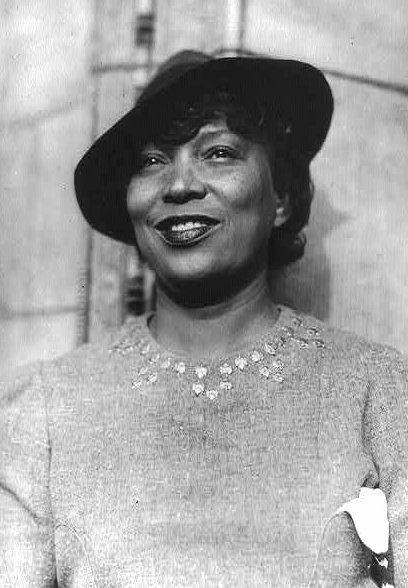
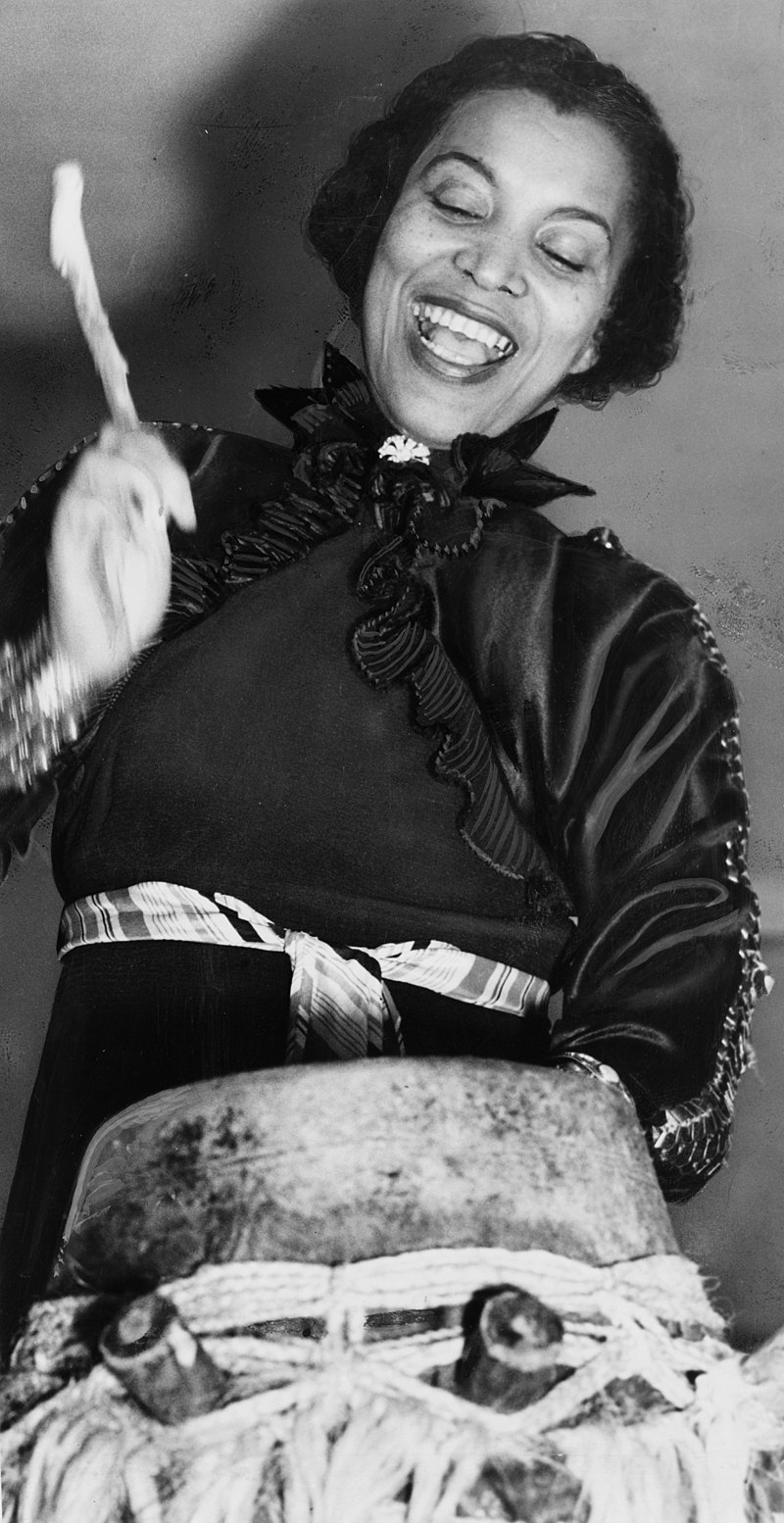
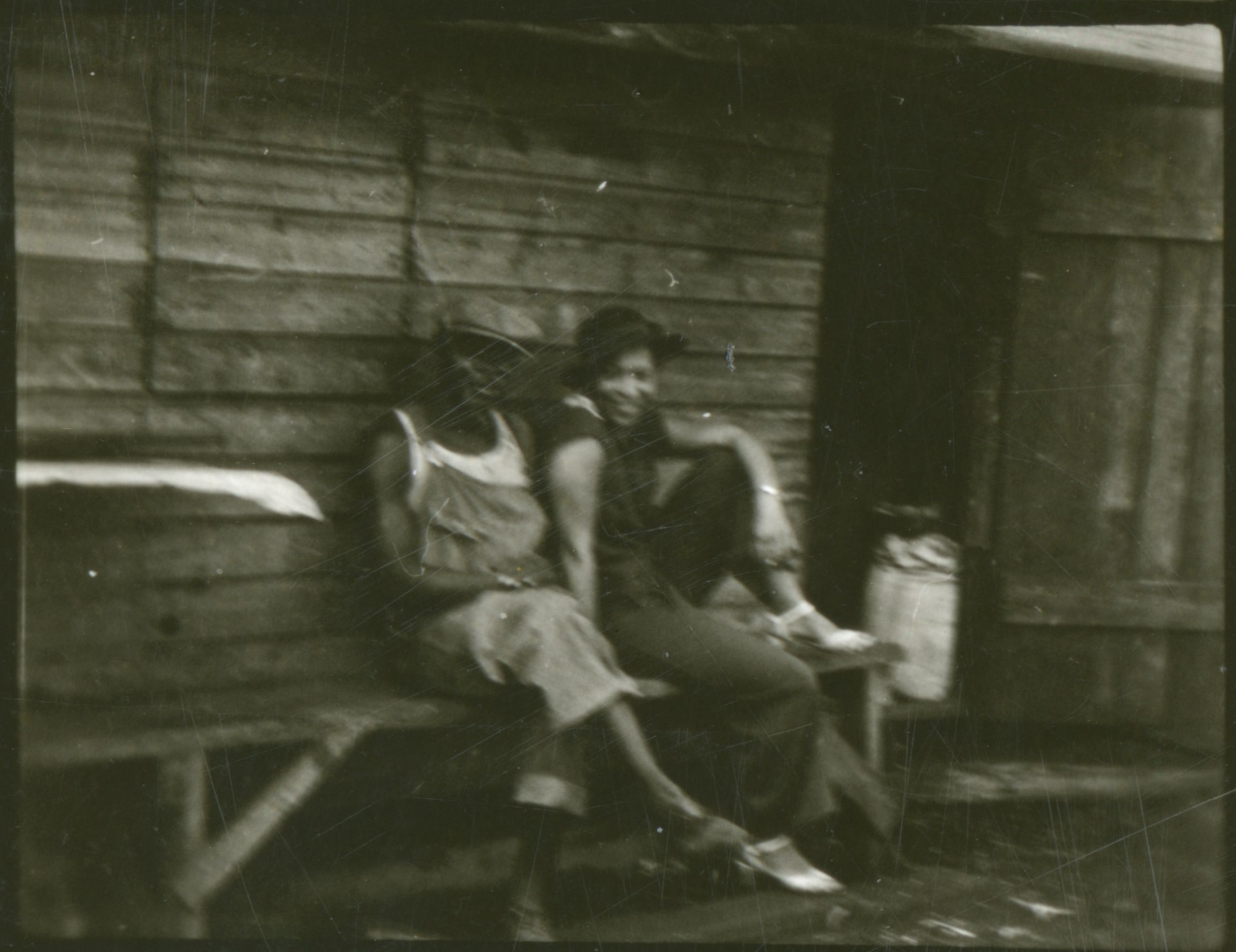
Zora Neale Hurston's Hometown Legacy | The New York
Times (YouTube)
★年譜(→「ゾンビ(Tell my horse の第13章)」および"Zora Neale Hurston"よりインポート)
☆ゾラ・ニール・ハーストン(1891-1960)について
1887 イートンヴィルは米国で最初に黒人だけの町として編入
1891 ゾラ・ニール・ハーストン生まれる(アラバマ州ノタスルガ)
1894 ハーストン一家、フロリダ州イートンヴィルに移住する
1897 ハーストンの父親は1897年 に町長に選出
1902 ハーストンの父親はマセドニア・ミッショナリー・バプティストの牧師に選出
1904 ハーストンの母親がなくなる。翌年父親はマティ・モゲと結婚する。ゾラはその後ジャクソンヴィルにあるバプティストの寄宿学校に入れられる
1907 フェリシア・フェリックス=メントールは死亡し、埋葬される(ハーストン 2021:286)。
1909 年10月 マリー・Mが埋葬される(ハーストン 2021:282-283)
1914
年 マリー・Mがポルト・プランスの市内で目撃され、噂がかけめぐる(ハーストン 2021:283)
1916 ギルバート&サリヴァン劇団の主役歌手にメイドとして雇われる
1917
メ
リーランド州ボルチモアにある歴史的黒人大学であるモーガン州立大学の高校部門であるモーガン・カレッジに入学し、正式な教育を受ける。こ
の時、26歳のハーストンは高校教育を無料で受ける資格を得るため、1901年を自分の生年として主張し始めた。1918年にモーガン州
立大学の高校を卒業。
1918
ワ
シントンDCの歴史的黒人大学であるハ
ワード大学で学び始める。彼女は黒人女性によって、また黒人女性のために設立されたゼータ・ファイ・ベータ・ソロリティの初期の入会者の一人であり、大学
の学生新聞であるヒルトップ(The Hilltop)を共同設立した.1921年、短編小説 "John Redding Goes to Sea
"を書き、アラン・ロックの文芸クラブ「スタイラス」の会員となる
1924-1925
ハー
ストンは1924年にハワードを去り、1925年にバーナードの評議員であるアニー・ネイサン・メイヤーから奨学金を得て、コロンビア大学の
バーナード・カレッジに入学する。彼女はまたルース・ベネディクトや同じ人類学の学生であったマーガレット・ミードとも仕事をした。
1927-
ハーストンは慈善家で文学パトロンのシャーロット・オズグッド・メイソン(Charlotte Osgood Mason) と知り合い、彼女の作品とキャリアに興味を持つようになる。彼女はラングストン・ ヒューズやアラン・ロックといった他のアフリカ系アメリカ人作家を支援し、ハーストンを推薦した。メイソンは1927年から1932年まで、ハーストンが 研究のために南部へ行くのを支援した157ドル、月給200ドル。その見返りとして、彼女はハーストンに、黒人の音楽、民俗学、文学、フー ドゥー、その他の文化形態について収集したすべての資料を渡すよう求めた。同時にハーストンは、学術顧問であるフランツ・ボアズを満足させるよう努めなけ ればならな かった。ボアズは文化相対主義者で、文化を価値観のヒエラルキーに位置づける考えを覆したがっていた。
ハーストンはジャズ・ミュージシャンでハワード大学の元教師ハーバート・シーンと結婚。彼は後に医師となる
1929
William Seabrook, The Magic Island.
1934 Jonah's Gourd Vine
1934
年、ハーストンはフロリダ州デイトナビーチの歴史的黒人大学であるベスーン・クックマン大学(当時はベスーン・クックマン・カレッジ)に「純粋な
黒人表現に基づいた」演劇芸術学校を設立した。ベチューン・クックマン・カレッジの英語学科は、彼女の文化的遺産の保存に尽力している。
1935 Mules and Men - 北フロリダのアフリカ系アメリカ人の民間伝承に関する文学アンソロジー
1936 年3月 ゾラ・ニール・ハーストンは西インド諸島の宗教儀式の研究で、グッゲンハイム奨学金を受ける。
1936 年4月〜9月 ジャマイカ滞在
1936 年9月〜1937年3月 ハイチ滞在。7週間で『彼らの眼は神を見ていた』を執筆
1936
年10月 フェリシア・フェリックス=メントールは「ここは父の農場だ。ここで暮らしていた」と呟き、裸で徘徊していた(→衛生局長リュルクス・レオンの
診断)(レオン博士の写真は ハーストン 2021:128)
1936 年冬
ハ イチでの調査(フードゥー Hoodoo はアメリカ南部の黒人文化の宗教、ヴードゥー(Vodou)を ハイチのそれと区別)。1936年当時に、パパ・レグバの儀礼中に、供儀の鶏に触れてしまう(→1937年7月の激しい病気の原因ではないかと、後になっ て彼女は疑う)。
1937 年1月6日 グッゲンハイム奨学金の更新を申請
1937 年3月末 奨学金採択の通知がくる。その後、ハイチから米国に帰国
1937 年3月〜5月 『彼らの眼は神を見ていた[Their Eyes Were Watching God]』の推敲?
1937 年5月 グッゲンハイム奨学金が更新されハーストンはハイチに戻る。パナマの蒸気船でポルトー・プランスに到着。当時雨季。南部旅行を計画
1937
年6月 「激しい病気」に襲われる(2週間)。1936年当時に、パパ・レグバの儀礼中に、供儀の鶏に触れてしまう。
1937 年7月 「私のところに流れ込んでくる資料に興奮させられ、しかもたっぷり材料があるので、最終的な形にまとめる機会がなかなかつかめません」(ヘメン ウェイ 1997:346)。
1937
年7月中旬?——帰国まで、観光と休養でハイチで過ごす(フロリダで『わが馬に告げよ』の推敲をする計画をたてる)
1937 年9月 ニューヨークに帰国。9月18日発売の『彼らの眼は神を見ていた』の宣伝にはげむ。
1938 年2月〜3月 『わが馬に告げよ』執筆、同年出版。ただし、売り上げは芳しくなかった(ヘメンウェイ 1997:349)。
『わ が馬に告げよ』の北米での反応:『機会』誌上、アラン・ロックは「興味津々のスリル」と「人類学的ゴシップ」と批評。人類学者たちは、それ以前の学者のも のとは一致しない。とくにメルヴィル・ハースコヴィッツは、[ハーストンが主張するゾンビをつくりあげるという]ボゴール(Bocor)はたんなる魔術師 と批判(ハーストン 2021:264-267)。
『ニュー ヨーカー』散 漫だが興味ふかい。『サタデーレビュー』のハロルド・クアランダー「記憶、紀行、センセーショナリズム、そして人類学などの不思議な混成体。記憶は生き生 きとし、紀行は退屈、センセーショナリズムはシーブルックの焼き直し、人類学は誤訳と素晴らしいフォークロアの混ぜ合わせだ」(ヘメンウェイ 1997:352)。
1938 年4月 連邦作家計画に参加し、フロリダ州で『フロリダのニグロ』について仕事する。
1938 Voodoo and Life in Haiti and Jamaica
1939 Moses, Man of the Mountain
1939 年、フロリダでWPAのために働いていたハーストンはアルバート・プライスと結婚。結婚生活は数ヶ月で終わり、しかし1943年まで離婚はしなかった。 1940年、ハーストンはクリーヴランドのジェイムズ・ハウエル・ピッツと結婚。この結婚も1年足らずで終わっ た.
1938年と1939年、ハーストンはワークス・プログレス・アドミニストレーションの一部であるフェデラル・ライターズ・プロジェクト(FWP)のため に働いた。
1947-1948
1947 年5月から1948年2月まで、ハーストンはホンジュラスの北 海岸の町プエルト・コルテスに住んでいた。彼女はマヤの遺跡か未発見の文明の名残を 見つけることを期待していた[1]: 375-87 プエルト・コルテス滞在中、彼女はフロリダを舞台にした『スワニーのセラフ』の大部分を執筆した。ハーストンはこの地域の人々の多民族性(ミスキート・ザ ンブやガリフナなど、その多くが部分的にアフリカ人の祖先を持ち、クレオール文化を発展させてきた)に興味を示した。
Boyd, Valerie (2003). Wrapped in Rainbows: The Life of Zora Neale Hurston. New York: Scribner.
1950年代 フリーライターとして雑誌や新聞に寄稿
1956 パトリック空軍基地のパン・アメリカン航空技術図書館で働く。1957年、彼女は仕事に対して「高学歴すぎる」という理由で解雇 された
1956
以降 ロリダ州フォートピアスに引っ越した。仕事を見つけられるところから見つけ、時々代用教員として働いた。60歳になったハーストンは、公的扶助の
助けを借りて「生活費を稼ぐ」ために戦わなければならなかった。一時はマイアミ・ビーチのリヴォ・アルト島でメイドとして働いたこともあった。
1960 1月28 日、高血圧性心疾患により死去(69歳)
++
★ゾラのパトロン、シャーロット・オズグッド・メイソンと文化帝国主義の関係

| Charlotte Osgood Mason,
born Charlotte Louise Van der Veer Quick (May 18, 1854, Franklin Park,
New Jersey – April 15, 1946, New York City),[1] was a white American
socialite and philanthropist. She contributed more than $100,000 to a
number of African-American artists and writers of the Harlem
Renaissance, equal to more than $1 million in 2003. This was especially
critical during the Great Depression, when foundation support declined.
She helped young artists become established. |
シャーロット・オズグッド・メイソン(本名:シャーロット・ルイーズ・
ヴァン・デル・ヴィア・クイック、1854年5月18日、ニュージャージー州フランクリン・パーク –
1946年4月15日、ニューヨーク市)[1]は、白人のアメリカ人社交界の女性であり、慈善家であった。彼女はハーレム・ルネサンス期の多くのアフリカ
系アメリカ人の芸術家や作家に10万ドル以上を寄付した。これは2003年の価値に換算すると100万ドル以上に相当する。これは、財団からの支援が減少
した大恐慌の時期に特に重要な役割を果たした。彼女は若手芸術家が地位を確立するのを支援した。 |
| Biography She was born Charlotte Louise Van der Veer Quick in Franklin Park, New Jersey, on May 18, 1854,[2] to Peter Quick and Phoebe Van der Veer. She was brought up by her maternal grandfather, Schenck Van der Veer, whose last name she used in preference to Quick.[3] She was educated privately, as was typical for upper-class girls. Van der Veer married Rufus Osgood Mason on April 27, 1886.[4] She came from a rich family and her wealth increased when she inherited the estate of her husband after his death. |
略歴 彼女は1854年5月18日、ニュージャージー州フランクリン・パークで、ピーター・クイックとフィービー・ヴァン・デル・ヴィールの間に、シャーロッ ト・ルイーズ・ヴァン・デル・ヴィール・クイックとして生まれた[2]。彼女は母方の祖父であるシェンク・ヴァン・デル・ヴィールに育てられ、クイックと いう姓よりもヴァン・デル・ヴィールという姓を好んで用いた[3]。上流階級の少女にありがちなように、彼女は家庭教師による教育を受けた。 ヴァン・デル・ヴィアは1886年4月27日、ルーファス・オズグッド・メイソンと結婚した[4]。彼女は裕福な家庭の出身であり、夫の死後にその遺産を相続したことで、さらに富を増やした。 |
| Patronage She used her wealth to become a literary and cultural patron, supporting such artists and writers as Alain Locke,[5] Aaron Douglas, Langston Hughes, Arthur Fauset, and Miguel Covarrubias of the Harlem Renaissance.[6] Zora Neale Hurston was another emerging writer she supported, at the recommendation of Locke, after Hurston published some short stories. Hurston was also studying anthropology and from 1928 to 1932, Mason supported the writer during her research into African-American folklore and culture in the Deep South, Haiti and Jamaica. Mason also supported Hurston during her writing of a book on Cudjoe Lewis, known then as the last survivor of the 1860 illegal Clotilda. For various reasons, this was not published in 1931, when Hurston submitted it to a publisher. It was published posthumously in 2018 as Barracoon: The Story of the Last "Black Cargo". [7] After learning about Cudjoe Lewis from Hurston's 1928 article about him, Mason also helped support the elderly man, who lived in Africatown, a neighborhood of Mobile, Alabama. Mason has been criticized for trying to control the work of the writers she supported. She insisted on being called "Godmother", and she developed intricate and controlling relationships with the people she helped.[8] She contributed a total of "more than $100,000 to African-American writers and artists during the Harlem Renaissance, the equivalent of more than $1,000,000 in 2003."[5] She is cited in Zora and Langston: A Story of Friendship and Betrayal by Yuval Taylor (2020). Black feminist scholar bell hooks writes critically of the relationship between Mason and Hurston: "It is difficult to believe that Hurston was blind to the cultural imperialism, the white supremacy of her sponsor, Mrs. Mason. This 'world's most gallant woman' had compelled Hurston to sign a legal agreement which specified that all material she gathered would be the legal property of her patron and that Hurston could use such material only when granted permission."[9] Scholars such as Hooks and Irma McClaurin argue that because of Mason's financial support of Hurston she enforced specific themes and subjects onto Hurston's work.[8] One explicit area of interest Mason pushed on Hurston was the notion of finding the "authentic" Black life or culture and writing about it. McClaurin states though that by doing so the "authentic" Black life or culture is judged by Mason's white standard and understanding. She becomes the "arbiter of "authenticity".[8] Mason's controlling patronage can also be seen in her relationship with Langston Hughes. Beginning in 1927, Mason subsidized Hughes for three years. Mason believed that he could express her own ideas about the "primitive" in his writing.[10] In their relationship, Mason controlled more than his writing by dictating the music he was allowed to listen to and the books he was allowed to read.[10] Mason asked that he write only to her, further isolating him from any influence that was not her own. After three years of her patronage, Hughes cut ties with Mason.[10] When their relationship ended, Mason predicted that Hughes would fall and reminded him that his accomplishments so far would have been nothing without her support.[10] This "unpleasant goodbye" was "traumatic for Hughes and irrevocable for both concerned".[10] |
パトロン活動 彼女は自身の富を投じて文学・文化のパトロンとなり、ハーレム・ルネサンス期のアーティストや作家たち――アラン・ロック[5]、アーロン・ダグラス、ラ ングストン・ヒューズ、アーサー・フォーセット、ミゲル・コバルビアスら――を支援した[6]。ゾラ・ニール・ハーストンもまた、彼女が支援した新進作家 の一人であり、ハーストンがいくつかの短編小説を発表した後、ロックの推薦を受けて支援が始まった。 ハーストンは人類学も学んでおり、1928年から1932年にかけて、メイソンは彼女がディープサウス、ハイチ、ジャマイカでアフリカ系アメリカ人の民俗 学や文化に関する調査を行う間、支援を続けた。メイソンはまた、当時1860年の違法船クロティルダの最後の生存者として知られていたカジョー・ルイスに 関する本の執筆中もハーストンを支援した。様々な理由により、ハーストンが出版社に原稿を提出した1931年には出版されなかった。この本は2018年に 『バラクーン:最後の「黒人貨物」の物語』として死後出版された。[7] ハーストンが1928年に執筆したカジョー・ルイスに関する記事を通じて彼を知った後、メイソンはアラバマ州モービルの地区であるアフリカタウンに住むこ の老人の支援にも力を注いだ。 メイソンは、支援した作家たちの創作活動を支配しようとしたとして批判 されてきた。彼女は「ゴッドマザー」と呼ばれることを主張し、支援対象者たちと複雑で支配的な関係を築いた。[8] 彼女はハーレム・ルネサンス期に、アフリカ系アメリカ人の作家や芸術家たちに総額「10万ドル以上(2003年の価値で100万ドル以上に相当)」を寄付 した。[5] 彼女はユヴァル・テイラー著『ゾラとラングストン:友情と裏切りの物語』(2020年)で言及されている。黒人フェミニスト学者ベル・フックスは、メイソ ンとハーストンの関係について批判的にこう記している。「ハーストンが、後援者であるメイソン夫人の文化的帝国主義や白人至上主義に気づかなかったとは信 じがたい。この『世界で最も気高い女性』は、ハーストンに対し、彼女が収集したすべての資料はパトロンである自身の法的所有物となり、ハーストンは許可を 得た場合にのみその資料を使用できると定めた法的契約書への署名を強要した。」[9] フックスやイルマ・マクラウリンといった学者たちは、メイソンがハーストンに経済的支援を行ったため、ハーストンの作品に特定のテーマや題材を押し付けた と論じている。[8] メイソンがハーストンに強く求めた明確な関心領域の一つは、「本物の」黒人の生活や文化を見つけ出し、それについて書くという概念であった。しかしマクラ ウリンは、そうすることで「本物の」黒人の生活や文化が、メイソンの白人としての基準と理解によって判断されることになると述べている。彼女は「真正性」 の「裁定者」となるのである。[8] メイソンの支配的な後援は、ラングストン・ヒューズとの関係にも見られる。1927年から3年間、メイソンはヒューズに資金援助を行った。メイソンは、彼 が自身の「原始的」なものに関する考えを作品で表現できると信じていた。[10] 二人の関係において、メイソンは彼の執筆内容だけでなく、聴くことを許される音楽や読むことを許される本まで指定することで、彼を支配していた。[10] メイソンは、ヒューズに対し自分だけに手紙を書くよう求め、彼女以外のあらゆる影響から彼をさらに隔離した。3年間のパトロン関係の後、ヒューズはメイソ ンとの関係を断った。[10] 関係が終焉を迎えた際、メイソンはヒューズが没落すると予言し、これまでの彼の功績は自分の支援がなければ何の意味もなかったと彼に言い放った。[10] この「不愉快な別れ」は、「ヒューズにとってトラウマとなり、関係者双方にとって取り返しのつかないもの」となった。[10] |
| Carl Van Vechten |
カール・ヴァン・ヴェクテン |
| References "Charlotte Louise Mason", in: American National Biography. v. 14 (1999), p. 640-642 01. Tiffany Ruby Patterson, Zora Neale Hurston and a History of Southern Life, Temple University Press, ISBN 978-1-59213-290-4 U.S. Passport Applications, 1795-1925 Dartmouth College Yearbook, 1898, p. 46 "New York, New York, Marriage Index, 1866-1937" 05. "Charlotte Osgood Mason". Intimate Circles: American Women in the Arts. Beinecke Rare Book and Manuscript Library, Yale University. July 28 – October 18, 2003. Retrieved April 17, 2019. Paul Finkelman, Encyclopedia of the Harlem Renaissance, Taylor & Francis, ISBN 978-1-57958-389-7 "Los Angeles Review of Books". 7 July 2018. McClaurin, Irma (2012). "Zora Neale Hurston: Enigma, Heterodox, and Progenitor of Black Studies". Fire!!!. 1 (1): 49–67. doi:10.5323/fire.1.1.0049. ISSN 2156-4078. JSTOR 10.5323/fire.1.1.0049. bell hooks, "Saving Black Folk Culture: Zora Neale Hurston as anthropologist and writer". In Yearning: Race, Gender, and Cultural Politics. Boston: South End Press, p. 138 ISBN 978-0-92128-435-2 10. Story, Ralph D. (1989). "Patronage and the Harlem Renaissance: You Get What You Pay For". CLA Journal. 32 (3): 284–295. ISSN 0007-8549. JSTOR 44322029. |
参考文献 「シャーロット・ルイーズ・メイソン」、『アメリカン・ナショナル・バイオグラフィー』第14巻(1999年)、640-642頁 01. ティファニー・ルビー・パターソン著、『ゾラ・ニール・ハーストンと南部生活の歴史』、テンプル大学出版局、ISBN 978-1-59213-290-4 米国パスポート申請書、1795-1925年 ダートマス大学年鑑、1898年、46ページ 「ニューヨーク州ニューヨーク市、婚姻索引、1866-1937年」 05. 「シャーロット・オズグッド・メイソン」。『親密なサークル:芸術におけるアメリカの女性たち』。イェール大学ベイネッケ希少書籍・写本図書館。2003年7月28日 – 10月18日。2019年4月17日閲覧。 ポール・フィンケルマン、『ハーレム・ルネサンス事典』、テイラー&フランシス、ISBN 978-1-57958-389-7 「ロサンゼルス・レビュー・オブ・ブックス」。2018年7月7日。 マクラウリン、イルマ(2012年)。「ゾラ・ニール・ハーストン:謎めいた存在、異端者、そしてブラック・スタディーズの先駆者」。『Fire!!!』 1巻1号:49–67頁。doi:10.5323/fire.1.1.0049。ISSN 2156-4078。JSTOR 10.5323/fire.1.1.0049. ベル・フックス、「黒人文化の保存:人類学者かつ作家としてのゾラ・ニール・ハーストン」。『Yearning: Race, Gender, and Cultural Politics』所収。ボストン:サウス・エンド・プレス、138頁 ISBN 978-0-92128-435-2 10. ストーリー、ラルフ・D. (1989). 「パトロネージとハーレム・ルネサンス:『You Get What You Pay For』」. 『CLA Journal』. 32 (3): 284–295. ISSN 0007-8549. JSTOR 44322029. |
| https://en.wikipedia.org/wiki/Charlotte_Osgood_Mason |
|
| The Trump Kenndey Center | トランプ・ケネディセンターの情報 |
| Error |
【誤りです】生没年 トランプ・ケネディ・センター |
| The financial support of wealthy widow Charlotte van der Veer Quick Mason
enabled leading figures of the Harlem Renaissance to stride the
cultural stage, but she herself carefully shunned the limelight. To
downplay her role in the movement, she insisted that recipients of her
generosity refer to her simply as “Godmother.” After the death of her husband, Mason embarked on something of a spiritual quest. Assigning African Americans a spiritual quality that white society lacked, she grew fascinated by the heritage of those she deemed “primitives.” A lecture by scholar Alain Locke on the achievements of Black artists spurred Mason to get involved in the New Negro Movement. Locke and Mason forged a strong bond cemented by shared goals: Both sought to support and promote African American culture. As Locke identified talent worthy of funding, Mason ponied up the cash. When Locke introduced writer Zora Neale Hurston to Mason, the two women hit it off at once. Mason listened to Hurston’s tales of Southern folklore with rapt attention. In December 1927, she drew up a contract that promised Hurston a car, a camera, and $200 per month to record African American folklore and folk songs throughout the South. Support from Mason was not without strings. Artist Aaron Douglas, skeptical about her encouragement of “primitive elements” in artists’ work, sometimes failed to meet her criteria and was asked to withdraw from major commissions. The poet Langston Hughes received $150 per month in exchange for informing Mason of everything he saw, said, did, or wrote. At Mason’s urging, Hughes curtailed his social life to focus on his writing. The young man’s recompense for such sacrifice was regular payments from Mason as well as opera tickets and new suits. Mason furnished the funds that enabled Hurston and Hughes to collaborate on the play Mule Bone, yet she chided the pair for what she saw as their lack of productivity. When Mason cut off her support of Hughes, Hurston claimed Mule Bone for her own. The two writers never bridged the ensuing rift. |
裕福な未亡人シャーロット・ヴァン・デル・ヴィール・クイック・メイソ
ンの経済的支援により、ハーレム・ルネサンスの主要人物たちは文化の舞台で活躍するようになったが、彼女自身は脚光を慎重に避けていた。この運動における
自身の役割を控えめに示すため、彼女は支援を受けた人々に、自分を単に「ゴッドマザー」と呼ぶよう強く求めた。 夫の死後、メイソンは一種の精神的探求に乗り出した。白人社会に欠けている精神性をアフリカ系アメリカ人に見出し、彼女は自ら「原始的」とみなした人々の遺産に魅了されていった。 学者アラン・ロックによる黒人芸術家の功績に関する講演が、メイソンをニュー・ネグロ運動への関与へと駆り立てた。ロックとメイソンは、共通の目標によっ て強固な絆を築いた。両者とも、アフリカ系アメリカ人の文化を支援し、促進することを目指していたのだ。ロックが資金援助に値する才能を見出すと、メイソ ンは資金を出し惜しみしなかった。 ロックが作家ゾラ・ニール・ハーストンをメイソンに紹介すると、二人の女性はすぐに意気投合した。メイソンは、ハーストンが語る南部の民話に熱心に耳を傾 けた。1927年12月、彼女はハーストンに対し、南部全域のアフリカ系アメリカ人の民話や民謡を記録するために、車とカメラ、そして月額200ドルを提 供することを約束する契約書を作成した。 メイソンの支援には条件が伴っていた。芸術家アーロン・ダグラスは、作品における「原始的な要素」を奨励する彼女の姿勢に懐疑的であり、時折彼女の基準を 満たせず、主要な委嘱作品から撤退するよう求められた。詩人ラングストン・ヒューズは、目にしたこと、話したこと、行ったこと、書いたことすべてをメイソ ンに報告する見返りとして、月150ドルを受け取っていた。メイソンの勧めで、ヒューズは執筆に専念するため社交生活を控えた。こうした犠牲に対する若き 二人への報酬は、メイソンからの定期的な支払いに加え、オペラのチケットや新しいスーツであった。 メイソンは、ハーストンとヒューズが戯曲『ミュール・ボーン』を共同制作するための資金を提供したが、一方で彼女は二人の生産性の低さを咎めた。メイソン がヒューズへの支援を打ち切った際、ハーストンは『ミュール・ボーン』を自身の作品として主張した。二人の作家は、その後生じた亀裂を埋めることはなかっ た。 |
| https://x.gd/q7GAN |
リンク
【文献】ハーストンの作品(大阪大学所蔵)
【文献】
そ
の他の情報
Copyleft, CC, Mitzub'ixi Quq Chi'j, 1996-2099

☆
 ☆
☆

