| A common
response to this sort of argument, especially when it comes
from the side of anthropologists, is to say, that may be all well and
good for primitives, who confuse the realms of their experience into
one large, unreflective whole, but it doesn't apply to more developed
cultures where art emerges as a differentiated activity responsive
mainly to its own necessities. And like most such easy contrasts
between peoples on different sides of the literacy revolution, it is
false, and in both directions: as much in underestimating the internal
dynamic of art in -- what shall I call them? unlettered societies? --
as in over-estimating its autonomy in lettered ones. I will set aside
the first sort of error here -- the notion that Yoruba and Abelam type
art traditions are without a kinetic of their own -- perhaps to come
back to it on a later occasion. For the moment I want to scotch the
second by looking briefly at the matrix of sensibility in two quite
developed, and quite different, aesthetic, enterprises: quattrocento
painting and Islamic poetry. |
こ
の種の議論に対する一般的な反応は、特に人類学者の側から来た場合、「経験の領域を混同して一つの大きな無反省な全体としてしまう原始人にはよくても、芸
術が主にそれ自身の必要性に反応する分化した活動として現れる、より発達した文化には当てはまらない」というものだ。そして、識字率革命の異なる側にいる
人々の間のこのような安易な対比のほとんどがそうであるように、それは誤りであり、両方向のものなのだ。--
文字がない社会における芸術の自律性を過大評価しているのと同じように。最初の誤りは、ヨルバやアベラムのような芸術の伝統には独自の運動性がないという
考え方につ
いては、ここで脇に置いておくことにする(おそらく後日、またこの話に戻るだろう)。当面は、クワトロチェント絵画とイスラム詩という、非常に発展し、か
つ全く異なる美的事業における感性の母型を簡単に見ることで、第二の誤りを戒めたいと思う。
|
| For Italian
painting, I will mainly rely on Michael Baxandall's recent
book, Painting and Experience in Fifteenth Century Italy, which takes
precisely the sort of approach I here am advocating.11 Baxandall is
concerned with defining what he calls "the period eye" -- that is, "the
equipment that a fifteenth-century painter's public [i.e., other
painters and "the patronizing classes"] brought to complex visual
stimulations like pictures."12 A picture, he says, is sensitive to the
kinds of interpretive skill -- patterns, categories inferences,
analogies -- the mind brings to it: |
イ
タリア絵画については、主に Michael Baxandall の近著『Painting and Experience in
Fifteenth Century Italy』(15
世紀イタリアの絵画と経験)に頼ることにする。絵は、パターン、カテゴリー、推論、類推といった、心が絵にもたらす解釈の技術に敏感である、と彼は言う。
|
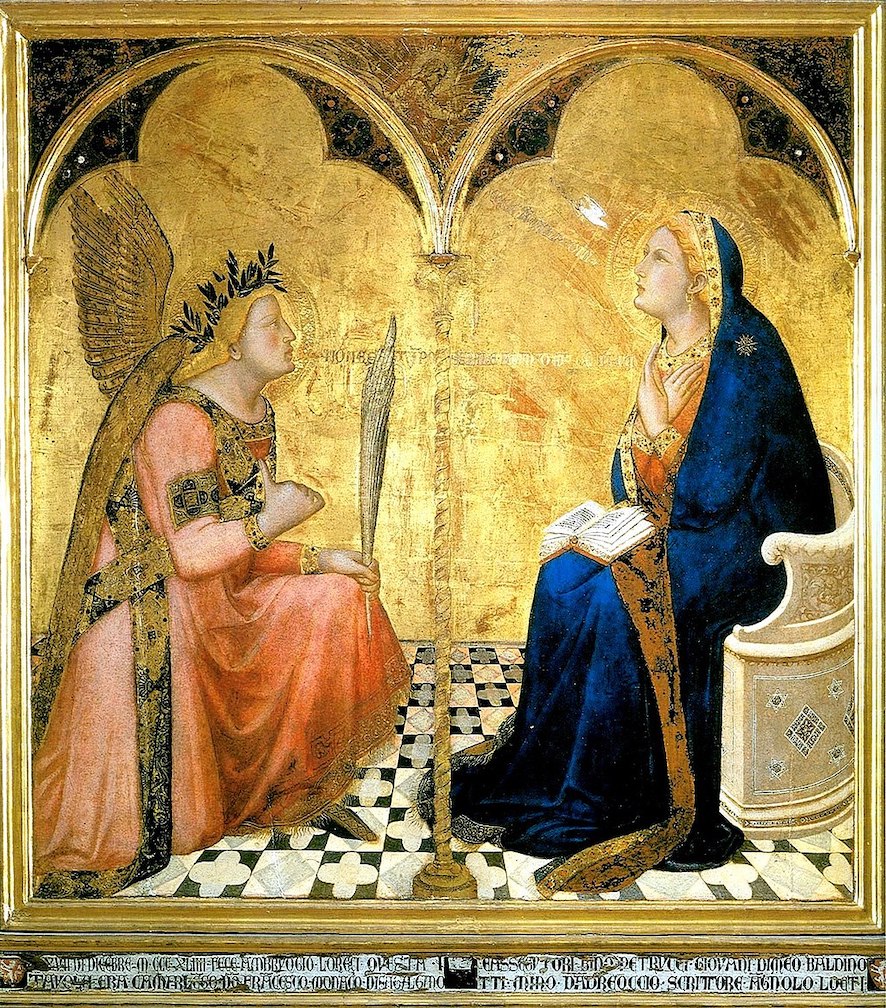
| A man's
capacity to distinguish a certain kind of form or relationship
of forms will have consequences for the attention with which he
addresses a picture. For instance, if he is skilled in noting
proportional relationships, or if he is practiced in reducing complex
forms to compounds of simple forms, or if he has a rich set of
categories for different kinds of red and brown, these skills may well
lead him to order his experience of Piero della Francesca's
Annunciation differently from people without these skills, and much
more sharply than people whose experience has not given them many
skills relevant to the picture. For it is clear that some perceptual
skills are more relevant to any one picture than others: a virtuosity
in classifying the ductus of flexing lines -- a skill many Germans, for
instance, possessed in this period . . . would not find much scope on
the Annunciation. Much of what we call "taste" lies in this, the
conformity between discriminations demanded by a painting and skills of
discrimination possessed by the beholder.13 |
あ
る種の形や形の関係を識別する能力は、絵に取り組む際の注意に影響を与える。例えば、もし彼が比例関係に注意することに長けているなら、あるいは複雑な形
を単純な形の複合に還元することに長けているなら、あるいは異なる種類の赤や茶に対する豊富なカテゴリーを持っているなら、これらの能力は、ピエロ・デ
ラ・フランチェスカの「受胎告知」の経験を、これらの能力を持たない人とは異なるように、またこの絵に関する多くの能力を経験によって持たない人よりもは
るかに鋭く秩序立てるよう導くかも知れない。たとえば,屈曲した線の管路を分類する名人芸は,この時代に多くのドイツ人が持っていたものだが,この受胎告
知ではあまり意味がないだろう.私たちが「好み」と呼ぶものの多くは、絵画が要求する識別力と鑑賞者の持つ識別力との適合性、つまりこの点にあるのだ。
|
| But
what is
even more important, these appropriate skills, for -- both
the beholder and the painter, are for the most part not built in like
retinal sensitivity for focal length but are drawn from general
experience, the experience in this case of living a quattrocento life
and seeing things in a quattrocento way: |
し
かし、さらに重要なことは、見る者と描く者の両方にとって、こうした適切な能力は、焦点距離に対する網膜感度のように組み込まれているのではなく、一般的
な経験、この場合はクワトロチェント的な生活を送り、クワトロチェント的にものを見るという経験から引き出されるものであることだ。
|
| . . . some of
the mental equipment a man orders his visual experience
with is variable, and much of this variable equipment is culturally
relative, in the sense of being determined by the society which has
influenced his experience. Among these variables are categories with
which he classified his visual stimuli, the knowledge he will use to
supplement what his immediate vision gives him, and the attitude he
will adopt to the kind of artificial object seen. The beholder must use
on the painting such visual skills as he has, very few of which are
normally special to painting, and he is likely to use those skills his
society esteems highly. The painter responds to this; his public's
visual capacity must be his medium. Whatever his own specialized
professional skills, he is himself a member of the society he works for
and shares its visual experience and habit.14 |
.
また、この可変的な装置の多くは、彼の経験に影響を与えた社会によって決定されるという意味で、文化的に相対的なものである。これらの変数の中には、視覚
刺激を分類するカテゴリー、視覚が与えるものを補うために用いる知識、そして、見られる人工物の種類に対して採用する態度が含まれる。見る人は、自分が
持っている視覚的能力(通常、絵画に特化した能力はほとんどない)を絵画に使わなければならないし、自分の社会が高く評価している能力を使う可能性が高
い。画家はこれに応えなければならない。大衆の視覚的能力が彼の媒体でなければならない。彼自身の専門的な職業上の技能がどうであれ、彼自身は自分が働く
社会の一員であり、その視覚的な経験や習慣を共有しているのである。
|
| The first
fact
(though, as in Abelam, only the first) to be attended to
in these terms is, of course, that most fifteenth-century Italian
paintings were religious paintings, and not just in subject matter but
in the ends they were designed to serve. Pictures were meant to deepen
human awareness of the spiritual dimensions of existence; they were
visual invitations to reflections on the truths of Christianity. Faced
with an arresting image of The Annunciation, The Assumption of the
Virgin, The Adoration of the Magi, The Charge to St. Peter, or The
Passion, the beholder was to complete it by reflecting on the event as
he knew it and on his personal relationship to the mysteries it
recorded. "For it is one thing to adore a painting," as a Dominican
preacher defending the virtuousness of art, put it, "But it is quite
another to learn from a painted narrative what to adore."15 |
こ
のような観点からまず注目すべきは、15世紀のイタリア絵画のほとんどが宗教画であり、主題だけでなく、その目的も宗教画であったという事実である(アベ
ラムの場合と同様に、あくまでも第一の事実)。絵は存在の精神的な側面に対する人間の認識を深めるためのものであり、キリスト教の真理に関する考察を視覚
的に促すものであった。受胎告知」、「聖母被昇天」、「マギーの礼拝」、「聖ペテロへの忠告」、「受難」などの魅力的な画像を前にした鑑賞者は、自分が
知っている出来事を振り返り、それが記録する神秘と自分の個人的な関わりを考えることによって、その画像を完成させることになるのである。「ドミニコ会の
ある説教師は、「絵画を崇拝することは一つのことであり、絵画の物語から何を崇拝すべきかを学ぶことは全く別のことである」と言い、芸術の素晴らしさを説
いている。
|
| Yet the
relation between religious ideas and pictorial images (and this
I think is true for art generally) was not simply expositive; they were
not Sunday school illustrations. The painter, or at least the religious
painter, was concerned with inviting his public to concern themselves
with first things and last, not with providing them with a recipe or a
surrogate for such concern, nor with a transcription of it. His
relation, or more exactly, the relations of his painting, to the wider
culture was interactive or, as Baxandall puts it, complementary.
Speaking of Giovanni Bellini's Transfiguration, a generalized, almost
typological, but of course marvellously plastic, rendering of the
scene, he calls it a relic of cooperation between Bellini and his
public -- " The fifteenth-century experience of the Transfiguration,
was an interaction between the painting, the configuration on the wall,
and the visualizing activity of the public mind -- a public mind with
different furniture and dispositions from ours."16 Bellini could count
on a contribution from the other side and designed his panel so as to
call that contribution out, not to depict it. His vocation was to
construct an image to which a distinctive spirituality could forcibly
react. The public does not need, as Baxandall remarks, what it has
already got. What it needs is an object rich enough to see it in; rich
enough, even, to, in seeing it deepen it. |
し
かし、宗教的観念と絵画的イメージの関係は(これは芸術全般に言えることだが)、単に説明的なものではなく、日曜学校の挿絵でもない。画家は、少なくとも
宗教画家は、大衆に最初と最後の事柄に関心を持つよう促すことに関心があったのであって、そうした関心のレシピや代用品を提供したり、それを書き写したり
することに関心があったわけではない。彼の関係、より正確には彼の絵画の関係は、より広い文化との相互作用、あるいはバクサンダルが言うように相互補完的
なものであった。ジョヴァンニ・ベッリーニの『変容』について、彼は、一般的で、ほとんど類型的でありながら、もちろん驚くほど可塑的なこの場面の描写
を、ベッリーニと大衆との協力の遺物と呼んでいる--「15世紀の変容の経験は、絵画、壁面の構成、大衆心理--我々とは異なる家具や性質を持つ大衆心理
の視覚的活動との相互作用だった」16。ベッリーニは向こうからの貢献を期待でき、それを描くのではなく呼び出すようにパネルをデザインしているのであ
る。彼の使命は、独特の精神性が強制的に反応しうるようなイメージを構築することであった。バクサンダルが言うように,大衆はすでに手にしているものを必
要としているのではない.必要なのは、それを見るに足る豊かな対象であり、それを見ることによって、さらにそれを深めるに足る豊かな対象なのだ。
|
There were,
of
course, all sorts of cultural institutions active in
forming the sensibility of quattrocento Italy which converged with
painting to produce the " period eye," and not all of them were
religious (as not all the paintings were religious). Among the
religious ones, popular sermons, classifying and subclassifying the
revelatory events and personages of the Christian myth and setting
forth the types of attitude disquiet, reflection, inquiry, humility,
dignity, admiration appropriate to each, as well as offering dicta as
to how such matters were represented visually, were probably the most
important. "Popular preachers . . . drilled their congregations in a
set of interpretive skills right at the centre of the fifteenth century
response to painting"17 Gestures were classified, physiognomies typed,.
colors symbologized, and the physical appearance of central figures
discussed with apologetical care. "You ask," another Dominican preacher
announced,
|
も
ちろん、クワトロチェント(quattrocento
Italy)の感性を形成し、絵画に収斂して「時代眼」を生み出すために活躍したさまざまな文化的制度があったが、そのすべてが宗教的だったわけではない
(絵画のすべてが宗教的だったわけでもない)。宗教的なもののなかでも、キリスト教神話の啓示的な出来事や人物を分類し、それぞれにふさわしい不穏な態
度、内省、探求、謙遜、威厳、賞賛を示し、それらを視覚的にどう表現するかを指示する大衆説教が最も重要であったと思われる。「大衆的な説教師は、15
世紀の絵画に対する反応の中心に位置する一連の解釈能力を信徒に教え込んだ」17
ジェスチャーを分類し、人相をタイプ分けし、色を記号化し、中心人物の外見を弁証的に議論した。「ドミニコ会の別の説教師はと「あなたは尋ねる」。
|
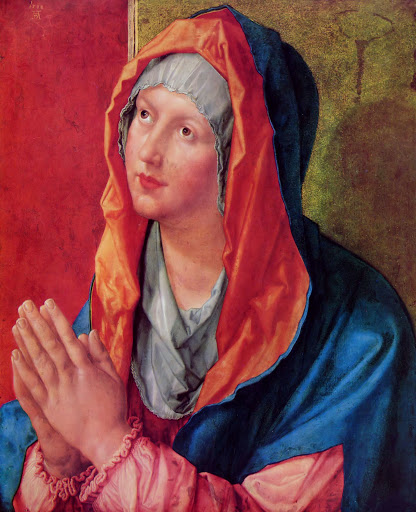 Was the Virgin
dark or fair? Albertus Magnus says that she was not
simply dark, nor simply red-haired, nor just fair-haired. For any one
of these colours by itself brings a certain imperfection to a person.
This is why one says: "God save me from a red-haired Lombard," or "God
save me from a black-haired German," or "from a fair-haired Spaniard,"
or "from a Belgian of whatever colour." Mary was a blend of
complexions, partaking of all of them, because a face partaking of all
of them is a beautiful one. It is for this reason medical
authorities
declare that a complexion compounded of red and fair is best when a
third colour is added: black. And yet this, says Albertus, we must
admit: she was a little on the dark side. There are three reasons for
thinking this -- firstly be reason of complexion, since Jews tend to be
dark and she was a Jewess; secondly by reason of witness, since St.
Luke made the three pictures of her now at Rome, Loreto and Bologna,
and these are brown-complexioned; thirdly by reason of affinity. A son
commonly takes after his mother, and vice versa; Christ was dark,
therefore. . .18 Was the Virgin
dark or fair? Albertus Magnus says that she was not
simply dark, nor simply red-haired, nor just fair-haired. For any one
of these colours by itself brings a certain imperfection to a person.
This is why one says: "God save me from a red-haired Lombard," or "God
save me from a black-haired German," or "from a fair-haired Spaniard,"
or "from a Belgian of whatever colour." Mary was a blend of
complexions, partaking of all of them, because a face partaking of all
of them is a beautiful one. It is for this reason medical
authorities
declare that a complexion compounded of red and fair is best when a
third colour is added: black. And yet this, says Albertus, we must
admit: she was a little on the dark side. There are three reasons for
thinking this -- firstly be reason of complexion, since Jews tend to be
dark and she was a Jewess; secondly by reason of witness, since St.
Luke made the three pictures of her now at Rome, Loreto and Bologna,
and these are brown-complexioned; thirdly by reason of affinity. A son
commonly takes after his mother, and vice versa; Christ was dark,
therefore. . .18 |
聖
母は色黒だったのか色白だったのか?アルベルトゥス・マグヌスは、彼女は単に色黒でもなく、単に赤毛でもなく、単に色白でもなかったと言う。なぜなら、こ
れらの色のいずれかが、それ自体、人にある種の不完全さをもたらすからである。だから、"赤い髪のロンバルド人"、"黒い髪のドイツ人"、"白い髪のスペ
イン人"、"どんな色のベルギー人
"からも神は私を救ってくれる、と言うのである。マリアはすべての顔色が混在していた。すべての顔色が混在している顔は美しいものだからだ。赤と白の混
ざった顔色は、3番目の色である黒を加えると最も美しくなると医学界の権威が宣言しているのはこのためだ。しかし、アルベルトゥスは、彼女は少し暗い方だ
と言わざるを得ない。このように考える理由は三つある。第一に顔色の問題で、ユダヤ人は黒くなる傾向があり、彼女はユダヤ人女性だったからだ。第二に証人
の問題で、聖ルカは現在ローマ、ロレート、ボローニャに彼女の写真を三枚描いており、これらは褐色の顔立ちをしているからだ。第三に親族の問題で、息子は
普通母親に似る。息子は母親に似るのが普通であり、その逆もまた然りである。したがって、キリストは暗かった。.1 |
| Of the other
domains of Renaissance culture that contributed to the way
fifteenth-century Italians looked at paintings, two which Baxandall
finds to have been of particular importance were another art, though a
lesser one, social dancing, and a quite practical activity he calls
gauging -- that is estimating quantities, volumes, proportions, ratios,
and so on for commercial purposes. |
15
世紀のイタリア人の絵画の見方に貢献したルネサンス文化の他の領域のうち、バクサンダルが特に重要であると見つけているのは、少ないながらももうひとつの
芸術、社交ダンスと、彼が「ゲージング」と呼ぶ極めて実用的な活動、つまり商業目的のための数量、体積、比率、割合などの見積もりであった。
|
 Dancing had
relevance to picture seeing because it was less a temporal
art allied to music, as with us, than a graphic one allied to spectacle
-- religious pageants, street masques, and so on; a matter of figural
grouping not, or anyway not mainly, of rhythmic motion. As such, it
both depended upon and sharpened the capacity to discern psychological
interplay among static figures grouped in subtle patterns, a kind of
body arranging -- a capacity the painters shared and used to evoke
their viewer's response. In particular, the bassa danza a
slow paced,
geometrized dance popular in Italy at the time presented patterns of
figural grouping that painters such as Botticelli, in his Primavera
(which revolves, of course, around the dance of the Graces) or his
Birth of Venus, employed in organizing their work. The sensibility the
bassa danza represented, Baxandall
says, " involved a public skill at
interpreting figure patterns, a general experience of semi-dramatic
arrangement [of human bodies] that allowed Botticelli and other
painters to assume a similar public readiness to interpret their own
groups."19 Given a widespread familiarity with highly stylized dance
forms consisting essentially of discrete sequences of tableaux vivants,
the painter could count on an immediate visual understanding of his own
sort of figural tableaus in a way not very open in a culture such as
ours where dance is a matter more of movement framed between poses than
poses framed between movement and the general sense for tacit gesture
is weak. The transmutation of a vernacular social art of grouping into
an art where a pattern of people -- not gesticulating or lunging or
grimacing people -- can still stimulate a strong sense of psychological
interplay, is the problem: it is doubtful if we have the right
predispositions to see such refined innuendo at all spontaneously."20 Dancing had
relevance to picture seeing because it was less a temporal
art allied to music, as with us, than a graphic one allied to spectacle
-- religious pageants, street masques, and so on; a matter of figural
grouping not, or anyway not mainly, of rhythmic motion. As such, it
both depended upon and sharpened the capacity to discern psychological
interplay among static figures grouped in subtle patterns, a kind of
body arranging -- a capacity the painters shared and used to evoke
their viewer's response. In particular, the bassa danza a
slow paced,
geometrized dance popular in Italy at the time presented patterns of
figural grouping that painters such as Botticelli, in his Primavera
(which revolves, of course, around the dance of the Graces) or his
Birth of Venus, employed in organizing their work. The sensibility the
bassa danza represented, Baxandall
says, " involved a public skill at
interpreting figure patterns, a general experience of semi-dramatic
arrangement [of human bodies] that allowed Botticelli and other
painters to assume a similar public readiness to interpret their own
groups."19 Given a widespread familiarity with highly stylized dance
forms consisting essentially of discrete sequences of tableaux vivants,
the painter could count on an immediate visual understanding of his own
sort of figural tableaus in a way not very open in a culture such as
ours where dance is a matter more of movement framed between poses than
poses framed between movement and the general sense for tacit gesture
is weak. The transmutation of a vernacular social art of grouping into
an art where a pattern of people -- not gesticulating or lunging or
grimacing people -- can still stimulate a strong sense of psychological
interplay, is the problem: it is doubtful if we have the right
predispositions to see such refined innuendo at all spontaneously."20
|
舞
踊(ダンス)は、私たちのように音楽と結びついた時間芸術というよりも、宗教的なページェントや街頭での仮面劇といったスペクタクルと結びついたグラ
フィックなものであり、リズム運動ではなく、あるいはとにかくリズム運動中心ではなく、形象のグループ化の問題であったため、絵画鑑賞との関連性がありま
した。そのため,微妙なパターンでグループ化された静的な人物たちの心理的な相互作用を見分ける能力,一種の身体の配置に依存し,それを研ぎ澄ます能力を
画家たちは共有し,見る者の反応を呼び起こすために使われたのである.特に、当時イタリアで流行していたバッサ・ダンツァは、ボッティチェリの『プリマ
ヴェーラ』(もちろん、『女神の踊り』を中心に展開)や『ヴィーナスの誕生』で、人物群像のパターンを提示し、作品を構成するのに利用されている。バッ
サ・ダンザが示す感性は、「ボッティチェリや他の画家たちが自分たちの集団を解釈する際に、同じように大衆の心構えを想定することを可能にした、人物のパ
ターンの解釈、半劇場の配置(人体の)についての一般体験に関係している」とバクサンドールは述べている。
このことは、ボッティチェリをはじめとする画家たちが、自らの集団を解釈する用意があることを示すものだ」19
高度な様式化されたダンスが、基本的に個別のタブローの連続からなることに広く親しまれていたことを考えると、画家は、自らの類いの具象的タブローをすぐ
に視覚的に理解することができた。これは、我々の文化のように、ダンスがポーズとポーズの間の動きというよりも、ポーズとポーズの間の動きであり、無言の
身ぶりに対する一般の感覚が希薄な場合には、あまり開かれない方法だ。ジェスチャーをしたり,突進したり,にやにやしたりする人々ではなく,人々のパター
ンが心理的な相互作用の強い感覚を刺激することができるような芸術への風俗的な社会集団芸術の変換は,問題である:我々がこのように洗練された風俗を自発
的に見る正しい素因を持っているかどうかは疑問である」. |
Beyond
and
behind this tendency to conceive of both dances and
paintings as patterns of body arrangement carrying implicit meaning
lies, of course, a wider tendency in the whole society, and
particularly in its cultivated classes, to regard the way in which men
grouped themselves with respect to one another, the postural orderings
they fell into in one another's company, as not accidental, but the
result of the sorts of relationships they had to one another. But
it is
in the other matter Baxandall takes to have had a forming impact on how
the people of the Renaissance saw paintings -- gauging -- that this
deeper penetration of visual habit into the life of society, and the
life of society into it, is apparent.
M. Baxandall,
Painting and Experience in Fifteenth Century Italy (
London, 1972).
|
舞
踊も絵画も、暗黙の意味を持つ身体の配置パターンとしてとらえるというこの傾向の向こう側には、もちろん、社会全体、特にその教養階級の人々において、人
が互いに対してグループ化する方法、互いの交わりの中で陥る姿勢の秩序を、偶然ではなく、彼らが互いに持っていた種類の関係の結果と見なす、より広い傾向
が存在するのである。しかし、ルネサンスの人々の絵画の見方に形成的な影響を与えたとバクサンダルが考えるもう一つの事柄、すなわちゲージにこそ、視覚的
習慣の社会生活への、そして社会生活のそれへの、より深い浸透があることが明らかになったのである。
M. Baxandall,
Painting and Experience in Fifteenth Century Italy (
London, 1972).
|
It is an
important fact of art history, he notes, that commodities have
come regularly in standard-size containers only since the nineteenth
century (and even then, he might have added, only in the West).
"Previously a container -- barrel, sack, or bale, was unique, and
calculating its volume quickly and accurately was a condition of
business."21 And the same was true of lengths, as in the cloth trade,
proportions, as in brokerage, or ratios, as in surveying. One did not
survive in commerce without such skills, and it was merchants who, for
the most part, commissioned the paintings, and in some cases, like
Piero della Francesca, who wrote a mathematical handbook on gauging,
painted them.
|
美
術史の重要な事実として、19 世紀以降、商品が標準的な大きさの容器で定期的に出
荷されるようになったことが挙げられる(そして、それ以降も、西洋においてのみ、
と彼は付け加えているかもしれない)。「以前は、樽、袋、俵といった容器は唯一無二のものであり、その容積を迅速かつ正確に計算することがビジネスの条件
であった」21。また、布地取引のような長さ、仲買業のような比率、測量のような比率についても同じことが言えた。このような技術なしに商業の世界で生き
残ることはできず、ほとんどの場合、絵画を依頼したのは商人であり、ピエロ・デラ・フランチェスカのように、測量の数学的手引書を書いた人が絵画を描いた
ケースもあったのである。
|
| An any case,
both painters and their merchant patrons had a similar
education in such matters -- to be litereate was at the same time to
have command of the sorts of techniques available to judge the
dimensions of things. So far as solid objects were concerned, these
skills involved the ability to break down irregular or unfamiliar
masses into compounds of regular and familiar, and thus calculable,
ones -- cylinders, cones, cubes and so on; for two- dimensional ones, a
similar ability to analyze ununiform surfaces into simple planes:
squares, circles, triangles, hexagons. The heights to which this could
rise is indicated in a passage Baxandall gives from Piero's handbook:
|
い
ずれにせよ、画家と商人のパトロンは、このような問題に関して同じような教育を受けていた。ライトレーテになるということは、同時に、物の寸法を判断する
ための様々な技術に通じていることでもあった。固形物に関しては、不規則で見慣れない質量を、規則的で見慣れた、つまり計算可能な質量の複合体である円
柱、円錐、立方体に分解する能力が、二次元のものに関しては、一様ではない表面を単純な平面である正方形、円、三角形、六角形に分析する同様の能力が必要
とされたのである。ピエロのハンドブックから引用したバクサンダルの一節に、これがどのような高みに到達し得るかが示されている。
|
There is a
barrel, each of its ends being 2 bracci in diameter; the
diameter at its bung is 2-1/4 bracci and halfway between bung and end
it is 2-2/9 bracci. The barrel is 2 bracci long. What is its cubic
measure? |
樽の両端は直径2ブラチ、栓の部分の直径
は2-1/4ブラチ、栓から端までの中間は2-2/9ブラチである。樽の長さは2ブラチである。その立方体の大きさは何cmか?
|
| This is like
a
pair of truncated cones. Square the diameter at the
ends: 2 x 2 = 4. Then square the median diameter 2-2/9 x 2-2/9 =
4-76/81. Add them together [giving] 8-76/81. Multiply 2 x 2/9 = 4-4/9.
Add this to 8-76/81 = 13-31/81. Divide by 3 = 4-112/243. . . Now square
2-1/4 [giving] 5-1/16. Add it to the square of the median diameter:
5-5/16 + 4-76/81 = 10-1/129. Multiply 2-2/9 x 2-1/4 = 5. Add this to
the previous sum [getting] 15-1/129. Divide by 3 [which yields] 5 and
1/3888. Add it to the first result . . . = 9-1792/3888. Multiply this
by 11 and then divide by 14 [i.e. multiply by pi/4]: the final result
is 7-23600/54432. This is the cubic measure of the barrel.22 |
こ
れは、一対の切頭円錐のようなものです。両端の直径を二乗すると、2×2=4となる。次に,中央の直径を2-2/9 x 2-2/9 =
4-76/81 の二乗する.これらを足すと...8-76/81となる。2 x 2/9 = 4-4/9 を掛ける。これを 8-76/81
に加える = 13-31/81. 3で割る=4-112/243. . .
ここで2-1/4を二乗すると[5-1/16が得られる]。これを直径の中央の二乗に加える:5-5/16 + 4-76/81 =
10-1/129. 2-2/9 x 2-1/4 = 5 を掛ける。これを前の合計に加える[得られる]15-1/129.
3で割ると[5と1/3888が得られる]。これを最初の結果に加える ... ... = 9-1792/3888.
これを11で割って、14で割る[つまりπ/4を掛ける]と、最終結果は7-23600/54432になる。これが樽の立方体の大きさである。
|
| This is, as
Baxandall says, a special intellectual world; but it is one
in which all of the educated classes in places like Venice and Florence
lived. Its connection with painting, and the perception of painting,
lay less in the calculational processes as such than in a disposition
to attend to the structure of complex forms as combinations of simpler,
more regular, and more comprehensible ones. |
バ
クサンダルが言うように、これは特殊な知的世界である。しかし、ヴェネツィアやフィレンツェのような場所では、教育を受けたすべての階級がこの世界に住ん
でいたのである。絵画との関係、絵画の認識は、計算過程というよりも、複雑な形の構造を、より単純で規則的な、より理解しやすい形の組み合わせとしてとら
える性質に起因するものである。
|
| Even the
objects involved in paintings cisterns columns, brick towers,
paved floors, and so on -- were the same ones that handbooks used to
practice students in the art of gauging. And so when Piero, in his
other hat as painter. renders The Annunciation as set in a columned,
multilevel, advancing and receding Perugian portico, or the Madonna in
a domed, half-rounded cloth pavilion, a framing dress to her own, he is
calling upon his public's ability to see such forms as compounds of
others and thus to interpret -- gauge, you will -- his paintings and
grasp their meaning: |
絵
画の対象も、貯水槽の柱、煉瓦の塔、敷き詰められた床など、手引書が生徒たちに計量の技術を教えるために使われたものと同じであった。ピエロが画家として
のもう一つの顔を持つとき,『受胎告知』を,柱が何段にもなっていて,前進と後退を繰り返すペルーのポルティコの中に置いたり,聖母をドーム型の半円形の
布のパヴィリオンに置き,彼女自身がそれを身にまとっているように描くのは,こうした形態を他の形態の組み合わせとして見ることができる人々の力を借り
て,自分の絵を解釈してその意味を理解しよう,つまり,測ろう,と呼びかけているのである.
|
| To the
commercial man almost anything was reducible to geometrical
figures underlying surface irregularities -- that pile of grain reduced
to a cone, the barrel to a cylinder or a compound of truncated cones,
the cloak to a circle of stuff allowed to lapse into a cone of stuff,
the brick tower to a compound cubic body composed of a calculable
number of smaller cubic bodies, and . . . this habit of analysis is
very close to the painter's analysis of appearances. As a man gauged a
bale, the painter surveyed a figure. In both cases there is a conscious
reduction of irregular masses and voids to combinations of manageable
geometric bodies . . . Because they were practised in manipulating
ratios and in analysing the volume or surface of compound bodies,
[fifteenth-century Italians] were sensitive to pictures carrying the
marks of similar processes.23 |
穀
物の山は円錐に、樽は円柱か切頭円錐の複合体に、外套は円錐の中に入り込んだ物の円に、煉瓦塔は計算できる数の小さな立方体からなる複合立方体
に、......この分析の習慣は画家の外観の分析に非常に近いものであった。人が俵の大きさを測るように、画家は人物の大きさを測ります。どちらの場合
も、不規則な塊や空洞を、扱いやすい幾何学的な体の組み合わせに意識的に還元しているのだ ...
。彼らは比率を操作し、複合体の体積や表面を分析することに長けていたので、[15世紀のイタリア人]は同様のプロセスの痕跡を持つ絵に敏感だったのであ
る。
|
| The famous
lucid solidity of Renaissance painting had at least part of
its origins in something else than the inherent properties of planar
representation, mathematical law, and binocular vision. |
ルネサンス絵画の有名な明晰な立体感は、
少なくともその一部が、平面表現、数学的法則、両眼視の固有の性質とは別のものに由来しているのだ。
|
| Indeed, and
this is the central point, all these broader cultural
matters, and others I have not mentioned, interworked to produce the
sensibility in which quattrocento art was formed and had its being. (In
an earlier work, Giotto and the Orators, Baxandall connects the
development of pictorial composition to the narrative forms, most
especially the periodic sentence, of humanist rhetoric; the orator's
hierarchy of period, clause, phrase, and word being consciously
matched, by Alberti and others, to the painter's one of picture, body,
member, and plane.)24 Different painters played upon different aspects
of that sensibility, but the moralism of religious preaching, the
pageantry of social dancing, the shrewdness of commercial gauging, and
the grandeur of Latin oratory all combined to provide what is indeed
the painter's true medium: the capacity of his audience to see meanings
in pictures. An old picture, Baxandall says, though he could have
omitted the "old," is a record of visual activity that one had to learn
to read, just as one has to learn to read a text from a different
culture. "If we observe that Piero della Francesca tends to a gauged
sort of painting, Fra Angelico to a preached sort of painting, and
Botticelli to a danced sort of painting, we are observing something not
only about them but about their society.25 |
実
際、ここが肝心な点なのだが、こうした広範な文化的問題や、私が言及しなかった他の問題が、クワトロチェント芸術が形成され、その存在を示す感性を生み出
すために、相互に作用し合っていたのである。バクサンダルは、『ジョットと演説者たち』という著作の中で、絵画構成の発展を人文主義的修辞学の物語形式、
とりわけ周期的文体に結びつけている。演説者のピリオド、節、句、言葉という階層は、アルベルティらによって、画家の絵、体、部材、平面という階層と意識
的に一致させられた(B.A.B.,
2006)。しかし、宗教的な説教の道徳性、社交ダンスの華やかさ、商業的な計量の抜け目なさ、ラテン語の演説の壮大さ、これらすべてが、画家の真の媒体
である「絵に意味を見出す観客の能力」を提供するために結びついたのである。古い絵は、「古い」という言葉を省略することもできたが、視覚的な活動の記録
であり、それを読み取ることを学ばなければならなかったのだ。ピエロ・デラ・フランチェスカはゲージに入った絵を、フラ・アンジェリコは説教された絵を、
ボッティチェリは踊った絵を描く傾向があるとすれば、我々は彼らだけでなく、彼らの社会についても何かを観察していることになる」。
|
| The
capacity,
variable among peoples as it is among individuals, to
perceive meaning in pictures (or poems, melodies, buildings, pots,
dramas, statues) is, like all other fully human capacities, a product
of collective experience which far transcends it, as is the far rarer
capacity to put it there in the first place. It is out of participation
in the general system of symbolic forms we call culture that
participation in the particular we call art, which is in fact but a
sector of it, is possible. A theory of art is thus at the same time a
theory of culture, not an autonomous enterprise. And if it is a
semiotic theory of art it must trace the life of signs in society, not
in an invented world of dualities, transformations, parallels, and
equivalences. |
絵
(あるいは詩、メロディー、建物、壺、ドラマ、彫像)に意味を見出す能力は、個人
の間と同様、民族の間でも様々であるが、他のすべての完全に人間的な能力と同様、
それをはるかに超越した集合的な経験の産物であり、それを最初にそこに置く能力は、はるかに稀
なものである。我々が文化と呼ぶ象徴形式の一般的なシステムに参加しているからこそ、我々が芸術
と呼ぶ特殊なもの(実際にはその一部分であるが)に参加することができるのである。したがって、芸術の理論は、同時に文化の理論であり、独立した事業では
ない。そして、もし芸術の記号論であるならば、二元性、変換、類似性、等価性といった創作された世界ではなく、社会における記号の生をたどらなければなら
ないのである。
|
| 1
Quoted in R. Goldwater and M. Treves, Artists on Art ( New York, 1945),
p. 421.
2
Quoted in ibid., pp. 292-93.
3
See N. D. Munn, Walbiri Iconography ( Ithaca, N.Y., 1973).
4
Quoted in Goldwater and Treves, Artists on Art, p. 410.
5
P. Bohannan, "Artist and Critic in an African Society," in Anthropology
and Art, ed. C. M. Otten ( New York, 1971), p. 178.
6
R. F. Thompson, "Yoruba Artistic Criticism," in The Traditional Artist
in African Societies, ed. W. L. d'Azaredo ( Bloomington, Ind., 1973).
pp. 19-61.
7
Ibid., pp. 35-36.
8
R. Goldwater, "Art and Anthropology: Some Comparisons of Methodology,"
in Primitive Art and Society, ed. A. Forge ( London, 1973), p. 10.
9
A. Forge, "Style and Meaning in Sepik Art," in Primitive Art and
Society, ed. Forge, pp. 169-92. See also, A. Forge, "The Abelam
Artist," in Social Organization, ed. M. Freedman ( Chicago, 1967), pp.
65-84.
10
A. Forge, "Learning to See in New Guinea," in Socialization, the
Approach from Social Anthropology, ed. P. Mayer (London, 1970), pp.
184-86.
11
M. Baxandall, Painting and Experience in Fifteenth Century Italy (
London, 1972).
12
Ibid., p. 38.
13
Ibid., p. 34.
14
Ibid., p. 40.
15
Quoted in ibid., p. 41.
16
Ibid., p. 48.
17
Ibid.
18
Quoted in ibid., p. 57.
19
Ibid., p. 80.
20
Ibid., p. 76.
21
Ibid., p. 86.
22
Ibid.
23
Ibid., pp. 87 - 89, 101.
24
M. Baxandall, Giotto and the Orators ( Oxford, 1971).
25
Baxandall, Painting and Experience, p. 152.
26
M. G. S. Hodgson, The Venture of Islam, vol. 1 ( Chicago, 1974), p.
367.
27
Ibid., vol. 2, p. 438.
28
I am grateful to Hildred Geertz, who collected most of these poems, for
permission to use them.
29
N. Goodman, Languages of Art ( Indianapolis, 1968), p. 260.
30
J. Maquet, "Introduction to Aesthetic Anthropology," in A Macaleb
Module in Anthropology (Reading, Mass., 1971), p. 14. |
|