 |
1
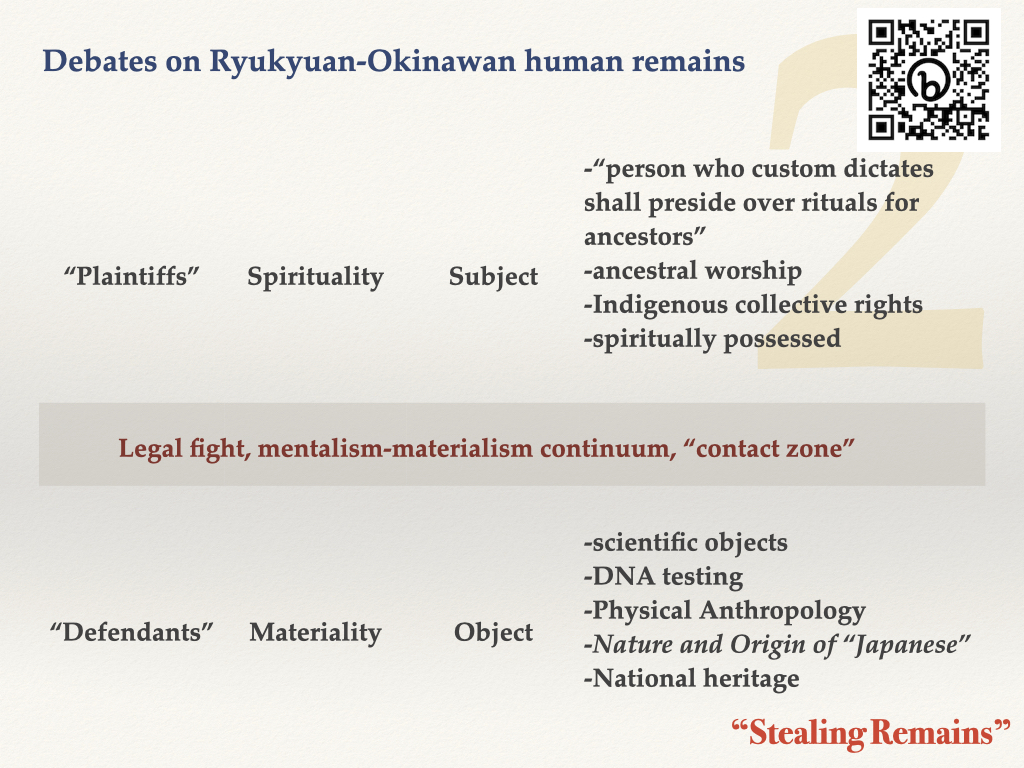
I will discuss the ethical, legal, and social implications (ELSI ) of
the debates on the repatriation of Ryukyuan-Okinawan human
remains. The debates between indigenous peoples with lawyers and
civil activists, the so-called “plaintiff,”, who requested the
repatriation, and the national universities that stored human remain,
as “defendant”, which should negotiate formally with indigenous people,
came to a deadlock for over ten years . The plaintiffs wanted to
establish the collective entitlement of indigenous rights to the
repatriation of remains and objects that have not been enacted.
The defendant rejected repatriation claims to them by demanding in
legal conformity with the “the person who custom dictates shall preside
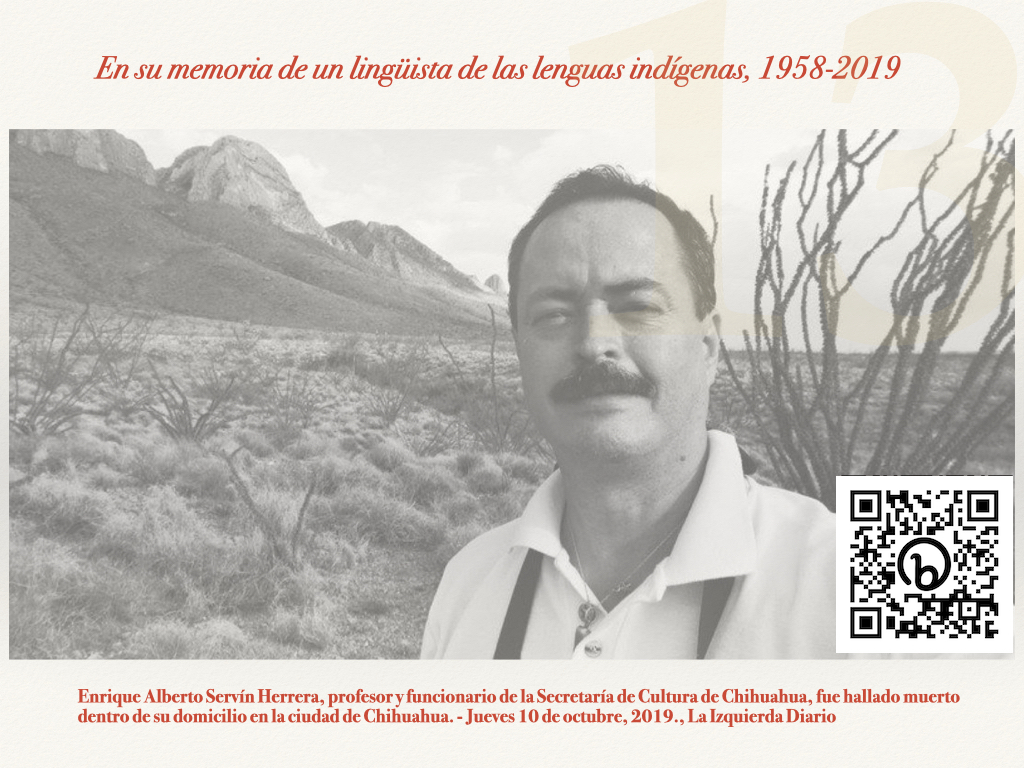
over rituals for ancestors” according to the article 897 in current
Japanese Civil Code .
|
 |
2
Following the ratification of UNDRIP, the United Nations Declaration on
the Rights of Indigenous Peoples by the Japanese government in
2007, the Ainu, one of Japanese northern ethnic minorities, began to
promote the repatriation of human remains and burial materials.
Meanwhile, the debate about the translocation of the US military
base in Okinawa prefecture, southern Japan has evoked rising
local Ryukyuan nationalism from 2008, when the Japanese government
adopted a resolution recognizing the Ainu population. In plenary
session during the U.N. forum (of the 19 April, 2008), a representative
of the Japanese mission stated that the government “respects Okinawa’s
culture and traditions” but also stated that “there is no widespread
understanding in Japan that the people of Okinawa are indigenous
people.” . In this context, the Ryukyuan activists have adopted
the Ainu strategy demanding the repatriation of human remains.
|
 |
3 Ryukuan Story of Bones
For the sake of our argument, let us take some stories about the repatriation of bones in Okinawa prefecture.
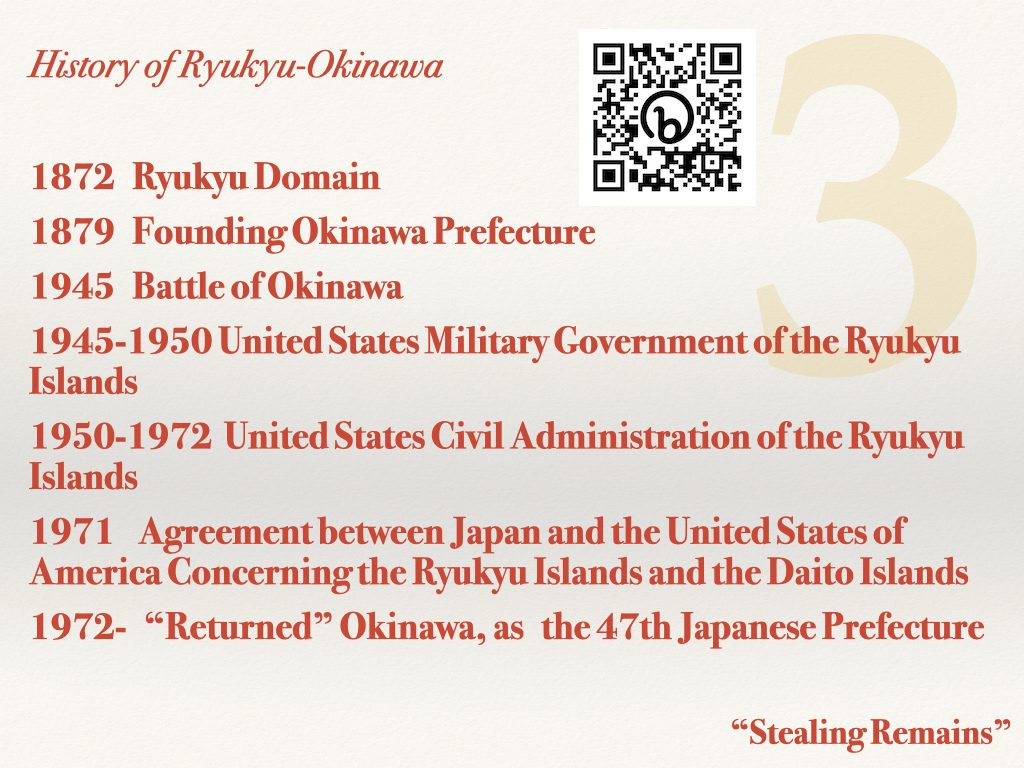
In Ryukyu, the name of Kingdom, the authentic name of the southern
prefecture of Okinawa, the repatriation movement developed along a
different path to the Ainu. Ryukyuan intellectuals have tended to
think that the Japanese central government has discriminated against
their people since the settlement and domination of the Ryukyu Domain
in 1872 and the founding of the Okinawa Prefecture in 1879. From
1945 it is thought that Ryukyu was placed under colonial rule by the
Japanese central government, which permitted Allied Forces, chiefly the
U.S. Army, to exercise trusteeship domination of their territory
. The Ryukyu Trustee Government ended in 1972 . Due to this
trend, the resettlement of Okinawa prefecture could be interpreted as
the continuation of colonial domination. Even today, almost eighty
percent of U.S. Forces military bases are located in Okinawa
prefecture.
|
 |
4
After the 1995 Okinawa 12 years girl rape incident, it can be said that
the Ryukyu independent movement had been created. One of the most
powerful intellectuals of the Ryukyu independent movement, Prof.
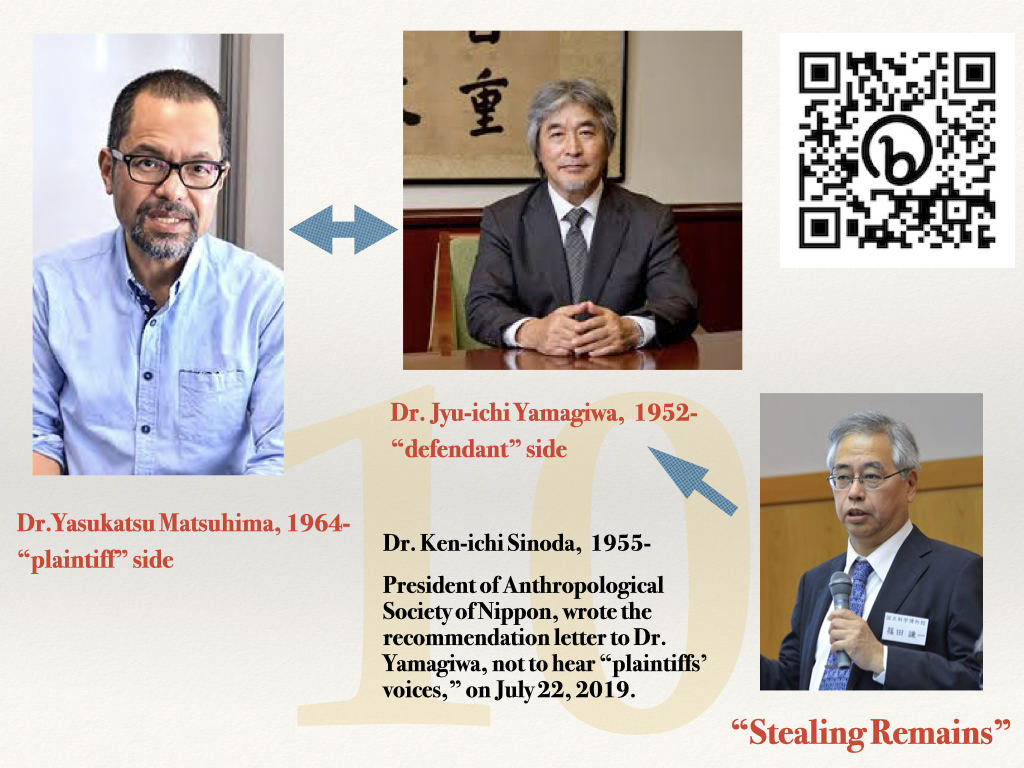
Yasukazu Matsushima, a Rykyuan, of Ryukoku University in Kyoto,
organized the Association of the Indigenous People of Ryukyu . He
has published several books on the colonial history of Ryukyu and the
possibility of her independence.
|
 |
5
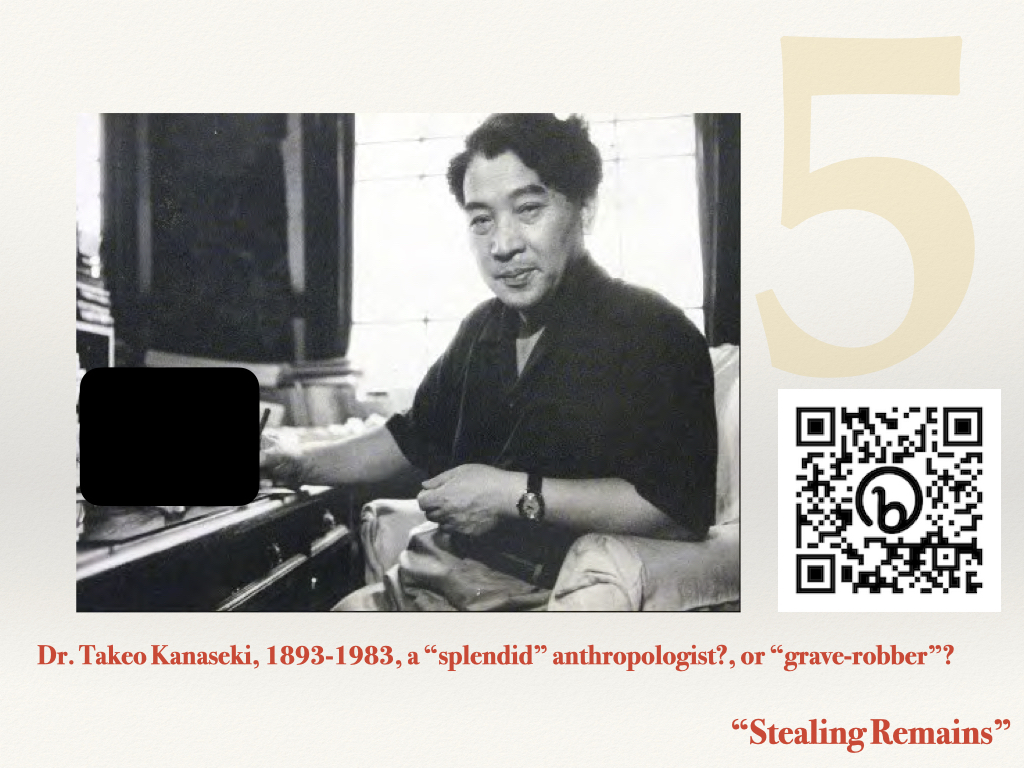
When Dr.Matsushima was conducting his research, he knew that a famous Japanese
anatomist , Dr. Takeo Kanaseki (1897–1983), former professor of Taipei
Imperial University, had “grave-robbed” over fifty bodies from the
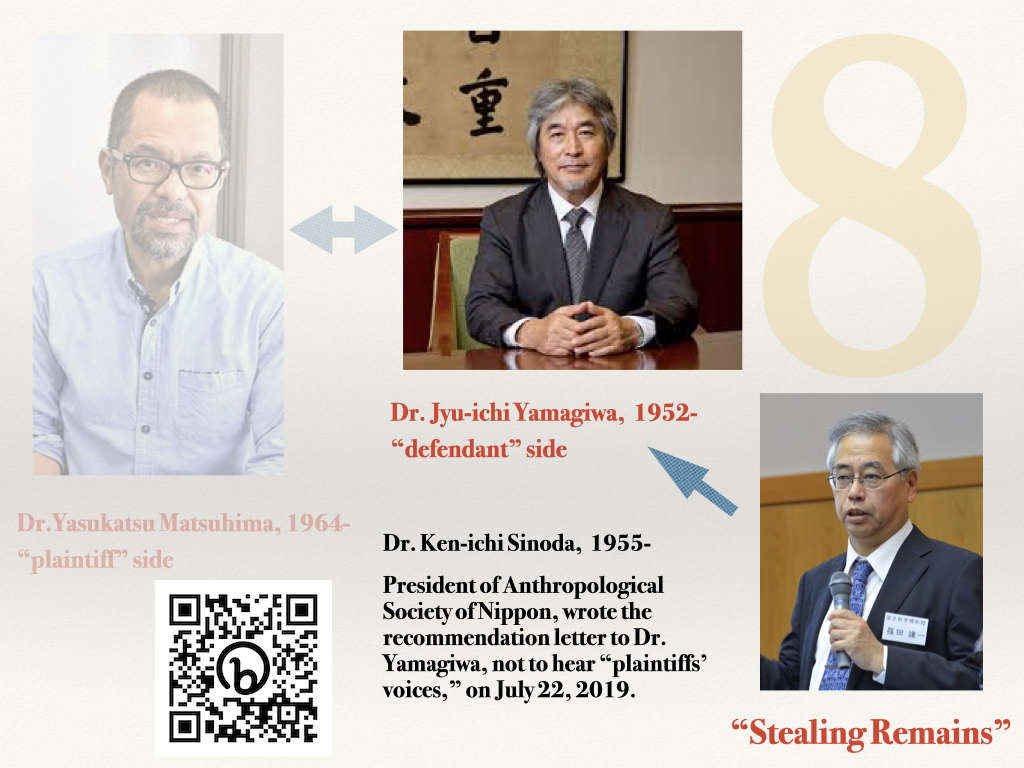
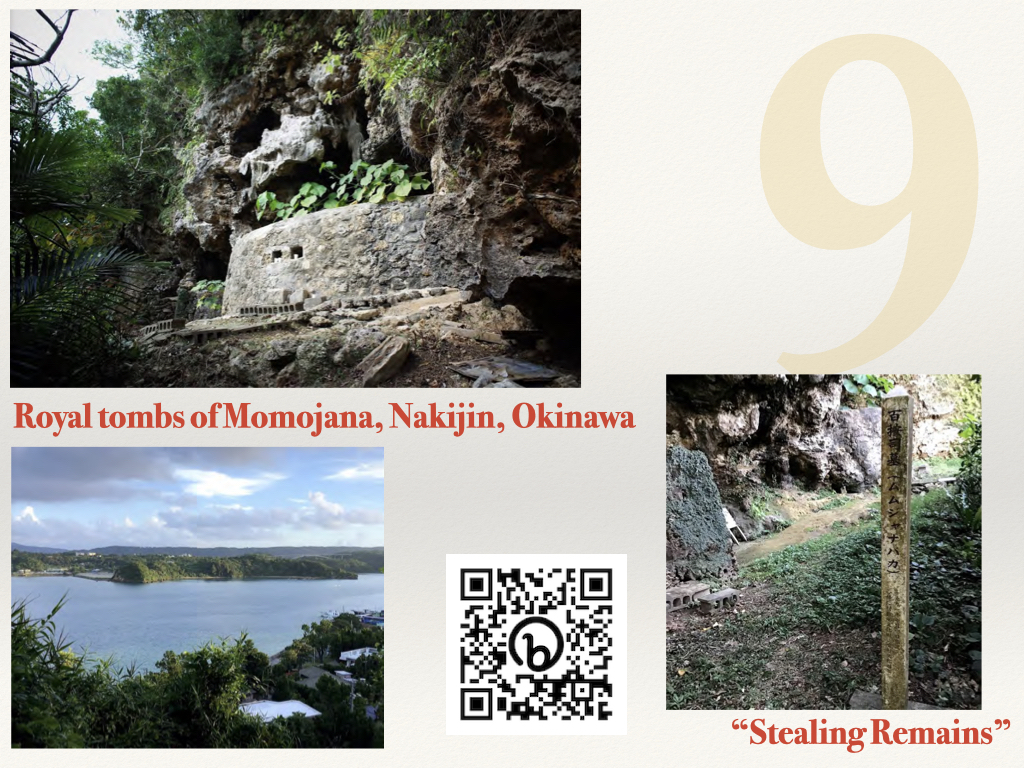
Royal Tombs of Momojyana, Nakijin from 1928 to 29. These bodies have
remained in storage at both in Taiwan National University and in Kyoto
University. However, 63 remains at the Taiwan National University were
repatriated to the Okinawa Prefectural Center for Buried Cultural
Properties in March 2019. Even though Prof. Matsushima had requested
Kyoto University to disclose historical information about the
“stealing” process and to repatriate the bodies, he and the descendants
of the royal family brought the case before the Kyoto District Court at
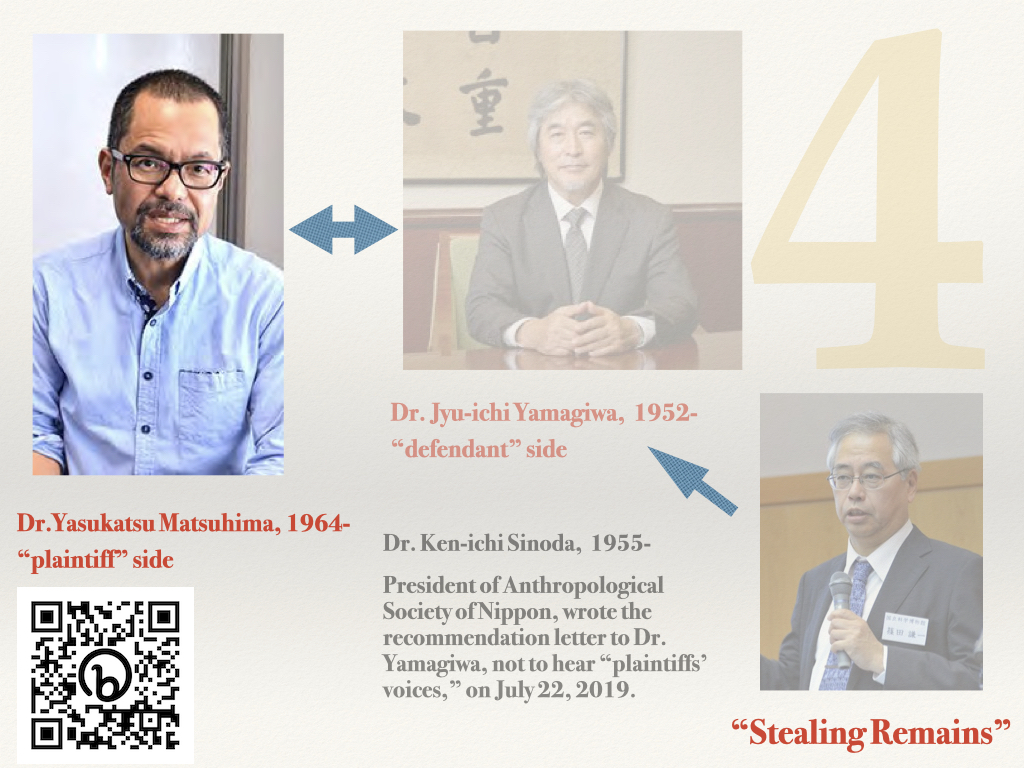
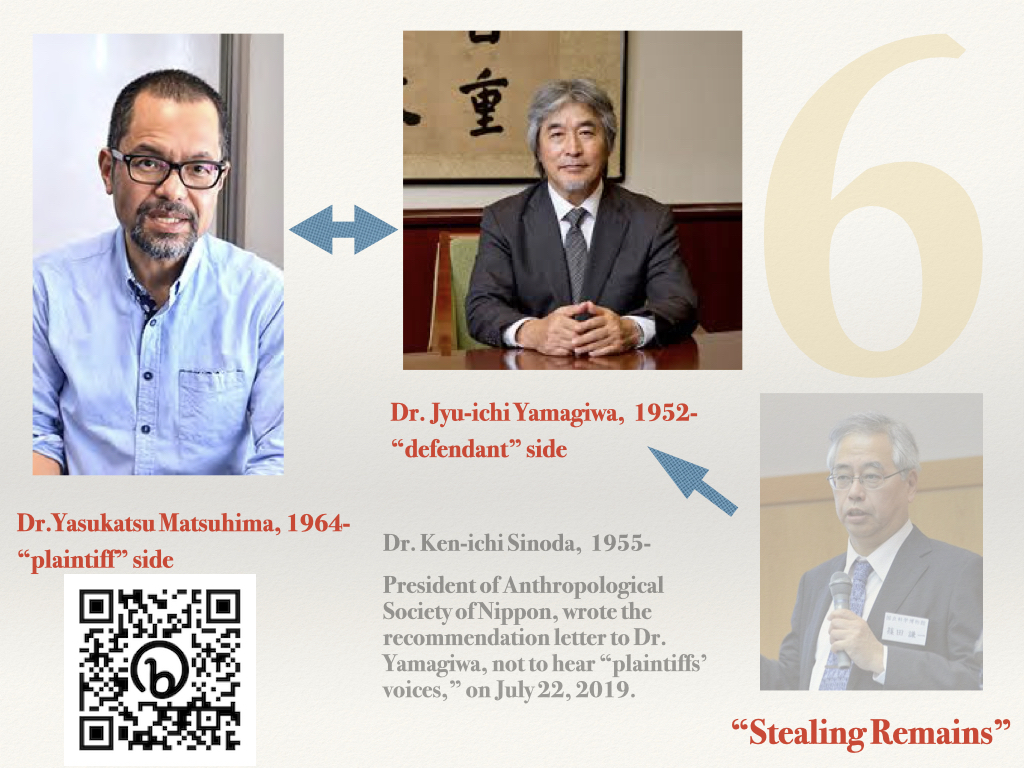
the end of 2018 . In this case Prof. Matsushima is the representative
of the plaintiff, and the Kyoto University whose president is Dr.
Jyu-ichi Yamagiwa, a worldly famous primatologist of Gorillas in
Africa, takes defendant side. In his several lecture meetings for both
academics and civil activists, Prof. Matsushima has repeatedly
asserted, "Stealing human remains is criminal in our common sense, not
only for Ryukyuan but for all the Japanese."
|
 |
6
In the same period some members of the Anthropological Society of
Nippon, specialist group of physical anthropology in Japan, have
organized open sessions for Japanese audience to discuss the
"importance of their studies" (that means objects of both the Ainu and
the ancient Jomon people of 16,000-3,000 BP) by using human remain
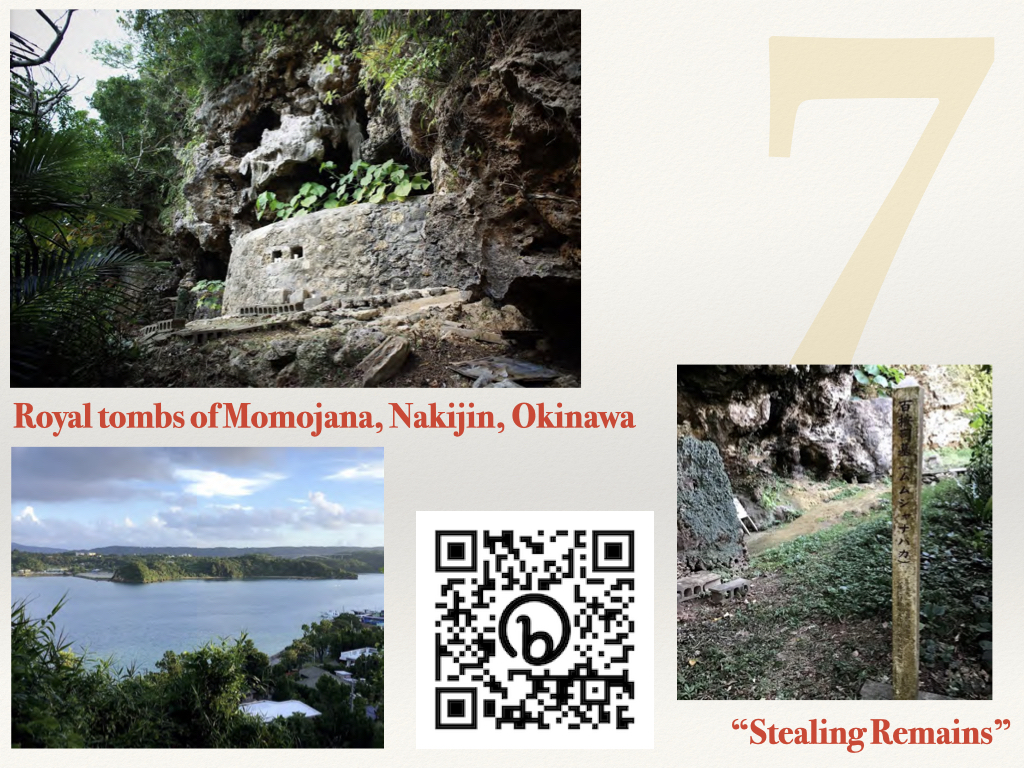
including both Ainu and Ryukyuan people . However on July 2019, the
president Dr. Ken-ichi Shinoda wrote the letter to the president of
Kyoto university, Dr. Yamagiwa, not to hear the "plaintiff's voices and
requests." Dr. Shinoda wrote that,
|
 |
7
"For the sake of the maintenance and inheritance of old human remains,
the Anthropological Society of Nippon thinks following three principles
mentioned below; (1) old human remains are cultural properties and
national heritages that have own purposes for scientific studies, (2)
In case of necessity, the organizations which maintain old human
remains should discuss the methods for proper maintenance by holding
counsels with local governments organizations that are only
representatives of specimens of origin, (3) In case of transferring
human remains, the applicable organizations should inherit specimens
for scientific purposes and mention to offering for continuous
opportunities for all kind of studies."
|
 |
8
Dr. Shinoda's statement seems to be very nervous by repatriating the
human remains of the Kiyono's collection that Dr. Kanaseki had once
collaborated to collect human remain from both the Amami and the Ryukyu
islands.
|
 |
9
The Ryukyuan case was obviously inspired by the Ainu movement; Prof.
Matsushima has traveled to Hokkaido to meet the Ainu repatriation
movement activists prior to his own claim activities . Prof.
Matsushima and the descendants of the royal family of the Momojyana
have officially requested the prefectural government of Okinawa to
perform a reburial of the returned remains with a Ryukyuan traditional
funeral in March 2019. Yet, until today, the prefectural government
has refused their request. The officials of the Okinawa prefectural
government have announced that these human remains would be transferred
from cardbord to wooden boxes and kept confirmedly in airconditioned
store room because of “just returning from abroad Taiwan.” On the
other hand, Professor Matsushima has also deeply concerned possibility
that the prefectural government could use the remains for DNA tests
without informed consent of the dependent royal family.
|
 |
10
Quest for harmony between plaintiffs and defendants
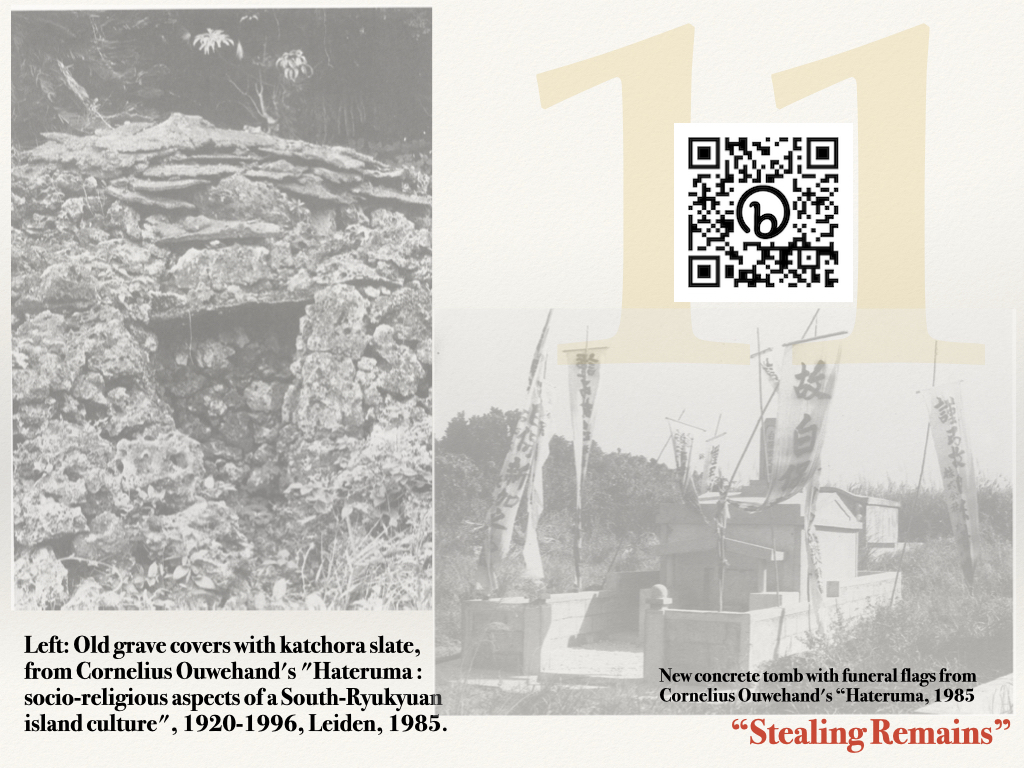
In both the Ainu and Ryukyuan repatriation cases, indigenous people
have taken the plaintiff’s side, and the defendants are the local and
central governments and national universities. The reason why the
government is potentially at fault is the lack of legislation governing
acts of repatriation in Japan. Without legislation, the Japanese
government can always take makeshift administrative respite in legal
conformity with the “the person who custom dictates shall preside over
rituals for ancestors” of the Civil Code of Japan, rather than
legislation stipulating the collective rights of indigenous people.
|
 |
11
Many of intellectuals of the Ainu and Ryukyuan have sought a positive
solution to repatriation issues by referring to the Native American
Graves Protection and Repatriation Act, NAGPRA , enacted in 1990 in the
United States. Movements have expressed their support for NAGPRA as a
progressive solution to the disputes between Indigenous people and
their former oppressors. They want repatriation legislation in Japan
like NAGPRA of the U.S. Actually, our government lacks any
consciousness of the rights of Japan’s Indigenous people and has not
had any dialog with Indigenous people. The real problem is also the
lack of imagination in Japanese social scientists . Despite our
academic tradition of cultural anthropology, we have not taken the
plaintiff's side because almost all Japanese anthropologists receive
grants from government and quasi-governmental agencies. Until today,
the majority have taken the defendant's side in repatriation cases with
the rare exception of those anthropologists who have been trained by
indigenous leaders. We do not have Indigenous studies by their own .
|
 |
12
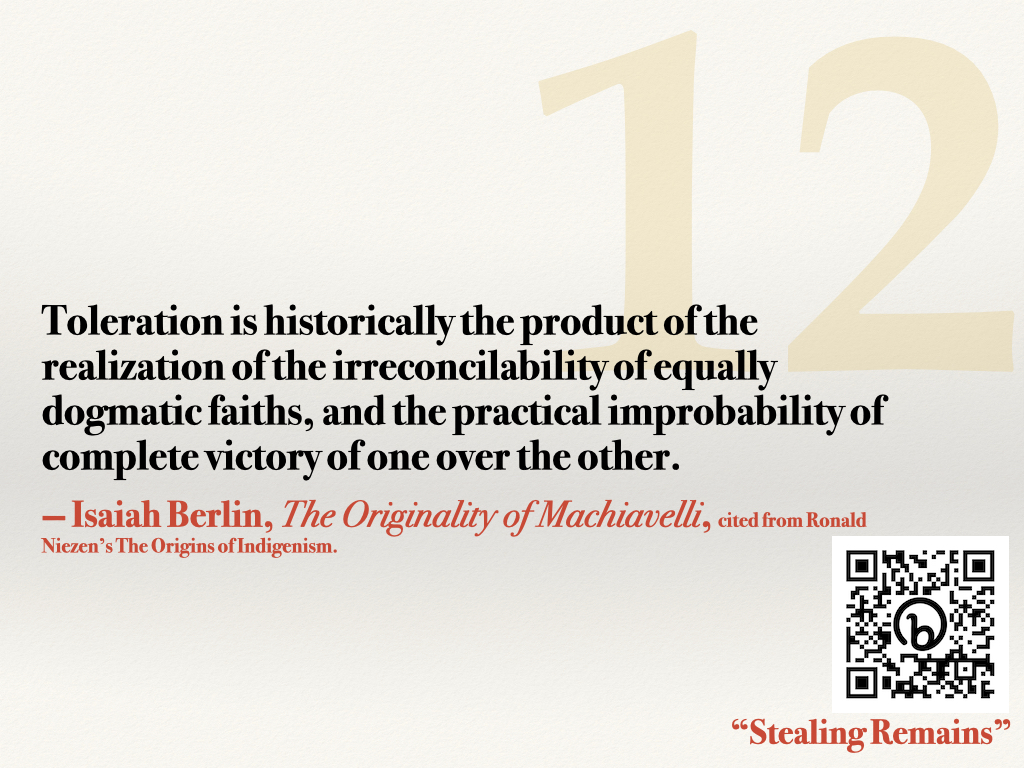
From the perspectivism of ELSI (ethical, legal, and social
implications) , my conclusion is that the progressive
repatriation requests of Indigenous people involve not only returning
objects but also their recovery from violent colonial traumatic
memories, which requires a sense of homecoming to the time and place of
origin. We need more to examine the afterlife of human being and
their belongings in the context of our "not passing away" colonial
memories. The Ryukuan-Okinawan people and other Japanese ought to
reconcile for the consensus of repatriation of human remain that could
be returned to a certain time and space, that means the reconciliation
between plaintiffs and defendants. How do cultural
anthropologists engage with dialogues between the plaintiffs and the
defendant in our future ?
|
 |
13
Enrique Alberto Servín Herrera (Chihuahua, January 28, 1958–Chihuahua,
October 9, 2019) was a Mexican lawyer, polyglot, human rights activist
for sexual diversity, writer, poet, and linguist, and a prominent
advocate and scholar of indigenous languages.
Biography
He was a lawyer who graduated from the Autonomous University of
Chihuahua and held a master’s degree in Social Anthropology from the
National School of Anthropology and History, Chihuahua Unit. Since
2016, he served as head of the Department of Ethnic Cultures and
Diversity and coordinator of the institutional program for Indigenous
Languages and Literatures at the Chihuahua State Ministry of Culture.
He dedicated his work to the study, preservation, revitalization, and
promotion of the indigenous languages of the state of
Chihuahua—including Rarámuri, Guarijío, Tepehuán, and Nevome or Pima
Bajo—which led him to receive national and international awards and
recognition.[1] He himself was fluent in approximately 28 languages.
On October 9, 2019, his body was found at his home in the historic
center of Chihuahua. It was preliminarily determined that he had died
from a blow to the head, and his death was classified as a homicide by
the authorities.[2][3][4]
His death was mourned by authorities and the intellectual community at
both the state and national levels, with figures such as the Secretary
of Culture, Alejandra Frausto,[5] and the Governor of Chihuahua, Javier
Corral Jurado,[6] as well as institutions such as the National
Institute of Anthropology and History[7] and the National Institute of
Fine Arts and Literature,[8] among others, expressing their sorrow.[9]
Referencias
01. «¿Quién era Enrique Servín, el defensor de las lenguas indígenas
asesinado en Chihuahua?». La Silla Rota. 10 de octubre de 2019.
Consultado el 10 de octubre de 2019.
Mancinas, Ibeth (10 de octubre de 2019). «Matan a maestro y funcionario
de Chihuahua, Enrique Servín». El Universal. Consultado el 10 de
octubre de 2019.
Mayorga, Patricia (10 de octubre de 2019). «Hallan muerto a funcionario
y defensor de lenguas indígenas en Chihuahua». Proceso. Consultado el
10 de octubre de 2019.
Villalpando, Rubén (10 de octubre de 2019). «Asesinan en su casa al
poeta chihuahuense Enrique Servín». La Jornada. Consultado el 10 de
octubre de 2019.
alefrausto (10 de octubre de 2019). «Estamos consternados con la
noticia de la muerte de Enrique Servín.» (tuit) – vía X/Twitter.
05. Javier_Corral (10 de octubre de 2019). «Envío mi abrazo solidario a
la familia del maestro Enrique Servín Herrera, en estos momentos de
duelo.» (tuit) – vía X/Twitter.
INAHmx (10 de octubre de 2019). «El #INAH se une a la pena que embarga
a familiares y amigos, por la sensible pérdida del Maestro Enrique
Servín Herrera.» (tuit) – vía X/Twitter.
bellasartesinba (10 de octubre de 2019). «El INBAL lamenta el deceso
del escritor, poeta y traductor, Enrique Servín Herrera.» (tuit) – vía
X/Twitter.
Díaz, Antonio (10 de octubre de 2019). «Condenan asesinato de Enrique
Servín, funcionario de Cultura en Chihuahua». El Universal. Consultado
el 10 de octubre de 2019.
10. http://......
https://......
https://.......
|
 |
14
|