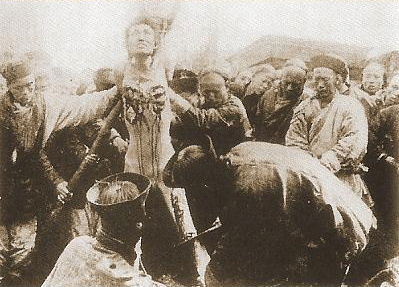
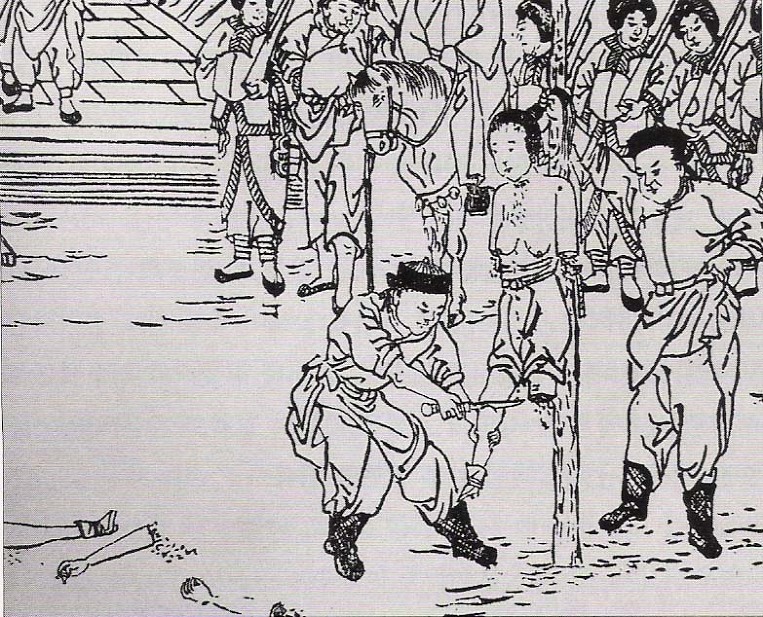
torture, ごうもん

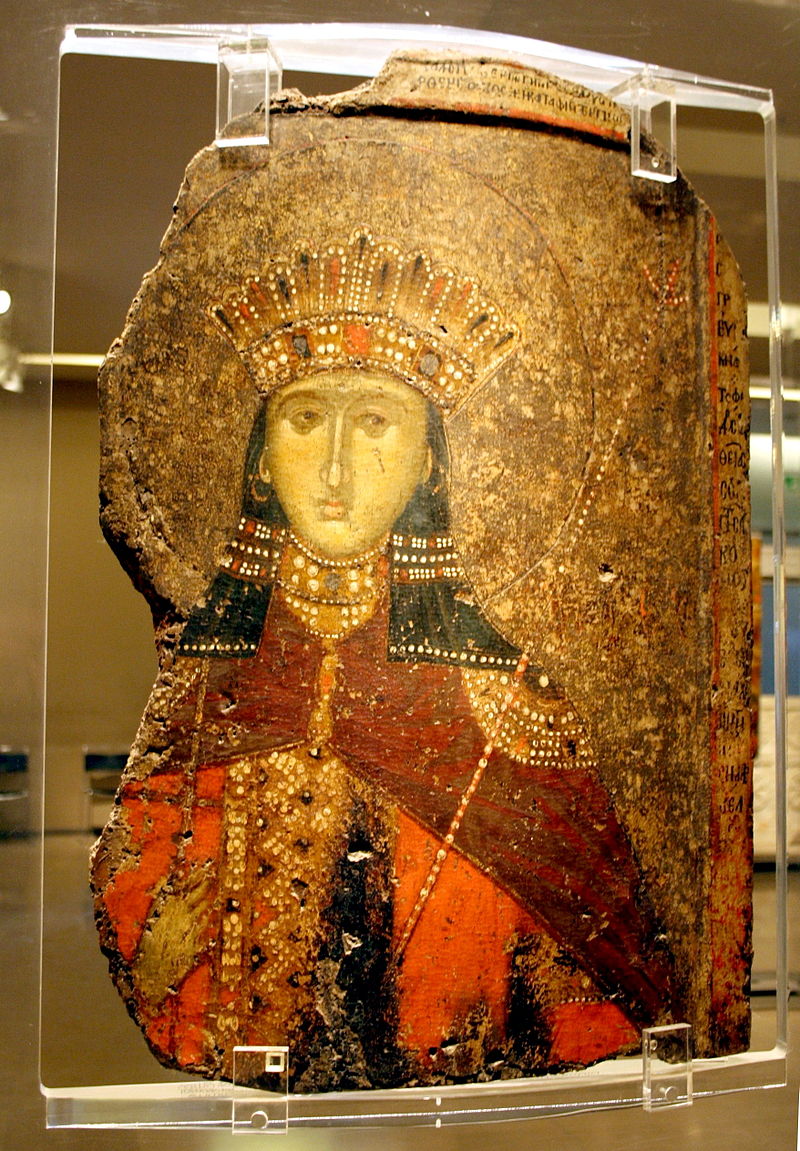
Santa Lucía de Siracusa, pintor Francesco del Cossa (c. 1430 – c.
1477)
拷 問
torture, ごうもん
Santa Lucía de Siracusa, pintor Francesco del Cossa (c. 1430 – c.
1477)
狭義には、法的制裁にかかわる自白を得るために、被疑者に対して肉体的苦 痛を与えることである。広義には、人間(他者)によって外的に加えら れる苦痛一般のことをさす。
"Torture (from Latin tortus: to twist, to torment) is the act of deliberately inflicting severe physical or psychological suffering on someone by another as a punishment or in order to fulfill some desire of the torturer or force some action from the victim. Torture, by definition, is a knowing and intentional act; deeds which unknowingly or negligently inflict suffering or pain, without a specific intent to do so, are not typically considered torture." -Torture.
「拷問(ラテン語 tortus:ねじ曲げる、苦しめる)とは、罰として、あるいは拷問者の欲望を満たすため、あるいは被害者に何らかの行動を強いるために、他者が意図的に 誰かに深刻な肉体的または精神的な苦悩を与える行為である。拷問とは定義上、故意かつ意図的な行為である。特定の意図なく、無知または過失によって苦悩や 痛みを与える行為は、通常、拷問とは見なされない。」

Captured Viet Cong soldier, blindfolded and tied in a stress position by American forces during the Vietnam War, 1967/ ベトナム戦争中の1967年、米軍によって捕らえられたベトコン兵士。目隠しをされ、ストレス体勢で縛られている。
| c
is the deliberate infliction of severe pain or suffering on a person
for reasons including punishment, extracting a confession,
interrogation for information, or intimidating third parties. Some definitions restrict torture to acts carried out by the state, while others include non-state actors. Most victims of torture are poor and marginalized people suspected of crimes, although torture against political prisoners, or during armed conflict, has received disproportionate attention. Judicial corporal punishment and capital punishment are sometimes seen as forms of torture, but this label is internationally controversial. A variety of methods of torture are used, often in combination; the most common form of physical torture is beatings. Beginning in the twentieth century, many torturers have preferred non-scarring or psychological methods to maintain deniability. Torturers more commonly act out of fear, or due to limited resources, rather than sadism. Although most torturers are thought to learn about torture techniques informally and rarely receive explicit orders, they are enabled by organizations that facilitate and encourage their behavior. Once a torture program begins, it usually escalates beyond what is intended initially and often leads to involved agencies losing effectiveness. Torture aims to break the victim's will, destroy their agency and personality, and is cited as one of the most damaging experiences that a person can undergo. Many victims suffer both physical damage—chronic pain is particularly common—and mental sequelae. Although torture survivors have some of the highest rates of post-traumatic stress disorder, many are psychologically resilient. Torture has been carried out since ancient times. However, in the eighteenth and nineteenth centuries, many Western countries abolished the official use of torture in the judicial system, although it continued to be used throughout the world. Public opinion research shows general opposition to torture. It is prohibited under international law for all states under all circumstances and is explicitly forbidden by several treaties. Opposition to torture stimulated the formation of the human rights movement after World War II, and it continues to be an important human rights issue. Although prevention efforts have been of mixed effectiveness, institutional reforms and the elimination of incommunicado detention have had positive effects. Despite its decline, torture is still practiced in or by most countries. |
拷問[Torture]とは、懲罰、自白の引き出し、情報の取得のための尋問、あるいは第三者への威嚇などの目的で、人に意図的に激しい苦痛や苦しみを与える行為である。 拷問の定義には、国家による行為に限定するものもあれば、非国家主体による行為も含むものもある。拷問の被害者の多くは、犯罪の容疑をかけられた貧困層や 社会的弱者であるが、政治犯に対する拷問や武力紛争下での拷問が、特に大きな注目を集めてきた。司法上の体罰や死刑は、時に拷問の一形態と見なされること もあるが、この見解については国際的に議論がある。拷問には様々な手法が用いられ、しばしば組み合わせて行われる。身体的拷問の中で最も一般的なのは殴打 である。20世紀以降、多くの拷問者は、関与を否定できるようにするため、傷跡が残らない手法や心理的拷問を好むようになった。 拷問を行う者は、サディズムによるというよりは、恐怖心や限られた資源に起因して行動することが多い。拷問を行う者の多くは、拷問の手法を非公式に学び、 明確な命令を受けることは稀であると考えられているが、彼らの行為を助長し奨励する組織によって支えられている。拷問プログラムが開始されると、通常は当 初の意図を超えてエスカレートし、関与する機関の機能不全を招くことが多い。拷問は被害者の意志を屈服させ、その主体性と人格を破壊することを目的として おり、人間が経験し得る最も破壊的な体験の一つとして挙げられている。多くの被害者は、身体的損傷(特に慢性的な痛みが一般的)と精神的な後遺症の両方に 苦しんでいる。拷問の生存者は心的外傷後ストレス障害(PTSD)の発症率が最も高いグループの一つに数えられるが、その多くは心理的に回復力を持ってい る。 拷問は古代から行われてきた。しかし、18世紀から19世紀にかけて、多くの西洋諸国は司法制度における拷問の公的な使用を廃止したものの、世界中でその 使用は続いた。世論調査によれば、拷問に対する一般的な反対意見が示されている。拷問は国際法の下で、いかなる状況においてもすべての国家に対して禁止さ れており、いくつかの条約によって明示的に禁じられている。拷問への反対は、第二次世界大戦後の人権運動の形成を後押しし、現在も重要な人権問題であり続 けている。予防努力の効果にはばらつきがあるものの、制度改革や隔離拘禁の廃止は肯定的な効果をもたらしている。減少傾向にあるとはいえ、拷問は依然とし てほとんどの国で、あるいはそれらの国によって行われている。 |
| Definitions Main article: Definitions of torture  While solitary confinement, life imprisonment without the prospect of parole, and corporal punishment have been challenged, imprisonment itself escapes scrutiny despite evidence it is harmful.[1][2] Torture[a] is conventionally understood as the deliberate infliction of severe pain or suffering on a helpless person under the control of a perpetrator.[4][5][6] The generally accepted components of the definition of torture are as follows: It is widely accepted that torture must be inflicted deliberately[7] and for a purpose, but this is usually inclusive of any motivation except negligence or justified purposes.[8] While the United Nations Convention against Torture definition requires that torture be perpetrated or enabled by "a public official or other person acting in an official capacity",[9][7][10] some legal systems add non-state armed groups and organized crime. The most expansive definitions encompass anyone as a potential perpetrator.[11][12] Over time, courts have begun to move away from state-centric views of torture by holding the state responsible for failing to prevent and punish torture by third parties.[13] Torture is often described as occurring when the victim is powerless and under the control of the perpetrator, which can help distinguish it from legitimate use of force. The use as a defining characteristic of torture is more controversial because it can be claimed that the victim was not entirely powerless, particularly in non-traditional torture situations occurring outside of detention.[14] The threshold of severity at which treatment can be classified as torture is the most controversial aspect of its definition; the interpretation of torture has broadened over time.[15][9][16] The subjective elements of the definition of torture open room for legal evolution broaden the prohibition of torture, but on the other hand can be used to justify tortuous practices[17] (for example, the United States government argued that waterboarding is not torture).[16] Depending on the definition used, torture may be distinguished from cruel, inhuman, or degrading treatment (CIDT) by the severity or the purpose.[6][9] The definition of torture excludes and can be seen to legitimize other forms of pain, suffering, and degradation,[17][18] particularly institutionalized, collective, and structural violence,[17] while legal scholar Ergün Cakal argues that violent practices come to be recognized as torture after they no longer serve the purpose of the state.[19] |
定義 本記事:拷問の定義 独房監禁、仮釈放の見込みのない終身刑、および体罰は問題視されてきたが、投獄そのものは、有害であるという証拠があるにもかかわらず、批判の対象とはなっていない。[1][2] 拷問[a]とは、一般的に、加害者の支配下にある無力な人物に対して、意図的に激しい苦痛や苦しみを与える行為と理解されている。[4][5] [6] 拷問の定義において一般的に受け入れられている構成要素は以下の通りである: 拷問は意図的に[7]かつ何らかの目的を持って加えられなければならないと広く認められているが、これには通常、過失や正当な目的を除くあらゆる動機が含まれる。[8] 国連拷問等禁止条約の定義では、拷問は「公務員または公的職務を行う者」によって行われるか、またはその者が容認したものであることが要求されているが [9]、 [7][10] 一部の法体系では、非国家武装集団や組織犯罪も加えている。最も広範な定義では、あらゆる者を潜在的な加害者として包含している。[11][12] 時を経て、裁判所は、第三者による拷問を防止・処罰しなかったことについて国家に責任を負わせる判断を下すことで、拷問に対する国家中心的な見解から離れ つつある。[13] 拷問は、被害者が無力な状態で加害者の支配下にあるときに発生するとしばしば説明されるが、これは正当な武力行使との区別を助けるものである。しかし、こ れを拷問の定義的特徴として用いることについては、特に拘禁外で発生する非伝統的な拷問状況において、被害者が完全に無力ではなかったと主張される可能性 があるため、より議論の的となっている。[14] ある扱いが拷問に分類されるための深刻さの閾値は、その定義において最も議論の分かれる点であり、拷問の解釈は時とともに拡大してきた。[15][9] [16] 拷問の定義における主観的要素は、法的な発展の余地を残し、拷問の禁止範囲を拡大させる一方で、拷問的な慣行を正当化する根拠としても利用され得る [17](例えば、米国政府はウォーターボーディングは拷問ではないと主張した)。[16] 用いられる定義によっては、拷問は、その深刻度や目的により、残虐、非人道的、または品位を傷つける扱い(CIDT)と区別されることがある。[6] [9] 拷問の定義は、他の形態の痛み、苦痛、および屈辱を排除しており、それらを正当化していると見なすこともできる[17][18]。特に、制度化された、集 団的な、および構造的な暴力などがこれにあたる[17]。一方、法学者エルギュン・チャカルは、暴力的な慣行は、もはや国家の目的を果たさなくなった後に 初めて拷問として認識されるようになると論じている[19]。 |
| History Pre-abolition  Two Elamite chiefs flayed alive after the Battle of Ulai, Assyrian relief Torture was legally and morally acceptable in most ancient, medieval, and early modern societies.[20] Societies used torture as part of the judicial process, and painful punishments were distinguished from torture.[21][22][23] Historically, torture was seen as a reliable way to elicit the truth, a suitable punishment, and deterrence against future offenses.[24] When torture was legally regulated, there were restrictions on the allowable methods.[24] In most societies, citizens could be judicially tortured only under exceptional circumstances and for a serious crime such as treason, often only when some evidence already existed. In contrast, non-citizens such as foreigners and slaves were commonly tortured.[25] There is archaeological evidence of torture in Early Neolithic Europe, about 7,000 years ago.[26] Torture is commonly mentioned in historical sources on Assyria and Achaemenid Persia.[27][28] Torture was rare in early medieval Europe but became more common between 1200 and 1400.[29][30][31] Torture was still a labor-intensive process reserved for the most severe crimes;[32] most torture victims were men accused of murder, treason, or theft.[33] The Ottoman Empire and Qajar Iran used torture in cases where circumstantial evidence tied someone to a crime, although Islamic law traditionally considered confessions made under torture to be invalid.[34] |
歴史 廃止以前 ウライの戦いの後、生きたまま皮を剥がれた2人のエラム族の首長、アッシリアのレリーフ 拷問は、古代、中世、そして近世のほとんどの社会において、法的にも道徳的にも容認されていた。[20] 社会は司法手続きの一環として拷問を用い、苦痛を伴う刑罰は拷問とは区別されていた。[21][22][23] 歴史的に、拷問は真実を引き出す確実な手段、適切な刑罰、そして将来の犯罪に対する抑止力と見なされていた。[24] 拷問が法的に規制されていた場合、許容される方法には制限があった。[24] ほとんどの社会において、市民が司法上の拷問を受けるのは、例外的な状況下で、かつ反逆罪のような重大な犯罪の場合に限られ、多くの場合、すでに何らかの 証拠が存在する場合のみであった。対照的に、外国人や奴隷などの非市民は、一般的に拷問を受けた。[25] 約7,000年前の新石器時代初期のヨーロッパにおいて、拷問が行われていたことを示す考古学的証拠が存在する。[26] アッシリアやアケメネス朝ペルシアに関する歴史資料には、拷問について頻繁に言及されている。[27][28] 中世初期のヨーロッパでは拷問は稀であったが、1200年から1400年の間に一般的になった。[29][30][31] 拷問は依然として労力を要する手続きであり、最も重大な犯罪にのみ適用されていた。[32] 拷問の被害者の大半は、殺人、反逆、窃盗の容疑をかけられた男性であった。[33] オスマン帝国やカジャール朝イランでは、状況証拠によって犯行との関連性が示唆される場合に拷問が用いられたが、イスラム法では伝統的に、拷問下での自白 は無効とされていた。[34] |
Abolition and continued use "The custody of a criminal does not require torture" by Francisco Goya, c. 1812 Torture remained legal in Europe during the seventeenth century, but its practice declined.[35][36] Torture was already of marginal importance to European criminal justice systems by its formal abolition in the 18th and early 19th centuries.[37][38] Theories for why torture was abolished include Enlightenment ideas about the value of the human person,[39][40] the lowering of the standard of proof in criminal cases, popular views that no longer saw pain as morally redemptive,[35][40] and the expansion of imprisonment as an alternative to executions or painful punishments.[39][41] It is not known if torture also declined in non-Western states or European colonies during the nineteenth century.[42] In China, judicial torture, which had been practiced for more than two millennia,[24] was banned in 1905 along with flogging and lingchi (dismemberment) as a means of execution,[43] although torture in China continued throughout the twentieth and twenty-first centuries.[44][45] Torture was widely used by colonial powers to subdue resistance and reached a peak during the anti-colonial wars in the twentieth century.[46][47] An estimated 300,000 people were tortured during the Algerian War (1954–1962),[48] and the United Kingdom and Portugal also used torture in attempts to retain their respective empires.[49] Independent states in Africa, the Middle East, and Asia often used torture in the twentieth century, but it is unknown whether their use of torture increased or decreased compared to nineteenth-century levels.[46] During the first half of the twentieth century, torture became more prevalent in Europe with the advent of secret police,[50] World War I and World War II, and communist and fascist states.[20] Torture was used by both communist and anti-communist governments during the Cold War in Latin America, with an estimated 100,000 to 150,000 victims of torture by United States–backed regimes.[51][52] The only countries in which torture was rare during the twentieth century were the liberal democracies of the West, where torture was used against ethnic minorities or criminal suspects from marginalized classes, and during overseas wars against foreign populations.[46] |
廃止と継続的な使用 「犯罪者の拘禁に拷問は必要ない」 フランシスコ・ゴヤ作、1812年頃 17世紀のヨーロッパでは拷問は依然として合法であったが、その実施は減少していた。[35][36] 18世紀から19世紀初頭にかけて拷問が正式に廃止された時点では、すでにヨーロッパの刑事司法制度において、拷問の重要性はごく限られたものとなってい た。[37][38] 拷問が廃止された理由として、人間の尊厳に関する啓蒙思想[39][40]、刑事事件における立証責任の緩和、苦痛を道徳的救済と見なさなくなった世論 [35][40]、そして死刑や苦痛を伴う刑罰に代わるものとしての禁錮刑の拡大などが挙げられる。[39][41] 19世紀において、非西洋諸国やヨーロッパの植民地でも拷問が減少したかどうかは明らかではない。[42] 中国では、2000年以上にわたって行われてきた司法拷問[24]が、1905年に鞭打ちや凌遅(四肢切断)といった処刑手段と共に禁止されたが [43]、中国における拷問は20世紀から21世紀にかけても継続した。[44] [45] 拷問は、植民地支配国によって抵抗を鎮圧するために広く用いられ、20世紀の反植民地戦争の時期にピークを迎えた。[46][47] アルジェリア戦争(1954年–1962年)の期間中、推定30万人が拷問を受けた[48]。また、イギリスとポルトガルも、それぞれの帝国を維持しよう とする試みの中で拷問を用いた[49]。20世紀のアフリカ、中東、アジアの独立国家ではしばしば拷問が行われたが、19世紀の水準と比較してその使用が 増加したのか減少したのかは不明である。[46] 20世紀前半、秘密警察の出現[50]、第一次世界大戦および第二次世界大戦、そして共産主義・ファシズム国家の台頭に伴い、ヨーロッパでは拷問がより広 範に行われるようになった。[20] ラテンアメリカにおける冷戦期には、共産主義政権と反共産主義政権の双方が拷問を用い、米国が支援した政権による拷問の犠牲者は推定10万から15万人に 上った。[51][52] 20世紀において拷問が稀であった唯一の国々は、西側の自由民主主義諸国であった。そこでは、少数民族や社会的に疎外された階層の犯罪容疑者に対して、ま た海外での戦争において外国の住民に対して、拷問が行われた。[46] |
Prevalence Tear gas used during the 2019–2020 Hong Kong protests. The use of tear gas on protestors is sometimes considered a form of torture.[53] Most countries practice torture, although few acknowledge it.[54][55][56] Despite one of the most unambiguous and absolute prohibitions known to international law, torture continues to be more or less openly practiced in some states;[57] others have changed which techniques are used and denied, covered up, or outsourced torture programs.[58] Measuring the rate at which torture occurs is difficult because it is typically committed in secrecy, and abuses are likelier to come to light in open societies where there is a commitment to protecting human rights.[59] Many torture survivors, especially those from poor or marginalized populations, are unwilling to report.[60][61] Monitoring has focused on police stations and prisons, although torture can also occur in other facilities such as immigration detention and youth detention centers.[62][63] Torture that occurs outside of custody—including extrajudicial punishment, intimidation, and crowd control—has traditionally not been counted, even though some studies have suggested it is more common than torture in places of detention.[64][60][61] There is even less information on the prevalence of torture before the twentieth century.[20] Although it is often assumed that men suffer torture at a higher rate than women, there is a lack of evidence.[65] Some quantitative research has estimated that torture rates are either stagnant or increasing over time, but this may be a measurement effect.[66] Although liberal democracies are less likely to abuse their citizens, they may practice torture against marginalized citizens and non-citizens to whom they are not democratically accountable.[67][47] Voters may support violence against out-groups seen as threatening; majoritarian institutions are ineffective at preventing torture against minorities or foreigners.[68] Torture is more likely when a society feels threatened because of wars or crises,[67][68] but studies have not found a consistent relationship between the use of torture and terrorist attacks.[69] Torture is directed against certain segments of the population, who are denied the protection against torture given to others.[70][71][68] Torture of political prisoners and torture during armed conflicts receive more attention compared to torture of the poor or criminal suspects.[72][59] Most victims of torture are suspected of crimes; a disproportionate number of victims are from poor or marginalized communities.[73][59] Groups especially vulnerable to torture include unemployed young men, the urban poor, LGBTQ people, refugees and migrants, ethnic and racial minorities, indigenous people, and people with disabilities.[74] Relative poverty and the resulting inequality in particular leave poor people vulnerable to torture.[75] Criminalization of the poor, through laws targeting homelessness, sex work, or working in the informal economy, can lead to violent and arbitrary policing.[76] Routine violence against poor and marginalized people is often not seen as torture, and its perpetrators justify the violence as a legitimate policing tactic;[77] victims lack the resources or standing to seek redress.[75] |
実態 2019年から2020年にかけての香港デモで使用された催涙ガス。デモ参加者に対する催涙ガスの使用は、拷問の一形態と見なされることもある。[53] ほとんどの国で拷問が行われているが、それを認める国はほとんどない。[54][55][56] 国際法において最も明確かつ絶対的な禁止事項の一つであるにもかかわらず、一部の国家では拷問が依然として多かれ少なかれ公然と行われている。[57] 他の国々では、使用される手法を変えたり、拷問プログラムを否定・隠蔽・外部委託したりしている。[58] 拷問の発生率を測定することは困難である。なぜなら、拷問は通常秘密裏に行われ、人権保護への取り組みがある開かれた社会においてこそ、虐待が明るみに出 る可能性が高いからである。[59] 多くの拷問被害者、特に貧困層や社会的弱者層に属する人々は、通報をためらう傾向にある。[60][61] 監視活動は警察署や刑務所に重点が置かれてきたが、拷問は入国管理収容施設や少年収容施設などの他の施設でも発生し得る。[62][63] 拘禁外で行われる拷問(法外な処罰、威嚇、群衆統制など)は、一部の研究では拘禁施設内での拷問よりも一般的であるとの指摘があるにもかかわらず、従来は 統計に含まれてこなかった。[64][60][61] 20世紀以前の拷問の蔓延状況に関する情報は、さらに乏しい。[20] 男性は女性よりも高い割合で拷問を受けているとしばしば想定されるが、その証拠は不足している。[65] 一部の定量的研究では、拷問の発生率は横ばいであるか、あるいは時間とともに増加していると推定されているが、これは測定上の効果である可能性がある。 [66] 自由民主主義国家は自国民を虐待する可能性は低いものの、民主的に説明責任を負わない周縁化された市民や非市民に対しては拷問を行う可能性がある。 [67][47] 有権者は、脅威と見なされるアウトグループに対する暴力を支持する可能性がある。多数決に基づく制度は、少数派や外国人に対する拷問を防止する上で効果的 ではない。[68] 戦争や危機によって社会が脅威を感じている場合、拷問が行われる可能性は高まるが[67][68]、研究では拷問の使用とテロ攻撃との間に一貫した関係は 確認されていない。[69] 拷問は、他の人々に与えられている拷問からの保護を否定されている、人口の特定の層に対して行われる。[70][71][68] 政治犯に対する拷問や武力紛争中の拷問は、貧困層や犯罪容疑者に対する拷問に比べて、より注目を集めている。[72][59] 拷問の被害者の大半は犯罪の容疑者であるが、被害者の不釣り合いなほど多くの割合が、貧困層や社会的弱者のコミュニティに属している。[73][59] 拷問に対して特に脆弱なグループには、失業中の若者、都市部の貧困層、LGBTQの人々、難民や移民、民族的・人種的マイノリティ、先住民族、および障害 者が含まれる。[74] 相対的貧困と、それに伴う不平等は特に、貧困層を拷問に対して脆弱な立場に追いやる。[75] ホームレス、性産業、または非公式経済での就労を対象とした法律を通じた貧困層の犯罪化は、暴力的かつ恣意的な警察活動につながる可能性がある。[76] 貧困層や社会的弱者に対する日常的な暴力は、しばしば拷問とは見なされず、加害者はその暴力を正当な警察活動として正当化する。[77] 被害者には、救済を求めるための資源や立場が欠如している。[75] |
Perpetrators Charles Graner poses over Manadel al-Jamadi's corpse, after he was tortured to death by CIA personnel. Since most research has focused on torture victims, less is known about the perpetrators of torture.[78] Many torturers see their actions as serving a higher political or ideological goal that justifies torture as a legitimate means of protecting the state.[79][80][68] Fear is often the motivation for torture, and it is typically not a rational response as it is usually ineffective or even counterproductive at achieving the desired aim.[66] Torture victims are often viewed by the perpetrators as severe threats and enemies of the state.[81] Studies of perpetrators do not support the common assumption that they are psychologically pathological.[66][82] Most perpetrators do not volunteer to be torturers;[66] many have an innate reluctance to employ violence, and rely on coping mechanisms, such as alcohol or drugs.[82] Psychiatrist Pau Pérez-Sales finds that torturers act from a variety of motives such as ideological commitment, personal gain, group belonging, avoiding punishment, or avoiding guilt from previous acts of torture.[83] In contrast to the assumption that torture is ordered at the highest levels of government,[84] the approval or acquiescence of superiors is a necessary but not sufficient condition for torture to occur, given that a specific order to torture rarely can be identified.[85] In many cases, a combination of dispositional and situational effects lead a person to become a torturer.[83][86] In most cases of systematic torture, the torturers were desensitized to violence by being exposed to physical or psychological abuse during training[87][88][89] which can be a deliberate tactic to create torturers.[66] Even when not explicitly ordered by the government to torture,[90] perpetrators may feel peer pressure due to competitive masculinity.[91] Elite and specialized police units are especially prone to torturing, perhaps because of their tight-knit nature and insulation from oversight.[90] Although some torturers are formally trained, most are thought to learn about torture techniques informally.[92][66] Torture can be a side effect of a broken criminal justice system in which underfunding, lack of judicial independence, or corruption undermines effective investigations and fair trials.[93][94] In this context, people who cannot afford bribes are likely to become victims of torture.[95][94] Understaffed or poorly trained police are more likely to resort to torture when interrogating suspects.[96][97] In some countries, such as Kyrgyzstan, suspects are more likely to be tortured at the end of the month because of performance quotas.[96] The contribution of bureaucracy to torture is under-researched and poorly understood.[66] Torturers rely on both active supporters and those who ignore it.[98] Military, intelligence, psychology, medical, and legal professionals can all be complicit in torture.[80] Incentives can favor the use of torture on an institutional or individual level, and some perpetrators are motivated by the prospect of career advancement.[99][100] Bureaucracy can diffuse responsibility for torture and help perpetrators excuse their actions.[87][101] Maintaining secrecy is often essential to maintaining a torture program, which can be accomplished in ways ranging from direct censorship, denial, or mislabeling torture as something else, to offshoring abuses to outside a state's territory.[102][103] Along with official denials, torture is enabled by moral disengagement from the victims and impunity for the perpetrators.[68] Public demand for decisive action against crime or even support for torture against criminals can facilitate its use.[71] Once a torture program is begun, it is difficult or impossible to prevent it from escalating to more severe techniques and expanding to larger groups of victims, beyond what is originally intended or desired by decision-makers.[104][105][106] Sociologist Christopher J. Einolf argues that "torture can create a vicious cycle in which a fear of internal enemies leads to torture, torture creates false confessions, and false confessions reinforce torturers' fears, leading to a spiral of paranoia and ever-increasing torture"—similar to a witch hunt.[66] Escalation of torture is especially difficult to contain in counterinsurgency operations.[91] Torture and specific techniques spread between different countries, especially by soldiers returning home from overseas wars, although this process is poorly understood.[107][108] |
加害者 チャールズ・グラナーは、CIA職員による拷問の末に死亡したマナデル・アル=ジャマディの遺体の前でポーズをとっている。 これまでの研究の多くは拷問の被害者に焦点を当ててきたため、拷問の加害者についてはあまり知られていない。[78] 多くの拷問加害者は、自らの行為を、国家を守るための正当な手段として拷問を正当化する、より高次の政治的またはイデオロギー的な目標に奉仕するものだと 見なしている。[79][80] [68] 恐怖はしばしば拷問の動機となるが、それは通常、望ましい目的を達成する上で効果がないか、あるいは逆効果となるため、合理的な反応とは言えない。 [66] 拷問の加害者は、被害者を国家に対する重大な脅威や敵と見なすことがよくある。[81] 加害者に関する研究は、彼らが心理的に病的な存在であるという一般的な通説を裏付けていない。[66][82] ほとんどの加害者は、自ら進んで拷問者になろうとするわけではない。[66] 多くは暴力を行使することに生来の抵抗感を抱いており、アルコールや薬物といった対処法に頼っている。[82] 精神科医のパウ・ペレス=サレスは、拷問者がイデオロギーへの献身、個人的な利益、集団への帰属意識、処罰の回避、あるいは過去の拷問行為による罪悪感の 回避など、多様な動機に基づいて行動していると指摘している。[83] 拷問は政府の最高レベルで命令されるという通説とは対照的に[84]、具体的な拷問命令が特定されることは稀であるため、拷問が行われるための必要条件で はあるが十分条件ではないのが、上層部の承認または黙認である。[85] 多くの場合、個人の気質的要因と状況的要因が組み合わさることで、その人物は拷問者となる。[83] [86] 組織的な拷問のほとんどの場合、拷問者は訓練中に身体的または心理的虐待にさらされることで暴力に対する感覚が麻痺していた[87][88][89]。こ れは、拷問者を作り出すための意図的な戦術である可能性がある。[66] 政府から明示的に拷問を命じられていない場合でも[90]、加害者は「男らしさ」を競い合う圧力によって同調圧力を感じる場合がある。[91] 精鋭部隊や特殊警察部隊は、結束が固く、監視の目が届きにくい性質上、特に拷問を行う傾向が強い。[90] 一部の拷問者は正式な訓練を受けているが、大半は非公式に拷問の手法を習得していると見られている。[92][66] 拷問は、資金不足、司法の独立性の欠如、あるいは汚職によって、効果的な捜査や公正な裁判が損なわれている、機能不全に陥った刑事司法制度の副産物となり 得る。[93] [94] こうした状況下では、賄賂を支払う余裕のない人々が拷問の犠牲者となる可能性が高い。[95][94] 人員不足や訓練不足の警察官は、容疑者を尋問する際に拷問に訴える傾向が強い。[96][97] キルギスなどの一部の国では、実績ノルマのため、月末に容疑者が拷問を受ける可能性が高まる。[96] 拷問に対する官僚機構の関与については、研究が不十分であり、理解も不十分である。[66] 拷問を行う者は、積極的な支持者だけでなく、それを黙認する者にも依存している。[98] 軍、諜報機関、心理学、医療、法曹の専門家らは、いずれも拷問に加担し得る。[80] 制度的または個人的なレベルで、インセンティブが拷問の使用を助長することがあり、一部の加害者は出世の見込みに動機づけられている。[99][100] 官僚制は拷問に対する責任を拡散させ、加害者が自らの行為を正当化するのを助けることがある。[87][101] 拷問プログラムを維持するには、秘密保持が不可欠であることが多く、その手段は、直接的な検閲、否定、あるいは拷問を別のものとして誤って表示することか ら、国家の領土外への虐待の移転に至るまで多岐にわたる。[102][103] 公式の否定に加え、拷問は被害者に対する道徳的距離の置き方や、加害者への不処罰によって可能となる。[68] 犯罪に対する断固たる措置を求める世論、あるいは犯罪者に対する拷問への支持さえも、その使用を助長し得る。[71] いったん拷問プログラムが開始されると、意思決定者が当初意図または望んでいた範囲を超えて、より過酷な手法へとエスカレートし、より多くの被害者へと拡 大することを防ぐことは困難、あるいは不可能である。[104][105][106] 社会学者のクリストファー・J・アイノルフは、「拷問は、内部の敵に対する恐怖が拷問を招き、拷問が虚偽の自白を生み出し、虚偽の自白が拷問者の恐怖を強 め、パラノイアとますます激化する拷問の悪循環を生み出す」と論じている。これは魔女狩りに類似している。[66] 反乱鎮圧作戦においては、拷問のエスカレーションを抑制することが特に困難である。[91] 拷問や特定の技法は、特に海外での戦争から帰国した兵士たちを通じて、異なる国々間で広まるが、この過程については十分に解明されていない。[107] [108] |
| Purpose Punishment Torture for punishment dates back to antiquity and is still employed in the twenty-first century.[21] A common practice in countries with dysfunctional justice systems or overcrowded prisons is for police to apprehend suspects, torture them, and release them without a charge.[109][110] Such torture could be performed in a police station,[111] the victim's home, or a public place.[112] In South Africa, the police have been observed handing suspects over to vigilantes to be tortured.[113] This type of extrajudicial violence is often carried out in public as a form of social control to deter others. It discriminatorily targets minorities and marginalized groups and may be supported by the public, especially if people do not trust the official justice system.[114][115] Judicial corporal punishment was initially excepted from the UN definition of torture, which "does not include pain or suffering arising only from, inherent in or incidental to lawful sanctions",[116] although it is explicitly prohibited under the Geneva Conventions.[117] From the 1990s, courts increasingly recognized it as a form of torture, although this norm has met opposition from practitioners of Islamic law and other traditional justice practices.[118] Capital punishment is an extreme form of corporal punishment and its use has become increasingly circumscribed.[119][120] Certain methods of execution have been banned as tortuous,[121][120] and the psychological harm of capital punishment has also been recognized as torture.[122] Others do not consider corporal punishment with a fixed penalty to be torture, as it does not seek to break the victim's will.[123] |
目的 懲罰 懲罰としての拷問は古代にまで遡り、21世紀の現在でもなお行われている。[21] 司法制度が機能不全に陥っている国や刑務所が過密状態にある国では、警察が容疑者を拘束し、拷問を加えた上で、起訴せずに釈放するという慣行が一般的であ る。[109][110] このような拷問は、警察署[111]、被害者の自宅、あるいは公共の場所[112]で行われることがある。南アフリカでは、警察が容疑者を自警団に引き渡 し、拷問を受けさせる事例が確認されている[113]。この種の法外な暴力は、他者を抑止するための社会統制の一形態として、しばしば公衆の面前で行われ る。これは少数派や周縁化された集団を差別的に標的としており、特に人々が公式の司法制度を信頼していない場合には、一般市民から支持されることもある。 [114][115] 司法上の体罰は当初、国連の拷問の定義から除外されていた。同定義では、「合法的な制裁にのみ起因し、またはそれに内在し、もしくは付随する苦痛または苦 しみ」は含まれないとされている。[116] ただし、ジュネーブ条約の下では明示的に禁止されている。[117] 1990年代以降、裁判所はこれを拷問の一形態として認める傾向が強まったが、この規範はイスラム法やその他の伝統的な司法慣行の実践者から反対を受けて いる。[118] 死刑は体罰の極端な形態であり、その適用はますます制限されるようになっている。[119][120] 特定の処刑方法は拷問的であるとして禁止されており[121][120]、死刑による心理的被害も拷問として認識されている。[122] 一方で、固定された刑罰を伴う体罰については、被害者の意志を屈服させることを目的としていないため、拷問とは見なさないという見解もある。[123] |
| Deterrence See also: Deterrence (penology)  Russian pro-Navalny protestor injured by riot police Torture may also be used indiscriminately to terrorize people other than the direct victim or to deter opposition to the government.[124][125] In the United States, torture was used to deter slaves from escaping or rebelling.[126] Some defenders of judicial torture prior to its abolition argued that it deterred crime; reformers contended that because torture was carried out in secret, it could not be an effective deterrent.[127] Authoritarian regimes often resort to indiscriminate repression because they cannot accurately identify potential opponents.[128] Many insurgencies lack the necessary infrastructure for a torture program and instead intimidate by killing.[129] Research has found that state torture can extend the lifespan of terrorist organizations, increase incentives for insurgents to use violence, and radicalize the opposition.[130][66] In the twentieth century, well-known examples include the Khmer Rouge[124] and anti-communist regimes in Latin America, who tortured and murdered their victims as part of forced disappearance.[131] Ba'athist Syria's massive torture program existed to eliminate dissent and for perpetrators to show loyalty to the regime, although all evidence indicates it did not reduce political opposition.[132] Several torture researchers have argued that torture is used by Israel to dominate and terrorize Palestinians, particularly during the Gaza genocide[133] Another form of torture for deterrence is violence against migrants, as has been reported during pushbacks on the European Union's external borders.[134] |
抑止 関連項目:抑止(刑罰論) ロシアのナワリヌイ支持デモ参加者が機動隊により負傷 拷問は、直接の被害者以外の者を恐怖に陥れるため、あるいは政府への反対を阻止するために、無差別に用いられることもある。[124][125] 米国では、奴隷の逃亡や反乱を阻止するために拷問が用いられた。[126] 司法拷問が廃止される以前、その擁護者の中には、拷問が犯罪の抑止力になると主張する者もいたが、改革派は、拷問が秘密裏に行われるため、効果的な抑止力 にはなり得ないと反論した。[127] 権威主義体制は、潜在的な反対勢力を正確に特定できないため、しばしば無差別な弾圧に訴える。[128] 多くの反乱勢力は、拷問プログラムに必要なインフラを欠いており、代わりに殺害によって威嚇を行う。[129] 研究によれば、国家による拷問はテロ組織の存続期間を延ばし、反乱勢力が暴力に訴える動機を高め、反対勢力を過激化させる可能性があることが示されてい る。[130] [66] 20世紀における著名な例としては、クメール・ルージュ[124]や、拉致・失踪の一環として犠牲者を拷問・殺害したラテンアメリカの反共産主義政権が挙 げられる。[131] バアス党政権下のシリアにおける大規模な拷問プログラムは、異議を唱える者を排除し、加害者が政権への忠誠を示すために存在したが、あらゆる証拠が示すよ うに、それは政治的反対勢力を減少させることはなかった。[132] 拷問研究者の数名は、特にガザでのジェノサイド[133]の期間中、イスラエルがパレスチナ人を支配し恐怖に陥れるために拷問を用いていると主張してい る。抑止を目的とした拷問の別の形態として、欧州連合(EU)の外部国境における「プッシュバック」の際に報告されているような、移民に対する暴力があ る。[134] |
| Confession Further information: Forced confession Torture has been used throughout history to extract confessions from detainees. In 1764, Italian reformer Cesare Beccaria denounced torture as "a sure way to acquit robust scoundrels and to condemn weak but innocent people".[24][135] Similar doubts about torture's effectiveness had been voiced for centuries previously, including by Aristotle.[136][137] Despite the abolition of judicial torture, it sees continued use to elicit confessions, especially in judicial systems placing a high value on confessions in criminal matters.[138][139] The use of torture to force suspects to confess is facilitated by laws allowing extensive pre-trial detention.[140] Research has found that coercive interrogation is slightly more effective than cognitive interviewing for extracting a confession from a suspect, but presents a higher risk of false confession.[141] Many torture victims will say whatever the torturer wants to hear to end the torture.[142][143] Others who are guilty refuse to confess,[144] especially if they believe it would only bring more torture or punishment.[139] Medieval justice systems attempted to counteract the risk of false confession under torture by requiring confessors to provide falsifiable details about the crime, and only allowing torture if there was already some evidence against the accused.[145][33] In some countries, political opponents are tortured to force them to confess publicly as a form of state propaganda.[138] |
自白 詳細情報:強要された自白 歴史を通じて、被拘禁者から自白を引き出すために拷問が用いられてきた。1764年、イタリアの改革者チェザーレ・ベッカリアは、拷問を「強靭な悪党を無 罪放免にし、弱く無実な人々を有罪にする確実な手段」であると非難した。[24][135] 拷問の有効性に対する同様の疑問は、それより数世紀前から、アリストテレスらによってすでに提起されていた。[136][137] 司法上の拷問は廃止されたものの、特に刑事事件において自白を重視する司法制度においては、自白を引き出すために拷問が依然として用いられている。 [138][139] 容疑者に自白を強要するための拷問の使用は、長期の勾留を認める法律によって助長されている。[140] 研究によれば、被疑者から自白を引き出すという点では、強圧的な取調べは認知的面接よりもわずかに効果的であるが、虚偽の自白が生じるリスクは高いことが 判明している。[141] 多くの拷問被害者は、拷問を終わらせるために、拷問者が聞きたいことを何でも口にする。[142][143] 一方で、有罪であるにもかかわらず自白を拒む者もおり、[144] 特に自白がさらなる拷問や処罰を招くだけだと信じている場合はなおさらである。[139] 中世の司法制度では、拷問下での虚偽の自白のリスクに対抗するため、自白者に犯罪に関する検証可能な詳細を提示することを求め、また、被告に対する何らか の証拠が既に存在する場合にのみ拷問を許可していた。[145][33] 一部の国では、国家のプロパガンダの一環として、政敵を拷問し、公の場で自白させることもある。[138] |
| Interrogation Main article: Interrogational torture  Two United States soldiers and one South Vietnamese soldier waterboard a captured North Vietnamese prisoner of war near Da Nang, 1968. The use of torture to obtain information during interrogation accounts for a small percentage of worldwide torture cases; its use for obtaining confessions or intimidation is more common.[146] Although interrogational torture has been used in conventional wars, it is even more common in asymmetric war or civil wars.[138] The ticking time bomb scenario is extremely rare, if not impossible,[59][147] but is cited to justify torture for interrogation. Fictional portrayals of torture as an effective interrogational method have fueled misconceptions that justify the use of torture.[148] Experiments comparing torture with other interrogation methods cannot be performed for ethical and practical reasons.[149][150][151] Most scholars of torture are skeptical about its efficacy in obtaining accurate information, while others hold that it is impossible to know its effectiveness, and in some cases actionable intelligence has been obtained.[152][153][154] Interrogational torture can often shade into confessional torture or simply into entertainment,[155] and some torturers do not distinguish between interrogation and confession.[151] Although skeptical of some criticisms of torture, Ron E. Hassner argues that to be effective torture must be planned and drawn out. "Our society would have to acquiesce to a massive bureaucratized torture campaign, at times of peace or war, that targeted thousands, from all walks of life, regardless of culpability, in order to extract modest intelligence that was, at best, corroborative."[156] |
尋問 本記事:尋問目的の拷問 1968年、ダナン近郊で、米兵2名と南ベトナム兵1名が、捕虜となった北ベトナム兵に対しウォーターボードを行っている。 尋問中に情報を引き出すための拷問の使用は、世界中の拷問事例のうちごく一部に過ぎない。自白を引き出したり威嚇したりするための拷問の方がより一般的で ある。[146] 尋問のための拷問は通常戦争でも用いられてきたが、非対称戦争や内戦においてはさらに一般的である。[138] 「時限爆弾シナリオ」は、不可能ではないにせよ極めて稀である[59][147]が、尋問のための拷問を正当化するために引用される。拷問を効果的な尋問 手法として描いたフィクションは、拷問の使用を正当化する誤解を助長してきた。[148] 倫理的および実用的な理由から、拷問と他の尋問手法を比較する実験を行うことはできない。[149][150][151] 拷問研究者の多くは、正確な情報を得る上でのその有効性に懐疑的であるが、一方でその有効性を知ることは不可能だとする者もおり、場合によっては実用的な 情報が入手された例もある。[152][153][154] 尋問のための拷問は、しばしば自白を強要するための拷問へと変質したり、単に娯楽と化したりすることがある[155]。また、拷問を行う者の中には、尋問 と自白の区別をつけていない者もいる。[151] ロン・E・ハスナーは、拷問に対する一部の批判には懐疑的であるものの、拷問が効果的であるためには、計画的かつ長期にわたって行われなければならないと 論じている。「私たちの社会は、平和時であれ戦時であれ、有罪か無罪かを問わず、あらゆる階層の数千人を標的とした、大規模で官僚化された拷問キャンペー ンを容認しなければならなくなるだろう。その目的は、せいぜい裏付けとなる程度の、ささやかな情報を引き出すためである。」[156] |
| Methods Main article: List of methods of torture  Electroshock weapons are preferred by some torturers because they have legitimate uses and do not leave marks.[157] A wide variety of techniques have been used for torture.[158] Nevertheless, there are limited ways of inflicting pain while minimizing the risk of death.[159][65] Survivors report that the exact method used is not significant.[160] Most forms of torture include both physical and psychological elements[161][162] and multiple methods are typically used on one person.[163][65] Different methods of torture are popular in different countries.[164][65] Low-tech methods are more commonly used than high-tech ones, and attempts to develop scientifically validated torture technology have failed.[165] The prohibition of torture motivated a shift to methods that do not leave marks to aid in deniability and to deprive victims of legal redress.[166][167] As they faced more pressure and scrutiny, democracies led the innovation in clean torture practices in the early twentieth century; such techniques diffused worldwide by the 1960s.[168][24] Patterns of torture differ based on a torturer's time limits—for example, resulting from legal limits on pre-trial detention.[169] While some methods are considered inherently tortuous, others may contribute to a finding of torture depending on the circumstances and cumulative impact.[170] Beatings or blunt trauma are the most common form of physical torture[171][172] reported by about two-thirds of survivors.[172] They may be either unsystematic[173] or focused on a specific part of the body, as in falanga (the soles of the feet), repeated strikes against both ears, or shaking the detainee so that their head moves back and forth.[174] Often, people are suspended in painful positions such as strappado or upside-down hanging in combination with beatings.[175] People may also be subjected to stabbings or puncture wounds, have their nails removed, or body parts amputated.[176] Burns are also common, especially cigarette burns, but other instruments are also employed, including hot metal, hot fluids, the sun, or acid.[177] Forced ingestion of water, food, or other substances, or injections are also used as torture.[178] Electric shocks are often used to torture, especially to avoid other methods that are more likely to leave scars.[179] Asphyxiation, of which waterboarding is a form, inflicts torture on the victim by cutting off their air supply.[176] Psychological torture includes methods that involve no physical element as well as forcing a person to do something and physical attacks that ultimately target the mind.[161] Death threats, mock execution, or being forced to witness the torture of another person are often reported to be subjectively worse than being physically tortured and are associated with severe sequelae.[180] Other torture techniques include sleep deprivation, overcrowding or solitary confinement, withholding of food or water, sensory deprivation (such as hooding), exposure to extremes of light or noise (e.g., musical torture),[181] humiliation (which can be based on sexuality or the victim's religious or national identity),[182] and the use of animals such as dogs to frighten or injure a prisoner.[183][184] Positional torture works by forcing the person to adopt a stance, putting their weight on a few muscles, causing pain without leaving marks, for example standing or squatting for extended periods.[185] Rape and sexual assault are universal torture methods and frequently instill a permanent sense of shame in the victim and in some cultures, humiliate their family and society.[186][187] Cultural and individual differences affect how the victim perceives different torture methods.[188] |
手法 本記事:拷問手法の一覧 電気ショック兵器は、正当な用途があり、痕跡を残さないため、一部の拷問者によって好んで用いられる。[157] 拷問には多種多様な手法が用いられてきた。[158] とはいえ、死亡リスクを最小限に抑えつつ苦痛を与える方法は限られている。[159][65] 生存者たちの証言によれば、具体的にどのような手法が用いられたかは重要ではないという。[160] 拷問のほとんどの形態には、身体的要素と心理的要素の両方が含まれており[161][162]、通常、1人の対象に対して複数の手法が併用される。 [163][65] 国によって、流行している拷問の手法は異なる。[164][65] ハイテクな手法よりもローテクな手法の方が一般的に使用されており、科学的に実証された拷問技術の開発の試みは失敗に終わっている。[165] 拷問の禁止により、否認を容易にし、被害者の法的救済を阻むために、痕跡を残さない手法への移行が促された。[166][167] より大きな圧力と監視に直面する中、20世紀初頭には民主主義国家が「クリーンな拷問」手法の革新を主導し、そのような技術は1960年代までに世界中に 広まった。[168][24] 拷問のパターンは、拷問を行う側の時間的制約(例えば、公判前拘禁に関する法的制限など)によって異なる。[169] 一部の方法は本質的に拷問的であると見なされる一方、他の方法は状況や累積的な影響によっては拷問の認定につながる可能性がある。[170] 殴打や鈍的外傷は、身体的拷問の最も一般的な形態であり[171][172]、生存者の約3分の2がこれを報告している。[172] これらは、無作為に行われる場合もあれば[173]、ファランガ(足の裏)への攻撃、両耳への繰り返しの打撃、あるいは被拘禁者の頭を前後に揺さぶるな ど、身体の特定の部位に集中して行われる場合もある。[174] 多くの場合、被拘禁者はストラッパード(吊り上げ拷問)や逆さ吊りといった苦痛を伴う姿勢で吊り下げられ、殴打と組み合わせて拷問を受ける。[175] また、刺し傷や穿刺傷を負わされたり、爪を剥がされたり、身体の一部を切断されたりすることもある。[176] 火傷も一般的であり、特にタバコの火傷が多いが、熱した金属、高温の液体、日光、酸などの他の手段も用いられる。[177] 水、食物、その他の物質の強制摂取や注射も拷問として用いられる。[178] 電気ショックは、特に傷跡が残りやすい他の手法を避けるために、拷問として頻繁に用いられる。[179] ウォーターボーディングの一種である窒息拷問は、被害者の呼吸を遮断することで拷問を加えるものである。[176] 心理的拷問には、身体的要素を伴わない手法に加え、人に何かを強制させる行為や、最終的には精神を標的とする身体的攻撃が含まれる。[161] 殺害の脅迫、見せしめの処刑、あるいは他者の拷問を強制的に目撃させられることは、身体的拷問を受けることよりも主観的に辛いと報告されることが多く、深 刻な後遺症を伴う。[180] その他の拷問手法には、睡眠剥奪、過密収容または独房監禁、食料や水の供給停止、感覚遮断(フードをかぶせるなど)、極端な光や騒音への曝露(例:音楽拷 問)、[181] 屈辱(性的なもの、あるいは被害者の宗教的・国家的アイデンティティに基づく場合がある)、[182] および囚人を脅したり傷つけたりするために犬などの動物を使用することが含まれる。[183][184] 体位拷問は、被拷問者に特定の姿勢を強要し、体重を少数の筋肉に集中させることで、痕を残さずに痛みを引き起こすものである。例えば、長時間立ち続けた り、しゃがんだままの状態にさせたりすることが挙げられる。[185] 強姦や性的暴行は普遍的な拷問手法であり、被害者に永続的な羞恥心を植え付けることが多く、一部の文化圏では、その家族や社会に対しても屈辱を与えること になる。[186][187] 文化的および個人的な違いは、被害者が様々な拷問手法をどのように認識するかに影響を与える。[188] |
Effects Norwegian resistance fighter Lauritz Sand recovering after his release from the Gestapo, May 1945 Torture is one of the most devastating experiences that a person can undergo.[189] Torture aims to break the victim's will[190] and destroy the victim's agency and personality.[191] Torture survivor Jean Améry argued that it was "the most horrible event a human being can retain within himself" and that "whoever was tortured, stays tortured".[192][193] Some torture victims, including Améry, later died by suicide.[194] Survivors often experience social and financial problems.[195] Circumstances such as housing insecurity, family separation, and the uncertainty of applying for asylum in a safe country strongly impact survivors' well-being.[196] Death is not an uncommon outcome of torture.[197] Understanding of the link between specific torture methods and health consequences is lacking.[65] These consequences can include peripheral neuropathy, damage to teeth, rhabdomyolysis from extensive muscle damage,[171] traumatic brain injury,[198] sexually transmitted infection, and pregnancy from rape.[199] Chronic pain and pain-related disability are commonly reported, but there is scant research into this effect or possible treatments.[200] Common psychological problems affecting survivors include traumatic stress, anxiety, depression, and sleep disturbance.[201][195] An average of 40 percent have long-term post-traumatic stress disorder (PTSD), a higher rate than for any other traumatic experience.[189] Not all survivors or rehabilitation experts support using medical categories to define their experience,[202] and many survivors remain psychologically resilient.[203] Criminal prosecutions for torture are rare[204] and most victims who submit formal complaints are not believed.[205] Despite the efforts for evidence-based evaluation of the scars from torture such as the Istanbul Protocol, most physical examinations are inconclusive.[206] The effects of torture are one of several factors that usually result in inconsistent testimony from survivors, hampering their effort to be believed and secure either refugee status in a foreign country or criminal prosecution of the perpetrators.[207] Although there is less research on the effects of torture on perpetrators,[208] they can experience moral injury or trauma symptoms similar to the victims, especially when they feel guilty about their actions.[209][210] Torture has corrupting effects on the institutions and societies that perpetrate it. Torturers forget important investigative skills because torture can be an easier way than time-consuming police work to achieve high conviction rates, encouraging the continued and increased use of torture.[211][209][212] Public disapproval of torture can harm the international reputation of countries that use it, strengthen and radicalize violent opposition to those states,[213][214][215] and encourage adversaries to themselves use torture.[216] |
影響 ゲシュタポから解放された後、回復中のノルウェーのレジスタンス活動家、ラウリッツ・サンド(1945年5月) 拷問は、人間が経験しうる最も壊滅的な体験の一つである。[189] 拷問は、被害者の意志を折ること[190]、そして被害者の主体性と人格を破壊することを目的としている。[191] 拷問の生存者ジャン・アメリは、拷問は「人間が自らの内に留めうる最も恐ろしい出来事」であり、「拷問を受けた者は、いつまでも拷問を受けたままである」 と主張した。[192][193] アメリを含む一部の拷問被害者は、後に自殺によって命を落とした。[194] 生存者はしばしば社会的・経済的な問題に直面する。[195] 住居の不安定さ、家族の離散、安全な国での難民申請の先行き不透明さといった状況は、生存者のウェルビーイングに深刻な影響を及ぼす。[196] 拷問の結果として死に至ることは珍しくない。[197] 特定の拷問手法と健康への影響との関連性についての理解は不十分である。[65] こうした影響には、末梢神経障害、歯の損傷、広範囲な筋肉損傷による横紋筋融解症[171]、外傷性脳損傷[198]、性感染症、およびレイプによる妊娠 などが含まれる。[199] 慢性疼痛や疼痛に関連する機能障害が頻繁に報告されているが、この影響や可能な治療法に関する研究はほとんどない。[200] 生存者に影響を及ぼす一般的な心理的問題には、心的外傷後ストレス、不安、うつ病、睡眠障害などがある。[201][195] 平均して40パーセントが長期的な心的外傷後ストレス障害(PTSD)を抱えており、これは他のいかなる心的外傷体験よりも高い割合である。[189] すべての生存者やリハビリテーションの専門家が、医学的分類を用いて自らの経験を定義することに賛同しているわけではない[202]が、多くの生存者は心 理的に回復力を保っている。[203] 拷問に対する刑事訴追は稀であり[204]、正式な告発を行う被害者の大半は信じてもらえない。[205] イスタンブール・プロトコルなど、拷問による傷跡を証拠に基づいて評価しようとする取り組みがあるにもかかわらず、身体検査の多くは決定的な結論に至らな い。[206] 拷問の影響は、生存者の証言に一貫性を欠く原因となるいくつかの要因の一つであり、その結果、生存者が信用を得たり、外国での難民認定や加害者の刑事訴追 を実現したりする努力が妨げられている。[207] 加害者に対する拷問の影響に関する研究は少ないものの[208]、特に自らの行為に対して罪悪感を抱いている場合、加害者も被害者と同様の道徳的損傷やト ラウマ症状を経験することがある。[209][210] 拷問は、それを実行する機関や社会に対して腐敗をもたらす。拷問は、時間のかかる警察活動よりも高い有罪率を達成する容易な手段となり得るため、拷問を行 う者は重要な捜査スキルを忘れてしまい、その結果、拷問の継続的かつ増加した使用が助長される。[211][209][212] 拷問に対する世論の非難は、拷問を行う国の国際的な評判を傷つけ、当該国に対する暴力的な反対勢力を強化・過激化させ[213][214][215]、敵 対勢力が自ら拷問を行うことを助長する恐れがある。[216] |
| Public opinion Studies have found that most people around the world oppose the use of torture in general.[217][218] Some hold definite views on torture; for others, torture's acceptability depends on the victim.[219] Support for torture in specific cases is correlated with the belief that torture is effective and used in ticking time bomb cases.[220] Women are more likely to oppose torture than men.[221] Nonreligious people are less likely to support the use of torture than religious people, although for the latter group, increased religiosity increases opposition to torture.[222] The personality traits of right-wing authoritarianism, social dominance orientation, and retributivism are correlated with higher support for torture; embrace of democratic values such as liberty and equality reduces support for torture.[222] Public opinion is most favorable to torture, on average, in countries with low per capita income and high levels of state repression.[217] Public opinion[223] and civil society mobilizations are an important constraint on the use of torture by states.[224] |
世論 研究によると、世界中の大多数の人々は、一般的に拷問の使用に反対していることが分かっている。[217][218] 拷問について明確な見解を持つ人もいれば、拷問の容認可否は被害者次第だと考える人もいる。[219] 特定のケースにおける拷問への支持は、拷問が効果的であるという信念や、時限爆弾事件での使用と相関関係にある。[220] 女性は男性よりも拷問に反対する傾向が強い。[221] 無宗教者は宗教者よりも拷問の使用を支持する傾向が低い。ただし、宗教者においては、宗教心が高まるほど拷問への反対も強まる。[222] 右派的権威主義、社会的支配志向、報復主義といった性格特性は、拷問への支持の高さと相関しており、自由や平等といった民主的価値観の受容は、拷問への支 持を低下させる。[222] 平均的に見て、一人当たりの所得が低く、国家による弾圧のレベルが高い国々において、世論は拷問に対して最も好意的である。[217] 世論[223]および市民社会の動員は、国家による拷問の使用に対する重要な抑制要因となっている。[224] |
| Prohibition Further information: Torture in international law  Proposed United States poster, 1942 or 1943  Parties to the Convention against Torture in dark green, states that have signed the treaty in yellow, and others in gray The prohibition of torture is generally accepted as intended to protect human dignity and the physical and mental integrity of the victim.[225][226] Torture is criticized based on all major ethical frameworks, including deontology, consequentialism, and virtue ethics.[227][228] Some contemporary philosophers argue that torture is never morally acceptable; others propose exceptions to the general rule in real-life equivalents of the ticking time-bomb scenario.[229][230] The accusation of torture is often perceived as a more serious stigma than inhuman or degrading treatment that causes similar amounts of human suffering.[231] The abolition and prohibition of torture was justified by rhetoric classifying it as barbaric and uncivilized.[232][23] By the late nineteenth century, countries began to be condemned internationally for the use of torture.[233] The ban on torture became part of the civilizing mission justifying colonial rule on the pretext of ending torture,[234][235] despite the use of torture by colonial rulers themselves.[236] The condemnation was strengthened during the twentieth century in reaction to the use of torture by Nazi Germany and the Soviet Union.[237] Shocked by Nazi atrocities during World War II, after which torture featured prominently in the Nuremberg trials,[238][239] the United Nations drew up the 1948 Universal Declaration of Human Rights, which prohibited torture.[240][241] Torture stimulated the creation of the human rights movement.[242] Beginning with the 1969 Greek case, the definition of torture—left undefined in most treaties—has been fleshed out in case law.[243][244] In the early 1970s, Amnesty International launched a global campaign against torture, exposing its widespread use and leading to the United Nations Convention against Torture (CAT) in 1984.[245] The prohibition of torture is a peremptory norm (jus cogens) in international law, meaning that it is forbidden for all states under all circumstances.[246][247] The CAT and its Optional Protocol focus on the prevention of torture, which was already prohibited in international human rights law (IHRL) under other treaties such as the International Covenant on Civil and Political Rights.[248][249] The CAT specifies that torture must be a criminal offense under a country's laws,[63] evidence obtained under torture may not be admitted in court, and deporting a person to another country where they are likely to face torture is forbidden.[247] Even when it is illegal under national law, judges in many countries continue to admit evidence obtained under torture or ill treatment.[250][251] It is disputed whether ratification of the CAT decreases, does not affect, or even increases the rate of torture in a country.[66] Torture is prohibited in international criminal law as a war crime and crime against humanity; unlike in IHRL, it may be perpetrated by non-state actors.[246][13] In 1987, Israel became the only country in the world to purportedly legalize torture.[252][253][254][255] More prominently, the prohibition was challenged by the United States government using the same argument of state security deployed by Israel and various colonial powers,[256] as it embarked on an overseas torture program as part of its war on terror.[257] |
禁止 詳細情報:国際法における拷問 1942年または1943年に米国で提案されたポスター 「拷問等禁止条約」の締約国は濃い緑色、同条約に署名した国は黄色、その他は灰色で表示 拷問の禁止は、被害者の人間の尊厳および心身の完全性を保護することを目的としていると一般に認められている。[225][226] 拷問は、義務論、功利主義、徳倫理学を含むすべての主要な倫理的枠組みに基づいて批判されている。[227][228] 現代の哲学者の中には、拷問は道徳的に決して容認されないと主張する者もいれば、現実世界における「時限爆弾シナリオ」に相当する状況において、一般原則 への例外を提唱する者もいる。[229][230] 拷問の告発は、同程度の苦痛をもたらす非人道的な扱いや品位を傷つける扱いよりも、より深刻な汚名として捉えられることが多い。[231] 拷問の廃止と禁止は、それを野蛮で未開なものとして分類するレトリックによって正当化された。[232][23] 19世紀後半には、拷問の使用に対して各国が国際的に非難されるようになった。[233] 拷問の禁止は、拷問を終わらせるという口実の下で植民地支配を正当化する「文明化の使命」の一部となったが[234][235]、実際には植民地支配者自 身も拷問を行っていた。[236] 20世紀に入り、ナチス・ドイツやソビエト連邦による拷問の使用への反発から、その非難はさらに強まった。[237] 第二次世界大戦中のナチスの残虐行為に衝撃を受け、その後、拷問がニュルンベルク裁判で主要な争点となったことを受け[238][239]、国連は 1948年に拷問を禁止する「世界人権宣言」を採択した。[240][241] 拷問は、人権運動の創出を促す契機となった。[242] 1969年のギリシャ事件を皮切りに、ほとんどの条約では定義が明示されていなかった拷問の定義が、判例法によって具体化されてきた。[243] [244] 1970年代初頭、アムネスティ・インターナショナルは拷問反対の世界的なキャンペーンを開始し、その広範な使用を暴露したことで、1984年の「拷問等 禁止条約(CAT)」の採択につながった。[245] 拷問の禁止は国際法上の強行規範(jus cogens)であり、あらゆる状況下においてすべての国家に禁止されていることを意味する。[246][247] CATおよびその選択議定書は、拷問の防止に焦点を当てている。拷問は、すでに「市民的および政治的権利に関する国際規約」などの他の条約の下で、国際人 権法(IHRL)において禁止されていた。[248][249] CATは、拷問が各国の国内法において刑事犯罪でなければならないこと[63]、拷問によって得られた証拠は法廷で採用してはならないこと、そして拷問を 受けるおそれのある他国への人物の送還が禁止されていることを規定している。[247] 国内法上違法である場合でも、多くの国の裁判官は、拷問や虐待によって得られた証拠を採用し続けている。[250][251] CATの批准が、当該国における拷問の発生率を低下させるのか、影響を与えないのか、あるいはむしろ増加させるのかについては議論がある。[66] 拷問は、国際刑事法において戦争犯罪および人道に対する罪として禁止されている。国際人権法とは異なり、非国家主体によっても行われる可能性がある。 [246][13] 1987年、イスラエルは世界で唯一、拷問を合法化したとされる国となった。[252][253][254][255] さらに顕著な例として、米国政府は、イスラエルや様々な植民地支配国が用いたのと同じ「国家安全保障」という論拠を用いてこの禁止規定に異議を唱え、 [256] 対テロ戦争の一環として海外での拷問プログラムに着手した。[257] |
| Prevention Further information: Committee for the Prevention of Torture and World Organisation Against Torture  The Torture Never Again Monument in Brazil features a naked man hanging in the pau de arara position. There is some evidence that institutionalized torture prevention reduces the rate of torture,[258] although prevention efforts are complicated both by lack of understanding about why torture occurs and by lack of application of what is known.[66] Torture proliferates in situations of incommunicado detention.[259][260] Because the risk of torture is highest directly after an arrest, procedural safeguards such as immediate access to a lawyer and notifying relatives of an arrest are the most effective ways of prevention.[261] Visits by independent monitoring bodies to detention sites can also help reduce torture.[262] Legal changes that are not implemented in practice have little effect on the incidence of torture.[263] Legal changes can be particularly ineffective in places where the law has limited legitimacy or is routinely ignored.[63] Naming and shaming campaigns against torture have shown mixed results; they can be ineffective and even make things worse.[66] Sociologically torture operates as a subculture, frustrating prevention efforts because torturers can find a way around rules.[264] Safeguards against torture in detention can be evaded by beating suspects during round-ups or on the way to the police station.[265][266] General training of police to improve their ability to investigate crime has been more effective at reducing torture than specific training focused on human rights.[267][268] Institutional police reforms have been effective when abuse is systematic.[269][270] Political scientist Darius Rejali criticizes torture prevention research for not figuring out "what to do when people are bad; institutions broken, understaffed, and corrupt; and habitual serial violence is routine".[271] Malcolm Evans, a longtime participant in United Nations anti-torture efforts, believes that "fundamental shifts and changes in societal attitudes" towards the people at risk of becoming torture victims may be required to put an end to torture.[258] |
予防 詳細情報:拷問防止委員会および世界反拷問機構 ブラジルの「二度と拷問を許さない」記念碑には、「パウ・デ・アララ」の体勢で吊るされた裸の男性が刻まれている。 制度化された拷問防止策が拷問の発生率を低下させるという証拠はある[258]が、拷問が発生する理由に対する理解の欠如や、既知の知見が十分に活用され ていないことなどにより、予防の取り組みは複雑化している。[66] 拷問は、外部との連絡を絶たれた拘禁状況下で蔓延する。[259][260] 拷問のリスクは逮捕直後に最も高まるため、弁護士への即時接見や逮捕の親族への通知といった手続き上の保障措置が、最も効果的な予防策となる。[261] 独立した監視機関による拘禁施設への訪問も、拷問の削減に寄与し得る。[262] 実際には実施されない法改正は、拷問の発生率にほとんど影響を与えない。[263] 法の正当性が限られている場所や、法が日常的に無視されている場所では、法改正は特に無効になり得る。[63] 拷問に対する「名指しと非難」キャンペーンは、結果がまちまちである。効果がないばかりか、事態を悪化させることさえある。[66] 社会学的に見ると、拷問はサブカルチャーとして機能しており、拷問を行う者が規則を回避する方法を見つけられるため、予防努力を阻害している。[264] 拘禁中の拷問に対する安全措置は、一斉検挙の際や警察署への移送中に被疑者を殴打することで回避され得る。[265][266] 犯罪捜査能力を向上させるための警察の一般的な訓練は、人権に焦点を当てた特定の訓練よりも、拷問の削減においてより効果的であった。[267] [268] 虐待が組織的なものである場合、警察組織の改革は有効である。[269][270] 政治学者のダリウス・レジャリは、拷問防止研究が「人々が悪意を持ち、制度が機能不全に陥り、人員不足で腐敗し、常習的な連続暴力が日常化している状況下 で何をすべきか」を明らかにできていないと批判している。[271] 国連の拷問防止活動に長年携わってきたマルコム・エヴァンスは、拷問を根絶するためには、拷問の被害者となる危険にさらされている人々に対する「社会的態 度の根本的な転換と変化」が必要かもしれないと考えている。[258] |
| References 01. From Middle Latin tortura: 'pain inflicted by judicial or ecclesiastical authority as a means of persuasion', ultimately from a Latin root meaning 'to twist'.[3] Oette 2024, pp. 51, 85. Cakal 2023, pp. 248, 250. Whitney & Smith 1897, p. 6396. Nowak 2014, pp. 396–397. Carver & Handley 2016, p. 38. Oette 2024, p. 67. Evans 2023, p. 21. Oette 2024, pp. 60–61. Carver & Handley 2016, pp. 37–38. Oette 2024, p. 61. Pérez-Sales 2016, pp. 279–280. Oette 2024, pp. 62–64. Oette 2024, p. 68. Oette 2024, pp. 64–65. Hajjar 2013, p. 40. Evans 2023, pp. 22–23. Oette 2024, pp. 48–49. Evans 2023, p. 186. Cakal 2023, p. 248. Einolf 2007, p. 104. Hajjar 2013, p. 14. Barnes 2017, pp. 26–27. Cakal 2023, p. 238. Evans 2020, History of Torture. Einolf 2007, p. 107. Meyer et al. 2015, p. 11217. Jacobs, Bruno (16 March 2017). "Torture in the Achaemenid Period". Encyclopedia Iranica. Archived from the original on 14 September 2017. Retrieved 7 March 2022. Frahm 2006, p. 81. Beam 2020, p. 392. Einolf 2007, pp. 107–108. Hajjar 2013, p. 16. Beam 2020, pp. 398, 405. Beam 2020, p. 394. Einolf 2007, p. 108. Einolf 2007, p. 109. Beam 2020, p. 400. Einolf 2007, pp. 104, 109. Beam 2020, p. 404. Hajjar 2013, p. 19. Wisnewski 2010, p. 25. Beam 2020, pp. 399–400. Einolf 2007, p. 111. Bourgon 2003, p. 851. Guo, Zhiyuan (20 March 2019). "Torture and Exclusion of Evidence in China". China Perspectives. 2019 (1): 4553. doi:10.4000/chinaperspectives.8742. ISSN 2070-3449. Pérez-Sales 2016, p. 155. Einolf 2007, p. 112. Hajjar 2013, p. 24. Pérez-Sales 2016, pp. 148–149. Barnes 2017, p. 94. Wisnewski 2010, p. 38. Einolf 2007, pp. 111–112. Hajjar 2013, pp. 27–28. Carver & Handley 2016, p. 39. Kelly 2019, p. 2. Hajjar 2013, p. 42. Evans 2023, p. 28. Evans 2023, p. 2. Barnes 2017, p. 182. Carver & Handley 2016, p. 36. Kelly et al. 2020, pp. 73, 79. Jensena et al. 2017, pp. 406–407. Rejali 2020, pp. 84–85. Kelly et al. 2020, p. 65. Kelly 2019, pp. 3–4. Milewski et al. 2023. Einolf 2023. Einolf 2007, p. 106. Evans 2020, Political and Institutional Influences on the Practice of Torture. Rejali 2020, p. 82. Wolfendale 2019, p. 89. Celermajer 2018, pp. 161–162. Oette 2021, p. 307. Kelly 2019, pp. 5, 7. Oette 2021, p. 321. Kelly et al. 2020, p. 70. Oette 2021, pp. 329–330. Celermajer 2018, pp. 164–165. Austin 2022, p. 19. Wisnewski 2010, pp. 192–193. Wolfendale 2019, p. 92. Wisnewski 2010, pp. 194–195. Austin 2022, pp. 29–31. Pérez-Sales 2016, p. 106. Austin 2022, pp. 22–23. Austin 2022, p. 25. Austin 2022, p. 23. Collard 2018, p. 166. Wisnewski 2010, pp. 191–192. Celermajer 2018, pp. 173–174. Wisnewski 2010, pp. 193–194. Rejali 2020, p. 90. Austin 2022, pp. 25–27. Celermajer 2018, p. 178. Carver & Handley 2016, p. 633. Celermajer 2018, p. 161. Carver & Handley 2016, p. 79. Celermajer 2018, p. 176. Huggins 2012, pp. 47, 54. Huggins 2012, p. 62. Rejali 2020, pp. 78–79, 90. Huggins 2012, pp. 61–62. Huggins 2012, pp. 57, 59–60. Evans 2020, Conclusion. Hassner 2020, pp. 18–20. Wolfendale 2019, pp. 89–90, 92. Rejali 2020, pp. 89–90. Collard 2018, pp. 158, 165. Rejali 2020, pp. 75, 82–83, 85. Oette 2021, p. 331. Kelly et al. 2020, p. 73. Celermajer 2018, pp. 167–168. Jensena et al. 2017, pp. 404, 408. Kelly et al. 2020, p. 75. Kelly et al. 2020, p. 74. Oette 2024, p. 259. Oette 2024, p. 81. Nowak 2014, pp. 408–409. Oette 2024, pp. 82–83. Nowak 2014, p. 393. Oette 2024, pp. 83–84. Quiroga & Modvig 2020, pp. 414, 422, 427. Oette 2024, pp. 83, 85. Evans 2020, The Definition of Torture. Hajjar 2013, p. 23. Pérez-Sales 2016, p. 270. Young & Kearns 2020, p. 7. Barnes 2017, pp. 26, 38, 41. Blakeley 2007, p. 392. Rejali 2009, p. 38. Hassner 2020, pp. 21–22. Hajjar 2013, p. 28. Baker & Üngör 2023, pp. 314–315. Jabr, Samah; Helbich, Maria (2025). "Torture as a tool of domination: The logic behind the use of torture against Palestinians. A human rights approach". Torture. 35 (2–3): 101–111. doi:10.7146/torture.v35i2.156977. ISSN 1997-3322. PMID 41190541. Guarch-Rubio et al. 2020, pp. 69, 78. Wisnewski 2010, p. 26. Wisnewski 2010, pp. 26–27. Barnes 2017, p. 40. Hajjar 2013, p. 22. Einolf 2022, p. 11. Rejali 2009, pp. 50–51. Pérez-Sales 2016, p. 327. Hassner 2020, p. 16. Rejali 2009, pp. 461–462. Rejali 2009, p. 362. Barnes 2017, p. 28. Rejali 2020, p. 92. Hajjar 2013, p. 4. Rejali 2020, pp. 92–93, 106. Houck & Repke 2017, pp. 277–278. Hassner 2020, p. 24. Einolf 2022, p. 2. Einolf 2022, p. 3. Rejali 2020, p. 71. Hassner 2022, pp. 1, 8. Hassner 2020, pp. 16, 20. Hassner 2022, pp. 16, 20. Rejali 2009, pp. 425, 443. Quiroga & Modvig 2020, p. 410. Einolf 2007, p. 103. Pérez-Sales 2016, p. 110. Pérez-Sales 2020, p. 432. Pérez-Sales 2016, p. 8. Rejali 2009, p. 421. Rejali 2009, p. 420. Rejali 2009, pp. 440–441. Rejali 2009, p. 443. Pérez-Sales 2016, p. xix. Rejali 2020, p. 73. Pérez-Sales 2016, pp. 271–272. Oette 2024, pp. 56–57. Quiroga & Modvig 2020, p. 413. Milewski et al. 2023, eFigure 3. Quiroga & Modvig 2020, p. 411. Quiroga & Modvig 2020, pp. 413–414. Quiroga & Modvig 2020, pp. 414–415. Quiroga & Modvig 2020, pp. 418–419. Quiroga & Modvig 2020, pp. 421–422. Quiroga & Modvig 2020, p. 423. Einolf 2007, pp. 103–104. Quiroga & Modvig 2020, pp. 426–427. Quiroga & Modvig 2020, pp. 424–425. Pérez-Sales 2020, p. 114. Pérez-Sales 2020, pp. 163, 333. Quiroga & Modvig 2020, p. 420. Quiroga & Modvig 2020, pp. 415–416. Hajjar 2013, p. 52. Pérez-Sales 2020, pp. 79, 115, 165. Pérez-Sales 2020, pp. 86–88. Pérez-Sales 2016, p. 274. Pérez-Sales 2016, pp. 60–61. Wisnewski 2010, p. 73. Hajjar 2013, p. 51. Shue 2015, p. 120. Wisnewski 2010, pp. 121–122. Hamid et al. 2019, p. 3. Williams & Hughes 2020, pp. 133–134, 137. Quiroga & Modvig 2020, p. 428. Quiroga & Modvig 2020, p. 412. Quiroga & Modvig 2020, p. 422. Williams & Hughes 2020, pp. 133–134. Williams & Hughes 2020, p. 136. Pérez-Sales 2016, pp. 135–136. Pérez-Sales 2016, p. 130. Carver & Handley 2016, pp. 84–86, 88. Weishut & Steiner-Birmanns 2024, p. 88. Weishut & Steiner-Birmanns 2024, p. 89. Weishut & Steiner-Birmanns 2024, p. 94. Hajjar 2013, pp. 53–55. Rejali 2020, pp. 90–91. Wisnewski 2010, pp. 195–196. Hassner 2020, p. 23. Wisnewski 2010, p. 166. Saul & Flanagan 2020, p. 370. Blakeley 2007, pp. 390–391. Hassner 2020, p. 22. Hassner 2020, p. 21. Rejali 2020, p. 81. Houck & Repke 2017, p. 279. Hatz 2021, pp. 683, 688. Houck & Repke 2017, pp. 276–277. Rejali 2020, p. 98. Hatz 2021, p. 688. Rejali 2020, p. 82. Collard 2018, p. 162. Oette 2024, p. 49. Pérez-Sales 2016, p. 82. Hassner 2020, p. 29. Wisnewski 2010, pp. 68–69. Wisnewski 2010, p. 50. Shue 2015, pp. 116–117. Evans 2023, pp. 27–28. Barnes 2017, pp. 13, 42. Barnes 2017, pp. 48–49. Kelly et al. 2020, p. 64. Barnes 2017, pp. 51–52. Barnes 2017, p. 55. Barnes 2017, p. 57. Barnes 2017, pp. 60, 70. Oette 2024, p. 187. Wisnewski 2010, pp. 42–43. Barnes 2017, pp. 64–65. Hajjar 2013, p. 41. Evans 2023, pp. 18, 23. Oette 2024, pp. 51–52. Barnes 2017, pp. 108–109. Evans 2023, p. 1. Saul & Flanagan 2020, p. 356. Carver & Handley 2016, p. 13. Hajjar 2013, p. 39. Thomson & Bernath 2020, pp. 474–475. Carver & Handley 2016, p. 631. "Torture by the GSS". B'Tselem. 1999. Archived from the original on 15 November 2002. Retrieved 28 June 2024. "Israel: Torture still used systematically as Israel presents its report to the Committee Against Torture" (PDF). Amnesty International. 15 May 1998. Archived (PDF) from the original on 8 July 2024. Retrieved 28 June 2024. "It's now (even more) official: torture is legal in Israel". OMCT. 21 March 2019. Archived from the original on 28 November 2023. Retrieved 28 June 2024. Hajjar, Lisa (17 June 2014). "A Sociological Intervention on Drones and Targeted Killing". Opposing Perspectives on the Drone Debate. Springer. p. 93. ISBN 978-1-137-43263-6. Archived from the original on 12 August 2025. Retrieved 7 July 2025. Oette 2024, p. 258. Hajjar 2013, pp. 1–2. Evans 2023, p. 197. Carver & Handley 2016, pp. 13–14. Thomson & Bernath 2020, p. 472. Carver & Handley 2016, pp. 67–68. Thomson & Bernath 2020, pp. 482–483. Carver & Handley 2016, p. 52. Rejali 2020, p. 101. Carver & Handley 2016, pp. 69–70. Kelly 2019, p. 4. Thomson & Bernath 2020, p. 488. Carver & Handley 2016, pp. 79–80. Carver & Handley 2016, p. 80. Kelly 2019, p. 8. 271. Rejali 2020, p. 102. |
参考文献 01. 中世ラテン語の tortura に由来する。「説得の手段として司法または教会当局によって加えられる苦痛」を意味し、最終的には「ねじる」を意味するラテン語の語根に由来する。[3] Oette 2024, pp. 51, 85. Cakal 2023, pp. 248, 250. Whitney & Smith 1897, p. 6396. Nowak 2014, pp. 396–397. Carver & Handley 2016, p. 38. Oette 2024, p. 67. Evans 2023, p. 21. オエッテ 2024, pp. 60–61. カーバー & ハンドリー 2016, pp. 37–38. オエッテ 2024, p. 61. ペレス=サレス 2016, pp. 279–280. オエッテ 2024, pp. 62–64. オエッテ 2024, p. 68. オエッテ 2024, pp. 64–65. ハジャール 2013, p. 40. Evans 2023, pp. 22–23. Oette 2024, pp. 48–49. Evans 2023, p. 186. Cakal 2023, p. 248. Einolf 2007, p. 104. Hajjar 2013, p. 14. Barnes 2017, pp. 26–27. Cakal 2023, p. 238. Evans 2020, 『拷問の歴史』。 Einolf 2007, p. 107. Meyer et al. 2015, p. 11217. Jacobs, Bruno (2017年3月16日). 「アケメネス朝時代の拷問」. Encyclopedia Iranica. 2017年9月14日時点のオリジナルよりアーカイブ。2022年3月7日閲覧。 Frahm 2006, p. 81. Beam 2020, p. 392. アインオルフ 2007, pp. 107–108. ハジャール 2013, p. 16. ビーム 2020, pp. 398, 405. ビーム 2020, p. 394. アインオルフ 2007, p. 108. Einolf 2007, p. 109. Beam 2020, p. 400. Einolf 2007, pp. 104, 109. Beam 2020, p. 404. Hajjar 2013, p. 19. Wisnewski 2010, p. 25. Beam 2020, pp. 399–400. Einolf 2007, p. 111. Bourgon 2003, p. 851. Guo, Zhiyuan (2019年3月20日). 「Torture and Exclusion of Evidence in China」. China Perspectives. 2019 (1): 4553. doi:10.4000/chinaperspectives.8742. ISSN 2070-3449. ペレス=サレス 2016, p. 155. アイノルフ 2007, p. 112. ハジャール 2013, p. 24. Pérez-Sales 2016, pp. 148–149. Barnes 2017, p. 94. Wisnewski 2010, p. 38. Einolf 2007, pp. 111–112. Hajjar 2013, pp. 27–28. Carver & Handley 2016, p. 39. Kelly 2019, p. 2. Hajjar 2013, p. 42. Evans 2023, p. 28. Evans 2023, p. 2. Barnes 2017, p. 182. Carver & Handley 2016, p. 36. Kelly et al. 2020, pp. 73, 79. Jensena et al. 2017, pp. 406–407. Rejali 2020, pp. 84–85. Kelly et al. 2020, p. 65. Kelly 2019, pp. 3–4. Milewski et al. 2023. Einolf 2023. Einolf 2007, p. 106. Evans 2020, Political and Institutional Influences on the Practice of Torture. Rejali 2020, p. 82. Wolfendale 2019, p. 89. Celermajer 2018, pp. 161–162. Oette 2021, p. 307. Kelly 2019, pp. 5, 7. Oette 2021, p. 321. Kelly et al. 2020, p. 70. Oette 2021, pp. 329–330. Celermajer 2018, pp. 164–165. Austin 2022, p. 19. Wisnewski 2010, pp. 192–193. Wolfendale 2019, p. 92. Wisnewski 2010, pp. 194–195. Austin 2022, pp. 29–31. Pérez-Sales 2016, p. 106. Austin 2022, pp. 22–23. Austin 2022, p. 25. Austin 2022, p. 23. Collard 2018, p. 166. Wisnewski 2010, pp. 191–192. Celermajer 2018, pp. 173–174. Wisnewski 2010, pp. 193–194. Rejali 2020, p. 90. Austin 2022, pp. 25–27. Celermajer 2018, p. 178. Carver & Handley 2016, p. 633. Celermajer 2018, p. 161. Carver & Handley 2016, p. 79. セレルマジャー 2018, p. 176. ハギンズ 2012, pp. 47, 54. ハギンズ 2012, p. 62. レジャリ 2020, pp. 78–79, 90. ハギンズ 2012, pp. 61–62. ハギンズ 2012, pp. 57, 59–60. エヴァンス 2020, 結論。 ハスナー 2020, pp. 18–20. ウルフェンデール 2019, pp. 89–90, 92. レジャリ 2020, pp. 89–90. Collard 2018, pp. 158, 165. Rejali 2020, pp. 75, 82–83, 85. Oette 2021, p. 331. Kelly et al. 2020, p. 73. Celermajer 2018, pp. 167–168. Jensena et al. 2017, pp. 404, 408. Kelly et al. 2020, p. 75. Kelly et al. 2020, p. 74. Oette 2024, p. 259. Oette 2024, p. 81. Nowak 2014, pp. 408–409. Oette 2024, pp. 82–83. Nowak 2014, p. 393. Oette 2024, pp. 83–84. Quiroga & Modvig 2020, pp. 414, 422, 427. Oette 2024, pp. 83, 85. Evans 2020, The Definition of Torture. Hajjar 2013, p. 23. Pérez-Sales 2016, p. 270. Young & Kearns 2020, p. 7. Barnes 2017, pp. 26, 38, 41. Blakeley 2007, p. 392. Rejali 2009, p. 38. Hassner 2020, pp. 21–22. Hajjar 2013, p. 28. Baker & Üngör 2023, pp. 314–315. Jabr, Samah; Helbich, Maria (2025). 「支配の手段としての拷問:パレスチナ人に対する拷問使用の背後にある論理。人権的アプローチ」. Torture. 35 (2–3): 101–111. doi:10.7146/torture.v35i2.156977. ISSN 1997-3322. PMID 41190541. グアルチ=ルビオら 2020, pp. 69, 78. ウィスネフスキー 2010, p. 26. Wisnewski 2010, pp. 26–27. Barnes 2017, p. 40. Hajjar 2013, p. 22. Einolf 2022, p. 11. Rejali 2009, pp. 50–51. Pérez-Sales 2016, p. 327. Hassner 2020, p. 16. Rejali 2009, pp. 461–462. Rejali 2009, p. 362. Barnes 2017, p. 28. Rejali 2020, p. 92. Hajjar 2013, p. 4. Rejali 2020, pp. 92–93, 106. Houck & Repke 2017, pp. 277–278. Hassner 2020, p. 24. Einolf 2022, p. 2. Einolf 2022, p. 3. Rejali 2020, p. 71. Hassner 2022, pp. 1, 8. Hassner 2020, pp. 16, 20. Hassner 2022, pp. 16, 20. Rejali 2009, pp. 425, 443. キロガ&モドヴィグ 2020, p. 410. アイノルフ 2007, p. 103. ペレス=サレス 2016, p. 110. ペレス=サレス 2020, p. 432. ペレス=サレス 2016, p. 8. Rejali 2009, p. 421. Rejali 2009, p. 420. Rejali 2009, pp. 440–441. Rejali 2009, p. 443. Pérez-Sales 2016, p. xix. Rejali 2020, p. 73. Pérez-Sales 2016, pp. 271–272. Oette 2024, pp. 56–57. Quiroga & Modvig 2020, p. 413. Milewski et al. 2023, eFigure 3. Quiroga & Modvig 2020, p. 411. Quiroga & Modvig 2020, pp. 413–414. Quiroga & Modvig 2020, pp. 414–415. Quiroga & Modvig 2020, pp. 418–419. Quiroga & Modvig 2020, pp. 421–422. Quiroga & Modvig 2020, p. 423. Einolf 2007, pp. 103–104. Quiroga & Modvig 2020, pp. 426–427. Quiroga & Modvig 2020, pp. 424–425. Pérez-Sales 2020, p. 114. Pérez-Sales 2020, pp. 163, 333. Quiroga & Modvig 2020, p. 420. Quiroga & Modvig 2020, pp. 415–416. Hajjar 2013, p. 52. Pérez-Sales 2020, pp. 79, 115, 165. Pérez-Sales 2020, pp. 86–88. Pérez-Sales 2016, p. 274. Pérez-Sales 2016, pp. 60–61. Wisnewski 2010, p. 73. Hajjar 2013, p. 51. Shue 2015, p. 120. Wisnewski 2010, pp. 121–122. Hamid et al. 2019, p. 3. Williams & Hughes 2020, pp. 133–134, 137. Quiroga & Modvig 2020, p. 428. Quiroga & Modvig 2020, p. 412. Quiroga & Modvig 2020, p. 422. Williams & Hughes 2020, pp. 133–134. Williams & Hughes 2020, p. 136. Pérez-Sales 2016, pp. 135–136. Pérez-Sales 2016, p. 130. Carver & Handley 2016, pp. 84–86, 88. Weishut & Steiner-Birmanns 2024, p. 88. Weishut & Steiner-Birmanns 2024, p. 89. Weishut & Steiner-Birmanns 2024, p. 94. Hajjar 2013, pp. 53–55. Rejali 2020, pp. 90–91. Wisnewski 2010, pp. 195–196. Hassner 2020, p. 23. Wisnewski 2010, p. 166. Saul & Flanagan 2020, p. 370. Blakeley 2007, pp. 390–391. Hassner 2020, p. 22. Hassner 2020, p. 21. Rejali 2020, p. 81. Houck & Repke 2017, p. 279. Hatz 2021, pp. 683, 688. Houck & Repke 2017, pp. 276–277. Rejali 2020, p. 98. Hatz 2021, p. 688. Rejali 2020, p. 82. Collard 2018, p. 162. Oette 2024, p. 49. Pérez-Sales 2016, p. 82. Hassner 2020, p. 29. Wisnewski 2010, pp. 68–69. Wisnewski 2010, p. 50. Shue 2015, pp. 116–117. Evans 2023, pp. 27–28. Barnes 2017, pp. 13, 42. Barnes 2017, pp. 48–49. Kelly et al. 2020, p. 64. Barnes 2017, pp. 51–52. Barnes 2017, p. 55. Barnes 2017, p. 57. Barnes 2017, pp. 60, 70. Oette 2024, p. 187. Wisnewski 2010, pp. 42–43. Barnes 2017, pp. 64–65. Hajjar 2013, p. 41. Evans 2023, pp. 18, 23. Oette 2024, pp. 51–52. Barnes 2017, pp. 108–109. Evans 2023, p. 1. Saul & Flanagan 2020, p. 356. カーバー&ハンドリー 2016, p. 13. ハジャール 2013, p. 39. トムソン&バーナス 2020, pp. 474–475. カーバー&ハンドリー 2016, p. 631. 「GSSによる拷問」。B'Tselem. 1999. 2002年11月15日にオリジナルからアーカイブ。2024年6月28日閲覧。 「イスラエル:拷問禁止委員会への報告書提出にもかかわらず、拷問は依然として組織的に行われている」 (PDF). アムネスティ・インターナショナル. 1998年5月15日. 2024年7月8日にオリジナル (PDF) からアーカイブ。2024年6月28日閲覧。 「今や(さらに)公式に:イスラエルでは拷問が合法である」。OMCT。2019年3月21日。2023年11月28日にオリジナルからアーカイブ。2024年6月28日閲覧。 Hajjar, Lisa (2014年6月17日)。「ドローンと標的殺害に関する社会学的介入」。『ドローン論争に対する対立する視点』。Springer。93頁。ISBN 978-1-137-43263-6。2025年8月12日にオリジナルからアーカイブ。2025年7月7日閲覧。 Oette 2024, p. 258. Hajjar 2013, pp. 1–2. Evans 2023, p. 197. Carver & Handley 2016, pp. 13–14. Thomson & Bernath 2020, p. 472. Carver & Handley 2016, pp. 67–68. トムソン&バーナス 2020, pp. 482–483. カーバー&ハンドリー 2016, p. 52. レジャリ 2020, p. 101. カーバー&ハンドリー 2016, pp. 69–70. ケリー 2019, p. 4. Thomson & Bernath 2020, p. 488. Carver & Handley 2016, pp. 79–80. Carver & Handley 2016, p. 80. Kelly 2019, p. 8. 271. Rejali 2020, p. 102. |
| Sources Books Baker, Jaber; Üngör, Ugur Ümit (2023). Syrian Gulag: Inside Assad's Prison System. Bloomsbury Publishing. ISBN 978-0-7556-5022-4. Barnes, Jamal (2017). A Genealogy of the Torture Taboo. Routledge. ISBN 978-1-351-97773-9. Carver, Richard; Handley, Lisa (2016). Does Torture Prevention Work?. Liverpool University Press. ISBN 978-1-78138-868-6. Celermajer, Danielle (2018). The Prevention of Torture: An Ecological Approach. Cambridge University Press. ISBN 978-1-108-63389-5. Collard, Melanie (2018). Torture as State Crime: A Criminological Analysis of the Transnational Institutional Torturer. Routledge. ISBN 978-1-315-45611-9. Evans, Malcolm D. (2023). Tackling Torture: Prevention in Practice. Policy Press. ISBN 978-1-5292-2568-6. Hajjar, Lisa (2013). Torture: A Sociology of Violence and Human Rights. Routledge. ISBN 978-0-415-51806-2. Hassner, Ron E. (2022). Anatomy of Torture. Cornell University Press. ISBN 978-1-5017-6205-5. Oette, Lutz (2024). The Transformation of the Prohibition of Torture in International Law. Oxford University Press. ISBN 978-0-19-888577-1. Pérez-Sales, Pau (2016). Psychological Torture: Definition, Evaluation and Measurement. Taylor & Francis. ISBN 978-1-317-20647-7. Rejali, Darius (2009). Torture and Democracy. Princeton University Press. ISBN 978-1-4008-3087-9. Wisnewski, J. Jeremy (2010). Understanding Torture. Edinburgh University Press. ISBN 978-0-7486-8672-8. Whitney, William Dwight; Smith, Benjamin Eli (1897). The Century Dictionary and Cyclopedia: Dictionary. The Century Company. OCLC 233135357. Young, Joseph K.; Kearns, Erin M. (2020). Tortured Logic: Why Some Americans Support the Use of Torture in Counterterrorism. Columbia University Press. ISBN 978-0-231-54809-0. Book chapters Austin, Jonathan Luke (2022). "Why Perpetrators Matter". Contesting Torture: Interdisciplinary Perspectives. Taylor & Francis. pp. 19–37. ISBN 978-1-000-72592-6. Beam, Sara (2020). "Violence and Justice in Europe: Punishment, Torture and Execution". The Cambridge World History of Violence: Volume 3: AD 1500–AD 1800. Cambridge University Press. pp. 389–407. ISBN 978-1-107-11911-6. Evans, Rebecca (2020). "The Ethics of Torture: Definitions, History, and Institutions". Oxford Research Encyclopedia of International Studies. Oxford University Press. doi:10.1093/acrefore/9780190846626.013.326. ISBN 978-0-19-084662-6. Archived from the original on 30 October 2022. Retrieved 23 February 2022. Frahm, Eckart (2006). "Images of Assyria in 19th and 20th Century Scholarship". Orientalism, Assyriology and the Bible. Sheffield Phoenix Press. pp. 74–94. ISBN 978-1-905048-37-3. Kelly, Tobias; Jensen, Steffen; Andersen, Morten Koch (2020). "Fragility, states and torture". Research Handbook on Torture: Legal and Medical Perspectives on Prohibition and Prevention. Edward Elgar Publishing. pp. 63–79. ISBN 978-1-78811-396-0. Nowak, Manfred (2014). "Torture and Other Cruel, Inhuman, or Degrading Treatment or Punishment". The Oxford Handbook of International Law in Armed Conflict. Oxford University Press. pp. 387–409. ISBN 978-0-19-163269-3. Pérez-Sales, Pau (2020). "Psychological torture". Research Handbook on Torture: Legal and Medical Perspectives on Prohibition and Prevention. Edward Elgar Publishing. pp. 432–454. ISBN 978-1-78811-396-0. Quiroga, José; Modvig, Jens (2020). "Torture methods and their health impact". Research Handbook on Torture: Legal and Medical Perspectives on Prohibition and Prevention. Edward Elgar Publishing. pp. 410–431. ISBN 978-1-78811-396-0. Rejali, Darius (2020). "The Field of Torture Today: Ten Years On from Torture and Democracy". Interrogation and Torture: Integrating Efficacy with Law and Morality. Oxford University Press. pp. 71–106. ISBN 978-0-19-009752-3. Saul, Ben; Flanagan, Mary (2020). "Torture and counter-terrorism". Research Handbook on International Law and Terrorism. Edward Elgar Publishing. pp. 354–370. ISBN 978-1-78897-222-2. Shue, Henry (2015). "Torture". The Routledge Handbook of Global Ethics. Routledge. pp. 113–126. ISBN 978-1-315-74452-0. Thomson, Mark; Bernath, Barbara (2020). "Preventing Torture: What Works?". Interrogation and Torture: Integrating Efficacy with Law and Morality. Oxford University Press. pp. 471–492. ISBN 978-0-19-009752-3. Wolfendale, Jessica (2019). "The Making of a Torturer". The Routledge International Handbook of Perpetrator Studies. Routledge. pp. 84–94. ISBN 978-1-315-10288-7. Journal articles Bourgon, Jérôme (2003). "Abolishing 'Cruel Punishments': A Reappraisal of the Chinese Roots and Long-term Efficiency of the Xinzheng Legal Reforms". Modern Asian Studies. 37 (4): 851–862. doi:10.1017/S0026749X03004050. ISSN 0026-749X. Blakeley, Ruth (2007). "Why torture?". Review of International Studies. 33 (3): 373–394. doi:10.1017/S0260210507007565. Cakal, Ergün (2023). "Torture and progress, past and promised: problematising torture's evolving interpretation". International Journal of Law in Context. 19 (2): 236–254. doi:10.1017/S1744552323000010. ISSN 1744-5523. Einolf, Christopher J. (2007). "The Fall and Rise of Torture: A Comparative and Historical Analysis". Sociological Theory. 25 (2): 101–121. doi:10.1111/j.1467-9558.2007.00300.x. Einolf, Christopher J. (2022). "How Torture Fails: Evidence of Misinformation from Torture-Induced Confessions in Iraq". Journal of Global Security Studies. 7 (1) ogab019. doi:10.1093/jogss/ogab019. Einolf, Christopher J. (2023). "Understanding and Preventing Torture: a Review of the Literature". Human Rights Review. 24 (3): 319–338. doi:10.1007/s12142-023-00696-2. ISSN 1874-6306. S2CID 260663119. Guarch-Rubio, Marta; Byrne, Steven; Manzanero, Antonio L. (2020). "Violence and torture against migrants and refugees attempting to reach the European Union through Western Balkans". Torture. 30 (3): 67–83. doi:10.7146/torture.v30i3.120232. ISSN 1997-3322. Hamid, Aseel; Patel, Nimisha; Williams, Amanda C. de C. (2019). "Psychological, social, and welfare interventions for torture survivors: A systematic review and meta-analysis of randomised controlled trials". PLOS Medicine. 16 (9) e1002919. doi:10.1371/journal.pmed.1002919. PMC 6759153. PMID 31550249. Hassner, Ron E. (2020). "What Do We Know about Interrogational Torture?". International Journal of Intelligence and CounterIntelligence. 33 (1): 4–42. doi:10.1080/08850607.2019.1660951. Hatz, Sophia (2021). "What Shapes Public Support for Torture, and Among Whom?". Human Rights Quarterly. 43 (4): 683–698. doi:10.1353/hrq.2021.0055. Houck, Shannon C.; Repke, Meredith A. (2017). "When and why we torture: A review of psychology research". Translational Issues in Psychological Science. 3 (3): 272–283. doi:10.1037/tps0000120. Huggins, Martha K. (2012). "State Torture: Interviewing Perpetrators, Discovering Facilitators, Theorizing Cross-Nationally - Proposing "Torture 101"". State Crime Journal. 1 (1): 45–69. ISSN 2046-6056. JSTOR 41917770. Jensena, Steffen; Kelly, Tobias; Andersen, Morten Koch; Christiansen, Catrine; Sharma, Jeevan Raj (2017). "Torture and Ill-Treatment Under Perceived: Human Rights Documentation and the Poor". Human Rights Quarterly. 39 (2): 393–415. doi:10.1353/hrq.2017.0023. hdl:20.500.11820/f7a9a490-1825-42ab-802e-3b3825c72bb8. ISSN 1085-794X. Kelly, Tobias (2019). "The Struggle Against Torture: Challenges, Assumptions and New Directions". Journal of Human Rights Practice. 11 (2): 324–333. doi:10.1093/jhuman/huz019. hdl:20.500.11820/4cc28414-d254-4ab9-829f-b73a2fffd322. Meyer, Christian; Lohr, Christian; Gronenborn, Detlef; Alt, Kurt W. (2015). "The massacre mass grave of Schöneck-Kilianstädten reveals new insights into collective violence in Early Neolithic Central Europe". Proceedings of the National Academy of Sciences. 112 (36): 11217–11222. Bibcode:2015PNAS..11211217M. doi:10.1073/pnas.1504365112. PMC 4568710. PMID 26283359. Milewski, Andrew; Weinstein, Eliana; Lurie, Jacob; Lee, Annabel; Taki, Faten; Pilato, Tara; Jedlicka, Caroline; Kaur, Gunisha (2023). "Reported Methods, Distributions, and Frequencies of Torture Globally: A Systematic Review and Meta-Analysis". JAMA Network Open. 6 (10): e2336629. doi:10.1001/jamanetworkopen.2023.36629. PMC 10548313. PMID 37787994. Oette, Lutz (2021). "The Prohibition of Torture and Persons Living in Poverty: From the Margins to the Centre". International & Comparative Law Quarterly. 70 (2): 307–341. doi:10.1017/S0020589321000038. ISSN 0020-5893. Weishut, Daniel J. N.; Steiner-Birmanns, Bettina (2024). "A Review of Reasons for Inconsistency in Testimonies of Torture Victims". Psychological Injury and Law. 17 (1): 88–98. doi:10.1007/s12207-024-09498-4. ISSN 1938-971X. Williams, Amanda C. de C.; Hughes, John (2020). "Improving the assessment and treatment of pain in torture survivors". BJA Education. 20 (4): 133–138. doi:10.1016/j.bjae.2019.12.003. PMC 7807909. PMID 33456942.v |
出典 書籍 ベイカー、ジャバー;ウンゴル、ウグル・ウミット(2023年)。『シリアのグラーグ:アサドの刑務所システムの内部』。ブルームズベリー・パブリッシング。ISBN 978-0-7556-5022-4。 バーンズ、ジャマル(2017年)。『拷問タブーの系譜』。ラウトリッジ。ISBN 978-1-351-97773-9. カーバー, リチャード; ハンドリー, リサ (2016). 『拷問防止は機能するか?』. リバプール大学出版局. ISBN 978-1-78138-868-6. セレルマジャー, ダニエル (2018). 『拷問の防止:生態学的アプローチ』. ケンブリッジ大学出版局. ISBN 978-1-108-63389-5. コラード, メラニー (2018). 『国家犯罪としての拷問:国境を越えた制度的拷問者に関する犯罪学的分析』. ラウトリッジ. ISBN 978-1-315-45611-9. エヴァンス、マルコム・D.(2023年)。『拷問への取り組み:実践における予防』。ポリシー・プレス。ISBN 978-1-5292-2568-6。 ハジャール、リサ(2013年)。『拷問:暴力と人権の社会学』。ラウトリッジ。ISBN 978-0-415-51806-2。 ハスナー、ロン・E. (2022). 『拷問の解剖学』. コーネル大学出版局. ISBN 978-1-5017-6205-5. オッテ、ルッツ (2024). 『国際法における拷問禁止の変容』. オックスフォード大学出版局. ISBN 978-0-19-888577-1. ペレス=サレス、パウ(2016)。『心理的拷問:定義、評価、測定』。テイラー&フランシス。ISBN 978-1-317-20647-7。 レジャリ、ダリウス(2009)。『拷問と民主主義』。プリンストン大学出版局。ISBN 978-1-4008-3087-9。 ウィスニュースキー、J・ジェレミー(2010)。『拷問の理解』。エディンバラ大学出版局。ISBN 978-0-7486-8672-8。 ホイットニー、ウィリアム・ドワイト;スミス、ベンジャミン・イーライ(1897)。『センチュリー辞典・百科事典:辞典』。センチュリー社。OCLC 233135357。 ヤング, ジョセフ・K.; カーンズ, エリン・M. (2020). 『拷問の論理:なぜ一部のアメリカ人は対テロ活動における拷問の使用を支持するのか』. コロンビア大学出版局. ISBN 978-0-231-54809-0. 書籍の章 オースティン、ジョナサン・ルーク(2022年)。「加害者が重要な理由」。『拷問をめぐる論争:学際的視点』。テイラー・アンド・フランシス。pp. 19–37。ISBN 978-1-000-72592-6。 ビーム、サラ(2020年)。「ヨーロッパにおける暴力と正義:刑罰、拷問、処刑」。『ケンブリッジ世界暴力史:第3巻:西暦1500年–西暦1800年』。ケンブリッジ大学出版局。pp. 389–407。ISBN 978-1-107-11911-6。 エヴァンス、レベッカ(2020)。「拷問の倫理:定義、歴史、および制度」。『オックスフォード国際研究百科事典』. オックスフォード大学出版局. doi:10.1093/acrefore/9780190846626.013.326. ISBN 978-0-19-084662-6. 2022年10月30日にオリジナルからアーカイブ. 2022年2月23日閲覧. フラーム、エッカート(2006年).「19世紀および20世紀の学術研究におけるアッシリア像」.『オリエンタリズム、アッシリア学、そして聖書』.シェフィールド・フェニックス・プレス.pp. 74–94.ISBN 978-1-905048-37-3. ケリー、トビアス;イェンセン、ステフェン;アンデルセン、モーテン・コッホ(2020年).「脆弱性、国家、そして拷問」.『拷問研究ハンドブック:禁 止と予防に関する法的・医学的視点』.エドワード・エルガー・パブリッシング.pp. 63–79.ISBN 978-1-78811-396-0. ノヴァク, マンフレッド (2014). 「拷問およびその他の残虐、非人道的または品位を傷つける取扱いまたは刑罰」. 『武力紛争における国際法オックスフォード・ハンドブック』. オックスフォード大学出版局. pp. 387–409. ISBN 978-0-19-163269-3. ペレス=サレス、パウ(2020)。「心理的拷問」。『拷問研究ハンドブック:禁止と予防に関する法的・医学的視点』。エドワード・エルガー出版。pp. 432–454。ISBN 978-1-78811-396-0。 キロガ, ホセ; モドヴィグ, イェンス (2020). 「拷問の手法とその健康への影響」. 『拷問研究ハンドブック:禁止と予防に関する法的・医学的視点』. エドワード・エルガー・パブリッシング. pp. 410–431. ISBN 978-1-78811-396-0. レジャリ、ダリウス(2020年).「今日の拷問の現状:『拷問と民主主義』から10年」.『尋問と拷問:有効性と法・道徳の統合』.オックスフォード大学出版局.pp. 71–106.ISBN 978-0-19-009752-3. ソール, ベン; フラナガン, メアリー (2020). 「拷問と対テロリズム」. 『国際法とテロリズム研究ハンドブック』. エドワード・エルガー・パブリッシング. pp. 354–370. ISBN 978-1-78897-222-2. シュー, ヘンリー (2015). 「拷問」. 『グローバル・エシックス・ハンドブック』. ラウトリッジ. pp. 113–126. ISBN 978-1-315-74452-0. トムソン, マーク; バーナート, バーバラ (2020). 「拷問の防止:何が有効か?」. 『尋問と拷問:有効性と法・道徳の統合』. オックスフォード大学出版局. pp. 471–492. ISBN 978-0-19-009752-3. ウルフェンデール, ジェシカ (2019). 「拷問者の形成」. 『ラウトリッジ国際加害者研究ハンドブック』. ラウトリッジ. pp. 84–94. ISBN 978-1-315-10288-7. 学術論文 ブルゴン、ジェローム(2003)。「『残酷な刑罰』の廃止:新政法改正の中国のルーツと長期的な有効性に関する再評価」。『モダン・アジアン・スタ ディーズ』。37 (4): 851–862. doi:10.1017/S0026749X03004050. ISSN 0026-749X. ブレイクリー, ルース (2007). 「なぜ拷問なのか?」. 『国際研究レビュー』. 33 (3): 373–394. doi:10.1017/S0260210507007565. カカル、エルグン(2023)。「拷問と進歩、過去と未来:拷問の解釈の変遷をめぐる問題提起」。『International Journal of Law in Context』。19 (2): 236–254. doi:10.1017/S1744552323000010. ISSN 1744-5523. アインオルフ, クリストファー・J. (2007). 「拷問の没落と復活:比較・歴史的分析」. 『Sociological Theory』. 25 (2): 101–121. doi:10.1111/j.1467-9558.2007.00300.x. アインオルフ, クリストファー・J. (2022). 「拷問が失敗する理由:イラクにおける拷問による自白から見る誤情報の証拠」. 『グローバル・セキュリティ研究ジャーナル』. 7 (1) ogab019. doi:10.1093/jogss/ogab019. アインオルフ, クリストファー・J. (2023). 「拷問の理解と防止:文献レビュー」. 『ヒューマン・ライツ・レビュー』. 24 (3): 319–338. doi:10.1007/s12142-023-00696-2. ISSN 1874-6306. S2CID 260663119. グアルチ=ルビオ、マルタ;バーン、スティーブン;マンサネロ、アントニオ・L. (2020). 「西バルカン諸国を経由して欧州連合への到達を試みる移民および難民に対する暴力と拷問」. 『Torture』. 30 (3): 67–83. doi:10.7146/torture.v30i3.120232. ISSN 1997-3322. ハミド、アシール;パテル、ニミシャ;ウィリアムズ、アマンダ・C・デ・C. (2019). 「拷問生存者に対する心理的、社会的、および福祉的介入:ランダム化比較試験の系統的レビューとメタ分析」. PLOS Medicine. 16 (9) e1002919. doi:10.1371/journal.pmed.1002919. PMC 6759153. PMID 31550249. ハスナー、ロン・E. (2020). 「尋問における拷問について我々は何を把握しているか?」. International Journal of Intelligence and CounterIntelligence. 33 (1): 4–42. doi:10.1080/08850607.2019.1660951. ハッツ, ソフィア (2021). 「拷問に対する公衆の支持を形作るのは何か、そしてそれは誰の間でか?」. 『ヒューマン・ライツ・クォータリー』. 43 (4): 683–698. doi:10.1353/hrq.2021.0055. ホック, シャノン・C.; レプケ, メレディス・A. (2017). 「いつ、なぜ我々は拷問を行うのか:心理学研究のレビュー」. 『トランスレーショナル・イシューズ・イン・サイコロジカル・サイエンス』. 3 (3): 272–283. doi:10.1037/tps0000120. ハギンズ, マーサ・K. (2012). 「国家による拷問:加害者へのインタビュー、助長者の発見、国際的な理論化――『拷問入門』の提案」. 『ステート・クライム・ジャーナル』. 1 (1): 45–69. ISSN 2046-6056. JSTOR 41917770. Jensena, Steffen; Kelly, Tobias; Andersen, Morten Koch; Christiansen, Catrine; Sharma, Jeevan Raj (2017). 「認識される拷問と虐待:人権記録と貧困層」. 『Human Rights Quarterly』. 39 (2): 393–415. doi:10.1353/hrq.2017.0023. hdl:20.500.11820/f7a9a490-1825-42ab-802e-3b3825c72bb8. ISSN 1085-794X. ケリー、トビアス (2019). 「拷問との闘い:課題、前提、そして新たな方向性」. 『人権実践ジャーナル』. 11 (2): 324–333. doi:10.1093/jhuman/huz019. hdl:20.500.11820/4cc28414-d254-4ab9-829f-b73a2fffd322. マイヤー, クリスチャン; ローア, クリスチャン; グローネンボルン, デトレフ; アルト, クルト・W. (2015). 「シェーネック=キリアンシュテッテンにおける虐殺集団埋葬地は、中欧新石器時代初期の集団的暴力に関する新たな知見を明らかにする」. Proceedings of the National Academy of Sciences. 112 (36): 11217–11222. Bibcode:2015PNAS..11211217M. doi:10.1073/pnas.1504365112. PMC 4568710. PMID 26283359. Milewski, Andrew; Weinstein, Eliana; Lurie, Jacob; Lee, Annabel; Taki, Faten; Pilato, Tara; Jedlicka, Caroline; Kaur, Gunisha (2023). 「世界における拷問の報告された手法、分布、および頻度:系統的レビューおよびメタ分析」。JAMA Network Open. 6 (10): e2336629. doi:10.1001/jamanetworkopen.2023.36629. PMC 10548313. PMID 37787994. オッテ、ルッツ(2021)。「拷問の禁止と貧困層:周縁から中心へ」。International & Comparative Law Quarterly. 70 (2): 307–341. doi:10.1017/S0020589321000038. ISSN 0020-5893. Weishut, Daniel J. N.; Steiner-Birmanns, Bettina (2024). 「拷問被害者の証言における矛盾の理由に関する検討」. 『Psychological Injury and Law』. 17 (1): 88–98. doi:10.1007/s12207-024-09498-4. ISSN 1938-971X. Williams, Amanda C. de C.; Hughes, John (2020). 「拷問生存者の疼痛の評価と治療の改善」『BJA Education』20 (4): 133–138. doi:10.1016/j.bjae.2019.12.003. PMC 7807909. PMID 33456942. |
| https://en.wikipedia.org/wiki/Torture |
■鉄の処女について、あるいは拷問の想像 力について
"The iron maiden was a horrible medieval torture device, a casket with spikes on the inside which could be closed slowly, impaling the living person inside. It was awful. It was also not real. It was a fake concept popularized by two men in the 19th century, an era not known for impaling people to death." -from GIZMODE.
「鉄の処女は恐ろしい中世の拷問器具だった。内側に尖った鉄の棒が仕掛けられた棺桶で、ゆっくりと閉じて中の人格を生きたまま串刺しにする。そ
れは恐ろしい代物だった。だが実在しなかった。19世紀に二人の男が広めた偽りの概念で、その時代は人を串刺しにして殺すことで知られていなかった」
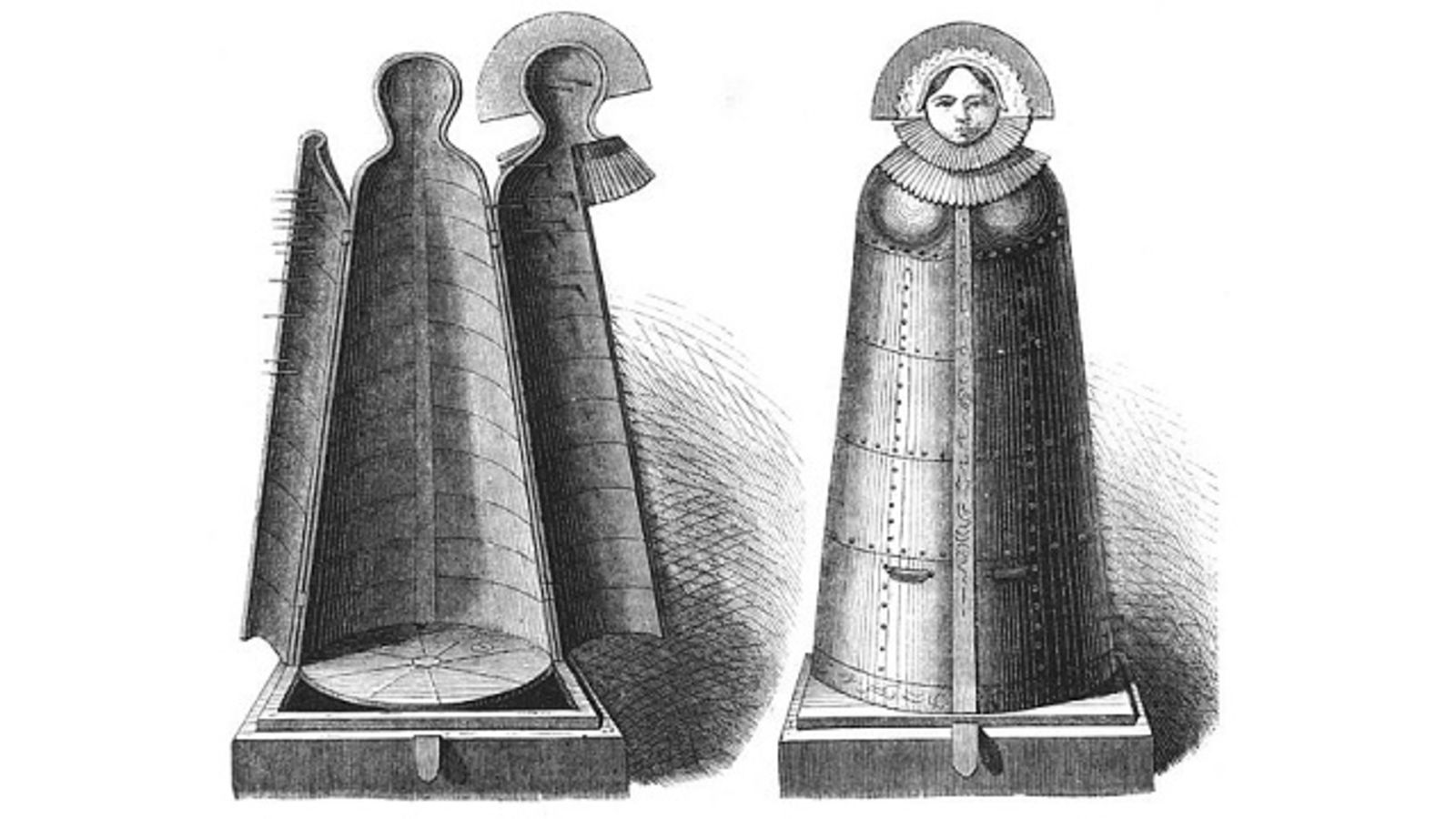

Fernando Botero is showing his incredible new paintings of the Abu Ghraib torture scenes at the Marlborough Gallery in New York.[→フェルナンド・ ボテロ]
★Abu Ghraib
torture and prisoner abuse
Abu Ghraib torture and prisoner abuse; "During the war in Iraq that began in March 2003, personnel of the United States Army and the Central Intelligence Agency committed a series of human rights violations against detainees in the Abu Ghraib prison in Iraq. These violations included physical and sexual abuse, torture, rape, sodomy, and murder. The abuses came to widespread public attention with the publication of photographs of the abuse by CBS News in April 2004. The incidents received widespread condemnation both within the United States and abroad, although the soldiers received support from some conservative media within the United States."
アブグレイブ刑務所における拷問と囚人虐待:「2003年3月に始まったイラク戦争中、 米陸軍および中央情報局(CIA)の要員が、イラクのアブグレイブ刑務所に収容された被拘禁者に対し、一連の人権侵害を行った。これらの侵害には、身体 的・性的虐待、拷問、強姦、肛門性交、殺人が含まれていた。これらの虐待は、2004年4月にCBSニュースが虐待写真を公開したことで広く世間の注目を 集めた。事件は米国内外で広く非難されたが、米国内の保守系メディアからは兵士たちへの支持も一部で見られた。」
■あなたには愛というものがわからない:バタイユ問題
「受 刑者が苦痛に耐えられるのは、最初に阿片を 与えるからだといいます。別の写真では、薄ら笑いしているものがありますね。刑を執行する連中は、受刑者が苦痛に苛まれることなどは興味がありません。彼 ら は受刑者=犠牲者の身体をひたすら生きながら毀損するという行為に興奮するのだといいます。これはバタイユ的な蕩尽と通底しますが、彼(バタイユ)自身 は、このような 写真を机上において「自分の生を『強化』するための試練」として日々ながめていたとい言います。僕は、こんな写真で自分の生命が強くなることは思えませ ん。それは宅間守(Mamoru Takuma, 1963-2004)の死を悼んだり、また生前の行状を憎んだりしても、僕の生命の強度が試されるのではないと思うのと同じです。この点においては、僕は バタイユ がぜんぜん理解できませんし、また理解したいとも思えません。」あなたには愛というものがわからない.この処罰を実際に規定しているのが 清代「咸豊、同治、光緒あたり」に編纂刊行された『金山縣保甲章程 附 勧戒条款・罪名図説』にある「陵遅処死(りょうちしょし)」である(中野 2017:114)。
「突 如として私に見えてきて、私を苦悩のなかに閉じ込めてしまったもの——しかし、同時に、私をそこから解放してくれたもの——それは、神的な恍惚と極度の戦 慄的嫌悪感とを対置する完全な対立物の一致であった」——ジョルジュ・バタイユ『エロスの涙』森本和夫訳、p.259, p.267、現代思潮社、1964年
●サンタ・カタリナあるいはCIAの焼滅 について
フィ クショナル・ストーリー:「妾はアレクサンドリアのサンタ・カタリナ(Αγία Αικατερίνη η Μεγαλομάρτυς)。ご覧のように拷問(こ のページです)マ シンもぶち壊す。宗派を超えたあらゆる被拷問者の守り神。噂では、CIAの職員は就職の時に宣誓の代わりにカラヴァッジォのこの聖画を踏み絵に踏まされる されるともいわれておる。最後の審判の前にはCIAとサンタ・カタリナによる聖戦=ハルマゲドンが起こりすべてのCIAエージェントと管理職は地獄に業火 に焼かれる」(→「ガブちゃん劇場」より)
● サンタルシアと彼女の殉教
| El martirio de Lucía
no está atestiguado por fuentes contemporáneas o inmediatamente
posteriores a la persecución de Diocleciano, sino por relatos
hagiográficos. El más antiguo de estos relatos es un martyrion griego
(BHG 995), y su redacción latina correspondiente (BHL 4992) es al
menos un siglo más tardía. Cuando Lucía fue arrestada bajo la acusación
de ser una cristiana, Pascasio le ordenó que hiciera sacrificios a los
dioses. Entonces Lucía dijo: "Sacrificio puro delante de Dios es
visitar a las viudas, los huérfanos y los peregrinos que pagan en la
angustia y en la necesidad, y ya es el tercer año que me ofrecen
sacrificios a Dios en Jesucristo entregando todos mis bienes". Irritado
Pascasio, ordenó a sus soldados a que la llevaran a un prostíbulo para
que la violaran y luego se dirigió a Lucía diciéndole: "Te llevaré a un
lugar de perdición así se alejará el Espíritu Santo". Los soldados la
tomaron para llevársela, la ataron con cuerdas en las manos y en los
pies, pero por más que se esforzaban no podían moverla: la muchacha
permanecía rígida como una roca. Al enterarse de lo sucedido, Pascasio
ordenó someterla a suplicio con aceite y pez hirviendo, pero no logró
hacerla desistir. Condenada a ser martirizada, antes de morir profetizó
su canonización y su patronazgo como protectora de Siracusa, junto con
la caída de Diocleciano y Maximiano. El relato griego —que data del
siglo V— y el relato latino —datado del siglo VI al VII— son idénticos
en lo fundamental, aunque difieren en algunos detalles finales: según
el martiryon griego Lucía fue decapitada, en tanto que según la passio
latina, fue martirizada por uno o varios golpes de espada. Fue
sepultada en el mismo lugar donde en el año 313 se construyó un
santuario dedicado a ella, que fue lugar de destino de las
peregrinaciones en su honor. Según la tradición, su historia se divulgó
por toda Siciliaː "consagró su virginidad con el martirio, pues a Dios
agrada tu pureza y santidad". |
ルチアの殉教は、ディオクレティアヌス帝の迫害と同時期、あるいはその
直後の資料ではなく、聖書による記述によって証明されている。これらの記述のうち最も古いものは、ギリシャ語の殉教者(BHG
995)であり、それに対応するラテン語の再編集(BHL
4992)は少なくとも1世紀後のものである。ルシアがキリスト教信者であることを理由に逮捕されると、パシャシウスは神々に生贄を捧げるよう命じた。そ
してルシアは、「神の前に純粋な犠牲は、やもめ、孤児、苦痛と必要に支払う巡礼者を訪問することであり、私は私のすべての財産を与えることによって、イエ
ス・キリストにおいて神に犠牲を提供されて、すでに3年目です」と言いました。憤慨したパスカシアは、兵士に命じて彼女を売春宿に連れ込み、レイプさせた
後、ルシアに向かってこう言った。「あなたを滅びの地に連れて行き、聖霊を去らせよう。兵士たちは彼女を連れて行き、手足を縄で縛ったが、どんなに頑張っ
ても彼女を動かすことはできず、岩のように硬直したままだった。このことを聞いたパサシウスは、彼女に魚を入れた煮え立つ油と魚で拷問するように命じた
が、やめさせることができなかった。殉教の宣告を受けた彼女は、生前、自分の列聖とシラクサの守護者としての地位、そしてディオクレティアヌスとマクシミ
アヌスの滅亡を予言した。5世紀のギリシア語の記述と、6世紀から7世紀にかけてのラテン語の記述は、基本的に同じものであるが、最後の部分で異なってい
る。ギリシア語のmartiryonによれば、ルシアは斬首されたが、ラテン語のpassioによれば、彼女は一つまたは複数の剣で打たれて殉教したとさ
れている。313年に彼女を祀る社が建てられ、彼女を偲ぶ巡礼の地となった場所に埋葬された。伝説によると、彼女の話はシチリア全土に広まり、「彼女は殉
教によって処女性を捧げた、あなたの純潔と神聖さは神に喜ばれるからだ」という。 |
| https://es.wikipedia.org/wiki/Luc%C3%ADa_de_Siracusa |
https://www.deepl.com/ja/translator |
リンク
文献
その他の情報
Copyleft, CC, Mitzub'ixi Quq Chi'j, 1996-2099
+++
Copyleft, CC, Mitzub'ixi Quq Chi'j, 1996-2099

☆
 ☆
☆