


 这篇博客介绍了如何运用贪心算法解决找零问题。具体场景为使用不同面值的硬币(1元到500元)支付指定金额,目标是最少使用硬币数量。代码实现中,首先尝试用最大面值的硬币支付,不足部分再递归使用小面值硬币。通过示例输入和输出展示了算法的正确性。
一:问题描述:
有1元,5元,10元,50元,100元,500元的硬币各从c1,c5,c10,c50,c100,c500枚,现在要用这些硬币支付A元,最少需要多少枚硬币?
二:解题思路以及代码
本题利用贪心算法进行求解,即首先考虑使用最大面值的硬币,若不符合条件则使用较小面值的硬币。代码以及注释如下
#include<iostream>
#include<math.h>
#include<string.h>
#include<string>
#include<algorithm>
#include<cstdio>
#include<cstring>
#include<stack>
#include<malloc.h>
#define ll long long
#define Pi 3.14;
using namespace std;
int main()
{
	int numb[6],money,sum=0;
	int coins[6] = { 1,5,10,50,100,500 };
	for (int i = 0; i < 6; i++)
	{
		cin >> numb[i];
	}
	cin >> money;
	for (int i = 5; money > 0; i--)
	{
		int count = numb[i];//记录当前面值硬币的个数
		int a=0;//记录商
		if (money > coins[i])//若所求值大于当前面值
		{
			a = money / coins[i];//求出理想情况下所需硬币的个数
			if (a > count)//如果现有硬币小于理想情况
			{
				sum += count;//硬币的总个数 需要加上 当前面值现有硬币的个数
				money -= count * coins[i];//求出剩余的面值
			}
			else//现有硬币符合理想情况
			{
				sum += a;//硬币的总个数 需要加上 理想情况下 需要该面值硬币的个数
				money -= a * coins[i];//求出剩余的面值
			}

		}
	}
	cout << sum << endl;//写出总个数
}
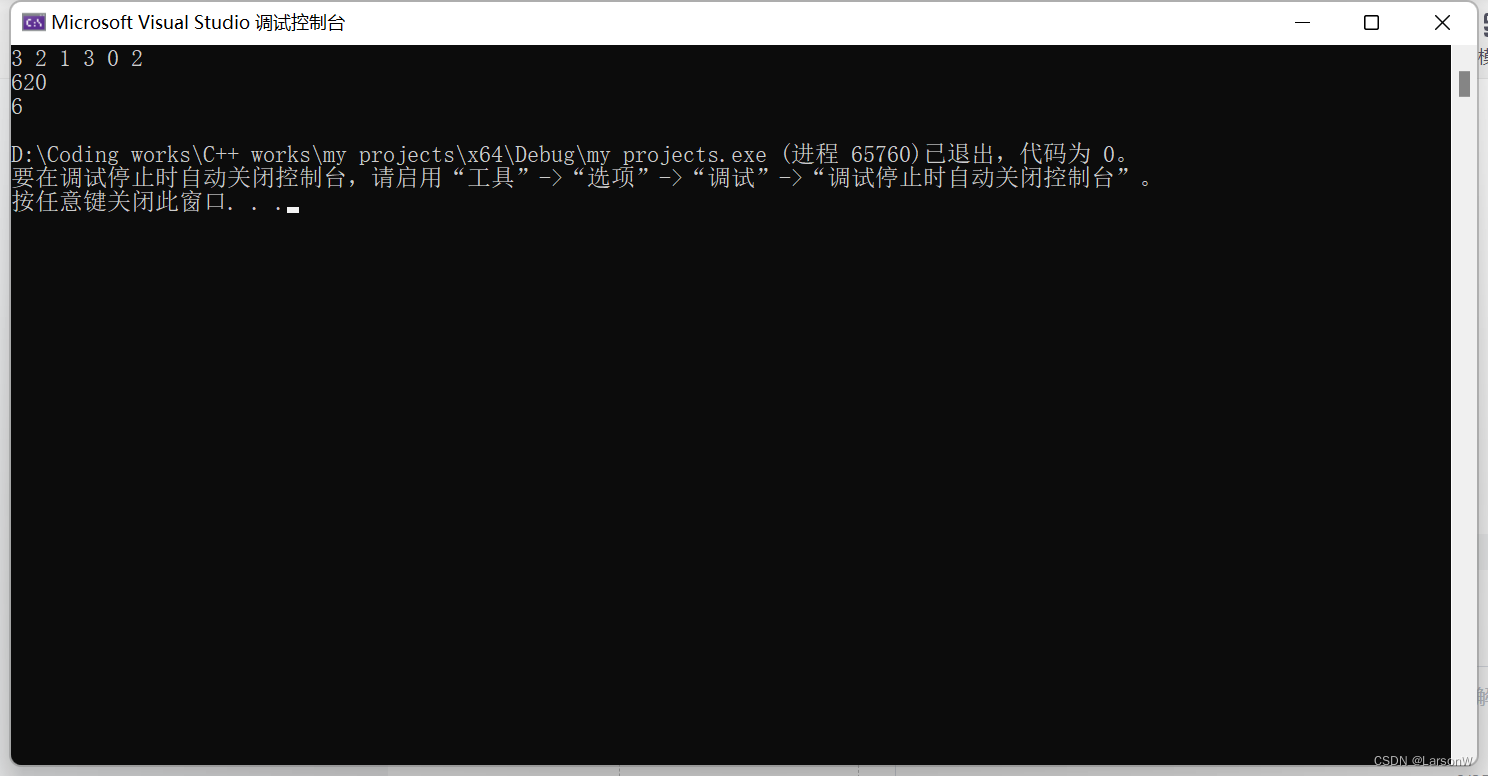
三:测试:
样例:
输入
3 2 1 3 0 2
620
输出
6





 扫一扫
扫一扫


&spm=1001.2101.3001.5002&articleId=124633913&d=1&t=3&u=78307161e68e4daca00aa1b97c6b9e4f)
 765
765

 被折叠的 条评论
为什么被折叠?
被折叠的 条评论
为什么被折叠?
 到【灌水乐园】发言





