
Category Archives: Indigenous Nations History

Hots Docs to screen film documenting endeavour to change “horrific” city name

By Sam Laskaris, Windspeaker, Local Journalism Initiative Reporter

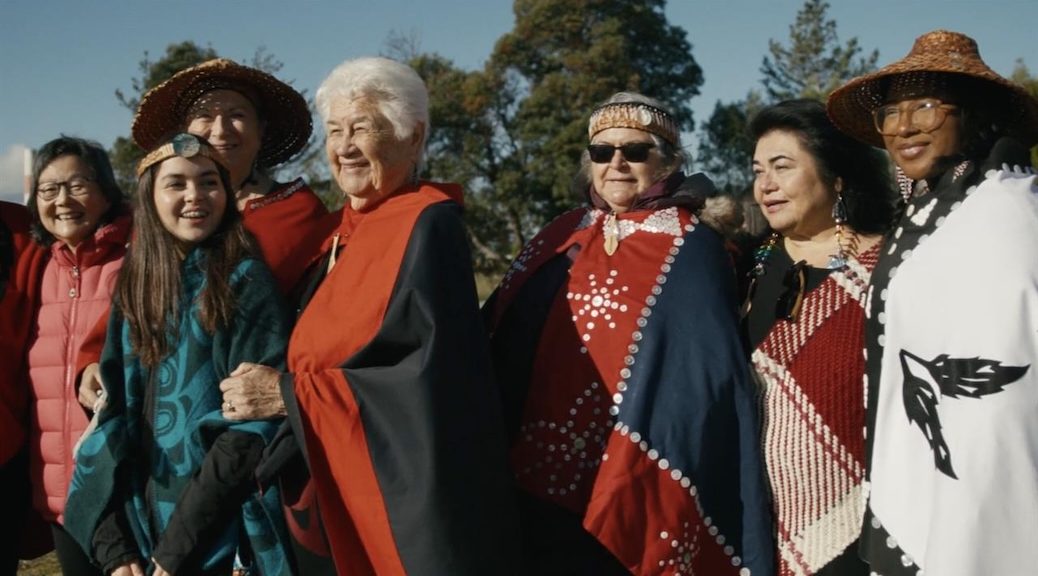
A documentary about a First Nation’s request to have the name of Powell River, B.C. changed will have its world debut at Toronto’s Hot Docs Festival this month.

The film, titled təm kʷaθ nan – Namesake, features interviews with members of the Tla’amin Nation, who have spent years attempting to get the name of its neighbouring city altered. According to Tla’amin belief, as stated in the film’s trailer, names carry history, teachings and responsibilities. Powell River gets its name from Israel Wood Powell, who served as B.C.’s superintendent of Indian Affairs for 17 years from 1872 to 1889.

Powell played a key role in the establishment of Indian residential schools. He also had a role in banning the potlach and in the theft of portions of Tla’amin Nation lands.

Continue reading Hots Docs to screen film documenting endeavour to change “horrific” city name

RCMP ordered to pay damages for failing to investigate Catholic school abuse claims

By Bob Mackin, Prince George Citizen Local Journalism Initiative Reporter

The Canadian Human Rights Tribunal (CHRT) decided March 2 that the RCMP discriminated against Indigenous people who accused the Mounties of failing to properly investigate claims they were abused at Catholic-run Immaculata Elementary School in Burns Lake and Prince George College in the 1960s and 1970s.

“Accommodating the Indigenous crime complainants by ensuring they were told that they could report allegations of abuse, be given an update about the outcome of the investigation into their allegations of abuse, and not be repeatedly offered a polygraph would not have interfered with the RCMP’s duty to conduct its investigations in the public interest,” CHRT member Colleen Harrington wrote in the 145-page decision, which was originally expected in early 2025.

Harrington ruled, on a balance of probabilities, that race and national or ethnic origin were factors in “some of the adverse differential treatment or denial of service that was experienced by some of the complainants and their witnesses in relation to the RCMP’s investigations.”

Continue reading RCMP ordered to pay damages for failing to investigate Catholic school abuse claims

Kwakwaka’wakw artist Ernest Puglas explains how carving saved his life: ‘This is powerful’

As a new welcome pole is raised on Klahoose, Homalco and Tla’amin territories, its maker describes how, through art, ‘I have recreated myself’

Editor’s note: The author of this profile sits on the board of the Cortes Community Foundation, which commissioned Puglas’s welcome pole. IndigiNews is honoured to share Puglas’s story.

By  Forrest Berman-Hatch, IndigiNews,, Local Journalism Initiative Reporter

Standing before a crowd of roughly 50 people on “Cortes Island,” carver Kuma’inukw (Ernest) Puglas first acknowledges his Kwak’wala lineage.

Then, he thanks the Klahoose First Nation for hosting him and for the honour of carving on its territories (the island is the traditional lands of Klahoose, Homalco and Tla’amin Nations), before unveiling his newest cedar welcome pole in a public ceremony.

Continue reading Kwakwaka’wakw artist Ernest Puglas explains how carving saved his life: ‘This is powerful’

Aaron Gunn, Residential Schools and the Meanings of Genocide

In a series of tweets between 2019 and 2021, the Conservative candidate for North Island Powell River, Aaron Gunn, argued against the the idea that residential schools were a form of genocide.  In the first of these he agreed that they were ‘truly horrific events,’ but added that people should not refer to them with a loaded word like ‘genocide’ that does not remotely reflect the reality of what happened.” He was wrong, residential schools are a perfect example of genocide.

Mr Gunn’s understanding of the term appears to be limited to ‘killing of a large number of people,’ but when Raphael Lemkin coined the term he stated it wasn’t necessary to kill people. There were also genocides of political and social institutions, culture, language, national feelings, religion, and the economic existence of national groups.

Continue reading Aaron Gunn, Residential Schools and the Meanings of Genocide

Aaron Gunn responds: About Residential Schools

Originally published on Twitter

I’d like to clear up what has been said today.

I have always been firm in recognizing the truly horrific events that transpired in residential schools, and any attempt to suggest otherwise is simply false. I have never wavered in condemning these institutions of abuse, where countless First Nations suffered at the hands of a patronizing federal government. 

Continue reading Aaron Gunn responds: About Residential Schools