| i joined your community |
[18 Aug 2006|05:09pm] |
| [ |
mood |
| |
 amused amused |
] |
because i like your interests.
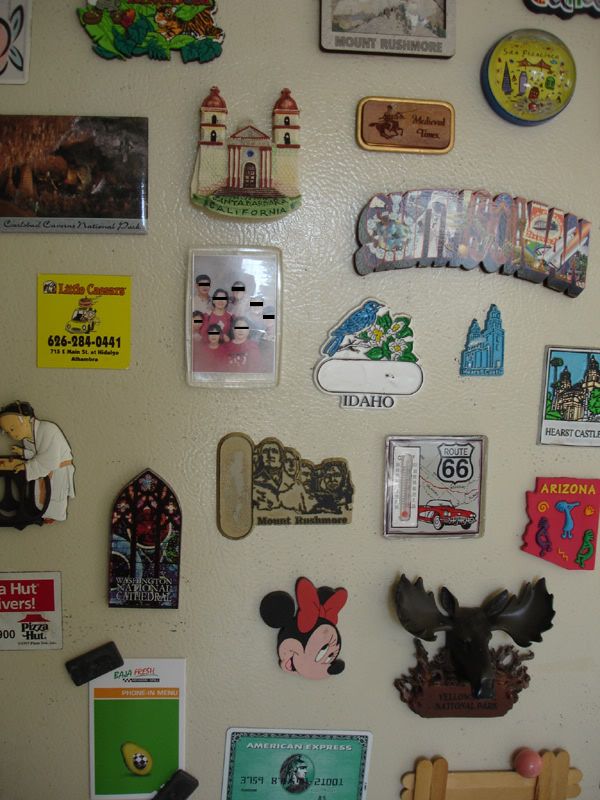
"very strong magnets" are awesome.
hello.
|
|
| Not How You Remember It |
[22 Jul 2006|12:46am] |
One of my favorite net things right now is on our very own LiveJournal. As my best friend is, strangely enough, at summer camp, I have to find other outlets for my excitement. Yay for you guys! Go see  sbtbqotd: Saved by the Bell Quote of the Day. As though you didn't get enough of it when you were twelve (give or take), it has been chewed and regurgitated for you like some obsessive mother bird. sbtbqotd: Saved by the Bell Quote of the Day. As though you didn't get enough of it when you were twelve (give or take), it has been chewed and regurgitated for you like some obsessive mother bird.
Saved by the Bell: "I didn't know there was so much in it!"
|
|
| WELL DONE |
[05 Jul 2006|05:18pm] |

HELP look at W! And why isn't N anthro-po-mo-fic?

These may just be ratings of the animals in question. Squirrels, for example are splendid, whereas doormice are merely good.

I like the whale on the diving board.
( wide kneeCollapse )

Could we have a literacy hour please?

OWLS

Hahaha loser

In the same vein, these are some really limited name badge stickers

A papparazi photograph of you.

WELL DONE Ron.

This man has 2 beards, now that's hardly fair.

H. Kitty seems just a bit sarcastic.
|
|
| Mammatus clouds |
[03 Jul 2006|09:46pm] |

As updrafts carry precipitation enriched air to the cloud top, upward momentum is lost and the air begins to spread out horizontally, becoming a part of the anvil cloud. Because of its high concentration of precipitation particles (ice crystals and water droplets), the saturated air is heavier than the surrounding air and sinks back towards the earth.
The temperature of the subsiding air increases as it descends. However, since heat energy is required to melt and evaporate the precipitation particles contained within the sinking air,the warming produced by the sinking motion is quickly used up in the evaporation of precipitation particles. If more energy is required for evaporation than is generated by the subsidence, the sinking air will be cooler than its surroundings and will continue to sink downward.
The subsiding air eventually appears below the cloudbase as rounded pouch-like structures called mammatus clouds.
Text from http://ww2010.atmos.uiuc.edu/(Gh)/guides/mtr/cld/cldtyp/oth/mm.rxml
|
|




 sleepy