Papers (Full Text) by Sanjay Garg
Faces of Memory: The Latest Technologies for Preservation and Restoration of Manuscripts and Printed Heritage, 2026
India’s manuscript wealth is estimated to be anything between 10 and 40 million manuscripts, whic... more India’s manuscript wealth is estimated to be anything between 10 and 40 million manuscripts, which even at its lower estimate may be the largest manuscripts collection in the world. These manuscripts are in many languages and scripts, some of which are yet to be fully deciphered. These manuscripts cover a variety of themes, are found in different media and textures, and present a motley aesthetics features, calligraphic styles, illuminations, seals, and illustrations. These manuscripts are dispersed across India and abroad in countless repositories, including archives and museums, educational institutions, private homes, and places of worship.
In addition to the National Archives of India, which is the custodian and legal repository of the public records of the Government of India and also has a rich collection of private papers and manuscripts, the Indian manuscript wealth lies dispersed in various repositories and private collections both in India and abroad.
This paper presents an overview of the rich archival legacy of the manuscript wealth of India, efforts being made to survey, document, digitize and make these accessible to the world-wide readership. It will also discuss on the indigenous and standard conservation practices to preserve this wealth for the posterity.
(Presidential Address, Medieval Session). Proceedings of the Telangana History Congress: Seventh Annual Session, 2024, 2025
This paper examines the functioning of Mughal bureaucracy in Telangana through the lens of the In... more This paper examines the functioning of Mughal bureaucracy in Telangana through the lens of the Inayat Jung Collection, a vast archival corpus preserved in the National Archives of India. Covering nearly 1,35,931 documents from 1685 to 1774 CE, the collection spans the reigns of ten Mughal emperors, beginning with Aurangzeb and ending with Shah Alam II. It provides rare insights into the administrative machinery of the Deccan, where provinces replicated the centralized and hierarchical structures of the imperial court. The records—comprising farmans, parwanas, revenue accounts, physiognomic rolls, covenants, and memoranda—highlight the roles of key officials such as nazims, diwans, bakhshis, and qadis, and detail the management of revenue, military musters, jagir assignments, and public works. The paper situates these documents within broader historiographical debates on Mughal governance, contrasting Weberian notions of patrimonial bureaucracy with evidence of systematic record‑keeping and specialized administrative practices. It also traces the provenance of the collection, salvaged by Nawab Rukn‑ud‑Daula in the late eighteenth century and later acquired by the National Archives in 1961. By foregrounding this underutilized source, the study underscores its potential to enrich scholarship on Mughal administration, socio‑economic structures, and the decline of imperial authority in the Deccan.
Souvenir of the 107th Annual Conference of the Numismatic Society of India , 2025
Coin hoards are an interesting part of numismatic studies as they reveal a variety of informati... more Coin hoards are an interesting part of numismatic studies as they reveal a variety of information, beyond the ‘face value’ of the coins. The denominations and metal composition of coins in a hoard, their accompanying antiquities and other objects, the place of its discovery and the distance between the origin of coins and its find spot – these and similar other observations while studying a coin hoard help us in understanding the true nature and circumstances of its deposit.
Ever since the enactment of the Indian Treasure Trove Act in 1878, the discovery of buried treasure, its acquisition by the state, and subsequent distribution started getting properly documented and many interesting information are to be found in archival records. This paper narrates the story of one such coin hoard that is reflected in a file of the Archaeological Survey of India (ASI) that is now preserved in the National Archives of India.
Journal of the Numismatic Society of India, 2023
Of the entire panorama of Indian coinage, the coins of the Mughal Emperors have always commanded ... more Of the entire panorama of Indian coinage, the coins of the Mughal Emperors have always commanded the greatest curiosity and interest among numismatists, coin collectors and the general public. In recent times the nature and extent of the Mughal currency have also attracted the attention of economic historians.
A large number of Museums across the world have Indian coins in their collection and the coins of the Mughal rulers invariably form part of it. While private collections are often inaccessible and also transitory in nature, museum collections exist as a sort of permanent source for reference and research. However, in the absence of published catalogues such coin collections in the museums often remain inaccessible and unnoticed. Catalogues of coins in public collections, thus provide important research and reference tool to those interested in these collections.
The present paper presents a study of coins of the Mughal Emperors and their contemporaries housed in the Fitzwilliam Museum, Cambridge (UK), which, in 1998, had taken up a project to publish catalogues of its Indian coin collection. While these catalogues are yet to be published, this paper aims to provide not only a glimpse of the important numismatic pieces related to the Mughal Emperors and their contemporaries, but also a history of the formation of its 12,000+ specimens of Indian coins over the years.

Contributed to the Xth Russian Scientific Conference «Archives and History of the Russian Statehood», organised by the St. Petersburg State University, Moscow (3-6 October 2018). Unpublished., 2018
The National Archives of India ranks among the oldest archival repositories of the world and has ... more The National Archives of India ranks among the oldest archival repositories of the world and has the largest collection in South Asia. Established in 1891 as the Imperial Record Department, it houses rare archival collection dating back to 1748.
In the initial years this collection was strictly for the use of the public authorities who were the creators of these records. However, gradually, roughly from 1919 onwards, this collection was opened up for historical research. Ever since there has been a paradigm shift in how archival collections are accessed, used, interpreted and presented by a variety of its users who include, but are not limited to, historians, town-planners, bureaucrats, social scientists, architects, diplomats, law professional, engineers…the list goes on.
Today archival institutions world over are on a digital mission. The digital revolution drastically changed the way its collection had been accessed by its users. With new legal obligations under the Right to Information Act, 2005, there has been an increased demand for putting more and more information in public domain.
The NAI had taken early initiative to enter the digital world by 1998 it had developed customised software – Archival Information Management System or AIMS – for cataloguing its records collection. Since then many more initiatives have been taken at the NAI.
The proposed paper will dwell on these and other initiatives taken by the NAI within the overall national mission of Digital India. The experience gained through its recently launched search portal – Abhilekh-PATAL – (acronym for Portal for Access to Archives and Learning) and the scope of convergence with other knowledge institutions will be shared with a view to enlist the cooperation of archival fraternity in maximizing their resources. The paper will also describe the future planning of the NAI towards digitizing its collection.
Proceedings of the XIV International Numismatic Congress, Glasgow (Aug.-Sept, 2009), ed. Nicholas Holmes, vol. II, (Glasgow, 2011) pp. 1813-1818., 2009
March 1829, para 37 'I think states which coined in the [Mughal] Emperor's name should now have t... more March 1829, para 37 'I think states which coined in the [Mughal] Emperor's name should now have the Queen's head-or something showing the paramount power in the British states which coined in their own name could continue to do so."'' Amongst the Indian Princely States that were first to fall in line was the Jat principality of Bharatpur where, owing to the minority of the ruler, a British Agent was heading the Regency Council. Even without waiting for a formal authorization from the Governor-General, he not only replaced the name of the Mughal emperor with the name of Queen Victoria (1837-1901), but also added her portrait on the silver and gold coins issued from Bharatpur from 1858 onwards. On these coins a profile portrait of the queen appears on the obverse, along with the titles, Malika-i Mua zzama (the Mighty Queen) and Farman Rawa-i Hind wa Inglistan (the Rightful ruler of India and England) (PI. I, 3). Brindaban (modern Vrindavan in the Mathura district), another stronghold in the vicinity of Bharatpur, also copied the portrait coins of Bharatpur and minted coins acknowledging the suzerainty of the British sovereign (PI. I, 4). Bundi replaced the name of the Mughal emperor on its coins issued from 1858 onwards. Its copper and silver coins bear the name of Queen Victoria in the English language on the obverse and that of its ruler, Ram Singh (1824-89), in Devanagari on the reverse (PI. I, 5).
India Rediscovered: Re-assessing the Legacy of Alexander Cunningham, Atul Tripathi (ed.), 2023
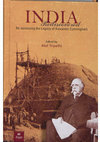
Sir Alexander Cunningham (1814-93) is rightly hailed as the 'Father of Indian Archaeology.' As th... more Sir Alexander Cunningham (1814-93) is rightly hailed as the 'Father of Indian Archaeology.' As the first Archaeological Surveyor (1861-65), and later as the first Director-General of the Archaeological Survey of India (1871-85), he laid the foundations of a systematic and methodical study of the material remains of India’s past. in recognition of his sterling service, Cunningham was awarded the Companion of the Order of the Star of India (CSI) in May 1871; Companion of the Order of the Indian Empire (CIE) in January 1878 and, after he retired from the Archaeological Survey of India in September 1885, appointed a Knight Commander of the Order of the Indian Empire (KCIE) in March 1887.
Cunningham’s contribution to the cause of Indian archaeology has somehow eclipsed his equally great, if not greater, contribution to Indian numismatics, which this paper seeks to address.
Cunningham began collecting coins in the early days of his military career in India and over the years discovered many new coin types and varieties. As his interest in coins was growing, he was fortunate enough to have a patron like James Prinsep (1799-1840), a genius whose own contribution to Indian numismatics, epigraphy, history, geography and many other branches of human knowledge remains unparalleled to this day.
After Prinsep departed from India (1838) writing on Indian coins for many years was almost monopolised by Cunningham. He provided the first chronological framework for the whole series of ancient Indian coins. His papers on the 'Alexander's Successors in the East' were then the only full accounts of the Indo-Greek series of coins, and bear witness to the remarkable knowledge and ingenuity of their author. So much so that even today, no writer on ancient Indian coins can produce a scholarly study without referring to Cunningham's works.
After he retired from the Archaeological Survey of India (1885), Cunningham settled in London and continued to devote himself to Indian numismatics. His last academic contribution was 'Coins of Mediaeval India from the seventh century down to the Muhammadan Conquests’ which was published posthumously in 1894. In fact, his entire academic career of about six decades lies sandwiched between his first contribution in 1834, at the age of 20, on the Roman coins found in a stupa at Manikyala (now in the Punjab province, Pakistan) and his posthumous book on the coins of Medieval India.
Journal of the Oriental Numismatic Society, , 2023
This paper delves into the history of the ‘promissory
notes’ introduced by the founder of the Kha... more This paper delves into the history of the ‘promissory
notes’ introduced by the founder of the Khaksar Movement
during the 1930s. The movement was one of several that aimed
to overthrow British rule in the Indian subcontinent through
organized military action. The notes were used as a means of
remunerating volunteers, and their history is traced through
government archives and a handful of surviving specimens.
Kashi: Nagari Ek, Roop Anek, ed. O.P. Kejariwal (Publications Division, Government of India, New Delhi), pp. 90-94, 2010
Numismatic Digest, Vol. 42, pp. 176-82., 2018
Alternative Arguments: Historical Essays in Honour of Surendra Gopal, Ejaz Hussain and Sanjay Garg (eds.), (Primus Books, New Delhi), 2020
Journal of the Oriental Numismatic Society (Special Issue), No. 238, 2019
Journal of the Oriental Numismatic Society, No. 234 (Winter 2018), pp. 28-29., 2018

Charles Masson: A Footloose Antiquarian in Afghanistan and building up of Numismatic Collections in the Museums in India and England
in Ray, Himanshu Prabha (ed.), Collecting in Gandhara: The Beginning of the Art History of the Buddha, (Routledge: Delhi), 2018
The name of Charles Masson (1800-53) towers high amongst numerous amateur antiquarians of the nin... more The name of Charles Masson (1800-53) towers high amongst numerous amateur antiquarians of the nineteenth century who traversed through the land north of Punjab, and discovered sites and antiquities belonging to the ancient kingdoms of the Indo-Bactrians, the Indo-Greeks, the Kushanas and several other dynasties.
Between 1833 and 1838 Masson explored or excavated nearly fifty monuments in the vicinity of Peshawar and Kabul and amassed a staggering amount of antiquities. These included a large number of coins, of which the British Museum received a substantial share of them. Other recipients of the Masson’s coin collection were the Asiatic Society, Calcutta [Kolkata], Ashmolean Museum, Oxford and the Fitzwilliam Museum, Cambridge.
The story of Masson’s antique-collecting escapades in Afghanistan during the years preceding the First Anglo-Afghan War (1839-42), and the subsequent dispersal of his fabulous collection of antiquities, which included seals, beads, ingots, weights, ornaments, plaques, sculptures, reliquaries (caskets, boxes, and bowls), arrow-heads, discs, amulets, buttons etc. together with an estimated 60,000 coins, in various museums of India and England, lie scattered in the official archives of the British East India Company as well in his private correspondence.
Based on these archival sources, this paper would attempt to present a coherent narrative of the coins discovered and collected by Masson and how his discoveries galvanised the efforts of his contemporary, James Prinsep (1799-1840) in deciphering the ancient Indian scripts, and helped museums in India and England to build an impressive numismatic collection from this part of the world.
BİRİNCİ DÜNYA SAVAŞI BELGELERİ (SEMPOZYUM BİLDİRİLERİ), [DOCUMENTS OF THE FIRST WORLD WAR (SYMPOSIUM PROCEEDINGS)], (Istanbul), 2017
Presented at the International Conference on 'Documents Of the First World War Centenary' organis... more Presented at the International Conference on 'Documents Of the First World War Centenary' organised by the State Archives of Turkey, Istanbul, Turkey (19-21 March 2015).

In Widorn, Verena & Ute Franke (eds.). Contextualizing Material Culture in South and Central Asia in Pre-Modern Times, Proceedings of the 20th Conference of the European Association for South Asian Archaeology and Art (EASSA) Vol. 2, (Turnhout: Brepols, 2016), pp. 203-11.
To the archaeologists, historians and antiquarian researchers of Afghanistan, the name of Charles... more To the archaeologists, historians and antiquarian researchers of Afghanistan, the name of Charles Masson is quite familiar. Between 1833 and 1838 he explored or excavated nearly fifty monuments in Afghanistan and amassed a staggering amount of antiquities. These included an estimated 60,000 coins, most of which were sold at auction in 1887, while the British Museum received a substantial share. Other recipients of the Masson’s coin collection were the Ashmolean Museum at Oxford and the Fitzwilliam Museum at Cambridge. Recognizing Masson’s pioneering contribution in unearthing (literally!) the antiquities of Afghanistan, in 1993 the British Museum launched a project – Masson Project - under Elizabeth Errington, which is now nearing completion. As part of this project 7 volumes and 149 uncatalogued manuscripts of Masson’s records now available in the British Library are proposed to be published.
Masson’s archive, however, survive beyond the British Library. The official correspondence of the British East India Company in the National Archives of India, for example, was surveyed by me in 1991 and later, in 1998, utilized to present a study of the coins collected by Masson in Afghanistan. Apart from these identified records of Masson’s archaeological explorations there is, in the National Archives of the UK, a so far untapped series of correspondence between Charles Masson and Henry Pottinger (1789-1856), who was then serving as the British Agent in Sindh. Pottinger not only espoused Masson’s efforts but also gave him monetary and material support. After going through the Pottinger Papers one can say with some certainty, that but for him, Masson would never had the opportunity or the means to pursue his archaeological explorations.
Based on this untapped archival series in the National Archives at Kew (London), the proposed paper will cull out fresh evidence of Masson’s archaeological explorations and antiquity collection which will not only complement the Masson Project, but will also shed new light on the circumstances and methods employed by this remarkable footloose archaeologist in Afghanistan.
Numismatic Digest, Vol. 38 (2014), pp. 184-96
Journal of the Oriental Numismatic Society, No. 221 (Autumn 2014), pp. 32-33.
Collection of Papers of 2014' International Symposium on Dazu Studies and the 70th Anniversary Celebrating the 1st Investigation into Dazu Rock Carvings, Vol. 2, pp. 1-21, 2014
World Heritage Sites (WHS) are places of Outstanding Universal Value (OUV) to humanity. Outstandi... more World Heritage Sites (WHS) are places of Outstanding Universal Value (OUV) to humanity. Outstanding to the extent that it means cultural or natural significance that transcends national boundaries. These sites are also the most important symbols of the long standing cultural ties that existed in the region for centuries. Most of these sites are still part of the living heritage of the communities and are strongly linked to the contemporary life. The permanent protection of the world’s cultural and natural heritage is of high importance to present and future generations.
The South Asian Region, which includes eight countries, viz.: Afghanistan, Bangladesh, Bhutan, India, Maldives, Nepal, Pakistan and Sri Lanka, possesses a rich civilization and numerous sites of Outstanding Universal Value. However, this region is still grossly under-represented in the UNESCO’s List of World Heritage Sites. As on 23 June 2014, the UNESCO’s World Heritage List includes 1,007 properties forming part of the cultural and natural heritage. These include 779 cultural, 197 natural and 31 mixed properties in 161 Countries. Out of these 55 properties (43 cultural properties + 12 natural properties) are located in the South Asian region. India has the maximum number (32) of World Heritage Properties (25 Cultural Properties + 7 Natural Properties), while Afghanistan has the minimum (2). Bhutan and Maldives do not have any property listed in the World Heritage List.
The main reason for not having many of these sites listed in the World Heritage List is due to the lack of capacity of the Member States in developing proposals for the new sites for the List of World Heritage Sites. In addition, the World Heritage sites, like other heritage sites, face formidable pressures such as environmental degradation, rapid economic development and urbanization, and the imminent impacts of climate change, the challenges to the conservation and management. Due to various undermining factors, such as weak institutional, financial and policy support, and insufficient human resources, the nomination, conservation, management and presentation of World Heritage remains problematic, particularly for the developing countries.
This paper will, therefore, discuss the existing state of the nomination and management of the existing World Heritage Sites in South Asia, by examining:
• three elements (legal, institutional, and resources),
• three processes (planning, implementation, and monitoring), and
• three results (outputs, outcomes, and impact).
The paper will also aim to suggest some short-term, mid-term and long-term solutions, both within and outside the framework of the UNESCO’s World Heritage Convention, for identification, protection and management of diverse heritage sites in the region.




Uploads
Papers (Full Text) by Sanjay Garg
In addition to the National Archives of India, which is the custodian and legal repository of the public records of the Government of India and also has a rich collection of private papers and manuscripts, the Indian manuscript wealth lies dispersed in various repositories and private collections both in India and abroad.
This paper presents an overview of the rich archival legacy of the manuscript wealth of India, efforts being made to survey, document, digitize and make these accessible to the world-wide readership. It will also discuss on the indigenous and standard conservation practices to preserve this wealth for the posterity.
Ever since the enactment of the Indian Treasure Trove Act in 1878, the discovery of buried treasure, its acquisition by the state, and subsequent distribution started getting properly documented and many interesting information are to be found in archival records. This paper narrates the story of one such coin hoard that is reflected in a file of the Archaeological Survey of India (ASI) that is now preserved in the National Archives of India.
A large number of Museums across the world have Indian coins in their collection and the coins of the Mughal rulers invariably form part of it. While private collections are often inaccessible and also transitory in nature, museum collections exist as a sort of permanent source for reference and research. However, in the absence of published catalogues such coin collections in the museums often remain inaccessible and unnoticed. Catalogues of coins in public collections, thus provide important research and reference tool to those interested in these collections.
The present paper presents a study of coins of the Mughal Emperors and their contemporaries housed in the Fitzwilliam Museum, Cambridge (UK), which, in 1998, had taken up a project to publish catalogues of its Indian coin collection. While these catalogues are yet to be published, this paper aims to provide not only a glimpse of the important numismatic pieces related to the Mughal Emperors and their contemporaries, but also a history of the formation of its 12,000+ specimens of Indian coins over the years.
In the initial years this collection was strictly for the use of the public authorities who were the creators of these records. However, gradually, roughly from 1919 onwards, this collection was opened up for historical research. Ever since there has been a paradigm shift in how archival collections are accessed, used, interpreted and presented by a variety of its users who include, but are not limited to, historians, town-planners, bureaucrats, social scientists, architects, diplomats, law professional, engineers…the list goes on.
Today archival institutions world over are on a digital mission. The digital revolution drastically changed the way its collection had been accessed by its users. With new legal obligations under the Right to Information Act, 2005, there has been an increased demand for putting more and more information in public domain.
The NAI had taken early initiative to enter the digital world by 1998 it had developed customised software – Archival Information Management System or AIMS – for cataloguing its records collection. Since then many more initiatives have been taken at the NAI.
The proposed paper will dwell on these and other initiatives taken by the NAI within the overall national mission of Digital India. The experience gained through its recently launched search portal – Abhilekh-PATAL – (acronym for Portal for Access to Archives and Learning) and the scope of convergence with other knowledge institutions will be shared with a view to enlist the cooperation of archival fraternity in maximizing their resources. The paper will also describe the future planning of the NAI towards digitizing its collection.
Cunningham’s contribution to the cause of Indian archaeology has somehow eclipsed his equally great, if not greater, contribution to Indian numismatics, which this paper seeks to address.
Cunningham began collecting coins in the early days of his military career in India and over the years discovered many new coin types and varieties. As his interest in coins was growing, he was fortunate enough to have a patron like James Prinsep (1799-1840), a genius whose own contribution to Indian numismatics, epigraphy, history, geography and many other branches of human knowledge remains unparalleled to this day.
After Prinsep departed from India (1838) writing on Indian coins for many years was almost monopolised by Cunningham. He provided the first chronological framework for the whole series of ancient Indian coins. His papers on the 'Alexander's Successors in the East' were then the only full accounts of the Indo-Greek series of coins, and bear witness to the remarkable knowledge and ingenuity of their author. So much so that even today, no writer on ancient Indian coins can produce a scholarly study without referring to Cunningham's works.
After he retired from the Archaeological Survey of India (1885), Cunningham settled in London and continued to devote himself to Indian numismatics. His last academic contribution was 'Coins of Mediaeval India from the seventh century down to the Muhammadan Conquests’ which was published posthumously in 1894. In fact, his entire academic career of about six decades lies sandwiched between his first contribution in 1834, at the age of 20, on the Roman coins found in a stupa at Manikyala (now in the Punjab province, Pakistan) and his posthumous book on the coins of Medieval India.
notes’ introduced by the founder of the Khaksar Movement
during the 1930s. The movement was one of several that aimed
to overthrow British rule in the Indian subcontinent through
organized military action. The notes were used as a means of
remunerating volunteers, and their history is traced through
government archives and a handful of surviving specimens.
Between 1833 and 1838 Masson explored or excavated nearly fifty monuments in the vicinity of Peshawar and Kabul and amassed a staggering amount of antiquities. These included a large number of coins, of which the British Museum received a substantial share of them. Other recipients of the Masson’s coin collection were the Asiatic Society, Calcutta [Kolkata], Ashmolean Museum, Oxford and the Fitzwilliam Museum, Cambridge.
The story of Masson’s antique-collecting escapades in Afghanistan during the years preceding the First Anglo-Afghan War (1839-42), and the subsequent dispersal of his fabulous collection of antiquities, which included seals, beads, ingots, weights, ornaments, plaques, sculptures, reliquaries (caskets, boxes, and bowls), arrow-heads, discs, amulets, buttons etc. together with an estimated 60,000 coins, in various museums of India and England, lie scattered in the official archives of the British East India Company as well in his private correspondence.
Based on these archival sources, this paper would attempt to present a coherent narrative of the coins discovered and collected by Masson and how his discoveries galvanised the efforts of his contemporary, James Prinsep (1799-1840) in deciphering the ancient Indian scripts, and helped museums in India and England to build an impressive numismatic collection from this part of the world.
Masson’s archive, however, survive beyond the British Library. The official correspondence of the British East India Company in the National Archives of India, for example, was surveyed by me in 1991 and later, in 1998, utilized to present a study of the coins collected by Masson in Afghanistan. Apart from these identified records of Masson’s archaeological explorations there is, in the National Archives of the UK, a so far untapped series of correspondence between Charles Masson and Henry Pottinger (1789-1856), who was then serving as the British Agent in Sindh. Pottinger not only espoused Masson’s efforts but also gave him monetary and material support. After going through the Pottinger Papers one can say with some certainty, that but for him, Masson would never had the opportunity or the means to pursue his archaeological explorations.
Based on this untapped archival series in the National Archives at Kew (London), the proposed paper will cull out fresh evidence of Masson’s archaeological explorations and antiquity collection which will not only complement the Masson Project, but will also shed new light on the circumstances and methods employed by this remarkable footloose archaeologist in Afghanistan.
The South Asian Region, which includes eight countries, viz.: Afghanistan, Bangladesh, Bhutan, India, Maldives, Nepal, Pakistan and Sri Lanka, possesses a rich civilization and numerous sites of Outstanding Universal Value. However, this region is still grossly under-represented in the UNESCO’s List of World Heritage Sites. As on 23 June 2014, the UNESCO’s World Heritage List includes 1,007 properties forming part of the cultural and natural heritage. These include 779 cultural, 197 natural and 31 mixed properties in 161 Countries. Out of these 55 properties (43 cultural properties + 12 natural properties) are located in the South Asian region. India has the maximum number (32) of World Heritage Properties (25 Cultural Properties + 7 Natural Properties), while Afghanistan has the minimum (2). Bhutan and Maldives do not have any property listed in the World Heritage List.
The main reason for not having many of these sites listed in the World Heritage List is due to the lack of capacity of the Member States in developing proposals for the new sites for the List of World Heritage Sites. In addition, the World Heritage sites, like other heritage sites, face formidable pressures such as environmental degradation, rapid economic development and urbanization, and the imminent impacts of climate change, the challenges to the conservation and management. Due to various undermining factors, such as weak institutional, financial and policy support, and insufficient human resources, the nomination, conservation, management and presentation of World Heritage remains problematic, particularly for the developing countries.
This paper will, therefore, discuss the existing state of the nomination and management of the existing World Heritage Sites in South Asia, by examining:
• three elements (legal, institutional, and resources),
• three processes (planning, implementation, and monitoring), and
• three results (outputs, outcomes, and impact).
The paper will also aim to suggest some short-term, mid-term and long-term solutions, both within and outside the framework of the UNESCO’s World Heritage Convention, for identification, protection and management of diverse heritage sites in the region.