Papers by Martin E Berger
This work proposes an automated system for generating contextualized narratives from structured m... more This work proposes an automated system for generating contextualized narratives from structured museum data. In a first step, a tabular database containing object metadata (Identifier, Name, creator, culture, dating, material, etc.) is transformed into a knowledge graph based on the CIDOC CRM (Conceptual Reference Model) standard. This graph not only represents the objects themselves, but also models the events associated with them (creation, collection, acquisition, etc.), ensuring a rich and temporally anchored semantic understanding. In a second phase, targeted Cypher queries query this graph to extract contextual information related to each object. This information is then integrated into a structured prompt, sent to a pre-trained language model (LLM) via an API, to automatically generate a fluid, coherent, and historically informed narrative. Finally, the produced text is converted into an audio file, providing multi-modal playback accessible to a wide audience. The system has been empirically validated by domain experts who confirmed the accuracy and relevance of the generated narratives, as well as by members of the general museum public, who confirmed the texts' accessibility.
Journal of Archaeological Science: Reports, 2026
This paper presents the results of the first systematic study aimed at defining the chronology, p... more This paper presents the results of the first systematic study aimed at defining the chronology, provenience and material components of 14 distinctive wood carvings featuring jaguar and raptorial bird imagery broadly
attributed to northeastern South America, centred on Brazil’s Trombetas River region. These carvings, largely confined to drug-related paraphernalia and ceremonial objects (trumpets, rattles, staffs/sceptres and a hafted
anchor axe), were part of antiquarian collections deposited in European museums mainly in the 19th century, with very little associated information.14C AMS dating of their wood, cotton and resins shows that they have deeper histories, spanning the 14th to late 17th/early 18th centuries. Wood identification indicates a relatively narrow range of taxa, mainly from the genera Brosimum and Swartzia, likely selected for their hardness and
striking “snakeskin” or “leopard skin” patterns. Bindings of human hair are identified on a ceremonial weapon.
Strontium isotope (87Sr/86Sr) analysis of the wood is used to explore the possible provenience of the carvings, with the results divided into two groups, one from a more radiogenic region consistent with the Trombetas, and the other from a less radiogenic region, possibly the Amazon floodplain.
Kunst und Kult - Die Altamerikasammlung der Universität Tübingen aus dem Nachlass Pelling Zarnitz (Ernst Seidl, Ed.), 2024
This chapter provides a brief overview of the history of the collecting of and trade in 'pre-Colu... more This chapter provides a brief overview of the history of the collecting of and trade in 'pre-Columbian Art' in Europe from the 16th century until today. It is part of the catalogue for the exhibition "Kunst und Kult - Die Altamerikasammlung der Universität Tübingen aus dem Nachlass Pelling Zarnitz" (13 Dec. 2024 - 16 March 2025) at the Museum der Universität Tübingen, and was written for a general audience.
Journal of Cultural Heritage, 2025
Given the recent attention to questions of ownership and restitution, museums are strongly invest... more Given the recent attention to questions of ownership and restitution, museums are strongly investing in researching the provenance of their collections, using historical sources that document the context of acquisition and transfer of ownership of specific objects. However, many objects lack documented provenance, especially older collections (pre-1850). The present work is an interdisciplinary effort by archaeologists and anthropologists in applying archaeometric analytical methods on ethnographic Amerindians clubs housed in the Netherlands. In this article, we assess the promises and limitations of using strontium isotope analysis and radiocarbon dating to disentangle the archival knots that formed in museum catalogues since the early 19th century. Concretely, we analyzed five (supposedly) South-American wooden clubs from the collection of the former Dutch Royal Cabinet of Rarities, currently part of the collection of the National Museum of World Cultures in The Netherlands. Our results show that while cataloguing palimpsests can lead to the mislabeling of objects, archaeometric analyses can effectively help to correct these errors.
Rooted Cosmopolitanism, Heritage and the Question of Belonging, 2024
Pelota mixteca is a handball game that originated in Mexico’s southern state of Oaxaca. Because o... more Pelota mixteca is a handball game that originated in Mexico’s southern state of Oaxaca. Because of the extensive labour migration that has taken (indigenous) migrants from Oaxaca to areas far removed from their hometowns, today, the game is also played in different parts of Mexico and the United States. In this chapter, I describe and analyse what could be called a bottom-up, rooted cosmopolitan practice of players of pelota mixteca. Faced with the choice between the ‘museumisation’ of the game on the one hand and its ‘detraditionalisation’ on the other, the playing community has tried to popularise pelota mixteca using transnational networks and ‘global forms’. In the second part of this paper, I briefly consider the broader ethical question of how a rooted cosmopolitan mindset can help us not only better understand the processes and cultures we are studying but also move past the artificial boundaries of ‘the field site’ and its implicit connotations of ‘out there’/’exotic’/’Other’. Following Meskell’s 2009 Cosmopolitan Archaeologies , I argue that a rooted cosmopolitan approach to the study of immaterial heritage can offer a fruitful way out of the perceived exclusionary binaries of local/global and traditional/modern.
Journal for Art Market Studies, 2023
This article analyzes and compares the formation of the precolonial Latin American collections of... more This article analyzes and compares the formation of the precolonial Latin American collections of the National Museum of Ethnology in Leiden and the Tropenmuseum in Amsterdam, both in the Netherlands. Ultimately, this data driven history of collecting should not only enhance our understanding of the historical processes affecting acquisition, but also give an indication of the extent to which these collections are based on strategic and calculated notions of value employed by museum staff in the acquisition of objects.
Journal for Art Market Studies, 2023
In his 1967 autobiography, artist and collector William Spratling noted that "if it were not for ... more In his 1967 autobiography, artist and collector William Spratling noted that "if it were not for the receptive or responsible minds of collectors, there would be no museums in the world today. The ability to appreciate and collect begins with the individual and not with the state nor with the masses". 1 While Spratling's statement might be borne out of his trademark self-confidence and exuberant style, his assertion is not entirely beside the 1
MCS Yearbook, 2021
This article examines the impact of global decolonization in the 1960s on the National Museum of ... more This article examines the impact of global decolonization in the 1960s on the National Museum of Ethnology (NME) in Leiden, The Netherlands. It focusses especially on how the newly found independence of many countries around the world influenced the mission that the museum set for itself, and how decolonization impacted exhibition-making and acquisition policies. The goal of the article is to better understand how the museum saw its own role and its praxis in a period of significant global political changes that deeply affected the way ethnographic museums functioned.
This article appeared in the Yearbook 2020 of the Museums, Collections, and Society research group at Leiden University. All articles from the yearbook are available at https://www.universiteitleiden.nl/binaries/content/assets/geesteswetenschappen/mcs/ter-keurs---mcs-yearbook-2020---e-book.pdf
Curator: the Museum Journal, 2022
This paper describes and expands on the discussions held at a symposium at the Research Center fo... more This paper describes and expands on the discussions held at a symposium at the Research Center for Material Culture in the Netherlands in February 2020, which was held as part of the planning of an upcoming "Amazonia" exhibition to be curated at that institution by some of the authors. The symposium invited curators and museum directors who had recently carried out projects with Amazonian communities to share their experiences with co-production and co-curation. The discussion and this paper aim to be a reflexive critical first step before reaching out to potential partners in South America. This paper supplements discussions on participative museology by examining the underlying frameworks of an exhibition project at its outset, in addition to contributing, as happens more commonly, post-rationalizations in a final written evaluation. The discussion furthermore contributes to exhibition co-curation by focusing on Amazonian-European collaborations, which are under-represented in Anglophone museological literature.
The Market for Mesoamerica, 2019
Some of the most quintessential pieces of Post-Classic Mesoamerican art are turquoise mosaics. Th... more Some of the most quintessential pieces of Post-Classic Mesoamerican art are turquoise mosaics. These include masks, shields and more figurative pieces inlayed with turquoise tesserae, such as those of the British Museum and the National Museum of the American Indian. Most of these pieces entered their current collections in the 19th or early 20th century. Between roughly 1955 and 1975 a new wave of turquoise mosaic objects found their way onto the art market and into museum collections. In this chapter, I trace the appearance of these pieces, that are now in more than ten different museums on three continents, and map the networks that brought them to the market. I hope to show that these collections are prototypical of mid-century Pre-Columbian art collecting, involving questions of authenticity, looting and the importance of provenance research, despite the opacity of the art market.
Native America Indigenous Self-Representation in Canada, the U.S. and Mexico, 2016
This paper explores the different ways in which the Mexican government has attempted to ensure th... more This paper explores the different ways in which the Mexican government has attempted to ensure the survival of the indigenous Mexican handball game pelota mixteca, the reaction of the players of the game to the state’s actions, and the possible impact of all these initiatives on the chances of survival of this indigenous game in a globalizing world. Ultimately, the main issue that is explored in this chapter is the tension between the appreciation of indigenous traditions as intangible heritage on the one hand, versus lived practice on the other. The ‘museumization’ or ‘heritage canonization’ of lived (indigenous) traditions not only freezes them in time, but also confines them to a certain sector of society. On the other hand, the popularization of indigenous traditions leads to detraditionalization, which in turn brings about a transformation of the original practice. The aim of this chapter, then, is to come to a better understanding of this apparent paradox, in which the practitioners of a tradition argue for its detraditionalization, while outsiders argue for its canonization as national patrimony.
Streetnotes, 22: 108-118, Jan 31, 2014
This photo-essay documents the indigenous Mexican ballgame pelota mixteca and the way it is playe... more This photo-essay documents the indigenous Mexican ballgame pelota mixteca and the way it is played by indigenous Mexican migrants in California. The focus is on the migrant experience, the role pelota mixteca plays in creating and maintaining transnational/transborder communities, whose members live on both sides of the Mexico/US border, and the way it creates spaces for these communities, in which they can perpetuate their own culture, in a country with ever harsher immigration policies. It also explores the question of what the game means to future generations of players, who are starting to lose interest in the game, and the way that local promoters try to encourage youngsters to play the game in an attempt to secure its survival.
Creating Authenticity - Authentication Processes in Ethnographic Museums (Alexander Geurds and Laura Van Broekhoven, eds.), Nov 30, 2013
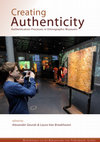
""One of the centrepieces of the Central and South American gallery of the National Museum of Eth... more ""One of the centrepieces of the Central and South American gallery of the National Museum of Ethnology (NME) in Leiden, the Netherlands is a Mesoamerican human skull decorated with turquoise mosaic. This mosaic skull is thought to have been created by Mixtec artisans in the Late Postclassic period (AD 1300-1521). Since the skull was acquired on the art market, nothing is known about its provenance prior to 1962. As a result, some have questioned its pre-Columbian origin. Similar questions have been raised about unprovenanced mosaic skulls in other museum collections.
This article presents the findings of research carried out at the NME and at the Centre des Recherche et de Restauration des Musées de France (C2RMF), Paris in 2011 and 2012, with a view to determining whether the Leiden mosaic skull is an authentic pre-Columbian artefact, an entirely modern creation, or a modern combination of authentic elements. The article also explores the
reasons for the skull’s acquisition in the 1960s, in the absence of any background information, and discusses the significance of these research findings for the presentation and perception of this particular artefact.""
Mexicon (2011) XXXIII: 46-51
The site of Dainzú, Oaxaca is known for its corpus of apparently unique iconography. In the past,... more The site of Dainzú, Oaxaca is known for its corpus of apparently unique iconography. In the past, several authors saw a representation of a type of ballgame in this corpus. In this paper, it is argued that this analysis seems to be based solely on the depiction of balls in the hands of the human figures depicted. Additionally, it is argued that no ballgame comparable to the presumed Dainzú ballgame is evidenced in other regions of Mesoamerica. Consequently, an alternative is proposed, considering the possibility that the figures depicted in the Dainzú corpus represent warriors, rather than ballplayers.
Itinerarios (12/2010) pp. 157 - 177
El juego de Pelota Mixteca es un juego de pelota a mano, que tradicionalmente se jugaba en el est... more El juego de Pelota Mixteca es un juego de pelota a mano, que tradicionalmente se jugaba en el estado de Oaxaca en México. Hoy en día también se practica en México D.F. y en los
Estados Unidos, porque emigrantes mixtecos llevaron el juego consigo a sus nuevos hogares.
Tradicionalmente, se ha considerado el juego de pelota mixteca como un juego con raíces prehispánicas. Diferentes autores han propuesto que la iconografía de conjuntos arqueológicos
‒como el conjunto iconográfi co del sitio de Dainzú, Oaxaca y los murales del complejo de Tepantitla, Teotihuacan‒ representan una forma anciana del juego.
Este artículo describe el juego de pelota mixteca y examina su historia a base de los pocos documentos históricos que hacen mención del juego. Por medio de una comparación entre los diferentes aspectos de pelota mixteca y unos juegos de pelota tradicionales de origen europeo se concluye que, formalmente, la pelota mixteca es un juego de origen europeo. Este juego probablemente fue adoptado por los pueblos indígenas de Oaxaca en los primeros cien años después de la conquista de Mesoamérica.
Books by Martin E Berger
Contextualizing Museum Collections at the Smithsonian Institution: The Relevance of Collections-Based Research in the Twenty-First Century, 2022
This article reports on collaborative work that examined collections from the National Museum of ... more This article reports on collaborative work that examined collections from the National Museum of the American Indian (Smithsonian Institution) and the Royal Museum of Art and History (Brussels). The research focused on post-Classic Mixtec masks, shields, and related material that lacked a documented provenience and provenance. In combining archival research, material analysis, and iconographic study this article not only aims to recontextualize these collections, but also argues for reassessment of the ethical paradigm that has kept collections-based research out of the professional purview of many archaeologists. This chapter is paired with another chapter from the same publication by Davide Domenici, who focuses on the iconography and possible original context of these pieces. See https://smithsonian.figshare.com/articles/book/Contextualizing_Museum_Collections_at_the_Smithsonian_Institution_The_Relevance_of_Collections-Based_Research_in_the_Twenty-First_Century/19436615 for the full publication.
Azteken / Aztecs (catalogue)
Azteken / Aztecs, 2019
Catalogue of the exhibition AZTEKEN, on show at the Linden-Museum Stuttgart, the Weltmuseum Wien ... more Catalogue of the exhibition AZTEKEN, on show at the Linden-Museum Stuttgart, the Weltmuseum Wien and the Museum Volkenkunde (2019-2021). The catalogue contains 27 articles from scholars at the top of their fields, as well descriptions and photographs of all the pieces on display. The entire book can be browsed online at https://www.hirmerverlag.de/uk/titel-122-122/azteken-1928/.
Co-edited by Doris Kurella, Martin Berger and Inés de Castro, in cooperation with the Instituto Nacional de Antropologia e Historia, México.
Maya 2012: Mysterie, Geloof en Wetenschap
"Popular-scientific publication on Ancient and Modern Maya culture and peoples. Includes a genera... more "Popular-scientific publication on Ancient and Modern Maya culture and peoples. Includes a general introduction to Maya culture, as well as an interpretation of Tortuguero Monument 6 prepared especially for this publication by Dr. Erik Boot, a chapter on popular theories concerning 21.12.2012, and the reception of 'Maya 2012' in popular culture and the arts. Contains a catalogue of the Maya collections of the National Museum of Ethnology, Leiden, The Netherlands.
In Dutch"
Entrevistas by Martin E Berger


Uploads
Papers by Martin E Berger
attributed to northeastern South America, centred on Brazil’s Trombetas River region. These carvings, largely confined to drug-related paraphernalia and ceremonial objects (trumpets, rattles, staffs/sceptres and a hafted
anchor axe), were part of antiquarian collections deposited in European museums mainly in the 19th century, with very little associated information.14C AMS dating of their wood, cotton and resins shows that they have deeper histories, spanning the 14th to late 17th/early 18th centuries. Wood identification indicates a relatively narrow range of taxa, mainly from the genera Brosimum and Swartzia, likely selected for their hardness and
striking “snakeskin” or “leopard skin” patterns. Bindings of human hair are identified on a ceremonial weapon.
Strontium isotope (87Sr/86Sr) analysis of the wood is used to explore the possible provenience of the carvings, with the results divided into two groups, one from a more radiogenic region consistent with the Trombetas, and the other from a less radiogenic region, possibly the Amazon floodplain.
This article appeared in the Yearbook 2020 of the Museums, Collections, and Society research group at Leiden University. All articles from the yearbook are available at https://www.universiteitleiden.nl/binaries/content/assets/geesteswetenschappen/mcs/ter-keurs---mcs-yearbook-2020---e-book.pdf
This article presents the findings of research carried out at the NME and at the Centre des Recherche et de Restauration des Musées de France (C2RMF), Paris in 2011 and 2012, with a view to determining whether the Leiden mosaic skull is an authentic pre-Columbian artefact, an entirely modern creation, or a modern combination of authentic elements. The article also explores the
reasons for the skull’s acquisition in the 1960s, in the absence of any background information, and discusses the significance of these research findings for the presentation and perception of this particular artefact.""
Estados Unidos, porque emigrantes mixtecos llevaron el juego consigo a sus nuevos hogares.
Tradicionalmente, se ha considerado el juego de pelota mixteca como un juego con raíces prehispánicas. Diferentes autores han propuesto que la iconografía de conjuntos arqueológicos
‒como el conjunto iconográfi co del sitio de Dainzú, Oaxaca y los murales del complejo de Tepantitla, Teotihuacan‒ representan una forma anciana del juego.
Este artículo describe el juego de pelota mixteca y examina su historia a base de los pocos documentos históricos que hacen mención del juego. Por medio de una comparación entre los diferentes aspectos de pelota mixteca y unos juegos de pelota tradicionales de origen europeo se concluye que, formalmente, la pelota mixteca es un juego de origen europeo. Este juego probablemente fue adoptado por los pueblos indígenas de Oaxaca en los primeros cien años después de la conquista de Mesoamérica.
Books by Martin E Berger
Co-edited by Doris Kurella, Martin Berger and Inés de Castro, in cooperation with the Instituto Nacional de Antropologia e Historia, México.
In Dutch"
Entrevistas by Martin E Berger