Edited publications by Peter Bengtsen
Book published as part of Brad Downey and John Fekner's public art project DATES DOORS THEN & MOR... more Book published as part of Brad Downey and John Fekner's public art project DATES DOORS THEN & MORE. The book not only documents and discusses different aspects of the interventions created in public space, but is itself such an intervention. While the digital version is freely available here, a limited edition hard copy of the book is available to purchase at Lunds konsthall.
Public space is fundamental to democracy. It is a common arena that we all have the right to use.... more Public space is fundamental to democracy. It is a common arena that we all have the right to use. In Urban Creativity, nine European researchers from different disciplines describe how subcultures utilize public space. The essays are about graffiti and street art, the Occupy movement, the umbrella protests in Hong Kong and the Free-party movement. These are examples of interventions in the city that aim to temporarily or permanently change the meaning, function or accessibility of urban public space.
The book is the result of an interdisciplinary research collaboration initiated in 2018 at the Pufendorf Institute for Advanced Studies at Lund University on the theme of Urban Creativity.
Culture Unbound, Apr 20, 2018
Special issue of "Culture Unbound". Through an introduction and six original articles, the issue ... more Special issue of "Culture Unbound". Through an introduction and six original articles, the issue investigates a variety of cultural and scientific discourses and practices that in different ways are related to neuroscience and the brain.
The special issue was edited by guest editors Peter Bengtsen and Kristofer Hansson.
"Bild och natur" is an anthology edited by Peter Bengtsen, Max Liljefors and Moa Petersén. Ten re... more "Bild och natur" is an anthology edited by Peter Bengtsen, Max Liljefors and Moa Petersén. Ten researchers from the Division of Art History and Visual Studies at Lund University, Sweden, have contributed chapters.
The ten texts (seven in Swedish and three in English) explore how nature has been visually depicted throughout history. From medieval church paintings to contemporary computer games and street art, from art photography to genetic diagrams – in these varied and fascinating images, nature is given a face, becomes concrete. The chapters in the book address these different images of nature and show that they are also multifaceted portraits of ourselves.
"Bild och natur" was published with generous support from The Gyllenstierna Krapperup's Foundation and The Elisabeth Rausing Memorial Foundation.
Journal Articles by Peter Bengtsen
Public Art Dialogue, 2024
With a point of departure in the creation of an unsanctioned street installation made in Granada,... more With a point of departure in the creation of an unsanctioned street installation made in Granada, Spain, in 2005, this essay considers some of the central characteristics of street art. It further discusses some of the conditions under which urban environs may become places for autonomous interventions, experiences and reflections rather than spaces people merely pass through.
Visual Inquiry: Learning & Teaching Art, 2020
This article considers how the monetization of the street art world is affecting the ecosystem of... more This article considers how the monetization of the street art world is affecting the ecosystem of expressions found in the street. It takes as a point of departure that a central quality of street art is its potential to turn public space into a site of exploration. What is meant by this, briefly, is that the presence of ephemeral street art can motivate people to explore their surroundings and perhaps question how public space is being used and how they want it to be used. This article argues that the ongoing monetization of the street art world may lead to the fossilization of urban public space – a situation where the otherwise constant flux of visual expressions in the street may come to a halt as the growing presence of sanctioned work, along with potential financial interests in placating facilitators of such work, means that fewer spaces are available for unsanctioned interventions. This fossilization of urban public space can negatively impact street-based art’s potential to influence how we think about our environs, as well as the possibilities for emerging artists to hone their skills in the street without curatorial restrictions.
Lo Squaderno, Dec 2, 2019
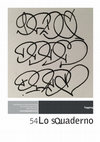
This article focuses on videography as a method for conducting research, as a means of communicat... more This article focuses on videography as a method for conducting research, as a means of communicating findings about tags and tagging to the public, and an opportunity to re-evaluate previously-collected empirical material.
Based on ongoing explorative videographic research, I discuss how the video medium can be used to go beyond the mere visual representation of tags as singular expressions and elucidate otherwise hidden aspects of both tags (works) and tagging (practice) that may contribute to diversify the widespread perception in the public of these phenomena solely as vandalism.
The article further delves into some of the technical aspects of creating a particular video, including overlays that represent the mental process taking place when looking for tags. With a point of departure in this video work, I lay out how recollections of certain tags that had previously been recorded photographically turned out to be false when images of the works were revisited as part of the video editing. Becoming aware of this is in part interesting because misremembering works might impact the future collection of empirical material, as recollections of previously-found tags influence the researcher when looking for further tags.
Culture Unbound, Apr 20, 2018
This article explores cultural narratives of what the brain is and how it functions in two differ... more This article explores cultural narratives of what the brain is and how it functions in two different contexts—among neuroscientists and within popular culture. In particular, narratives about technology and the malleable brain as well as the notion of the mad scientist are studied. The article looks at how these narratives are presented and used in popular culture (represented by the television show Dollhouse by Joss Whedon) and how neuroscientists relate to the narratives when describing their work.
Street Art and Urban Creativity, Dec 2017
An essay about the terminology used in studies of street art and urban creativity.
Social Science Journal, 2017
Much has changed since the 1960s when the first scholarship on contemporary graffiti appeared. Th... more Much has changed since the 1960s when the first scholarship on contemporary graffiti appeared. This paper is an attempt to outline and contextualize a number of recur-rent challenges facing researchers of graffiti and street art, as well as developments that have taken place in this scholarly field. The aim of creating this outline is to assist in increasing the amount, and improving the quality, of future scholarship on graffiti and street art.We recognize, however, that although many of the challenges have at one time seemed insurmountable, over time they have lessened as graffiti and street art have grown as art movements, and because a small cadre of tenacious scholars focusing on graffiti and street art has published and taught in this area. An increasing, though limited, number of academic venues focused on graffiti and street art scholarship has slowly emerged. We also recognize that with increased scholarship that has laid the foundation, new avenues to explore graffiti and street art have become apparent.
Street Art and Urban Creativity, 2016
In this article I examine the methodological and ethical rigor of a geographic profiling study an... more In this article I examine the methodological and ethical rigor of a geographic profiling study and resulting article, published in 2016 in "Journal of Spatial Science", which identifies by name a candidate for being the artist known as Banksy. I demonstrate that the article is characterized by a number of methodological flaws which fundamentally undermine the researchers’ basis for determining Banksy’s identity. On this background I argue that the researchers’ decision to include a specific name in their article is ethically problematic.
Journal of Ecocriticism, 2015
This article considers the paintings of the contemporary American artist Josh Keyes from an ecocr... more This article considers the paintings of the contemporary American artist Josh Keyes from an ecocritical point of view and discusses the importance of biocentrism and the affinity between humans and nature in the artist’s work.
Konsthistorisk Tidskrift/Journal of Art History, Oct 20, 2015
Taking the exhibition Art in the Streets, which was shown at The Geffen Contemporary at the Museu... more Taking the exhibition Art in the Streets, which was shown at The Geffen Contemporary at the Museum of Contemporary Art, Los Angeles from 17 April to 8 August, 2011, as its main point of departure, the present article discusses street art's association with the institutions of the art world.
NAVEIÑ REET: Nordic Journal of Law and Social Research, Dec 2014
This article presents the notion of spatial justice as a way of considering the relationship betw... more This article presents the notion of spatial justice as a way of considering the relationship between law and street art in a manner beyond the legal/illegal dichotomy. Through a series of empirical examples, it is demonstrated how street art literally takes a place already taken and imposes itself in an already appropriated urban public space. Street art thus redefines the space in contestation to law. However, street art is ephemeral and its taking of space is not permanent. Street art points to an alternative spatial definition, one of spatial justice, before – and, indeed, while – withdrawing from the space it occupies. Street art creates a rupture in the lawscape which makes explicit the presence and claims of law, thereby also making the need for law’s other – justice – pronounced. The question of relationality between law and street art which we bring forth in the present article plays itself out as a production of space and spatial justice in an exchange of place-taking, withdrawal and pronounciation. Spatial justice, as we perceive it here, is thus a way of thinking about law and street art not simply as polar opposites, but rather as co-dependent and bound together in an ongoing process of oscillation, mutual reinforcement and creativity.

Australian Feminist Law Journal, 2013
The present article represents a quite literal take on the theme of the special issue of Australi... more The present article represents a quite literal take on the theme of the special issue of Australian Feminist Law Journal in which it appears by discussing the public park as a garden of justice: on the one hand a concrete, geographical setting in which law and morality become manifest, on the other hand the site of a more intangible space which is constituted by the struggles between different spatial definitions. The article focuses on the case of Ørstedsparken in Copenhagen, a well-known cruising site where bi- and homosexual men have been meeting up to have sex for more than a century. In response to this use of the park, in recent years the municipality of Copenhagen has cut down vegetation in the park in order to expose (and thereby attempt to prevent) these activities. In doing so, the authorities attempt to reclaim the contested public space of the park and return it to a site of order (law) and potential justice.
Book chapters by Peter Bengtsen
Enrico Bonadio (ed.), The Cambridge Handbook of Copyright in Street Art and Graffiti, 2019
This chapter discusses the increasing tendency to remove street art from its original site for pe... more This chapter discusses the increasing tendency to remove street art from its original site for personal gain, and explores whether/how copyright claims can be an effective means of preventing such extractions.
Peter Bengtsen, Max Liljefors & Moa Petersén (eds.), Bild och natur. Tio konstvetenskapliga betraktelser, 2018
This chapter presents an ecocritical reading of street artworks by Spanish artist Isaac Cordal.
... more This chapter presents an ecocritical reading of street artworks by Spanish artist Isaac Cordal.
The chapter is part of a larger project that focuses on environmental street art. The project will culminate with the publication of a monograph later in 2018.
Annamari Vänskä & Hazel Clark (eds.), Fashion Curating. Critical Practice in the Museum and Beyond, 2017
Chapter about the collaboration between fashion brands and artists, including Takashi Murakami fo... more Chapter about the collaboration between fashion brands and artists, including Takashi Murakami for Louis Vuitton and BAST for Marc Jacobs.
Kristofer Hansson & Markus Idvall (eds.), Interpreting the brain in society. Cultural reflections on neuroscientific practices, 2017
Book chapter about the linking that is often made in popular media of creativity - frequently thr... more Book chapter about the linking that is often made in popular media of creativity - frequently through examples from art history - and neurological disease. The chapter discusses the implications this linking may have for the dissemination of ideas about personality traits, artistic expression, neurological disease and neuroscience as a discipline.
Jeffrey Ian Ross (ed.), Routledge Handbook of Graffiti and Street Art., Mar 8, 2016
This anthology chapter examines the removal of and trade in street artworks.


Uploads
Edited publications by Peter Bengtsen
The book is the result of an interdisciplinary research collaboration initiated in 2018 at the Pufendorf Institute for Advanced Studies at Lund University on the theme of Urban Creativity.
The special issue was edited by guest editors Peter Bengtsen and Kristofer Hansson.
The ten texts (seven in Swedish and three in English) explore how nature has been visually depicted throughout history. From medieval church paintings to contemporary computer games and street art, from art photography to genetic diagrams – in these varied and fascinating images, nature is given a face, becomes concrete. The chapters in the book address these different images of nature and show that they are also multifaceted portraits of ourselves.
"Bild och natur" was published with generous support from The Gyllenstierna Krapperup's Foundation and The Elisabeth Rausing Memorial Foundation.
Journal Articles by Peter Bengtsen
Based on ongoing explorative videographic research, I discuss how the video medium can be used to go beyond the mere visual representation of tags as singular expressions and elucidate otherwise hidden aspects of both tags (works) and tagging (practice) that may contribute to diversify the widespread perception in the public of these phenomena solely as vandalism.
The article further delves into some of the technical aspects of creating a particular video, including overlays that represent the mental process taking place when looking for tags. With a point of departure in this video work, I lay out how recollections of certain tags that had previously been recorded photographically turned out to be false when images of the works were revisited as part of the video editing. Becoming aware of this is in part interesting because misremembering works might impact the future collection of empirical material, as recollections of previously-found tags influence the researcher when looking for further tags.
Book chapters by Peter Bengtsen
The chapter is part of a larger project that focuses on environmental street art. The project will culminate with the publication of a monograph later in 2018.