
The Japanese Abacus YouTube Project: My mission to complete a 100-video curriculum.

Over the years, as a professional instructor, I have seen many hands learning the abacus. Yet, it has always weighed on me that some learners inevitably get left behind.
That is why I decided to give it my all—to teach everything there is to know about the abacus through 100 videos over the course of a single year.
I resolved to include both Japanese and English subtitles in every single video, aiming to turn "I don't get it" into "I understand" for someone, somewhere in the world.
Writing it down now makes it sound calm and collected, but looking back, it was a pretty reckless undertaking.
Even so, I couldn't help but wonder: "The abacus is such a long-standing tradition of learning—so why hasn't a truly clear, step-by-step path to understanding been delivered to people around the world as a single, unified road?"
And once that thought took hold, there was no other choice but to create those 100 videos.
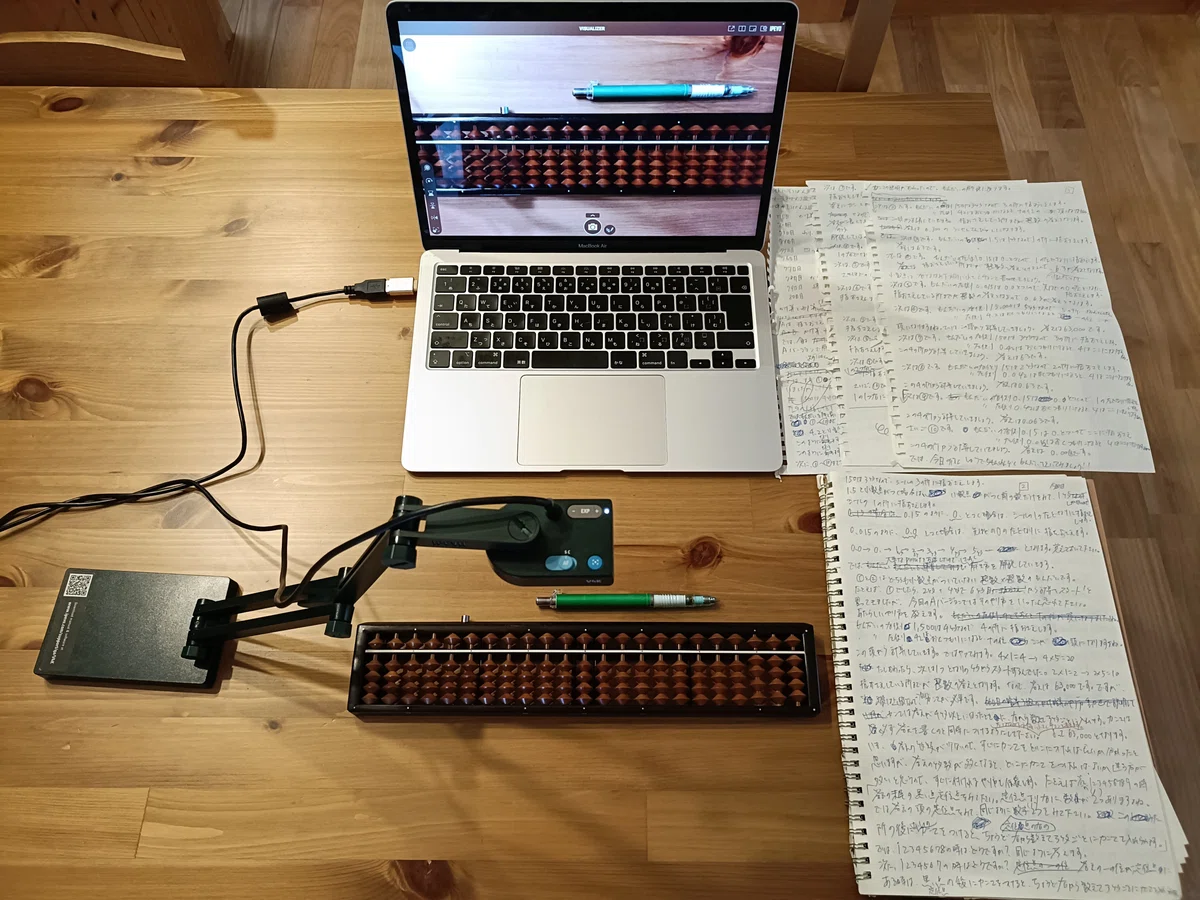
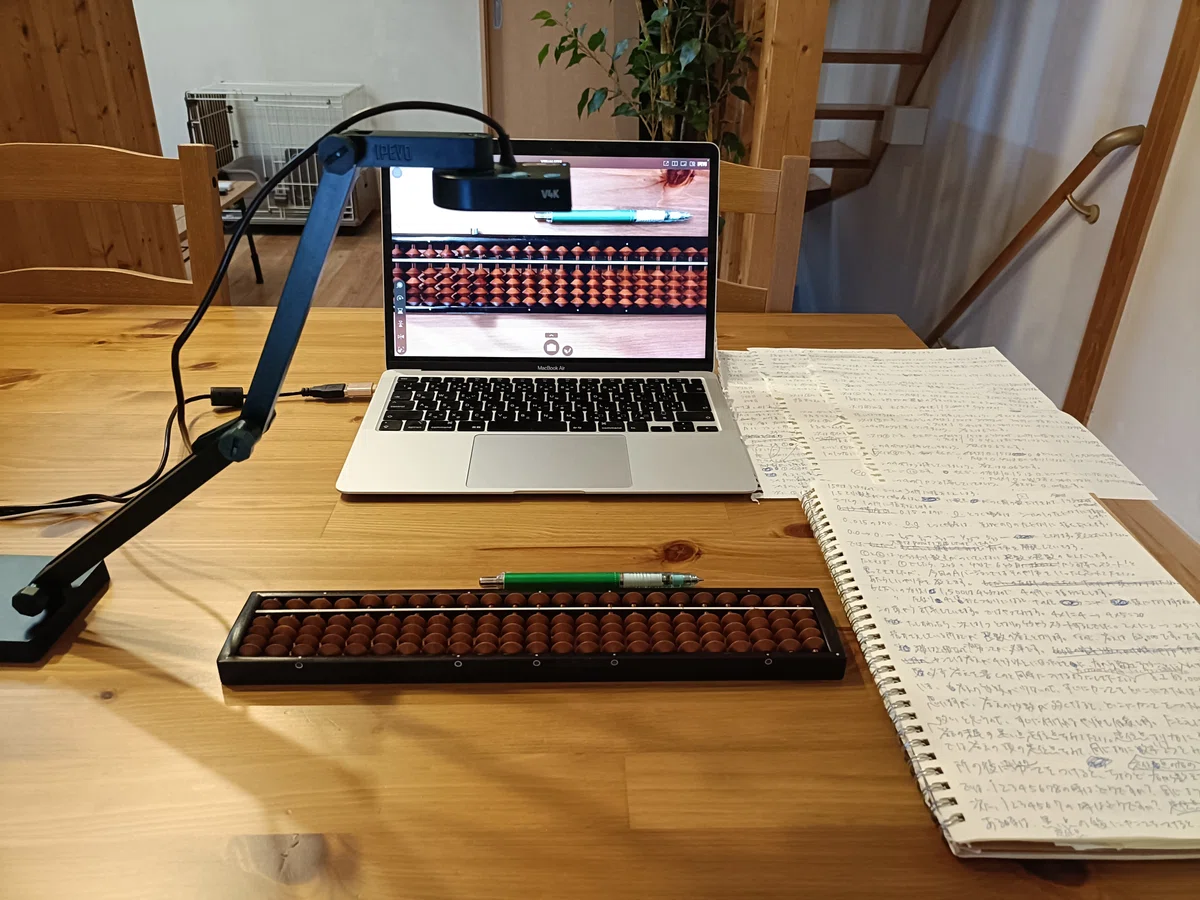
Not 10 videos. 100.
Even as I write this again, the number still feels somewhat staggering.
But at the time, I was incredibly serious about the vision.
I felt that 100 videos were necessary to build a path where beginners wouldn't get lost at the first step, could double back if they stumbled, and could eventually feel the accomplishment of saying, "I’ve come this far."
On the other hand, I worried that if it exceeded 100, the sheer volume might cause people to give up.
An abacus is a small tool—just a frame with beads.
Yet, within this small device lie a surprising number of pitfalls where people tend to get stuck.
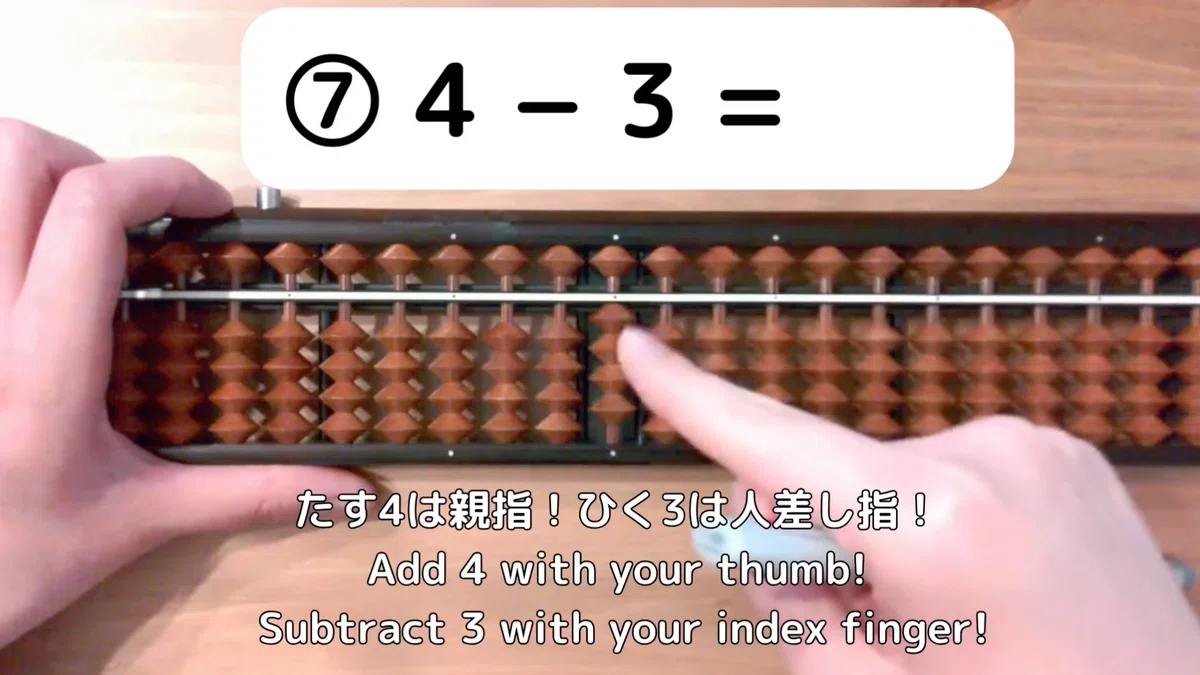
(From Video 2)
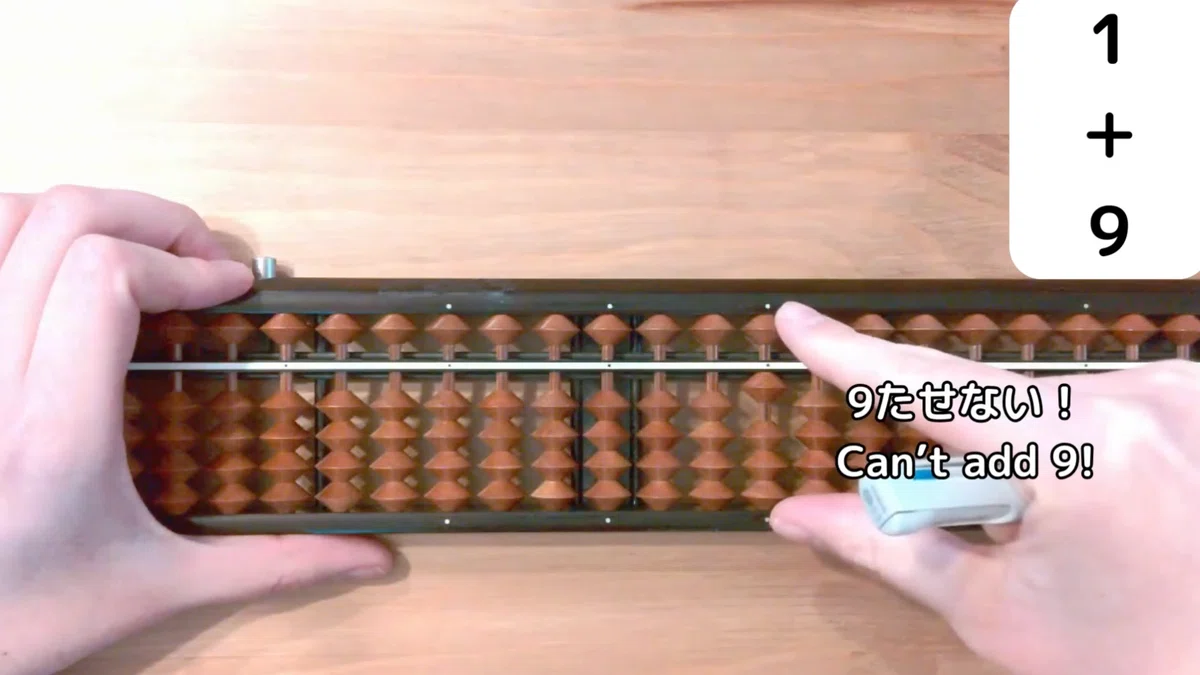
(From Video 3)
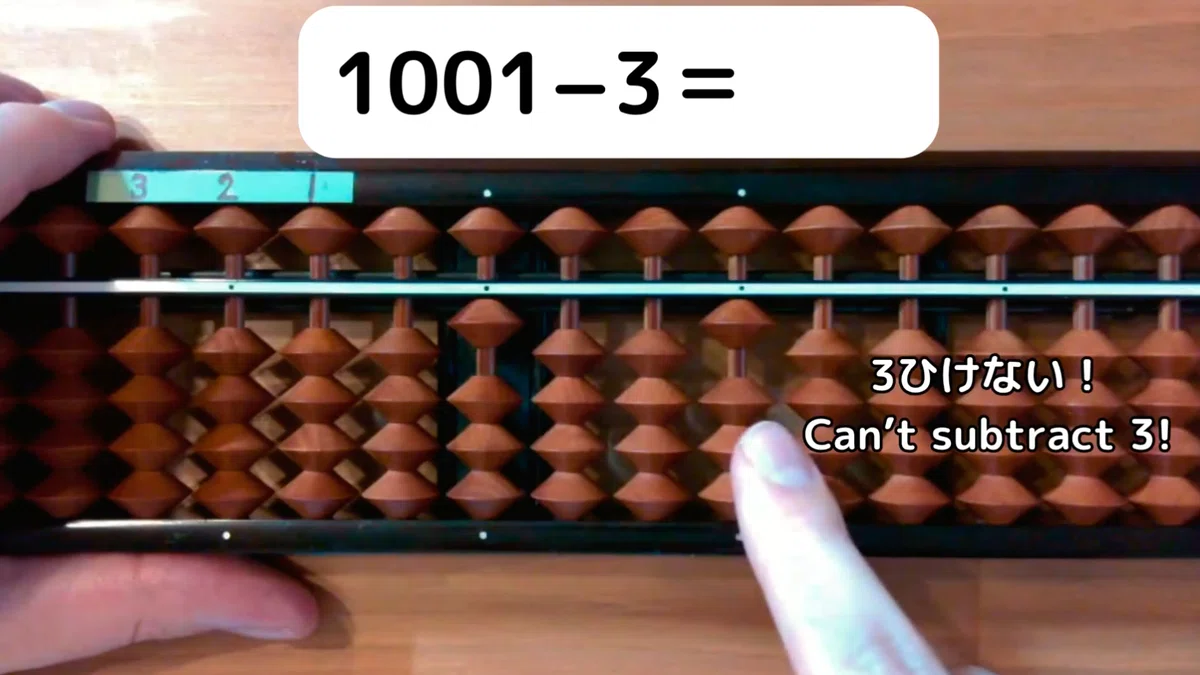
(From Video 48)
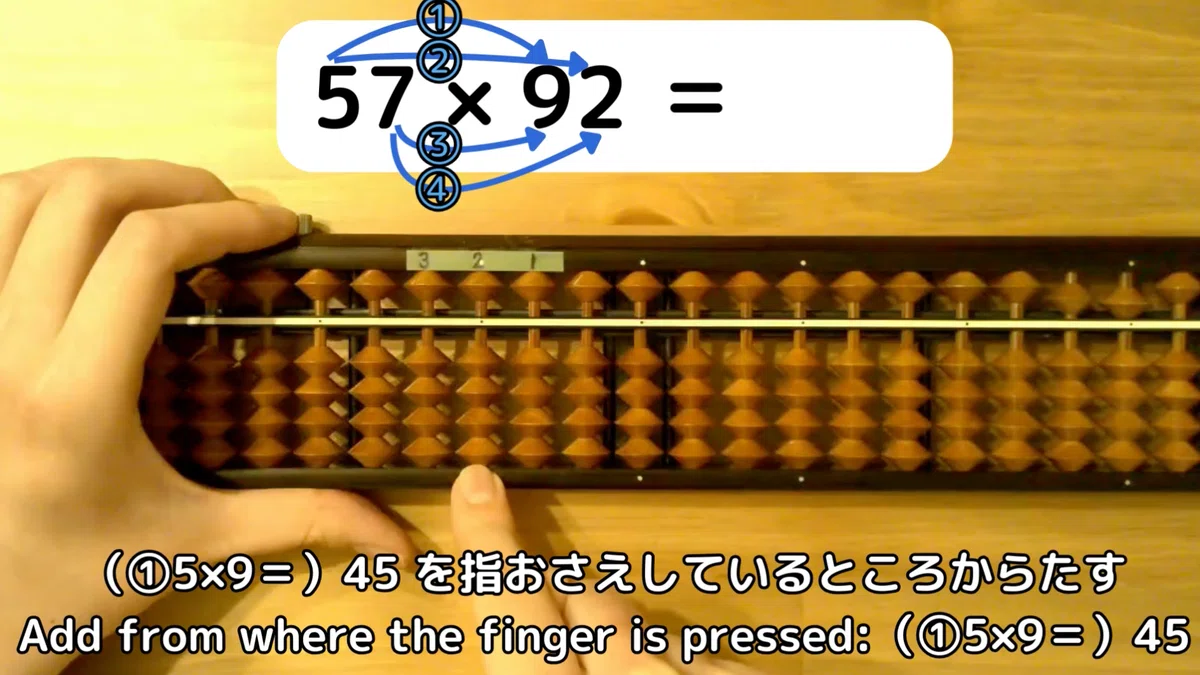
(From Video 31)
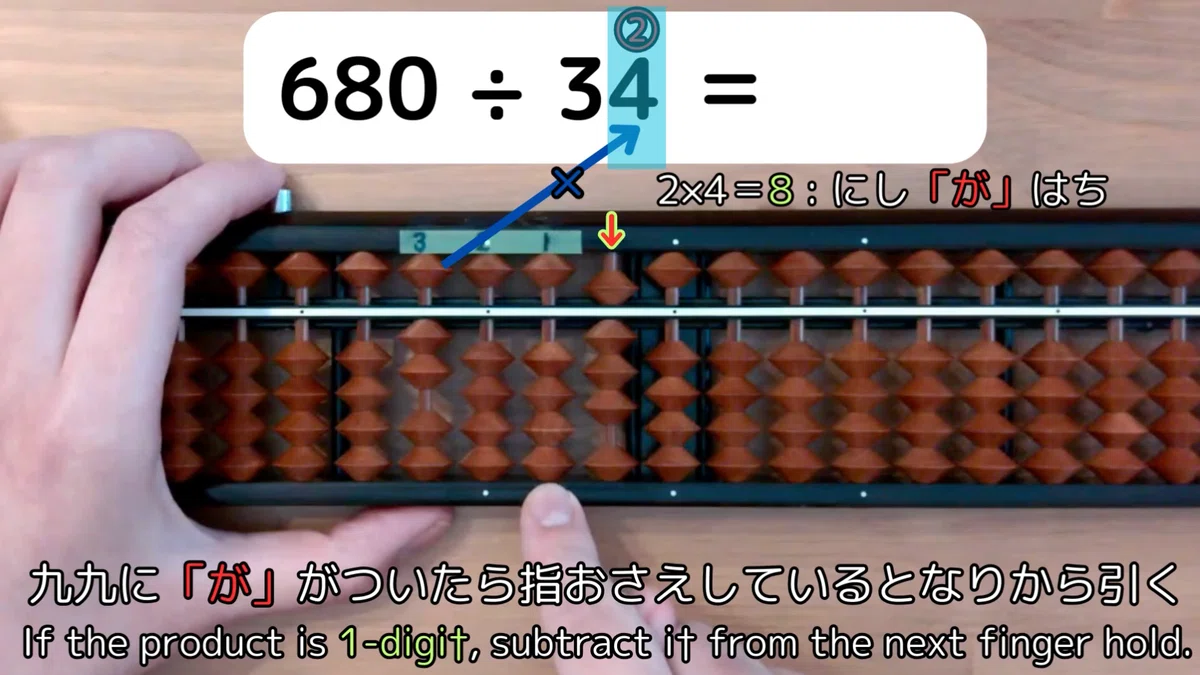
(From Video 41)
How to place the beads.
How to move your fingers.
The momentary pause during a carry-over.
The instant your hand freezes during subtraction.
The confusion over the sequence in multiplication, and that sudden feeling of "I have no idea what I'm doing" in division.
Over the years, I have watched countless hands at work, learning the abacus.
Among them, I’ve always felt the presence of those who were being left behind.
The reason people stop understanding is usually not a lack of ability.
It’s simply that they haven't been taught in the right order or with the right words.
I wanted to connect all those "orders" into one cohesive sequence.
Not as isolated lessons, but as a system.
Not as random explanations, but as a road that truly leads a person from start to finish.
That was the beginning of the YouTube series, " Abacus Japan Master in 100 Days"
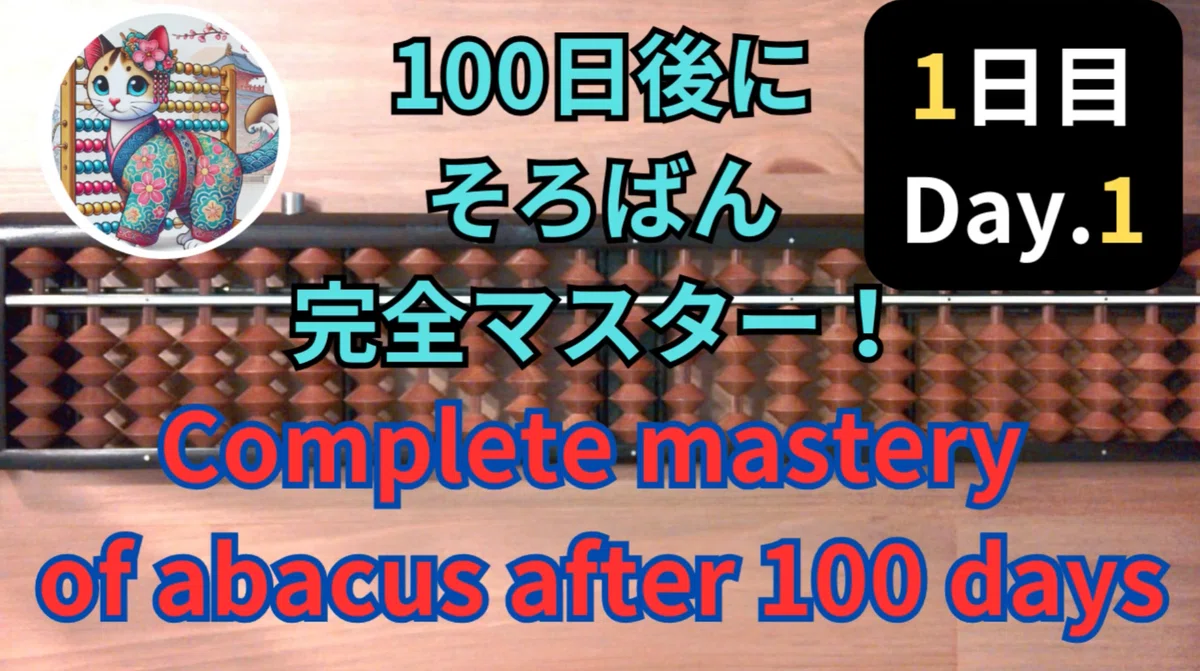
↓ The 100th Video ↓
This 100th video captures the entire path we have built over the past year.
The complete curriculum is now yours to explore.
・0:13– The Journey: Part 1 (The First 50 Lessons)
・2:32– The Journey: Part 2 (Lesson 51 and Beyond)
・3:20– The Advanced Stage
From the day I decided to make 100 videos, the abacus began to consume my life.
At first, I imagined it would be a more elegant challenge.
I thought I’d film one today, plan the next tomorrow, and edit the day after—moving forward carefully, intellectually, and orderly.
But once I actually started, it was anything but "elegant."
Drafting ideas for 100 videos.
Writing scripts in my notebook.
Coming up with the best practice problems.
Clearing the desk.
Filming.
Interrupted by my cat meowing.
Stumbling over my words and feeling unsatisfied.
Refilming.
Reviewing the footage.
Realizing, "No, this explanation is redundant," and cutting it.
Choosing music.
Adding Japanese subtitles.
Adding English subtitles, too.
Teaching myself how to edit.
Adding diagrams.
Reviewing it all over again.
And then, the next day, thinking about it all over again.
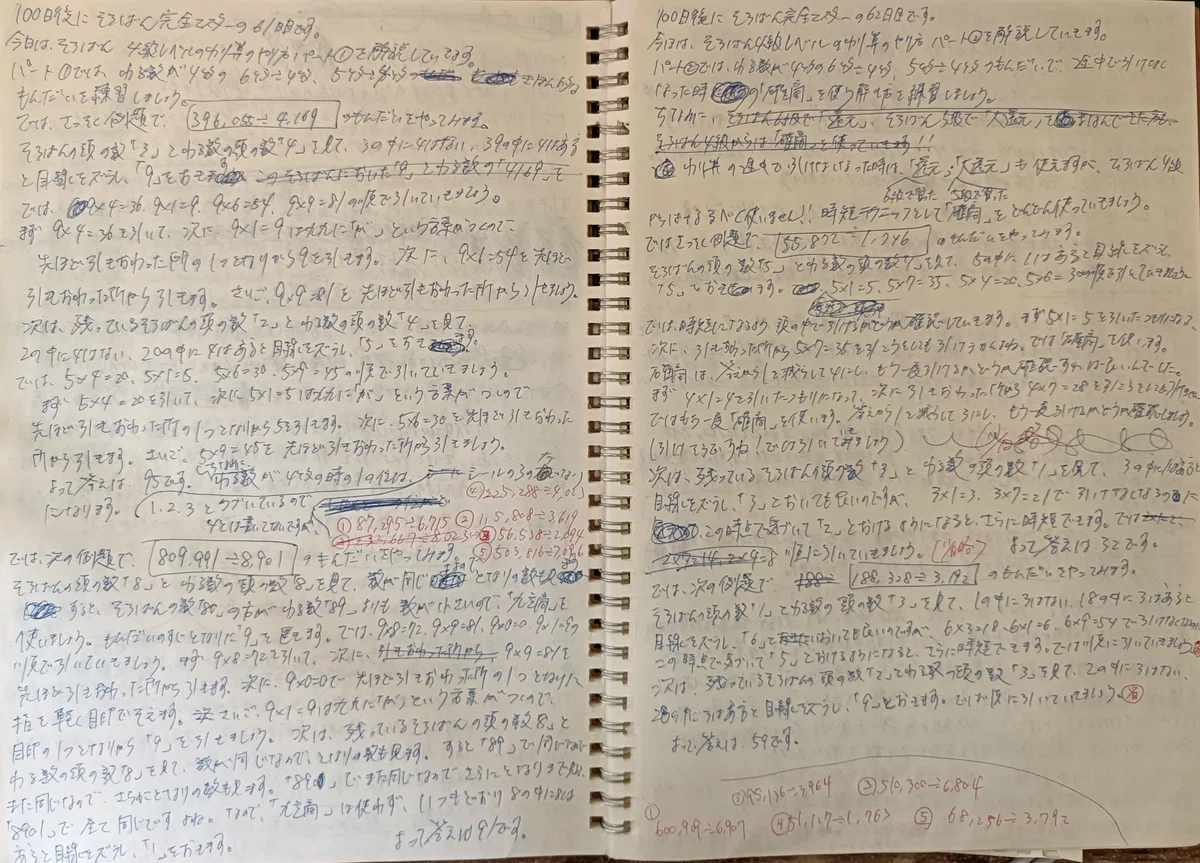
By writing out these scripts, I refined the content so it could be understood in the shortest time possible.
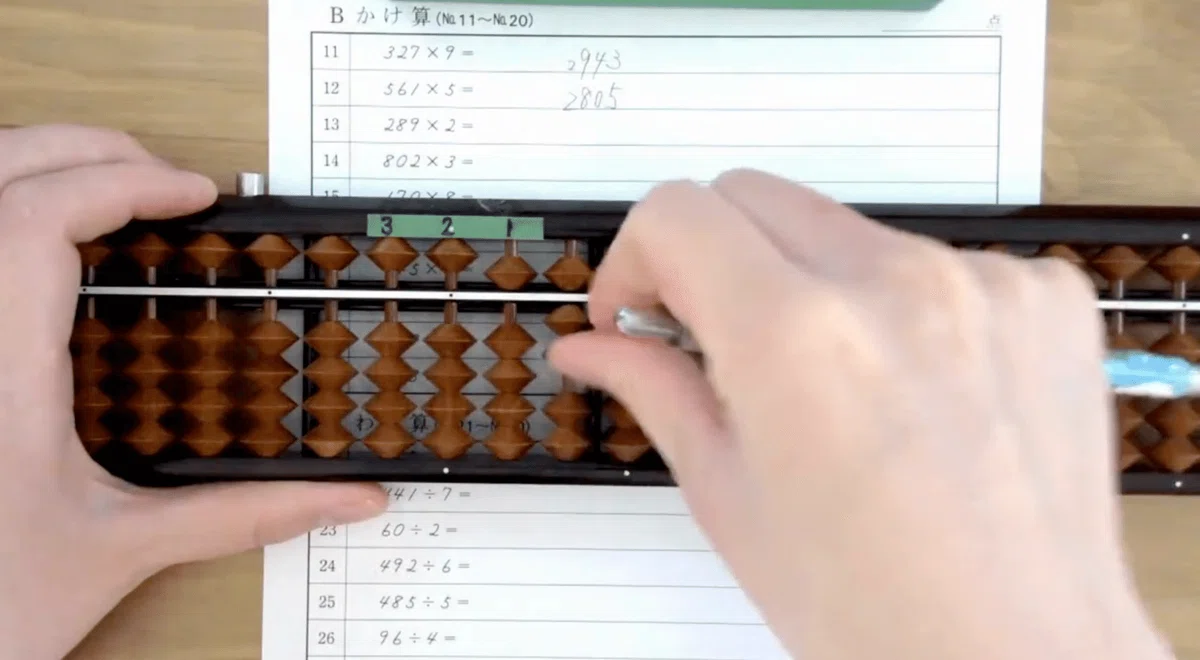
I try to hold the very end of the pen to prevent it from blocking the view of the abacus beads.
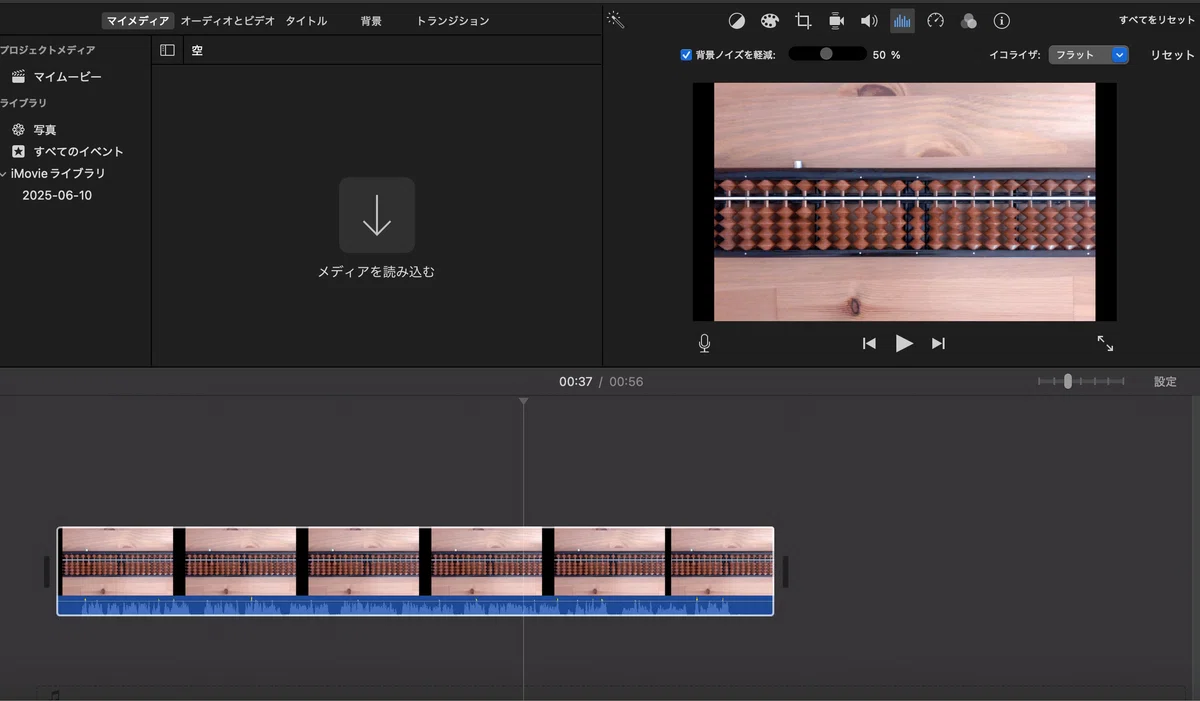
For video editing, I taught myself how to use Canva and iMovie.
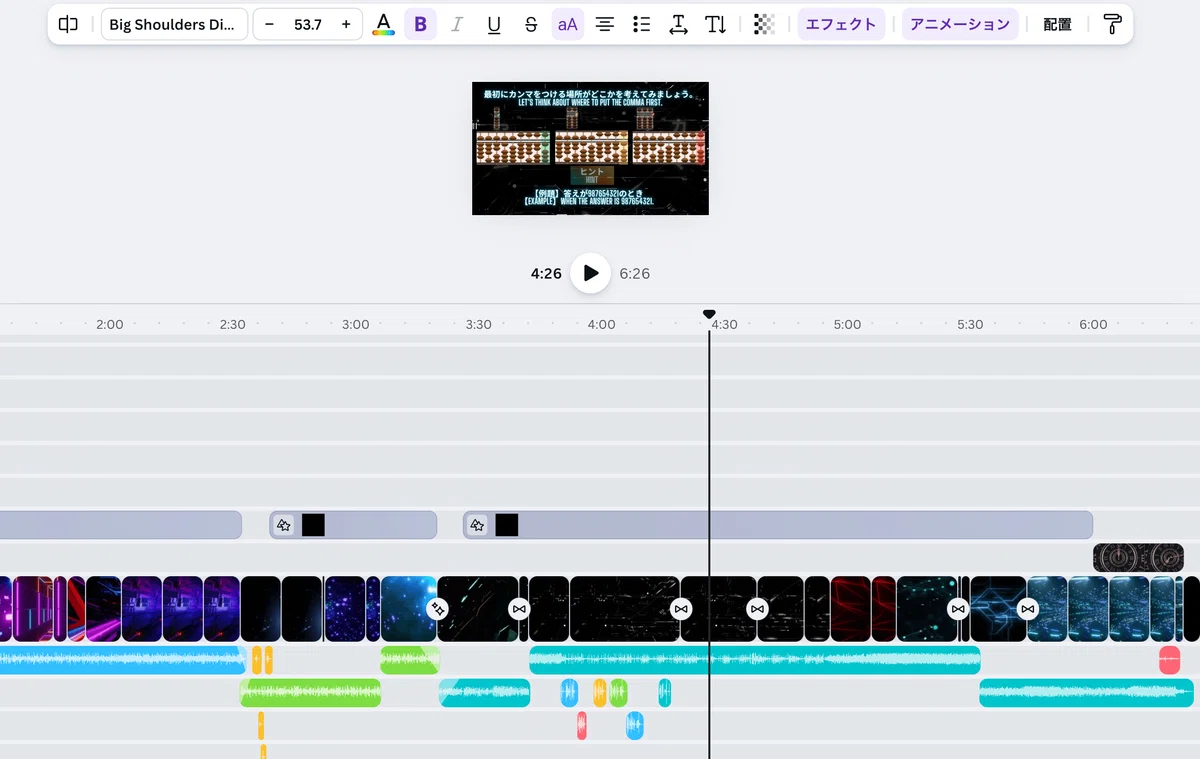
This is Video 100.
By the way, I chose different music for almost every one of the 100 videos.
The first 50 were a bit poppy, and the last 50 were a bit more chic.
I chose music that wouldn’t interfere with learning, but would give the viewer a little push forward.
Having worked in sound effects in the past, the placement of sound was one thing I simply couldn't compromise on until the very end.
If you asked me now if I really needed to go that far, honestly, I’d be at a loss for words—but at the time, I truly believed it was necessary.
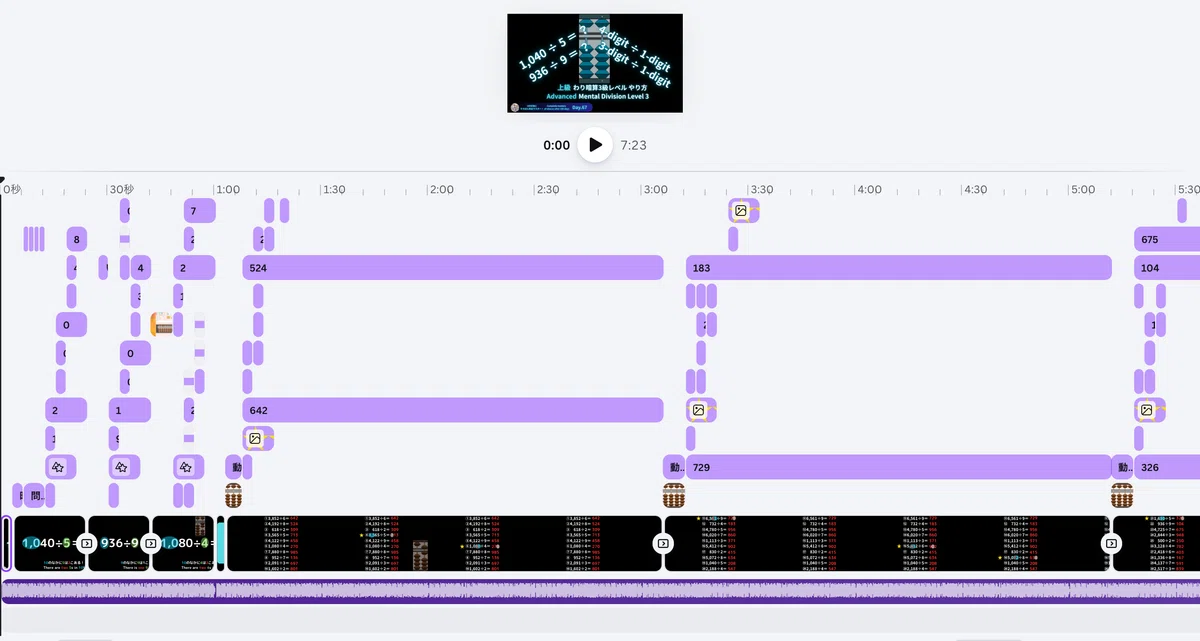
Here’s how it turned out in the video ↓
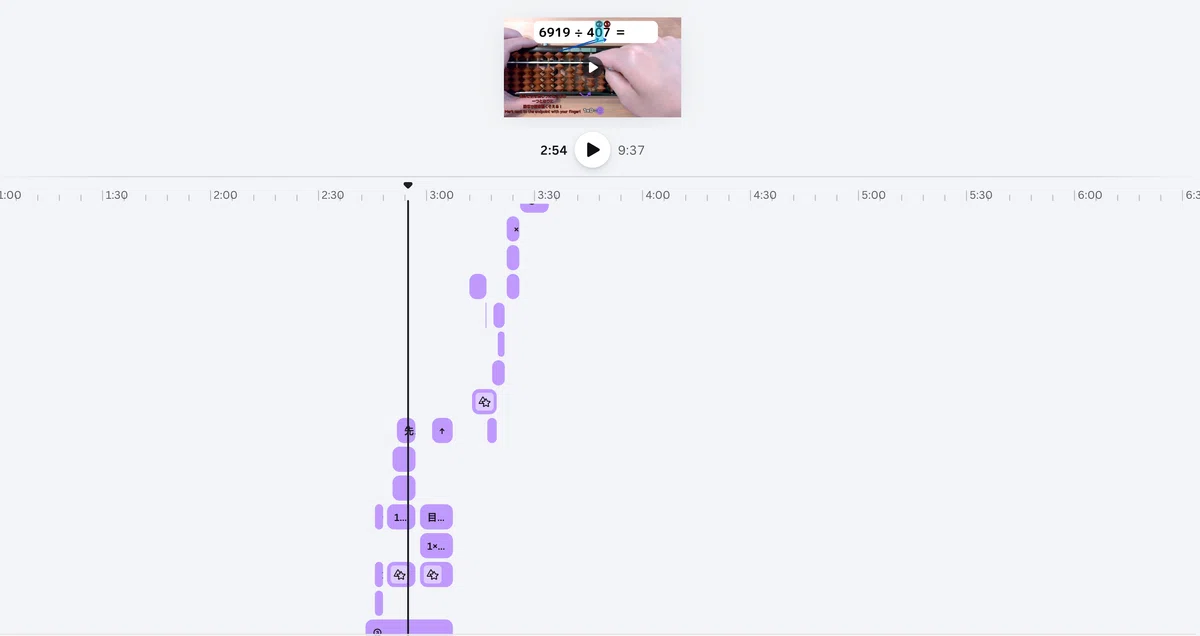
This is Video 51.
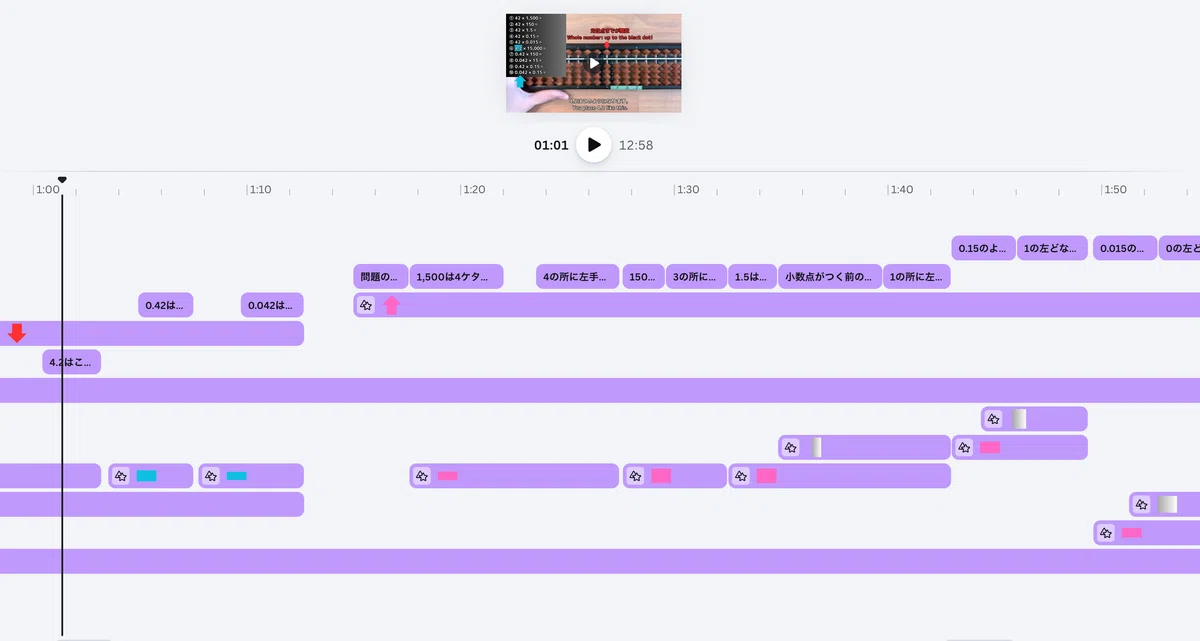
This is Video 71.
Even for the practice problems, instead of just filming a paper worksheet, I arranged them to be as clear as possible on screen.
I believed that even the layout of the numbers or the brightness of the background could change how easily someone understands.
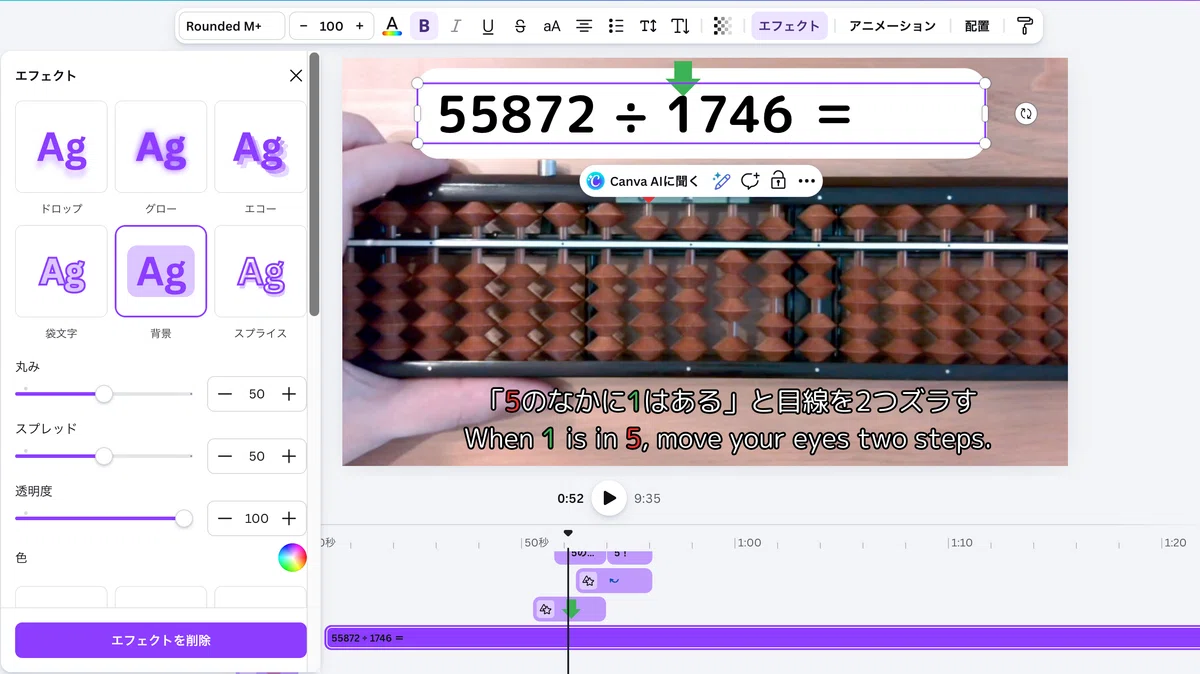
I’m explaining while imagining the problems are there.
As I edited away like this, I’d suddenly feel a pair of eyes on me.
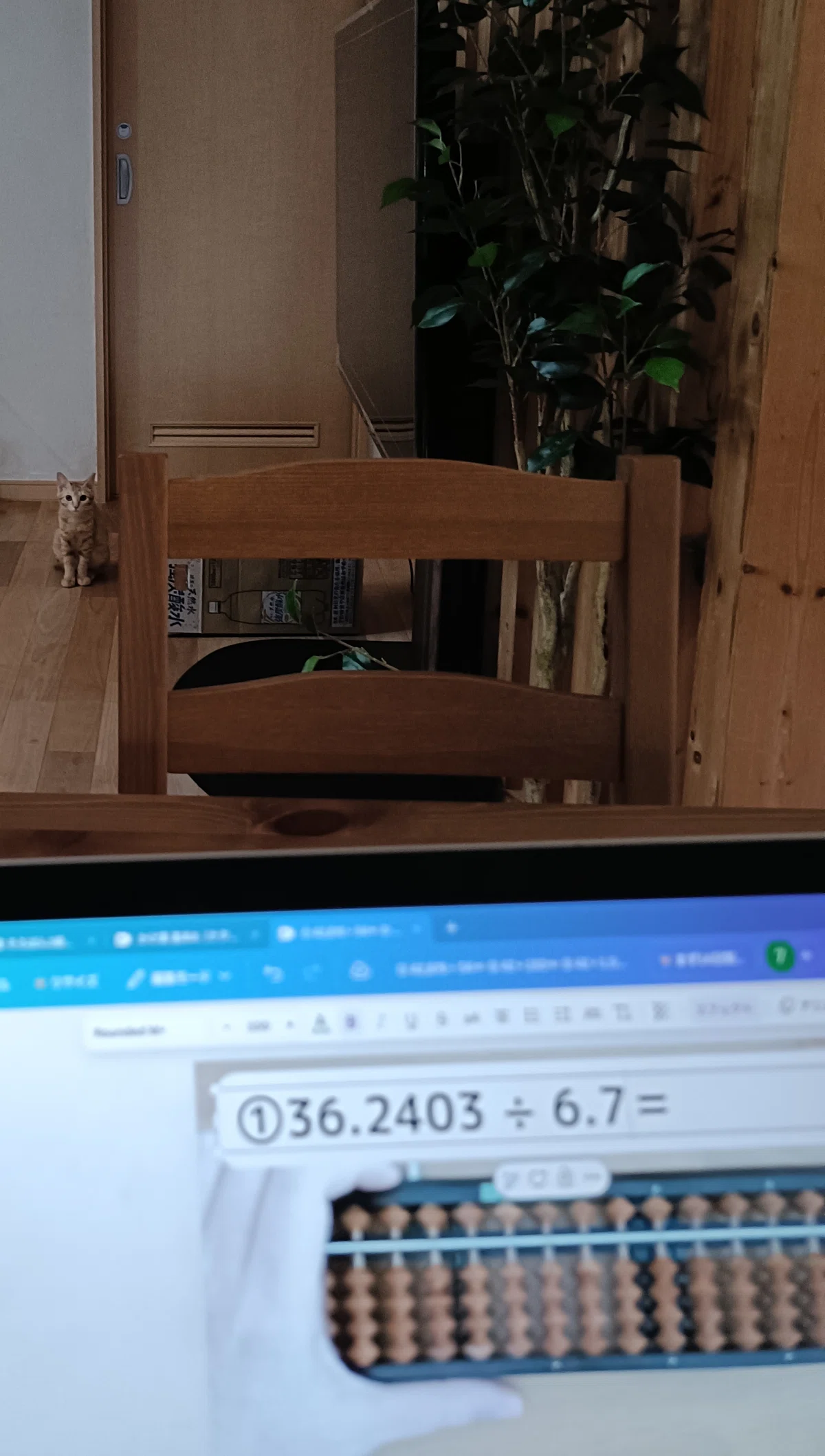

"It’s time to play with me, meow."
Because of moments like this where I had to stop working, editing took anywhere from two days to—at most—two weeks per video.
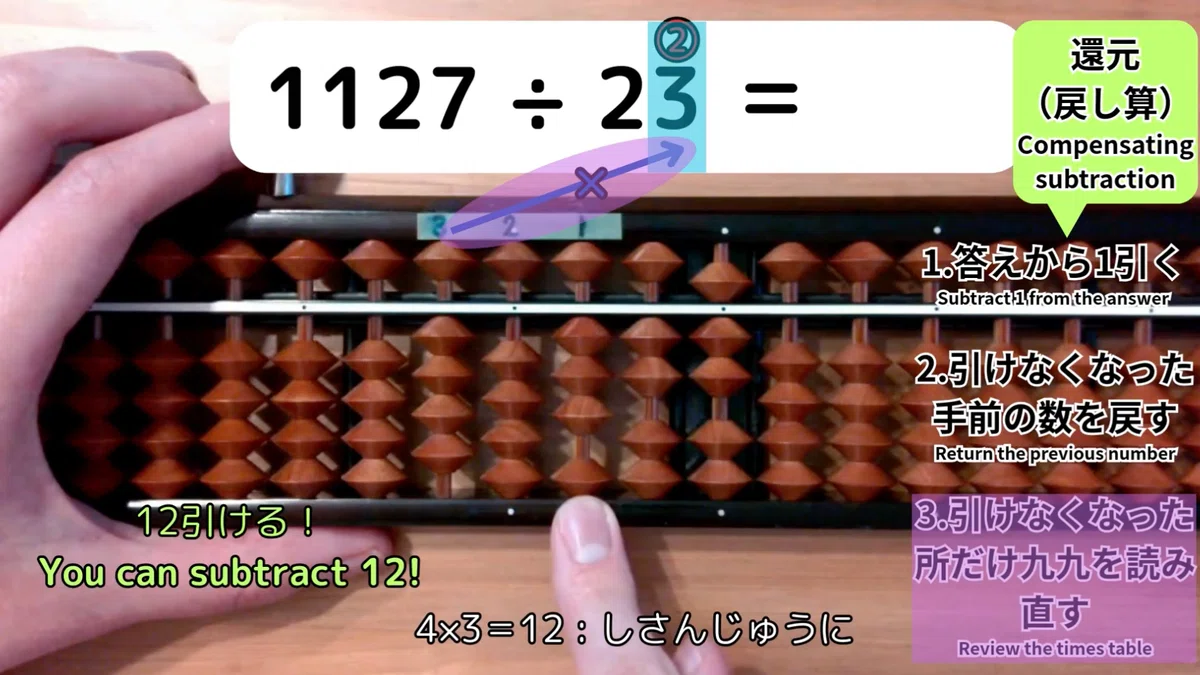
This is the explanation for "Kangen" (Reduction/Back-subtraction) in Video 44.
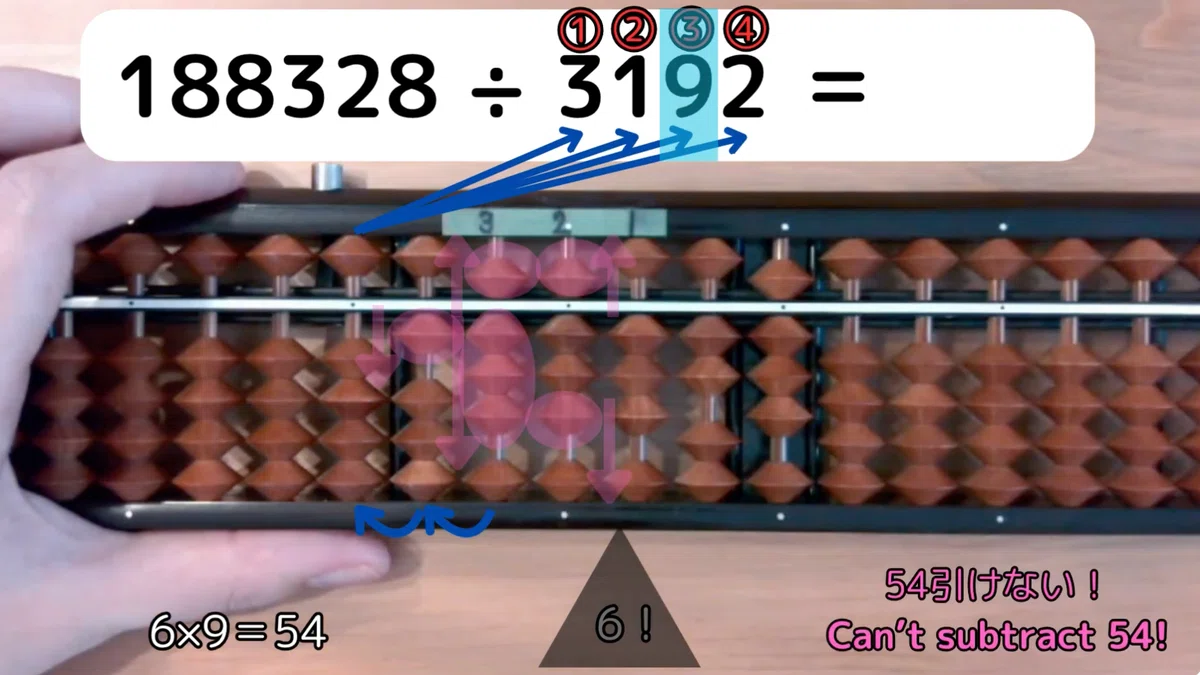
This is the explanation for "Kakusho" (Confirmed Quotient) in Video 62.
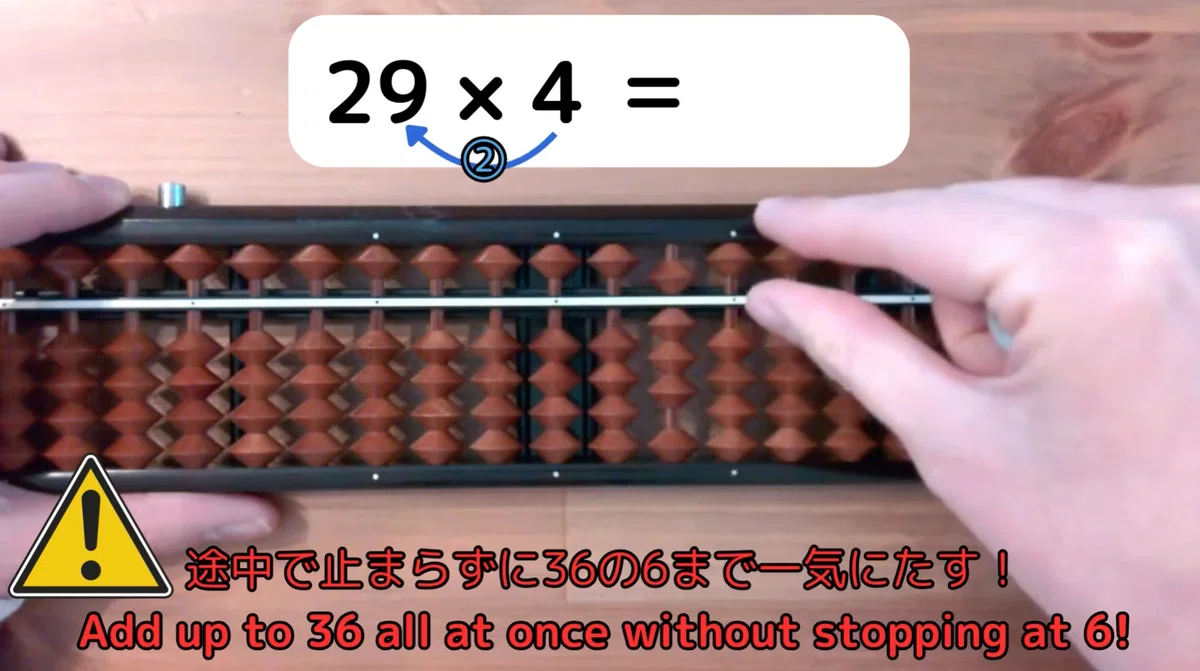
Implemented from the latter half of the series onwards.
With every video I made, I realized that "teaching via video" is much more delicate than I had thought.
In a live lesson, you can see the person's face.
You can notice, "Oh, they're stuck here."
But videos are different.
The person isn't there.
I had to anticipate the stumbles of someone who wasn't in the room.
They might stop at this bead movement.
This phrasing might not get the point across.
I thought about it endlessly, all by myself.
Looking back and writing this now, it feels a bit intense—maybe even a little scary.
But back then, with a perfectly serious face, I was determined to "stay with the student until they understand" through every single one of those 100 videos.
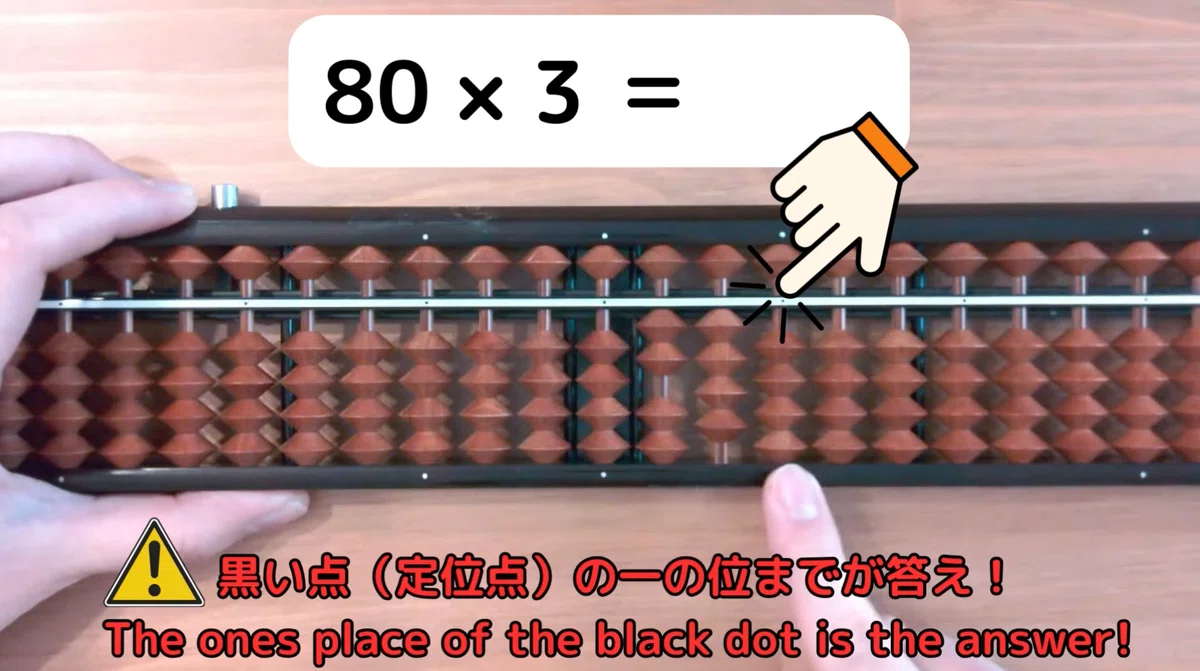
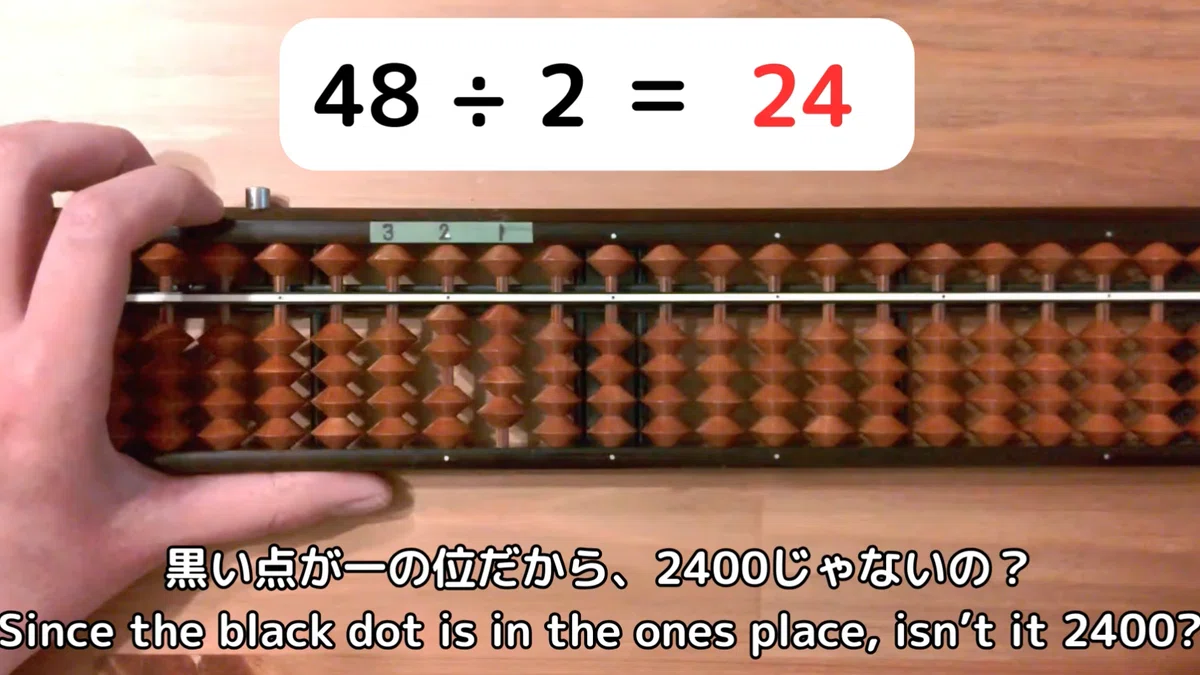
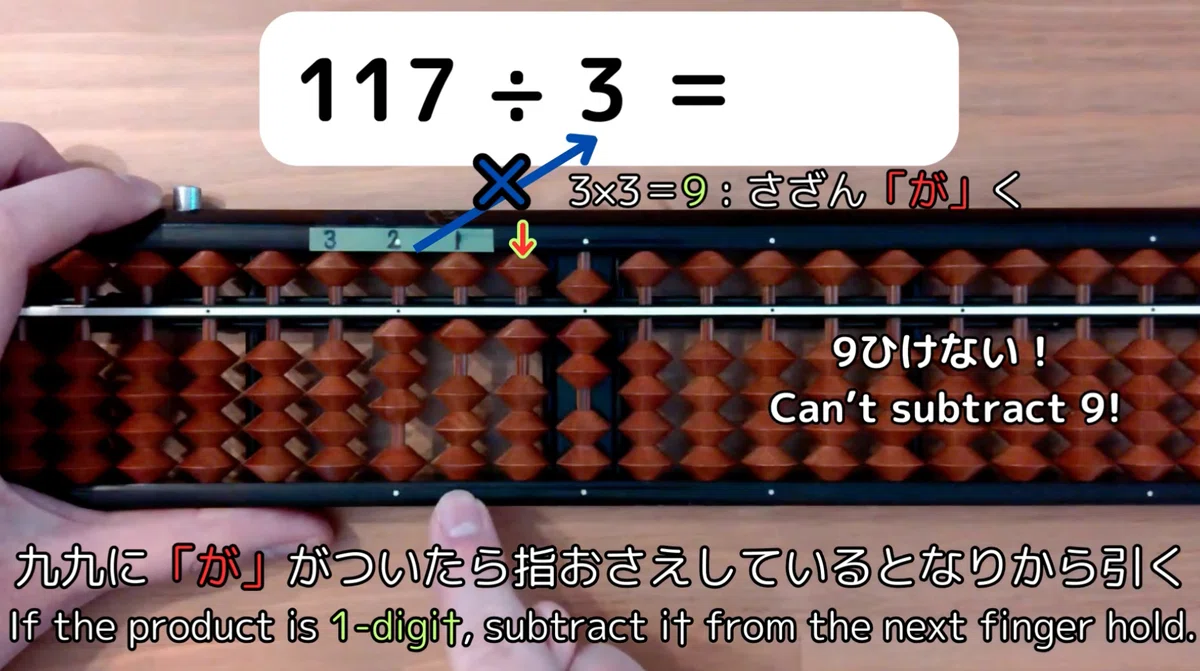
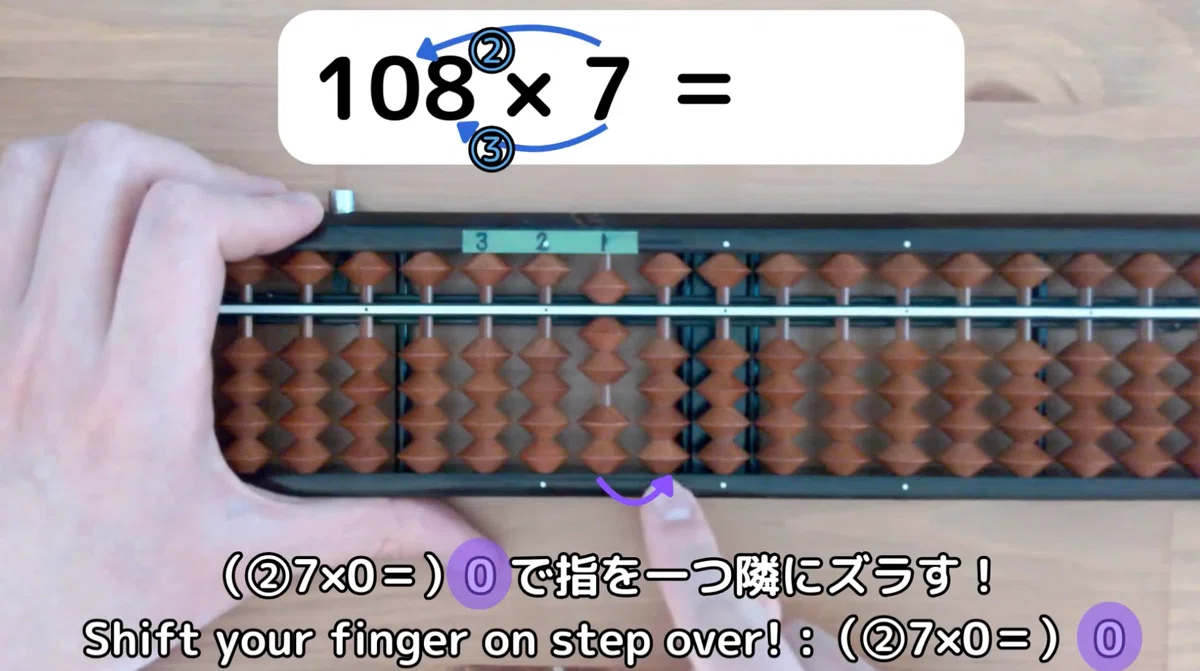
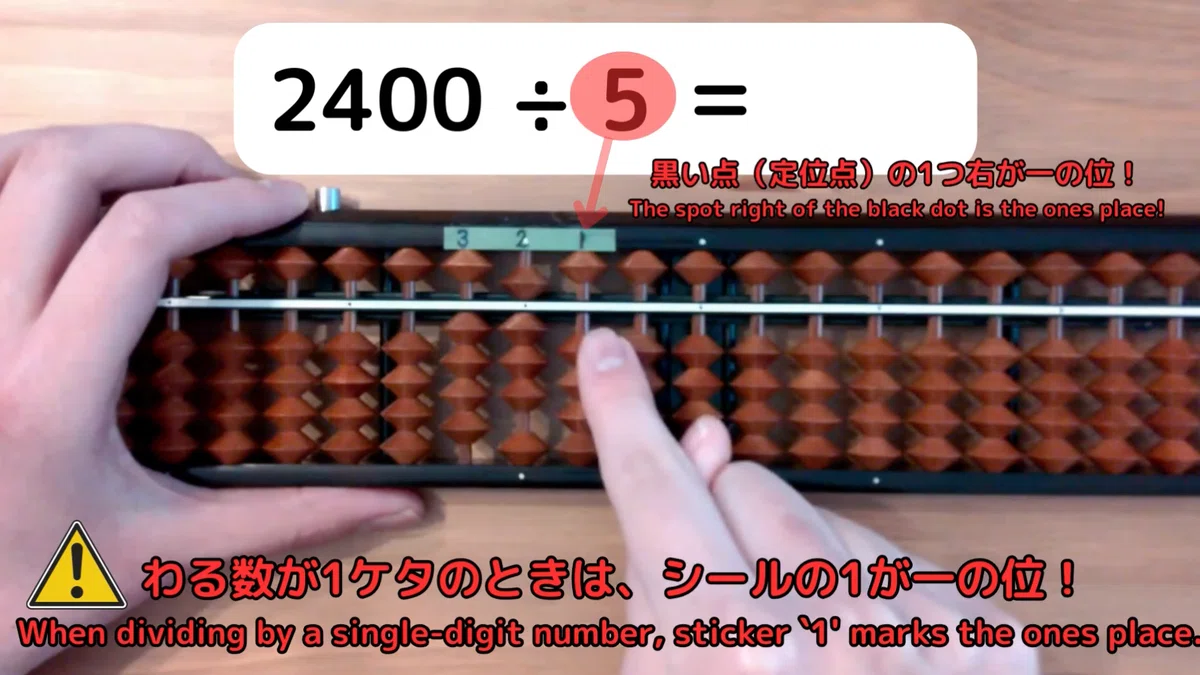
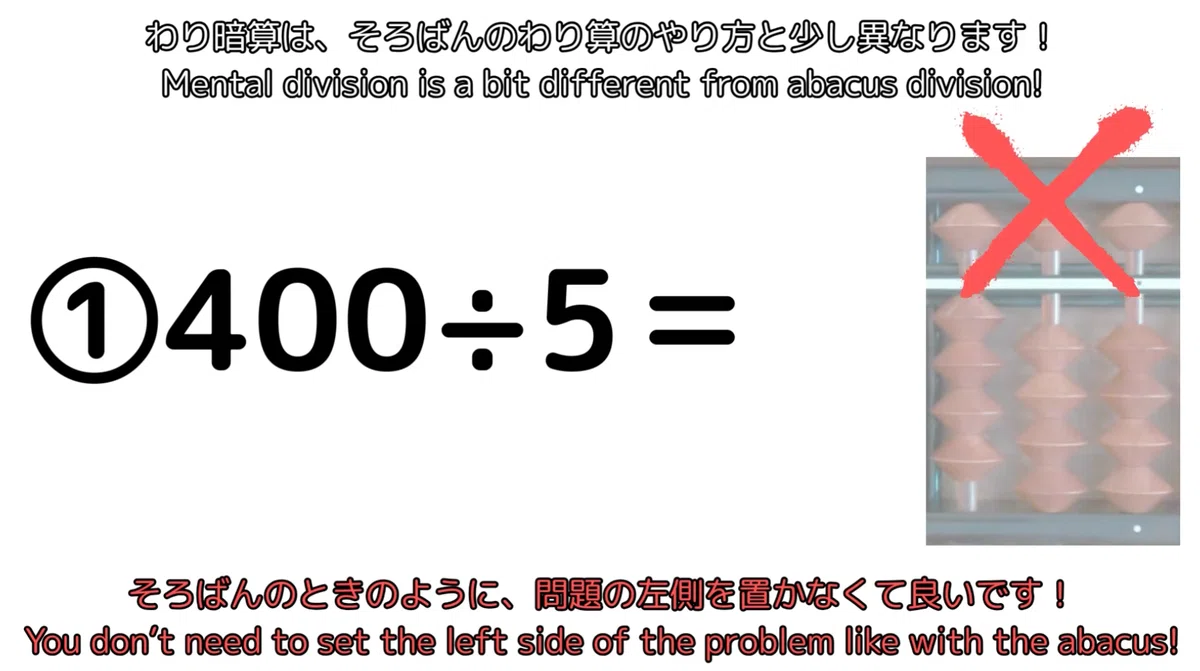

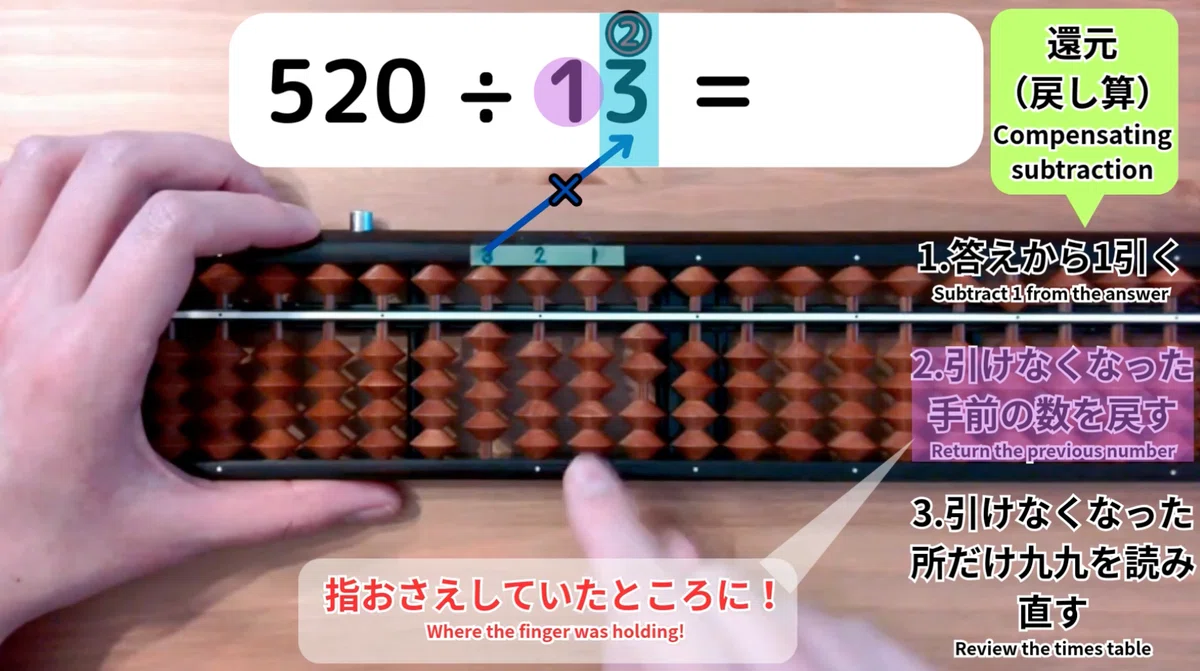
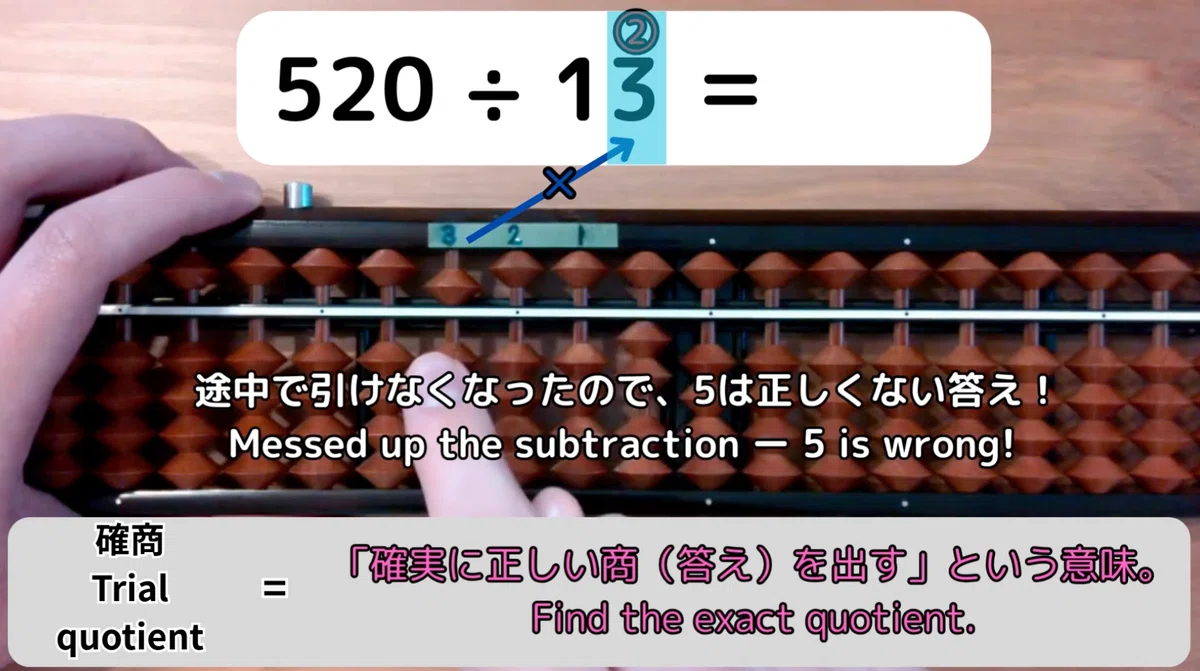
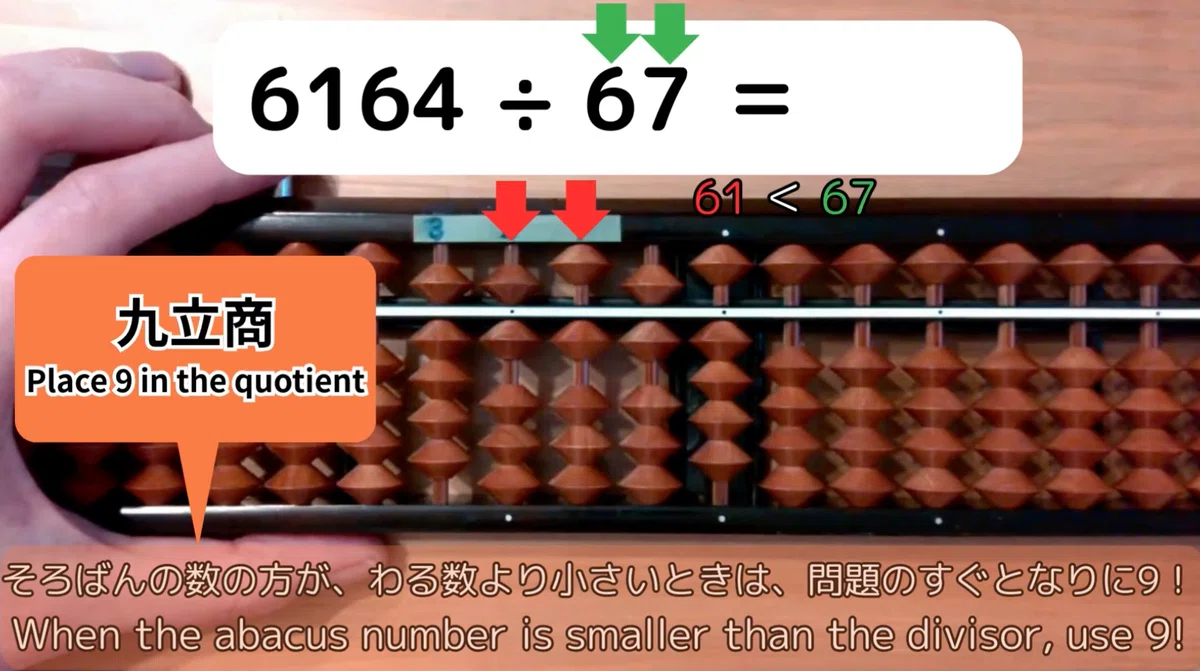
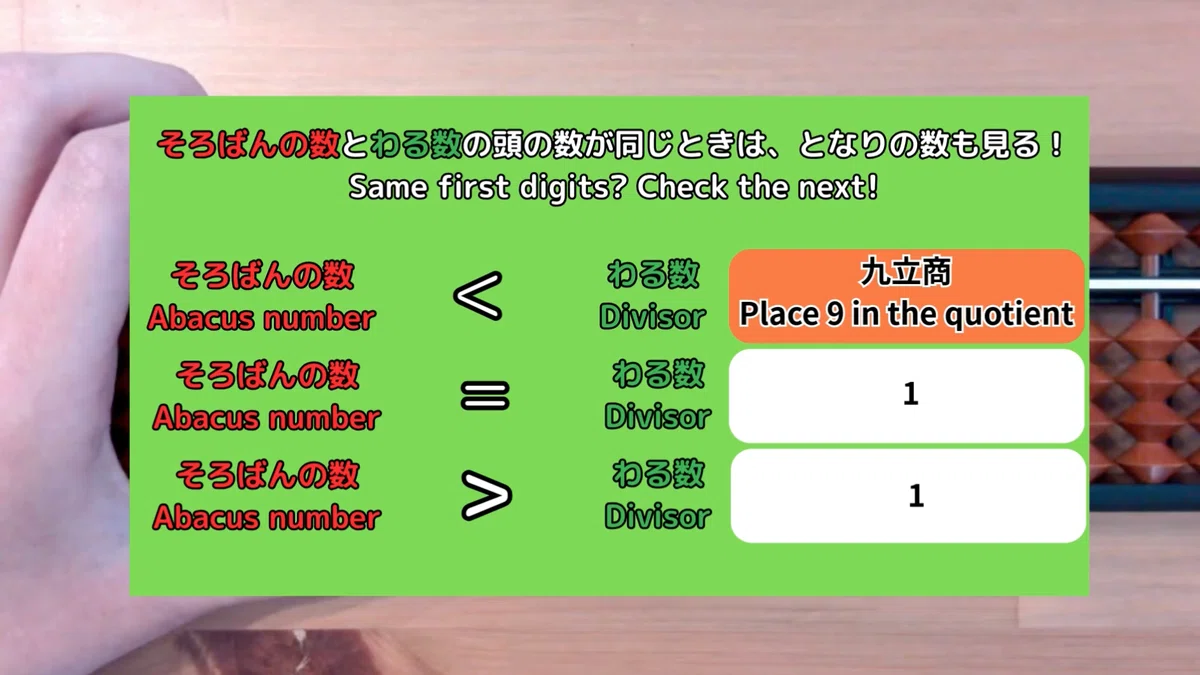
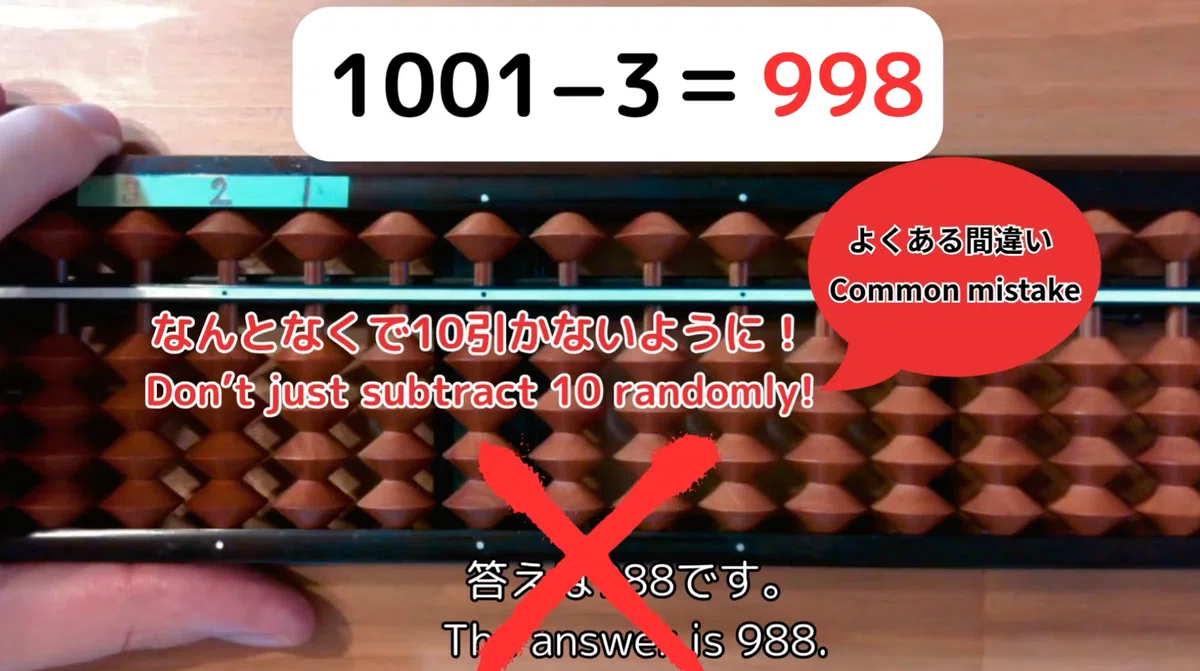
Glancing to the side, I see my cat fast asleep, looking utterly wiped out.
I’ve only shared a tiny excerpt from the first half of the journey, but it seems the sheer volume of hidden traps has completely overloaded his brain capacity.

And honestly, he has a very valid point!
But the truth is, the path of the abacus is riddled with these traps.
Let’s shake it off and dive into the second half of these relentless "stumbling blocks."
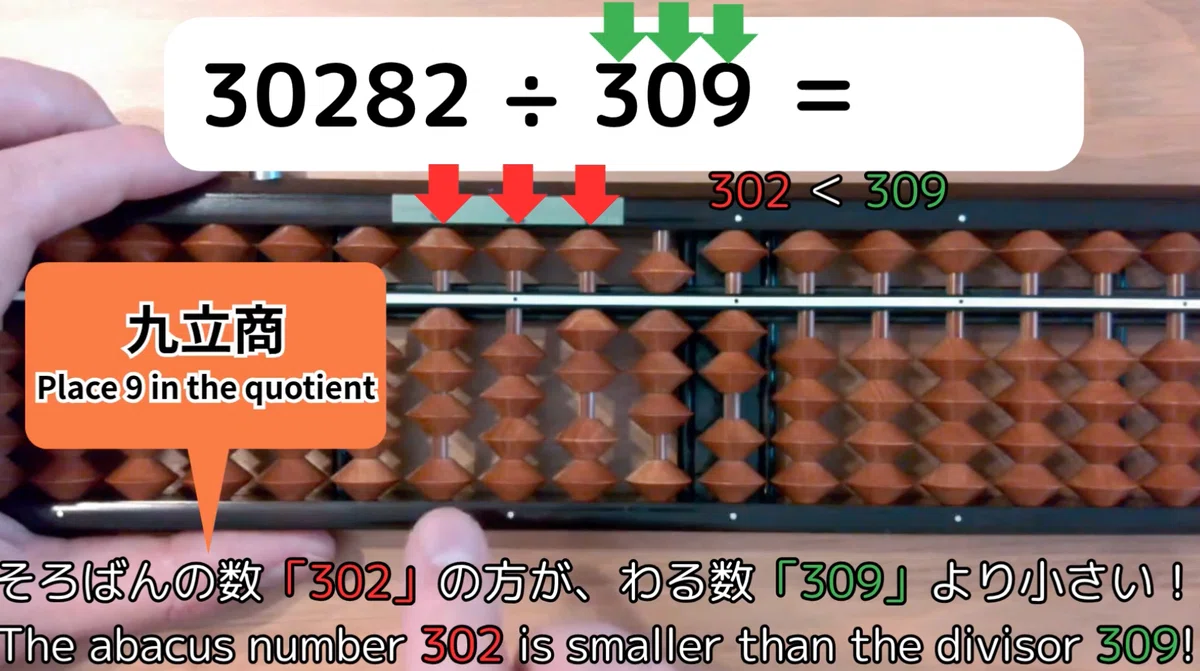
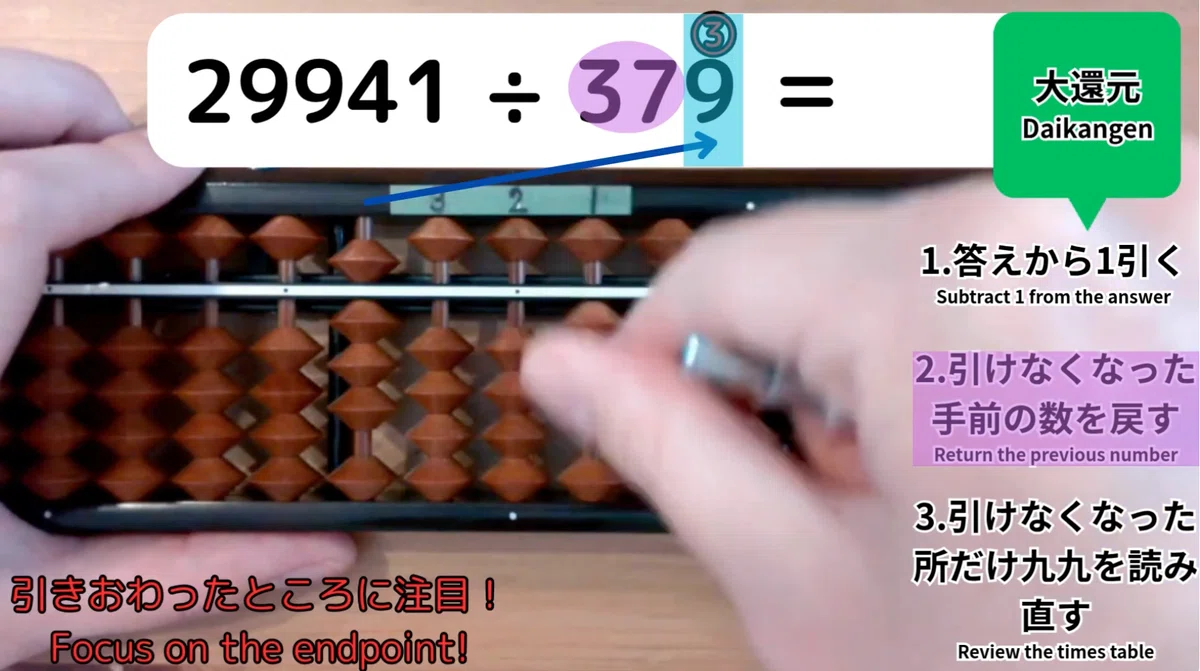
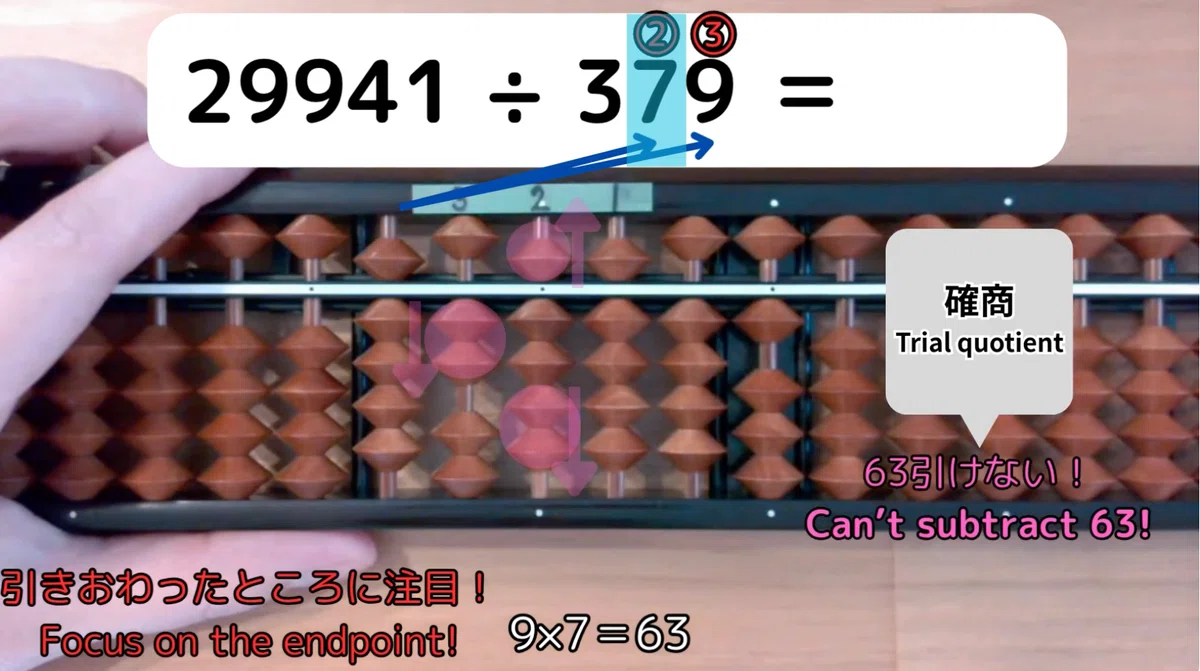
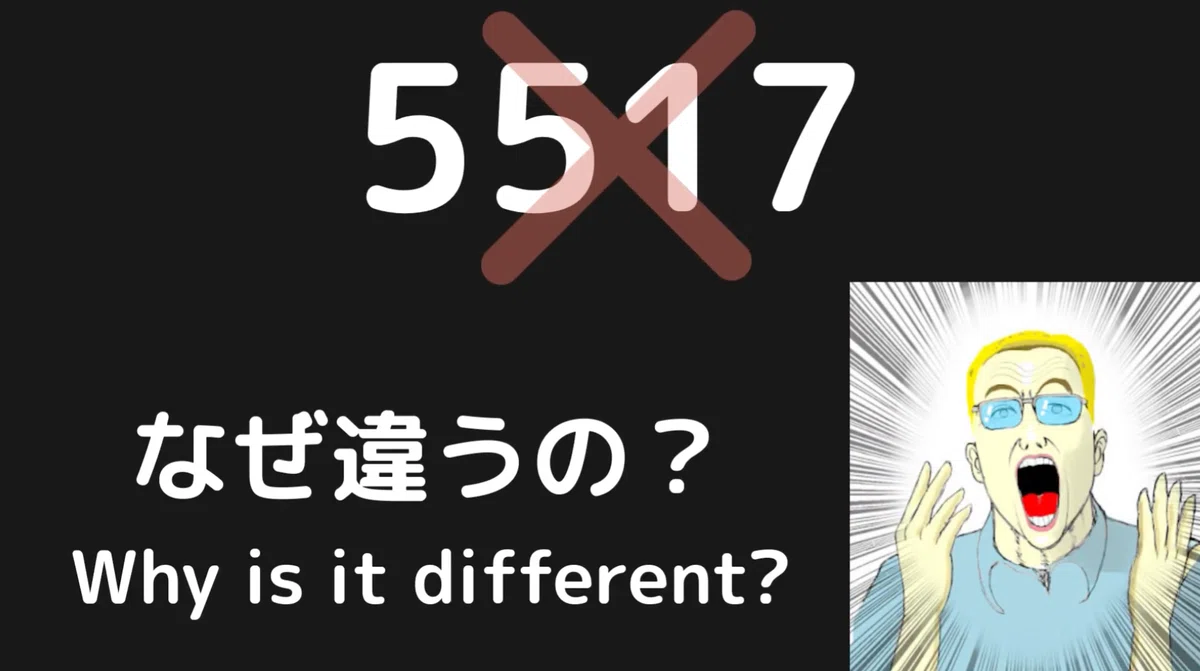

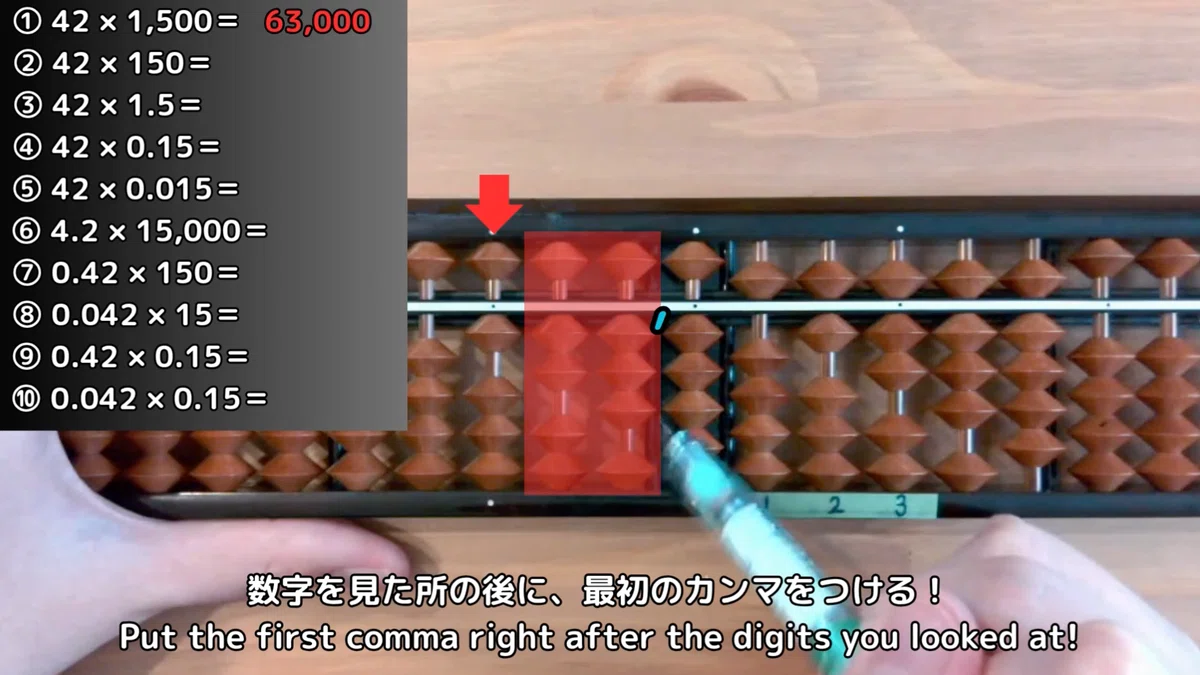
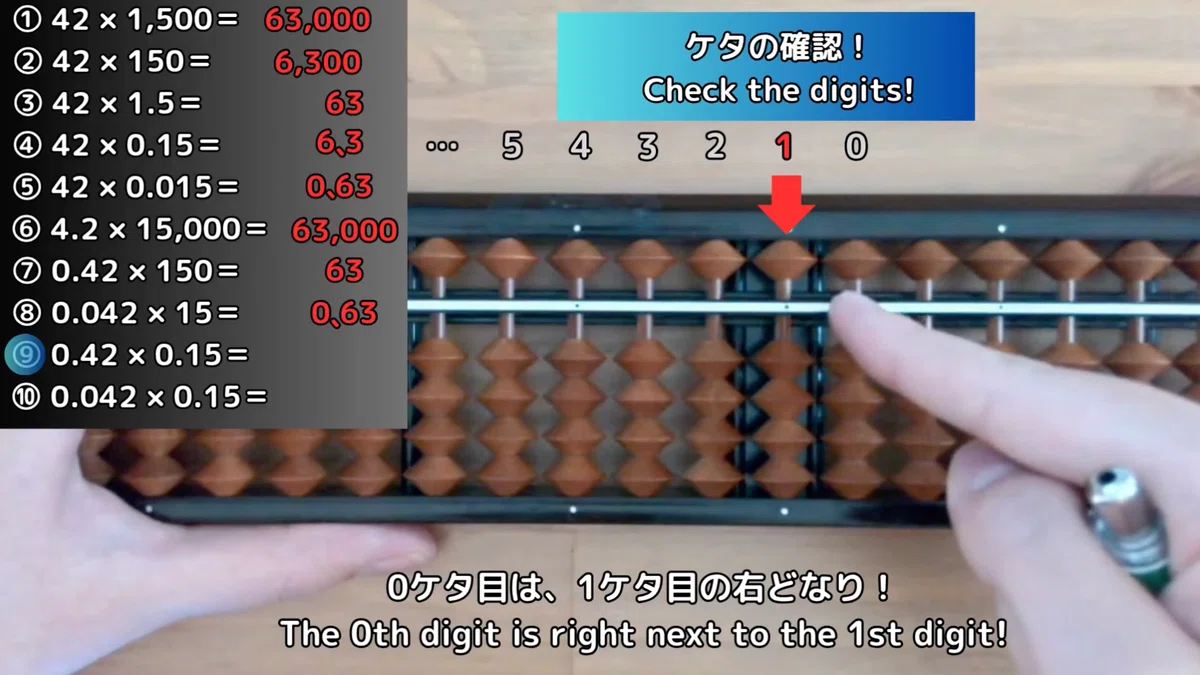
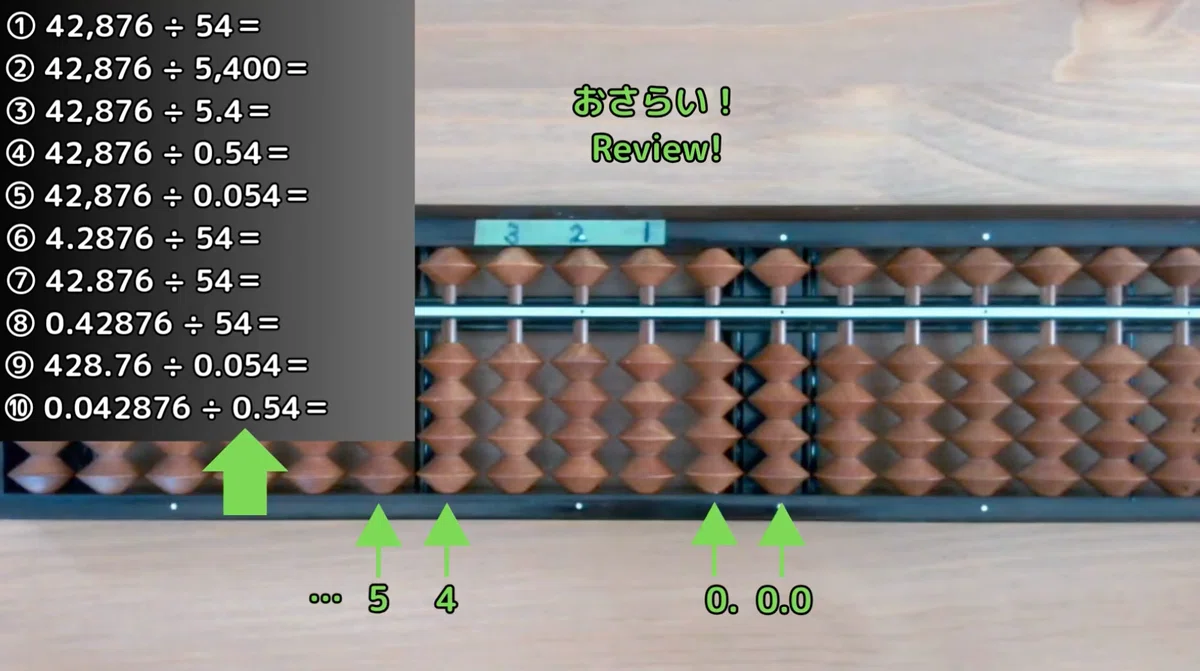
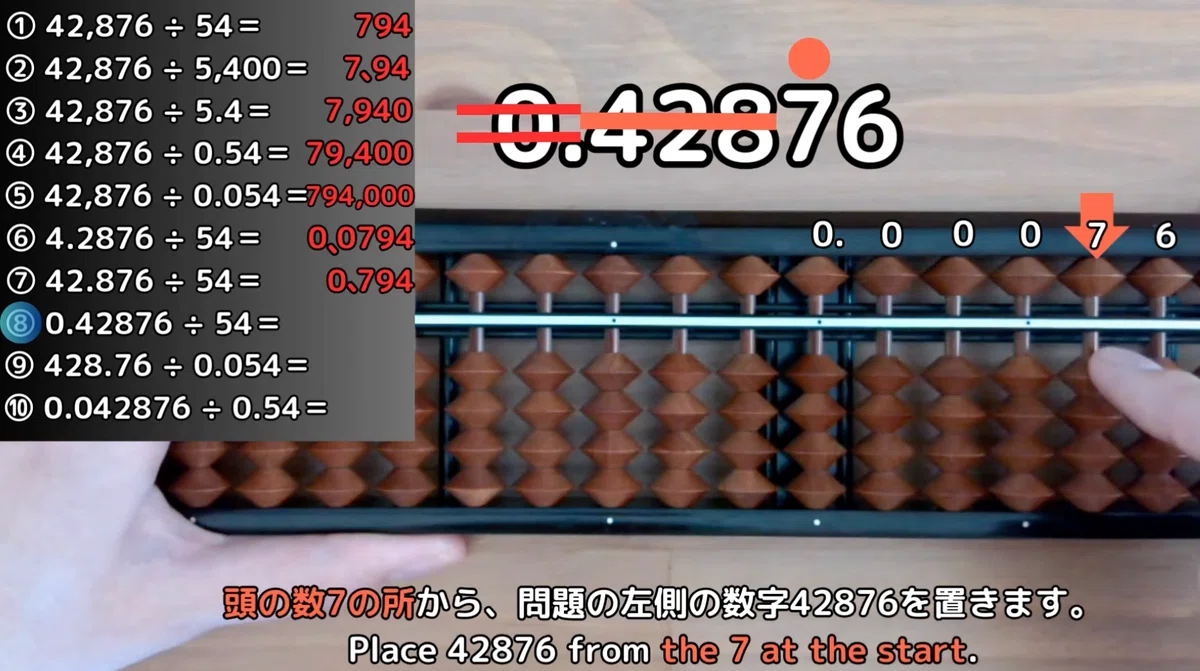
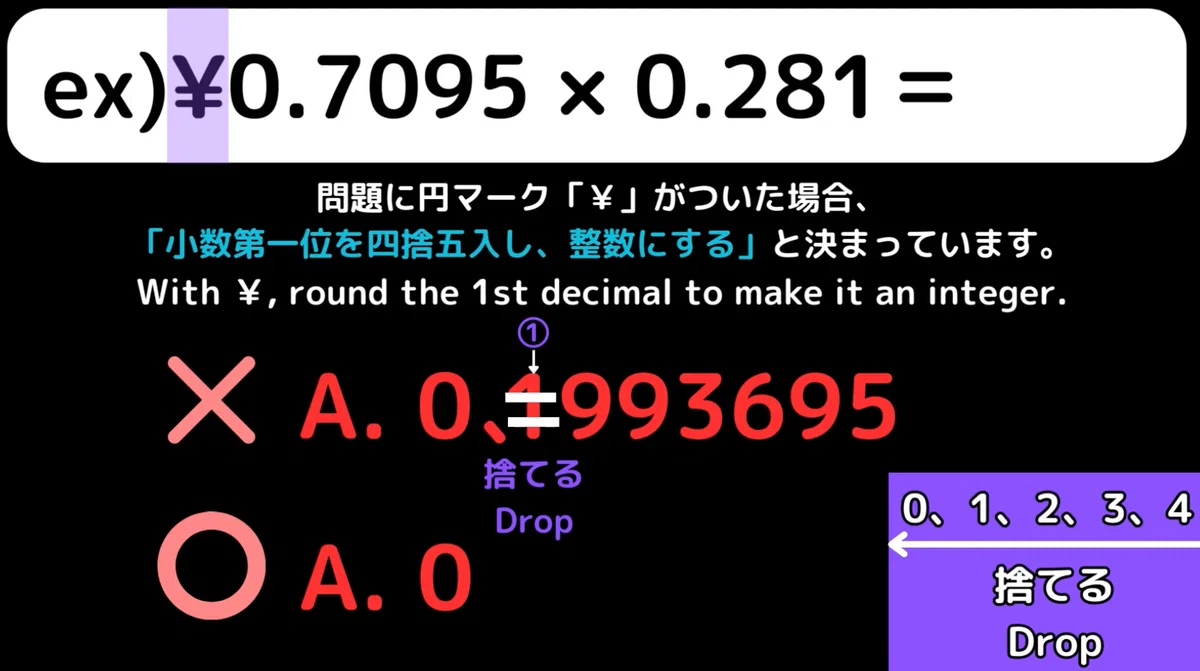
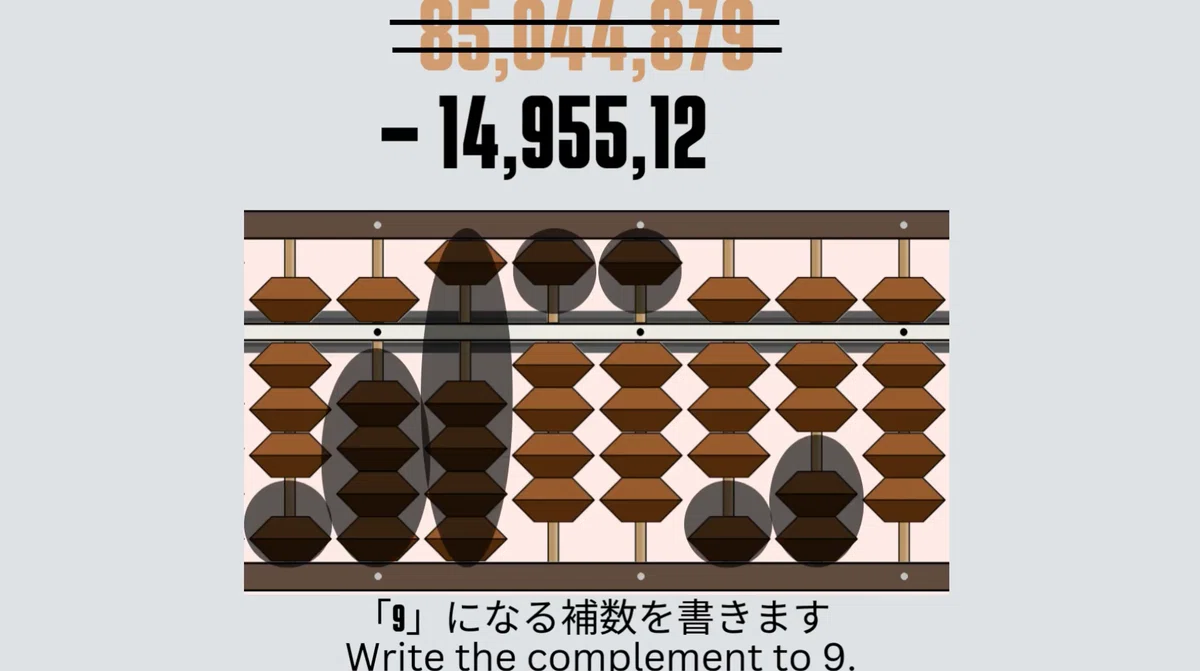
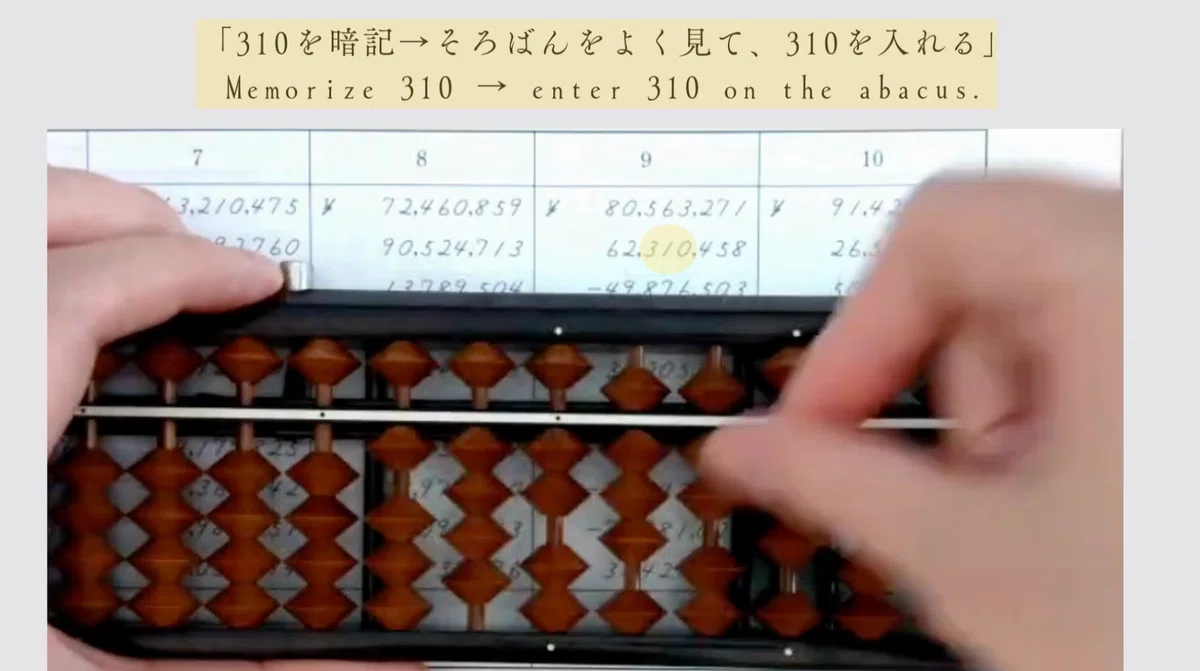
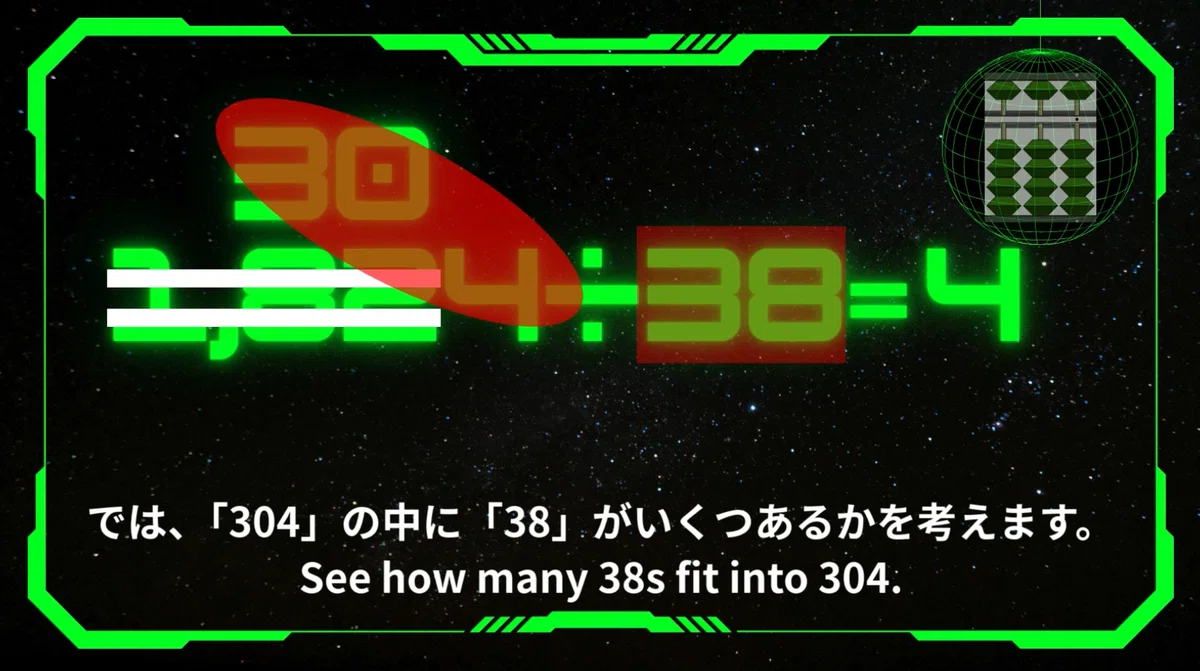
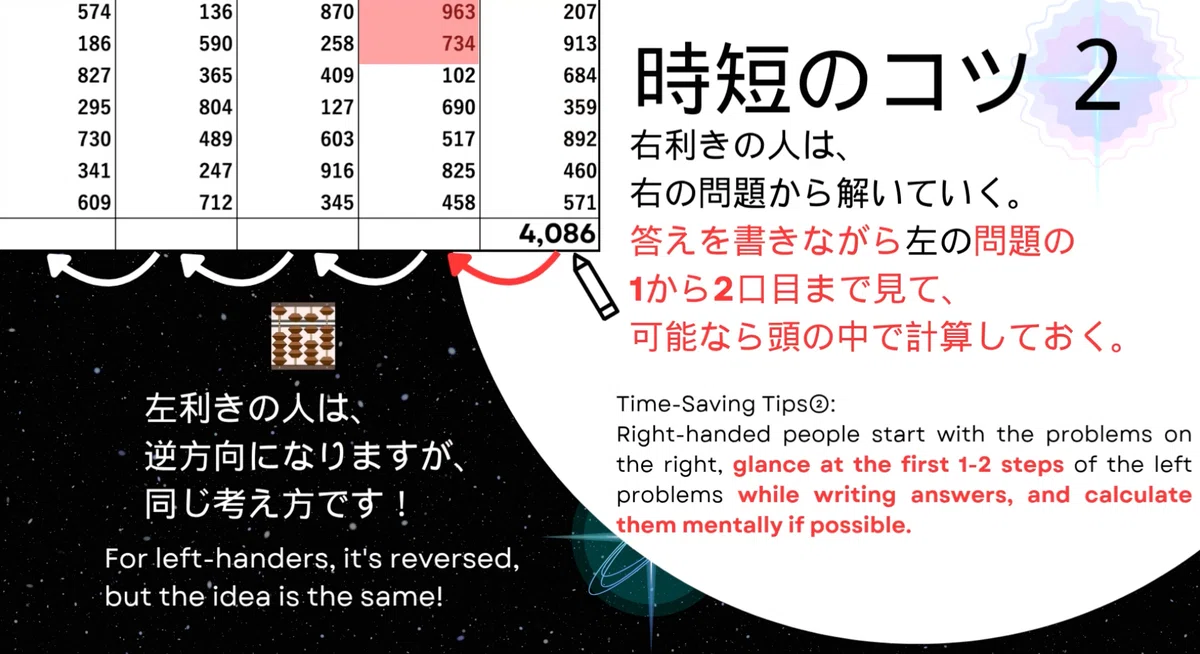
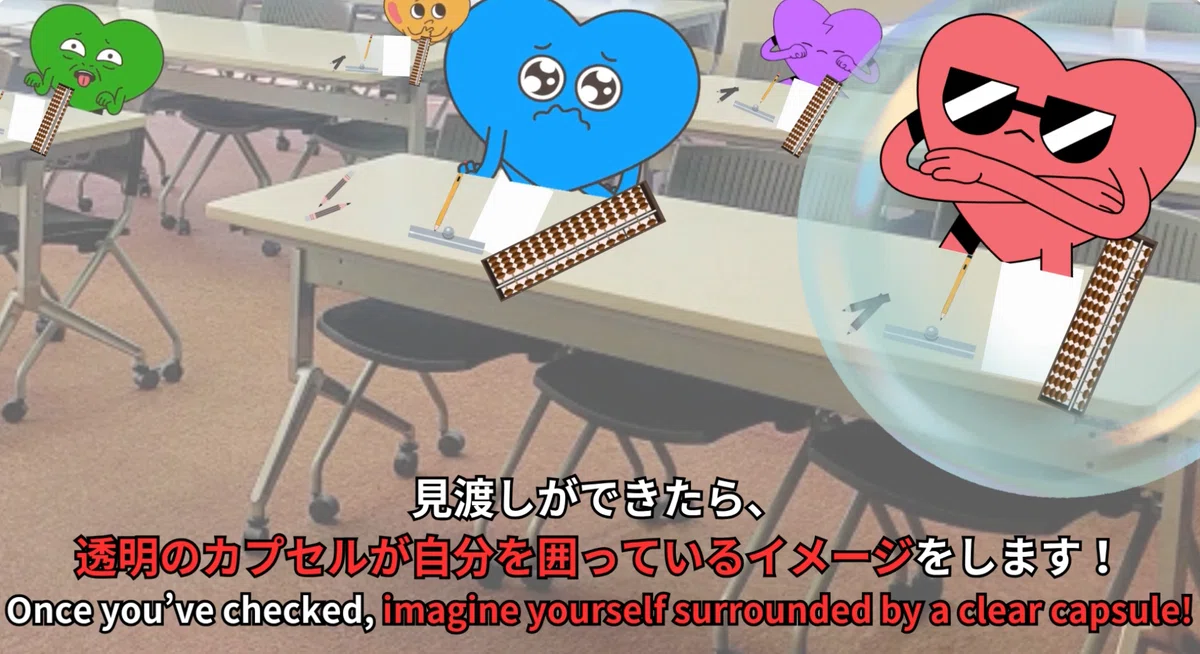
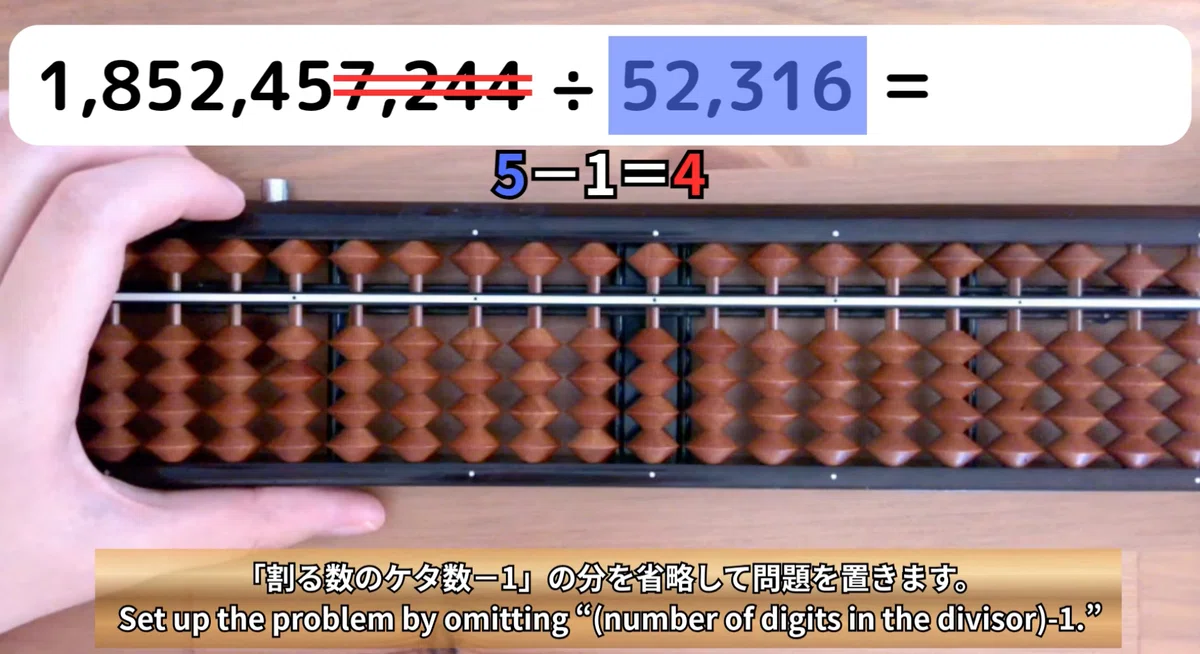
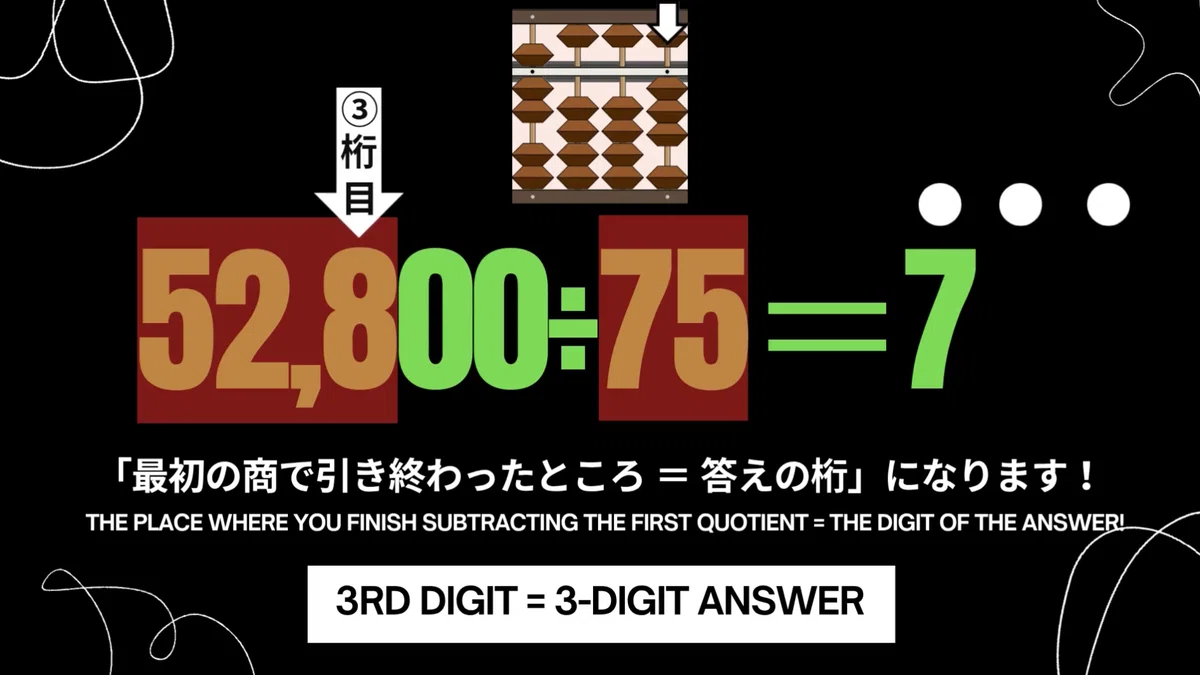
While I’ve only laid out a small selection of the common stumbling blocks here, the traditional path of the abacus is full of traps that go far beyond what anyone could ever imagine.
How can we ensure that learners navigate this perilous route without getting lost, all while keeping a smile on their faces until the very end?
I spent an entire year pouring my heart and soul into figuring out this exact "sequence of clarity."
While I set out to teach the abacus, I realized that I was also creating a "method for not giving up."
Among the 100 videos, not all of them are flashy or exciting.
To be honest, some are quite plain and repetitive.
But I couldn't skip those parts.
Because for a beginner, what matters more than a flashy success story is having a solid foothold—the reassurance that "it’s okay to stop and struggle here."
People don't quit just because something is difficult.
They quit because they feel lonely and discouraged when they don't understand something for too long.
That’s why I was obsessively particular about the order of my explanations.
Even after creating the initial plan, if I realized halfway through that there was a better way, I would change it.
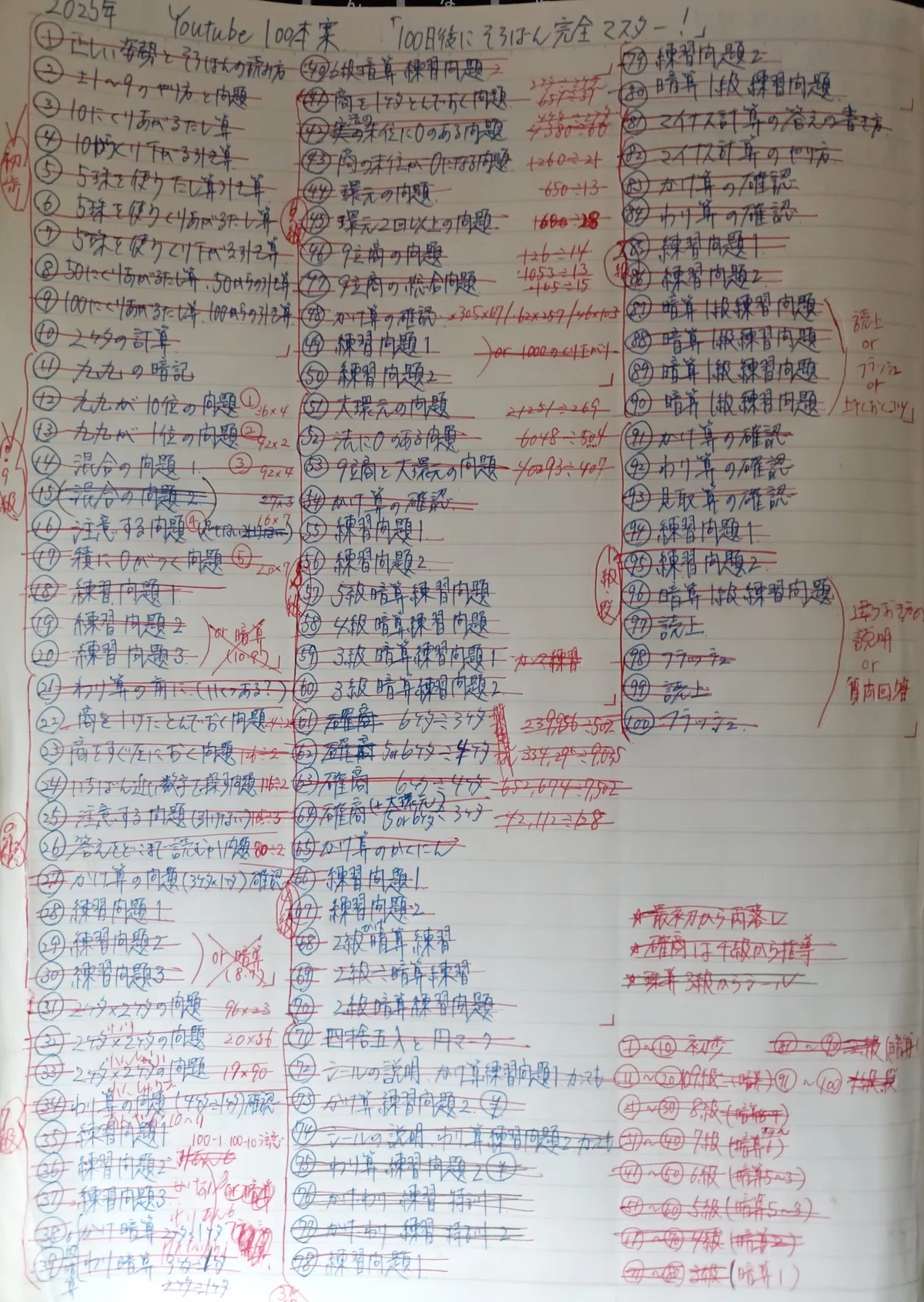
I crossed them out one by one as they were completed.
Instead of focusing on stories of "flashy geniuses," I focused on building a curriculum designed for ordinary people to truly succeed, layer by layer.
It wasn’t that I never felt like giving up. I just didn't stop.
Of course, I wasn't burning with inspiration every single day.
There were days when I poured my heart into a video, only for it to receive surprisingly little response.
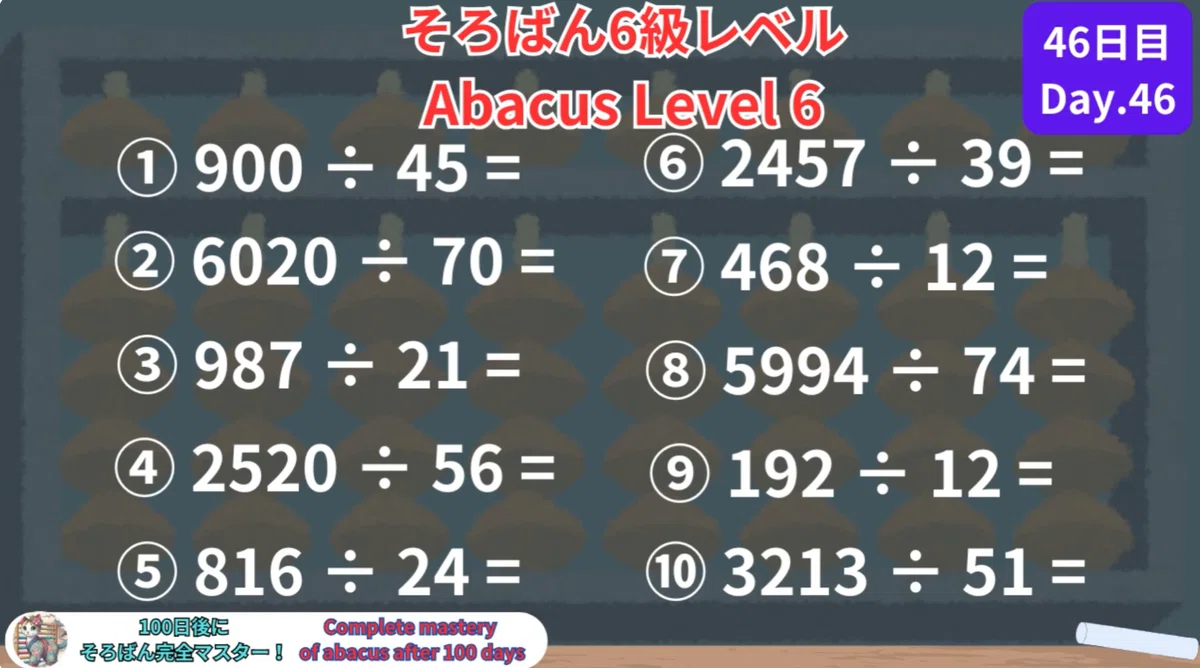
A prime example of where production time and view count were inversely proportional.
"Is this really reaching anyone?"
"Am I making this too detailed?"
"Should I make it rougher, lighter, flashier—more 'modern'?"
I would be lying if I said those thoughts never crossed my mind.
But in those moments, there were comments that reached me.
たくさんのそろばんYouTubeを見て来ましたが、網羅性や、その他の観点から、このチャンネルがNo.1です!間違いなく1番です。
いつもありがとうございます。特に網羅性が抜群です。
(English translation below)
"I’ve watched many abacus YouTube channels, but in terms of comprehensiveness and other factors, this channel is No. 1! It’s definitely the best." "Thank you as always. The comprehensiveness, in particular, is outstanding."
When I read those comments, I found myself sitting up a little straighter in front of my screen.
Clarity isn’t something you claim for yourself.
But if someone who has seen it all says so, then I can believe there was a meaning to all the meticulous detail I've built up.
Beyond mere view counts, those words sustained what I was doing.
Every time my conviction wavered, I put the student first.
The abacus doesn't make you fast overnight.
You repeat the steps one by one, and then one day, you suddenly realize your hands aren't stopping like they used to.
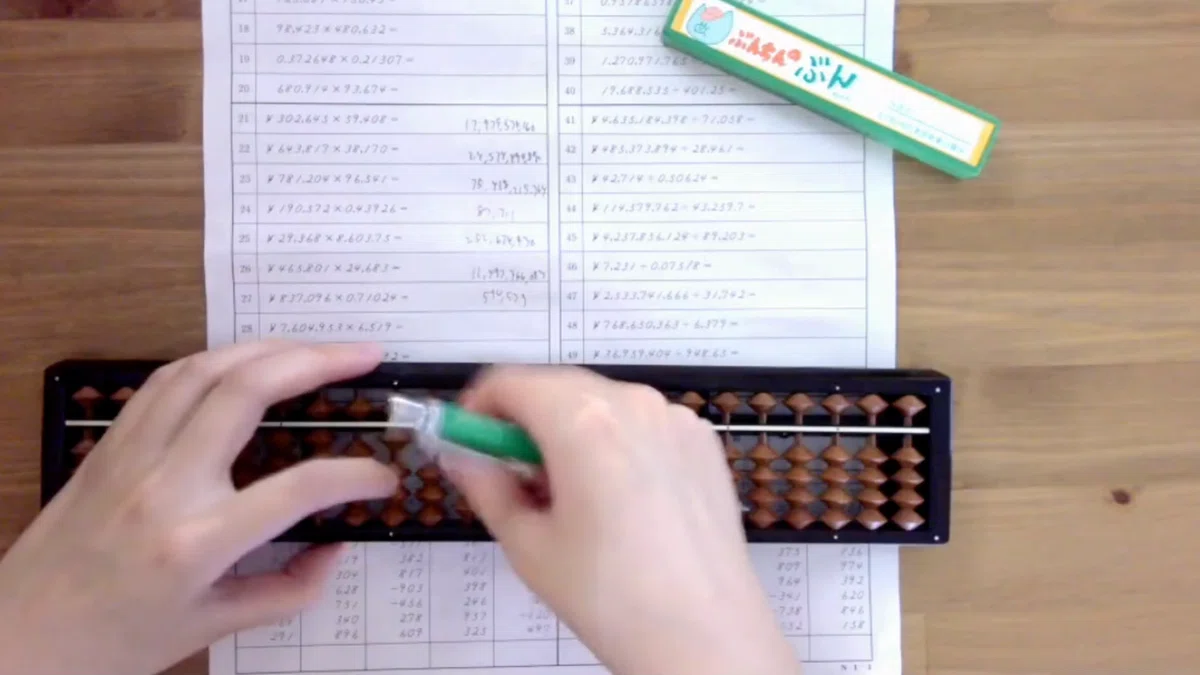
This is from Video 93.
I realized that creating the videos was the same.
The important thing is not to lose your axis halfway through.
So, I didn't push through by screaming and straining.
Instead, I continued in a way that was more understated, more persistent.
Throughout the year 2025, I quietly and—perhaps—obsessively refused to stop production on those 100 videos.
That was all.
And then, comments arrived from across the ocean.
One day, I received comments from people overseas.
I just wanted to stop by and say thank you. Today, while doing some multiplication sprints on paper, I noticed something amazing. I decided to time myself and, for the first time, I managed to complete 10 two-digit multiplications mentally in 57 seconds: 26×25, 36×78, 96×97, 86×84, 89×97, 96×64, 16×69, 69×63, 78×25, and 67×82. I got 100% accuracy, not a single mistake! I know it might sound hard to believe since I was just questioning my speed recently, but I’m finally starting to have those moments where I don’t even feel the calculation, just the movement. It’s not consistent yet, but when I’m relaxed, it just flows. I’m honestly so happy; this is a huge milestone for me, and I wanted to share it because your lessons were fundamental to this progress.
By the way, your work is incredible. It was the only channel I found that covered the traditional method completely and, on top of that, in sequence. Thank you very much!
This information was extremely useful to me!I would like to emphasize that your content is indispensable on YouTube. I am sure that you are helping, have helped, and will continue to help many others as well, even those from other countries. So much so that your video reached a Brazilian, haha.I will continue watching your videos for my studies. Thank you for your time and attention!
When I read them, it’s no exaggeration to say that I felt as if time had stood still.
People I’ve never met.
People I’ve never spoken to.
People whose homes and languages are different from my own.
Yet, facing the same abacus, they arrived at that same moment of "I did it!"
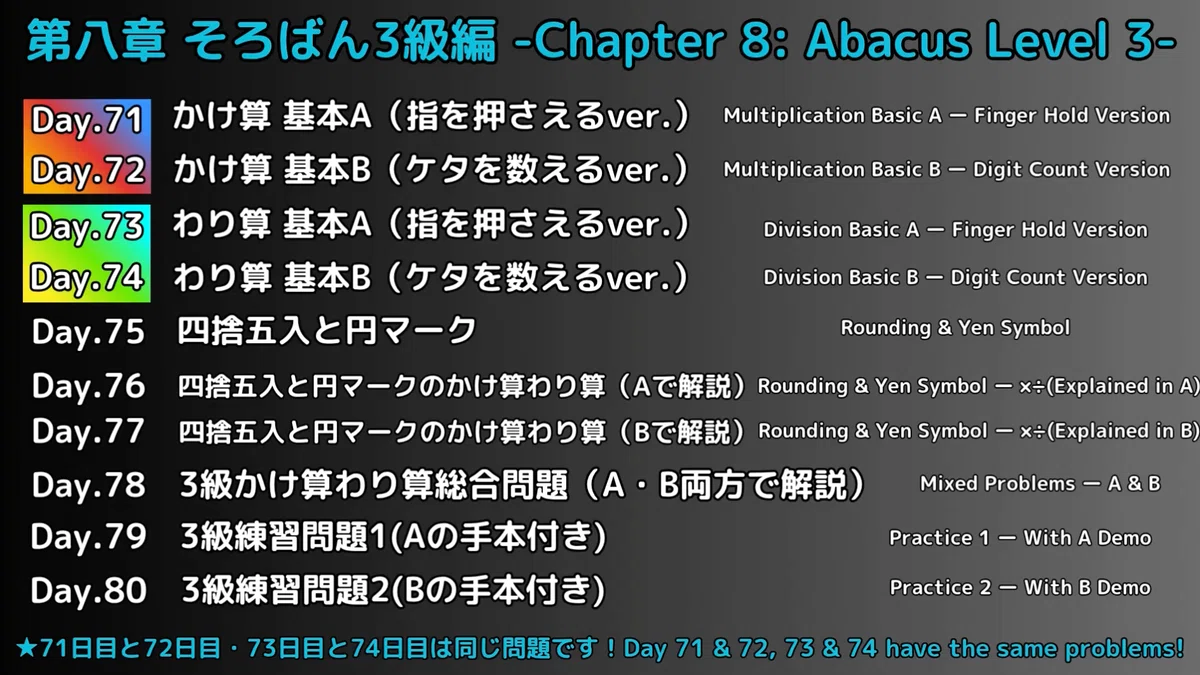
↓ Video 71 ↓
Perhaps just making 100 videos would have been enough.
But I couldn’t stop there; I included both Japanese and English subtitles in every single one of them.
I’ve always noticed a striking lack of structured paths for learning the Japanese abacus in other languages.
For me, adding subtitles wasn't about being "helpful"; it was a foundational part of the design for these 100 videos.
Only after doing that did I finally feel, "Now, I can pass this on."
I didn't want to leave anyone behind.
Every time I released a video, I thought to myself, "The next one will surely be easier."
But every single time, it was just as tedious, and every single time, I simply couldn't bring myself to cut corners.
However, when I started receiving reactions from people in Brazil, Spain, Vietnam, and many other countries—saying things like "The English subtitles were incredibly helpful" or "I can do it now!"—I realized then that all that effort was never truly "effort" at all.
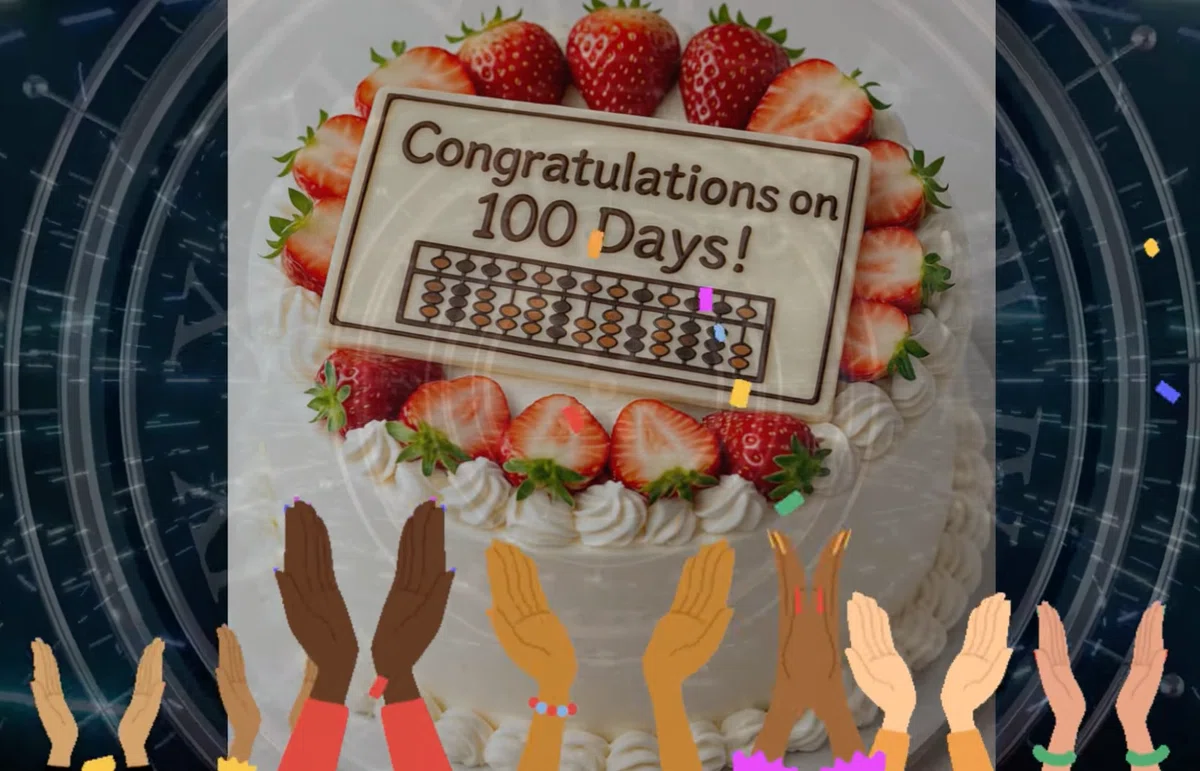
(From Video 100)
I was amazed that a tool as small as the abacus could cross borders so easily.
Why does it touch my heart so deeply to think of someone, in a room somewhere, opening my video and flicking those beads?
Perhaps, throughout the process of making these 100 videos, that was the moment I had been waiting to meet all along.
What I finally realized after reaching the 100th video
I named this project "Abacus Japan Master in 100 Days"
But now, having finished all 100 videos, the meaning of "Mastery" feels a little different to me.
What truly matters isn’t being faster than everyone else, nor is it performing everything perfectly.
It’s about being able to do today what you couldn’t do yesterday, and finding your own sense of progress.
And, above all, it’s about finding a little bit of joy in the process of learning.
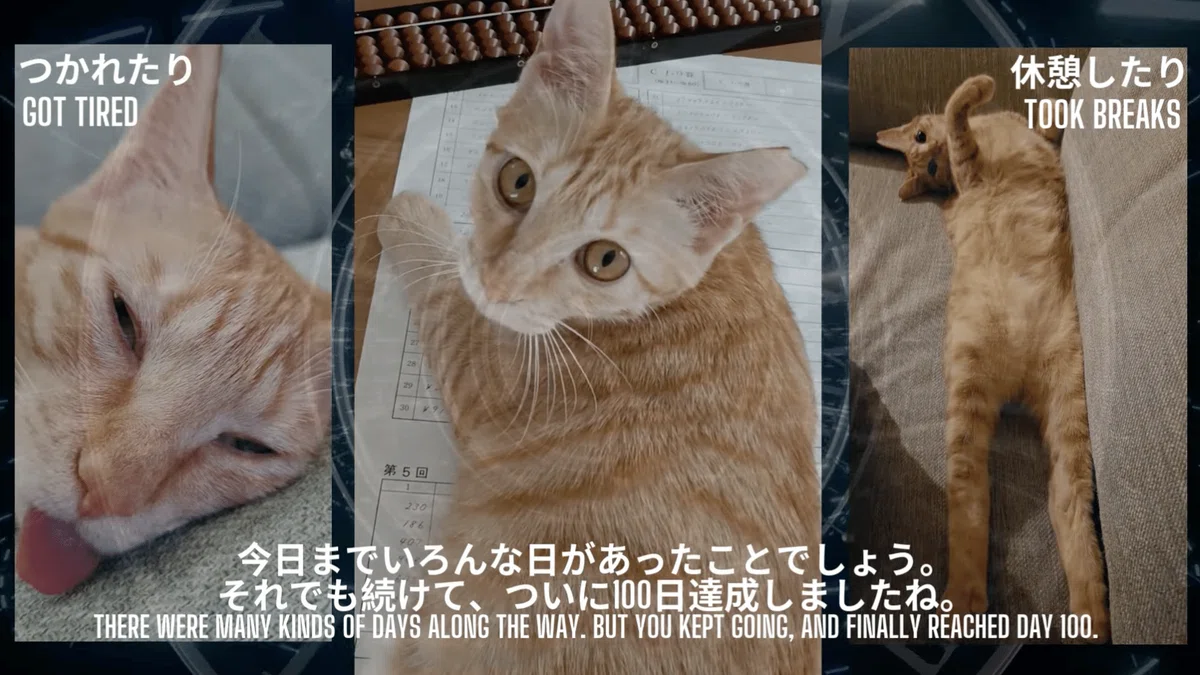
A little guest appearance in the video. (From Video 100)
Improvement takes time.
There will be days when things don't go well.
There might even be days when you feel like you're just not cut out for it.
Yet, there is a view that can only be seen by those who keep going.
The abacus quietly teaches us that lesson.
After making 100 videos, what I feel most strongly is this: "Becoming capable" is not about winning against someone else; it’s about being able to recognize your own growth.
That is why these 100 videos are more than just a list of lessons.
They are a record of the time it took for someone who didn't understand to finally "get it."
A record of the moment someone who felt lost decided to flick the beads once more.
It is a chronicle of those small, steady steps.
To those who are just beginning
If there is anyone out there right now feeling that the abacus is just too difficult, there is something I want to tell you.
Almost no one can do it effortlessly from the very start.
Everyone learns by getting confused about where to place the beads, by having their fingers freeze up, and by losing track of where to set the quotient.
So, it’s okay if you don’t understand yet.
It’s okay to stop for a moment.
What matters, I believe, is not letting that be the end.
To serve as a guide for that journey, I created the 100-video series, "Abacus Japan Master in 100 Days"
If even one of those videos can inspire someone to think, "Let me try just a little bit more," then this entire challenge was worth it.
The day I read those comments from overseas, I felt as if the world had become a little smaller.
But in truth, it’s not that the world got smaller—it’s that the feelings of those who learn have likely been the same everywhere from the very beginning.
The desire to understand.
The desire to become capable.
The desire to surpass who you were yesterday.
Somewhere beyond the screen, someone is flicking the beads again today.
Even my cat is flicking the beads at home.
Maybe they are reading the Japanese subtitles, or maybe they are following the English ones.
I will continue to create new ways for people around the world to turn "I don't know" into "I get it."
Because even after 100 videos, I feel like I’m not finished yet.
Next Stage, In Progress…
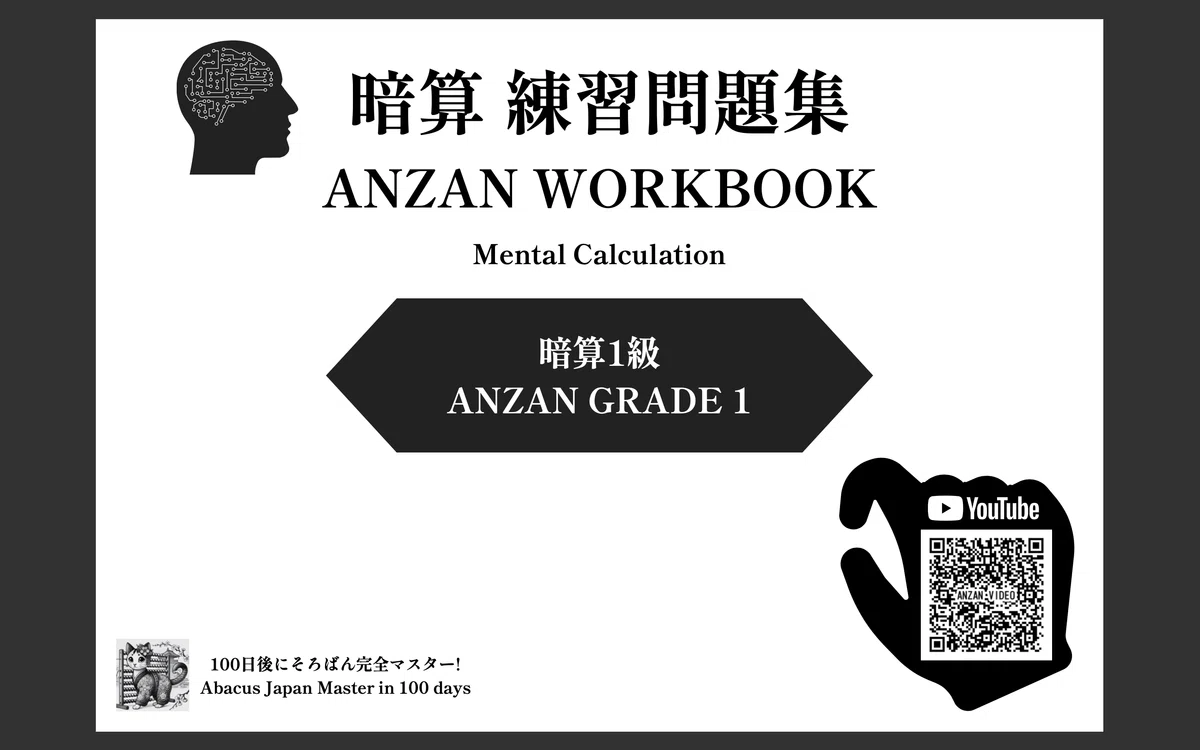
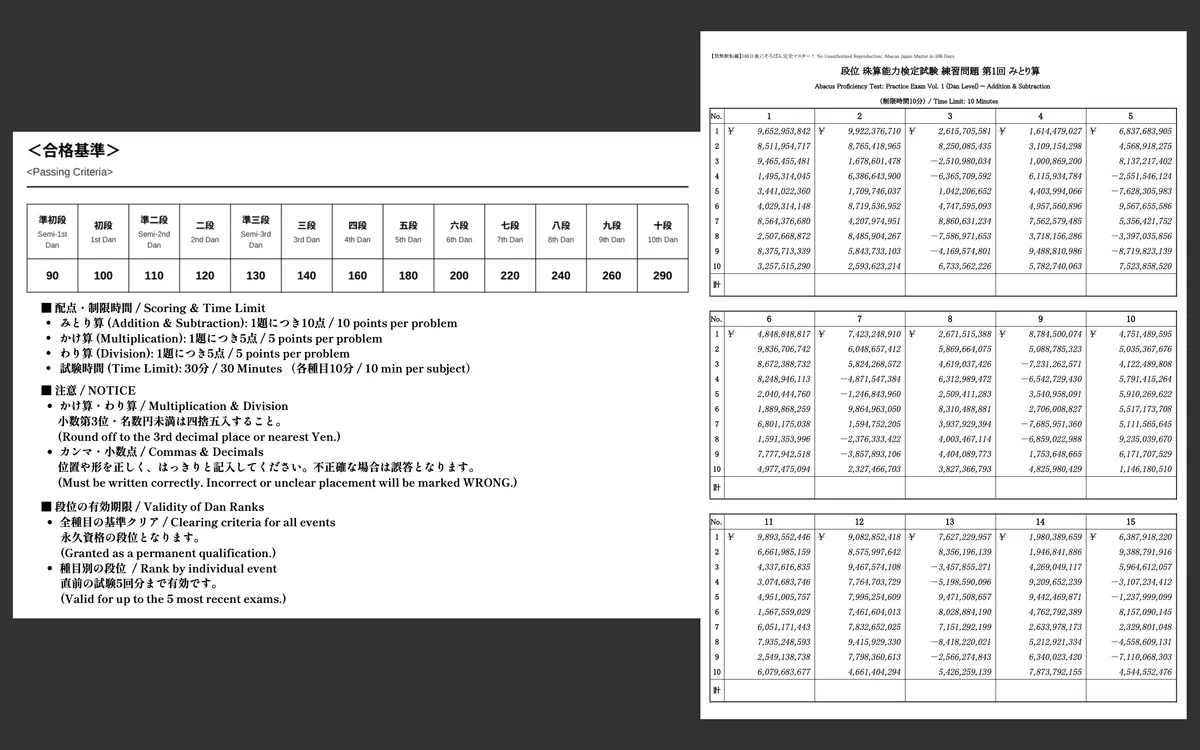
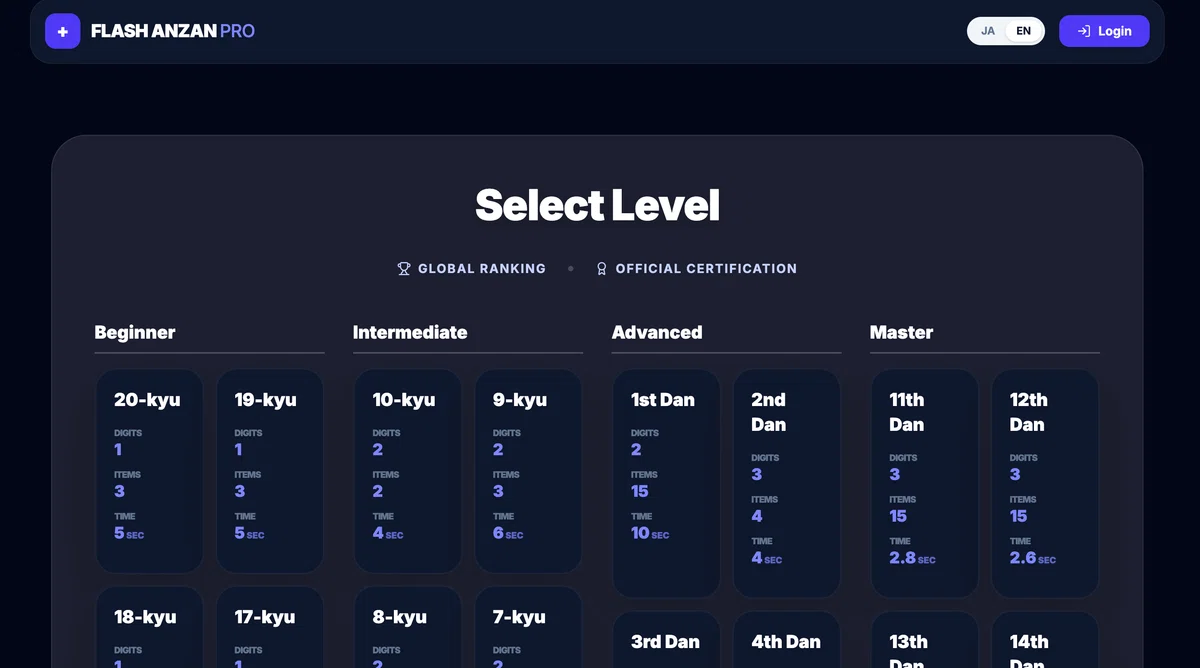
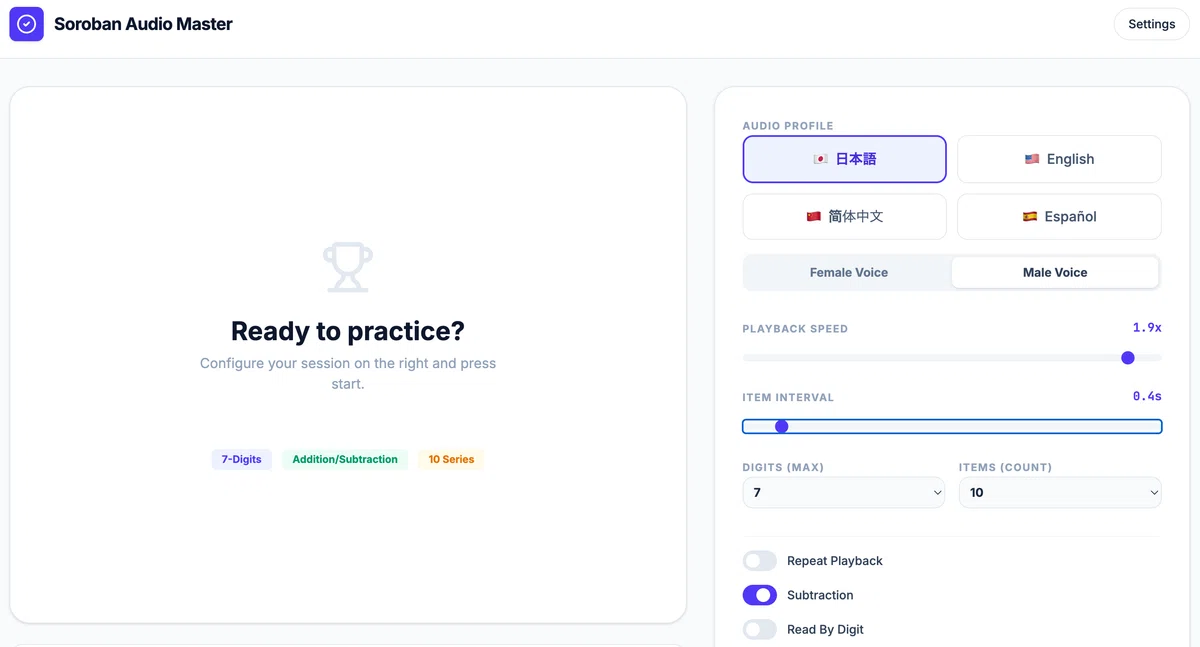
To reach even more learners, I am currently developing multilingual materials and apps.
Coming soon!

"Thanks for reading to the end, meow!"
To reduce the number of people who get left behind, I have continued to create the "right order to understand."
In fact, I received this comment on YouTube. I would like to quote part of it.
先生!小学3年生の娘が、4級に合格出来ました!本当にありがとうございました。父親としては、AIの時代になっても何か1つでもできれば自信を持って生きれると思ってそろばんを応援してます。
(English translation below)
"Sensei! My third-grade daughter passed Grade 4! Thank you so much. As her father, I believe that even in the age of AI, being able to do even one thing well gives you the confidence to live your life, and that's why I've been supporting her in learning the abacus."
It seems she had a period where she kept attending the abacus classroom but couldn't pass the exam. Even so, she kept watching my video series over and over, and never gave up on the abacus.
The father who shared the wonderful news of his daughter's success also wrote this at the end of his message.
上達出来るようなら僕もそろばん始めたいぐらいです。
(English translation below)
"If it's possible to improve, I'd almost want to start learning the abacus myself."
It's never too late to learn. No matter your age, no matter where you start, you can always begin again.
May this 100-video series be the first step for learners all around the world.
Soroban & Mental Calculation Workbook
I have developed and released a "Soroban & Mental Calculation Workbook" that fully integrates with my 100-video YouTube series. This article is currently entered in the "Note Creative Grand Prize 2026: Business Category."
👇 Click here to see my entry for the Business Category:
Summary by Grade
Here is the list of our Note magazines.
I’ve summarized the YouTube lessons using text and images.
Please use them for your review and to check your progress.
日本語版
Click here for the Japanese version.
