
【youtu.be】Google CEOが語るAIエージェント時代と責任ある開発

AIがメール整理、予定調整、意思決定まで支える時代へ。Google CEOサンダー・ピチャイの発言から、便利さの裏にある不安、規制、教育、働き方の変化を読み解く。20〜30代こそ知りたいAI共存の現在地。
Owner:TIME
📰 タイトル:Sundar Pichai Reveals What AI Will Do Next
日時:2026/05/01
“https://youtu.be/bxDObdH2YSc”
🌐 Detailed English Summary
In this TIME interview, Google CEO Sundar Pichai explains how artificial intelligence is moving from a novelty into a practical layer of everyday life. He describes using Gemini before meetings to understand what may be on another executive’s mind, arguing that AI can improve human connection by surfacing relevant context. Pichai frames AI as the most powerful way for Google to advance its long-standing mission of organizing the world’s information and making it useful.
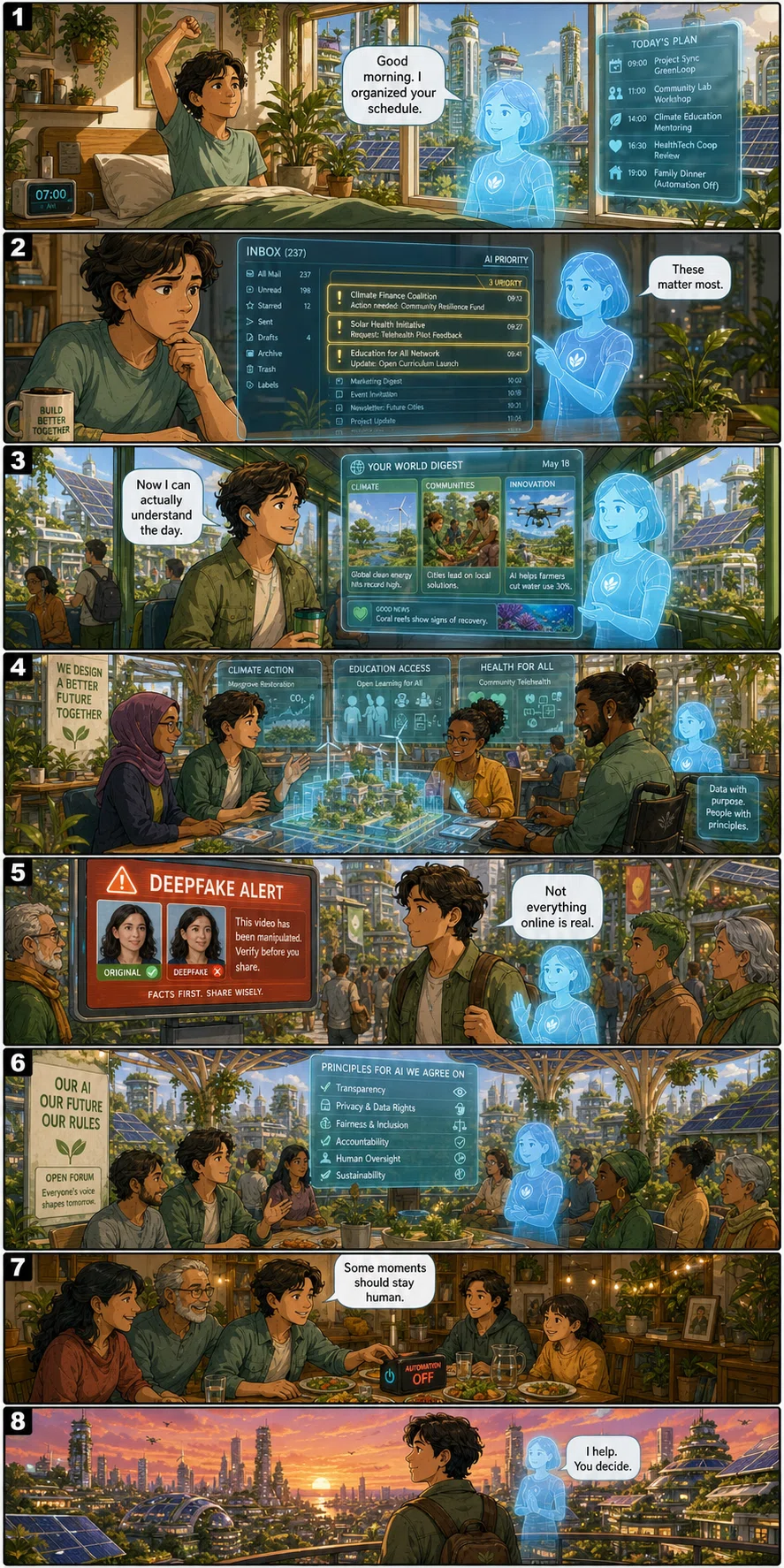
A major theme is the rise of personalized AI agents. Pichai says people already juggle emails, calendars, family responsibilities, dinners, appointments, and complex work tasks. AI agents could reduce that burden by identifying important messages, drafting replies, monitoring topics, summarizing information, and supporting larger workflows. He suggests that making life 10 to 40 percent easier would free people to focus on what matters.
The interview also addresses public anxiety. Pichai acknowledges concerns about Big Tech, deepfakes, cybersecurity, energy demand, education, workforce reskilling, and governance. He argues that the AI ecosystem is dynamic, with large companies, new startups, governments, and open-source communities all playing roles. Google’s Gemma 4 release is presented as part of that open-source direction. Ultimately, Pichai says AI will require new frameworks, governance, and guardrails, but he expresses confidence that society can responsibly guide the technology’s next phase.
🌐 日本語詳細要約
この動画では、Google CEOのサンダー・ピチャイが、AIが今後どのように人々の意思決定、働き方、日常生活を変えていくのかを語っている。ピチャイは、Geminiを使って会議前に相手の関心事や課題を把握する例を挙げ、AIは人間同士のつながりを弱めるのではなく、むしろ相手を理解するための補助線になり得ると説明する。Googleの使命である「世界中の情報を整理し、誰もが使える形にする」ことに対して、AIは最も大きな推進力になるという位置づけだ。
特に重要なのは、AIエージェントの普及である。メールの優先順位づけ、返信案の作成、予定調整、夕食やイベントの準備、子どもの予定管理、関心テーマの常時モニタリングと要約など、AIが個人の生活や仕事の細かなタスクを代行する未来が語られている。ピチャイは、生活を10〜40%でも楽にできれば、人々は本当に大切なことに時間を使えるようになると考えている。
一方で、動画はAIへの不安や批判にも触れている。米国ではAIへの支持が低いという指摘に対し、ピチャイは、エネルギー需要、サイバーセキュリティ、ディープフェイク、教育、労働者のリスキリングといった課題に企業として向き合う必要があると述べる。また、AIは一部の巨大企業だけで完結する技術ではなく、政府、規制当局、スタートアップ、オープンソースコミュニティを含めた社会全体で責任ある枠組みを作るべきだという考えを示している。便利さと不安が同時に広がるなかで、AIをどう使い、どう管理するかが次の大きな論点になっている。
📚 CEFR B1以上の重要語彙12語
reshape:作り変える、再形成する
AI may reshape the way people make daily decisions.decision-making:意思決定
Better information can improve decision-making at work.assistant:助手、支援者
An AI assistant can help organize emails and schedules.responsibly:責任を持って
Technology companies must develop AI responsibly.productivity:生産性
AI tools can increase productivity by saving time.workflow:作業手順、仕事の流れ
Agents can manage a complex workflow from start to finish.personalized:個人に合わせた
Personalized AI agents may understand each user’s needs.criticism:批判
The company responded to criticism about AI safety.regulator:規制当局
Regulators are discussing new rules for artificial intelligence.cybersecurity:サイバーセキュリティ
Cybersecurity risks are increasing as AI becomes more powerful.guardrail:安全策、歯止め
AI systems need guardrails to prevent harmful use.governance:統治、管理体制
Strong governance is necessary for trusted AI development.
📺 外部参照情報
YouTube関連動画
TIME “Sundar Pichai Reveals What AI Will Do Next”
Reddit(USA)関連トピック
Reddit r/technews “Google CEO Sundar Pichai’s plan to make Gemini…”
🗺️ 地名・人名・キーワード調査
地名 1:アメリカ
動画では、米国におけるAIへの評価や不安が話題になる。米国はGoogle、OpenAI、Anthropicなど主要AI企業が集中する国であり、AI産業の成長と同時に、規制、雇用、著作権、プライバシー、軍事利用をめぐる議論も活発である。
地名 2:マウンテンビュー、カリフォルニア州
動画内では「Google headquarters」と表現されている。Google公式の拠点情報では、Google Mountain View - Googleplex はカリフォルニア州マウンテンビューの1600 Amphitheatre Parkwayにある。シリコンバレー文化を象徴する地域で、テック企業、大学、投資家、研究者が密接につながる。
人物名 1:Sundar Pichai
GoogleおよびAlphabetのCEO。2004年にGoogleへ入社し、Chromeなどの主要プロダクトに関わった後、2015年にGoogle CEO、2019年にAlphabet CEOとなった。インド出身の米国ビジネスリーダーとして、AI、検索、クラウド、モバイル事業を率いている。
主要キーワード 1:AI agents
AIエージェントとは、単に質問に答えるだけでなく、予定調整、メール整理、情報収集、要約、ワークフロー管理などを自律的・継続的に支援するAIの形を指す。動画では、個人の生活を楽にする次の大きなAI活用として語られている。
主要キーワード 2:Gemma 4
GoogleはGemma 4を、推論やエージェント的ワークフロー向けに設計されたオープンモデルとして発表している。動画内の「オープンソース」文脈と重なり、AI開発が大企業内だけでなく、開発者コミュニティにも広がっていることを示す。
🌏 日本の現状 / Japan Comparison
English
Japan is taking a promotion-oriented and relatively soft-law approach to AI governance. Japan’s first AI-focused legislation was passed in 2025, emphasizing research, development, utilization, basic principles, and national coordination rather than detailed prohibitions like the EU AI Act. This means Japan is trying to balance innovation, productivity, and risk management. In practice, Japan’s aging society and labor shortages make AI assistants and automation especially relevant for healthcare, public services, education, customer support, manufacturing, and local government operations. The Japanese debate is therefore not only about whether AI is dangerous, but also about how it can support a shrinking workforce while protecting privacy, accuracy, and social trust.
日本語
日本はAIに対して、厳罰中心というよりも、研究開発と利活用を促進しながらリスクに対応する「ソフトロー」寄りの姿勢を取っている。2025年にはAI関連技術の研究開発・活用を促進する法律が成立し、国の基本方針や体制づくりが重視されている。少子高齢化と人手不足が進む日本では、AIエージェントや自動化は、医療、教育、行政、製造業、接客、介護などで重要性を増している。一方で、個人情報、誤情報、説明責任、働き方の変化への不安もあり、便利さと信頼性をどう両立するかが大きな課題になっている。
💭 応用・ディスカッション展開
テーマ1:AI agents and the future of personal productivity
AI agents could become one of the most important productivity tools of the next decade because they move beyond simple chat and into task management. In the interview, Sundar Pichai describes agents that can read an inbox, identify the most important emails, draft replies, monitor a topic, and summarize information in a useful form. This is a major shift because many people do not struggle only with difficult work; they struggle with the constant accumulation of small tasks. Scheduling, responding, searching, remembering, and organizing all consume mental energy.
A strong argument in favor of AI agents is that they may give people back time. If an agent can reduce repetitive work by even 10 or 20 percent, workers, parents, students, and creators may have more space for deep thinking, relationships, and creativity. For young professionals, this could mean less time spent managing digital noise and more time spent building meaningful skills.
However, productivity gains are not automatic. If people depend too heavily on agents, they may lose the ability to judge priorities themselves. There are also privacy risks because personal agents may need access to emails, calendars, documents, and messages. Therefore, the future of AI productivity should not be measured only by speed. It should also be measured by control, transparency, user consent, and the quality of human judgment that remains after automation.
テーマ2:Responsible AI development and public trust
Responsible AI development is becoming just as important as technical performance. In the interview, Pichai acknowledges that people feel both optimism and anxiety about AI. This balance is important because public trust will determine how widely AI tools are accepted. A tool may be powerful, but if users believe it is unsafe, biased, manipulative, or controlled by a few large companies, adoption may slow or become politically contested.
Building trust requires more than corporate promises. Companies need clear guardrails, strong cybersecurity, transparency about limitations, and mechanisms to address harmful outputs. Deepfakes are a good example. AI can create useful images, videos, and voices, but the same technology can also blur the line between truth and fiction. If citizens cannot tell what is real, democratic debate, journalism, and personal reputation may suffer.
Governments also have a role. Regulation should protect citizens without blocking innovation. Too little regulation may allow abuse, while too much regulation may prevent useful applications in medicine, education, accessibility, and public services. The best approach may be flexible governance that changes as the technology evolves.
Ultimately, responsible AI is not only a technical challenge. It is a social contract. Developers, users, educators, regulators, and companies must agree on what kinds of automation are acceptable, what risks require intervention, and how human values remain central.
テーマ3:Big Tech, open source, and the balance of power
One of the strongest concerns in the AI debate is whether Big Tech companies will control the most powerful technology of the future. In the interview, Pichai argues that the AI field is highly dynamic, with large companies, startups, governments, and open-source communities all contributing. This is an important point because control over AI infrastructure could influence information access, business competition, national security, and individual freedom.
Big companies have clear advantages. They possess massive computing resources, global user bases, data infrastructure, and engineering talent. This allows them to build and deploy AI systems at a scale that smaller organizations cannot easily match. At the same time, Big Tech companies are often criticized for their market power, advertising incentives, and influence over public information.
Open-source models can help balance this power. If developers, researchers, and companies can inspect, adapt, and build on open models, innovation becomes more distributed. Google’s Gemma 4, for example, reflects the idea that capable models should not exist only inside closed corporate systems. However, open source also creates risks, because powerful tools can be misused by bad actors.
The real challenge is finding a healthy balance. Closed systems may offer stronger safety controls, while open systems may encourage transparency and competition. A responsible AI ecosystem probably needs both: large-scale investment from major companies and meaningful access for independent researchers, public institutions, and smaller innovators.
🏷️ 記事の背景
English:
AI is shifting from chatbots to agents that manage tasks, raising hopes for productivity and concerns over trust, safety, labor, and governance.
日本語:
AIは対話ツールからタスクを担うエージェントへ進化し、生産性向上への期待と、安全性・雇用・規制への不安が同時に高まっている。
🏷️ ハッシュタグ
#AI #生成AI #グーグル #ジェミニ #サンダーピチャイ #AIエージェント #テクノロジー #未来の働き方 #リスキリング #デジタル社会 #サイバーセキュリティ #ディープフェイク #情報社会 #ビッグテック #オープンソース #生産性向上 #意思決定 #AI倫理 #Note記事 #若手社会人 #ArtificialIntelligence #Google #Gemini #SundarPichai #AIAgents #AgenticAI #FutureOfWork #Productivity #ResponsibleAI #TechEthics #Cybersecurity #Deepfake #OpenSource #BigTech #DigitalTransformation #AIgovernance #教育 #英会話 #習い事
