
Omori Nori Museum – Historical Overview #290

This article is dedicated to
all the staff of Omori Nori Museum,
who generously supported our efforts
to pass down the history
of Omori’s seaweed aquaculture
for future generations.
This article is published exclusively
on Otapedia’s official note
(https://note.com/fine_rat5784).
Unauthorized reproduction, alteration,
or commercial use is prohibited.
© Otapedia
The End of Seaweed Aquaculture (1963)
All fishing rights were relinquished,
and in the spring of this year,
the final harvest was completed.
In this way, the roughly 300‐year history
of seaweed aquaculture in Omori
quietly came to a close.
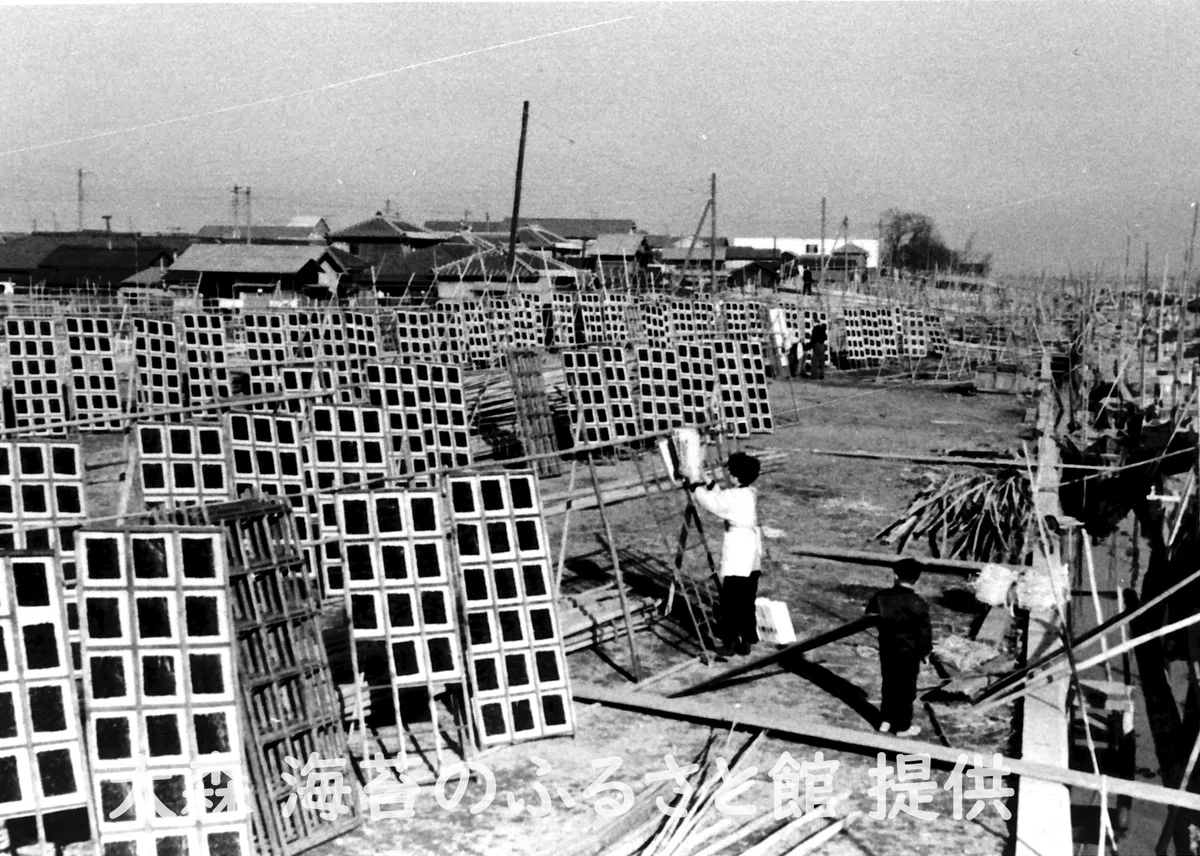
the final year of seaweed production —
drying nori on the shore.
Preservation of Tools (1964–)
1964: The Omori Seaweed Aquaculture
Equipment Preservation Society was established.
Fishermen themselves began collecting
the tools they had used in production.
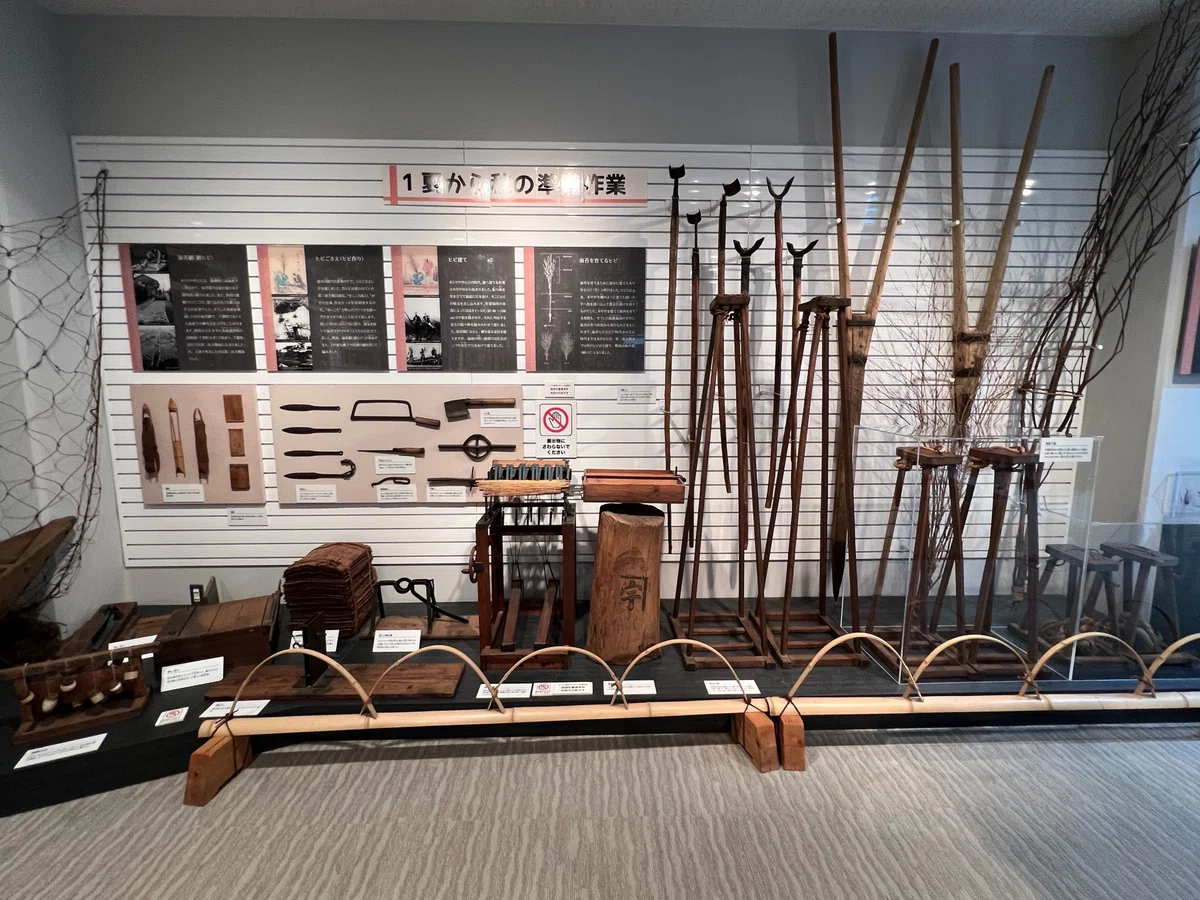
Tools displayed on the 2nd floor
of Omori Nori Museum.
Opening of the Local Materials Room (1965–)
In 1965 (Showa 40), following the establishment ordinance
of the Ota Education Center,
a Local Materials Room was created.
November 1, 1967:
It was installed inside the Ota Education Center
(Omori‐kita 4‐16‐8).
The local government began taking action
to preserve regional history for future generations.
The Education Center later moved
to the 3rd and 4th floors of Ikegami Kaikan
on October 4, 1996.
The former Education Center building
is now the Child and Family Support Center.
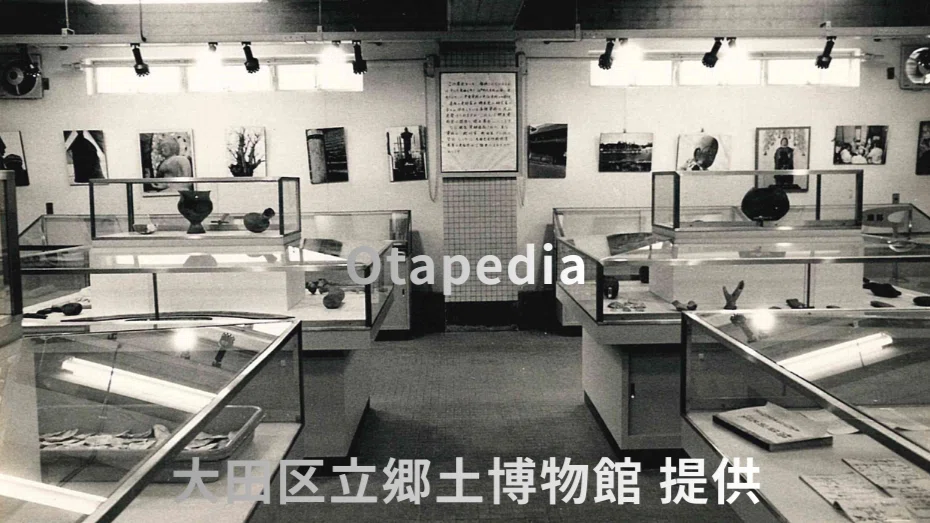
Local Materials Room inside the Education Center (1968).
Courtesy of Ota Folk Museum.
Birth of a Cultural Hub (1979–)
November 3, 1979:
The Ota Folk Museum opened.
A facility dedicated to preserving
the 300‐year culture of Omori’s seaweed aquaculture
was finally completed.
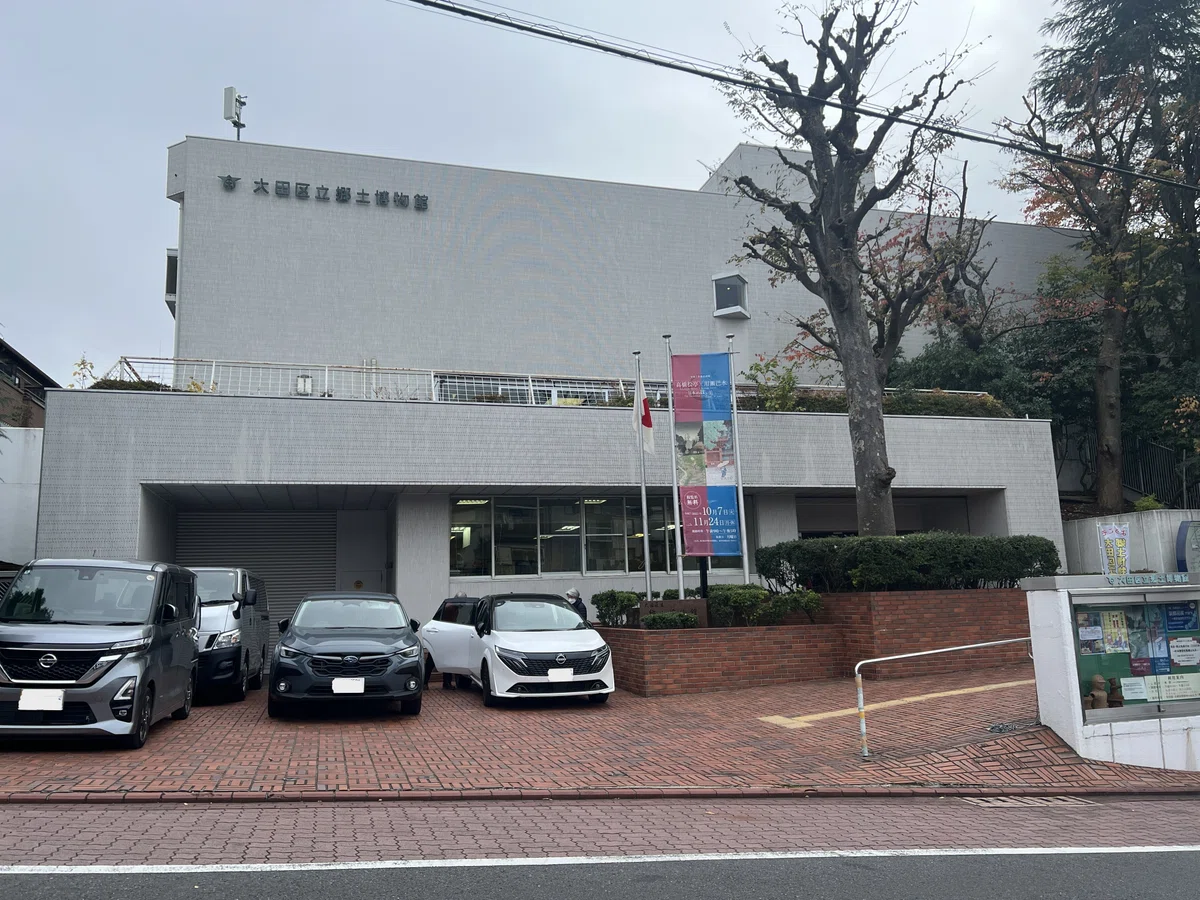
Ota Folk Museum
(Minami‐magome 5-11-13).
Designation as Important Tangible
Folk Cultural Property (1993)
December 13, 1993:
The collected tools were designated
by the national government as
“Seaweed Production Tools of Omori
and Surrounding Areas” (879 items).
In 1999, two additional items
were designated, bringing the total to 881.
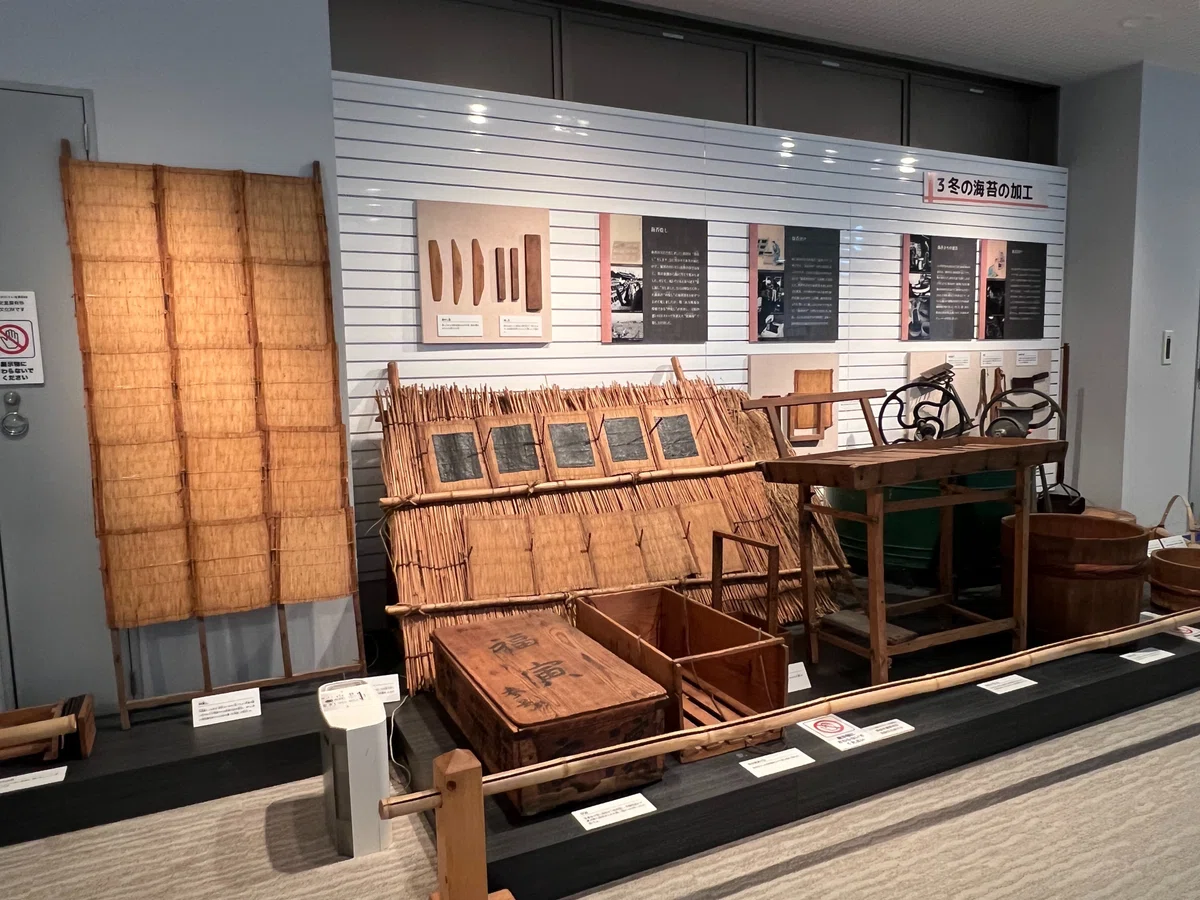
Tools related to seaweed drying,
2nd floor of Omori Nori Museum.
Voices of Residents
and the Shape of “Furusato” (2000s)
During the planning workshops
for Omori Furusato Beach Park,
residents expressed a desire:
“We want a museum
near the former fishing grounds.”
This voice reached
the Ota City government.
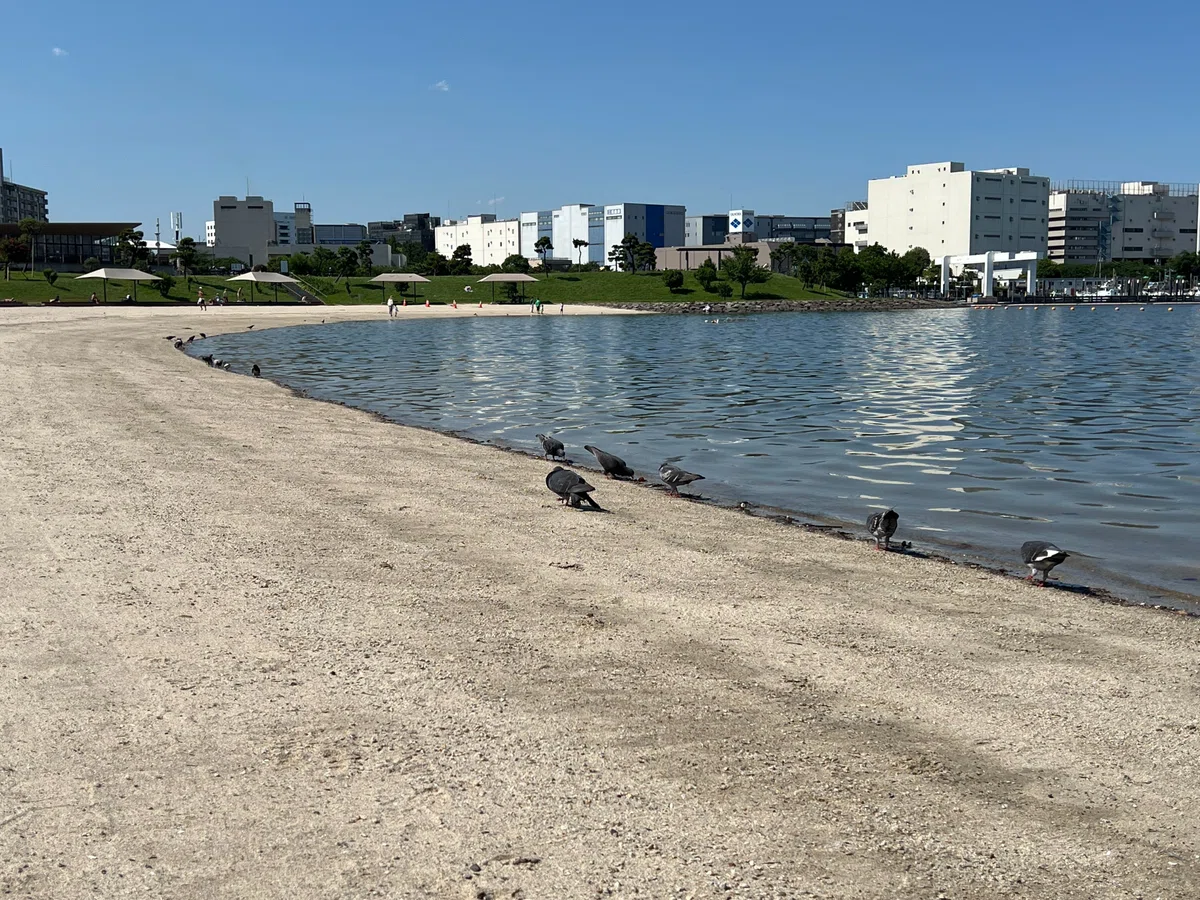
Omori Furusato Beach Park.
Omori Nori Museum stands in the center background.
April 6, 2008
Ota City established Omori Nori Museum
within Omori Furusato Beach Park
as a branch of the Folk Museum.
The “Furusato” in its name refers
to the fact that the techniques
of seaweed aquaculture that began in Omori
spread throughout Japan.
The managing organization, Certified NPO
Nori no Furusato‐kai, inherits the philosophy
of a research group founded in 1949.
Through monthly hands-on programs,
they continue transforming history
into “nourishment for the future.”
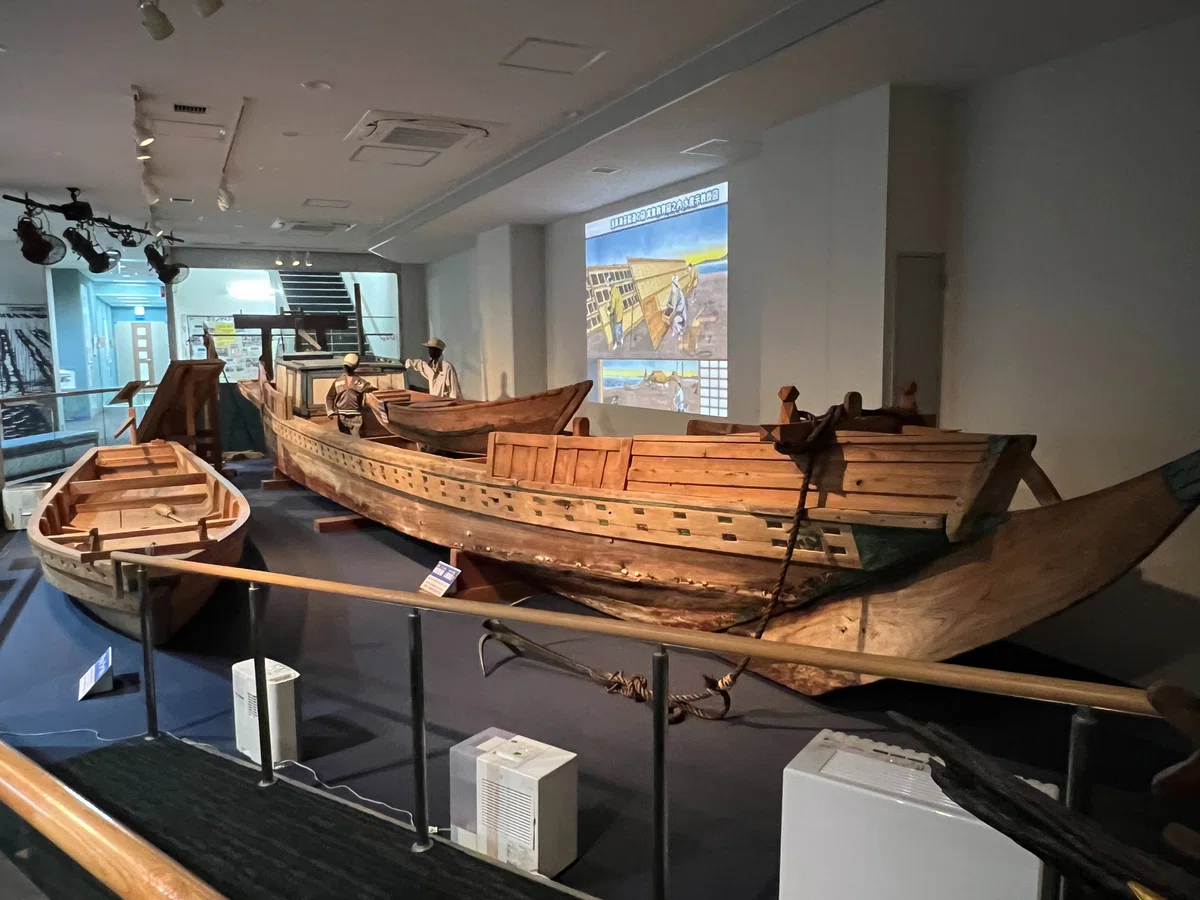
The last seaweed boat “Ito-bune,”
displayed at the museum entrance.
Hands‐on Programs
Omori Nori Museum hosts monthly programs
on seaweed and the environment,
aiming to connect the lessons of seaweed aquaculture
to the present and future.
Among them, the winter‐only Nori‐Making Experience
is a popular program where participants learn
traditional handcrafting techniques.
By drawing on techniques
inherited from former producers,
participants experience the ingenuity
and joy of craftsmanship.
It also serves as a place of intergenerational learning
through interactions among children, parents,
and older generations.
Programs are conducted through strict lotteries
(according to museum staff).
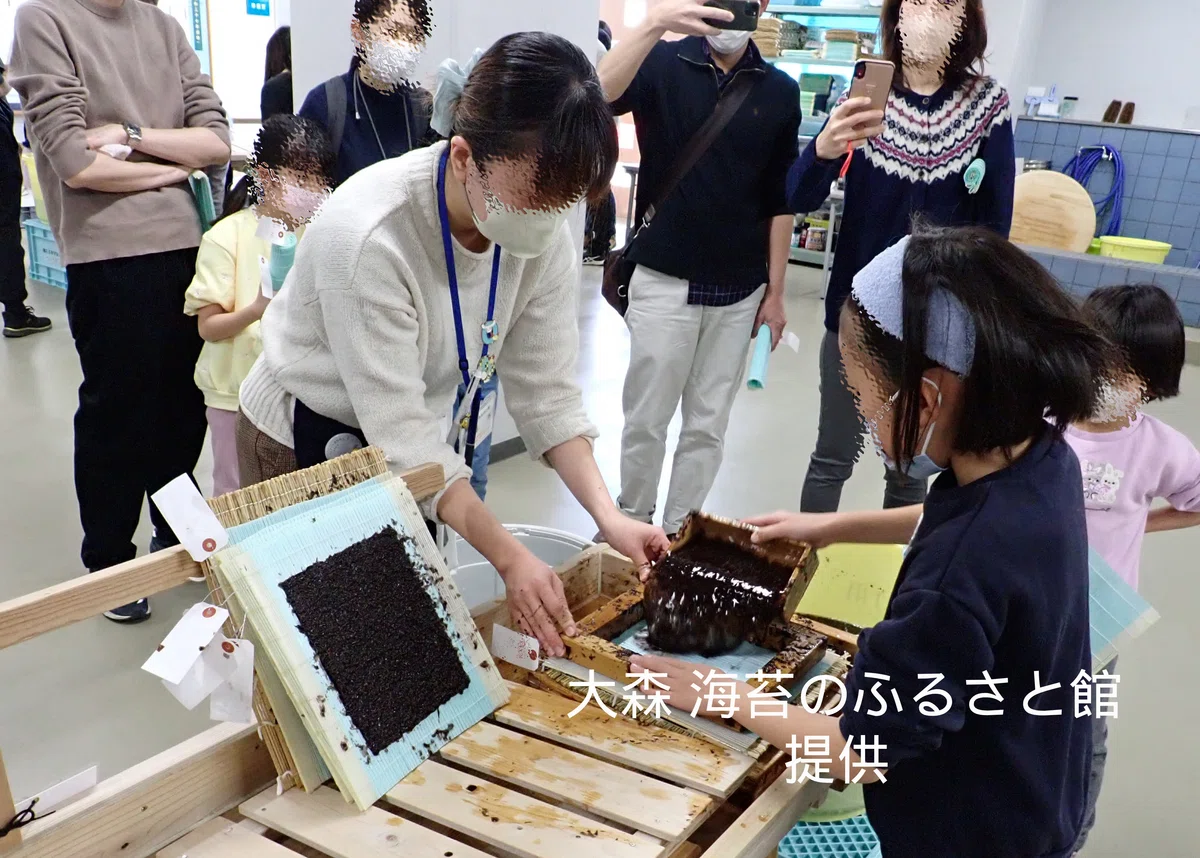
Seaweed‑Making Experience
Courtesy of Omori Nori Museum
The Significance of Omori Nori Museum
Mr. Fumitaka Koyama,
Secretary‐General of the Certified NPO
Nori no Furusato‐kai,
expresses it this way:
“To learn about seaweed may be to turn our gaze once more toward the sea, which has grown so distant from our daily lives.”
(From Ocean Newsletter No.420,
Sasakawa Peace Foundation, 2018)
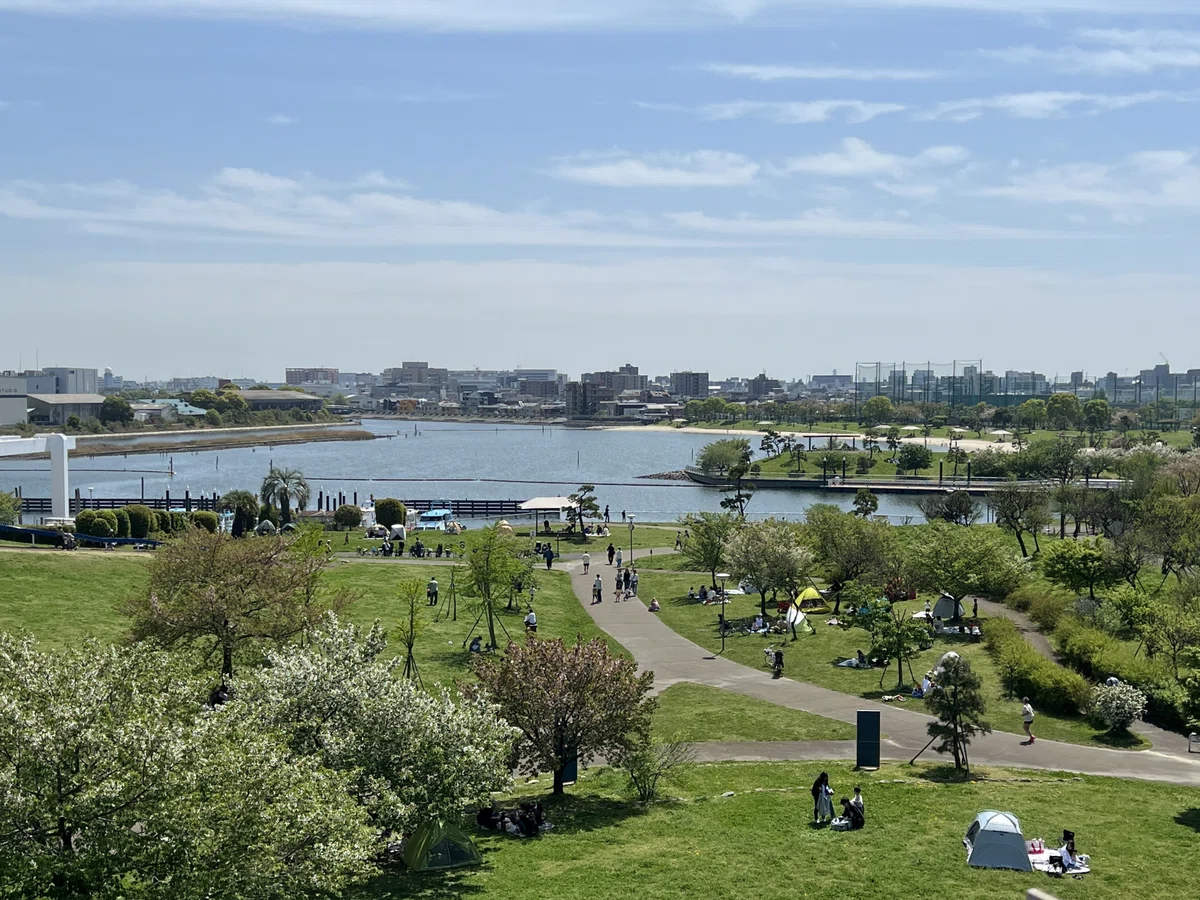
the museum stands as a quiet witness.
To keep looking out at that sea
is to safeguard memory.
From the rooftop of Omori Nori no Furusato Museum,
overlooking Omori Furusato no Hamabe Park.
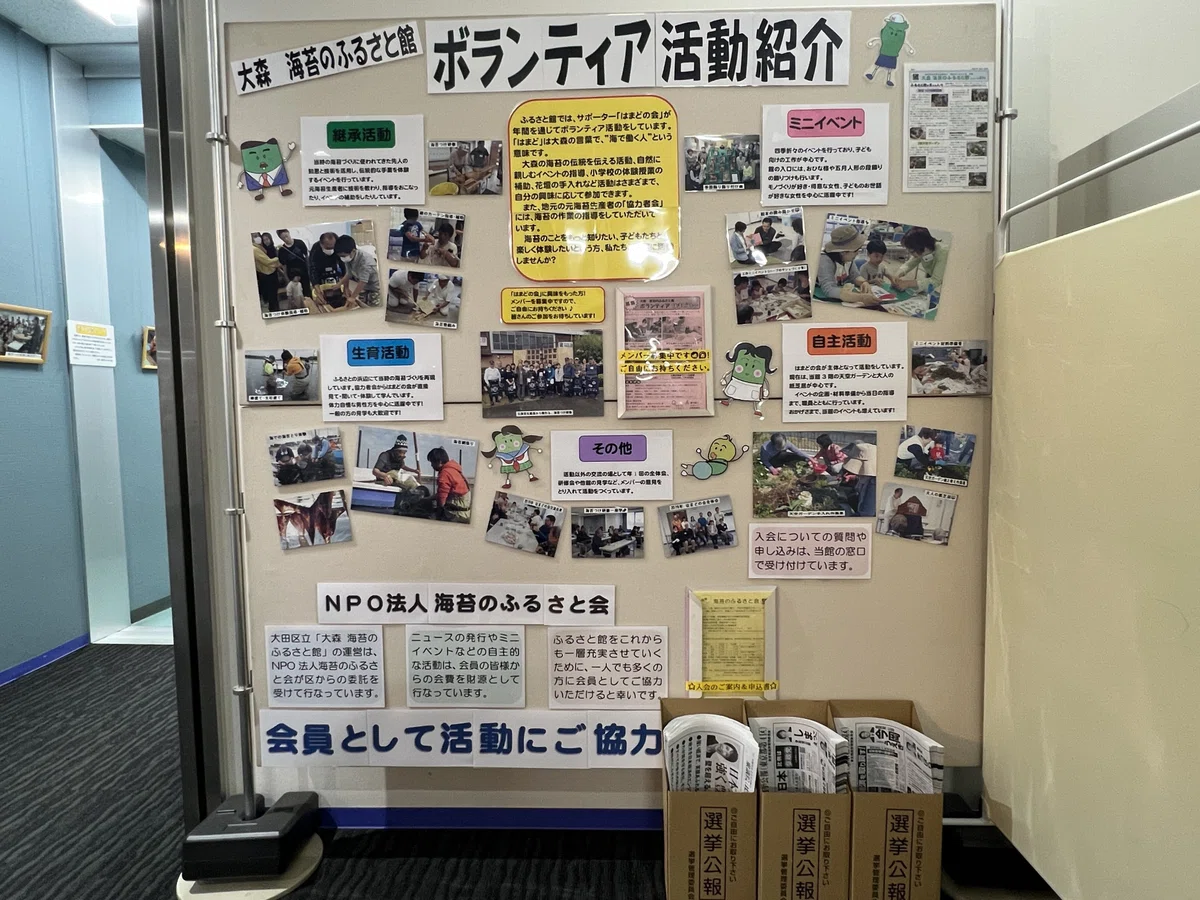
Hamado no Kai
The museum has formed a volunteer group
called Hamado no Kai,
meaning “those who work at sea”
in the words of seaweed fishermen.
They support the transmission
of seaweed history.
https://www.norimuseum.com/%E3%83%9C%E3%83%A9%E3%83%B3%E3%83%86%E3%82%A3%E3%82%A2/
Gratitude for the Support
of Omori Nori Museum
In creating this article, we received invaluable support—
photographs, cooperation in shooting,
and assistance in verifying materials.
Otapedia’s records exist
because of the tireless efforts of those
who preserve and pass down this history.
We express our heartfelt gratitude.
Finally
Otapedia designates:
Omori’s seaweed aquaculture industry
as “Ota City’s Unnamed Industry”
Certified NPO Nori no Furusato‐kai
and Hamado no Kai
as “Ota City’s Unnamed Organizations/Groups”
Omori Nori Museum
and Ota Folk Museum
as “Ota City’s Unrecognized Regional Heritage”
These titles are Otapedia’s independent designations
and not official recognitions by Ota City.
Otapedia’s mission is to awaken
the memories of Ota City—
to turn our gaze once more toward things
whose names are fading,
and to bring them back to the shores of memory.
Even if their activities or traces disappear,
we will continue passing on the paths
they carved into this region.

Sources & AcknowledgmentsCertified
1.NPO Nori no Furusato‐kai
2.Wikipedia “Omori Nori Museum”
3.Ocean Newsletter No.420, Sasakawa Peace Foundation (2018)
4.“Women Who Worked” — Agriculture · Nori Fishing · Industry —
5.Ota Folk Museum (photographs)
6.Omori Nori Museum (shooting cooperation)
大森 海苔のふるさと館
https://www.norimuseum.com/
#かえる11号
#Otapedia
#デジタルアーカイブ
#地域史
#SDGs11
#大田区
#OtaCity
#大森東特別出張所
#漁業権放棄
#教育センター
#郷土資料室
#大田区立郷土博物館
#FolkMuseumofOtaCity
#海苔生産用具
#重要有形民俗文化財
#ImportantTangibleFolkCultuealProperty
#大森ふるさとの浜辺公園
#大森海苔のふるさと館
#OmoriNoriMuseum
#NPO法人海苔のふるさと会
#体験プログラム
#海苔つけ
#はまどの会
#大田区特別顕彰区民
#大田区準特別顕彰区民
#大田区裏名誉区民
#大田区無名の偉人
#大田区無名の企業
#大田区無名の産業
#大田区無名の組織・集団
#大田区陰の功労者
#大田区未顕彰の地域遺産
#大田区記憶の日
いいなと思ったら応援しよう!
 いつもご覧いただき、誠にありがとうございます。
皆様からの温かいご支援が、
私の活動の大きな支えとなります。
いつもご覧いただき、誠にありがとうございます。
皆様からの温かいご支援が、
私の活動の大きな支えとなります。