
Haneda Lighthouse — First Lit on March 15, 1875 #270

Haneda Lighthouse
(Musashi Province,
Ebara District,
Haneda Sandbank / Tokyo Bay)
Haneda Lighthouse, Tokyo Bay
Lit for the first time on March 15, 1875 (Meiji 8)
Its Greatest Feature
Into the sandy seabed,
an iron spiral was slowly,
carefully “bitten” into the ground.
Haneda Lighthouse
was a lighthouse that rose
through this special structure.
This screw‑pile construction
was the only one of its kind
in Japan at the time.
Designer
In 1873 (Meiji 6),
The British engineer
known as
“the father of Japanese lighthouses,”
Richard Henry Brunton
(R.H. Brunton),
who had been hired
by the Meiji government,
requested that engineers
in his homeland Scotland
design this lighthouse.
Installation Location
Position:
35°32′ N / 139°48′ E
The lighthouse stood on Maruyama‑se,
a shallow area about 1.8 km south
of the mouth of the Tama River (then Rokugō River).
Even at high tide,
the water depth was only about 4 meters —
a dangerous place where ships easily ran aground.
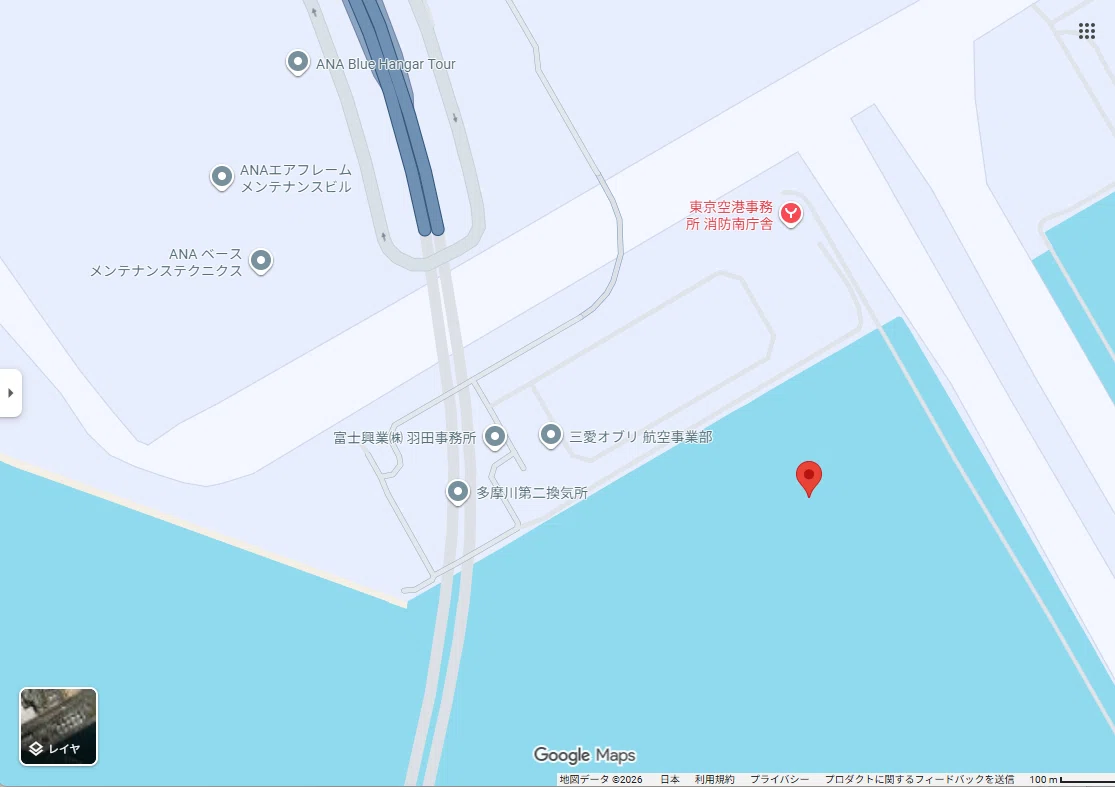
between the south ends of
Runway 1 and Runway 3 at Haneda Airport.
Specifications
Height: approx. 16 m from foundation to the light
Height above water: approx. 12 m
Light intensity: 100 candela
Visible range: approx. 20.4 km
Its light could reach the opposite shore of Kisarazu.
Changes in Appearance
When first completed,
the lighthouse was entirely white.
But an unexpected problem arose:
It could not be distinguished
from the white sails of ships.
So in 1876 (Meiji 9),
the solution adopted was
black‑and‑white horizontal stripes.
A functional design
that made the lighthouse unmistakable from afar.
Earthquake Damage and
the “Revolving Lantern” Mechanism
On January 17, 1887 (Meiji 20),
a major earthquake damaged
the original fourth‑order fixed lens.
In April 1900 (Meiji 33),
a new device called a meian‑ki
(flashing apparatus) was installed.
Using a spring mechanism like a clock,
vertical shutters rotated around the lamp,
alternately blocking and revealing the light.
The rhythmic blinking was described in records as
“like a revolving lantern (sōmatō),”
a beautiful and emotional sight.
Note:
The Meiji 20 earthquake occurred on January 15
and has no specific name.
After the Lighthouse
On September 1, 1923 (Taishō 12),
the Great Kantō Earthquake broke two support legs
and tilted the tower by about 5 degrees.
On September 15, 1926 (Taishō 15),
a new beacon was installed nearby,
and the facility was renamed Haneda Light Beacon.
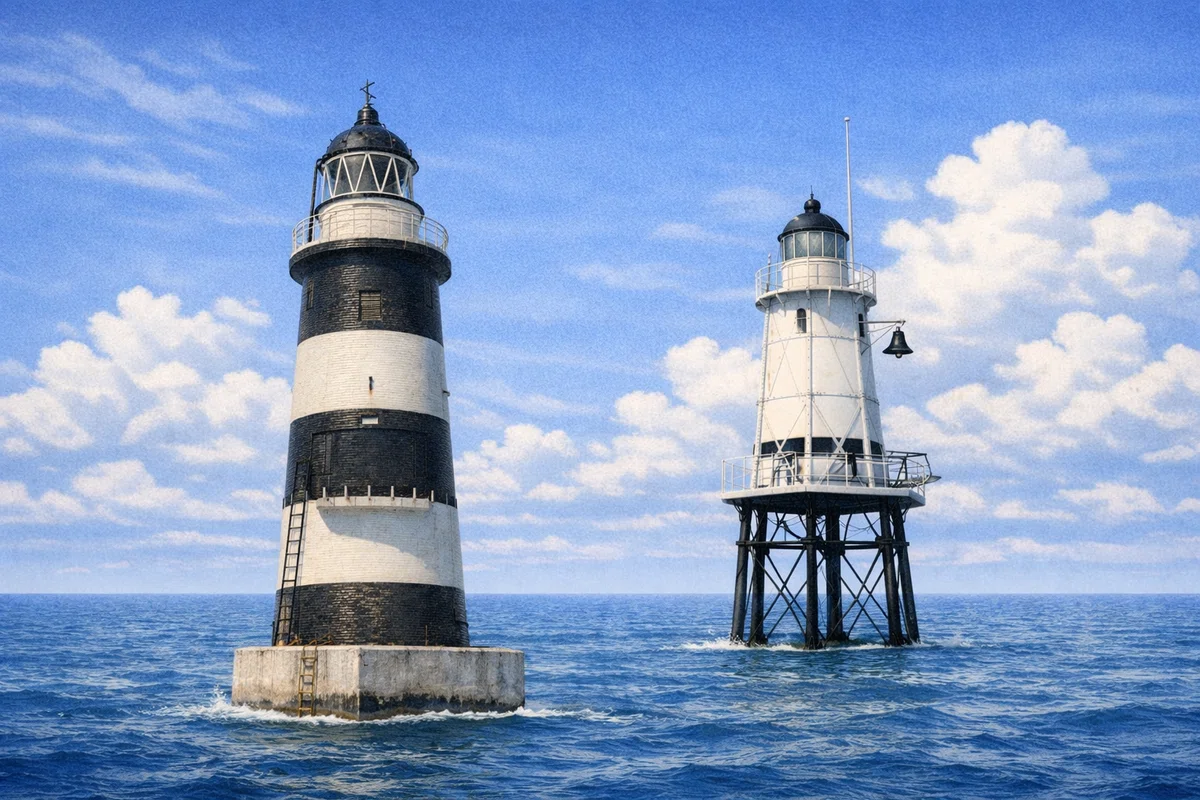
Right: Haneda Lighthouse
AI-generated image based on historical photographs
Historical Significance of
Haneda Lighthouse
Haneda Lighthouse was one of the few in Japan
to use screw‑pile construction.
This was partly due to the fact
that most of Tokyo Bay’s seabed
consisted of soft sandy mud.
Haneda Lighthouse symbolized
the modernization of Tokyo Bay’s sea routes.
Records from the Lighthouse Bureau
(the predecessor of the Japan Coast Guard)
describe it as
“a symbol of navigational safety in Tokyo Bay.”
In other words,
it was one of the earliest navigational markers
in the development of Tokyo Port.
It is also regarded as a technological record
where three elements converged:
Marine civil engineering
Western lighthouse technology
Modernization of Tokyo Bay’s sea routes
In Closing
The lighthouse that quietly watched over
the modernization of Tokyo Bay
was severely damaged in the Great Kantō Earthquake.
After passing its role to the Haneda Light Beacon,
it disappeared from the sea.
Otapedia recognizes:
Richard Henry Brunton,
designer of Haneda Lighthouse,
as a “Hidden Great Person of Ota City”
Haneda Lighthouse
as a “Regionally Unrecognized Heritage of Ota City”
And we register March 15,
the day the lighthouse was first lit,
as “Ota City Day of Memory.”
Otapedia’s mission is to awaken
the memories of Ota City.
We look again at the things
whose names are fading,
and bring them back
to the shores of memory.
Even if their traces disappear,
the footprints they left in the region
will be carried into the future.
These titles are
Otapedia’s independent designations
and not official recognitions by Ota City.

Sources
1. Tōdai Yōran (Lighthouse Directory)
Compiled by the Lighthouse Administration Office
Published by Kōnan Photo Studio, March 1904 (Meiji 37)
2. Historical Materials on Lighthouse History Japan Coast Guard
3. “Google Maps (location verification)”
Header
Haneda Lighthouse – Reconstructed Imagery (Early Meiji Period)
Created by AI based on historical photographs
An iron lighthouse built on the shallow reef
“Maruyama‑se” off the coast of Haneda
#かえる11号
#Otapedia
#デジタルアーカイブ
#地域史
#SDGs11
#大田区
#羽田特別出張所
#羽根田燈臺
#羽田灯台
#錬鉄灯台
#リチャード・ヘンリー・ブラントン
#英国人技師
#日本灯台の父
#スクリューパイル灯台
#円山瀬
#明暗器
#3月15日
#羽田灯標
#TokyoBay
#HanedaLighthouse
#RichardHenryBrunton
#ScrewPile
#IronLighthouse
#Lighthouse
#HistoricLighthouse
#MaritimeHistory
#IndustrialHeritage
#NavigationHistory
#大田区立郷土博物館
#大田区特別顕彰区民
#大田区準特別顕彰区民
#大田区裏名誉区民
#〇〇の父
#大田区無名の偉人
#大田区無名の企業
#大田区無名の産業
#大田区無名の組織・集団
#大田区陰の功労者
#大田区未顕彰の地域遺産
#大田区記憶の日
いいなと思ったら応援しよう!
 いつもご覧いただき、誠にありがとうございます。
皆様からの温かいご支援が、
私の活動の大きな支えとなります。
いつもご覧いただき、誠にありがとうございます。
皆様からの温かいご支援が、
私の活動の大きな支えとなります。