
Omori Nori Museum【Nori Spreading Experience Event】#302

This article is published exclusively
on Otapedia’s official note
(https://note.com/fine_rat5784).
Unauthorized reproduction, alteration,
or commercial use is prohibited.
© Otapedia
A Day in the Life of Omori’s Nori Fishermen
Nori production in Omori
centered around midnight work.
Around 1:00 a.m.,
The harvested seaweed,
long and thin like wakame,
was finely chopped
in a process called “norikiri.”
Around 3:00 a.m.,
The work of “nori‐tsuke” began —
spreading the chopped nori
into the familiar size
of roasted seaweed sheets.
Around 7:00 a.m.,
As the sun rose,
the drying process,
“nori‐hoshi,”
would begin.
During harvest season,
this cycle was repeated
every single day.
It is said
they had only
about two days off per month.
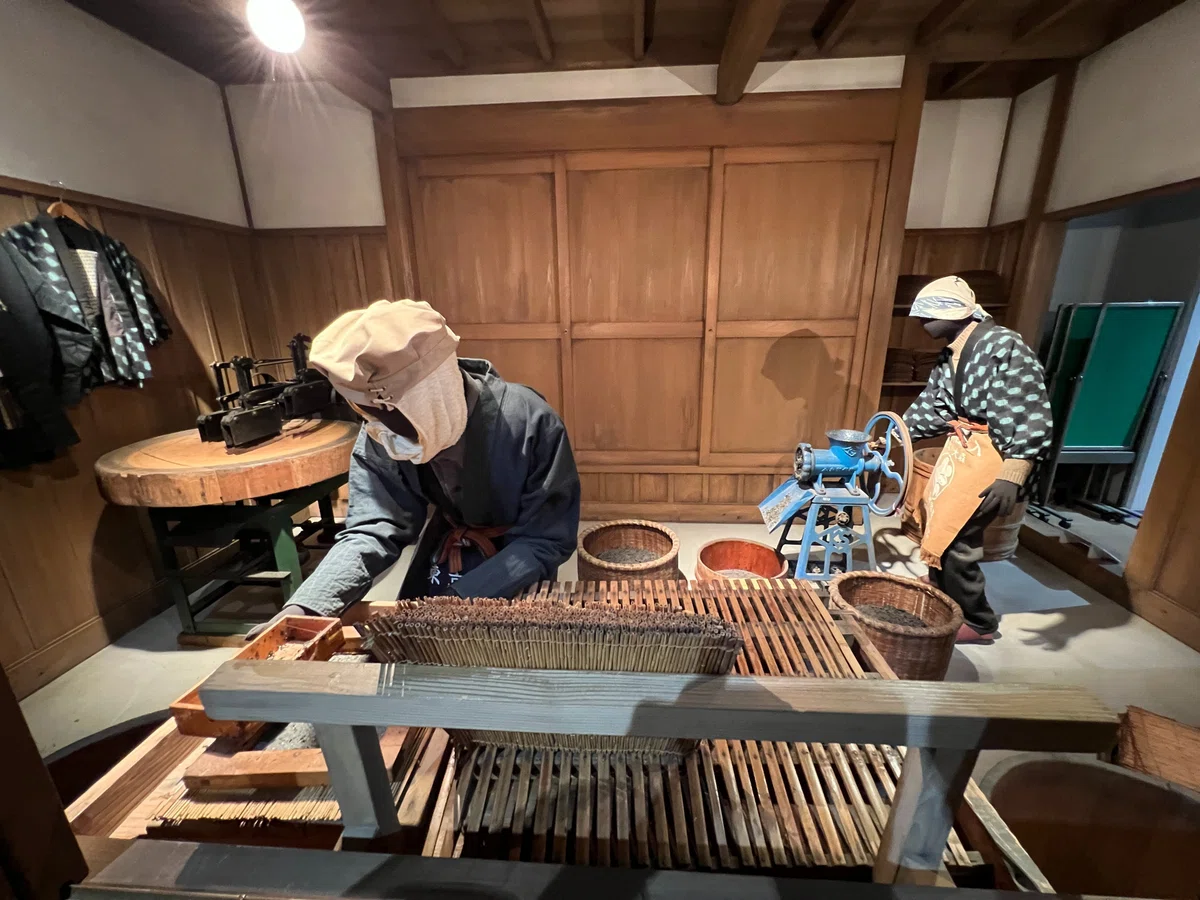
Omori Nori Museum – 1st Floor
Photographed with prior application and approval
The Life of a Nori Fisherman
Omori’s nori fishermen
lived a semi‐fishing, semi‐farming life.
Yet it is said
that nori alone
could provide
a year’s worth of income.
Entire families worked together.
In addition, many seasonal workers
came from places such as
Sagae City in Yamagata Prefecture
to support nori production in Omori.
Current Nori Production Near Tokyo
Nori cultivation in Tokyo
has come to an end.
However,
nori‐making itself
has not disappeared.
While the Ariake Sea is well known,
in the Kanto region
nori is still harvested
in cities such as
Futtsu and Kisarazu
in Chiba Prefecture.
On the day of the experience,
nori from Futtsu was used.
The Skill of the Nori Fishermen
It is said
that skilled fishermen in Omori
could spread
250 to 300 sheets
of nori per hour.
The work required
refined technique
and intense concentration.
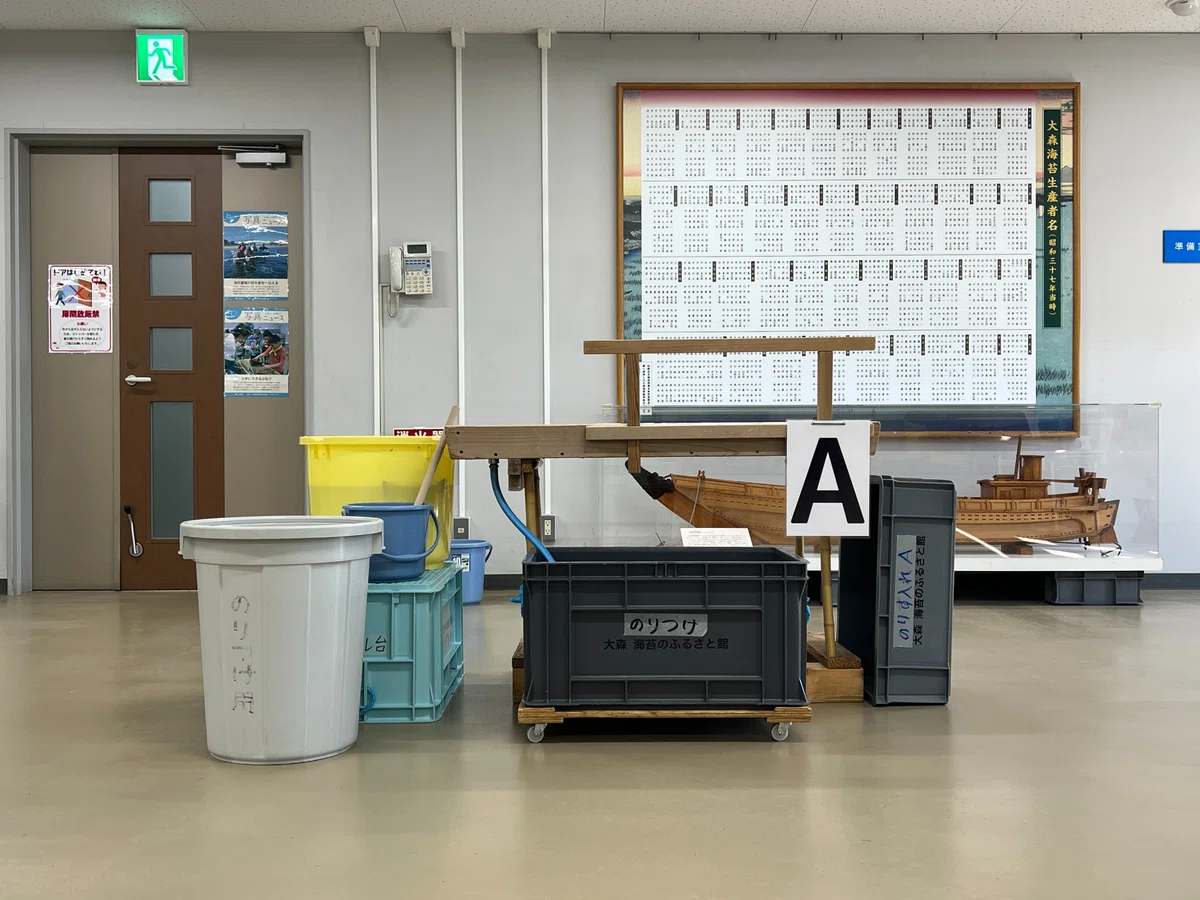
(sheet‐forming) process
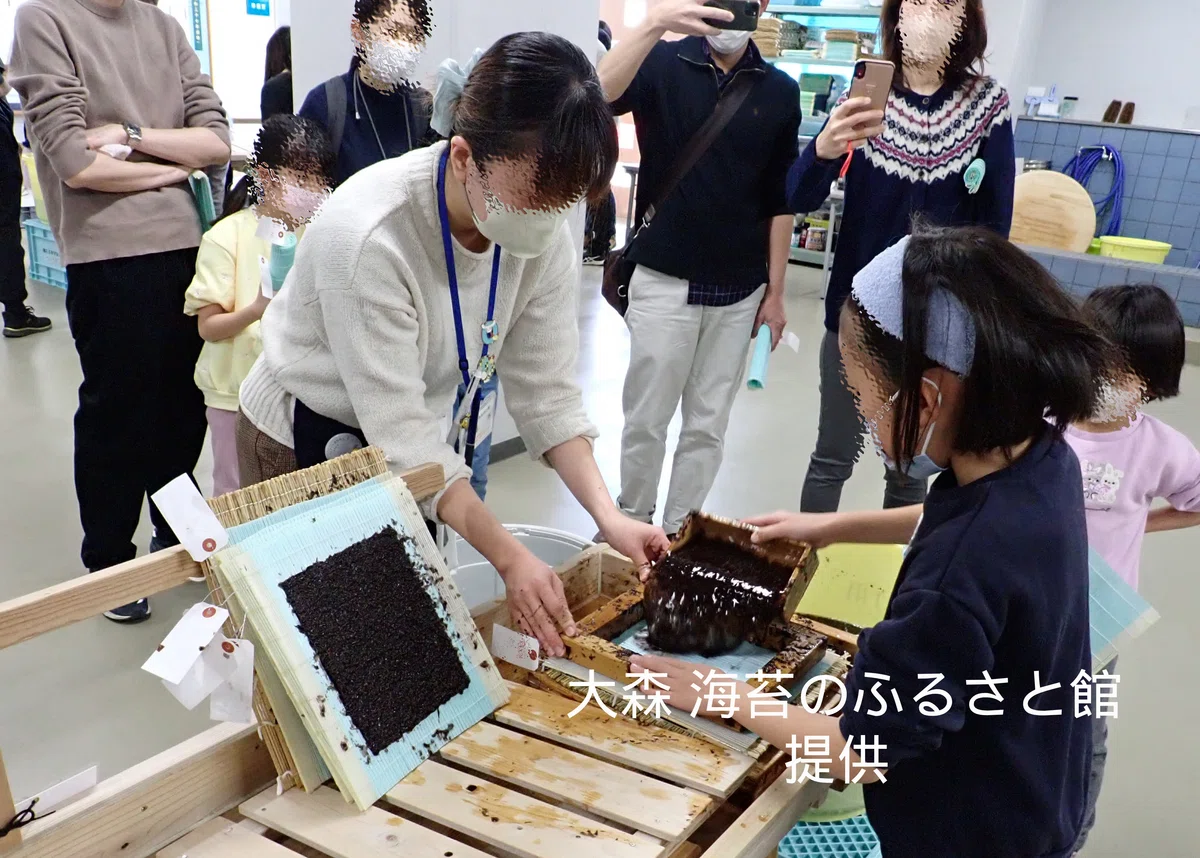
What Is “Nori‐tsuke”?
On a screen (nori‐su),
a wooden frame (nori‐tsuke waku)
is placed.
Finely chopped nori
is scooped with a measuring box
called a jubako
and poured evenly
into the frame.
In the experience program,
each participant performs this process twice.
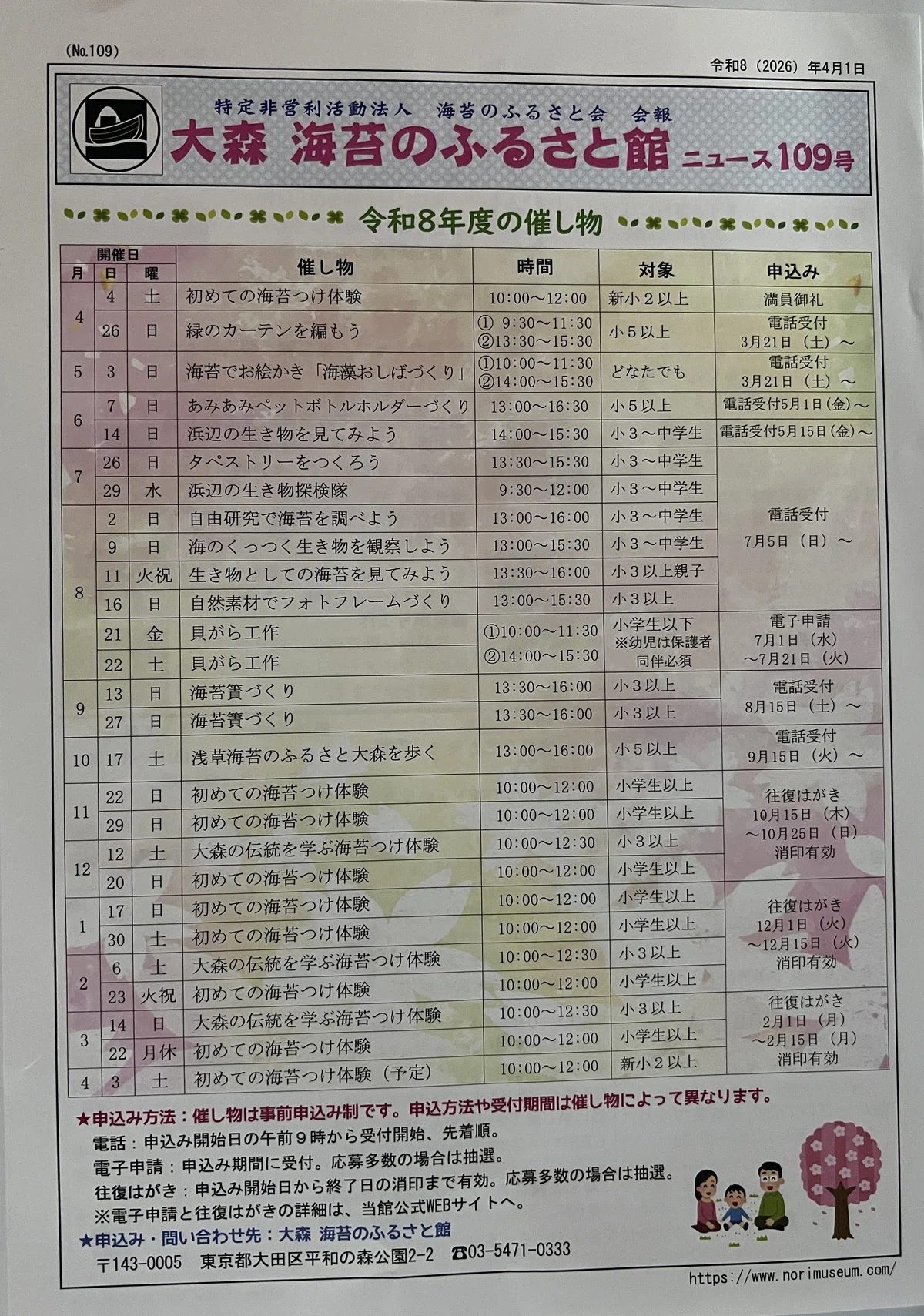
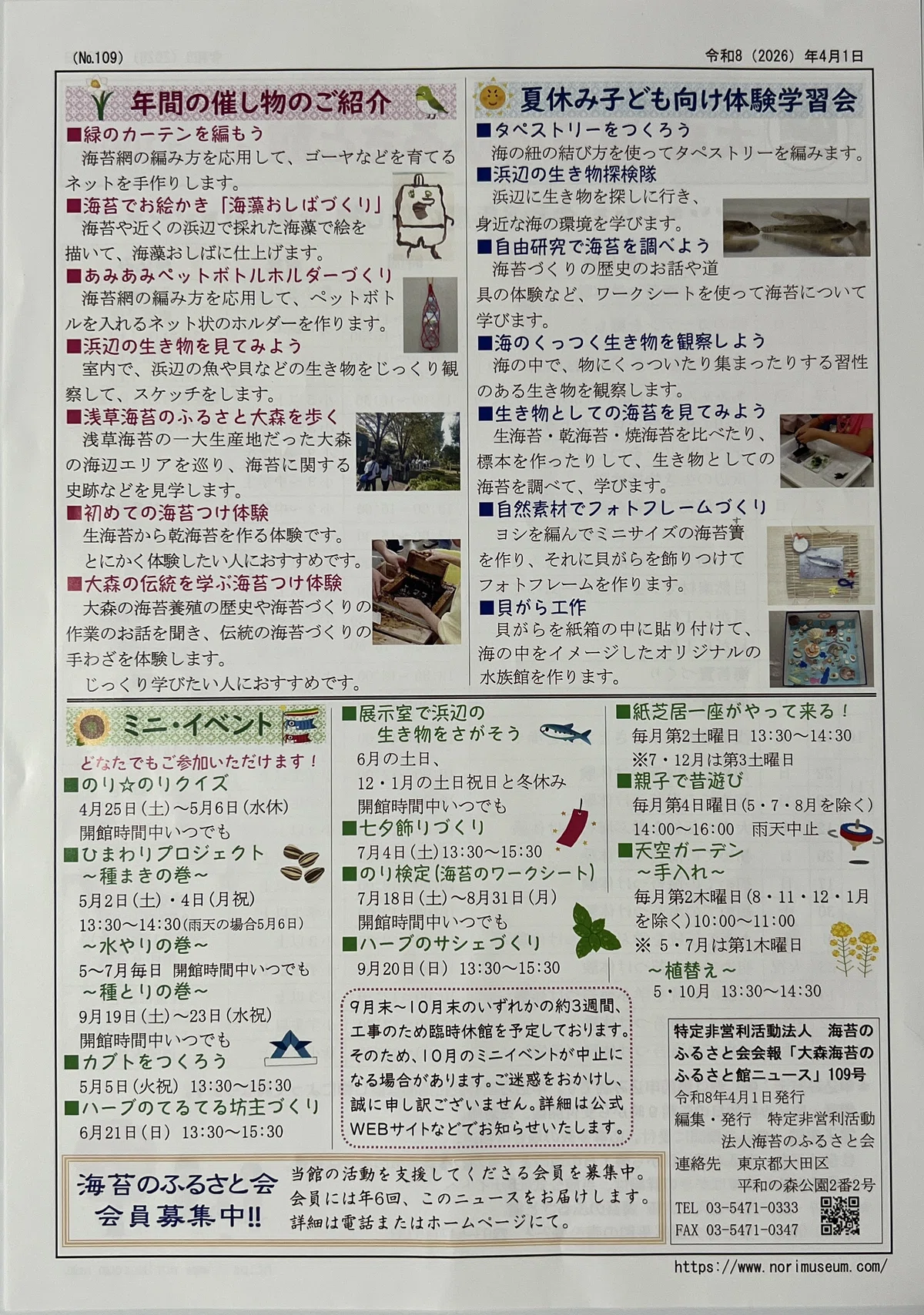
Experience as Inheritance
In alignment with the harvest season,
the event is held monthly
from autumn through early spring.
A Popular Hands‐On Event
Most participants
are families with elementary school children.
Each session attracts many visitors
and remains a highly popular event.
It offers a rare opportunity
to experience and learn
the history of Omori’s nori production firsthand.
The Finished Nori
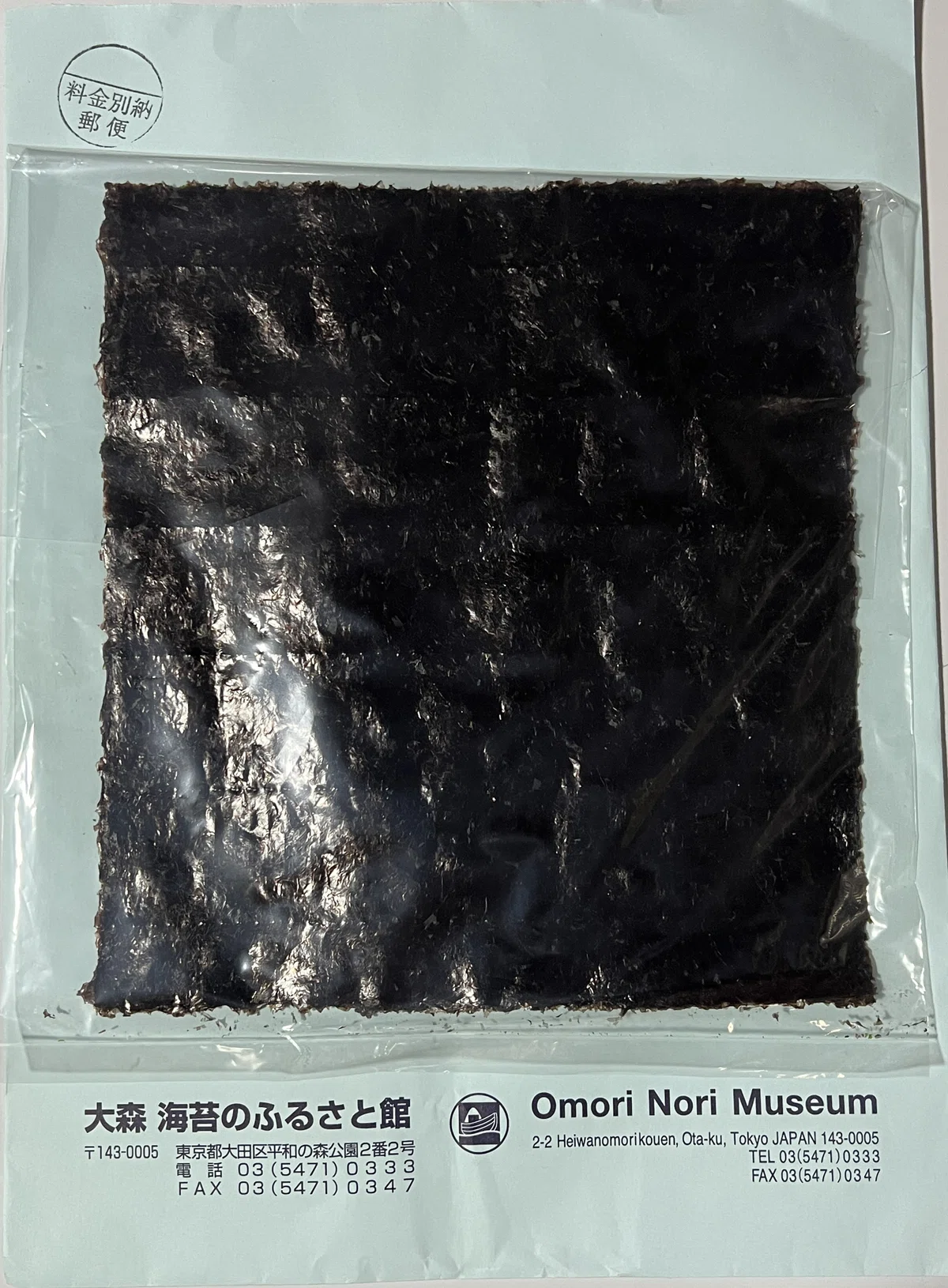
Participants may choose
postal delivery (paid)
or in‐person pickup.
When it arrives,
lightly roast it
until it turns green
to enhance its flavor.
In Closing
Otapedia hereby registers
the experience program
held at Omori Nori Museum
as an “Unrecognized Local Heritage of Ota City.”
Otapedia seeks to revive
the memory of Ota City.
We turn our gaze once more
toward those
whose names are fading,
bringing them back
to the shore of memory.
Even if their activities
or traces disappear,
we will carry forward
the marks they left behind
into the future.
These designations are
original to Otapedia
and are not official recognitions
by Ota City.

Cooperation
1.Omori Nori Museum
This is the official Otapedia translation.
Automatically generated translations may differ in tone,
structure, and nuance.
#かえる11号
#Otapedia
#デジタルアーカイブ
#SDGs11
#地域史
#LocalHistory
#大田区
#OtaCity
#大森東特別出張所
#大森海苔のふるさと館
#OmoriNoriMuseum
#体験プログラム
#海苔つけ体験
#大田区特別顕彰区民
#大田区準特別顕彰区民
#大田区裏名誉区民
#大田区無名の偉人
#大田区無名の企業
#大田区無名の産業
#大田区無名の組織・集団
#大田区陰の功労者
#大田区未顕彰の地域遺産
#大田区記憶の日
いいなと思ったら応援しよう!
 いつもご覧いただき、誠にありがとうございます。
皆様からの温かいご支援が、
私の活動の大きな支えとなります。
いつもご覧いただき、誠にありがとうございます。
皆様からの温かいご支援が、
私の活動の大きな支えとなります。