
【過去の介入実績より💖】「The Effects of Japanese Foreign Exchange Intervention: GARCH Estimation and Change Point Detection」:先行研究解説 No.7 2023/09/21

Introduction:卒業論文は早めに仕上げたい💛
私もいよいよ卒業論文の執筆に
取りかかる時期がやって参りました👍
何事もアウトプット前提のインプットが
大事であると、noteで毎日発信してきました
これは、どのような内容で
あっても当てはまります👍
論文を一概に読んでも
記憶に残っていなかったり
大切な観点を忘れてしまっていたりしたら
卒業論文の進捗は滞ってしまうと思います
だからこそ、この「note」をフル活用して
卒業論文を1%でも
完成に向けて進めていきたいと思います
私の卒論執筆への軌跡を
どうぞご愛読ください📖
今回の参考文献🔥
今回、読み進めていく論文は
こちらのURLになります👍
『The Effects of Japanese Foreign Exchange Intervention: GARCH Estimation and Change Point Detection』
Eric Hillebrand Gunther Schnabl Discussion
Paper No.6 October 2003
読み終えた先行研究📚
『日本の為替介入の分析』 伊藤隆敏・著
経済研究 Vol.54 No.2 Apr. 2003
『Effects of the Bank of Japan’s intervention on yen/dollar exchange rate volatility』21 November 2004
Toshiaki Watanabe (a), Kimie Harada(b)
前回のお復習い🔖
The Effects of Japanese Foreign Exchange Intervention: GARCH Estimation and Change Point Detection
Eric Hillebrand Department of Economics, Louisiana State University
Gunther Schnabl Department of Economics and Business Administration, Tuebingen
4.1. Specification
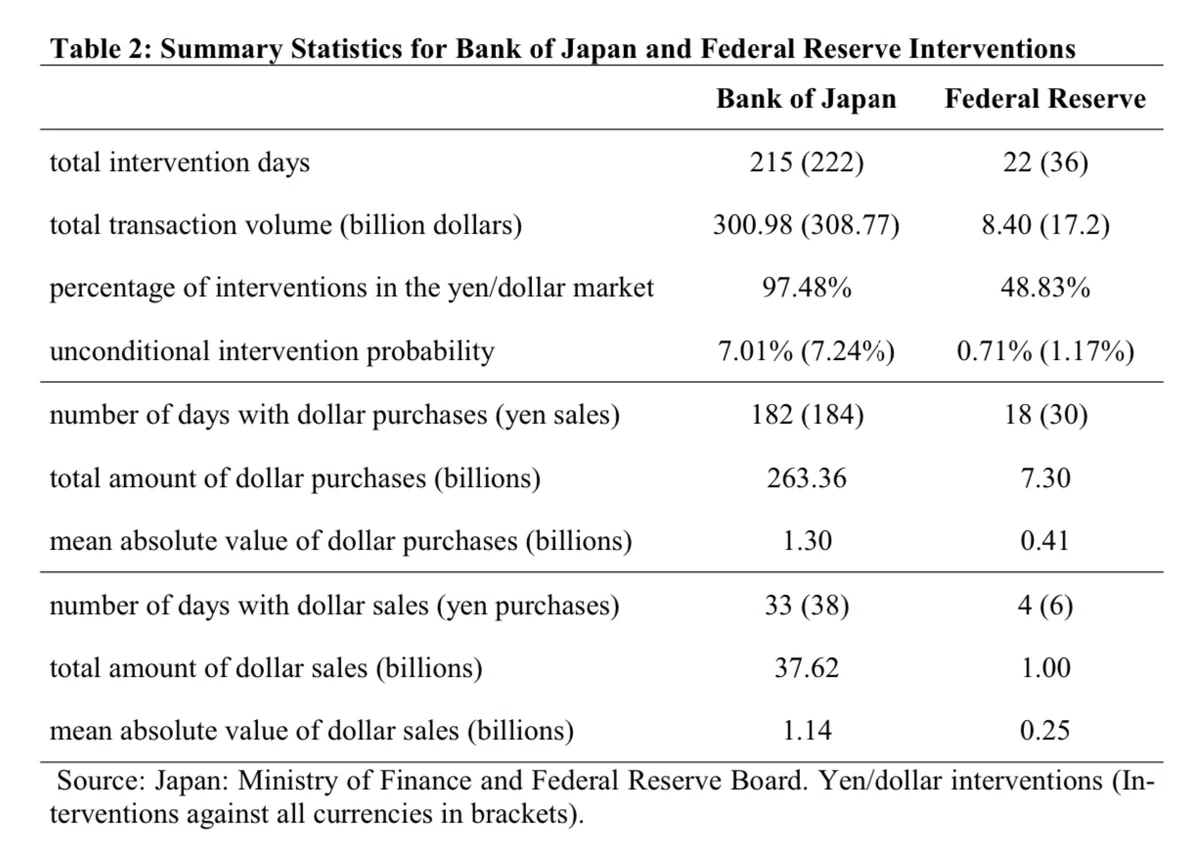
Table 2 summarizes the stylized facts of Japanese and US foreign exchange intervention and gives the necessary information for the GARCH model specification.
First, we observe that in contrast to the US, Japanese foreign exchange intervention is highly focused on the yen/dollar market. Since 97.48% of Japanese foreign exchange intervention is against the US dollar, we exclude other yen exchange rates—for instance against the euro (German mark before 1999)—from the investigation.
表2は、日本と米国の為替介入の様式化された事実を要約し、GARCHモデル仕様に必要な
情報を示しています👀
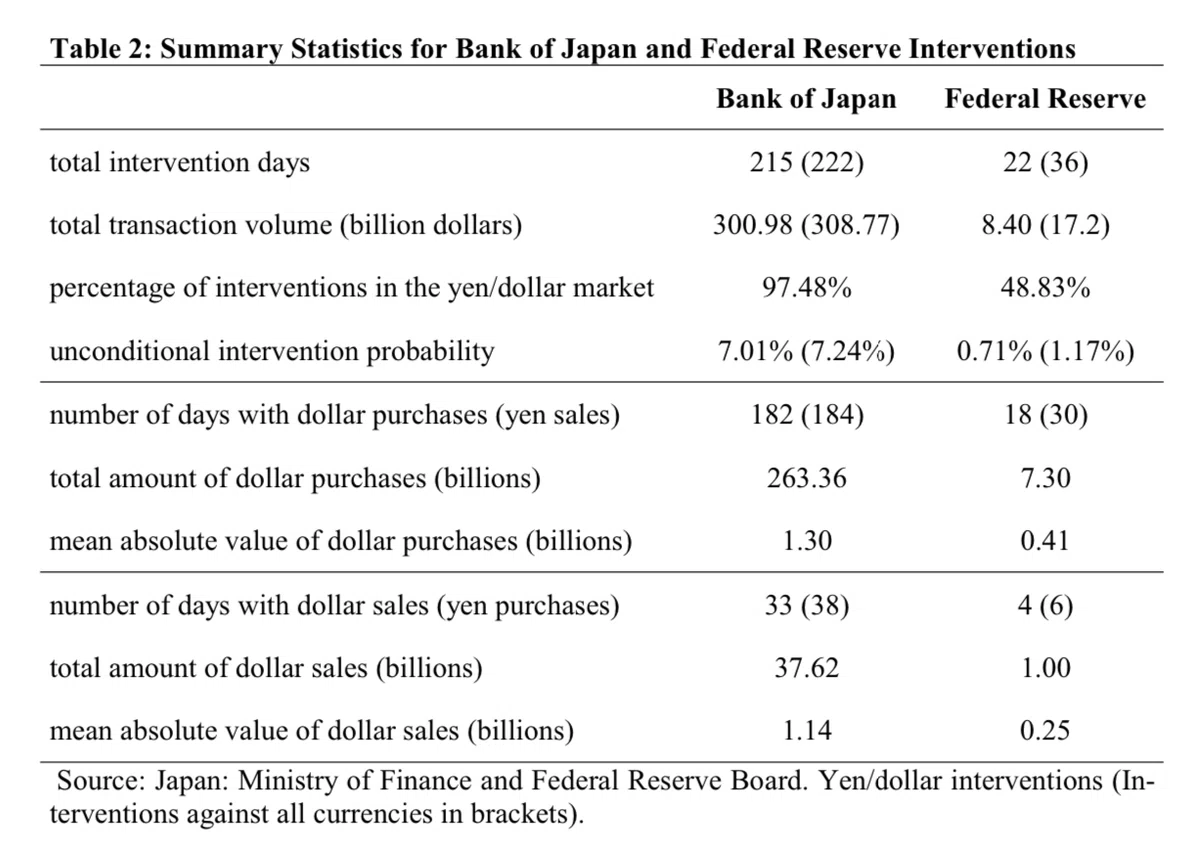
第一に、米国とは対照的に、日本の為替介入は円/ドル市場に非常に重点を置いていることがわかります
日本の為替介入の97.48%は対米ドルであるため、他の円為替レート、たとえば対ユーロ(1999年以前のドイツマルク)は調査から
除外しています👍
Second, Japan has a much higher propensity to intervene in foreign exchange markets than the US both in terms of intervention days and absolute intervention volume.
The number of intervention days in the yen/dollar market is almost tenfold (Japan 215, US 22) and the discrepancy between the transactions volumes is even more pronounced (300.98 billion dollars in Japan and 8.4 billion dollars in the US).
We further observe that all 22 US intervention days in the yen/dollar markets coincide with Japanese intervention days,working parallel.
This implies that US intervention is triggered by Japanese intervention and we are faced with multicollinearity.
第二に、介入日数と絶対介入量の両方の点で、日本は米国よりも外国為替市場に介入する傾向がはるかに高いことが判明します
円/ドル市場の介入日数は、ほぼ10倍(日本215日、米国22日)となっており、取引高の差はさらに顕著(日本3009億8000万ドル、
米国84億ドル)であることが読み取れます
さらに、米国の円/ドル市場における22日の
介入日はすべて日本の介入日と一致しており、並行して機能していることがわかります
これが示唆することは米国の介入が日本の介入によって引き起こされているという"多重共線性"の問題に直面していることを意味します
To deal with both the asymmetric scope of intervention and multicollinearity, we add US and Japanese foreign exchange intervention to create one exogenous variable I—which represents Japan’s efforts to redirect the yen/dollar rate.
This specification is justified by the fact that US intervention is only in support of Japanese intervention and prior tests with solely Japanese intervention as the exogenous variable did not yield significantly different results (as US intervention is negligible).
Sarno and Taylor (2002: 846) argue that coordinated sterilized intervention between two or more countries might convince speculators that the signalled policy is more credible as opposed to a single-country intervention. Yet a dummy for coordinated intervention has remained insignificant for the US-Japanese case since 1991.
介入範囲の非対称性と多重共線性の両方に
対処するために、米国と日本の為替介入を追加して1つの外生変数 I を作成します📝
これは、円/ドルレートを方向転換するための日本の取り組みを表します
この仕様は、米国の介入が日本の介入を支持しているだけであり、外生変数が有意に異なる結果をもたらさなかったため(すなわち、米国の介入が無視できるため)日本の介入のみを用いた以前のテストという事実によって正当化されるという解釈になるということです
SarnoとTaylor (2002: 846) によれば
2つ以上の国の間で調整された不胎化介入は、単一国の介入とは対照的に、シグナル化された政策の方が信頼できると投機家を納得させる
可能性があることが主張されています👍
しかし、1991年以来、日米間の事例では
協調介入のためのダミーは依然として重要ではありません💦
Third, dollar purchases in Japan clearly dominate intervention activities (Figure 1).
Out of 215 intervention days dollars were purchased on 182 intervention days (84.65%), on 33 days (15.34%) dollars were sold.
In terms of absolute intervention volumes (in dollars) 263.63 billion dollars were purchased (87.50%) and 37.62 billion dollars were sold (12.50%).
Due to the comparatively small amount of Japanese dollar sales we do not estimate the effects of dollar purchases and dollar sales separately, but treat intervention as one time series with positive (dollar purchases) and negative signs (dollar sales).
第三に、図1より日本におけるドル購入が介入活動を明らかに支配していることがわかります
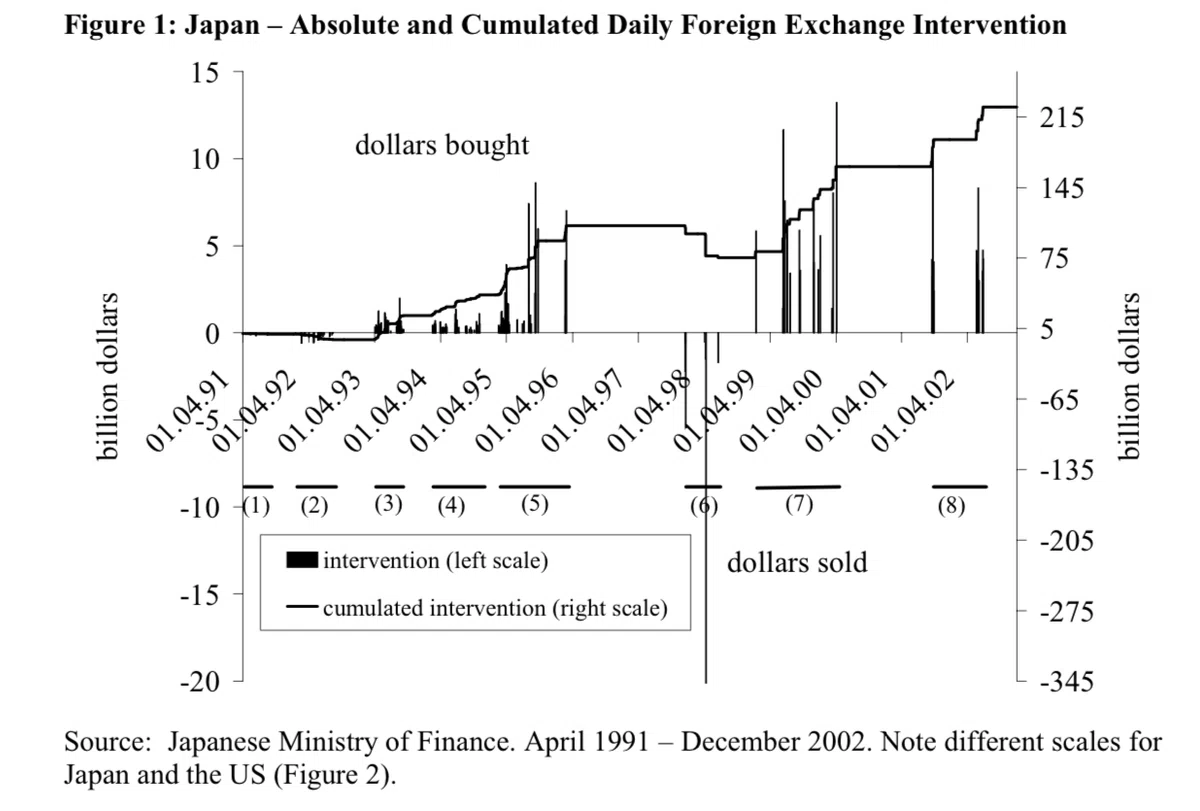
介入日215日のうち、182日(84.65%)で
ドルが買われ、33日(15.34%)でドルが売られたことになります
そして、介入額(ドル)の絶対値では
2,636億3,000万ドル(87.50%)が買われ
376億2,000万ドル(12.50%)が売られたことがわかります
ただし、日本ドルの売却額が比較的小さいため、ドル購入とドル売却の効果を個別に推定せず、介入をプラスの符号(ドルの購入)とマイナスの符号(ドルの売却)を持つ単一の時系列として扱うことにしているのです😊
本日の解説は、ここまでとします
このような歴史や先行研究をしっかり理解した上で、卒業論文執筆に取り組んでいきたいです
今回、私が卒業論文執筆において取り上げる
24年ぶりの「円安是正」介入は本当にレアな経済政策
ということを再認識できたような気がします💖
私の研究テーマについて🔖
私は「為替介入の実証分析」をテーマに
卒業論文を執筆しようと考えています📝
日本経済を考えたときに、為替レートによって
貿易取引や経常収支が変化したり
株や証券、債権といった金融資産の収益率が
変化したりと日本経済と為替レートとは
切っても切れない縁があるのです💝
(円💴だけに・・・)
経済ショックによって
為替レートが変化すると
その影響は私たちの生活に大きく影響します
だからこそ、為替レートの安定性を
担保するような為替介入はマクロ経済政策に
おいても非常に重要な意義を持っていると
推測しています
決して学部生が楽して執筆できる
簡単なテーマを選択しているわけでは無いと信じています
ただ、この卒業論文をやり切ることが
私の学生生活の集大成となることは事実なので
最後までコツコツと取り組んで参ります🔥
本日の解説は、以上とします📝
今後も経済学理論集ならびに
社会課題に対する経済学的視点による説明など
有意義な内容を発信できるように
努めてまいりますので
今後とも宜しくお願いします🥺
マガジンのご紹介🔔
こちらのマガジンにて
卒業論文執筆への軌跡
エッセンシャル経済学理論集、ならびに
【国際経済学🌏】の基礎理論をまとめています
今後、さらにコンテンツを拡充できるように努めて参りますので何卒よろしくお願い申し上げます📚
最後までご愛読いただき誠に有難うございました!
あくまで、私の見解や思ったことを
まとめさせていただいてますが
その点に関しまして、ご了承ください🙏
この投稿をみてくださった方が
ほんの小さな事でも学びがあった!
考え方の引き出しが増えた!
読書から学べることが多い!
などなど、プラスの収穫があったのであれば
大変嬉しく思いますし、投稿作成の冥利に尽きます!!
お気軽にコメント、いいね「スキ」💖
そして、お差し支えなければ
フォロー&シェアをお願いしたいです👍
今後とも何卒よろしくお願いいたします!
いいなと思ったら応援しよう!
 よろしければ、応援お願いします!
いただいたチップはクリエイターとしての活動費に使わせていただきます!
引き続き何卒よろしくお願いいたします💛
よろしければ、応援お願いします!
いただいたチップはクリエイターとしての活動費に使わせていただきます!
引き続き何卒よろしくお願いいたします💛