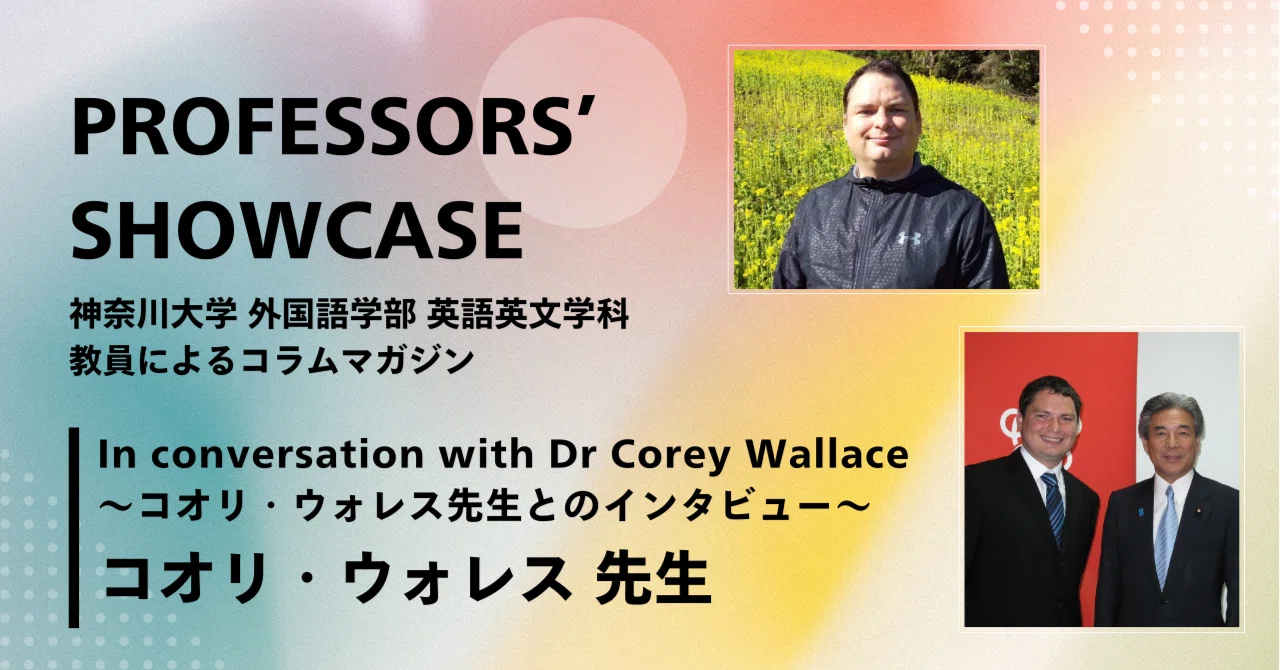
In conversation with Dr Corey Wallace ~コオリ・ウォレス先生とのインタビュー~

外国語学部英語英文学科です。今回の「Professors' Showcase」は国際関係がご専門のコオリ・ウォレス先生です。ニュージーランド出身で、日本とドイツに住んだことがあり、24歳になって初めて日本語を勉強し、博士課程に進む前は全く異なる分野を学んでいたウォレス先生。国際関係について興味ある方や、第二言語習得や留学を考えている方には特におススメです。インタビューは英語で行われましたが、記事は和訳付きでお届けします!
Please briefly describe your research interests
研究内容を簡潔に説明してください
Before starting my PhD, I was quite interested in science and technology, politics and policy. My Master’s thesis was on political issues surrounding genetics research with a focus on race and ethnicity. I did have some background in Chinese history and politics, but I only became interested in Japan itself once I went on the Japan Exchange Teaching (JET) program in 2004. As a JET, I lived in Fukushima where I had little choice other than to pick up a bit of Japanese.
博士課程に進む前は、科学や技術に関する政治政策に興味がありました。修士論文のテーマは、人種と民族に関する遺伝学研究を巡る政治問題でした。中国の歴史や政治については以前少し勉強していましたが、日本について興味持ったきっかけは2004年からJETプログラム(外国語青年招致事業)に参加したことです。JETとして福島に住んでいた時は、日本語を学ばなければならなかい環境でした。
Returning to New Zealand, I worked for the Ministry of Research, Science and Technology (now the Ministry of Business, Innovation and Employment) for a few years, and decided to go back to university, which is when I started to pick up on my interest in researching about Japanese politics and foreign policy. That coincided with the dispute over the Senkaku Islands between Japan and China. That was the stimulus for thinking more about Japan itself, and how it could be part of a regional security conflict. I thought at the time, and it turned out to be correct, that the Japanese national security policy would have to start evolving.
ニュージーランドに帰国後、研究科学技術省(現 企業・技術革新・雇用省)で数年間働きました。その後、博士課程に進学し、研究テーマは日本の政治と外交にしました。ちょうどその頃、尖閣諸島問題を巡って中国と日本の関係が悪化していたため、日本の地域安全保障問題にも興味を持つようになりました。当時、この出来事は日本の国家安全保障政策を考える上で重要な契機となると思いました。後に、この直観は正しかったのだと気づきました。
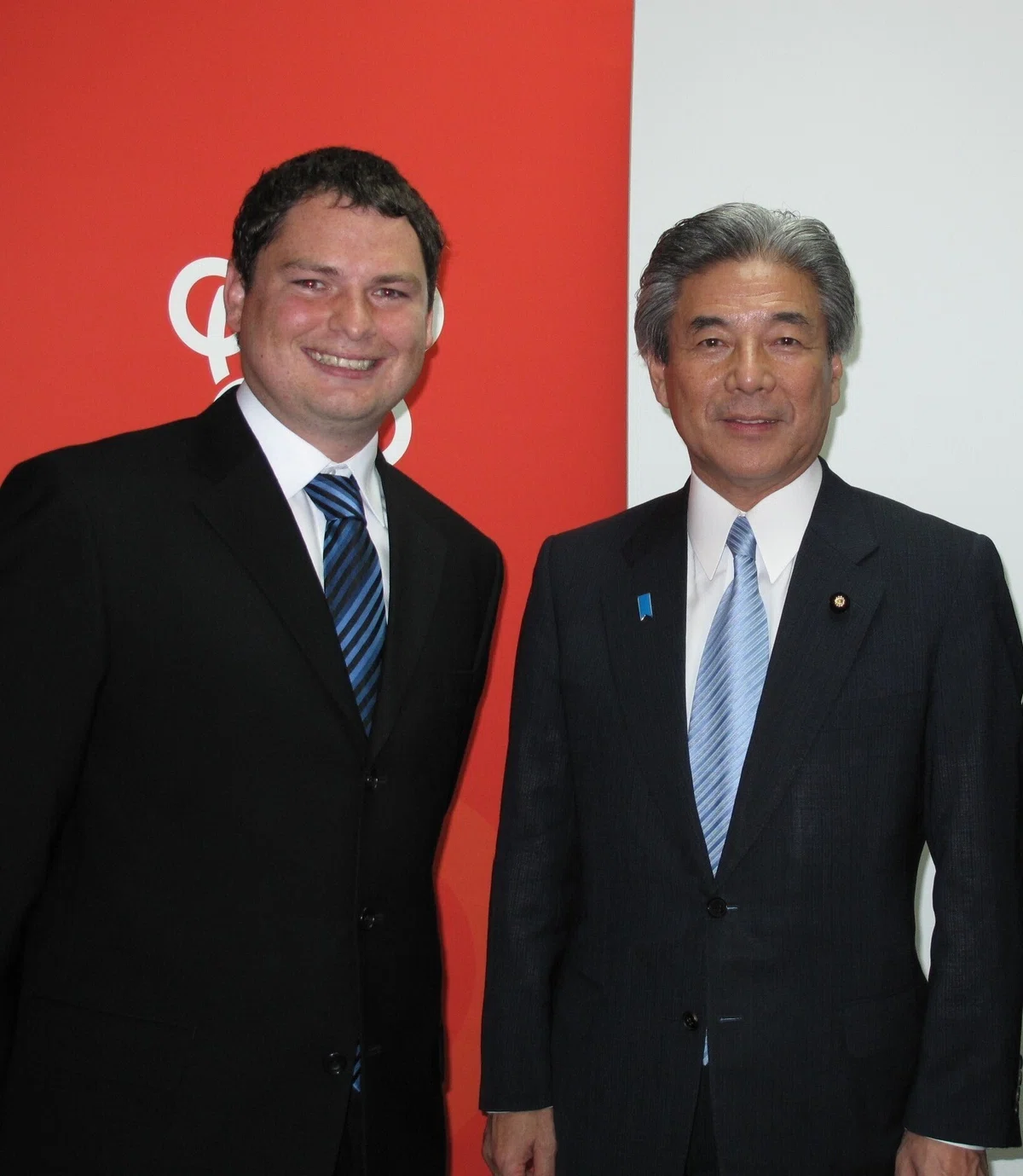
My PhD research was focused on the generational change and attitudes to national security in Japan. I went to Japan for a few months a couple of times during my PhD, and did some research and interned for a Japanese Upper House Councilor for a month or so. That really added to my interest in Japan in not just its everyday culture that I experienced before, but now increasingly how the political process worked.
私の博士論文は、日本における国家安全保障に対する態度の変化についてです。博士課程に在籍している間、何度か日本に行き、数か月間リサーチを行うとともに、参議院議員のもと一か月ほどインターンとして働きました。これまで日本の日常文化に触れる機会はありましたが、インターンとして働く中で、日本における政治プロセスにも興味を持つようになりました。
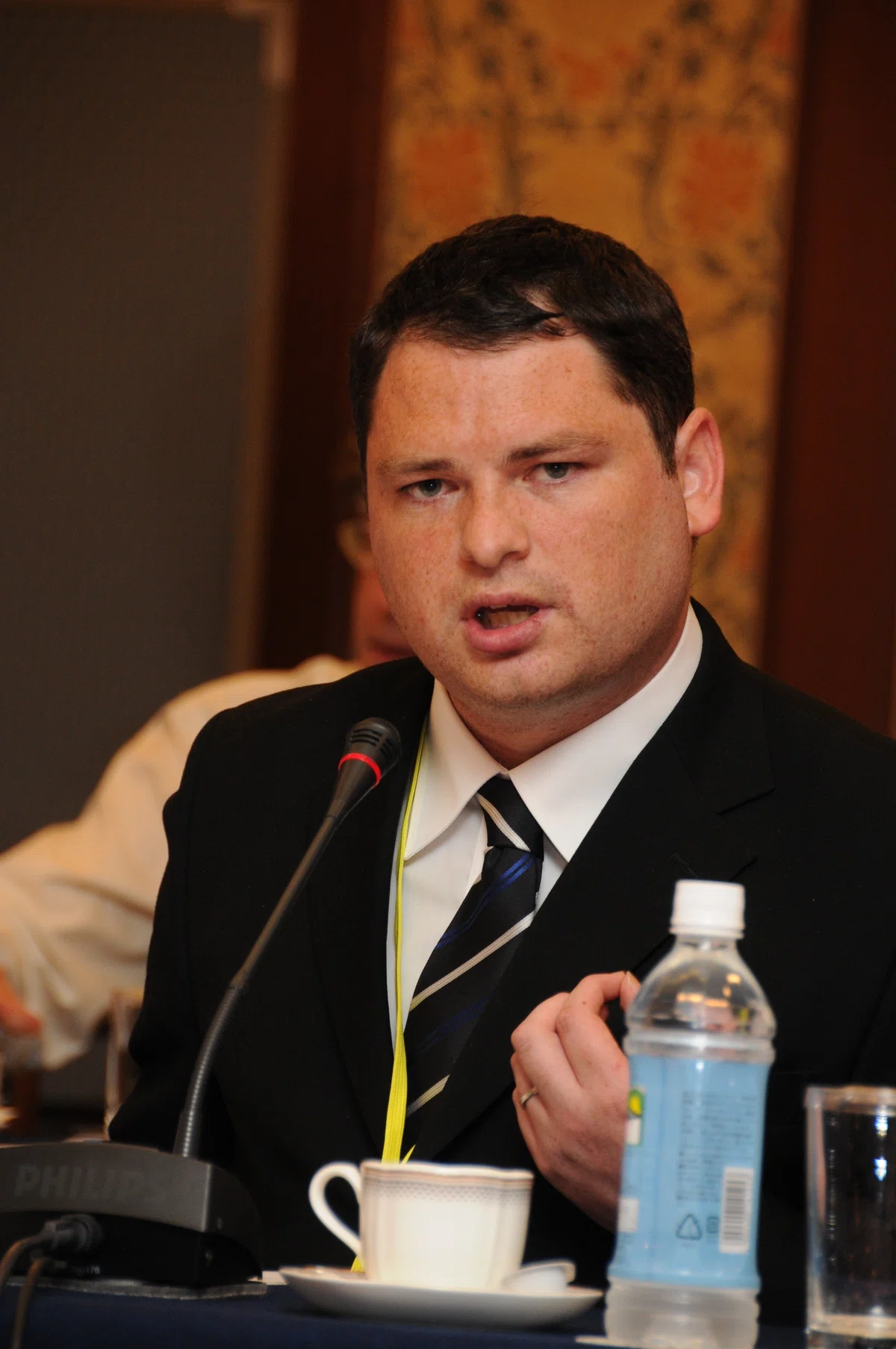
After obtaining my PhD from the University of Auckland, I went to Berlin to do a postdoc. There, my focus was still on Japan’s national security policy and how it was changing in response to China and other regional events. I also expanded a little bit on my initial area of research to include the connections between foreign economic policy, overseas development assistance, and infrastructure building and the connection to Japan’s national security outreach to areas such as Southeast Asia, Australia, and New Zealand itself. That coincided precisely when Prime Minister Abe was promoting the idea of a Free and Open Indo-Pacific (FOIP).
オークランド大学で博士号を取得後、ベルリンにポスドクとして赴きました。ベルリンでの研究は、主に日本の国家安全保障政策がどのように中国の台頭や周辺地域での出来事に対応しているのかについてでした。これまでの研究から派生する形で、国際経済政策や国際経済協力、インフラ設備など、日本と東南アジア、オーストラリア、ニュージーランド安全保障関係についても研究するようになりました。ちょうどその頃、安倍首相が「自由で開かれたインド太平洋」を発表しました。

In fact, one of the articles that I wrote during my PhD, “Japan’s strategic pivot south: diversifying the dual hedge” (Wallace, 2013) reflected on that sort of change. PM Abe gives that an official name, and makes it a part of Japan’s approach so that was a good sign to me that this was a good direction for my research. I was interested in I guess you can say Japan’s grand strategy and how it is adapting to not only strategic competition from the US and China, but also how it can deepen its relations with other countries in between who are facing the same sorts of issues where they have China as a major economic partner, but would rather not see it as a security guarantor.
私が博士学生だった時に書いた学術論文、「Japan’s strategic pivot south: diversifying the dual hedge(日本の戦略的 南へのピボット:二重ヘッジの多様化)」(ウォレス、2013年)ではまさにアジアにおける日本の戦略の変容について考察しました。ある意味、安倍首相がそれに「自由で開かれたインド太平洋」という名前をつけたかのようで、自分の研究方向は間違っていないう確信につながり、私にとっては大きな自信となりました。
私は日本のいわゆる「大戦略」というものに興味を持っていました。日本は今後、米国や中国からの戦略競争にどのように対処していくのか。また、中国との関係において、経済関係を維持しつつ、防衛面での依存を避けるという課題を抱える米国と中国の間に位置する周辺国同士が、どのように関係を構築していくのかに関心がありました。
What is your current research interest?
現在の研究テーマは何ですか?
I guess I still am focusing on that, and with the second Trump Presidency, the cooperation between the so-called middle and regional powers is only going to become more important as the great powers or potential great powers such as China, the US, and frankly Russia and India become extremely unreliable. How does everybody else in between respond? Is there any kind of opportunity for working together and for increasing the capacity to deal with regional problems? Not necessarily by excluding the great powers, but without having to wait for them to make diplomatic initiatives. Since I moved back to Japan from Germany, I have been working with Aoi Chiyuki at the University of Tokyo on strategic communications, with a focus on Australia and New Zealand.
先ほど申し上げた内容が、今の研究テーマです。それに加え、中国、米国、そして率直に言ってロシアやインドといった大国、または大国となりうる国に対する信頼が失墜する中、今の第2次トランプ政権の発足に伴い、いわゆる中堅国や周辺国との協力関係は日本にとって今後どのように変化していくのかに興味があります。
非大国はどのような対応が求められるのか。中堅国は大国を除外せず、だからと言って大国の外交力に頼るのでもなく、中堅国同士が地域の問題に対処するために果たして協力し合うことはできるのか。このような問題について今考えています。
ドイツから日本に戻ってからは東京大学の青井 千由紀教授とオーストラリアとニュージーランドにおける戦略的コミュニケーションについて共同研究しています。
What is strategic communication?
戦略的コミュニケーションとは?
Strategic communication is about how you communicate to your allies and your potential rivals, as well as the public. In a high-level documentation on foreign policy on national security, how do you communicate about the world, how your country sees the world, and what vision would you like to see realized. There is an increased sensitivity and challenges around the relationship with China. How does Australia and New Zealand communicate about China in these documents without making China their enemy while also being clear about their red lines, as well as figuring out how to work together with other countries to counterbalance against China. Finding a nice balanced point is difficult for small or medium sized countries.
戦略的コミュニケーションとは、同盟国、競争相手となり得る国、そして国民に対し、どのようにしてコミュニケーションを取るのかについて研究する分野です。外交政策や国家安全保障に関する資料には、世界の捉え方や理想とする世界のビジョンが示されています。近年、オーストラリアやニュージーランドは、このような資料の中で中国をどのように表現するかに悩んでいます。中国を敵国として扱わず、自国のレッドラインを明確しつつ、周辺国と協力しながら中国の台頭にどう対応していくかを模索しなければなりません。
このバランスを維持することは、小国・中堅国にとって極めて難しい課題となっています。
Another aspect that has become extremely important is disinformation, misinformation, and foreign information manipulation, especially from non-state actors in Australia and New Zealand. Recently, radicalization is much easier and quicker to happen. Russia is purposefully using disinformation and misinformation in the region. There are also concerns that China is increasingly more interested in the approach along the lines of what Russia does, where the purpose itself is to cause damage or to create divisions within a society. This will be a much more concerning issue, especially with the existing social networks that involve non-state actors that are already doing this. A lot came to the fore during the COVID-19 pandemic where there was a lot of state and non-state-based misinformation and disinformation. In both Australia and New Zealand, this created a need for them to respond to this kind of threat in a much more coherent way.
特に、非政府アクターによる偽・誤情報の拡散や、海外からの影響工作が、オーストラリアとニュージーランドにおいて非常に重要視されるようになりました。近年では、市民の過激化も加速しています。
ロシアによる意図的な偽・誤情報の拡散に加え、今後は中国がロシアの手法を模倣し、単に損害を与えることを目的とするのではなく、社会の分断を第一の目的とした影響工作を行うのではないかという懸念があります。
コロナ禍においても、ソーシャルメディア上では非政府アクターによる偽・誤情報の拡散が目立ち、既にその影響が顕在化しています。こうした状況の中、オーストラリアとニュージーランドでは、より一貫性のある対応が求められるようになっています。
Australia and New Zealand have much in common, not just because of their cultural affinities, but their basic overall structure of approach to government is quite similar. They also have a lot of the shared values and outlooks on regional issues, and a shared sense of responsibility to the Pacific Islands and to Southeast Asia.
オーストラリアとニュージーランドは共通点が多いです。文化的な共通性だけでなく、政府の構造やアプローチもよく似ています。地域問題に対する価値観や展望、太平洋諸島や東南アジアに対する責任感ようなものも共有しています。
How does your research relate to the classes that you teach?
ご自身の研究と授業の関係性は何ですか?
I am interested in three non-great powers, Japan and more recently, Australia and New Zealand. These countries have a certain viewpoint on regional relations, and rather than wanting to be competitors or play an outsized role in power politics, they are interested in robust multilateral institutions and maintaining a degree of communication and regularized behavior between states.
私は主に日本、そして近年ではオーストラリアやニュージーランドといった非大国に関心をもっています。非大国は、地域関係に対して独自の視点を持っており、大国間競争に加わることや、強大な力を手に入れることには関心がありません。
それよりも、強固な多国間機関の構築や、国家間の円滑なコミュニケーション、ルールに基づく関係の確立を重視しています。
In my teaching, I want to emphasize that while you have to understand great powers like the US and China, everyone else’s approach to foreign policy is not necessarily derivative of those two countries. You are not necessarily on one side or the other, and your interests are not necessarily aligned.
私の授業では、米国や中国といった大国を理解することはもちろん大切ですが、他国の外交政策が必ずしも米中と全く同じとは限らない、ということを伝えたいです。各国は米中のどちらか一方に属しているわけではなく、また、その利害が完全に一致しているわけでもありません。
When it comes to my teaching within the GEC program, I want to make clear that in order to understand international relations, you have to understand your own country and their interests in connection to the rest of the world. There are a lot of up-and-coming countries that are important to Japan for various different reasons. To my Japanese students, I want to emphasize that, yes, you should learn English because it is the international language, but the opportunities that are available to you in the world do not necessarily mean you will be speaking English to native speaker like me. There are a whole range of different opportunities to use English and to interact with people from many different places.
GECプログラムでは、国際関係について理解する上では、自国を理解し、自国と他国との利害関係を理解する必要だと教えています。今急速に発展している国々は、日本にとって様々な面で重要です。日本人学生には、もちろん英語を学ぶことは大切だと伝えていますが、将来英語で話す相手が必ずしも私のような英語母語話者であるとは限らないということも伝えています。英語を使って交流する機会は本当に多種多様であることを強調しています。
Do you feel like you are educating students who will represent Japan in the future?
将来日本を代表する学生を育てていると感じますか?
I would hope so! My students pursue different careers, some going into local government, and others work for businesses with a focus on overseas partners, and the tourism industry. I want my students to keep an open mind about what are the important trends for Japan’s engagement with the rest of the world, but also how that might relate to your own personal interests.
もちろん、そうであって欲しいと願っています!私の教え子たちの進路先は本当に多岐にわたります。地方公務員になった学生もいれば、海外事業に特化した企業や、観光業界に就職した学生もいます。私は学生達に、日本と世界との関わりについて先入観を持たず、またそれがどのように自分自身に影響を与えるのかを考えて欲しいと願っています。
You lived in Japan, Germany, and New Zealand. The students you teach in GEC will go on a compulsory study abroad program. What advice do you have for students going to a foreign country to study from your experience living in several different countries?
GECでは留学が必須となっています。先生は日本、ドイツ、そしてニュージーランドと様々な国に住んでいましたが、これから留学に行く学生に何かメッセージをお願いします。
All those countries are so different, right? To understand your own country, you kind of have to go overseas and vice versa. New Zealand is an island nation like Japan, and it is even further away from everything.
日本、ドイツ、ニュージーランド、どれもかなり異なる国ですね。自国についてより深く知るためには、海外に行ってみることが大切ですし、その逆もまたしかりです。私の故郷ニュージーランドは、日本と同様の島国で、またさらに何もかもから遠く離れた場所にあります。
It is not a big problem if at 18, you have not been internationalized. The first time I went overseas was when I was 24 years old. You could say I was a bit of a late starter in that sense. Going to Japan, it was the first time that I had to engage with a completely different culture and learn a second language. So, it is never too late.
18歳の時点で海外経験がないことは決して問題ではありません。私が初めて海外にちゃんと行ったのは24歳の時で、ちょっと遅い方だったかもしれません。日本で初めて全く異なる文化と関わり、その時に第二言語も学びました。何事も遅すぎるということは決してありません。
Your Japanese is excellent. Do you have tips for students trying to study a second language?
先生の日本語はとても流暢ですね。第二言語を勉強している学生に何かアドバイスはありますか?
I am not going to say you don’t need to study the grammar. Of course you do. But I found what was really important was to imitate or practice the mannerism. Just look at how other people speak to each other and try imitating and practicing that by yourself. Don’t worry about the accent because the pronunciation is much more important. It is more important to speak clearly and pronounce words properly. There is a perfectly valid thing called a Japanese English. Who cares if you have a bit of an accent? English speakers are so used to people with different accents anyway.
文法を勉強するなとは言いませんが、私自身が言語習得において重要だと感じたのは、相手を真似して、実際に動作を練習してみることです。
他の人の話し方を見て、それを真似して練習してみてください。アクセントを気にする必要はありません、重要なのは、単語を正しくはっきりと発音することです。英語圏の人はそもそも色々な訛りに慣れているので、多少の訛りなんて気にする必要はありません。ですから、日本人が話す英語「ジャパニーズ・イングリッシュ」で大丈夫です。
What was appealing about Kanagawa University as a place to work?
仕事場としての神奈川大学の魅力は何ですか?
During my first time in Japan while I was working as a JET, I always enjoyed visiting Yokohama. I thought to myself, you know what, I wonder if I could live here in the future. It was purely coincidental that after my postdoc in Germany, the Kanagawa University position came up. It was in Yokohama, so I thought why not?
私がJETプログラムで最初に来日した時、よく横浜に遊びに行っていました。純粋に、いつかここに住んでみたいなと思ったんです。ドイツでポスドクを終えた頃、たまたま神奈川大学で教えるポジションに空きがあり、職場が横浜だったので応募してみました。
Yokohama has become an even better place to live in since I first came to Japan. It has become more multicultural, and the people are easygoing. Nobody even tries to speak to me in English, and they are quite comfortable with the fact that foreigners can speak Japanese. Even now I go through most days here without having much of a sense that I am non-Japanese. Culturally, the beach is important to me as a Kiwi, and having a good access to the beaches was important.
私が最初に来日した時と比べて、横浜はさらに住みやすい場所になりました。もっと多文化社会になり、人々もリラックスしています。誰も私に英語で話しかけようとしませんし、外国人が日本語を話せることにも慣れています。それもあって、自分が日本人ではないといことをあまり意識せず生活しています。ニュージーランド人にとってビーチは文化的に非常に大切なので、ビーチへのアクセスが良いことも重要でした。
Learning that Kanagawa University was going to introduce a program like GEC was very appealing because I hadn’t really thought too much about working in Japan as an academic in the past. In recent years, there has been a greater push to employ foreign academics to teach subjects in English and have them be part of a full-time staff. I think this reflects a change in Japan itself. Once I realized that that kind of position was open, I was very happy to apply. I don’t find it strange living in Japan anymore.
神奈川大学でGECのようなプログラムができていると知った時、これまで日本の大学で教えるなんて考えてもいなかった自分にとっては、とても魅力的に感じました。近年、日本では外国人研究者を雇用し、正規教員として専門科目を英語で教えてもらおうという動きが活発になっています。このような動きは、日本社会の変化を反映していると思います。自分が日本に住んでいても、もうそれが不思議とは思わなくなりました。
(インタビューは2025年3月5日英語でみなとみらいキャンパスにて実施)
コオリ・ウォレス先生についてもっと知りたい方はこちらから!
コオリ・ウォレス先生の研究に興味がある方はこちらから!
GECについてもっと知りたい方はこちらから!
ウォレス先生の教え子の留学や授業の体験談はこちらから!
