
小刀根トンネル、愛発関(敦賀市)

Tsuruga 敦賀
The story of the Japan Heritage "Railway Across the Sea" begins as follows:
Here is one ticket. The Europe-Asia International Liaison Train operated around 100 years ago, and this ticket could be used to travel from Tōkyo to Berlin. With the launch of the railway liner connecting Vladivostok and Tsuruga, the origin and destination of the Trans-Siberian Railway, the railway crossed the sea and connected to Europe.
Why did international trains arrive and depart from Tsuruga Station? It is closely related to the history of railways in Nagahama City, Tsuruga City, and Minami-Echizen Town during the Meiji era.
The story begins with a tunnel connecting the Sea of Japan and Lake Biwa.
I visited Tsuruga City, Fukui Prefecture 福井県敦賀市 on 15th April 2023, and here is a post in ❌ (Twitter):
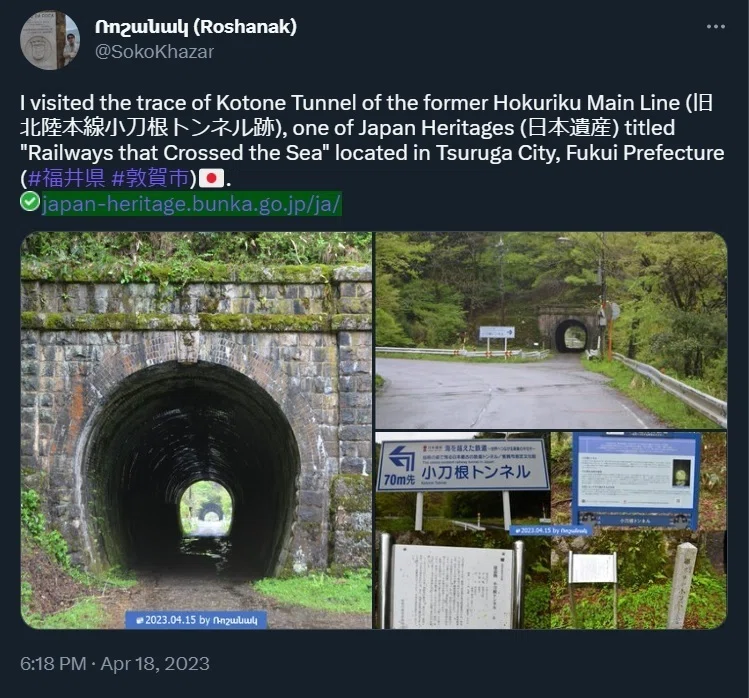
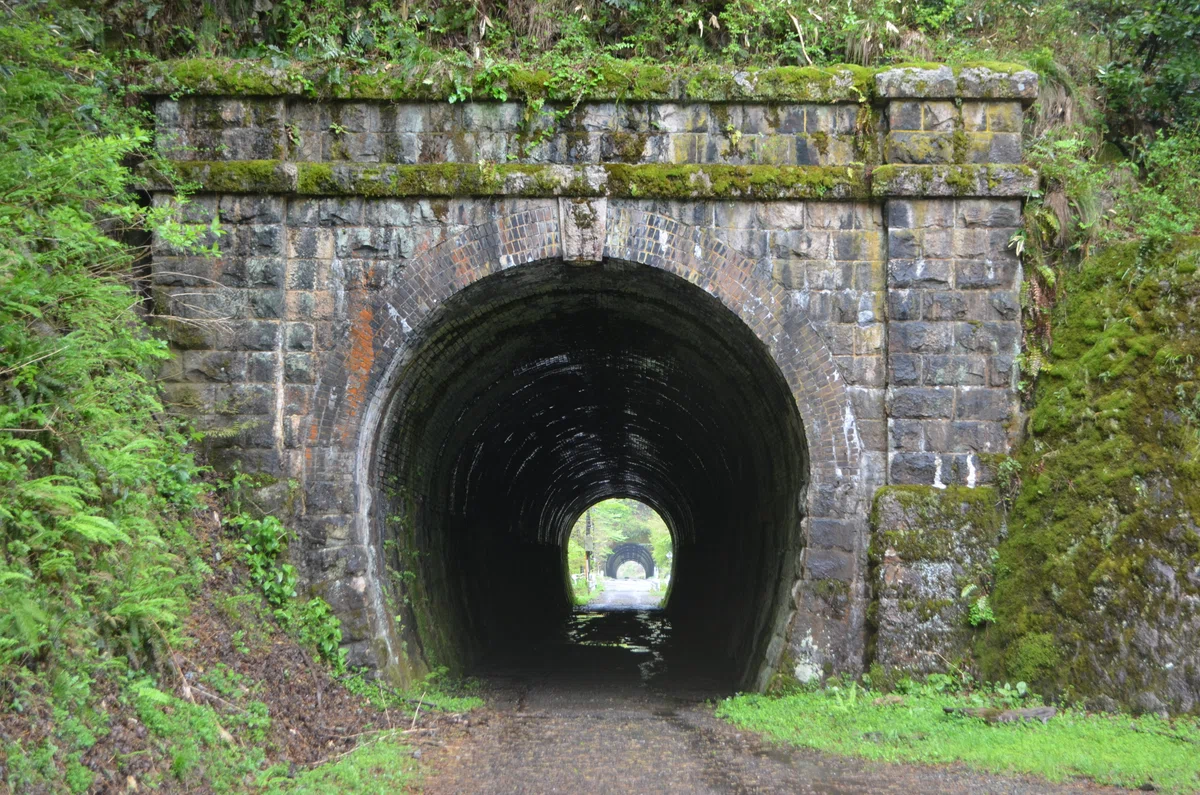
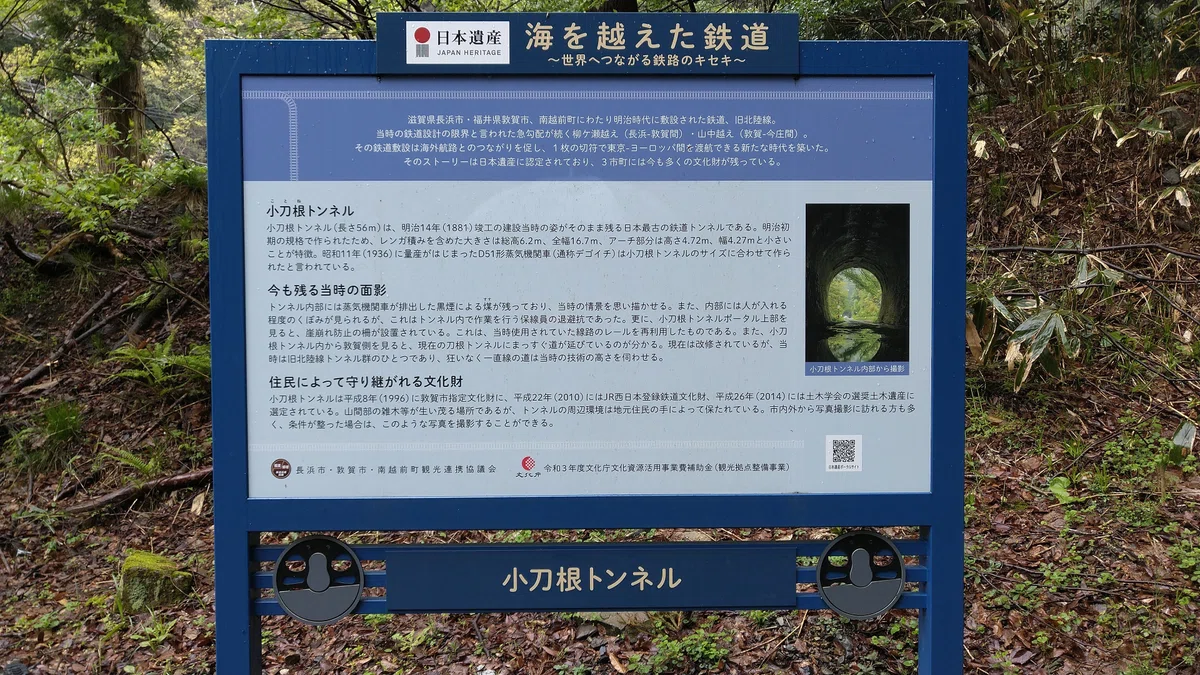
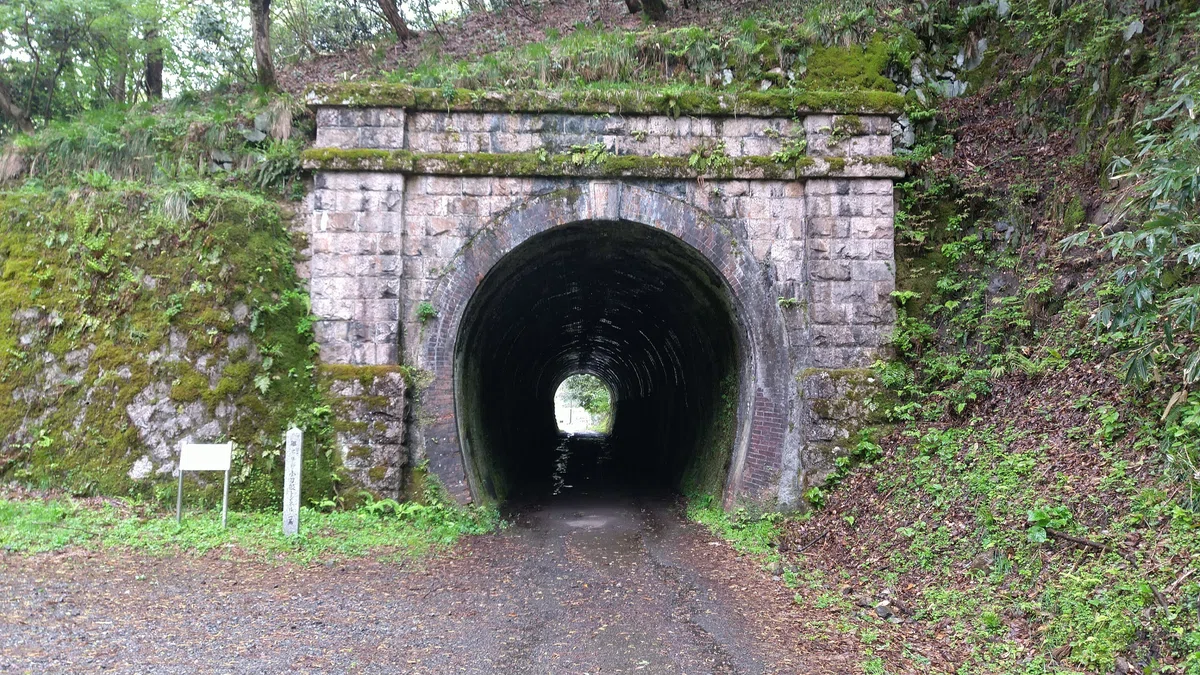
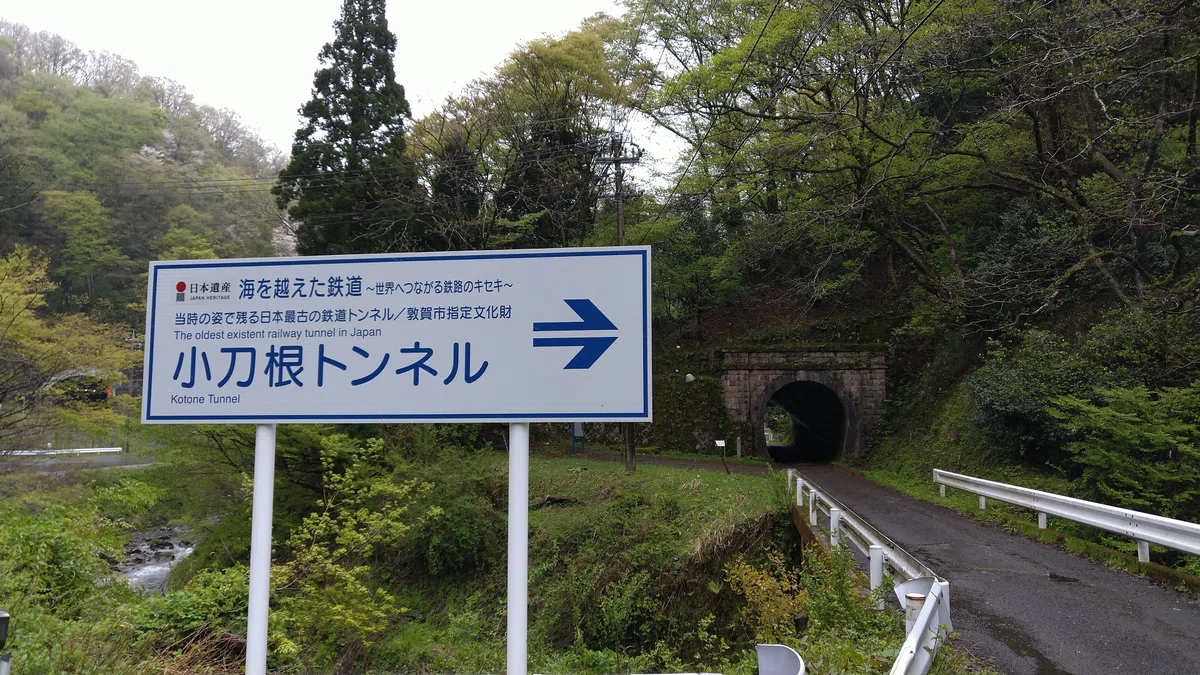
Kotone Tunnel 小刀根トンネル
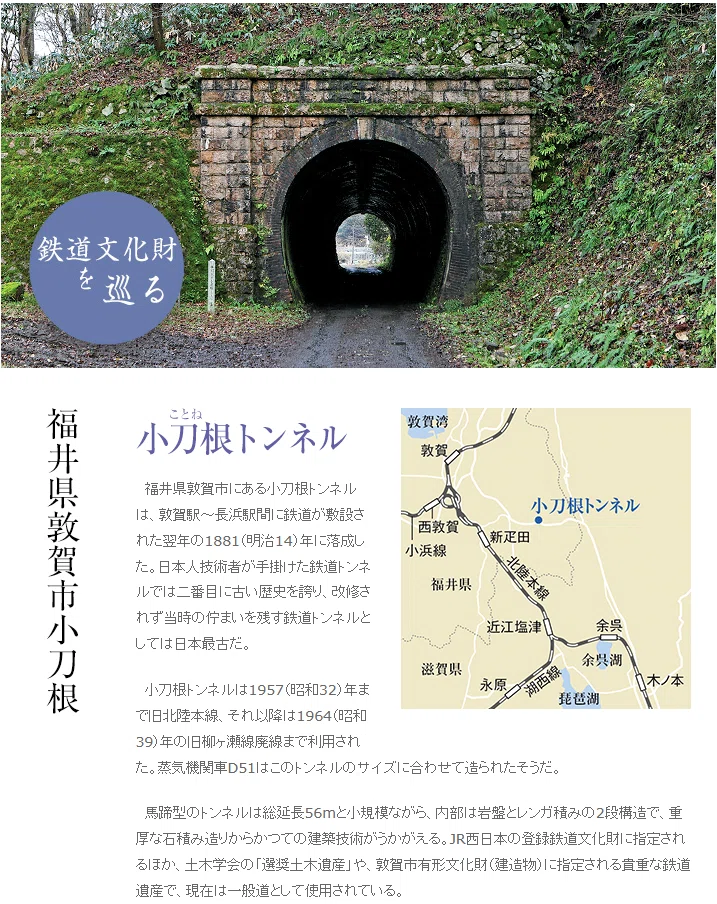
The Kotone Tunnel was constructed in 1881 as a tunnel on the Hokuriku Main Line (北陸本線), and is the oldest railroad tunnel in Japan that retains its original appearance.
Although transportation between the Ōmi Basin (近江盆地) and provinces of Wakasa (若狭) and Echizen (越前) has been important since ancient times, it has been extremely difficult due to the thick mountain ranges and the fact that the area is known with its heavy snowfall, so transportation had to depend on maritime transport that takes a long detour around the Sea of Japan (日本海). There was also consideration of digging a canal to short-circuit Tsuruga Bay (敦賀湾) and Lake Biwa (琵琶湖), which was utterly unrealistic considering the large-scale civil engineering work, budget, and technology involved.
The railroad was the means to overcome such problems at once.
When the Hokuriku Main Line was rerouted to enhance its transportation capacity in 1957, the remaining section including the Kotone Tunnel was left as a branch line for regional transportation. That is JNR Yanagase Line (国鉄柳ヶ瀬線), but it was discontinued in 1964.
Location

Photos taken on 15th April 2023
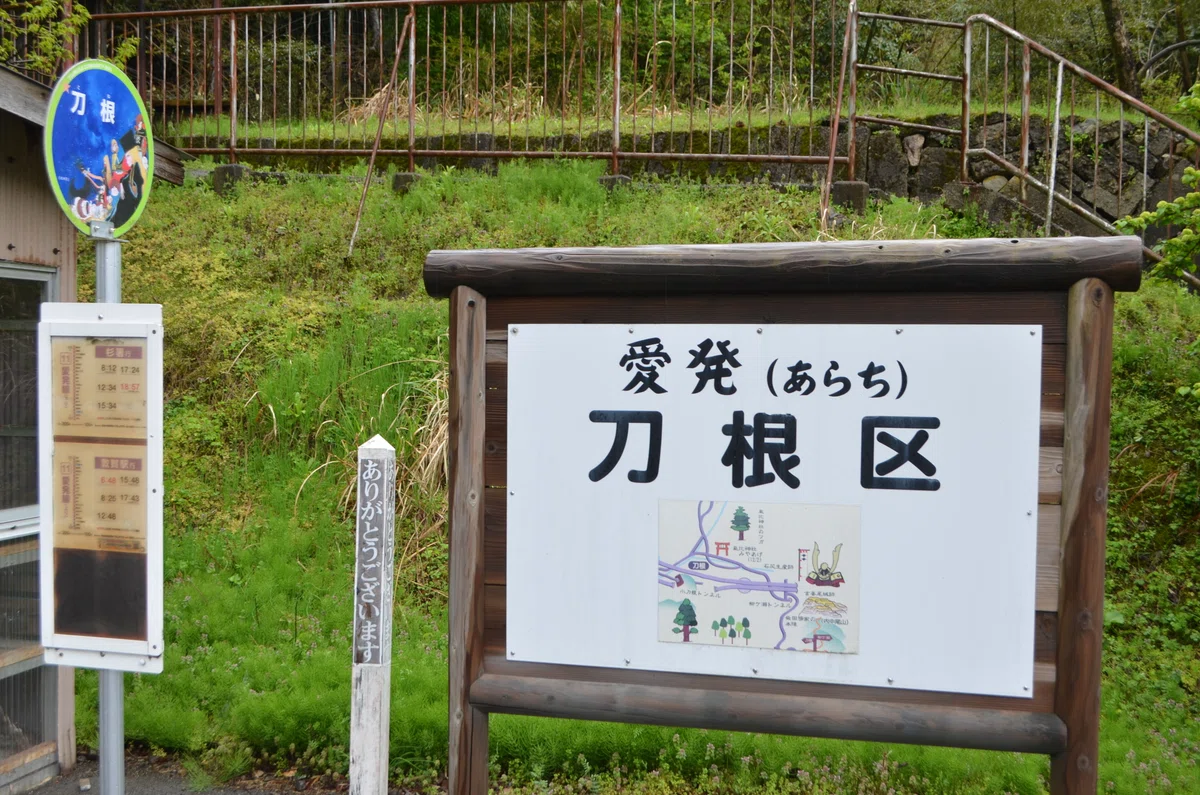
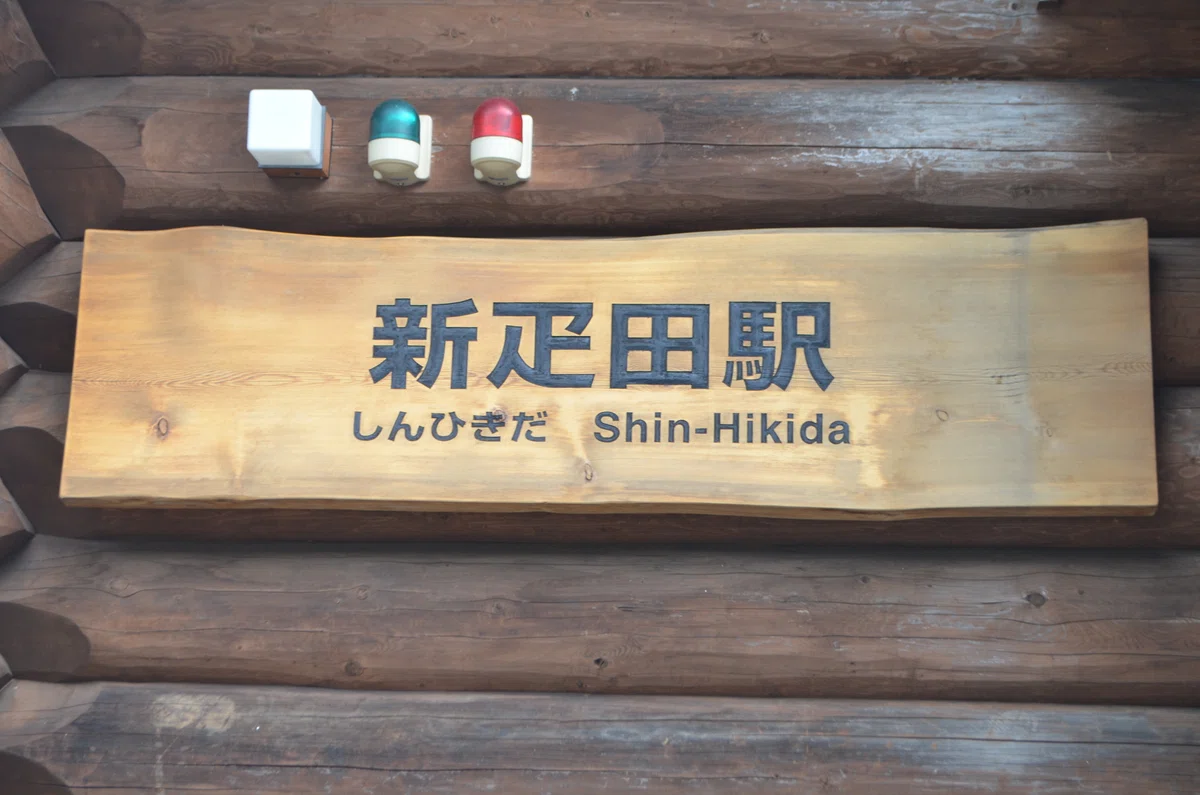
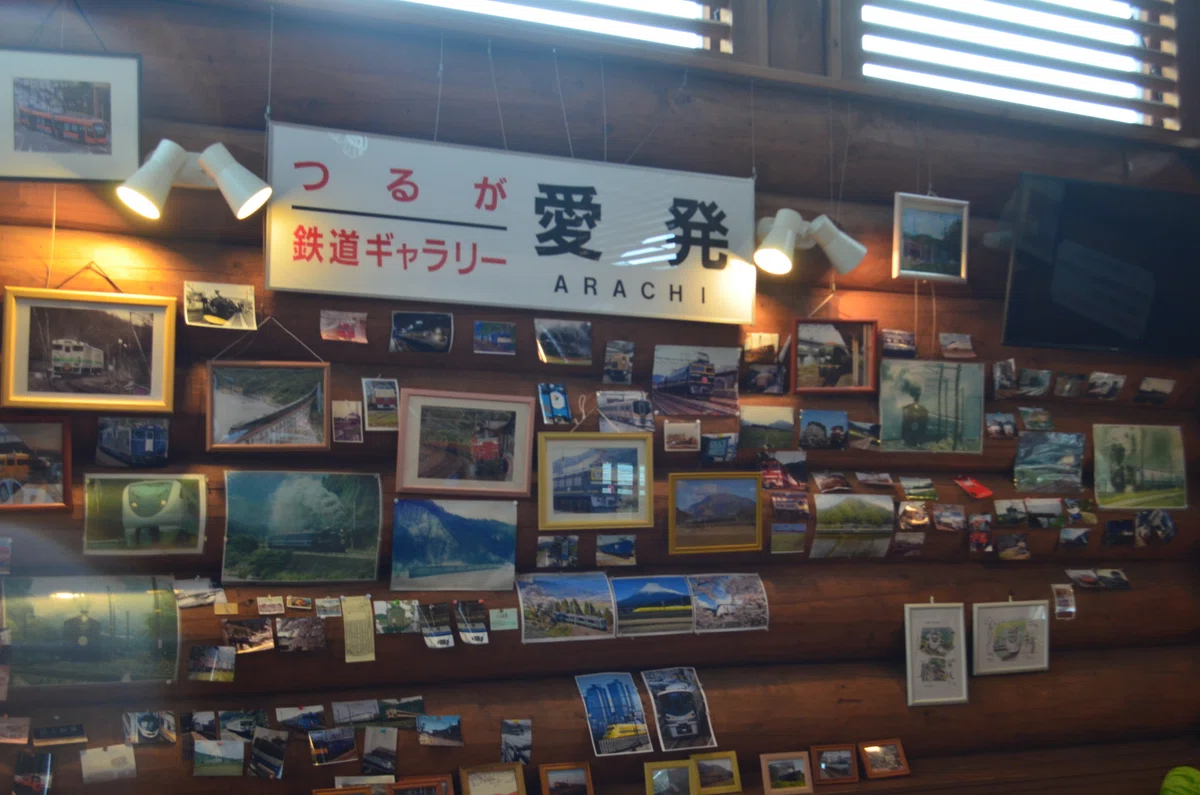
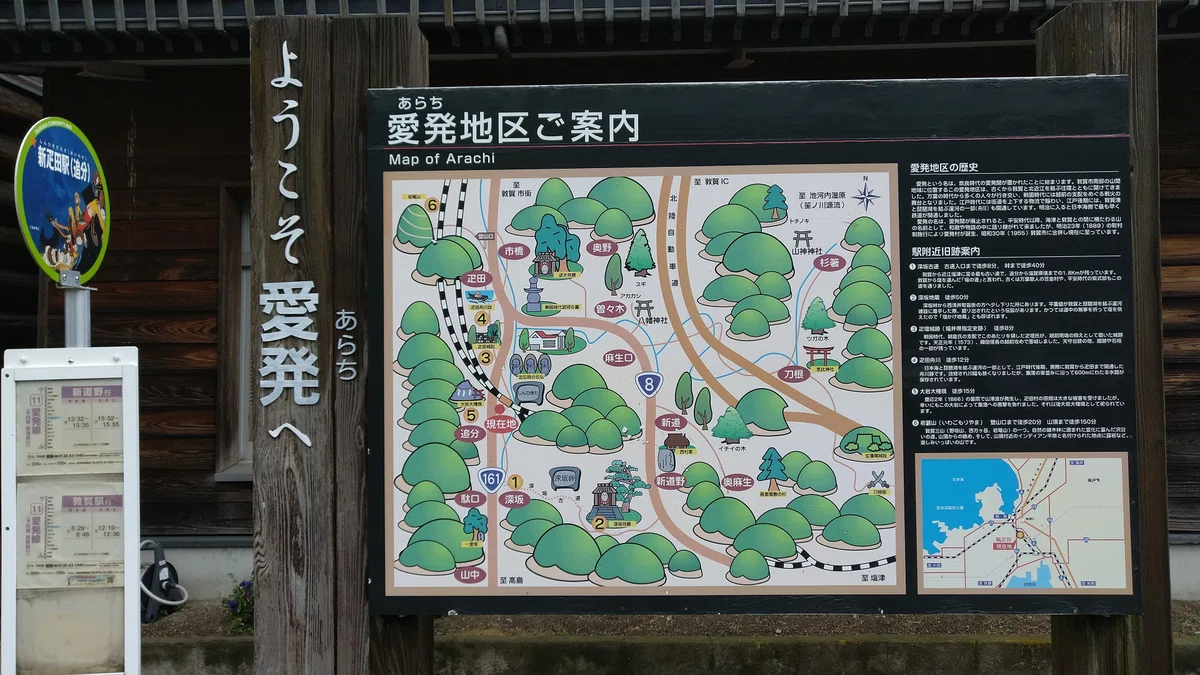
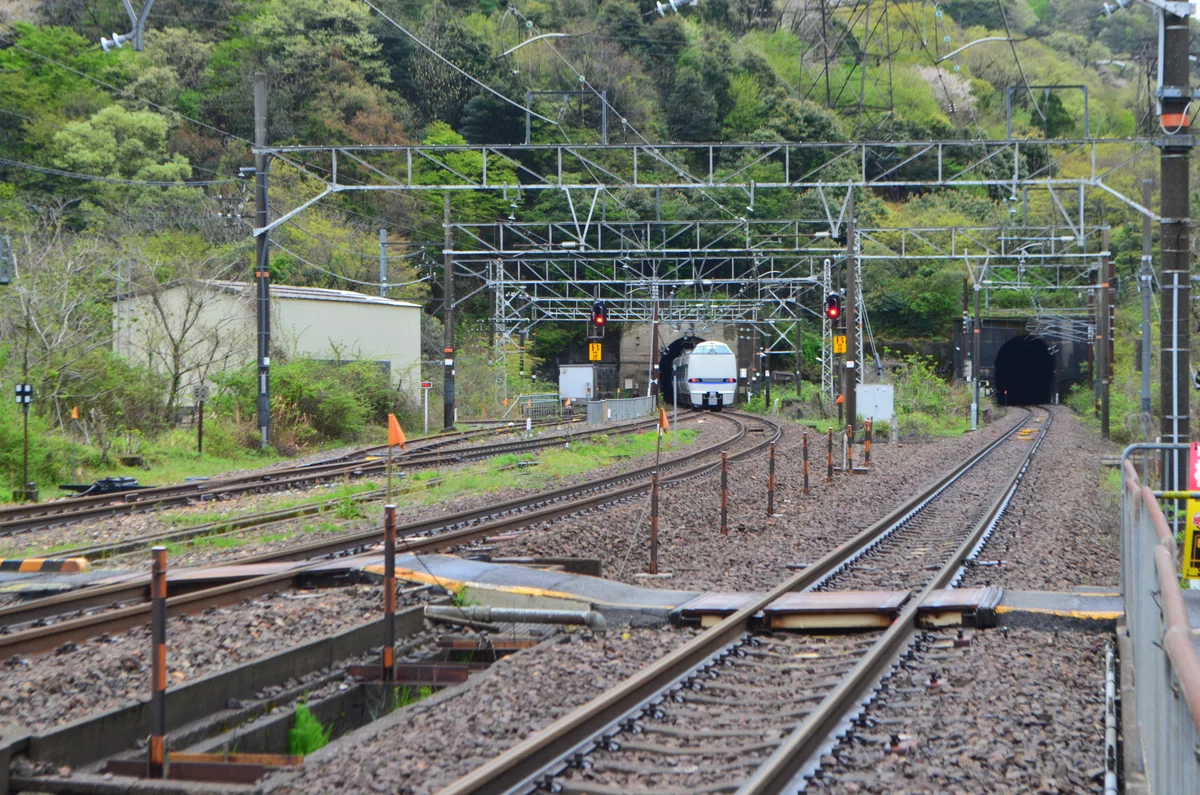
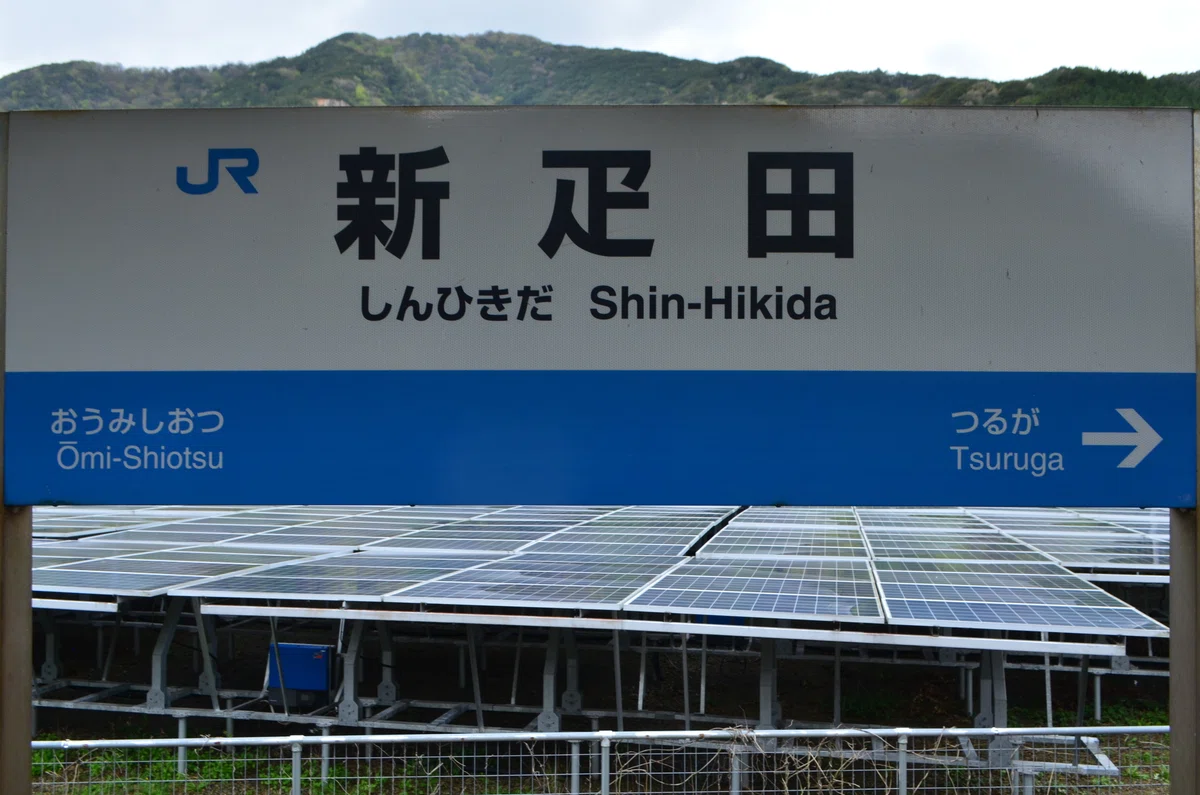
Taking a Tsuruga City community bus of Arachi Line 愛発線, I went to Tone 刀根, and then walked to Shin-Hikida Station 新疋田駅 of JR Hokuriku Main Line 北陸本線 via Kotone Tunnel 小刀根トンネル under the rain.
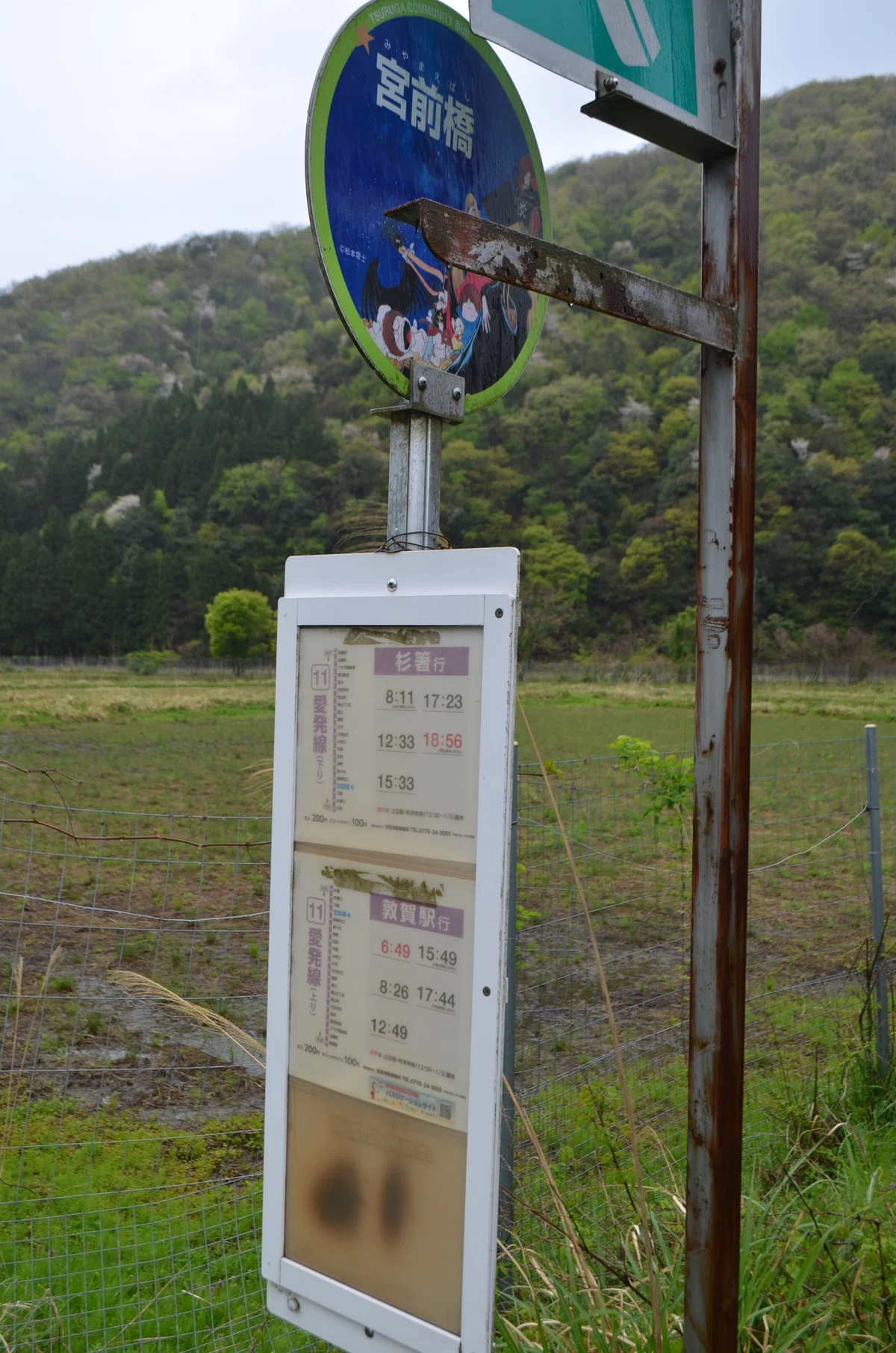
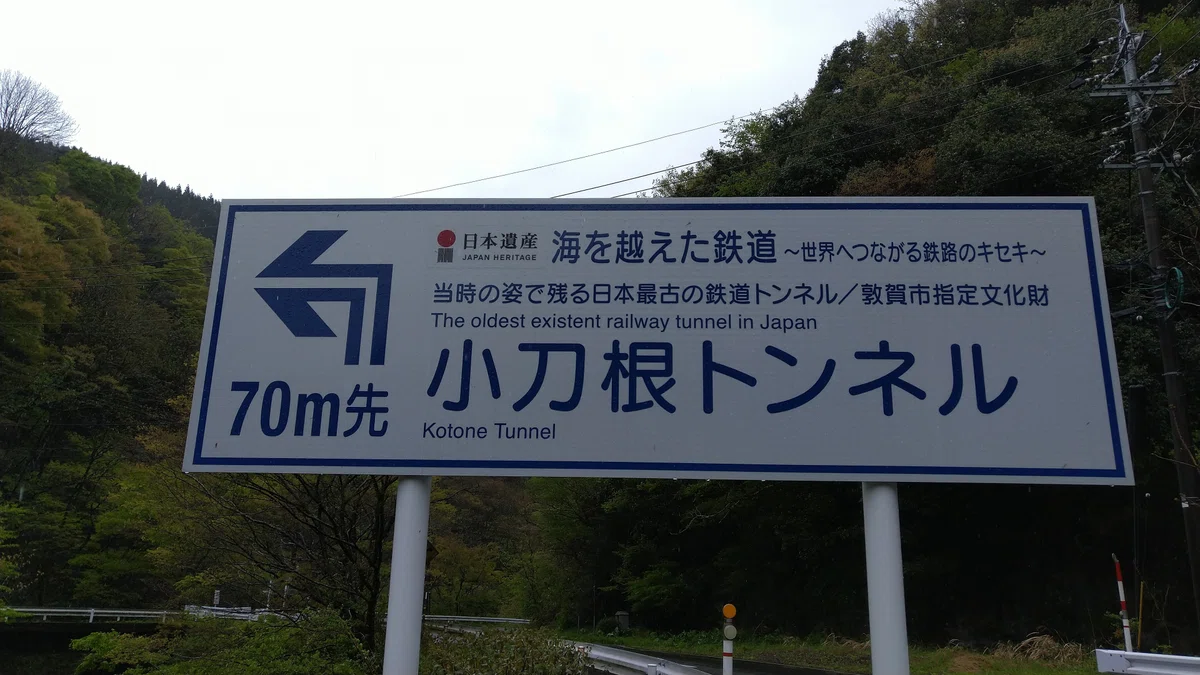
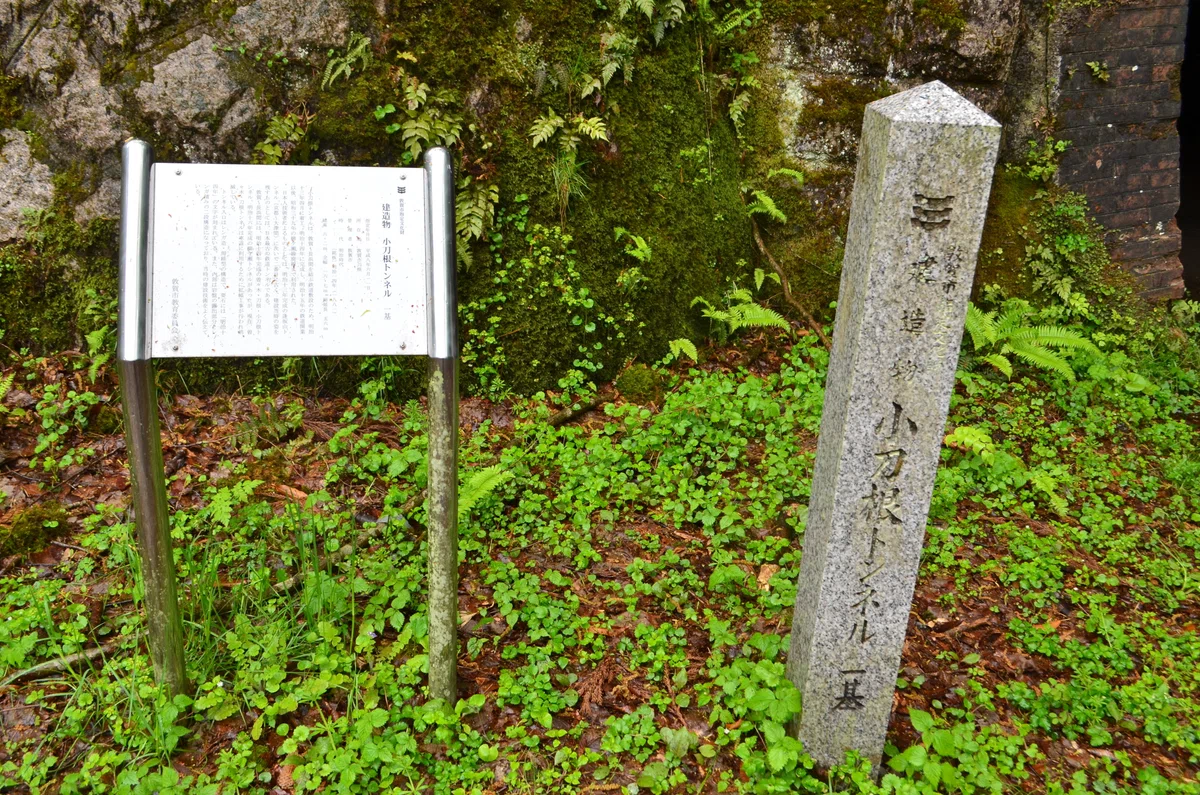
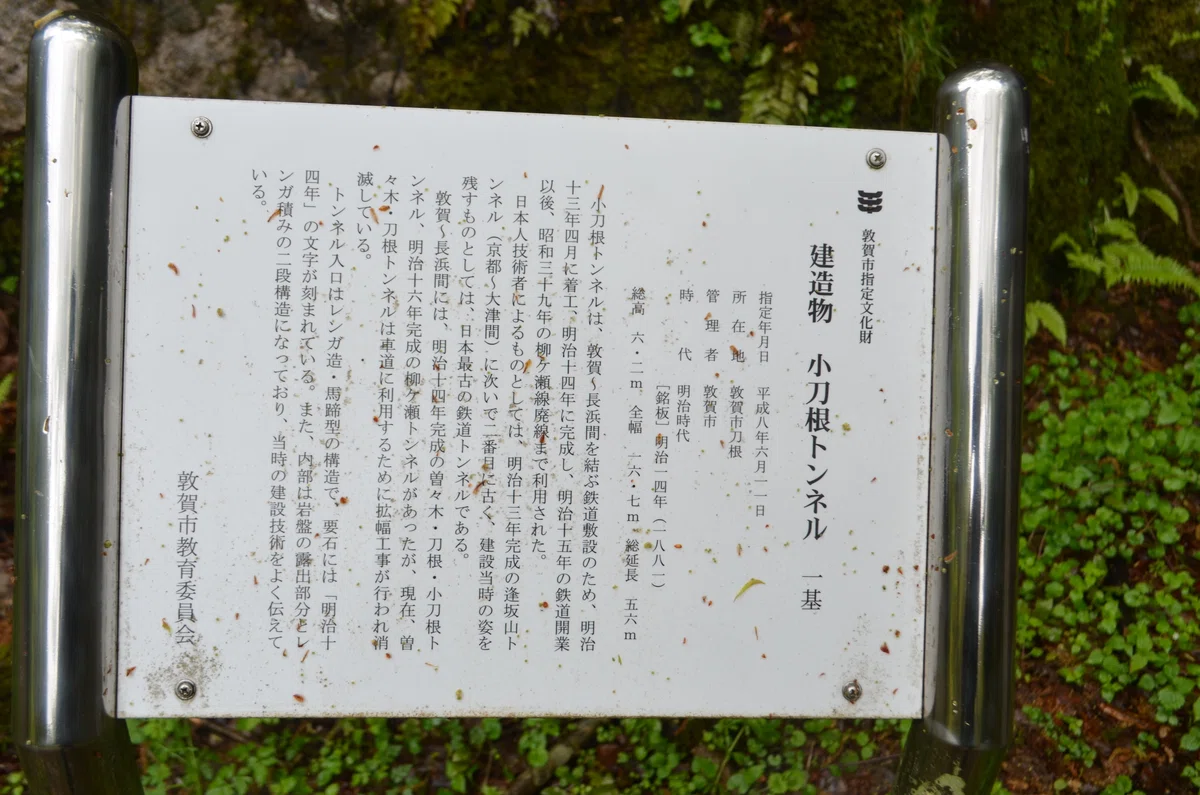
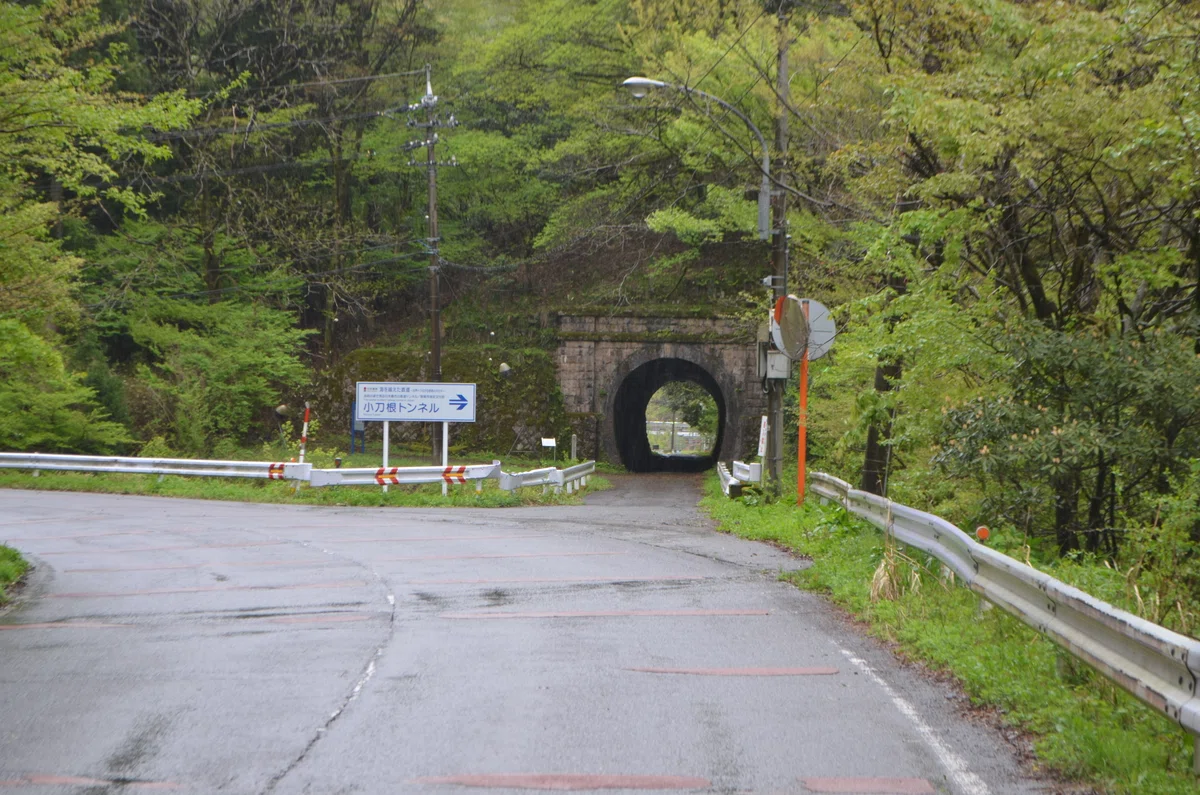
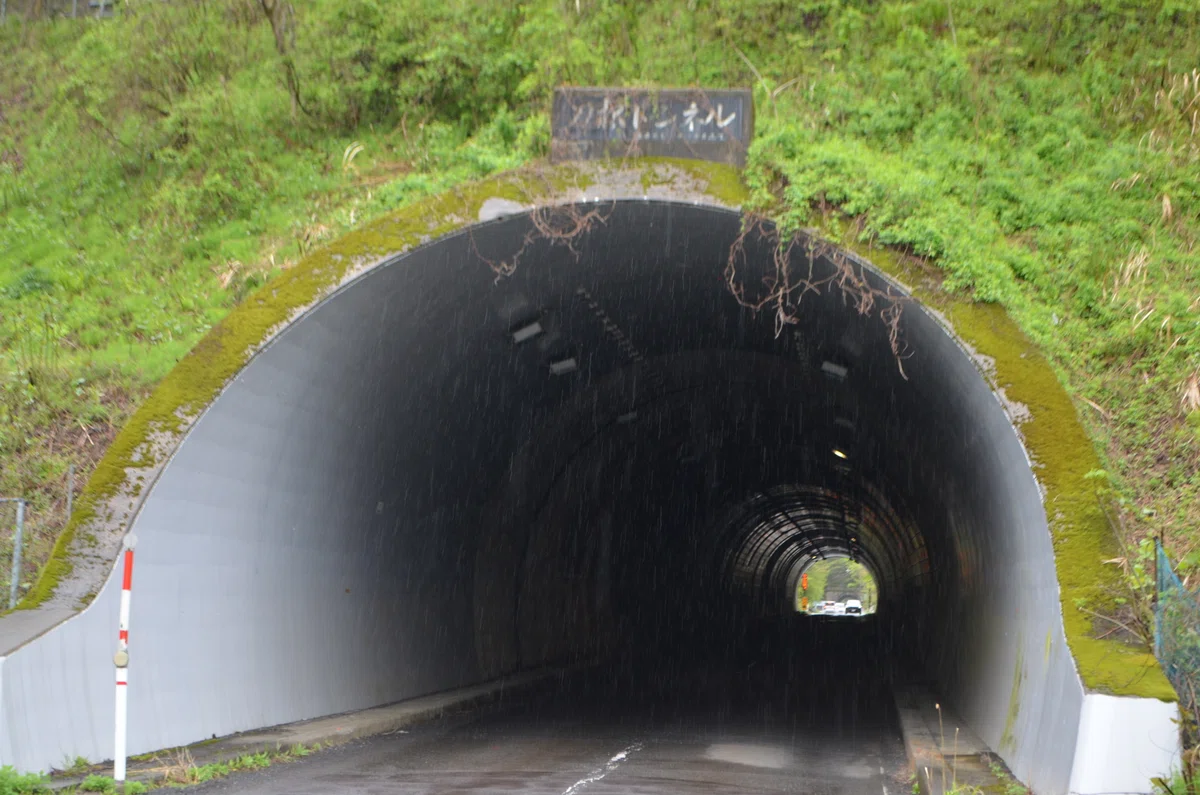
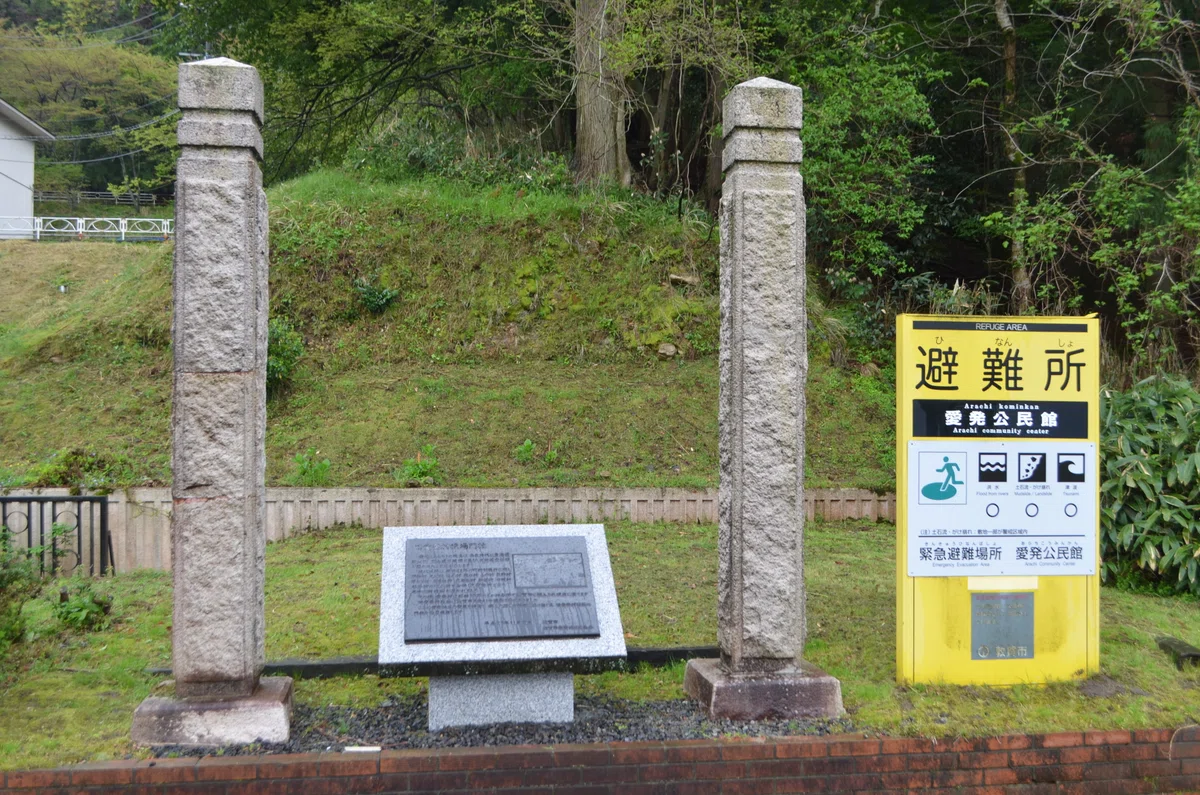
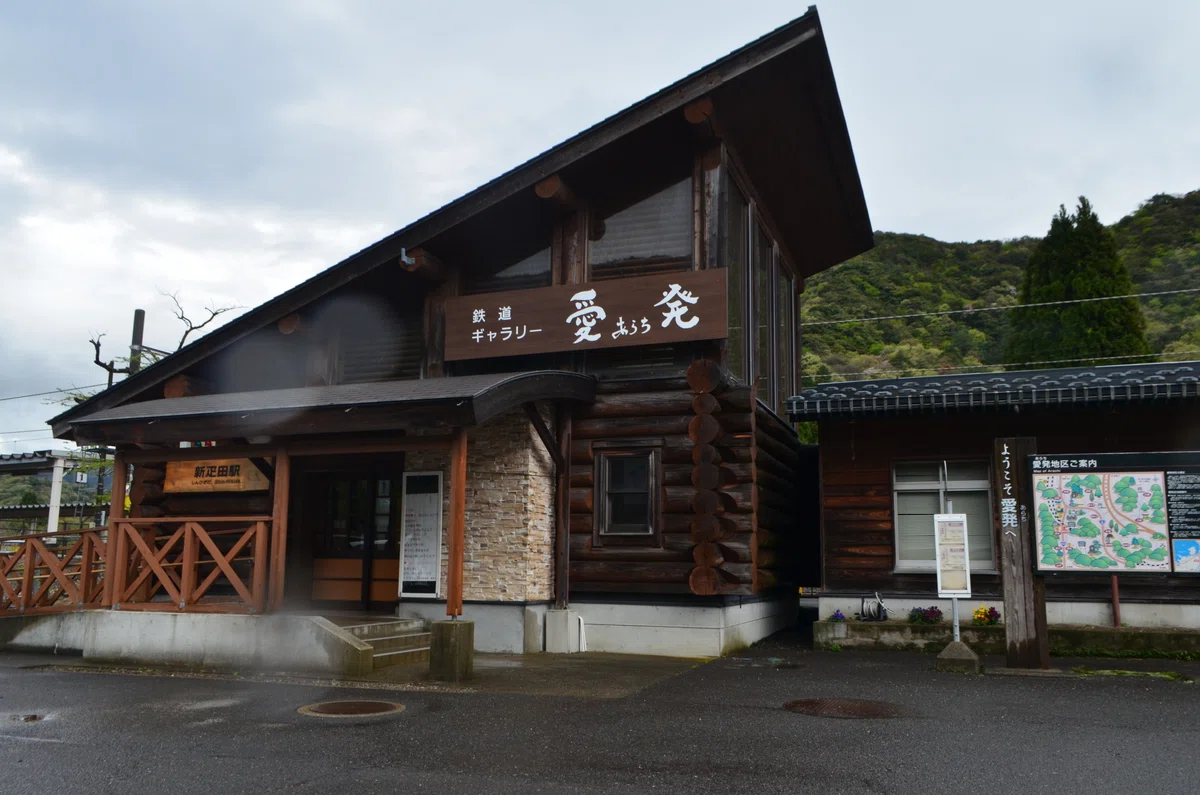
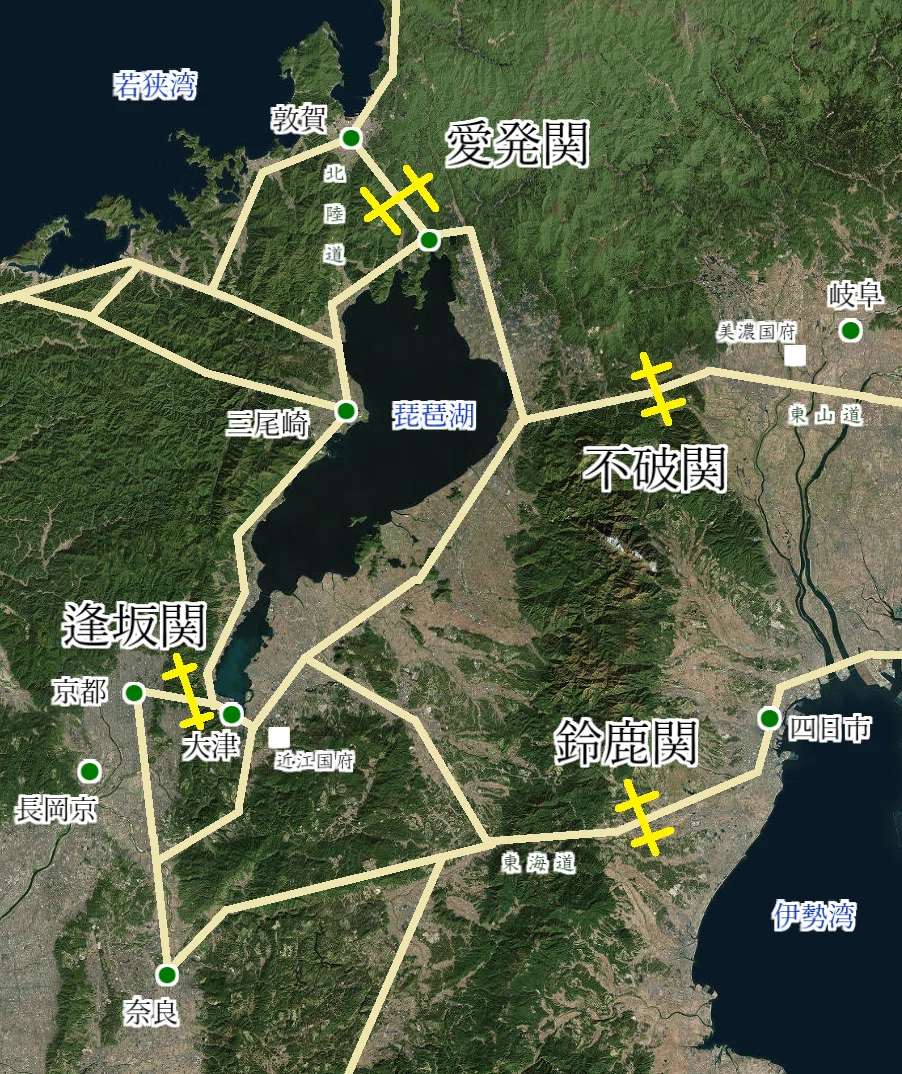
Arachi-no-Seki (Arachi Barrier) 愛発関
The community bus I took from Tsuruga Station is called Arachi Line. 愛発 Arachi is a difficult-to-read toponym, but has some history:
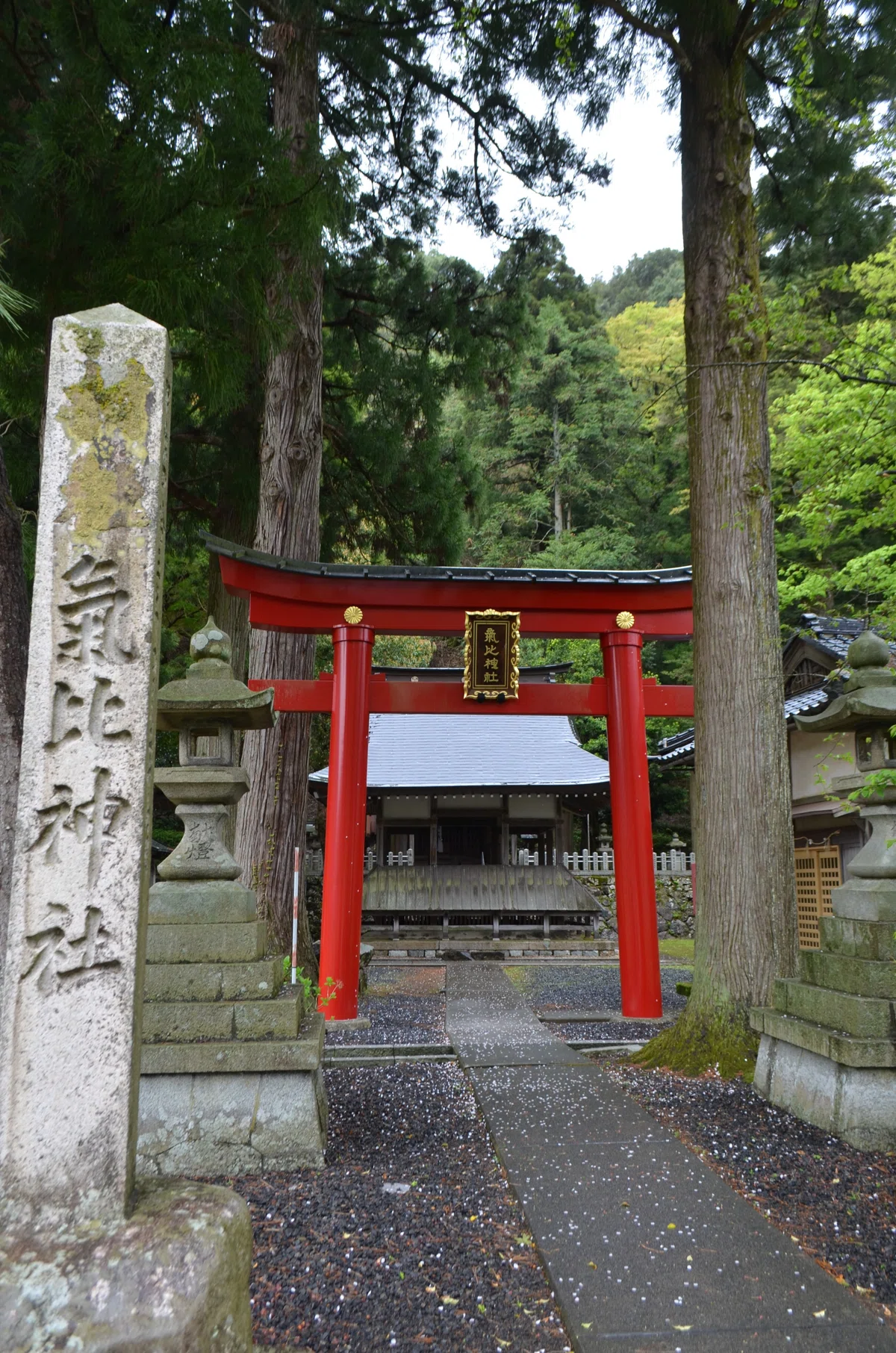
Arachi-no-Seki (Arachi Barrier) was a checking barrier (passe stratégique in French) placed on the Hokurikudō 北陸道 and said to have been located in Echizen Province 越前國. It was one of the three ancient checking barriers (古代三関) along with Suzuka-no-Seki (Suzuka Barrier) 鈴鹿関 in Ise Province 伊勢國 on the Tōkaidō 東海道 and Fuwa-no-Seki (Fuwa Barrier) 不破関 in Mino Province 美濃國 on the Tōsandō 東山道. It existed only for a period of time from the Nara Period to the early Heian Period, and was later replaced by the Ōsaka-Seki (Ōsaka Barrier) 逢坂関. Its detailed location is not known. However, the name Arachi was inherited by the area near Hikida 疋田, Tsuruga City, where Arachi Elementary School, Arachi Junior High School (both closed), and Arachi Police Station were located, as well as a checkpoint.
Ōsaka-Seki (Ōsaka Barrier) 逢坂関 is so famous thanks to the following tenth poem of the Hyakunin Isshu 百人一首:
これやこの 行くも帰るも別れては 知るも知らぬも 逢坂の関
(小倉百人一首 第十番:蝉丸法師)
So this is the place!
The crowds,
coming
going
meeting
parting;
friends
strangers,
known
unknown----
The Ōsaka Barrier.
Visiting Tsuruga again ?
YES, before I have trouble walking.
Let's recall that Tsuruga was once connected to Vladivostok (Владивосток), the terminus of the Trans-Siberian Railway, which opened in the final days of Imperial Russia.
When I first learned Russian in 1976, this particular name attracted me a lot:
It derives from Slavic владь (vlad, 'to rule') and Russian восток (vostok, 'east'), similar though remotely to 鎮西 of 鎮西探題 (Chinzei Tandai), which is an institution established by the shōgunate in the Kamakura period to oversee the western provinces (Kyūshū) and had jurisdiction over administration, lawsuits (trials), and military affairs.
There's another city with this prefix Vladi, that is Vladikavkaz, formerly known as Ordzhonikidze (Орджоники́дзе) or Dzaudzhikau (Дзауджикау), the capital city of North Ossetia–Alania, Russia... but I won't enter into the dark empire where "humanity" does not exist.
I wish to visit Port of Humanity Tsuruga Museum 人道の港敦賀ムゼウム:
(It's noteworthy that ムゼウム from Polish is adopted in the Japanese name of this museum which is usually written ミュージアム from English.)
References
As mentioned in the header image, this tunnel is registered as a Japan Heritage Site.
Blue Signal Vo.171 (March 2017) by JR West (JR西日本) features Kotone Tunnel:
P.S. When talking about Tsuruga, Tsunuga-Arashito 都怒我阿羅斯等 must come first... I wish I were equipped with decent knowledge of Japanese history and mythology...
■
