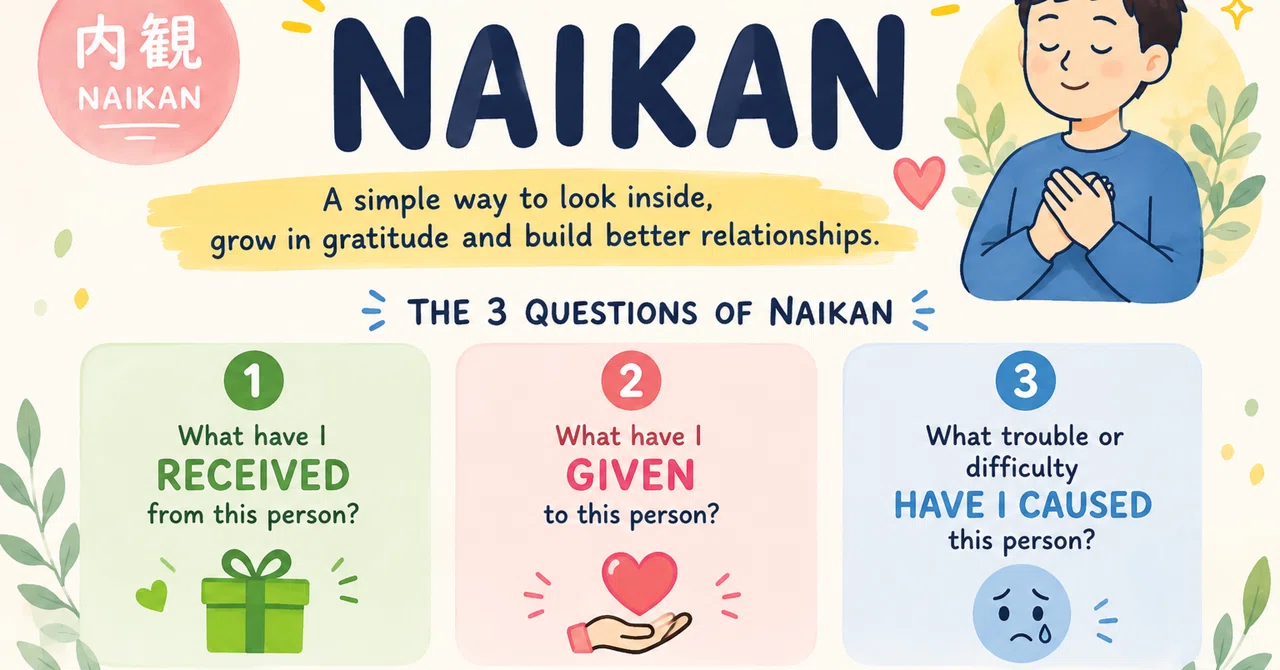
What Is "NAIKAN"?

# Naikan (内観) is a Japanese method of structured self-reflection.
The word literally means "looking inside" or "introspection." It was developed in Japan by Ishin Yoshimoto in the 1940s and is now used for personal growth, counseling, and rehabilitation.
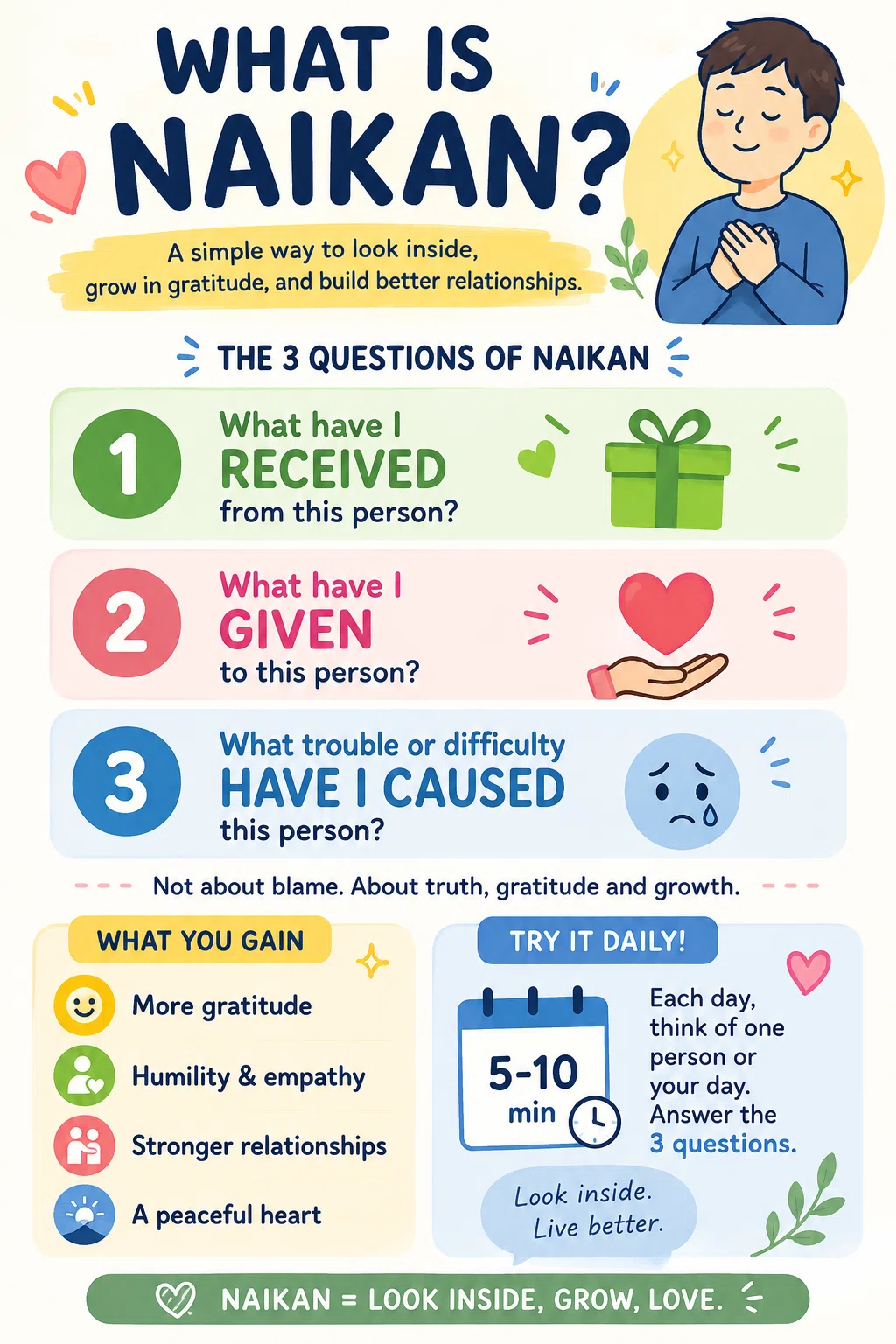
The heart of Naikan is surprisingly simple. Instead of asking, "Why did this happen to me?", it asks you to examine your relationships through three questions:
1. **What have I received from this person?**
2. **What have I given to this person?**
3. **What troubles or difficulties have I caused this person?**
For example, if you were reflecting on your mother, you might write:
- **What I received:** She cooked meals, drove me to school, encouraged me when I was discouraged.
- **What I gave:** I helped with chores, wrote birthday cards, spent time with her.
- **What trouble I caused:** I argued with her, ignored her advice, worried her
.
Notice that Naikan doesn't ask, "What did this person do wrong to me?" The goal is to balance our natural tendency to focus on what others owe us by helping us recognize what we have received and how our own actions have affected others. Many people find this leads to greater gratitude, humility, empathy, and healthier relationships.
## Daily Naikan
You don't need a retreat to practice it. Each evening, spend 5–10 minutes answering the three questions about one person or about your day.
For example:
- **Received:** A coworker helped me solve a problem.
- **Given:** I encouraged a friend by sending a message.
- **Trouble caused:** I interrupted someone during a conversation.
## Is Naikan religious?
Naikan has historical roots in the Japanese Pure Land Buddhist tradition, but today it is often practiced as a non-religious method of self-reflection. People from many different backgrounds—including Christians, Buddhists, and those with no religious affiliation—use it as a practical tool for examining their lives.
## In one sentence:
Naikan is a disciplined way of reviewing your relationships by focusing on gratitude, responsibility, and reality rather than blame.
Are You Interested?
For More Detail↓ (Please Use DeepL or Google Translate for English Speakers^^*
https://door.naikanhou.com/
その感謝は、本当に「わかっている」感謝でしょうか
瞑想の森内観研修所 公式note記事「【内観風物詩】お盆に帰る前に、ひとつだけ」より