Browse: Home / Solar Sciences

By Kenneth Richard on 29. May 2026
Century-scale patterns of solar activity suggest the onset of the next Little Ice Age cooling period is here. Newly published research utilizing historical solar magnetic field phase analysis documents the impact of solar activity on Earth’s temperature. Cold “Little Ice Age” periods can be reliably linked to Grand Solar Minima (GSM). For example, during the […]
Posted in Cooling/Temperature, Paleo-climatology, Solar Sciences |

By Kenneth Richard on 4. May 2026
Natural atmospheric circulation patterns (like the Western Tibetan Vortex, or WTV) drive total cloud cover (TCC) change, which, in turn modulate the the amount of downward solar radiation reaching the surface. Over southwest Asia, or the Tibetan Plateau, scientists (Wang et al., 2026) indicate the satellite-observed increase in downward shortwave (DSW) “is the primary driver” […]
Posted in Cloud Climate Influence, Natural Variability, Solar Sciences |

By Kenneth Richard on 21. April 2026
The climate sensitivity to a doubling of CO2 with feedbacks may only be about 1°C, with humans contributing just 30% to the global warming since 1850. New research indicates the climate models that the Intergovernmental Panel on Climate Change (IPCC) rely upon for policy-making – and to claim humans are 100% responsible for the warming […]
Posted in Climate Sensitivity, Cloud Climate Influence, CO2 and GHG, Solar Sciences |

By Kenneth Richard on 23. February 2026
Warming across Germany in the last 3 decades can be explained by declining cloud and aerosol albedo and consequent rising solar radiation. Not CO2. Another new study affirms clouds and aerosols play a key role in explaining trends in solar surface radiation (SSR), which is “essential for the global energy cycle driving the climate system.” […]
Posted in Cloud Climate Influence, Solar Sciences |

By Kenneth Richard on 24. October 2025
Approximately 75% of the increase in the global ocean heat content must be natural, or attributed to an increase in solar forcing. The manifestation of what is commonly referred to as “global warming” is predominantly (93%) depicted as an increase in ocean heat content (OHC). Only 1% is indicated by an increase in surface air […]
Posted in CO2 and GHG, Oceans, Solar Sciences |

By Kenneth Richard on 23. June 2025
Another observational analysis finds the shortwave effect of clouds is the “the dominant term of the recent increase in absorbed solar radiation” explaining 2001-2024 warming. According to the authors of a new study, clouds are the primary modulators of the Earth’s shortwave and longwave radiation. Thus, the radiative effects of clouds “play a crucial role […]
Posted in Cloud Climate Influence, Solar Sciences |

By Kenneth Richard on 25. March 2025
“[T]he increase in absorbed solar radiation is primarily due to natural variations in cloudiness and surface albedo, which have served as the main forcing factors of the flux above the atmosphere over the last 2 decades.” – Diodato et al., 2025 It is commonly accepted that there has been a satellite-observed (CERES) cloud cover albedo […]
Posted in Cloud Climate Influence, Little Ice Age, Medieval Warm Period, Natural Oceanic Oscillations, Paleo-climatology, Solar Sciences |

By Kenneth Richard on 13. March 2025
“Until now, the origin of the climate dynamics of the Central Andes during the last millennium has been speculative. On the basis of statistical evidence, we have identified solar variability as its origin.” – Schittek et al., 2025 In a new study, scientists have determined: 1) The Little Ice Age (LIA) was a global-scale cold […]
Posted in Little Ice Age, Medieval Warm Period, Paleo-climatology, Solar Sciences |

By Kenneth Richard on 23. December 2024
The 2013-2022 warming trend and the extreme warmth in 2023 were “not associated with” declining outgoing longwave radiation induced by rising greenhouse gases. Instead, a new study published in the journal Science contends that decreasing cloud albedo and the consequent increase in ASR, or absorbed solar radiation (+0.97 to 1.10 W/m²/decade according to ERA5 and […]
Posted in Climate Sensitivity, Cloud Climate Influence, CO2 and GHG, Solar Sciences |
By P Gosselin on 28. September 2024
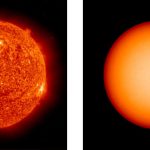
Sun, clouds and climate – a post from an EIKE reader Image: NASA (public domain) Posted by AR Göhring In a conversation with the EIKE editorial team, our reader Garik Müller noted that recent solar storms have promoted cloud formation – which would contradict the Svensmark-Shaviv effect and the Forbush effect. But the Earth’s atmosphere […]
Posted in Solar Sciences |
By Kenneth Richard on 27. September 2024
Per a new study, the last 200 years of global warming are associated with cloud cover decline, and this decreasing cloud albedo can be linked to “the dominant roles of external forces – volcanic, solar, and oceanic – in their mutual influence after the LIA [Little Ice Age].” Scientists have repeatedly reported a satellite-observed (CERES) […]
Posted in Cloud Climate Influence, Natural Oceanic Oscillations, Natural Variability, Solar Sciences |
By Kenneth Richard on 20. September 2024
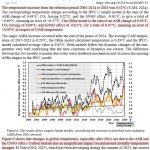
Yet another scientific study concludes CO2 is an insignificant contributor to Earth’s recent temperature changes. New research involving a comparative analysis of satellite (CERES) observations of absorbed solar radiation (ASR) and CO2 radiative forcing modeling finds CO2 may have contributed just 0.09°C to the 0.52°C temperature increase from 2000 to 2023. The rising ASR trend […]
Posted in Climate Sensitivity, CO2 and GHG, Solar Sciences |





Recent Comments