The year 2020 was a landmark year. The COVID-19 pandemic emerged as a global health crisis that affected millions of people and challenged the medical systems of many countries. Healthcare institutions were at the forefront of this fight, and The University of Texas MD Anderson Cancer Center was no different. Overnight, the entire institution experienced a paradigm shift that affected patient care, education, and career development. The MD Anderson community rallied together to make sure we continued our mission to eradicate cancer while keeping our patients, employees, and students safe.
In 2021, the Historical Resources Center of the Research Medical Library embarked on a project to document how MD Anderson dealt with these once-in-a-generation changes. Created with the help of graduate student interviewers, this oral history collection aims to document and preserve the experiences, perspectives, and insights of oncology professionals who worked during the COVID-19 pandemic. The collection consists of interviews with MD Anderson educators, faculty members, researchers, and administrators. They tell stories about information, inspiration, and resilience for future leaders – with topics including institutional change, technology and remote work, and leadership amid cultural shifts.
-

Chapter 01: Early Professional Development Leads to a Career in Leadership and Diversity
Lee Coffee Jr., MEd and Nina Nevill
Lee Coffee begins the interview by talking about his personal and professional history - including early education and military service. Also discussed are the courses he implemented at MD Anderson related to LGBT Diversity and BIAS training. He concludes the chapter by discussing his thoughts on leadership and intersectionality.
From:
Lee Coffee Jr., M. Ed., Oral History Interview, June 30, 2021 -

Chapter 02: MD Anderson: A Match Between Professional Skillset and Institutional Needs
Lee Coffee Jr., MEd and Nina Nevill
Mr. Coffee talks about how his background and training led to a productive career that aligns with MD Anderson's core values.
From:
Lee Coffee Jr., M. Ed., Oral History Interview, June 30, 2021 -

Chapter 03: The Leadership Institute: Optimizing the Potential of Every Employee
Lee Coffee Jr., MEd and Nina Nevill
Mr. Coffee goes into the history of the Leadership Institute including its origins and current mission to "optimize the potential of every employee." He discusses how the Leadership Institute empowers leaders with coaching and development programs.
From:
Lee Coffee Jr., M. Ed., Oral History Interview, June 30, 2021 -

Chapter 04: The Leadership Institute: Teaching Accountability to New Employees
Lee Coffee Jr., MEd and Nina Nevill
In this chapter, Mr. Coffee provides an example of how new employees are taught accountability while thriving at MD Anderson. He mentions a Buddy system during onboarding. He concludes the chapter by talking about some of the obstacles that occur while having difficult conversations about accountability and tolerance of harmful behavior.
From:
Lee Coffee Jr., M. Ed., Oral History Interview, June 30, 2021 -

Chapter 05: Leadership Following The Death of George Floyd, Part 1
Lee Coffee Jr., MEd and Nina Nevill
Mr. Coffee addresses the institution’s actions following the death of George Floyd. He talks about a program he conducted title"Racism is as American as Apple Pie". Mr. Coffee mentions how the institution includes diversity and inclusion as part of cultural competencies reflected through the various initiatives.
From:
Lee Coffee Jr., M. Ed., Oral History Interview, June 30, 2021 -

Chapter 06: COVID and the Global Pandemic
Lee Coffee Jr., MEd and Nina Nevill
Mr. Coffee talks about the institution's first response to the COVID-19 pandemic - working from home, adjusting communication preferences, and shifting job responsibilities.
From:
Lee Coffee Jr., M. Ed., Oral History Interview, June 30, 2021 -

Chapter 07: Leadership Following The Death of George Floyd, Part 2
Lee Coffee Jr., MEd and Nina Nevill
In this chapter, Mr. Coffee talks about how he trains leaders to address racial and gender disparities. He talks about the diversity of MD Anderson's staff and several of the programs and courses offered by the institution. He stresses the importance of building awareness of societal contributions from BIPOC and women - including a chapter he wrote for a book Black Cowboys of Texas.
From:
Lee Coffee Jr., M. Ed., Oral History Interview, June 30, 2021 -

Chapter 08: Reflections
Lee Coffee Jr., MEd and Nina Nevill
Mr. Coffee concludes the interview by discussing his strengths in creating meaningful conversations reflected in his talents as an educator.
From:
Lee Coffee Jr., M. Ed., Oral History Interview, June 30, 2021 -

Lee Coffee Jr, M.Ed., Oral History Interview, June 30, 2021
Lee Coffee Jr., MEd and Nina Nevill
Chapter 01: Early Professional Development Leads to a Career in Leadership and Diversity
Chapter 02: MD Anderson: A Match Between Professional Skillset and Institutional Needs
Chapter 03: The Leadership Institute: Optimizing the Potential of every Employee
Chapter 04: The Leadership Institute: Teaching Accountability to New Employees
Chapter 05: Leadership Following The Death of George Floyd, Part 1
Chapter 06: COVID and the Global Pandemic
Chapter 07: Leadership Following The Death of George Floyd, Part 2
-

Chapter 02: Leadership Training at MD Anderson
Michelle DeVeau PsyD, PCC and Nina Nevill
In this chapter, Dr. DeVeau talks about the concept and practice of leadership, her work in leadership training at MD Anderson, her reflections on some of the executive leaders at MD Anderson, the evolution of the Departments of Organization Development and Faculty Development at MD Anderson, the creation of the Leadership Institute, the concept of LEAD, and her efforts to create “a sustainable coaching culture.” “So, in essence,” she says, “everyone is a leader and everyone has the capabilities of developing their leadership skills.”
From:
Michelle DeVeau, PysD, PCC, Oral History Interview, July 9, 2021
-

Chapter 03: MD Anderson in the Age of COVID
Michelle DeVeau PsyD, PCC and Nina Nevill
In this chapter, Dr. DeVeau talks about the changes she observed at MD Anderson as a result of the COVID-19 pandemic, particularly in terms of leadership challenges. She also discusses, “How are we making diversity, equity, and inclusion a cornerstone, not just an add-on, but a cornerstone, of our programs?”
From:
Michelle DeVeau, PysD, PCC, Oral History Interview, July 9, 2021
-
-
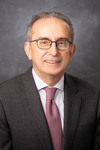
Giulio F. Draetta, PhD, MD, Oral History Interview, August 12, 2021
Giulio F. Draetta PhD, MD and Nina Nevill
-
Chapter 01: First Career in Nursing
Elizabeth Garcia BSN, MPA, RN and Nina Nevill
In this chapter, Vice President of Patient Experience, Elizabeth Garcia describes her personal, educational, and professional background. She particularly notes the impetus for her interest in nursing, her administrative training, and how her professional experiences coalesce in her current role. She emphaisizes that patient experience is nursing leadership.
-
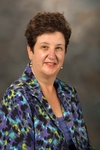
Chapter 02: The Patient Experience at MD Anderson
Elizabeth Garcia BSN, MPA, RN and Nina Nevill
In this chapter, Elizabeth Garcia provides insight into the different roles she has held while at MD Anderson Cancer Center. She describes her start as Clinical Administartive Director in the GYN Oncology Center and her eventual transition to the Office of Performance Improvement. Garcia notes her action-oriented strengths in these positions, detailing how the different intiatives she has been a part of strive to be anchored in service and patient care. In particular, she notes how expanding the Ask MD Anderson Call Center, Service Excellence Program, and trasnparency intitative have all helped shift the insitution’s culture to be more patient oriented than physician oriented.
Garcia also highlights mentors and collegues who have been influential throughout her time at MD Anderson. She ends by reflecting on the effects of the COVID-19 pandemic in relation to patient experiences and how the institution might have handled issues differently.
-
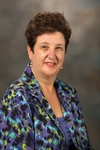
Chapter 03: Heath Disparities and MD Anderson
Elizabeth Garcia BSN, MPA, RN and Nina Nevill
Elizabeth Garcia spends this chapter discussing how MD Anderson Cancer Center addressed the COVID-19 pandemic and racial justice related issues. Specifically, she notes the institution’s partnership with Lyndon B. Johnson Hopsital to assist with their COVID patients. Moreover, Garcia describes how she and her collegues addressed the murder of George Floyd. She details how this opened up difficult discussions at MD Anderson, which exposed racism faced by many staff members. In drawing this segment to a close, Garcia notes the effects of remote work and how the institution impressively had no layoffs amid a global health crisis.
-
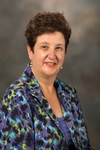
Chapter 04: Focus on Wellness and Safety
Elizabeth Garcia BSN, MPA, RN and Nina Nevill
In this chapter, Elizabeth Garcia discusses the importance of wellness for employees across MD Anderson Cancer Center, especially amid the COVID-19 pandemic. She reflects on this era by describing staff appreciation and how the insiutition raised the minimum wage. Moreover, she paritcularly notes the import safety measure and procedures that were implemented during this period. Garcia also defines patient advocacy and her visions for the future of MD Anderson where inclusive leadership is the standard. She ultimately emphasizes her belieft that patients are not guests, but partners in the care journey.
-
-

Chapter 01: Applying Psychology to the Workplace
Courtney Holladay PhD and Nina Nevill
In this chapter, Dr. Holladay talks about her background in applying organizational psychology to the workplace, the importance of embracing and fostering a culture of diversity and inclusion, and how diversity and leadership are inextricably connected.
From: Courtney Holladay, PhD Oral History Interview, June 29 2021
-

Chapter 02: Challenges of Remote and Virtual Work
Courtney Holladay PhD and Nina Nevill
In this chapter, Dr. Holladay talks about the challenges presented by a remote/virtual working environment, how to broaden the resources and support systems that are available to people, how to measure and address the issue of burnout, the importance of taking care of yourself, and how best to promote and encourage female leaders.
From: Courtney Holladay, PhD Oral History Interview, June 29 2021
-

Chapter 03: Building Leaders at MD Anderson
Courtney Holladay PhD and Nina Nevill
In this chapter, Dr. Holladay talks about the MD Anderson Leadership Institute, why she values her work so much in a “service-oriented industry,” and the importance of succession planning.
From: Courtney Holladay, PhD Oral History Interview, June 29 2021
-

Chapter 04: Lessons from COVID
Courtney Holladay PhD and Nina Nevill
In this chapter, Dr. Holladay talks about the unique institutional challenges presented by the COVID-19 pandemic, the development and importance of coaching and mentoring, studying how people learn, and how to preserve the lessons learned from the pandemic to improve the post-pandemic institution.
From: Courtney Holladay, PhD Oral History Interview, June 29 2021
-
-
-

Chapter 01: Personal and Educational Background
David Jaffray PhD and Nina Nevill
In this chapter, Dr. David Jaffray discusses his personal, educational, and professional background. He describes how he became involved in his particular field of study, noting his interests at the intersection of physics, technology, and cancer. Moreover, Dr. Jaffray recalls his professional experiences throughout Canada and the United States prior to his appointment as Chief Technology and Digital Officer at MD Anderson Cancer Center. He ends by describing his recruitment process to the institution and reflecting on the early months of his appointment.