666(X3) ≠ 42

The Instant Pot arrived with a blast. 

In nanoseconds, my social media feeds were filled with folks I respect singing the praises of the Instant Pot. 
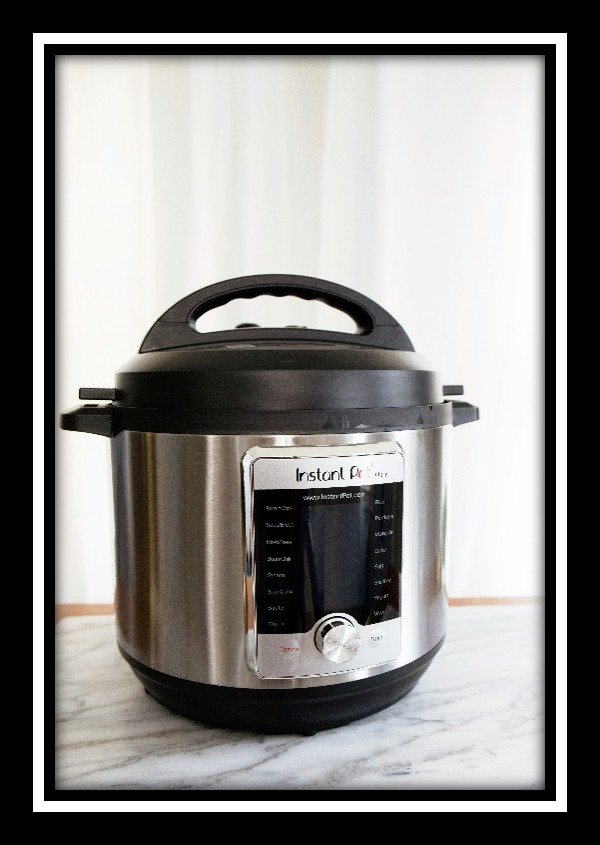
I am no slouch in the kitchen; I own nearly every kitchen gadget in existence.  But after roughly 30 years of putting dinner on the table every evening unless I was hospitalized or had a pizza coupon, I was just over it. 

Even a viral new gadget was not enough to tempt me. 

Especially that one.

Near as I can figure, the Instant Pot is the New Millennium’s restyling of the pressure cooker my dad used for years. 

I was terrified of that thing. 

It started out innocently enough. A pot roast, some seasoning, and a few other secret ingredients were combined for a period much shorter than conventional pot roasting and turned out a plateful of wonderful.  But to get to wonderful, I had to get through the rattling brass regulator that, at a certain stage, would start screaming while the heavy pan rocked and rolled in jeopardy of falling off the stove.

My dad, an artillery expert in the United States Marine Corps, would tell us to step back using his Captain Kinsey voice when he opened the pressure cooker.
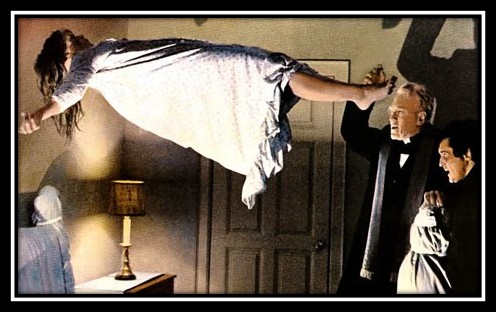
I didn’t have to be told.  Anything that made those movements and those sounds on a stovetop in suburban America circa 1971 was surely one of the demons released in William Peter Blatty’s runaway best seller, The Exorcist.

There was never a problem when my dad used the pressure cooker, aside from my stress response.  I had heard tales.  I knew facts. From where?  I have no idea.  Why or how a 12-year-old would be well-versed in pressure cooking cautions and disasters before Google is a mystery.

And so, my feed continued to be full of the awe of my friends who had received an Instant Pot for Christmas or Mother’s Day or their birthday, or because it was a doorbuster special on Black Friday.  They shared results with photos, noting the cooking time with squeals. They traded recipes they had adapted. Whole communities were formed around the appliance.

[Instagram was emerging at roughly the same time.  I kept calling it an Instapot.  I know for a fact that unintentional perversion of the appliance’s name grated on more than one person’s nerves, and she took every opportunity to correct me.]

My feed was soon almost entirely Instant Pot and Wordle brags.  (What happened to Wordle? I didn’t get into that either. I’m such a renegade.)

It was like a cult.

I stood back and tried to look interested and polite.  I was not interested. Not in the least.  I didn’t care that this incarnation of the pressure cooker could replace seven other needs: slow cooker, rice maker, Saturday night babysitter, warmer, yogurt maker, steamer, and bowling team sub. 

I still didn’t want an Instant Pot or Instapot. It was nothing but a gussied-up pressure cooker manufactured in an era marked by shoddy workmanship and planned obsolescence. 

I was afraid of the noisy monstrosity my dad used.  I didn’t even like cleaning the damn thing, it scared me so much. I’m told the Instant Pot is quiet.  That adds even more fear.  I could hear the demons in my father’s pressure cooker clattering for escape.

Terror accompanied by silence can be expressed mathematically as:

666 ( X3) ≠ 42

Silent terror destroys the ultimate meaning of life.

At every gift-giving opportunity at the zenith of its popularity, someone would get that gleam in their eye. I would say assertively, “I don’t want an Instant Pot.  I really don’t. I do appreciate the thought, but I will just return it.  Please. I’m busy, please don’t add to my to-do list.  I would prefer to receive nothing.”

So, of course, I was gifted an Instant Pot with no way to return it.  Four years ago now, I think.

It is still in the heavy brown box UPS uses for shipping.

I’m going to stack the 6-month-old unopened shipping box holding the air fryer on top of the Instant Pot box. 

I’m not afraid of the air fryer.  I might even use it someday.
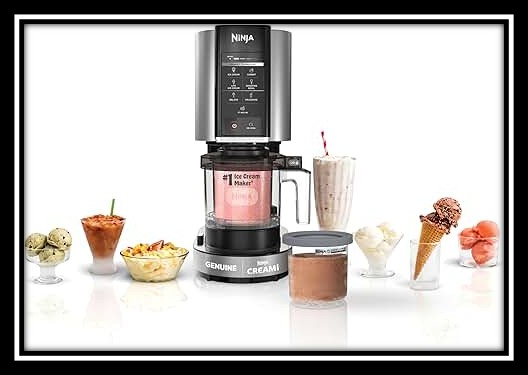
[I hear tell the Ninja CREAMi is the next viral gadget all the cool kids will be clamoring about. I’m kind of interested in it, but at more than $200, it is not going to complete my trinity of unused, unopened viral kitchen toys anytime in the near future..]

Why I Write

I was an early reader.

My father, who worshipped knowledge and bequeathed that religion to me, used 3×5 cards and masking tape to label everything in our home when I was three.

table

chair

couch

television

telephone

door

bed

And then there was the 3×5 card
he attached to his dog tags
with a paperclip that said Daddy.

But I don’t really remember reading early. I may have known some words by sight, but I don’t think I was reading reading.

I have a vivid memory of walking home from first grade, puzzling over a Dick and Jane story. It had been worksheet time, and I finished early, so the teacher told me to look ahead in my book.

I encountered the word neighbor. All the phonics in the world wasn’t helping me with that sucker. I twisted those sounds and pronounced it aloud as I walked home (yes, alone, children were feral in the 1960s), and as soon as I rounded the corner and saw the elderly woman who lived in the house next to ours, whom I called Grandma Dot, it clicked. Neighbor.

I think that’s the day I really learned how to read.

From that moment on, I read everything I could get my hands on. I had library books, Scholastic Fair books, and, best of all, the grocery bags of books my mom bought for me at the local Goodwill and Salvation Army.  And of course, the Weekly Reader. When those ran out, I read our World Book Encyclopedia. And one time, my dad came home to find his 8-year-old daughter reading the Taming of the Shrew in his collected works of Shakespeare.

I read the encyclopedia and the back of the cereal box and the church program and the owner’s manual for the car and anything else within arm’s reach when I had to, but I wanted story.

Someone wrote, or perhaps I heard it said at a conference or workshop,

The human brain is hardwired for story.
We crave it so much that our brain
tells us stories all night long
and we call them dreams.

Or something like that.

I read voraciously, but I was also a social child. Cottoning on pretty early that it was rude to whip out a book and start reading when the conversation began to lag, I began oral storytelling.

In sixth grade, I was famous for holding court underneath the North Carolina pine trees after dinner and telling stories I made up on the fly. After the sun set, they became scary stories, and we all, including me, shivered with delicious fright as the tale was spun. Even I didn’t know how it was going to end.

I didn’t write them down.

By junior high, I knew I wanted to be a writer. I knew writers had to write to be writers, but there was something about the blank page that kept me from making a mark on it.

I only wrote for school assignments.

In high school, I fell in love with classic literature and gave up all hope of ever being able to write that well.

So, I was premed in college.

And then I dropped out when organic chemistry was close to stealing my will to live.

But I continued to tell oral stories to anyone who would listen. Some true. Some not.

When I feared my brain had turned to mush and was sliding out of my ear and down my neck, I re-enrolled in college a few years before my 40th birthday. It’s not germane to this discussion, but I eventually majored in Cultural Anthropology. The semester I took stats and theory, I was in desperate need of diversion and signed up for creative writing.

Doing what I always wanted to do with my GPA on the line kept me accountable. I mastered the blank page. It was dreck, but it was something.

And I found the state of being Diane Ackerman calls Deep Play.

Deep play is the ecstatic form of play.
In its thrall, all the play elements are visible,
but they’re taken to intense and transcendent heights.

My head, my heart, my soul, and my body were all in sync while I pounded keys trying to get the words into pixels before another synapse fired and they were gone.

I love the syncopation of my inner drum circle where id, ego, and superego jammed together, their beat thrumming through my body and my brain.

I write because it feels good. I write because I don’t just want to consume the needed story; I want to create it.

I write to be read. I think I have something to say that perhaps is of use to some people.

And I write to remember. I write to leave a legacy.

I write because that 6th-grade girl remembers the rush she felt when she knew her audience was leaning forward waiting for the next line.

Because we are all hardwired for story.

I want to coin a new word

I want a word that means to feel it all at once. To include the cognitive dissonance with the revelation of divine knowledge. To embrace the sacred and the profane. I want that word to recognize that I can be at peace and at war within myself at any moment, either one or both simultaneously.

To feel it all at once is to glimpse the mind of the creator. Perhaps. I want the ennui and the exhilaration of my being to dance. A tango. Slow, deliberate, sinuous, winding about one another until the boredom embraces the joy reaching crescendo. And then there is silent acceptance of both when the music fades.

This is my life now. I don’t want to call it a new normal. I despise normal – always have. I have striven all my life not to be average. I’d rather be a failure than just fade to black.

This life, the one right here, the one that I call a trainwreck, is mine and I don’t want to shut down any part of it. It has become who I am.

I was in a trainwreck one time. Really. I hit a train. It makes for a great party story.

And that is my goal: to ferment all of this into a story that both bears witness to the tragedy and provokes laughter at having trried to overcome it all and only sometimes succeeding. I want to coin that word.

If we can’t laugh, we can’t cry, and both are necessary for either to have any potency. Any meaning. Any effect.

I want a word for all of this. These events and feelings and effects have shaped me and continue to shape me into a person I hardly recognize, but who is resolutely and most definitely me.

An interlude of tranquility

Just one interlude of tranquility, please.

This instant! 

Is it somehow cognitive dissonance to demand an interlude much less an interlude of tranquility to manifest out of thin air?  I think so. 

Tranquility, I think, grows slowly.  It is not rushed, demanded, or ordered about.  It is a rock hosting moss – the green coating develops slowly and requires one to be still. 

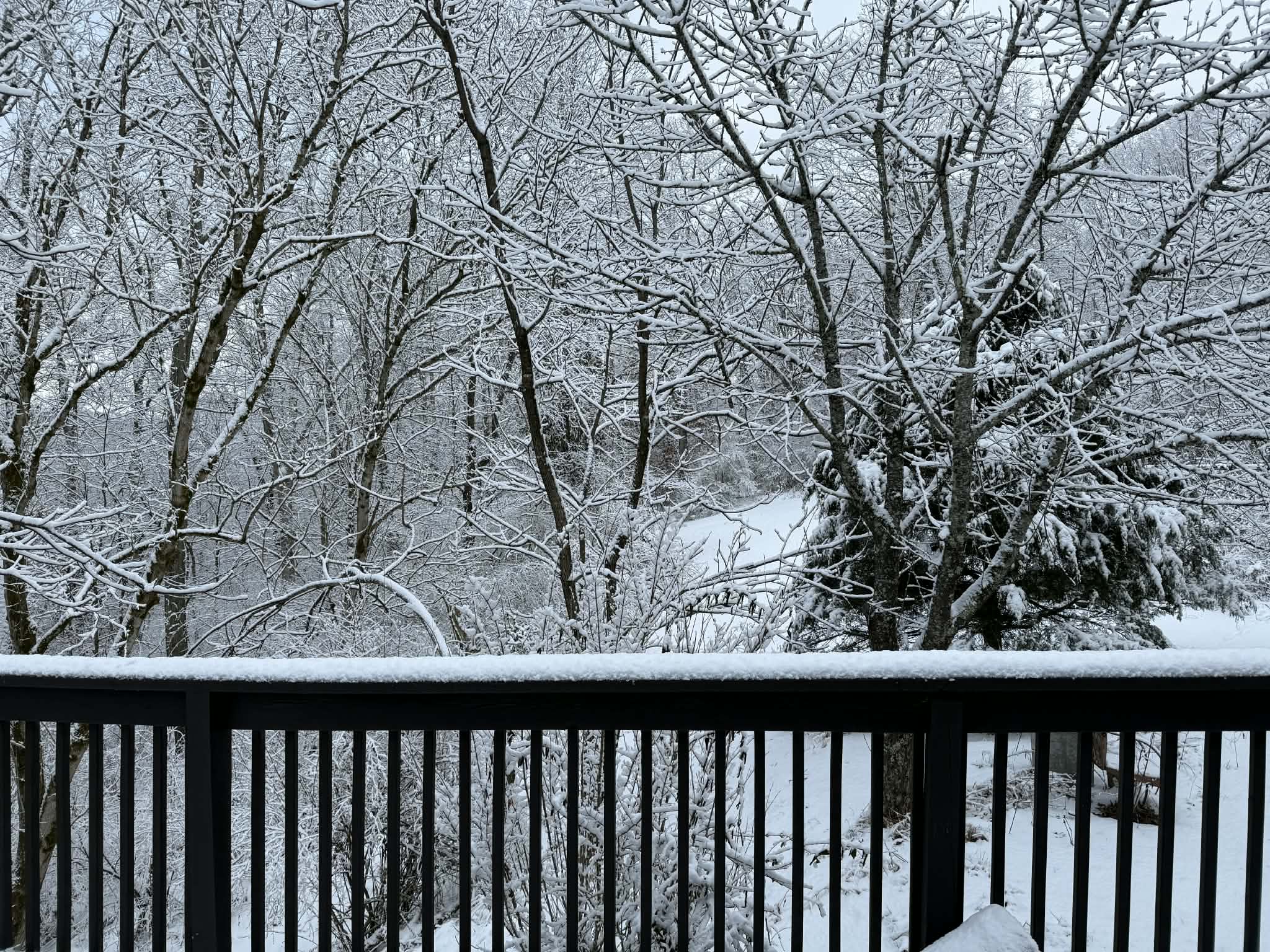
Tranquility can be – is – precarious.  For most of us, it can be destroyed in an instant.  Soft falling snow on a peaceful landscape turns into a tree crashing through one’s roof.  Or frozen pipes burst.  Or the power goes out. The quiet happiness of home and hearth is destroyed in an instant.

To disassociate so rapidly from tranquility, deep and quiet and blissful, to stress.  To disaster.  To mayhem.  Is perilous

and

dangerous and damaging. 

A disaster of its own.

Modern life is not adapted for this.

The natural biological response for these incidents is for the primitive brain – the one we aren’t allowed to operate with in this the first quarter of the first century of the latest millennium – to take control. Due to this, because of this, as a direct result of this, our bodies and our brains are flooded with the chemicals that depend on fight, flight, or freeze, and we are allowed to do none of those and be deemed to be good people, good parents, good employees, good anything.

And they certainly do nothing to help us with the situation at hand.

But there we are — swimming (treading water or maybe drowning) in the toxic miasma of an old response inadequate to the disaster at hand.  And so we need an interlude of tranquility to reset and restore, which now feels like an impossibility. 

I can demand satisfaction.

Challenge the fates to a duel.

Rail against an unjust universe. 

Or I can sit quietly here with my right hand on my heart and my left hand petting the small, rhythmic breathing bundle of unconditional love known as Emmylou-the-Dachshund and wait for the moss to grow while I meditate on all the good things still available to me.