Academia.eduAcademia.edu

Outline

The Tai Languages of Assam (2008)

Abstract

An overview of the Tai languages of Assam, looking at particular features of Tai Phake, Tai Aiton and Tai Khamyang. Full reference: Morey, Stephen. 2008. ‘The Tai languages of Assam’, in Anthony Diller and Jerrold A. Edmondson (eds.) The Tai Kadai languages. London: Routledge. 207-253

Key takeaways
sparkles

AI

  1. Tai languages of Assam include Ahom, Aiton, Khamti, Khamyang, Phake, and Turung, each with unique features.
  2. The Ahom language, once dominant, is now primarily used in rituals and cultural revivals.
  3. Aiton has approximately 1,500 speakers, actively learning the language, while Khamyang is critically endangered with only older speakers.
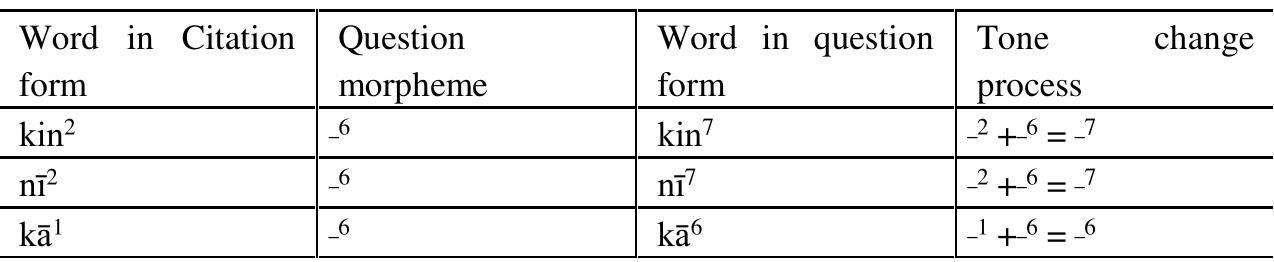
  4. Phake has around 2,000 speakers, with a rich manuscript culture, and unique tonal features in questioning and negation.
  5. The text aims to provide a comprehensive overview of the Tai languages' history, structure, and sociolinguistic context.

References (44)

  1. Aimya Khang Gohain (1991). 'The Tai language as Spoken by the Tai-Phake', in Pan Asiatic Linguistics: Proceedings of the Third International Symposium on Language and Linguistics, Bangkok: Chulalongkorn University, 44-59.
  2. ---. (1997). Elementary Tai Primer. Dibrugarh University: Department of Assamese. (In Assamese and English)
  3. Banchob Bandhumedha (1987). Phake -Thai -English Dictionary, Manuscript, published by the Author (In English and Thai)
  4. ---. (undated). Aiton -Thai -English Dictionary, manuscript. (In English and Thai)
  5. Barua, Bimala Kanta and N.N. Deodhari Phukan (1964). Ahom Lexicons, Based on Original Tai Manuscripts, Guwahati: Department of Historical and Antiquarian Studies.
  6. Barua, Ghan Kanta (1936). Ahom Primer, Guwahati: Department of Historical and Antiquarian Studies in Assam. (In Assamese and English)
  7. Bauer, Robert S. and Paul K. Benedict (1997). Modern Cantonese Phonology, Berlin: Mouton de Gruyter.
  8. Boruah, Bhimkanta (2001). 'Tai Language in India-An Introduction', Indian Journal of Tai Studies 1: 30-33, Moranhat, Assam: Institute of Tai Studies and Research.
  9. Chau Khouk Manpoong (1993). New Tai Reader, Chongkham, Arunachal Pradesh: Tai Literature Committee. (2 volumes in Khamti)
  10. Comrie, Bernard (1985). Tense, Cambridge: Cambridge University Press.
  11. Cushing, Rev. J.N. (1888). Elementary Handbook of the Shan Language, Rangoon: American Baptist Missionary Press.
  12. Diller, Anthony (1992). 'Tai Languages in Assam: Daughters or Ghosts?', in Carol J. Compton and John F. Hartmann (eds.) Papers on Tai Languages, Linguistics and Literatures, Northern Illinois Center for Southeast Asian Studies. (Paper #C)
  13. ---. (2001). 'Grammaticalization and Tai Syntactic Change', in M.R. Kalaya Tingsabadh and Arthur S. Abramson (eds.) Essays in Tai Linguistics, Bangkok: Chulalongkorn University Press, 139-175.
  14. Edmondson, Jerold A. and David B. Solnit (1997). 'Introduction', in Edmondson, Jerold A. and David B. Solnit (eds.) Comparative Kadai -The Tai Branch, Arlington: University of Texas, 1-27.
  15. Foley, William A. (1986). The Papuan Languages of New Guinea, Cambridge: Cambridge University Press.
  16. Gedney, William J. (1972). 'A Checklist for Determining Tones in Tai Dialects', in M. Estelle Smith (ed.) Studies in Linguistics in Honor of George L. Trager, Mouton: The Hague, 423-37.
  17. Gogoi, Nomal Chandra (1994). Morphological Study of the Tai Phake Language, unpublished PhD dissertation, Dibrugarh University.
  18. Greenberg, Joseph H. (1966). 'Some Universals of Grammar with Particular Reference to the Order of Meaningful Elements', in J.H. Greenberg (ed.) Universals of Language (2nd edition), Cambridge, Mass.: MIT Press.
  19. Grierson, Sir George (1904). Linguistic Survey of India (Vol. 2 of Mon-Khmer and Siamese-Chinese Families), Calcutta: Office of the Supt. of Govt. Print. Reprinted in 1966, Delhi: Motital Banarsidass.
  20. Harris, Jimmy G. (1976). 'Notes on Khamti Shan', in Thai Linguistics in honour of Fang Kuei Li, Bangkok: Chulalongkorn University.
  21. Heine, Bernd (2001). 'On word order change without word order change', paper presented at the Fifteenth International Conference on Historical Linguistics, La Trobe University.
  22. Leach, E.R. (1964). Political Systems of Highland Burma, London: London School of Economics.
  23. Morey, Stephen (1999a). Book for teaching the Tai Language -Tai Aiton Primer, Dibrugarh: Triograph Press. (In Tai Aiton and Assamese)
  24. ---. (1999b). Tai Aiton History, Dibrugarh: Triograph Press. (In Tai Aiton, Assamese and English)
  25. ---. (1999c). Book for Teaching the Tai Language -Tai Phake Primer, Dibrugarh: Triograph Press. (In Tai Phake and Assamese)
  26. ---. (2001a). Book of Calling the Khon, Dibrugarh: Triograph Press. (In Tai Khamyang and English)
  27. ---. (2001b). Grandfather Teaches Grandchildren, Dibrugarh: Triograph Press. (In Tai Phake and English)
  28. ---. (2001c). 'The literature of the Tai of Assam', Melbourne Papers in Linguistics and Applied Linguistics 1.1: 37-46.
  29. ---. (2002). 'Tai languages of Assam, a progress report -Does anything remain of the Tai Ahom language?' in David Bradley and Maya Bradley (eds.) Language Maintenance for Endangered Languages: An Active Approach, London: Curzon Press, 98-113.
  30. ---. (2005). The Tai Languages of Assam -A Grammar and Texts, Canberra: Pacific Linguistics.
  31. ---. (in press). 'Constituent order change in the Tai languages of Assam', to appear in Linguistic Typology.
  32. ---. (in preparation) The Turung language of Assam, manuscript.
  33. Needham, J.F. (1894). Outline Grammar of the vj (Khâmtî) Language -As Spoken by the Khâmtîs Residing in the Neighbourhood of Sadiya, Rangoon: Superintendent of Government Printing, Burma.
  34. Panjok, Muhi Chandra Shyam (1981). 'History of Tai Khamyang Group of Great Tai Race', paper presented at the International Conference of Tai Studies, New Delhi, February.
  35. Phukan, Punaram Mohan (1998). Tai Ahom Vocabulary, Dibrugarh: Professor Girin Phukan. (In Assamese)
  36. Ranoo Wichasin (1996). Ahom Buranji, Bangkok: Amarin Printing & Publishing. (In Thai)
  37. Robinson, W. (1849). 'Notes on the languages spoken by the various tribes inhabiting the Valley of Assam and its mountain confines', Journal of the Bengal Asiatic Society xviiii: 310-42.
  38. Terwiel, B.J. (1980). The Tai of Assam and Ancient Tai Ritual, Volume I, Life Style Ceremonies, Gaya: Centre for South East Asian Studies.
  39. ---. (1981). The Tai of Assam and Ancient Tai Ritual, Volume II, Sacrifices and Time- reckoning, Gaya: Centre for South East Asian Studies.
  40. ---. (1996). 'Recreating the Past: Revivalism in Northeastern India', Bijdragen -Journal of the Royal Institute of Linguistics and Anthropology (Leiden) 152: 275-292.
  41. Terwiel, B.J.and Ranoo Wichasin (eds. & trans.) (1992). Tai Ahoms and the Stars; Three Ritual Texts to Ward off Danger, Ithaca: Cornell University SEAP.
  42. Vichin Panupong (nee Chantavibulya) (1970). Inter-Sentence Relations in Modern Conversational Thai, Bangkok: The Siam Society.
  43. Weidert, Alfons (1977). Tai-Khamti Phonology and Vocabulary, Wiesbaden: Franz Steiner Verlag.
  44. Wilaiwan Kanittanan (1986). 'Kamti Tai: From an SVO to an SOV Language', in B.H. Krishnamurti (ed.) South Asian Linguistics -Structure, Convergence and Diglossia, Delhi: Motilal Barnarsidas, 174-178.

FAQs

sparkles

AI

What explains the gradual language loss of the Ahom language?add

The study reveals that by the nineteenth century, the everyday usage of Ahom ceased as speakers assimilated into Assamese culture, utilizing Assamese as their mother tongue. This shift involved extensive cultural assimilation over 600 years under Ahom rule in Assam.

How do recent revival efforts impact the Ahom language's usage?add

The paper demonstrates that current revival initiatives, including two Ahom dictionaries, enhance its ritualistic use in ceremonies, aiding preservation. These efforts gather vocabulary from the late eighteenth century, facilitating an engaging cultural renaissance among the Ahoms.

What are the distinct linguistic features of Tai Aiton language?add

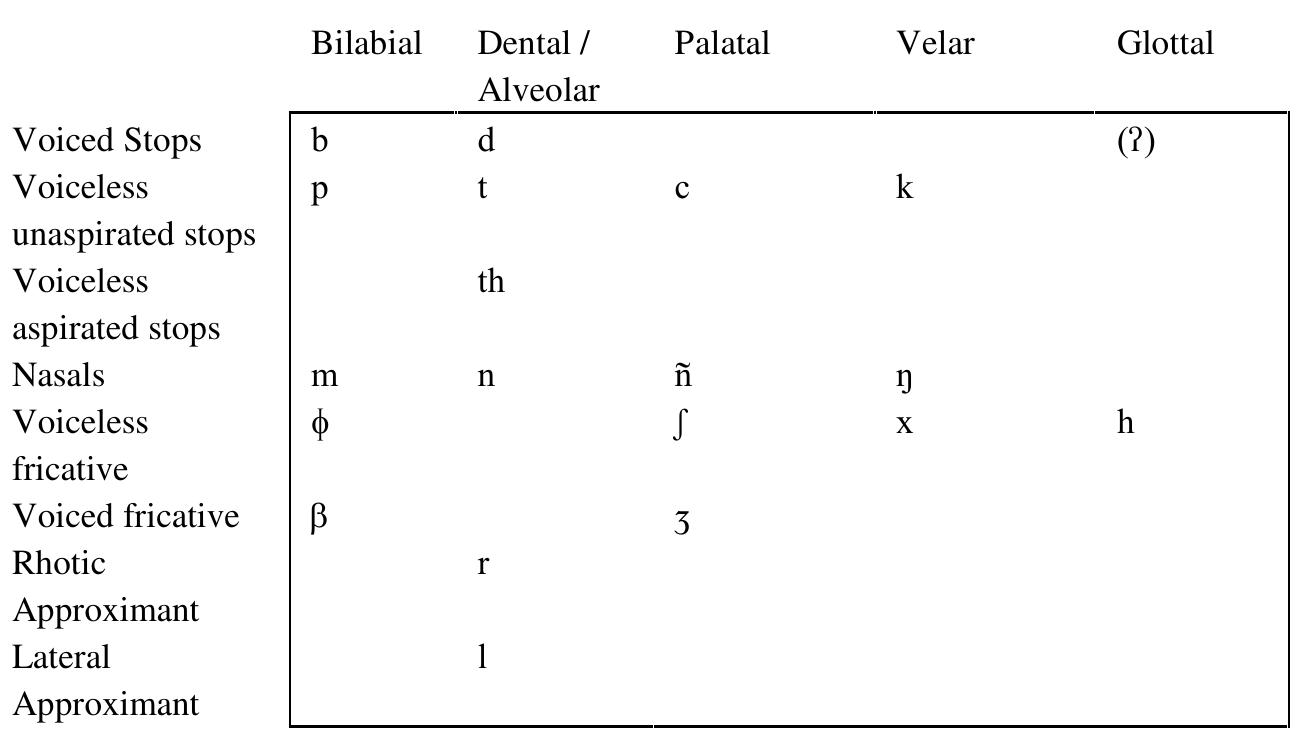
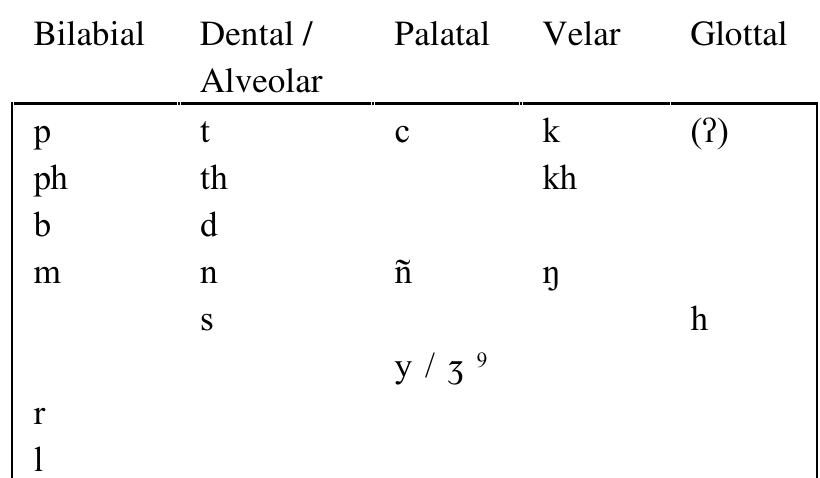
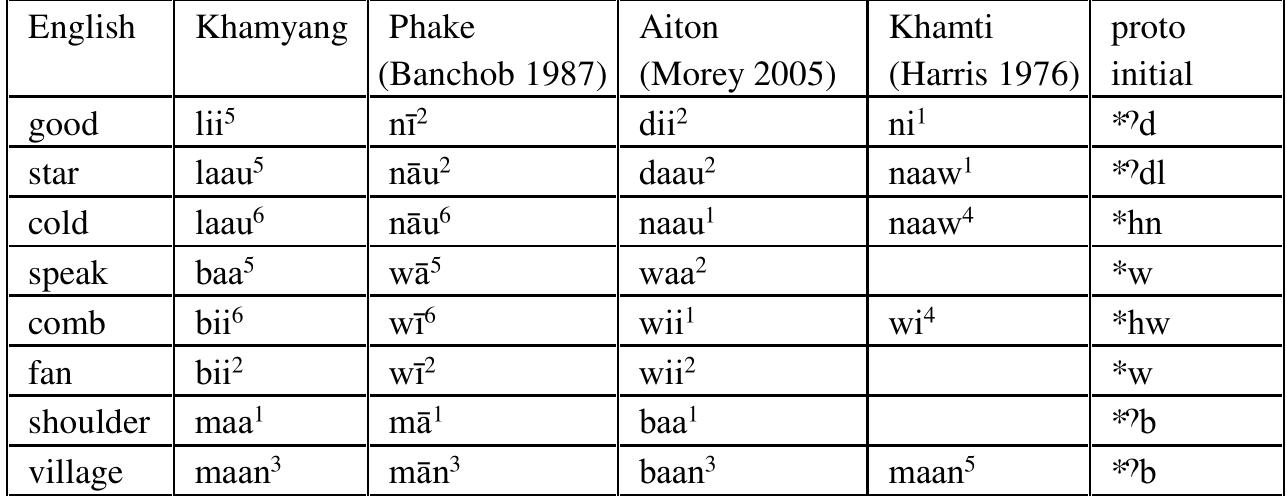
Tai Aiton includes initial consonant clusters and exhibits phonemic variations with additional phonemes like /b/ and /d/, differing from its Tai counterparts. Detailed phonological studies from the manuscript suggest the preservation of features indicative of original Tai languages.

When did the various Tai groups migrate to Assam, according to traditional accounts?add

Traditional narratives date the arrival of several Tai groups, including Khamti and Aiton, to the mid-eighteenth to early nineteenth century, with some evidence suggesting connections to the time of the Ahoms in the fifteenth century. The movements reflect complex religious and cultural exchanges within the region.

How does the Khamyang language exemplify bi-dialectal influences?add

The Khamyang community exhibits bi-dialectalism, using both Khamyang and Phake speech norms influenced by intermarriage and communication needs, reflecting a blending of linguistic features in daily interactions. This situation underscores the dwindling use of distinct Khamyang phonological traits in contemporary settings.

About the author
La Trobe University, Faculty Member

Stephen Morey is a senior lecturer in the Department of Languages and Linguistics, La Trobe University. H does linguistic documentation and description of several different languages/language groups spoken in North East India, as well as working on the indigenous languages of Victoria, Australia. His PhD (Monash University 2002) was on the Tai Languages of Assam, and he has since written a grammar of Turung, a variety of Singpho spoken in Assam (published 2010). He was a recipient of an Australian Research Council Future Fellowship (2011-2014) on a project entitled "A multifaceted study of Tangsa – a network of linguistic varieties in North East India", Earlier he was an ELDP fellow (2005-7) and a DoBeS fellow (2007-10). He is a Research Associate, Centre for Research in Computational Linguistics, Bangkok, Thailand CRCL maintains the following websites: Language data website: http://sealang.net/assam (where all language data can be searched and downloaded) Dictionary websites: http://sealang.net/ahom; http://sealang.net/singpho; http://sealang.net/phake Stephen Morey's recordings are archived at:: 1) DoBeS: http://corpus1.mpi.nl/ds/imdi_browser/ and following a link to DoBeS archive then Tangsa, Tai and Singpho in North East India (particularly Tangsa, but also Tai Ahom, Singpho) 2) ELAR: http://elar.soas.ac.uk/ (Singpho, including Turung) 3) PARADISEC: http://www.paradisec.org.au (Tai languages, and Turung and Singpho) He is also co-chair of the North East Indian Linguistics Society: http://sealang.net/neils

Papers
93
Followers
832
View all papers from Stephen Moreyarrow_forward