
Ethical hacking is the authorized practice of testing systems, networks and applications to identify and fix security weaknesses before malicious attackers exploit them. Ethical hackers use real hacking techniques with permission to strengthen cybersecurity and protect digital assets.
- Conducts penetration testing to simulate real-world attacks and evaluate security controls.
- Performs vulnerability assessment to identify misconfigurations, software flaws and exploitable weaknesses.
- Analyzes network and application security to detect attack vectors and unauthorized access risks.
- Provides remediation recommendations and validates security fixes through controlled retesting.
Types of Ethical Hacking
Depending on the focus of the security testing, ethical hacking can be broken down into a number of different categories:
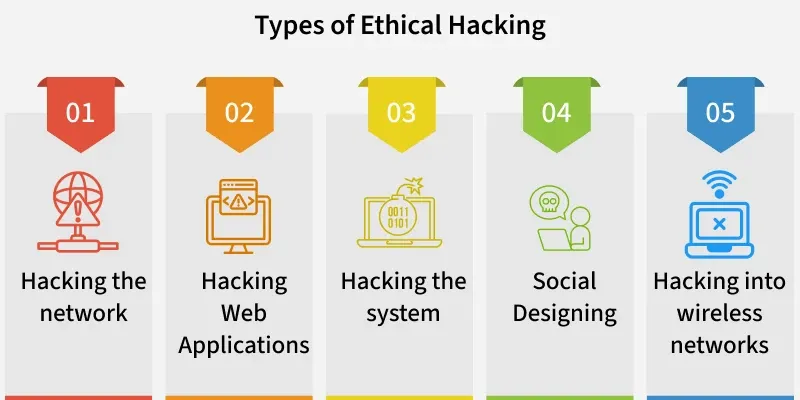
- Network Hacking: Assesses network infrastructure, firewalls, routers and communication protocols for security weaknesses.
- Web Application Hacking: Tests websites and web applications for vulnerabilities such as SQL injection, XSS and authentication flaws.
- Wireless Network Hacking: Evaluates the security of Wi-Fi networks, encryption protocols and wireless access points.
- System Hacking: Examines operating systems, servers and endpoints to identify privilege escalation and unauthorized access risks.
- Cloud Security Hacking: Assesses cloud environments, configurations, storage services and access controls for security gaps.
- Mobile Application Hacking: Analyzes Android and iOS applications for insecure coding practices, data leakage and authentication issues.
- IoT Hacking: Tests Internet of Things devices for firmware vulnerabilities, weak credentials and insecure communication channels.
- Social Engineering Testing: Simulates human-targeted attacks to evaluate security awareness and resistance to manipulation techniques.
Types of Ethical Hackers
Understanding the various types of ethical hackers helps organizations choose the right expertise to protect their systems, networks and applications.
- White Hat Hackers: Authorized security professionals who identify and fix vulnerabilities to improve cybersecurity.
- Gray Hat Hackers: Security researchers who may discover vulnerabilities without permission but typically disclose them responsibly.
- Penetration Testers: Specialists who conduct controlled attacks to assess the security of systems, networks and applications.
- Security Consultants: Experts who evaluate security controls, recommend improvements and help organizations manage cyber risks.
- Bug Bounty Hunters: Independent researchers who legally discover and report vulnerabilities through bug bounty programs.
- Red Team Professionals: Ethical hackers who simulate advanced real-world attacks to test an organization's detection and response capabilities.
- Security Auditors: Professionals who review security policies, configurations and compliance requirements to identify weaknesses.
- Cybersecurity Researchers: Analysts who study emerging threats, vulnerabilities and attack techniques to enhance security defenses.
Phases of Ethical Hacking
Ethical hacking follows a structured and legal methodology designed to identify vulnerabilities before malicious attackers can exploit them.
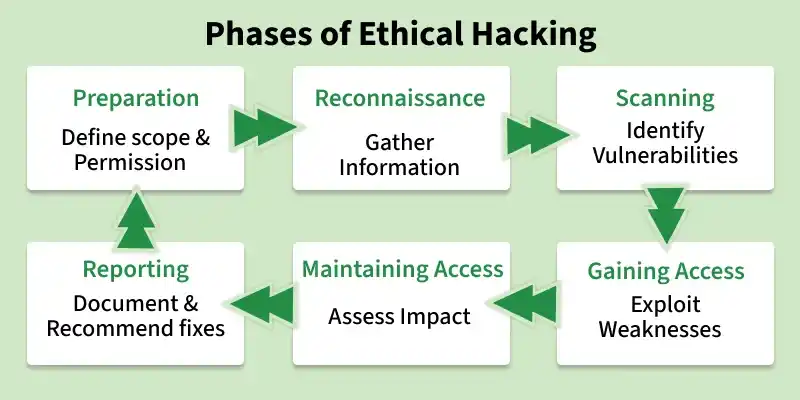
1. Preparation and Planning
Defines the scope, objectives and rules of engagement for the security assessment.
- Establishes testing boundaries and target assets.
- Selects appropriate assessment methodologies and tools.
- Obtains formal authorization and compliance approval.
2. Reconnaissance (Information Gathering)
Collects technical intelligence to map the target environment and attack surface.
- Identifies domains, IP addresses and network ranges.
- Enumerates technologies, services and infrastructure components.
- Gathers publicly available and system-specific information.
3. Scanning
Analyzes the target to discover active services and security weaknesses.
- Detects open ports and exposed network services.
- Identifies software versions and configuration flaws.
- Performs vulnerability assessment and network mapping.
4. Gaining Access (Exploitation)
Validates vulnerabilities through controlled exploitation techniques.
- Tests authentication and access control weaknesses.
- Exploits application, system or network vulnerabilities.
- Evaluates the effectiveness of existing security controls.
5. Maintaining Access (Post-Exploitation)
Assesses the impact and extent of a successful compromise.
- Evaluates privilege escalation opportunities.
- Tests lateral movement across connected systems.
- Identifies access to sensitive data and critical resources.
6. Reporting and Analysis
Documents findings and provides actionable security improvements.
- Prioritizes vulnerabilities based on risk severity.
- Details attack paths and potential business impact.
- Recommends remediation and security hardening measures.
Benefits of Ethical Hacking
Ethical hacking has advantages that go beyond just enhancing security, They consist of:
- Vulnerability Identification: Detects security flaws in systems, networks and applications before attackers discover them.
- Risk Reduction: Minimizes the likelihood of data breaches, ransomware incidents and unauthorized access.
- Security Validation: Evaluates the effectiveness of firewalls, access controls and other security mechanisms.
- Regulatory Compliance: Supports compliance with cybersecurity standards, regulations and industry best practices.
- Incident Prevention: Identifies potential attack vectors and helps prevent future security incidents.
- Improved Security Posture: Strengthens overall organizational defenses through continuous security assessment.
- Data Protection: Safeguards sensitive information from theft, modification or unauthorized disclosure.
- Cost Savings: Reduces financial losses associated with cyberattacks, downtime and recovery efforts.
