
Spring Boot JPA simplifies database interactions by reducing boilerplate code and providing powerful data access features. It allows developers to focus more on business logic rather than complex SQL queries. In this project, we will build a Maven-based application with MySQL integration using query methods.
- Build a Spring Boot JPA project using Maven
- Use query methods for efficient and clean data access
- Connect to MySQL with the "Contest" table
Sample Project
MySQL scripts:
-- if we want to drop the database, we can use this
DROP DATABASE IF EXISTS geeksforgeeks;
--creation of database
CREATE DATABASE geeksforgeeks;
--Make the database active
USE geeksforgeeks;
--Create the table Contest
CREATE TABLE `Contest` (
`id` int(11) NOT NULL AUTO_INCREMENT,
`contestName` varchar(45) NOT NULL,
`contestDescription` varchar(45) NOT NULL,
PRIMARY KEY (`id`)) ENGINE=InnoDB AUTO_INCREMENT=6 DEFAULT CHARSET=utf8;
Project Structure:

Maven Project. All dependencies are specified here
pom.xml
<project xmlns="https://maven.apache.org/POM/4.0.0"
         xmlns:xsi="https://www.w3.org/2001/XMLSchema-instance"
         xsi:schemaLocation="https://maven.apache.org/POM/4.0.0
                             https://maven.apache.org/xsd/maven-4.0.0.xsd">
    <modelVersion>4.0.0</modelVersion>
    <groupId>com.gfg</groupId>
    <artifactId>SpringDataJPAQueryMethods</artifactId>
    <version>0.0.1-SNAPSHOT</version>
    <properties>
     <maven.compiler.source>1.8</maven.compiler.source>
     <maven.compiler.target>1.8</maven.compiler.target>
    </properties>
    <dependencies>
    <!--  Spring framework with support for Spring Data JPA -->
        <dependency>
            <groupId>org.springframework</groupId>
            <artifactId>spring-context</artifactId>
            <version>5.1.4.RELEASE</version>
        </dependency>
        <dependency>
            <groupId>org.springframework</groupId>
            <artifactId>spring-orm</artifactId>
            <version>5.1.4.RELEASE</version>
        </dependency>
        <dependency>
            <groupId>org.hibernate</groupId>
            <artifactId>hibernate-core</artifactId>
            <version>5.4.1.Final</version>
        </dependency>
        <dependency>
            <groupId>org.springframework.data</groupId>
            <artifactId>spring-data-jpa</artifactId>
            <version>2.1.4.RELEASE</version>
        </dependency>
        <!--  Spring framework with
              support for Spring Data JPA -->
        <!-- MySQL dependency -->
        <dependency>
            <groupId>mysql</groupId>
            <artifactId>mysql-connector-java</artifactId>
            <version>8.0.14</version>
        </dependency>
    </dependencies>
</project>
Let's start with the Model class
Contest.java
import javax.persistence.Entity;
import javax.persistence.GeneratedValue;
import javax.persistence.GenerationType;
import javax.persistence.Id;

@Entity
public class Contest {

    @Id
    @GeneratedValue(strategy = GenerationType.IDENTITY)
    private Long id;
    private String contestName;
    private String contestDescription;

    protected Contest() {
    }

    public Long getId() {
        return id;
    }

    public void setId(Long id) {
        this.id = id;
    }

    public String getContestName() {
        return contestName;
    }

    public void setContestName(String contestName) {
        this.contestName = contestName;
    }

    public String getContestDescription() {
        return contestDescription;
    }

    public void setContestDescription(String contestDescription) {
        this.contestDescription = contestDescription;
    }

    @Override
    public String toString() {
        return "Contest [contestName=" + contestName + ", contestDescription=" + contestDescription + "]";
    }

}
ContestAppConfiguration.java
import javax.persistence.EntityManagerFactory;

import org.springframework.context.annotation.Bean;
import org.springframework.context.annotation.Configuration;
import org.springframework.data.jpa.repository.config.EnableJpaRepositories;
import org.springframework.orm.jpa.JpaTransactionManager;
import org.springframework.orm.jpa.LocalEntityManagerFactoryBean;

@Configuration
// Entire package contents of
// com.gfg.jpaquerymethods need to be looked
@EnableJpaRepositories(basePackages = {"com.gfg.jpaquerymethods"})
public class ContestAppConfiguration {
    @Bean
    public LocalEntityManagerFactoryBean entityManagerFactory() {
        LocalEntityManagerFactoryBean factoryBean = new LocalEntityManagerFactoryBean();
        factoryBean.setPersistenceUnitName("GeeksDB");

        return factoryBean;
    }

    @Bean
    public JpaTransactionManager transactionManager(EntityManagerFactory entityManagerFactory) {
        JpaTransactionManager transactionManager = new JpaTransactionManager();
        transactionManager.setEntityManagerFactory(entityManagerFactory);

        return transactionManager;
    }
}
Now let us define the methods in ContestRepositoryWithQuery for the query methods
ContestRepositoryWithQuery.java
import java.util.List;
import java.util.Optional;
import java.util.concurrent.Future;
import java.util.stream.Stream;

import org.springframework.data.jpa.repository.Query;
import org.springframework.data.repository.CrudRepository;
import org.springframework.data.repository.query.Param;
import org.springframework.scheduling.annotation.Async;

public interface ContestRepositoryWithQuery extends CrudRepository<Contest, Long> {

    @Query("SELECT contest.contestName FROM Contest contest where contest.id = :id")
    String findContestByIdString(@Param("id") Long id);

    @Query("SELECT contest.contestName FROM Contest contest where contest.contestName = :contestName")
    String findContestByContestName(@Param("contestName") String contestName);

    List<Contest> findByContestName(String contestName);

    // Position based parameter binding
    // We cannot change the order of the method parameters
    // We cannot change the order of the placeholders
    // without breaking our database query
    @Query("SELECT contest FROM Contest contest where contest.contestName = ?1 AND contest.id = ?2")
    public Optional<Contest> findByContestNameAndId(String contestName, Long id);

    // Named Parameter
    // The @Param annotation configures the name of the
    // named parameter that is replaced with the value
    // of the method parameter.
    // This will be more helpful than positional based
    @Query("SELECT contest FROM Contest contest where contest.contestName = :contestName AND contest.id = :id")
    public Optional<Contest> findByNamedParameter(@Param("contestName") String contestName,
                                                    @Param("id") Long id);

    @Async
    Future<Contest> findContest1ById(Long id);

    @Async
    Future<Optional<Contest>> findContest2ById(Long id);

    @Async
    Future<Contest> findContestAsyncByContestName(String contestName);

    @Async
    Future<Stream<Contest>> findContestAsyncStreamByContestName(String contestName);

    @Async
    @Query("SELECT contest.contestName FROM Contest contest where contest.id = :id")
    Future<Optional<String>> findContestById(@Param("id") Long id);

    @Async
    @Query("SELECT contest.contestName FROM Contest contest where contest.id = :id")
    Future<String> findContestAsyncById(@Param("id") Long id);

}
Let's consume the repository in a service file and as a test method, let's test everything
ContestQueryService.java
import java.util.List;
import java.util.Optional;
import java.util.concurrent.ExecutionException;
import java.util.concurrent.Future;

import org.springframework.beans.factory.annotation.Autowired;
import org.springframework.stereotype.Service;

@Service("contestQueryService")
public class ContestQueryService {

    @Autowired
    private ContestRepositoryWithQuery contestRepositoryWithQuery;

    public void test() {
        // Save a new contest
        Contest geekContest = new Contest();
        geekContest.setContestName("PremierLeague");
        geekContest.setContestDescription("Inviting Geeks To submit articles in plenty");

        contestRepositoryWithQuery.save(geekContest);

        Contest hackthoContest = new Contest();
        hackthoContest.setContestName("Hackathon");
        hackthoContest.setContestDescription("Coding Round Challenge");
        contestRepositoryWithQuery.save(hackthoContest);

        Optional<Contest> result = contestRepositoryWithQuery.findById(1L);
        result.ifPresent(contest -> System.out.println(contest));

        // Positional based test
        Optional<Contest> result1 = contestRepositoryWithQuery.findByContestNameAndId("PremierLeague",6L);
        result1.ifPresent(contest -> System.out.println("Searched for PremierLeague.." + contest));

        // Named query test
        Optional<Contest> namedQueryResult = contestRepositoryWithQuery.findByNamedParameter("PremierLeague",6L);
        namedQueryResult.ifPresent(contest -> System.out.println("Searched for PremierLeague.." + contest));

        // Find contest by contest name
        List<Contest> contests = contestRepositoryWithQuery.findByContestName("Hackathon");
        contests.forEach(contest -> System.out.println("Searched for Hackathon.." + contest));

        // List all contests
        Iterable<Contest> iterator = contestRepositoryWithQuery.findAll();
        iterator.forEach(contest -> System.out.println(contest));

        // Count number of contest
        long countOfContest = contestRepositoryWithQuery.count();
        System.out.println("Number of contest held: " + countOfContest);

        // Async way of testing
        Future<Contest> resultAsync = contestRepositoryWithQuery.findContest1ById(6L);
        try {
            System.out.println("Async way of getting contestname.." + resultAsync.get().getContestName());
        } catch (InterruptedException e1) {
            // TODO Auto-generated catch block
            e1.printStackTrace();
        } catch (ExecutionException e1) {
            // TODO Auto-generated catch block
            e1.printStackTrace();
        }

        Future<Optional<Contest>> hackathonAsyncResult = contestRepositoryWithQuery.findContest2ById(7L);
        result.ifPresent(hackathonContest -> System.out.println(hackathonContest));

        Future<Contest> asyncContest = contestRepositoryWithQuery.findContestAsyncByContestName("Hackathon");
        try {
            System.out.println("contestname retrieval in async way .." + asyncContest.get().getContestName());
        } catch (InterruptedException e) {
            // TODO Auto-generated catch block
            e.printStackTrace();
        } catch (ExecutionException e) {
            // TODO Auto-generated catch block
            e.printStackTrace();
        }

        Future<Optional<String>> contestDetails = contestRepositoryWithQuery.findContestById(10L);
        //contestDetails.ifPresent(hackathonContest -> System.out.println(hackathonContest));

        Future<String> contestString = contestRepositoryWithQuery.findContestAsyncById(10L);
        System.out.println(contestString);
    }
}
We can call the service file via
ContestTestIncludingQueryMethods.java
import org.springframework.context.annotation.AnnotationConfigApplicationContext;

public class ContestTestIncludingQueryMethods {

    public static void main(String[] args) {
        AnnotationConfigApplicationContext appContext = new AnnotationConfigApplicationContext();
        appContext.scan("com.gfg.jpaquerymethods");
        appContext.refresh();

        ContestQueryService contestService = (ContestQueryService) appContext.getBean("contestQueryService");
        contestService.test();

        appContext.close();
    }

}
We can run the test file as a normal Java application and can find the observations. First, let us have DB data display
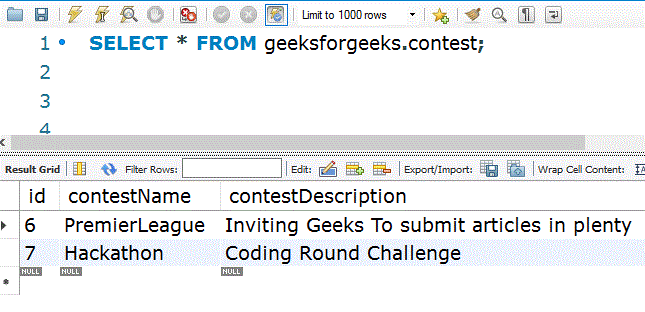
Output:

Positional Query Output:
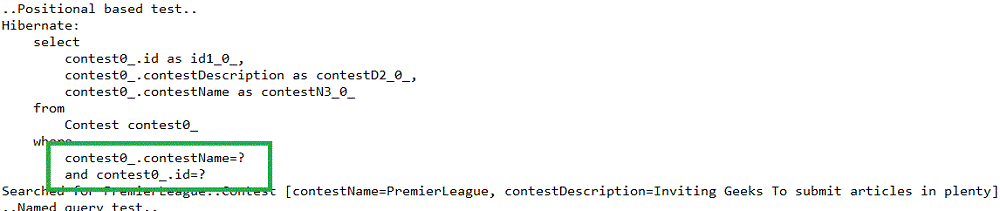
Named Query Output:

Async Way of Output:
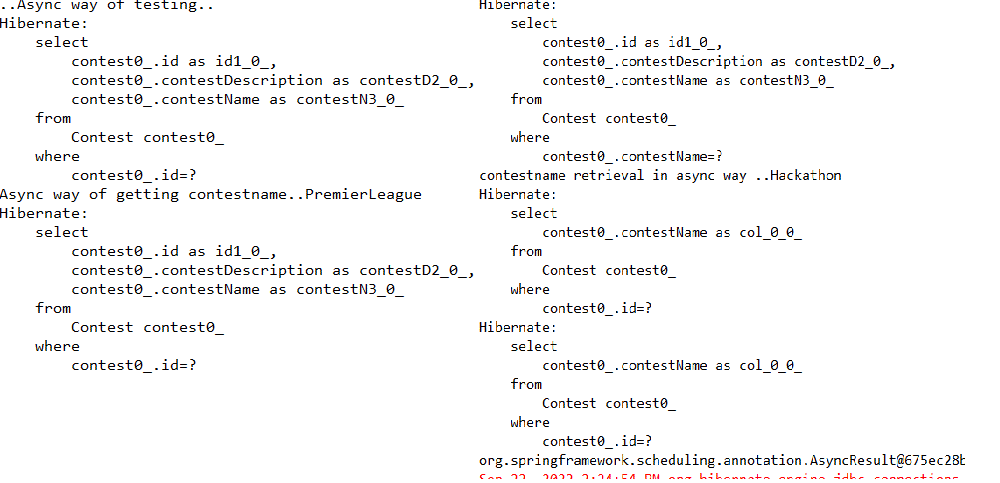
As we have different options available with Query methods, we can choose them as per our needs.
