
The getent command in Linux retrieves entries from databases managed by the Name Service Switch (NSS). It provides a unified way to query system information such as users, groups, hosts, and services from local files or network sources like LDAP. Unlike directly reading files such as /etc/passwd, getent queries the same sources the system uses, ensuring accurate and complete results.
- Retrieve user and group information from system databases
- Query hostnames, IP addresses, and network services
- Access data from local files and remote sources (e.g., LDAP)
- Provide a consistent lookup method across different name services
- Assist in system administration and troubleshooting
Example 1: Fetching All User Accounts
Display all users available on the system. Queries the passwd database and lists all users from local files and network services like LDAP.
Command:
getent passwdOutput:
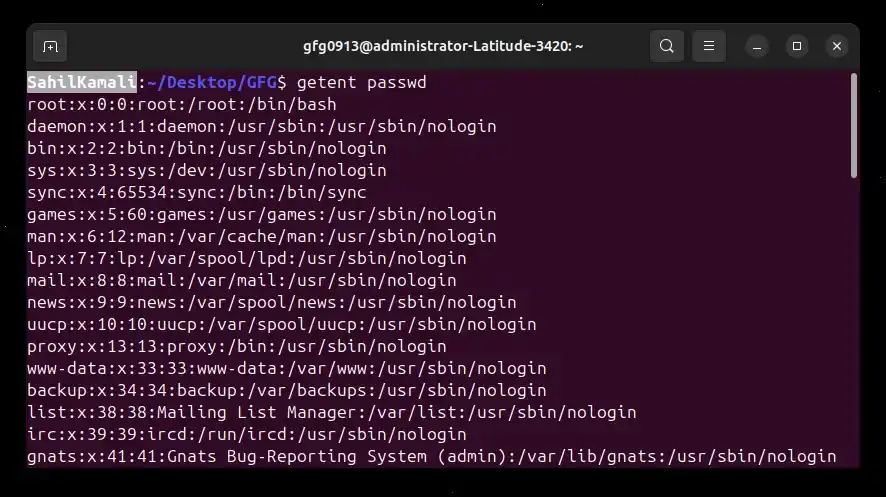
Example 2: Fetch Information for a Specific User
Retrieve details for a specific user. Displays user details including UID, GID, home directory, and default shell.
Command:
getent passwd captain-leviOutput:
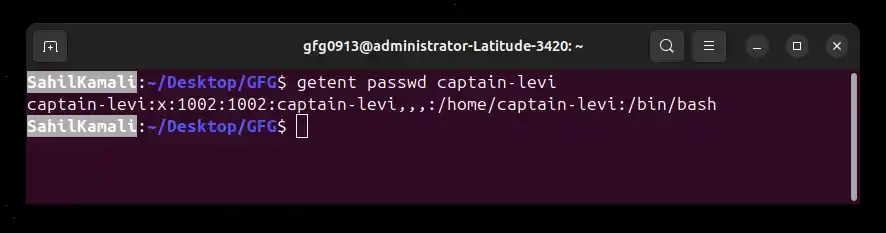
Example 3: Fetching Group Information
List all groups configured on the system. Shows group name, group ID, and members.
Command:
getent groupOutput:
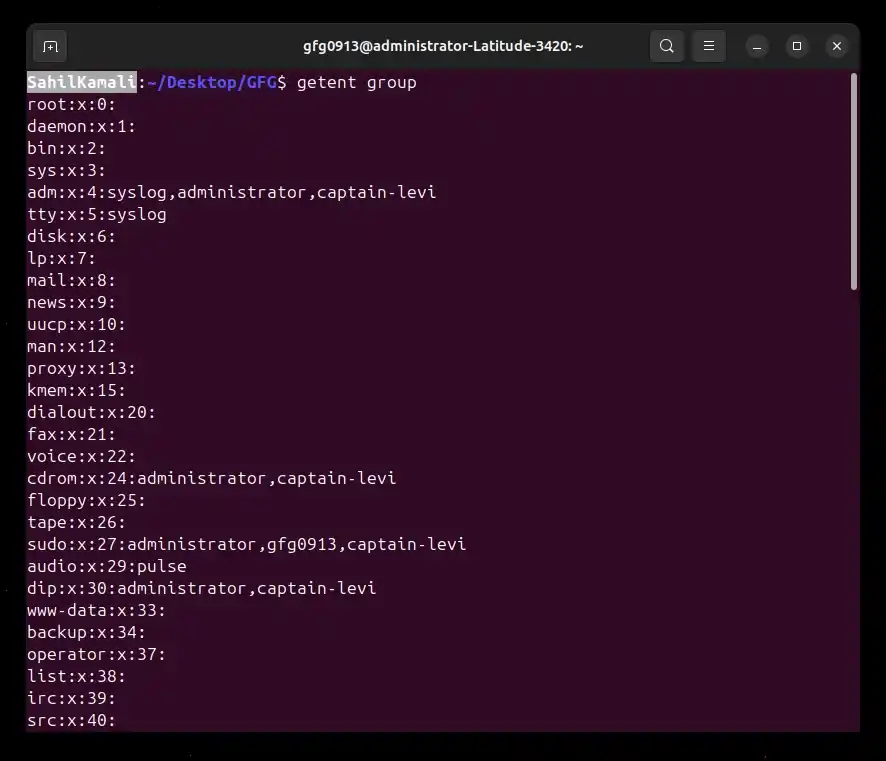
Syntax
getent [OPTION] database [key]- getent: Command used to retrieve entries from NSS databases
- [OPTION]: Optional flags that modify lookup behavior
- database: Name of the database to query (e.g., passwd, hosts, group)
- [key]: Optional lookup value such as username, group name, or hostname
Note:
- If no key is provided, all entries in the specified database are displayed.
- If a key is provided, only the matching entry is returned.
- If an option is used, it modifies how the lookup is performed (e.g., selecting a specific service).
- The command retrieves data using the system’s configured name services (local files, LDAP, DNS, etc.).
Options in getent
1. -s service or --service service
Forces getent to use a specific name service instead of the system default. This is useful when your system uses multiple sources such as local files, LDAP, or DNS.
Syntax:
getent -s <service> <database> [key]Example: Query Only Local Users
This example forces getent to return users only from local files.
getent -s files passwdOutput:
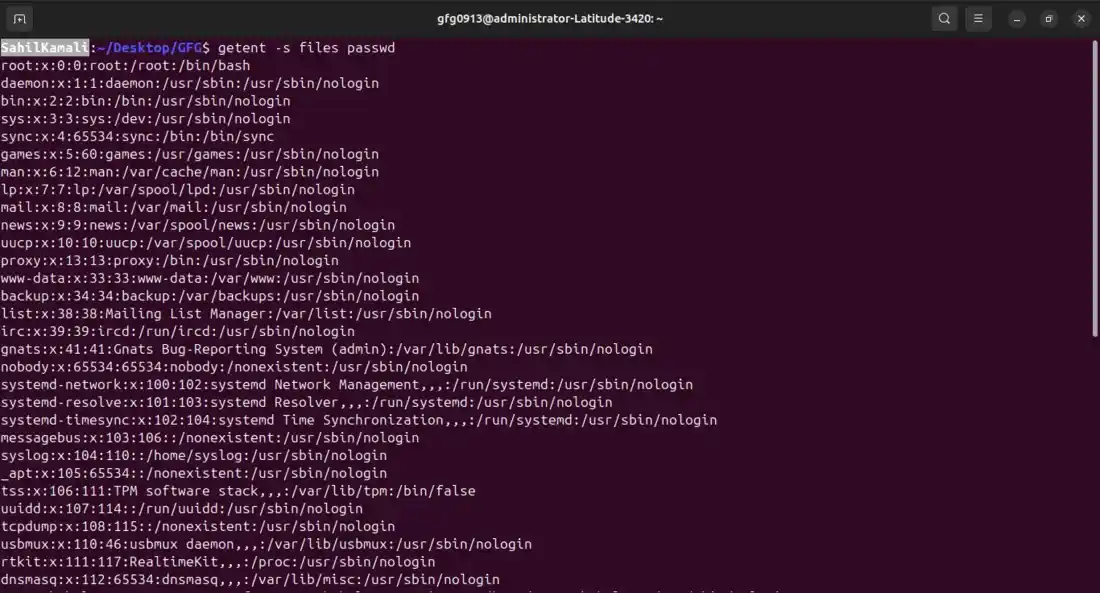
Option 2: -s database:service
Overrides the name service for a specific database only. Use this when you want one database to use a different service without changing others.
Syntax:
getent -s <database>:<service> <database> [key]- <database>:<service>: Specifies which database should use which service
- database: The database being queried
- [key]: Optional entry to look up
Example: Query User from LDAP Only
This example forces the passwd database to use LDAP for the lookup.
Command:
getent -s passwd:ldap passwd gfg0913Output:
rahul:x:10500:10500:Rahul:/home/gfg0913:/bin/bashOption 3: -i or --no-idn
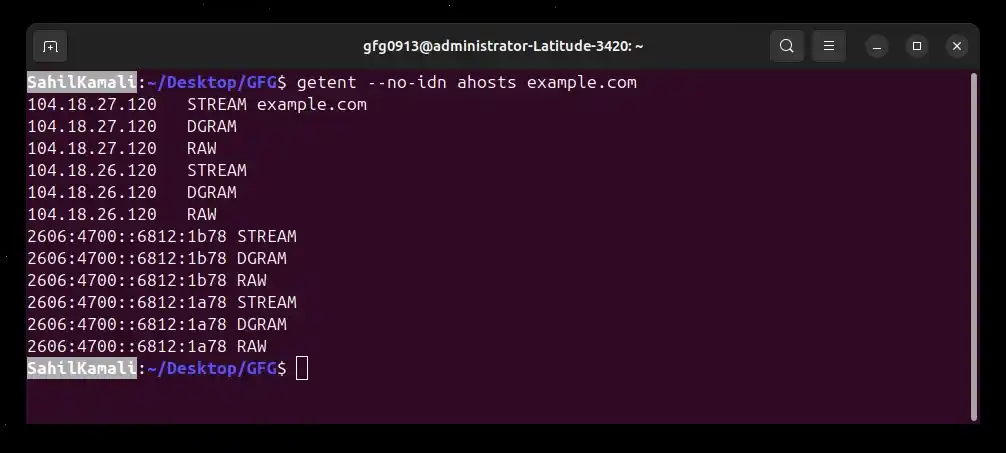
Disables IDN (Internationalized Domain Name) encoding during hostname lookups. Use this option when troubleshooting DNS resolution or when you want the raw lookup result without IDN conversion.
Syntax:
getent --no-idn ahosts <hostname>- --no-idn: Disables IDN encoding
- ahosts: Database used for address resolution
- <hostname>: Domain name to resolve
Example: Lookup Host Without IDN Encoding
This example resolves a hostname without applying IDN conversion.
Command:
getent --no-idn ahosts example.comOutput:
Option 3: -A or --no-addrconfig
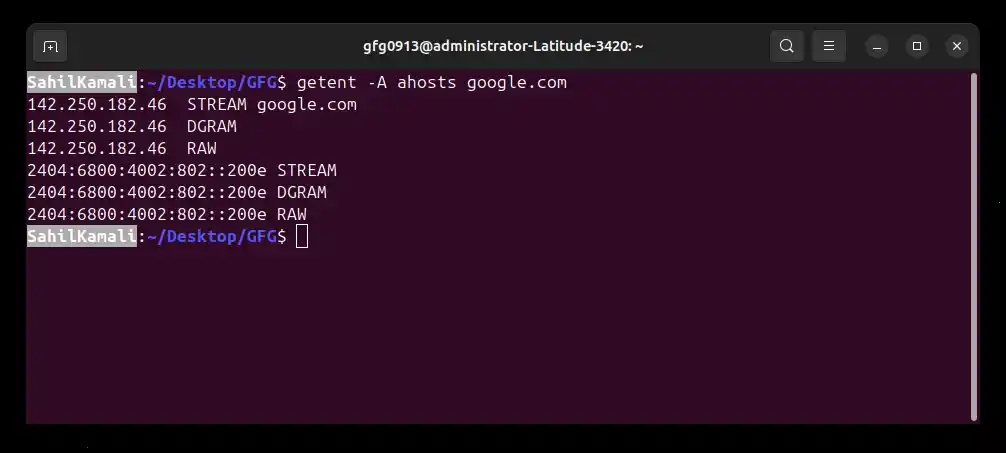
Disables filtering of IP addresses during hostname lookup. Shows all IPv4 and IPv6 addresses for a host, even if the system does not currently support one of the address types. By default, getent ahosts only shows addresses your system can use.
Syntax:
getent -A ahosts <hostname>- -A / --no-addrconfig: Disables filtering of unsupported IPv4/IPv6 addresses
- ahosts: Database used for address resolution
- <hostname>: Domain name to resolve
Example: Lookup Host Without Address Filtering
This example forces getent to return both IPv4 and IPv6 addresses, regardless of whether the local system has IPv6 configured.
Command:
getent -A ahosts google.comOutput:
Option 5: -? or --help
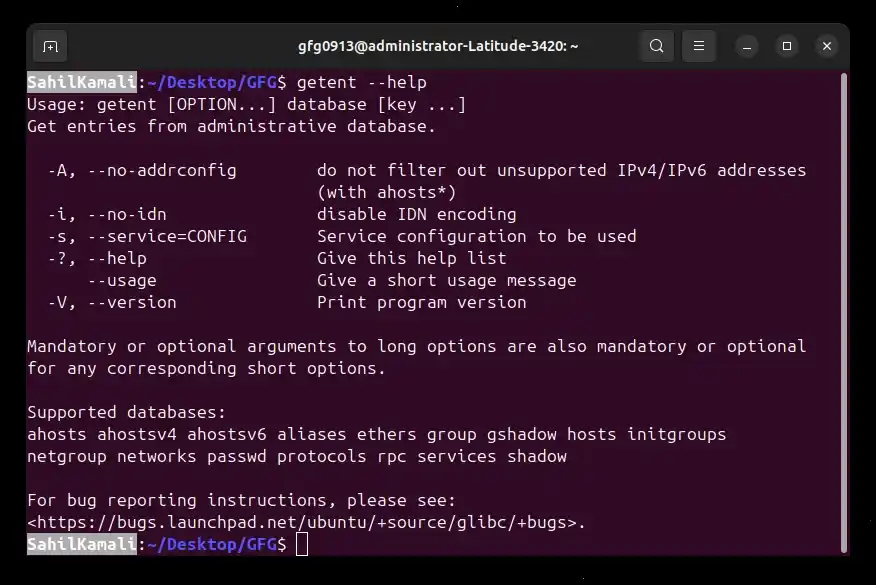
Displays the help message with available options and usage information. Use this option when you need a quick reference for command syntax.
Syntax:
getent --helpExample: Display Help Information
Shows the usage summary and available options.
Command:
getent --helpOutput:
Common Databases Used with getent
The getent command retrieves information from databases configured in the Name Service Switch (NSS). Each database stores a specific type of system or network information.
1. passwd
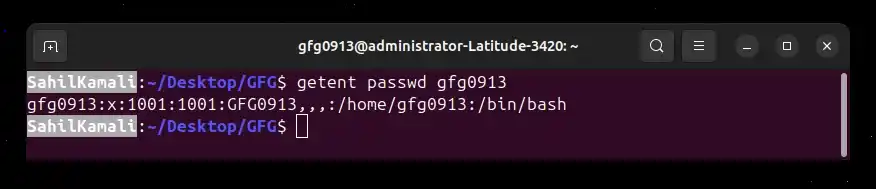
Retrieves user account information.
Example:
getent passwd rahulOutput:
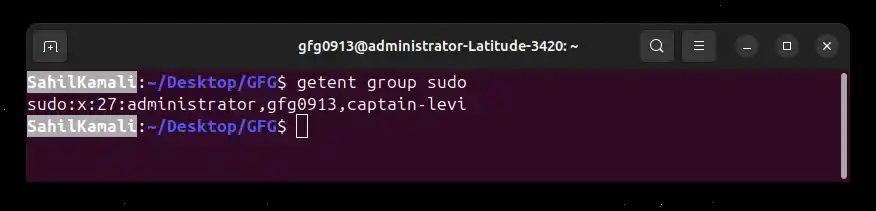
2. group
Displays group account details.
Example:
getent group sudoOutput:
3. hosts
Resolves hostnames to IP addresses.
Example:
getent hosts example.com
Output:
93.184.216.34 example.com4. services
Lists network services and their ports.
Example:
getent services sshOutput:
ssh 22/tcp5. protocols
Displays network protocol entries.
Example:
getent protocols tcpOutput:
tcp 6 TCP6. networks
Shows network name mappings.
Example:
getent networks loopbackOutput:
loopback 127.0.0.07. shadow (requires root privileges)
Displays secure user password information.
Example:
sudo getent shadow rahulOutput:
rahul:$6$hashvalue:19400:0:99999:7:::Exit Status Codes
The getent command returns specific exit codes to indicate whether the lookup was successful or if an error occurred.
- 0: Command executed successfully
- 1: Missing arguments or unknown database
- 2: Requested key not found
- 3: Enumeration not supported for the database
