
Multiple layouts in Kivy means placing one layout inside another to create structured and organized screens. This is used when different parts of the screen need different layout behaviors such as rows, columns or fixed positions.
This program displays a TextInput box placed inside a BoxLayout to show how a layout can hold widgets.
from kivy.app import App
from kivy.uix.boxlayout import BoxLayout
from kivy.uix.textinput import TextInput

class MyApp(App):
    def build(self):
        a = BoxLayout()
        s = TextInput(text="Enter name")
        a.add_widget(s)
        return a

MyApp().run()
Output:
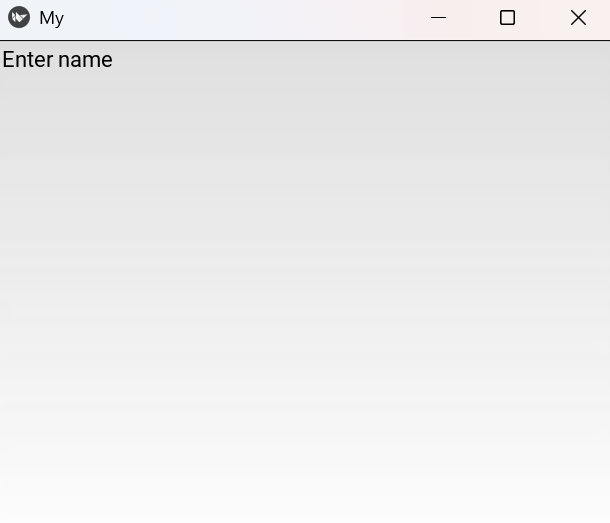
Explanation:
- BoxLayout() creates the main container l and TextInput() creates the text box t
- l.add_widget(t) places t inside l
- return l sends the layout to the Kivy window
Syntax:
ParentLayout(parameters):
ChildLayout(parameters):
Widget(parameters)
A parent layout holds one or more child layouts, and each child layout can hold widgets.
Parameters:
- orientation: controls the direction in layouts like BoxLayout
- size_hint: controls how much space a layout or widget takes
- pos_hint: controls the position when used inside layouts like FloatLayout
- add_widget(widget): is used to insert one layout or widget inside another
Examples
Example 1: This code places a BoxLayout inside a FloatLayout to position grouped widgets freely.
from kivy.app import App
from kivy.uix.floatlayout import FloatLayout
from kivy.uix.boxlayout import BoxLayout
from kivy.uix.button import Button

class MyApp(App):
    def build(self):
        f = FloatLayout()
        b = BoxLayout(size_hint=(.5, .3), pos_hint={'x': .25, 'y': .4})
        b.add_widget(Button(text="A"))
        b.add_widget(Button(text="B"))
        f.add_widget(b)
        return f

MyApp().run()
Output:
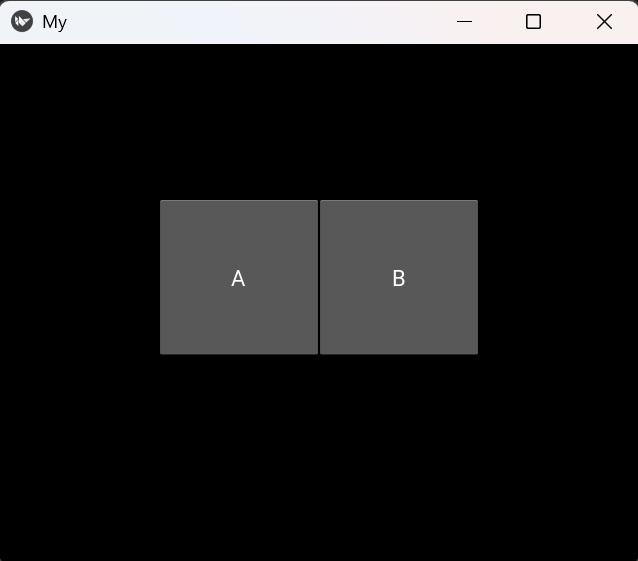
Explanation:
- FloatLayout() creates the outer layout f and BoxLayout() creates the inner layout b
- pos_hint moves b inside f
- b.add_widget() puts buttons inside b and f.add_widget(b) places b inside f
Example 2: This code places a centered button inside a BoxLayout using AnchorLayout.
from kivy.app import App
from kivy.uix.boxlayout import BoxLayout
from kivy.uix.anchorlayout import AnchorLayout
from kivy.uix.button import Button

class MyApp(App):
    def build(self):
        b = BoxLayout()
        a = AnchorLayout(anchor_x='center', anchor_y='center')
        a.add_widget(Button(text="Center"))
        b.add_widget(a)
        return b

MyApp().run()
Output:
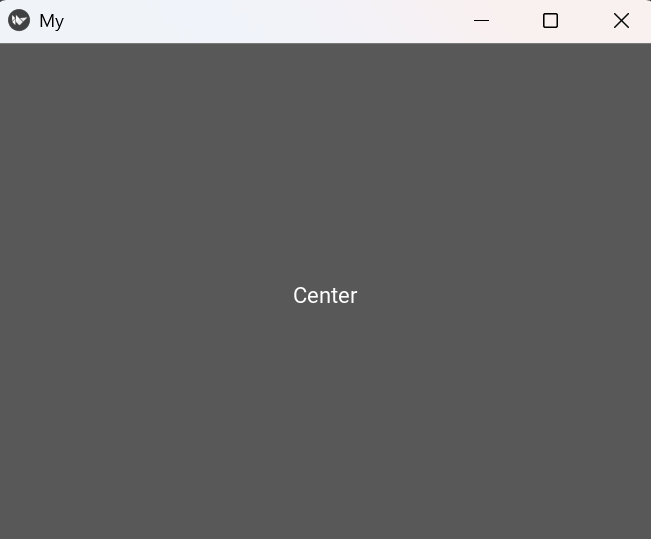
Explanation:
- BoxLayout() creates the main container b.
- AnchorLayout() creates a to control alignment while anchor_x and anchor_y center the button.
- a.add_widget() adds the button and b.add_widget(a) places the anchor layout inside the box layout.
