Key takeaways
- Stelara is a biologic drug used to treat moderate to severe plaque psoriasis and active psoriatic arthritis in adults and children ages 6 years and older, moderate to severe Crohn’s disease in adults and children ages 2 years and older, and moderate to severe ulcerative colitis in adults.
- The medication works by blocking cytokines, substances made by your immune system that promote inflammation and may cause disease. Treatment typically involves an initial dose followed by maintenance doses every 8 to 12 weeks, depending on body weight and the condition being treated.
- Serious side effects can include infections (such as tuberculosis [TB], bacterial, fungal, or viral infections), certain cancers, and allergic reactions. Your doctor will test you for TB before you start Stelara and monitor you for signs of infection during treatment.
Stelara (ustekinumab) is approved by the Food and Drug Administration (FDA) to treat:
- moderate to severe plaque psoriasis in adults and children ages 6 years and older who are candidates for phototherapy or systemic therapy
- active psoriatic arthritis in adults and children ages 6 years and older
- Crohn’s disease in adults and children ages 2 years and older
- ulcerative colitis in adults
To learn more about these conditions and how Stelara is used to treat them, see the “What is Stelara used for?” section.
Stelara contains the active ingredient ustekinumab, which is a biologic drug. (This means it’s made from living cells.) Ustekinumab also comes in biosimilar forms, including Selarsdi (ustekinumab-aekn), Wezlana (ustekinumab-auub), Steqeyma (ustekinumab-stba), Pyzchiva (ustekinumab-ttwe), and others. Biosimilars are like generic drugs. But unlike generics, which are made for chemical drugs, biosimilars are made for biologics.
The following are some of the more common side effects Stelara may cause. Not all possible side effects are listed. To learn more about side effects of Stelara, talk with your doctor or pharmacist, or check out the drug’s prescribing information.
Mild side effects
Side effects of Stelara may differ slightly depending on the condition you’re using the drug to treat.
Mild side effects Stelara can cause include:
- nasopharyngitis and upper respiratory tract infection
- headache
- fatigue
- abdominal pain
- nausea
- vomiting
- diarrhea
- pruritus (itchiness)
- skin discoloration at the drug injection site
- vaginal yeast infection
- urinary tract infection (UTI)
Mild side effects of many drugs go away within a few days to a couple of weeks, but if they become bothersome, talk with your doctor or pharmacist.
Serious side effects
Serious side effects from Stelara aren’t common, but they can occur. If you have serious side effects from this drug, call your doctor right away. But if you think you’re having a medical emergency, call 911 or your local emergency number immediately.
Serious side effects can include:
- posterior reversible encephalopathy syndrome (PRES) — swelling in your brain that can cause seizure, headache, vision changes, and more
- cancer, including non-melanoma skin cancer
- allergic reaction
- serious infection, including tuberculosis (TB) and bacterial, fungal, or viral infections
Allergic reactionSome people may have an allergic reaction to Stelara. In addition, the needle cover on the prefilled syringe contains dry natural rubber (which is made from latex). If you have a latex allergy/sensitivity, you should not handle the needle cover.
Symptoms of a mild allergic reaction can include:
- skin rash
- itchiness
- flushing (temporary warmth, discoloration, or deepening of skin color)
Although rare, severe allergic reactions were reported during studies of Stelara. If you have a severe allergic reaction, you must seek medical help right away and stop using Stelara.
Symptoms of a severe allergic reaction can include swelling under your skin — typically in your eyelids, lips, hands, or feet. They can also include swelling of your tongue, mouth, or throat, which can make it difficult to breathe.
Call your doctor right away if you have an allergic reaction to Stelara. But if you think you’re having a medical emergency, call 911 or your local emergency number.
The following is information about commonly used dosages of Stelara, but always follow the dosage your doctor prescribes. They’ll determine the best dosage of Stelara to fit your needs.
Forms, strengths, and how it’s given
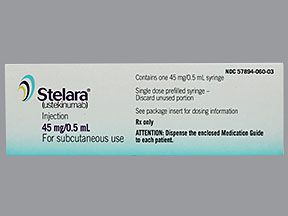
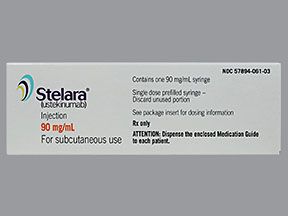
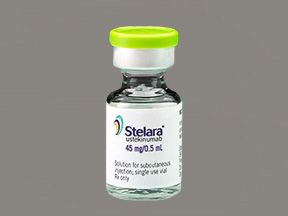
Stelara comes as a liquid solution inside prefilled syringes and single-dose vials for injection under your skin. This is available in two strengths:
- 90 milligrams per milliliter (mg/mL), in single-dose prefilled syringes
- 45 mg/0.5 mL, in single-dose prefilled syringes and single-dose vials
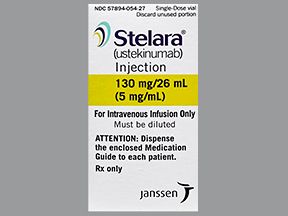
Stelara also comes as a liquid solution inside single-dose vials for intravenous (IV) infusion. (With an IV infusion, a healthcare professional will administer the medication into your vein over a period of time.) This solution is available in single-dose vials in one strength of 130 mg/26 mL.
If you’re receiving Stelara for Crohn’s disease or ulcerative colitis, you’ll receive an IV infusion when you first start treatment. This will be followed by injections under your skin.
Your doctor will explain how you should receive Stelara injections, including how much and how often. Always follow their instructions.
Injection sites for Stelara
Your doctor or nurse will show you how to inject Stelara under your skin. You should change the site where you inject the drug, rotating between the following locations:
- buttock
- front of thigh
- abdomen, staying 2 inches (5 centimeters) away from your belly button
If a caregiver is giving you the drug, they may also inject the drug into the outer side of your upper arm.
Recommended dosages
The following are commonly used dosages, but the dosage you receive will be determined by your doctor. Always take the dosage they prescribe for you.
Note: Body weight is given in kilograms (kg), with 1 kg equal to about 2.2 pounds (lb). Doses are given in milligrams (mg).
Dosage for plaque psoriasis
If you’re an adult with plaque psoriasis, your dosage will be based on your weight as follows. You’ll receive all doses as an injection under your skin.
| Body weight | Initial injection dosage | Subsequent injection dosage |
|---|---|---|
| 100 kg (about 220 lb) or less | 45 mg, followed by 45 mg after 4 weeks | 45 mg every 12 weeks |
| More than 100 kg | 90 mg, followed by 90 mg after 4 weeks | 90 mg every 12 weeks |
Doctors will likely recommend one of the following dosage schedules, based on body weight, for children ages 6 years and older with plaque psoriasis. All doses are given as an injection under the skin.
| Child’s body weight | Initial injection dosage | Subsequent injection dosage |
|---|---|---|
| less than 60 kg (about 132 lb) | 0.75 mg per kg of body weight (mg/kg), followed by 0.75 mg/kg after 4 weeks | 0.75 mg/kg every 12 weeks |
| 60 kg to 100 kg | 45 mg, followed by 45 mg after 4 weeks | 45 mg every 12 weeks |
| More than 100 kg | 90 mg, followed by 90 mg after 4 weeks | 90 mg every 12 weeks |
Dosage for psoriatic arthritis
If you’re an adult with psoriatic arthritis, your dosage will depend on whether your body weight is more than 100 kg and whether you also have plaque psoriasis. You’ll receive all doses as an injection under your skin.
| Body weight and whether you have plaque psoriasis | Initial injection dosage | Subsequent injection dosage |
|---|---|---|
| • any body weight without plaque psoriasis, or • less than 100 kg with plaque psoriasis | 45 mg, followed by 45 mg after 4 weeks | 45 mg every 12 weeks |
| 100 kg or more with plaque psoriasis | 90 mg, followed by 90 mg after 4 weeks | 90 mg every 12 weeks |
Doctors will likely recommend one of the following dosage schedules, based on body weight, for children ages 6 years and older with psoriatic arthritis. Which dosage schedule is prescribed may also depend on whether a child’s body weight is more than 100 kg and if they also have plaque psoriasis. All doses are given as an injection under the skin.
| Child’s body weight and whether they have plaque psoriasis | Initial injection dosage | Subsequent injection dosage |
|---|---|---|
| less than 60 kg | 0.75 mg per kg of body weight (mg/kg), followed by 0.75 mg/kg after 4 weeks | 0.75 mg/kg every 12 weeks |
| • 60 kg or more without plaque psoriasis, or • 60 kg to 100 kg with plaque psoriasis | 45 mg, followed by 45 mg after 4 weeks | 45 mg every 12 weeks |
| 100 kg or more with plaque psoriasis | 90 mg, followed by 90 mg after 4 weeks | 90 mg every 12 weeks |
Dosage for Crohn’s disease or ulcerative colitis
If you have Crohn’s disease or ulcerative colitis, your doctor will prescribe a loading dose of Stelara at the start of treatment. (A loading dose is a one-time dose that’s given to boost the level of a drug in your body.)
For a loading dose, you’ll receive the drug as an IV infusion that will last at least 1 hour. Your doctor will base this initial dose for IV infusion on your body weight, as shown in the following table.
| Body weight | Initial (loading) IV infusion dose |
|---|---|
| 55 kg (about 121 lb) or less | 260 mg |
| more than 55 kg to 85 kg (about 187 lb) | 390 mg |
| more than 85 kg | 520 mg |
After the IV infusion, your doctor will prescribe injections of Stelara. You’ll receive a 90-mg injection under your skin 8 weeks after the loading dose, then once every 8 weeks going forward.
Using Stelara with other drugs
You may need to use Stelara with other medications to treat your condition. Talk with your doctor if you have questions about taking Stelara with other drugs.
For psoriasis or psoriatic arthritis
It’s not known whether taking other immune system blockers or using phototherapy with Stelara for psoriasis is safe. But taking Stelara in combination with other biologic immunosuppressants should be avoided.
Methotrexate (Trexall, Rasuvo) may be used with Stelara to treat psoriatic arthritis if appropriate. It’s not known to interfere with the safety and efficacy of Stelara.
For Crohn’s disease or ulcerative colitis
For Crohn’s disease or ulcerative colitis, the following medications may be used with Stelara if appropriate:
- 6-mercaptopurine
- azathioprine (Azasan, Imuran)
- methotrexate
These medications do not affect the safety and effectiveness of Stelara. Also, if needed, your doctor may recommend that you use corticosteroids together with Stelara.
Will I need to use Stelara long term?
The conditions Stelara treats are long-lasting diseases, so you’ll likely receive this medication long term if it’s working well for you.
You should not stop receiving Stelara without first checking with your doctor. Stopping the drug may cause symptoms of your condition to return. Once you stop Stelara treatment, your doctor will monitor you to make sure you can safely stay off the treatment.
Questions about receiving Stelara
- What if I miss a dose? If you forget to inject a dose of Stelara, inject it as soon as you remember. If you’re unsure about when you should inject Stelara after missing a dose, talk with your doctor or pharmacist. They can help you set up a new schedule for your at-home injections.
- Should I take Stelara with food? Stelara is administered as either an injection under your skin or an IV infusion. Eating food does not affect how your body absorbs this drug.
- How long does Stelara take to work? For plaque psoriasis, you may have a significant reduction in symptoms after 12 weeks. For psoriatic arthritis, it may take about 24 weeks of treatment (though it’s possible your symptoms will ease earlier). Stelara typically works more quickly when it’s used for Crohn’s disease or ulcerative colitis. However, everyone’s experience with Stelara will differ.
The cost of Stelara depends on several things, such as your treatment plan, the pharmacy you use, whether you have insurance — and if so, what your particular plan benefits are.
A program called STELARA withMe is available for most people with commercial insurance. If you qualify, you may pay as little as $5 per dose. You can visit the STELARA withMe website or call 844-494-8463 (844-4withMe) to enroll.
Because several biosimilars for Stelara (such as Wezlana, Selarsdi, and Pyzchiva) are now available, their manufacturers often offer competing savings programs. Some of these programs may allow eligible patients to pay $0 per dose.
New for 2026: If you have a Medicare Part D plan, a new law has capped your total out-of-pocket costs for all prescription drugs at $2,100 per year. Stelara is also one of the drugs with a lower negotiated price under Medicare, which may reduce your costs further.
Here are a few more ways to help save on the cost of your prescription:
- Comparing pharmacies: The price of Stelara may vary depending on which pharmacy you use, so it can help to compare prices across pharmacies to find the lowest cost.
- Financial assistance: Some websites provide details about drug assistance programs, ways to make the most of your insurance coverage, and links to savings cards and other services. Two such websites are:
- Drug coupons: You may be able to find drug coupons on prescription discount websites that can lower the price of your medication. These coupons cannot be used with insurance copays or benefits, but the discounted price may be lower than what you would pay through insurance.
If you have certain autoimmune conditions, your doctor may prescribe Stelara for you.
Stelara is an antibody (a type of protein) that’s made in a lab. It works by blocking substances made by your immune system that can cause long-lasting inflammation. These substances, called cytokines, promote inflammation and may cause disease. By blocking cytokines, Stelara can help manage symptoms and relapses of certain diseases.
Stelara is used for the following long-lasting diseases:
- Moderate to severe plaque psoriasis (PsO): For PsO, adults and children ages 6 years and older can receive Stelara. With PsO, you have swollen, discolored patches on your skin. Over time, you may also develop swollen joints.
- Psoriatic arthritis (PsA): For PsA, adults and children ages 6 years and older can receive Stelara. With PsA, you have discolored patches of skin and swollen joints. You may have arthritis in joints on both or just one side of your body. Usually, you’ll develop skin issues before you develop joint swelling from PsA.
- Moderate to severe Crohn’s disease: Adults and children ages 2 years and older can receive Stelara for Crohn’s disease. This is a condition that affects the digestive system. With Crohn’s disease, you may have inflammation in any part of your digestive tract, from your mouth to your anus. You may have unpredictable periods of remission (times when your symptoms are managed) and you may have periods of relapse (times when your symptoms worsen).
- Moderate to severe ulcerative colitis (UC): For UC, adults can receive Stelara. With UC, you have inflammation in your large intestine and may have unpredictable periods of remission and relapse.
To manage symptoms of these long-lasting diseases, your doctor may prescribe medications to slow down the activity of your immune system.
No, Stelara does not affect your weight. However, if you’re using Stelara for Crohn’s disease, note that the condition itself may cause weight loss.
If you experience weight loss or weight gain while receiving Stelara, talk with your doctor. They can try to determine what’s causing your weight to change. They can also suggest ways to help you manage a body weight that’s healthy for you.
No, you won’t experience withdrawal symptoms from stopping Stelara. (Withdrawal symptoms are uncomfortable side effects that can occur when you stop taking a drug your body is used to.) However, symptoms of your condition may return if you stop treatment. Once you stop Stelara injections, your doctor will monitor you to make sure you can safely stay off the treatment. Be sure to talk with your doctor before stopping this medication.
Both Stelara and Humira are biologic drugs, which means they’re made from living cells. Humira is only given as an injection under the skin. But Stelara can be given as an injection under the skin or as an IV infusion.
Both drugs are used to treat a number of the same conditions, but have other conditions they treat as well.
There are several important things you should discuss with your doctor when considering Stelara. These include your general health, any medical conditions you may have, any prescription or over-the-counter (OTC) drugs you take, and whether you’re pregnant, breastfeeding, or planning to be either.
Interactions
Taking medications, vaccines, foods, and other things with a certain drug can affect how the drug works. These effects are called interactions.
Before starting Stelara, be sure to tell your doctor about all medications you take (including prescription and OTC types). Also, describe any herbs, vitamins, or supplements you use. Your doctor or pharmacist can tell you about any interactions Stelara may cause with these products.
Interactions with drugs or supplements
Stelara can interact with several types of drugs and therapies, including:
- the immune system blockers cyclosporine (Sandimmune, Gengraf) and tacrolimus (Prograf)
- allergy shots for people with severe allergies
This list does not contain all types of drugs that may interact with Stelara.
Other interactions
Before starting Stelara, you should make sure your vaccinations are up to date. Ask your doctor which vaccines you need to receive. Once you start Stelara treatment, your body may not respond as well to vaccines.
You should avoid live vaccines while using Stelara. Because the drug lowers your immune system’s activity, live vaccines could actually cause the infection they are meant to prevent, leading to a serious illness.
Examples of live vaccines include:
Also, you should not receive the bacillus Calmette-Guérin (BCG) vaccine (for TB) from 1 year before starting Stelara until 1 year after stopping it. If you need a BCG vaccine, ask your doctor about when you should get it.
During your Stelara treatment, it’s also important that your household members be careful about getting live vaccines. The person who receives the live vaccine may shed some of the live virus or bacterium from it which could cause you to become ill.
Warnings
Stelara may not be right for you if you have certain medical conditions or other factors that affect your health. Talk with your doctor about your health history before starting this drug.
Factors to discuss with them include:
- active or recurring infections
- an allergic reaction to Stelara or any of its ingredients
- a history of cancer or risk factors for skin cancer (such as past PUVA light therapy)
- a history of TB
Note: Your doctor will order a TB test for you before you start Stelara. If you have an active or inactive (latent) TB infection, it must be treated before you can begin Stelara. Your doctor will also check you for signs of TB during your treatment.
Use with alcohol
Some medications interact with alcohol, but Stelara does not. If you drink alcohol, ask your doctor whether it’s safe to consume alcohol during treatment with Stelara.
Pregnancy and breastfeeding
It’s not known whether Stelara is safe to receive during pregnancy or while breastfeeding. Data from pregnancy registries, such as the MotherToBaby study, suggest that Stelara does not increase the risk of major problems with fetal development (commonly known as birth defects).
However, you should talk with your doctor about the timing of any live vaccines for your child after they’re born. Stelara is known to cross the placenta and reach the baby, especially during the later stages of pregnancy. Because Stelara lowers immune system activity, live vaccines could cause the infection they are meant to prevent, leading to a serious illness in your baby.
It’s important to discuss the benefits and risks of Stelara treatment during pregnancy and while breastfeeding with your doctor.
Do not inject more Stelara than your doctor prescribes, as this can lead to serious side effects. If you inject too much of this medication, your doctor will closely monitor you for symptoms of overdose.
What to do in case you inject too much Stelara
Call your doctor if you think you’ve injected too much Stelara. You can also call 800-222-1222 to reach Poison Help or use its online resource. However, if you have severe symptoms, immediately call 911 (or your local emergency number) or go to the nearest emergency room.
Stelara (ustekinumab) is an effective treatment for managing chronic inflammation, and 2026 has brought significant milestones for this medication. With the latest FDA updates expanding the drug’s use to children as young as 2 for Crohn’s disease and the arrival of several cost-saving biosimilars, more people than ever have access to this treatment.
While Stelara requires certain safety measures — such as a mandatory TB tests before your first dose and a pause on live vaccines — it offers a proven path toward long-term remission of Crohn’s disease, psoriasis, psoriatic arthritis, and ulcerative colitis.
Disclaimer: While Healthline strives for factual, comprehensive, and current information, this article is not a substitute for a licensed healthcare professional’s expertise. Always consult a doctor before taking or discontinuing any medication. Drug information is subject to change and may not cover all uses, directions, precautions, warnings, interactions, reactions, or adverse effects. The lack of a warning does not guarantee a drug’s safety, effectiveness, or appropriateness for all patients or specific uses. Learn more about our approach to content integrity.