Joint Industry Programmes
Joint Industry Programmes
In addition to its Committee work, IOGP also works to improve the industry, and make a positive contribution
to society through a number of external projects via collaborative efforts among IOGP members and other
organizations to research, standardize practices, and develop solutions to shared challenges in the oil and gas
industry that are too complex or costly for a single company to solve alone.
Engineering and Standards Joint Industry Programmes

JIP33: Standardization of Equipment Specifications for Procurement
JIP33 aims to reduce upstream project cost and complexity by standardizing equipment procurement specifications across the oil and gas industry. By replacing company-specific requirements with a single, aligned set of industry specifications, JIP33 reduces variation, improves supplier efficiency, and enhances project delivery certainty.
In 2025, Industry convergence has progressed significantly faster than anticipated, with broad adoption of the 58 specifications now supporting simpler contracting, improved quality, and more reliable schedules. Additionally, the programme has now moved from ownership by twelve sponsoring operators to be fully integrated in the IOGP engineering directorate.
JIP35: Offshore Structures Specifications
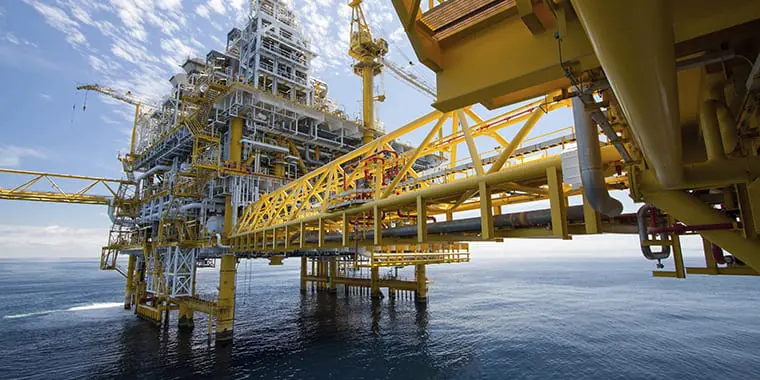
JIP35 focuses on reducing upstream project costs by standardizing offshore structure design specifications. Thirteen supplementary specifications have been published based on existing standards. Phase 4, launched in 2023, supports integrating these into ISO standards, extending them to offshore renewables, and progressing digitalization. Key ISO standards (19900, 19901-2, 19902, and 19903) have been updated and are now ready for ISO/TC 67 balloting. Offshore wind work includes studies on target reliability and the applicability of the ISO 19900 series. Digitalization of technical requirements is advancing through collaboration with the IOGP Requirement Digitalization Expert Group.
JIP36: Capital Facilities Information Handover Specification (CFIHOS)
CFIHOS defines a standardized language for equipment and engineering deliverables, improving information flow across the supply chain and reducing lifecycle costs. It ensures accurate data is available for facility initiation, operation, and decommissioning. Version 1.5 was released in 2021, with Version 2.0 launched in late 2024. In 2025, strong industry adoption marked a key milestone. Priorities for 2026 include enhancing the roadmap and completing coding for JIP33 Process Data Sheets.

JIS-02: Additive Manufacturing
Launched in 2024, JIS02 aims to produce harmonized documents addressing gaps in existing industry standards and to define digital spare parts, enabling more efficient digital inventory management. Its five workstreams cover key deliverables such as materials and product specifications, audit management guidance, and a guideline on manufacturing quality. A new specification is also being developed to enhance the existing Material Digital Passport.
JIS-03: Hub for IOGP parts and equipment (HIPE)
Launched in 2024, JIS03 is piloting the HIPE project – a data solution for digitizing and standardizing IOGP JIP33 specifications. Its initial phase focuses on developing a minimum viable product based on JIP33 low voltage motors specification by 2026. HIPE aims to enable seamless, standardized data exchange between purchasers and manufacturers, starting with motor inquiries and scaling to broader equipment categories.
Environment Joint Industry Programmes

JIP22: Sound and Marine Life JIP
This JIP supports independent research on the effects of underwater sound on marine life, helping the upstream industry operate sustainably while protecting the environment. It follows strict transparency policies and maintains a hands-off approach to sponsored research publications, earning trust across regulatory, scientific, and NGO communities. As Phase 3 concludes, additional fact sheets have been published to share research outcomes.
The 2025–28 science programme will address key areas of interest, including population-level disturbances, fish and invertebrate behaviour in response to acoustic noise, low-frequency hearing thresholds, and the effects of continuous versus impulsive sounds. It will also explore methods for assessing cumulative impacts and develop new technologies to reduce operational costs and improve mitigation. This programme continues to serve as a model for responsible, science-based industry sponsorship of research on environmentally sensitive topics.
JIP34: Environment Genomics JIP
Environmental genomics (including eDNA) is advancing rapidly and has the potential to transform biodiversity monitoring. JIP34 aims to pool R&D efforts to accelerate eDNA adoption in the upstream industry and standardize methods to enhance repeatability and regulatory acceptance. In early 2025, over 400 pages of guidance were published on the JIP34 website, covering eDNA application, sampling design, lab standards, and data interpretation.
This has been widely accessed by industry, regulators, and researchers. Phase 2 begins in late 2025, lasting three years. By the end of 2025, outputs will include frameworks for integrating eDNA into Nature Reporting and Nature-based Solutions, and recommendations on reporting eDNA error. In 2026, the JIP will focus on developing methods for generating quantitative eDNA data and building fluency among regulators through targeted outreach.

JIP40: Decommissioning of Subsea Assets Containing Plastics and Polymers
The JIP began in December 2024 with a workshop in Malaysia, followed by the appointment of a Project Director in 2025. Initial projects in 2025 evaluated the global inventory of subsea plastics/polymers, developed fact sheets on their content in subsea assets, and assessed current scientific knowledge on long-term use, monitoring, and degradation. These efforts laid the foundation for a multi-year programme. The JIP will also review technologies for removal, recovery, and recycling of subsea materials. In 2026 and beyond, it plans to launch scientific and technology assessment projects on degradation mechanisms, ecotoxicology, cumulative impacts, and environmental factors such as pressure, temperature, and low UV exposure. Future work will also explore environmental, asset lifecycle, and safety considerations. Additionally, the JIP will focus on stakeholder engagement and communication related to the subsea decommissioning of plastics and polymers.
