
Many people who are pregnant experience belly button pain during the second and third trimesters. This may be due to uterine pressure or stretching, among other things.
The belly button, or navel, is the attachment point for the placenta in the womb. It is not attached to any part of the abdominal cavity after birth.
Most causes of belly button pain are harmless and will disappear when the baby is born.
This article will discuss some of the potential causes of navel pain and home remedies for relieving discomfort.
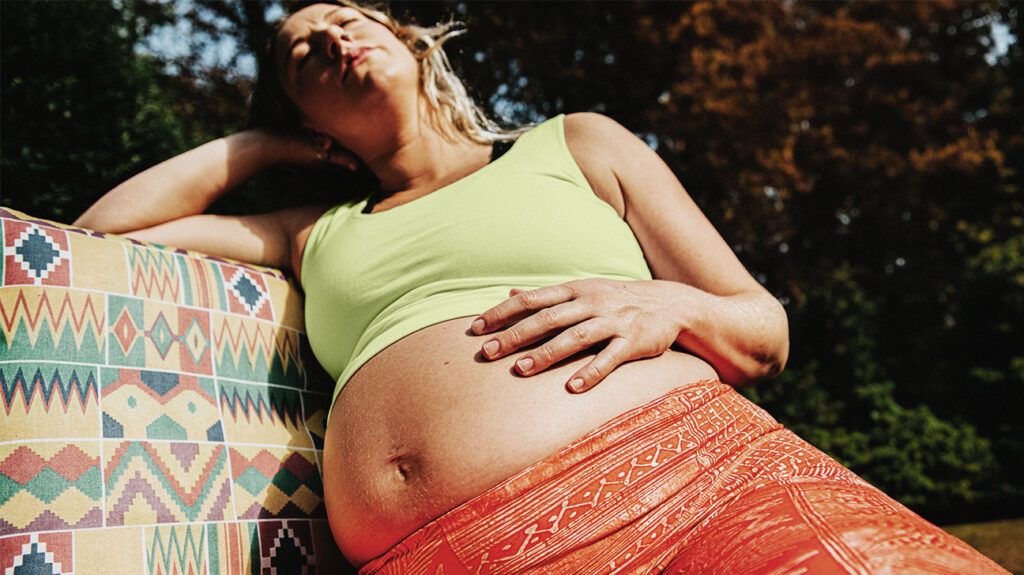
Possible causes of belly button pain during pregnancy include:
Uterine pressure
As the fetus grows, the uterus
During the second trimester, the uterus no longer fits inside the pelvis. It now sits between the navel and the breast.
By the third trimester, the uterus extends from the pubic area to the bottom of the ribs.
The growth of the uterus and the baby’s position in the womb can exert pressure on the belly button.
Over time, the increased pressure on the navel may cause pain, itchiness, and discomfort.
Stretching
Weight gain and shifting organs during pregnancy stretch the skin and muscle around the belly.
The stretching can
The ‘abs’ are a pair of large muscles that start below the breastbone and end at the pelvis.
Diastasis recti does not directly cause navel pain, but it reduces the amount of tissue between the uterus and the belly button, which may increase sensitivity to pressure in the area.
Skin stretching may also cause some localized pain and itchiness on and around the belly button.
Popped belly button
Some pregnant people experience a popped belly button, which occurs when pregnancy pushes a person’s inward belly button outward.
A popped belly button may increase sensitivity and pain.
Umbilical hernia
Although a hernia may sound dangerous, it does not typically harm a pregnant person or fetus.
An umbilical hernia occurs when
Umbilical hernias can occur due to increased uterine pressure.
Unless it is causing significant symptoms, doctors may recommend watching and waiting rather than performing surgery on the hernia.
However, if there is a risk of incarceration and strangulation, the doctor may proceed with surgery.
Incarceration and strangulation occur when part of the bowel does not receive enough blood. A reduced blood supply can cause tissue death and other complications.
Surgery does present a small risk to the pregnant person and fetus, but the risk is relatively low.
Navel piercing
A person may need to remove any belly button piercings during pregnancy. If the piercing is pulling on the tightened skin, it may tear.
A torn or injured belly button increases the risk of infection.
If the piercing is less than 1 year old, it may still be healing, so a person should speak to a doctor about removing it.
Applying warm or cool compresses to the area that feels itchy or painful may relieve discomfort.
Avoid using very hot compresses or ice packs that are not wrapped in a towel, as they may cause burns and increase the navel’s sensitivity.
Applying calamine lotion or aloe vera gel may also soothe sensitive skin on and around the navel.
If the pain is not due to an umbilical hernia, pregnancy massage may also help relieve pain.
A
If the skin is inflamed, red, or cracked, or if the pain is severe or sharp, it is best to speak to a doctor.
Most causes of belly button pain during pregnancy will not lead to any lasting complications.
It is common to experience belly button pain during the second and third trimesters. This may be due to uterine pressure or stretching, among other things.
Hot or cold compresses, massage, and lotions may help alleviate soreness.
A person should contact a doctor if they have sharp or severe pain in their belly button or if the area is inflamed and irritated.
