


セロトニン 5-HT2A 受容体
5-HT2A receptor
☆5- HT2A受容体は、セロトニン受容体ファミリーに属する5-HT2受容体のサブタイプであり、Gタンパク質共役受容体(GPCR)として機能する[4]。 これは細胞表面受容体[5]であり、複数の細胞内シグナル伝達カスケードを活性化させる[6]。すべての5-HT2受容体と同様に、5-HT2A受容体は Gq/G11シグナル伝達経路と結合している。これは、セロトニン応答性GPCRの中で主要な興奮性受容体サブタイプである。5-HT2A受容体は当初、 LSDやサイロシビン含有キノコなどのセロトニン作動性サイケデリック薬の主要な標的として中心的な役割を果たすことで注目された。その後、多くの抗精神 病薬、特に非定型抗精神病薬の作用を、少なくとも部分的には媒介することが判明し、研究上の重要性を再び取り戻した。
★リガンド(Ligand)とは、特定の受容体や生体分子に特異的に結合し、情報を伝達する物質の総称である。受容体を「鍵穴」とすれば、リガンドはそれにピタリと合う「鍵」のような役割を果たす。
| The
5-HT2A receptor is a subtype of the 5-HT2 receptor that belongs to the
serotonin receptor family and functions as a G protein-coupled receptor
(GPCR).[4] It is a cell surface receptor[5] that activates multiple
intracellular signalling cascades.[6] Like all 5-HT2 receptors, the
5-HT2A receptor is coupled to the Gq/G11 signaling pathway. It is the
primary excitatory receptor subtype among the serotonin-responsive
GPCRs. The 5-HT2A receptor was initially noted for its central role as
the primary target of serotonergic psychedelic drugs such as LSD and
psilocybin mushrooms. It later regained research prominence when found
to mediate, at least in part, the effects of many antipsychotic drugs,
particularly atypical antipsychotics. |
5-
HT2A受容体は、セロトニン受容体ファミリーに属する5-HT2受容体のサブタイプであり、Gタンパク質共役受容体(GPCR)として機能する[4]。
これは細胞表面受容体[5]であり、複数の細胞内シグナル伝達カスケードを活性化させる[6]。すべての5-HT2受容体と同様に、5-HT2A受容体は
Gq/G11シグナル伝達経路と結合している。これは、セロトニン応答性GPCRの中で主要な興奮性受容体サブタイプである。5-HT2A受容体は当初、
LSDやサイロシビン含有キノコなどのセロトニン作動性サイケデリック薬の主要な標的として中心的な役割を果たすことで注目された。その後、多くの抗精神
病薬、特に非定型抗精神病薬の作用を、少なくとも部分的には媒介することが判明し、研究上の重要性を再び取り戻した。 |
| History The serotonin receptors were split into two classes by John Gaddum and Picarelli in 1957 when it was discovered that some of the serotonin-induced changes in the gut could be blocked by morphine, while the remainder of the response was inhibited by dibenzyline (phenoxybenzamine), leading to the naming of M and D receptors, respectively.[7][8] The 5-HT2A receptor is thought to correspond to what was originally described as D subtype of serotonin receptors by Gaddum and Picarelli.[7][8] In the era before molecular cloning, when radioligand binding and displacement was the only major tool, spiperone and LSD were shown to label two different 5-HT receptors, and neither of them displaced morphine, leading to naming of the 5-HT1, 5-HT2 and 5-HT3 receptors, corresponding to high affinity sites from LSD, spiperone and morphine, respectively.[9] Later, it was shown that the 5-HT2 receptor was very close to the 5-HT1C receptor and they were thus were grouped together, renaming the 5-HT2 receptor into 5-HT2A receptor and the 5-HT1C receptor into the 5-HT2C receptor. Thus, the 5-HT2 receptor family is composed of three separate molecular entities: the 5-HT2A (formerly known as 5-HT2 or D), the 5-HT2B (formerly known as 5-HT2F) and the 5-HT2C (formerly known as 5-HT1C) receptors.[10] The serotonin 5-HT2A receptor was identified via radioligand binding in 1978 by Leysen and colleagues.[11][12] Peroutka and Snyder identified two distinct serotonin receptors and named them the 5-HT1 receptor and 5-HT2 receptor in 1979.[13][14] Later, both of these receptors were found to have several subtypes, including the serotonin 5-HT2A receptor.[13] The serotonin 5-HT2A receptor was characterized as a membrane protein by Wouters and colleagues in 1985.[11][15] The gene encoding the rat serotonin 5-HT2A receptor, HTR2A, was cloned in 1988 by Pritchett and colleagues.[11][16] The human gene was cloned by Branchek and colleagues in 1990.[13][17] |
歴史 1957年、ジョン・ガダムとピカレッリは、セロトニンによって引き起こされる腸管の変化の一部がモルヒネによって阻害される一方、残りの反応はジベンジ リン(フェノキシベンザミン)によって抑制されることを発見し、セロトニン受容体を2つのクラスに分類した。これにより、それぞれM受容体およびD受容体 と命名された。[7] [8] 5-HT2A受容体は、ガダムとピカレリによって当初「Dサブタイプ」として記述されたセロトニン受容体に対応すると考えられている。[7] [8] 分子クローニング以前の時代、放射性リガンドの結合および置換が唯一の主要な手法であった頃、スピペロンとLSDが2つの異なる5-HT受容体を標識する ことが示され、いずれもモルヒネを置換しなかったことから、それぞれLSD、スピペロン、モルヒネの高親和性部位に対応する5-HT1、5-HT2、5- HT3受容体と命名された。[9] その後、5-HT2受容体が5-HT1C受容体と非常に近縁であることが示され、両者は同一グループに分類された。これに伴い、5-HT2受容体は5- HT2A受容体に、5-HT1C受容体は5-HT2C受容体に改名された。したがって、5-HT2受容体ファミリーは、5-HT2A(旧称5-HT2また はD)、5-HT2B(旧称5-HT2F)、および5-HT2C(旧称5-HT1C)受容体という3つの独立した分子実体から構成されている。[10] セロトニン5-HT2A受容体は、1978年にLeysenらによって放射性リガンド結合法により同定された。[11][12] 1979年、PeroutkaとSnyderは2つの異なるセロトニン受容体を同定し、それらを5-HT1受容体および5-HT2受容体と命名した。 [13][14] その後、これら2つの受容体には、セロトニン5-HT2A受容体を含むいくつかのサブタイプが存在することが判明した。[13] セロトニン5-HT2A受容体は、1985年にWoutersらによって膜タンパク質として同定された。[11] [15] ラットのセロトニン5-HT2A受容体をコードする遺伝子HTR2Aは、1988年にプリチェットらによってクローニングされた。[11][16] ヒトの遺伝子は、1990年にブランチェックらによってクローニングされた。[13][17] |
Gene Chromosome 13. The 5-HT2A receptors is coded by the HTR2A gene. In humans the gene is located on chromosome 13. The gene has previously been called just HTR2 until the description of two related genes HTR2B and HTR2C. Several interesting polymorphisms have been identified for HTR2A: A-1438G (rs6311), C102T (rs6313), and His452Tyr (rs6314). Many more polymorphisms exist for the gene. A 2006 paper listed 255.[18][19] Probable role in fibromyalgia as the T102C polymorphisms of the gene 5HT2A were common in fibromyalgia patients.[20] Human HTR2A gene is thought to consist of 3 introns and 4 exons and to overlap with human gene HTR2A-AS1 which consists of 18 exons.[21] There are over 200 organisms that have orthologs with the human HTR2A. Currently, the best documented orthologs for HTR2A gene are the mouse,[22] and zebrafish.[23] There are 8 paralogs for the HTR2A gene. The HTR2A gene is known to interact and activate G-protein genes such as GNA14, GNAI1, GNAI3, GNAQ, and GNAZ.[24] These interactions are critical for cell signaling[25][26] and homeostasis[27] in many organisms.[28] In human brain tissue, regulation of HTR2A varies depending on the region:[21] frontal cortex, amygdala, thalamus, brain stem and cerebellum. In a paper from 2016, they found that HTR2A undergoes a variety of different splicing events, including utilization of alternative splice acceptor sites, exon skipping, rare exon usage, and intron retention.[21] |
遺伝子 13番染色体。 5-HT2A受容体はHTR2A遺伝子によってコードされている。ヒトにおいて、この遺伝子は13番染色体上に位置している。HTR2BおよびHTR2C という2つの関連遺伝子が同定されるまでは、この遺伝子は単にHTR2と呼ばれていた。HTR2A遺伝子については、A-1438G (rs6311)、C102T (rs6313)、His452Tyr (rs6314) といった興味深い多型が同定されている。この遺伝子にはさらに多くの多型が存在する。2006年の論文では255個が挙げられている。[18] [19] 5HT2A遺伝子のT102C多型が線維筋痛症患者に多く見られたことから、線維筋痛症における関与が示唆されている。[20] ヒトHTR2A遺伝子は、3つのイントロンと4つのエクソンから構成され、18のエクソンからなるヒト遺伝子HTR2A-AS1と重複していると考えられ ている。[21] ヒトHTR2Aとオルソログを持つ生物は200種以上存在する。現在、HTR2A遺伝子について最も詳細に解明されているオルソログは、マウス[22]お よびゼブラフィッシュである。[23] HTR2A遺伝子には8つのパラログが存在する。HTR2A遺伝子は、GNA14、GNAI1、GNAI3、GNAQ、GNAZなどのGタンパク質遺伝子 と相互作用し、それらを活性化することが知られている。[24] これらの相互作用は、多くの生物における細胞シグナル伝達[25][26]および恒常性維持[27]に不可欠である。[28] ヒトの脳組織において、HTR2Aの調節は領域(前頭前皮質、扁桃体、視床、脳幹、小脳)によって異なる。[21] 2016年の論文では、HTR2Aが、代替スプライシング受容体部位の利用、エクソンスキッピング、希少なエクソンの使用、イントロン保持など、様々なス プライシングイベントを経ることが明らかになった。[21] |
| Transcriptional regulation There are a few mechanisms of regulation for HTR2A gene such regulated by DNA methylation at particular transcript binding sites.[29][30] Another mechanism for the correct regulation of gene expression is achieved through alternative splicing. This is a co-transcriptional process, which allows the generation of multiple forms of mRNA transcript from a single coding unit and is emerging as an important control point for gene expression. In this process, exons or introns can be either included or excluded from precursor-mRNA resulting in multiple mature mRNA variants.[31] These mRNA variants result in different isoforms which may have antagonistic functions or differential expression patterns, yielding plasticity and adaptability to the cells.[32] One study found that the common genetic variant rs6311 regulates expression of HTR2A transcripts containing the extended 5' UTR.[21] |
転写調節 HTR2A遺伝子の調節メカニズムにはいくつかあり、その一つは特定の転写産物結合部位におけるDNAメチル化によるものです。[29][30] 遺伝子発現を適切に調節するもう一つのメカニズムは、オルタナティブスプライシングによって実現されます。これは転写同時進行のプロセスであり、単一の コード単位から複数のmRNA転写産物を生成することを可能にし、遺伝子発現の重要な制御点として注目されています。この過程において、エクソンやイント ロンが前駆体mRNAに組み込まれるか、あるいは除外されるかによって、複数の成熟mRNAバリアントが生じる。[31] これらのmRNAバリアントは異なるアイソフォームとなり、拮抗的な機能や異なる発現パターンを示す可能性があり、細胞に可塑性と適応性をもたらす。 [32] ある研究では、一般的な遺伝的変異であるrs6311が、伸長した5' UTRを含むHTR2A転写産物の発現を調節することが明らかになった。[21] |
| Tissue distribution 5-HT2A is expressed widely throughout the central nervous system (CNS).[33] It is expressed near most of the serotonergic terminal rich areas, including neocortex (mainly prefrontal, parietal, and somatosensory cortex) and the olfactory tubercle [citation needed]. Especially high concentrations of this receptor on the apical dendrites of pyramidal cells in layer V of the cortex may modulate cognitive processes, working memory, and attention[34][35][36] by enhancing glutamate release followed by a complex range of interactions with the 5-HT1A,[37] GABAA,[38] adenosine A1,[39] AMPA,[40] mGluR2/3,[41] mGlu5,[42] and OX2 receptors.[43][44] In the rat cerebellum, the protein has also been found in the Golgi cells of the granular layer,[45] and in the Purkinje cells.[46][47] In the periphery, it is highly expressed in platelets and many cell types of the cardiovascular system, in fibroblasts, and in neurons of the peripheral nervous system. Additionally, 5-HT2A mRNA expression has been observed in human monocytes.[48] Whole-body distribution of the 5-HT2A/2C receptor agonist, [11C]Cimbi-36 show uptake in several internal organs and brown adipose tissue (BAT), but it is not clear if this represents specific 5-HT2A receptor binding.[49] |
組織分布 5-HT2Aは中枢神経系(CNS)全体に広く発現している。[33] この受容体は、新皮質(主に前頭前野、頭頂葉、体性感覚皮質)や嗅球など、セロトニン作動性終末が豊富な領域の近くで発現している[出典必要]。特に、皮 質第5層の錐体細胞の頂端樹状突起上に高濃度で存在するこの受容体は、グルタミン酸放出を増強し、それに続く5-HT1A[37]、GABAA[38]、 アデノシンA1[39]、AMPA[40]受容体との複雑な相互作用を通じて、認知プロセス、ワーキングメモリ、および注意を調節している可能性がある [34] [35][36] グルタミン酸の放出を増強し、それに続く5-HT1A[37]、GABAA[38]、アデノシンA1[39]、AMPA[40]、mGluR2/3 [41]、mGlu5[42]、およびOX2受容体[43]との複雑な相互作用を通じて、これらの機能を調節していると考えられる。[44] ラットの小脳では、このタンパク質は顆粒層のゴルジ細胞[45]やプルキンジェ細胞[46][47]にも存在することが確認されている。 末梢では、血小板や心血管系の多くの細胞種、線維芽細胞、および末梢神経系のニューロンにおいて高発現している。さらに、ヒト単球においても5-HT2A mRNAの発現が観察されている[48]。5-HT2A/2C受容体アゴニストである[11C]Cimbi-36の全身分布では、いくつかの内臓および褐 色脂肪組織(BAT)への取り込みが認められるが、これが5-HT2A受容体への特異的結合によるものかどうかは明らかではない[49]。 |
| Structure The 5-HT2A receptor is a member of the class A (rhodopsin-like) G protein-coupled receptor (GPCR) family, characterized by seven transmembrane α-helices connected by extracellular and intracellular loops.[50][51] Its ligand-binding pocket is composed of two adjacent subpockets: the orthosteric binding pocket (OBP) and an extended binding pocket (EBP), with a unique side-extended cavity near the orthosteric site that distinguishes it from related receptors.[52][53] Ligands are anchored primarily through a conserved aspartate residue (D155^3.32) that interacts with their charged amine groups, while additional interactions involve hydrophobic contacts and hydrogen bonds with residues in both the OBP and EBP.[53][54] Structural studies reveal that the receptor undergoes significant conformational changes upon activation, particularly in transmembrane helices 3 and 6, which facilitate G protein coupling and signal transduction.[50][53] The extracellular ligand-binding pocket is closed by a flexible "lid," and the intracellular region includes a short helix (H8) stabilized by π-stacking interactions, both of which contribute to the receptor's dynamic conformational landscape.[53] These structural features underlie the receptor's ability to recognize diverse ligands and mediate complex signaling behaviors. The cryo-EM structures of the serotonin 5-HT2A receptor with a variety of serotonin 5-HT2A receptor agonists, including the tryptamines serotonin (neurotransmitter and endogenous agonist), psilocin (psychedelic), and dimethyltryptamine (DMT) (psychedelic), the lysergamides LSD (psychedelic) and 2-bromo-LSD (BOL-148) (non-hallucinogenic), and the phenethylamines mescaline (psychedelic) and RS130-180 (β-arrestin-biased agonist with unknown hallucinogenic potential), have been solved and published by Bryan Roth and colleagues.[55][56] |
構造 5-HT2A受容体は、クラスA(ロドプシン様)Gタンパク質共役受容体(GPCR)ファミリーに属し、細胞外ループおよび細胞内ループによって連結され た7つの膜貫通αヘリックスを特徴とする。[50][51] そのリガンド結合ポケットは、2つの隣接するサブポケット、すなわち正位結合ポケット(OBP)と拡張結合ポケット(EBP)で構成されており、正位結合 部位の近くに側方に拡張した空洞がある点が、関連する受容体とは異なる特徴である。[52][53] リガンドは主に、その荷電アミン基と相互作用する保存されたアスパラギン酸残基(D155^3.32)を介して結合し、さらにOBPおよびEBP内の残基 との疎水性相互作用や水素結合も関与している。[53][54] 構造研究により、受容体は活性化に伴い、特にGタンパク質結合およびシグナル伝達を促進する膜貫通ヘリックス3および6において、著しい立体構造変化を起 こすことが明らかになっている。[50] [53] 細胞外のリガンド結合ポケットは柔軟な「ふた」によって閉じられており、細胞内領域にはπ-スタッキング相互作用によって安定化された短いヘリックス (H8)が含まれており、これらはいずれも受容体の動的な立体構造の様相に寄与している。[53] これらの構造的特徴が、受容体が多様なリガンドを認識し、複雑なシグナル伝達挙動を媒介する能力の根底にある。 セロトニン5-HT2A受容体のクライオ電子顕微鏡構造は、セロトニン(神経伝達物質および内因性アゴニスト)、サイロシン(サイケデリック)、ジメチル トリプタミン(DMT)(サイケデリック)といったトリプタミン類、 リゼルガミド系化合物であるLSD(サイケデリック)および2-ブロモ-LSD(BOL-148)(非幻覚性)、ならびにフェネチルアミン系化合物である メスカリン(サイケデリック)およびRS130-180(β-アレスタイン偏向性アゴニストで幻覚作用の可能性は不明)など、様々なセロトニン5- HT2A受容体アゴニストとの複合体の低温電子顕微鏡構造が、ブライアン・ロスらによって解明され、発表された。[55][56] |
| Function The 5-HT2A receptor is a subtype of serotonin receptor that plays a critical role in the central nervous system, particularly in regions involved in cognition, learning, and memory.[57] It is highly expressed in the cerebral cortex, especially in layer V pyramidal neurons and certain interneurons, where it modulates thalamocortical information processing and may influence gamma oscillations, which are important for sensory integration and perception.[58] Functionally, the 5-HT2A receptor is a G protein-coupled receptor (GPCR) that primarily signals through the phospholipase C (PLC) pathway, leading to the production of inositol triphosphate (IP3) and diacylglycerol, but it can also activate other signaling cascades such as arachidonic acid and 2-arachidonylglycerol pathways.[58] Notably, the receptor exhibits "functional selectivity," meaning different ligands can differentially activate these signaling pathways, which is relevant for the distinct effects of hallucinogens, antipsychotics, and antidepressants that target the receptor.[58][54] Activation of the 5-HT2A receptor by agonists is associated with enhanced cognition and hallucinogenic effects, while antagonists have antipsychotic and antidepressant properties.[57] Dysregulation of 5-HT2A receptor function has been implicated in psychiatric disorders such as depression, schizophrenia, and drug addiction.[57] Additionally, the receptor undergoes unique regulatory processes, including desensitization and internalization that are partly independent of β-arrestin, further distinguishing it from other GPCRs and influencing its response to long-term pharmacological modulation.[58] Signaling cascade The 5-HT2A receptor is known primarily to couple to the Gαq signal transduction pathway. Upon receptor stimulation with agonist, Gαq and β-γ subunits dissociate to initiate downstream effector pathways. Gαq stimulates phospholipase C (PLC) activity, which subsequently promotes the release of diacylglycerol (DAG) and inositol triphosphate (IP3), which in turn stimulate protein kinase C (PKC) activity and Ca2+ release.[59] Effects Physiological processes mediated by the receptor include: CNS: neuronal excitation, hallucinations, out-of-body experiences, and fear. Primarily responsible for the psychedelic effects associated with 5-HT2A receptor agonists such as LSD, DMT, etc.[60][61] Activation of the 5-HT2A receptor with 2,5-dimethoxy-4-iodoamphetamine (DOI) produces potent anti-inflammatory effects in several tissues including cardiovascular and gut. Other 5-HT2A agonists like LSD also have potent anti-inflammatory effects against TNF-alpha-induced inflammation.[62][63] Activation of the 5-HT2A receptor in hypothalamus causes increases in hormonal levels of oxytocin, prolactin, ACTH, corticosterone, and renin.[64][65] Role in memory and learning.[36][66][67] Role in arthralgia.[68][69] Role in Alzheimer's disease.[70] Smooth muscle contraction in the gut.[5] Probable role in sleep paralysis.[61] Probable role in aging.[71][72] |
機能 5-HT2A受容体はセロトニン受容体のサブタイプの一つであり、中枢神経系、特に認知、学習、記憶に関与する領域において重要な役割を果たしている [57]。この受容体は大脳皮質、とりわけ第5層の錐体細胞および特定の間神経細胞に高発現しており、そこで視床皮質間の情報処理を調節し、感覚統合や知 覚に重要なガンマ波に影響を及ぼす可能性がある[58]。機能的には、5-HT2A受容体はGタンパク質共役受容体(GPCR)であり、主にホスホリパー ゼC(PLC)経路を介してシグナル伝達を行い、イノシトール三リン酸(IP3)およびジアシルグリセロールの生成を誘導するが、アラキドン酸や2-アラ キドニルグリセロール経路などの他のシグナル伝達カスケードも活性化することができる。[58] 特に、この受容体は「機能的選択性」を示しており、異なるリガンドがこれらのシグナル伝達経路をそれぞれ異なる形で活性化できることを意味する。これは、 この受容体を標的とする幻覚剤、抗精神病薬、抗うつ薬の異なる作用に関連している。[58][54] アゴニストによる5-HT2A受容体の活性化は、認知機能の増強や幻覚作用と関連している一方、アンタゴニストには抗精神病作用や抗うつ作用がある。 [57] 5-HT2A受容体機能の調節異常は、うつ病、統合失調症、薬物依存症などの精神疾患に関与していることが示唆されている。[57] さらに、この受容体は、β-アレスタインに部分的に依存しない脱感作や内取り込みを含む独自の調節プロセスを経るため、他のGPCRとは一線を画し、長期 的な薬理学的調節に対する応答に影響を与えている。[58] シグナル伝達カスケード 5-HT2A受容体は、主にGαqシグナル伝達経路と結合することが知られている。アゴニストによる受容体刺激を受けると、Gαqおよびβ-γサブユニッ トが解離し、下流のエフェクター経路が開始される。GαqはホスホリパーゼC(PLC)活性を刺激し、これが続いてジアシルグリセロール(DAG)および イノシトール三リン酸(IP3)の放出を促進する。これらはさらにプロテインキナーゼC(PKC)活性を刺激し、Ca2+の放出を引き起こす。[59] 作用 この受容体が介在する生理学的プロセスには以下が含まれる: 中枢神経系(CNS):神経細胞の興奮、幻覚、体外離脱体験、恐怖。主にLSDやDMTなどの5-HT2A受容体アゴニストに伴うサイケデリック効果の原因となる。[60][61] 2,5-ジメトキシ-4-ヨードアンフェタミン(DOI)による5-HT2A受容体の活性化は、心血管系や腸管を含む複数の組織において強力な抗炎症作用 をもたらす。LSDのような他の5-HT2Aアゴニストも、TNF-α誘発性炎症に対して強力な抗炎症作用を示す。[62] [63] 視床下部における5-HT2A受容体の活性化は、オキシトシン、プロラクチン、ACTH、コルチコステロン、レニンのホルモン濃度の上昇を引き起こす。[64] [65] 記憶および学習における役割。[36][66][67] 関節痛における役割。[68][69] アルツハイマー病における役割。[70] 腸管における平滑筋収縮。[5] 睡眠麻痺における推定される役割。[61] 加齢における推定される役割。[71][72] |
| Ligands Agonists Main article: Serotonin 5-HT2A receptor agonist See also: List of miscellaneous 5-HT2A receptor agonists Activation of the 5-HT2A receptor is necessary for the effects of the "classic" psychedelics like LSD, psilocin and mescaline, which act as full or partial agonists at this receptor, and represent the three main classes of 5-HT2A agonists, the ergolines, tryptamines and phenethylamines, respectively. A very large family of derivatives from these three classes has been developed, and their structure-activity relationships have been extensively researched.[73][74] Agonists acting at 5-HT2A receptors located on the apical dendrites of pyramidal cells within regions of the prefrontal cortex are believed to mediate hallucinogenic activity. Some findings reveal that psychoactive effects of classic psychedelics are mediated by the receptor heterodimer 5-HT2A–mGlu2 and not by monomeric 5-HT2A receptors.[75][76][60] However, newer research suggests that 5HT2A and mGlu2 receptors do not physically associate with each other, so the former findings have questionable relevance.[77] Agonists enhance dopamine in PFC,[36] enhance memory and play an active role in attention and learning.[78][79] Serotonin 5-HT2A receptor agonists include serotonergic psychedelics[80] and non-hallucinogenic agents.[81][82] Psychedelics have widely been encountered as recreational drug or drugs of misuse, with potential clinical consequences such as overdose, hospitalization, bad trips and worsened mental health, and rare adverse effects such as seizures, psychosis, and hallucinogen persisting perception disorder (HPPD).[83][84] On the other hand, psychedelics and non-hallucinogenic serotonin 5-HT2A receptor agonists are under development as novel treatments for psychiatric disorders like depression, anxiety, and addiction as well as other conditions like cluster headaches.[85][86][87][88][89] Both psychedelics and non-hallucinogenic serotonin 5-HT2A receptor agonists are claimed to act as psychoplastogens and this might be involved in their therapeutic effects.[88][90][91] Anti-inflammatory effects Various serotonergic psychedelics, acting as serotonin 5-HT2A receptor agonists, have been found to be highly potent and efficacious anti-inflammatory and immunomodulatory agents in preclinical research (i.e., animal and in-vitro studies).[92][93][94][95][96][97][98] In contrast to corticosteroids however, psychedelics with anti-inflammatory effects do not appear to suppress the immune system.[92][93] Some psychedelics have been found to be far more potent in their anti-inflammatory effects than in their psychedelic effects.[94][95] For instance, (R)-DOI is 30- to >50-fold more potent in producing anti-inflammatory effects than in producing psychedelic-like behavioral effects in animal research.[94][95][93] Psilocin, the active form of psilocybin, has similar anti-inflammatory potency as (R)-DOI.[93][94][98] The potencies of psychedelics and other serotonin 5-HT2A receptor agonists as anti-inflammatory drugs vary, with 2C-I, DOIB, 2C-B, 4-HO-DiPT, DOI, 2,5-DMA, DOET, DOM, psilocin, and 2C-H being highly potent and fully efficacious anti-inflammatories; TMA-2, 2C-B-Fly, TCB-2, ETH-LAD, LSD, and 2C-T-33 being partially efficacious anti-inflammatories; and lisuride, 1-methylpsilocin, 5-MeO-DMT, and DMT having negligible efficacy.[93][98] Although DMT and 5-MeO-DMT lack appreciable anti-inflammatory efficacy at the 5-HT2A receptor, both have been reported to modulate inflammatory responses in human dendritic cells via the sigma-1 receptor.[99] Both non-hallucinogenic agents with full anti-inflammatory effects, such as 2,5-DMA, and non-anti-inflammatory agents with full psychedelic effects, such as DOTFM, are known.[98][100][101] Hence, the psychedelic and anti-inflammatory effects of serotonin 5-HT2A receptor agonists appear to be fully dissociable.[98][100][101] These effects appear to be mediated by different intracellular signaling pathways, although the exact pathways are unclear.[101] Serotonin 5-HT2A receptor agonists with anti-inflammatory effects but reduced psychedelic effects, such as 2C-iBu (ELE-02), are under development for the potential treatment of inflammatory conditions.[102][103][104] They may also have applications in the treatment of neuroinflammation.[92][95] The anti-inflammatory effects of psychedelics might be involved in the claimed effects of psychedelic microdosing.[105][106] Relatedly, LSD microdosing is being studied in the treatment of Alzheimer's disease specifically for its anti-inflammatory effects.[107][108] Full agonists 25B-NBOMe – also known as Cimbi-36; used as a PET imaging tool for visualizing the 5-HT2A receptor[109] 25I-NBOH and its 2-methoxy-analog 25I-NBOMe[110] BMB-202 – highly selective[111] 18F FECIMBI-36 – radiolabelled agonist ligand for mapping 5-HT2A / 5-HT2C receptor distribution[112] 5-Methoxytryptamine – full agonist to several serotonin receptors. O-4310 – 5-HT2A selective, claimed to have 100× selectivity over 5-HT2C and be inactive at 5-HT2B PHA-57378 – dual 5-HT2A / 5-HT2C agonist, anxiolytic effects in animal studies.[113] TCB-2[114] Partial agonists 25C-NBOMe 25CN-NBOH – 100× selectivity for 5-HT2A over 5-HT2C, 46× selectivity over 5-HT2B.[115] 3-Carboxy indole PB-22 (1-pentyl-indole-3-carboxylic acid) – a metabolite of the synthetic cannabinoid PB-22, partial agonist at 5-HT2A[116] BMB-201 – non-hallucinogenic-like in animals[117] Bromo-DragonFLY[19] DMBMPP – a structurally constrained derivative of 25B-NBOMe, which acts as a potent partial agonist with 124× selectivity for 5-HT2A over 5-HT2C, making it the most selective agonist ligand identified to date.[118] (R)-DOI – traditionally the most common 5-HT2A reference agonist used in research[119] Efavirenz – an antiretroviral drug, produces psychiatric side effects thought to be mediated by 5-HT2A.[120] IHCH-7113 – 5-HT2A agonist derived by simplification of the 5-HT2A antagonist antipsychotic lumateperone.[121] Lisuride – an antiparkinson dopamine agonist of the ergoline class, that is also a dual 5-HT2A / 5-HT2C agonist[122] and 5-HT2B antagonist.[123] Mefloquine – an antimalarial drug, also produces psychiatric side effects which may be mediated through 5-HT2A and/or 5-HT2C receptors.[124] Methysergide – a congener of methylergonovine, used in treatment of migraine blocks 5-HT2A and 5-HT2C receptors, but sometimes acts as partial agonist, in some preparations. Piperidine derivatives such as OSU-6162, which acts as a partial agonist at both 5-HT2A and dopamine D2 receptors, and Z3517967757. Quipazine – 5-HT2A agonist but also potent 5-HT3 agonist.[125] SN-22 – partial agonist at all three 5-HT2 subtypes Some benzazepines and similar compounds related to lorcaserin such as SCHEMBL5334361 are potent 5-HT2A agonists as well as showing action at 5-HT2C.[126][127][128][129][130] Substituted tetrahydro-β-carboline[131] Tetrahydropyridine derivatives such as (R)-69,[132] Z4154032166 and WXVL_BT0793LQ2118.[133] Zalsupindole (DLX-001; AAZ-A-154) – non-hallucinogenic but retains antidepressant effects in animals.[134] Selective agonists 25CN-NBOH[135][81] BMB-202[111] DMBMPP[81][136] DOI-NBOMe[137] LPH-5[138][139] LPH-48[140] Lysergine[81][141] O-4310[142][143] TGF-8027[144] Peripherally selective agonists One effect of 5-HT2A receptor activation is a reduction in intraocular pressure, and so 5-HT2A agonists can be useful for the treatment of glaucoma. This has led to the development of compounds such as AL-34662 that are hoped to reduce pressure inside the eyes but without crossing the blood–brain barrier and producing hallucinogenic side effects.[145] Animal studies with this compound showed it to be free of hallucinogenic effects at doses up to 30 mg/kg, although several of its more lipophilic analogues did produce the head-twitch response known to be characteristic of hallucinogenic effects in rodents.[146] Antagonists Main article: Serotonin 5-HT2A receptor antagonist Serotonin 5-HT2A receptor antagonists, including many atypical antipsychotics, more selective agents like pimavanserin, and certain antidepressants and hypnotics like trazodone, mirtazapine, tricyclic antidepressants, and hydroxyzine, are used in the treatment of psychiatric disorders and other conditions such as depression, anxiety, psychosis, and insomnia.[147][148][149] Ketanserin, a dual serotonin 5-HT2A receptor antagonist and α1-adrenergic receptor antagonist, is used as an antihypertensive agent.[150][149] The non-selective serotonin 5-HT2A receptor antagonist cyproheptadine is frequently used off-label to treat serotonin syndrome, albeit based on limited clinical evidence.[151][152][153] Serotonin 5-HT2A receptor antagonists like ketanserin have been used as psychedelic antidotes or "trip killers" to manage the hallucinogenic effects of serotonergic psychedelics.[154][155][156] List of antagonists 2-Alkyl-4-aryl-tetrahydro-pyrimido-azepines – subtype selective antagonists (35 g: 60-fold).[157] 5-MeO-NBpBrT AMDA and related derivatives – family of selective 5-HT2A antagonists.[158][159][160][161][162] Atypical antipsychotics – e.g., quetiapine, and asenapine are relatively potent antagonists of 5-HT2A Brexpiprazole – an atypical antipsychotic, is a potent antagonist at 5-HT2A receptors (Ki = 0.47 nM in humans).[163][164] Cariprazine Cyclobenzaprine – a strong antagonist of both 5-HT2A and 5-HT2C receptors Cyproheptadine Ergot alkaloids are mostly nonspecific 5-HT receptor antagonists, but a few ergot derivatives such as metergoline and nicergoline bind preferentially to members of the 5-HT2 receptor family. Hydroxyzine (Atarax) (minor effect) Ketanserin – The discovery of ketanserin was a landmark in the pharmacology of 5-HT2 receptors. Ketanserin, though capable of blocking 5-HT induced platelet adhesion, however does not mediate its well-known antihypertensive action through 5-HT2 receptor family, but through its high affinity for alpha1 adrenergic receptors. It also has high affinity for H1 histaminergic receptors equal to that at 5-HT2A receptors. Compounds chemically related to ketanserin such as ritanserin are more selective 5-HT2A receptor antagonists with low affinity for alpha-adrenergic receptors. However, ritanserin, like most other 5-HT2A receptor antagonists, also potently inhibits 5-HT2C receptors. Lumateperone LY-367,265 – dual 5-HT2A antagonist / SSRI with antidepressant effects Nantenine Nefazodone – blocks post-synaptic 5-HT2A receptors, and to a lesser extent inhibits pre-synaptic serotonin and norepinephrine reuptake. Niaprazine Opipramol – atypical antidepressant Pizotifen – a non-selective antagonist.[165] Trazodone – a potent 5-HT2A antagonist, as well as an antagonist on other serotonin receptors. Tetracyclic antidepressants – mianserin,[166] mirtazapine, maprotiline Tricyclic antidepressants (TCAs) – e.g., amitriptyline, nortriptyline, amoxapine, clomipramine, doxepin, maprotiline, imipramine, iprindole[166] Typical antipsychotics – e.g., haloperidol and chlorpromazine (minor) Volinanserin (MDL100907, M100907) – the most potent 5-HT2A antagonist;[167] underwent a few clinical trials but was ultimately never marketed. Peripherally selective antagonists BW-501C67 Irindalone – partial Sarpogrelate Xylamidine Antagonists and cardiovascular disease Increased 5-HT2A expression is observed in patients with coronary thrombosis, and the receptor has been associated with processes that influence atherosclerosis.[168] As the receptor is present in coronary arteries[169] and capable of mediating vasoconstriction, 5-HT2A has also been linked to coronary artery spasms.[170] 5-HT antagonism, therefore, has potential in the prevention of cardiovascular disease, however, no studies have been published so far.[168] Inverse agonists AC-90179 – potent and selective inverse agonist at 5-HT2A, also 5-HT2C antagonist.[171][172] Atypical antipsychotics – clozapine, iloperidone, olanzapine, paliperidone, risperidone Eplivanserin (Sanofi Aventis) – sleeping pill that reached phase II trials (but for which the application for approval was withdrawn), acts as a selective 5-HT2A inverse agonist. Nelotanserin (APD-125) – selective 5-HT2A inverse agonist developed by Arena Pharmaceuticals for the treatment of insomnia. APD-125 was shown to be effective and well tolerated in clinical trials.[173] Pimavanserin (ACP-103) – more selective than AC-90179, orally active, antipsychotic in vivo, now FDA approved for the treatment of hallucinations and delusions associated with Parkinson's disease.[174][175][176][177][178] Positive allosteric modulators Positive allosteric modulators of the serotonin 5-HT2A receptor have been identified.[179][180] These include CTW0404 and CTW0419.[179][180] They selectively potentiated the serotonin 5-HT2A receptor without affecting the serotonin 5-HT2B and 5-HT2C receptors.[179][180] Unlike serotonin 5-HT2A receptor agonists, they did not substitute for the serotonergic psychedelic (R)-DOI in drug discrimination tests and did not produce the head-twitch response, suggesting that they lack psychedelic effects.[179][180] Instead, they blunted the (R)-DOI-induced head-twitch response.[180] The (R)-enantiomer of glaucine has also been reported to be a serotonin 5-HT2A receptor positive allosteric modulator.[181] A dual serotonin 5-HT2C and 5-HT2A receptor positive allosteric modulator is the oleamide analogue JPC0323.[182][183] Another selective serotonin 5-HT2A receptor positive allosteric modulator is AB0124.[184][185][186] Functional selectivity 5-HT2A-receptor ligands may differentially activate the transductional pathways (see above). Studies evaluated the activation of two effectors, PLC and PLA2, by means of their second messengers. Compounds displaying more pronounced functional selectivity are 2,5-DMA and 2C-N. The former induces IP accumulation without activating the PLA2 mediated response, while the latter elicits AA release without activating the PLC mediated response.[187]  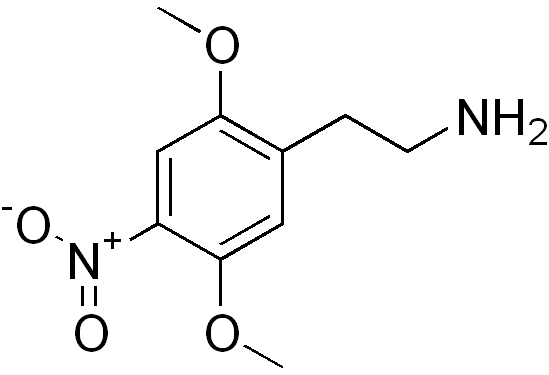 Recent research has suggested potential signaling differences within the somatosensory cortex between 5-HT2A agonists that produce headshakes in the mouse and those that do not, such as lisuride, as these agents are also non-hallucinogenic in humans despite being active 5-HT2A agonists.[188][189] One known example of differences in signal transduction is between the two 5-HT2A agonists serotonin and DOI that involves differential recruitment of intracellular proteins called β-arrestins, more specifically arrestin beta 2.[190][191] Cyclopropylmethanamine derivatives such as (−)-19 have also been shown to act as 5-HT2A/2C agonists with functional selectivity for Gq-mediated signaling compared with β-arrestin recruitment.[192] Serotonin-elevating drugs Besides direct serotonin 5-HT2A receptor agonists, many drugs elevate serotonin levels and indirectly activate serotonin 5-HT2A receptors.[193][194] Examples include antidepressants and anxiolytics such as selective serotonin reuptake inhibitors (SSRIs), serotonin–norepinephrine reuptake inhibitors (SNRIs), monoamine oxidase inhibitors (MAOIs), and serotonin precursors like tryptophan and 5-hydroxytryptophan (5-HTP).[193][194] In addition, serotonin releasing agents (SRAs), including appetite suppressants like fenfluramine and chlorphentermine and entactogens like MDMA, elevate serotonin levels and indirectly activate serotonin 5-HT2A receptors similarly.[195][196][197][198][199][200] Serotonin 5-HT2A receptor activation may be involved in the therapeutic effects of serotonin-elevating medications[193][194] and appears to be importantly involved in the subjective effects of SRAs like MDMA.[155] Serotonin-elevating drugs can cause serotonin syndrome under certain circumstances, for instance in overdose or with combination of multiple serotonergic drugs, and the serotonin 5-HT2A receptor appears to be a key serotonin receptor in mediating this syndrome.[201][202][203] Methods to analyse the receptor The receptor can be analysed by neuroimaging, radioligand, genetic analysis, measurements of ion flows, and other ways.[citation needed] Neuroimaging The 5-HT2A receptors may be imaged with PET-scanners using the fluorine-18-altanserin,[204] MDL 100,907[205] or [11C]Cimbi-36[109][206] radioligands that binds to the neuroreceptor, e.g., one study reported a reduced binding of altanserin particularly in the hippocampus in patients with major depressive disorder.[207] Altanserin uptake decreases with age reflecting a loss of specific 5-HT2A receptors with age.[208][209][210] Other Western blot with an affinity-purified antibody and examination of 5-HT2A receptor protein samples by electrophoresis has been described. Immunohistochemical staining of 5-HT2A receptors is also possible.[5] |
リガンド アゴニスト 本記事:セロトニン5-HT2A受容体アゴニスト 関連項目:その他の5-HT2A受容体アゴニストの一覧 LSD、サイロシン、メスカリンといった「古典的」サイケデリック薬物の作用には、5-HT2A受容体の活性化が必要である。これらはこの受容体に対して 完全アゴニストまたは部分アゴニストとして作用し、それぞれエルゴリン類、トリプタミン類、フェネチルアミン類という5-HT2Aアゴニストの3つの主要 な分類に属する。これら3つの分類に属する非常に多くの誘導体が開発されており、その構造活性相関については広範な研究が行われている。[73][74] 前頭前皮質の領域内にある錐体細胞の頂端樹状突起上に位置する5-HT2A受容体に作用するアゴニストは、幻覚作用を媒介すると考えられている。一部の知 見によれば、古典的サイケデリック薬物の精神作用は、単量体の5-HT2A受容体ではなく、受容体ヘテロダイマーである5-HT2A–mGlu2によって 媒介されることが示されている。[75][76][60] しかし、最新の研究では、5-HT2A受容体とmGlu2受容体は物理的に結合していないことが示唆されており、前述の知見の妥当性には疑問が呈されてい る。[77] アゴニストは前頭前皮質(PFC)におけるドーパミンを増強し[36]、記憶を強化するとともに、注意や学習において積極的な役割を果たす。[78] [79] セロトニン5-HT2A受容体アゴニストには、セロトニン作動性サイケデリック[80]および非幻覚性薬剤が含まれる。[81][82] サイケデリックは、レクリエーション用薬物や乱用薬物として広く出回っており、過剰摂取、入院、バッドトリップ、精神状態の悪化といった潜在的な臨床的影 響や、発作、精神病、幻覚剤持続性知覚障害(HPPD)といった稀な副作用を伴う。[83][84] 一方、サイケデリック薬および非幻覚性セロトニン5-HT2A受容体アゴニストは、うつ病、不安障害、依存症といった精神疾患や、群発頭痛などの他の疾患 に対する新規治療法として開発が進められている。[85][86][87][88][89] サイケデリック薬と非幻覚性セロトニン5-HT2A受容体アゴニストのいずれもが、心理形成物質(psychoplastogens)として作用するとさ れており、これがそれらの治療効果に関与している可能性がある。[88][90] [91] 抗炎症作用 セロトニン5-HT2A受容体アゴニストとして作用する様々なセロトニン作動性サイケデリックは、前臨床研究(すなわち、動物およびin vitro研究)において、極めて強力かつ有効な抗炎症剤および免疫調節剤であることが判明している。[92][93][94][95][96] [97][98] しかし、コルチコステロイドとは対照的に、抗炎症作用を持つサイケデリックは免疫系を抑制しないようである。[92][93] 一部のサイケデリックは、そのサイケデリック効果よりも抗炎症効果の方がはるかに強力であることが判明している。[94] [95] 例えば、動物実験において、(R)-DOIは、サイケデリック様行動効果を引き起こす力に比べて、抗炎症効果を引き起こす力が30倍から50倍以上強いこ とが示されている。[94][95][93] サイロシビンの活性型であるサイロシンは、(R)-DOIと同様の抗炎症作用を有する。[93][94] [98] 抗炎症薬としてのサイケデリック物質およびその他のセロトニン5-HT2A受容体アゴニストの効力は様々であり、2C-I、DOIB、2C-B、4-HO -DiPT、DOI、2,5-DMA、DOET、DOM、サイロシン、および2C-Hは、極めて強力かつ完全に有効な抗炎症薬である。TMA-2、2C- B-Fly、TCB-2、ETH-LAD、LSD、および2C-T-33は部分的に有効な抗炎症薬であり;リスリド、1-メチルサイロシン、5-MeO- DMT、およびDMTは有効性がほとんど認められない。[93][98] DMTおよび5-MeO-DMTは、5-HT2A受容体において顕著な抗炎症作用を欠くものの、いずれもシグマ-1受容体を介してヒト樹状細胞の炎症反応 を調節することが報告されている。[99] 2,5-DMAのような完全な抗炎症作用を持つ非幻覚性薬剤や、DOTFMのような完全なサイケデリック作用を持つ非抗炎症性薬剤が知られている。 [98][100][101] したがって、セロトニン5-HT2A受容体アゴニストのサイケデリック作用と抗炎症作用は、完全に分離可能であると考えられる。[98] [100][101] これらの効果は異なる細胞内シグナル伝達経路を介して生じているようだが、正確な経路は不明である。[101] 2C-iBu(ELE-02)のように、抗炎症作用を持ちながらサイケデリック作用が低減されたセロトニン5-HT2A受容体アゴニストは、炎症性疾患の 治療薬として開発が進められている。[102][103] [104] これらは神経炎症の治療にも応用される可能性がある。[92][95] サイケデリック薬の抗炎症作用は、サイケデリック薬のマイクロドージングに報告されている効果に関与している可能性がある。[105][106] 関連して、LSDのマイクロドージングは、特にその抗炎症作用に着目して、アルツハイマー病の治療法として研究されている。[107] [108] 完全アゴニスト 25B-NBOMe – Cimbi-36としても知られる;5-HT2A受容体を可視化するためのPETイメージングツールとして使用される [109] 25I-NBOHおよびその2-メトキシ誘導体25I-NBOMe[110] BMB-202 – 高い選択性を有する[111] 18F FECIMBI-36 – 5-HT2A/5-HT2C受容体の分布をマッピングするための放射性標識アゴニストリガンド[112] 5-メトキシトリプタミン – いくつかのセロトニン受容体に対する完全アゴニスト。 O-4310 – 5-HT2A選択性、5-HT2Cに対して100倍の選択性があり、5-HT2Bでは不活性であると主張されている PHA-57378 – 5-HT2A / 5-HT2C二重アゴニスト、動物実験において抗不安作用が認められる。[113] TCB-2[114] 部分アゴニスト 25C-NBOMe 25CN-NBOH – 5-HT2Cに対して5-HT2Aへの100倍の選択性、5-HT2Bに対して46倍の選択性。[115] 3-カルボキシインドール PB-22 (1-ペンチル-インドール-3-カルボン酸) – 合成カンナビノイドPB-22の代謝物、5-HT2A受容体に対する部分アゴニスト[116] BMB-201 – 動物実験において幻覚作用は認められない[117] ブロモ・ドラゴンフライ [19] DMBMPP – 25B-NBOMeの構造制限された誘導体であり、5-HT2Cに対する5-HT2Aの選択性が124倍という強力な部分アゴニストとして作用し、これまでに同定された中で最も選択性の高いアゴニストリガンドである。[118] (R)-DOI – 従来、研究において最も一般的に使用されてきた5-HT2A参照アゴニスト [119] エファビレンツ – 抗レトロウイルス薬であり、5-HT2Aを介して引き起こされると考えられる精神神経系の副作用を生じる。[120] IHCH-7113 – 5-HT2A拮抗作用を持つ抗精神病薬ルマテペロンの構造を簡素化して得られた5-HT2Aアゴニスト。[121] リスリド – エルゴリン系の抗パーキンソン病ドーパミンアゴニストであり、5-HT2A/5-HT2C二重アゴニスト[122] および5-HT2Bアンタゴニストでもある。[123] メフロキン – 抗マラリア薬であり、5-HT2Aおよび/または5-HT2C受容体を介して引き起こされる可能性のある精神神経系の副作用も生じさせる。[124] メチセルギド – メチルエルゴノビンの同族体であり、片頭痛の治療に用いられる。5-HT2Aおよび5-HT2C受容体を遮断するが、製剤によっては部分アゴニストとして作用することもある。 OSU-6162(5-HT2A受容体およびドーパミンD2受容体の両方で部分作動薬として作用する)やZ3517967757などのピペリジン誘導体。 キパジン – 5-HT2A作動薬であるが、強力な5-HT3作動薬でもある。[125] SN-22 – 5-HT2受容体の3つのサブタイプすべてにおいて部分作動薬として作用する 一部のベンザゼピン系化合物や、SCHEMBL5334361のようなロルカセリンに関連する類似化合物は、強力な5-HT2A作動薬であると同時に、5-HT2C受容体に対しても作用を示す。[126][127][128][129] [130] 置換テトラヒドロ-β-カルボリン[131] (R)-69[132]、Z4154032166、WXVL_BT0793LQ2118などのテトラヒドロピリジン誘導体。[133] ザルスピンドール(DLX-001; AAZ-A-154) – 幻覚作用はないが、動物実験において抗うつ作用を維持する。[134] 選択的アゴニスト 25CN-NBOH[135][81] BMB-202 [111] DMBMPP[81][136] DOI-NBOMe[137] LPH-5[138][139] LPH-48[140] リセルギン[81][141] O-4310[142][143] TGF-8027 [144] 末梢選択的アゴニスト 5-HT2A受容体の活性化による効果の一つは眼内圧の低下であり、そのため5-HT2Aアゴニストは緑内障の治療に有用である。これにより、眼内圧を低 下させつつ、血液脳関門を通過して幻覚作用を伴う副作用を引き起こさないことが期待されるAL-34662などの化合物が開発された。[145] この化合物を用いた動物実験では、30 mg/kgまでの用量では幻覚作用が認められなかったが、その親油性の高い類似体のいくつかは、げっ歯類における幻覚作用の特徴として知られる頭部けいれ ん反応を引き起こした。[146] 拮抗薬 本記事:セロトニン5-HT2A受容体拮抗薬 セロトニン5-HT2A受容体拮抗薬には、多くの非定型抗精神病薬、ピマバンセリンのようなより選択性の高い薬剤、およびトラゾドン、ミルタザピン、三環 系抗うつ薬、ヒドロキシジンなどの特定の抗うつ薬や催眠薬が含まれ、うつ病、不安、精神病、不眠症などの精神疾患やその他の症状の治療に用いられている。 [147] [148][149] セロトニン5-HT2A受容体拮抗薬かつα1-アドレナリン受容体拮抗薬であるケタンセリンは、降圧薬として使用されている。[150][149] 非選択的セロトニン5-HT2A受容体拮抗薬であるシプロヘプタジンは、臨床的根拠は限定的であるものの、セロトニン症候群の治療に適応外使用されること が多い。[151][152][153] ケタンセリンのようなセロトニン5-HT2A受容体拮抗薬は、セロトニン作動性サイケデリック薬の幻覚作用を管理するための解毒剤、いわゆる「トリップキ ラー」として使用されてきた。[154][155][156] 拮抗薬の一覧 2-アルキル-4-アリル-テトラヒドロ-ピリミド-アゼピン類 – サブタイプ選択的拮抗薬(35 g: 60倍)。[157] 5-MeO-NBpBrT AMDAおよび関連誘導体 – 選択的5-HT2A拮抗薬のファミリー。[158][159][160] [161][162] 非定型抗精神病薬 – 例:クエチアピンやアセナピンは、5-HT2A受容体に対して比較的強力な拮抗薬である ブレクスピプラゾール – 非定型抗精神病薬であり、5-HT2A受容体に対する強力な拮抗薬である(ヒトにおけるKi = 0.47 nM)。[163] [164] カリプラジン シクロベンザプリン – 5-HT2A受容体および5-HT2C受容体の両方の強力な拮抗薬 シプロヘプタジン 麦角アルカロイドは主に非特異的な5-HT受容体拮抗薬であるが、メテルゴリンやニセルゴリンなどの一部の麦角誘導体は、5-HT2受容体ファミリーのメンバーに優先的に結合する。 ヒドロキシジン(アタラックス)(軽微な効果) ケタンセリン – ケタンセリンの発見は、5-HT2受容体の薬理学における画期的な出来事であった。ケタンセリンは、5-HTによる血小板接着を阻害する能力を持つもの の、そのよく知られた降圧作用は5-HT2受容体ファミリーを介してではなく、α1アドレナリン受容体に対する高い親和性を通じて媒介される。また、5- HT2A受容体と同等の親和性をH1ヒスタミン受容体に対しても示す。リタンセリンなどケタンセリンと化学的に関連する化合物は、αアドレナリン受容体に 対する親和性が低く、より選択性の高い5-HT2A受容体拮抗薬である。しかし、リタンセリンは他のほとんどの5-HT2A受容体拮抗薬と同様に、5- HT2C受容体も強力に阻害する。 ルマテペロン LY-367,265 – 抗うつ作用を有する5-HT2A受容体拮抗薬/SSRIのデュアル作用薬 ナンテニン ネファゾドン – シナプス後5-HT2A受容体を遮断し、程度は低いもののシナプス前セロトニンおよびノルアドレナリンの再取り込みを阻害する。 ニアプラジン オピプラモール – 非定型抗うつ薬 ピゾチフェン – 非選択的拮抗薬。[165] トラゾドン – 強力な5-HT2A拮抗薬であり、他のセロトニン受容体に対する拮抗作用も有する。 四環系抗うつ薬 – ミアンセリン[166]、ミルタザピン、マプロチリン 三環系抗うつ薬(TCA) – 例:アミトリプチリン、ノルトリプチリン、アモキサピン、クロミプラミン、ドキセピン、マプロチリン、イミプラミン、イプリンロール[166] 典型抗精神病薬 – 例:ハロペリドールおよびクロルプロマジン(軽度) ボリナンセリン(MDL100907、M100907) – 最も強力な5-HT2A拮抗薬;[167] いくつかの臨床試験が行われたが、最終的には市販されなかった。 末梢選択的拮抗薬 BW-501C67 イリンダロン – 部分的 サルポグレレート キシラミジン 拮抗薬と心血管疾患 冠動脈血栓症の患者では5-HT2Aの発現増加が認められ、この受容体はアテローム性動脈硬化に影響を与えるプロセスと関連している。[168] この受容体は冠動脈に存在し[169]、血管収縮を媒介する能力があるため、5-HT2Aは冠動脈痙攣とも関連している。[170] したがって、5-HT拮抗作用には心血管疾患の予防における可能性が示唆されるが、現時点ではこれに関する研究は発表されていない。[168] 逆アゴニスト AC-90179 – 5-HT2Aに対する強力かつ選択的な逆アゴニストであり、5-HT2C拮抗薬でもある。[171] [172] 非定型抗精神病薬 – クロザピン、イロペリドン、オランザピン、パリペリドン、リスペリドン エプリバンセリン(サノフィ・アベンティス) – 第II相試験まで進んだ睡眠薬(ただし承認申請は取り下げられた)、選択的5-HT2A逆アゴニストとして作用する。 ネロタンセリン(APD-125) – アレナ・ファーマシューティカルズが不眠症治療のために開発した選択的5-HT2A逆アゴニスト。APD-125は臨床試験において有効性および良好な忍容性が示された。[173] ピマバンセリン(ACP-103) – AC-90179よりも選択性が高く、経口投与が可能で、生体内では抗精神病薬として作用する。現在、パーキンソン病に伴う幻覚および妄想の治療薬として FDAの承認を取得している。[174][175][176][177][178] 正のアロステリックモジュレーター セロトニン5-HT2A受容体の正のアルステリックモジュレーターが同定されている。[179][180] これらにはCTW0404およびCTW0419が含まれる。[179][180] これらは、セロトニン5-HT2Bおよび5-HT2C受容体に影響を与えることなく、セロトニン5-HT2A受容体を選択的に増強した。[179] [180] セロトニン5-HT2A受容体アゴニストとは異なり、これらは薬物識別試験においてセロトニン作動性サイケデリック物質である(R)-DOIの代替とはな らず、頭部けいれん反応も引き起こさなかったことから、サイケデリック作用を欠いていることが示唆される。[179][180] むしろ、これらは(R)-DOIによって誘発される頭部けいれん反応を鈍化させた。[180] グラウシンの(R)-エナンチオマーも、セロトニン5-HT2A受容体陽性アロステリックモジュレーターであることが報告されている。[181] セロトニン5-HT2Cおよび5-HT2A受容体の二重陽性アロステリックモジュレーターとして、オレアミド類似体JPC0323が挙げられる。 [182][183] もう一つの選択的セロトニン5-HT2A受容体陽性アロステリックモジュレーターはAB0124である。[184][185][186] 機能的選択性 5-HT2A受容体リガンドは、伝達経路を異なる形で活性化させる可能性がある (上記参照)。研究では、セカンドメッセンジャーを介した2つのエフェクター、PLCおよびPLA2の活性化が評価された。より顕著な機能的選択性を示す 化合物は、2,5-DMAおよび2C-Nである。前者はPLA2を介した応答を活性化することなくIPの蓄積を誘導し、後者はPLCを介した応答を活性化 することなくAAの放出を引き起こす。[187] 最近の研究では、マウスにおいて頭部振りを引き起こす5-HT2Aアゴニストと、リスリドのように引き起こさないものとの間で、体性感覚皮質内におけるシ グナル伝達に潜在的な違いがあることが示唆されている。これらは、活性な5-HT2Aアゴニストであるにもかかわらず、ヒトにおいては幻覚作用を示さない ためである。[188][189] シグナル伝達における差異の既知の例として、2つの5-HT2AアゴニストであるセロトニンとDOIの間で、β-アレストイン(より具体的にはアレストイ ンβ2)と呼ばれる細胞内タンパク質の動員に差異が見られることが挙げられる。[190][191] (−)-19のようなシクロプロピルメタナミン誘導体も、β-アレスタンの動員と比較して、Gqを介したシグナル伝達に対して機能的選択性を示す5- HT2A/2Cアゴニストとして作用することが示されている。[192] セロトニン濃度を上昇させる薬剤 直接的なセロトニン5-HT2A受容体アゴニスト以外にも、多くの薬剤がセロトニン濃度を上昇させ、間接的にセロトニン5-HT2A受容体を活性化させ る。[193][194] 例としては、選択的セロトニン再取り込み阻害薬(SSRI)、セロトニン・ノルアドレナリン再取り込み阻害薬(SNRI)、モノアミン酸化酵素阻害薬 (MAOI)などの抗うつ薬や抗不安薬、およびトリプトファンや5-ヒドロキシトリプトファン(5-HTP)のようなセロトニン前駆体が挙げられる。 [193][194] さらに、フェンフルラミンやクロルフェンテルミンなどの食欲抑制剤や、MDMAのようなエンタクジェンを含むセロトニン放出剤(SRA)も、同様にセロト ニン濃度を上昇させ、間接的にセロトニン5-HT2A受容体を活性化させる。[195][196][197][198][199][200] セロトニン5-HT2A受容体の活性化は、セロトニン濃度を上昇させる薬剤の治療効果に関与している可能性があり[193][194]、MDMAのような SRAの主観的効果にも重要な役割を果たしているようである。[155] セロトニン増強薬は、過剰摂取や複数のセロトニン作動性薬剤の併用など、特定の状況下でセロトニン症候群を引き起こす可能性があり、セロトニン5- HT2A受容体は、この症候群の媒介において重要なセロトニン受容体であると考えられている。[201][202][203] 受容体の解析法 この受容体は、神経画像法、放射性リガンド法、遺伝子解析、イオン流の測定、その他の方法によって解析することができる。[出典必要] 神経画像法 5-HT2A受容体は、フッ素-18-アルタンセリン、 [204] MDL 100,907[205] または [11C]Cimbi-36[109][206] といった、神経受容体に結合する放射性リガンドを用いてPETスキャナーで画像化することができる。例えば、ある研究では、大うつ病性障害の患者におい て、特に海馬でアルタンセリンの結合が減少していることが報告されている。[207] アルタンセリンの取り込みは加齢とともに減少し、これは加齢に伴う特異的5-HT2A受容体の喪失を反映している。[208][209][210] その他 親和性精製抗体を用いたウエスタンブロット法や、電気泳動による5-HT2A受容体タンパク質の解析が報告されている。5-HT2A受容体の免疫組織化学的染色も可能である。[5] |
| Methods to analyse the receptor The receptor can be analysed by neuroimaging, radioligand, genetic analysis, measurements of ion flows, and other ways.[citation needed] Neuroimaging The 5-HT2A receptors may be imaged with PET-scanners using the fluorine-18-altanserin,[204] MDL 100,907[205] or [11C]Cimbi-36[109][206] radioligands that binds to the neuroreceptor, e.g., one study reported a reduced binding of altanserin particularly in the hippocampus in patients with major depressive disorder.[207] Altanserin uptake decreases with age reflecting a loss of specific 5-HT2A receptors with age.[208][209][210] Other Western blot with an affinity-purified antibody and examination of 5-HT2A receptor protein samples by electrophoresis has been described. Immunohistochemical staining of 5-HT2A receptors is also possible.[5] |
受容体の解析方法 受容体は、神経画像法、放射性リガンド、遺伝子解析、イオン流の測定、その他の方法によって解析することができる。[出典必要] 神経画像法 5-HT2A受容体は、フッ素-18-アルタンセリン、 [204] MDL 100,907[205] または [11C]Cimbi-36[109][206] といった、この神経受容体に結合する放射性リガンドを用いて画像化することができる。例えば、ある研究では、大うつ病性障害の患者において、特に海馬でア ルタンセリンの結合が減少していることが報告されている。[207] アルタンセリンの取り込みは加齢とともに減少し、これは加齢に伴う特異的5-HT2A受容体の喪失を反映している。[208][209][210] その他 親和性精製抗体を用いたウエスタンブロット法や、電気泳動による5-HT2A受容体タンパク質の解析が報告されている。5-HT2A受容体の免疫組織化学的染色も可能である。[5] |
| Clinical significance Associations with psychiatric disorders Several studies have seen links between the -1438G/A polymorphism and mood disorders, such as major depressive disorder[211] and a strong link with an odds ratio of 1.3 has been found between the T102C polymorphism and schizophrenia.[212] The T102C polymorphism has also been studied in relation to suicide attempts, with a study finding excess of the C/C genotype among the suicide attempters.[213] A number of other studies were devoted to finding an association of the gene with schizophrenia, with diverging results.[214] These individual studies may, however, not give a full picture: A review from 2007 looking at the effect of different SNPs reported in separate studies stated that "genetic association studies [of HTR2A gene variants with psychiatric disorders] report conflicting and generally negative results" with no involvement, small or a not replicated role for the genetic variant of the gene.[215] Polymorphisms in the promoter gene coding Early growth response 3 (EGR3) are associated with schizophrenia. Studies have demonstrated a relationship between EGR3 and HTR2A, and schizophrenia-like behaviors in transgenic animals.[216][217] Exactly how these results translate over to further biopsychological understanding of schizophrenia is still widely debated.[218][219] There is some evidence that dysfunction of HTR2A can impact pharmacological interventions.[220] Several studies have assessed a relationship between 5-hydroxytryptamine (serotonin) 2A receptor (5-HTR2A) gene polymorphisms with an increased risk of suicidal behavior. One study revealed that T102C polymorphism is associated with suicidal behavior[221] but other studies failed to replicate these findings and found no association between polymorphism and suicidal behavior.[222] Treatment response Genetics seems also to be associated to some extent with the amount of adverse events in treatment of major depression disorder.[223] Associations with substance abuse Polymorphisms in the 5-HT2A receptor coding gene HTR2A (rs6313 and s6311) have been shown to have conflicting associations with alcohol misuse. For example, A polymorphism in the 5-HT2A receptor coding gene HTR2A (rs6313) was reported to predict lower positive alcohol expectancy, higher refusal self-efficacy, and lower alcohol misuse in a sample of 120 young adults. However, this polymorphism did not moderate the linkages between impulsivity, cognition, and alcohol misuse.[224] There are conflicting results as other studies have found associations between T102C polymorphisms alcohol misuse.[225][226] Drug impact on gene expression There is some evidence that methylation patterns may contribute to relapse behaviors in people who use stimulants.[227] In mice, psychotropic drugs such as DOI, LSD, DOM, and DOB which produced differing transcriptional patterns among several different brain regions.[217] |
臨床的意義 精神疾患との関連 いくつかの研究において、-1438G/A多型と大うつ病性障害[211]などの気分障害との関連が示されており、またT102C多型と統合失調症との間にはオッズ比1.3という強い関連性が認められている[212]。 T102C多型は自殺企図との関係でも研究されており、ある研究では自殺企図者においてC/C遺伝子型の割合が高いことが判明している[213]。この遺伝子と統合失調症との関連性を探るための研究も数多く行われたが、その結果はまちまちであった。[214] しかし、これらの個別の研究だけでは全体像を把握できない可能性がある。個別の研究で報告されたさまざまなSNPの影響を検討した2007年の総説では、 「(HTR2A遺伝子変異と精神疾患の)遺伝的関連研究は、矛盾した、そして概して否定的な結果を報告している」と述べられており、この遺伝子の変異には 関与がないか、関与が小さいか、あるいは再現性のない役割しか果たしていないとされている。[215] 早期成長応答3(EGR3)をコードするプロモーター遺伝子の多型は、統合失調症と関連している。研究により、EGR3とHTR2A、およびトランスジェ ニック動物における統合失調症様行動との関連性が実証されている。[216][217] これらの結果が、統合失調症の生物心理学的理解にどのように結びつくかについては、依然として広く議論されている。[218][219] HTR2Aの機能不全が薬理学的介入に影響を与える可能性があるという証拠がいくつか存在する。[220] いくつかの研究では、5-ヒドロキシトリプタミン(セロトニン)2A受容体(5-HTR2A)遺伝子の多型と自殺行動のリスク増加との関連性が評価されて いる。ある研究では、T102C多型が自殺行動と関連していることが明らかになった[221]が、他の研究ではこれらの知見を再現できず、多型と自殺行動 との間に関連性は見られなかった。[222] 治療反応 遺伝子は、大うつ病性障害の治療における有害事象の発生率とも、ある程度関連しているようだ。[223] 物質乱用との関連 5-HT2A受容体コード遺伝子HTR2A(rs6313およびs6311)の多型は、アルコール乱用との関連性について相反する結果が示されている。例 えば、5-HT2A受容体コード遺伝子HTR2Aの多型(rs6313)は、120名の若年成人を対象としたサンプルにおいて、アルコールに対する肯定的 な期待の低下、飲酒拒否の自己効力感の上昇、およびアルコール乱用の減少を予測することが報告されている。しかし、この多型は、衝動性、認知、およびアル コール乱用との関連性を緩和するものではなかった。[224] 他の研究ではT102C多型とアルコール乱用との関連性が示されているため、結果には矛盾が見られる。[225] [226] 薬物が遺伝子発現に及ぼす影響 覚醒剤を使用する人々において、メチル化パターンが再発行動に関与している可能性があるという証拠がいくつか存在する。[227] マウスでは、DOI、LSD、DOM、DOBなどの向精神薬が、脳のいくつかの異なる領域間で異なる転写パターンを引き起こした。[217] |
| Ultra-large-scale docking |
超大規模ドッキング |
| References |
https://en.wikipedia.org/wiki/5-HT2A_receptor |
| Further reading Perez-Aguilar JM, Shan J, LeVine MV, Khelashvili G, Weinstein H (November 2014). "A functional selectivity mechanism at the serotonin-2A GPCR involves ligand-dependent conformations of intracellular loop 2". Journal of the American Chemical Society. 136 (45): 16044–16054. Bibcode:2014JAChS.13616044P. doi:10.1021/ja508394x. PMC 4235374. PMID 25314362. |
関連文献 Perez-Aguilar JM, Shan J, LeVine MV, Khelashvili G, Weinstein H (2014年11月). 「セロトニン2A受容体における機能的選択性メカニズムは、細胞内ループ2のリガンド依存的な立体構造変化に関与している」. Journal of the American Chemical Society. 136 (45): 16044–16054. Bibcode:2014JAChS.13616044P. doi:10.1021/ja508394x. PMC 4235374. PMID 25314362. |
| External links "5-HT2A". IUPHAR Database of Receptors and Ion Channels. International Union of Basic and Clinical Pharmacology. 5-HT2A+Receptor at the U.S. National Library of Medicine Medical Subject Headings (MeSH) Human HTR2A genome location and HTR2A gene details page in the UCSC Genome Browser. Overview of all the structural information available in the PDB for UniProt: P28223 (5-hydroxytryptamine receptor 2A) at the PDBe-KB. |
外部リンク 「5-HT2A」。IUPHAR受容体・イオンチャネルデータベース。国際基礎・臨床薬理学連合。 米国国立医学図書館の医学主題標目(MeSH)における5-HT2A受容体 UCSCゲノムブラウザにおけるヒトHTR2Aのゲノム位置およびHTR2A遺伝子の詳細ページ。 PDBe-KBにおけるUniProt: P28223(5-ヒドロキシトリプタミン受容体2A)について、PDBで利用可能なすべての構造情報の概要。 |
| https://en.wikipedia.org/wiki/5-HT2A_receptor |
リ ンク
文 献
そ の他の情報
CC


Copyleft,
CC, Mitzub'ixi Quq Chi'j, 1996-2099
