
幻覚剤
Psychedelics
サ イケデリックス薬は脳にどう影響?自然言語処理で探る新研究(MIT レビューより)
解 説:池田光穂
★サイケデリック[Psychedelics] は幻覚剤の一種であり、その主な作用は、非日常的な精神状態(サイケデリック体験や「トリップ」として知られる)や、知覚される「意識の拡大」を引き起こ すことにある。[1][2] 古典的幻覚剤やセロトニン作動性幻覚剤とも呼ばれるが、「サイケデリック」という用語は、ケタミンやMDMAのように非典型的あるいはサイケデリックに近 い幻覚剤など、他の様々な種類の幻覚剤も含むより広い意味で使用されることもある。[3] 古典的サイケデリックは一般的に、特定の心理的、視覚的、聴覚的な変化を引き起こし、多くの場合、意識状態を著しく変容させる。[4][5][6][7] これらは科学や文化に最も大きな影響を与えており、メスカリン、LSD、サイロシビン、DMTなどが含まれる。[8][9] 天然由来および合成のセロトニン作動性サイケデリックは数多く存在する。[10] [11] ほとんどのサイケデリック薬物は、トリプタミン、フェネチルアミン、リゼルガミドという3つの化合物群のいずれかに分類される。これらは、脳内のセロトニ ン5-HT2A受容体に結合して活性化させることでサイケデリック効果を発揮するため、一種のセロトニン5-HT2A受容体アゴニストである。[1] [12][13][5][3] セロトニン5-HT2A受容体を活性化させることで[14]、これらは感覚知覚や認知に関与する脳内の主要な回路の活動を調節する。しかし、サイケデリッ ク薬がセロトニン5-HT2A受容体を介して知覚や認知の変化をどのように引き起こすのか、その正確なメカニズムは依然として不明である。[15] サイケデリック体験は、瞑想[16][2]、神秘体験[7][6][17]、臨死体験[6]などで経験されるような非日常的な意識状態とよく比較される。 これらもまた、デフォルトモードネットワーク(DMN)の活動変化によって部分的に支えられているようである[18][19]。「自我の死」という現象 は、サイケデリック体験の主要な特徴としてしばしば言及される。[16][2][6] 多くのサイケデリック薬物は、国連条約の下、世界的に合法的な許可、免除、またはライセンスなしでの所持が違法とされている。ただし、宗教的用途や研究目 的の場合には例外が認められることがある。こうした規制にもかかわらず、サイケデリック薬物の娯楽目的での使用は一般的である。[20][21] また、天然由来のサイケデリック薬物がエンセオジェンとして使用されてきた長い歴史があり、その起源は数千年前まで遡る。法的障壁により、サイケデリック 薬物の科学的研究は困難を極めている。しかし、研究は行われており、サイケデリック薬物は生理学的に安全であり、依存症を引き起こすことは稀であることが 示されている。[22][23] サイケデリック薬物は、うつ病、不安障害、依存症、心的外傷後ストレス障害(PTSD)、その他の疾患の治療を含む、医療用途での使用が研究されている。 [19][5] さらなる研究が必要ではあるが、既存の知見からは、サイケデリックが特定の疾患に対して有効な治療法となり得ることが示唆されている。[19][24] [25][26][21] YouGovによる2022年の調査では、アメリカ人の28%が人生のある時点でサイケデリックを使用したことがあることが判明した。[27]
| Psychedelics are a
subclass of hallucinogenic drugs whose primary effect is to trigger
non-ordinary mental states (known as psychedelic experiences or
"trips") and a perceived "expansion of consciousness".[1][2] Also
referred to as classic hallucinogens or serotonergic hallucinogens, the
term psychedelic is sometimes used more broadly to include various
other types of hallucinogens as well, such as those which are atypical
or adjacent to psychedelia like ketamine and MDMA, respectively.[3] Classic psychedelics generally cause specific psychological, visual, and auditory changes, and oftentimes a substantially altered state of consciousness.[4][5][6][7] They have had the largest influence on science and culture, and include mescaline, LSD, psilocybin, and DMT.[8][9] There are a large number of both naturally occurring and synthetic serotonergic psychedelics.[10][11] Most psychedelic drugs fall into one of the three families of chemical compounds: tryptamines, phenethylamines, or lysergamides. They produce their psychedelic effects by binding to and activating a receptor in the brain called the serotonin 5-HT2A receptor, and hence are a type of serotonin 5-HT2A receptor agonist.[1][12][13][5][3] By activating serotonin 5-HT2A receptors,[14] they modulate the activity of key circuits in the brain involved with sensory perception and cognition. However, the exact nature of how psychedelics induce changes in perception and cognition via the serotonin 5-HT2A receptor is still unknown.[15] The psychedelic experience is often compared to non-ordinary forms of consciousness such as those experienced in meditation,[16][2] mystical experiences,[7][6][17] and near-death experiences,[6] which also appear to be partially underpinned by altered default mode network (DMN) activity.[18][19] The phenomenon of ego death is often described as a key feature of the psychedelic experience.[16][2][6] Many psychedelic drugs are illegal to possess without lawful authorisation, exemption or license worldwide under the UN conventions, with occasional exceptions for religious use or research contexts. Despite these controls, recreational use of psychedelics is common.[20][21] There is also a long history of use of naturally occurring psychedelics as entheogens dating back thousands of years. Legal barriers have made the scientific study of psychedelics more difficult. Research has been conducted, however, and studies show that psychedelics are physiologically safe and rarely lead to addiction.[22][23] Psychedelic drugs are being studied for use in medicine, including treatment of depression, anxiety, addiction, post-traumatic stress disorder (PTSD), and other conditions.[19][5] Although further research is needed, existing results suggest that psychedelics could be effective treatments for certain conditions.[19][24][25][26][21] A 2022 survey by YouGov found that 28% of Americans had used a psychedelic at some point in their life.[27] |
サイケデリック[Psychedelics]は幻覚剤の一種であり、その主な作用は、非日常的な精神
状態(サイケデリック体験や「トリップ」として知られる)や、知覚される「意識の拡大」を引き起こすことにある。[1][2]
古典的幻覚剤やセロトニン作動性幻覚剤とも呼ばれるが、「サイケデリック」という用語は、ケタミンやMDMAのように非典型的あるいはサイケデリックに近
い幻覚剤など、他の様々な種類の幻覚剤も含むより広い意味で使用されることもある。[3] 古典的サイケデリックは一般的に、特定の心理的、視覚的、聴覚的な変化を引き起こし、多くの場合、意識状態を著しく変容させる。[4][5][6][7] これらは科学や文化に最も大きな影響を与えており、メスカリン、LSD、サイロシビン、DMTなどが含まれる。[8][9] 天然由来および合成のセロトニン作動性サイケデリックは数多く存在する。[10] [11] ほとんどのサイケデリック薬物は、トリプタミン、フェネチルアミン、リゼルガミドという3つの化合物群のいずれかに分類される。これらは、脳内のセロトニ ン5-HT2A受容体に結合して活性化させることでサイケデリック効果を発揮するため、一種のセロトニン5-HT2A受容体アゴニストである。[1] [12][13][5][3] セロトニン5-HT2A受容体を活性化させることで[14]、これらは感覚知覚や認知に関与する脳内の主要な回路の活動を調節する。しかし、サイケデリッ ク薬がセロトニン5-HT2A受容体を介して知覚や認知の変化をどのように引き起こすのか、その正確なメカニズムは依然として不明である。[15] サイケデリック体験は、瞑想[16][2]、神秘体験[7][6][17]、臨死体験[6]などで経験されるような非日常的な意識状態とよく比較される。 これらもまた、デフォルトモードネットワーク(DMN)の活動変化によって部分的に支えられているようである[18][19]。「自我の死」という現象 は、サイケデリック体験の主要な特徴としてしばしば言及される。[16][2][6] 多くのサイケデリック薬物は、国連条約の下、世界的に合法的な許可、免除、またはライセンスなしでの所持が違法とされている。ただし、宗教的用途や研究目 的の場合には例外が認められることがある。こうした規制にもかかわらず、サイケデリック薬物の娯楽目的での使用は一般的である。[20][21] また、天然由来のサイケデリック薬物がエンセオジェンとして使用されてきた長い歴史があり、その起源は数千年前まで遡る。法的障壁により、サイケデリック 薬物の科学的研究は困難を極めている。しかし、研究は行われており、サイケデリック薬物は生理学的に安全であり、依存症を引き起こすことは稀であることが 示されている。[22][23] サイケデリック薬物は、うつ病、不安障害、依存症、心的外傷後ストレス障害(PTSD)、その他の疾患の治療を含む、医療用途での使用が研究されている。 [19][5] さらなる研究が必要ではあるが、既存の知見からは、サイケデリックが特定の疾患に対して有効な治療法となり得ることが示唆されている。[19][24] [25][26][21] YouGovによる2022年の調査では、アメリカ人の28%が人生のある時点でサイケデリックを使用したことがあることが判明した。[27] |
 Chemical structure of psilocybin, the main active constituent of psilocybin-containing mushrooms and one of the most well-known serotonergic psychedelics. |
サイロシビンを含むキノコの主成分であり、最もよく知られたセロトニン作動性サイケデリックの一つであるサイロシビンの化学構造。 |
| Examples See also: List of psychedelic drugs, List of psychoactive plants, and List of designer drugs Some major examples of, and among the most well-known serotonergic psychedelics, include:[10][28][4] LSD (lysergic acid diethylamide; lysergide) is a derivative of lysergic acid, which is obtained from the hydrolysis of ergotamine. Ergotamine is an alkaloid found in the fungus Claviceps purpurea (ergot), which primarily infects rye. LSD is both the prototypical psychedelic and the prototypical lysergamide. As a lysergamide, LSD contains both a tryptamine and phenethylamine group within its structure. Uniquely among psychedelics, LSD agonises dopamine receptors as well as serotonin receptors.[29][30] Drugs like ALD-52 (1A-LSD), 1P-LSD, and 1V-LSD are prodrugs of LSD.[31][32] Psilocin (4-HO-DMT) is the dephosphorylated active metabolite of the indole alkaloid psilocybin (4-PO-DMT) and a substituted tryptamine, which is produced by hundreds of species of psilocybin-containing mushrooms. Of the classical psychedelics, psilocybin has attracted the greatest academic interest regarding its ability to manifest mystical experiences,[33] although all psychedelics are capable of doing so to variable degrees. 4-AcO-DMT (O-acetylpsilocin or psilacetin) is a synthetic acetylated analogue of psilocin and is a prodrug of psilocin similarly to psilocybin. Mescaline (3,4,5-trimethoxyphenethylamine) is a phenethylamine alkaloid found in various species of cacti, the best-known of these being peyote (Lophophora williamsii) and the San Pedro cactus (Echinopsis pachanoi, syn. Trichocereus macrogonus var. pachanoi). Mescaline has effects comparable to those of LSD and psilocybin.[34][page needed] Ceremonial San Pedro use seems to be characterized by relatively strong spiritual experiences, and low incidence of challenging experiences.[35] DMT (N,N-dimethyltryptamine) is an indole alkaloid found in various species of plants.[36] Traditionally, it is consumed by tribes in South America in the form of ayahuasca. A brew is used that consists of DMT-containing plants as well as plants containing monoamine oxidase inhibitors (MAOIs), like harmine and harmaline, which allows DMT to be consumed orally without being rendered inactive by monoamine oxidase (MAO) enzymes in the digestive system.[37] A pharmaceutical version of ayahuasca is called pharmahuasca.[38] In the Western world, DMT is more commonly consumed via the vaporisation of freebase DMT. Whereas ayahuasca typically lasts for several hours, inhalation has an onset measured in seconds and has effects measured in minutes, being much more intense.[39] Particularly in smoked or vaporised form, DMT has the ability to cause users to enter a hallucinatory realm fully detached from reality, being typically characterised by hyperbolic geometry, and described as defying visual or verbal description.[40] Users have also reported encountering and communicating with entities within this hallucinatory state.[41] DMT is the archetypal substituted tryptamine, being the structural scaffold of psilocybin and, to a lesser extent, the lysergamides. 5-MeO-DMT (5-methoxy-N,N-dimethyltryptamine; mebufotenin) is a naturally occurring substituted 5-methoxytryptamine which was first identified as having psychedelic effects in the 1960s.[42][43][44][45][36][46] It is found in certain hallucinogenic snuffs and in Incilius alvarius (Bufo alvarius; Colorado River toad) toad venom.[42][47][48][49] 5-MeO-DMT is about 5- to 20-fold more potent by weight than DMT.[45][50] It produces atypical psychedelic effects, including powerful experiences but a relative absence of visual effects, with these experiences often described as "whiteouts".[44][42][50] 5-MeO-DMT is usually smoked similarly to DMT and has been described as the "most powerful" known psychedelic or as the "Mount Everest" of psychedelics.[47][50] The atypical effects of 5-MeO-DMT are thought to be related to strong concomitant activity at the serotonin 5-HT1A receptor.[42][43][44][36] 2C-B (2,5-dimethoxy-4-bromophenethylamine) is a substituted phenethylamine first synthesized in 1974 by Alexander Shulgin.[51] 2C-B has been described as both a psychedelic and a mild entactogen, with its psychedelic effects increasing and its entactogenic effects decreasing with dose.[52][53][54][55] 2C-B is the most well-known compound in the 2C family, their general structure being discovered as a result of modifying the structure of mescaline.[51][page needed] It is also the most widely used synthetic phenethylamine psychedelic. MDMA ("ecstasy") is sometimes said to also have weak psychedelic effects, but it acts and is classified mainly as an entactogen rather than as a hallucinogen.[56] Certain closely related drugs like MDA and MMDA, while much less common, have greater psychedelic effects however.[51] In addition to the above-listed psychedelics, there are hundreds of other much lesser-known psychedelic drugs.[19][51][36][57] Some research suggests that there may be more than 100,000 unique possible serotonergic psychedelics.[19] |
例 関連項目:サイケデリック薬の一覧、向精神性植物の一覧、およびデザイナー薬の一覧 セロトニン作動性サイケデリック薬の主な例、および最もよく知られているものには、以下が含まれる:[10][28][4] LSD(リゼルグ酸ジエチルアミド;リゼルギド)は、エルゴタミンの加水分解によって得られるリゼルグ酸の誘導体である。エルゴタミンは、主にライ麦に感 染する菌類クラビセプス・プルプレア(麦角)に含まれるアルカロイドである。LSDは、サイケデリック薬の原型であり、リゼルガミドの原型でもある。リゼ ルガミドとして、LSDの構造にはトリプタミン基とフェネチルアミン基の両方が含まれている。サイケデリック薬の中で唯一、LSDはセロトニン受容体だけ でなくドーパミン受容体も作動させる。[29][30] ALD-52(1A-LSD)、1P-LSD、1V-LSDのような薬物は、LSDのプロドラッグである。[31] [32] サイロシン(4-HO-DMT)は、インドールアルカロイドであるサイロシビン(4-PO-DMT)の脱リン酸化された活性代謝物であり、置換トリプタミ ンの一種で、サイロシビンを含む数百種のキノコによって生成される。古典的なサイケデリック薬物の中で、サイロシビンは神秘体験を引き起こす能力に関して 最も大きな学術的関心を集めている[33]が、すべてのサイケデリック薬物が程度の差こそあれ、同様の能力を有している。4-AcO-DMT(O-アセチ ルサイロシンまたはサイラセチン)は、サイロシンの合成アセチル化類似体であり、サイロシビンと同様にサイロシンのプロドラッグである。 メスカリン(3,4,5-トリメトキシフェネチルアミン)は、様々なサボテンの種に見られるフェネチルアミン系アルカロイドであり、中でも最もよく知られ ているのはペヨーテ(Lophophora williamsii)とサンペドロサボテン(Echinopsis pachanoi、別名 Trichocereus macrogonus var. pachanoi)である。メスカリンは、LSDやサイロシビンと同等の作用を持つ。[34][出典必要] サンペドロの儀式的な使用は、比較的強い霊的体験を特徴とし、困難な体験の発生率は低いようだ。[35] DMT(N,N-ジメチルトリプタミン)は、様々な植物種に含まれるインドールアルカロイドである。[36] 伝統的に、南米の部族によってアヤワスカの形で摂取されている。DMTを含む植物に加え、ハルミンやハルマリンといったモノアミン酸化酵素阻害剤 (MAOI)を含む植物からなる調合液が用いられ、これにより消化器系のモノアミン酸化酵素(MAO)によって不活性化されることなく、DMTを経口摂取 することが可能となる。[37] アヤワスカの医薬品版はファーマワスカと呼ばれる。[38] 西洋では、DMTはフリーベースDMTを気化させて摂取されることが一般的である。アヤワスカの効果が通常数時間持続するのに対し、吸入による摂取では数 秒で効果が現れ、数分でピークに達し、その強度ははるかに強い。[39] 特に喫煙や気化の形態では、DMTは使用者を現実から完全に切り離された幻覚の世界へと誘う能力を持ち、その状態は通常、双曲幾何学によって特徴づけら れ、視覚的あるいは言語的な描写では表現し難いとされる。[40] また、使用者はこの幻覚状態の中で何らかの存在と遭遇し、コミュニケーションをとったと報告している。[41] DMTは典型的な置換トリプタミンであり、サイロシビンの構造的骨格を成し、程度は劣るもののリゼルガミド類の骨格も形成している。 5-MeO-DMT(5-メトキシ-N,N-ジメチルトリプタミン;メブフォテニン)は、天然に存在する置換5-メトキシトリプタミンであり、1960年 代に初めて幻覚作用を持つことが確認された。[42][43][44][45][36] [46] これは特定の幻覚性スナッフや、インシリウス・アルバリウス(Bufo alvarius;コロラド川ヒキガエル)の毒液に含まれている。[42][47][48][49] 5-MeO-DMTは、重量比でDMTの約5~20倍の効力を持つ。[45] [50] これは非典型的なサイケデリック効果をもたらし、強烈な体験を伴うものの視覚効果は比較的乏しく、こうした体験はしばしば「ホワイトアウト」と表現され る。[44][42][50] 5-MeO-DMTは通常、DMTと同様に喫煙され、既知のサイケデリックの中で「最も強力」なもの、あるいはサイケデリックの「エベレスト」と形容され てきた。[47][50] 5-MeO-DMTの非典型的な作用は、セロトニン5-HT1A受容体における強い付随的活性に関連していると考えられている。[42][43][44] [36] 2C-B(2,5-ジメトキシ-4-ブロモフェネチルアミン)は、1974年にアレクサンダー・シュルギンによって初めて合成された置換フェネチルアミン である。[51] 2C-Bはサイケデリック物質であると同時に軽度のエンタクタジェンとも評されており、投与量が増えるにつれてサイケデリック効果が強まり、エンタクタ ジェン効果が弱まる。[52][53][54][55] 2C-Bは2Cファミリーの中で最もよく知られた化合物であり、その一般構造はメスカリンの構造を改変した結果として発見された。[51][ページ番号不 明] また、最も広く使用されている合成フェネチルアミン系サイケデリックでもある。 MDMA(「エクスタシー」)には弱いサイケデリック作用もあると言われることがあるが、その作用や分類上は主にエンタクタジェンとして扱われ、幻覚剤と は見なされていない。[56] 一方、MDAやMMDAのような近縁の薬物は、はるかに一般的ではないものの、より強いサイケデリック作用を持つ。[51] 上記に挙げたサイケデリック薬に加え、他にも数百種類もの、はるかに知られていないサイケデリック薬が存在する。[19][51][36][57] 一部の研究では、10万種類以上の固有のセロトニン作動性サイケデリック薬が存在する可能性が示唆されている。[19] |
| Uses Recreational Further information: Recreational drug use § Hallucinogens Recreational use of psychedelics has been common since the psychedelic era of the mid-1960s and continues to feature at festivals and events such as Burning Man.[20][21] A 2013 survey found that 13.4% of American adults had used a psychedelic at some point in their lives.[59] A June 2024 report by the RAND Corporation indicated that psilocybin mushrooms are currently the most widely used psychedelic drug among U.S. adults. According to the RAND national survey, 3.1% of adults reported psilocybin use in the past year, while about 12% reported lifetime use. Similar lifetime prevalence was reported for LSD, whereas MDMA (ecstasy) showed lower lifetime use at 7.6%. Fewer than 1% of adults reported using any psychedelic in the past month.[60] A nationwide survey of 11,299 adults in Germany, published in 2025, found that 5.0% of respondents reported lifetime psychedelic use, with 0.7% reporting use within the past six months.[61] Approximately 3% of respondents had used LSD, LSD analogues, psilocybin, or related substances at least once in their lifetime, and 0.5% had done so within the past six months. Lifetime prevalence of medium-to-high dosing (3.9%) was higher than microdosing (2.7%). Usage patterns varied by sociodemographic characteristics, including sex, age, residence, income, and marital status. Traditional  Preparation of Ayahuasca, province of Pastaza, Ecuador  Religious statues involving Psilocybe Mushrooms  Echinopsis pachanoi in Peru A number of frequently mentioned or traditional psychedelics such as ayahuasca (which contains DMT), San Pedro, peyote, and Peruvian torch (which all contain mescaline), psilocybin-containing mushrooms (which contain psilocin and psilocybin) and Tabernanthe iboga (which contains the unique hallucinogen ibogaine) all have a long and extensive history of spiritual, shamanic and traditional usage by indigenous peoples in various world regions, particularly in Latin America, but also Gabon, Africa in the case of iboga.[62] Different countries and/or regions have come to be associated with traditional or spiritual use of particular psychedelics, such as the ancient and entheogenic use of psilocybe mushrooms by the native Mazatec people of Oaxaca, Mexico[63] or the use of the ayahuasca brew in the Amazon basin, particularly in Peru for spiritual and physical healing as well as for religious festivals.[64] Peyote has also been used for several thousand years in the Rio Grande Valley in North America by native tribes as an entheogen.[65] In the Andean region of South America, the San Pedro cactus (Echinopsis pachanoi) has a long history of use, possibly as a traditional medicine. Archaeological studies have found evidence of use going back two thousand years, to Moche culture,[66] Nazca culture,[67] and Chavín culture. Although authorities of the Roman Catholic church attempted to suppress its use after the Spanish conquest,[68] this failed, as shown by the Christian element in the common name "San Pedro cactus" – Saint Peter cactus. The name has its origin in the belief that just as St Peter holds the keys to heaven, the effects of the cactus allow users "to reach heaven while still on earth."[69] In 2022, the Peruvian Ministry of Culture declared the traditional use of San Pedro cactus in northern Peru as cultural heritage.[70] Although people of Western culture have tended to use psychedelics for either psychotherapeutic or recreational reasons, most indigenous cultures, particularly in South America, have seemingly tended to use psychedelics for more supernatural reasons such as divination. This can often be related to "healing" or health as well but typically in the context of finding out what is wrong with the individual, such as using psychedelic states to "identify" a disease and/or its cause, locate lost objects, and identify a victim or even perpetrator of sorcery.[71] In some cultures and regions, even psychedelics themselves, such as ayahuasca and the psychedelic lichen of eastern Ecuador (Dictyonema huaorani) that supposedly contains both 5-MeO-DMT and psilocybin, have also been used by witches and sorcerers to conduct their malicious magic, similarly to nightshade deliriants like brugmansia and latua.[71][citation needed] |
用途 娯楽目的 詳細情報:娯楽目的での薬物使用 § 幻覚剤 サイケデリック薬物の娯楽目的での使用は、1960年代半ばのサイケデリック・ブーム以来一般的であり、バーニング・マンなどのフェスティバルやイベント でも現在も盛んに行われている。[20][21] 2013年の調査によると、米国の成人の13.4%が人生のある時点でサイケデリック薬物を使用したことがあることが判明した。[59] RANDコーポレーションによる2024年6月の報告書によると、サイロシビン含有キノコは現在、米国の成人において最も広く使用されているサイケデリッ ク薬物である。RANDの全国調査によると、成人の3.1%が過去1年間にサイロシビンを使用したと報告し、約12%が生涯使用を報告した。LSDについ ても同様の生涯有病率が報告された一方、MDMA(エクスタシー)の生涯使用率は7.6%と低かった。過去1ヶ月間に何らかのサイケデリック薬物を使用し たと報告した成人は1%未満であった。[60] 2025年に発表されたドイツの成人11,299人を対象とした全国調査によると、回答者の5.0%が生涯におけるサイケデリック薬物の使用を報告し、 0.7%が過去6ヶ月以内の使用を報告した。[61] 回答者の約3%が、生涯に少なくとも1回はLSD、LSD類似体、サイロシビン、または関連物質を使用したことがあり、0.5%が過去6ヶ月以内に使用し ていた。中~高用量の生涯有病率(3.9%)は、マイクロドージング(2.7%)よりも高かった。使用パターンは、性別、年齢、居住地、所得、婚姻状況な どの社会人口統計学的特性によって異なっていた。 伝統的 アヤワスカの調製、エクアドル・パスタサ県 サイロシベ属のキノコをモチーフにした宗教的な彫像 ペルーのエキノプシス・パチャノイ アヤワスカ(DMTを含む)、サン・ペドロ、ペヨーテ、ペルー・トーチ(いずれもメスカリンを含む)など、頻繁に言及される、あるいは伝統的なサイケデ リック物質の数々、 サイロシビンを含むキノコ(サイロシンとサイロシビンを含む)や、タベルナンテ・イボガ(特有の幻覚剤イボガインを含む)など、頻繁に言及される、あるい は伝統的なサイケデリック物質はすべて、世界各地、特にラテンアメリカ、またイボガの場合はアフリカのガボンにおいて、先住民による精神的、シャーマニズ ム的、そして伝統的な使用において長く広範な歴史を持っている。[62] 異なる国や地域で、特定のサイケデリック物質の伝統的または霊的な使用が結びつけられるようになった。例えば、メキシコ・オアハカ州のマサテコ族によるサ イロシベ属キノコの古代からのエンセオジェニックな使用[63]や、アマゾン川流域、特にペルーにおけるアヤワスカの飲用が、精神的・身体的な癒やしや宗 教的な祭事のために用いられていることなどが挙げられる。[64] ペヨーテもまた、北米のリオ・グランデ・バレーにおいて、先住民族によって数千年にわたりエンセオジェンとして使用されてきた。[65] 南米のアンデス地域では、サン・ペドロ・サボテン(Echinopsis pachanoi)が、おそらく伝統薬として、長い使用の歴史を持つ。考古学的研究により、2000年前に遡るモチェ文化[66]、ナスカ文化[67]、 チャビン文化における使用の証拠が発見されている。スペインによる征服後、ローマ・カトリック教会の当局はその使用を禁止しようとしたが[68]、これは 失敗に終わった。これは、一般名である「サン・ペドロ・サボテン」(聖ペテロのサボテン)にキリスト教的な要素が含まれていることからも明らかである。こ の名称の由来は、聖ペテロが天国の鍵を握っているのと同様に、このサボテンの作用によって使用者は「地上にいながら天国に到達できる」という信仰にある [69]。2022年、ペルー文化省はペルー北部におけるサン・ペドロ・サボテンの伝統的な使用を文化遺産として認定した。[70] 西洋文化圏の人々は、サイケデリック物質を心理療法や娯楽の目的で用いる傾向にあるが、多くの先住民文化、特に南米の文化では、占いや予知といったより超 自然的な目的で用いる傾向が見られる。これはしばしば「癒し」や健康とも関連するが、典型的には個人の不調の原因を突き止める文脈において行われる。例え ば、サイケデリックな状態を利用して病気を「特定」したり、その原因を突き止めたり、紛失物を発見したり、邪術の被害者や加害者を特定したりすることなど が挙げられる。[71] 一部の文化や地域では、アヤワスカや、5-MeO-DMTとサイロシビンの両方を含有するとされるエクアドル東部の幻覚性地衣類(Dictyonema huaorani)といったサイケデリック物質そのものも、ブルグマンシアやラトゥアのようなナス科の幻覚剤と同様に、妖術師や邪術師によって悪意ある呪 術を行うために使用されてきた。[71][出典必要] |
| Medical Main article: Psychedelic therapy Psychedelic therapy (or psychedelic-assisted therapy) is the proposed use of psychedelic drugs to treat mental disorders.[72] As of 2021, psychedelic drugs are controlled substances in most countries and psychedelic therapy is not legally available outside clinical trials.[73][74] However, certain psychedelics like psilocybin and LSD are legally approved and/or used for treatment of conditions like treatment-resistant depression under special access programs in several countries including Australia, Switzerland, Canada, and Israel.[75][76][77][78] The procedure for psychedelic therapy differs from that of therapies using conventional psychiatric medications. While conventional medications are usually taken without supervision at least once daily, in contemporary psychedelic therapy the drug is administered in a single session (or sometimes up to three sessions) in a therapeutic context.[79] The therapeutic team prepares the patient for the experience beforehand and helps them integrate insights from the drug experience afterwards.[80][81][82] After ingesting the drug, the patient normally wears eyeshades and listens to music to facilitate focus on the psychedelic experience, with the therapeutic team interrupting only to provide reassurance if adverse effects such as anxiety or disorientation arise.[80][81] As of 2022, the body of high-quality evidence on psychedelic therapy remains relatively small and more, larger studies are needed to reliably show the effectiveness and safety of psychedelic therapy's various forms and applications.[24][25] On the basis of favorable early results, ongoing research is examining proposed psychedelic therapies for conditions including major depressive disorder,[24][83] and anxiety and depression linked to terminal illness.[24][84] The United States Food and Drug Administration has granted breakthrough therapy status, which expedites the assessment of promising drug therapies for potential approval, to psilocybin therapy for treatment-resistant depression and major depressive disorder.[73] It has been proposed that psychedelics used for therapeutic purposes may act as active "super placebos".[85][86][87] On the other hand, the inverse placebo effect (or "knowcebo" effect) caused by blinding failure may create an illusion of large effect sizes with psychedelics.[88][89] |
医療 本記事:サイケデリック療法 サイケデリック療法(またはサイケデリック支援療法)とは、精神疾患の治療にサイケデリック薬を使用することを提案するものである。[72] 2021年現在、サイケデリック薬物はほとんどの国で規制薬物であり、臨床試験以外ではサイケデリック療法は合法的に利用できない。[73][74] しかし、オーストラリア、スイス、カナダ、イスラエルなどいくつかの国では、サイロシビンやLSDなどの特定のサイケデリック薬物が、治療抵抗性うつ病な どの疾患の治療のために、特別アクセスプログラムの下で法的に承認され、あるいは使用されている。[75][76][77] [78] サイケデリック療法の手順は、従来の精神科薬物療法とは異なる。従来の薬物は通常、少なくとも1日1回、監督なしで服用されるが、現代のサイケデリック療 法では、治療的な環境下で1回のセッション(場合によっては最大3回)にわたり薬物が投与される。[79] 治療チームは事前に患者を体験に向けて準備させ、その後、薬物体験から得た気づきを統合できるよう支援する。[80][81][82] 薬物を摂取した後、患者は通常、アイシェードを着用し、サイケデリック体験に集中できるよう音楽を聴く。治療チームは、不安や見当識障害などの副作用が生 じた場合にのみ、安心感を与えるために介入する。[80][81] 2022年現在、サイケデリック療法に関する質の高いエビデンスは依然として比較的少なく、サイケデリック療法の様々な形態や適応における有効性と安全性 を確実に示すためには、より多くの大規模な研究が必要である。[24] [25] 初期の良好な結果に基づき、現在進行中の研究では、大うつ病性障害[24][83]や、末期疾患に伴う不安・うつ病[24][84]などの症状に対するサ イケデリック療法の提案が検討されている。米国食品医薬品局(FDA)は、治療抵抗性うつ病および大うつ病性障害に対するサイロシビン療法に対し、有望な 薬物療法の承認審査を迅速化する「ブレークスルー・セラピー指定」を付与した。[73] 治療目的で使用されるサイケデリックは、能動的な「スーパープラセボ」として作用する可能性が提唱されている。[85][86][87] 一方、盲検化の失敗によって引き起こされる逆プラセボ効果(または「ノウセボ」効果)は、サイケデリックによる効果が大きく見えるという錯覚を生み出す可 能性がある。[88][89] |
| Microdosing Main article: Psychedelic microdosing Psychedelic microdosing is the practice of using sub-threshold doses (microdoses) of psychedelics in an attempt to improve creativity, boost physical energy level, emotional balance, increase performance on problems-solving tasks and to treat anxiety, depression and addiction.[90][91] The practice of microdosing has become more widespread in the 21st century with more people claiming long-term benefits from the practice.[92][93] A 2022 study recognized signatures of psilocybin microdosing in natural language and concluded that low amount of psychedelics have potential for application, and ecological observation of microdosing schedules.[94][95] Dosing The table below provides doses of major serotonergic psychedelics as well as the entactogen and mild psychedelic MDMA ("ecstasy") that have been determined on the basis of clinical studies.[96][97][98][99][100][101][102] Other dosing schemes have also been reported.[98] Doses of major serotonergic psychedelics and MDMA 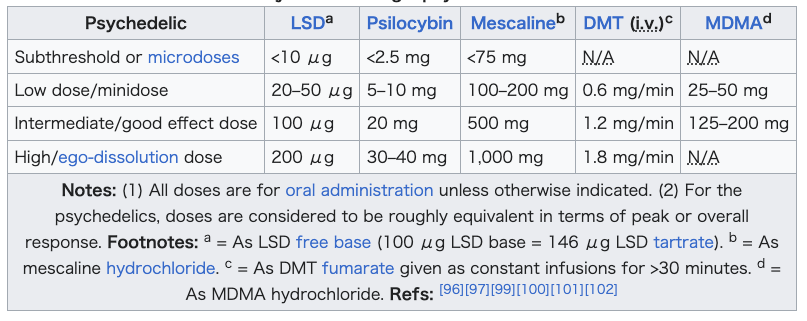 See also: Psilocybin mushroom § Dosing In the case of dried psilocybin-containing mushrooms, microdoses are 0.1 g to 0.3 g and psychedelic doses are 1.0 g to 3.5–5.0 g.[103][104][105] The preceding 1.0 to 5.0 g range corresponds to psilocybin doses of about 10 to 50 mg.[105] Psilocybin-containing mushrooms vary in their psilocybin and psilocin content, but are typically around 1% of the dried weight of the mushrooms (in terms of total or combined psilocybin and psilocin content).[104][106][107][105][108][109][110][111] Psilocybin and psilocin are similar in potency and dose but psilocin is about 1.4-fold more active, this being related to the difference in molecular weight between the two compounds.[107][112][113] Some psychedelics, such as 2C-B, 2C-E, 2C-P, methallylescaline (MAL), and 4-HO-DiPT among others, have been said to have steep dose–response curves, meaning that the difference in dose between a light experience and an overwhelming disconnection from reality can be small.[51]: 506, 518 [36]: 467 Conversely, 2C-D is described as having an unusually wide and gradual dose range.[51][114] |
マイクロドージング 本記事:サイケデリック・マイクロドージング サイケデリック・マイクロドージングとは、創造性の向上、身体的エネルギーレベルの向上、情緒の安定、問題解決タスクにおけるパフォーマンスの向上、およ び不安、うつ病、依存症の治療を目的として、サイケデリック薬物の閾値未満の用量(マイクロドーズ)を使用する実践である。[90] [91] マイクロドージングの実践は21世紀に入りさらに広まり、この実践から長期的な恩恵を得ていると主張する人々が増えている。[92][93] 2022年の研究では、自然言語の中にサイロシビン・マイクロドージングの特徴が認められ、少量のサイケデリックには応用可能性があり、マイクロドージングのスケジュールに関する生態学的観察が可能であると結論づけられた。[94][95] 投与量 以下の表は、臨床研究に基づいて決定された、主要なセロトニン作動性サイケデリック薬、およびエンタクタジェンかつ軽度のサイケデリック薬であるMDMA (「エクスタシー」)の投与量を示している。[96][97][98][99][100][101][102] その他の投与計画も報告されている。[98] 主要なセロトニン作動性サイケデリックおよびMDMAの投与量 関連項目:サイロシビン含有キノコ § 投与量 乾燥したサイロシビン含有キノコの場合、マイクロドーズは0.1 gから0.3 g、サイケデリックな用量としては1.0 gから3.5~5.0 gである。[103][104][105] 前述の1.0~5.0 gの範囲は、約10~50 mgのサイロシビン投与量に相当する。[105] サイロシビン含有キノコは、サイロシビンおよびサイロシンの含有量が異なるが、通常、キノコの乾燥重量の約1%である(サイロシビンとサイロシンの合計含 有量として)。[104][106][107][105][108][109][110][111] サイロシビンとサイロシンは効力や投与量において類似しているが、サイロシンは約1.4倍活性が高く、これは両化合物の分子量が異なることに関係してい る。[107][112] [113] 2C-B、2C-E、2C-P、メタリルエスカリン(MAL)、4-HO-DiPTなどの一部のサイケデリック物質は、急峻な用量反応曲線を持つと言われ ている。つまり、軽度の体験と現実からの圧倒的な乖離との間の用量差は、ごくわずかである可能性がある。[51]: 506, 518 [36]: 467 対照的に、2C-Dは、異常に広く緩やかな用量範囲を持つとされている。[51][114] |
| Durations The typical durations of major psychedelics are as follows:[96][51][36][115] Psilocybin oral: 5–6 hours[96][116] LSD oral: 7–11 hours (dose-dependent)[96][97] Mescaline oral: 10–11 hours (range 6–14 hours) (dose-dependent)[96][117] Dimethyltryptamine (DMT) inhaled: 5–20 minutes[118][119][115] Ayahuasca (oral DMT with an MAOITooltip monoamine oxidase inhibitor): 4–6 hours[118][120][121] 5-MeO-DMT inhaled: 5–20 minutes[43][96][115] 2C-B oral: 3–5 hours (range 2–8 hours)[122][115][51][123] The shortest-acting oral psychedelics are the less-well-known ASR-3001 (5-MeO-iPALT) (1.5–2.5 hours)[124][125] and 4-HO-DiPT (2–3 hours),[36] while the longest-acting known psychedelic is 2C-G-5 (32–48 hours).[126][51] However, DOx psychedelics like DOM and the FLY psychedelic Bromo-DragonFLY (DOB-DFLY) reportedly may produce effects lasting for up to a few days at high doses.[127][128][129][130][131] |
作用持続時間 主要なサイケデリック薬の一般的な作用持続時間は以下の通りである:[96][51][36][115] サイロシビン(経口):5~6時間[96][116] LSD(経口):7~11時間(用量依存性)[96] [97] メスカリン(経口):10~11時間(範囲6~14時間)(用量依存)[96][117] ジメチルトリプタミン(DMT)(吸入):5~20分[118][119] [115] アヤワスカ(MAOI(モノアミン酸化酵素阻害剤)を併用した経口DMT):4~6時間[118][120][121] 5-MeO-DMT 吸入:5~20分[43][96] [115] 2C-B経口摂取:3~5時間(範囲2~8時間)[122][115][51][123] 作用時間が最も短い経口サイケデリックは、あまり知られていないASR-3001(5-MeO-iPALT)(1.5~2.5時間) [124][125] および4-HO-DiPT(2~3時間)[36]であり、一方、既知のサイケデリックの中で最も作用時間が長いのは2C-G-5(32~48時間)であ る。[126][51] しかし、DOMのようなDOx系サイケデリックや、FLY系サイケデリックであるBromo-DragonFLY(DOB-DFLY)は、高用量では最大 で数日間効果が持続する可能性があるとの報告がある。[127][128][129][130][131] |
| Effects Psychedelic effects Main article: Psychedelic experience Although several attempts have been made, starting in the 19th and 20th centuries, to define common phenomenological structures of the effects produced by classic psychedelics, a universally accepted taxonomy does not yet exist.[132][133] At lower doses, features of psychedelic experiences include sensory alterations, such as the warping of surfaces, shape suggestibility, pareidolia, and color variations. Users often report intense colors that they have not previously experienced, and repetitive geometric shapes or form constants are common as well. Higher doses often cause intense and fundamental alterations of sensory (notably visual) perception, such as synesthesia or the experience of additional spatial or temporal dimensions.[134] Tryptamines are well documented to cause classic psychedelic states, such as increased empathy, visual distortions (drifting, morphing, breathing, melting of various surfaces and objects), auditory hallucinations, ego dissolution or ego death with high enough dose, mystical, transpersonal and spiritual experiences, autonomous "entity" encounters, time distortion, closed eye hallucinations and complete detachment from reality with a high enough dose.[135] Luis Luna describes psychedelic experiences as having a distinctly gnosis-like quality, and says that they offer "learning experiences that elevate consciousness and can make a profound contribution to personal development."[136] Czech psychiatrist Stanislav Grof studied the effects of psychedelics like LSD early in his career and said of the experience, that it commonly includes "complex revelatory insights into the nature of existence… typically accompanied by a sense of certainty that this knowledge is ultimately more relevant and 'real' than the perceptions and beliefs we share in everyday life."[citation needed] Traditionally, the standard model for the subjective phenomenological effects of psychedelics has typically been based on LSD, with anything that is considered "psychedelic" evidently being compared to it and its specific effects.[5] Good trips are reportedly deeply pleasurable, and typically involve intense joy or euphoria, a greater appreciation for life, reduced anxiety, a sense of spiritual enlightenment, and a sense of belonging or interconnectedness with the universe.[137][138] Negative experiences, colloquially known as "bad trips," evoke an array of dark emotions, such as irrational fear, anxiety, panic, paranoia, dread, distrustfulness, hopelessness, and even suicidal ideation.[139] While it is impossible to predict when a bad trip will occur, one's mood, surroundings, sleep, hydration, social setting, and other factors can be controlled (colloquially referred to as "set and setting") to minimize the risk of a bad trip.[140][141] The concept of "set and setting" also generally appears to be more applicable to psychedelics than to other types of hallucinogens such as deliriants, hypnotics and dissociative anesthetics.[142] Psychedelics include naturally occurring tryptamines like psilocybin and DMT, the naturally occurring phenethylamine mescaline, and naturally occurring lysergamides like ergine (lysergic acid amide; LSA), as well as synthetic analogues and derivatives like LSD and 2C-B. Many of these psychedelics cause remarkably similar effects, despite their different chemical structures.[citation needed] However, many users anecdotally report that the three major families have subjectively different qualities in the "feel" of the experience, which are difficult to describe.[citation needed] There can also be very substantial differences between the drugs; for instance, 5-MeO-DMT rarely produces the visual effects typical of other psychedelics.[5][44] As additional examples, DiPT is said to primarily affect the auditory sense,[143][51] 2C-T,[51] 2C-T-17,[51] MiPT,[36] and ASR-3001 (5-MeO-iPALT)[125][144][145] are said to produce psychedelic effects on thinking or "head space" with few or no visuals, and N-methyltryptamine (NMT) is said to be a spatial psychedelic.[146][147] The visuals of psychedelics have been reproduced, with these creations known as psychedelic replications.[148][149][150][151][152] Some rare individuals do not experience hallucinogenic effects with serotonergic psychedelics.[153] |
効果 サイケデリック効果 本記事:サイケデリック体験 19世紀から20世紀にかけて、古典的サイケデリック薬物がもたらす効果の共通する現象学的構造を定義しようとする試みが幾度か行われてきたが、普遍的に 受け入れられている分類法はまだ存在しない。[132] [133] 低用量では、サイケデリック体験の特徴として、表面の歪み、形状の暗示性、パレイドリア、色の変化といった感覚の変化が挙げられる。使用者は、これまで経 験したことのない強烈な色を報告することが多く、繰り返される幾何学模様や形態の恒常性もよく見られる。高用量では、共感覚や、追加的な空間的・時間的次 元の体験など、感覚(特に視覚)知覚の強烈かつ根本的な変化を引き起こすことがよくある。[134] トリプタミン類は、共感の増大、視覚的歪み(様々な表面や物体の漂流、変形、呼吸、溶け込み)、聴覚幻覚、十分な用量での自我の解体または自我の死、神秘 的・超個人的・霊的な体験、自律的な「実体」との遭遇、時間の歪み、閉眼時の幻覚、そして十分な用量での現実からの完全な離脱といった、典型的なサイケデ リック状態を引き起こすことが十分に立証されている。[135] ルイス・ルナは、サイケデリック体験を明らかにグノーシス的な性質を持つものと描写し、それらが「意識を高め、個人的な成長に深遠な貢献をもたらし得る学 習体験」を提供すると述べている。[136] チェコの精神科医スタニスラフ・グロフは、キャリアの初期にLSDのようなサイケデリック薬物の効果を研究し、その体験について、一般的に「存在の本質に 関する複雑で啓示的な洞察」を含み、「この知識は、私たちが日常生活で共有する知覚や信念よりも、究極的にはより関連性が高く『現実的』であるという確 信」を伴うことが多いと述べている。[出典必要] 従来、サイケデリック薬物の主観的現象学的効果に関する標準モデルは、典型的にはLSDに基づいており、「サイケデリック」と見なされるものはすべて、明 らかにLSDとその特定の効果と比較されてきた。[5] 「グッド・トリップ」は深く快楽的であると報告されており、典型的には強烈な喜びや陶酔感、人生へのより深い感謝、不安の軽減、精神的悟りの感覚、そして 宇宙との一体感や相互接続感が伴う。[137][138] 俗に「バッドトリップ」と呼ばれるネガティブな体験は、非合理的な恐怖、不安、パニック、偏執、恐怖感、不信感、絶望感、さらには自殺念慮といった、一連 の暗い感情を引き起こす。[139] バッドトリップがいつ起こるかを予測することは不可能だが、自身の気分、周囲の環境、睡眠、水分補給、社会的状況、その他の要因をコントロールすることで (俗に「セット・アンド・セッティング」と呼ばれる)、バッドトリップのリスクを最小限に抑えることができる。[140][141] 「セット・アンド・セッティング」という概念は、一般的に、せん妄誘発薬、催眠薬、解離性麻酔薬といった他の種類の幻覚剤よりも、サイケデリック薬物によ り適用されやすいと考えられている。[142] サイケデリックには、サイロシビンやDMTのような天然由来のトリプタミン、天然由来のフェネチルアミンであるメスカリン、エルギン(リゼルグ酸アミド; LSA)のような天然由来のリゼルガミドに加え、LSDや2C-Bのような合成類似体や誘導体が含まれる。これらのサイケデリックの多くは、化学構造が異 なるにもかかわらず、驚くほど類似した効果をもたらす。[出典必要] しかし、多くの使用者は、3つの主要な分類群が体験の「感覚」において主観的に異なる性質を持っていると、体験談として報告しており、これらは言葉で表現 するのが難しい。[出典必要] 薬物間には非常に大きな違いもある。例えば、5-MeO-DMTは、他のサイケデリックに典型的な視覚効果をほとんど引き起こさない。[5] [44] その他の例として、DiPTは主に聴覚に影響を与えると言われている。[143][51] また、2C-T[51]、2C-T-17[51]、MiPT[36]、およびASR-3001(5-MeO-iPALT)[125] [144][145]は、視覚的効果がほとんどないか全くないまま、思考や「ヘッドスペース」にサイケデリックな効果をもたらすとされ、N-メチルトリプ タミン(NMT)は空間的サイケデリックであると言われている。[146] [147] サイケデリック薬物の視覚的体験は再現されており、こうした作品は「サイケデリック・レプリケーション」として知られている。[148][149][150][151][152] ごく一部の個人では、セロトニン作動性サイケデリック薬物による幻覚作用を経験しない。[153] |
| Other psychoactive effects Some psychedelics have been associated with other psychoactive effects in addition to their hallucinogenic effects.[154][130][51] For example, psychedelics like LSD and DOM have been described as having mild stimulant and/or "psychic-energizing" (i.e., acute antidepressant) effects.[154][130] Some psychedelics and related drugs, like DOET (low doses), Ariadne, and ASR-2001 (2CB-5PrO), have been investigated specifically for such effects.[130][51][155][156][144] 2C-B has been said to have mild entactogenic effects at low doses.[52][53][54][55] 5-MeO-DiPT and 5-MeO-MiPT have unique and unusual effects at typical doses including tactile and sexual enhancement, mild entactogenic effects, and only light hallucinogenic effects.[36][157][158][159][55] Some drugs, such as MDxx compounds like MDMA and MDA as well as α-alkyltryptamines like α-methyltryptamine (AMT), are entactogens and/or stimulants acting at monoamine transporters in addition to having varying degrees of psychedelic effects.[55][56][51] |
その他の精神作用 一部のサイケデリック物質は、幻覚作用に加えて、その他の精神作用も持つとされている。[154][130][51] 例えば、LSDやDOMのようなサイケデリック物質には、軽度の興奮作用や「精神を活性化させる」(すなわち、急性抗うつ作用)効果があると言われてい る。[154] [130] DOET(低用量)、Ariadne、ASR-2001(2CB-5PrO)などの一部のサイケデリックおよび関連薬物は、こうした作用について特に研究 されてきた。[130][51][155][156][144] 2C-Bは、低用量で軽度のエンタクタジェニック作用を持つと言われている。[52][53][54][55] 5-MeO-DiPTおよび5-MeO-MiPTは、通常の用量において、触覚や性的感覚の増強、軽度のエンタクタジェニック効果、そしてごく軽度の幻覚 作用を含む、独特かつ特異な効果を示す。[36][157][158][159] [55] MDMAやMDAのようなMDxx化合物や、α-メチルトリプタミン(AMT)のようなα-アルキルトリプタミンなど、一部の薬物は、様々な程度のサイケ デリック効果を持つことに加え、モノアミン輸送体で作用するエンタクタジェンおよび/または刺激剤である。[55][56][51] |
| Psychedelic afterglows Psychedelics are associated with an afterglow, also known as positive subacute or post-experience effects, which may last days or even weeks after the psychedelic experience.[160][161][162][163] These effects include reduction in psychopathology and increased well-being, mood, mindfulness, social functioning, spirituality, and executive functioning, and positive behavioral changes.[160] They also include mixed changes in personality, values, attitudes, creativity, and flexibility, as well as adverse effects like headaches, sleep disturbances, and sometimes increased psychological distress.[160] The afterglow period has been associated with changes in brain function, neuroplasticity, and immune system function.[162][164][165][166] Both psychological and pharmacological effects may be involved in the afterglow phenomenon.[161] In 1898, the English writer and intellectual Havelock Ellis reported a heightened perceptual sensitivity to "the more delicate phenomena of light and shade and color" for a prolonged period of time after his exposure to mescaline.[167] The term "psychedelic afterglow" was first formally coined in the 1960s.[160] Albert Hofmann, the discoverer of LSD, said the following about the aftermath of his first full LSD experience in his 1980 book LSD: My Problem Child:[168] Exhausted, I then slept, to awake next morning refreshed, with a clear head, though still somewhat tired physically. A sensation of well-being and renewed life flowed through me. Breakfast tasted delicious and gave me extraordinary pleasure. When I later walked out into the garden, in which the sun shone now after a spring rain, everything glistened and sparkled in a fresh light. The world was as if newly created. All my senses vibrated in a condition of highest sensitivity, which persisted for the entire day. During a speech on his 100th birthday in 2006, Hofmann additionally said of LSD:[169] It gave me an inner joy, an open mindedness, a gratefulness, open eyes and an internal sensitivity for the miracles of creation... I think that in human evolution it has never been as necessary to have this substance LSD. It is just a tool to turn us into what we are supposed to be. https://en.wikipedia.org/wiki/Psychedelic_drug |
サイケデリック体験の余韻 サイケデリック薬には「余韻」と呼ばれる現象が伴う。これは「ポジティブな亜急性効果」あるいは「体験後効果」とも呼ばれ、サイケデリック体験の後、数日 から数週間続くことがある。[160][161][162][163] これらの効果には、精神病理の軽減、幸福感・気分・マインドフルネス・社会的機能・精神性・実行機能の向上、そして肯定的な行動の変化などが含まれる。 [160] また、人格、価値観、態度、創造性、柔軟性における多様な変化に加え、頭痛、睡眠障害、時には心理的苦痛の増大といった有害な影響も含まれる。[160] アフターグローの期間は、脳機能、神経可塑性、および免疫系機能の変化と関連している。[162][164][165][166] アフターグロー現象には、心理的および薬理学的効果の両方が関与している可能性がある。[161] 1898年、英国の作家であり知識人であったハヴェロック・エリスは、メスカリンに曝露した後、長期間にわたり「光と影、そして色のより繊細な現象」に対 する知覚的感受性が高まったと報告した。[167] 「サイケデリック・アフターグロー」という用語が正式に造語されたのは1960年代のことである。[160] LSDの発見者であるアルバート・ホフマンは、1980年の著書『LSD:わが問題児』の中で、自身初の本格的なLSD体験の余韻について次のように述べ ている: [168] 疲れ果てた私は眠りにつき、翌朝は身体的にはまだ多少疲れが残っていたものの、頭はすっきりとしてリフレッシュした状態で目覚めた。幸福感と新たな生命力 が私の中に満ち溢れていた。朝食は美味しく、並外れた喜びをもたらしてくれた。その後、春の雨上がりの日差しが降り注ぐ庭へ出ると、すべてが新鮮な光の中 で輝き、きらめいていた。世界はまるで新しく創造されたかのようだった。私の五感はすべて、最高度の感受性の中で震え、その状態は一日中続いた。 2006年の100歳の誕生日におけるスピーチの中で、ホフマンはLSDについてさらに次のように述べた。[169] それは私に内なる喜び、寛容さ、感謝の心、開かれた目、そして創造の奇跡に対する内なる感受性を与えてくれた……人類の進化において、この物質LSDが必要とされたことはかつてなかったと思う。それは単に、私たちを本来あるべき姿へと変えるための道具に過ぎない。 |
| Contraindications See also: Psilocybin § Contraindications Contraindications of psilocybin are mostly psychiatric conditions that increase the risk of psychological distress, including the rare adverse effect of psychosis during or after the psychedelic experience.[11][108] These conditions may include history of psychosis, schizophrenia, bipolar disorder, or borderline personality disorder.[11][109] Further research may provide more safety information about the use of psilocybin in people with such conditions.[11] It is notable in this regard that psilocybin and other psychedelics are being studied for the potential treatment of all the preceding conditions.[110][111][112][113][114][115] In the case of bipolar disorder, there are concerns that psychedelics may trigger a switch into mania.[116] Psilocybin is considered to be contraindicated in women who are pregnant or breastfeeding due to insufficient research in this population.[11] There are transient increases in heart rate and blood pressure with psilocybin, and hence uncontrolled cardiovascular conditions are a relative contraindication for psilocybin.[11] Serotonin 5-HT2A receptor antagonists such as atypical antipsychotics and certain antidepressants may block psilocybin's hallucinogenic effects and hence may be considered contraindicated in this sense.[117][118] Monoamine oxidase inhibitors (MAOIs) may potentiate psilocybin's effects and augment its risks.[117] https://en.wikipedia.org/wiki/Psilocybin#Contraindications |
禁忌 参照:サイロシビン § 禁忌 サイロシビンの禁忌は、主に心理的苦痛のリスクを高める精神疾患であり、これにはサイケデリック体験中または体験後に生じる精神病という稀な副作用も含ま れる。[11][108] こうした疾患には、精神病の既往歴、統合失調症、双極性障害、または境界性人格障害などが挙げられる。[11][109] さらなる研究により、こうした疾患を持つ人々におけるサイロシビンの使用に関する安全性の情報が得られる可能性がある。[11] この点で注目すべきは、サイロシビンやその他のサイケデリック薬が、前述のすべての疾患に対する潜在的な治療法として研究されていることである。 [110][111][112][113][114][115] 双極性障害の場合、サイケデリック薬が躁状態への移行を引き起こす可能性があるという懸念がある。[116] 妊娠中または授乳中の女性については、この集団における研究が不十分であるため、サイロシビンの使用は禁忌とされている。[11] サイロシビン投与により心拍数と血圧が一時的に上昇するため、管理されていない心血管疾患はサイロシビンの相対的禁忌となる。[11] 非定型抗精神病薬や特定の抗うつ薬などのセロトニン5-HT2A受容体拮抗薬は、サイロシビンの幻覚作用を阻害する可能性があるため、この点において禁忌 とみなされる。[117][118] モノアミン酸化酵素阻害薬(MAOI)は、サイロシビンの作用を増強し、そのリスクを高める可能性がある。[117] |
| Adverse effects See also: Risks of psychedelic drugs, Bad trip, and Trip sitter Psychedelic drugs are addictive psychologically, with little to no physical addiction in classical psychedelics.[22][23][5] Risks do exist during an unsupervised psychedelic experience, however; Ira Byock wrote in 2018 in the Journal of Palliative Medicine that psilocybin is safe when administered to a properly screened patient and supervised by a qualified professional with appropriate set and setting. However, he called for an "abundance of caution" because in the absence of these conditions a range of negative reactions is possible, including "fear, a prolonged sense of dread, or full panic." He notes that driving or even walking in public can be dangerous during a psychedelic experience because of impaired hand-eye coordination and fine motor control.[170] In some cases, individuals taking psychedelics have performed dangerous or fatal acts because they believed they possessed superhuman powers.[5] A significant risk involves extended difficulties and persistent mental health effects following the acute experience.[171] A 2023 international survey found 14% of respondents felt more anxious for an extended period following ingestion.[171] In one survey[172], 9% of users reported functional impairment lasting at least 24 hours beyond the trip itself. In another survey of 608 people who all reported post-psychedelic difficulties, one third of the dataset said the difficulties lasted longer than a year, and one fifth said the difficulties lasted longer than three years. The most commonly-reported post-psychedelic difficulties in that study were anxiety, feeling traumatized by the experience or uncovering earlier trauma, social isolation, derealization/depersonalization, visual distortions and existential confusion.[173] Most people recover from these difficulties with the help of accurate information[174], social support, and therapy. Psilocybin-induced states of mind share features with states experienced in psychosis, and while a causal relationship between psilocybin and the onset of psychosis has not been established as of 2011, researchers have called for investigation of the relationship.[175] Many of the persistent negative perceptions of psychological risks are unsupported by the currently available scientific evidence, with the majority of reported adverse effects not being observed in a regulated and/or medical context.[176] A population study on associations between psychedelic use and mental illness published in 2013 found no evidence that psychedelic use was associated with increased prevalence of any mental illness.[177] In any case, induction of psychosis has been associated with psychedelics in small percentages of individuals, and the rates appear to be higher in people with schizophrenia.[178] Using psychedelics poses certain risks of re-experiencing of the drug's effects, including flashbacks and hallucinogen persisting perception disorder (HPPD).[175] These non-psychotic effects are poorly studied, but the permanent symptoms (also called "endless trip") are considered to be rare.[179] Some people with aphantasia have been reported to have acquired visual mental imagery after using psychedelics.[180] While enhanced mental imagery may seem appealing, it may also pose risks such as increased risk of psychiatric disorders.[180] |
副作用 関連項目:サイケデリック薬物のリスク、バッドトリップ、トリップシッター サイケデリック薬物は心理的に依存性があるが、古典的なサイケデリック薬物においては身体的な依存はほとんど、あるいは全く見られない。[22][23][5] しかし、監督のないサイケデリック体験中にはリスクが存在する。アイラ・バイオックは2018年、『Journal of Palliative Medicine』誌において、適切にスクリーニングされた患者に対し、適切なセットとセッティングのもとで有資格の専門家が監督すれば、サイロシビンは 安全であると記した。しかし、これらの条件が整わない場合、「恐怖、長引く不安感、あるいは完全なパニック」を含む様々な負の反応が生じる可能性があるた め、彼は「細心の注意」を呼びかけた。彼は、サイケデリック体験中は手と目の協調性や微細運動制御が損なわれるため、運転はおろか公共の場での歩行さえも 危険になり得ると指摘している。[170] 場合によっては、サイケデリックを摂取した個人が、超人的な能力を身につけたと信じ込み、危険な行為や致命的な行為に及んだ例もある。[5] 重大なリスクの一つは、急性体験後に長期にわたる困難や持続的な精神健康への影響が生じることだ。[171] 2023年の国際調査では、回答者の14%が摂取後、長期間にわたり不安を感じていたことが判明した。[171] ある調査[172]では、ユーザーの9%が、トリップ終了後少なくとも24時間以上続く機能障害を報告している。サイケデリック体験後の困難を報告した 608人を対象とした別の調査では、回答者の3分の1が困難が1年以上続いたと述べ、5分の1が3年以上続いたと答えた。同研究で最も多く報告されたサイ ケデリック体験後の困難は、不安、体験によるトラウマ感や過去のトラウマの再燃、社会的孤立、現実感喪失/自己感喪失、視覚的歪み、そして実存的混乱で あった。[173] ほとんどの人は、正確な情報[174]、社会的支援、および療法の助けを借りて、これらの困難から回復する。 サイロシビンによって誘発される精神状態は、精神病で経験される状態と共通する特徴を持つ。2011年時点でサイロシビンと精神病発症との因果関係は確立 されていないものの、研究者らはその関係の解明を求めている。[175] 心理的リスクに関する根強い否定的な認識の多くは、現在入手可能な科学的証拠によって裏付けられておらず、報告されている有害事象の大部分は、規制された 環境や医療の現場では観察されていない。[176] 2013年に発表されたサイケデリック薬の使用と精神疾患との関連性に関する人口調査では、サイケデリック薬の使用がいかなる精神疾患の有病率の増加とも 関連しているという証拠は見つからなかった。[177] いずれにせよ、幻覚剤の使用により精神病が誘発されるケースはごく一部の個人に見られ、その発生率は統合失調症患者において高い傾向にある。[178] 幻覚剤の使用には、フラッシュバックや幻覚剤持続性知覚障害(HPPD)など、薬物の作用を再体験するリスクが伴う。[175] これらの非精神病性作用については研究が不十分だが、永続的な症状(「エンドレス・トリップ」とも呼ばれる)は稀であると見なされている。[179] アファンタジアを持つ一部の人々において、サイケデリック薬の使用後に視覚的イメージ能力を獲得したとの報告がある。[180] イメージ能力の向上は魅力的に思えるかもしれないが、精神疾患のリスク増加といった危険性を伴う可能性もある。[180] |
| Tolerance A very rapid and strong tolerance, known as tachyphylaxis, develops to the effects of psychedelics with repeated administration.[4][181][182][183][116][184] It develops with a single dose and is present within hours to days.[181][182][116] Already by the second day, with LSD, there was a 50% decrease in psychoactive effects in one study.[182] Following a few days of repeated administration, or 3 to 4 days in the case of LSD, there is an almost complete absence of effects.[4][181][182][185] The tolerance remains stable thereafter.[182] In one study that gave LSD continuously for up to 84 days, doubling, tripling, and quadrupling the dose was unable to fully overcome the tolerance and restore effects.[182] An abstinence period of 3 to 6 days is required for sensitivity to return and tolerance to fully reset.[182][183][186][185] LSD, psilocybin, and mescaline all show cross-tolerance with each other.[4][182][183][186][184][185] Tolerance has been shown to develop to numerous psychedelics in animals and/or humans.[4][181][187][182] Tolerance with psychedelics develops to both their psychoactive effects and their physical effects, such as pupil dilation and tachycardia.[182] As a result of the tolerance, recreational psychedelic users do not use the drugs daily but often show a once-per-week use pattern.[182] Some possible exceptions among psychedelics which may not build tolerance or may develop it much less rapidly include dimethyltryptamine (DMT),[4][118][181][188] ayahuasca (which contains DMT),[189][190] and 5-MeO-DMT.[42][191][43][44] Similarly, the structurally related dipropyltryptamine (DPT) and diisopropyltryptamine (DiPT) did not show behavioral tolerance in rodents, in contrast to DOI and 2C-T-7.[187] The reasons for the apparently reduced tolerance development with the preceding psychedelics is unclear.[4][187] It has been suggested that the lack of tolerance with shorter-acting psychedelics like DMT and DPT might simply be due to their short durations.[187][192] Contrary to earlier findings, subsequent clinical studies employing DMT by continuous intravenous infusion (also known as DMTx) have found rapid and moderate acute tolerance development.[193][194][195] The mechanism of the tolerance with psychedelics is thought to be rapid serotonin 5-HT2A receptor downregulation with very slow recovery.[4][116][196][182] Downstream targets of the serotonin 5-HT2A receptor such as metabotropic glutamate mGlu2 and mGlu3 receptors may also downregulate.[182] It is thought that serotonin 5-HT2A receptors recover to 50% of baseline within 3 to 7 days of the initial psychedelic dose and fully return to baseline within 1 to 4 weeks, with the recovery dependent on the doses and the length of repeated use.[116] Tolerance may limit the effects and potential benefits of psychedelic microdosing, with this having been observed clinically.[197][198] |
耐性 サイケデリック薬の効果に対しては、反復投与により「タキフィラキシス」として知られる、極めて急速かつ強い耐性が生じる。[4][181][182] [183][116][184] これは単回投与でも生じ、数時間から数日以内に現れる。[181][182][116] ある研究では、LSDの場合、投与2日目にはすでに精神作用が50%減少していた。[182] 数日間の反復投与、あるいはLSDの場合は3~4日間の投与後、作用はほぼ完全に消失する。[4][181][182] [185] その後、耐性は安定した状態を維持する。[182] LSDを最大84日間連続投与したある研究では、用量を2倍、3倍、4倍に増やしても、耐性を完全に克服して効果を回復させることはできなかった。 [182] 感受性が戻り、耐性が完全にリセットされるには、3~6日間の休薬期間が必要である。[182][183][186][185] LSD、サイロシビン、メスカリンはすべて、互いに交差耐性を示す。[4][182][183][186][184][185] 動物および/またはヒトにおいて、多数のサイケデリック物質に対して耐性が生じることが示されている。[4][181][187][182] サイケデリック薬物に対する耐性は、精神作用だけでなく、瞳孔散大や頻脈といった身体的効果に対しても生じる。[182] この耐性の結果、娯楽目的でサイケデリック薬物を使用する人々は毎日使用することはなく、週に1回の使用パターンを示すことがよくある。[182] 耐性が生じない、あるいはその発現がはるかに緩やかな可能性のあるサイケデリックには、ジメチルトリプタミン(DMT)、[4][118][181] [188] アヤワスカ(DMTを含む)、[189][190] および5-MeO-DMTなどが挙げられる。[42][191][43][44] 同様に、構造的に関連するジプロピルトリプタミン(DPT)およびジイソプロピルトリプタミン(DiPT)は、DOIや2C-T-7とは対照的に、げっ歯 類において行動的耐性を示さなかった。[187] これら前述のサイケデリック薬物において耐性の発現が明らかに抑制されている理由は不明である。[4][187] DMTやDPTのような作用時間が短いサイケデリック薬における耐性の欠如は、単にその作用時間が短いことに起因している可能性があるとの指摘がある。 [187][192] 以前の知見とは対照的に、DMTを連続静脈内注入(DMTxとしても知られる)を用いて実施されたその後の臨床研究では、急速かつ中程度の急性耐性が生じ ることが確認された。[193][194] [195] サイケデリック薬における耐性のメカニズムは、セロトニン5-HT2A受容体の急速なダウンレギュレーションと、その極めて緩慢な回復にあると考えられて いる。[4][116][196][182] セロトニン5-HT2A受容体の下流ターゲットである、代謝型グルタミン酸受容体(mGlu2およびmGlu3受容体)も同様にダウンレギュレーションさ れる可能性がある。[182] セロトニン5-HT2A受容体は、初回サイケデリック投与から3~7日以内にベースラインの50%まで回復し、1~4週間以内に完全にベースラインに戻る と考えられており、その回復は投与量および反復使用期間に依存する。[116] 耐性は、サイケデリックのマイクロドージングの効果や潜在的な利益を制限する可能性があり、これは臨床的にも観察されている。[197] [198] |
| Cardiovascular toxicity See also: Psychedelic microdosing § Cardiovascular toxicity Serotonergic psychedelics are agonists not only of the serotonin 5-HT2A receptor but also of the serotonin 5-HT2B receptor and other serotonin receptors.[199][200] A potential risk of frequent repeated use of serotonergic psychedelics is cardiac fibrosis and valvulopathy caused by serotonin 5-HT2B receptor activation.[199][200] However, single high doses or widely spaced doses (e.g., months) are widely thought to be safe and concerns about cardiac toxicity apply more to chronic psychedelic microdosing or very frequent use (e.g., weekly).[199][200] Selective serotonin 5-HT2A receptor agonists that do not activate the serotonin 5-HT2B receptor or other serotonin receptors, such as 25CN-NBOH, DMBMPP, and LPH-5, have been developed and are being studied.[201][202][203] Selective serotonin 5-HT2A receptor agonists are expected to avoid the cardiac risks of serotonin 5-HT2B receptor activation.[203] |
心血管毒性 関連項目:サイケデリック・マイクロドージング § 心血管毒性 セロトニン作動性サイケデリックは、セロトニン5-HT2A受容体だけでなく、セロトニン5-HT2B受容体やその他のセロトニン受容体のアゴニストでも ある。[199][200] セロトニン作動性サイケデリックを頻繁に繰り返し使用した場合の潜在的なリスクとして、セロトニン5-HT2B受容体の活性化によって引き起こされる心線 維症や弁膜症が挙げられる。[199][200] しかし、単回の高用量投与や投与間隔が長い場合(例:数ヶ月)は安全であると広く考えられており、心毒性に関する懸念は、慢性的なサイケデリックのマイク ロドージングや非常に頻繁な使用(例:毎週)により強く当てはまる。[199][200] セロトニン5-HT2B受容体やその他のセロトニン受容体を活性化しない選択的セロトニン5-HT2A受容体アゴニスト(25CN-NBOH、 DMBMPP、LPH-5など)が開発され、研究が進められている。[201][202][203] 選択的セロトニン5-HT2A受容体アゴニストは、セロトニン5-HT2B受容体の活性化に伴う心臓リスクを回避できると期待されている。[203] |
| Overdose There have been a handful of cases of fatal overdose with LSD, psilocybin, and mescaline.[204][205] There have also been cases of death with dimethyltryptamine (DMT), 5-MeO-DMT, 2C-B, Bromo-DragonFLY, NBOMes like 25I-NBOMe, and other psychedelics.[204][129] LSD and psilocybin appear to have very wide margins of safety with overdose, whereas mescaline and 2C-B have much narrower margins, and NBOMes appear to be especially toxic and uniquely linked to serotonin syndrome-type symptoms.[204] Major psychedelics like LSD and psilocybin do not cause serotonin syndrome, which is thought to be due to the fact that they act as partial agonists of the serotonin 5-HT2A receptor.[206][204][207] Conversely, psychedelics like NBOMes have higher activational efficacy at this receptor.[206][207] In terms of extrapolated human lethal doses based on animal studies and human case reports, lethal doses of psychedelics relative to typical recreational doses are estimated to be 1,000-fold for LSD, 200-fold for psilocybin, 50-fold for oral DMT (as ayahuasca), and 24-fold for mescaline.[204] Estimates for other psychedelics, like 5-MeO-DMT and 2C-B, could not be made.[204] |
過剰摂取 LSD、サイロシビン、メスカリンによる致死的な過剰摂取の事例が数件報告されている。[204][205] また、ジメチルトリプタミン(DMT)、5-MeO-DMT、2C-B、ブロモ・ドラゴンフライ、25I-NBOMeのようなNBOMe類、およびその他 のサイケデリック薬物による死亡例も報告されている。[204][129] LSDとサイロシビンは過剰摂取に対する境界が非常に広いようだが、メスカリンと2C-Bは境界がはるかに狭く、NBOMe類は特に毒性が強く、セロトニ ン症候群型の症状と特異的に関連しているようだ。[204] LSDやサイロシビンといった主要なサイケデリックはセロトニン症候群を引き起こさないが、これはそれらがセロトニン5-HT2A受容体の部分作動薬とし て作用するためと考えられている。[206][204][207] 逆に、NBOMeのようなサイケデリックは、この受容体に対する活性化効力がより高い。[206] [207] 動物実験およびヒトの症例報告に基づく推計致死量について言えば、一般的な娯楽用投与量に対するサイケデリック薬の致死量は、LSDで1,000倍、サイ ロシビンで200倍、経口DMT(アヤワスカとして)で50倍、メスカリンで24倍と推定されている。[204] 5-MeO-DMTや2C-Bなどの他のサイケデリック薬については、推定を行うことができなかった。[204] |
| Interactions See also: Trip killer § Serotonergic psychedelic antidotes, and Head-twitch response § Modulators of the head-twitch response Serotonin 5-HT2A receptor antagonists can block the subjective psychedelic effects of serotonergic psychedelics in humans.[208][209][210][211] Numerous drugs act as serotonin 5-HT2A receptor antagonists, for instance antidepressants like trazodone and mirtazapine, antipsychotics like quetiapine, olanzapine, and risperidone, and other agents like ketanserin, pimavanserin, cyproheptadine, and pizotifen.[208][210][211][212] Such drugs are sometimes referred to as "trip killers" due to their ability to prevent or abort the hallucinogenic effects of psychedelics.[213][212][214] Besides serotonin 5-HT2A receptor antagonists, non-hallucinogenic serotonin 5-HT2A receptor partial agonists, such as lisuride, may also block the hallucinogenic effects of serotonergic psychedelics.[215][216] The serotonin 5-HT1A receptor partial agonist buspirone has been found to markedly reduce the hallucinogenic effects of psilocybin in humans.[211][217][218] Conversely, the serotonin 5-HT1A receptor antagonist pindolol has been found to potentiate the hallucinogenic effects of DMT by 2- to 3-fold in humans.[218][219] Serotonin 5-HT1A receptor agonism may modify and self-inhibit the effects of psychedelics that possess this property.[44][220][217][221][222][223] A particularly notable example is 5-methoxytryptamine derivatives such as 5-MeO-DMT, which are more potent serotonin 5-HT1A receptor agonists than other psychedelics and have qualitatively unique and differing hallucinogenic effects.[44][223][224] Benzodiazepines, for example diazepam, alprazolam, clonazepam, and lorazepam, as well as alcohol, which act as GABAA receptor positive allosteric modulators, have been limitedly studied in combination with psychedelics and are not currently known to directly interact with them.[225][211] However, these GABAergic drugs produce effects such as anxiolysis, sedation, and amnesia, and in relation to this, may diminish or otherwise oppose the effects of psychedelics.[211][213][212][214][226] As a result of this, benzodiazepines and alcohol are often used by recreational users as "trip killers" to manage difficult hallucinogenic experiences with psychedelics, for instance experiences with prominent anxiety.[213][212][214] The safety of this strategy is not entirely clear and might have risks.[213][225][212][214] However, benzodiazepines have been used clinically to manage the adverse psychological effects of psychedelics, for instance in clinical studies and in the emergency department.[225][227][228][229][230] A clinical trial of psilocybin and midazolam coadministration found that midazolam clouded the effects of psilocybin and impaired memory of the experience.[231][232] Benzodiazepines might interfere with the therapeutic effects of psychedelics, such as sustained antidepressant effects.[233][234] Some serotonergic psychedelics, for instance dimethyltryptamine (DMT) and 5-MeO-DMT, are highly susceptible substrates for monoamine oxidase (MAO), specifically MAO-A, and hence can be greatly potentiated by monoamine oxidase inhibitors (MAOIs).[211][120][45] An example of this is ayahuasca, in which plants containing both DMT and harmala alkaloids acting as MAOIs such as harmine and harmaline are combined.[120] This allows DMT to become orally active and to have a much longer duration of action than usual.[120] The 2C psychedelics, such as 2C-B, 2C-I, and 2C-E, are also substrates of both MAO-A and MAO-B, and may likewise be greatly potentiated by MAOIs.[235][236] Examples of MAOIs that may potentiate psychedelics behaving as MAO-A and/or MAO-B substrates include phenelzine, tranylcypromine, isocarboxazid, moclobemide, and selegiline.[211] Combination of MAO-substrate psychedelics with MAOIs can result in overdose and serious toxicity, including death.[211][235] Other psychedelics, such as LSD, are not substrates of MAO and are not potentiated by MAOIs.[211] The extent to which psilocin (and by extension psilocybin) is metabolized by MAO, specifically MAO-A, is not fully clear, but has ranged from 4% to 33% in different studies based on metabolite excretion.[237][101][107] However, circulating levels of the deaminated metabolite of psilocin are far higher than those of free unmetabolized psilocin with psilocybin administration.[238][239] An early clinical study of psilocybin in combination with short-term tranylcypromine pretreatment found that tranylcypromine marginally potentiated the peripheral effects of psilocybin, including pressor effects and mydriasis, but overall did not significantly modify the psychoactive and hallucinogenic effects of the psilocybin, although some of its emotional effects were said to be reduced and some of its perceptual effects were said to be amplified.[240][241][242] Some psychedelics are substrates of cytochrome P450 (CYP450) enzymes, for instance LSD being a substrate of CYP2D6 as well as of several other CYP450 enzymes.[211][243] As such, CYP450 inhibitors may increase exposure to CYP450-substrate psychedelics such as LSD and thereby potentiate their effects as well as risks.[211][243] A clinical study found that administration of LSD to people taking paroxetine, a selective serotonin reuptake inhibitor (SSRI) and strong CYP2D6 inhibitor, increased LSD exposure by about 1.5-fold.[243] The combination was well-tolerated and did not modify the pleasant subjective effects or physiological effects of LSD, whereas negative effects of LSD, including "bad drug effect", anxiety, and nausea, were reduced.[243] Similarly to the findings with a strong CYP2D6 inhibitor, a pharmacogenomic clinical study with LSD found that LSD levels were 75% higher in people with non-functional CYP2D6 (poor metabolizers) compared to those with functional CYP2D6.[211][244] Serotonin syndrome can be caused by combining psychedelics with other serotonergic drugs, including certain antidepressants, opioids, psychostimulants (e.g. MDMA), serotonin 5-HT1 receptor agonists (e.g. triptans), herbs or supplements, and others.[245][246][247][248] A high rate of seizures has been reported when people on lithium have taken serotonergic psychedelics.[240][249][250] In an analysis of online reports, 47% of 62 accounts reported seizures when a psychedelic was taken while on lithium.[240][249][250] The mechanism of this interaction is unclear.[240][250] |
相互作用 関連項目:トリップキラー § セロトニン作動性サイケデリック薬の解毒剤、およびヘッド・ツイッチ反応 § ヘッド・ツイッチ反応の調節薬 セロトニン5-HT2A受容体拮抗薬は、ヒトにおいてセロトニン作動性サイケデリック薬の主観的な作用を阻害することができる。[208][209] [210][211] トラゾドンやミルタザピンなどの抗うつ薬、クエチアピン、オランザピン、リスペリドンなどの抗精神病薬、およびケタンセリン、ピマバンセリン、シプロヘプ タジン、ピゾチフェンなどの薬剤など、数多くの薬剤がセロトニン5-HT2A受容体拮抗薬として作用する。[208][210][211][212] こうした薬剤は、サイケデリック薬物の幻覚作用を予防または中断させる能力があるため、「トリップキラー」と呼ばれることがある。[213][212] [214] セロトニン5-HT2A受容体拮抗薬に加え、リスリドのような非幻覚性のセロトニン5-HT2A受容体部分作動薬も、セロトニン作動性サイケデリック薬物 の幻覚作用を阻害する可能性がある。[215][216] セロトニン5-HT1A受容体部分作動薬であるブスピロンは、ヒトにおいてサイロシビンの幻覚作用を著しく減弱させることが判明している。[211] [217][218] 逆に、セロトニン5-HT1A受容体拮抗薬であるピンドロールは、ヒトにおいてDMTの幻覚作用を2~3倍に増強することが判明している。[218] [219] セロトニン5-HT1A受容体の作動作用は、この性質を持つサイケデリック薬物の作用を修飾し、自己抑制する可能性がある。[44][220][217] [221][222][223] 特に注目すべき例は、5-MeO-DMTなどの5-メトキシトリプタミン誘導体であり、これらは他のサイケデリック物質よりも強力なセロトニン5- HT1A受容体アゴニストであり、質的に独特で異なる幻覚作用を示す。[44][223] [224] ジアゼパム、アルプラゾラム、クロナゼパム、ロラゼパムなどのベンゾジアゼピン系薬剤や、GABAA受容体の正のアルステリックモジュレーターとして作用 するアルコールについては、サイケデリックとの併用に関する研究は限定的であり、現時点ではこれらと直接相互作用することは知られていない。[225] [211] しかし、これらのGABA作動性薬剤は抗不安作用、鎮静作用、健忘作用などを引き起こし、これに関連して、サイケデリック薬の効果を弱めたり、あるいはそ の作用を阻害したりする可能性がある。[211][213][212][214] [226] この結果、ベンゾジアゼピン系薬剤やアルコールは、例えば顕著な不安を伴う体験など、サイケデリックによる困難な幻覚体験を管理するための「トリップキ ラー」として、レクリエーション目的の使用者によって頻繁に用いられている。[213][212][214] この戦略の安全性は完全には明らかではなく、リスクを伴う可能性がある。[213][225][212][214] しかし、ベンゾジアゼピンは、臨床試験や救急部門などにおいて、サイケデリック薬の心理的な副作用を管理するために臨床的に使用されてきた。[225] [227][228][229] [230] サイロシビンとミダゾラムの併用に関する臨床試験では、ミダゾラムがサイロシビンの効果を鈍らせ、体験の記憶を損なうことが判明した。[231] [232] ベンゾジアゼピン系薬剤は、持続的な抗うつ効果など、サイケデリック薬の治療効果を妨げる可能性がある。[233] [234] ジメチルトリプタミン(DMT)や5-MeO-DMTなどの一部のセロトニン作動性サイケデリックは、モノアミン酸化酵素(MAO)、特にMAO-Aに対 して極めて感受性の高い基質であり、したがってモノアミン酸化酵素阻害薬(MAOI)によってその作用が大幅に増強される可能性がある。[211] [120] [45] その一例がアヤワスカであり、ここではDMTと、ハルミンやハルマリンといったMAOIとして作用するハルマールアルカロイドの両方を含む植物が組み合わ されている。[120] これにより、DMTは経口投与でも活性を示し、通常よりもはるかに長い作用持続時間を持つようになる。[120] 2C-B、2C-I、2C-Eなどの2C系サイケデリックも、MAO-AおよびMAO-Bの両方の基質であり、同様にMAOIによってその作用が大幅に増 強される可能性がある。[235] [236] MAO-Aおよび/またはMAO-Bの基質として振る舞うサイケデリック薬の作用を増強する可能性のあるMAOIの例には、フェネルジン、トラニルシプロ ミン、イソカルボキサジド、モクロベミド、セレギリンなどがある。[211] MAO基質であるサイケデリック薬とMAOIの併用は、過剰摂取や重篤な毒性を引き起こし、死に至る場合もある。[211] [235] LSDなどの他のサイケデリックはMAOの基質ではなく、MAOIによって作用が増強されることはない。[211] サイロシン(ひいてはサイロシビン)がMAO、特にMAO-Aによってどの程度代謝されるかは完全には明らかではないが、代謝物の排泄に基づく異なる研究 では4%から33%の範囲とされている。[237][101][107] しかし、サイロシビン投与時には、血中におけるサイロシンの脱アミノ化代謝物の濃度が、未代謝の遊離サイロシンの濃度よりもはるかに高い。[238] [239] 短期間のトラニルシプロミン前投与と組み合わせたサイロシビンの初期臨床研究では、トラニルシプロミンが血圧上昇作用や散瞳などのサイロシビンの末梢作用 をわずかに増強することが判明したが、全体としてサイロシビンの精神作用や幻覚作用に有意な変化は認められなかった。ただし、感情面での作用の一部は減弱 し、知覚面での作用の一部は増幅されたとされている。[240][241][242] 一部のサイケデリック物質はシトクロムP450(CYP450)酵素の基質であり、例えばLSDはCYP2D6およびその他のいくつかのCYP450酵素 の基質である。[211] [243] そのため、CYP450阻害薬は、LSDなどのCYP450基質となるサイケデリック物質への曝露を増加させ、それによってその作用とリスクを増強する可 能性がある。[211] [243] ある臨床研究では、選択的セロトニン再取り込み阻害薬(SSRI)であり強力なCYP2D6阻害薬であるパロキセチンを服用している被験者にLSDを投与 したところ、LSDの曝露量が約1.5倍に増加したことが判明した。[243] この併用は忍容性が良好であり、LSDの快い主観的効果や生理学的効果には変化が見られなかったが、「バッドトリップ」や不安、吐き気を含むLSDの負の 作用は軽減された。[243] 強力なCYP2D6阻害剤に関する知見と同様に、LSDを用いた薬理ゲノミクス臨床研究では、CYP2D6が機能しない人(代謝能が低い人)において、 LSDの血中濃度がCYP2D6が機能する人よりも75%高いことが判明した。[211] [244] セロトニン症候群は、サイケデリック薬と、特定の抗うつ薬、オピオイド、精神刺激薬(例:MDMA)、セロトニン5-HT1受容体アゴニスト(例:トリプ タン系薬剤)、ハーブやサプリメントなどを含む他のセロトニン作動性薬剤を併用することで引き起こされる可能性がある。[245][246][247] [248] リチウムを服用している人がセロトニン作動性サイケデリックを摂取した場合、発作の発生率が高いことが報告されている。[240][249][250] オンライン報告の分析によると、62件の報告のうち47%が、リチウム服用中にサイケデリックを摂取した際に発作を報告している。[240][249] [250] この相互作用のメカニズムは不明である。[240][250] |
| Pharmacology Mechanism of action See also: Serotonin 5-HT2A receptor agonist, Serotonin § Psychedelics, and Entactogen § Mechanism of action Most serotonergic psychedelics act as non-selective agonists of serotonin receptors, including of the serotonin 5-HT2 receptors, but often also of other serotonin receptors, such as the serotonin 5-HT1 receptors.[96][251] They are thought to mediate their hallucinogenic effects specifically by activation of serotonin 5-HT2A receptors.[181][11] Psychedelics (including tryptamines like psilocin, DMT, and 5-MeO-DMT; phenethylamines like mescaline, DOM, and 2C-B; and ergolines and lysergamides like LSD) all act as agonists of the serotonin 5-HT2A receptors.[220][181][202] Some psychedelics, such as phenethylamines like DOM and 2C-B, show high selectivity for the serotonin 5-HT2 receptors over other serotonin receptors.[181][202] There is a very strong correlation between 5-HT2A receptor affinity and human hallucinogenic potency.[181] In addition, the intensity of hallucinogenic effects in humans is directly correlated with the level of serotonin 5-HT2A receptor occupancy as measured with positron emission tomography (PET) imaging.[181][11] Serotonin 5-HT2A receptor blockade with drugs like the semi-selective ketanserin and the non-selective risperidone can abolish the hallucinogenic effects of psychedelics in humans.[181][11] However, studies with more selective serotonin 5-HT2A receptor antagonists, like pimavanserin, are still needed.[252] The serotonin 5-HT2A receptor. In animals, potency for stimulus generalization to the psychedelic DOM in drug discrimination tests is strongly correlated with serotonin 5-HT2A receptor affinity.[181][11] Non-selective serotonin 5-HT2A receptor antagonists, like ketanserin and pirenperone, and selective serotonin 5-HT2A receptor antagonists, like volinanserin (MDL-100907), abolish the stimulus generalization of psychedelics in drug discrimination tests.[181] Conversely, serotonin 5-HT2B and 5-HT2C receptor antagonists are ineffective.[181] The potencies of serotonin 5-HT2 receptor antagonists in blocking psychedelic substitution are strongly correlated with their serotonin 5-HT2A receptor affinities.[181] Highly selective serotonin 5-HT2A receptor agonists have recently been developed and show stimulus generalization to psychedelics, whereas selective serotonin 5-HT2C receptor agonists do not do so.[181] The head-twitch response (HTR) is induced by serotonergic psychedelics and is a behavioral proxy of psychedelic-like effects in animals.[181][253] The HTR is invariably induced by serotonergic psychedelics, is blocked by selective serotonin 5-HT2A receptor antagonists, and is abolished in serotonin 5-HT2A receptor knockout mice.[181][11] In addition, there is a strong correlation between hallucinogenic potency in humans and potency in the HTR assay.[11][254] Moreover, the HTR paradigm is one of the only animal tests that can distinguish between hallucinogenic serotonin 5-HT2A receptor agonists and non-hallucinogenic serotonin 5-HT2A receptor agonists, such as lisuride.[181] In accordance with the preceding animal and human findings, it has been said that the evidence that the serotonin 5-HT2A receptor mediates the hallucinogenic effects of serotonergic psychedelics is overwhelming.[11] The serotonin 5-HT2A receptor activates several downstream signaling pathways.[11][255][256] These include the Gq, β-arrestin2, and other pathways.[11][256] Activation of both the Gq and β-arrestin2 pathways have been implicated in mediating the hallucinogenic effects of serotonergic psychedelics.[11][255][257] However, subsequently, activation of the Gq pathway and not β-arrestin2 has been implicated.[256][255][257][164][258] Interestingly, Gq signaling appeared to mediate hallucinogenic-like effects, whereas β-arrestin2 mediated receptor downregulation and tachyphylaxis.[256][258] The lack of psychedelic effects with non-hallucinogenic serotonin 5-HT2A receptor agonists may be due to partial agonism of the serotonin 5-HT2A receptor with efficacy insufficient to produce psychedelic effects or may be due to biased agonism of the serotonin 5-HT2A receptor.[181] There appears to be a threshold level of Gq activation (in terms of intrinsic activity, with EmaxTooltip maximal efficacy >70%) required for production of hallucinogenic effects.[202][257][258] Full agonists and partial agonists above this threshold are psychedelic 5-HT2A receptor agonists, whereas partial agonists below this threshold, such as lisuride, 2-bromo-LSD, 6-fluoro-DET, 6-MeO-DMT, and Ariadne, are non-hallucinogenic 5-HT2A receptor agonists.[202][258][216][215][156] In addition, biased agonists that activate β-arrestin2 signaling but not Gq signaling, such as ITI-1549, IHCH-7086, and 25N-N1-Nap, are non-hallucinogenic serotonin 5-HT2A receptor agonists.[202][258][259] The hallucinogenic effects of serotonergic psychedelics may be critically mediated by serotonin 5-HT2A receptor activation in the medial prefrontal cortex (mPFC).[181] Layer V pyramidal neurons in this area are especially discussed.[181][260] Activation of serotonin 5-HT2A receptors in the mPFC results in marked excitatory and inhibitory effects as well as increased release of glutamate and GABA.[181] Direct injection of serotonin 5-HT2A receptor agonists into the mPFC produces the HTR.[181] Drugs that suppress glutamatergic activity in the mPFC, including AMPA receptor antagonists, metabotropic glutamate mGlu2/3 receptor agonists, μ-opioid receptor agonists, and adenosine A1 receptor agonists, block or suppress many of the neurochemical and behavioral effects of serotonergic psychedelics, including the HTR.[181][261] Metabotropic glutamate mGlu2 receptors are primarily expressed as presynaptic autoreceptors and have inhibitory effects on glutamate release.[181][262] Serotonergic psychedelics have been found to produce frontal cortex hyperactivity in humans in PET and single-photon emission computed tomography (SPECT) imaging studies.[181] The PFC projects to many other cortical and subcortical brain areas, such as the locus coeruleus, nucleus accumbens, and amygdala, among others, and activation of the PFC by serotonergic psychedelics may thereby indirectly modulate these areas.[181] In addition to the PFC, there is moderate to high expression of serotonin 5-HT2A receptors in the primary visual cortex (V1), as well as expression of the serotonin 5-HT2A receptor in other visual areas, and activation of these receptors may contribute to or mediate the visual effects of serotonergic psychedelics.[19][181][11][263][264][265] Serotonergic psychedelics also directly or indirectly modulate a variety of other brain areas, like the claustrum, and this may be involved in their effects as well.[11][266][267] Psychedelics may work in part by disrupting the default mode network (DMN), a collection of interconnected brain areas which has high serotonin 5-HT2A receptor expression and is said to construct our sense of space, time, and self.[19] The ego dissolution and altered time perception caused by psychedelics correlates with DMN desynchronization, whereas psychedelic visual imagery correlates with disruption in the visual cortex.[19] Serotonin, as well as drugs that increase serotonin levels, like the serotonin precursor 5-hydroxytryptophan (5-HTP), serotonin reuptake inhibitors, and serotonin releasing agents, are non-hallucinogenic in humans despite increasing activation of serotonin 5-HT2A receptors.[262][268][269][270] Serotonin is a hydrophilic molecule which cannot easily cross biological membranes without active transport, and the serotonin 5-HT2A receptor is usually expressed as a cell surface receptor that is readily accessible to extracellular serotonin.[268][270] The HTR, a behavioral proxy of psychedelic-like effects, appears to be mediated by activation of intracellularly expressed serotonin 5-HT2A receptors in a population of mPFC neurons that do not also express the serotonin transporter (SERT) and hence cannot be activated by serotonin.[268][270] In contrast to serotonin, serotonergic psychedelics are more lipophilic than serotonin and are able to readily enter these neurons and activate the serotonin 5-HT2A receptors within them.[268][270] Artificial expression of the SERT in this population of neurons in animals resulted in a serotonin releasing agent that doesn't normally produce the HTR being able to do so.[270] Although serotonin itself is non-hallucinogenic, at very high concentrations achieved pharmacologically (e.g., injected into the brain or with massive doses of 5-HTP) it can produce psychedelic-like effects in animals by being metabolized by indolethylamine N-methyltransferase (INMT) into more lipophilic N-methylated tryptamines like N-methylserotonin and bufotenin (N,N-dimethylserotonin).[271][253][262][272][268][270] In addition to their hallucinogenic effects, serotonergic psychedelics may also produce a variety of other effects, including psychoplastogenic (i.e., neuroplasticity-enhancing),[273][274][275][276] antidepressant,[202][277][164] anxiolytic,[278][279] empathy-enhancing or prosocial effects,[280][281][282] anti-obsessional,[283][284][285][286][287] anti-addictive,[288][289][290][291] anti-inflammatory and immunomodulatory effects,[292][293][294][295][296] analgesic effects,[297][298][299] and/or antimigraine effects.[300][301][302] While psychedelics themselves are also being clinically evaluated for these potential therapeutic benefits, non-hallucinogenic serotonin 5-HT2A receptor agonists, which are often analogues of serotonergic psychedelics, have been developed and are being studied for potential use in medicine in an attempt to provide some such benefits without hallucinogenic effects.[202][303][304] Although the hallucinogenic effects of serotonergic psychedelics are thought to be mediated by serotonin 5-HT2A receptor activation, interactions with other receptors, such as the serotonin 5-HT1A, 5-HT1B, 5-HT2B, and 5-HT2C receptors among many others, may additionally contribute to and modulate their effects.[181][305] Many psychedelics show pronounced biased agonism at the serotonin 5-HT2C receptor.[306] Certain psychedelics, including LSD and psilocin, have been reported to act as highly potent positive allosteric modulators of the tropomyosin receptor kinase B (TrkB), one of the signaling receptors of brain-derived neurotrophic factor (BDNF).[276][307][305][308] However, subsequent studies failed to reproduce these findings and instead found no interaction of LSD or psilocin with TrkB.[309] Moreover, the psychoplastogenic effects of serotonergic psychedelics, including dendritogenesis, spinogenesis, and synaptogenesis, appear to be mediated by activation of multiple serotonin receptors as well as non‑serotonergic targets, whereas psychedelics do not generally stimulate neurogenesis.[276][275][305][310] The factors responsible for differences in psychoactive and hallucinogenic effects between different psychedelics are incompletely understood but may include (1) differences in selectivity for the serotonin 5-HT2A receptor or off-target activity; (2) differences in functional selectivity for different serotonin 5-HT2A receptor downstream signaling pathways; and (3) differences in patterns or balances of distribution to different brain areas.[13][4][44][19][48] Various approaches are available for estimating equivalent doses of psychedelics between animals and humans.[311][312] Examples include allometric scaling formulas and receptor occupancy studies.[311][312] |
薬理学 作用機序 関連項目:セロトニン5-HT2A受容体アゴニスト、セロトニン § サイケデリック、およびエンタクタジェン § 作用機序 ほとんどのセロトニン作動性サイケデリックは、セロトニン5-HT2受容体を含むセロトニン受容体の非選択的アゴニストとして作用するが、多くの場合、セ ロトニン5-HT1受容体などの他のセロトニン受容体に対しても作用する。[96][251] これらは、特にセロトニン5-HT2A受容体の活性化によって幻覚作用を媒介すると考えられている。[181][11] サイケデリック(サイロシン、DMT、5-MeO-DMTのようなトリプタミン類;メスカリン、DOM、2C-Bのようなフェネチルアミン類;および LSDのようなエルゴリン類やリゼルガミド類を含む)はすべて、セロトニン5-HT2A受容体のアゴニストとして作用する。[220][181] [202] DOMや2C-Bのようなフェネチルアミン系など、一部のサイケデリック物質は、他のセロトニン受容体に比べてセロトニン5-HT2受容体に対して高い選 択性を示す。[181][202] 5-HT2A受容体への親和性とヒトにおける幻覚作用の強さの間には、非常に強い相関関係がある。[181] さらに、ヒトにおける幻覚作用の強度は、陽電子放出断層撮影(PET)画像法で測定されたセロトニン5-HT2A受容体の占有率と直接相関している。 [181][11] 半選択的なケタンセリンや非選択的なリスペリドンといった薬剤によるセロトニン5-HT2A受容体の遮断は、ヒトにおけるサイケデリック薬の幻覚作用を消 失させることができる。[181][11] しかし、ピマバンセリンのようなより選択性の高いセロトニン5-HT2A受容体拮抗薬を用いた研究は、依然として必要とされている。[252] セロトニン5-HT2A受容体。 動物において、薬物識別試験における幻覚剤DOMへの刺激一般化の効力は、セロトニン5-HT2A受容体親和性と強く相関している。[181][11] ケタンセリンやピレンペロンといった非選択的セロトニン5-HT2A受容体拮抗薬、およびボリナンセリン(MDL-100907)のような選択的セロトニ ン5-HT2A受容体拮抗薬は、薬物識別試験においてサイケデリック薬物の刺激一般化を消失させる。[181] 逆に、セロトニン5-HT2Bおよび5-HT2C受容体拮抗薬は効果がない。[181] サイケデリック薬の置換を阻害するセロトニン5-HT2受容体拮抗薬の効力は、そのセロトニン5-HT2A受容体への親和性と強く相関している。 [181] 最近、高選択性のセロトニン5-HT2A受容体作動薬が開発され、これらはサイケデリック薬への刺激一般化を示すのに対し、選択的なセロトニン5- HT2C受容体作動薬はそうではない。[181] ヘッド・ツイッチ反応(HTR)はセロトニン作動性サイケデリックによって誘発され、動物におけるサイケデリック様効果の行動学的指標となる。[181] [253] HTRはセロトニン作動性サイケデリックによって常に誘発され、選択的セロトニン5-HT2A受容体拮抗薬によって阻害され、セロトニン5-HT2A受容 体ノックアウトマウスでは消失する。[181] [11] さらに、ヒトにおける幻覚作用の強さとHTRアッセイにおける作用の強さの間には強い相関関係がある。[11][254] 加えて、HTRパラダイムは、幻覚作用を有するセロトニン5-HT2A受容体アゴニストと、リスリドのような幻覚作用を持たないセロトニン5-HT2A受 容体アゴニストとを区別できる数少ない動物試験の一つである。[181] 前述の動物およびヒトにおける知見と一致して、セロトニン作動性サイケデリック薬の幻覚作用をセロトニン5-HT2A受容体が媒介しているという証拠は圧 倒的であると言われている。[11] セロトニン5-HT2A受容体は、いくつかの下流シグナル伝達経路を活性化する。[11][255][256] これらには、Gq経路、β-アレストイン2経路、およびその他の経路が含まれる。[11][256] Gq経路とβ-アレストイン2経路の両方の活性化が、セロトニン作動性サイケデリック薬の幻覚作用の媒介に関与していることが示唆されている。[11] [255][257] しかしその後、β-アレスタイン2ではなくGq経路の活性化が関与していることが示唆された。[256][255][257][164][258] 興味深いことに、Gqシグナル伝達は幻覚様効果を媒介する一方、β-アレスタイン2は受容体のダウンレギュレーションとタキフィラキシスを媒介していた。 [256][258] 非幻覚性セロトニン5-HT2A受容体アゴニストにサイケデリック効果が認められないのは、セロトニン5-HT2A受容体に対する部分アゴニズムであり、 その効力がサイケデリック効果を引き起こすには不十分であるか、あるいはセロトニン5-HT2A受容体に対する偏ったアゴニズムによるものかもしれない。 [181] 幻覚作用を引き起こすには、Gq活性化の閾値レベル(固有活性の観点から、EmaxTooltipの最大効力が70%を超えるもの)が必要であるようだ。 [202][257][258] この閾値を超える完全アゴニストおよび部分アゴニストは幻覚作用を有する5-HT2A受容体アゴニストであるが、リスリド、2-ブロモ-LSD、6-フル オロ-DET、6-MeO-DMT、アリアドネなど、この閾値を下回る部分アゴニストは、幻覚作用を持たない5-HT2A受容体アゴニストである。 [202][258][216] [215][156] さらに、ITI-1549、IHCH-7086、25N-N1-Napなど、Gqシグナル伝達ではなくβ-アレスタイン2シグナル伝達を活性化する偏向ア ゴニストは、非幻覚性セロトニン5-HT2A受容体アゴニストである。[202][258][259] セロトニン系サイケデリック薬の幻覚作用は、内側前頭前皮質(mPFC)におけるセロトニン5-HT2A受容体の活性化によって決定的に媒介されている可 能性がある。[181] この領域の第5層錐体細胞については特に議論されている。[181][260] mPFCにおけるセロトニン5-HT2A受容体の活性化は、顕著な興奮性および抑制性効果に加え、グルタミン酸およびGABAの放出増加をもたらす。 [181] mPFCへのセロトニン5-HT2A受容体アゴニストの直接注入は、HTRを引き起こす。[181] AMPA受容体拮抗薬、代謝型グルタミン酸mGlu2/3受容体アゴニスト、μオピオイド受容体アゴニスト、アデノシンA1受容体アゴニストなど、 mPFCにおけるグルタミン酸系活性を抑制する薬剤は、HTRを含むセロトニン系サイケデリック薬の神経化学的および行動学的効果の多くを阻害または抑制 する。[181][261] 代謝型グルタミン酸mGlu2受容体は、主にシナプス前オートレセプターとして発現しており、グルタミン酸放出に対して抑制作用を持つ。[181] [262] セロトニン作動性サイケデリック薬は、PETおよび単一光子放出コンピュータ断層撮影(SPECT)による画像研究において、ヒトの前頭前皮質に過活動を 誘発することが判明している。[181] 前頭前野(PFC)は、青斑核、側坐核、扁桃体など、他の多くの皮質および皮質下領域に投射しており、セロトニン作動性サイケデリックによるPFCの活性 化は、それによって間接的にこれらの領域を調節する可能性がある。[181] 前頭前野に加え、一次視覚野(V1)においてもセロトニン5-HT2A受容体の中程度から高い発現が認められ、他の視覚野でも同受容体の発現が確認されて いる。これらの受容体の活性化は、セロトニン作動性サイケデリック薬の視覚的効果に寄与したり、それを媒介したりする可能性がある。[19][181] [11][263][264][265] セロトニン作動性サイケデリックは、クラストルムのような他の様々な脳領域も直接的または間接的に調節しており、これもその作用に関与している可能性があ る。[11][266][267] サイケデリック薬は、デフォルトモードネットワーク(DMN)を撹乱することで作用する可能性がある。DMNは相互接続された脳領域の集合体であり、セロ トニン5-HT2A受容体の発現が高く、空間・時間・自己の感覚を構築するとされている。[19] サイケデリック薬によって引き起こされる自我の解体や時間知覚の変化は、DMNの非同期化と相関しており、一方でサイケデリックな視覚イメージは、視覚野 の機能障害と相関している。[19] セロトニン、およびセロトニンの前駆体である5-ヒドロキシトリプトファン(5-HTP)、セロトニン再取り込み阻害薬、セロトニン放出薬など、セロトニ ン濃度を上昇させる薬剤は、セロトニン5-HT2A受容体の活性化を促進するにもかかわらず、ヒトにおいては幻覚作用を示さない。[262][268] [269][270] セロトニンは親水性の分子であり、能動輸送なしでは生体膜を容易に通過できない。また、セロトニン5-HT2A受容体は通常、細胞表面受容体として発現し ており、細胞外セロトニンに容易にアクセスできる。[268][270] サイケデリック様効果の行動学的指標であるHTRは、セロトニントランスポーター(SERT)を発現しておらず、したがってセロトニンによって活性化され ない前頭前野(mPFC)のニューロン集団において、細胞内に発現するセロトニン5-HT2A受容体の活性化によって媒介されているようである。 [268] [270] セロトニンとは対照的に、セロトニン作動性サイケデリック物質はセロトニンよりも親油性が高く、これらのニューロンに容易に侵入し、その内部にあるセロト ニン5-HT2A受容体を活性化することができる。[268][270] 動物において、このニューロン集団にSERTを人工的に発現させると、通常はHTRを引き起こさないセロトニン放出剤が、HTRを引き起こすようになっ た。[270] セロトニン自体は幻覚作用を持たないが、薬理学的に達成される極めて高濃度(例:脳内注射や5-HTPの大量投与) 、インドールエチルアミンN-メチルトランスフェラーゼ(INMT)によって代謝され、N-メチルセロトニンやブフォテニン(N,N-ジメチルセロトニ ン)のような親油性の高いN-メチル化トリプタミンに変換されることで、動物においてサイケデリック様効果を引き起こす可能性がある。[271] [253][262][272][268] [270] 幻覚作用に加え、セロトニン系サイケデリックは、心理形成作用(すなわち神経可塑性を高める作用)[273][274][275][276]、抗うつ作用 [202]、 [277][164] 抗不安作用、[278][279] 共感増強または親社会的な作用、[280][281][282] 強迫症状緩和作用、[283][284][285] [286][287] 依存症抑制作用、[288][289][290][291] 抗炎症作用および免疫調節作用、[292][293][294][295][296] 鎮痛作用、[297][298][299] および/または片頭痛抑制作用。[300][301][302] サイケデリック薬自体もこれらの潜在的な治療効果について臨床評価が進められているが、非幻覚性のセロトニン5-HT2A受容体アゴニスト(これらはしば しばセロトニン作動性サイケデリック薬の類似体である)が開発され、幻覚作用を伴わずにこうした効果の一部を提供することを目指し、医療での潜在的な利用 について研究が進められている。[202][303] [304] セロトニン作動性サイケデリック薬の幻覚作用は、セロトニン5-HT2A受容体の活性化によって媒介されると考えられているが、セロトニン5-HT1A、 5-HT1B、5-HT2B、5-HT2C受容体など、他の多くの受容体との相互作用も、その作用に寄与し、調節している可能性がある。[181] [305] 多くのサイケデリック物質は、セロトニン5-HT2C受容体に対して顕著な偏ったアゴニズムを示す。[306] LSDやサイロシンを含む特定のサイケデリック物質は、脳由来神経栄養因子(BDNF)のシグナル伝達受容体の一つであるトロポミオシン受容体キナーゼB (TrkB)の、極めて強力な正のアロステリックモジュレーターとして作用することが報告されている。[276][307][305][308] しかし、その後の研究ではこれらの知見を再現できず、代わりにLSDやサイロシンとTrkBとの相互作用は認められなかった。[309] さらに、セロトニン作動性サイケデリックによる樹状突起形成、棘形成、シナプス形成といった精神形成作用は、複数のセロトニン受容体および非セロトニン作 動性標的の活性化によって媒介されているようだが、サイケデリックは一般的に神経新生を刺激しない。[276][275][305][310] 異なるサイケデリック間における精神作用および幻覚作用の違いの原因となる要因は完全には解明されていないが、以下が含まれる可能性がある。(1) セロトニン5-HT2A受容体に対する選択性の違い、あるいはオフターゲット活性の違い;(2) セロトニン5-HT2A受容体の下流シグナル伝達経路に対する機能的選択性の違い;および(3) 脳内の異なる領域への分布パターンやバランスの違い。[13][4][44][19][48] 動物と人間の間でサイケデリック薬物の等価用量を推定するための様々なアプローチが存在する。[311][312] 例としては、アロメトリック・定式や受容体占有率の研究などが挙げられる。[311][312] |
| Neurotoxicity See also: Psychedelic microdosing § Neurological toxicity A variety of serotonergic psychedelics have been assessed and found to produce neurotoxicity at high concentrations in vitro and/or high doses in vivo in rodents.[313][314][315][316] These psychedelics have included DOI, 2C-B, 25B-NBOMe, 25C-NBOMe, 5-MeO-DiPT, 5-MeO-MiPT, methallylescaline (MAL), and BOD, among others.[313][314][315][316] The neurotoxicity induced by the preceding psychedelics has included MDMA-like serotonergic neurotoxicity, for instance with DOI, MAL, and 5-MeO-DiPT.[313][314][315][316] The neurotoxicity of psychedelics has been found to be partially blocked by serotonin 5-HT2A receptor inhibition, which was also the case with the neurotoxicity of MDMA.[316][313] Besides producing neurotoxicity on their own, psychedelics have been found to potentiate the serotonergic neurotoxicity of MDMA via serotonin 5-HT2 receptor activation in rodents.[317][318][319][320] DOM is known to metabolize into 2,5-DDM-DOM (2-O-,5-O-didesmethyl-DOM; 2,5-dihydroxy-4-methylamphetamine), which bears a close resemblance to 6-hydroxydopamine (6-OHDA; 2,4,5-trihydroxyphenethylamine) and has been found to be a potent neurotoxin similarly.[321][322][323][324][325] Other related phenethylamine psychedelics may also undergo similar metabolism and form analogous potentially neurotoxic metabolites.[326][327][328] Chronic administration of LSD has been associated with long-lasting schizophrenia-like behavioral changes in rodents, which was not blocked by serotonin 5-HT2A receptor antagonism but may instead be related to LSD's dopamine D2-like receptor agonism.[5][197][329][330] Single macrodoses of LSD do not produce such changes in rodents, but the preceding findings may have implications for continuous psychedelic microdosing with LSD.[331][197] |
神経毒性 関連項目:サイケデリック・マイクロドージング § 神経毒性 様々なセロトニン作動性サイケデリック物質が評価され、げっ歯類においてin vitroでの高濃度および/またはin vivoでの高用量で神経毒性を引き起こすことが判明している。[313][314][315][316] これらのサイケデリックには、DOI、2C-B、25B-NBOMe、25C-NBOMe、5-MeO-DiPT、5-MeO-MiPT、メタリルエスカ リン(MAL)、BODなどが含まれる。[313][314][315][316] これらサイケデリック物質によって誘発される神経毒性には、例えばDOI、MAL、および5-MeO-DiPTに見られるような、MDMAに類似したセロ トニン作動性神経毒性が含まれる。[313][314][315] [316] サイケデリック物質の神経毒性は、セロトニン5-HT2A受容体の阻害によって部分的に抑制されることが判明しており、これはMDMAの神経毒性について も同様であった。[316][313] サイケデリック物質は、それ自体が神経毒性を引き起こすだけでなく、げっ歯類においてセロトニン5-HT2受容体の活性化を介して、MDMAのセロトニン 作動性神経毒性を増強することが判明している。[317][318][319][320] DOMは、2,5-DDM-DOM(2-O-,5-O-ジデスメチル-DOM;2,5-ジヒドロキシ-4-メチルアンフェタミン)に代謝されることが知ら れており、これは6-ヒドロキシドパミン(6-OHDA; 2,4,5-トリヒドロキシフェネチルアミン)と極めて類似しており、同様に強力な神経毒であることが判明している。[321][322][323] [324][325] 他の関連するフェネチルアミン系サイケデリック物質も、同様の代謝経路をたどり、類似した潜在的な神経毒性代謝物を形成する可能性がある。[326] [327][328] LSDの慢性投与は、げっ歯類において長期にわたる統合失調症様行動変化と関連しており、これはセロトニン5-HT2A受容体拮抗作用によって阻害されな かったが、代わりにLSDのドーパミンD2様受容体作動作用に関連している可能性がある。[5][197][329][330] げっ歯類において、LSDの単回大量投与ではこのような変化は生じないが、前述の知見は、LSDを用いた継続的なサイケデリック・マイクロドージングに示 唆を与える可能性がある。[331][197] |
| Chemistry The three major chemical groups of serotonergic psychedelics include the tryptamines, phenethylamines, and lysergamides, which each have different profiles of pharmacological activity.[13][257] Tryptamines Main article: Substituted tryptamine Dimethyltryptamine (DMT). Tryptamines are derivatives of tryptamine and are structurally related to the monoamine neurotransmitter serotonin (also known as 5-hydroxytryptamine or 5-HT). Many tryptamines act as non-selective serotonin receptor agonists, including of the serotonin 5-HT2A receptor. Some tryptamines also act as monoamine releasing agents, including of serotonin, norepinephrine, and/or dopamine. Examples of psychedelic tryptamines include psilocin and psilocybin, dimethyltryptamine (DMT), 5-MeO-DMT, bufotenin, α-methyltryptamine (αMT), 4-AcO-DMT (psilacetin), 4-HO-MET, 5-MeO-MiPT, and 5-MeO-DiPT, among others.[13][332] Harmala alkaloids like harmaline and iboga-type alkaloids like ibogaine are cyclized tryptamines and may also be considered hallucinogenic tryptamines.[333][334] Phenethylamines Main articles: Substituted phenethylamine, Scaline, 2C (psychedelics), DOx, and 25-NB Mescaline. Phenethylamines, as well as amphetamines (α-methylphenethylamines), are derivatives of β-phenethylamine and are structurally related to the monoamine neurotransmitters dopamine, norepinephrine, and epinephrine. Some phenethylamines and amphetamines, particularly those with methoxy and other substitions on the phenyl ring, are potent serotonin 5-HT2 receptor agonists, including of the serotonin 5-HT2A receptor, and can produce psychedelic effects. In contrast to phenethylamines and amphetamines generally, most psychedelic phenethylamines are not monoamine releasing agents.[335][336] Examples of psychedelic phenethylamines and amphetamines include mescaline and other scalines like trimethoxyamphetamine (TMA) and escaline, the 2C drugs like 2C-B, 2C-E, and 2C-I, the DOx drugs like DOM, DOB, DOI, certain MDxx drugs like MDA and MDMA (weak psychedelics), FLY drugs like 2C-B-FLY and Bromo-DragonFLY, and the NBOMe (25x-NBx) drugs like 25I-NBOMe, among others.[13] Lysergamides Main article: Substituted lysergamide LSD. Lysergamides are ergoline derivatives related to the ergot alkaloids. They are notable in containing both tryptamine and phenethylamine within their chemical structures. As such, ergolines and lysergamides may be considered structurally related to the monoamine neurotransmitters. Many ergolines and lysergamides act as highly promiscuous ligands of monoamine receptors, including of serotonin, dopamine, and adrenergic receptors. Some lysergamides are efficacious serotonin 5-HT2A receptor agonists and thereby produce psychedelic effects. Examples of psychedelic lysergamides include lysergic acid diethylamide (LSD), ergine (lysergic acid amide; LSA), isoergine (isolysergic acid amide; iso-LSA), ETH-LAD, AL-LAD, 1P-LSD, 1S-LSD, ALD-52 (1A-LSD), LSZ, ergonovine (ergometrine; lysergic acid propanolamide), methylergometrine (methylergonovine), and methysergide (methylmethylergonovine), among others.[13] Ergine, isoergine, and ergonovine occur naturally in morning glories and certain fungi like ergot and Periglandula species, while others like LSD are synthetic. LSD is among the most potent psychedelics, as well as psychoactive drugs in general, that are known.[13] Others Main articles: List of miscellaneous 5-HT2A receptor agonists, Substituted piperazine, and Partial lysergamide Other psychedelics not belonging to any of the above three structural families have been discovered, for instance certain arylpiperazine derivatives like quipazine,[337][338] the antiretroviral drug efavirenz,[339][340][341][342][343] and simplified or partial lysergamides (which are also conformationally constrained tryptamines and/or phenethylamines) like NDTDI (9-nor-LSD; 8,10-seco-LSD) and DEMPDHPCA (dides-B,C-LSD).[344][345][346] |
化学 セロトニン作動性サイケデリック薬の3大化学グループには、トリプタミン、フェネチルアミン、リゼルガミドが含まれ、それぞれ異なる薬理学的活性プロファイルを持つ。[13][257] トリプタミン 本記事:置換トリプタミン ジメチルトリプタミン(DMT)。 トリプタミンはトリプタミンの誘導体であり、モノアミン神経伝達物質であるセロトニン(5-ヒドロキシトリプタミンまたは5-HTとしても知られる)と構 造的に関連している。多くのトリプタミンは、セロトニン5-HT2A受容体を含む、非選択的セロトニン受容体アゴニストとして作用する。一部のトリプタミ ンは、セロトニン、ノルエピネフリン、および/またはドーパミンを含む、モノアミン放出剤としても作用する。サイケデリックなトリプタミンの例としては、 サイロシンやサイロシビン、ジメチルトリプタミン(DMT)、5-MeO-DMT、ブフォテニン、α-メチルトリプタミン(αMT)、4-AcO-DMT (サイラセチン)、 4-HO-MET、5-MeO-MiPT、5-MeO-DiPTなどが挙げられる。[13][332] ハルマリンのようなハルマリンアルカロイドや、イボガインのようなイボガ型アルカロイドは環状化トリプタミンであり、幻覚性トリプタミンと見なされること もある。[333][334] フェネチルアミン 主な記事:置換フェネチルアミン、スカリン、2C(サイケデリック)、DOx、および25-NB メスカリン。 フェネチルアミンは、アンフェタミン(α-メチルフェネチルアミン)と同様に、β-フェネチルアミンの誘導体であり、モノアミン系神経伝達物質であるドー パミン、ノルエピネフリン、エピネフリンと構造的に関連している。一部のフェネチルアミンおよびアンフェタミン、特にフェニル環にメトキシ基やその他の置 換基を持つものは、セロトニン5-HT2A受容体を含む強力なセロトニン5-HT2受容体アゴニストであり、サイケデリックな作用を引き起こす可能性があ る。一般的なフェネチルアミンやアンフェタミンとは対照的に、サイケデリックなフェネチルアミンの多くはモノアミン放出剤ではない。[335][336] サイケデリックなフェネチルアミンおよびアンフェタミンの例としては、メスカリンやトリメトキシアンフェタミン(TMA)、エスカリンなどの他のスカリン 類、2C-B、2C-E、2C-Iなどの2C系薬物、DOM、DOBなどのDOx系薬物、 DOI、MDAやMDMA(弱いサイケデリック)のような特定のMDxx系薬物、2C-B-FLYやBromo-DragonFLYのようなFLY系薬 物、25I-NBOMeのようなNBOMe(25x-NBx)系薬物などが挙げられる。[13] リゼルガミド 本記事:置換リゼルガミド LSD。 リゼルガミドは、麦角アルカロイドに関連するエルゴリン誘導体である。これらは、化学構造内にトリプタミンとフェネチルアミンの両方を含む点で注目され る。そのため、エルゴリンおよびリゼルガミドは、モノアミン神経伝達物質と構造的に関連していると見なすことができる。多くのエルゴリンおよびリゼルガミ ドは、セロトニン、ドーパミン、アドレナリン受容体を含む、モノアミン受容体に対して極めて広範な親和性を示すリガンドとして作用する。一部のリゼルガミ ドは、セロトニン5-HT2A受容体の有効なアゴニストであり、それによってサイケデリックな効果をもたらす。サイケデリックなリゼルガミドの例として は、リゼルギン酸ジエチルアミド(LSD)、エルギン (リゼルギン酸アミド;LSA)、イソエルギン(イソリゼルギン酸アミド;iso-LSA)、ETH-LAD、AL-LAD、1P-LSD、1S- LSD、ALD-52(1A-LSD)、LSZ、エルゴノビン (エルゴメトリン;リゼルグ酸プロパノラミド)、メチルエルゴメトリン(メチルエルゴノビン)、メチセルギド(メチルメチルエルゴノビン)などが挙げられ る。[13] エルギン、イソエルギン、エルゴノビンはアサガオや麦角菌、ペリグランドラ属などの特定の菌類に天然に存在するが、LSDのような他の物質は合成である。 LSDは、既知のサイケデリック薬の中でも、また精神活性薬全般の中でも、最も強力なもののひとつである。[13] その他 主な記事:その他の5-HT2A受容体アゴニストの一覧、置換ピペラジン、および部分リゼルガミド 上記の3つの構造ファミリーのいずれにも属さない他のサイケデリック物質も発見されている。例えば、キパジン[337][338]のような特定のアリール ピペラジン誘導体、抗レトロウイルス薬エファビレンツ[339][340][341]、 [342][343]、およびNDTDI(9-ノル-LSD;8,10-セコ-LSD)やDEMPDHPCA(dides-B,C-LSD)のような単純 化または部分的なリゼルガミド(これらは構造的に制約されたトリプタミンおよび/またはフェネチルアミンでもある)などが挙げられる。[344] [345][346] |
| History Early history See also: Entheogenic drugs and the archaeological record, Aztec use of entheogens, and Entheogenics and the Maya Psychedelics occurring in plants, fungi, and animals have been used by indigenous peoples throughout the world for thousands of years.[28][347][348][349] These psychedelics and their sources include psilocybin and psilocin in psilocybin-containing mushrooms (teonanacatl), dimethyltryptamine (DMT) in ayahuasca (a combination typically of Psychotria viridis and Banisteriopsis caapi), bufotenin in Anadenanthera trees, 5-MeO-DMT in the Colorado River Toad, mescaline in peyote (peyotl) and San Pedro cacti, and ergine and isoergine in morning glories (ololiuqui, tlitliltzin) and ergot, among others.[28][347][348][349] The kykeon of the Eleusinian Mysteries in Ancient Greece might have been a psychedelic, for instance ergot or psilocybin-containing mushrooms.[350][351][349] The earliest archeological evidence of the use of psychedelic plants and fungi by humans dates back roughly 10,000 years.[28][349] Western characterization See also: History of entheogenic drugs and History of LSD History of selected major psychedelic drugs Drug Type Major historical events and people Mescaline Natural Arthur Heffter (isol, effects, 1897), Ernst Späth (synth, 1919) MDA Synthetic Carl Mannich/Willy Jacobsohn (synth, 1910), Gordon Alles (effects, 1930) LSD Synthetic Albert Hofmann (synth, 1938; effects, 1943) Ergine (LSA) Natural Sidney Smith/Geoffrey Timmis (isol, 1932), Albert Hofmann (effects, 1947) Bufotenin Natural Césaire Phisalix/Gabriel Bertrand (isol, 1893), Toshio Hoshino (synth, 1935), Howard Fabing et al./Jonathan Ott/others (effects, 1955–2001) DMT Natural Richard Manske (synth, 1931), Oswaldo Gonçalves de Lima (isol, 1946), M. S. Fish et al. (isol, 1955), Stephen Szára (effects, 1956) Psilocybina Natural Albert Hofmann (isol, synth, effects, 1958) DOM Synthetic Alexander Shulgin (synth, 1963; effects, 1964) 5-MeO-DMT Natural Toshio Hoshino (synth, 1936), Irwin Pachter et al. (isol, 1959), Alexander Shulgin (effects, 1970) 2C-B Synthetic Alexander Shulgin (synth, effects, 1974) MDMA Synthetic Anton Köllisch (synth, 1912), Alexander Shulgin (effects, 1976) 25I-NBOMe Synthetic Ralf Heim (synth, 2000), designer drug (effects, 2010) Note: The compounds are ordered by the discovery of their psychoactive effects. Abbreviations: isol = isolation, synth = synthesis. Foonotes: a = And active form psilocin. Psychedelics were discovered by the Western world and the scientific community relatively late.[347] The use of hallucinogenic snuffs by indigenous South American people was first observed by Western explorers like Christopher Columbus as early as 1496.[352][48][353] The first written description of an observed psychedelic experience, with cohoba, was published by Ramon Pane in 1511.[354] Spanish explorers observed the use of psilocybin-containing mushrooms (teonanacatl) in Mexico as early as 1519 with the arrival of Hernán Cortés.[108][355] Spanish ethnographer Bernardino de Sahagún traveled to Mexico in 1529 and described the use of these mushrooms in his books.[108] The botanists Richard Spruce and Alfred Russel Wallace observed and described the use of ayahuasca in the Amazon in the 1850s.[347][355] The phenethylamine psychedelic mescaline Mescaline is sometimes described as the "first psychedelic", as it was the first to be discovered and characterized by the Western world.[356] American physician John Raleigh Briggs, living in Texas, learned of peyote from Native Americans and Mexicans, who told him that it produced "beautiful visions" and made them journey into the "spirit world".[357][356][358] He obtained mescal buttons from Mexico and published a journal article about trying a very low dose of them in May 1887.[357][356][358] This article is said to have brought peyote into North American pharmacology.[357][358] Briggs described the physiological effects of his experience, such as increased heart rate, and of experiencing "intoxication".[357][358] The article was read by George Davis, of Parke, Davis and Company, who then obtained the buttons from Briggs in June 1887.[357][356] Parke-Davis attempted to market peyote as a cardiac stimulant and for other uses, but met with little success.[357][356] The German pharmacologist Louis Lewin obtained mescal buttons from Parke-Davis during a trip to the United States in 1887 and began studying them and sharing his findings.[356][347] The first known published description of a hallucinogenic peyote experience was by American neurologist Silas Weir Mitchell in December 1896.[347][359] After reading Mitchell's article, others, including psychologist and sexologist Havelock Ellis, American psychologist William James, and German pharmacologist, chemist, and Lewin rival Arthur Heffter, among others, tried peyote and described their experiences.[356][360][347][355][361] Heffter isolated and ingested mescaline from peyote, experiencing psychedelic effects with the pure compound, in 1897, and published his findings in 1898.[362][357][347][355][363] Austrian chemist Ernst Späth synthesized mescaline for the first time in 1919.[356] The German pharmaceutical company Merck then began distributing pharmaceutical mescaline in 1920.[356] The German psychiatrist Kurt Beringer, a student of Lewin and an acquaintance of Hermann Hesse and Carl Jung, became the father of psychedelic psychiatry and conducted experiments with mescaline in more than 60 people starting in 1921.[356][347] He published his monograph on the subject, Der Meskalinrausch (Mescaline Intoxication), in 1927.[356][347][364] German–American psychologist Heinrich Klüver published his monograph, Mescal: The Divine Plant and Its Psychological Effects, in English in 1928.[356][347][365] He is said to have been the first to attempt to provide a phenomenological description of the psychedelic experience.[347] Tryptamine and lysergamide psychedelics Austrian anthropologist and ethnobotanist Blas Pablo Reko, traveling through Central and South America, wrote of the use of teonanacatl by native Mexican people in Oaxaca in 1919.[347] Reko subsequently sent samples of teonanacatl (Psilocybe mexicana) as well as Ipomoea violacea (morning glory) seeds to Swedish anthropologist Henry Wassén in 1937.[347] Reko had obtained the mushroom sample from Austrian engineer Robert Weitlaner who was working in Mexico.[347] Eventually, Wassén forwarded Reko and Weitlaner's mushroom sample to Harvard University, where the mushrooms came to the attention of American ethnobotanist Richard Evans Schultes.[347][108] However, they had decomposed so badly that they could not be identified.[347][108] Prior to Wassén obtaining specimens around 1936, the existence of teonanacatl was very controversial and was debated and even denied by some.[108] In 1938, a small group of Westerners, which included Weitlaner's daughter and American anthropologist Jean Basset Johnson, attended a mushroom ceremony.[347][108] They were the first Westerners known to do so and described the event.[347][108] Schultes published reviews of teonanacatl being a hallucinogenic mushroom in the late 1930s.[347][366] Schultes obtained specimens of three of the hallucinogenic mushrooms used in ceremonies, including Psilocybe caerulescens, Panaeolus campanulatus, and Stropharia cubensis, but further investigations of the mushrooms were interrupted by World War II.[108] Ergine (lysergic acid amide; LSA) and isoergine (isolysergic acid amide; iso-LSA) were first identified from hydrolysis of ergot alkaloids in 1932 and 1936, respectively.[48][367][368] In 1938, Swiss chemist Albert Hofmann, working at Sandoz Laboratories, synthesized lysergic acid diethylamide (LSD), a synthetic derivative of ergine, while developing new oxytocic drugs derived from ergot.[347] LSD was not further investigated and was placed in storage for 5 years.[347] In 1943 however, Hofmann worked with LSD again and accidentally discovered its hallucinogenic effects when minute amounts of the potent psychedelic absorbed through his skin.[347][28] His subsequent self-experiment with LSD three days later on April 19 is the psychedelic holiday Bicycle Day.[369] Hofmann and his colleague, psychiatrist Werner Stoll, first described LSD in 1943 and first described its psychedelic effects in 1947.[347][370][371][372][373] LSD began being distributed by Sandoz Laboratories for research purposes under the brand name Delysid in 1949.[374][375] Schultes described the indigenous and shamanic use of dimethyltryptamine (DMT)-containing psychedelic plants in 1954 and also described the use of hallucinogenic morning glories in the 1950s.[347] The psychedelic effects of synthesized DMT were described by Hungarian chemist and psychiatrist Stephen Szára in 1956.[355][376][347][377][378] Osmond described the hallucinogenic and other effects of morning glory seeds in clinical studies in 1955.[48] Hofmann identified and described ergine and isoergine as the active constituents of morning glory seeds in 1960.[28][379][380][381] Their hallucinogenic effects were first described by Hofmann in 1963.[48][380] In 1952, couple and amateur ethnomycologists R. Gordon Wasson and Valentina Wasson learned of the ritual use of hallucinogenic mushrooms in the 16th century in Mexico from the published work of Schultes.[108][382] They made several trips to Mexico in search of the mushrooms.[108][382] In mid-1955, the Wassons participated in a mushroom ceremony with Mazatec curandera Maria Sabina in Huautla de Jiménez, Oaxaca, Mexico.[108][382] Gordon Wasson published his experience in an article for Life magazine titled "Seeking the Magic Mushroom" in 1957, while Valentina Wasson published her experience as "I Ate the Sacred Mushroom" in This Week magazine the same year.[108][382] Later in 1957, a second expedition was made by the Wassons to Mexico with French mycologist Roger Heim.[108] Heim identified several of the mushrooms as belonging to the genus Psilocybe.[108] They collected samples of the mushrooms and Heim sent a sample to Hofmann.[108] Hofmann identified psilocybin as the active constituent in 1958 and developed a chemical synthesis for it.[108][355][347] Sandoz Pharmaceuticals began distributing tablets of psilocybin under the brand name Indocybin in 1960.[108] French scientists Césaire Phisalix and Gabriel Bertrand isolated bufotenin from Bufo toads in 1893 and named it.[383][384][385] The compound was first isolated to purity by Austrian chemist Hans Handovsky in 1920.[383] Clinical studies assessed the effects of bufotenin and were published starting in 1956.[383][386][45] However, the findings of these studies were conflicting, and bufotenin developed a long-standing reputation of being inactive and toxic.[383][386][45] American ethnobotanist Jonathan Ott and colleagues subsequently showed in 2001 that bufotenin is in fact a psychedelic and does not necessarily produce major adverse effects, although marked nausea and vomiting are prominent.[45][387][388] The related psychedelic 5-MeO-DMT was first synthesized by Japanese chemists Toshio Hoshino and Kenya Shimodaira in 1936.[47][42] It was later isolated from Dictyoloma incanescens in 1959.[42] Subsequently, 5-MeO-DMT was isolated from numerous other plants and fungi.[42][47] The compound was isolated from the skin of toads, specifically the Colorado River toad (Incilius alvarius, formerly Bufo alvarius), by Italian chemist and pharmacologist Vittorio Erspamer in 1967.[47][42][389] A 1984 pamphlet by Albert Most (real name Ken Nelson), titled Bufo Alvarius: the Psychedelic Toad of the Sonoran Desert, described how to obtain and use Colorado River toad secretions as a psychedelic drug, and this started its recreational use.[390][391][42] Mid-20th-century research, popularization, and prohibition See also: Psychedelic era and Counterculture of the 1960s § Marijuana, LSD, and other recreational drugs Extensive clinical research on almost exclusively LSD, mescaline, and psilocybin was conducted in the 1950s and 1960s.[355] However, the amount of research done on psilocybin was nowhere near that of LSD.[355] Psychedelics like LSD started to become more visible in the mainstream sphere in the 1950s.[355] English writer Aldous Huxley tried mescaline, which he had obtained from English psychiatrist Humphry Osmond, in 1953, and described its effects in his 1954 book The Doors of Perception.[355][392][393] British politician Christopher Mayhew tried mescaline in 1955 and this was reported on in the media.[28] Osmond, in correspondence with Huxley, coined the term "psychedelic", meaning "mind-manifesting", in 1956.[394][393] Psychedelics became widely recreationally used by the public, for instance by the hippies, during the counterculture of the 1960s.[347] Harvard psychologists Timothy Leary and Richard Alpert began studying LSD and psilocybin in the early 1960s and ended up being fired from the university in 1963.[355] Sandoz Laboratories ceased distribution of Delysid in 1965.[355] Psychedelics became controlled substances in the United States and internationally in the 1960s and 1970s.[355][28] By the end of the 1960s, psychedelic clinical research throughout the world had largely ceased.[347] Besides public research, it was eventually learned that the United States government had also conducted research into psychedelics, as possible mind-control and truth-serum drugs, in the 1940s through the 1970s, for instance Project MKUltra by the Central Intelligence Agency (CIA) and the Edgewood Arsenal research by the U.S. Army.[395][396] Creation of other synthetic psychedelics The synthetic mescaline analogue 2,6-dibromomescaline was described by Arthur Heffter in 1901, although he is not known to have tested it and its psychedelic effects weren't reported until much later.[126][397][398][399] The psychedelic effects of 3,4-methylenedioxyamphetamine (MDA), a synthetic analogue of mescaline that had been derived from amphetamine in 1910, were discovered by American chemist and pharmacologist Gordon Alles in 1930, but weren't subsequently published until 1959.[400][401][402][403] 3,4,5-Trimethoxyamphetamine (TMA), another synthetic mescaline analogue, was first described in 1947 and its psychedelic effects were described in 1955.[404][405][406][407] 2,4,5-Trimethoxyphenethylamine (2C-O), a synthetic positional isomer of mescaline, was synthesized and claimed to be psychedelic similarly to mescaline in 1931, but later trials found it to be inactive.[407][408] Various synthetic tryptamine psychedelics, such as diethyltryptamine (DET), 4-PO-DET (CEY-19), and 4-HO-DET (CZ-74), were developed in the late 1950s.[409][410][411] In addition, the synthetic α-alkyltryptamine analogues α-methyltryptamine (AMT; Indopan) and α-ethyltryptamine (AET; Monase), which are psychedelics and/or entactogens, were marketed and clinically used at non-hallucinogenic doses as antidepressants in the early 1960s, but were quickly withdrawn due to physical toxicity.[412][413][55] Numerous synthetic psychedelic tryptamines were known by the mid-1970s.[48] Alexander Shulgin, an American chemist working at Dow Chemical Company, tried mescaline by 1960.[130][414] This experience has been described as "the most consequential mescaline trip of the sixties", as it caused Shulgin to redirect his focus and life's work to psychedelic chemistry.[130][414] Starting in the 1960s, Shulgin synthesized and gradually described hundreds of novel synthetic psychedelics as well as entactogens in scientific publications and published books such as PiHKAL (1991) and TiHKAL (1997).[355][28][130] Notable major examples of these drugs have included the DOx psychedelic DOM, the 2C psychedelic 2C-B, and the MDxx entactogen MDMA, among others.[28][56][401] However, MDMA was not an original creation of Shulgin's but had previously been first synthesized in 1912 and had surfaced as a recreational drug related to MDA by the mid- to late-1960s.[415][416][401] Instead, Shulgin had merely served to help popularize and spread awareness about MDMA and its unique effects.[415][416][401] MDMA became outlawed in the mid-1980s.[28][417] In response to this, the Multidisciplinary Association for Psychedelic Studies (MAPS) was founded by Rick Doblin in 1986 and began efforts to develop MDMA and other psychedelics as medicines.[417] American chemist David E. Nichols has developed numerous novel psychedelics and entactogens from the 1970s to present.[418][419][420] Swiss chemist Daniel Trachsel, sometimes referred to as the "German Shulgin", has also developed and published numerous novel psychedelics as well as entactogens since the 1990s.[421][422][126] NBOMe psychedelics such as 25I-NBOMe, derived from structural modification of 2C psychedelics, were first described by Ralf Heim and colleagues by 2000.[423][424][425] The NBOMe drugs were subsequently encountered as novel recreational drugs by 2010, and by 2012 had eclipsed other psychedelics like LSD and psilocybin-containing mushrooms in popularity, at least for a time.[426][427][428] Psychedelics, serotonin, and their actions Serotonin, also known as 5-hydroxytryptamine (5-HT) and originally called enteramine, was discovered by Vittorio Erspamer in the 1930s[429] and its structural identity was fully characterized in the late 1940s and early 1950s.[429][430][431] Serotonin was discovered in the brain by Betty Twarog and Irvine Page in 1953.[429][430][432] It was quickly noticed that LSD contains the serotonin-like tryptamine scaffold within its chemical structure.[429][430] Shortly thereafter, it was found that LSD showed serotonin-like effects and could antagonize serotonin in certain assays.[429][430] Studies in the 1960s and 1970s showed that various serotonin antagonists could block the behavioral effects of psychedelics in animals.[433][4][434][435][436] It was first proposed that LSD may be acting as an agonist of serotonin receptors by N. E. Andén and colleagues in 1968.[331][437] The serotonin receptors, including the serotonin 5-HT2 receptors, were identified by the late 1970s.[429][430][438] Mediation of the hallucinogenic effects of psychedelics specifically by serotonin 5-HT2 receptor agonism was proposed by Richard Glennon and other researchers by the early 1980s.[433][181][4][439][440] The human serotonin 5-HT2A receptor was first cloned in 1990.[429][441] The hallucinogenic effects of psilocybin in humans were shown to be blocked by the selective serotonin 5-HT2A receptor antagonist ketanserin by Franz Vollenweider and colleagues in 1998, solidifying theoretical notions that agonism of the serotonin 5-HT2A receptor mediates the hallucinogenic effects of serotonergic psychedelics.[429][442] Psychedelic renaissance See also: List of investigational hallucinogens and entactogens Since the prohibition of the 1960s and 1970s, clinical research into psychedelics started to resume by the 1990s, for instance the studies of DMT by Rick Strassman, and they have once again started to be developed as pharmaceutical drugs for potential medical use.[349][355][376][443] A so-called "psychedelic renaissance", in which interest in psychedelics has resurged, began in the late 2010s and early 2020s.[444][445][446] Michael Pollan's 2018 book How to Change Your Mind, which was also adapted into a Netflix series in 2022, was especially impactful in terms of increasing mainstream awareness and interest in psychedelics.[447][448][449] More than 100 clinical trials of four major psychedelics, including psilocybin, LSD, ayahuasca, and MDMA, were identified as being underway in 2024.[448][450] |
歴史 初期の歴史 関連項目:エンセオジェニック薬物と考古学的記録、アステカによるエンセオジェンの使用、およびエンセオジェニクスとマヤ 植物、菌類、動物に存在するサイケデリック物質は、数千年にわたり世界中の先住民によって使用されてきた。[28][347][348] [349] これらのサイケデリック物質とその源には、サイロシビンを含むキノコ(テオナナカトル)に含まれるサイロシビンやサイロシン、アヤワスカ(通常は Psychotria viridisとBanisteriopsis caapiの組み合わせ)に含まれるジメチルトリプタミン(DMT)、アナデナンテラ属の樹木に含まれるブフォテニン、 コロラド川ヒキガエルに含まれる5-MeO-DMT、ペヨーテ(ペヨトル)やサンペドロサボテンに含まれるメスカリン、そしてアサガオ(オロリウキ、トリ リルツィン)や麦角に含まれるエルギンおよびイソエルギンなどが挙げられる。[28][347][348] [349] 古代ギリシャのエレウシスの秘儀におけるキケオンは、例えば麦角やサイロシビンを含むキノコといった、サイケデリックな物質であった可能性がある。 [350][351][349] 人間によるサイケデリックな植物や菌類の使用に関する最古の考古学的証拠は、およそ1万年前にさかのぼる。[28] [349] 西洋における特徴付け 関連項目:エンセオジェニック薬物の歴史、LSDの歴史 主要なサイケデリック薬物の歴史 薬物 種類 主要な歴史的出来事および人物 メスカリン 天然 アーサー・ヘフター(単離・作用の確認、1897年)、エルンスト・シュペート(合成、1919年) MDA 合成 カール・マンニッヒ/ヴィリー・ヤコブソン(合成、1910年)、ゴードン・アレス(作用、1930年) LSD 合成 アルベルト・ホフマン(合成、1938年;作用、1943年) エルギン(LSA) 天然 シドニー・スミス/ジェフリー・ティミス(単離、1932年)、アルバート・ホフマン(作用、1947年) ブフォテニン 天然 セゼール・フィサリックス/ガブリエル・ベルトラン(単離、1893年)、星野俊夫(合成、 1935年)、ハワード・ファビングら/ジョナサン・オット/その他(効果、1955年~2001年) DMT 天然 リチャード・マンスケ(合成、1931年)、オスワルド・ゴンサルヴェス・デ・リマ(単離、1946年)、 M. S. フィッシュら(単離、1955年)、スティーブン・サラー(効果、1956年) サイロシビン 天然 アルバート・ホフマン(単離、合成、効果、1958年) DOM 合成 アレクサンダー・シュルギン(合成、1963年;作用、1964年) 5-MeO-DMT 天然 星野俊夫(合成、1936年)、アーウィン・パクターら(単離、1959年)、 アレクサンダー・シュルギン(作用、1970年) 2C-B 合成 アレクサンダー・シュルギン(合成、作用、1974年) MDMA 合成 アントン・ケリッシュ(合成、1912年)、アレクサンダー・シュルギン(作用、1976年) 25I-NBOMe 合成 ラルフ・ハイム(合成、2000年)、デザイナードラッグ(作用、2010年) 注:化合物は、その精神作用が発見された順に並べられている。略語:isol = 単離、synth = 合成。脚注:a = 活性型であるサイロシンを含む。 サイケデリック物質は、西洋世界や科学界によって比較的遅く発見された。[347] 南米の先住民による幻覚作用のある嗅ぎ薬の使用は、早くも1496年にクリストファー・コロンブスなどの西洋の探検家によって初めて観察された。 [352][48][353] コホバを用いたサイケデリック体験の観察に関する最初の記述は、1511年にラモン・パネによって出版された。[354] スペインの探検家たちは、1519年にエルナン・コルテスが到着した際、メキシコでサイロシビンを含むキノコ(テオナナカトル)の使用を目撃した。 [108][355] スペインのエスノグラファーベルナルディーノ・デ・サアグンは1529年にメキシコを訪れ、自身の著書でこれらのキノコの使用について記述した。 [108] 植物学者のリチャード・スプルースとアルフレッド・ラッセル・ウォレスは、1850年代にアマゾンでアヤワスカの使用を観察し、記述した。[347] [355] フェネチルアミン系サイケデリック物質メスカリン メスカリンは、西洋世界で最初に発見され、その性質が解明されたことから、「最初のサイケデリック」と称されることがある。[356] テキサス州在住のアメリカ人医師ジョン・ローリー・ブリッグスは、ネイティブアメリカンやメキシコ人からペヨーテについて聞いた。彼らは、ペヨーテが「美 しい幻視」を生み出し、彼らを「精霊の世界」へと旅立たせると語った。[357][356][358] 彼はメキシコからメスカルのボタン状の塊を入手し、1887年5月に、そのごく微量を試した際の体験について学術誌に論文を発表した。[357] [356] [358] この論文が、ペヨーテを北米の薬理学界に導入したと言われている。[357][358] ブリッグスは、心拍数の増加や「酩酊」状態といった、自身の体験による生理学的効果について記述した。[357][358] この論文を読んだパーク・デイビス・アンド・カンパニーのジョージ・デイビスは、1887年6月にブリッグスからメスカルの塊を入手した。[357] [356] パーク・デイビス社はペヨーテを心臓刺激剤として、またその他の用途で販売しようと試みたが、ほとんど成功しなかった。[357][356] ドイツの薬理学者ルイス・レヴィンは、1887年の米国訪問中にパーク・デイビス社からメスカルのボタン(ペヨーテの実)を入手し、その研究と発見の共有 を始めた。[356][347] 幻覚作用を伴うペヨーテ体験に関する、現存する最古の記述は、1896年12月にアメリカの神経学者サイラス・ウィアー・ミッチェルによって発表されたも のである。[347][359] ミッチェルの論文を読んだ後、心理学者兼性科学者のハヴェロック・エリス、アメリカの心理学者ウィリアム・ジェームズ、そしてドイツの薬理学者・化学者で ありルーウィンのライバルでもあったアーサー・ヘフターらを含む多くの者がペヨーテを試み、その体験を記述した。[356][360][347] [355][361] ヘフターは1897年、ペヨーテからメスカリンを単離・摂取し、この純粋な化合物によるサイケデリックな効果を経験し、1898年にその発見を発表した。 [362][357][347][355] [363] オーストリアの化学者エルンスト・シュペートは、1919年に初めてメスカリンを合成した。[356] その後、ドイツの製薬会社メルクは1920年に医薬品としてのメスカリンの販売を開始した。[356] ドイツの精神科医クルト・ベーリンガーは、レヴィンの弟子であり、ヘルマン・ヘッセやカール・ユングとも親交があった人物で、サイケデリック精神医学の父 となり、1921年から60人以上を対象にメスカリンを用いた実験を行った。[356][347] 彼は1927年、このテーマに関する専門書『Der Meskalinrausch(メスカリン中毒)』を出版した。[356][347][364] ドイツ系アメリカ人の心理学者ハインリヒ・クリューバーは、1928年に英語による専門書『メスカル:神聖なる植物とその心理的効果』を出版した。 [356][347][365] 彼は、サイケデリック体験について現象学的な記述を試みた最初の人物であると言われている。[347] トリプタミン系およびリゼルガミド系サイケデリック オーストリアの人類学者兼民族植物学者ブラス・パブロ・レコは、中南米を旅する中で、1919年にオアハカのメキシコ先住民によるテオナナカトルの使用に ついて記した。[347] その後、レコは1937年に、テオナナカトル(Psilocybe mexicana)の標本およびイポメア・ヴィオラセア(アサガオ)の種子を、スウェーデン人人類学者のヘンリー・ワッセンに送った。[347] レコは、メキシコで働いていたオーストリア人技師ロベルト・ヴァイトラーナーからこのキノコの標本を入手していた。[347] 最終的に、ヴァッセンはレコとヴァイトラーナーのキノコ標本をハーバード大学に送付し、そこでアメリカの民族植物学者リチャード・エヴァンス・シュルテス の目に留まった。[347][108] しかし、それらはひどく腐敗しており、同定することはできなかった。[347][108] 1936年頃にヴァッセンが標本を入手する以前、テオナナカトルの存在は非常に議論の的となっており、一部からは否定さえされていた。[108] 1938年、ヴァイトラーナーの娘やアメリカ人人類学者のジーン・バセット・ジョンソンを含む少数の西洋人グループが、キノコの儀式に参加した。 [347] [108] 彼らは、そうしたことが確認されている最初の西洋人であり、その出来事を記述した。[347][108] シュルテスは1930年代後半、テオナナカトルが幻覚キノコであるという論評を発表した。[347][366] シュルテスは、儀式で使用される幻覚キノコのうち、Psilocybe caerulescens、Panaeolus campanulatus、Stropharia cubensisの3種の標本を入手したが、キノコに関するさらなる調査は第二次世界大戦によって中断された。[108] エルギン(リゼルグ酸アミド;LSA)とイソエルギン(イソリゼルグ酸アミド;iso-LSA)は、それぞれ1932年と1936年に麦角アルカロイドの 加水分解から初めて同定された。[48][367][368] 1938年、サンドーザ研究所に勤務していたスイスの化学者アルベルト・ホフマンは、麦角由来の新しい催産薬を開発する過程で、エルギンの合成誘導体であ るリゼルグ酸ジエチルアミド(LSD)を合成した。[347] LSDはそれ以上研究されることなく、5年間保管された。[347] しかし1943年、ホフマンは再びLSDの研究に取り組み、この強力なサイケデリック物質が微量ながら皮膚から吸収された際、偶然にもその幻覚作用を発見 した。[347][28] その3日後の4月19日に行われた彼のLSDによる自己実験は、サイケデリックな祝日「バイシクル・デイ」として知られる。[369] ホフマンと彼の同僚である精神科医ヴェルナー・ストールは、1943年にLSDを初めて記述し、1947年にそのサイケデリックな作用を初めて記述した。 [347][370][371][372][373] LSDは1949 年、サンドーザ社によって研究目的で「デリシッド」という商品名で流通し始めた。[374] [375] シュルテスは1954年に、ジメチルトリプタミン(DMT)を含むサイケデリック植物の先住民やシャーマンによる使用について記述し、1950年代には幻 覚作用のあるアサガオの使用についても記述した。[347] 合成DMTのサイケデリックな作用については、ハンガリーの化学者兼精神科医であるスティーブン・サラーが1956年に記述した。[355][376] [347][377][378] オズモンドは1955年の臨床研究において、アサガオの種子の幻覚作用およびその他の効果について記述した。[48] ホフマンは1960年、アサガオの種子の有効成分としてエルギンとイソエルギンを同定し、記述した。[28][379][380][381] それらの幻覚作用は、1963年にホフマンによって初めて記述された。[48][380] 1952年、夫婦でありアマチュアの民族菌類学者であるR・ゴードン・ワッソンとヴァレンティーナ・ワッソンは、シュルテスの出版された著作から、16世 紀のメキシコにおける幻覚キノコの儀礼的利用について知った。[108][382] 彼らはキノコを探してメキシコへ数回渡航した。[108][382] 1955年半ば、ワッソン夫妻はメキシコ・オアハカ州フアウトラ・デ・ヒメネスで、マサテコ族のキュランデラ(治療師)マリア・サビーナと共にキノコ儀式 に参加した。[108][382] ゴードン・ワッソンは1957年、『ライフ』誌に「魔法のキノコを求めて」と題した記事を寄稿してその体験を公表し、一方、ヴァレンティーナ・ワッソンは 同年、『ディス・ウィーク』誌に「私は聖なるキノコを食べた」と題して自身の体験を公表した。[108][382] 1957年後半、ワッソン夫妻はフランスの菌類学者ロジェ・ハイムと共にメキシコへ2度目の探検を行った。[108] ハイムは、いくつかのキノコがサイロシベ属に属することを同定した。[108] 彼らはキノコの標本を採取し、ハイムはその一部をホフマンに送った。[108] ホフマンは1958年にサイロシビンを有効成分として同定し、その化学合成法を開発した。[108][355][347] サンドズ製薬は1960年、インドシビンという商品名でサイロシビン錠剤の販売を開始した。[108] フランスの科学者セゼール・フィサリックスとガブリエル・ベルトランは、1893年にヒキガエル属(Bufo)からブフォテニンを単離し、命名した。 [383][384][385] この化合物は、1920年にオーストリアの化学者ハンス・ハンドフスキーによって初めて高純度で単離された。[383] ブフォテニンの効果を評価した臨床研究は、1956年から発表され始めた。[383] [386][45] しかし、これらの研究結果は矛盾しており、ブフォテニンには「不活性で毒性がある」という長年の評判がついた。[383][386][45] その後、2001年に米国の民族植物学者ジョナサン・オットらは、ブフォテニンが実際にはサイケデリックであり、顕著な吐き気や嘔吐が見られるものの、必 ずしも重大な副作用を引き起こすわけではないことを示した。[45][387][388] 関連するサイケデリック物質である5-MeO-DMTは、1936年に日本の化学者である星野俊夫と下平健也によって初めて合成された。[47][42] その後、1959年にDictyoloma incanescensから単離された。[42] その後、5-MeO-DMTは他の多くの植物や菌類からも単離された。[42][47] この化合物は、1967年にイタリアの化学者兼薬理学者ヴィットリオ・エルスパマーによって、ヒキガエルの皮膚、具体的にはコロラド川ヒキガエル (Incilius alvarius、旧称 Bufo alvarius)から単離された。[47][42][389] 1984年にアルバート・モスト(本名ケン・ネルソン)が著した『Bufo Alvarius: the Psychedelic Toad of the Sonoran Desert』と題する小冊子は、コロラド川ヒキガエルの分泌物をサイケデリック薬として入手・使用する方法について記述しており、これがその娯楽目的で の使用のきっかけとなった。[390][391][42] 20世紀中頃の研究、普及、および禁止 関連項目:サイケデリック時代、1960年代のカウンターカルチャー § マリファナ、LSD、その他の娯楽用薬物 1950年代から1960年代にかけて、ほぼLSD、メスカリン、サイロシビンに限定された広範な臨床研究が行われた。[355] しかし、サイロシビンに関する研究量はLSDのそれに遠く及ばなかった。[355] LSDのようなサイケデリック薬物は、1950年代に主流社会でより目立つ存在になり始めた。[355] 英国の作家オルダス・ハクスリーは、1953年に英国の精神科医ハンフリー・オズモンドから入手したメスカリンを試用し、その効果を1954年の著書『知 覚の扉』で記述した。[355][392][393] 英国の政治家クリストファー・メイヒューは1955年にメスカリンを体験し、これがメディアで報じられた。[28] オズモンドはハクスリーとの書簡のやり取りの中で、1956年に「精神を顕現させる」という意味の「サイケデリック」という用語を造語した。[394] [393] 1960年代のカウンターカルチャー期には、ヒッピーらを中心に、サイケデリック薬物が一般大衆の間で娯楽目的として広く使用されるようになった。 [347] ハーバード大学の心理学者ティモシー・リアリーとリチャード・アルパートは、1960年代初頭にLSDとサイロシビンの研究を開始したが、1963年に大 学を解雇された。[355] サンドズ・ラボラトリーズは1965年にデリシッドの販売を中止した。[355] サイケデリック薬物は、1960年代から1970年代にかけて、米国および国際的に規制物質となった。[355][28] 1960年代の終わりまでに、世界中のサイケデリック薬物に関する臨床研究はほぼ停止していた。[347] 公的な研究に加え、1940年代から1970年代にかけて、米国政府もサイケデリック薬物を、マインドコントロールや真実の薬としての可能性を調査してい たことが後に判明した。例えば、中央情報局(CIA)によるプロジェクトMKウルトラや、米陸軍によるエッジウッド兵器廠での研究などである。[395] [396] その他の合成サイケデリック物質の創製 合成メスカリン類似体である2,6-ジブロモメスカリンは、1901年にアーサー・ヘフターによって報告されたが、彼がこれを試験したことは知られておら ず、そのサイケデリック効果ははるかに後になって初めて報告された。[126][397][398][399] 1910年にアンフェタミンから誘導されたメスカリンの合成類似体である3,4-メチレンジオキシアンフェタミン(MDA)の幻覚作用は、1930年にア メリカの化学者兼薬理学者ゴードン・アレスによって発見されたが、その後1959年まで公表されなかった。[400][401][402][403] もう一つの合成メスカリン類似体である3,4,5-トリメトキシアンフェタミン(TMA)は、1947年に初めて記述され、そのサイケデリックな作用は 1955年に記述された。[404][405][406][407] メスカリンの合成位置異性体である2,4,5-トリメトキシフェネチルアミン(2C-O)は、1931年に合成され、メスカリンと同様にサイケデリック作 用を持つとされたが、その後の試験では不活性であることが判明した。[407][408] 1950年代後半には、ジエチルトリプタミン(DET)、4-PO-DET(CEY-19)、4-HO-DET(CZ-74)など、様々な合成トリプタミ ン系サイケデリックが開発された。[409][410] [411] さらに、サイケデリックおよび/またはエンタクタジェンである合成α-アルキルトリプタミン類縁体、α-メチルトリプタミン(AMT;インドパン)および α-エチルトリプタミン(AET;モナセ)は、1960年代初頭に幻覚作用のない用量で抗うつ剤として販売・臨床使用されたが、身体的毒性のためすぐに販 売中止となった。[412][413][55] 1970年代半ばまでに、数多くの合成サイケデリック・トリプタミンが知られていた。[48] ダウ・ケミカル社に勤務していたアメリカの化学者アレクサンダー・シュルギンは、1960年までにメスカリンを体験していた。[130][414] この体験は「1960年代で最も影響力のあったメスカリン体験」と評されており、シュルギンが自身の関心と生涯の研究をサイケデリック化学へと転換する きっかけとなった。[130][414] 1960年代から、シュルギンは数百種類もの新規合成サイケデリックおよびエンタクタジェンを合成し、学術誌や『PiHKAL』(1991年)や 『TiHKAL』(1997年)といった著書を通じて徐々にその詳細を明らかにしていった。[355][28][130] これらの薬物の代表的な例としては、DOx系サイケデリックであるDOM、2C系サイケデリックである2C-B、MDxx系エンタクタジェンである MDMAなどが挙げられる。[28][56][401] しかし、MDMAはシュルギンによる独自の創製物ではなく、1912年に初めて合成されており、1960年代半ばから後半にかけてMDAに関連する娯楽薬 として登場していた。[415][416][401] むしろ、シュルギンは単にMDMAとその独特な効果について、一般への普及と認知の拡大に貢献したに過ぎない。[415][416] [401] MDMAは1980年代半ばに違法化された。[28][417]これに対し、1986年にリック・ドブリンによってサイケデリック研究多分野協会 (MAPS)が設立され、MDMAやその他のサイケデリック物質を医薬品として開発する取り組みが始まった。[417] アメリカの化学者デビッド・E・ニコルズは、1970年代から現在に至るまで、数多くの新規サイケデリックおよびエンタクタジェンを開発してきた。 [418][419][420] スイス人化学者のダニエル・トラクセル(「ドイツのシュルギン」とも呼ばれる)もまた、1990年代以降、数多くの新規サイケデリックおよびエンタクタ ジェンを開発・発表している。[421][422] [126] 2C系サイケデリックの構造改変から派生した25I-NBOMeなどのNBOMe系サイケデリックは、2000年までにラルフ・ハイムらによって初めて報 告された。[423][424][425] NBOMe系薬物はその後、2010年頃までに新たなレクリエーション用薬物として出回り始め、2012年までには、少なくとも一時的には、LSDやサイ ロシビン含有キノコといった他のサイケデリック薬物の人気を凌駕していた。[426][427][428] サイケデリック、セロトニン、およびその作用 セロトニンは、5-ヒドロキシトリプタミン(5-HT)としても知られ、当初はエンテラミンと呼ばれていたが、1930年代にヴィットリオ・エルスパマー によって発見された[429]。その構造は1940年代後半から1950年代初頭にかけて完全に解明された。[429][430][431] セロトニンは1953年にベティ・トワログとアーバイン・ページによって脳内で発見された。[429][430][432] LSDの化学構造内に、セロトニンに類似したトリプタミン骨格が含まれていることがすぐに明らかになった。[429][430] その後まもなく、LSDがセロトニン様作用を示し、特定の試験ではセロトニンの拮抗作用を持つことが判明した。[429][430] 1960年代から1970年代にかけての研究により、様々なセロトニン拮抗薬が動物におけるサイケデリック薬の行動学的効果を阻害し得ることが示された。 [433][4][434][435][436] LSDがセロトニン受容体のアゴニストとして作用している可能性は、1968年にN. E. アンデンらによって初めて提唱された。[331][437] セロトニン5-HT2受容体を含むセロトニン受容体は、1970年代後半までに同定された。[429] [430][438] サイケデリック薬の幻覚作用が、特にセロトニン5-HT2受容体アゴニズムによって媒介されるという説は、1980年代初頭までにRichard Glennonらによって提唱された。[433][181][4][439][440] ヒトのセロトニン5-HT2A受容体は、1990年に初めてクローニングされた。[429][441] 1998年、フランツ・ヴォレンヴァイダーらは、選択的セロトニン5-HT2A受容体拮抗薬であるケタンセリンによってヒトにおけるサイロシビンの幻覚作 用が阻害されることを示し、セロトニン作動性サイケデリック薬の幻覚作用がセロトニン5-HT2A受容体の作動によって媒介されるという理論的見解を確固 たるものにした。[429] [442] サイケデリック・ルネサンス 関連項目:研究中の幻覚剤およびエンタクタジェンの一覧 1960年代および1970年代の禁止措置を経て、1990年代にはサイケデリックに関する臨床研究が再開され始めた。例えば、リック・ストラスマンによ るDMTの研究などが挙げられ、これらは再び、潜在的な医療用途に向けた医薬品として開発され始めている。[349][355][376][443] サイケデリックへの関心が再燃した、いわゆる「サイケデリック・ルネサンス」は、2010年代後半から2020年代初頭にかけて始まった。[444] [445][446] マイケル・ポーランの2018年の著書『How to Change Your Mind』(2022年にNetflixシリーズとしても制作された)は、サイケデリックに対する一般の認知度と関心を高めるという点で特に大きな影響を 与えた。[447][448][449] 2024年時点で、サイロシビン、LSD、アヤワスカ、MDMAを含む4つの主要なサイケデリック物質に関する100件以上の臨床試験が進行中であること が確認された。[448][450] |
| Society and culture Etymology and nomenclature The term psychedelic was coined by the psychiatrist Humphrey Osmond during written correspondence with author Aldous Huxley (written in a rhyme: "To fathom Hell or soar angelic/Just take a pinch of psychedelic."[451]) and presented to the New York Academy of Sciences by Osmond in 1957.[452] It is irregularly[453] derived from the Greek words ψυχή (psychḗ, meaning 'mind, soul') and δηλείν (dēleín, meaning 'to manifest'), with the intended meaning "mind manifesting" or alternatively "soul manifesting", and the implication that psychedelics can reveal unused potentials of the human mind.[454] The term was loathed by American ethnobotanist Richard Schultes but championed by American psychologist Timothy Leary.[455] Aldous Huxley had suggested his own coinage phanerothyme (Greek phaneroein- "to make manifest or visible" and Greek thymos "soul", thus "to reveal the soul") to Osmond in 1956.[456] Recently, the term entheogen (meaning "that which produces the divine within") has come into use to denote the use of psychedelic drugs, as well as various other types of psychoactive substances, in a religious, spiritual, and mystical context.[4] In 2004, David E. Nichols wrote the following about the nomenclature used for psychedelic drugs:[4] Many different names have been proposed over the years for this drug class. The famous German toxicologist Louis Lewin used the name phantastica earlier in this century, and as we shall see later, such a descriptor is not so farfetched. The most popular names—hallucinogen, psychotomimetic, and psychedelic ("mind manifesting")—have often been used interchangeably. Hallucinogen is now, however, the most common designation in the scientific literature, although it is an inaccurate descriptor of the actual effects of these drugs. In the lay press, the term psychedelic is still the most popular and has held sway for nearly four decades. Most recently, there has been a movement in nonscientific circles to recognize the ability of these substances to provoke mystical experiences and evoke feelings of spiritual significance. Thus, the term entheogen, derived from the Greek word entheos, which means "god within", was introduced by Ruck et al. and has seen increasing use. This term suggests that these substances reveal or allow a connection to the "divine within". Although it seems unlikely that this name will ever be accepted in formal scientific circles, its use has dramatically increased in the popular media and on internet sites. Indeed, in much of the counterculture that uses these substances, entheogen has replaced psychedelic as the name of choice and we may expect to see this trend continue. Robin Carhart-Harris and Guy Goodwin write that the term psychedelic is preferable to hallucinogen for describing classical psychedelics because of the term hallucinogen's "arguably misleading emphasis on these compounds' hallucinogenic properties."[457] While the term psychedelic is most commonly used to refer only to serotonergic hallucinogens,[5][13][458][73] it is sometimes used for a much broader range of drugs, including entactogens, dissociatives, and atypical hallucinogens/psychoactives such as Amanita muscaria, Cannabis sativa, Nymphaea nouchali and Salvia divinorum.[25][459] Thus, the term serotonergic psychedelic is sometimes used for the narrower class.[460][461] It is important to check the definition of a given source.[4] The present article uses the more common, narrower definition of psychedelic. David E. Nichols and Charles D. Nichols have criticized the expansion of the definition of the term psychedelic and called for it to continue to refer only to serotonergic psychedelics.[462] Surrounding culture  Psychedelic rock band Jefferson Airplane in 1967 Main article: Psychedelia Psychedelic culture includes manifestations such as psychedelic music,[463] psychedelic art,[464] psychedelic literature,[465] psychedelic film,[466] and psychedelic festivals.[467] Examples of psychedelic music are found in the work of 1960s rock bands like the Grateful Dead, Jefferson Airplane, The 13th Floor Elevators, and Syd Barrett-era Pink Floyd. Many psychedelic bands and elements of the psychedelic subculture originated in San Francisco during the mid to late 1960s.[468] Legal status See also: Legal status of psilocybin mushrooms, Psilocybin decriminalization in the United States, Legal status of ayahuasca by country, Legal status of psychoactive cacti by country, Legal status of psychedelic drugs in the United States, Legal status of psychedelic drugs in the United Kingdom, and Legal status of psychedelic drugs in Canada Many psychedelics are classified under Schedule I of the United Nations Convention on Psychotropic Substances of 1971 as drugs with the greatest potential to cause harm and no acceptable medical uses.[469] In addition, many countries have analogue laws; for example, in the United States, the Federal Analogue Act of 1986 automatically forbids any drugs sharing similar chemical structures or chemical formulas to prohibited substances if sold for human consumption.[470] In July 2022, though, under the United States Food and Drug Administration, the drug psilocybin was on track to be approved of as a treatment for depression, and MDMA as a treatment for post-traumatic stress disorder.[471] U.S. states such as Oregon and Colorado have also instituted decriminalization and legalization measures for accessing psychedelics[472] and states like New Hampshire are attempting to do the same.[473] J.D. Tuccille argues that increasing rates of use of psychedelics in defiance of the law are likely to result in more widespread legalization and decriminalization of access to the substances in the United States (as has happened with alcohol and cannabis).[474] |
社会と文化 語源と命名 「サイケデリック」という用語は、精神科医ハンフリー・オズモンドが作家オルダス・ハクスリーとの書簡のやり取りの中で造語したものである(韻を踏んだ形 で書かれている:「地獄の深淵を探るにも、天使のように舞い上がるにも/ほんの少しのサイケデリックを摂ればよい」[451])。そして1957年、オズ モンドによってニューヨーク科学アカデミーに発表された。[452] この語は、ギリシャ語のψυχή(psychḗ、意味は「心、魂」)とδηλείν(dēleín、意味は「顕現する」)に由来する不規則な造語であり [453]、本来の意味は「心が顕現する」あるいは「魂が顕現する」であり、サイケデリックが人間の心の未活用の潜在能力を明らかにし得るという含意があ る。[454] この用語は、アメリカの民族植物学者リチャード・シュルテスには嫌悪されたが、アメリカの心理学者ティモシー・リアリーによって支持された。[455] オルダス・ハクスリーは、1956年にオズモンドに対し、自身が造語した「ファネロサイム」(ギリシャ語のphaneroein=「顕在化させる、可視化 する」とギリシャ語のthymos=「魂」、すなわち「魂を明らかにする」を組み合わせたもの)を提案していた。[456] 近年、「エンセオジェン」(「内なる神性を生み出すもの」を意味する)という用語が、宗教的、精神的、神秘的な文脈におけるサイケデリック薬物やその他の 様々な向精神薬の使用を指すために用いられるようになった。[4] 2004年、デビッド・E・ニコルズはサイケデリック薬物に使用される命名法について次のように記した:[4] この薬物群に対しては、長年にわたり多くの異なる名称が提案されてきた。著名なドイツの毒物学者ルイス・レヴィンは今世紀初頭に「ファンタスティカ」とい う名称を用いたが、後で見るように、そのような呼称は決して突飛なものではない。最も一般的な名称である「幻覚剤(hallucinogen)」、「精神 病様作用薬(psychotomimetic)」、そして「サイケデリック(psychedelic、『心を顕現させる』の意)」は、しばしば互換的に使 用されてきた。しかし現在、科学文献では「幻覚剤」が最も一般的な呼称となっているが、これはこれらの薬物の実際の作用を正確に表す記述ではない。一般向 けメディアにおいては、「サイケデリック」という用語が依然として最も一般的であり、40年近くも主流を占めている。ごく最近では、非科学的な分野におい て、これらの物質が神秘体験を引き起こし、霊的な意義を感じさせる能力を認める動きがある。そこで、「内なる神」を意味するギリシャ語「エンテオス (entheos)」に由来する「エンセオジェン(entheogen)」という用語が、ラックらによって導入され、使用が増加している。この用語は、こ れらの物質が「内なる神性」へのつながりを明らかにしたり、それを可能にしたりすることを示唆している。この名称が正式な科学界で受け入れられる可能性は 低いと思われるが、大衆メディアやインターネットサイトでの使用は劇的に増加している。実際、これらの物質を使用するカウンターカルチャーの多くにおい て、「エンセオジェン」は「サイケデリック」に取って代わり、主要な呼称となっており、この傾向は今後も続くと予想される。 ロビン・カーハート=ハリスとガイ・グッドウィンは、古典的なサイケデリックを記述する際、「幻覚剤」という用語は「これらの化合物の幻覚作用を強調しすぎており、誤解を招く恐れがある」ため、「サイケデリック」という用語の方が好ましいと述べている。[457] 「サイケデリック」という用語は、最も一般的にはセロトニン作動性幻覚剤のみを指すために用いられるが、 [5][13][458][73] エンタクタジェン、解離性物質、およびベニテングタケ、カンナビス・サティバ、ニンファエア・ヌチャリ、サルビア・ディビノルムなどの非典型的な幻覚剤/ 向精神薬を含む、はるかに広範な薬物群を指す場合もある。[25][459] したがって、より狭い分類を指すために「セロトニン作動性サイケデリック」という用語が用いられることがある。[460][461] 引用元の定義を確認することが重要である。[4] 本記事では、より一般的で狭い意味での「サイケデリック」の定義を用いている。デビッド・E・ニコルズとチャールズ・D・ニコルズは、「サイケデリック」 という用語の定義の拡大を批判し、今後もセロトニン作動性サイケデリックのみを指すようにすべきだと主張している。[462] 関連する文化 1967年のサイケデリック・ロックバンド、ジェファーソン・エアプレイン 本記事:サイケデリア サイケデリック文化には、サイケデリック・ミュージック[463]、サイケデリック・アート[464]、サイケデリック・文学[465]、サイケデリッ ク・フィルム[466]、サイケデリック・フェスティバルなどの表現が含まれる。[467] サイケデリック・ミュージックの例としては、グレイトフル・デッド、ジェファーソン・エアプレイン、ザ・13thフロア・エレベーターズ、シド・バレット 時代のピンク・フロイドといった1960年代のロックバンドの作品が挙げられる。多くのサイケデリック・バンドやサイケデリック・サブカルチャーの要素 は、1960年代半ばから後半にかけてサンフランシスコで生まれた。[468] 法的地位 関連項目:サイロシビン含有キノコの法的地位、米国におけるサイロシビンの非犯罪化、国別のアヤワスカの法的地位、国別の向精神性サボテンの法的地位、米 国におけるサイケデリック薬物の法的地位、英国におけるサイケデリック薬物の法的地位、およびカナダにおけるサイケデリック薬物の法的地位 多くのサイケデリック薬物は、1971年の国連向精神薬条約のスケジュールIに分類されており、最大の危害をもたらす可能性があり、かつ許容される医療用 途がない薬物とされている。[469] さらに、多くの国では類似物質に関する法律が存在する。例えば、米国では、1986年の連邦類似物質法により、禁止物質と類似した化学構造や化学式を持つ 薬物が、人間が摂取する目的で販売される場合、自動的に禁止される。[470] しかし2022年7月、米国食品医薬品局(FDA)の下で、薬物サイロシビンはうつ病の治療薬として、MDMAは心的外傷後ストレス障害(PTSD)の治療薬として承認される見通しとなった。[471] オレゴン州やコロラド州などの米国各州も、サイケデリック薬物へのアクセスに関する非犯罪化および合法化措置を導入しており[472]、ニューハンプ シャー州などの州も同様の措置を講じようとしている。[473] J.D. トゥッチレは、法律に背いてサイケデリック薬の使用率が上昇していることは、米国においてこれらの物質へのアクセスに関する合法化や非犯罪化がさらに広ま る結果となる可能性が高いと論じている(アルコールや大麻の場合と同様に)。[474] |
| Research Therapeutic effects See also: Psychedelic therapy, Psilocybin § Depression, and List of investigational hallucinogens and entactogens  A psilocybin therapy session at Johns Hopkins. Psychedelic substances which may have therapeutic uses include psilocybin, LSD, and mescaline.[26] During the 1950s and 1960s, lack of informed consent in some scientific trials on psychedelics led to significant, long-lasting harm to some participants.[26] Since then, research regarding the effectiveness of psychedelic therapy has been conducted under strict ethical guidelines, with fully informed consent and a pre-screening to avoid people with psychosis taking part.[26] Psychedelics, particularly psilocybin, show potential therapeutic benefits for depression, anxiety, and other mental disorders, with generally mild and transient adverse effects.[475] It has long been known that psychedelics promote neurite growth and neuroplasticity and are potent psychoplastogens.[476][477][478] There is evidence that psychedelics induce molecular and cellular adaptations related to neuroplasticity and that these could potentially underlie therapeutic benefits.[479][480] The British critical psychiatrist Joanna Moncrieff has critiqued the use and study of psychedelic and related drugs like psilocybin, MDMA, and ketamine for treatment of psychiatric disorders.[481] She has highlighted concerns including excessive hype around these drugs, questionable biologically-based theories of benefit, blurred lines between medical and recreational use, flawed clinical trial findings, financial conflicts of interest, strong expectancy effects and large placebo responses, small and short-term benefits over placebo, and their potential for difficult experiences and adverse effects.[481] |
研究 治療効果 関連項目:サイケデリック療法、サイロシビン § うつ病、および研究中の幻覚剤・エンタクタジェン一覧 ジョンズ・ホプキンス大学でのサイロシビン療法のセッション。 治療用途が考えられるサイケデリック物質には、サイロシビン、LSD、メスカリンなどがある。[26] 1950年代から1960年代にかけて、サイケデリックに関する一部の科学的研究においてインフォームド・コンセントが欠如していたため、一部の参加者に 重大かつ長期にわたる被害が生じた。[26] それ以来、サイケデリック療法の有効性に関する研究は、厳格な倫理指針の下で実施されており、十分なインフォームド・コンセントを得るとともに、精神病患 者が参加しないよう事前スクリーニングが行われている。[26] サイケデリック、特にサイロシビンは、うつ病、不安障害、その他の精神疾患に対して治療上の有益性を示しており、一般的に副作用は軽度で一過性である。 [475] サイケデリックが神経突起の伸長や神経可塑性を促進し、強力な心理形成物質であることは、以前から知られている。[476][477][478] サイケデリック薬が神経可塑性に関連する分子的・細胞的な適応を誘導し、これらが治療効果の根底にある可能性があるという証拠がある。[479] [480] 英国の批判的精神科医ジョアンナ・モンクリフは、精神疾患の治療におけるサイケデリック薬や、サイロシビン、MDMA、ケタミンなどの関連薬物の使用およ び研究を批判している。[481] 彼女は、これらの薬物に対する過度な誇大宣伝、生物学的根拠に疑問のある効能理論、医療目的と娯楽目的の境界の曖昧さ、欠陥のある臨床試験結果、金銭的な 利益相反、強い期待効果と大きなプラセボ反応、プラセボに対するわずかで短期的な効果、そして困難な体験や副作用が生じる可能性といった懸念を指摘してい る。[481] |
| Bad trip Bwiti Cognitive liberty Concord Prison Experiment Designer drug Dissociative drug Deliriant Drug harmfulness Hallucinogenic fish Hallucinogenic plants in Chinese herbals Hamilton's Pharmacopeia Ibogaine List of psychedelic chemists List of psychedelic drugs Marsh Chapel Experiment Mystical psychosis Psychedelia REBUS, neurological model Risks of psychedelic drugs Serotonin 5-HT2A receptor agonist Serotonergic cell groups Tabernanthe iboga Trip killer Trip report |
バッドトリップ ブウィティ 認知的自由 コンコード刑務所実験 デザイナーズドラッグ 解離性薬物 幻覚誘発薬 薬物の有害性 幻覚作用を持つ魚 漢方薬に含まれる幻覚作用のある植物 ハミルトン薬局方 イボガイン サイケデリック化学者一覧 サイケデリック薬物一覧 マーシュ・チャペル実験 神秘的統合失調症 サイケデリア REBUS、神経学的モデル サイケデリック薬物のリスク セロトニン5-HT2A受容体アゴニスト セロトニン作動性細胞群 タベルナンテ・イボガ トリップキラー トリップレポート |
| References (1-481) |
|
| Further reading Dyck E, Elcock C (2023). Expanding Mindscapes: A Global History of Psychedelics. MIT Press. ISBN 978-0-262-37689-1. Halberstadt AL, Franz X. Vollenweider, David E. Nichols, eds. (2018). Behavioral Neurobiology of Psychedelic Drugs. Vol. 36. Berlin, Heidelberg: Springer. ISBN 978-3-662-55878-2. Jay M (2019). Mescaline: A Global History of the First Psychedelic. New Haven, CT: Yale University Press. doi:10.2307/j.ctvgc61q9. ISBN 978-0-300-25750-2. S2CID 241952235. Letheby C (2021). Philosophy of Psychedelics. Oxford: Oxford University Press. doi:10.1093/med/9780198843122.001.0001. ISBN 978-0-19-884312-2. Richards WA (2016). Sacred Knowledge: Psychedelics and Religious Experiences. New York: Columbia University Press. ISBN 978-0-231-54091-9. Siff S (2015). Acid Hype: American News Media and the Psychedelic Experience. Champaign, Illinois: University of Illinois Press. ISBN 978-0-252-09723-2. Winstock, Ar; Timmerman, C; Davies, E; Maier, Lj; Zhuparris, A; Ferris, Ja; Barratt, Mj; Kuypers, Kpc (2021). Global Drug Survey (GDS) 2020 Psychedelics Key Findings Report. |
追加文献(さらに読む) Dyck E, Elcock C (2023). 『Expanding Mindscapes: A Global History of Psychedelics』. MIT Press. ISBN 978-0-262-37689-1. Halberstadt AL、Franz X. Vollenweider、David E. Nichols 編(2018)。『サイケデリック薬物の行動神経生物学』。第36巻。ベルリン、ハイデルベルク:Springer。ISBN 978-3-662-55878-2。 ジェイ M (2019). 『メスカリン:最初のサイケデリック薬の世界史』. コネチカット州ニューヘイブン:イェール大学出版局. doi:10.2307/j.ctvgc61q9. ISBN 978-0-300-25750-2. S2CID 241952235. レシービー C (2021). 『サイケデリックの哲学』. オックスフォード:オックスフォード大学出版局. doi:10.1093/med/9780198843122.001.0001. ISBN 978-0-19-884312-2. リチャーズ W.A. (2016). 『聖なる知識:サイケデリクスと宗教的体験』. ニューヨーク:コロンビア大学出版局. ISBN 978-0-231-54091-9. シフ S. (2015). 『アシッド・ハイプ:アメリカのニュースメディアとサイケデリック体験』. イリノイ州シャンペーン:イリノイ大学出版局. ISBN 978-0-252-09723-2. Winstock, Ar; Timmerman, C; Davies, E; Maier, Lj; Zhuparris, A; Ferris, Ja; Barratt, Mj; Kuypers, Kpc (2021). 『Global Drug Survey (GDS) 2020 サイケデリックス主要調査結果報告書』. |
| https://en.wikipedia.org/wiki/Psychedelic_drug |
リンク
文献
Copyleft, CC, Mitzub'ixi Quq Chi'j, 1996-2099



++
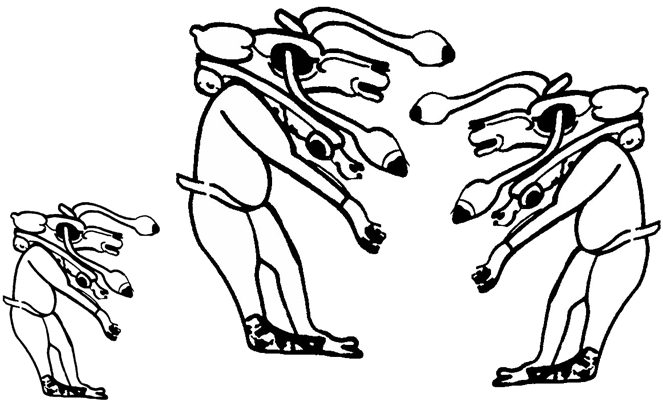
Copyleft,
CC, Mitzub'ixi Quq Chi'j, 1996-2099
