方言札という言語的暴力について
Penalty by hanging "Dialect
[punishment] card" in
Modern Japan
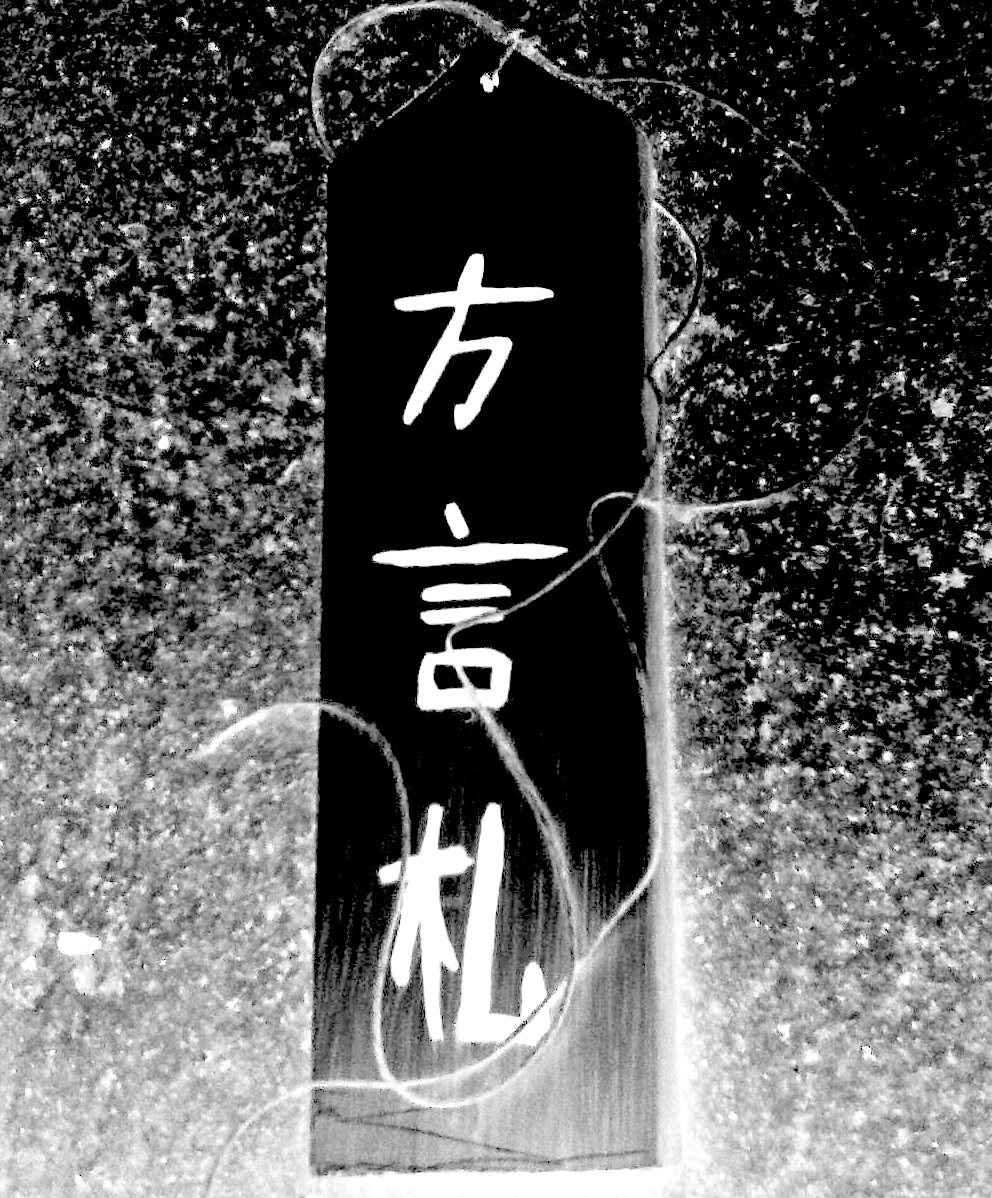
方言札という言語的暴力について
Penalty by hanging "Dialect
[punishment] card" in
Modern Japan
A dialect card (Japanese: 方言札, Hepburn: hōgen fuda) was a system of punishment used in Japanese regional schools in the post-Meiji period to promote standard speech. It was modelled after similar policies in Europe, particularly the French Vergonha or the Welsh Not.
日本語を強要するために学校で用いられた「方言札」は方言の禁止ではなく異なった言語[だと
認識した上でそれ]を話すことをバイリンガルの子どもに求めたことなのでターゲットになったのは方言ではなく[発見可能な]異なる言語体系だという
#強制言語使用 と #人権侵害
方言札(異言語排除私刑札)はすべての言語教育者が 戒めなければならない歴史の教訓。授業の開始前の倫理的不正の歴史的暗部。知らない教師こそ恥じるべき!!! https://bit.ly/3dyyt3W
「第 13 条 【歴史、言語、口承伝統など】 1. 先住民は、自らの歴史、言語、口承伝統、哲学、表記方法および文学を再活性化し、使用し、発展させ、そして未来の世代に伝達する権利を有し、なら びに独自の共同体名、地名、そして人名を選定しかつ保持する権利を有する。 2. 国家は、この権利が保護されることを確保するために、必要な場合には通訳の提供または他の適切な手段によって、政治的、法的、行政的な手続きにおい て、先住民が理解できかつ理解され得ることを確保するために、効果的措置をとる。(※原語の“human remains”は、遺髪など、骨以外の遺体全体を含む概念である。 )」「先住民の諸権利の国連宣言」
「第 14 条 【教育の権利】 1. 先住民は、自らの文化的な教育法および学習法に適した方法で、独自の言語で教育を提供する教育制度および施設を設立し、管理する権利を有する。 2. 先住民である個人、特に子どもは、国家によるあらゆる段階と形態の教育 を、差別されずに受ける権利を有する。 3. 国家は、先住民と連携して、その共同体の外に居住する者を含め先住民 である個人、特に子どもが、可能な場合に、独自の文化および言語による教育に対してアクセス(到達もしくは入手し、利用)できるよう、効果的措置をと る。」「先住民の諸権利の国連宣言」
「第 16 条 【メディアに関する権利】 1. 先住民は、独自のメディアを自身の言語で設立し、差別されずにあらゆる形態の非先住民メディアへアクセス(到達もしくは入手し、利用)する権利 を有する。 2. 国家は、国営メディアが先住民の文化的多様性を正当に反映することを確 保するため、 効果的措置をとる。国家は、完全な表現の自由の確保を損なうことなく、民間のメディアが先住民の文化的多様性を十分に反映することを奨 励すべきである。」「先住民の諸権利の国連宣言」
| A dialect card
(Japanese: 方言札, Hepburn: hōgen fuda) was a type of card used in a
punishment system of Japanese regional schools in the post-Meiji period
to promote the Tokyo dialect of Japanese in favor of other Japanese
dialects and other Japonic languages. A student who spoke in dialect
would be forced to wear the card until another student also spoke in
dialect, and then it would pass to the new transgressor; the student
wearing it at the end of the school day receives corporal punishment by
the teachers.[1][2] |
方言札(ほうげんふだ)とは、明治以降の日本の地方学校において、東京
方言を奨励し、他の方言や他の日本語を奨励するために用いられた罰札の一種である。方言を話す生徒は、他の生徒も方言を話すようになるまで強制的にその
カードを付けさせられ、その後、新たな違反者にそのカードが渡る。 |
| Background During the Edo period under the Tokugawa shogunate, most Japanese people could not travel outside of their home domain. As a result, regional Japanese dialects were relatively isolated and became increasingly distinct. After the Meiji Restoration the government, in emulation of the European nation states, sought to create a standard Japanese speech. A Tokyo dialect, specifically that of the upper-class Yamanote area, became the model for Standard Japanese, widely used in schools, publishing, and radio broadcasting. By the early twentieth century, the Ministry of Education and other authorities instituted various policies to reduce or suppress regional differences.[3] |
背景 江戸時代、徳川幕府のもとでは、ほとんどの日本人は藩の外に出ることができなかった。その結果、日本の地方の方言は比較的孤立し、次第に区別されるように なった。明治維新後、政府はヨーロッパの国民国家に倣い、標準語を作ろうとした。東京の方言、特に上流階級の山の手の方言が標準語のモデルとなり、学校、 出版、ラジオ放送などで広く使われるようになった。20世紀初頭までに、文部省をはじめとする当局は、地域差を縮小または抑制するためのさまざまな政策を 実施した[3]。 |
| Implementation The use of hogen fuda was most prominent in the Tōhoku, Kyushu and Ryukyu Islands (including Okinawa) as they are geographically and linguistically most distant from the Tokyo dialect. The issue is most prominent in regard to Ryukyuan languages as there are groups, such as the Kariyushi Club, which advocate the languages to be officially recognised by the Japanese government as a language (and Ryukyu as a nation). In Okinawa, the card was initially voluntarily adopted by Okinawan students at the start of the 20th century, but became mandatory as assimilation policies increased following 1917. |
実装 方言札の使用は、地理的にも言語学的にも東京方言から最も離れている東北、九州、琉球(沖縄を含む)で最も顕著であった。琉球語に関しては、「かりゆしク ラブ」のような、琉球語を言語として(そして琉球を国家として)日本政府に公認することを主張する団体が存在するため、この問題は最も顕著である。沖縄で は、このカードは20世紀初頭に沖縄の学生によって自主的に採用されたが、1917年以降、同化政策が進むにつれて義務化された。 |
| Cultural Interaction In 2024, the Welsh message of 1923 Welsh Women's Peace was translated into Okinawan language from the perspective of the similarities between the Okinawan dialect card and the history of Welsh Not in Wales.[4] The Asahi Shimbun newspaper in Japan claimed that the reconstruction of the Okinawan language can be taken as a reference from the reconstruction of the Welsh language.[5] Japanese musician also created a short film inspired by the similarities between the history of Okinawan dialect card and Welsh Not in Wales.[6] |
文化交流 2024年、沖縄の方言カードとウェールズにおけるウェールズ語の歴史との類似性という観点から、1923年のウェールズ婦人平和のメッセージが沖縄語に 翻訳された[4]。 [4]日本の朝日新聞は、沖縄語の再構築はウェールズ語の再構築を参考にすることができると主張した[5]。日本のミュージシャンも、沖縄方言カードと ウェールズ語ノット・イン・ウェールズの歴史との類似点から着想を得て短編映画を制作した[6]。 |
| Codification Language planning Prestige (sociolinguistics) Usage Symbole, a similar punishment for Breton-speaking students Welsh Not, a similar punishment for Welsh-speaking students |
コード化 言語計画 プレステージ(社会言語学) 用法 Symbole、ブルトン語を話す学生に対する同様の罰 ウェルシュ・ノット(ウェールズ語を話す学生に対する同様の罰 |
| https://en.wikipedia.org/wiki/Dialect_card |
|
| 方言札
(ほうげんふだ)あるいは方言罰札とは、標準語を普及させる手段として、主に学校において、非標準語(地方言語・方言)の使用者に掛けさせた札の
こと。 フランスでは、オック語・プロヴァンス語・ブルトン語などの地方言語をフランス標準語に対する方言とし、方言を話した生徒に方言札を掛けさせて、見せしめ にするということが行われた[1]。またイギリスのウェールズでも、同様の例としてWelsh Notがあった [2]。 フランスの方言札制度は日本にも取り入れられ、特に日本本土との言語差が大きい沖縄県の教育現場で熱心に行われた。沖縄県での方言札の実態は、2001年 4月1日放送のNHK「日本のことば」の沖縄県特集でも紹介された。それによると、方言札はカマボコ板くらいの木札に紐を通したもので、学校で方言を話す と札を首に掛けなければならず、外すには他の生徒が方言を話すのを発見するしかなかった。しかし、方言札制度に反発する生徒によって却って校内での方言が 盛んになった例もあり、1917年(大正6年)に「方言取締令」を出した沖縄県立第一中学校長の山口沢之助をもじって「大和口 札取る毎に思うかな 方言の札はやめ沢之助」という反発歌が校門に貼られた逸話がある[3]。竹富島の喜宝院蒐集館では、竹富小学校で使用されていた方言札が展示されている。 [4] 沖縄県のほかに東北地方[3]や鹿児島県[5]でも同様の標準語教育が行われた。 日本が委任統治していたパラオの学校でも日本語の使用が強制される場面があり、校内でパラオ語を話した生徒に「私はパラオ語を話しました」と書いた札を首 から下げさせる日本人教員もいたという[6]。 |
Las
«etiquetas de dialecto» (hōgenfuda) o «etiquetas de castigo por
dialecto» eran etiquetas que se les colocaban, principalmente en las
escuelas y como medida para promover el uso del idioma estándar, a
quienes hablaban lenguas no estándar (lenguas regionales o dialectos). En Francia, se consideraban dialectos —frente al francés estándar— las lenguas regionales como el occitano, el provenzal y el bretón, y se solía obligar a los alumnos que hablaban estos dialectos a llevar una «etiqueta de dialecto» a modo de ejemplo para los demás [1]. Asimismo, en Gales, Reino Unido, existía un ejemplo similar conocido como «Welsh Not» [2]. El sistema francés de las «etiquetas de dialecto» se adoptó también en Japón y se aplicó con especial celo en el ámbito educativo de la prefectura de Okinawa, donde las diferencias lingüísticas con respecto al Japón continental son muy marcadas. La realidad de las etiquetas de dialecto en la prefectura de Okinawa se presentó en el especial sobre Okinawa del programa «La lengua de Japón» de la NHK, transmitido el 1 de abril de 2001. Según el programa, las etiquetas de dialecto consistían en una tablilla de madera del tamaño de una tabla de kamaboko a la que se le pasaba un cordón; si un alumno hablaba en dialecto en la escuela, debía colgarse la etiqueta al cuello, y la única forma de quitársela era descubrir a otro alumno hablando en dialecto. Sin embargo, también hubo casos en los que, precisamente por la reacción de los alumnos en contra del sistema de las placas de dialecto, el uso del dialecto se hizo aún más frecuente dentro de la escuela. Existe una anécdota en la que se pegó en la puerta de la escuela una canción de protesta que decía: «Cada vez que quitas una placa de dialecto, ¿piensas en el dialecto? Deja de usar las placas de dialecto, Sawanosuke», en referencia al director de la Primera Escuela Secundaria de la Prefectura de Okinawa, Yamaguchi Sawanosuke, quien había promulgado el «Decreto de Control del Dialecto» en 1917 (año 6 de la era Taishō) [3]. En el Museo de Colecciones Kihoin de la isla de Taketomi se exhiben las etiquetas de dialecto que se utilizaban en la Escuela Primaria de Taketomi. [4] Además de en la prefectura de Okinawa, también se llevó a cabo una educación similar basada en la lengua estándar en la región de Tōhoku [3] y en la prefectura de Kagoshima [5]. En las escuelas de Palau, que se encontraba bajo el mandato de Japón, también hubo casos en los que se obligaba a usar el japonés; se dice que incluso hubo maestros japoneses que obligaban a los alumnos que hablaban palauano dentro de la escuela a llevar colgada del cuello una placa en la que se leía: «Hablé palauano» [6]. |
| https://x.gd/zJp11 |
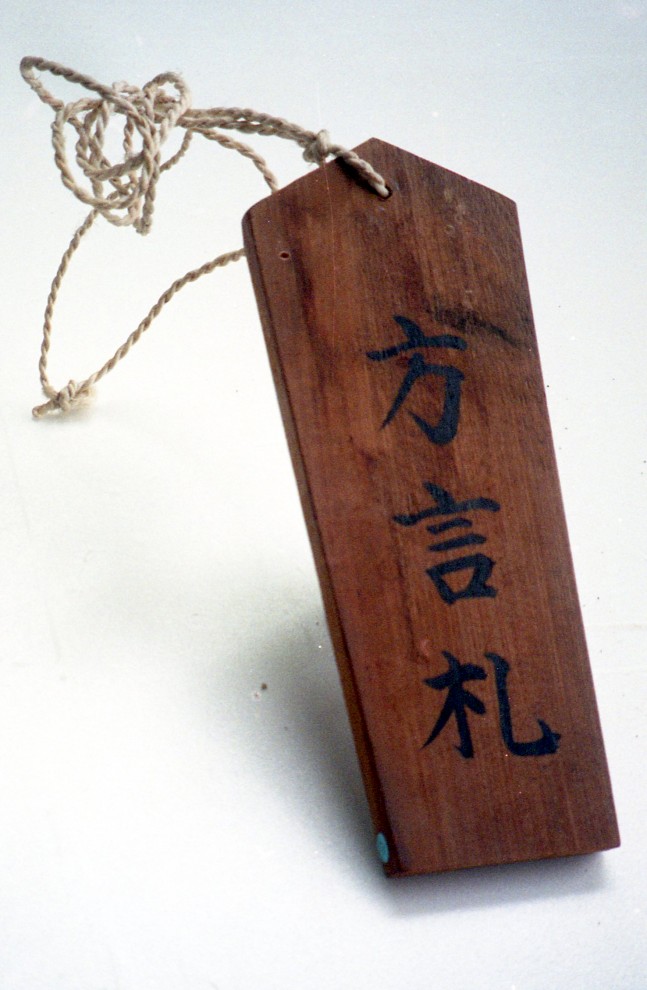
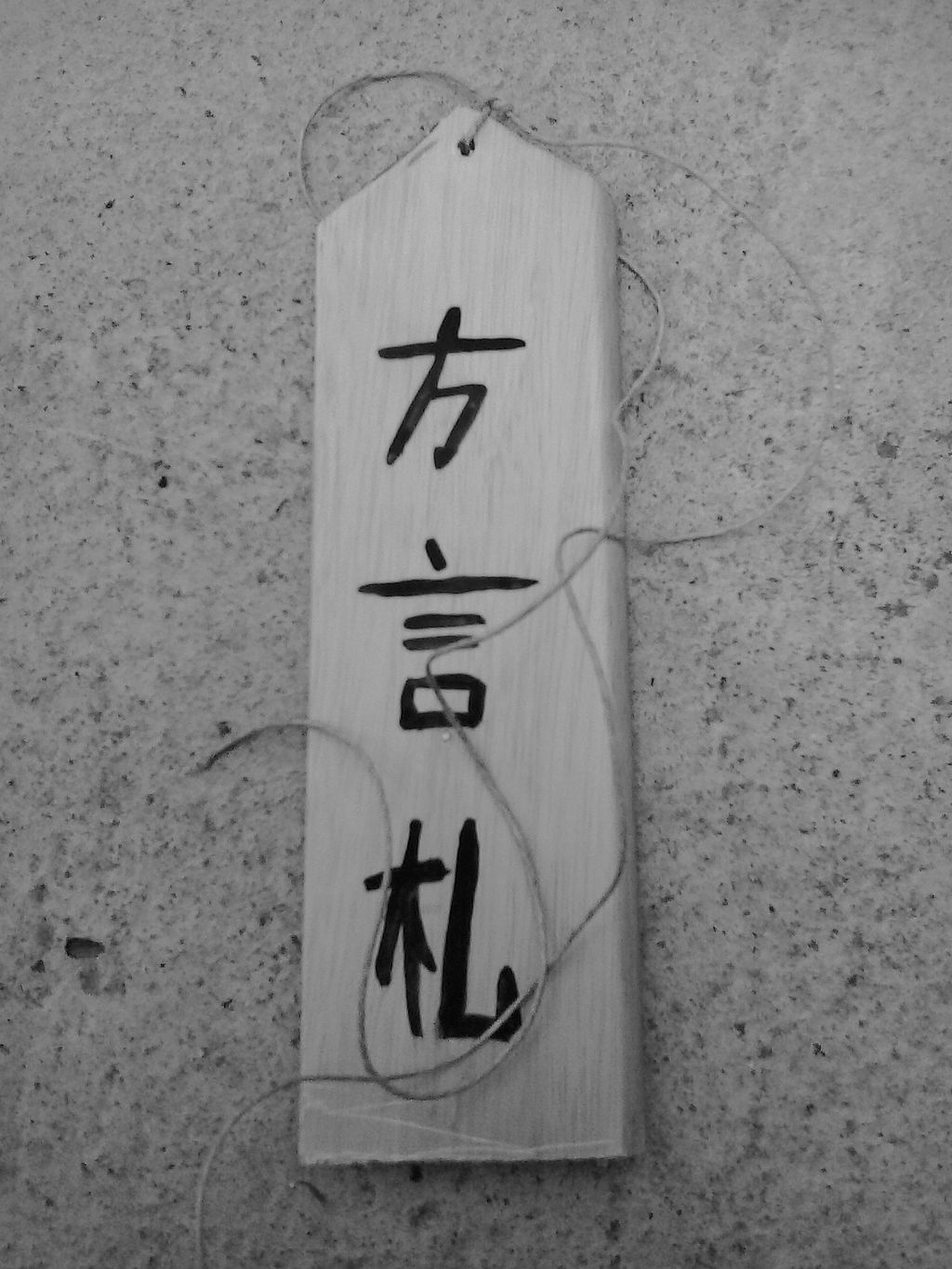
竹富島喜宝院蒐集館所蔵の「方言札」
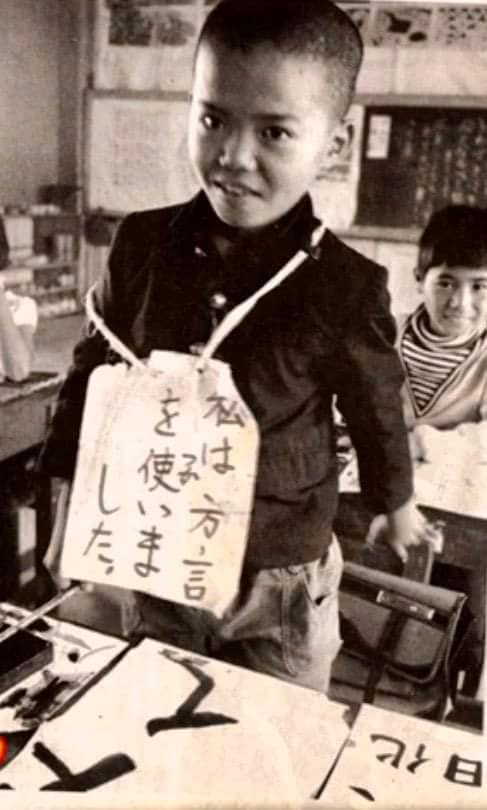
This photo of a Ryukyuan (native Okinawan)
child forced to wear a sign reading “I spoke in dialect” because he
spoke Okinawan…Such punishments were a common tactic Japan used to
eliminate native languages from the Okinawan islands and replace them
with national Japanese language - Japan Daily.
リンク
文献
その他の情報
Copyleft, CC, Mitzub'ixi Quq Chi'j, 1996-2099
++
Copyleft,
CC, Mitzub'ixi Quq Chi'j, 1996-2099
