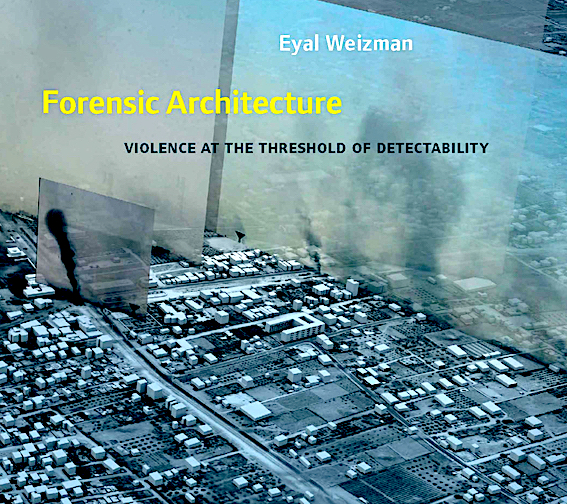
フォレンジック・アーキテクチャー
(法医学的/法廷的/法解析的建築術)
Forensic Architecture
☆Forensic Architecture(法医学的/法廷的/法解析的建築)
フォ レンジック・アーキテクチャー[Forensic Architecture] は、ロンドン大学ゴールドスミス校を拠点とする学際的研究グループである。建築技術とテクノロジーを用いて、世界中の国家による暴力や人権侵害の事例を調 査する。このグループは建築家エイアル・ワイズマンが率いている[1]。彼はフォレン ジック・アーキテクチャーでの活動により、2021年にピーボディ賞 を受賞した。この機関は新たな証拠収集技術を開発し、国家暴力の影響を受けたコミュニティと共に、あるいはその代理として、高度な建築・メディア研究 [2]を実施して いる。国際検察機関、人権団体、政治・環境正義団体との連携も日常的に行っている[3]。調査チームは建築家、学者、芸術家、映像作家、ソフトウェア開発 者、調査報道記者、考古学者、弁護士、科学者など多分野の専門家で構成される。市民社会団体に代わって国家や企業による人権侵害疑惑を調査する[4]。同 団体は先進的な建築・メディア技術を用いて武力紛争や環境破壊を調査し、新メディア、リモートセンシング、物質分析、証言など多様な証拠源を相互参照する [5]。[6]「フォレンジック・アーキテクチャー」という用語は、ロンドン大学ゴールドスミス校の建築研究センターで発展した学術分野および新興実践分 野を指すこともある。これは建築物や都市環境、それらのメディア表現に関連する建築的証拠の生成と提示に関するものである。[2]
「検
索エンジンに直接働きかけることで、そのアルゴリズムやカテゴリーは、それらが現在の文化をどのように形成しているかを発見する手段となる。10
こうした取り組みの効果は通常、直接的なものではないが、社会のプロセスや、それを認識する手段が、デジタルプラットフォームによって促進されるのと同様
に、誘導され、再編成されているという事実を社会が認識する能力を高めていく」(Fuller and Weizman 2021)
| Forensic
Architecture is a multidisciplinary research group based at
Goldsmiths, University of London that uses architectural techniques and
technologies to investigate cases of state violence and violations of
human rights around the world. The group is led by architect Eyal
Weizman.[1] He received a Peabody Award in 2021 for his work with
Forensic Architecture. The agency develops new evidentiary techniques and undertakes advanced architectural and media research[2] with and on behalf of communities affected by state violence, and routinely works in partnership with international prosecutors, human rights organisations and political and environmental justice groups.[3] It consists of an interdisciplinary team of investigators including architects, scholars, artists, filmmakers, software developers, investigative journalists, archaeologists, lawyers, and scientists. It investigates alleged human rights violations by states or corporations on behalf of civil society groups.[4] The group uses advanced architectural and media techniques to investigate armed conflicts and environmental destruction, as well as to cross-reference a variety of evidence sources, such as new media, remote sensing, material analysis, and witness testimony.[5][6] The term forensic architecture also refers to an academic field and an emergent field of practice developed at the Centre for Research Architecture, at Goldsmiths, University of London, concerning the production and presentation of architectural evidence, relating to buildings and urban environments and their media representations.[2] |
フォレンジック・アーキテクチャー[Forensic
Architecture]は、ロンドン大学ゴールドスミス校を拠点とする学際的研究グループである。建築技術とテクノロジーを用いて、世界中の
国家による暴力や人権侵害の事例を調査する。このグループは建築家エイアル・ワイズマンが率いている[1]。彼はフォレンジック・アーキテクチャーでの活
動により、2021年にピーボディ賞を受賞した。 この機関は新たな証拠収集技術を開発し、国家暴力の影響を受けたコミュニティと共に、あるいはその代理として、高度な建築・メディア研究[2]を実施して いる。国際検察機関、人権団体、政治・環境正義団体との連携も日常的に行っている[3]。調査チームは建築家、学者、芸術家、映像作家、ソフトウェア開発 者、調査報道記者、考古学者、弁護士、科学者など多分野の専門家で構成される。市民社会団体に代わって国家や企業による人権侵害疑惑を調査する[4]。同 団体は先進的な建築・メディア技術を用いて武力紛争や環境破壊を調査し、新メディア、リモートセンシング、物質分析、証言など多様な証拠源を相互参照する [5]。[6] 「フォレンジック・アーキテクチャー」という用語は、ロンドン大学ゴールドスミス校の建築研究センターで発展した学術分野および新興実践分野を指すことも ある。これは建築物や都市環境、それらのメディア表現に関連する建築的証拠の生成と提示に関するものである。[2] |
History Eyal Weizman, the founder of Forensic Architecture, in 2012 Forensic Architecture was formed in 2010 as a research project within the Centre for Research Architecture at Goldsmiths, University of London.[7] The project developed as a response to several converging phenomena, such as the urbanisation of warfare, the erosion of trust in evidence in relation to state crimes and human rights violations, the emergence and proliferation of open source media (or 'image flotsam'), the increased use of smartphone footage in documenting human rights violations in urban conflict, and the need for civil society to have its own means of evidence production for application in law, politics and advocacy.[8] The first project undertaken by Forensic Architecture was an investigation into the killing of Bassem Abu Rahma in Bil'in, for human rights lawyer and activist Michael Sfard, which was eventually presented to the Supreme Court of Israel.[9][10] In 2011, Forensic Architecture was awarded funding for four years by the European Research Council.[11] Also that year, a team within Forensic Architecture began to conduct investigations into the policies of European national and international authorities in relation to migration across the Mediterranean. That team, called Forensic Oceanography,[12] published its first report in 2012, investigating of the deaths of seventy-three migrants who were left drifting for two weeks within NATO's maritime surveillance area.[13] In 2012, Forensic Architecture presented a report to a meeting of states party to the UN Convention on Certain Conventional Weapons on the use of airburst white phosphorus munitions in urban environments, in regard to the Israeli attacks on Gaza in December 2008 and January 2009, known as 'Operation Cast Lead'. The report eventually led Israel to admit for the first time the use of such munitions, and later to declare that the IDF would stop using white phosphorus munitions in populated areas.[14] Also that year, the agency conducted an investigation with SITU Studio and the Bureau of Investigative Journalism titled 'Where the Drones Strike', on behalf of the UN Special Rapporteur on Counter Terrorism and Human Rights, Ben Emmerson.[15] In 2013, the project was awarded a second European Research Council grant[16] to develop a multimedia data-aggregation and -visualisation platform called Pattrn. Pattrn enables its users to anonymously collate and share first-hand reports of events 'on the ground' and to make sense of information by combining and visualising different forms of media and information.[17] The tool was employed by Forensic Architecture in their Gaza Platform, an interactive map of attacks by Israeli forces on Gaza between 8 July and 26 August 2014, developed in partnership with Amnesty International,[18] as well as by organisations including as ACLED. In 2015, in partnership with Amnesty International, Forensic Architecture collected and analysed mobile phone footage of hundreds of explosions in the city of Rafah, Gaza, during the city's 'Black Friday' of 1 August 2014. By analysing the shape and movement of bomb clouds captured in mobile phone footage, Forensic Architecture's researchers located and mapped hundreds of Israeli strikes on the city.[19] The investigation exposed the Israeli military directive known as the Hannibal Directive, leading to its discontinuation.[20] In 2016, Forensic Architecture was awarded further funding by the European Research Council.[21] That year, again in partnership with Amnesty International, Forensic Architecture conducted an investigation into Syria's Saydnaya Prison, interviewing surviving detainees who had been blindfolded or kept in darkness for most of the years they had spent in the space, and reconstructing the dimensions of the prison through a process of 'ear witnessing' and digital modelling.[22] In 2017, Forensic Architecture produced a video investigation into the presence of a member of the German intelligence services at the scene of the 2006 killing by neo-Nazis of a Turkish internet cafe owner. Forensic Architecture conducted physical experiments which cast doubt on the testimony of the secret service agent.[5] The results of their video and written reports were ultimately referenced in both federal and state parliamentary inquiries in Germany, as well as the trial of the remaining NSU members in Munich.[23] In April 2018, it was announced that Forensic Architecture were one of four nominees for the 2018 Turner Prize for their work relating to the killing of Yacoub Abu Al-Qia'an in Umm al-Hiran, but ultimately they lost out to iPhone artist Charlotte Prodger.[24][25][26][27] In May 2018, in partnership with Bellingcat and Venezuelan journalists, Forensic Architecture collected, timed, and located nearly 70 pieces of evidence related to the El Junquito raid, including videos, photographs, leaked audio of police radio communications and official statements, asking for more material to determine if rebel police officer Óscar Pérez and his companions were victims of extrajudicial killings.[28][29][30][31] Fellows and PhD students who have been part of the Forensic Architecture programme include Susan Schuppli, John Palmesino, Lorenzo Pezzani and Charles Heller (co-founders of the Forensic Oceanography project), Lawrence Abu Hamdan,[32] Anselm Franke,[33] Ayesha Hameed, Thomas Keenan, Paulo Tavares, Francesco Sebregondi, Maayan Amir, Ariel Caine and Stefanos Levidis. In 2019 as part of the Whitney Biennial, the group created a video piece critical of Whitney trustee member Warren Kanders. The video detailed Kanders' involvement in a company that produces tear gas used against nonviolent democratic protestors across the world.[34] Kanders resigned from his position as Whitney board member shortly after the exhibition opened.[35] In October 2024, after monitoring and analysing Israel's war conduct in Gaza for more than a year, the group published a map detailing Israel's campaign in Gaza titled "A Cartography of Genocide",[36] accompanied by an 827-page text report that concludes that "Israel's military campaign in Gaza is organised, systematic, and intended to destroy conditions of life and life-sustaining infrastructure".[37] In 2024 Forensic Architecture received a Right Livelihood Award for its lead in the development of new methodologies that combine technology with human rights advocacy.[38] |
歴史 フォレンジック・アーキテクチャー創設者、エイアル・ワイズマン(2012年) フォレンジック・アーキテクチャーは2010年、ロンドン大学ゴールドスミス校の建築研究センター内における研究プロジェクトとして発足した。[7] このプロジェクトは、戦争の都市化、国家犯罪や人権侵害に関する証拠への信頼の喪失、オープンソースメディア(いわゆる「画像漂流物」)の出現と拡散、都 市紛争における人権侵害の記録にスマートフォン映像がますます使われるようになったこと、そして市民社会が法・政治・アドボカシーに応用できる独自の証拠 作成手段を持つ必要性といった、いくつかの現象が重なったことへの対応として発展した。[8] フォレンジック・アーキテクチャーが最初に着手したプロジェクトは、人権弁護士兼活動家マイケル・スファードのために、ビルインにおけるバセム・アブ・ ラーマ殺害事件を調査するものであった。この調査結果は最終的にイスラエル最高裁判所に提出された。[9][10] 2011年、フォレンジック・アーキテクチャーは欧州研究評議会から4年間の資金援助を受けた。[11] 同年、フォレンジック・アーキテクチャー内のチームが地中海横断移民に関する欧州各国及び国際機関の政策調査を開始した。フォレンジック・オーシャノグラ フィー[12]と名付けられたこのチームは2012年、NATO海上監視区域内で2週間漂流した末に死亡した73名の移民に関する初の報告書を発表した。 [13] 2012年、フォレンジック・アーキテクチャーは国連特定通常兵器使用禁止条約締約国会議に対し、2008年12月~2009年1月のイスラエルによるガ ザ攻撃(通称「鋳造の鉛作戦」)における都市環境での空中爆発型白リン弾使用に関する報告書を提出した。この報告書は最終的に、イスラエルが初めて同弾薬 の使用を認める結果をもたらし、後にイスラエル国防軍(IDF)が人口密集地域での白リン弾使用を停止すると宣言するに至った[14]。また同年、同機関 はSITU Studioおよび調査報道局(BIJ)と共同で、国連テロ対策・人権特別報告官ベン・エマーソンに代わって『ドローン攻撃の現場』と題する調査を実施し た。[15] 2013年、同プロジェクトは欧州研究評議会から2度目の助成金[16]を獲得し、マルチメディアデータ集約・可視化プラットフォーム「パターン」を開発 した。パターンの利用者は匿名で現地の直接報告を収集・共有でき、異なるメディアや情報を統合・可視化することで情報の理解を深められる。[17] このツールは、フォレンジック・アーキテクチャーがアムネスティ・インターナショナル[18]と共同開発した「ガザ・プラットフォーム」で採用された。こ れは2014年7月8日から8月26日にかけてイスラエル軍がガザ地区で実施した攻撃をインタラクティブマップ化したものである。またACLEDなどの組 織でも使用されている。 2015年、フォレンジック・アーキテクチャーはアムネスティ・インターナショナルと共同で、2014年8月1日のガザ・ラファ市における「ブラックフラ イデー」と呼ばれる日に発生した数百件の爆発の携帯電話映像を収集・分析した。携帯電話映像に捉えられた爆風雲の形状と動きを分析することで、フォレン ジック・アーキテクチャーの研究者は同市に対する数百件のイスラエル軍攻撃の位置を特定し地図化した[19]。この調査により「ハンニバル指令」として知 られるイスラエル軍の指令が暴露され、その廃止につながった[20]。 2016年、フォレンジック・アーキテクチャーは欧州研究評議会から追加資金を獲得した[21]。同年、再びアムネスティ・インターナショナルと提携し、 シリアのサイドゥナヤ刑務所に関する調査を実施。同施設で過ごした期間の大半を目隠しされたり暗闇に閉じ込められたりした生存者被拘禁者への聞き取りを行 い、「耳の証言」とデジタルモデリングの手法で刑務所の構造を再構築した。[22] 2017年、フォレンジック・アーキテクチャーは、2006年にネオナチによってトルコ人インターネットカフェ経営者が殺害された現場にドイツ情報機関員 が立ち会っていた事実を検証する映像調査を制作した。同団体は物理実験を実施し、この諜報員の発言に疑念を投げかけた。[5] 彼らのビデオおよび報告書は、最終的にはドイツ連邦議会および州議会の調査、ならびにミュンヘンで行われた残りの NSU メンバーたちの裁判で参考資料として採用された。[23] 2018年4月、フォレンジック・アーキテクチャーは、ウム・アル・ヒランでのヤクブ・アブ・アル・キアアン殺害事件に関する作品で、2018年ターナー 賞の4人の候補者の1人に選ばれたが、最終的にはiPhoneアーティストのシャーロット・プロジャーに敗れた。[24][25][26][27] 2018年5月、ベリングキャットおよびベネズエラのジャーナリストと提携し、フォレンジック・アーキテクチャーは、エル・ジュンキート襲撃に関連する 70点近くの証拠(ビデオ、写真、警察無線通信の漏洩音声、公式声明など)を収集、時系列整理、位置特定し、反乱警察官オスカル・ペレスとその仲間たちが 超法規的殺害の犠牲者であったかどうかを判断するためのさらなる資料を要請した。[28][29][30] [31] フォレンジック・アーキテクチャー・プログラムに参加したフェローおよび博士課程学生には、スーザン・シュプリ、ジョン・パルメシーノ、ロレンツォ・ペッ ツァーニ、チャールズ・ヘラー(フォレンジック・オーシャノグラフィー・プロジェクト共同創設者)、ローレンス・アブ・ハムダン[32]、アンセルムス・ フランケ、 [33] アイシャ・ハミード、トーマス・キーナン、パウロ・タヴァレス、フランチェスコ・セブレゴンディ、マヤン・アミール、アリエル・ケイン、ステファノス・レ ヴィディスらが名を連ねている。 2019年、ホイットニー・ビエンナーレの一環として、同グループはホイットニー理事ウォーレン・カンダースを批判する映像作品を制作した。この映像は、 カンダースが世界中の非暴力民主主義抗議者に対して使用される催涙ガスを製造する企業に関与している実態を詳細に描いたものである[34]。カンダースは 展覧会開幕直後にホイットニー理事の職を辞任した[35]。 2024年10月、イスラエルのガザ戦争行動を1年以上監視・分析した後、同グループは「ジェノサイドの地図」と題したガザ作戦の詳細地図[36]を公表 した。これには827ページに及ぶ報告書が添付され、「イスラエルのガザ軍事作戦は組織的・体系的に行われ、生活基盤と生命維持インフラの破壊を意図して いる」と結論づけている。[37] 2024年、フォレンジック・アーキテクチャーは、技術と人権擁護を融合させる新たな手法の開発における主導的役割が評価され、ライト・リヴィリフッド賞 を受賞した。[38] |
| Methods Forensic Architecture describes forensic work as operating across three spaces: the field, the laboratory, and the forum.[39] Lacking the privileges of the state's forensic process—access to crime scenes, resources, and the power to set the rules of evidence—the agency employs 'counter-forensics', the process of turning the 'forensic gaze' onto the actions of the state.[22] This includes operating in multiple 'forums', or public spaces, engaging not only with parliamentary and juridical processes but also museums, art galleries, citizens' tribunals, and the media.[40] The ways in which the investigations by Forensic Architecture oscillate between judicial proof and art work is subject of an ongoing theoretical debate on evidence, aesthetics, and third-generation institutional critique.[41] FA begins each case by conducting research from a range of sources, including: site visits, lidar scanning, photogrammetry and ground-penetrating radar, as well as the use of digital models to locate and synchronise source materials in space and time. When citizens, journalists or participants in conflict record events using cameras or smartphones, they also inadvertently capture vast amounts of spatial information about the immediate environment. When a site is recorded from more than one angle the intersection provides information about depth and volume. The resultant architectural models will be the basis for locating and animating the movement of each camera/video, as well as the movement of protagonists in space.[42] The Architecture of Memory: FA engages witnesses using models as memory aids. The memory of witnesses/victims to violent events is often obscured by the experience of extreme violence, trauma and the general confusion of war.[43] The entanglement of mediation and embodiment brings the witness back to the space and time of the incident, helping the recollection of previously forgotten details. |
方法論 フォレンジック・アーキテクチャーは、法科学調査を三つの領域——現場、実験室、そしてフォーラム——で展開するものと定義する[39]。国家の法科学プ ロセスが享受する特権——犯罪現場へのアクセス、資源、証拠規則設定権——を欠く同機関は、「対抗的法科学」を採用する。これは「法科学的な視線」を国家 の行動に向け直すプロセスである。[22] これには複数の「フォーラム」、すなわち公共空間での活動が含まれ、議会や司法手続きだけでなく、博物館、美術館、市民法廷、メディアとも関わる。 [40] 法科学建築による調査が司法的証拠と芸術作品の狭間で揺れ動く様相は、証拠、美学、第三世代の制度批判をめぐる継続的な理論的議論の対象となっている。 [41] FAは各案件において、現地調査、ライダー測量、写真測量、地中レーダーに加え、デジタルモデルを用いた資料の空間的・時間的定位と同期化など、多様な情 報源からの調査を開始する。 市民やジャーナリスト、紛争参加者がカメラやスマートフォンで事件を記録する際、彼らは意図せず周囲の空間に関する膨大な情報も捉えている。同一現場を複 数の角度から記録すれば、それらの交差が奥行きや体積に関する情報を提供する。こうして生成された建築モデルは、各カメラ/映像の移動経路や空間内におけ る主役たちの動きを特定し、アニメーション化する基盤となる。[42] 記憶の建築:FAは記憶補助としてモデルを用い証言者を関与させる。暴力事件の証言者/被害者の記憶は、極度の暴力体験、トラウマ、戦争の混乱によってし ばしば曖昧になる。[43] 媒介と身体化の絡み合いが証言者を事件の時間空間へ引き戻し、忘れ去られていた詳細の想起を助ける。 |
| Exhibitions Forensis, Haus der Kulturen der Welt, Berlin, 2014; Fundación Proa, Buenos Aires, 2015.[citation needed] Movie "77sqm_9:26min", documenta 14, Kassel, 2016.[citation needed] Forensic Architecture: Towards an Investigative Aesthetics, Barcelona Museum of Contemporary Art, 2017; University Museum of Contemporary Art, Mexico City, 2017.[44] Its first major international exhibition. Counter Investigations: Forensic Architecture, Institute of Contemporary Arts, London, March–May 2018.[45] A selection of their recent projects.[46] London Design Biennale, September 2018.[47] Whitney Biennial (New York City), July 2019.[48] Video Essay "Cloud studies" for Critical Zones. Observatories for Earthly Politics, ZKM Center for Art and Media Karlsruhe, Karlsruhe, 2020.[49][50] Cloud Studies, Whitworth Art Gallery, Manchester, 2021[51][52][53] |
展覧会 フォレンシス、ハウス・デア・クルトゥーレン・デア・ヴェルト、ベルリン、2014年;フンダシオン・プロア、ブエノスアイレス、2015年。[出典が必 要] 映画「77平方メートル_9分26秒」、ドクメンタ14、カッセル、2016年。[出典が必要] 法医学建築:調査美学へ向けて、バルセロナ現代美術館、2017年;メキシコシティ現代美術館、2017年。[44] 同団体初の主要国際展。 カウンター・インベスティゲーションズ:フォレンジック・アーキテクチャー、ロンドン現代美術研究所、2018年3月~5月。[45] 彼らの近年のプロジェクトの選抜展示。[46] ロンドン・デザイン・ビエンナーレ、2018年9月。[47] ホイットニー・ビエンナーレ(ニューヨーク市)、2019年7月。[48] ビデオエッセイ「雲の研究」『クリティカル・ゾーンズ:地球政治のための観測所』カールスルーエ芸術メディアセンター(ZKM)、カールスルーエ、 2020年。[49][50] 『雲の研究』、ウィットワース美術館、マンチェスター、2021年。[51][52][53] |
| References 01. Mackey, Robert (24 November 2014). "Video Analysis of Fatal West Bank Shooting Said to Implicate Israeli Officer". The New York Times. ISSN 0362-4331. "MA in Research Architecture". Goldsmiths, University of London. Retrieved 9 May 2018. "The Rise of Forensic Architecture". Architect Magazine. Retrieved 9 May 2018. Hodges, Michael (25 January 2016). "Forensic Architecture is unravelling conflict from Gaza to Guatemala". Wired. Retrieved 14 April 2018. Oltermann, Philip (7 April 2017). "Architects seek to debunk spy's testimony in neo-Nazi murder trial". The Guardian. Retrieved 9 May 2018. "Kite-flying Yazidis trained to film genocide sites". The Times. Retrieved 9 May 2018. "Forensic Architecture: using technology to expose injustice". Architects' Journal. 26 April 2018. Retrieved 9 May 2018. Kimmelman, Michael (6 April 2018). "Forensics Helps Widen Architecture's Mission". The New York Times. Retrieved 9 May 2018. "Forensic Architecture is unravelling conflict from Gaza to Guatemala". Wired. Retrieved 9 May 2018. 10 "Escaping justice: Who killed Bassem Abu Rahme?". +972 Magazine. 12 September 2013. Retrieved 9 May 2018. "FORENSIC ARCHITECTURE: The Space of Law in War". European Research Council. Retrieved 21 May 2018. "Digital forensics are being used to demand justice in the Mediterranean". Alphr. Archived from the original on 21 May 2018. Retrieved 9 May 2018. "The Left To Die Boat". BBC. Retrieved 9 May 2018. "Israel 'to stop using white phosphorus shells'". BBC News. 26 April 2013. Retrieved 9 May 2018. "Where the Drones Strike". The Bureau of Investigative Journalism. Retrieved 9 May 2018. "Turning frontier research into innovation: ERC funds 33 new projects" (PDF). European Research Council. Retrieved 9 May 2018. "ARCHITECTS ON THE CRIME SCENE". European Research Council. Retrieved 9 May 2018. "The Gaza Platform: seeking justice for war crimes". The Independent. 9 July 2015. Retrieved 9 May 2018. Moore, Rowan (25 February 2018). "Forensic Architecture: the detail behind the devilry". The Guardian. Retrieved 14 April 2018. 20. Kershner, Isabel (28 June 2016). "Israeli Military Revokes Use of Maximum Force to Foil Captures". The New York Times. Retrieved 22 May 2018. "Forensic Architecture: The Media Environments of Conflict". European Research Council. Retrieved 21 May 2018. Kimmelman, Michael (6 April 2018). "Forensics Helps Widen Architecture's Mission". The New York Times. ISSN 0362-4331. "A German Intelligence Agent Was at the Scene of a Neo-Nazi Murder. He Can't Explain Why". The Intercept. 18 October 2017. Retrieved 17 May 2018. Brown, Mark (26 April 2018). "Turner prize shortlist pits research agency against film-makers". The Guardian. Retrieved 25 May 2018. 'A gunshot, a speech, a whisper': The art detectives exposing Middle East crimes, 31 December 2018, by Joseph Fahim, Middle East Eye Searle, Adrian (24 September 2018). "Turner prize 2018 review – no painting or sculpture, but the best lineup for years". The Guardian. ISSN 0261-3077. Retrieved 5 December 2018. "iPhone artist Prodger wins Turner Prize". BBC News. 4 December 2018. Retrieved 5 December 2018. ""We are going to surrender! Stop shooting!": Reconstructing Óscar Pérez's Last Hours". Bellingcat Investigation Team. 13 May 2018. Retrieved 27 May 2018. "Was Óscar Pérez Murdered? You Could Help Us Find Out". The New York Times. 13 May 2018. Retrieved 27 May 2018. 30. ""¡Nos vamos a entregar! ¡No sigan disparando!" RECONSTRUYENDO LAS ÚLTIMAS HORAS DE ÓSCAR PÉREZ" ["We're going to surrender! Stop shooting!" Reconstructing the last hours of Oscar Perez] (in Spanish). El Pitazo. Retrieved 27 May 2018.[permanent dead link] "Investigación revela lo ocurrido durante las últimas horas de Óscar Pérez" (in Spanish). Efecto Cocuyo. 13 May 2018. Archived from the original on 21 December 2018. Retrieved 27 May 2018. "Lawrence Abu Hamdan: Visualisations of echoic memories from a notorious prison..." ArtReview. Retrieved 17 May 2018. "Anselm Franke". Synapse: The International Curators Network. Archived from the original on 2 May 2018. Retrieved 10 May 2018. "Forensic Architecture Becomes Eighth Exhibitor to Withdraw from Whitney Biennial". www.artforum.com. 20 July 2019. Retrieved 20 May 2020. Harris, Elizabeth A.; Pogrebin, Robin (25 July 2019). "Warren Kanders Quits Whitney Board After Tear Gas Protests". The New York Times. ISSN 0362-4331. Retrieved 20 May 2020. "A Cartography of Genocide - an interactive map". Forensic Architecture. 7 October 2024. Retrieved 27 October 2024. "A Cartography of Genocide: Israel's Conduct in Gaza Since October 2023". Forensic Architecture. 7 October 2024. Archived from the original on 28 October 2024. Retrieved 27 October 2024. "“For pioneering digital forensic methods to ensure justice and accountability for victims and survivors of human and environmental rights violations.”" rightlivelihood.org, retrieved 6 October 2024 Franke, Anselm; Weizman, Eyal (March 2014). Forensis: The Architecture of Public Truth (PDF). Berlin: Sternberg Press. p. 9. ISBN 9783956790119. 40. "The Architects Reconstructing Crime Scenes No One Else Can". Artsy. 9 November 2017. Retrieved 9 May 2018. Stuckey, Lisa (2022). Forensische Verfahren in den zeitgenössischen Künsten: Forensic Architecture und andere Fallanalysen [Forensic Procedures in Contemporary Arts: Forensic Architecture and Other Case Analyses] (in German). Berlin: De Gruyter. doi:10.1515/9783110732887. ISBN 978-3-11-073288-7. S2CID 248680972. Weizman, Eyal (May 2017). Forensic Architecture: Violence at the Threshold of Detectability. New York: Zone Books. ISBN 9781935408864. Felman, Shoshanna; Laub, Dori (1992). Testimony: Crises of Witnessing in Literature, Psychoanalysis, and History. London: Routledge. ISBN 9780415903929. "Forensic Architecture: Towards an Investigative Aesthetics". e-flux. Retrieved 9 May 2018. "Counter Investigations: Forensic Architecture". www.ica.art. Archived from the original on 11 April 2019. Retrieved 22 September 2018. Heathcote, Edwin (6 March 2018). "Forensic Architecture — from rubble and ruins to justice". Financial Times. Retrieved 17 May 2018. Moore, Rowan (25 February 2018). "Forensic Architecture: The Detail Behind The Devilry". Architects' Journal. Retrieved 17 May 2018. "Forensic Architecture's Project at Whitney Biennial Reveals Museum Vice Chair's Company May Be Complicit in War Crimes". Hyperallergic. 13 May 2019. Retrieved 20 May 2020. "Cloud Studies. Critical Zones online exhibition". Critical Zones ZKM. Retrieved 11 March 2021. 50. "Terrestrial University: Cloud Studies". ZKM Karlsruhe. Retrieved 11 March 2021. Bishara, Hakim (18 August 2021). "Pro-Palestinian Artwork by Forensic Architecture Was Censored by University of Manchester". Hyperallergic. Retrieved 13 October 2021. "Two-note solution for furore over Forensic Architecture's Palestinian solidarity statement at the Whitworth". artreview.com. Retrieved 13 October 2021. 53. "Whitworth Gallery in Manchester U-turns on decision to remove pro-Palestine statement after Forensic Architecture threaten to pull work". The Art Newspaper. 18 August 2021. Retrieved 13 October 2021. |
参考文献 01. Mackey, Robert (2014年11月24日). 「致命的な西岸地区射殺事件の映像分析、イスラエル軍将校の関与を示唆」. The New York Times. ISSN 0362-4331. 「研究建築学修士課程」. ロンドン大学ゴールドスミス校. 2018年5月9日閲覧. 「法科学建築の台頭」『アーキテクト・マガジン』2018年5月9日閲覧。 ホッジズ、マイケル(2016年1月25日)「法科学建築が解き明かす紛争——ガザからグアテマラまで」『ワイアード』2018年4月14日閲覧。 オルターマン、フィリップ(2017年4月7日)「 建築家たちがネオナチ殺人裁判でスパイ証言の虚偽を暴こうとしている」。ガーディアン。2018年5月9日閲覧。 「凧揚げで訓練されたヤジディ教徒が虐殺現場を撮影」。タイムズ。2018年5月9日閲覧。 「フォレンジック・アーキテクチャー:技術を用いて不正を暴く」。アーキテクツ・ジャーナル。2018年4月26日。2018年5月9日閲覧。 キンメルマン、マイケル(2018年4月6日)。「法科学が建築の使命を広げる」。ニューヨーク・タイムズ。2018年5月9日閲覧。 「フォレンジック・アーキテクチャーはガザからグアテマラまで紛争の真相を解き明かす」。ワイアード。2018年5月9日閲覧。 10 「正義からの逃亡:バセム・アブ・ラーメを殺したのは誰か?」。+972 マガジン。2013年9月12日。2018年5月9日閲覧。 「フォレンジック・アーキテクチャー:戦争における法の空間」。欧州研究評議会。2018年5月21日閲覧。 「地中海で正義を求めるためにデジタルフォレンジックが活用されている」。Alphr。2018年5月21日時点のオリジナルからアーカイブ。2018年 5月9日閲覧。 「死を待つ船」BBC。2018年5月9日閲覧。 「イスラエル、白リン弾の使用停止へ」BBCニュース。2013年4月26日。2018年5月9日閲覧。 「ドローンが攻撃する場所」調査報道局。2018年5月9日閲覧。 「フロンティア研究をイノベーションへ:ERCが33の新プロジェクトに資金提供」 (PDF). 欧州研究評議会. 2018年5月9日閲覧。 「犯罪現場の建築家たち」. 欧州研究評議会. 2018年5月9日閲覧。 「ガザ・プラットフォーム:戦争犯罪への正義を求める」. インディペンデント. 2015年7月9日. 2018年5月9日閲覧。 ムーア、ローワン(2018年2月25日)。「フォレンジック・アーキテクチャー:悪魔的行為の背後に潜む細部」。ガーディアン。2018年4月14日閲 覧。 20. カーシュナー、イザベル(2016年6月28日)。「イスラエル軍、捕獲阻止のための最大限の武力行使を撤回」。ニューヨーク・タイムズ。2018年5月 22日閲覧。 「フォレンジック・アーキテクチャー:紛争のメディア環境」欧州研究評議会。2018年5月21日閲覧。 キンメルマン、マイケル(2018年4月6日)。「科学捜査が建築の使命を広げる」。ニューヨーク・タイムズ。ISSN 0362-4331。 「ドイツ情報機関員がネオナチ殺人現場に居合わせた。その理由を説明できない」。インターセプト。2017年10月18日。2018年5月17日取得。 ブラウン、マーク(2018年4月26日)。「ターナー賞の最終候補、調査機関と映画製作者が対決」。ガーディアン。2018年5月25日取得。 「銃声、演説、ささやき」:中東の犯罪を暴くアート探偵たち、2018年12月31日、ジョセフ・ファヒム、ミドル・イースト・アイ サール、エイドリアン(2018年9月24日)。「ターナー賞 2018 レビュー - 絵画も彫刻もないが、ここ数年で最高のラインナップ」。ガーディアン。ISSN 0261-3077。2018年12月5日取得。 「iPhoneアーティスト、プロジャーがターナー賞を受賞」。BBCニュース。2018年12月4日。2018年12月5日取得。 「我々は降伏する!撃つのをやめて!」:オスカル・ペレスの最後の数時間を再構築する。ベリングキャット調査チーム。2018年5月13日。2018年5 月27日取得。 「オスカル・ペレスは殺害されたのか?その真相解明に協力してほしい」ニューヨーク・タイムズ紙。2018年5月13日。2018年5月27日取得。 30. 「¡Nos vamos a entregar! ¡No sigan disparando!」 RECONSTRUYENDO LAS ÚLTIMAS HORAS DE ÓSCAR PÉREZ」 [「我々は降伏する!撃つのをやめてくれ!」オスカル・ペレスの最後の数時間を再構築する](スペイン語)。エル・ピタゾ。2018年5月27日取得。 [永久リンク切れ] 「Investigación revela lo ocurrido durante las últimas horas de Óscar Pérez」 [調査により、オスカル・ペレスの最後の数時間に何が起こったかが明らかになる](スペイン語)。エル・ピタゾ。2018年5月27日取得。[永久リンク 切れ] 撃つのやめて!」オスカル・ペレスの最後の数時間を再構築する](スペイン語)。エル・ピタソ。2018年5月27日閲覧。[永久リンク切れ] 「調査が明らかにしたオスカル・ペレスの最後の数時間」(スペイン語)。エフェクト・コクヨ。2018年5月13日。2018年12月21日にオリジナル からアーカイブ。2018年5月27日閲覧。 「ローレンス・アブ・ハムダン:悪名高い刑務所からの反響記憶の可視化...」アートレビュー。2018年5月17日閲覧。 「アンセルムス・フランケ」。シナプス:国際キュレーターネットワーク。2018年5月2日にオリジナルからアーカイブ。2018年5月10日閲覧。 「フォレンジック・アーキテクチャー、ホイットニー・ビエンナーレから撤退する8番目の出展者に」www.artforum.com. 2019年7月20日. 2020年5月20日閲覧。 ハリス、エリザベス・A.;ポグレビン、ロビン (2019年7月25日). 「催涙ガス抗議の後、ウォーレン・カンダースがホイットニー理事会を辞任」. ニューヨーク・タイムズ. ISSN 0362-4331. 2020年5月20日閲覧. 「ジェノサイドの地図 - インタラクティブマップ」. フォレンジック・アーキテクチャー. 2024年10月7日. 2024年10月27日閲覧. 「ジェノサイドの地図:2023年10月以降のガザにおけるイスラエルの行動」. フォレンジック・アーキテクチャー。2024年10月7日。2024年10月28日にオリジナルからアーカイブ。2024年10月27日閲覧。 「人権・環境権侵害の被害者と生存者に対する正義と説明責任を確保するための先駆的なデジタル鑑識手法を開発した功績」 rightlivelihood.org、2024年10月6日閲覧 フランケ、アンセルムス; ワイズマン、エイアル(2014年3月)。『フォレンシス:公共の真実の建築』(PDF)。ベルリン:シュテルンベルク・プレス。9頁。ISBN 9783956790119。 40. 「誰も再現できない犯罪現場を再構築する建築家たち」。Artsy。2017年11月9日。2018年5月9日閲覧。 スタッキー、リサ(2022年)。『現代芸術における法医学的手法:フォレンジック・アーキテクチャーとその他の事例分析』(ドイツ語)。ベルリン:デ・ グリュイター。doi:10.1515/9783110732887。ISBN 978-3-11-073288-7. S2CID 248680972. ワイズマン、エイアル(2017年5月)。『フォレンジック・アーキテクチャー:検知限界における暴力』ニューヨーク:ゾーンブックス。ISBN 9781935408864。 フェルマン、ショシャナ; ラウブ、ドーリ (1992). 『証言:文学、精神分析、歴史における証言の危機』. ロンドン: ラウトレッジ. ISBN 9780415903929. 「フォレンジック・アーキテクチャー:調査美学へ向けて」. e-flux. 2018年5月9日取得. 「対抗調査:フォレンジック・アーキテクチャー」. www.ica.art. 2019年4月11日時点のオリジナルからアーカイブ. 2018年9月22日閲覧. ヒースコート, エドウィン (2018年3月6日). 「フォレンジック・アーキテクチャー ― 瓦礫と廃墟から正義へ」. フィナンシャル・タイムズ. 2018年5月17日閲覧. ムーア、ローワン(2018年2月25日)。「フォレンジック・アーキテクチャー:悪魔の細部」。アーキテクツ・ジャーナル。2018年5月17日閲覧。 「ホイットニー・ビエンナーレにおけるフォレンジック・アーキテクチャーのプロジェクト、美術館副会長の会社が戦争犯罪に加担している可能性を明らか に」。ハイパーアラーギック。2019年5月13日。2020年5月20日閲覧。 「クラウド研究。クリティカル・ゾーンズ オンライン展覧会」。クリティカル・ゾーンズ ZKM。2021年3月11日閲覧。 50. 「テレストリアル大学:クラウド研究」。ZKMカールスルーエ。2021年3月11日閲覧。 ビシャラ、ハキム(2021年8月18日)。「フォレンジック・アーキテクチャーによる親パレスチナ芸術作品がマンチェスター大学により検閲された」。 Hyperallergic。2021年10月13日閲覧。 「ホイットワース美術館におけるフォレンジック・アーキテクチャーのパレスチナ連帯声明をめぐる騒動への二つの解決策」。artreview.com。 2021年10月13日閲覧。 53. 「マンチェスターのウィットワース・ギャラリー、フォレンジック・アーキテクチャーが作品撤去を警告したため、パレスチナ支持声明撤去決定を撤回」。アー ト・ニューズペーパー。2021年8月18日。2021年10月13日閲覧。 |
| https://en.wikipedia.org/wiki/Forensic_Architecture |
☆ エイアル・ワイズマン[Eyal Weizman] MBE FBA(ヘブライ語: אייל ויצמן、1970年生まれ)は、英国籍のイスラエル人建築家である。ロンドン大学ゴールドスミス校にて空間・視覚文化教授を務め、同校視覚文化学科内 に設立された建築研究センター[1]の創設ディレクターを兼任する。同校では調査機関「フォレンジック・アーキテクチャー」のディレクターも務めている。 2019年には英国学士院フェローに選出された。
| Eyal Weizman
MBE FBA (Hebrew: אייל ויצמן; born 1970) is a British Israeli architect.
He is the director of the research agency Forensic Architecture at
Goldsmiths, University of London where he is Professor of Spatial and
Visual Cultures and a founding director there of the Centre for
Research Architecture[1] at the department of Visual Cultures. In 2019
he was elected Fellow of the British Academy. |
エイアル・ワイズマン[Eyal Weizman]
MBE FBA(ヘブライ語: אייל
ויצמן、1970年生まれ)は、英国籍のイスラエル人建築家である。ロンドン大学ゴールドスミス校にて空間・視覚文化教授を務め、同校視覚文化学科内
に設立された建築研究センター[1]の創設ディレクターを兼任する。同校では調査機関「フォレンジック・アーキテクチャー」のディレクターも務めている。
2019年には英国学士院フェローに選出された。 |
| Biography Eyal Weizman was born in Haifa, Israel. He studied architecture at the Architectural Association in London, and completed his PhD at the London Consortium.[2] |
経歴 エイアル・ワイズマンはイスラエルのハイファで生まれた。ロンドンのアーキテクチュラル・アソシエーションで建築を学び、ロンドン・コンソーシアムで博士 号を取得した。[2] |
| Architecture career In 2007 he was a founding member of the architectural collective Decolonizing Architecture (DAAR)[3] in Beit Sahour in the West Bank, Palestinian territories. Weizman has been a professor of architecture at the Academy of Fine Arts in Vienna and has also taught at The Bartlett (UCL) in London at the Städelschule in Frankfurt. He lectured, curated and organised conferences in many institutions worldwide. Weizman's most known theoretical work describes the acts of the Israeli army as founded upon the post-structuralist French philosophers and a reading of them. He also conducted research on behalf of B'tselem on the "planning aspects of the Israeli occupation of the West Bank".[4] He has also published many articles on Israeli geography and architecture.[5][6][7] In 2013 he designed a permanent folly in Gwangju, South Korea which was documented in the book The Roundabout Revolution (Sternberg, 2015). In 2010 he established the agency Forensic Architecture, which provide advanced architectural and media evidence to civil society groups, with the help of several European Research Council grants, as well as other human rights grants. In 2017, he was a guest speaker at the 17th edition of the Sonic Acts Festival: The Noise of Being (Amsterdam). Since 2019 he is a guest professor at ETH Zurich. Between 2014 and 2017 he was a Global Scholar at Princeton University. In February 2020, Weizman was informed by email that his right to travel to the United States under a visa waiver program had been revoked. He was later informed by an official of the US Embassy in London that an algorithm had identified a security threat that was related to him.[8] |
建築家としての経歴 2007年、彼はパレスチナ自治区の西岸地区ベイト・サフルで建築家集団「脱植民地化建築(DAAR)」[3]の創設メンバーとなった。ワイズマンは ウィーン美術アカデミーの建築学教授を務め、ロンドンのバートレット(UCL)やフランクフルトのシュテーデルシューレでも教鞭をとった。世界中の多くの 機関で講演、キュレーション、会議の主催を行った。ワイズマンの最も著名な理論的著作は、イスラエル軍の行為がポスト構造主義のフランス人哲学者たちとそ の解釈に基づいて構築されていると論じている。また、人権団体ベツェレムのために「イスラエルによるヨルダン川西岸占領の計画的側面」に関する調査を実施 した[4]。イスラエルの地理学と建築学に関する論文も多数発表している。[5][6][7] 2013年には韓国・光州に恒久的なフォリー(装飾的建造物)を設計し、その過程は書籍『The Roundabout Revolution』(Sternberg, 2015)に記録された。2010年には「フォレンジック・アーキテクチャー」事務所を設立。欧州研究評議会(ERC)の複数回にわたる助成金やその他の 人権関連助成金を活用し、市民団体向けに高度な建築・メディア証拠を提供している。 2017年には第17回ソニック・アクトス・フェスティバル「存在の騒音」(アムステルダム)にゲストスピーカーとして招かれた。2019年よりチュー リッヒ工科大学(ETH)の客員教授を務める。2014年から2017年まではプリンストン大学のグローバル・スカラーであった。 2020年2月、ワイズマンはメールで、ビザ免除プログラムに基づく米国渡航権が取り消されたことを通知された。その後、ロンドン米国大使館の職員から、 アルゴリズムが彼に関連する安全保障上の脅威を特定したと伝えられた。[8] |
| Political activism Weizman is on the editorial board of Third Text, Humanity, Cabinet and Political Concepts[clarification needed] and is a board member of the Centre for Investigative Journalism (CIJ) and of the Technology Advisory Board of the International Criminal Court in the Hague, and sat on the board of the Israeli human rights organization B'Tselem in Jerusalem. He is currently on the advisory boards of the Human Rights Project at Bard College in New York,[9] as a jury member for architecture in the Akademie Schloss Solitude and of other academic and cultural institutions. In 2014 Weizman was featured in "The Architecture of Violence", a film produced for the series Rebel Architecture broadcast by Al Jazeera English.[10] Weizman has spoken against Israel's treatment of Palestinians. Speaking about the Israeli military targeting of civilians, Weizman said he "can't see it anything other than a part of the genocidal campaign".[11] Work done by Weizman, as part of Forensic Architecture, has countered Israel's defense in South Africa's genocide case against Israel. Summarizing the report's findings, Weizman has said: Israel's defence at the ICJ relied greatly on it instituting these humanitarian zones, warnings and evacuation orders. And with this, they were trying to argue that actually they are trying to save lives, rather than, as accused, engaging in genocidal acts. In fact, when we looked at the correlation between evacuation orders and where people were actually sent, we saw very often people were sent to areas that had no adequate infrastructure. Furthermore, people were being attacked by the military in these zones.[12] Weizman has criticized Germany's legal and political framework which criminalizes certain forms of solidarity with Palestine by equating it with antisemitism. Weizman argues that this state-sponsored repression undermines democratic values and restricts the ability to challenge oppressive political systems. He also criticized the German state by arguing that the state imposes a narrow, politicized definition of Jewish identity to serve its own political interests. He said: Both Emily and I, as Jewish intellectuals in Germany, find ourselves occasionally being deplatformed, being publicly disciplined – being lectured by the children and grandchildren of the perpetrators who murdered our families and who now dare to tell us that we are antisemitic.[13] |
政治活動 ワイズマンは『サード・テキスト』『ヒューマニティ』『キャビネット』『ポリティカル・コンセプツ』[注釈が必要]の編集委員を務め、調査報道センター (CIJ)の理事、ハーグの国際刑事裁判所技術諮問委員会の委員を兼任している。またエルサレムのイスラエル人権団体ベツェレムの理事も歴任した。 現在はニューヨークのバード大学人権プロジェクト諮問委員会[9]、アカデミー・シュロス・ゾリチュード建築部門審査員、その他学術・文化機関の諮問委員 を務める。2014年にはアルジャジーラ英語放送のシリーズ『反逆の建築』で制作された映画『暴力の建築』に特集された[10]。 ワイズマンはイスラエルのパレスチナ人への扱いを批判してきた。イスラエル軍による民間人標的化について、彼は「ジェノサイド作戦の一環としか見られな い」と述べた[11]。ワイズマンが法医学建築学(フォレンジック・アーキテクチャー)の一環として行った研究は、南アフリカがイスラエルをジェノサイド で訴えた裁判において、イスラエル側の弁護論に反論した。報告書の内容を要約し、ワイズマンはこう述べている: 国際司法裁判所におけるイスラエルの弁護は、人道区域の設定、警告、避難命令に大きく依存していた。これにより、彼らは実際に人命救助を試みており、告発 されたようなジェノサイド行為には関与していないと主張しようとした。しかし我々が避難命令と実際の避難先との相関関係を調べたところ、人々が十分なイン フラのない地域へ送られるケースが非常に多いことが判明した。さらに、これらの区域内で軍による攻撃が継続していた。[12] ワイズマンは、パレスチナへの連帯行為を反ユダヤ主義と同列に扱い犯罪化するドイツの法的・政治的枠組みを批判している。彼は、この国家主導の抑圧が民主 主義的価値を損ない、抑圧的な政治体制への挑戦を阻害すると主張する。彼はまた、ドイツ国家が自らの政治的利益のために、狭く政治化されたユダヤ人アイデ ンティティの定義を押し付けていると批判した。彼はこう述べている: エミリーも私も、ドイツに住むユダヤ人知識人として、時折発言の場を奪われ、公の場で懲戒される立場に置かれている。私たちの家族を殺害した加害者の子孫 や孫たちが、今や私たちに「反ユダヤ主義だ」と説教するのだ。[13] |
| Awards and recognition Weizman was appointed Member of the Order of the British Empire (MBE) in the 2020 New Year Honours for services to architecture.[14] 2006 James Stirling Memorial Lecture Prize from the LSE/London and CCA/Montreal [15] 2011 Prince Claus Architecture Prize (co-recipient with DAAR)[16] 2016 Schelling Award for Architectural Theory (refused due to Schelling Nazi history)[17] 2016 The Digital Dozen 2016 Award for Breakthroughs in Storytelling from Columbia University[18] 2017 Finalist, Beazley Design of the Year Award (for Forensic Architecture)[19] 2017 Vera List Center Prize for Art and Politics (for Forensic Architecture, finalist)[20] 2017 Prix Ars Electronica (for Forensic Architecture)[21] 2017 The PeaBody-Facebook, Future of Media Award (For Forensic Architecture)[22] 2017 European Cultural Foundation Princess Margriet Award for Culture (for Forensic Architecture)[23] 2018 nominated for the Turner Prize with Forensic Architecture 2019 elected Fellow of the British Academy 2020 MBE for services to architecture 2021 received the London Design Innovation Medal |
受賞歴と栄誉 ワイズマンは建築への貢献により、2020年新年叙勲で大英帝国勲章メンバー(MBE)に任命された[14]。 2006年 LSE/ロンドン及びCCA/モントリオールよりジェームズ・スターリング記念講演賞[15] 2011年 クラウス王子建築賞(DAARと共同受賞)[16] 2016年 シェリング建築理論賞(受賞辞退。シェリングのナチス関与歴のため)[17] 2016年 コロンビア大学「デジタル・ダズン2016」ストーリーテリング革新賞[18] 2017年 ビーズリー・デザイン・オブ・ザ・イヤー賞 ファイナリスト(フォレンジック・アーキテクチャー部門)[19] 2017年 ベラ・リスト・センター芸術政治賞(フォレンジック・アーキテクチャー、ファイナリストとして)[20] 2017年 アルス・エレクトロニカ賞(フォレンジック・アーキテクチャー)[21] 2017年 ピーボディ・フェイスブック、メディアの未来賞(フォレンジック・アーキテクチャー)[22] 2017年 ヨーロッパ文化財団プリンセス・マルグリート文化賞(フォレンジック・アーキテクチャーに対して)[23] 2018年 フォレンジック・アーキテクチャーでターナー賞にノミネート 2019年 英国学士院フェローに選出 2020年 建築への貢献により大英帝国勲章(MBE)を受章 2021年 ロンドン・デザイン・イノベーション・メダルを受賞 |
| Books 1998 (with Christian Nicolas) Random Walk, London: Architectural Association 2000 Yellow Rhythms, Rotterdam: 010 Publishers 2003 (with Rafi Segal) Civilian Occupation: The Politics of Israeli Architecture, Verso 2003 (with Anselm Franke) Territories, Builders and Warrior, Rotterdam: Witte de With Press 2003 (with Anselm Franke) Territories, Camps, Islands and other States of Utopia, Berlin and Cologne: Kunst Werke and Walter Koenig Press 2004 (with Anselm Franke) Territories, The Frontiers of Utopia and other Facts on the Ground, Cologne: Walther Koenig Press 2007 Hollow Land: Israel's Architecture of Occupation, Verso 2011 The Least of All Possible Evils: Humanitarian Violence from Arendt to Gaza, Verso 2012 (with Thomas Keenan) Mengele's Skull: The Advent of Forensic Aesthetics, Sternberg Press/Portikus 2012 Forensic Architecture: Notes from Fields and Forums (dOCUMENTA 13 notebook n.062), Hatje Cantz 2013 (with Ines Weizman) Before and After, Moscow: Strelka Press 2014 (with Alessandro Petti and Sandi Hilal) Architecture After Revolution, Berlin: Sternberg Press 2014 (with Forensic Architecture) FORENSIS, Berlin: Sternberg Press 2015 The Roundabout Revolution, Berlin: Sternberg Press 2015 (with photography by Fazal Sheikh) The Conflict Shoreline: Colonization as Climate Change in the Negev Desert, Göttingen: Steidl and Cabinet Books. ISBN 978-3-95829-035-8 2017 Hollow Land: The Architecture of Israel's Occupation, Third and updated edition (with an additional chapter) London and NYC: Verso Books 2017 Forensic Architecture: Towards an Investigative Aesthetics (in Spanish), Barcelona and Mexico City: MACBA/MUAC (NYT/Spanish top ten non-fiction books of 2017)[24] 2017 Forensic Architecture: Violence at the Threshold of Detectability, NYC: MIT/Zone Books 2021 (with Matthew Fuller) Investigative Aesthetics: Conflicts and Commons in the Politics of Truth, London: Verso 2021 The Police Shooting of Mark Duggan: Forensic Architecture Reports, New York: Cabinet books and London: ICA books Translations Hollow Land 2017 in Arabic, Cairo and Ramallah: Madarat for Research and Publishing 2017 in Turkish, Istanbul: Kitap 2017 in Hebrew, Tel Aviv: Babel Books 2012 in Spanish (chr. 7): A través de los muros, Madrid: Errate naturae editors 2011 in Greek (chr. 7), Athens: ΤΟΠOBOPOΣ 2009 in German (chr. 7): Durch Wände gehen, Leipzig: Konserve-Verlag 2009 in German: Sperrzonen: Israels architektur der besatzung, Hamburg: Edition Nautilus 2009 in Italian: Architettura dell'occupazione: spazio politico e controllo territoriale in Palestina e Israele, Milan: Bruno Mondadori 2007 in French (chr. 7): A travers les murs, Paris: La Fabrique The Conflict's Shoreline 2016 in Hebrew, Kav Hamidbar, Sav Hasihsuh, Tel Aviv: Babel Books The Least of all Possible Evils 2013 in Italian, Il minore dei mali possibili, Rome: Nottetempo[25] 2013 in Croatian, Najmanje od svih mogućih zala, Zagreb: Multimedijalni institute[26] 2009 in Italian, Il Male Minore, Rome: Nottetempo (a short version, Italian)[27] Mengele's Skull 2020 in German, Megeles Schädel, Leipzig: Merve 2015 in Spanish el cráneo de Mengele, Madrid and Buenos Aires: Sans Soleil Ediciones[28] 2014 in Turkish, Mengele'nin Kafatası Adli Estetiğin Ortaya Çıkışı, Istanbul, Açılım Kitap[29] 2013 in Hebrew, Hagulgolet Shel Mengele: Lidata shel Haestetika Haforensit, Tel Aviv: Resling Books 2013 in Croatian, Mengeleova lubanja: Zaceci forenzicke estetike, Zagreb: Monoskop[30] |
書籍 1998年(クリスチャン・ニコラスとの共著)『ランダム・ウォーク』、ロンドン:アーキテクチュラル・アソシエーション 2000年『イエロー・リズムズ』、ロッテルダム:010パブリッシャーズ 2003年(ラフィ・シーガルとの共著)『民間占領:イスラエル建築の政治学』、ヴァーソ 2003年(アンセルムス・フランケとの共著)『領土、建設者、戦士』、ロッテルダム:ウィッテ・デ・ウィット・プレス 2003年(アンセルムス・フランケとの共著)『領土、キャンプ、島々、その他のユートピア状態』ベルリン・ケルン:クンスト・ヴェルケ/ヴァルター・ ケーニッヒ・プレス 2004年(アンセルムス・フランケとの共著)『領土、ユートピアの境界線、その他の現実』ケルン:ヴァルター・ケーニッヒ・プレス 2007年 『空虚な土地:イスラエルの占領建築』ヴェルソ 2011年 『可能な悪の中で最も小さなもの:アレントからガザへ至る人道的暴力』ヴェルソ 2012年(トーマス・キーナンとの共著)『メンゲレの頭蓋骨:法医学美学の到来』シュテルンベルク・プレス/ポルティクス 2012年 『法医学的建築:現場とフォーラムからの記録(ドクメンタ13ノートブック n.062)』ハッチェ・カントツ 2013年(イネス・ワイズマンとの共著)『前後』モスクワ:ストレルカ・プレス 2014年(アレッサンドロ・ペッティ、サンディ・ヒラルとの共著)『革命後の建築』ベルリン:シュテルンベルク・プレス 2014年(フォレンジック・アーキテクチャーと共著)『フォレンシス』ベルリン:シュテルンベルク・プレス 2015年『ラウンドアバウト革命』ベルリン:シュテルンベルク・プレス 2015年(ファザル・シェイク撮影)『紛争の海岸線:ネゲブ砂漠における気候変動としての植民地化』ゲッティンゲン:シュタイデル&キャビネット・ブッ クス ISBN 978-3-95829-035-8 2017年 『空洞の地:イスラエル占領の建築』第三版・改訂版(追加章付き)ロンドン・ニューヨーク:ヴェルソ・ブックス 2017年 『フォレンジック・アーキテクチャー:調査美学への道』(スペイン語)、バルセロナ・メキシコシティ:MACBA/MUAC(ニューヨーク・タイムズ紙選 定2017年スペイン語ノンフィクションベスト10)[24] 2017年 『法医学的建築学:検知限界における暴力』 ニューヨーク:MIT/ゾーンブックス 2021年(マシュー・フラーとの共著)『調査美学:真実の政治における紛争と共有地』 ロンドン:ヴェルソ 2021年 『マーク・ダガン警察射殺事件:法医学的建築学報告書』 ニューヨーク:キャビネットブックス/ロンドン:ICAブックス 翻訳 ホロウ・ランド 2017年 アラビア語版、カイロ・ラマッラー:マダラト研究出版 2017年 トルコ語版、イスタンブール:キタプ 2017年 ヘブライ語版、テルアビブ:バベルブックス 2012年 スペイン語版(第7章):壁を越えて、マドリード:エラテ・ナチュラエ出版社 2011年 ギリシャ語(第7章):アテネ:トポボポス 2009年 ドイツ語(第7章):ライプツィヒ:コンセルベ・ヴェルラフ 2009年 ドイツ語:ハンブルク:エディション・ノーチラス 2009年 イタリア語版: 占領の建築: パレスチナとイスラエルにおける政治空間と領土統制, ミラノ: ブルーノ・モンダドーリ 2007年 フランス語版 (第7章): 壁を越えて, パリ: ラ・ファブリク 紛争の海岸線 2016年 ヘブライ語版, Kav Hamidbar, Sav Hasihsuh, テルアビブ: バベルブックス 可能な悪の中で最も小さいもの 2013年 イタリア語版『可能な悪の中で最も小さいもの』、ローマ:ノッテテンポ[25] 2013年 クロアチア語版『可能な悪の中で最も小さいもの』、ザグレブ:マルチメディア研究所[26] 2009年 イタリア語版『より小さな悪』、ローマ:ノッテテンポ(短縮版、イタリア語)[27] メンゲレの頭蓋骨 2020年 ドイツ語版 Megeles Schädel, ライプツィヒ: メルヴェ 2015年 スペイン語版 el cráneo de Mengele, マドリード・ブエノスアイレス: サン・ソレイユ・エディシオンズ[28] 2014年 トルコ語版 Mengele'nin Kafatası Adli Estetiğin Ortaya Çıkışı, イスタンブール: アチリム・キタプ[29] 2013年 ヘブライ語版『メンゲレの頭蓋骨:法医学美学の誕生』テルアビブ:レスリングブックス 2013年 クロアチア語版『メンゲレの頭蓋骨:法医学美学の誕生』ザグレブ:モノスコープ[30] |
| Exhibitions Forensic Architecture exhibited internationally[31] including at the documenta 14 in Kassel.[32] In 2017 Forensic Architecture had two major museum exhibitions at the Barcelona Museum of Contemporary Art (MACBA)[33] and at the Museo Universitario Arte Contemporáneo (MUAC).[34] In 2018 Forensic Architecture held a solo show at the Institute of Contemporary Arts (ICA) in London.[35] Forensic Architecture's work is included in the permanent collection of the Victoria and Albert Museum. |
展覧会 フォレンジック・アーキテクチャーは国際的に展示を行った[31]。カッセルのドクメンタ14を含む[32]。2017年にはバルセロナ現代美術館 (MACBA)[33]とメキシコシティの現代美術館(MUAC)で主要な美術館展を2つ開催した。2018年にはロンドンの現代芸術研究所(ICA)で 個展を開催した。フォレンジック・アーキテクチャーの作品はヴィクトリア・アンド・アルバート博物館の常設コレクションに収蔵されている。 |
| References 01. "Welcome to roundtable - roundtable". roundtable.kein.org. Archived from the original on 7 October 2011. Retrieved 19 April 2012. "Weizman, Eyal, Goldsmiths, University of London". Goldsmiths, University of London. "DAAR". www.decolonizing.ps. Weizman, Eyal; Kastner, Jeffrey; Najafi, Sina. "The Wall and the Eye: An Interview with Eyal Weizman | Jeffrey Kastner, Sina Najafi, and Eyal". cabinetmagazine.org. Segal, Rafi; Weizman, Eyal; Tartakover, David (20 February 2003). A civilian occupation: the politics of Israeli architecture. Babel; VERSO. OCLC 52334881. Karpf, Anne (20 February 2008). A time to speak out: independent Jewish voices on Israel, Zionism and Jewish identity. Verso. ISBN 978-1-84467-229-5. OCLC 181140135. Ophir, Adi; Givoni, Michal; Ḥanafī, Sārī (20 February 2009). The power of inclusive exclusion: anatomy of Israeli rule in the occupied Palestinian territories. Zone Books; Distributed by the MIT Press. OCLC 317288328. Moynihan, Colin (20 February 2020). "Forensic Architecture Founder Says United States Prevented His Visit". The New York Times. ISSN 0362-4331. Retrieved 21 October 2023. Riou, Danielle (22 February 2005). "Eyal Weizman". hrp.bard.edu. Bramley, Ellie Violet (1 September 2014). "What can 'forensic architecture' reveal about the conflict in Gaza?". theguardian.com. Retrieved 1 September 2014. "Architect Eyal Weizman on Mapping Israel's "Genocidal Campaign"". Democracy Now!. Retrieved 24 August 2024. Shaw, Anny (14 March 2024). "Israel in contravention of UN court ruling as it carries out 'genocidal military campaign' in Gaza, new Forensic Architecture report says". The Art Newspaper - International art news and events. Retrieved 24 August 2024. Prochnik, George (23 November 2023). "Once Again, Germany Defines Who Is a Jew: Part I". Granta. Retrieved 26 May 2025. "No. 62866". The London Gazette (Supplement). 28 December 2019. p. N23. "James Stirling Memorial Lecture - Announcements - e-flux". www.e-flux.com. ""Prince Claus Fund - Network"". www.princeclausfund.org. Retrieved 29 November 2015. ""Wir arbeiten im Namen der Opfer" - derStandard.at". DER STANDARD. "Saydnaya Wins Digital Dozen 2016 Award for Breakthroughs in Storytelling - Forensic Architecture". www.forensic-architecture.org. 12 April 2017. "Saydnaya: Inside a Syrian Torture Prison". Design Museum. "The Vera List Center for Arts and Politics - 2016-2018 Prize Winner Maria Thereza Alves and iSeeds of Changei". www.veralistcenter.org. Archived from the original on 25 May 2019. Retrieved 29 March 2018. "PRIX ARS". prix2017.aec.at. "Forensic Architecture accepts Peabody-Facebook Award at ceremony in New York City - Forensic Architecture". www.forensic-architecture.org. 30 May 2017. Wilton, Pete (9 March 2018). "European culture award for Forensic Architecture". www.gold.ac.uk. Carrión, Jorge (10 December 2017). "Diez libros de no ficción que han marcado 2017" [Ten nonfiction books that shaped 2017]. The New York Times. "Il minore dei mali possibili - Eyal Weizman - nottetempo" [The Lesser of Two Possible Evils - Eyal Weizman - Nottetempo]. www.edizioninottetempo.it. "Eyal Weizman: Najmanje od svih mogućih zala: Humanitarno nasilje od Arendtove do Gaze" [Eyal Weizman: The Least of All Possible Evils: Humanitarian Violence from Arendt to Gaza]. mvinfo.hr. "Il male minore - Eyal Weizman - nottetempo" [The Lesser Evil - Eyal Weizman]. www.edizioninottetempo.it. "La Calavera de Menguele" [Menguele's Skull]. www.sanssoleil.es. 5 September 2015. "Mengele'nin Kafatası Adli estetiğin ortaya çıkışı - Thomas Keenan - Eyal Weizman - Açılım Kitap - 1:1 Atlas Dizisi" [Mengele's Skull The emergence of forensic aesthetics - Thomas Keenan - Eyal Weizman - Açılım Kitap - 1:1 Atlas Series]. www.acilimkitap.com. "Mengeleova lubanja začeci forenzičke estetike" [Mengele's skull was the beginning of forensic aesthetics] (PDF) (in Bosnian). "Exhibitions - Forensic Architecture". www.forensic-architecture.org. "The Most Important Piece at documenta 14 in Kassel Is Not Art. It's Evidence". artnet News. 8 June 2017. "Forensic Architecture: Towards an Investigative Aesthetics - Forensic Architecture". www.forensic-architecture.org. "Forensic Architecture: Hacia Una Estética Investigativa - Forensic Architecture". www.forensic-architecture.org. 35. "Home". www.ica.art. |
参考文献 01. 「ラウンドテーブルへようこそ - ラウンドテーブル」. roundtable.kein.org. 2011年10月7日時点のオリジナルからアーカイブ. 2012年4月19日に閲覧. 「ワイズマン, アイアル, ロンドン大学ゴールドスミス校」. ロンドン大学ゴールドスミス校. 「DAAR」. www.decolonizing.ps. ワイズマン、エイアル; カストナー、ジェフリー; ナジャフィ、シーナ。「壁と眼:エイアル・ワイズマンへのインタビュー | ジェフリー・カストナー、シーナ・ナジャフィ、エイアル」. cabinetmagazine.org. シーガル、ラフィ; ワイズマン、エイアル; タルタコバー、デイヴィッド (2003年2月20日). 『民間占領:イスラエル建築の政治学』. バベル; ヴェルソ社。OCLC 52334881。 カーフ、アン(2008年2月20日)。『声を上げる時:イスラエル、シオニズム、ユダヤ人アイデンティティに関する独立したユダヤ人の声』。ヴェルソ 社。ISBN 978-1-84467-229-5。OCLC 181140135。 オフィール、アディ;ギヴォニ、ミハル;ハナフィー、サーリー(2009年2月20日)。『包摂的排除の力:占領下パレスチナ地域におけるイスラエル支配 の解剖』。ゾーンブックス;MITプレス配給。OCLC 317288328。 モイニハン、コリン(2020年2月20日)。「法医学建築創設者、米国が自身の訪問を阻止と主張」。ニューヨーク・タイムズ。ISSN 0362-4331。2023年10月21日閲覧。 リウ、ダニエル(2005年2月22日)。「エイアル・ワイズマン」。hrp.bard.edu。 ブラムリー、エリー・バイオレット(2014年9月1日)。「『法医学的建築学』はガザ紛争について何を明らかにできるか?」。 theguardian.com。2014年9月1日閲覧。 「建築家エイアル・ワイズマン、イスラエルの『ジェノサイド作戦』をマッピングする」。デモクラシー・ナウ!。2024年8月24日閲覧。 ショー、アニー(2024年3月14日)。「イスラエルは国連裁判所の判決に違反し、ガザで『ジェノサイド的軍事作戦』を実施している、と新たな法医学建 築学の報告書が指摘」。アート・ニューズペーパー - 国際美術ニュースとイベント。2024年8月24日閲覧。 プロチニック、ジョージ(2023年11月23日)。「ドイツが再びユダヤ人を定義する:その一」。グランタ。2025年5月26日閲覧。 「第62866号」。ロンドン官報(別冊)。2019年12月28日。N23頁。 「ジェームズ・スターリング記念講演 - お知らせ - e-flux」。www.e-flux.com。 「クラウス王子基金 - ネットワーク」www.princeclausfund.org. 2015年11月29日閲覧。 「『私たちは犠牲者の名において働く』 - derStandard.at」DER STANDARD. 「サイダナヤ、ストーリーテリングの革新でデジタル・ダズン2016賞を受賞 - フォレンジック・アーキテクチャー」www.forensic-architecture.org. 2017年4月12日。 「サイダナヤ:シリアの拷問刑務所内部」。デザイン博物館。 「ヴェラ・リスト芸術政治センター - 2016-2018年度受賞者マリア・テレザ・アルヴェスとiSeeds of Changei」。www.veralistcenter.org。2019年5月25日にオリジナルからアーカイブ。2018年3月29日取得。 「PRIX ARS」。prix2017.aec.at。 「フォレンジック・アーキテクチャー(法医学的建築)、ニューヨーク市での式典でピーボディ・フェイスブック賞を受賞 - フォレンジック・アーキテクチャー」。www.forensic-architecture.org。2017年5月30日。 ウィルトン、ピート(2018年3月9日)。「フォレンジック・アーキテクチャー、欧州文化賞を受賞」。www.gold.ac.uk。 カリオン、ホルヘ(2017年12月10日)。「2017年を形作った10冊のノンフィクション書籍」。ニューヨーク・タイムズ。 「可能な悪のうちより小さなもの - エヤル・ワイズマン - ノッテテンポ」。www.edizioninottetempo.it. 「エイアル・ワイズマン:可能な悪の中の最小悪:アーレントからガザまでの人道的暴力」mvinfo.hr. 「より小さな悪 - エヤル・ワイズマン - nottetempo」[The Lesser Evil - Eyal Weizman]. www.edizioninottetempo.it. 「メンゲレの頭蓋骨」[Menguele's Skull]. www.sanssoleil.es. 2015年9月5日. 「メンゲレの頭蓋骨 法医学的美学の出現 - トーマス・キーナン - アイアル・ワイズマン - アチリム・キパット - 1:1アトラスシリーズ」[Mengele'nin Kafatası Adli estetiğin ortaya çıkışı - Thomas Keenan - Eyal Weizman - Açılım Kitap - 1:1 Atlas Dizisi]。www.acilimkitap.com。 「メンゲレの頭蓋骨は法医学美学の始まりであった」 (PDF) (ボスニア語). 「展示会 - 法医学建築」. www.forensic-architecture.org. 「カッセルのドクメンタ14で最も重要な作品は芸術ではない。証拠だ」. artnet News. 2017年6月8日. 「法医学建築:調査美学へ向けて - 法医学建築」。www.forensic-architecture.org。 「法医学建築:調査美学へ向けて - 法医学建築」。www.forensic-architecture.org。 35. 「ホーム」。www.ica.art。 |
| Forensic Architecture Centre for Research Architecture: Roundtable Archived 7 October 2011 at the Wayback Machine Interview with Eyal Weizman in Full Stop magazine, June 2012 Interview with Eyal Weizman in the Believer, May 2011 Interview/podcast with Eyal Weizman at Radio Web MACBA (2015) |
フォレンジック・アーキテクチャー 建築研究センター:円卓会議(2011年10月7日ウェイバックマシンにアーカイブ) フルストップ誌におけるエイアル・ワイズマンへのインタビュー(2012年6月) ビリーバー誌におけるエイアル・ワイズマンへのインタビュー(2011年5月) ラジオ・ウェブ・マックバにおけるエイアル・ワイズマンへのインタビュー/ポッドキャスト(2015年) |
| https://en.wikipedia.org/wiki/Eyal_Weizman |
| Who are we? |
私たちは誰か? |
| Forensic Architecture (FA) is a
research agency based at Goldsmiths, University of London. Our mandate
is to develop, employ, and disseminate new techniques, methods, and
concepts for investigating state and corporate violence. Our team
includes architects, software developers, filmmakers, investigative
journalists, scientists, and lawyers. We are an interdisciplinary agency operating across human rights, journalism, architecture, art and aesthetics, academia and the law. In 2022, the Peabody Awards programme wrote that we had co-created ‘an entire new academic field and emergent media practice’; in 2024, the European Research Council assessed Forensic Architecture as ‘a scientific breakthrough (defined as a revolutionary work that led to deep change in existing paradigms or new methods opening a new stream of research)’. Since 2020, FA has supported the growth of agencies worldwide that practice and apply our methods. The Investigative Commons is both a global network of practitioners, and a physical space in Berlin, within the offices of our sister agency Forensis. |
フォレンジック・アーキテクチャー(FA)はロンドン大学ゴールドスミ
ス校に拠点を置く研究機関である。我々の使命は、国家や企業による暴力行為を調査するための新たな技術、手法、概念を開発し、活用し、普及させることだ。
チームには建築家、ソフトウェア開発者、映像作家、調査報道記者、科学者、弁護士が参加している。 我々は人権、ジャーナリズム、建築、芸術・美学、学術、法学の領域を横断する学際的機関である。2022年、ピーボディ賞選考委員会は我々が「全く新しい 学術分野と新興メディア実践を共同で創出した」と評した。2024年には欧州研究会議がフォレンジック・アーキテクチャーを「科学的ブレークスルー(既存 パラダイムに深い変革をもたらす革命的業績、あるいは新たな研究の流れを開く新手法と定義される)」と評価した。 2020年以降、FAは世界中で我々の手法を実践・応用する機関の成長を支援してきた。調査コモンズは実践者たちのグローバルネットワークであると同時 に、姉妹機関フォーレンシスの事務所内にあるベルリンの物理的空間でもある。 |
| What is ‘forensic architecture’? | 「フォレンジック・アーキテクチャー」とはなにか? |
| ‘Forensic architecture’ is the
name of an interdisciplinary academic field developed and developing
from within Goldsmiths’ Centre for Research Architecture (CRA) since
2010. The term refers to the production and presentation of spatial
evidence within legal, political, and cultural contexts, and takes
architecture to include not only buildings, but shaped environments at
the scale of cities and territories. In addition to the CRA’s MA in
Forensic Architecture, we have set up and supported academic courses to
further develop the field of forensic architecture at universities
worldwide. |
「フォレンジック・アーキテクチャー」とは、2010年以降ゴールドス
ミス大学建築研究センター(CRA)内で発展し続けている学際的学術分野の名称である。この用語は、法的・政治的・文化的文脈における空間的証拠の生成と
提示を指し、建築を建物だけでなく都市や地域規模の形成された環境も含むものと捉える。CRAの法廷建築学修士課程に加え、我々は世界中の大学で法廷建築
学分野をさらに発展させるため、学術コースの設立と支援を行っている。 |
| What do we do? |
私たちはなにをしているのか? |
| Our investigations employ
cutting-edge techniques in spatial analysis and digital modelling to
reconstruct incidents of state violence and human rights violations. FA was born in the ‘open source revolution’; our core practice involves geolocating videos and images within navigable 3D digital models, alongside open source research and a range of established and experimental methodologies, drawing from software development, interactive cartographies, ‘remote sensing’ and satellite image analysis, fluid dynamics simulation, and ‘situated testimony’. We investigate states and corporate entities—including militaries, police forces, government agencies, and companies—for their violent acts, including repressive policing, civilian deaths in conflict, structurally racist policy-making, violence against migrants and refugees, and historical and contemporary colonial violence, including the destruction of traditional environments and life worlds. |
我々の調査は、空間分析とデジタルモデリングにおける最先端技術を用い
て、国家による暴力や人権侵害の事例を再構築する。 FAは「オープンソース革命」の中で誕生した。我々の核心的な実践は、動画や画像を操作可能な3Dデジタルモデル内に地理位置情報化することだ。これには オープンソース調査や、ソフトウェア開発、インタラクティブ地図学、「リモートセンシング」と衛星画像分析、流体力学シミュレーション、「状況に即した証 言」など、確立された手法と実験的手法を幅広く組み合わせている。 我々は国家及び企業体(軍隊、警察、政府機関、企業を含む)の暴力行為を調査する。対象は抑圧的な警察活動、紛争下での民間人死亡、構造的人種差別的政策 立案、移民・難民に対する暴力、歴史的・現代的な植民地主義的暴力(伝統的環境や生活世界の破壊を含む)である。 |
| How do we choose our projects? |
我々はどのようにプロジェクトを選ぶのか? |
| We take on research projects at
the invitation of individuals and communities directly affected by
human rights violations. We look for projects in which our unique
methodologies could be decisive in support of the pursuit of
accountability or political transformation, and which at the same time
will help us to evolve or advance those methodologies. |
我々は人権侵害に直接影響を受けた個人やコミュニティからの要請を受
け、調査プロジェクトを引き受ける。我々の独自の手法が責任追及や政治的変革の推進において決定的な役割を果たし得るプロジェクトを求めると同時に、それ
らの手法を進化させ発展させるのに役立つプロジェクトを模索する。 |
| How are we funded? |
我々はどのように資金調達しているのか? |
| Our core funding comes from
academic, human rights, and technology grants. Our core funders are
here, though we also often receive support for specific projects. All
income we receive from the display of our work in the media and in
exhibition contexts is reinvested into our research. |
我々の主な資金源は学術、人権、技術関連の助成金だ。主要な資金提供者
はここに記載されているが、特定のプロジェクトに対する支援も頻繁に受けている。メディアや展示会での作品展示から得られる収入は全て、研究活動に再投資
されている。 |
| Where is our work presented? |
私たちの仕事はどこで発表されるのか? |
| In the pursuit of
accountability, we seek to work across forums, from courts and
parliamentary inquiries, citizen’s tribunals, international media and
exhibitions. Each of these forums has its own potential benefits, and
limitations. That’s why we endeavour not only to present our
investigations across multiple forums, but to transform these forums in
the process. In courts, we struggle for the admissibility of
citizen-produced digital evidence; in cultural institutions, we employ
art as an investigative and political medium. |
説明責任を追求するにあたり、我々は様々な場を横断して活動する。裁判
所や議会調査、市民法廷、国際メディア、展示会などだ。それぞれの場には固有の利点と限界がある。だからこそ我々は調査結果を複数の場で提示するだけでな
く、その過程でこれらの場自体を変革しようと努める。法廷では市民が作成したデジタル証拠の採用可能性を争い、文化機関では芸術を調査と政治の媒体として
活用する。 |
| Is our work admissible in court? |
我々の仕事は法廷で認められるのか? |
| Our work has been admitted in
legal processes in jurisdictions around the world, including in the US,
the UK, Germany, Greece, Israel, Guatemala, and Colombia. Other
investigations have been submitted to the International Criminal Court
and presented in European Court of Human Rights (ECHR) and the UN’s
General Assembly. As a member of the Technology Advisory Board of the
International Criminal Court, our director has helped to shape the
early use of new media evidence in legal contexts. |
我々の調査結果は、米国、英国、ドイツ、ギリシャ、イスラエル、グアテ
マラ、コロンビアなど、世界中の司法管轄区域における法的手続きで採用されてきた。その他の調査は国際刑事裁判所へ提出され、欧州人権裁判所(ECHR)
や国連総会でも提示されている。国際刑事裁判所の技術諮問委員会メンバーとして、我々のディレクターは法的な文脈における新メディア証拠の初期活用の形成
に貢献してきた。 |
| About the website |
https://forensic-architecture.org/about/agency |
| Design and development by Alan Woo. |

| 壁に残る爆弾の破片、葉叢に残る戦車の跡、
iPhoneで撮影された無数の動画、衛星写真…。あらゆる存在物の“感性術”を経由しながら、事件の真実と暴力を隠蔽する政治を調査せよ! |
「今日、アーティストたちは調査活動に従事している。彼らは汚職、人権 侵害、環境犯罪、そして技術による支配を掘り下げていく。同時に、通常は芸術的とは考 えられない分野でも、美学が強力に活用されている。ジャーナリストや法律専門家は、オープンソースの動画や衛星画像を精査し、視覚的な調査を行っている。 こうした多様な分野の融合こそが、著者たちが「調査美学」と呼ぶものである。それは、権力に対して真実を語るために、芸術や建築、その他の実践に伴う感性 を動員することである」https://x.gd/QhpGU |
| 第1部 感性術 Aestetics(知覚を超える感性術;感性術;超 感性術;超感性術的イメージに住まう方法;感性超過―意味を形成しないこと;感性術的権力) | 知覚を超える感性術 感性術 超感性術 超感性術的イメージに住まう方法 感性超過―意味を形成しないこと 感性術的権力 |
| 第2部 調査 Investigation(調査とはなにか?;秘密;
ネコと天使;耳と目;目と事務局;先制調査;事実の多くの論理;最小限の因果作用とフィールドの因果性;機械調査) |
調査とはなにか? 秘密 ネコと天使 耳と目 目と事務局 先制調査 事実の多くの論理 最小限の因果作用とフィールドの因果性 機械調査 |
| 第3部 提案 Proposition(調査的コモンズ;ラボとスタジ
オ) |
調査的コモンズ ラボとスタジオ |
| Matthew
Fuller
is an author and Professor of Cultural Studies at the Department of
Media and Communications, Goldsmiths, University of London.[1] He is
known for his writings in media theory, software studies, critical
theory and cultural studies, and contemporary fiction. |
マシュー・フラーは作家であり、ロンドン大学ゴールドスミス校メディ
ア・コミュニケーション学科の文化研究教授である。[1]
彼は、メディア理論、ソフトウェア研究、批判理論、文化研究、そして現代小説に関する著作で知られている。 |
| His book Media Ecologies examines the interactions of complex media systems in current art practices. Drawing on the theories of Marshall McLuhan, Félix Guattari, and William Burroughs, Fuller explores unorthodox and non-traditional uses of media. The book analyses interventionist art projects by BIT (Bureau of Inverse Technology), Irational.org, pirate radio projects, surveillance video projects, and the work of conceptual artist John Hilliard. According to WorldCat, this book is in 890 libraries[2] In Evil Media, Fuller and co-author Andrew Goffey examine media power in the form of information systems, addressing, as the book states, "the gray zones in which media exist as corporate work systems, algorithms and data structures, twenty-first century self-improvement manuals, and pharmaceutical techniques."[3] Fuller is also a media artist. He has collaborated with a number of art collectives, including I/O/D, Mongrel, MediaShed, and The Container Project. Along with Lev Manovich and Noah Wardrip-Fruin, Fuller co-founded the MIT Press book series Software Studies. | 彼の著書『Media
Ecologies』は、現代のアート実践における複雑なメディアシステムの相互作用を考察している。マーシャル・マクルーハン、フェリックス・ガタリ、
ウィリアム・バロウズの理論を基に、フラーは型破りで非伝統的なメディアの活用法を探求している。本書では、BIT(Bureau of
Inverse
Technology)やIrational.orgによる介入主義的なアート・プロジェクト、海賊ラジオ・プロジェクト、監視カメラ映像プロジェクト、
そしてコンセプチュアル・アーティストのジョン・ヒリアードの作品が分析されている。WorldCatによると、この本は890の図書館に所蔵されている
[2]。『Evil
Media』において、フラーと共著者のアンドルー・ゴフィーは、情報システムという形態をとるメディアの力を検証し、同書が述べるように、「メディアが
企業の業務システム、アルゴリズムやデータ構造、21世紀の自己啓発マニュアル、そして製薬技術として存在するグレーゾーン」について論じている。[3]
フラーはメディアアーティストでもある。I/O/D、Mongrel、MediaShed、The Container
Projectなど、数多くのアート・コレクティブとコラボレーションを行ってきた。また、レフ・マノヴィッチ、ノア・ウォードリップ=フルインと共に、
MITプレスから出版される書籍シリーズ『Software Studies』を共同創設した。 |
| Marshall McLuhan Gilles Deleuze Félix Guattari Friedrich Kittler media ecology Internet art software art software studies |
マーシャル・マクルーハン ジル・ドゥルーズ フェリックス・ガタリ フリードリヒ・キットラー メディア・エコロジー インターネット・アート ソフトウェア・アート ソフトウェア・スタディーズ |
| Bibliography Flyposter Frenzy: Posters from the AntiCopyright Network (Working Press, 1992) Unnatural: Techno-Theory for a Contaminated Culture (Underground, 1994) ATM (Shade Editions, 2000) Behind the Blip: Essays on the Culture of Software (Autonomedia, 2003) Media Ecologies: Materialist Energies in Art and Technoculture (MIT Press, 2007) Urban Visioning System 1.0 (Architectural League of New York, 2008) Software Studies: A Lexicon (MIT Press, 2008) According to WorldCat, this book is in 1000 libraries[4] Real Projects for Real People, with Anne Nigten, Kristina Andersen, Sam Nemeth (NAI Publishers, 2010) Elephant and Castle: A Novel (Autonomedia, 2011) Evil Media, co-authored with Andrew Goffey (MIT Press, 2012) How to Sleep: The Art, Biology and Culture of Unconsciousness (Bloomsbury, 'Lines' Series, 2018) Bleak Joys, aesthetics of ecology and imposisbility, co-authored with Olga Goriunova, (Minnesota University Press, 2020) Investigative Aesthetics, Conflicts and Commons in the Politics of Truth co-authored with Eyal Weizman, (Verso, 2021) |
参考文献 『フライポスター・フレンジー:アンチコピーライト・ネットワークのポスター』(ワーキング・プレス、1992年) 『アンナチュラル:汚染された文化のためのテクノ理論』(アンダーグラウンド、1994年) 『ATM』(シェイド・エディションズ、2000年) 『ビハインド・ザ・ブリップ:ソフトウェア文化に関するエッセイ』(オートノメディア、2003年) 『メディア・エコロジー:アートとテクノカルチャーにおける唯物論的エネルギー』(MITプレス、2007年) 『アーバン・ヴィジョニング・システム 1.0』(ニューヨーク建築家連盟、2008年) 『ソフトウェア・スタディーズ:レキシコン』(MITプレス、2008年) WorldCatによると、この本は1000の図書館に所蔵されている[4] 『リアル・ピープルのためのリアル・プロジェクト』(アン・ナイグテン、クリスティーナ・アンデルセン、サム・ネメスとの共著、NAIパブリッシャーズ、 2010年) 『エレファント・アンド・キャッスル:小説』(オートノメディア、2011年) 『Evil Media』、アンドルー・ゴフィーとの共著(MITプレス、2012年) 『How to Sleep: The Art, Biology and Culture of Unconsciousness』(ブルームズベリー、『Lines』シリーズ、2018年) 『ブリーク・ジョイズ:生態学と不可能性の美学』、オルガ・ゴリウノヴァとの共著(ミネソタ大学出版局、2020年) 『調査的美学:真実の政治における対立とコモンズ』、エイアル・ワイズマンとの共著(ヴェルソ、2021年) |
| References 1. "Professor Matthew Fuller". 2. WorldCat Book listing 3. Matthew Fuller and Andrew Goffey, Evil Media (MIT Press, 2012), back cover book description. 4. WorldCat Book listing |
参考文献 1. 「マシュー・フラー教授」。 2. WorldCatの書籍情報 3. マシュー・フラー、アンドルー・ゴフィー著『Evil Media』(MIT Press、2012年)、裏表紙の書誌情報。 4. WorldCatの書籍情報 |
| Matthew
Fuller Official web page at Goldsmiths, University of London Mongrel MediaShed The Container Project I/O/D Speculative Software Group |
ロンドン大学ゴールドスミス校のマシュー・フラー公式ウェブサイト Mongrel MediaShed The Container Project I/O/D スペキュラティブ・ソフトウェア・グループ |
| https://en.wikipedia.org/wiki/Matthew_Fuller_(author) |
|
| Investigative
Aesthetics: Conflicts and Commons in the Politics of Truth, 2021 Today, artists are engaged in investigation. They probe corruption, human rights violations, environmental crimes and technological domination. At the same time, areas not usually thought of as artistic make powerful use of aesthetics. Journalists and legal professionals pore over opensource videos and satellite imagery to undertake visual investigations. This combination of diverse fields is what the authors call “investigative aesthetics”: the mobilisation of sensibilities associated with art, architecture and other such practices in order to speak truth to power. Investigative Aesthetics draws on theories of knowledge, ecology and technology; evaluates the methods of citizen counter-forensics, micro-history and art; and examines radical practices such as those of WikiLeaks, Bellingcat, and Forensic Architecture. These new practices take place in the studio and the laboratory, the courtroom and the gallery, online and in the streets, as they strive towards the construction of a new common sense. Matthew Fuller and Eyal Weizman have here provided an inspiring introduction to a new field that will change how we understand and confront power today. To Nour Abuzaid for your brilliance, perseverance, and unshaken belief in the liberation of Palestine. |
『調査美学:真実の政治における対立と共有地』、2021年 今日、アーティストたちは調査活動に従事している。彼らは汚職、人権侵害、環境犯罪、そして技術による支配を掘り下げていく。同時に、通常は芸術的とは考 えられない分野でも、美学が強力に活用されている。ジャーナリストや法律専門家は、オープンソースの動画や衛星画像を精査し、視覚的な調査を行っている。 こうした多様な分野の融合こそが、著者たちが「調査美学」と呼ぶものである。それは、権力に対して真実を語るために、芸術や建築、その他の実践に伴う感性 を動員することである。 『Investigative Aesthetics』は、知識論、エコロジー、テクノロジーの理論を援用し、市民によるカウンター・司法、ミクロ・ヒストリー、そして芸術の手法を評価 し、ウィキリークス、ベリングキャット、フォレンジック・アーキテクチャーといった急進的な実践を検証する。これらの新たな実践は、スタジオや研究所、法 廷やギャラリー、オンラインや街頭といった場所で展開され、新たな常識の構築を目指している。 マシュー・フラーとエイアル・ワイズマンは本書において、現代の権力を理解し、それに立ち向かう方法を変えるであろう新たな分野への、示唆に富む入門書を 提供している。 ヌール・アブザイドへ。その卓越した才能、不屈の精神、そしてパレスチナの解放に対する揺るぎない信念に敬意を表する。 |
| https://x.gd/QhpGU |
|
| Directly acting on the search
engine, its
algorithms and categories become a means of discovering the ways they
shape current culture.
10 The effects of such work are not usually direct, but
they build up society’s capacity to recognise the way in which its
processes,
and the means we have of recognising them, are being steered and
reordered
as much as facilitated by digital platforms. |
検索エンジンに直接働きかけることで、そのアルゴリズムやカテゴリー
は、それらが現在の文化をどのように形成しているかを発見する手段となる。10
こうした取り組みの効果は通常、直接的なものではないが、社会のプロセスや、それを認識する手段が、デジタルプラットフォームによって促進されるのと同様
に、誘導され、再編成されているという事実を社会が認識する能力を高めていく。 |
| (Fuller and Weizman 2021) | 邦訳(p.20) |
| Investigative aesthetics is, in part, a process of collectively assembling
accounts of incidents from media flotsam. It involves tuning into and
interpreting weak signals and noticing unintentional evidence registered in
visual, audio or data files or in the material composition of our environment.
It also refers to the use of aesthetic sensibilities in assembling cases, in
editing material into effective film and videos or installations. In these
constructions, each found element is not a piece of evidence in itself but
rather an entry point to find connections with others, a part in a
heterogeneous assemblage that allows for navigation across and the weaving
together of disparate elements – a process of nest-building, perhaps. |
調査的美学と
は、ある意味、メディアの漂流物から事件の記録を共同で組み立てていくプロセスである。それは、微弱なシグナルに耳を傾け解釈すること、そして視覚・音
声・データファイルや、私たちの環境を構成する物質の中に記録された意図せぬ証拠に気づくことを含む。また、事件を組み立てる際、あるいは素材を効果的な
映画やビデオ、インスタレーションへと編集する際に、美的感覚を活用
することをも指す。こうした構築において、発見された各要素はそれ自体が証拠というよりは、他の要素とのつながりを見出すための入り口であり、異質なアッ
サンブラージュの一部として、異なる要素を横断し、織り交ぜていくことを可能にするものだ――それは、おそらく巣作りというプロセスに似ている。 |


| The "forensic turn"
is a paradigmatic shift across humanities, social sciences, and art
that prioritizes material evidence—human remains, mass graves, and
artifacts—to investigate genocidal violence, human rights abuses, and
historical events. It reflects a move towards relying on scientific
identification and physical traces of the past. |
「司法的な転換」とは、人文学、社会科学、芸術の分野にまたがるパラダ
イムシフトであり、ジェノサイドや人権侵害、歴史的事件を調査するにあたり、人骨、集団埋葬地、遺物といった物的証拠を重視するものである。これは、科学
的な同定や過去の物理的痕跡に依拠する方向への動きを反映している。 |
| Response to Passing Time: As
survivors of atrocities like the Holocaust die, this turn towards
material evidence acts as a way to maintain historical truth. |
時の経過に対する対応:ホロコーストのような残虐行為の生存者が亡くな
るにつれ、物的証拠に目を向けることは、歴史的真実を守り続ける手段となっている。 |
| Interdisciplinary Approach: It
merges archeology, forensic science, history, and sociology, allowing
researchers to examine sites of mass death in new ways. |
学際的アプローチ:考古学、司法科学、歴史学、社会学を融合させ、研究 者が大量死の現場を新たな視点から検証できるようにする。 |
| Political and Cultural
Significance: Forensic evidence serves as a tool for justice,
memorialization, and reconciliation, while also influencing artistic
expression by emphasizing the "thingness" of objects involved in
violence. |
政治的・文化的な意義:司法証拠は、正義の実現、追悼、和解のための手
段となる一方で、暴力に関与した物体の「物としての実在性」を浮き彫りにすることで、芸術的表現にも影響を及ぼしている。 |
| Critical Limitations: While it
standardizes the search for truth, some critics argue it can create a
"double crisis," leading to low identification rates and neglecting the
social context of the victims. |
重大な限界:真実の探求を標準化する一方で、一部の批評家は、これが
「二重の危機」を招き、特定率の低下や被害者の社会的背景の軽視につながる可能性があると指摘している。 |
| Global Application: The
methodology has been applied to various contexts beyond the Holocaust,
including the investigation of migrant deaths at European borders, as
discussed by Missing Persons Global Response and in. |
世界的な応用:この手法は、ホロコースト以外にも、Missing
Persons Global Response が論じているように、欧州国境での移民の死亡事例の調査など、様々な状況に適用されてきた。 |
| This shift involves a focus on
the banality of sites where violence occurs and the scientific evidence
produced at these sites. |
この転換は、暴力が発生する現場のありふれた性質と、そこで得られた科
学的証拠に焦点を当てるものである。 |
★フォレンジック・アーキテクチャーと対称性(対照性)のあるプロジェクト・メイヴン(Project Maven)
| Project Maven
(officially Algorithmic Warfare Cross Functional Team) is a United
States Department of Defense initiative launched in 2017 to accelerate
the adoption of machine learning and data integration across U.S.
military intelligence workflows, specifically in intelligence,
surveillance, target acquisition, and reconnaissance as well as in
geospatial intelligence. It initially focused on applying computer
vision for processing images and videos for intelligence purposes.
Currently, the program operates under the National
Geospatial-Intelligence Agency (NGA) and encompasses multiple
applications across the Department of Defense spanning military
operation targeting support, data integration and visualization for
analysts, and training machine learning models on labeled datasets of
military assets and infrastructure. It integrates data from drones,
satellites, and other sensors to flag potential targets, present
findings to human analysts, and relay their decisions to operational
systems. The program originated under Deputy Secretary Robert O. Work after he raised concerns about China's advances in defense applications of artificial intelligence. Project leaders, Colonel Drew Cukor, USMC, and Lt. Gen. Jack Shanahan, framed the program as human-in-the-loop decision support inside the Department of Defense rather than as an autonomous weapons platform. Contractors supporting Maven have included Google, which withdrew in 2018 after internal protests, and follow-on integrators such as Palantir, Anduril, Amazon Web Services, and Anthropic (withdrew in 2026). The Pentagon credits Maven with providing 2024 targeting support for U.S. airstrikes in Iraq, Syria, and Yemen, along with locating hostile maritime assets in the Red Sea. |
プロジェクト・メイヴン[Project Maven](正式名称:アルゴリズム戦
争横断機能チーム)は、2017年に開始された米国防総省のイニシアチブであり、米軍の情報収集ワークフロー全体、特に情報、監視、目標捕捉、偵察
(ISR)および地理空間情報(GSI)分野における機械学習とデータ統合の導入を加速することを目的としている。当初は、情報収集を目的とした画像や動
画の処理にコンピュータビジョンを適用することに重点を置いていた。現在、このプログラムは国家地理空間情報局(NGA)の下で運営されており、国防総省
全体にわたる複数の用途を網羅している。その範囲は、軍事作戦の標的選定支援、分析官向けのデータ統合・可視化、軍事資産やインフラのラベル付きデータ
セットを用いた機械学習モデルの訓練などに及ぶ。ドローン、衛星、その他のセンサーからのデータを統合し、潜在的な標的を特定し、分析官に調査結果を提示
し、その決定を運用システムに伝達する。 このプログラムは、ロバート・O・ワーク国防次官が、中国の人工知能の防衛分野への応用における進展について懸念を表明したことを受け、同次官の下で発足 した。プロジェクトリーダーである米海兵隊のドリュー・クコール大佐とジャック・シャナハン中将は、このプログラムを自律型兵器プラットフォームではな く、国防総省内における「人間がループ内(human-in-the-loop)」の意思決定支援として位置づけた。 メイベンを支援する契約業者には、社内の反対を受けて2018年に撤退したグーグルや、その後を引き継いだパランティア、アンドゥリル、アマゾン・ウェブ・サービス、アンソロピック(2026年に撤退)などが含まれる。 国防総省は、Mavenが2024年にイラク、シリア、イエメンにおける米国の空爆への標的指定支援を提供したほか、紅海における敵対的な海上資産の探知にも貢献したと評価している。 |
| Administrative history Initially, the effort was led by Robert O. Work who was concerned about China's military use of the emerging technology.[1] Reportedly, Pentagon development stops short of acting as an AI weapons system capable of firing on self-designated targets.[2] The project was established in a memo by the U.S. Deputy Secretary of Defense on 26 April 2017 proposing an "Algorithmic Warfare Cross-Functional Team".[3] With the help of Defense Innovation Unit, the project obtained the support of top talents in AI outside of the traditional defense contracting base. It was initially funded for $70 million.[4] Jack Shanahan was the director of the project during April 2017 to December 2018.[5] At the second Defense One Tech Summit in July 2017, Cukor said that the investment in a "deliberate workflow process" was funded by the Department [of Defense] through its "rapid acquisition authorities" for about "the next 36 months".[6] In the defense industry, the standard procedure for the military to acquire hardware is by way of research, development, test, and evaluation (RDT&E), followed by production and sustainment. In 2017, acquiring software was done in the same way as hardware. This created a problem, since software is constantly updated. Project Maven procured software using Broad Agency Announcements, a flexible contracting vehicle that categorized software as consistently RDT&E, allowing constant updating. Another issue was that the government usually acquired the intellectual property (IP) for procured software, and with the project, only parts of the IP of the software was acquired. Cukor used the principle of "platform IP belongs to the vendor, configurations on top are the customer's". For example, Palantir retained IP to their core platform, while the government obtained the IP to Maven-specific logic configured on top of it.[7] According to US Air Force Lt. Gen. Jack Shanahan in November 2017, it is "designed to be that pilot project, that pathfinder, that spark that kindles the flame front of artificial intelligence across the rest of the [Defense] Department".[4] Its chief, U.S. Marine Corps Col. Drew Cukor, said: "People and computers will work symbiotically to increase the ability of weapon systems to detect objects."[8] Project Maven has been noted by allies, such as Australia's Ian Langford, for the ability to identify adversaries by harvesting data from sensors on UAVs and satellites.[9] As of 2017 December, 150,000 images had been manually labelled to establish the first training data sets, and it was projected to reach one million by January 2018.[4] Project Maven was funded for $221 million in fiscal 2020. In 2020, the House and Senate conferees on the National Defense Authorization Act for Fiscal Year 2021, agreed to the Senate's recommendation to fund the Pentagon's $250 million request for Project Maven.[10] At the GEOINT Symposium of 2022, it was announced that Project Maven was transferred from the Office of the Under Secretary of Defense for Intelligence and Security to the NGA, under President Biden’s proposed budget for Fiscal Year 2023.[11][12] It became a Program of Record on 2023 November 7.[13] Frank "Trey" Whitworth, vice admiral, was the director of NGA from June 2022 to November 2025.[14][15] Whitworth was initially skeptical of the program, suspecting it was incautious about the targeting principles, but later regarded it as "important work".[16] As of 2024, the project is jointly administered by the NGA and the CDAO, and its director is Rachel Martin.[17][18] Before 2025, Biden appointees within CDAO had held back AI development for safety and reliability concerns, though as of 2025, this has stopped.[19] As of 2024, Maven provided the cloud infrastructure, software capabilities, and AI for CDAO's Combined Joint All-Domain Command and Control initiatives.[20] As of summer 2025, there were eight Maven initiatives. Of these, five were in the NGA, including analyzing drone feeds and satellite imagery.[16] On 18 September 2025, the UK government announced a new partnership with Palantir to develop AI-powered military capabilities for decision-making and targeting, identifying opportunities worth up to £750 million over five years.[21] On 25 March 2025, the NATO Communications and Information Agency and Palantir finalized the acquisition of the Palantir Maven Smart System NATO (MSS NATO) for employment within NATO's Allied Command Operations. It was planned to be used within 30 days of acquisition.[22] In a letter to Pentagon on 9 March 2026, Steve Feinberg stated that Project Maven will become an official program of record by September 2026, the close of the current fiscal year. The project would transfer from the NGA to the CDAO within 30 days. Future contracting with Palantir would be handled by the US Army.[23] In 2026-03, it was announced that the US Army Combined Arms Command would integrate Maven into its training.[24] |
契約までの歴史 当初、この取り組みは、新興技術の中国による軍事利用を懸念していたロバート・O・ワークが主導した。[1] 報道によると、国防総省による開発は、自ら指定した標的に発砲可能なAI兵器システムとしての機能には至っていない。[2] このプロジェクトは、2017年4月26日に米国防副長官が「アルゴリズム戦争横断機能チーム(Algorithmic Warfare Cross-Functional Team)」の設立を提案した覚書によって発足した。[3] 国防革新ユニット(Defense Innovation Unit)の支援を受け、このプロジェクトは従来の防衛契約基盤の外にあるAI分野のトップ人材の支持を得た。当初の資金は7,000万ドルであった。 [4] 2017年4月から2018年12月まで、ジャック・シャナハンが本プロジェクトのディレクターを務めた。[5] 2017年7月に開催された第2回「Defense One Tech Summit」において、クコールは、「慎重なワークフロープロセス」への投資が、国防総省の「迅速調達権限」を通じて「今後36ヶ月間」程度にわたり資金提供されると述べた。[6] 防衛産業において、軍がハードウェアを調達する標準的な手順は、研究・開発・試験・評価(RDT&E)を経て、生産および維持管理を行うものであ る。2017年当時、ソフトウェアの調達もハードウェアと同様の方法で行われていた。しかし、ソフトウェアは絶えず更新されるため、これが問題を引き起こ した。プロジェクト・メイヴンは、ソフトウェアを常にRDT&Eに分類し、絶え間ない更新を可能にする柔軟な契約手段である「広範な機関公告 (Broad Agency Announcements)」を用いてソフトウェアを調達した。もう一つの問題は、政府が通常、調達したソフトウェアの知的財産権(IP)を取得するの に対し、このプロジェクトではソフトウェアのIPの一部しか取得されなかった点である。クコールは、「プラットフォームのIPはベンダーに属し、その上に 構築された構成は顧客のもの」という原則を採用した。例えば、パランティアはコアプラットフォームのIPを保持し、政府はその上に構成されたMaven固 有のロジックのIPを取得した。[7] 2017年11月、米空軍のジャック・シャナハン中将によれば、本プロジェクトは「パイロットプロジェクト、先駆者、そして[国防]省全体に人工知能の火 を点ける火花となるよう設計されている」という。[4] 同プロジェクトの責任者である米海兵隊のドリュー・クコール大佐は、「人間とコンピュータが共生的に連携し、兵器システムの物体探知能力を高める」と述べ た。[8] プロジェクト・メイヴンは、UAVや衛星のセンサーからデータを収集して敵を特定する能力について、オーストラリアのイアン・ラングフォード氏をはじめと する同盟国から注目されている。[9] 2017年12月時点で、最初のトレーニングデータセットを構築するために15万枚の画像が手作業でラベル付けされており、2018年1月までに100万枚に達すると予測されていた。[4] プロジェクト・メイヴンには、2020会計年度に2億2100万ドルの予算が計上された。2020年、2021会計年度国防授権法に関する下院・上院の協 議委員会は、プロジェクト・メイヴンに対する国防総省の2億5000万ドルの要求額について、上院の提案通り予算を計上することで合意した。[10] 2022年のGEOINTシンポジウムにおいて、バイデン大統領の2023会計年度予算案に基づき、プロジェクト・メイヴンが国防総省情報・安全保障担当次官室からNGAに移管されたことが発表された。[11] [12] 2023年11月7日、本プロジェクトは正式なプログラムとなった。[13] フランク・「トレイ」・ウィットワース海軍中将は、2022年6月から2025年11月までNGA長官を務めた。[14][15] ウィットワースは当初、標的選定の原則について慎重さを欠いていると疑い、本プログラムに懐疑的であったが、後にこれを「重要な取り組み」と評価するよう になった。[16] 2024年現在、このプロジェクトはNGAとCDAOが共同で管理しており、ディレクターはレイチェル・マーティンである。[17][18] 2025年以前、CDAO内のバイデン政権任命者は安全性と信頼性の懸念からAI開発を抑制していたが、2025年時点ではこの動きは止んでいる。 [19] 2024年時点で、MavenはCDAOの「統合全領域指揮統制(CJADC)」イニシアチブに対し、クラウドインフラ、ソフトウェア機能、およびAIを 提供していた。[20] 2025年夏時点で、Mavenのイニシアチブは8件あった。そのうち5件はNGA(国家地理空間情報局)におけるもので、ドローンの映像や衛星画像の分析などが含まれていた。[16] 2025年9月18日、英国政府は、意思決定および標的指定のためのAIを活用した軍事能力を開発するため、パランティアとの新たな提携を発表した。これにより、5年間で最大7億5000万ポンド規模のビジネスチャンスが見込まれている。[21] 2025年3月25日、NATO通信情報局とパランティアは、NATO連合軍作戦司令部内での運用を目的とした「パランティア・メイブン・スマート・システム・NATO(MSS NATO)」の調達を最終決定した。調達後30日以内に運用開始される予定であった。[22] 2026年3月9日、スティーブ・ファインバーグは国防総省宛ての書簡において、プロジェクト・メイヴンが2026年9月、すなわち現行会計年度の終了ま でに正式なプログラム・オブ・レコードとなることを表明した。同プロジェクトは30日以内にNGAからCDAOへ移管される予定である。パランティア社と の今後の契約は、米陸軍が担当することになる。[23] 2026年3月、米陸軍統合兵科司令部がメイブンを訓練に組み込むことが発表された。[24] |
Technology Project Maven analyst view Project Maven uses machine learning algorithms to analyze and fuse vast amounts of surveillance data from multiple sources made possible through data integration using Palantir Technologies.[25][26] 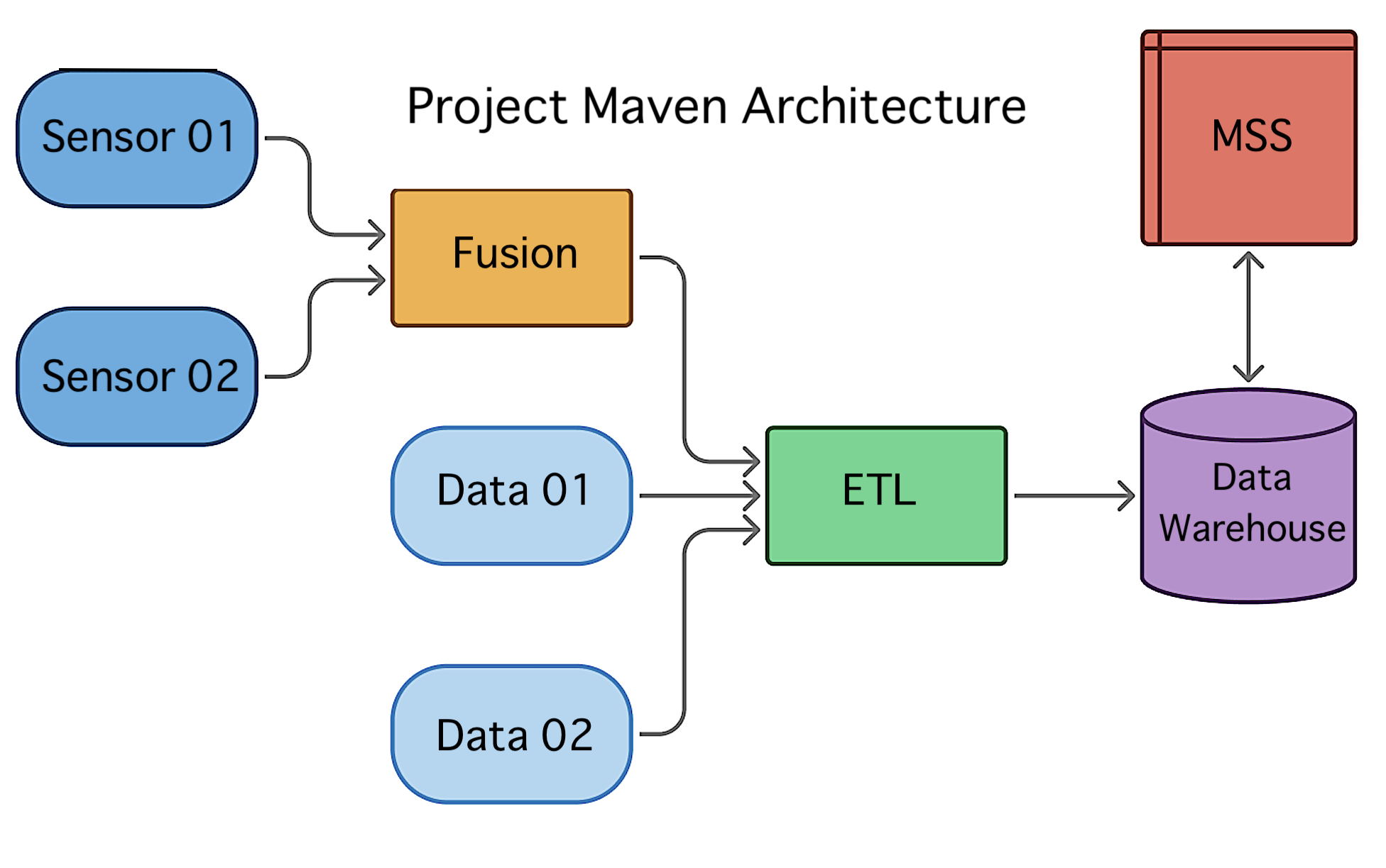 Project Maven system architecture diagram The data sources include photographs, satellite imagery, geolocation data (IP address, geotag, metadata, etc) from communications intercepts, infrared sensors, synthetic-aperture radar, and more. The system is mainly used for assisting analysts in intelligence, surveillance, target acquisition, and reconnaissance. Machine learning systems, including object recognition systems, process the data and identify potential targets, such as enemy tanks or location of new military facility. The training dataset included at least 4 million images of military objects such as warships, labelled by humans. The user interface is called Maven Smart System. It could display information such as aircraft movements, logistics, locations of key personnel, locations on the no-strike list, ships, etc. Yellow-outlined boxes show potential targets. Blue-outlined boxes show friendly forces or no-strike zones. It could also transmit, directly to weapons, a human decision to fire weapons.[26] Internal documentation referred to "Maven ATR: automatic target recognition".[16] Initially the project focused on applications of computer vision. The project's leaders were particularly impressed by model performance on ImageNet.[19] As of 2018, the purpose of the system was AI-enabled analysis of full-motion video. In 2022 it expanded to combatant commands under the AI and Data Acceleration Initiative.[27] In 2022, it was reported that the project expanded to non-image data, including captured enemy material, maritime intelligence, and publicly available information.[28] In 2024, it was stated that Maven's key technical contribution was data management: Maven standardizes heterogeneous data through an ontology layer so data can be fused, exchanged across cloud and edge systems, and used by multiple applications. The system was presented as a broader data-centric warfighting system that feeds apps for planning, preparing, and executing operations.[27] In 2024, the Broad Area Surveillance-Targeting (BAS-T) is a part of Maven. The system detects objects in images and uses data fusion to produce a common operational picture containing "priority based, in-depth assessment of the enemy systems present within the commander's area of responsibility" in a unified user interface, suitable for "a low bandwidth tactical network". Data used by BAS-T include commercial and national space based electro-optical (EO) and synthetic-aperture radar (SAR). Another component of Maven was the target workbench, which prioritizes targets and routes the target information to any of the following for prosecution: AFATDS (for artillery), or published as a J series 3.X track via Joint Range Extension Applications Protocol or JREAP-C or JREAP-A. In particular, during the Scarlet Dragon Oasis exercise (Jan. 23 to Feb. 3, 2023),[29] Maven interfaced through JREAP-A via an Air Operations Center, where a B-52 Bomber dropped live ordnance at a training target.[30] Maven can also interface with the Joint Automated Deep Operations Coordination System.[31][30] As of 2024, the Maven used by CENTCOM integrated 179 data sources from land, sea, air, space, and cyber. It could "discern the nearest available weapons, the most suitable ones for the task, flying time, weapons loading details, and the whereabouts of personnel and partners". Operators of Maven's Target Workbench could approve or disapprove targets, sequence them according to priorities, and message directly to weapons systems.[16] As of 25 March 2025, it was reported that the system at the point incorporated LLMs, generative models, and machine learning, to enhance intelligence fusion and targeting, battlespace awareness and planning, and accelerated decision-making.[22] It was reported to have a "model hub" where multiple LLMs were available, including different versions of OpenAI's ChatGPT and Meta's Llama.[32][33] It was reported in 2025 that Maven could interface with the Aviation Mission Planning System through the Tactical Airspace Integration System in the Airspace Coordination Order.[34] As of September 2025, the director of the NGA claimed that by June 2026, Maven will begin to transmit "100 percent machine-generated" intelligence to combatant commanders using LLM technology. Booz Allen was the defense contractor responsible for the LLM-integration phase.[35] In 2025 November, in a disaster response exercise by the Alaska Army National Guard, Maven used publicly available datasets such as road systems and US Geological Survey earthquake data layers into its geospatial intelligence to produce the common operating picture. It was also integrated with Incident Command System Form 213RR, which allowed teams to track requests for assistance and match them with Title 10 or Title 32 resources.[36] Cameron Stanley, the Pentagon's chief digital and artificial intelligence officer, said at a 2026 conference AIPCon 9 that Maven was being "deploying across the entire department".[37] Maven has an AI Asset Tasking Recommender that can propose which bombers and munitions should be assigned to which targets. Maven is integrated with Palantir's Artificial Intelligence Platform (AIP), and Palantir's Army Intelligence Data Platform, an intelligence platform sold to the US Army.[33] During the 2026 Iran war, Maven allowed the striking of over 1000 targets in the first day. It was planned that future Maven would allow striking over 1000 targets in an hour.[38] Maven's computer vision system increased the rate of target-per-day from less than 100 to 1000. After integrating LLMs, the rate increased to 5000 targets per day.[16] |
技術 プロジェクト・メイヴンの分析視点 プロジェクト・メイヴンは、パランティア・テクノロジーズによるデータ統合を通じて可能となった、複数の情報源からの膨大な監視データを、機械学習アルゴリズムを用いて分析・統合している。[25] [26] プロジェクト・メイヴンのシステムアーキテクチャ図 データソースには、写真、衛星画像、通信傍受からの位置情報データ(IPアドレス、ジオタグ、メタデータなど)、赤外線センサー、合成開口レーダーなどが 含まれる。このシステムは主に、情報分析、監視、目標捕捉、偵察におけるアナリストの支援に使用される。物体認識システムを含む機械学習システムがデータ を処理し、敵の戦車や新たな軍事施設の位置といった潜在的な標的を特定する。訓練用データセットには、人間によってラベル付けされた軍用艦艇などの軍事対 象物の画像が少なくとも400万枚含まれていた。ユーザーインターフェースは「メイブン・スマート・システム」と呼ばれる。航空機の動き、兵站、要員の位 置、攻撃禁止区域、艦船などの情報を表示することができた。黄色の枠で囲まれたボックスは潜在的な標的を示している。青枠は味方部隊または攻撃禁止区域を 示す。また、武器の発射に関する人間の決定を、武器に直接伝達することも可能であった。[26] 内部文書では「Maven ATR:自動目標認識」と記載されていた。[16] 当初、このプロジェクトはコンピュータビジョンの応用に焦点を当てていた。プロジェクトのリーダーたちは、ImageNetにおけるモデルの性能に特に感 銘を受けていた。[19] 2018年時点で、このシステムの目的はフルモーションビデオのAIによる分析であった。2022年には、「AIおよびデータ加速イニシアチブ」の下で、 戦闘指揮部隊へと拡大された。[27] 2022年、同プロジェクトが、敵から押収した資料、海上情報、公開情報など、画像以外のデータにも拡大されたと報じられた。[28] 2024年、Mavenの主要な技術的貢献はデータ管理にあるとされた。Mavenはオントロジー層を通じて異種データを標準化し、データの融合、クラウ ドとエッジシステム間の交換、および複数のアプリケーションによる利用を可能にする。このシステムは、作戦の計画、準備、実行のためのアプリケーションに 情報を提供する、より広範なデータ中心の戦闘システムとして提示された。[27] 2024年現在、広域監視・標的指定(BAS-T)はMavenの一部となっている。このシステムは画像内の物体を検出し、データ融合を用いて、「低帯域 幅の戦術ネットワーク」に適した統一されたユーザーインターフェース上で、「指揮官の責任区域内に存在する敵システムに対する優先順位に基づく詳細な評 価」を含む共通作戦状況図を生成する。BAS-Tが使用するデータには、商用および国家の宇宙ベースの電気光学(EO)および合成開口レーダー(SAR) が含まれる。Mavenのもう一つの構成要素はターゲット・ワークベンチであり、これは標的の優先順位を付け、その情報を以下のいずれかに転送して攻撃を 実行させる:AFATDS(砲兵用)、あるいはJoint Range Extension Applications Protocol(JREAP-CまたはJREAP-A)を介してJシリーズ3.Xトラックとして公開する。特に、「スカーレット・ドラゴン・オアシス」 演習(2023年1月23日~2月3日)[29] では、Mavenは航空作戦センターを経由してJREAP-Aと連携し、そこでB-52爆撃機が訓練目標に対し実弾を投下した[30]。Mavenは、統 合自動深部作戦調整システムとも連携可能である[31]。[30] 2024年時点で、中央軍(CENTCOM)が使用するMavenは、陸・海・空・宇宙・サイバーの各領域から179のデータソースを統合していた。同シ ステムは「利用可能な最も近い兵器、任務に最適な兵器、飛行時間、兵器搭載の詳細、および要員やパートナーの所在」を判別することができた。Mavenの 「ターゲット・ワークベンチ」のオペレーターは、標的の承認・却下、優先順位に基づく順序付け、および兵器システムへの直接メッセージ送信が可能であっ た。[16] 2025年3月25日時点で、同システムはLLM、生成モデル、機械学習を組み込み、情報融合と標的指定、戦場状況認識と計画、意思決定の迅速化を強化し ていると報告された。[22] 同システムには「モデルハブ」が設けられており、OpenAIのChatGPTやMetaのLlamaの異なるバージョンを含む複数のLLMが利用可能で あると報じられた。[32][33] 2025年の報道によると、Mavenは「空域調整指令」における戦術空域統合システムを通じて、航空任務計画システムと連携できるという。[34] 2025年9月時点で、NGA長官は、2026年6月までにMavenがLLM技術を用いて「100%機械生成」の情報を戦闘指揮官へ送信し始めると主張した。LLM統合段階を担当した防衛請負業者はブーズ・アレンであった。[35] 2025年11月、アラスカ州陸軍州兵による災害対応演習において、Mavenは道路網や米国地質調査所の地震データレイヤーなどの公開データセットを地 理空間情報に取り込み、共通作戦状況図を作成した。また、インシデント・コマンド・システム・フォーム213RRとも統合され、これにより各チームは支援 要請を追跡し、それらをタイトル10またはタイトル32のリソースと照合することが可能となった。[36] 国防総省の最高デジタル・人工知能責任者であるキャメロン・スタンレーは、2026年の会議「AIPCon 9」において、Mavenが「省全体に展開されている」と述べた。[37] Mavenには、どの爆撃機や弾薬をどの標的に割り当てるべきかを提案できる「AI資産任務推奨機能」が備わっている。Mavenは、Palantirの 「人工知能プラットフォーム(AIP)」および、米陸軍に販売された情報プラットフォームである「陸軍情報データプラットフォーム」と統合されている。 [33] 2026年のイラン戦争において、Mavenにより初日に1000以上の標的への攻撃が可能となった。将来のMavenでは、1時間に1000以上の標的 を攻撃できるようになる予定だった。[38] Mavenのコンピュータビジョンシステムにより、1日あたりの標的処理数は100未満から1000へと増加した。LLMを統合した後、その数は1日あた り5000の標的へと増加した。[16] |
| Contractors In 2013, the intelligence community partnered with Amazon to allow classified material to be processed on Amazon Web Services (AWS).[39] Initially, The Pentagon collaborated with Google, but in 2018, Google employees, including Meredith Whittaker, staged walkouts protesting Google's involvement in Project Maven.[40][41] The contract was estimated to be worth around $9 million.[42] Subsequently, Google did not renew the contract with Pentagon and Palantir took over the contract.[43][25] In 2018, Booz Allen Hamilton was awarded a large prime award as part of Project Maven totaling $751.5 Million.[44][45] One of the companies subcontracted for social media analytics as part of this award was Popily, which was caught faking Russian support for the opponent of a Democratic party candidate.[44][45] DigitalGlobe provides images and algorithms to Project Maven. The NGA approached IBM for using its AI systems to analyze videos, though IBM did not sign a contract.[46] Companies that have contributed to the data integration include Palantir, Amazon (through AWS), ECS Federal, L3Harris Technologies, Maxar Technologies, Microsoft and Sierra Nevada Corporation. ECS Federal has served as primary support contractor and led AI integration for Project Maven since 2017.[47][48][49] At least 21 private companies had been involved.[50] Anduril Industries entered the program in 2018 to deploy its sensor fusion platform and edge hardware for data capture.[51] In December 2024 Anduril and Palantir announced a consortium that links Anduril's Lattice Mesh with Maven Smart System and Palantir's AI Platform to move tactical sensor data into AI-supported analyst workflows.[52][53] In May 2025, the Pentagon raised its contract ceiling for Maven Smart System to $1.3 billion through 2029, up from the previous $480 million. NGA also signed a new $28 million contract to expand access.[54] In 2025-11, NGA awarded an indefinite delivery/indefinite quantity contract to Enabled Intelligence for data labeling in support of Maven’s computer vision models, for a ceiling of $708 million over a 7-year ordering period.[55][16] Anthropic In 2023 and 2024, Amazon invested in Anthropic. Also in 2024, Palantir partnered with Anthropic to integrate Claude into Palantir's software. Anthropic stated that Claude was used to help the military to process data and make decisions.[39] In late 2024, the Pentagon began to integrate Claude into Maven.[56] As reported in 2024 November, Claude 3 and 3.5 family of models were integrated into Palantir's AI Platform running on AWS. They received Defense Information Systems Agency Impact Level 6 accreditation.[57] In 2025 June, Anthropic announced "Claude Gov", which runs in classified environments on the AWS by the national security community. In 2025 July, Anthropic announced that the Department of Defense, through Chief Digital and Artificial Intelligence Office, awarded Anthropic a two-year prototype other transaction agreement with a $200 million ceiling to "prototype frontier AI capabilities that advance U.S. national security".[58][59] In February 2026, Jack Shanahan stated that Anthropic is a partner of Project Maven.[60] Separately, in April 2025, Anthropic joined Palantir's FedStart program so Claude could be deployed for government customers at FedRAMP High and DoD Impact Level 5, running on Google Cloud, offering assistance to millions of federal government employees.[61] As of February 2026, Maven was running on Amazon Web Services (AWS), and incorporates a version of Claude, a series of AI systems developed by Anthropic.[62] On March 4, 2026, the Department of Defense designated Anthropic as a supply chain risk, decreeing that all use of Anthropic products to be phased out in all US military within 6 months.[63][64] |
請負業者 2013年、情報機関はアマゾンと提携し、機密情報の処理をAmazon Web Services(AWS)上で可能にした。[39] 当初、国防総省はグーグルと協力していたが、2018年、メレディス・ウィテカーを含むグーグルの従業員らが、「プロジェクト・メイヴン」へのグーグルの 関与に抗議してストライキを行った。[40] [41] この契約額は約900万ドルと見積もられていた。[42] その後、Googleは国防総省との契約を更新せず、パランティアが契約を引き継いだ。[43][25] 2018年、ブーズ・アレン・ハミルトンはプロジェクト・メイヴンの一環として、総額7億5150万ドルに上る大規模な主契約を獲得した。[44] [45] この契約の一環としてソーシャルメディア分析の下請けを担当した企業の一つにポピリー(Popily)があったが、同社は民主党候補の対立候補に対するロ シアの支持を偽装していたことが発覚した。[44][45] デジタルグローブ(DigitalGlobe)は、プロジェクト・メイヴンに画像とアルゴリズムを提供している。国家地理空間情報局(NGA)は、動画分析にIBMのAIシステムを使用するようIBMに打診したが、IBMは契約を結ばなかった。[46] データ統合に貢献した企業には、Palantir、Amazon(AWSを通じて)、ECS Federal、L3Harris Technologies、Maxar Technologies、Microsoft、Sierra Nevada Corporationが含まれる。ECS Federalは2017年以降、主要支援請負業者としてプロジェクト・メイヴンのAI統合を主導してきた。[47][48][49] 少なくとも21社の民間企業が関与していた。[50] アンドゥリル・インダストリーズは2018年に本プログラムに参加し、データ収集のためのセンサーフュージョンプラットフォームとエッジハードウェアを展 開した。[51] 2024年12月、アンドゥリルとパランティアは、アンドゥリルの「ラティス・メッシュ」を「メイヴン・スマート・システム」およびパランティアのAIプ ラットフォームと連携させるコンソーシアムを発表した。これにより、戦術センサーデータをAI支援型の分析ワークフローに組み込むことが可能となる。 [52] [53] 2025年5月、国防総省は「メイブン・スマート・システム」の契約上限額を、従来の4億8000万ドルから2029年までに13億ドルへと引き上げた。NGAもまた、アクセス拡大に向けた新たな2800万ドルの契約を締結した。[54] 2025年11月、NGAはMavenのコンピュータビジョンモデルを支援するためのデータラベリングについて、Enabled Intelligence社に無期限納入・無定量契約を授与した。契約上限額は7年間の注文期間で7億800万ドルである。[55] [16] Anthropic 2023年と2024年、AmazonはAnthropicに出資した。また2024年、PalantirはAnthropicと提携し、Claudeを Palantirのソフトウェアに統合した。Anthropicは、Claudeが軍のデータ処理や意思決定を支援するために使用されたと述べた。 [39] 2024年後半、国防総省はClaudeをMavenに統合し始めた。[56] 2024年11月の報道によると、Claude 3および3.5モデル群は、AWS上で稼働するパランティアのAIプラットフォームに統合された。これらは国防情報システム局(DISA)のインパクトレ ベル6認定を取得した。[57] 2025年6月、アンソロピックは「Claude Gov」を発表した。これは国家安全保障コミュニティがAWS上の機密環境で運用するものである。2025年7月、Anthropicは、国防総省がデジ タル・人工知能担当局長室を通じて、Anthropicに対し、「米国の国家安全保障を推進する最先端のAI機能のプロトタイプ開発」を目的とした、上限 2億ドルの2年間のプロトタイプ・オザー・トランザクション契約を授与したと発表した。[58][59] 2026年2月、ジャック・シャナハンは、Anthropicがプロジェクト・メイヴンのパートナーであると述べた。 [60] これとは別に、2025年4月、AnthropicはPalantirのFedStartプログラムに参加した。これにより、ClaudeはGoogle Cloud上で動作し、FedRAMP HighおよびDoD Impact Level 5の要件を満たす形で政府機関の顧客に導入可能となり、数百万人の連邦政府職員に支援を提供できるようになった。[61] 2026年2月時点で、MavenはAmazon Web Services(AWS)上で稼働しており、Anthropicが開発した一連のAIシステムであるClaudeのバージョンを組み込んでいる。[62] 2026年3月4日、国防総省はAnthropicをサプライチェーン上のリスクと指定し、6ヶ月以内に米軍全組織におけるAnthropic製品のすべての使用を段階的に廃止するよう命じた。[63][64] |
| Applications Training exercises The 18th Airborne Corps is the main tester of Project Maven. With collaborating arms organization in US and UK, it has used Maven and weapons systems connected to it to strike targets from bombers, fighter jets and drones.[26] Beginning in 2020, Maven was used for live-fire exercises ("Scarlet Dragon exercises") to improve the technology via a development-security-operations (DevSecOps) cycle.[50] The first took place at Fort Bragg. The test teamed soldiers from the XVIII Airborne Corps with Marines from II Marine Expeditionary Force. An AI system identified a tank in satellite images, the human approved, and the AI system signaled an M142 HIMARS to strike the target (in this case, a tank variously described as either inflated or decommissioned). It was the first AI-enabled artillery strike in the US army.[26] However, the targeting process took 743 minutes.[27][65] It was also used during Project Convergence 2020 training rounds, as one of several AI systems that participated.[66] The Scarlet Dragon exercises were overseen by former XVIII Airborne Corps commander Michael Kurilla, who became the commander of CENTCOM in 2022 April, and installed a data-centric command approach that included Maven.[65] In 2024, it was reported that the Scarlet Dragon exercises were still ongoing in 2024, and was planned throughout 2025.[65] There are 6 steps in the kill chain: identify, locate, filter down to the lawful valid targets, prioritize, assign them to firing units, and fire. In 2024, it was reported that of these 6, Maven can perform 4.[50] A senior targeting officer estimates that with Maven, he could decide on 80 targets per hour, vs 30 targets per hour without Maven.[26] The time for the targeting process has decreased to under 1 minute.[65] The efficiency was comparable with the targeting cell used during Operation Iraqi Freedom, but whereas the OIF used a targeting cell with roughly 2000 staff, the 18th Airborne used a targeting cell with 20 people.[50] It was stated in 2024 that, while deployed in Europe, Maven iterated with industry through 62 capability evolutions in 10 months.[27] By August 2025, NATO's Joint Warfare Centre (JWC) said MSS NATO had been deployed across Allied Command Operations, that JWC staff were being trained on it, and that it had already been incorporated into NATO exercises such as STEADFAST DETERRENCE 2025 May, with broader use planned in 2026. JWC described it as NATO's first AI-enabled warfighting command-and-control system.[67] It was later used at STEADFAST DUEL 2025 October as the primary platform for warfighting integration.[68] In November 2025, the Maven Common Operating Picture was used in SETAF-AF's Lion Deployment Readiness Exercise.[69] It was stated in 2025 by Palantir to be "production-level" across INDOPACOM, EUCOM, CENTCOM, NORAD/NORTHCOM, SPACECOM, TRANSCOM, AFRICOM, and the Joint Staff, with additional deployments at CYBERCOM, STRATCOM, and SOUTHCOM. This was every unified combatant command except SOCOM.[70] During 2023-2025, Maven appeared in 141 exercises and experiments.[16] |
用途 訓練演習 第18空挺軍団は、プロジェクト・メイヴンの主要な試験実施部隊である。米国および英国の関連部隊と協力し、メイヴンおよびそれに接続された兵器システムを用いて、爆撃機、戦闘機、ドローンから目標を攻撃してきた。[26] 2020年から、Mavenは実弾演習(「スカーレット・ドラゴン演習」)に活用され、開発・セキュリティ・運用(DevSecOps)サイクルを通じて 技術の向上を図った。[50] 最初の演習はフォート・ブラッグで行われた。この試験では、第18空挺軍団の兵士と第2海兵遠征軍(II MEF)の海兵隊員が共同で行動した。AIシステムが衛星画像から戦車を識別し、人間が承認すると、AIシステムはM142 HIMARSに対し、標的(この場合は、風船で膨らませたもの、あるいは退役したものと様々な説明がある戦車)を攻撃するよう信号を送った。これは米陸軍 における初のAIを活用した砲撃であった。[26] しかし、標的指定のプロセスには743分を要した。[27] [65] また、2020年の「プロジェクト・コンバージェンス」訓練においても、参加した複数のAIシステムの一つとして使用された。[66] 「スカーレット・ドラゴン」演習は、第18空挺軍団の元司令官マイケル・クリラによって監督された。彼は2022年4月に中央軍(CENTCOM)司令官 に就任し、Mavenを含むデータ中心の指揮アプローチを導入した。[65] 2024年、スカーレット・ドラゴン演習は2024年時点でも継続中であり、2025年を通じて実施される予定であると報じられた。[65] キルチェーンには6つの段階がある:識別、位置特定、合法かつ有効な標的への絞り込み、優先順位付け、射撃部隊への割り当て、そして発射である。2024 年の報道によると、これら6つの段階のうち、Mavenは4つを実行可能である。[50] ある上級標的選定将校は、Mavenを使用すれば1時間あたり80の標的を決定できると推定しており、Mavenなしの場合は1時間あたり30の標的にと どまる。[26] 標的選定プロセスの所要時間は1分未満に短縮された。[65] その効率は「イラクの自由作戦」で運用された標的指定セルに匹敵したが、OIFでは約2000人の要員を擁する標的指定セルが使用されたのに対し、第18 空挺師団では20人の標的指定セルが使用された。[50] 2024年には、欧州に展開中、Mavenが産業界と連携し、10ヶ月間で62回の機能改良を繰り返したと述べられた。[27] 2025年8月までに、NATOの統合戦術センター(JWC)は、MSS NATOが連合軍作戦司令部(Allied Command Operations)全体に配備され、JWCの要員が同システムに関する訓練を受けており、2025年5月の「STEADFAST DETERRENCE 2025」などのNATO演習にすでに組み込まれており、2026年にはより広範な使用が計画されていると述べた。JWCはこれを、NATO初のAI搭載 戦闘指揮統制システムと評した。[67] その後、2025年10月の「STEADFAST DUEL 2025」において、戦闘統合の主要プラットフォームとして使用された。[68] 2025年11月、Maven共通作戦状況図は、SETAF-AFの「Lion Deployment Readiness Exercise」で使用された。[69] 2025年、パランティア社は、INDOPACOM、EUCOM、CENTCOM、NORAD/NORTHCOM、SPACECOM、TRANSCOM、 AFRICOM、および統合参謀本部において「実戦レベル」に達しており、CYBERCOM、STRATCOM、SOUTHCOMにも追加配備されている と述べた。これはSOCOMを除くすべての統合戦闘司令部であった。[70] 2023年から2025年にかけて、Mavenは141件の演習および実験に登場した。[16] |
| Real use The first real use of Maven was in 2017 in East Africa, by Special Forces pursuing the Islamist group al-Shabaab.[19] In early December of 2017, Maven was fielded to defense intelligence analysts to support drone missions against ISIS.[4] In the 2021 Kabul airlift, Maven was used to display the situation on the ground. It could simultaneously display data feeds, such as aircraft movements, logistics, threats and locations of key personnel such as Chris Donahue.[26] In the 2022 Russian invasion of Ukraine, the US used satellite intelligence and Maven Smart System to supply the locations of Russian equipment to Ukrainian forces.[26] Alerted by the October 7 attacks, CENTCOM quickly shifted Maven from exercises to real use in combat.[16] In February 2024, Maven was used for narrowing targets for airstrikes in Iraq and Syria, and was involved in more than 85 airstrikes. It was also used for locating rocket launchers in Yemen and surface vessels in the Red Sea, some of which were destroyed in February 2024, according to CENTCOM.[26][71] During Hurricane Helene in 2024, the public affairs office of XVIII Airborne Corps used Maven to visualize social media sentiment from Sprinklr.[72] It was claimed in 2024 that CENTCOM used it as a shared data/AI system that fused 179 live data feeds and supported command-and-control, fires, force protection, and sustainment workflows. It was used in four-star headquarters with over 20 subordinate headquarters. CENTCOM had ~13,000 Maven accounts, of which ~2,500 were regular users who logged in at least a few times a week.[73][27] The 138th Field Artillery Brigade used it during Operation Spartan Shield and Operation Inherent Resolve.[31] It was reported in May 2025 that Maven had over 20,000 active users.[54] It was reported in March 2026 that at least 32 different companies were working on Maven, and close to 25,000 US personnel were using it. NORAD and NORTHCOM had 2,000 daily users in 2025.[16] In September 2025, Maven was used by the Customs and Border Protection for detecting border crossings on the southern border, and with the US Coast Guard.[16] At an unspecified time, Maven was used by SOUTHCOM "in the detection, classification, and ultimate interdiction of more than three dozen vessels suspected of engaging in illicit or clandestine activity".[16] In November 2025 it was used by the Alaska State Defense Force, during emergency response to Typhoon Halong, in western Alaska to display real-time GPS locations, supply tracking and short messages on a single map (the common operating picture). Maven integrated data from handheld satellite tracking devices called SHOUT Nanos.[74] In January 2026, Maven and Claude were used during the intervention in Venezuela.[62][75] Also in 2026, Maven was used in the 2026 Iran war, Maven allowed the striking of over 1000 targets in the first day.[38] This included the Minab school attack, which killed 156 civilians, including 120 schoolchildren. |
実際の運用 Mavenが初めて実戦投入されたのは2017年、東アフリカにおいて、イスラム過激派組織アル・シャバブを追跡していた特殊部隊によるものであった。[19] 2017年12月初旬、ISISに対するドローン作戦を支援するため、Mavenが国防情報分析官に配備された。[4] 2021年のカブール空輸作戦では、Mavenが現地の状況表示に活用された。これにより、航空機の動き、兵站、脅威、そしてクリス・ドナヒューのような重要人物の位置といったデータフィードを同時に表示することができた。[26] 2022年のロシアによるウクライナ侵攻において、米国は衛星情報とMavenスマートシステムを用いて、ロシア軍の装備の位置情報をウクライナ軍に提供した。[26] 10月7日の攻撃を受けて、中央軍(CENTCOM)はMavenを演習から実戦への運用へと迅速に切り替えた。[16] 2024年2月、Mavenはイラクおよびシリアにおける空爆の標的を絞り込むために使用され、85回以上の空爆に関与した。また、イエメンにおけるロ ケット発射装置や紅海における水上艦艇の位置特定にも使用され、CENTCOMによると、その一部は2024年2月に破壊された。[26] [71] 2024年のハリケーン・ヘレンの際、第18空挺軍団の広報室は、Sprinklrからのソーシャルメディアの感情分析を可視化するためにMavenを使用した。[72] 2024年には、CENTCOMがMavenを、179のリアルタイムデータフィードを統合し、指揮統制、火力支援、部隊防護、および後方支援のワークフ ローを支援する共有データ/AIシステムとして使用したと報じられた。Mavenは、20以上の下部司令部を擁する四つ星司令部で使用された。 CENTCOMには約13,000のMavenアカウントがあり、そのうち約2,500人が週に数回はログインする常連ユーザーであった。[73] [27] 第138野戦砲兵旅団は、オペレーション・スパルタン・シールドおよびオペレーション・インヘレント・リゾルブにおいてMavenを使用した。[31] 2025年5月の報道によると、Mavenのアクティブユーザー数は2万人を超えていた。[54] 2026年3月の報道では、少なくとも32社の企業がMavenの開発に携わっており、2万5,000人近くの米軍関係者が利用していた。NORADおよ びNORTHCOMでは、2025年に1日あたり2,000人のユーザーが利用していた。[16] 2025年9月、Mavenは米国税関・国境警備局によって南部国境での越境検知に、また米国沿岸警備隊でも使用された。[16] 時期不明だが、MavenはSOUTHCOMによって「違法または秘密活動に関与している疑いのある30隻以上の船舶の検知、分類、および最終的な阻止」に使用された。[16] 2025年11月、アラスカ州防衛軍は、アラスカ西部を襲った台風ハロンへの緊急対応において、Mavenを使用し、リアルタイムのGPS位置情報、物資 の追跡、およびショートメッセージを単一の地図(共通作戦状況図)上に表示した。Mavenは、SHOUT Nanosと呼ばれる携帯型衛星追跡装置からのデータを統合した。[74] 2026年1月、ベネズエラへの介入作戦において、MavenとClaudeが使用された。[62][75] また2026年には、2026年のイラン戦争でもMavenが使用され、初日に1000以上の標的への攻撃を可能にした。[38] これにはミナブ校への攻撃も含まれており、この攻撃により120人の児童を含む156人の民間人が死亡した。 |
| References 01. Cade Metz. (15 March 2018). "Pentagon Wants Silicon Valley's Help on A.I."; Archived 2022-04-08 at the Wayback Machine. The New York Times. Retrieved 8 March 2022. "Report: Palantir took over Project Maven, the military AI program too unethical for Google". The Next Web. 11 December 2020. Archived from the original on 24 January 2020. Retrieved 17 January 2020. Robert O. Work (26 April 2017). "Establishment of an Algorithmic Warfare Cross-Functional Team (Project Maven)" (PDF). Archived (PDF) from the original on 21 April 2018. Retrieved 3 June 2018. Allen, Gregory C. (21 December 2017). "Project Maven brings AI to the fight against ISIS". Bulletin of the Atomic Scientists. Archived from the original on 4 June 2018. Retrieved 3 June 2018. "Lieutenant General John N. T. 'Jack' Shanahan". U.S. Air Force. June 2020. Retrieved 6 March 2026. Cheryl Pellerin (21 July 2017). "Project Maven to Deploy Computer Algorithms to War Zone by Year's End". DoD News, Defense Media Activity. United States Department of Defense. Archived from the original on 4 June 2018. Retrieved 3 June 2018. Sankar, Shyam; Hart, Madeline (2026). Mobilize: How to Reboot the American Industrial Base and Stop World War III (1st ed.). New York: Post Hill Press. ISBN 979-8-89565-516-0. Ethan Baron (3 June 2018). "Google Backs Off from Pentagon Project After Uproar: Report". Military.com. Mercury.com. Archived from the original on 14 July 2018. Retrieved 3 June 2018. Skinner, Dan (29 January 2020). "Signature Management in Accelerated Warfare | Close Combat in the 21st Century". The Cove. Archived from the original on 15 July 2023. Retrieved 15 July 2023. 10. Wolfe, Frank (11 December 2020). "NDAA Conference Bill Authorizes $250 Million for Project Maven". Defense Daily. Retrieved 25 March 2026. Strout, Nathan (28 April 2022). "Intelligence agency takes over Project Maven, the Pentagon's signature AI scheme". C4ISRNet. Retrieved 6 March 2026. Tucker, Patrick (26 April 2022). "NGA Will Take Over Pentagon's Flagship AI Program". Defense One. Retrieved 2 June 2024. Wolfe, Frank (2 November 2023). "Project Maven Transitions to Program of Record, As NGA Looks to Leverage Program for Other Uses". Defense Daily. Retrieved 6 March 2026. "VADM Frank "Trey" Whitworth". USGIF. Retrieved 25 March 2026. "Bredenkamp Assumes NGA Leadership | National Geospatial-Intelligence Agency". www.nga.mil. Retrieved 25 March 2026. Manson, Katrina. "Meet the Gods of AI Warfare". Wired. ISSN 1059-1028. Retrieved 25 March 2026. "Rachel Martin". USGIF. Retrieved 6 March 2026. Dou, Eva (27 February 2024). "AI benefits, perils in military" (PDF). Stars and Stripes. Vol. 82, no. 224. p. 5. Retrieved 5 March 2026. "In Trump's Washington, Palantir is winning big". The Washington Post. 1 August 2025. ISSN 0190-8286. Retrieved 6 March 2026. 20. "Palantir Expands Maven Smart System AI/ML Capabilities to Military Services". Archived from the original on 20 September 2024. Retrieved 6 March 2026. "New strategic partnership to unlock billions and boost military AI and innovation". GOV.UK. Ministry of Defence. 18 September 2025. Retrieved 6 March 2026. "NATO acquires AI-enabled warfighting system". NCIA NATO. NATO Communications and Information Agency. 14 April 2025. Retrieved 6 March 2026. Jeans, David (20 March 2026). "Exclusive: Pentagon to adopt Palantir AI as core US military system, memo says". Reuters. Retrieved 24 March 2026. Stenson, Randi (10 March 2026). "Army's Combined Arms Command to integrate Maven C2 smart system into training and education". U.S. Army. MCCoE Public Affairs. Retrieved 24 March 2026. Peterson, Becky (11 December 2019). "Palantir grabbed Project Maven defense contract after Google left the program: sources". Business Insider. Manson, Katrina (28 February 2024). "AI Warfare Is Already Here". Bloomberg.com. Retrieved 14 November 2024. "Building the Tech Coalition". YouTube. Center for Security and Emerging Technology. 30 August 2024. Retrieved 5 March 2026. "Pentagon shifting Project Maven, marquee artificial intelligence initiative, to NGA". Federal News Network. 26 April 2022. Retrieved 25 March 2026. Fuentes, Osvaldo (6 February 2023). "Data-centric exercise showcases joint capabilities, lethality". U.S. Army. Retrieved 6 March 2026. 30. Chabrier-Montijo, Christopher A. (2024). "XVIII Airborne Corps BAS-T Employment". Field Artillery Professional Bulletin (1). Retrieved 6 March 2026. Kentucky National Guard Public Affairs Office (29 February 2024). "138th Field Artillery Brigade Incorporates Artificial Intelligence". Defense Visual Information Distribution Service. Doha, Qatar: U.S. Department of Defense. Palantir (5 March 2026). "Maven Smart System: Innovating for the Alliance". Medium. Retrieved 15 March 2026. Haskins, Caroline. "Palantir Demos Show How the Military Could Use AI Chatbots to Generate War Plans". Wired. ISSN 1059-1028. Retrieved 15 March 2026. Badder, Brianna (6 June 2025). "TF Cardinal Innovates with Maven". Defense Visual Information Distribution Service. Iraq: U.S. Department of Defense. Retrieved 6 March 2026. "The AI Doomsday Machine Is Closer to Reality Than You Think". POLITICO. 2 September 2025. Retrieved 2 October 2025. LaCount, Seth (11 July 2025). "AKNG COP manager leads charge on AI integration in disaster response". Defense Visual Information Distribution Service. Joint Base Elmendorf–Richardson, Alaska, United States: U.S. Department of Defense. Retrieved 6 March 2026. Palantir (13 March 2026). Multi-Domain AI: The Future of Command and Control | CDAO at AIPCon 9. Retrieved 15 March 2026 – via YouTube. Manson, Katrina (12 March 2026). "'God, It's Terrifying': How the Pentagon Got Hooked on AI War Machines". Bloomberg Businessweek. Retrieved 6 March 2026. "The hypothetical nuclear attack that escalated the Pentagon's showdown with Anthropic". The Washington Post. 27 February 2026. ISSN 0190-8286. Retrieved 2 March 2026. 40. Greenberg, Andy. "Under Meredith Whittaker, Signal Is Out to Prove Surveillance Capitalism Wrong". Wired. ISSN 1059-1028. Retrieved 29 August 2024. "Google 'to end' Pentagon Artificial Intelligence project". BBC News. 2 June 2018. Archived from the original on 2 June 2018. Retrieved 3 June 2018. Conger, Kate (21 May 2018). "The Pentagon's Controversial Drone AI-Imaging Project Extends Beyond Google". Gizmodo. Retrieved 2 March 2026. "Google Renounces AI Weapons; Will Still Work With Military". Bloomberg.com. 7 June 2018. Retrieved 14 November 2024. "USAspending.gov". www.usaspending.gov. Retrieved 15 March 2026. Poulson, Jack (10 September 2021). "Easy as PAI (Publicly Available Information)" (PDF). Tech Inquiry. Archived from the original (PDF) on 10 September 2021. Retrieved 15 March 2026. Conger, Kate (21 May 2018). "The Pentagon's Controversial Drone AI-Imaging Project Extends Beyond Google". Gizmodo. Retrieved 2 March 2026. Cornillie, Chris (1 June 2021). "AI Experts Needed to Lead 'Project Maven' Move Within DOD". Bloomberg Government. Retrieved 4 August 2025. "Video Interview: ECS President John Heneghan Talks Federal AI Adoption". GovCon Wire. 25 April 2023. Retrieved 4 August 2025. Admin (22 January 2025). "ECS Federal continues its steady growth in high end technology development and services". FedSavvy Strategies. Retrieved 4 August 2025. 50. Building the Tech Coalition: How Project Maven and the U.S. 18th Airborne Corps Operationalized Software and Artificial Intelligence for the Department of Defense. Emelia Probasco, August 2024. Center for Security and Emerging Technology Fang, Lee (9 March 2019). "Defense Tech Startup Founded by Trump's Most Prominent Silicon Valley Supporters Wins Secretive Military AI Contract". The Intercept. Retrieved 19 October 2025. "Anduril and Palantir to Accelerate AI Capabilities for National Security". Anduril Industries. 6 December 2024. Retrieved 19 October 2025. O'Donnell, James (10 December 2024). "We Saw a Demo of the New AI System Powering Anduril's Vision for War". MIT Technology Review. Retrieved 19 October 2025. Farooque, Faizan (22 May 2025). "Palantir (PLTR) Lands $1.3B Pentagon Win as AI Goes to War". Yahoo Finance. Retrieved 1 March 2026. "NGA announces $708M data labeling RFP | National Geospatial-Intelligence Agency". www.nga.mil. Retrieved 25 March 2026. "Anthropic's AI tool Claude central to U.S. campaign in Iran, amid a bitter feud". The Washington Post. 4 March 2026. ISSN 0190-8286. Retrieved 6 March 2026. "Anthropic and Palantir Partner to Bring Claude AI Models to AWS for U.S. Government Intelligence and Defense Operations". Archived from the original on 27 February 2026. Retrieved 6 March 2026. "Claude Gov models for U.S. national security customers". www.anthropic.com. 6 June 2025. Retrieved 2 March 2026. "Anthropic awarded $200M DOD agreement for AI capabilities". www.anthropic.com. 14 July 2025. Retrieved 2 March 2026. 60. Duncan, Ian; Copp, Tara; Dwoskin, Elizabeth (27 February 2026). "Pentagon declares Anthropic a threat to national security". The Washington Post. Retrieved 1 March 2026. "Anthropic Joins Palantir's FedStart Program to Deploy Claude Application". Business Wire. 17 April 2025. Retrieved 6 March 2026. "Pentagon assault on Anthropic sends shock waves across Silicon Valley". The Washington Post. 28 February 2026. ISSN 0190-8286. Retrieved 2 March 2026. Kent, Jo Ling; Watson, Eleanor; Walsh, Joe (5 March 2026). "Pentagon formally designates Anthropic a supply chain risk amid feud over AI guardrails". CBS News. Retrieved 5 March 2026. Amodei, Dario (5 March 2026). "Where things stand with the Department of War". Anthropic. Retrieved 5 March 2026. South, Todd (21 August 2024). "This system may allow small Army teams to probe 1,000 targets per hour". Defense News. Retrieved 6 March 2026. Strout, Nathan (25 September 2020). "Inside the Army's futuristic test of its battlefield artificial intelligence in the desert". C4ISRNet. Retrieved 6 March 2026. "The Joint Warfare Centre Trains to Integrate Maven Smart System". Joint Warfare Centre. Stavanger, Norway: NATO. 25 August 2025. Retrieved 6 March 2026. "NCIA enables Steadfast Duel 25, NATO's largest computer-assisted command post exercise". NCIA NATO. NATO Communications and Information Agency. 29 October 2025. Retrieved 6 March 2026. Birk, Raquel (2 December 2025). "Lion Deployment Readiness Exercise strengthens SETAF-AF's rapid deployment capabilities". U.S. Army. Retrieved 6 March 2026. 70. "Maven Smart System: The Foundational AI-Enabled Software Platform for CJADC2" (PDF). Palantir. Retrieved 6 March 2026. "US Used AI to Help Find Middle East Targets for Airstrikes". Bloomberg.com. 26 February 2024. Retrieved 15 November 2024. Chase, Tucker (22 December 2025). "SETAF-AF public affairs experiment with emerging technology to shape the information environment". U.S. Army. Retrieved 6 March 2026. Freedberg, Sydney J. Jr. (3 September 2024). "'Success begets challenges': NGA struggles to meet rising demand for Maven AI". Breaking Defense. Retrieved 5 March 2026. McFarland, Azavyon (17 November 2025). "AKOM's communication team launches critical connectivity during disaster". Defense Visual Information Distribution Service. Joint Base Elmendorf–Richardson, Alaska, United States: U.S. Department of Defense. Retrieved 6 March 2026. 75. Lawler, Dave; Curi, Maria (14 February 2026). "Pentagon used Anthropic's Claude during Maduro raid". Axios. Retrieved 2 March 2026. |
参考文献 01. Cade Metz. (2018年3月15日). 「国防総省、AI開発でシリコンバレーの協力を求める」; 2022年4月8日、Wayback Machineにてアーカイブ。ニューヨーク・タイムズ。2022年3月8日閲覧。 「報道:パランティアが『プロジェクト・メイヴン』を引き継ぐ。Googleには倫理的に受け入れがたいとされた軍のAIプログラム」。ザ・ ネクスト・ウェブ。2020年12月11日。2020年1月24日にオリジナルからアーカイブ。2020年1月17日閲覧。 ロバート・O・ワーク(2017年4月26日)。「アルゴリズム戦争横断機能チーム(プロジェクト・メイヴン)の設立」(PDF)。(PDF)2018年4月21日時点のオリジナルよりアーカイブ。2018年6月3日閲覧。 アレン、グレゴリー・C.(2017年12月21日)。「プロジェクト・メイヴン、ISISとの戦いにAIを導入」。『原子科学者会報』。2018年6月4日時点のオリジナルよりアーカイブ。2018年6月3日閲覧。 「ジョン・N・T・『ジャック』・シャナハン中将」。米国空軍。2020年6月。2026年3月6日に閲覧。 シェリル・ペレリン(2017年7月21日)。「プロジェクト・メイヴン、年末までに戦場にコンピュータアルゴリズムを展開へ」。DoD ニュース、国防メディア活動。米国国防総省。2018年6月4日にオリジナルからアーカイブされた。2018年6月3日閲覧。 シャンカール、シャム;ハート、マデリン(2026年)。『モビライズ:アメリカの産業基盤を再起動し、第三次世界大戦を阻止する方法』(第1版)。ニューヨーク:ポスト・ヒル・プレス。ISBN 979-8-89565-516-0。 イーサン・バロン (2018年6月3日)。「Google、騒動を受けて国防総省のプロジェクトから撤退:報道」。Military.com。Mercury.com。2018年7月14日にオリジナルからアーカイブされた。2018年6月3日に閲覧。 スキナー、ダン(2020年1月29日)。「加速する戦争におけるシグネチャ管理 | 21世紀の接近戦」。The Cove。2023年7月15日にオリジナルからアーカイブされた。2023年7月15日に閲覧。 10. ウルフ、フランク(2020年12月11日)。「NDAA会議法案、プロジェクト・メイヴンに2億5000万ドルを承認」。Defense Daily。2026年3月25日に閲覧。 ストラウト、ネイサン(2022年4月28日)。「情報機関が国防総省の看板AI計画『プロジェクト・メイヴン』を引き継ぐ」。C4ISRNet。2026年3月6日閲覧。 タッカー、パトリック(2022年4月26日)。「NGAが国防総省の旗艦AIプログラムを引き継ぐ」。Defense One。2024年6月2日閲覧。 ウルフ、フランク(2023年11月2日)。「NGAが他の用途への活用を検討する中、『プロジェクト・メイヴン』が正式プログラムへ移行」。Defense Daily。2026年3月6日閲覧。 「フランク・“トレイ”・ウィットワース海軍中将」。USGIF。2026年3月25日閲覧。 「ブレデンカンプがNGAのトップに就任 | 国家地理空間情報局」。www.nga.mil。2026年3月25日閲覧。 マンソン、カトリーナ。「AI戦争の神々を紹介」。『Wired』。ISSN 1059-1028。2026年3月25日閲覧。 「レイチェル・マーティン」。USGIF。2026年3月6日閲覧。 ドゥー、エヴァ(2024年2月27日)。「軍事におけるAIの利点と危険性」(PDF)。『スターズ・アンド・ストライプス』。第82巻、第224号。5ページ。2026年3月5日閲覧。 「トランプ政権下のワシントンで、パランティアが大勝している」。『ワシントン・ポスト』。2025年8月1日。ISSN 0190-8286。2026年3月6日閲覧。 20. 「パランティア、MavenスマートシステムのAI/ML機能を軍各部門へ拡大」。2024年9月20日にオリジナルからアーカイブ。2026年3月6日閲覧。 「数十億ポンドの資金を解放し、軍事AIとイノベーションを促進する新たな戦略的パートナーシップ」。GOV.UK。国防省。2025年9月18日。2026年3月6日閲覧。 「NATO、AI搭載の戦闘システムを導入」。NCIA NATO。NATO通信情報局。2025年4月14日。2026年3月6日閲覧。 ジーンズ、デビッド(2026年3月20日)。「独占:メモによると、国防総省はパランティアのAIを米軍の基幹システムとして採用する」。ロイター。2026年3月24日閲覧。 ステンソン、ランディ(2026年3月10日)。「陸軍統合兵科司令部、Maven C2スマートシステムを訓練・教育に統合へ」。米陸軍。MCCoE広報部。2026年3月24日閲覧。 ピーターソン、ベッキー(2019年12月11日)。「Googleがプログラムから撤退した後、PalantirがProject Mavenの防衛契約を獲得:情報筋」。ビジネス・インサイダー。 マンソン、カトリーナ(2024年2月28日)。「AI戦争はすでに始まっている」。Bloomberg.com。2024年11月14日閲覧。 「テック連合の構築」。YouTube。セキュリティ・新興技術センター。2024年8月30日。2026年3月5日閲覧。 「国防総省、主要AIイニシアチブ『プロジェクト・メイヴン』をNGAに移管」。Federal News Network。2022年4月26日。2026年3月25日閲覧。 フエンテス、オスバルド(2023年2月6日)。「データ中心の演習が共同能力と戦闘力を実証」。米陸軍。2026年3月6日閲覧。 30. シャブリエ=モンティホ、クリストファー・A. (2024年). 「第18空挺軍団におけるBAS-Tの運用」. 『Field Artillery Professional Bulletin』 (1号). 2026年3月6日閲覧。 ケンタッキー州兵広報室 (2024年2月29日). 「第138野戦砲兵旅団、人工知能を導入」. 国防省視覚情報配信サービス. カタール、ドーハ:米国防総省。 パランティア(2026年3月5日)。「Mavenスマートシステム:同盟のためのイノベーション」。Medium。2026年3月15日閲覧。 ハスキンス、キャロライン。「パランティアのデモが示す、軍がAIチャットボットを用いて作戦計画を策定する方法」。Wired。ISSN 1059-1028。2026年3月15日閲覧。 バダー、ブリアナ(2025年6月6日)。「TFカーディナル、Mavenで革新」。国防省視覚情報配信サービス。イラク:米国防総省。2026年3月6日閲覧。 「AIによる終末の機械は、あなたが思っているより現実味を帯びている」。POLITICO。2025年9月2日。2025年10月2日閲覧。 ラカウント、セス(2025年7月11日)。「AKNG COPマネージャー、災害対応におけるAI統合を主導」。国防省視覚情報配信サービス。米国アラスカ州エルメンドルフ・リチャードソン合同基地:米国防総省。2026年3月6日閲覧。 Palantir(2026年3月13日)。『マルチドメインAI:指揮統制の未来 | AIPCon 9におけるCDAO』。2026年3月15日閲覧 – YouTube経由。 マンソン、カトリーナ(2026年3月12日)。『「神よ、恐ろしい」:ペンタゴンがAI戦争機械に夢中になった経緯』。Bloomberg Businessweek。2026年3月6日閲覧。 「国防総省とアンソロピック社の対立を激化させた、ある仮想の核攻撃」。ワシントン・ポスト。2026年2月27日。ISSN 0190-8286。2026年3月2日閲覧。 40. グリーンバーグ、アンディ。「メレディス・ウィテカー率いるシグナル、監視資本主義の誤りを証明すべく動き出す」。『Wired』。ISSN 1059-1028。2024年8月29日閲覧。 「Google、国防総省の人工知能プロジェクトを『終了』へ」。BBCニュース。2018年6月2日。2018年6月2日にオリジナルからアーカイブ。2018年6月3日閲覧。 コンガー、ケイト(2018年5月21日)。「国防総省の物議を醸すドローンAI画像処理プロジェクトはGoogleを超えて拡大している」。Gizmodo。2026年3月2日閲覧。 「Google、AI兵器から撤退。軍との協力は継続」。Bloomberg.com。2018年6月7日。2024年11月14日閲覧。 「USAspending.gov」。www.usaspending.gov。2026年3月15日閲覧。 ポールソン、ジャック(2021年9月10日)。「PAI(公開情報)ほど簡単なものはない」(PDF)。Tech Inquiry。2021年9月10日にオリジナル(PDF)からアーカイブ。2026年3月15日閲覧。 コンガー、ケイト(2018年5月21日)。「ペンタゴンの物議を醸すドローンAI画像処理プロジェクトはGoogleの枠を超えている」。Gizmodo。2026年3月2日閲覧。 コーニリー、クリス(2021年6月1日)。「国防総省内での『プロジェクト・メイヴン』移行を主導するAI専門家が必要」。Bloomberg Government。2025年8月4日閲覧。 「ビデオインタビュー:ECS社長ジョン・ヘネガンが連邦政府のAI導入について語る」。GovCon Wire。2023年4月25日。2025年8月4日閲覧。 Admin(2025年1月22日)。「ECS Federal、ハイエンド技術開発およびサービス分野で着実な成長を続ける」。FedSavvy Strategies。2025年8月4日閲覧。 50. 技術連合の構築:プロジェクト・メイヴンと米第18空挺軍団が国防総省向けにソフトウェアと人工知能を運用化した方法。エメリア・プロバスコ、2024年8月。セキュリティ・アンド・エマージング・テクノロジー・センター ファン、リー(2019年3月9日)。「トランプ氏の最も著名なシリコンバレー支持者らが設立した防衛技術スタートアップが、極秘の軍事AI契約を獲得」。『ザ・インターセプト』。2025年10月19日閲覧。 「アンドゥリルとパランティア、国家安全保障のためのAI能力を加速」。アンドゥリル・インダストリーズ。2024年12月6日。2025年10月19日閲覧。 オドネル、ジェームズ(2024年12月10日)。「アンドゥリルの戦争ビジョンを支える新AIシステムのデモを目撃した」。MITテクノロジーレビュー。2025年10月19日閲覧。 ファルーク、ファイザン(2025年5月22日)。「AIが戦場に投入される中、パランティア(PLTR)が国防総省から13億ドルの契約を獲得」。ヤフー・ファイナンス。2026年3月1日閲覧。 「NGA、7億800万ドルのデータラベリングRFPを発表 | 国家地理空間情報局」。www.nga.mil。2026年3月25日閲覧。 「激しい確執の中、AnthropicのAIツール『Claude』が米国のイラン作戦の要に」。ワシントン・ポスト。2026年3月4日。ISSN 0190-8286。2026年3月6日閲覧。 「AnthropicとPalantirが提携、米政府の諜報・防衛活動向けにClaude AIモデルをAWSへ提供」。2026年2月27日にオリジナルからアーカイブ。2026年3月6日閲覧。 「米国家安全保障機関向けClaude Govモデル」。www.anthropic.com。2025年6月6日。2026年3月2日閲覧。 「Anthropic、AI機能に関する2億ドルの国防総省契約を獲得」。www.anthropic.com。2025年7月14日。2026年3月2日閲覧。 60. Duncan, Ian; Copp, Tara; Dwoskin, Elizabeth (2026年2月27日)。「国防総省、Anthropicを国家安全保障上の脅威と宣言」。ワシントン・ポスト。2026年3月1日閲覧。 「Anthropic、Claudeアプリケーションを展開するためPalantirのFedStartプログラムに参加」。ビジネス・ワイヤ。2025年4月17日。2026年3月6日閲覧。 「Anthropicに対する国防総省の攻撃がシリコンバレーに衝撃波を送る」。ワシントン・ポスト。2026年2月28日。ISSN 0190-8286。2026年3月2日閲覧。 ケント、ジョー・リング;ワトソン、エレノア;ウォルシュ、ジョー(2026年3月5日)。「AIの安全策をめぐる対立の中、国防総省がアンソロピックをサプライチェーン上のリスクとして正式に指定」。CBSニュース。2026年3月5日閲覧。 アモデイ、ダリオ(2026年3月5日)。「戦争省との現状」。Anthropic。2026年3月5日閲覧。 サウス、トッド(2024年8月21日)。「このシステムにより、陸軍の小規模チームが1時間あたり1,000の標的を偵察できるようになるかもしれない」。ディフェンス・ニュース。2026年3月6日閲覧。 ストルート、ネイサン(2020年9月25日)。「砂漠で行われた陸軍の戦場用人工知能の未来的な試験の内部」。C4ISRNet。2026年3月6日閲覧。 「合同戦術センター、Mavenスマートシステムの統合訓練を実施」。合同戦術センター。ノルウェー、スタヴァンゲル:NATO。2025年8月25日。2026年3月6日閲覧。 「NCIAがNATO最大規模のコンピュータ支援指揮所演習『ステッドファスト・デュエル25』を実現」。NCIA NATO。NATO通信情報局。2025年10月29日。2026年3月6日閲覧。 Birk, Raquel (2025年12月2日). 「『Lion Deployment Readiness Exercise』がSETAF-AFの迅速展開能力を強化」. 米陸軍. 2026年3月6日閲覧. 70. 「Mavenスマートシステム:CJADC2のための基盤となるAI対応ソフトウェアプラットフォーム」 (PDF). Palantir. 2026年3月6日閲覧. 「米国、空爆のための中東の標的特定にAIを活用」。Bloomberg.com。2024年2月26日。2024年11月15日閲覧。 チェイス、タッカー(2025年12月22日)。「SETAF-AF広報部、情報環境を形成するための新興技術を用いた実験」。米国陸軍。2026年3月6日閲覧。 フリードバーグ、シドニー・J・ジュニア(2024年9月3日)。「『成功は課題を生む』:NGA、Maven AIへの高まる需要への対応に苦慮」。Breaking Defense。2026年3月5日閲覧。 マクファーランド、アザビオン(2025年11月17日)。「AKOMの通信チーム、災害時に重要な通信網を立ち上げる」。国防視覚情報配信サービス。エルメンドルフ・リチャードソン合同基地、アラスカ州、米国:米国防総省。2026年3月6日閲覧。 75. ローラー、デイブ;キュリ、マリア(2026年2月14日)。「国防総省、マドゥロ襲撃作戦でAnthropic社のClaudeを使用」。Axios。2026年3月2日閲覧。 |
| Further reading Manson, Katrina (2026). Project Maven: A Marine Colonel, His Team, and the Dawn of AI Warfare (First hardcover ed.). New York: W. W. Norton and Company. ISBN 978-1324123316. OCLC 1535602923. Toh, Amos; Ayoub, Emile (11 March 2026). "The Business of Military AI" (PDF). Brennan Center for Justice. Retrieved 6 March 2026. Appendix contains listings of relevant procurements and their identification. |
参考文献 マンソン、カトリーナ(2026年)。『プロジェクト・メイヴン:海兵隊大佐、そのチーム、そしてAI戦争の幕開け』(初版・ハードカバー)。ニューヨー ク:W. W. ノートン・アンド・カンパニー。ISBN 978-1324123316。OCLC 1535602923。 トー、エイモス;アユーブ、エミール(2026年3月11日)。「軍事AIのビジネス」(PDF)。ブレナン・センター・フォー・ジャスティス。2026年3月6日閲覧。付録には関連する調達案件の一覧とその識別情報が含まれている。 |
| External links "How Project Maven Put A.I. Into the Kill Chain" by Gideon Lewis-Kraus, The New Yorker, April 15, 2026 Frontdoor Defense (2 October 2024). Ep 22: How Project Maven Delivered AI to the Army. Retrieved 15 November 2024 – via YouTube., interview with Emmy Probasco of CSET, and Joe O'Callaghan, the AI Fires Officer for the 18th Airborne Corps. |
外部リンク 「プロジェクト・メイヴンがキルチェーンにAIを導入した経緯」ギデオン・ルイス=クラウス著、『ニューヨーカー』、2026年4月15日 Frontdoor Defense(2024年10月2日)。第22回:プロジェクト・メイヴンが陸軍にAIをもたらした経緯。2024年11月15日閲覧 – YouTube経由。CSETのエミー・プロバスコおよび第18空挺軍団のAI火力担当将校ジョー・オキャラハンへのインタビュー。 |
| https://en.wikipedia.org/wiki/Project_Maven |
★プロジェクト・メイヴンのシステムアーキテクチャ図
リ ンク
文 献
そ の他の情報
CC

Copyleft, CC, Mitzub'ixi Quq Chi'j, 1996-2099

