
伝統的医療
Traditional medicine
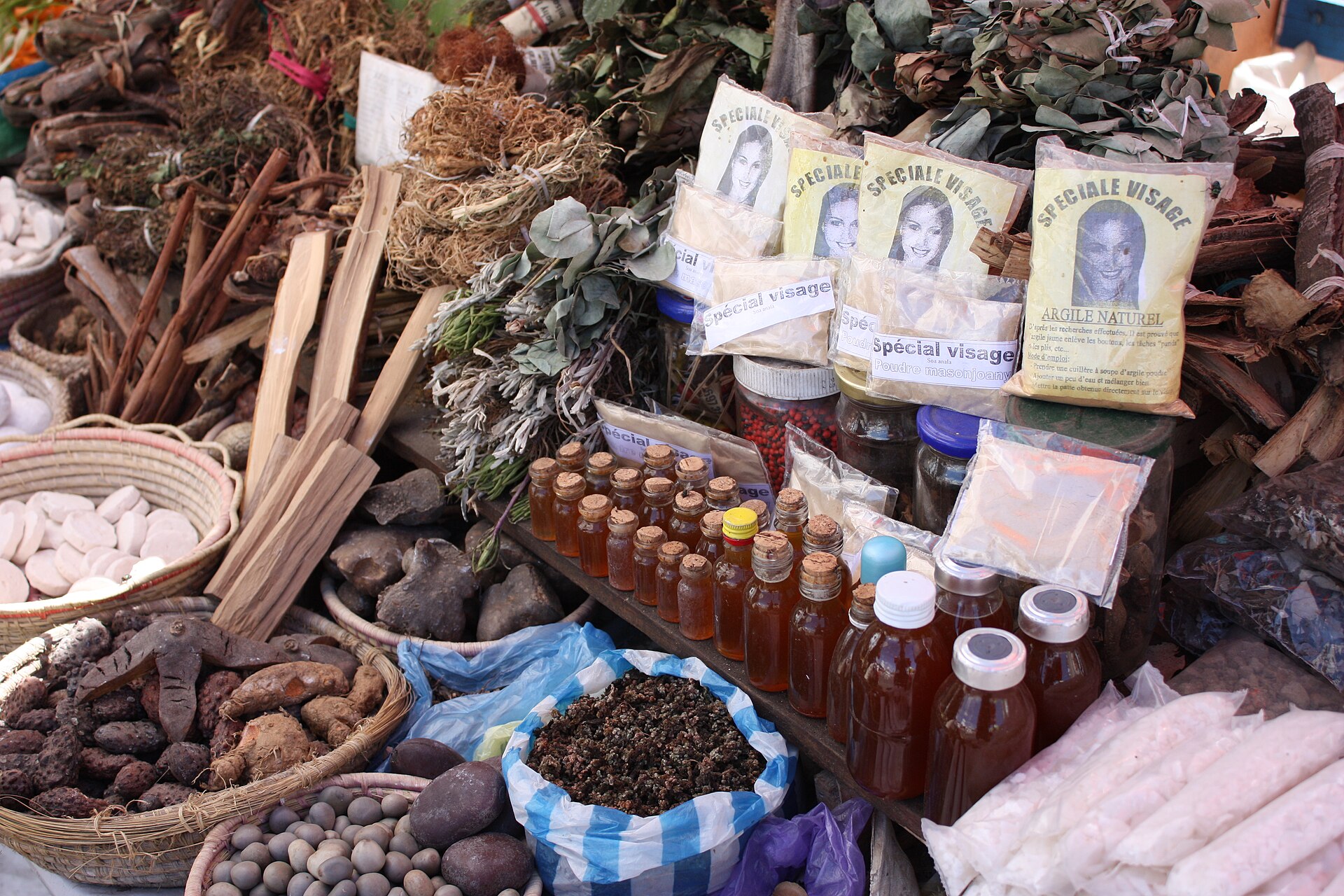
Traditional medicine in a market in Antananarivo, Madagascar/ Botánicas such as this one in Jamaica Plain, Boston
☆伝統医療[traditional medicine](土着医療または民間医療とも呼ばれる)は、近代医学の時代以前に、先住民を含む様々な社会の民間信仰の中で何世代にもわたって発展した伝統的知 識の医療的側面を指す。世界保健機関(WHO)は伝統医療を「異なる文化に固有の理論、信念、経験に基づく知識、技術、慣習の総体であり、説明可能かどう かに関わらず、保健の維持、および身体的・精神的な病気の予防、診断、改善、治療に用いられるもの」と定義している。[1] 伝統医療はしばしば根拠に基づく医療(EBM)と対比される(→代替医療[Alternative medicine])。

Botánicas
such as this one in Jamaica Plain, Boston, cater to the Latino
community and sell folk medicine alongside statues of saints, candles
decorated with prayers, lucky bamboo, and other items./ Traditional medicine in a market in Antananarivo, Madagascar
ボストンのジャマイカ・プレインにあるこのような薬草屋は、ラテン系コミュニティを対象としており、聖人の像、祈りの言葉が書かれたろうそく、幸運の竹、その他の品々とともに民間薬を販売している。
| Traditional medicine
(also known as indigenous medicine or folk medicine) comprises medical
aspects of traditional knowledge that developed over generations within
the folk beliefs of various societies, including indigenous peoples,
before the era of modern medicine. The World Health Organization (WHO)
defines traditional medicine as "the sum total of the knowledge,
skills, and practices based on the theories, beliefs, and experiences
indigenous to different cultures, whether explicable or not, used in
the maintenance of health as well as in the prevention, diagnosis,
improvement and treatment of physical and mental illness".[1]
Traditional medicine is often contrasted with Evidence based medicine. In some Asian and African countries, up to 80% of the population relies on traditional medicine for their primary health care needs. Traditional medicine is a form of alternative medicine. Practices known as traditional medicines include traditional European medicine[citation needed], traditional Chinese medicine, traditional Korean medicine, traditional African medicine, Ayurveda, Siddha medicine, Unani, ancient Iranian medicine, traditional Iranian medicine, medieval Islamic medicine, Muti, Ifá and Rongoā. Scientific disciplines that study traditional medicine include herbalism, ethnomedicine, ethnobotany, and medical anthropology. The WHO notes, however, that "inappropriate use of traditional medicines or practices can have negative or dangerous effects" and that "further research is needed to ascertain the efficacy and safety" of such practices and medicinal plants used by traditional medicine systems.[1] Its "Traditional Medicine Strategy 2014–2023" said that the WHO would "support Member States in developing proactive policies and implementing action plans that will strengthen the role traditional medicine plays in keeping populations healthy."[2] |
伝
統医療[traditional medicine](土着医療または民間医療とも呼ばれる)は、近代医学の時代以前に、先住民を含む様々な社会の民間信仰の中で何世代にもわたって発展した伝統的知識
の医療的側面を指す。世界保健機関(WHO)は伝統医療を「異なる文化に固有の理論、信念、経験に基づく知識、技術、慣習の総体であり、説明可能かどうか
に関わらず、保健の維持、および身体的・精神的な病気の予防、診断、改善、治療に用いられるもの」と定義している。[1]
伝統医療はしばしば根拠に基づく医療と対比される。 アジアやアフリカの一部の国々では、人口の80%近くが一次医療のニーズを伝統医療に頼っている。伝統医療は代替医療の一形態である。伝統医療として知ら れる慣習には、伝統的ヨーロッパ医学(要出典)、伝統中国医学、伝統韓国医学、伝統アフリカ医学、アーユルヴェーダ、シッダ医学、ユナニ医学、古代イラン 医学、伝統イラン医学、中世イスラム医学、ムティ、イファ、ロンゴアなどが含まれる。伝統医学を研究する科学分野には、薬草学、民族医学、民族植物学、医 療人類学などがある。 しかし、WHOは「伝統医学や慣習の不適切な使用は、負の影響や危険な影響をもたらす可能性がある」と指摘しており、「伝統医学システムで使用される慣習 や薬用植物の有効性と安全性を確かめるためには、さらなる研究が必要である」としている。 1] 「伝統医療戦略 2014–2023」では、WHOは「加盟国が積極的な政策を策定し、伝統医療が人々の健康維持に果たす役割を強化する行動計画を実施するのを支援する」 と述べている。[2] |
| Usage and history Classical history Further information: Medicine in ancient Greece and Medicine in ancient Rome In the written record, the study of herbs dates back 5,000 years to the ancient Sumerians, who described well-established medicinal uses for plants. In Ancient Egyptian medicine, the Ebers papyrus from c. 1552 BC records a list of folk remedies and magical medical practices.[3] The Old Testament also mentions herb use and cultivation in regards to Kashrut. Many herbs and minerals used in Ayurveda were described by ancient Indian herbalists such as Charaka and Sushruta during the 1st millennium BC.[4] The first Chinese herbal book was the Shennong Bencaojing, compiled during the Han dynasty but dating back to a much earlier date, which was later augmented as the Yaoxing Lun (Treatise on the Nature of Medicinal Herbs) during the Tang dynasty. Early recognised Greek compilers of existing and current herbal knowledge include Pythagoras and his followers, Hippocrates, Aristotle, Theophrastus, Dioscorides and Galen. Roman sources included Pliny the Elder's Natural History and Celsus's De Medicina.[5] Pedanius Dioscorides drew on and corrected earlier authors for his De Materia Medica, adding much new material; the work was translated into several languages, and Turkish, Arabic and Hebrew names were added to it over the centuries.[6] Latin manuscripts of De Materia Medica were combined with a Latin herbal by Apuleius Platonicus (Herbarium Apuleii Platonici) and were incorporated into the Anglo-Saxon codex Cotton Vitellius C.III. These early Greek and Roman compilations became the backbone of European medical theory and were translated by the Persian Avicenna (Ibn Sīnā, 980–1037), the Persian Rhazes (Rāzi, 865–925) and the Jewish Maimonides.[5] Some fossils have been used in traditional medicine since antiquity.[7] |
使用法と歴史 古典的な歴史 さらに詳しい情報:古代ギリシャの医学と古代ローマの医学 文献上の記録では、薬草学の起源は5000年前の古代シュメール人にまで遡り、彼らは植物の確立された薬用利用について記述していた。古代エジプト医学で は、紀元前1552年頃のエーベルス・パピルスに民間療法と呪術的医療行為の一覧が記録されている。[3] また、旧約聖書にもカシュルートに関する薬草の利用と栽培について言及されている。 アーユルヴェーダで使用される多くのハーブや鉱物は、紀元前1世紀にチャラカやスシュルタといった古代インディアンの薬草学者によって記述された。[4] 中国初の薬草書は、漢王朝時代に編纂された『神農本草経』であるが、実際にはそれよりもはるかに古い時代にさかのぼる。この書物は、唐王朝時代に『本草綱 目』(薬草の性質に関する論文)として増補された。現存する、そして現在の薬草に関する知識をまとめた初期のギリシャ人として、ピタゴラスとその信奉者、 ヒポクラテス、アリストテレス、テオフラストス、ディオスコリデス、ガレノスなどが挙げられる。 ローマの資料としては、プリニウスの『博物誌』やケルスの『医学について』などがある。[5] ペダニウス・ディオスコリデスは、それ以前の著者の著作を参考にし、修正を加え、さらに多くの新しい材料を追加して『薬物誌』を著した。この著作は数か国 語に翻訳され、トルコ語、アラビア語、ヘブライ語の名称が 何世紀にもわたって追加されていった。[6] 『薬物誌』のラテン語の写本は、アプレイウス・プラトニカスのラテン語の薬草書(Herbarium Apuleii Platonici)と組み合わされ、アングロ・サクソン写本コットン・ヴィテリウスC.IIIに組み込まれた。これらの初期のギリシャおよびローマの集 成は、ヨーロッパの医学理論の基盤となり、ペルシアのアヴィセンナ(イブン・シーナー、980年-1037年)、ペルシアのラゼス(ラージー、865年- 925年)、ユダヤ人のマイモニデスによって翻訳された。[5] 一部の化石は古代から伝統医療で用いられてきた。[7] |
| Medieval and later Further information: Medicine in medieval Islam and Medieval medicine of Western Europe Arabic indigenous medicine developed from the conflict between the magic-based medicine of the Bedouins and the Arabic translations of the Hellenic and Ayurvedic medical traditions.[8] Spanish medicine was influenced by the Arabs from 711 to 1492.[9] Islamic physicians and Muslim botanists such as al-Dinawari[10] and Ibn al-Baitar[11] significantly expanded on the earlier knowledge of materia medica. The most famous Persian medical treatise was Avicenna's The Canon of Medicine, which was an early pharmacopoeia and introduced clinical trials.[12][13][14] The Canon was translated into Latin in the 12th century and remained a medical authority in Europe until the 17th century. The Unani system of traditional medicine is also based on the Canon.[15] Translations of the early Roman-Greek compilations were made into German by Hieronymus Bock whose herbal, published in 1546, was called Kreuter Buch. The book was translated into Dutch as Pemptades by Rembert Dodoens (1517–1585), and from Dutch into English by Carolus Clusius, (1526–1609), published by Henry Lyte in 1578 as A Nievve Herball. This became John Gerard's (1545–1612) Herball or General Historie of Plantes.[5][6] Each new work was a compilation of existing texts with new additions. Women's folk knowledge existed in undocumented parallel with these texts.[5] Forty-four drugs, diluents, flavouring agents and emollients mentioned by Dioscorides are still listed in the official pharmacopoeias of Europe.[6] The Puritans took Gerard's work to the United States where it influenced American Indigenous medicine.[5] Francisco Hernández, physician to Philip II of Spain spent the years 1571–1577 gathering information in Mexico and then wrote Rerum Medicarum Novae Hispaniae Thesaurus, many versions of which have been published including one by Francisco Ximénez. Both Hernandez and Ximenez fitted Aztec ethnomedicinal information into the European concepts of disease such as "warm", "cold", and "moist", but it is not clear that the Aztecs used these categories.[16] Juan de Esteyneffer's Florilegio medicinal de todas las enfermedas compiled European texts and added 35 Mexican plants. Martín de la Cruz wrote a herbal in Nahuatl which was translated into Latin by Juan Badiano as Libellus de Medicinalibus Indorum Herbis or Codex Barberini, Latin 241 and given to King Carlos V of Spain in 1552.[17] It was apparently written in haste[18] and influenced by the European occupation of the previous 30 years. Fray Bernardino de Sahagún's used ethnographic methods to compile his codices that then became the Historia General de las Cosas de Nueva España, published in 1793.[17] Castore Durante published his Herbario Nuovo in 1585 describing medicinal plants from Europe and the East and West Indies. It was translated into German in 1609 and Italian editions were published for the next century. |
中世以降 さらに詳しい情報:中世イスラムの医学、西欧の中世医学 アラビアの土着医学は、ベドウィンの呪術的医学と、ギリシャやアーユルヴェーダの医学的伝統のアラビア語訳との対立から発展した。[8] スペイン医学は711年から1492年までアラブの影響を受けていた。[9] イスラム教の医師や、アル・ディナワリ[10]やイブン・アル・バイタル[11]などのイスラム教徒の植物学者は、薬用植物に関する初期の知識を大幅に拡 大した。最も有名なペルシアの医学論文は、アヴィセンナの『医学の規範』であり、これは初期の薬物類書であり、臨床試験を導入した。[12][13] [14] 『医学の規範』は12世紀にラテン語に翻訳され、17世紀までヨーロッパで医学の権威として残った。伝統医学のユナニ医学システムも『医学の規範』に基づ いている。[15] 初期のローマ・ギリシャの集成の翻訳は、ヒエロニムス・ボックによってドイツ語に翻訳された。彼のハーブに関する著書は1546年に出版され、 Kreuter Buchと呼ばれた。この本は、レムベルト・ドドエンス(1517年-1585年)によって『Pemptades』としてオランダ語に翻訳され、さらにカ ロルス・クルシウス(1526年-1609年)によって英語に翻訳された。クルシウスによる翻訳は、1578年にヘンリー・ライトによって『A Nievve Herball』として出版された。これは、ジョン・ジェラルド(1545年-1612年)の『ハーバルまたは植物の一般誌』となった。[5][6] それぞれの新しい著作は、既存のテキストに新たな追加を加えた編集版であった。 女性の民間知識は、これらの文献とは別に文書化されていない形で存在していた。[5] ディオスコリデスが言及した44種類の薬、希釈剤、香料、皮膚軟化剤は、現在でもヨーロッパの公式薬物類に記載されている。[6] ピューリタンはジェラールの著作をアメリカに持ち込み、それがアメリカ先住民の医学に影響を与えた。[5] スペイン王フェリペ2世の侍医であったフランシスコ・エルナンデスは、1571年から1577年の間メキシコで情報を収集し、その後『新イスパニアの薬物 誌』を著した。この本は、フランシスコ・キシメネスによるものを含め、多くの版が出版されている。ヘルナンデスとヒメネスは、アステカの民族薬学的情報を 「温」「冷」「湿」などのヨーロッパの疾病概念に当てはめたが、アステカ人がこれらのカテゴリーを使用していたかどうかは明らかではない。[16] フアン・デ・エステイネッフェルの『薬草集』はヨーロッパの文献をまとめ、35種類のメキシコの植物を追加した。 マルティン・デ・ラ・クルスはナワトル語で薬草書を作成し、フアン・バディアーノがラテン語に翻訳した。この翻訳は『インド人の薬草について』または『バ ルベリーニ写本』として知られ、ラテン語241で、1552年にスペイン王カルロス5世に献上された。[17] これは明らかに急いで書かれたものであり[18]、過去30年間のヨーロッパによる占領の影響を受けていた。フラ・ベルナルディノ・デ・サハグンは、民族 誌学的手法を用いて編纂した写本『ヌエバ・エスパーニャの総記』を1793年に出版した。カストロ・デュランテは1585年に『新植物誌』を出版し、ヨー ロッパ、東インド、西インドの薬用植物について記述した。この本は1609年にドイツ語に翻訳され、イタリア語版は次の世紀まで出版され続けた。 |
| Colonial America In 17th and 18th-century America, traditional folk healers, frequently women, used herbal remedies, cupping and leeching.[19] Native American traditional herbal medicine introduced cures for malaria, dysentery, scurvy, non-venereal syphilis, and goiter problems.[20] Many of these herbal and folk remedies continued on through the 19th and into the 20th century,[21] with some plant medicines forming the basis for modern pharmacology.[22] Modern usage The prevalence of folk medicine in certain areas of the world varies according to cultural norms.[23] Some modern medicine is based on plant phytochemicals that had been used in folk medicine.[24] Researchers state that many of the alternative treatments are "statistically indistinguishable from placebo treatments".[25] |
植民地時代のアメリカ 17世紀と18世紀のアメリカでは、伝統的な民間療法を行う人々(多くは女性)が、ハーブ療法、カッピング、ヒル療法を行っていた。[19] アメリカ先住民の伝統的なハーブ療法は、マラリア、赤痢、壊血病、非毒性の 非経口梅毒、甲状腺腫の問題に対する治療法を導入した。[20] これらの多くの植物療法や民間療法は19世紀から20世紀にかけて継続され、[21] いくつかの植物薬は現代薬理学の基礎となった。[22] 現代における使用 世界の特定の地域における民間療法の普及率は、文化的な規範によって異なる。[23] 現代の医療の中には、民間療法で使用されていた植物由来のフィトケミカルを基盤とするものもある。[24] 研究者たちは、代替治療の多くは「統計的にプラセボ治療と区別できない」と述べている。[25] |
| Knowledge transmission and creation Indigenous medicine is generally transmitted orally through a community, family and individuals until "collected". Within a given culture, elements of indigenous medicine knowledge may be diffusely known by many, or may be gathered and applied by those in a specific role of healer such as a shaman or midwife.[26] Three factors legitimize the role of the healer – their own beliefs, the success of their actions and the beliefs of the community.[27] When the claims of indigenous medicine become rejected by a culture, generally three types of adherents still use it – those born and socialized in it who become permanent believers, temporary believers who turn to it in crisis times, and those who only believe in specific aspects, not in all of it.[28][verification needed] |
知識の伝達と創造 伝統医療は一般的に、コミュニティ、家族、個人を通じて口頭で伝えられ、「収集」されるまで続く。特定の文化圏内では、伝統医療の知識の要素は多くの人々 に広く知られている場合もあれば、シャーマンや助産婦など特定の治療者の役割を担う人々によって収集され、応用される場合もある。[26] 治療者の役割を正当化する要因は3つある。すなわち、彼ら自身の信念、彼らの行動の成功、そしてコミュニティの信念である 。[27] 土着の医療に対する主張が文化によって否定された場合でも、一般的に3種類の信奉者が依然としてそれを利用している。すなわち、その文化の中で生まれ育 ち、永久的な信奉者となった人々、危機的な状況に陥った際に一時的にそれを利用する人々、そして、そのすべてではなく特定の側面のみを信奉する人々であ る。[28][検証必要] |
| Definition and terminology Traditional medicine may sometimes be considered as distinct from folk medicine, and considered to include formalized aspects of folk medicine. Under this definition folk medicine are longstanding remedies and practises passed on and practiced by lay people. Folk medicine consists of the healing modalities, ideas of body physiology and health preservation known to some in a culture, transmitted informally as general knowledge, and practiced or applied by anyone in the culture having prior experience.[29] |
定義と用語 伝統医療は、民間療法とは別物とみなされることもあり、民間療法の形式化された側面を含むものとみなされることもある。この定義では、民間療法とは、素人 が伝承し実践してきた長年の治療法や慣習である。民間療法は、文化の一部の人々に知られている治療法、身体生理学の考え方、保健維持法からなり、一般的な 知識として非公式に伝えられ、その文化圏で経験のある人なら誰でも実践または適用できるものである。[29] |
Folk medicine Curandera performing a limpieza in Cuenca, Ecuador Many countries have practices described as folk medicine which may coexist with formalized, science-based, and institutionalized systems of medical practice represented by conventional medicine.[30] Examples of folk medicine traditions are traditional Chinese medicine, Iranian traditional medicine, traditional Korean medicine, Arabic indigenous medicine, Uyghur traditional medicine, Japanese Kampō medicine, traditional Aboriginal bush medicine, Native Hawaiian Lāʻau lapaʻau, Curanderismo norteño,[31] and Georgian folk medicine, among others.[32] |
民間療法 エクアドルのクエンカでクレンジンガ(浄化)を行う女性治療師 多くの国では、民間療法と呼ばれる慣習が存在し、それは従来の医学に代表される、制度化され、科学に基づく医療慣行と共存している場合がある。[30] 民間療法の伝統の例としては、伝統中国医学、イラン伝統医学、伝統韓国医学、 アラブの伝統医学、ウイグルの伝統医学、日本の漢方医学、伝統的なアボリジニのブッシュ医学、ネイティブハワイアンのラアウ・ラパウ、北スペインのクラン デリスモ、[31] ジョージアの民間療法などがある。[32] |
| Australian bush medicine Main article: Bush medicine Generally, bush medicine used by Aboriginal and Torres Strait Islander people in Australia is made from plant materials, such as bark, leaves and seeds, although animal products may be used as well.[33] A major component of traditional medicine is herbal medicine, which is the use of natural plant substances to treat or prevent illness.[34] |
オーストラリアのブッシュメディスン 詳細は「ブッシュメディスン」を参照 一般的に、オーストラリアのアボリジニやトレス海峡諸島民が用いるブッシュメディスンは、樹皮、葉、種子などの植物材料から作られるが、動物由来の製品も 用いられることがある。[33] 伝統的な医療の主要な要素はハーブ療法であり、これは自然の植物物質を用いて病気の治療や予防を行うものである。[34] |
| Native American medicine Further information: Native American ethnobotany and Traditional Alaska Native medicine American Native and Alaska Native medicine are traditional forms of healing that have been around for thousands of years. There are many ethnobotany plants involved in traditional medicine for Native Americans and some are still used today. When it comes to Native American traditional medicine, the ideas surrounding health and illness within the culture are virtually inseparable from the ideas of religion and spirituality.[35] Healers within indigenous communities go by many names ranging from medicine man or woman to herbalist or even shaman and are considered spiritual or religious leaders within their respective tribes.[35] When it comes to healing, tribal healers would look at a plant's characteristics to determine its efficacy for the treatment of an illness.[36] Specific plant characteristics such as plant shape, smell, color, and taste could aid in determining how the plant could be used as a remedy.[36] The Meskwaki tribe found they could use the juice from Arum maculatum for snakebites.[36] This was inferred from the milky appearance of the juice from the plant which is said to resemble snake venom, and the plant's shape resembled the head of a snake.[36] Native Americans used foxglove herb as a treatment for an illness they referred to as dropsy or edema, which is fluid buildup typically in the lower legs, and its common cause is heart failure.[36] In modern medicine, foxglove extract is still used under the name digitalis, and its purpose is to moderate the heart rate.[36] Native Americans were successful with some medical practices, such as treating fevers, gastrointestinal conditions, skin rashes, setting bones, as well as birthing babies, and aiding mothers in healing.[36] A study conducted within an IHS hospital that allows Navajo healers to visit patients found that the hospital had an 80 percent success rate in getting comatose patients back to consciousness, which is higher than the rate of present-day biomedical management hospitals.[35] The plant family Asteraceae has been commonly selected for orthopedic aids and pulmonary aids, specifically the species Achillea and Artemisia.[37] A study conducted amongst 14 different tribes within North America found that Asteraceae was the most widely used plant family for its medicinal properties.[37] |
ネイティブアメリカンの医学 詳細情報:ネイティブアメリカンの民族植物学と伝統的アラスカ先住民の医学 アメリカ先住民とアラスカ先住民の医学は、数千年の歴史を持つ伝統的な治療法である。 ネイティブアメリカンの伝統医療には多くの民族植物学の植物が関わっており、その一部は現在でも使用されている。ネイティブアメリカンの伝統医療に関して は、文化における保健と疾病に関する考え方は、宗教と精神性の考え方とほぼ切り離せないものである。[35] 先住民コミュニティの治療者は、メディスンマンやメディスンウーマン、ハーバリスト、さらにはシャーマンなど、さまざまな名称で呼ばれ、それぞれの部族に おける精神的または宗教的指導者とみなされている。[35] 治療に関しては、部族の治療者は、 その植物の特性を観察し、病気の治療に有効かどうかを判断した。[36] 植物の形状、匂い、色、味といった特定の特性が、その植物を治療薬としてどのように使用できるかを決定する手助けとなった。[36] メスクワキ族は、マムシに咬まれた際には、トリカブトの汁が有効であることを発見した。[36] このことは、その植物の汁が乳白色であることから推測された。蛇毒に似ているとされ、また植物の形状が蛇の頭部に似ていたためである。[36] アメリカ先住民は、狐の手袋の根を浮腫や水腫と呼ばれる病気の治療に用いていた。これは通常、下腿に体液が溜まるもので、一般的な原因は心不全である。 [36] 現代医学では、ジギタリスの名で今でも狐の手袋の抽出物が用いられており、その その目的は心拍数を適度にすることである。[36] ネイティブアメリカンは、発熱、胃腸障害、皮膚発疹、骨折の治療、出産、母親の回復の補助など、いくつかの医療行為に成功していた。[36] ナバホ族のヒーラーが患者を訪問できるIHS病院で行われた研究では、病院は昏睡状態の患者を意識を取り戻させることに80パーセントの成功率を達成して おり、 。これは、現代の生物医学的管理病院の成功率よりも高い数字である。[35]キク科の植物は、一般的に矯正補助や肺補助に選ばれており、特に、 AchilleaとArtemisiaの種が選ばれている。[37]北米の14の異なる部族を対象に実施された研究では、キク科が薬効成分として最も広く 使用されている植物であることが分かった。[37] |
| Nattuvaidyam Nattuvaidyam was a set of indigenous medical practices that existed in India before the advent of allopathic or western medicine.[38] These practices had different sets of principles and ideas of the body, health and disease. There were overlaps and borrowing of ideas, medicinal compounds used and techniques within these practices.[39] Some of these practices had written texts in vernacular languages like Malayalam, Tamil, Telugu, etc. while others were handed down orally through various mnemonic devices. Ayurveda was one kind of nattuvaidyam practised in south India.[40] The others were kalarichikitsa (related to bone setting and musculature),[41] marmachikitsa (vital spot massaging), ottamoolivaidyam (single dose medicine or single time medication),[42] chintamanivaidyam and so on. When the medical system was revamped in twentieth century India, many of the practices and techniques specific to some of these diverse nattuvaidyam were included in Ayurveda.[43] |
Nattuvaidyam Nattuvaidyamは、インドに西洋医学が伝わる以前から存在していた、インド固有の医療行為のセットである。[38] これらの医療行為には、身体、保健、疾患に関する異なる原則や考え方が存在していた。これらの慣習には、考え方や、使用される薬用化合物、技術の重複や借 用が見られる。[39] これらの慣習の一部は、マラヤーラム語、タミル語、テルグ語などの現地語で書かれたテキストが存在するが、その他の慣習は、さまざまな記憶術を通じて口頭 で伝えられてきた。アーユルヴェーダは南インドで実践されていたナットゥヴァイディヤムの一種である。[40] その他には、カラリキティクサ(骨の矯正と筋肉に関するもの)、[41] マルマチキクサ(ツボマッサージ)、オッタムリヴァイディヤム(単回投与薬または単回投薬)、[42] チンタマニヴァイディヤムなどがある。20世紀のインドで医療制度が刷新された際、これらの多様なナットゥヴァイディヤの一部に特有の慣行や技術の多くが アーユルヴェーダに取り入れられた。[43] |
| Home remedies A home remedy (sometimes also referred to as a granny cure) is a treatment to cure a disease or ailment that employs certain spices, herbs, vegetables, or other common items. Home remedies may or may not have medicinal properties that treat or cure the disease or ailment in question, as they are typically passed along by laypersons (which has been facilitated in recent years by the Internet). Many are merely used as a result of tradition or habit or because they are effective in inducing the placebo effect.[44] One of the more popular examples of a home remedy is the use of chicken soup as an aid in treating respiratory infections such as a cold or mild flu. Other examples of home remedies include duct tape to help with setting broken bones; duct tape or superglue to treat plantar warts; and Kogel mogel to treat sore throat. In earlier times, mothers were entrusted with all but serious remedies. Historic cookbooks are frequently full of remedies for dyspepsia, fevers, and female complaints.[45] Components of the aloe vera plant are used to treat skin disorders.[46] Many European liqueurs or digestifs were originally sold as medicinal remedies. In Chinese folk medicine, medicinal congees (long-cooked rice soups with herbs), foods, and soups are part of treatment practices.[47] |
家庭療法 家庭療法(おばあちゃんの知恵袋とも呼ばれる)とは、特定のスパイス、ハーブ、野菜、またはその他の一般的な品目を用いて病気を治す治療法である。家庭療 法は、通常、素人が伝えているため(近年ではインターネットによって促進されている)、問題となっている病気や疾患を治療または治癒する薬効成分を持つ場 合もあれば、持たない場合もある。多くは単に伝統や習慣として、あるいはプラシーボ効果を誘発するのに効果的であるという理由で用いられているに過ぎな い。[44] 家庭療法の例としてよく知られているものに、風邪や軽度のインフルエンザなどの呼吸器感染症の治療にチキンスープを用いるというものがある。 その他の家庭療法の例としては、ガムテープを骨折の固定に用いる、ガムテープや瞬間接着剤を足底疣贅の治療に用いる、Kogel mogelを喉の痛みの治療に用いるなどがある。 以前は、深刻な治療法以外はすべて母親に任されていた。歴史的な料理本には、消化不良、発熱、婦人病の治療法が数多く記載されていることが多い。[45] アロエベラの成分は皮膚疾患の治療に用いられる。[46] ヨーロッパのリキュールや食後酒の多くは、もともと薬として販売されていた。中国の民間療法では、薬膳粥(薬草入りの長時間煮込んだ米のスープ)、食品、 スープが治療の一環として用いられている。[47] |
| Criticism Safety concerns Although 130 countries have regulations on folk medicines, there are risks associated with the use of them (i.e. zoonosis, mainly as some traditional medicines still use animal-based substances[48][49]). It is often assumed that because supposed medicines are natural that they are safe, but numerous precautions are associated with using herbal remedies.[50] Use of endangered species  Sometimes traditional medicines include parts of endangered species, such as the slow loris in Southeast Asia. Endangered animals, such as the slow loris, are sometimes killed to make traditional medicines.[51] Shark fins have also been used in traditional medicine, and although their effectiveness has not been proven, it is hurting shark populations and their ecosystem.[52] The illegal ivory trade can partially be traced back to buyers of traditional Chinese medicine. Demand for ivory is a huge factor in the poaching of endangered species such as rhinos and elephants.[53] Pangolins are threatened by poaching for their meat and scales, which are used in traditional medicine. They are the most trafficked mammals in the world. |
批判 安全性への懸念 130カ国が民間薬に関する規制を設けているが、それらの使用にはリスクが伴う(すなわち、動物由来の物質を使用している伝統薬が依然としてあるため、主 に人獣共通感染症のリスクがある[48][49])。 薬効があるとされるものは自然由来であるため安全であると想定されることが多いが、ハーブ療法の利用には数多くの注意が必要である。 絶滅危惧種の利用 伝統的な薬には、東南アジアのスローロリスなど絶滅危惧種の部位が含まれることがある。 スローロリスなどの絶滅危惧種は、伝統的な薬を作るために殺されることもある。 また、サメのヒレは伝統的な薬として利用されてきたが、その有効性は証明されていないにもかかわらず、サメの個体数と生態系に悪影響を与えている。 違法な象牙取引は、一部、漢方薬のバイヤーにまで遡ることができる。象牙の需要は、サイやゾウなどの絶滅危惧種の密猟の大きな要因となっている。 センザンコウは、その肉と鱗が伝統薬として利用されるために密猟の脅威にさらされている。センザンコウは世界で最も密売されている哺乳類である。 |
| Ayurveda Bioprospecting Folk healer Herbal medicine Jarrah (surgeon) Medicinal plants Native American ethnobotany Old wives' tale Pharmacognosy Traditional African medicine Traditional Chinese medicine Traditional Knowledge Digital Library List of forms of alternative medicine |
アーユルヴェーダ 生物資源探索 民間療法医 漢方薬 ジャラ(外科医) 薬用植物 ネイティブアメリカンの民族植物学 昔から伝わる言い伝え 生薬学 アフリカ伝統医学 中国伝統医学 伝統的知識デジタルライブラリー 代替医療の形態の一覧 |
| https://en.wikipedia.org/wiki/Traditional_medicine |
|
| References "Traditional Medicine: Questions and answers". World Health Organization. 2025-11-28. Retrieved 2026-02-02. Oyebode, Oyinlola; Kandala, Ngianga-Bakwin; Chilton, Peter J.; Lilford, Richard J. (October 2016). "Use of traditional medicine in middle-income countries: a WHO-SAGE study". Health Policy and Planning. 31 (8): 984–991. doi:10.1093/heapol/czw022. ISSN 1460-2237. PMC 5013777. PMID 27033366. "WHO Traditional, Complementary and Integrative Medicine (TCIM) Global Dashboard". Microsoft Power BI. World Health Organization. Retrieved 2026-02-02. "Ebers' Papyrus". University of Leipzig Library. 2025. Retrieved 12 August 2025. Girish Dwivedi, Shridhar Dwivedi (2007). History of Medicine: Sushruta – the Clinician – Teacher par Excellence (PDF). National Informatics Centre. Archived from the original (PDF) on 2008-10-10. Retrieved 2008-10-08. Kay, MA (1996). Healing with plants in the American and Mexican West. Tucson: University of Arizona Press. pp. 19–20. ISBN 978-0-8165-1646-9. Raphael, Sandra; Blunt, Wilfrid (1994). The Illustrated herbal. London: Frances Lincoln. ISBN 978-0-7112-0914-5. van der Geer, Alexandra; Dermitzakis, Michael (2010). "Fossils in pharmacy: from "snake eggs" to "Saint's bones"; an overview" (PDF). Hellenic Journal of Geosciences. 45: 323–332. Slikkerveer, L. J. (1990). Plural medical systems in the Horn of Africa: the legacy of "Sheikh" Hippocrates. London: Kegan Paul International. ISBN 978-0-7103-0203-8. García Sánchez, E; Carabaza Bravo, JM; Hernández Bermejo, JE; Ramírez, AJ (1990). "Árboles y arbustos en los textos agrícolas andalusíes (I)". In e Morales Ruiz Matas CA (ed.). Ciencias de la naturaleza en Al-Andalus : textos y estudios (in Spanish). Consejo Superior de Investigaciones Científicas. ISBN 978-84-00-07727-3. Fahd, Toufic (1996). "Botany and agriculture". In Rashed, Roshdi; Morelon, Régis (eds.). Encyclopedia of the History of Arabic Science. Routledge. p. 815. ISBN 978-0-415-02063-3. Diane Boulanger (2002), "The Islamic Contribution to Science, Mathematics and Technology", OISE Papers, in STSE Education, Vol. 3. Tschanz David W (2003). "Arab Roots of European Medicine". Heart Views. 4: 2. Eldredge Jonathan D (2003). "The Randomised Controlled Trial design: unrecognized opportunities for health sciences librarianship". Health Information and Libraries Journal. 20: 34–44 [36]. doi:10.1046/j.1365-2532.20.s1.7.x. PMID 12757434. Bloom Bernard S., Retbi Aurelia, Dahan Sandrine, Jonsson Egon (2000). "Evaluation Of Randomized Controlled Trials On Complementary And Alternative Medicine". International Journal of Technology Assessment in Health Care. 16 (1): 13–21 [19]. doi:10.1017/s0266462300016123. PMID 10815350. S2CID 30959480. Heller, M.; Edelstein, P.; Mayer, M. (2001). Traditional medicine in Asia (PDF). World Health Organization. p. 31. ISBN 9789290222248. Archived from the original (PDF) on July 31, 2020. Retrieved 24 April 2020. Ortiz de Montellano, B (1975). "Empirical Aztec medicine". Science. 188 (4185): 215–20. doi:10.1126/science.1090996. PMID 1090996. Heinrich, M; Pieroni, A; Bremner, P (2005). "Plants as medicines". In Prance G; Nesbitt M (eds.). The Cultural history of plants. Routledge. pp. 205–238. ISBN 978-0-415-92746-8. Lozoya, Xavier (2016). "Libellus de Medicinalibus Indorum Herbis (Librito de las yerbas medicinales de los indios) o Códice Badiano". Arqueología Mexicana. Rosalyn Fraad Baxandall, Linda Gordon, Susan Reverb, America's Working Women: A Documentary History, 1600 to the Present, W. W. Norton & Company, 1995, p. 50 Madsen, Deborah L. The Routledge Companion to Native American Literature, Routledge, 2015 Swerdlow JL. Medicine Changes: late 19th to early 20th century. Nature's Medicine: Plants that Heal. Washington, D.C.: National Geographic Society; 2000. pp. 158–91. Eugenia M. Fulcher, Robert M. Fulcher, Cathy Dubeansky, Pharmacology: Principles and Applications'', Soto Elsevier Health Sciences, 2014, p. 5 Bakx Keith (1991). "The 'eclipse' of folk medicine in western society". Sociology of Health and Illness. 13: 20–38. doi:10.1111/1467-9566.ep11340307. Gilani, A.H., (2005) Role of Medicinal Plants in Modern Medicine. Malaysian Journal of Science, 24 (1). pp. 1-5." Deprecated link archived 2012-08-05 at archive.today ISSN 1394-3065 The Economist, "Alternative Medicine: Think yourself better", 21 May 2011, pp. 83–84. The Guardian, "[1]", 20 December 2025, Web. Acharya, D; Anshu S (2008). Indigenous Herbal Medicines: Tribal Formulations and Traditional Herbal Practices. Jaipur: Aavishkar Publishers. ISBN 978-81-7910-252-7. Maurice Mwu, Eric Gbodossou (December 2000). "ALTERNATIVE MEDICINE: NIGERIA The role of traditional medicine" (PDF). The Lancet. Laguerre, Michel S. (1987). Afro-Caribbean folk medicine. New York: Bergin & Garvey. p. 11. ISBN 978-0-89789-113-4. Acharya, Deepak and Shrivastava Anshu (2008): Indigenous Herbal Medicines: Tribal Formulations and Traditional Herbal Practices, Aavishkar Publishers Distributor, Jaipur- India. ISBN 978-81-7910-252-7. pp 440. "Traditional, complementary and integrative medicine". World Health Organization. 2018. Archived from the original on October 14, 2017. Retrieved 7 May 2018. "Declaran Patrimonio Cultural de la Nación a los conocimientos, saberes y usos del cactus San Pedro". elperuano.pe (in Spanish). 2022-11-17. Retrieved 2024-09-20. Puca, Angela (2024). Italian Witchcraft and Shamanism: The Tradition of Segnature, Indigenous and Trans-cultural Shamanic Traditions in Italy. Leiden, The Netherlands: Koninklijke Brill NV. doi:10.1163/9789004694187. ISBN 978-90-04-69417-0. "WHO Traditional Medicine Strategy 2014-2023" (PDF). World Health Organization. 2013. Retrieved 7 May 2018. "Traditional Aboriginal Bush Medicine". Aboriginal Art Online. Archived from the original on 25 May 2013. Retrieved 26 June 2013. "Select Your Library - Credo Reference". search.credoreference.com. Retrieved 2015-04-17. Johnston, Susan L. (2002). "Native American Traditional and Alternative Medicine". The Annals of the American Academy of Political and Social Science. 583 (1): 195–213. doi:10.1177/000271620258300113. ISSN 0002-7162. S2CID 145332334. Shally-Jensen, Michael (2019). Alternative healing in American history: an encyclopedia from acupuncture to yoga. Santa Barbara, California: Greenwood Press. ISBN 9781440860331. OCLC 1086616314. Kachura, Alexandra; Harris, Cory S. (2021-08-27). "An ethnobotanical meta-analysis of North American medicinal Asteraceae1". Botany. 100 (2): 207–217. doi:10.1139/cjb-2021-0079. hdl:1807/107638. S2CID 239650509. K P, Girija (2016). "Sites of knowledge situating select indigenous knowledge systems and modern education". Shodhganga : a reservoir of Indian theses @ INFLIBNET. hdl:10603/148255. Retrieved 7 April 2021. Wujastyk, Dagmar; Smith, Frederick M. (9 September 2013). Modern and Global Ayurveda: Pluralism and Paradigms. SUNY Press. pp. 1–8. ISBN 9780791478165. K P, Girija (2016). "Refiguring of Ayurveda as Classical Tradition". Pragmata: Journal of Human Sciences. 3: 43–62. TNN (22 Jul 2019). "Those availing kalari marma chikitsa on the rise". The Times of India. Retrieved 9 April 2021. Girija, K.P. (2021). Mapping the History of Ayurveda: Culture, Hegemony and the Rhetoric of Diversity. Taylor & Francis Group. ISBN 9780367273002. "Placebo Effect: A Cure in the Mind". Scientific American. February–March 2009. Catherine Esther Beecher Mrs. Beecher's Housekeeper and Healthkeeper 1874. Retrieved on 2007-11-05. Sidgwick, G. P; McGeorge, D; Bayat, A (2015). "A comprehensive evidence-based review on the role of topicals and dressings in the management of skin scarring". Archives of Dermatological Research. 307 (6): 461–477. doi:10.1007/s00403-015-1572-0. PMC 4506744. PMID 26044054. Prince Wen Hui's Cook Bob Flaws and Honora Wolf 1985 Africa's growing risk of diseases that spread from animals to people Still, J. (2003). "Use of animal products in traditional Chinese medicine: Environmental impact and health hazards". Complementary Therapies in Medicine. 11 (2): 118–122. doi:10.1016/s0965-2299(03)00055-4. PMID 12801499. "National Policy on Traditional Medicine and Regulation of Herbal Medicines - Report of a WHO Global Survey". World Health Organization. April 2016. Archived from the original on May 24, 2009. Starr, C.; Nekaris, K. A. I.; Streicher, U.; Leung, L. K. -P. (2011). "Field surveys of the Vulnerable pygmy slow loris Nycticebus pygmaeus using local knowledge in Mondulkiri Province, Cambodia". Oryx. 45 (1): 135–142. doi:10.1017/S0030605310001316. "Traditional medicines continue to thrive globally". www.cnn.com. CNN. Retrieved 2016-04-25. Gao, Yufang; Clark, Susan G. (1 December 2014). "Elephant ivory trade in China: Trends and drivers". Biological Conservation. 180: 23–30. Bibcode:2014BCons.180...23G. doi:10.1016/j.biocon.2014.09.020. ISSN 0006-3207. |
参考文献 「伝統医療:Q&A」。世界保健機関。2025年11月28日。2026年2月2日に閲覧。 Oyebode, Oyinlola; Kandala, Ngianga-Bakwin; Chilton, Peter J.; Lilford, Richard J. (2016年10月)。「中所得国における伝統医学の利用:WHO-SAGE調査」。『Health Policy and Planning』。31巻8号:984–991頁。doi:10.1093/heapol/czw022。ISSN 1460-2237。PMC 5013777。PMID 27033366。 「WHO伝統・補完・統合医療(TCIM)グローバル・ダッシュボード」。Microsoft Power BI。世界保健機関。2026年2月2日閲覧。 「エーベルス・パピルス」。ライプツィヒ大学図書館。2025年。2025年8月12日閲覧。 ギリッシュ・ドウィヴェディ、シュリダール・ドウィヴェディ(2007年)。『医学史:スシュルタ――卓越した臨床医・教育者』(PDF)。国立情報学センター。2008年10月10日にオリジナル(PDF)からアーカイブされた。2008年10月8日閲覧。 ケイ、M.A.(1996)。『アメリカおよびメキシコ西部における植物を用いた治療』。ツーソン:アリゾナ大学出版局。pp. 19–20。ISBN 978-0-8165-1646-9. ラファエル、サンドラ;ブラント、ウィルフリッド(1994)。『イラスト付きハーブ図鑑』。ロンドン:フランシス・リンカーン。ISBN 978-0-7112-0914-5。 ファン・デル・ギア、アレクサンドラ;デルミツァキス、マイケル(2010)。「薬学における化石:『蛇の卵』から『聖人の骨』まで;概観」(PDF)。『Hellenic Journal of Geosciences』45: 323–332. スリッカーヴィア、L. J. (1990). 『アフリカの角における複数の医療体系:「シェイク」ヒポクラテスの遺産』。ロンドン:キーガン・ポール・インターナショナル。ISBN 978-0-7103-0203-8. ガルシア・サンチェス, E; カラバサ・ブラボ, JM; エルナンデス・ベルメホ, JE; ラミレス, AJ (1990). 「アンダルスの農業文献における樹木と低木(I)」. モラレス・ルイス・マタス CA (編) 所収。『アル=アンダルスの自然科学:テキストと研究』(スペイン語)。スペイン国立研究評議会。ISBN 978-84-00-07727-3。 ファフド、トゥフィック(1996)。「植物学と農業」。ラシェド、ロシュディ;モレロン、レジス(編)。『アラビア科学史事典』。ラウトリッジ。p. 815。ISBN 978-0-415-02063-3。 ダイアン・ブーランジェ(2002)、「科学、数学、技術へのイスラムの貢献」、OISE Papers、STSE Education、第3巻。 ツチャンツ・デビッド・W(2003)。「ヨーロッパ医学のアラビアのルーツ」。『ハート・ビューズ』。4: 2. エルドレッド・ジョナサン・D(2003)。「無作為化比較試験のデザイン:保健科学図書館学における未認識の機会」。『ヘルス・インフォ メーション・アンド・ライブラリーズ・ジャーナル』。20: 34–44 [36]。doi:10.1046/j.1365-2532.20.s1.7.x. PMID 12757434. ブルーム・バーナード・S、レトビ・アウレリア、ダハン・サンドリーヌ、ヨンソン・エゴン (2000). 「補完・代替医療に関するランダム化比較試験の評価」. 『International Journal of Technology Assessment in Health Care』. 16 (1): 13–21 [19]. doi:10.1017/s0266462300016123. PMID 10815350. S2CID 30959480. ヘラー, M.; エデルスタイン, P.; メイヤー, M. (2001). 『アジアの伝統医学』 (PDF). 世界保健機関. p. 31. ISBN 9789290222248. 2020年7月31日にオリジナル (PDF) からアーカイブされた。2020年4月24日閲覧。 オルティス・デ・モンテジャノ, B (1975). 「アステカの経験医学」. Science. 188 (4185): 215–20. doi:10.1126/science.1090996. PMID 1090996. ハインリッヒ, M; ピエロニ, A; ブレムナー, P (2005). 「薬としての植物」. プランス G; ネスビット M (編). 『植物の文化史』. ラウトリッジ. pp. 205–238. ISBN 978-0-415-92746-8. ロソヤ, ザビエル (2016). 「Libellus de Medicinalibus Indorum Herbis (Librito de las yerbas medicinales de los indios) o Códice Badiano」。『Arqueología Mexicana』。 ロザリン・フラッド・バクサンドール、リンダ・ゴードン、スーザン・リバーブ、『アメリカの働く女性たち:1600年から現在までのドキュメンタリー史』、W. W. ノートン・アンド・カンパニー、1995年、p. 50 マドセン、デボラ・L. 『ネイティブ・アメリカン文学のラウトリッジ・コンパニオン』、ラウトリッジ、2015年 スワードロー、J.L. 『医療の変遷:19世紀後半から20世紀初頭』。 『ネイチャーズ・メディシン:癒しの植物』。ワシントンD.C.:ナショナル・ジオグラフィック協会;2000年。pp. 158–91. ユージニア・M・フルチャー、ロバート・M・フルチャー、キャシー・デュベアンスキー、『薬理学:原理と応用』、ソト・エルゼビア・ヘルス・サイエンシズ、2014年、p. 5 バックス・キース(1991)。「西洋社会における民間医療の『衰退』」。『健康と病気の社会学』。13: 20–38。doi:10.1111/1467-9566.ep11340307. ギラニ、A.H.、(2005)『現代医学における薬用植物の役割』。『マレーシア科学ジャーナル』、24 (1)。pp. 1-5。リンク切れ、2012年8月5日にarchive.todayにてアーカイブ済み ISSN 1394-3065 『エコノミスト』、「代替医療:思考で健康になる」、2011年5月21日、pp. 83–84。 ガーディアン紙、「[1]」、2025年12月20日、Web. Acharya, D; Anshu S (2008). 『先住民のハーブ薬:部族の処方と伝統的なハーブ療法』。ジャイプール:Aavishkar Publishers。ISBN 978-81-7910-252-7。 モーリス・ムウ、エリック・グボドスー(2000年12月)。「代替医療:ナイジェリア 伝統医療の役割」(PDF)。『ランセット』。 ラゲール、ミシェル・S.(1987)。『アフロ・カリブ海の民間医療』。ニューヨーク:バーギン&ガーベイ。p. 11。ISBN 978-0-89789-113-4. アチャリヤ、ディーパックおよびシュリヴァスタヴァ、アンシュ(2008年):『先住民のハーブ薬:部族の処方と伝統的なハーブ療法』、ア ヴィシュカル・パブリッシャーズ・ディストリビューター、ジャイプール(インド)。ISBN 978-81-7910-252-7。440ページ。 「伝統的・補完的・統合医療」。世界保健機関。2018年。2017年10月14日にオリジナルからアーカイブされた。2018年5月7日閲覧。 「サン・ペドロ・サボテンの知識、知恵、利用法が国家文化遺産に指定される」。elperuano.pe(スペイン語)。2022年11月17日。2024年9月20日に閲覧。 プカ、アンジェラ(2024)。『イタリアの妖術とシャーマニズム:セグナトゥーラの伝統、イタリアにおける先住民およびトランスカルチュラ ルなシャーマニズムの伝統』。オランダ、ライデン:Koninklijke Brill NV。doi:10.1163/9789004694187。ISBN 978-90-04-69417-0. 「WHO伝統医療戦略 2014-2023」 (PDF). 世界保健機関. 2013年. 2018年5月7日閲覧. 「伝統的なアボリジニのブッシュ・メディシン」. アボリジニ・アート・オンライン. 2013年5月25日にオリジナルからアーカイブ. 2013年6月26日閲覧。 「図書館を選択 - Credo Reference」。search.credoreference.com。2015年4月17日閲覧。 ジョンストン、スーザン・L. (2002)。「ネイティブ・アメリカンの伝統医学および代替医療」。『アメリカ政治社会科学アカデミー紀要』。583 (1): 195–213。doi:10.1177/000271620258300113. ISSN 0002-7162. S2CID 145332334. シャリー=ジェンセン、マイケル(2019年)。『アメリカ史における代替療法:鍼灸からヨガまでの百科事典』。カリフォルニア州サンタバーバラ:グリーンウッド・プレス。ISBN 9781440860331. OCLC 1086616314. カチュラ、アレクサンドラ;ハリス、コーリー・S. (2021-08-27). 「北米の薬用キク科植物に関する民族植物学的メタ分析1」. 『ボタニー』. 100 (2): 207–217. doi:10.1139/cjb-2021-0079. hdl:1807/107638. S2CID 239650509. K P, Girija (2016). 「特定の先住民の知識体系と現代教育を位置づける知識の場」. Shodhganga : a reservoir of Indian theses @ INFLIBNET. hdl:10603/148255. 2021年4月7日閲覧。 Wujastyk, Dagmar; Smith, Frederick M. (2013年9月9日). 『現代およびグローバルなアーユルヴェーダ:多元主義とパラダイム』. SUNY Press. pp. 1–8. ISBN 9780791478165. K P, Girija (2016). 「古典的伝統としてのアーユルヴェーダの再構築」. Pragmata: Journal of Human Sciences. 3: 43–62. TNN (2019年7月22日). 「カラリ・マルマ・チキツァを利用する人が増加中」。『タイムズ・オブ・インディア』。2021年4月9日閲覧。 ギリジャ、K.P.(2021年)。『アーユルヴェーダの歴史のマッピング:文化、ヘゲモニー、そして多様性のレトリック』。テイラー&フランシス・グループ。ISBN 9780367273002。 「プラセボ効果:心による治癒」。『サイエンティフィック・アメリカン』。2009年2月–3月号。 キャサリン・エスター・ビーチャー 『ビーチャー夫人の家政婦兼健康管理人』 1874年。2007年11月5日に閲覧。 シジウィック、G. P; マクジョージ、D; バヤット、A (2015)。「皮膚瘢痕の管理における外用薬および被覆材の役割に関する包括的なエビデンスに基づくレビュー」。『Archives of Dermatological Research』。307 (6): 461–477. doi:10.1007/s00403-015-1572-0. PMC 4506744. PMID 26044054. プリンス・ウェン・フイ、ボブ・フラウズ、ホノラ・ウルフ 1985 動物から人へ感染する疾病のリスクが高まるアフリカ スティル、J. (2003). 「伝統中国医学における動物性製品の使用:環境への影響と健康被害」. 『Complementary Therapies in Medicine』. 11 (2): 118–122. doi:10.1016/s0965-2299(03)00055-4. PMID 12801499. 「伝統医学に関する国家政策と生薬の規制 - WHOグローバル調査報告書」。世界保健機関。2016年4月。2009年5月24日にオリジナルからアーカイブされた。 Starr, C.; Nekaris, K. A. I.; Streicher, U.; Leung, L. K. -P. (2011). 「カンボジア・モンドルキリ州における現地の知見を活用した、絶滅危惧種ピグミー・スローロリス(Nycticebus pygmaeus)の現地調査」. Oryx. 45 (1): 135–142. doi:10.1017/S0030605310001316. 「伝統医学は世界中で依然として盛んである」。www.cnn.com。CNN。2016年4月25日閲覧。 Gao, Yufang; Clark, Susan G. (2014年12月1日)。「中国における象牙取引:動向と要因」。『Biological Conservation』. 180: 23–30. Bibcode:2014BCons.180...23G. doi:10.1016/j.biocon.2014.09.020. ISSN 0006-3207. |
| https://en.wikipedia.org/wiki/Traditional_medicine | |
リ ンク
文 献
そ の他の情報
Copyleft, CC, Mitzub'ixi Quq Chi'j, 1996-2099

☆
 ☆
☆
