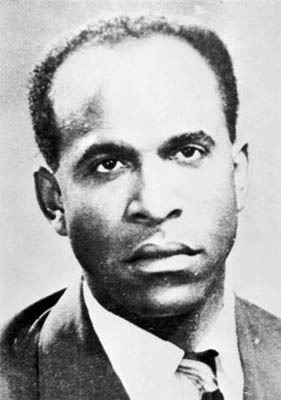

ファノン「暴力について」
Les damnés de la terre, reconsidered, How did the colonialists refine their violence?
フランツ・ファノン(1925 -1961)
☆このページは『大地の惨めな者たち(地に呪われた る者)』 (原題:Les Damnés de la Terre)の第1章「暴力について」の英訳文の対訳である。
★ 『大地の惨めな者たち(地に呪われたる者)』 (原題:Les Damnés de la Terre)は、哲学者フランツ・ファノンが1961年に著した著作。この本では、植民地化によって個人や国民が人間性を奪われる心理的効果を分析し、個 人や人民の脱植民地化のための社会運動の確立が、社会、文化、政治に与える広範な影響について論じている。フランス語のタイトルは、「インターナショナ ル」の冒頭の歌詞に由来すると考える人もいるが、これは英語のタイトルにも反映されている。しかし、ファノンの伝記作家であるアダム・シャッツは、このタ イトルはジャック・ルメインの詩「Sales négres」(汚いニグロたち)に由来すると主張している。
「権力というものを、否定と拒否と排除のメカニズムの総体だと考えてはならないことを想起す る必要があります。権力は実際に、作りだす力をもつ ものなのです」(フーコー2008[June, 1975]:30)■出典:ミッシェル・フーコー『私は花火師です』中山元訳、筑摩 書房、2008年[→ミッシェル・フーコーの権力論:主に前期から中期]
「〈第三世界〉は、自己に先立つ諸価値との関係において自己を定義するだけで満足すべきでは ない。反対に後進 国はその固有の価値を、その特有な方法やスタイルを、知らしめるべくつとめねばならない。……ヨーロッパとは文字どおり〈第三世界〉の作り出したものであ る」(p.97, p.100)。ファノン『地に呪われたる者』鈴木道彦, 浦野衣子訳,みすず書房 , 1996年(→ファノン・のーと)
●コロニアリズムの暴力
●植民地の飼い慣らし
●文明化という課題
●宗主国の優越性の担保
●人種性を超えた人権概念の創造
●恣意的な「自律と自己決定」の設定
●フォークとフォークロアの誕生
☆GROVE PRESS版, "The Wretched of the Earth, " 1963の目次
|
|
★第1章 暴力について——The wretched of the earth / Frantz Fanon ; preface by Jean-Paul Sartre ; translated by Constance Farrington.
| National liberation,
national renaissance, the restoration of nationhood to the people,
commonwealth: whatever may be the headings used or the new formulas
introduced, decolonization is always a violent phenomenon. At whatever
level we study it—relationships between individuals, new names for
sports clubs, the human admixture at cocktail parties, in the police,
on the directing boards of national or private banks—decolonization is
quite simply the replacing of a certain "species" of men by another
"species" of men. Without any period of transition, there is a total,
complete, and absolute substitution. It is true that we could equally
well stress the rise of a new nation, the setting up of a new state,
its diplomatic relations, and its economic and political trends. But we
have precisely chosen to speak of that kind of tabula rasa which
characterizes at the outset all decolonization. Its unusual importance
is that it constitutes, from the very first day, the minimum demands of
the colonized. To tell the truth, the proof of success lies in a whole
social structure being changed from the bottom up. The extraordinary
importance of this change is that it is willed, called for, demanded.
The need for this change exists in its crude state, impetuous and
compelling, in the consciousness and in the lives of the men and women
who are colonized. But the possibility of this change is equally
experienced in the form of a terrifying future in the consciousness of
another "species" of men and women: the colonizers. |
国民解放、国民復興、国民への国家主権の回復、連邦制――どのような見
出しが使われようとも、どのような新しい定式が導入されようとも、脱植民地化は常に暴力的な現象である。どのレベルで考察しようとも――個人間の関係、ス
ポーツクラブの新しい名称、カクテルパーティーや警察、国立・民間銀行の取締役会における人種の混在――脱植民地化とは、極めて単純に、ある「種」の人間が別の「種」の人間に置き換わることに他なら
ない。いかなる過渡期もなく、完全かつ絶対的な置換が行われる。確かに、新たな国家の台頭、新国家の樹立、その外交関係、そして経済的・政
治的動向を同様に強調することもできただろう。しかし我々は、あらゆる脱植民地化の初期段階を特徴づける、まさにその種の「白紙の状態」について語ること
を選んだのだ。その特筆すべき重要性は、それが初日からして、被植民地の人々の最低限の要求を構成している点にある。実を言えば、成功の証とは、社会構造全体が根底から変革されることにあるのだ。この変化の並外れた重要性
は、それが意志され、求められ、要求されている点にある。この変化の必要性は、植民地化された男女の意識と生活の中に、荒削りで、衝動的か
つ圧倒的な形で存在している。しかし、この変化の可能性は、別の「種」の男女、すなわち植民地支配者たちの意識の中では、恐ろしい未来という形で同様に体
験されているのだ。 |
| Decolonization, which sets out
to change the order of the world, is, obviously, a program of complete
disorder. But it cannot come as a result of magical practices, nor of a
natural shock, nor of a friendly understanding. Decolonization, as we
know, is a historical process: that is to say that it cannot be
understood, it cannot become intelligible nor clear to itself except in
the exact measure that we can discern the movements which give it
historical form and content. Decolonization is the meeting of two
forces, opposed to each other by their very nature, which in fact owe
their originality to that sort of sub-stantification which results from
and is nourished by the situation in the colonies. Their first
encounter was marked by violence and their existence together—that is
to say the exploitation of the native by the settler—was carried on by
dint of a great array of bayonets and cannons. The settler and the
native are old acquaintances. In fact, the settler is right when he
speaks of knowing "them" well. For it is the settler who has brought
the native into existence and who perpetuates his existence. The
settler owes the fact of his very existence, that is to say, his
property, to the colonial system. |
世
界の秩序を変えようとする脱植民地化は、言うまでもなく、完全な混乱をもたらすプログラムである。しかし、それは呪術的な行為や、自然の衝撃、あるいは友
好的な理解によってもたらされるものではない。我々が知っているように、脱植民地化は歴史的プロセスである。つまり、それに歴史的な形態と内容を与える動
きを我々が識別できる正確な範囲においてのみ、それは理解され、自明となり、明瞭になるのだ。脱植民地化とは、その本質において互いに敵対する二つの力の
出会いである。実際、それらの力は、植民地という状況から生じ、それに養われてきた一種の実体化によって、その独自性を獲得しているのである。両者の最初
の出会いは暴力によって特徴づけられ、その共存――すなわち入植者による先住民の搾取――は、膨大な数の銃剣と大砲によって支えられてきた。入植者と先住
民は古くからの知り合いである。実際、入植者が「彼ら」をよく知っていると語るのは正しい。なぜなら、先住民を存在させ、その存在を永続させているのは入
植者だからだ。入植者は、自らの存在そのもの、すなわち財産を、植民地体制に負っているのである。 |
| Decolonization never takes place
unnoticed, for it influences individuals and modifies them
fundamentally. It transforms spectators crushed with their
inessentiality into privileged actors, with the grandiose glare of
history's floodlights upon them. It brings a natural rhythm into
existence, introduced by new men, and with it a new language and a new
humanity. Decolonization is the veritable creation of new men. But this
creation owes nothing of its legitimacy to any supernatural power; the
"thing" which has been colonized becomes man during the same process by
which it frees itself. |
脱
植民地化は決して人知れず行われるものではない。なぜなら、それは個人に影響を与え、彼らを根本から変容させるからだ。それは、自らの無意味さに押しつぶ
されていた傍観者たちを、歴史のスポットライトが眩いばかりに照らし出す特権的な主体へと変える。それは、新たな人間たちによってもたらされる自然なリズ
ムを生み出し、それとともに新たな言語と新たな人間性を生み出すのだ。脱植民地化とは、まさに「新しい人間」の創造である。しかし、この創造の正当性は、
いかなる超自然的な力にも由来しない。植民地化されていた「もの」は、自らを解放するその過程において、人間へと変容するのである。 |
| In decolonization, there is
therefore the need of a complete calling in question of the colonial
situation. If we wish to describe it precisely, we might find it in the
well-known words: "The last shall be first and the first last."
Decolonization is the putting into practice of this sentence. That is
why, if we try to describe it, all decolonization is successful. |
し
たがって、脱植民地化においては、植民地という状況を徹底的に問い直す必要がある。これを正確に表現しようとするならば、よく知られた「最後が最初とな
り、最初が最後となる」という言葉にその本質を見出すことができるだろう。脱植民地化とは、この言葉を実践に移すことである。だからこそ、それを表現しよ
うとすれば、あらゆる脱植民地化は成功していると言えるのだ。 |
| The naked truth of
decolonization evokes for us the searing bullets and bloodstained
knives which emanate from it. For if the last shall be first, this will
only come to pass after a murderous and decisive struggle between the
two protagonists. That affirmed intention to place the last at the head
of things, and to make them climb at a pace (too quickly, some say) the
well-known steps which characterize an organized society, can only
triumph if we use all means to turn the scale, including, of course,
that of violence. |
脱
植民地化のありのままの真実は、そこから発せられる灼熱の弾丸や血まみれのナイフを我々に想起させる。なぜなら、もし「最後が最初となる」のであれば、そ
れは二つの主役の間で繰り広げられる、殺伐とした決定的な闘争を経て初めて実現するからだ。最後の人々を物事の先頭に据え、組織化された社会を特徴づける
あのよく知られた階段を(ある者たちは「あまりにも速く」と言うが)登らせていくという、その断固たる意図は、あらゆる手段を駆使して情勢を逆転させなけ
れば勝利することはできない。もちろん、暴力という手段も含まれる。 |
| You do not turn any society,
however primitive it may be, upside down with such a program if you
have not decided from the very beginning, that is to say from the
actual formulation of that program, to overcome all the obstacles that
you will come across in so doing. The native who decides to put the
program into practice, and to become its moving force, is ready for
violence at all times. From birth it is clear to him that this narrow
world, strewn with prohibitions, can only be called in question by
absolute violence. |
ど
んなに原始的[未開]な社会であれ、そのような計画によって社会を根底から覆すことはできない。なぜなら、最初から――つまりその計画が実際に策定された
時点から――その過程で直面するあらゆる障害を乗り越える決意を固めていなければ、それは不可能だからだ。その計画を実行に移し、その原動力となることを
決意した先住民は、いつでも暴力に訴える覚悟ができている。彼にとっては、禁止事項が散りばめられたこの狭い世界は、絶対的な暴力によってのみ疑問視され
得るものであることが、生まれながらにして明らかである。 |
| The colonial world is a world
divided into compartments. It is probably unnecessary to recall the
existence of native quarters and European quarters, of schools for
natives and schools for Europeans; in the same way we need not recall
apartheid in South Africa. Yet, if we examine closely this system of
compartments, we will at least be able to reveal the lines of force it
implies. This approach to the colonial world, its ordering and its
geographical layout will allow us to mark out the lines on which a
decolonized society will be reorganized. |
植
民地世界とは、区画に分断された世界である。先住民地区とヨーロッパ人地区、先住民のための学校とヨーロッパ人のための学校が存在したことは、おそらく改
めて指摘するまでもないだろう。同様に、南アフリカのアパルトヘイトについても、改めて言及する必要はない。しかし、この区画化されたシステムを詳しく検
討すれば、少なくともそこに潜む力学の線を引き出すことはできるだろう。植民地世界へのこのアプローチ、その秩序と地理的配置こそが、脱植民地化された社
会が再編成されるべき軸線を明らかにしてくれるのだ。 |
| The colonial world is a world
cut in two. The dividing line, the frontiers are shown by barracks and
police stations. In the colonies it is the policeman and the soldier
who are the official, instituted go-betweens, the spokesmen of the
settler and his rule of oppression. In capitalist societies the
educational system, whether lay or clerical, the structure of moral
reflexes handed down from father to son, the exemplary honesty of
workers who are given a medal after fifty years of good and loyal
service, and the affection which springs from harmonious relations and
good behavior—all these aesthetic expressions of respect for the
established order serve to create around the exploited person an
atmosphere of submission and of inhibition which lightens the task of
policing considerably. In the capitalist countries a multitude of moral
teachers, counselors and "bewilderers" separate the exploited from
those in power. In the colonial countries, on the contrary, the
policeman and the soldier, by their immediate presence and their
frequent and direct action maintain contact with the native and advise
him by means of rifle butts and napalm not to budge. It is obvious here
that the agents of government speak the language of pure force. The
intermediary does not lighten the oppression, nor seek to hide the
domination; he shows them up and puts them into practice with the clear
conscience of an upholder of the peace; yet he is the bringer of
violence into the home and into the mind of the native. |
植
民地世界は二つに分断された世界である。その境界線、すなわちフロンティアは、兵舎や警察署によって示されている。植民地において、警察官や兵士こそが、
公式に任命された仲介者であり、入植者とその抑圧的な支配の代弁者なのである。資本主義社会においては、世俗であれ宗教的であれ教育制度、父から子へと受
け継がれる道徳的反射の構造、50年にわたる忠実な勤労の末に勲章を授与される労働者の模範的な誠実さ、そして調和のとれた関係と良き行いから生まれる親
愛の情――こうした既成秩序への敬意を表すあらゆる美的表現は、搾取される人格の周囲に服従と抑制の雰囲気を醸成し、それによって警察活動の負担を大幅に
軽減する役割を果たしている。資本主義諸国では、数多くの道徳教師、カウンセラー、そして「惑わし屋」たちが、搾取される者と権力者との間を隔てている。
それに対し植民地諸国では、警察官や兵士が、その直接的な存在と頻繁かつ直接的な行動によって先住民と接触を保ち、銃床やナパーム弾を用いて動くなと警告
する。ここでは、政府の代理人が純粋な力の言語を話していることは明らかだ。仲介者は抑圧を和らげるわけでも、支配を隠そうとするわけでもない。彼はそれ
らを露わにし、平和の擁護者としての清らかな良心をもって実行に移す。それにもかかわらず、彼は先住民の家庭と心に暴力を持ち込む者なのである。 |
| The zone where the natives live
is not complementary to the zone inhabited by the settlers. The two
zones are opposed, but not in the service of a higher unity. Obedient
to the rules of pure Aristotelian logic, they both follow the principle
of reciprocal exclusivity. No conciliation is possible, for of the two
terms, one is superfluous. The settlers' town is a strongly built town,
all made of stone and steel. It is a brightly lit town; the streets are
covered with asphalt, and the garbage cans swallow all the leavings,
unseen, unknown and hardly thought about. The settler's feet are never
visible, except perhaps in the sea; but there you're never close enough
to see them. His feet are protected by strong shoes although the
streets of his town are clean and even, with no holes or stones. The
settler's town is a well-fed town, an easygoing town; its belly is
always full of good things. The settlers' town is a town of white
people, of foreigners. |
先
住民が住む地域は、入植者が住む地域と相補的な関係にはない。この二つの地域は対立しているが、それはより高次の統一のためにあるわけではない。純粋なア
リストテレス的論理の法則に従い、両者は相互排他性の原理に従っている。和解はあり得ない。なぜなら、この二つの項のうち、一方は余剰だからだ。入植者の
町は堅固に築かれた町であり、すべてが石と鋼鉄でできている。そこは明るく照らされた町だ。通りはアスファルトで覆われ、ゴミ箱はすべての残骸を飲み込
み、それらは目に見えず、知られず、ほとんど考えられることもない。入植者の足は決して見えない。海の中なら見えるかもしれないが、そこでは決して近づき
すぎて足を見ることはできない。町の通りは穴も石もなく、清潔で平坦だが、彼の足は頑丈な靴で守られている。入植者の町は、栄養満点で、のんびりとした町
だ。その腹は常に美味しいもので満たされている。入植者の町は、白人の町であり、外国人の町である。 |
| The town belonging to the
colonized people, or at least the native town, the Negro village, the
medina, the reservation, is a place of ill fame, peopled by men of evil
repute. They are born there, it matters little where or how; they die
there, it matters not where, nor how. It is a world without
spaciousness; men live there on top of each other, and their huts are
built one on top of the other. The native town is a hungry town,
starved of bread, of meat, of shoes, of coal, of light. The native town
is a crouching village, a town on its knees, a town wallowing in the
mire. It is a town of niggers and dirty Arabs. The look that the native
turns on the settler's town is a look of lust, a look of envy; it
expresses his dreams of possession—all manner of possession: to sit at
the settler's table, to sleep in the settler's bed, with his wife if
possible. The colonized man is an envious man. And this the settler
knows very well; when their glances meet he ascertains bitterly, always
on the defensive, "They want to take our place." It is true, for there
is no native who does not dream at least once a day of setting himself
up in the settler's place. |
植
民地化された民の町、あるいは少なくともその故郷の町、ニグロの村、メディナ、保留地は、悪名高い場所であり、評判の悪い者たちが住んでいる。彼らはそこ
で生まれる――どこで、どのように生まれたかはさほど重要ではない――そしてそこで死ぬ――どこで、どのように死ぬかも重要ではない。そこは広々とした空
間のない世界だ。人々は互いに重なり合って暮らし、小屋もまた重なり合って建てられている。原住民の町は飢えた町だ。パンも、肉も、靴も、石炭も、光も欠
乏している。先住民の町は、うずくまる村であり、ひざまずく町であり、泥沼でもがく町だ。そこは黒人と汚れたアラブ人の町だ。先住民が開拓者の町に向ける
視線は、欲望の眼差しであり、羨望の眼差しだ。それは所有への夢――あらゆる種類の所有への夢を表している。開拓者の食卓に着くこと、開拓者のベッドで眠
ること、できればその妻と共に。植民地の人間は嫉妬深い人間だ。そして入植者はそれをよく知っている。彼らの視線が交わる時、入植者は常に防御的な姿勢
で、苦々しくこう確信する。「奴らは我々の居場所を奪おうとしている」。それは事実だ。なぜなら、一日一度は入植者の居場所に自分を据えることを夢見ない
原住民など一人もいないのだから。 |
| This world divided into
compartments, this world cut in two is inhabited by two different
species. The originality of the colonial context is that economic
reality, inequality, and the immense difference of ways of life never
come to mask the human realities. When you examine at close quarters
the colonial context, it is evident that what parcels out the world is
to begin with the fact of belonging to or not belonging to a given
race, a given species. In the colonies the economic substructure is
also a superstructure. The cause is the consequence; you are rich
because you are white, you are white because you are rich. This is why
Marxist analysis should always be slightly stretched every time we have
to do with the colonial problem. |
区
画に分断され、二つに切り裂かれたこの世界には、二つの異なる種が住んでいる。植民地という文脈の特異性は、経済的現実や不平等、そして生活様式の甚大な
差異が、決して人間の現実を覆い隠すことがない点にある。植民地という文脈を間近で観察すれば、世界を区分けしているのは、そもそも特定の人種、特定の種
に属するか否かという事実であることが明らかになる。植民地において、経済的基盤は同時に上部構造でもある。原因が結果であり、白人であるから裕福であ
り、裕福であるから白人なのだ。だからこそ、植民地問題に取り組む際には、マルクス主義的分析を常に少しばかり拡張する必要があるのだ。 |
| Everything up to and including
the very nature of precapitalist society, so well explained by Marx,
must here be thought out again. The serf is in essence different from
the knight, but a reference to divine right is necessary to legitimize
this statutory difference. In the colonies, the foreigner coming from
another country imposed his rule by means of guns and machines. In
defiance of his successful transplantation, in spite of his
appropriation, the settler still remains a foreigner. It is neither the
act of owning factories, nor estates, nor a bank balance which
distinguishes the governing classes. The governing race is first and
foremost those who come from elsewhere, those who are unlike the
original inhabitants, "the others." |
マ
ルクスがこれほど見事に解明した前資本主義社会のあり方に至るまで、ここではすべてを改めて考え直さなければならない。農奴は本質的に騎士とは異なるが、
この法的な差異を正当化するためには、神権への言及が必要となる。植民地において、他国からやってきた異邦人は、銃と機械によって支配を強いた。その移植
の成功や、土地の収奪にもかかわらず、入植者は依然として異邦人のままである。支配階級を特徴づけるのは、工場や土地、あるいは銀行残高を所有しているこ
とではない。支配する「人種」とは、何よりもまず、他所からやって来た者たち、すなわち先住者とは異なる「他者」たちなのである。 |
| The violence which has ruled
over the ordering of the colonial world, which has ceaselessly drummed
the rhythm for the destruction of native social forms and broken up
without reserve the systems of reference of the economy, the customs of
dress and external life, that same violence will be claimed and taken
over by the native at the moment when, deciding to embody history in
his own person, he surges into the forbidden quarters. To wreck the
colonial world is henceforward a mental picture of action which is very
clear, very easy to understand and which may be assumed by each one of
the individuals which constitute the colonized people. To break up the
colonial world does not mean that after the frontiers have been
abolished lines of communication will be set up between the two zones.
The destruction of the colonial world is no more and no less that the
abolition of one zone, its burial in the depths of the earth or its
expulsion from the country. |
植
民地世界の秩序を支配し、先住民の社会形態を破壊するためのリズムを絶え間なく打ち鳴らし、経済の参照体系や服装の習慣、外的な生活様式を容赦なく打ち砕
いてきたその暴力こそが、先住民が自らの人格において歴史を体現することを決意し、禁じられた領域へと突き進むその瞬間に、先住民によって主張され、引き
継がれることになる。植民地世界を破壊することとは、もはや極めて明快で、理解しやすく、被植民地の人々を構成する一人ひとりが担い得る行動のイメージで
ある。植民地世界を解体するとは、国境が撤廃された後に、二つの領域の間に連絡線が張られることを意味するのではない。植民地世界の破壊とは、ある領域の
廃止、すなわちそれを地底深くに葬り去るか、あるいはその国から追放することに他ならない。 |
| The natives' challenge to the
colonial world is not a rational confrontation of points of view. It is
not a treatise on the universal, but the untidy affirmation of an
original idea propounded as an absolute. The colonial world is a
Manichean world. It is not enough for the settler to delimit
physically, that is to say with the help of the army and the police
force, the place of the native. As if to show the totalitarian
character of colonial exploitation the settler paints the native as a
sort of quintessence of evil.* Native society is not simply described
as a society lacking in values. It is not enough for the colonist to
affirm that those values have disappeared from, or still better never
existed in, the colonial world. The native is declared insensible to
ethics; he represents not only the absence of values, but also the
negation of values. He is, let us dare to admit, the enemy of values,
and in this sense he is the absolute evil. He is the corrosive element,
destroying all that comes near him; he is the deforming element,
disfiguring all that has to do with beauty or morality; he is the
depository of maleficent powers, the unconscious and irretrievable
instrument of blind forces. Monsieur Meyer could thus state seriously
in the French National Assembly that the Republic must not be
prostituted by allowing the Algerian people to become part of it. All
values, in fact, are irrevocably poisoned and diseased as soon as they
are allowed in contact with the colonized race. The customs of the
colonized people, their traditions, their myths —above all, their
myths—are the very sign of that poverty of spirit and of their
constitutional depravity. That is why we must put the DDT which
destroys parasites, the bearers of disease, on the same level as the
Christian religion which wages war on embryonic heresies and instincts,
and on evil as yet unborn. The recession of yellow fever and the
advance of evangelization form part of the same balance sheet. But the
triumphant communiques from the missions are in fact a source of
information concerning the implantation of foreign influences in the
core of the colonized people. I speak of the Christian religion, and no
one need be astonished. The Church in the colonies is the white
people's Church, the foreigner's Church. She does not call the native
to God's ways but to the ways of the white man, of the master, of the
oppressor. And as we know, in this matter many are called but few
chosen. |
先
住民による植民地世界への挑戦は、見解の理性的な対立ではない。それは普遍性に関する論考ではなく、絶対的なものとして提唱される独自の思想の、乱雑なま
での肯定である。植民地世界はマニ教的な世界だ。入植者にとって、軍や警察の力を借りて物理的に先住民の居場所を画定するだけでは不十分なのである。あた
かも植民地搾取の全体主義的性格を示すかのように、入植者は先住民を一種の悪の極致として描き出す。*
先住民社会は、単に価値観を欠いた社会として描写されるだけではない。植民地主義者にとって、そうした価値観が植民地世界から消え去った、あるいはさらに
言えばそもそも存在しなかったと断言するだけでは不十分なのである。先住民は倫理に無感覚であると宣言される。彼は価値観の欠如を体現するだけでなく、価
値観そのものの否定をも体現するのだ。彼は、あえて認めよう、価値の敵であり、その意味で絶対的な悪である。彼は腐食的な要素であり、近づくものすべてを
破壊する。彼は変形させる要素であり、美や道徳に関わるものすべてを歪める。彼は邪悪な力の貯蔵庫であり、盲目の力の無意識かつ取り返しのつかない道具で
ある。こうしてメイヤー氏は、フランス国民議会において、アルジェリア人を共和国の一員とすることを許すことで共和国を堕落させてはならないと、真面目に
主張することができたのだ。実際、あらゆる価値観は、植民地の人種と接触を許された途端、取り返しのつかないほど毒され、病んでしまう。植民地の人々の習
俗、伝統、神話――とりわけ神話――こそが、その精神の貧困と生来の堕落の証なのである。だからこそ、我々は、病気の媒介者である寄生虫を駆除するDDT
を、萌芽期の異端や本能、そしてまだ生まれていない悪に対して戦いを挑むキリスト教と同列に置かなければならない。黄熱病の衰退と福音化の進展は、同じ収
支表の一部を成している。しかし、宣教団からの勝利宣言は、実のところ、植民地の人々の核心への異文化の影響の浸透に関する情報源なのである。私がキリス
ト教について語っているとしても、誰も驚く必要はない。植民地における教会とは、白人の教会であり、異邦人の教会である。教会は先住民を神の道へと招くの
ではなく、白人の道、支配者の道、抑圧者の道へと招くのだ。そして周知の通り、この件に関しては、招かれる者は多くても選ばれる者は少ない。 |
| At times this Manicheism goes to
its logical conclusion and dehumanizes the native, or to speak plainly,
it turns him into an animal. In fact, the terms the settler uses when
he mentions the native are zoological terms. He speaks of the yellow
man's reptilian motions, of the stink of the native quarter, of
breeding swarms, of foulness, of spawn, of gesticulations. When the
settler seeks to describe the native fully in exact terms he constantly
refers to the bestiary. The European rarely hits on a picturesque
style; but the native, who knows what is in the mind of the settler,
guesses at once what he is thinking of. Those hordes of vital
statistics, those hysterical masses, those faces bereft of all
humanity, those distended bodies which are like nothing on earth, that
mob without beginning or end, those children who seem to belong to
nobody, that laziness stretched out in the sun, that vegetative rhythm
of life—all this forms part of the colonial vocabulary. General de
Gaulle speaks of "the yellow multitudes" and Francois Mauriac of the
black, brown, and yellow masses which soon will be unleashed. The
native knows all this, and laughs to himself every time he spots an
allusion to the animal world in the other's words. For he knows that he
is not an animal; and it is precisely at the moment he realizes his
humanity that he begins to sharpen the weapons with which he will
secure its victory. |
時
として、このマニ教的な二元論は論理的な帰結へと至り、先住民を非人間化させる。率直に言えば、彼を動物へと変え去るのである。実際、入植者が先住民につ
いて語る際に用いる言葉は、すべて動物学用語だ。彼は「黄色い人」の爬虫類のような動きや、先住民居住区の悪臭、繁殖する群れ、不潔さ、産み出されたも
の、身振り手振りについて語る。入植者が先住民を正確な言葉で完全に描写しようとするとき、彼は常に動物図鑑を参照する。ヨーロッパ人はめったに絵になる
ような表現を思いつかないが、入植者の心の中を知っている先住民は、彼が何を考えているかを即座に見抜く。あの膨大な人口統計上の群れ、あのヒステリック
な大衆、人間らしさを一切失った顔、この世のものとは思えないほど膨れ上がった身体、始まりも終わりもない群衆、誰のものでもないかのような子供たち、太
陽の下で伸びきった怠惰、植物のような生活のリズム――これらすべてが植民地用語の一部を成している。ド・ゴール将軍は「黄色いマルチチュード」について
語り、フランソワ・モーリアックはまもなく解き放たれるであろう黒、茶、黄色のマルチチュードについて語る。先住民はこれらすべてを知っており、相手の言
葉の中に動物界への言及を見つけるたびに、心の中で笑う。なぜなら彼は、自分が動物ではないことを知っているからだ。そして、まさにその人間性を実感した
瞬間、彼はその勝利を確実にするための武器を研ぎ始めるのである。 |
| As soon as the native begins to
pull on his moorings, and to cause anxiety to the settler, he is handed
over to well-meaning souls who in cultural congresses point out to him
the specificity and wealth of Western values. But every time Western
values are mentioned they produce in the native a sort of stiffening or
muscular lockjaw. During the period of decolonization, the native's
reason is appealed to. He is offered definite values, he is told
frequently that decolonization need not mean regression, and that he
must put his trust in qualities which are well-tried, solid, and highly
esteemed. But it so happens that when the native hears a speech about
Western culture he pulls out his knife—or at least he makes sure it is
within reach. The violence with which the supremacy of white values is
affirmed and the aggressiveness which has permeated the victory of
these values over the ways of life and of thought of the native mean
that, in revenge, the native laughs in mockery when Western values are
mentioned in front of him. In the colonial context the settler only
ends his work of breaking in the native when the latter admits loudly
and intelligibly the supremacy of the white man's values. In the period
of decolonization, the colonized masses mock at these very values,
insult them, and vomit them up. |
先
住民が束縛から抜け出し始め、入植者に不安を抱かせるとすぐに、彼は善意ある人々に引き渡される。彼らは文化会議の場で、西洋的価値観の独自性と豊かさを
先住民に説くのだ。しかし、西洋的価値観が言及されるたびに、先住民の体は硬直し、まるで筋肉がこわばったかのような状態になる。脱植民地化の時期には、
先住民の理性に訴えかける。彼には明確な価値観が提示され、脱植民地化は後退を意味するものではないこと、そして実証済みで堅実かつ高く評価されている資
質に信頼を置くべきだと頻繁に説かれる。しかし、先住民が西洋文化に関する演説を耳にすると、彼はナイフを抜き出す――あるいは少なくとも、それが手の届
く範囲にあることを確認するのだ。白人の価値観の優位性が断言される際の暴力性と、先住民の生活様式や思考様式に対するこれらの価値観の勝利に浸透してい
た攻撃性は、報復として、先住民が目の前で西洋の価値観が言及されるたびに嘲笑を浴びせることを意味する。植民地という文脈において、入植者が先住民を従
わせる作業を終えるのは、後者が白人の価値観の優位性を大声で、かつ明確に認めた時だけである。脱植民地化の時代において、被植民地化された大衆は、まさ
にこれらの価値観を嘲笑し、侮辱し、吐き捨てている。 |
| This phenomenon is ordinarily
masked because, during the period of decolonization, certain colonized
intellectuals have begun a dialogue with the bourgeoisie of the
colonialist country. During this phase, the indigenous population is
discerned only as an indistinct mass. The few native personalities whom
the colonialist bourgeois have come to know here and there have not
sufficient influence on that immediate discernment to give rise to
nuances. On the other hand, during the period of liberation, the
colonialist bourgeoisie looks feverishly for contacts with the elite
and it is with these elite that the familiar dialogue concerning values
is carried on. The colonialist bourgeoisie, when it realizes that it is
impossible for it to maintain its domination over the colonial
countries, decides to carry out a rearguard action with regard to
culture, values, techniques, and so on. Now what we must never forget
is that the immense majority of colonized peoples is oblivious to these
problems. For a colonized people the most essential value, because the
most concrete, is first and foremost the land: the land which will
bring them bread and, above all, dignity. But this dignity has nothing
to do with the dignity of the human individual: for that human
individual has never heard tell of it. All that the native has seen in
his country is that they can freely arrest him, beat him, starve him:
and no professor of ethics, no priest has ever come to be beaten in his
place, nor to share their bread with him. As far as the native is
concerned, morality is very concrete; it is to silence the settler's
defiance, to break his flaunting violence—in a word, to put him out of
the picture. The well-known principle that all men are equal will be
illustrated in the colonies from the moment that the native claims that
he is the equal of the settler. One step more, and he is ready to fight
to be more than the settler. In fact, he has already decided to eject
him and to take his place; as we see it, it is a whole material and
moral universe which is breaking up. The intellectual who for his part
has followed the colonialist with regard to the universal abstract will
fight in order that the settler and the native may live together in
peace in a new world. But the thing he does not see, precisely because
he is permeated by colonialism and all its ways of thinking, is that
the settler, from the moment that the colonial context disappears, has
no longer any interest in remaining or in co-existing. It is not by
chance that, even before any negotiation * between the Algerian and
French governments has taken place, the European minority which calls
itself "liberal" has already made its position clear: it demands
nothing more nor less than twofold citizenship. By setting themselves
apart in an abstract manner, the liberals try to force the settler into
taking a very concrete jump into the unknown. Let us admit it, the
settler knows perfectly well that no phraseology can be a substitute
for reality. |
こ
の現象は通常、隠蔽されている。なぜなら、脱植民地化の過程において、一部の被植民地知識人が植民地支配国のブルジョアジーとの対話を開始したからだ。こ
の段階では、先住民はただ漠然とした大衆としてしか認識されない。植民地支配国のブルジョアジーが所々で知り合った少数の先住民の著名人であっても、その
直観的な認識に微妙なニュアンスをもたらすほどの影響力を持っていない。一方、解放の時期になると、植民地支配国のブルジョアジーはエリート層との接触を
熱心に求め、価値観をめぐるおなじみの対話は、まさにそのエリート層と行われる。植民地支配国のブルジョアジーは、植民地諸国に対する支配を維持すること
が不可能だと悟ると、文化、価値観、技術などの面において、後衛戦を展開することを決める。ここで決して忘れてはならないのは、被植民地の人々の圧倒的多
数が、こうした問題に無頓着であるということだ。被植民地の人々にとって、最も具体的であるゆえに最も本質的な価値は、何よりもまず土地である。彼らにパ
ンをもたらし、何よりも尊厳をもたらす土地だ。しかし、この尊厳は人間個人としての尊厳とは何の関係もない。なぜなら、その人間個人は、そのような尊厳に
ついて聞いたこともないからだ。先住民が自国で目にしてきたのは、自分たちが自由に逮捕され、殴られ、飢えさせられるということだけだ。そして、倫理学の
教授も、司祭も、彼らの代わりに殴られるために、あるいは彼らとパンを分かち合うために、かつて訪れたことは一度もない。先住民にとって、道徳とは極めて
具体的なものだ。それは入植者の挑発を黙らせ、その誇示的な暴力を打ち砕くこと――一言で言えば、入植者を排除することである。「すべての人は平等であ
る」というよく知られた原則は、先住民が入植者と同等であると主張した瞬間から、植民地において具現化されることになる。あと一歩進めば、彼は入植者以上
の存在となるために戦う準備が整う。実際、彼はすでに入植者を追い出し、その地位を奪うことを決めている。我々が見る限り、崩壊しつつあるのは物質的・道
徳的な世界そのものである。普遍的な抽象概念に関して植民地主義者に追随してきた知識人は、入植者と先住民が新しい世界で平和に共存できるよう戦うだろ
う。しかし、彼が植民地主義とそのあらゆる思考様式に染まっているがゆえに見落としているのは、植民地という文脈が消滅した瞬間から、入植者にはもはや留
まることも共存することにも何の利害関係がなくなるということだ。アルジェリア政府とフランス政府の間でいかなる交渉*も行われる前から、自らを「リベラ
ル」と呼ぶヨーロッパ系少数派がすでにその立場を明確にしているのは、決して偶然ではない。彼らが要求しているのは、他でもない二重国籍である。抽象的な
形で自らを区別することで、リベラル派は入植者に、未知なる世界への極めて具体的な飛躍を強要しようとしているのだ。認めよう、入植者は、いかなる言葉遊
びも現実の代わりにはなり得ないことを、十分に承知しているのだ。 |
| Thus the native discovers that
his life, his breath, his beating heart are the same as those of the
settler. He finds out that the settler's skin is not of any more value
than a native's skin; and it must be said that this discovery shakes
the world in a very necessary manner. All the new, revolutionary
assurance of the native stems from it. For if, in fact, my life is
worth as much as the settler's, his glance no longer shrivels me up nor
freezes me, and his voice no longer turns me into stone. I am no longer
on tenterhooks in his presence; in fact, I don't give a damn for him.
Not only does his presence no longer trouble me, but I am already
preparing such efficient ambushes for him that soon there will be no
way out but that of flight. |
こ
うして先住民は、自分の命も、息も、鼓動する心臓も、入植者のそれと何ら変わらないことに気づく。入植者の肌は、先住民の肌よりも価値があるわけではない
と悟るのだ。そして、この発見こそが、極めて必然的な形で世界を揺るがすものであると言わざるを得ない。先住民の持つ、あらゆる新しく革命的な確信は、す
べてこの発見に由来しているのだ。なぜなら、もし実際に私の命が入植者の命と同じ価値を持つなら、彼の視線はもはや私を萎縮させたり凍りつかせたりせず、
彼の声はもはや私を石に変えることはないからだ。私はもはや彼の面前で戦々恐々とすることはない。実のところ、彼などどうでもいいのだ。彼の存在がもはや
私を悩ませないだけでなく、私はすでに彼に対する極めて巧妙な待ち伏せを仕掛けている。そうすれば、やがて彼に残された逃げ道は、ただ逃走する道だけにな
るだろう。 |
| We have said that the colonial
context is characterized by the dichotomy which it imposes upon the
whole peopie. Decolonization unifies that people by the radical
decision to remove from it its heterogeneity, and by unifying it on a
national, sometimes a racial, basis. We know the fierce words of the
Senegalese patriots, referring to the maneuvers of their president,
Senghor: "We have demanded that the higher posts should be given to
Africans; and now Senghor is Africanizing the Europeans." That is to
say that the native can see clearly and immediately if decolonization
has come to pass or not, for his minimum demands are simply that the
last shall be first. |
我
々は、植民地という文脈は、国民全体に強いる二分法によって特徴づけられると述べてきた。脱植民地化とは、その国民から異質性を排除するという抜本的な決
断によって、また国民的、時には人種的な基盤の上で国民を統一することによって、その国民を一つにするものである。セネガルの愛国者たちが、自国の大統領
センゴール氏の策略について述べた痛烈な言葉を我々は知っている。「我々は、要職をアフリカ人に与えるよう求めてきた。それなのに今、センゴールはヨー
ロッパ人をアフリカ化している」。つまり、先住民は脱植民地化が実現したかどうかを、はっきりと即座に見抜くことができるのだ。なぜなら、彼らの最低限の
要求は、単に「最後が最初になる」ことだからである。 |
| But the native intellectual
brings variants to this petition, and, in fact, he seems to have good
reasons: higher civil servants, technicians, specialists—all seem to be
needed. Now, the ordinary native interprets these unfair promotions as
so many acts of sabotage, and he is often heard to declare: "It wasn't
worth while, then, our becoming independent . . ." |
し
かし、現地の知識人はこの要求に異論を唱え、実際、彼にはそれなりの理由があるようだ。上級公務員、技術者、専門家――そのすべてが必要とされているから
だ。ところが、一般の現地人はこうした不公平な昇進を、数多の妨害行為と解釈しており、しばしば「それなら、独立した意味なんてなかったじゃないか……」
と口にするのが聞こえてくる。 |
| In the colonial countries where
a real struggle for freedom has taken place, where the blood of the
people has flowed and where the length of the period of armed warfare
has favored the backward surge of intellectuals toward bases grounded
in the people, we can observe a genuine eradication of the
superstructure built by these intellectuals from the bourgeois
colonialist environment. The colonialist bourgeoisie, in its
narcissistic dialogue, expounded by the members of its universities,
had in fact deeply implanted in the minds of the colonized intellectual
that the essential qualities remain eternal in spite of all the
blunders men may make: the essential qualities of the West, of course.
The native intellectual accepted the cogency of these ideas, and deep
down in his brain you could always find a vigilant sentinel ready to
defend the Greco-Latin pedestal. Now it so happens that during the
straggle for liberation, at the moment that the native intellectual
comes into touch again with his people, this artificial sentinel is
turned into dust. All the Mediterranean values—the triumph of the human
individual, of clarity, and of beauty—become lifeless, colorless
knickknacks. All those speeches seem like collections of dead words;
those values which seemed to uplift the soul are revealed as worthless,
simply because they have nothing to do with the concrete conflict in
which the people is engaged. |
真
の自由のための闘争が繰り広げられ、民衆の血が流され、かつ長期にわたる武力闘争が、知識人たちの民衆に根ざした基盤への回帰を促した植民地諸国において
は、これらの知識人たちがブルジョワ的植民地主義的環境下で築き上げた上部構造が、真に根絶されていることが観察できる。植民地主義的ブルジョアジーは、
その大学関係者によって展開された自己陶酔的な対話を通じて、実際には被植民地知識人の心に、人間がどんな過ちを犯そうとも本質的な資質は永遠に不変であ
るという考えを深く植え付けていた。もちろん、それは西洋の本質的な資質のことである。土着の知識人はこうした思想の説得力を受け入れ、その脳裏の奥底に
は、常にギリシャ・ローマ的な台座を守るために待機する警戒心の強い番人がいた。ところが、解放のための闘争の最中、土着の知識人が再び民衆と触れ合う瞬
間、この人工的な番人は塵と化す。地中海的な価値観のすべて――個人の勝利、明晰さ、そして美――は、生命も色も失った安っぽい小物と化す。あの演説の数
々は死んだ言葉の寄せ集めに過ぎず、魂を高揚させると思われた価値観は、単に民衆が巻き込まれている具体的な闘争とは何の関係もないというだけで、無価値
であることが露呈するのだ。 |
| Individualism is the first to
disappear. The native intellectual had learnt from his masters that the
individual ought to express himself fully. The colonialist bourgeoisie
had hammered into the native's mind the idea of a society of
individuals where each person shuts himself up in his own subjectivity,
and whose only wealth is individual thought. Now the native who has the
opportunity to return to the people during the struggle for freedom
will discover the falseness of this theory. The very forms of
organization of the struggle will suggest to him a different
vocabulary. Brother, sister, friend—these are words outlawed by the
colonialist bourgeoisie, because for them my brother is my purse, my
friend is part of my scheme for getting on. The native intellectual
takes part, in a sort of auto-da-fe, in the destruction of all his
idols: egoism, recrimination that springs from pride, and the childish
stupidity of those who always want to have the last word. Such a
colonized intellectual, dusted over by colonial culture, will in the
same way discover the substance of village assemblies, the cohesion of
people's committees, and the extraordinary fruitfulness of local
meetings and groupments. Henceforward, the interests of one will be the
interests of all, for in concrete fact everyone will be discovered by
the troops, everyone will be massacred—or everyone will be saved. The
motto "look out for yourself," the atheist's method of salvation, is in
this context forbidden. |
最
初に消え去るのは個人主義だ。現地の知識人は、師たちから、個人は自己を十分に表現すべきだと学んでいた。植民地主義的なブルジョアジーは、各個人が自ら
の主体性の中に閉じこもり、唯一の富が個人の思考であるという、個人の社会という観念を現地人の心に叩き込んでいた。今や、自由のための闘争の中で民衆の
もとへ戻る機会を得た現地人は、この理論の虚偽に気づくだろう。闘争の組織形態そのものが、彼に異なる語彙を提示するだろう。兄弟、姉妹、友人――これら
は植民地主義的ブルジョアジーによって禁じられた言葉だ。彼らにとって、兄弟とは財布であり、友人は出世のための策略の一部だからだ。植民地出身の知識人
は、ある種の異端審問において、自らのあらゆる偶像――利己主義、誇りから生じる非難、そして常に最後の一言を言いたがる者たちの幼稚な愚かさ――の破壊
に加わる。植民地文化の塵をまとうそのような植民地知識人は、同様に、村の集会の本質、人民委員会の結束、そして地域の集会や集団の並外れた実り深さを発
見することになる。これからは、一人の利益がすべての者の利益となる。なぜなら、現実には誰もが部隊に見つかり、誰もが虐殺されるか――あるいは誰もが救
われることになるからだ。「自分の身は自分で守れ」というモットー、すなわち無神論者の救済方法は、この文脈においては禁じられている。 |
| Self-criticism has been much
talked about of late, but few people realize that it is an African
institution. Whether in the djemaas * of northern Africa or in the
meetings of western Africa, tradition demands that the quarrels which
occur in a village should be settled in public. It is communal
self-criticism, of course, and with a note of humor, because everybody
is relaxed, and because in the last resort we all want the same things.
But the more the intellectual imbibes the atmosphere of the people, the
more completely he abandons the habits of calculation, of unwonted
silence, of mental reservations, and shakes off the spirit of
concealment. And it is true that already at that level we can say that
the community triumphs, and that it spreads its own light and its own
reason. |
自
己批判については最近よく話題になるが、それがアフリカの伝統であることに気づいている人はほとんどいない。北アフリカのジェマア*であれ、西アフリカの
集会であれ、村で起きた争いは公の場で解決すべきだと伝統は求めている。もちろん、それは共同体としての自己批判であり、ユーモアも交じっている。なぜな
ら、誰もがリラックスしているし、結局のところ、私たちは皆同じことを望んでいるからだ。しかし、知識人が民衆の雰囲気を吸収すればするほど、彼は計算高
さや不自然な沈黙、心の留保といった習慣を完全に捨て去り、隠蔽の精神を振り払うことになる。そして、その段階ですでに、共同体こそが勝利を収め、自らの
光と理性を広めていると言えるのは事実だ。 |
| But it so happens sometimes that
decolonization occurs in areas which have not been sufficiently shaken
by the struggle for liberation, and there may be found those same
know-all, smart, wily intellectuals. We find intact in them the manners
and forms of thought picked up during their association with the
colonialist bourgeoisie. Spoilt children of yesterday's colonialism and
of today's national governments, they organize the loot of whatever
national resources exist. Without pity, they use today's national
distress as a means of getting on through scheming and legal robbery,
by import-export combines, limited liability companies, gambling on the
stock exchange, or unfair promotion. They are insistent in their
demands for the nationalization of commerce, that is to say the
reservation of markets and advantageous bargains for nationals only. As
far as doctrine is concerned, they proclaim the pressing necessity of
nationalizing the robbery of the nation. In this arid phase of national
life, the so-called period of austerity, the success of their
depredations is swift to call forth the violence and anger of the
people. For this same people, poverty-stricken yet independent, comes
very quickly to possess a social conscience in the African and
international context of today; and this the petty individualists will
quickly learn. |
し
かし、解放闘争によって十分に揺さぶられていない地域で脱植民地化が進むこともあり、そこにもまた、あの「何でも知っている」と自負し、賢く、狡猾な知識
人たちが現れることがある。彼らの中には、植民地主義的ブルジョアジーと関わっていた頃に身につけた振る舞いや思考様式が、そのまま残っている。昨日の植
民地主義と今日の国家政府に甘やかされて育った彼らは、存在するあらゆる国家資源を略奪して組織化する。彼らは容赦なく、今日の国家的苦境を手段として利
用し、輸出入コンソーシアムや有限責任会社、株式市場の投機、あるいは不公正な昇進といった策略や合法的な略奪によって出世を図る。彼らは商業の国有化、
すなわち市場や有利な取引を国民のみに留保することを執拗に要求する。教義の面においては、彼らは国民による略奪の国有化が差し迫った必要であるとし、そ
れを宣言している。国家生活のこの荒廃した局面、いわゆる緊縮の時代において、彼らの略奪の成功は、民衆の暴力と怒りを即座に呼び起こす。というのも、貧
困に喘ぎながらも自立したこの民衆は、今日のアフリカおよび国際的な文脈において、極めて迅速に社会的良識を身につけるからであり、このことを、こうした
卑小な個人主義者たちはすぐに思い知ることになるだろう。 |
| In order to assimilate and to
experience the oppressor's culture, the native has had to leave certain
of his intellectual possessions in pawn. These pledges include his
adoption of the forms of thought of the colonialist bourgeoisie. This
is very noticeable in the inaptitude of the native intellectual to
carry on a two-sided discussion; for he cannot eliminate himself when
confronted with an object or an idea. On the other hand, when once he
begins to militate among the people he is struck with wonder and
amazement; he is literally disarmed by their good faith and honesty.
The danger that will haunt him continually is that of becoming the
uncritical mouthpiece of the masses; he becomes a kind of yes-man who
nods assent at every word coming from the people, which he interprets
as considered judgments. Now, the fellah, the unemployed man, the
starving native do not lay a claim to the truth; they do not say that
they represent the truth, for they are the truth. |
抑
圧者の文化を吸収し、体験するために、先住民は自らの知的財産の一部を差し出さざるを得なかった。こうした差し出しには、植民地主義的ブルジョアジーの思
考様式を取り入れることも含まれる。これは、先住民の知識人が双方向の議論を続けることができない点に顕著に表れている。なぜなら、彼は対象や思想と向き
合う際、自分自身を排除することができないからだ。一方で、ひとたび民衆の中で闘争を始めると、彼は驚きと感嘆に打たれる。民衆の誠実さと正直さによっ
て、文字通り武装を解かれてしまうのだ。彼を絶えず付きまとう危険は、大衆の無批判な代弁者になってしまうことだ。彼は一種のイエスマンとなり、民衆から
発せられる言葉の一つひとつに頷き、それを熟考された判断だと解釈してしまう。さて、農民、失業者、飢えた土着民は、真理を主張したりはしない。彼らは真
理を代表しているなどとは言わない。なぜなら、彼らこそが真理そのものだからだ。 |
| Objectively, the intellectual
behaves in this phase like a common opportunist. In fact he has not
stopped maneuvering. There is never any question of his being either
rejected or welcomed by the people. What they ask is simply that all
resources should be pooled. The inclusion of the native intellectual in
the upward surge of the masses will in this case be differentiated by a
curious cult of detail. That is not to say that the people are hostile
to analysis; on the contrary, they like having things explained to
them, they are glad to understand a line of argument and they like to
see where they are going. But at the beginning of his association with
the people the native intellectual over-stresses details and thereby
comes to forget that the defeat of colonialism is the real object of
the struggle. Carried away by the multitudinous aspects of the fight,
he tends to concentrate on local tasks, performed with enthusiasm but
almost always too solemnly. He fails to see the whole of the movement
all the time. He introduces the idea of special disciplines, of
specialized functions, of departments within the terrible stone
crusher, the fierce mixing machine which a popular revolution is. He is
occupied in action on a particular front, and it so happens that he
loses sight of the unity of the movement. Thus, if a local defeat is
inflicted, he may well be drawn into doubt, and from thence to despair.
The people, on the other hand, take their stand from the start on the
broad and inclusive positions of bread and the land: how can we obtain
the land, and bread to eat? And this obstinate point of view of the
masses, which may seem shrunken and limited, is in the end the most
worthwhile and the most efficient mode of procedure. |
客
観的に見れば、この段階における知識人は、ありふれた日和見主義者のように振る舞う。実際、彼は策略を弄することをやめてはいない。彼が民衆から拒絶され
るか、あるいは歓迎されるかといった問題は、そもそも存在しない。民衆が求めているのは、単にすべての資源を統合することだけだ。大衆の台頭という流れに
地元の知識人が組み込まれる際、この場合は奇妙なほど細部にこだわる傾向によって、その在り方が一線を画すことになる。だからといって、民衆が分析を嫌っ
ているわけではない。むしろ、彼らは物事を説明されるのを好み、論理の筋道を理解できて喜ぶし、自分たちがどこへ向かっているのかを見極めたいと願ってい
る。しかし、民衆との関わりを始めた当初、現地の知識人は細部にこだわりすぎてしまい、その結果、植民地主義の打倒こそが闘争の真の目的であることを忘れ
てしまうのだ。闘争の多岐にわたる側面に夢中になり、彼は局所的な課題に集中しがちだ。それらは熱意を持って遂行されるが、ほとんどの場合、あまりにも厳
粛すぎる。彼は常に運動全体を見渡すことができない。彼は、民衆革命という恐ろしい石砕き機、激しい混合機の中に、特別な規律や専門的な機能、部門という
概念を持ち込む。彼は特定の戦線での行動に没頭し、その結果、運動の統一性を見失ってしまうのだ。したがって、もし局地的な敗北を喫すれば、彼は疑念に陥
り、そこから絶望へと向かうことになるかもしれない。一方、民衆は最初から、パンと土地という広範かつ包括的な立場に立っている。どうすれば土地を手に入
れ、食べるパンを得られるのか?そして、この大衆の頑なな視点は、狭量で限定的に見えるかもしれないが、結局のところ、最も価値があり、最も効率的な行動
様式なのである。 |
| The problem of truth ought also
to be considered. In every age, among the people, truth is the property
of the national cause. No absolute verity, no discourse on the purity
of the soul, can shake this position. The native replies to the living
lie of the colonial situation by an equal falsehood. His dealings with
his fellow-nationals are open; they are strained and incomprehensible
with regard to the settlers. Truth is that which hurries on the
break-up of the colonialist regime; it is that which promotes the
emergence of the nation; it is all that protects the natives, and ruins
the foreigners. In this colonialist context there is no truthful
behavior: and the good is quite simply that which is evil for "them." |
真
実の問題についても考察すべきである。いかなる時代においても、民衆の間において、真実は国民の大義に属するものだ。いかなる絶対的真理も、いかなる魂の
純潔に関する言説も、この立場を揺るがすことはできない。先住民は、植民地という状況が生み出す生きた嘘に対して、同等の虚偽をもって応じる。同胞に対す
る彼の振る舞いは率直だが、入植者に対してはぎこちなく、不可解なものとなる。真実とは、植民地主義体制の崩壊を早めるものであり、国民の台頭を促進する
ものであり、先住民を守り、外国人を破滅させるすべてである。この植民地主義の文脈において、真実な振る舞いなど存在しない。そして「善」とは、単に「彼
ら」にとっての「悪」に他ならない。 |
| Thus we see that the primary
Manicheism which governed colonial society is preserved intact during
the period of decolonization; that is to say that the settler never
ceases to be the enemy, the opponent, the foe that must be overthrown.
The oppressor, in his own sphere, starts the process, a process of
domination, of exploitation and of pillage, and in the other sphere the
coiled, plundered creature which is the native provides fodder for the
process as best he can, the process which moves uninterruptedly from
the banks of the colonial territory to the palaces and the docks of the
mother country. In this becalmed zone the sea has a smooth surface, the
palm tree stirs gently in the breeze, the waves lap against the
pebbles, and raw materials are ceaselessly transported, justifying the
presence of the settler: and all the while the native, bent double,
more dead than alive, exists interminably in an unchanging dream. The
settler makes history; his life is an epoch, an Odyssey. He is the
absolute beginning: "This land was created by us"; he is the unceasing
cause: "If we leave, all is lost, and the country will go back to the
Middle Ages." Over against him torpid creatures, wasted by fevers,
obsessed by ancestral customs, form an almost inorganic background for
the innovating dynamism of colonial mercantilism. |
こ
うして我々は、植民地社会を支配していた根源的なマニ教的二元論が、脱植民地化の時期においてもそのまま維持されていることを目の当たりにする。つまり、
入植者は決して敵であり、対立者であり、打倒すべき敵であり続けるのだ。抑圧者は自らの領域において、支配と搾取と略奪のプロセスを開始し、もう一方の領
域では、巻き込まれ、略奪された存在である先住民が、できる限りそのプロセスの糧となる。そのプロセスは、植民地領土の岸辺から母国の宮殿や埠頭へと、途
切れることなく動き続けるのだ。この風静かな地帯では、海面は滑らかで、ヤシの木はそよ風に優しく揺れ、波は小石に打ち寄せる。そして原材料は絶え間なく
運ばれ、入植者の存在を正当化する。その間ずっと、先住民は腰を折り曲げ、生ける屍のように、変わらぬ夢の中に果てしなく存在し続けるのだ。入植者は歴史
を創る。彼の人生は一つの時代であり、オデッセイである。彼は絶対的な始まりだ。「この土地は我々が創った」。彼は絶え間ない原因だ。「我々が去れば、す
べては失われ、この国は中世へと逆戻りする」。彼と対峙するのは、熱病に蝕まれ、先祖代々の慣習に囚われた鈍重な生き物たちであり、彼らは植民地重商主義
の革新的なダイナミズムにとって、ほとんど無機質な背景を形成している。 |
| The settler makes history and is
conscious of making it. And because he constantly refers to the history
of his mother country, he clearly indicates that he himself is the
extension of that mother country. Thus the history which he writes is
not the history of the country which he plunders but the history of his
own nation in regard to all that she skims oE, all that she violates
and starves. |
入
植者は歴史を作り、それを意識している。そして、彼は常に母国の歴史に言及するため、自分自身がその母国の延長線上にあることをはっきりと示している。し
たがって、彼が書き記す歴史は、彼が略奪する国の歴史ではなく、母国が搾取し、侵害し、飢えさせるすべてのものに関する、彼自身の国民の歴史なのである。 |
| The immobility to which the
native is condemned can only be called in question if the native
decides to put an end to the history of colonization—the history of
pillage— and to bring into existence the history of the nation—the
history of decolonization. |
先住民が運命づけられたこの不動の状態は、先住民が植民地化の歴史――
略奪の歴史――に終止符を打ち、国民の歴史――脱植民地化の歴史――を築き上げようと決意した場合にのみ、問い直されることになる。 |
| A world divided into
compartments, a motionless, Manicheistic world, a world of statues: the
statue of the general who carried out the conquest, the statue of the
engineer who built the bridge; a world which is sure of itself, which
crushes with its stones the backs flayed by whips: this is the colonial
world. The native is a being hemmed in; apartheid is simply one form of
the division into compartments of the colonial world. The first thing
which the native learns is to stay in his place, and not to go beyond
certain limits. This is why the dreams of the native are always of
muscular prowess; his dreams are of action and of aggression. I dream I
am jumping, swimming, running, climbing; I dream that I burst out
laughing, that I span a river in one stride, or that I am followed by a
flood of motorcars which never catch up with me. During the period of
colonization, the native never stops achieving his freedom from nine in
the evening until six in the morning. |
区
画に分断された世界、動きのない、マニ教的な世界、彫像の世界――征服を成し遂げた将軍の彫像、橋を架けた技師の彫像。自らを確信し、その石で鞭にむち打
たれた背中を押しつぶす世界。これこそが植民地世界である。原住民とは、囲い込まれた存在だ。アパルトヘイトは、単に植民地世界における区画化の一形態に
過ぎない。原住民が最初に学ぶのは、自分の居場所に留まり、ある限界を越えてはならないということだ。だからこそ、原住民の夢は常に筋力による強さを描
く。その夢は行動と攻撃に満ちている。私は跳び、泳ぎ、走り、登る夢を見る。私は大笑いしたり、一足で川を飛び越えたり、あるいは追いかけてくる車の洪水
が決して追いつかない夢を見る。植民地時代、原住民は夜九時から朝六時まで、絶えず自由を勝ち取り続けていたのだ。 |
| The colonized man will first
manifest this aggressiveness which has been deposited in his bones
against his own people. This is the period when the niggers beat each
other up, and the police and magistrates do not know which way to turn
when faced with the astonishing waves of crime in North Africa. We
shall see later how this phenomenon should be judged.* When the native
is confronted with the colonial order of things, he finds he is in a
state of permanent tension. The settler's world is a hostile world,
which spums the native, but at the same time it is a world of which he
is envious. We have seen that the native never ceases to dream of
putting himself in the place of the settler—not of becoming the settler
but of substituting himself for the settler. This hostile world,
ponderous and aggressive because it fends off the colonized masses with
all the harshness it is capable of, represents not merely a hell from
which the swiftest flight possible is desirable, but also a paradise
close at hand which is guarded by terrible watchdogs. |
被
植民地化された人間は、まず自らの骨の髄に蓄積されたこの攻撃性を、同胞に対して露わにする。これは、黒人同士が殴り合い、北アフリカで巻き起こる驚異的
な犯罪の波に直面して、警察や治安判事がどう対処すべきか途方に暮れる時期である。この現象をどう評価すべきかについては、後で見ていくことになる。*
先住民が植民地的な秩序と対峙するとき、彼は恒常的な緊張状態にあることに気づく。入植者の世界は、先住民を拒絶する敵対的な世界であると同時に、彼が羨
望を抱く世界でもあるのだ。先住民は、入植者の立場に身を置くことを夢見続ける――入植者になるのではなく、入植者に取って代わることを夢見続けるのだ。
この敵対的な世界は、植民地の大衆を可能な限りの厳しさで排除するため、重苦しく攻撃的であるが、それは単に、一刻も早く逃げ出したくなる地獄であるだけ
でなく、恐ろしい番犬に守られた、すぐそばにある楽園でもあるのだ。 |
| The native is always on the
alert, for since he can only make out with difficulty the many symbols
of the colonial world, he is never sure whether or not he has crossed
the frontier. Confronted with a world ruled by the settler, the native
is always presumed guilty. But the native's guilt is never a guilt
which he accepts; it is rather a kind of curse, a sort of sword of
Damocles, for, in his innermost spirit, the native admits no
accusation. He is overpowered but not tamed; he is treated as an
inferior but he is not convinced of his inferiority. He is patiently
waiting until the settler is off his guard to fly at him. The native's
muscles are always tensed. You can't say that he is terrorized, or even
apprehensive. He is in fact ready at a moment's notice to exchange the
role of the quarry for that of the hunter. The native is an oppressed
person whose permanent dream is to become the persecutor. The symbols
of social order—the police, the bugle calls in the barracks, military
parades and the waving flags—are at one and the same time inhibitory
and stimulating: for they do not convey the message "Don't dare to
budge"; rather, they cry out "Get ready to attack." And, in fact, if
the native had any tendency to fall asleep and to forget, the settler's
hauteur and the settler's anxiety to test the strength of the colonial
system would remind him at every turn that the great showdown cannot be
put off indefinitely. That impulse to take the settler's place implies
a tonicity of muscles the whole time; and in fact we know that in
certain emotional conditions the presence of an obstacle accentuates
the tendency toward motion. |
先
住民は常に警戒を怠らない。植民地世界の数多くの象徴を解読するのは困難を極めるため、自分が境界線を越えてしまったのかどうか、決して確信が持てないか
らだ。入植者に支配された世界に直面し、先住民は常に有罪とみなされる。しかし、先住民の罪は決して彼が受け入れるような罪ではない。それはむしろ一種の
呪いであり、ダモクレスの剣のようなものだ。なぜなら、彼の心の奥底では、いかなる告発も認めないからだ。彼は圧倒されているが、屈服はしていない。劣等
者として扱われているが、自らの劣等性を認めてはいない。彼は入植者が油断するのを辛抱強く待ち、その隙に襲いかかるつもりだ。先住民の筋肉は常に張り詰
めている。彼が恐怖に震えている、あるいは不安を感じているなどとは言えない。実際、彼はいつでも獲物の立場から狩人の立場へと転じる準備ができているの
だ。先住民は抑圧された存在であり、その永遠の夢は迫害者になることだ。社会秩序の象徴――警察、兵舎からのラッパの音、軍事パレード、翻る旗――は、抑
制的であると同時に刺激的でもある。なぜならそれらは「動くな」というメッセージを伝えるのではなく、「攻撃の準備をせよ」と叫んでいるからだ。そして実
際、もし先住民に眠りにつき、忘却へと陥る傾向があったとしても、入植者の高慢さと、植民地体制の強さを試そうとする入植者の焦燥感が、至る所で彼に、あ
の大決戦をいつまでも先延ばしにはできないのだと気づかせるだろう。入植者の地位を奪おうとするその衝動は、常に筋肉の緊張を伴う。実際、特定の感情状態
において、障害物の存在が運動への傾向を強めることは周知の事実である。 |
| The settler-native relationship
is a mass relationship. The settler pits brute force against the weight
of numbers. He is an exhibitionist. His preoccupation with security
makes him remind the native out loud that there he alone is master. The
settler keeps alive in the native an anger which he deprives of outlet;
the native is trapped in the tight links of the chains of colonialism.
But we have seen that inwardly the settler can only achieve a pseudo
petrification. The native's muscular tension finds outlet regularly in
bloodthirsty explosions—in tribal warfare, in feuds between septs, and
in quarrels between individuals. |
入
植者と先住民の関係は、大衆的な関係である。入植者は、数による圧倒的な力と、蛮力を対峙させる。彼は自己顕示欲の強い人間だ。安全への執着から、彼は先
住民に対し、この地で主権を握っているのは自分だけだと、声高に思い知らせる。入植者は、先住民の中に怒りを抱かせつつ、その発散の場を奪い続ける。先住
民は、植民地主義という鎖のきつい結び目に囚われているのだ。しかし、我々は、内面的には入植者が達成できるのは偽りの石化に過ぎないことを見てきた。先
住民の筋肉の緊張は、部族間の戦争、氏族間の抗争、そして個人間の争いといった、血なまぐさい爆発の中で定期的に発散されるのだ。 |
| Where individuals are concerned,
a positive negation of common sense is evident. While the settler or
the policeman has the right the livelong day to strike the native, to
insult him and to make him crawl to them, you will see the native
reaching for his knife at the slightest hostile or aggressive glance
cast on him by another native; for the last resort of the native is to
defend his personality vis-a-vis his brother. Tribal feuds only serve
to perpetuate old grudges buried deep in the memory. By throwing
himself with all his force into the vendetta, the native tries to
persuade himself that colonialism does not exist, that everything is
going on as before, that history continues. Here on the level of
communal organizations we clearly discern the well-known behavior
patterns of avoidance. It is as if plunging into a fraternal bloodbath
allowed them to ignore the obstacle, and to put off till later the
choice, nevertheless inevitable, which opens up the question of armed
resistance to colonialism. Thus collective autodestruction in a very
concrete form is one of the ways in which the native's muscular tension
is set free. All these patterns of conduct are those of the death
reflex when faced with danger, a suicidal behavior which proves to the
settler (whose existence and domination is by them all the more
justified) that these men are not reasonable human beings. In the same
way the native manages to by-pass the settler. A belief in fatality
removes all blame from the oppressor; the cause of misfortunes and of
poverty is attributed to God: He is Fate. In this way the individual
accepts the disintegration ordained by God, bows down before the
settler and his lot, and by a kind of interior restabilization acquires
a stony calm. |
個
人に目を向けると、常識に対する肯定的な否定が明らかだ。入植者や警察官は一日中、先住民を殴り、侮辱し、彼らに土下座させる権利を持っている一方で、先
住民は他の先住民からわずかな敵意や攻撃的な視線を向けられただけで、すぐにナイフに手を伸ばすのが見られる。なぜなら、先住民にとっての最後の手段は、
同胞に対して自らの人格を守ることに他ならないからだ。部族間の抗争は、記憶の奥深くに埋もれた古い恨みを永続させるだけだ。復讐に全力を注ぐことで、先
住民は植民地主義など存在しない、すべては以前と変わらず続いている、歴史は継続しているのだと自らを説得しようとしているのだ。ここ、共同体組織のレベ
ルにおいて、我々は「回避」というよく知られた行動パターンをはっきりと見出す。まるで同胞間の血の惨劇に身を投じることで、彼らはその障害を無視し、植
民地主義への武力抵抗という問題を提起する、とはいえ避けられない選択を後回しにできるかのようだ。こうして、極めて具体的な形をとる集団的自滅こそが、
先住民の筋肉の緊張を解放する手段の一つなのである。これらすべての行動パターンは、危険に直面した際の死の反射であり、入植者(その存在と支配は彼らに
よって一層正当化される)に対し、これらの人間は理性的な人間ではないことを証明する自殺的行動である。同じように、先住民は入植者を回避することに成功
する。宿命への信仰は、抑圧者からあらゆる非難を取り除く。不幸や貧困の原因は神に帰せられる。神こそが運命なのだ。こうして個人は、神によって定められ
た崩壊を受け入れ、入植者とその運命の前にひれ伏し、ある種の内的再安定化によって、石のような静けさを獲得する。 |
| Meanwhile,
however, life goes
on, and the native will strengthen the inhibitions which contain his
aggressiveness by drawing on the terrifying myths which are so
frequently found in underdeveloped communities. There are maleficent
spirits which intervene every time a step is taken in the wrong
direction, leopard-men, serpent-men, six-legged dogs, zombies—a whole
series of tiny animals or giants which create around the native a world
of prohibitions, of barriers and of inhibitions far more terrifying
than the world of the settler. This magical superstructure which
permeates native society fulfills certain well-defined functions in the
dynamism of the libido. One of the characteristics of underdeveloped
societies is in fact that the libido is first and foremost the concern
of a group, or of the family. The feature of communities whereby a man
who dreams that he has sexual relations with a woman other than his own
must confess it in public and pay a fine in kind or in working days to
the injured husband or family is fully described by ethnologists. We
may note in passing that this proves that the so-called prehistoric
societies attach great importance to the unconscious. |
し
かしその一方で、生活は続いていく。そして原住民は、未開の社会に頻繁に見られる恐ろしい神話に依拠することで、自らの攻撃性を抑え込む抑制力を強めてい
くのだ。一歩でも間違った方向へ踏み出すたびに介入してくる悪霊たち、ヒョウ人間、蛇人間、六本足の犬、ゾンビ――こうした一連の小さな動物や巨人が、先
住民の周囲に、入植者の世界よりもはるかに恐ろしい、禁止や障壁、抑制の世界を作り出すのだ。先住民社会に浸透しているこの呪術的な上部構造は、リビドー
の動態において、ある明確な機能を果たしている。未発達社会の特徴の一つは、実際、リビドーが第一に集団、あるいは家族の関心事であるという点にある。自
分の妻以外の女性と性的関係を持ったと夢見た男が、それを公に告白し、被害を受けた夫や家族に対して現物または労働日数で罰金を支払わなければならないと
いう共同体特有の慣習は、民族学者によって詳細に記述されている。ちなみに、これはいわゆる先史時代の社会が無意識を極めて重要視していることを証明して
いると言える。 |
| The
atmosphere of myth and magic frightens me and so takes on an undoubted
reality. By terrifying me, it integrates me in the traditions and the
history of my district or of my tribe, and at the same time it
reassures me, it gives me a status, as it were an identification paper.
In underdeveloped countries the occult sphere is a sphere belonging to
the community which is entirely under magical jurisdiction. By
entangling myself in this inextricable network where actions are
repeated with crystalline inevitability, I find the everlasting world
which belongs to me, and the perenniality which is thereby affirmed of
the world belonging to us. Believe me, the zombies are more terrifying
than the settlers; and in consequence the problem is no longer that of
keeping oneself right with the colonial world and its barbed-wire
entanglements, but of considering three times before urinating,
spitting, or going out into the night. |
神
話と呪術の雰囲気は私を怖がらせ、それゆえに疑いようのない現実味を帯びてくる。私を恐怖に陥れることで、それは私を自分の地域や部族の伝統や歴史に組み
込み、同時に私を安心させ、ある種の身分証明書のような地位を与えてくれるのだ。発展途上国において、オカルトの領域とは、完全に呪術的支配下にある共同
体のものである。行動が水晶のように不可避な必然性をもって繰り返される、この解きほぐすことのできない網の目に自らを絡めとらせることで、私は自分に属
する永遠の世界を見出し、それによって私たちに属する世界の永続性が確証されるのだ。信じてほしい、ゾンビは入植者たちよりも恐ろしい。その結果、問題は
もはや植民地世界とその有刺鉄線の絡み合いと折り合いをつけることではなく、小便をしたり、唾を吐いたり、夜に出かけたりする前に、三度考え直すことにあ
るのだ。 |
| The
supernatural, magical powers reveal themselves as essentially personal;
the settler's powers are infinitely shrunken, stamped with their alien
origin. We no longer really need to fight against them since what
counts is the frightening enemy created by myths. We perceive that all
is settled by a permanent confrontation on the phantasmic plane. |
超
自然的、呪術的な力は、本質的に個人的なものであることが明らかになる。入植者たちの力は無限に縮小され、異質な起源の烙印を押されている。重要なのは神
話によって生み出された恐ろしい敵であるため、もはや彼らと戦う必要は実質的にない。すべては幻想の次元における恒久的な対立によって決着がついていると
我々は認識する。 |
| It has always happened in the
struggle for freedom that such a people, formerly lost in an imaginary
maze, a prey to unspeakable terrors yet happy to lose themselves in a
dreamlike torment, such a people becomes unhinged, reorganizes itself,
and in blood and tears gives birth to very real and immediate action.
Feeding the moudjahidines* posting sentinels, coming to the help of
families which lack the bare necessities, or taking the place of a
husband who has been killed or imprisoned: such are the concrete tasks
to which the people is called during the struggle for freedom. |
自由のための闘いにおいては、かつては架空の迷路に迷い込み、言葉に尽
くせぬ恐怖の餌食となりながらも、夢のような苦悩の中に身を委ねることを喜んでいたような民衆が、精神を奮い立たせ、自らを再編成し、血と涙の中で極めて
現実的かつ差し迫った行動を生み出す――そんなことが常に起こってきたのだ。ムジャヒディン*への食糧供給、見張りの配置、最低限の生活必需品さえ欠く家
族への援助、あるいは殺害されたり投獄されたりした夫の代わりとなること――これらが、自由のための闘争において民衆に課される具体的な任務である。 |
| In the colonial world, the
emotional sensitivity of the native is kept on the surface of his skin
like an open sore which flinches from the caustic agent; and the psyche
shrinks back, obliterates itself and finds outlet in muscular
demonstrations which have caused certain very wise men to say that the
native is a hysterical type. This sensitive emotionalism, watched by
invisible keepers who are however in unbroken contact with the core of
the personality, will find its fulfillment through eroticism in the
driving forces behind the crisis' dissolution. |
植民地社会において、先住民の感情的な感受性は、苛性物質に反応してひ
るむ開いた傷口のように、皮膚の表面に露わになっている。そして精神は後退し、自らを消し去り、筋肉による示威行動という形で発散する。このため、ある非
常に賢明な人々は、先住民はヒステリックなタイプであると述べてきた。人格の核心と絶え間ない接触を保ちつつも、目に見えない監視者たちに見守られている
この繊細な感情性は、危機の解消を後押しする原動力として、エロティシズムを通じてその成就を見出すことになる。 |
| On
another level we see the native's emotional sensibility exhausting
itself in dances which are more or less ecstatic. This is why any study
of the colonial world should take into consideration the phenomena of
the dance and of possession. The native's relaxation takes precisely
the form of a muscular orgy in which the most acute aggressivity and
the most impelling violence are canalized, transformed, and conjured
away. The circle of the dance is a permissive circle: it protects and
permits. At certain times on certain days, men and women come together
at a given place, and there, under the solemn eye of the tribe, fling
themselves into a seemingly unorganized pantomime, which is in reality
extremely systematic, in which by various means—shakes of the head,
bending of the spinal column, throwing of the whole body backward— may
be deciphered as in an open book the huge effort of a community to
exorcise itself, to liberate itself, to explain itself. There are no
limits—inside the circle. The hillock up which you have toiled as if to
be nearer to the moon; the river bank down which you slip as if to show
the connection between the dance and ablutions, cleansing and
purification—these are sacred places. There are no limits—for in
reality your purpose in coming together is to allow the accumulated
libido, the hampered aggressivity, to dissolve as in a volcanic
eruption. Symbolical killings, fantastic rides, imaginary mass
murders—all must be brought out. The evil humors are undammed, and flow
away with a din as of molten lava. |
別
の次元では、先住民の感情的な感性が、多かれ少なかれ恍惚とした舞踊の中で消耗していくのが見て取れる。だからこそ、植民地世界に関するいかなる研究も、
舞踊や憑依という現象を考慮に入れなければならない。先住民の解放は、まさに筋肉の乱交という形をとっており、そこでは最も鋭い攻撃性と最も衝動的な暴力
が導かれ、変容し、消し去られるのだ。舞踏の円は寛容な円である。それは守り、許す。特定の日の特定の時刻に、
男女は定められた場所に集い、そこで部族の厳粛な視線の下、一見無秩序に見えるパントマイムに身を投じる。それは実際には極めて体系的なものであり、頭部
の揺れ、背骨の屈曲、全身を後ろへ投げ出すといった様々な手段によって、コミュニティが自らを祓い、解放し、説明しようとする巨大な努力が、開かれた本の
ように解読できるのだ。円の中においては、何ものにも制限はない。まるで月により近づこうとするかのように登り切った小高い丘、まるで踊りと清め、浄化と
のつながりを示すかのように滑り降りる川岸――これらは聖なる場所だ。そこには限界などない――実のところ、皆が集まる目的は、蓄積されたリビドーや抑圧
された攻撃性を、まるで火山の噴火のように解き放つことにあるからだ。象徴的な殺戮、幻想的な疾走、想像上の大量殺戮――すべてを解き放たねばならない。
邪悪な気はせき止められず、溶岩のような轟音と共に流れ去っていく。 |
| One step
further and you are completely possessed. In fact, these are actually
organized seances of possession and exorcism; they include vampirism,
possession by djinns, by zombies, and by Legba, the famous god of the
voodoo. |
あと一歩踏み込めば、完全に憑
依されてしまう。実際、これらは組織化された憑依と悪魔祓いの儀式であり、吸血鬼、ジン、ゾンビ、そしてヴードゥー教の有名な神レグバによる憑依などが含
まれている。 |
| This
disintegrating of the personality, this splitting and dissolution, all
this fulfills a primordial function in the organism of the colonial
world. When they set out, the men and women were impatient, stamping
their feet in a state of nervous excitement; when they return, peace
has been restored to the village; it is once more calm, and unmoved. |
この人格の崩壊、この分裂と解
体、これらすべてが植民地世界の有機体において根源的な機能を果たしている。旅立つ時、男も女も焦燥感に駆られ、神経が高ぶって足を踏み鳴らしていたが、
彼らが戻る頃には、村には平穏が戻っている。村は再び静寂に包まれ、何事にも動じない。 |
| During the struggle for freedom,
a marked alienation from these practices is observed. The native's back
is to the wall, the knife is at his throat (or, more precisely, the
electrode at his genitals): he will have no more call for his fancies.
After centuries of unreality, after having wallowed in the most
outlandish phantoms, at long last the native, gun in hand, stands face
to face with the only forces which contend for his life—the forces of
colonialism. And the youth of a colonized country, growing up in an
atmosphere of shot and fire, may well make a mock of, and does not
hesitate to pour scorn upon the zombies of his ancestors, the horses
with two heads, the dead who rise again, and the djinns who rush into
your body while you yawn. The native discovers reality and transforms
it into the pattern of his customs, into the practice of violence and
into his plan for freedom. |
自由を求める闘争の中で、こうした慣行に対する著しい疎外が見られる。
先住民は背を壁に押し付けられ、喉元にナイフを突きつけられている(より正確には、性器に電極を当てられている):もはや空想など必要ないのだ。何世紀に
もわたる非現実の時代を経て、最も奇抜な幻影に溺れてきた末に、ついに先住民は銃を手に、自らの命を賭けて戦う唯一の勢力――植民地主義の勢力――と対峙
する。そして、銃声と炎の渦巻く雰囲気の中で育った植民地国家の若者たちは、祖先のゾンビや二頭の馬、蘇る死者、あくびをした瞬間に体内に飛び込んでくる
ジンといった存在を嘲笑し、蔑むことをためらわないだろう。先住民は現実を発見し、それを自らの慣習の様式へと、暴力の実践へと、そして自由への計画へと
変容させるのだ。 |
| We have seen that this same
violence, though kept very much on the surface all through the colonial
period, yet turns in the void. We have also seen that it is canalized
by the emotional outlets of dance and possession by spirits; we have
seen how it is exhausted in fratricidal combats. Now the problem is to
lay hold of this violence which is changing direction. When formerly it
was appeased by myths and exercised its talents in finding fresh ways
of committing mass suicide, now new conditions will make possible a
completely new line of action. |
我々は、この暴力こそが、植民地時代を通じて表面化することはほとんど
なかったものの、虚無の中で渦巻いていることを見てきた。また、その暴力は、踊りや精霊憑依といった感情の出口を通じて導かれ、同胞殺しの闘争の中で消耗
していくことも見てきた。今、問題は、その方向を変えつつあるこの暴力を捉えることにある。かつては神話によって鎮められ、集団自殺の新たな方法を見出す
ことにその才能を発揮していたが、今や新たな状況が、まったく新しい行動様式を可能にするだろう。 |
| Nowadays a theoretical problem
of prime importance is being set, on the historical plane as well as on
the level of political tactics, by the liberation of the colonies: when
can one affirm that the situation is ripe for a movement of national
liberation? In what form should it first be manifested? Because the
various means whereby decolonization has been carried out have appeared
in many different aspects, reason hesitates and refuses to say which is
a true decolonization, and which a false. We shall see that for a man
who is in the thick of the fight it is an urgent matter to decide on
the means and the tactics to employ: that is to say, how to conduct and
organize the movement. If this coherence is not present there is only a
blind will toward freedom, with the terribly reactionary risks which it
entails. |
今日、植民地の解放は、歴史的側面においても、また政治的戦術のレベル
においても、極めて重要な理論的課題を提起している。すなわち、いつになったら、民族解放運動のための状況が熟したと断言できるのか、ということだ。それ
はまずどのような形で現れるべきなのか。脱植民地化が遂行されてきた様々な手段は異なるため、理性は躊躇し、どれが真の脱植民地化であり、どれが偽りのも
のかを見極めることを拒むのだ。闘争の最前線に立つ者にとって、どのような手段と戦術を採用するか、すなわち、いかにして運動を遂行し組織化するかを決め
ることは、喫緊の課題であることがわかるだろう。この一貫性が欠けていれば、自由への盲目的な意志しか残らず、それに伴う恐ろしいほど反動的なリスクを招
くことになる。 |
| What are the forces which in the
colonial period open up new outlets and engender new aims for the
violence of colonized peoples? In the first place there are the
political parries and the intellectual or commercial elites. Now, the
characteristic feature of certain political structures is that they
proclaim abstract principles but refrain from issuing definite
commands. The entire action of these nationalist political parties
during the colonial period is action of the electoral type: a string of
philosophico-political dissertations on the themes of the rights of
peoples to self-determination, the rights of man to freedom from hunger
and human dignity, and the unceasing affirmation of the principle: "One
man, one vote." The national political parties never lay stress upon
the necessity of a trial of armed strength, for the good reason that
their objective is not the radical overthrowing of the system.
Pacifists and legalists, they are in fact partisans of order, the new
order—but to the colonialist bourgeoisie they put bluntly enough the
demand which to them is the main one: "Give us more power." On the
specific question of violence, the elite are ambiguous. They are
violent in their words and reformist in their attitudes. When the
nationalist political leaders say something, they make quite clear that
they do not really think it. |
植民地時代において、被植民地の人々の暴力に新たな出口を開き、新たな
目的を生み出す力とは何だろうか。第一に、政治政党や知識人・商業エリートが挙げられる。さて、特定の政治構造の特徴は、抽象的な原則を掲げつつも、明確
な指令を下すことを控える点にある。植民地時代におけるこれらのナショナリスト政党の行動は、すべて選挙的な性質のものだ。すなわち、民族の自決権、飢餓
からの解放と人間の尊厳というテーマに関する一連の哲学的・政治的論説、そして「一人一票」という原則の絶え間ない主張である。ナショナリズム政党は、武
力による試練の必要性を決して強調しない。その理由は明白で、彼らの目的が体制の根本的な打倒ではないからだ。平和主義者であり法制度主義者である彼ら
は、実のところ秩序、すなわち新秩序の支持者である。しかし植民地主義的ブルジョアジーに対しては、彼らにとって最も重要な要求である「我々にさらなる権
力を与えよ」という要求を、きわめて率直に突きつけている。暴力という具体的な問題について、エリート層の態度は曖昧だ。彼らは言葉では暴力的だが、態度
においては改革主義的である。ナショナリスト的な政治指導者たちが何かを口にする際、彼らはそれを本心では考えていないことをはっきりと示している。 |
| This characteristic on the part
of the nationalist political parties should be interpreted in the light
both of the make-up of their leaders and the nature of their
followings. The rank-and-file of a nationalist party is urban. The
workers, primary schoolteachers, artisans, and small shopkeepers who
have begun to profit—at a discount, to be sure—from the colonial setup,
have special interests at heart. What this sort of following demands is
the betterment of their particular lot: increased salaries, for
example. The dialogue between these political parties and colonialism
is never broken off. Improvements are discussed, such as full electoral
representation, the liberty of the press, and liberty of association.
Reforms are debated. Thus it need not astonish anyone to notice that a
large number of natives are militant members of the branches of
political parties which stem from the mother country. These natives
fight under an abstract watchword: "Government by the workers," and
they forget that in their country it should be nationalist watchwords
which are first in the field. The native intellectual has clothed his
aggressiveness in his barely veiled desire to assimilate himself to the
colonial world. He has used his aggressiveness to serve his own
individual interests. |
ナショナリスト政党のこうした特徴は、その指導者の構成と支持層の性質
の両面から解釈すべきである。ナショナリスト政党の一般党員は都市部出身だ。植民地体制から――確かに限定的な形ではあるが――利益を得始めた労働者、小
学校教師、職人、小規模商店主たちは、それぞれの特別な利益を重視している。こうした支持層が求めるのは、自分たちの特定の境遇の改善、例えば賃金の引き
上げなどである。これらの政党と植民地主義との対話は決して断たれることはない。完全な選挙権、言論の自由、結社の自由といった改善策が議論される。改革
が論じられる。したがって、多くの先住民が母国に由来する政党の支部で活動的な党員となっていることに、誰も驚く必要はない。これらの原住民は、「労働者
による統治」という抽象的なスローガンの下で闘っているが、自国においては、まず第一にナショナリスト的なスローガンが掲げられるべきであることを忘れて
いる。原住民の知識人は、植民地社会に同化したいという、かろうじて隠された欲望の中に自らの攻撃性を包み込んでいる。彼はその攻撃性を、自身の個人的な
利益のために利用してきたのだ。 |
| Thus there is very easily
brought into being a kind of class of affranchised slaves, or slaves
who are individually free. What the intellectual demands is the right
to multiply the emancipated, and the opportunity to organize a genuine
class of emancipated citizens. On the other hand, the mass of the
people have no intention of standing by and watching individuals
increase their chances of success. What they demand is not the
settler's position of status, but the settler's place. The immense
majority of natives want the settler's farm. For them, there is no
question of entering into competition with the settler. They want to
take his place. |
こうして、解放された奴隷、すなわち個人として自由な奴隷という一種の
階級が、極めて容易に生み出されることになる。知識人が求めているのは、解放された者たちを増やす権利と、真に解放された市民の階級を組織する機会であ
る。一方、大衆は、個人が成功のチャンスを増やすのを傍観するつもりはない。彼らが求めているのは、入植者の社会的地位ではなく、入植者の居場所だ。先住
民の圧倒的多数は、入植者の農場を求めている。彼らにとって、入植者と競争することなど論外だ。彼らは入植者の居場所を奪おうとしているのだ。 |
| The peasantry is systematically
disregarded for the most part by the propaganda put out by the
nationalist parties. And it is clear that in the colonial countries the
peasants alone are revolutionary, for they have nothing to lose and
everything to gain. The starving peasant, outside the class system, is
the first among the exploited to discover that only violence pays. For
him there is no compromise, no possible coming to terms; colonization
and decolonization are simply a question of relative strength. The
exploited man sees that his liberation implies the use of all means,
and that of force first and foremost. When in 1956, after the
capitulation of Monsieur Guy Mollet to the settlers in Algeria, the
Front de Lib6ration Nationale, in a famous leaflet, stated that
colonialism only loosens its hold when the knife is at its throat, no
Algerian really found these terms too violent. The leaflet only
expressed what every Algerian felt at heart: colonialism is not a
thinking machine, nor a body endowed with reasoning faculties. It is
violence in its natural state, and it will only yield when confronted
with greater violence. |
ナショナリスト政党が展開するプロパガンダは、概して農民層を体系的に
無視している。そして、植民地諸国において革命的なのは農民だけであることは明らかだ。彼らには失うものは何もなく、得るものばかりだからだ。階級制度の
外に置かれた飢えた農民は、搾取される者の中で真っ先に、暴力だけが実を結ぶことを悟る。彼にとって妥協も、和解の可能性もない。植民地化と脱植民地化
は、単に力の優劣の問題に過ぎない。搾取される者は、自らの解放にはあらゆる手段、とりわけまず第一に武力の行使が不可欠であることを悟る。1956年、
アルジェリアでギ・モレ氏が入植者たちに屈服した後、民族解放戦線が有名なビラの中で「植民地主義は喉元にナイフを突きつけられて初めてその支配を緩め
る」と述べたとき、この表現を過激すぎると感じたアルジェリア人は一人もいなかった。そのビラは、すべてのアルジェリア人が心の底で感じていたことをただ
表現したに過ぎない。植民地主義は思考する機械でもなければ、理性を備えた存在でもない。それは暴力そのものであり、より大きな暴力に直面して初めて屈す
るのだ。 |
| At the decisive moment, the
colonialist bourgeoisie, which up till then has remained inactive,
comes into the field. It introduces that new idea which is in proper
parlance a creation of the colonial situation: non-violence. In its
simplest form this non-violence signifies to the intellectual and
economic elite of the colonized country that the bourgeoisie has the
same interests as they and that it is therefore urgent and
indispensable to come to terms for the public good. Non-violence is an
attempt to settle the colonial problem around a green baize table,
before any regrettable act has been performed or irreparable gesture
made, before any blood has been shed. But if the masses, without
waiting for the chairs to be arranged around the baize table, listen to
their own voice and begin committing outrages and setting fire to
buildings, the elite and the nationalist bourgeois parties will be seen
rushing to the colonialists to exclaim, "This is very serious! We do
not know how it will end; we must find a solution—some sort of
compromise." |
決定的な瞬間、それまで傍観していた植民地主義的ブルジョアジーが舞台
に登場する。彼らは、厳密に言えば植民地という状況が生み出した新たな思想、すなわち「非暴力」を打ち出す。この非暴力は、最も単純な形において、被植民
地の知的・経済的エリートに対し、ブルジョアジーも彼らと同じ利益を共有しており、したがって公益のために和解することが緊急かつ不可欠であることを示唆
するものである。非暴力とは、遺憾な行為や取り返しのつかない行動が行われる前、血が流される前に、緑のベーズのテーブルを囲んで植民地問題を解決しよう
とする試みである。しかし、もし大衆が、テーブルの周りに椅子が並べられるのを待たずに、自らの声に耳を傾け、暴挙に走り、建物に火を放ち始めたなら、エ
リートやナショナリスト的なブルジョア政党は、植民地主義者たちの元へ駆け寄り、「これは非常に深刻だ!
どうなるか分からない。解決策、何らかの妥協点を見つけなければならない」と叫ぶ姿が見られるだろう。 |
| This idea of compromise is very
important in the phenomenon of decolonization, for it is very far from
being a simple one. Compromise involves the colonial system and the
young nationalist bourgeoisie at one and the same time. The partisans
of the colonial system discover that the masses may destroy everything.
Blown-up bridges, ravaged farms, repressions, and fighting harshly
disrupt the economy. Compromise is equally attractive to the
nationalist bourgeoisie, who since they are not clearly aware of the
possible consequences of the rising storm, are genuinely afraid of
being swept away by this huge hurricane and never stop saying to the
settlers: "We are still capable of stopping the slaughter; the masses
still have confidence in us; act quickly if you do not want to put
everything in jeopardy." One step more, and the leader of the
nationalist party keeps his distance with regard to that violence. He
loudly proclaims that he has nothing to do with these Mau-Mau, these
terrorists, these throat-slitters. At best, he shuts himself off in a
no man's land between the terrorists and the settlers and willingly
offers his services as go-between; that is to say, that as the settlers
cannot discuss terms with these Mau-Mau, he himself will be quite
willing to begin negotiations. Thus it is that the rear guard of the
national struggle, that very party of people who have never ceased to
be on the other side in the fight, find themselves somersaulted into
the van of negotiations and compromise—precisely because that p irtv
has taken very good care never to break contact with colonialism. |
この「妥協」という概念は、脱植民地化という現象において極めて重要で
ある。なぜなら、それは決して単純なものではないからだ。妥協とは、植民地体制と新興のナショナリストブルジョアジーの両方を同時に巻き込むものである。
植民地体制の支持者たちは、大衆がすべてを破壊しかねないことに気づく。爆破された橋、荒廃した農場、弾圧、そして戦闘が、経済を著しく混乱させる。妥協
は、ナショナリストブルジョアジーにとっても同様に魅力的である。彼らは、吹き荒れる嵐がもたらす可能性のある結果を明確に認識していないため、この巨大
なハリケーンに飲み込まれてしまうことを心から恐れており、入植者たちに対してこう言い続けている。「我々はまだ虐殺を止めることができる。大衆は依然と
して我々を信頼している。すべてを危険にさらしたくないのなら、早急に行動せよ。」
さらに一歩進んで、ナショナリスト党の指導者はその暴力に対して距離を置く。彼は、自分にはこれらのマウマウ、テロリスト、喉を切り裂く連中とは何の関係
もないと大声で宣言する。せいぜい、彼はテロリストと入植者の間の「誰のものでもない地」に身を隠し、進んで仲介役を買って出る。つまり、入植者たちがこ
れらのマウマウと条件を話し合うことができない以上、彼自身が喜んで交渉を始めるというのだ。こうして、民族闘争の後衛、すなわち闘争において常に敵側に
立ってきたその政党こそが、交渉と妥協の先頭に躍り出ることになるのだ――まさにその政党が、植民地主義との接触を断つことのないよう細心の注意を払って
きたがゆえに。 |
| Before negotiations have been set afoot, the majority of nationalist parties confine themselves for the most part to explaining and excusing this "savagery." They do not assert that the people have to use physical force, and it sometimes even happens that they go so far as to condemn, in private, the spectacular deeds which are declared to be hateful by the press and public opinion in the mother country. The legitimite excuse for this ultra-conservative policy is the desire to see things in an objective light; but this traditional attitude of the native intellectual and of the leaders of the nationalist parties is not, in reality, in the least objective. For in fact they are not at all convinced that this impatient violence of the masses is the most efficient means of defending their own interests. Moreover, there are some individuals who are convinced of the ineffectiveness of violent methods; for them, there is no doubt about it, every attempt to break colonial oppression by force is a hopeless effort, an attempt at suicide, because in the innermost recesses of their brains the settler's tanks and airplanes occupy a huge place. When they are told "Action must be taken," they see bombs raining down on them, armored cars coming at them on every path, machine-gunning and police action ... and they sit quiet. They are beaten from the start. There is no need to demonstrate their incapacity to triumph by violent methods; they take it for granted in their everyday life and in their political maneuvers. They have remained in the same childish position as Engels took up in his famous polemic with that monument of puerility, Monsieur Duhring: | 交渉が始まる前、ナショナリスト政党の大部分は、この「野蛮行為」を説
明し、弁解することに終始している。彼らは、民衆が物理的な力を行使しなければならないとは主張せず、時には、本国のマスコミや世論によって忌まわしいと
断じられた派手な行為を、私的な場では非難することさえある。この超保守的な方針に対する正当な言い訳は、物事を客観的に見ようとする願望にある。しか
し、現地の知識人やナショナリスト政党の指導者たちがとるこの伝統的な態度は、実際には、決して客観的ではない。実のところ、彼らは大衆のこの焦燥に駆ら
れた暴力こそが、自らの利益を守る最も効果的な手段であるとは、全く確信していないからだ。さらに、暴力的な手法の無効性を確信している者もいる。彼らに
とって、植民地支配を武力で打ち破ろうとするあらゆる試みは、疑いようもなく絶望的な努力であり、自殺行為に他ならない。なぜなら、彼らの脳裏の最も奥底
には、入植者の戦車や飛行機が巨大な存在として刻み込まれているからだ。「行動を起こさなければならない」と言われると、彼らは自分たちの上に降り注ぐ爆
弾、あらゆる道から迫ってくる装甲車、機関銃の掃射、警察の鎮圧を思い浮かべる……そして黙り込む。彼らは最初から打ちのめされているのだ。暴力的な手段
で勝利することはできないという彼らの無力さを、わざわざ証明する必要はない。彼らは日常生活においても、政治的な駆け引きにおいても、それを当然のこと
として受け入れているのだ。彼らは、エンゲルスがあの幼稚さの象徴であるデュリング氏との有名な論争でとったのと同じ、幼稚な立場にとどまり続けている。 |
| In the same way that Robinson
[Crusoe] was able to obtain a sword, we can just as well suppose that
[Man] Friday might appear one fine morning with a loaded revolver in
his hand, and from then on the whole relationship of violence is
reversed: Man Friday gives the orders and Crusoe is obliged to work. .
. . Thus, the revolver triumphs over the sword, and even the most
childish believer in axioms will doubtless form the conclusion that
violence is not a simple act of will, but needs for its realization
certain very concrete preliminary conditions, and in particular the
implements of violence; and the more highly developed of these
implements will carry the day against primitive ones. Moreover, the
very fact of the ability to produce such weapons signifies that the
producer of highly developed weapons, in everyday speech the arms
manufacturer, triumphs over the producer of primitive weapons. To put
it briefly, the triumph of violence depends upon the production of
armaments, and this in its turn depends on production in general, and
thus ... on economic strength, on the economy of the State, and in the
last resort on the material means which that violence commands.* |
ロビンソン[・クルーソー]が剣を手に入れることができたのと同じよう
に、ある晴れた朝、[マン]・フライデーが装填済みのリボルバーを手に現れるとも十分に考えられる。そうなれば、暴力による力関係は完全に逆転する。マ
ン・フライデーが命令を下し、クルーソーは働くことを余儀なくされるのだ。……こうして、リボルバーは剣に勝利する。そして、公理を信じる最も幼稚な信者
でさえ、暴力とは単なる意志の行為ではなく、その実現には特定の極めて具体的な前提条件、とりわけ暴力の道具が必要であるという結論に達するに違いない。
そして、それらの道具のうち、より高度に発達したものが、原始的なものに対して勝利を収めるのである。さらに、そのような武器を生産できるという事実その
ものが、高度に発達した武器の生産者、つまり俗に言う兵器製造業者が、原始的な武器の生産者に勝利することを意味する。端的に言えば、暴力の勝利は兵器の
生産にかかっており、それはひいては生産一般にかかっており、したがって……経済力、国家の経済、そして最終的にはその暴力が支配する物質的手段にかかっ
ているのだ。* |
| In fact, the leaders of reform
have nothing else to say than: "With what are you going to fight the
settlers? With your knives? Your shotguns?" |
実際、改革派の指導者たちは、「入植者たちと戦うには何を使うつもり
だ?ナイフか?散弾銃か?」と言う以外に、何も言うことがないのだ。 |
| It is true that weapons are
important when violence comes into play, since all finally depends on
the distribution of these implements. But it so happens that the
liberation of colonial countries throws new light on the subject. For
example, we have seen that during the Spanish campaign, which was a
very genuine colonial war, Napoleon, in spite of an army which reached
in the offensives of the spring of 1810 the huge figure of 400,000 men,
was forced to retreat. Yet the French army made the whole of Europe
tremble by its weapons of war, by the bravery of its soldiers, and by
the military genius of its leaders. Face to face with the enormous
potentials of the Napoleonic troops, the Spaniards, inspired by an
unshake-able national ardor, rediscovered the famous methods of
guerilla warfare which, twenty-five years before, the American militia
had tried out on the English forces. But the native's guerilla warfare
would be of no value as op posed to other means of violence if it did
not form a new element in the worldwide process of competition between
trusts and monopolies. |
暴力が行使される場面において、武器が重要であることは事実だ。結局の
ところ、すべてはこれらの道具の配分にかかっているからである。しかし、植民地諸国の解放は、この問題に新たな光を当てている。例えば、極めて正真正銘の
植民地戦争であったスペイン遠征において、ナポレオンは、1810年春の攻勢時には40万人という膨大な兵力を擁していたにもかかわらず、撤退を余儀なく
されたことが分かっている。それにもかかわらず、フランス軍はその兵器、兵士の勇敢さ、そして指導者たちの軍事的才能によって、ヨーロッパ全土を震え上が
らせたのである。ナポレオン軍の莫大な戦力に直面し、揺るぎない国民的熱意に駆られたスペイン人は、25年前にアメリカ民兵がイギリス軍に対して試みたあ
の有名なゲリラ戦術を再発見した。しかし、トラストや独占企業間の世界的な競争の過程において新たな要素を形成していなければ、先住民によるゲリラ戦は、
他の暴力手段に対抗する上で何の価値も持たなかっただろう。 |
| In the early days of
colonization, a single column could occupy immense stretches of
country: the Congo, Nigeria, the Ivory Coast, and so on. Today,
however, the colonized countries' national struggle crops up in a
completely new international situation. Capitalism, in its early days,
saw in the colonies a source of raw materials which, once turned into
manufactured goods, could be distributed on the European market. After
a phase of accumulation of capital, capitalism has today come to modify
its conception of the profit-earning capacity of a commercial
enterprise. The colonies have become a market. The colonial population
is a customer who is ready to buy goods; consequently, if the garrison
has to be perpetually reinforced, if buying and selling slackens off,
that is to say if manufactured and finished goods can no longer be
exported, there is clear proof that the solution of military force must
be set aside. A blind domination founded on slavery is not economically
speaking worthwhile for the bourgeoisie of the mother country. The
monopolistic group within this bourgeoisie does not support a
government whose policy is solely that of the sword. What the
factory-owners and finance magnates of the mother country expect from
their government is not that it should decimate the colonial peoples,
but that it should safeguard with the help of economic conventions
their own "legitimate interests." |
植民地化の初期には、たった一つの植民地が広大な地域を占めることが
あった。コンゴ、ナイジェリア、コートジボワールなどがそうだ。しかし今日、植民地諸国の国民解放闘争は、まったく新しい国際情勢の中で勃発している。資
本主義は初期の頃、植民地を原材料の供給源と見なしていた。その原材料は、加工品に転じれば、ヨーロッパ市場に流通させることができたのだ。資本の蓄積段
階を経て、今日の資本主義は、商業企業の利益創出能力に対する見方を変えつつある。植民地は市場となった。植民地の人々は商品を購入する用意のある顧客で
ある。したがって、駐留軍を絶えず増強しなければならない場合、あるいは売買が停滞する場合、つまり製造品や完成品をもはや輸出できなくなった場合、軍事
力による解決策は放棄されなければならないという明白な証拠となる。奴隷制に基づく盲目的な支配は、経済的に見て母国のブルジョアジーにとって有益ではな
い。このブルジョアジー内の独占資本家グループは、剣による政策のみを掲げる政府を支持しない。母国の工場主や金融界の大物たちが政府に期待するのは、植
民地の人々を虐殺することではなく、経済協定を通じて彼ら自身の「正当な利益」を保障することである。 |
| Thus there exists a sort of detached complicity between capitalism and the violent forces which blaze up in colonial territory. What is more, the native is not alone against the oppressor, for indeed there is also the political and diplomatic support of progressive countries and peopies. But above all there is competition, that pitiless war which financial groups wage upon each other. A Berlin Conference was able to tear Africa into shreds and divide her up between three or four imperial flags. At the moment, the important thing is not whether such-and-such a region in Africa is under French or Belgian sovereignty, but rather that the economic zones are respected. Today, wars of repression are no longer waged against rebel sultans; everything is more elegant, less bloodthirsty; the liquidation of the Castro regime will be quite peaceful. They do all they can to strangle Guinea and they eliminate Mossadegh. Thus the nationalist leader who is frightened of violence is wrong if he imagines that colonialism is going to "massacre all of us." The military will of course go on playing with tin soldiers which date from the time of the conquest, but higher finance will soon bring the truth home to them. | かくして、資本主義と植民地領土で燃え上がる暴力的な勢力との間には、
ある種の距離を置いた共犯関係が存在する。さらに言えば、被抑圧者である先住民は、抑圧者に対して孤立しているわけではない。実際、進歩的な国々や民族か
らの政治的・外交的な支援もあるからだ。しかし何よりも重要なのは競争、すなわち金融グループ同士が繰り広げる容赦ない戦争である。ベルリン会議はアフリ
カを粉々に引き裂き、三、四つの帝国主義の旗の下に分割することに成功した。現時点で重要なのは、アフリカのこの地域やあの地域がフランスかベルギーの主
権下にあるかということではなく、経済圏が尊重されているかということだ。今日、反乱を起こしたスルタンに対する鎮圧戦争はもはや行われていない。すべて
はより洗練され、血生臭さが薄れている。カストロ政権の排除は極めて平和的に行われるだろう。彼らはギニアを締め上げるためにあらゆる手を尽くし、モサデ
クを排除した。したがって、暴力を恐れるナショナリスト指導者が、植民地主義が「我々全員を虐殺する」と想像するのは誤りだ。軍部は当然、征服の時代から
続くブリキのおもちゃの兵隊で遊び続けるだろうが、金融界はまもなく彼らに真実を突きつけることになる。 |
| This is why reasonable
nationalist political parties are asked to set out their claims as
clearly as possible, and to seek with their colonialist opposite
numbers, calmly and without passion, for a solution which will take the
interests of both parties into consideration. We see that if this
nationalist reformist tendency which often takes the form of a kind of
caricature of trade unionism decides to take action, it will only do so
in a highly peaceful fashion, through stoppages of work in the few
industries which have been set up in the towns, mass demonstrations to
cheer the leaders, and the boycotting of buses or of imported
commodities. All these forms of action serve at one and the same time
to bring pressure to bear on the forces of colonialism, and to allow
the people to work off their energy. This practice of therapy by
hibernation, this s'eep-cure used on the people, may sometimes be
successful thns out of the conference around the green baize table
comes the political selectiveness which enables Monsieur M'ba, the
president of the Republic of Gabon, to state in all seriousness on his
arrival in Paris for an official visit: "Gabon is independent, but
between Gabon and France nothing has changed; everything goes on as
before." In fact, the only change is that Monsieur M'ba is president of
the Gabonese Republic and that he is received by the president of the
French Republic. |
だからこそ、良識あるナショナリスト政党には、自らの主張を可能な限り
明確に示し、植民地主義の相手側と、冷静かつ感情的にならずに、双方の利益を考慮した解決策を模索することが求められるのだ。我々が目にするのは、しばし
ば一種の労働組合主義のパロディのような形をとるこのナショナリスト的改革派の傾向が、行動を起こすことを決めたとしても、それは極めて平和的な方法、す
なわち、町に設立された少数の産業における作業停止、指導者を称えるための大規模なデモ、あるいはバスや輸入品のボイコットを通じてのみ行われるというこ
とだ。こうしたあらゆる行動形態は、植民地主義の勢力に圧力をかけるのと同時に、民衆がエネルギーを発散させる手段としても機能している。この「冬眠療
法」、民衆に施されるこの「眠り療法」は、時に成功を収めることもある。緑のベーズのテーブルを囲む会議から生まれる政治的選択性のおかげで、ガボン共和
国大統領のムバ氏は、公式訪問でパリに到着した際、真面目な顔でこう述べることができたのだ。「ガボンは独立しているが、ガボンとフランスの間には何も変
わっていない。すべては以前と変わらず続いている」と。実際、唯一の変化といえば、ムバ氏がガボン共和国大統領であり、フランス共和国大統領に迎えられて
いるということだけだ。 |
| The colonialist bourgeoisie is
helped in its work of calming down the natives by the inevitable
religion. All those saints who have turned the other cheek, who have
forgiven trespasses against them, and who have been spat on and
insulted without shrinking are studied and held up as examples. On the
other hand, the elite of the colonial countries, those slaves set free,
when at the head of the movement inevitably end up by producing an
ersatz conflict. They use their brothers' slavery to shame the
slavedrivers or to provide an ideological policy of quaint
humanitarianism for their oppressors' financial competitors. The truth
is that they never make any real appeal to the aforesaid slaves; they
never mobilize them in concrete terms. On the contrary, at the decisive
moment (that is to say, from their point of view the moment of
indecision) they brandish the danger of a "mass mobilization" as the
crucial weapon which would bring about as if by magic the "end of the
colonial regime." Obviously there are to be found at the core of the
political parties and among their leaders certain revolutionaries who
deliberately turn their backs upon the farce of national independence.
But very quickly their questionings, their energy, and their anger
obstruct the party machine; and these elements are gradually isolated,
and then quite simply brushed aside. At this moment, as if there
existed a dialectic concomitance, the colonialist police will fall upon
them. With no security in the towns, avoided by the militants of their
former party and rejected by its leaders, these undesirable firebrands
will be stranded in counfy dis nets. Then it is that they will realize
be-wi'dered'y that the peasant masses catch on to what they have to say
immediate"y, and w'thout delay ask them the question to which they have
not yet prepared the answer: "When do we start?" |
植民地主義的ブルジョアジーは、先住民を鎮めるというその仕事におい
て、必然的な宗教の力を借りている。頬を向け、自分への冒涜を許し、唾を吐きかけられ侮辱されてもひるむことなく耐え抜いた聖人たちは皆、研究され、模範
として掲げられる。一方、植民地諸国のエリート、すなわち解放された奴隷たちは、運動の先頭に立つと、必然的に偽りの対立を生み出すことになる。彼らは同
胞の奴隷制を利用して、奴隷所有者を恥じ入らせたり、抑圧者の経済的競争相手に対して、古風な人道主義というイデオロギー的方針を提供したりするのだ。実
のところ、彼らは前述の奴隷たちに真に訴えかけることは決してなく、具体的な形で彼らを動員することもない。それどころか、決定的な瞬間(つまり、彼らの
視点からすれば決断を先送りする瞬間)において、彼らは「大衆動員」の危険性を、あたかも呪術のように「植民地体制の終焉」をもたらす決定的な武器として
振りかざす。当然ながら、各政党の中核や指導者層には、民族独立という茶番に意図的に背を向ける革命家たちが存在する。しかし、彼らの疑問やエネルギー、
怒りはすぐに党の機構を妨げ、こうした要素は徐々に孤立させられ、やがてあっさりと排除されてしまう。その瞬間、まるで弁証法的必然があるかのように、植
民地警察が彼らに襲いかかる。都市部では身動きが取れず、かつての党の活動家からは避けられ、指導部からは拒絶されたこれらの厄介な扇動者たちは、田舎の
網の目に閉じ込められることになる。そこで彼らは、農民大衆が自分たちの主張を即座に理解し、彼らがまだ答えを用意できていない問いを、ためらうことなく
投げかけてくることに、呆然と気づくのだ。「いつ始めるんだ?」 |
| This meeting of revolutionaries
coming from the towns and country dwellers will be dealt with later on.
For the moment we must go back to the political parties, in order to
show the nature of their action, which is all the same progressive. In
their speeches the political leaders give a name to the nation. In this
way the native's demands are given shape. |
都市部や農村から集まった革命家たちのこの集まりについては、後で取り
上げることにする。ひとまず、政治政党の話に戻らなければならない。彼らの行動の本質――それはやはり進歩的なものである――を示すためだ。政治指導者た
ちは演説の中で、国民に名前を与える。こうして、先住民の要求に形が与えられるのだ。 |
| There is however no definite
subject matter and no political or social program. There is a vague
outline or ske'e on, which is neverthelss national in form, what we
describe as "minimum requirements." The politicians who make speeches
and who write in the nationalist newspapers make the people dream
dreams. They avoid the actual overthrowing of the state, but in fact
they introduce into their readers' or hearers' consciousness the
terrible ferment of subversion. The national or tribal language is
often used. Here, once again, dreams are encouraged, and the
imagination is let loose outside the bounds of the colonial order; and
sometimes these politicians speak of "We Negroes, we Arabs," and these
terms which are so profoundly ambivalant take on during the colonial
epoch a sacramental signification. The nationalist politicians are
playing with fire: for, as an African leader recently warned a group of
young intellectuals, "Think well before you speak to the masses, for
they flare up quickly." This is one of the terrible tricks that destiny
plays in the colonies. |
しかし、明確な主題も、政治的・社会的な綱領もない。そこにあるのは、
曖昧な輪郭、あるいは「スケエ・オン」と呼ばれるものであり、それは形式上はナショナリズム的ではあるが、我々が「最低限の要件」と呼ぶものに過ぎない。
演説を行い、ナショナリスト的な新聞に執筆する政治家たちは、人々に夢を見させる。彼らは国家の実際の転覆は避けるが、実際には、読者や聴衆の意識の中
に、転覆という恐ろしい動揺を植え付けているのだ。民族語や部族語が頻繁に使われる。ここでもまた、夢が煽られ、想像力は植民地秩序の枠の外へと解き放た
れる。そして時折、こうした政治家たちは「我々ニグロ、我々アラブ人」と語り、こうした極めて両義的な用語は、植民地時代において聖なる意味合いを帯びて
くる。ナショナリストの政治家たちは火遊びをしている。というのも、あるアフリカの指導者が最近、若い知識人グループに警告したように、「大衆に語りかけ
る前にはよく考えよ。彼らはすぐに燃え上がるからだ」と。これこそが、植民地において運命が仕掛ける恐ろしい悪戯の一つである。 |
| When a political leader calls a
mass meeting, we may say th-t mere is
blood in the air. Yet the same leader very often is above all anxious
to "make a show" of force, so that in fact he need not use it. But the
agitation which ensues, the coming and going, the listening to
speeches, seeing the people assembled in one place, with the police all
around, the military demonstrations, arrests, and the deportation of
the leaders—all this hubbub makes the people think that the moment has
come for them to take action. In these times of instability the
political parties multiply their appeals to the left for calm, while on
their right they scan the horizon, trying to make out the liberal
intentions of colonialism. |
ある政治指導者が大衆集会を招集するとき、我々は「空気中に血の匂いが
漂っている」と言うかもしれない。しかし、その指導者は往々にして、実力を行使する必要がないように、何よりもまず力の「見せかけ」を演出することに熱心
なのだ。しかし、それに続く騒動、行き来する人々、演説に耳を傾ける姿、警察に囲まれた一箇所に集まった群衆、軍事パトロール、逮捕、そして指導者たちの
国外追放――こうした騒ぎのすべてが、人々に「今こそ行動を起こすべき時だ」と思わせるのだ。こうした不安定な時期には、各政党は左派に対して冷静さを求
める呼びかけを強める一方で、右派に対しては地平線を注視し、植民地主義の意図主義的な意図を読み取ろうとする。 |
| In the same way the people make
use of certain episodes in the life of the community in order to hold
themselves ready and to keep alive their revolutionary zeal. For
example, the gangster who holds up the police set on to track him down
for days on end, or who dies in single combat after having killed four
or five policemen, or who commits suicide in order not to give away his
accomplices —these types light the way for the people, form the
blueprints for action and become heroes. Obviously, it's a waste of
breath to say that such-and-such a hero is a thief, a scoundrel, or a
reprobate. If the act for which he is prosecuted by the colonial
authorities is an act exclusively directed against a colonialist person
or colonialist property, the demarcation line is definite and manifest.
The process of identification is automatic. |
同じように、人々は共同体の生活における特定のエピソードを利用して、
常に準備を整え、革命への熱意を保ち続けているのだ。例えば、警察の追跡を何日もかわし続けたギャング、あるいは4、5人の警官を殺害した後に一騎打ちで
死んだ者、あるいは共犯者を売らないために自殺した者――こうした者たちが民衆の道しるべとなり、行動の青写真となり、英雄となるのだ。言うまでもなく、
あの英雄は泥棒だとか、悪党だとか、堕落者だとか言うのは無駄な話だ。もし彼が植民地当局から訴追されている行為が、もっぱら植民地主義者の人格や植民地
主義者の財産を標的としたものであるならば、その境界線は明確かつ明白である。同化のプロセスは自動的に起こるのだ。 |
| We must also notice in this
ripening process the role played by the history of the resistance at
the time of the conquest. The great figures of the colonized people are
always those who led the national resistance to invasion. Behanzin,
Soundiata, Samory, Abdel Kader—all spring again to life with peculiar
intensity in the period which comes directly before action. This is the
proof that the people are getting ready to begin to go forward again,
to put an end to the static period begun by colonization, and to make
history. |
また、この成熟の過程において、征服当時の抵抗の歴史が果たした役割に
も注目しなければならない。植民地化された人々の偉大な人物とは、常に侵略に対する民族的抵抗を率いた者たちである。ベハンジン、スンディアタ、サモ
リー、アブデル・カデル――彼らは皆、行動の直前にあたる時期に、特異なほどの強さで再び息を吹き返す。これは、人々が再び前進し始め、植民地化によって
始まった停滞期に終止符を打ち、歴史を刻もうとしている証拠である。 |
| The uprising of the new nation
and the breaking down of colonial structures are the result of one of
two causes: either of a violent struggle of the people in their own
right, or of action on the part of surrounding colonized peoples which
acts as a brake on the colonial regime in question. |
新国家の台頭と植民地体制の崩壊は、次の二つの原因のいずれかによるも
のである。すなわち、その国民自身による暴力的な闘争か、あるいは当該植民地体制に対する抑制力として作用する周辺の被植民地民による行動である。 |
| A colonized people is not alone.
In spite of all that colonialism can do, its frontiers remain open to
new ideas and echoes from the world outside. It discovers that violence
is in the atmosphere, that it here and there bursts out, and here and
there sweeps away the colonial regime —that same violence which
fulfills for the native a role that is not simply informatory, but also
operative. The great victory of the Vietnamese people at Dien Bien Phu
is no longer, strictly speaking, a Vietnamese victory. Since July,
1954, the question which the colonized peoples have asked themselves
has been, "What must be done to bring about another Dien Bien Phu? How
can we manage it?" Not a single colonized individual could ever again
doubt the possibility of a Dien Bien Phu; the only problem was how best
to use the forces at their disposal, how to organize them, and when to
bring them into action. This encompassing violence does not work upon
the colonized people only; it modifies the attitude of the colonialists
who become aware of manifold Dien Bien Phus. This is why a veritable
panic takes hold of the colonialist governments in turn. Their purpose
is to capture the vanguard, to turn the movement of liberation toward
the right, and to disarm the people: quick, quick, let's decolonize.
Decolonize the Congo before it turns into another Algeria. Vote the
constitutional framework for all Africa, create the French Communaute,
renovate that same Commun-aute, but for God's sake let's decolonize
quick. . . . And they decolonize at such a rate that they impose
independence on Houphouet-Boigny. To the strategy of Dien Bien Phu,
defined by the colonized peoples, the colonialist replies by the
strategy of encirclement—based on the respect of the sovereignty of
states. |
被植民地の人々は孤独ではない。植民地主義がどんなことをしようとも、
その境界線は新しい思想や外界からの反響に対して開かれたままである。彼らは、暴力というものが空気中に漂い、あちこちで爆発し、あちこちで植民地体制を
一掃していることに気づく――その暴力こそが、被植民地の人々にとって、単なる情報提供にとどまらず、実践的な役割を果たしているのである。ディエンビエ
ンフーにおけるベトナム人民の偉大な勝利は、厳密に言えば、もはやベトナムだけの勝利ではない。1954年7月以来、被植民地の人々が自問してきたのは、
「もう一つのディエンビエンフーを実現するには何をなすべきか?どうすればそれを成し遂げられるか?」ということだ。もはや、被植民地化された個人で、
ディエンビエンフーの可能性を疑う者は一人もいない。唯一の問題は、手持ちの力をいかに最善に活用するか、いかに組織化するか、そしていつ行動に移すかと
いうことだった。この包括的な暴力は、被植民地化された人々に対してのみ作用するわけではない。それは、無数のディエンビエンフーの存在を自覚する植民地
主義者たちの態度をも変容させる。だからこそ、植民地主義諸政府は次々と真のパニックに陥るのだ。彼らの目的は、先鋒を捕らえ、解放運動を右派へと転じさ
せ、民衆の武装を解除することだ。急げ、急げ、脱植民地化しよう。コンゴがもう一つのアルジェリアになる前に脱植民地化せよ。全アフリカのための憲法枠組
みを可決し、フランス共同体(Communauté)を創設し、その共同体(Commun-aute)を刷新せよ。だが、何としても急いで脱植民地化しよ
う……。そして彼らは、ウフエ=ボワニに独立を押し付けるほどの勢いで脱植民地化を進める。被植民地の人々によって定義されたディエンビエンフーの戦略に
対し、植民地主義者は国家主権の尊重に基づく包囲戦略で応じるのだ。 |
| But let us return to that
atmosphere of violence, that violence which is just under the skin. We
have seen that in its process toward maturity many leads are attached
to it, to control it and show it the way out. Yet in spite of the
metamorphoses which the colonial regime imposes upon it in the way of
tribal or regional quarrels, that violence makes its way forward, and
the native identifies his enemy and recognizes all his misfortunes,
throwing all the exacerbated might of his hate and anger into this new
channel. But how do we pass from the atmosphere of violence to violence
in action? What makes the lid blow off? There is first of all the fact
that this development does not leave the settler's blissful existence
intact. The settler who "understands" the natives is made aware by
several straws in the wind showing that something is afoot. "Good"
natives become scarce; silence falls when the oppressor approaches;
sometimes looks are black, and attitudes and remarks openly aggressive.
The nationalist parties are astir, they hold a great many meetings, the
police are increased and reinforcements of soldiers are brought in. The
settlers, above all the farmers isolated on their land, are the first
to become alarmed. They call for energetic measures. |
しかし、あの暴力の雰囲気、皮膚のすぐ下にあるその暴力へと話を戻そ
う。我々は、それが成熟に向かう過程において、それを制御し、出口を示すために、多くの糸が結びつけられているのを見てきた。しかし、植民地体制が部族間
や地域間の争いという形で強いる変容にもかかわらず、その暴力は前進し、先住民は敵を特定し、自らのすべての不幸を認識し、憎しみと怒りの激化した力をす
べてこの新たな導管へと注ぎ込む。だが、いかにして暴力の雰囲気から実際の暴力へと移行するのか。何が蓋を吹き飛ばすのか。第一に、この展開は入植者の安
穏たる生活をそのままにはしておかないという事実がある。「先住民を理解している」入植者でさえ、何かが動き出していることを示すいくつかの兆候によっ
て、事態を察知するようになる。「善良な」先住民は少なくなり、抑圧者が近づくと沈黙が訪れる。時には視線が険しくなり、態度や発言が露骨に攻撃的になる
こともある。ナショナリスト政党が蠢き、数多くの集会を開き、警察の配置が増強され、兵士の増援が投入される。入植者、とりわけ土地に孤立して暮らす農民
たちが、真っ先に警戒心を抱く。彼らは断固たる措置を求めるのだ。 |
| The authorities do in fact take
some spectacular measures. They arrest one or two leaders, they
organize military parades and maneuvers, and air force displays. But
the demonstrations and warlike exercises, the smell of gunpowder which
now fills the atmosphere, these things do not make the people draw
back. Those bayonets and cannonades only serve to reinforce their
aggressiveness. The atmosphere becomes dramatic, and everyone wishes to
show that he is ready for anything. And it is in these circumstances
that the guns go off by themselves, for nerves are jangled, fear reigns
and everyone is trigger-happy. A single commonplace incident is enough
to start the machine-gunning: S6tif in Algeria, the Central Quarries in
Morocco, Moramanga in Madagascar.The repressions, far from calling a
halt to the forward rush of national consciousness, urge it on. Mass
slaughter in the colonies at a certain stage of the embryonic
development of consciousness increases that consciousness, for the
hecatombs are an indication that between oppressors and oppressed
everything can be solved by force. It must be remarked here that the
political parties have not called for armed insurrection, and have made
no preparations for such an insurrection. All these repressive
measures, all those actions which are a result of fear are not within
the leaders' intentions: they are overtaken by events. At this moment,
then, colonialism may decide to arrest the nationalist leaders. But
today the governments of colonized countries know very well that it is
extremely dangerous to deprive the masses of their leaders; for then
the people, unbridled, fling themselves into jacqueries, mutinies, and
"brutish murders." The masses give free rein to their "bloodthirsty
instincts" and force colonialism to free their leaders, to whom falls
the difficult task of bringing them back to order. The colonized
people, who have spontaneously brought their violence to the colossal
task of destroying the colonial system, will very soon find themselves
with the barren, inert slogan "Release X or Y."* Then colonialism will
release these men, and hold discussions with them. The time for dancing
in the streets has come. |
当局は実際、派手な措置を講じている。指導者を一、二名逮捕し、軍事パ
レードや演習、空軍の飛行展示を組織する。しかし、デモや好戦的な演習、今や空気を満たす火薬の匂い――こうしたものは、人々を怯ませることはない。あの
銃剣や砲撃は、彼らの攻撃性をさらに強めるだけだ。空気は緊迫し、誰もが何にでも立ち向かう覚悟があることを示そうとする。そしてこうした状況下で、銃は
自ずと発砲する。神経は張り詰め、恐怖が支配し、誰もが引き金を引きたがるからだ。ありふれた些細な出来事一つで、機関銃の掃射が始まるのに十分である。
アルジェリアのスティフ、モロッコの中央採石場、マダガスカルのモラマンガ。弾圧は、民族意識の突き進みを止めるどころか、むしろそれを煽り立てる。意識
の萌芽的発展の一定段階において植民地で起こる大量虐殺は、その意識をさらに高める。なぜなら、その大量虐殺は、抑圧者と被抑圧者の間では、あらゆる問題
が武力によって解決され得ることを示しているからだ。ここで指摘しておかなければならないのは、政治政党が武装蜂起を呼びかけたわけではなく、そのような
蜂起に向けた準備も行っていないということだ。これらすべての弾圧措置、恐怖の結果としてのあらゆる行動は、指導者たちの意図するところではない。彼らは
事態に追い込まれているのだ。したがって現時点では、植民地主義者はナショナリスト指導者を逮捕することを決定するかもしれない。しかし今日、植民地諸国
の政府は、大衆から指導者を奪うことが極めて危険であることをよく知っている。なぜなら、そうなれば民衆は手綱を失い、ジャケリーや反乱、そして「野蛮な
殺戮」へと身を投じるからだ。大衆は「血に飢えた本能」を解き放ち、植民地主義に指導者の解放を強いる。そして指導者たちには、大衆を秩序に戻すという困
難な任務が課せられるのだ。植民地体制を破壊するという巨大な課題に自発的に暴力を行使してきた被植民地の人々は、まもなく「XやYを釈放せよ」という不
毛で無力なスローガンに直面することになるだろう。*
そうして植民地主義はこれらの人物を釈放し、彼らと協議を行うことになる。街頭で踊る時が来たのだ。 |
| In certain circumstances, the
party political machine may remain intact. But as a result of the
colonialist repression and of the spontaneous reaction of the people
the parties find themselves out-distanced by their militants. The
violence of the masses is vigorously pitted against the military forces
of the occupying power, and the situation deteriorates and comes to a
head. Those leaders who are free remain, therefore, on the touchline.
They have suddenly become useless, with their bureaucracy and their
reasonable demands; yet we see them, far removed from events,
attempting the crowning imposture—that of "speaking in the name of the
silenced nation." As a general rule, colonialism welcomes this godsend
with open arms, tranforms these "blind mouths" into spokesmen, and in
two minutes endows them with independence, on condition that they
restore order. |
状況によっては、政党の組織体制はそのまま維持されることもある。しか
し、植民地支配者による弾圧と民衆の自発的な反発の結果、各政党は活動家たちに後れを取ることになる。大衆の暴力は占領軍の軍事力と激しく対峙し、事態は
悪化して決着の時を迎える。そのため、自由の身である指導者たちは、傍観者の立場にとどまることになる。彼らは、その官僚機構と理にかなった要求ととも
に、突然無用なものとなってしまった。それにもかかわらず、我々は彼らが事態から遠く離れた場所で、「沈黙を強いられた国民の名において語る」という、究
極の偽装劇を試みているのを目にする。概して、植民地主義はこの天の恵みを両手を広げて歓迎し、これらの「盲目の口」を代弁者に変え、秩序を回復すること
を条件に、瞬く間に彼らに独立を授けるのである。 |
| So we see that all parties are
aware of the power of such violence and that the question is not always
to reply to it by a greater violence, but rather to see how to relax
the tension. |
つまり、すべての当事者がそのような暴力の持つ力を認識しており、問題
は必ずしもそれに対してより大きな暴力で応じるかということではなく、いかにして緊張を和らげるかということにあるのだ。 |
| What is the real nature of this
violence? We have seen that it is the intuition of the colonized masses
that their liberation must, and can only, be achieved by force. By what
spiritual aberration do these men, without technique, starving and
enfeebled, confronted with the military and economic might of the
occupation, come to believe that violence alone will free them? How can
they hope to triumph? |
この暴力の真の性質とは何なのか。我々は、被植民地の大衆が、自らの解
放は力によってのみ、そして力によってのみ達成されなければならないと直感していることを見てきた。技術もなく、飢えと衰弱に苛まれ、占領軍の軍事的・経
済的強大さに直面しているこれらの人々が、なぜ暴力のみが彼らを解放すると信じるに至ったのか。それはどのような精神的な錯覚によるものなのか。彼らがど
うして勝利を望めるというのか。 |
| It is because violence (and this
is the disgraceful thing) may constitute, in so far as it forms part of
its system, the slogan of a political party. The leaders may call on
the people to enter upon an armed struggle. This problematical question
has to be thought over. When militarist Germany decides to settle its
frontier disputes by force, we are not in the least surprised; but when
the people of Angola, for example, decide to take up arms, when the
Algerian people reject all means which are not violent, these are
proofs that something has happened or is happening at this very moment.
The colonized races, those slaves of modern times, are impatient. They
know that this apparent folly alone can put them out of reach of
colonial oppression. A new type of relations is established in the
world. The underdeveloped peoples try to break their chains, and the
extraordinary thing is that they succeed. It could be argued that in
these days of sputniks it is ridiculous to die of hunger; but for the
colonized masses the argument is more down-to-earth. The truth is that
there is no colonial power today which is capable of adopting the only
form of contest which has a chance of succeeding, namely, the prolonged
establishment of large forces of occupation. |
それは、暴力(そしてこれが恥ずべきことだが)が、その体制の一部をな
す限りにおいて、ある政党のスローガンとなり得るからだ。指導者たちは、民衆に武装闘争への参加を呼びかけるかもしれない。この問題のある問いについて、
熟考しなければならない。軍国主義的なドイツが武力によって国境紛争を解決しようと決める時、我々は少しも驚かない。しかし、例えばアンゴラの人々が武器
を取ることを決める時、アルジェリアの人々が暴力以外のあらゆる手段を拒絶する時、これらは何かが起こった、あるいはまさに今起こっているという証拠であ
る。植民地の人種、すなわち現代の奴隷たちは、焦燥感を抱いている。彼らには、この一見愚かな行為こそが、植民地支配の手の届かない場所へと自分たちを導
く唯一の道だと分かっているのだ。世界には新たな関係性が築かれつつある。未開発の民衆は鎖を断ち切ろうとしており、驚くべきことに、彼らは成功してい
る。スプートニクの時代において飢え死にするなどばかげていると主張する者もいるだろう。しかし、植民地の大衆にとって、その主張はもっと現実的なもの
だ。実のところ、今日、成功の望みがある唯一の対抗手段、すなわち大規模な占領軍の長期駐留という形を採用できる植民地支配国は、もはや存在しないのだ。 |
| As far as their internal
situation is concerned, the colonialist countries find themselves faced
with contradictions in the form of working-class demands which
necessitate the use of their police forces. As well, in the present
international situation, these countries need their troops to protect
their regimes. Finally there is the well-known myth of liberating
movements directed from Moscow. In the regime's panic-stricken
reasoning, this signifies "If that goes on, there is a risk that the
communists will turn the troubles to account and infiltrate into these
parts." |
植民地支配国の内部情勢に関しては、労働者階級の要求という形で矛盾に
直面しており、それに対処するために警察力を動員せざるを得ない。また、現在の国際情勢において、これらの国々は体制を守るために軍隊を必要としている。
最後に、モスクワから指揮される解放運動という、よく知られた神話がある。政権のパニックに陥った論理によれば、これは「このままでは、共産主義者がこの
混乱に乗じて、この地域に潜入してくる危険がある」ということを意味するのだ。 |
| In the native's eagerness, the
fact that he openly brandishes the threat of violence proves that he is
conscious of the unusual character of the contemporary situation and
that he means to profit by it. But, still on the level of immediate
experience, the native, who has seen the modern world penetrate into
the furthermost corners of the bush, is most acutely aware of all the
things he does not possess. The masses by a sort of (if we may say so)
childlike process of reasoning convince themselves that they have been
robbed of all these things. That is why in certain underdeveloped
countries the masses forge ahead very quickly, and realize two or three
years after independence that they have been frustrated, that "it
wasn't worth while" fighting, and that nothing could really change. In
1789, after the bourgeois revolution, the smallest French peasants
benefited substantially from the upheaval. But it is a commonplace to
observe and to say that in the majority of cases, for 95 per cent of
the population of underdeveloped countries, independence brings no
immediate change. The enlightened observer takes note of the existence
of a kind of masked discontent, like the smoking ashes of a burnt-down
house after the fire has been put out, which still threaten to burst
into flames again. |
先住民の熱意において、彼が公然と暴力の脅威を振りかざすという事実
は、彼が現代の状況の異例な性質を自覚しており、それを利用しようとしていることを証明している。しかし、依然として直接的な経験のレベルにおいて、現代
世界がブッシュの最深部にまで浸透していくのを目の当たりにしてきた先住民は、自分が所有していないあらゆるものを最も鋭く自覚している。大衆は、ある種
の(そう言っても差し支えないだろうが)子供じみた推論の過程を通じて、自分たちがこれらすべてのものを奪われたのだと自らを納得させる。だからこそ、あ
る種の未開発国では、大衆は急速に突き進み、独立から2、3年後には、自分たちが挫折したことに気づき、戦う「価値はなかった」こと、そして実際には何も
変わらなかったことを悟るのである。1789年のブルジョワ革命後、フランスの最も貧しい農民たちでさえ、その激動から実質的な恩恵を受けた。しかし、未
開発国の住民の95パーセントにとって、独立が即座に変化をもたらさないというのは、誰の目にも明らかな事実だ。洞察力のある観察者は、ある種の覆い隠さ
れた不満の存在に気づく。それは、火が消えた後の焼け跡のくすぶる灰のようなもので、いまだに再び炎上する恐れを孕んでいるのだ。 |
| So they say that the natives
want to go too quickly. Now, let us never forget that only a very short
time ago they complained of their slowness, their laziness, and their
fatalism. Already we see that violence used in specific ways at the
moment of the struggle for freedom does not magically disappear after
the ceremony of trooping the national colors. It has all the less
reason for disappearing since the reconstruction of the nation
continues within the framework of cutthroat competition between
capitalism and socialism. |
だから、先住民たちは物事を急ぎすぎていると言われるのだ。さて、つい
つい最近まで、彼らは自分たちの遅さ、怠惰、そして宿命論を嘆いていたことを決して忘れてはならない。すでに我々は、自由のための闘争の最中に特定の形で
用いられた暴力は、国旗掲揚の儀式の後に呪術的に消え去るわけではないことを目の当たりにしている。資本主義と社会主義の熾烈な競争という枠組みの中で国
民の再建が続いている以上、その暴力はなおさら消え去る理由がないのだ。 |
| This competition gives an almost
universal dimension to even the most localized demands. Every meeting
held, every act of represson committed, reverberates in the
international arena. The murders of Sharpeville shook public opinion
for months. In the newspapers, over the wavelengths, and in private
conversations Sharpeville has become a symbol. It was through
Sharpeville that men and women first became acquainted with the problem
of apartheid in South Africa. Moreover, we cannot believe that demagogy
alone is the explanation for the sudden interest the big powers show in
the petty affairs of underdeveloped regions. Each jacquerie, each act
of sedition in the Third World makes up part of a picture framed by the
Cold War. Two men are beaten up in Salisbury, and at once the whole of
a bloc goes into action, talks about those two men, and uses the
beating-up incident to bring up the particular problem of Rhodesia,
linking it, moreover, with the whole African question and with the
whole question of colonized people. The other bloc however is equally
concerned in measuring by the magnitude of the campaign the local
weaknesses of its system. Thus the colonized peoples realize that
neither clan remains outside local incidents. They no longer limit
themselves to regional horizons, for they have caught on to the fact
that they live in an atmosphere of international stress. |
この闘争は、最も局地的な要求でさえも、ほぼ世界的な規模のものへと昇
華させる。開かれるあらゆる集会、行われるあらゆる弾圧が、国際的な舞台で反響を呼んでいる。シャープビルの虐殺は、数ヶ月にわたり世論を震撼させた。新
聞上でも、電波を通じても、そして私的な会話の中でも、シャープビルは象徴となった。人々が南アフリカのアパルトヘイト問題を知ったのは、シャープビルを
通じてのことだった。さらに、先進国が発展途上地域の些細な事柄に突然関心を示す理由が、単なる扇動だけにあるとは考えられない。第三世界におけるあらゆ
るジャケリー(農民反乱)、あらゆる反乱行為は、冷戦という枠組みの中に描かれた絵の一部を成している。ソールズベリーで二人の男が暴行を受けると、たち
まち一つの陣営全体が動き出し、その二人の男について語り、暴行事件を利用してローデシアの特定の問題を取り上げ、さらにそれをアフリカ問題全体や植民地
の人々の問題全体と結びつけるのだ。しかし、もう一方の陣営もまた、その運動の規模によって自陣営の体制が抱える局地的な弱点を測ることに等しく関心を
持っている。こうして被植民地の人々は、どちらの陣営も局地的な出来事の外にはいないと悟る。彼らはもはや地域的な視野に留まることはなく、国際的な緊張
の空気の中で生きているという事実に気づいているのだ。 |
| When every three months or so we
hear that the Sixth or Seventh Fleet is moving toward such-and-such a
coast; when Khrushchev threatens to come to Castro's aid with rockets;
when Kennedy decides upon some desperate solution for the Laos
question, the colonized person or the newly independent native has the
impression that whether he wills it or not he is being carried away in
a kind of frantic cavalcade. In fact, he is marching in it already. Let
us take, for example, the case of the governments of recently liberated
countries. The men at the head of affairs spend two-thirds of their
time in watching the approaches and trying to anticipate the dangers
which threaten them, and the remaining one-third of their time in
working for their country. At the same time, they search for allies.
Obedient to the same dialectic, the national parties of opposition
leave the paths of parliamentary behavior. They also look for allies to
support them in their ruthless ventures into sedition. The atmosphere
of violence, after having colored all the colonial phase, continues to
dominate national life, for as we have already said, the Third World is
not cut off from the rest. Quite the contrary, it is at the middle of
the whirlpool. This is why the statesmen of underdeveloped countries
keep up indefinitely the tone of aggressiveness and exasperation in
their public speeches which in the normal way ought to have
disappeared. Herein, also, may be found the reasons for that lack of
politeness so often spoken of in connection with newly established
rulers. But what is less visible is the extreme courtesy of these same
rulers in their contacts with their brothers or their comrades.
Discourtesy is first and foremost a manner to be used in dealings with
the others, with the former colonists who come to observe and to
investigate. The "ex-native" too often gets the impression that these
reports are already written. The photos which illustrate the article
are simply a proof that one knows what one is talking about, and that
one has visited the country. The report intends to verify the evidence:
everything's going badly out there since we left. Frequently reporters
complain of being badly received, of being forced to work under bad
conditions and of being fenced round by indifference or hostility: all
this is quite normal. The nationalist leaders know that international
opinion is formed solely by the Western press. Now, when a journalist
from the West asks us questions, it is seldom in order to help us. In
the Algerian war, for example, even the most liberal of the French
reporters never ceased to use ambiguous terms in describing our
struggle. When we reproached them for this, they replied in all good
faith that they were being objective. For the native, objectivity is
always directed against him. We may in the same way come to understand
the new tone which swamped international diplomacy at the United
Nations General Assembly in September, 1960. The representatives of the
colonial countries were aggressive and violent, and carried things to
extremes, but the colonial peoples did not find that they exaggerated.
The radicalism of the African spokesmen brought the abcess to a head
and showed up the inadmissible nature of the veto and of the dialogue
between the great powers, and above all the tiny role reserved for the
Third World. |
3か月ほどごとに、第6艦隊や第7艦隊がどこどこの海岸に向かって進ん
でいるという話を耳にするたび、フルシチョフがロケットでカストロを援護すると脅すたび、ケネディがラオス問題に対して何らかの必死の解決策を打ち出すた
びに、植民地の人々や独立したばかりの現地の人々は、自分の意志とは関係なく、ある種の狂乱の行列に巻き込まれているような印象を抱く。実際、彼らはすで
にその行列の中を歩んでいるのだ。例えば、最近独立を果たした諸国の政府の事例を考えてみよう。政務のトップに立つ者たちは、時間の3分の2を周囲の動向
を注視し、自分たちを脅かす危険を先読みすることに費やし、残りの3分の1を国のために働くことに費やしている。同時に、彼らは同盟国を探し求めている。
同じ弁証法に従い、各国の野党もまた、議会的な振る舞いの道を外れている。彼らもまた、反乱という容赦ない冒険を支えてくれる同盟者を探しているのだ。暴
力の雰囲気は、植民地時代全体を染め上げた後、依然として国家生活を支配し続けている。なぜなら、すでに述べたように、第三世界は他の世界から切り離され
ているわけではないからだ。むしろその逆で、第三世界は渦の真っただ中にいるのだ。これこそが、発展途上国の政治家たちが、本来なら消え去っているはずの
公の演説において、攻撃的かつ苛立ちに満ちた口調を際限なく維持し続ける理由である。ここにもまた、新たに権力を掌握した支配者たちに関してしばしば語ら
れる、礼儀の欠如の理由が見出される。しかし、あまり目立たないのは、これらの支配者たちが、同胞や同志との接触において示す極度の礼儀正しさである。無
礼とは、第一に、観察や調査のためにやってくる旧植民地支配者たちといった「他者」とのやり取りにおいて用いられる態度に他ならない。「元現地人」は、こ
うした報告書がすでに書き上げられているかのような印象を、あまりにも頻繁に抱かされる。記事を彩る写真は、単に自分が何について語っているかを理解して
おり、その国を訪れたという証拠に過ぎない。報告書の目的は、証拠を裏付けることにある。すなわち、「我々が去ってから、あちらではすべてがうまくいって
いない」ということだ。記者はしばしば、冷遇されたこと、劣悪な環境下で働かされたこと、無関心や敵意に囲まれたことを嘆くが、これらはすべてごく普通の
ことだ。ナショナリストの指導者たちは、国際世論が西側の報道機関によってのみ形成されることを知っている。さて、西側のジャーナリストが我々に質問を投
げかける時、それが我々を助けるためであることはめったにない。例えばアルジェリア戦争の際、最もリベラルなフランス人記者でさえ、我々の闘争を描写する
際、曖昧な表現を使うことを決してやめなかった。我々がこれを非難すると、彼らは誠意を持って、自分たちは客観的であるのだと答えた。現地の人々にとっ
て、客観性とは常に自分たちに向けられたものである。我々は同じように、1960年9月の国連総会で国際外交を覆い尽くした新たな論調を理解できるように
なるだろう。植民地諸国の代表たちは攻撃的で暴力的であり、事態を極端なまでに推し進めたが、植民地の人々は彼らが誇張しているとは感じなかった。アフリ
カの代弁者たちの急進的な姿勢は、膿を表面化させ、拒否権や大国間の対話、そして何よりも第三世界に割り当てられた取るに足らない役割の容認できない本質
を露呈させたのだ。 |
| Diplomacy, as inaugurated by the
newly independent peoples, is no longer an affair of nuances, of
implications, and of hypnotic passes. For the nation's spokesmen are
responsible at one and the same time for safeguarding the unity of the
nation, the progress of the masses toward a state of well-being and the
right of all peoples to bread and liberty. Thus it is a diplomacy which
never stops moving, a diplomacy which leaps ahead, in strange contrast
to the motionless, petrified world of colonization. And when Mr.
Khrushchev brandishes his shoe at the United Nations, or thumps the
table with it, there's not a single ex-native, nor any representative
of an underdeveloped country, who laughs. For what Mr. Khrushchev shows
the colonized countries which are looking on is that he, the moujik,
who moreover is the possessor of spacerockets, treats these miserable
capitalists in the way that they deserve. In the same way, Castro
sitting in military uniform in the United Nations Organization docs not
scandalize the underdeveloped countries. What Castro demonstrates is
the consciousness he has of the continuing existence of the rule of
violence. The astonishing thing is that he did not come into the UNO
with a machine-gun; but if he had, would anyone have minded? All the
jacqueries and desperate deeds, all those bands armed with cutlesses or
axes find their nationality in the implacable struggle which opposes
socialism and capitalism. |
新たに独立を果たした諸民族によって切り開かれた外交は、もはやニュア
ンスや含意、あるいは催眠術のような手口による駆け引きの場ではない。なぜなら、各国の代弁者たちは、国民の統一を守り、大衆を幸福な状態へと導き、そし
てすべての民族がパンと自由を得る権利を擁護するという、これら三つの責務を同時に負っているからだ。それゆえ、これは決して立ち止まることのない外交で
あり、植民地主義という動かず、石化した世界とは奇妙な対照をなす、飛躍する外交である。そして、フルシチョフ氏が国連で靴を振りかざしたり、それで机を
叩いたりする時、元植民地出身者や発展途上国の代表者の中で、笑う者は一人もいない。なぜなら、見守る植民地諸国に対してフルシチョフ氏が示しているの
は、宇宙ロケットを所有する農民である彼が、これらの惨めな資本家たちを、彼らにふさわしい扱いをしているということだからだ。同様に、国連で軍服姿のカ
ストロが座っていても、発展途上国を不快にさせることはない。カストロが示しているのは、暴力の支配が依然として続いているという彼の認識だ。驚くべきこ
とは、彼が機関銃を持って国連に入らなかったことだが、もし持っていたとしても、誰かが気にしただろうか?あらゆる農民反乱や絶望的な行為、カトラスや斧
で武装したあらゆる集団は、社会主義と資本主義を対立させる容赦ない闘争の中に、その正体を見出しているのだ。 |
| In 1945, the 45,000 dead at
Setif could pass unnoticed; in 1947, the 90,000 dead in Madagascar
could be the subject of a simple paragraph in the papers; in 1952, the
200,000 victims of the repression in Kenya could meet with relative
indifference. This was because the international contradictions were
not sufficiently distinct. Already the Korean and Indo-Chinese wars had
begun a new phase. But it is above all Budapest and Suez which
constitute the decisive moments of this confrontation. |
1945年、セティフでの4万5000人の死者は見過ごされることがで
きた。1947年、マダガスカルでの9万人の死者は、新聞の短い記事の題材に過ぎなかった。1952年、ケニアでの弾圧による20万人の犠牲者も、比較的
無関心で迎えられた。これは、国際的な対立が十分に鮮明ではなかったためである。すでに朝鮮戦争とインドシナ戦争は新たな局面を迎えていた。しかし、この
対立における決定的な瞬間を構成するのは、何よりもブダペストとスエズである。 |
| Strengthened by the
unconditional support of the socialist countries, the colonized peoples
fling themselves with whatever arms they have against the impregnable
citadel of colonialism. If this citadel is invulnerable to knives and
naked fists, it is no longer so when we decide to take into account the
context of the Cold War. |
社会主義諸国からの無条件の支援に支えられ、被植民地の人々は手持ちの
あらゆる武器を手に、植民地主義という難攻不落の要塞へと立ち向かう。この要塞がナイフや素手には無敵だとしても、冷戦の文脈を考慮に入れれば、もはやそ
うではない。 |
| In this fresh juncture, the
Americans take their role of patron of international captialism very
seriously. Early on, they advise the European countries to decolonize
in a friendly fashion. Later on, they do not hesitate to proclaim first
the respect for and then the support of the principle of "Africa for
the Africans." The United States is not afraid today of stating
officially that they are the defenders of the right of all peoples to
self-determination. Mr. Men-nen Williams' last journey is only the
illustration of the consciousness which the Americans have that the
Third World ought not to be sacrificed. From then on we understand why
the violence of the native is only hopeless if we compare it in the
abstract to the military machine of the oppressor. On the other hand,
if we situate that violence in the dynamics of the international
situation, we see at once that it constitutes a terrible menace for the
oppressor. Persistent jacqueries and Mau-Mau disturbance unbalance the
colony's economic life but do not endanger the mother country. What is
more important in the eyes of imperialism is the opportunity for
socialist propaganda to infiltrate among the masses and to contaminate
them. This is already a serious danger in the cold war; but what would
happen to that colony in case of real war, riddled as it is by
murderous guerillas? |
この新たな局面において、アメリカ人は国際資本主義の庇護者という役割
を極めて真剣に受け止めている。当初、彼らはヨーロッパ諸国に対し、友好的な形で植民地支配を解くよう助言した。その後、彼らは躊躇することなく、「アフ
リカはアフリカ人のために」という原則への尊重、そして支持を宣言した。今日のアメリカは、あらゆる民族の自決権の擁護者であることを公式に表明すること
を恐れてはいない。メンネン・ウィリアムズ氏の最後の旅は、第三世界が犠牲にされるべきではないというアメリカ人の意識を如実に示すものに過ぎない。それ
ゆえ、被抑圧者の暴力が、抑圧者の軍事機構と抽象的に比較された場合にのみ絶望的である理由が理解できる。一方で、その暴力を国際情勢の力学の中に位置づ
ければ、それが抑圧者にとって恐るべき脅威を構成していることが即座にわかる。絶え間ないジャケリーやマウマウの騒乱は、植民地の経済生活を不安定にする
が、母国を危険にさらすことはない。帝国主義の目から見てより重要なのは、社会主義の宣伝が大衆の間に浸透し、彼らを汚染する機会である。これは冷戦下で
すでに深刻な危険だが、殺戮的なゲリラに穴だらけのその植民地は、もし実戦が起きた場合、どうなるだろうか。 |
| Thus capitalism realizes that
its military strategy has everything to lose by the outbreak of
nationalist wars. |
したがって、資本主義は、ナショナリストによる戦争が勃発すれば、自ら
の軍事戦略がすべてを失うことになることを認識している。 |
| Again, within the framework of
peaceful co-existence, all colonies are destined to disappear, and in
the long run neutralism is destined to be respected by capitalism. What
must at all costs be avoided is strategic insecurity: the breakthrough
of enemy doctrine into the masses and the deeprooted hatred of millions
of men. The colonized peoples are very well aware of these imperatives
which rule international political life; for this reason even those who
thunder denunciations of violence take their decisions and act in terms
of this universal violence. Today, peaceful coexistence between the two
blocs provokes and feeds violence in the colonial countries. Tomorrow,
perhaps we shall see the shifting of that violence after the complete
liberation of the colonial territories. Perhaps we will see the
question of minorities cropping up. Already certain minority groups do
not hesitate to preach violent methods for resolving their problems and
it is not by chance (so the story runs) that in consequence Negro
extremists in the United States organize a militia and arm themselves.
It is not by chance, either, that in the so-called free world there
exist committees for the defense of Jewish minorities in the USSR, nor
an accident if General de Gaulle in one of his orations sheds tears
over the millions of Moslems oppressed by Communist dictatorship. Both
capitalism and imperialism are convinced that the struggle against
racialism and the movements toward national freedom are purely and
simply directed by remote control, fomented from outside. So they
decide to use that very efficacious tactic, the Radio Free Europe
station, voice of the committee for the aid of overruled minorities. .
. . They practice anti-colonialism, as did the French colonels in
Algeria when they carried on subversive warfare with the SAS * or the
psychological services. They "use the people against the people." We
have seen with what results. |
繰り返しになるが、平和共存の枠組みの中で、すべての植民地は消滅する
運命にあり、長い目で見れば、中立主義は資本主義によって尊重されることになる。何としても避けなければならないのは、戦略的な不安定さ、すなわち敵の思
想が大衆に浸透し、何百万人もの人々の心に根深い憎悪が芽生えることだ。被植民地の人々は、国際政治を支配するこうした必然性を十分に認識している。その
ため、暴力を激しく非難する者でさえ、この普遍的な暴力という枠組みの中で決断し、行動しているのだ。今日、二つの陣営間の平和的共存は、植民地諸国にお
いて暴力を引き起こし、助長している。明日には、おそらく植民地領土の完全な解放後に、その暴力の矛先が移るのを目にするだろう。おそらく、少数民族問題
が浮上してくるのを目にするだろう。すでに特定の少数民族グループは、自らの問題を解決するために暴力的な手段を説くことを躊躇しておらず、その結果とし
て米国のニグロ過激派が民兵組織を結成し武装しているのも(噂によれば)偶然ではない。いわゆる自由世界において、ソ連のユダヤ人少数派を守る委員会が存
在するのも偶然ではないし、ド・ゴール将軍が演説の中で、共産主義独裁に抑圧される数百万のイスラム教徒のために涙を流したのも偶然ではない。資本主義も
帝国主義も、人種差別との闘いや民族解放運動は、純粋かつ単純に遠隔操作され、外部から扇動されていると確信しているのだ。そこで彼らは、極めて効果的な
戦術、すなわち「ラジオ・フリー・ヨーロッパ」という放送局――抑圧された少数派を支援する委員会の声――を利用することに決めた……。彼らは反植民地主
義を実践している。かつてアルジェリアで、フランス軍将校たちがSAS*や心理戦部隊と共謀して破壊工作を行ったのと同様に。彼らは「民衆を民衆に対して
利用する」。その結果がどうなったかは、我々の目の当たりにしてきた通りだ。 |
| This atmosphere of violence and
menaces, these rockets brandished by both sides, do not frighten nor
deflect the colonized peoples. We have seen that all their recent
history has prepared them to understand and grasp the situation.
Between the violence of the colonies and that peaceful violence that
the world is steeped in, there is a kind of complicit agreement, a sort
of homogeneity. The colonized peoples are well adapted to this
atmosphere; for once, they are up to date. Sometimes people wonder that
the native, rather than give his wife a dress, buys instead a
transistor radio. There is no reason to be astonished. The natives are
convinced that their fate is in the balance, here and now. They live in
the atmosphere of doomsday, and they consider that nothing ought to be
let pass unnoticed. That is why they understand very well Phouma and
Phoumi, Lumumba and Tshombe, Ahidjo and Moumie, Kenyatta, and the men
who are pushed forward regularly to replace him. They understand all
these figures very well, for they can unmask the forces working behind
them. The native and the underdeveloped man are today political animals
in the most universal sense of the word. |
この暴力と脅威に満ちた雰囲気、双方が振りかざすロケット弾は、被植民
地の人々を怖がらせたり、その意志を挫いたりすることはない。彼らの近年の歴史のすべてが、この状況を理解し把握する準備を整えてきたことは、すでに見て
きた通りだ。植民地における暴力と、世界が浸っているあの「平和的な」暴力との間には、ある種の共犯的な合意、ある種の同質性がある。被植民地の人々はこ
の雰囲気にうまく適応している。珍しくも、彼らは時代の最先端を行っているのである。時折、人々は、現地人が妻にドレスを買う代わりにトランジスタラジオ
を買うことに首を傾げる。驚く必要などない。現地人たちは、自分たちの運命が今この瞬間に懸かっているのだと確信しているのだ。彼らは終末の雰囲気の中で
生きており、何一つ見過ごしてはならないと考えている。だからこそ、彼らはフーマやフミ、ルムンバやチョンベ、アヒジョやムミエ、ケニヤッタ、そして彼に
代わるべく定期的に押し出される男たちを、よく理解しているのだ。彼らはこれらすべての人物をよく理解している。なぜなら、彼らの背後で働く勢力の正体を
暴くことができるからだ。先住民や発展途上国の人々は、今日、最も普遍的な意味での「政治的動物」なのである。 |
| It is true to say that
independence has brought moral compensation to colonized peoples, and
has established their dignity. But they have not yet had time to
elaborate a society, or to build up and affirm values. The warming,
light-giving center where man and citizen develop and enrich their
experience in wider and still wider fields does not yet exist. Set in a
kind of irresolution, such men persuade themselves fairly easily that
everything is going to be decided elsewhere, for everybody, at the same
time. As for the political leaders, when faced with this situation,
they first hesitate and then choose neutralism. |
独立が植民地の人々に道義的な補償をもたらし、彼らの尊厳を確立したと
いうのは事実だ。しかし、彼らにはまだ社会を築き上げたり、価値観を確立・確固たるものにする時間がなかった。人間や市民が、ますます広範な分野で経験を
積み、豊かにしていく、温かく光を放つ中心地は、まだ存在していない。ある種の決断力に欠ける状態に置かれたこうした人々は、すべてが別の場所で、すべて
の人々のために、同時に決まるのだと、かなり容易に自分自身を納得させてしまう。政治指導者たちは、この状況に直面すると、まず躊躇し、やがて中立主義を
選ぶのだ。 |
| There is plenty to be said on
the subject of neutralism. Some equate it with a sort of tainted
mercantilism which consists of taking what it can get from both sides.
In fact, neutralism, a state of affairs created by the cold war, if it
allows underdeveloped countries to receive economic help from both
sides, does not allow either party to aid underdeveloped areas to fee
extent that is necessary. Those literally astronomical sums of money
which are invested in military research, those engineers who are
transformed into technicians of nuclear war, could in the space of
fifteen years raise the standard of living of underdeveloped countries
by 60 per cent. So we see that the true interests of underdeveloped
countries do not lie in the protraction nor in the accentuation of this
cold war. But it so happens that no one asks their advice. Therefore,
when they can, they cut loose from it. But can they really remain
outside it? At this very moment, France is trying out her atomic bombs
in Africa. Apart from the passing of motions, the holding of meetings
and the shattering of diplomatic relations, we cannot say feat the
peoples of Africa have had much influence, in this particular sector,
on France's attitude. |
中立主義については、語り尽くせないほど多くのことが言える。ある者
は、これを双方から得られるものを手当たり次第に奪い取る、一種の汚れた重商主義と同一視する。実際、冷戦によって生み出された中立主義という状況は、未
開発国が双方から経済的支援を受けることを可能にする一方で、いずれの当事者も、必要な範囲で未開発地域を援助することを許さないのだ。軍事研究に投じら
れる文字通り天文学的な金額、そして核戦争の技術者に変貌した技術者たちは、15年の間に発展途上国の生活水準を60パーセント引き上げることができたは
ずだ。したがって、発展途上国の真の利益は、この冷戦の長期化や激化にはないことがわかる。しかし、実際には、彼らの意見を聞く者は誰もいない。したがっ
て、彼らにはできる限り、そこから距離を置こうとする。しかし、果たして彼らは本当にその外側に留まっていられるだろうか。まさに今、フランスはアフリカ
で原子爆弾の実験を行っている。決議の採択や会議の開催、外交関係の断絶といったことを除けば、アフリカの人々がこの特定の分野において、フランスの態度
にどれほどの影響を与えたと言えるだろうか。 |
| Neutralism produces in the
citizen of the Third World a state of mind which is expressed in
everyday life by a fearlessness and an ancestral pride strangely
resembling defiance. The flagrant refusal to compromise and the tough
will that sets itself against getting tied up are reminiscent of the
behavior of proud, poverty-stricken adolescents, who are always ready
to risk their necks in order to have the last word. All this leaves
Western observers dumbfounded, for to tell the truth there is a glaring
divergence between what these men claim to be and what they have behind
them. These countries without tramways, without troops, and without
money have no justification for the bravado that they display in broad
daylight. Undoubtedly, they are impostors. The Third World often gives
the impression that it rejoices in sensation and that it must have its
weekly dose of crises. These men at the head of empty countries, who
talk too loud, are most irritating. You'd like to shut them up. But, on
the contrary, they are in great demand. They are given bouquets; they
are invited to dinner. In fact, we quarrel over who shall have them.
And this is neutralism. They are 98 per cent illiterate, but they are
the subject of a huge body of literature. They travel a great deal: the
governing classes and students of underdeveloped countries are gold
mines for airline companies. African and Asian officials may in the
same month follow a course on socialist planning in Moscow and one on
the advantages of the liberal economy in London or at Columbia
University. African trade-union leaders leap ahead at a great rate in
their own field. Hardly have they been appointed to posts in managerial
organizations than they decide to form themselves into autonomous
bodies. They haven't the requisite fifty years experience of practical
trade-unionism in the framework of an industrial country, but they
already know that non-political trade-unionism doesn't make sense. They
haven't come to grips with the bourgeois machine, nor developed their
consciousness in the class struggle; but perhaps this isn't necessary.
Perhaps. We shall see that this will to sum everything up, which
caricatures itself often in facile internationalism, is one of the most
fundamental characteristics of underdeveloped countries. |
中立主義は、第三世界の市民の中に、日常生活においては、奇妙なほど反
抗心に似た大胆不敵さと先祖代々の誇りとして表れる精神状態を生み出す。妥協を露骨に拒む姿勢や、束縛されることを拒む強靭な意志は、誇り高く貧しい青少
年の振る舞いを彷彿とさせる。彼らは常に、最後の一言を言うために命を懸ける覚悟ができているのだ。こうした様子は西側の観察者を呆然とさせる。実のとこ
ろ、彼らが自称する姿と、その背後に実在するものとの間には、目も当てられないほどの乖離があるからだ。路面電車も、軍隊も、金もないこれらの国々には、
白昼堂々と見せつけるような虚勢を張る正当な理由などない。間違いなく、彼らは詐欺師だ。第三世界はしばしば、センセーションを好むかのような印象を与
え、毎週のように危機を必要としているかのようだ。空っぽの国を率いる、声高に語るこれらの男たちは、実に苛立たしい。口を封じてやりたいほどだ。しか
し、それとは裏腹に、彼らは大いに求められている。花束を贈られ、夕食会に招かれる。実際、誰が彼らを手に入れるかについて我々は争っているのだ。これが
中立主義というものだ。彼らの98パーセントは文盲だが、彼らを題材にした膨大な文献が存在する。彼らは頻繁に旅行する。発展途上国の支配階級や学生は、
航空会社にとっての金鉱である。アフリカやアジアの官僚たちは、同じ月にモスクワで社会主義計画の講座を受講し、ロンドンやコロンビア大学で自由経済の利
点について学ぶことさえある。アフリカの労働組合指導者たちは、自らの分野において驚異的な速さで頭角を現している。管理組織のポストに任命されるやいな
や、彼らは自主的な組織を結成しようと決める。彼らは先進国の枠組みにおける実践的な労働組合活動に必要な50年の経験を持たないが、非政治的な労働組合
活動には意味がないことをすでに知っている。彼らはブルジョワの機構と対峙したこともなければ、階級闘争における意識を育んだこともない。しかし、おそら
くそれは必要ないのだろう。おそらく。この「すべてを総括しようとする意志」は、しばしば安易な国際主義という形で滑稽な姿をとることになるが、それが未
発達諸国の最も根本的な特徴の一つであることが、これから明らかになるだろう。 |
| Let us return to considering the
single combat between native and settler. We have seen that it takes
the form of an armed and open struggle. There is no lack of historical
examples: Indo-China, Indonesia, and of course North Africa. But what
we must not lose sight of is that this struggle could have broken out
anywhere, in Guinea as well as Somaliland, and moreover today it could
break out in every place where colonialism means to stay on, in Angola,
for example. The existence of an armed struggle shows that the people
are decided to trust to violent methods only. He of whom they have
never stopped saying that the only language he understands is that of
force, decides to give utterance by force. In fact, as always, the
settler has shown him the way he should take if he is to become free.
The argument the native chooses has been furnished by the settler, and
by an ironic turning of the tables it is the native who now affirms
that the colonialist understands nothing but force. The colonial regime
owes its legitimacy to force and at no time tries to hide this aspect
of things. Every statue, whether of Faidherbe or of Lyautey, of Bugeaud
or of Sergeant Blandan—all these conquistadors perched on colonial soil
do not cease from proclaiming one and the same thing: "We are here by
the force of bayonets. . . ."* The sentence is easily completed. During
the phase of insurrection, each settler reasons on a basis of simple
arithmetic. This logic does not surprise the other settlers, but it is
important to point out that it does not surprise the natives either. To
begin with, the affirmation of the principle "If s them or us" does not
constitute a paradox, since colonialism, as we have seen, is in fact
the organization of a Manichean world, a world divided up into
compartments. And when in laying down precise methods the settler asks
each member of the oppressing minority to shoot down 30 or 100 or 200
natives, he sees that nobody shows any indignation and that the whole
problem is to decide whether it can be done all at once or by stages . |
先住民と入植者との一対一の闘争について、改めて考えてみよう。それが
武装した公然の闘争という形をとることは、すでに見てきた通りだ。歴史上の例は枚挙にいとまがない。インドシナ、インドネシア、そしてもちろん北アフリカ
などである。しかし、我々が忘れてはならないのは、この闘争はギニアでもソマリランドでも、どこででも勃発し得たということだ。さらに今日では、例えばア
ンゴラのように、植民地主義が居座ろうとするあらゆる場所で勃発し得るのだ。武装闘争の存在は、民衆が暴力的な手段のみに頼る決意を固めたことを示してい
る。「彼が理解する唯一の言語は力である」と人々が言い続けてきたその人物が、力によって自らの意思を表明することを決意したのだ。実際、いつの時代もそ
うであったように、入植者は、自由になるために取るべき道を示したのだ。先住民が選んだ論拠は入植者によって提供されたものであり、皮肉な逆転劇として、
今や先住民こそが、植民地主義者は力しか理解しないと断言している。植民地体制はその正当性を力に負っており、この側面を決して隠そうとはしない。フェイ
ドールベであれ、リョーテであれ、ビュゴーであれ、ブランダン軍曹であれ――植民地の土壌に腰を据えたこれらすべての征服者たちは、絶えず同じことを宣言
し続けている。「我々は銃剣の力でここにいる……」。*
この文は容易に完結する。反乱の局面において、各入植者は単純な算術に基づいて推論する。この論理は他の入植者にとっては驚くべきことではないが、先住民
にとっても同様である点を指摘しておくことが重要だ。そもそも、「彼らか我々か」という原則の主張は、矛盾をなさない。なぜなら、これまで見てきたよう
に、植民地主義とは事実上、マニ教的な世界、すなわち区画に分断された世界の組織化に他ならないからだ。そして、入植者が具体的な方法を定めて、抑圧する
少数派の各構成員に対し、30人、あるいは100人、あるいは200人の先住民を射殺するよう求めたとき、彼は誰も憤りを示さず、問題はそれを一気に実行
するか、段階的に実行するかを決めることだけにあると気づくのだ。 |
| This chain of reasoning which
presumes very arithmetically the disappearance of the colonized people
does not leave the native overcome with moral indignation. He has
always known that his duel with the settler would take place in the
arena. The native loses no time in lamentations, and he hardly ever
seeks for justice in the colonial framework. The fact is that if the
settler's logic leaves the native unshaken, it is because the latter
has practically stated the problem of his liberation in identical
terms: "We must form ourselves into groups of two hundred or five
hundred, and each group must deal with a settler." It is in this manner
of thinking that each of the protagonists begins the struggle. |
植民地の人々の消滅を極めて算術的に前提とするこの推論の連鎖は、先住
民に道義的な憤りを抱かせることはない。彼は、入植者との対決が闘技場で行われることを、常に知っていたのだ。先住民は嘆きに時間を費やすことはなく、植
民地体制の中で正義を求めることもほとんどない。実のところ、入植者の論理が先住民を動揺させないのは、後者が自らの解放という問題を、実質的に同じ言葉
で定式化しているからである。「我々は二百人あるいは五百人の集団を形成し、各集団が入植者一人と対峙しなければならない」。各主人公は、この思考様式を
もって闘争を開始するのだ。 |
| For the native, this violence
represents the absolute line of action. The militant is also a man who
works. The questions that the organization asks the militant bear the
mark of this way of looking at things: "Where have you worked? With
whom? What have you accomplished? "The group requires that each
individual perform an irrevocable action. In Algeria, for example,
where almost all the men who called on the people to join in the
national struggle were condemned to death or searched for by the French
police, confidence was proportional to the hopelessness of each case.
You could be sure of a new recruit when he could no longer go back into
the colonial system. This mechanism, it seems, had existed in Kenya
among the Mau-Mau, who required that each member of the group should
strike a blow at the victim. Each one was thus personally responsible
for the death of that victim. To work means to work for the death of
the settler. This assumed responsibility for violence allows both
strayed and outlawed members of the group to come back again and to
find their place once more, to become integrated. Violence is thus seen
as comparable to a royal pardon. The colonized man finds his freedom in
and through violence. This rule of conduct enlightens the agent because
it indicates to him the means and the end. The poetry of Cesaire takes
on in this precise aspect of violence a prophetic significance. We may
recall one of the most decisive pages of his tragedy where the Rebel
(indeedl) explains his conduct: |
現地の人々にとって、この暴力こそが絶対的な行動指針である。活動家と
は、同時に働く人間でもある。組織が活動家に問いかける質問には、こうした物事の捉え方が色濃く反映されている。「どこで働いたのか? 誰と? 何を成し
遂げたのか?」。集団は、各個人が取り返しのつかない行動を起こすことを求めている。例えばアルジェリアでは、国民に民族解放闘争への参加を呼びかけた男
性のほぼ全員が、フランス警察によって死刑判決を受けたり追跡されたりしていたため、信頼度は各事例の絶望度と比例していた。植民地体制に再び戻ることが
できなくなった時、その人物が新たな戦士となることは確実だった。この仕組みは、ケニアのマウ・マウの間にも存在していたようであり、彼らはグループの各
メンバーに対し、犠牲者に一撃を加えることを求めていた。こうして各人は、その犠牲者の死に対して個人的に責任を負うことになる。働くとは、入植者の死の
ために働くことを意味する。この暴力に対する責任の引き受けは、集団から迷い出た者や追放された者であっても、再び戻り、自らの居場所を見つけ、集団に統
合されることを可能にする。したがって、暴力は王の恩赦に匹敵するものとして捉えられる。被植民地化された人間は、暴力の中に、そして暴力を通じて自由を
見出すのだ。この行動規範は、手段と目的を彼に示すことで、行為者を啓発する。セゼールの詩は、暴力のまさにこの側面において、予言的な意義を帯びる。彼
の悲劇の中で最も決定的な場面の一つを想起しよう。そこでは、反逆者(まさに)が自らの行動をこう説明している: |
| THE REBEL (harshly): My name—an offense; my Christian name—humiliation; my status—a rebel; my age—the stone age. THE MOTHER: My race—the human race. My religion—brotherhood. THE REBEL: My race: that of the fallen. My religion . . . but it's not you that will show it to me with your disarmament. . . . 'tis I myself, with my rebellion and my poor fists clenched and my woolly head. . . . (Very calm): I remember one November day; it was hardly six months ago. . . . The master came into the cabin in a cloud of smoke like an April moon. He was flexing his short muscular arms—he was a very good master—and he was rubbing his little dimpled face with his fat fingers. His blue eyes were smiling and he couldn't get the honeyed words out of his mouth quick enough. "T'~e kid will be a decent fellow," he said looking at me, and he said other pleasant things too, the master—that you had to start very early, that twenty years was not too much to make a good Christian and a good slave, a steady, devoted boy. a good commander's chaining captain, sharp-eved and st"on"-armed. And all t^at man saw of mv son's cradle was that it was the cradle of a chaingang captain. |
反逆者(荒々しく): 私の名前――それは冒涜だ。私の名――屈辱だ。私の身分――反逆者だ。私の時代――石器時代だ。母: 私の人種――人類。私の宗教――兄弟愛。反逆者: 私の人種:堕ちた者たちの人種。私の宗教……だが、君のその武装解除でそれを示してくれるわけじゃない…… それは私自身だ、この反逆と、握りしめた貧弱な拳と、このぼさぼさの頭で…… (極めて穏やかに):ある11月の日のことを覚えている。まだ半年も経っていない……主人(マスター)が煙の雲の中に、まるで4月の月のように小屋に入っ てきた。彼は短く筋肉質の腕を曲げ伸ばししていた――彼はとても良い主人だった――そして、その太った指で小さなえくぼの顔をもみほぐしていた。青い目は 笑みを浮かべており、口からは蜜のような言葉が次から次へと溢れ出ていた。「あの子はまともな男になるだろう」と彼は私を見ながら言った。そして主人であ る彼は、他にも心地よい言葉を並べた――朝早くから働かせなければならないこと、二十年あれば立派なクリスチャンであり、忠実な奴隷、堅実で献身的な少 年、鋭い目つきと鉄のような腕を持つ、優秀な指揮官の鎖係長を育てるには十分だ、と。そして、その男が息子の揺りかごに見たのは、ただ「鎖の隊長」の揺り かごだということだけだった。 |
| We crept in knife in hand . . . THE MOTHER: Alas, you'll die for it. THE REBEL: Killed. ... I killed him with my own hands. . . . Yes, 'twas a fruitful death, a copious death. . . . It was night. We crept among the sugar canes. The knives sang to the stars, but we did not heed the stars. The sugar canes scaned our faces with streams of green blades. THE MOTHER: And I had dreamed of a son to close his mother's eyes. THE REBEL: But I chose to open my son's eyes upon another sun. THE MOTHER: O my son, son of evil and unlucky death— THE REBEL: Mother of living and splendid death, THE MOTHER: Because he has hated too much, THE REBEL: Because he has too much loved. THE MOTHER: Spare me, I am choking in your bonds. I bleed from your wounds. THE REBEL: And the world does not spare me. . . . There is not anywhere in the world a poor creature who's been lynched or tortured in whom I am not murdered and humiliated . . . THE MOTHER: God of Heaven, deliver him! THE REBEL: My heart, thou wilt not deliver me from all that I remember . . . It was an evening in November . . |
我々はナイフを手に忍び込んだ……。 母:ああ、そのせいで死ぬことになるぞ。 反逆者:殺した……。……自分の手で彼を殺した……。……そう、それは実り多い死、豊かな死だった……。……夜だった。我らはサトウキビ畑の中を忍び寄っ た。ナイフは星々に歌を捧げたが、我らは星々を顧みなかった。サトウキビは緑の葉の奔流で我らの顔を覗き込んだ。 母:そして私は、母の目を閉じてくれる息子を夢見ていた。 反逆者:だが私は、別の太陽の下で息子の目を開かせることを選んだ。 母:ああ、わが子よ、悪と不運な死の子よ―― 反逆者:生と輝かしい死の母よ、 母:彼はあまりにも憎みすぎたから、 反逆者:彼はあまりにも愛しすぎたからだ。 母:私を放してくれ、お前の束縛で窒息しそうだ。お前の傷から血が流れている。 反逆者:そして世界は私を容赦しない……。この世のどこにも、リンチされ、拷問された哀れな者の中に、私が殺され、辱められていない者はいない……。 母:天の神よ、彼を救いたまえ! 反逆者:我が心よ、お前は私が覚えているすべてのものから、私を救ってはくれない……。 それは11月の夕べだった……。 |
| And suddenly shouts lit up the
silence; We had attacked, we the slaves; we, the dung underfoot, we the animals with patient hooves, We were running like madmen; shots rang out . . . We were striking. Blood and sweat cooled and refreshed us. We were striking where the shouts came from, and the shouts became more strident and a great clamor rose from the east: it was the outhouses burning and the flames flickered sweetly on our cheeks. Then was the assault made on the master's house. They were firing from the windows. We broke in the doors. The master's room was wide open. The master's room was brilliantly lighted, and the master was there, very calm . . . and our people stopped dead ... it was the master ... I went in. "It's you," he said, very calm. It was I, even I, and I told him so, the good slave, the faithful slave, the slave of slaves, and suddenly his eyes were like two cockroaches, frightened in the rainy season ... I struck, and the blood spurted; that is the only baptism that I remember today.* |
そして突然、叫び声が静寂を切り裂いた。 我々は襲いかかった、奴隷である我々が。足元の糞である我々が、忍耐強い蹄を持つ獣である我々が、 狂人のように走り回っていた。銃声が響き渡った……。我々は打ち据えていた。血と汗が冷えて、我々の体を清めた。我々は叫び声が聞こえてきた方向へ突き進 み、叫び声はますます甲高くなり、東の方から大きな騒ぎが巻き起こった。それは焼ける便所の音であり、炎が我々の頬を優しく照らしていた。 そして、主人の家への襲撃が始まった。 窓から銃弾が撃ち込まれてきた。 我々は扉を破り込んだ。 主人の部屋は大きく開いていた。主人の部屋は明るく照らされており、主人はそこにいた、とても落ち着いて……そして我々の仲間は凍りついた……それは主人 だった……私は中に入った。「お前か」と彼は言った、とても落ち着いて。 私だった、まさに私だ。私はそう告げた。善良な奴隷、忠実な奴隷、奴隷の中の奴隷だと。すると突然、彼の目はまるで雨季に怯えた二匹のゴキブリのように なった……私は殴りつけた。血が噴き出した。それが、今日私が覚えている唯一の洗礼だ。* |
| It is understandable that in
this atmosphere, 3aily life becomes quite simply impossible. You can no
longer be a fellah, a pimp, or an alcoholic as before. The violence of
the colonial regime and the counter-violence of the native balance each
other and respond to each other in an extraordinary reciprocal
homogeneity. This reign of violence will be the more terrible in
proportion to the size of the implantation from the mother country. The
development of violence among the colonized people will be
proportionate to the violence exercised by the threatened colonial
regime. In the first phase of this insurrectional period, the home
governments are the slaves of the settlers, and these settlers seek to
intimidate the natives and their home governments at one and the same
time. They use the same methods against both of them. The assassination
of the Mayor of Evian, in its method and motivation, is identifiable
with the assassination of Ali Boumendjel. For the settlers, the
alternative is not between MgSrie algerienne and Alge'rie frangaise but
between an independent Algeria and a colonial Algeria, and anything
else is mere talk or attempts at treason. The settler's logic is
implacable and one is only staggered by the counter-logic visible in
the behavior of the native insofar as one has not clearly understood
beforehand the mechanisms of the settler's ideas. From the moment that
the native has chosen the methods of counter-violence, police reprisals
automatically call forth reprisals on the side of the nationalists.
However, the results are not equivalent, for machine-gunning from
airplanes and bombardments from the fleet go far beyond in horror and
magnitude any answer the natives can make. This recurring terror
de-mystifies once and for all the most estranged members of the
colonized race. They find out on the spot that all the piles of
speeches on the equality of human beings do not hide the commonplace
fact that the seven Frenchmen killed or wounded at the Col de Sakamody
kindles the indignation of all civilized consciences, whereas the sack
of the douars* of Guergour and of the dechras of Djerah and the
massacre of whole populations—which had merely called forth the
Sakamody ambush as a reprisal—all this is of not the slightest
importance. Terror, counter-terror, violence, counter-violence: that is
what observers bitterly record when they describe the circle of hate,
which is so tenacious and so evident in Algeria. |
こうした雰囲気の中では、日常生活がまったく不可能になってしまうのも
無理はない。もはや以前のように、農民や売春斡旋業者、あるいはアルコール依存症者でいることなどできなくなる。植民地政権の暴力と先住民による反暴力
は、互いに均衡を保ち、並外れた相互の均質性をもって反応し合う。この暴力の支配は、母国からの植民地化の規模に比例して、より恐ろしいものとなるだろ
う。被植民地民の間で暴力が拡大する度合いは、脅威にさらされた植民地政権が行使する暴力の度合いに比例する。この反乱期の第一段階において、本国政府は
入植者の奴隷であり、入植者たちは先住民と本国政府を同時に威嚇しようとする。彼らは双方に対して同じ手段を用いるのだ。エヴィアン市長暗殺事件は、その
手法と動機において、アリ・ブメンジェル暗殺事件と同一視できる。入植者たちにとって、選択肢は「アルジェリアのムスリム」と「フランスのアルジェリア」
の間にあるのではなく、独立したアルジェリアと植民地としてのアルジェリアの間にあるのであり、それ以外のものは単なる空論か、あるいは反逆の試みに過ぎ
ない。入植者の論理は容赦がなく、入植者の思想の仕組みを事前に明確に理解していなければ、先住民の行動に見られる反論の論理にただ呆気にとられるだけ
だ。先住民が反暴力の手段を選んだ瞬間から、警察の報復は自動的にナショナリスト側の報復を招く。しかし、その結果は同等ではない。なぜなら、航空機から
の機銃掃射や艦隊による砲撃は、先住民が返せるいかなる反撃をも、その凄惨さと規模においてはるかに凌駕するからだ。この繰り返される恐怖は、植民地化さ
れた人種の中で最も疎外されていた者たちさえも、ついに完全に幻滅させる。彼らはその場で、人間の平等に関する山のような演説も、サカモディ峠で殺害また
は負傷した7人のフランス人がすべての文明的な良心の憤りを呼び起こすというありふれた事実を隠し切れないことに気づく。一方で、ゲルグールのドゥアル*
やジェラのデクラの略奪、そして住民全体の虐殺――これらは単に報復としてサカモディの待ち伏せを引き起こしたに過ぎない
――これらすべては、微塵も重要視されていない。テロ、対テロ、暴力、対暴力。アルジェリアにおいてこれほど執拗かつ明白な憎悪の連鎖を描写する際、観察
者たちが苦々しく記録するのは、まさにそれである。 |
| In all armed struggles, there
exists what we might call the point of no return. Almost always it is
marked off by a huge and all-inclusive repression which engulfs all
sectors of the colonized people. This point was reached in Algeria in
1955 with the 12,000 victims of Phillippeville, and in 1956 with
Lacoste's instituting of urban and rural mili-tias. |
あらゆる武力闘争において、いわゆる「後戻りできない点」が存在する。
ほとんどの場合、それは植民地の人々のあらゆる層を飲み込む、大規模かつ全面的な弾圧によって画される。アルジェリアでは、1955年のフィリップヴィル
事件による1万2000人の犠牲者、そして1956年のラコストによる都市・農村民兵組織の創設によって、この点に達した。 |
| Then it became clear to
everybody, including even the settlers, that "things couldn't go on as
before." Yet the colonized people do not chalk up the reckoning. They
record the huge gaps made in their ranks as a sort of necessary evil.
Since they have decided to reply by violence, they therefore are ready
to take all its consequences. They only insist in return that no
reckoning should be kept, either, for the others. To the saying "All
natives are the same" the colonized person replies, "All settlers are
the same."* |
そうして、「このままではいけない」ということが、入植者たちを含め、
誰の目にも明らかになった。しかし、被植民地の人々は、その代償を数え上げたりはしない。彼らは、自分たちの陣営に生じた大きな穴を、ある種の必要悪とし
て記録する。暴力で応戦することを決めた以上、彼らはその結果をすべて受け入れる覚悟があるのだ。彼らはただ、相手に対しても同様に、代償を数え上げるべ
きではないと主張するだけだ。「先住民は皆同じだ」という言葉に対し、被植民地の人々はこう返す。「入植者も皆同じだ」* |
| When the native is tortured,
when his wife is killed or raped, he complains to no one. The
oppressor's government can set up commissions of inquiry and of
information daily if it wants to; in the eyes of the native, these
commissions do not exist. The fact is that soon we shall have had seven
years of crimes in Algeria and there has not yet been a single
Frenchman indicted before a French court of justice for the murder of
an Algerian. In Indo-China, in Madagascar, or in the colonies the
native has always known that he need expect nothing from the other
side. The settler's work is to make even dreams of liberty impossible
for the native. The native's work is to imagine all possible methods
for destroying the settler. On the logical plane, the Manicheism of the
settler produces a Manicheism of the native. To the theory of the
"absolute evil of the native" the theory of the "absolute evil of the
settler" replies. |
先住民が拷問を受け、妻が殺害されたり強姦されたりしても、彼は誰にも
訴えない。抑圧者の政府は、望めば毎日でも調査委員会や情報委員会を設置できるだろうが、先住民の目には、そうした委員会は存在しないも同然だ。事実、ア
ルジェリアでの犯罪はまもなく7年目を迎えるが、アルジェリア人の殺害でフランスの法廷に起訴されたフランス人は、いまだ一人もいない。インドシナであ
れ、マダガスカルであれ、あるいは植民地であれ、先住民は常に、相手側からは何も期待できないことを知っていた。入植者の仕事は、先住民にとって自由の夢
さえも不可能にすることだ。先住民の仕事は、入植者を破壊するためのあらゆる手段を考案することだ。論理的な次元において、入植者のマニ教的二元論は、先
住民のマニ教的二元論を生み出す。「先住民の絶対的悪」という理論に対し、「入植者の絶対的悪」という理論が応答するのだ。 |
| The appearance of the settler
has meant in the terms of syncretism the death of the aboriginal
society, cultural lethargy, and the petrification of individuals. For
the native, life can only spring up again out of the rotting corpse of
the settler. This then is the correspondence, term by term, between the
two trains of reasoning. |
入植者の出現は、融合主義の観点から言えば、先住民社会の死、文化の停
滞、そして個人の硬直化を意味してきた。先住民にとって、生命は入植者の腐りゆく死体からしか再び芽生えることはできない。これこそが、両者の論理展開の
間の、項目ごとの対応関係である。 |
| But it so happens that for the
colonized people this violence, because it constitutes their only work,
invests their characters with positive and creative qualities. The
practice of violence binds them together as a whole, since each
individual forms a violent link in the great chain, a part of the great
organism of violence which has surged upward in reaction to the
settler's violence in the beginning. The groups recognize each other
and the future nation is already indivisible. The armed struggle
mobilizes the people; that is to say, it throws them in one way and in
one direction. |
しかし、皮肉なことに、被植民地の人々にとって、この暴力は彼らの唯一
の仕事であるため、彼らの性格に前向きで創造的な資質を吹き込むことになる。暴力の行使は彼らを一体として結びつける。なぜなら、各個人が巨大な連鎖にお
ける暴力的な一環となり、当初の入植者による暴力への反動として立ち上がった、巨大な暴力の有機体の一部を成しているからだ。各集団は互いを認め合い、未
来の国家はすでに不可分なものとなっている。武装闘争は民衆を動員する。つまり、彼らを一つの道、一つの方向へと突き動かすのである。 |
| The mobilization of the masses,
when it arises out of the war of liberation, introduces into each man's
consciousness the ideas of a common cause, of a national destiny, and
of a collective history. In the same way the second phase, that of the
building-up of the nation, is helped on by the existence of this cement
which has been mixed with blood and anger. Thus we come to a fuller
appreciation of the originality of the words used in these
underdeveloped countries. During the colonial period the people are
called upon to fight against oppression; after national liberation,
they are called upon to fight against poverty, illiteracy, and
underdevelopment. The struggle, they say, goes on. The people realize
that life is an unending contest. |
解放戦争から生まれた大衆の動員は、一人ひとりの意識の中に、共通の大
義、国家的運命、そして集合的な歴史という概念を植え付ける。同様に、国民建設という第二段階も、血と怒りが混ざり合ったこの「接着剤」の存在によって後
押しされる。こうして我々は、これらの発展途上国で使われる言葉の独自性を、より深く理解するに至るのだ。植民地時代には、人々は抑圧と戦うよう求められ
た。民族解放後は、貧困、非識字、そして未開発と戦うよう求められる。闘争は続く、と彼らは言う。人々は、人生が終わりのない闘いであることを悟るのだ。 |
| We have said that the native's
violence unifies the people. By its very structure, colonialism is
separatist and regionalist. Colonialism does not simply state the
existence of tribes; it also reinforces it and separates them. The
colonial system encourages chieftaincies and keeps alive the old
Marabout confraternities. Violence is in action all-inclusive and
national. It follows that it is closely involved in the liquidation of
regionalism and of tribalism. Thus the national parties show no pity at
all toward the caids and the customary chiefs. Their destruction is the
preliminary to the unification of the people. |
我々は、先住民の暴力こそが人々を団結させると述べてきた。その構造そ
のものにおいて、植民地主義は分離主義的かつ地域主義的である。植民地主義は単に部族の存在を認めるだけでなく、それを強化し、部族同士を分断する。植民
地体制は首長制を助長し、古いマラブートの同胞団を存続させている。暴力は、その作用において包括的かつ国家的である。したがって、それは地域主義や部族
主義の排除に深く関与している。それゆえ、国民政党はカイドや慣習上の首長に対して一切の情けを見せない。彼らの排除こそが、国民統一への前提条件なので
ある。 |
| At
the level of individuals, violence is a cleansing force. It frees the
native from his inferiority complex and from his despair and inaction;
it makes him fearless and restores his self-respect. Even if the armed
struggle has been symbolic and the nation is demobilized through a
rapid movement of decolonization, the people have the time to see that
the liberation has been the business of each and all and that the
leader has no special merit. From thence comes that type of aggressive
reticence with regard to the machinery of protocol which young
governments quickly show. When the people have taken violent part in
the national liberation they will allow no one to set themselves up as
"liberators." They show themselves to be jealous of the results of
their action and take good care not to place their future, their
destiny, or the fate of their country in the hands of a living god.
Yesterday they were completely irresponsible; today they mean to
understand everything and make all decisions. Illuminated by violence,
the consciousness of the people rebels against any pacification. From
now on the demagogues, the opportunists, and the magicians have a
difficult task. The action which has thrown them into a hand-to-hand
struggle confers upon the masses a voracious taste for the concrete.
The attempt at mystification becomes, in the long run, practically
impossible. |
個
人レベルにおいて、暴力は浄化の力である。それは先住民を劣等感や絶望、無気力から解放し、彼らを恐れを知らぬ存在へと変え、自尊心を回復させる。たとえ
武力闘争が象徴的なものに過ぎず、急速な脱植民地化の動きによって国民が解体されたとしても、人々は、解放が一人ひとりの手によるものであり、指導者に特
別な功績などないことを理解する時間を持つのだ。そこから、若い政府がすぐに見せる、儀礼的な手続きに対するあの種の攻撃的な沈黙が生まれる。国民が国民
解放に暴力的に参加したならば、彼らは誰にも「解放者」を気取ることを許さない。彼らは自らの行動の結果を嫉妬深く守り、自分たちの未来や運命、あるいは
国の運命を、生ける神の手中に委ねないよう細心の注意を払う。昨日まで彼らは全く無責任だったが、今日ではすべてを理解し、あらゆる決定を下そうとしてい
る。暴力によって啓発された民衆の意識は、いかなる平穏化にも反抗する。これからは、デマゴーグや日和見主義者、魔術師たちにとって困難な任務が待ってい
る。彼らを白兵戦へと突き落とした行動は、大衆に具体的なものへの貪欲な嗜好を植え付けた。神秘化の試みは、長い目で見れば、事実上不可能となる。 |
| VIOLENCE IN THE INTERNATIONAL
CONTEXT |
国際的な文脈における暴力 |
| We have pointed out many times
in the preceding pages that in underdeveloped regions the political
leader is forever calling on his people to fight: to fight against
colonialism, to fight against poverty and underdevelop-ment, and to
fight against sterile traditions. The vocabulary which he uses in his
appeals is that of a chief of staff: "mass mobilization"; "agricultural
front"; "fight against illiteracy"; "defeats we have undergone";
"victories won." The young independent nation evolves during the first
years in an atmosphere of the battlefield, for the political leader of
an underdeveloped country looks fearfully at the huge distance his
country will have to cover. He calls to the people and says to them:
"Let us gird up our loins and set to work," and the country, possessed
by a kind of creative madness, throws itself into a gigantic and
disproportionate effort. The program consists not only of climbing out
of the morass but also of catching up with the other nations using the
only means at hand. They reason that if the European nations have
reached that stage of development, it is on account of their efforts:
"Let us therefore," they seem to say, "prove to ourselves and to the
whole world that we are capable of the same achievements." This manner
of setting out the problem of the evolution of underdeveloped countries
seems to us to be neither correct nor reasonable. |
これまでのページで何度も指摘してきたように、未開発地域では、政治指
導者は常に民衆に闘うよう呼びかけている。植民地主義と闘え、貧困と未開発と闘え、そして無益な伝統と闘えと。彼が呼びかけで用いる語彙は、参謀総長のも
のである。「大衆動員」、「農業戦線」、「非識字との戦い」、「我々が被った敗北」、「勝ち取った勝利」。若い独立国家は、最初の数年間、戦場の雰囲気の
中で発展していく。なぜなら、未開発国の政治指導者は、自国が乗り越えなければならない巨大な隔たりを恐る恐る見つめているからだ。彼は国民に呼びかけ、
こう言う。「腰を据えて取り組みましょう」と。そして国は、ある種の創造的な狂気に取り憑かれたかのように、巨大かつ不釣り合いな努力に身を投じる。その
計画は、泥沼から這い上がるだけでなく、手元にある唯一の手段を用いて他国に追いつくことにもなされている。彼らはこう考える。もしヨーロッパ諸国があの
発展段階に達したのなら、それは彼らの努力によるものだと。「それゆえ我々は」と彼らは言わんばかりに、「自分たち自身と全世界に対して、我々にも同じ成
果を上げられることを証明しよう」と。このような発展途上国の進化という問題を提示する方法は、我々には正しくも合理的でもないように思われる。 |
| The European states achieved
national unity at a moment when the national middle classes had
concentrated most of the wealth in their hands. Shopkeepers and
artisans, clerks and bankers monopolized finance, trade, and science in
the national framework. The middle class was the most dynamic and
prosperous of all classes. Its coming to power enabled it to undertake
certain very important speculations: industrialization, the development
of communications, and soon the search for outlets overseas. |
ヨーロッパ諸国は、国内の中産階級が富の大部分を掌握していた時期に国
家統一を達成した。商店主や職人、事務員や銀行家たちが、国家の枠組みの中で金融、貿易、科学を独占していた。中産階級はあらゆる階層の中で最も活力に満
ち、繁栄していた。権力を掌握したことで、彼らは産業化、交通網の発展、そしてまもなく海外への販路開拓といった、極めて重要な事業に着手することが可能
になった。 |
| In Europe, apart from certain
slight differences (England, for example, was some way ahead) the
various states were at a more or less uniform stage economically when
they achieved national unity. There was no nation which by reason of
the character of its development and evolution caused affront to the
others. |
ヨーロッパでは、若干の差異(例えばイングランドはかなり先行してい
た)を除けば、各国家は国家統一を達成した時点で、経済的にはほぼ同等の段階にあった。その発展や変遷の性質ゆえに、他国に対して不快感を与えるような国
家は存在しなかった。 |
| Today, national independence and
the growth of national feeling in underdeveloped regions take on
totally new aspects. In these regions, with the exception of certain
spectacular advances, the different countries show the same absence of
infrastructure. The mass of the people struggle against the same
poverty, flounder about making the same gestures and with their
shrunken bellies outline what has been called the geography of hunger.
It is an underdeveloped world, a world inhuman in its poverty; but also
it is a world without doctors, without engineers, and without
administrators. Confronting this world, the European nations sprawl,
ostentatiously opulent. This European opulence is literally scandalous,
for it has been founded on slavery, it has been nourished with the
blood of slaves and it comes directly from the soil and from the
subsoil of that underdeveloped world. The well-being and the progress
of Europe have been built up with the sweat and the dead bodies of
Negroes, Arabs, Indians, and the yellow races. We have decided not to
overlook this any longer. When a colonialist country, embarrassed by
the claims for independence made by a colony, proclaims to the
nationalist leaders: "If you wish for independence, take it, and go
back to the Middle Ages," the newly independent people tend to
acquiesce and to accept the challenge; in fact you may see colonialism
withdrawing its capital and its technicians and setting up around the
young State the apparatus of economic pressure.* The apotheosis of
independence is transformed into the curse of independence, and the
colonial power through its immense resources of coercion condemns the
young nation to regression. In plain words, the colonial power says:
"Since you want independence, take it and starve." The nationalist
leaders have no other choice but to turn to their people and ask from
them a gigantic effort. A regime of austerity is imposed on these
starving men; a disproportionate amount of work is required from their
atrophied muscles. An autarkic regime is set up and each state, with
the miserable resources it has in hand, tries to find an answer to the
nation's great hunger and poverty. We see the mobilization of a people
which toils to exhaustion in front of a suspicious and bloated Europe. |
今日、発展途上地域における国家の独立と国民意識の高まりは、まったく
新しい様相を呈している。これらの地域では、いくつかの目覚ましい進歩を除けば、異なる国も同様にインフラが欠如している。大衆は同じ貧困と闘い、同じよ
うにもがき、へこんだ腹で、いわゆる「飢餓の地理」を描き出している。それは未開発の世界であり、その貧困ゆえに非人道的な世界である。しかし同時に、そ
れは医師も、技術者も、行政官もいない世界でもある。この世界と対峙して、ヨーロッパ諸国は、誇示するかのように豊かさを誇示している。このヨーロッパの
豊かさは文字通りスキャンダラスなものだ。なぜなら、それは奴隷制の上に築かれ、奴隷の血で養われ、その未開発世界の地表と地下から直接もたらされたもの
だからだ。ヨーロッパの繁栄と進歩は、ニグロ、アラブ人、インド人、そして黄色人種の汗と死体によって築き上げられてきたのだ。我々は、もはやこれを看過
しないことを決めた。植民地からの独立要求に困惑した植民地支配国が、ナショナリストの指導者たちに「独立を望むなら、独立して中世に戻れ」と宣言すると
き、新たに独立した民衆は黙認し、その挑戦を受け入れる傾向にある。実際、植民地主義が資本と技術者を撤退させ、若い国家の周囲に経済的圧力の機構を構築
する様子が見て取れるのだ。*
独立の至高の栄光は独立の呪いへと変貌し、植民地支配国はその膨大な強制力を通じて、若い国家を後退へと追いやる。端的に言えば、植民地支配国はこう告げ
るのだ。「独立が欲しければ、独立して飢え死になさい」と。ナショナリスト指導者たちには、国民に向き合い、彼らに途方もない努力を求める以外に選択肢は
ない。飢えに苦しむ民衆には緊縮政策が課され、衰弱した筋肉には過度の労働が要求される。自給自足体制が構築され、各国家は手元にあるわずかな資源を駆使
して、国民の深刻な飢餓と貧困への解決策を見出そうとする。疑念に満ちた肥大化したヨーロッパを前に、民衆が疲れ果てるまで働き続ける姿が見て取れる。 |
| Other countries of the Third
World refuse to undergo this ordeal and agree to get over it by
accepting the conditions of the former guardian power. These countries
use their strategic position—a position which accords them privileged
treatment in the struggle between the two blocs —to conclude treaties
and give undertakings. The former dominated country becomes an
economically dependent country. The ex-colonial power, which has kept
intact and sometimes even reinforced its colonialist trade channels,
agrees to provision the budget of the independent nation by small
injections. Thus we see that the accession to independence of the
colonial countries places an important question before the world, for
the national liberation of colonized countries unveils their true
economic state and makes it seem even more unendurable. The fundamental
duel which seemed to be that between colonialism and anticolonialism,
and indeed between capitalism and socialism, is already losing some of
its importance. What counts today, the question which is looming on the
horizon, is the need for a redistribution of wealth. Humanity must
reply to this question, or be shaken to pieces by it. |
第三世界の他の国々は、この試練に耐えることを拒み、かつての宗主国の
条件を受け入れることで事態を乗り切ろうとする。これらの国々は、二大陣営間の対立において特権的な扱いを受けるという戦略的立場を利用して、条約を締結
し、約束を交わす。かつて支配されていた国は、経済的に依存する国となる。植民地支配時代の貿易ルートをそのまま維持し、時には強化さえした旧植民地支配
国は、独立国の予算に少額の資金を注入することで合意する。こうして我々は、植民地諸国の独立が世界に重要な問題を突きつけていることを目の当たりにす
る。なぜなら、植民地諸国の民族解放は、それらの国の真の経済的実態を露呈させ、それをさらに耐え難いものに見せているからだ。かつては植民地主義と反植
民地主義、ひいては資本主義と社会主義の対立であるかのように見えた根本的な対立は、すでにその重要性を失いつつある。今日重要なのは、地平線に迫りつつ
ある問題、すなわち富の再分配の必要性である。人類はこの問いに答えなければならない。さもなければ、この問いに粉々に打ち砕かれることになるだろう。 |
| It might have been generally
thought that the time had come for the world, and particularly for the
Third World, to choose between the capitalist and socialist systems.
The underdeveloped countries, which have used the fierce competition
which exists between the two systems in order to assure the triumph of
their struggle for national liberation, should however refuse to become
a factor in that competition. The Third World ought not to be content
to define itself in the terms of values which have preceded it. On the
contrary, the underdeveloped countries ought to do their utmost to find
their own particular values and methods and a style which shall be
peculiar to them. The concrete problem we find ourselves up against is
not that of a choice, cost what it may, between socialism and
capitalism as they have been defined by men of other continents and of
other ages. Of course we know that the capitalist regime, in so far as
it is a way of life, cannot leave us free to perform our work at home,
nor our duty in the world. Capitalist exploitation and cartels and
monopolies are the enemies of underdeveloped countries. On the other
hand the choice of a socialist regime, a regime which is completely
orientated toward the people as a whole and based on the principle that
man is the most precious of all possessions, will allow us to go
forward more quickly and more harmoniously, and thus make impossible
that caricature of society where all economic and political power is
held in the hands of a few who regard the nation as a whole with scorn
and contempt. |
世界、とりわけ第三世界にとって、資本主義と社会主義のどちらの体制を
選ぶべきかの時が来たと、一般に考えられていたかもしれない。しかし、両体制の間に存在する激しい競争を利用して民族解放闘争の勝利を勝ち取ってきた後進
国は、その競争の一因となることを拒むべきである。第三世界は、先行する価値観によって自らを定義することに甘んじてはならない。それどころか、発展途上
国は、独自の価値観や方法、そして自国特有の様式を見出すために全力を尽くすべきである。我々が直面している具体的な問題は、他の大陸や他の時代の人々に
よって定義された社会主義と資本主義の間の、いかなる代償を払おうとも選択を迫られるというものではない。もちろん我々は、資本主義体制が生活様式である
限り、家庭での仕事や世界における義務を自由に果たすことはできないと知っている。資本主義的搾取やカルテル、独占は、発展途上国の敵である。一方で、社
会主義体制――すなわち、国民全体を完全に重視し、「人間こそが最も尊い財産である」という原則に基づく体制――を選択すれば、我々はより迅速かつ調和の
取れた形で前進することができ、その結果、国家全体を軽蔑し侮る少数の者たちが、あらゆる経済的・政治的権力を掌握しているという、社会に対するあのよう
な歪んだ姿はあり得なくなるだろう。 |
| But in order that this regime
may work to good effect so that we can in every instance respect those
principles which were our inspiration, we need something more than
human output. Certain underdeveloped countries expend a huge amount of
energy in this way. Men and women, young and old undertake
enthusiastically what is in fact forced labor, and proclaim themselves
the slaves of the nation. The gift of oneself, and the contempt for
every preoccupation which is not in the common interest, bring into
being a national morale which comforts the heart of man, gives him
fresh confidence in the destiny of mankind and disarms the most
reserved observers. But we cannot believe that such an effort can be
kept up at the same frenzied pace for very long. These young countries
have agreed to take up the challenge after the unconditional withdrawal
of the ex-colonial countries. The country finds itself in the hands of
new managers; but the fact is that everything needs to be reformed and
everything thought out anew. In reality the colonial system was
concerned with certain forms of wealth and certain resources only—
precisely those which provisioned her own industries. Up to the present
no serious effort had been made to estimate the riches of the soil or
of mineral resources. Thus the young independent nation sees itself
obliged to use the economic channels created by the colonial regime. It
can, obviously, export to other countries and other currency areas, but
the basis of its exports is not fundamentally modified. The colonial
regime has carved out certain channels and they must be maintained or
catastrophe will threaten. Perhaps it is necessary to begin everything
all over again: to change the nature of the country's exports, and not
simply their destination, to re-examine the soil and mineral resources,
the rivers, and—why not?—the sun's productivity. Now, in order to do
all this other things are needed over and above human output—capital of
all kinds, technicians, engineers, skilled mechanics, and so on. Lefs
be frank: we do not believe that the colossal effort which the
underdeveloped peoples are called upon to make by their leaders will
give the desired results. If conditions of work are not modified,
centuries will be needed to humanize this world which has been forced
down to animal level by imperial powers.* |
しかし、この体制が効果的に機能し、我々が常にその原動力となった原則
を尊重できるようになるためには、単なる人的な労力以上のものが必要だ。ある発展途上国では、このために膨大なエネルギーが費やされている。老若男女が、
実際には強制労働であるにもかかわらず熱意を持ってそれに取り組み、自らを国民の奴隷だと称している。自己を捧げ、公共の利益にかなわないあらゆる事柄を
軽蔑する姿勢は、人々の心を慰め、人類の運命に対する新たな自信を与え、最も慎重な観察者さえもその気力を失わせるような国民的気風を生み出す。しかし、
そのような努力が、これほど熱狂的なペースで長く続けられるとは信じがたい。これらの若い国々は、旧植民地支配国が無条件に撤退した後、その課題を引き受
けることに同意したのだ。国は新たな指導者たちの手に委ねられたが、実際にはすべてを改革し、すべてを新たに考え直す必要がある。実のところ、植民地体制
は特定の形態の富と特定の資源のみに関心を寄せていた――まさに自国の産業に物資を供給するものであった。これまで、土壌や鉱物資源の豊かさを評価するた
めの真剣な取り組みは行われてこなかった。したがって、独立したばかりの若い国民は、植民地体制によって築かれた経済ルートを利用せざるを得ない状況にあ
る。もちろん、他国や他の通貨圏へ輸出することは可能だが、その輸出の基盤は根本的に変わっていない。植民地体制が切り開いた特定の経路は維持されねばな
らず、さもなければ破滅の危機が迫る。おそらくすべてを一からやり直す必要があるだろう。単に輸出先を変えるだけでなく、輸出の性質そのものを変え、土壌
や鉱物資源、河川、そして――なぜそうしないのか――太陽の生産性を再検討する必要があるのだ。さて、これらすべてを行うためには、人的労働力に加えて、
あらゆる種類の資本、技術者、エンジニア、熟練した整備士などが必要となる。率直に言おう。我々は、指導者たちによって未開発諸国民に課せられたこの途方
もない努力が、望ましい結果をもたらすとは信じていない。労働条件が改善されなければ、帝国主義諸国によって動物レベルにまで押し下げられたこの世界を人
間らしいものにするには、何世紀もの時間がかかるだろう。* |
| The truth is that we ought not
to accept these conditions. We should flatly refuse the situation to
which the Western countries wish to condemn us. Colonialism and
imperialism have not paid their score when they withdraw their flags
and their police forces from our territories. For centuries the
capitalists have behaved in the underdeveloped world like nothing more
than war criminals. Deportations, massacres, forced labor, and slavery
have been the main methods used by capitalism to increase its wealth,
its gold or diamond reserves, and to establish its power. Not long ago
Nazism transformed the whole of Europe into a veritable colony. The
governments of the various Europan nations called for reparations and
demanded the restitution in kind and money of the wealth which had been
stolen from them: cultural treasures, pictures, sculptures, and stained
glass have been given back to their owners. There was only one slogan
in the mouths of Europeans on the morrow of the 1945 V-day: "Germany
must pay." Herr Adenauer, it must be said, at the opening of the
Eichmann trial, and in the name of the German people, asked once more
for forgiveness from the Jewish people. Herr Adenauer has renewed the
promise of his people to go on paying to the state of Israel the
enormous sums which are supposed to be compensation for the crimes of
the Nazis.* |
実のところ、我々はこうした条件を受け入れるべきではない。西側諸国が
我々を追い込もうとする状況を、断固として拒絶すべきだ。植民地主義と帝国主義は、我々の領土から国旗や警察部隊を撤収したからといって、その代償を払い
終えたわけではない。何世紀にもわたり、資本家たちは発展途上世界において、戦争犯罪者に他ならないような振る舞いを続けてきた。強制移送、虐殺、強制労
働、そして奴隷制は、資本主義が富や金・ダイヤモンドの備蓄を増やし、その権力を確立するために用いてきた主要な手段であった。つい最近まで、ナチズムは
ヨーロッパ全体を文字通りの植民地へと変貌させていた。欧州の各国の政府は賠償を求め、彼らから奪われた富――文化財、絵画、彫刻、ステンドグラス――の
現物および金銭による返還を要求した。それらは所有者に返還された。1945年の戦勝記念日の翌日、欧州人の口にはただ一つのスローガンしかなかった。
「ドイツは支払わなければならない」と。アデナウアー氏は、アイヒマン裁判の開廷にあたり、ドイツ国民の名において、ユダヤ人に対し改めて許しを請うた。
アデナウアー氏は、ナチスの犯罪に対する賠償とされる巨額の資金を、今後もイスラエル国に支払い続けるという、自国民の約束を改めて表明した。* |
| In the same way we may say that
the imperialist states would make a great mistake and commit an
unspeakable injustice if they contented themselves with withdrawing
from our soil the military cohorts, and the administrative and
managerial services whose function it was to discover the wealth of the
country, to extract it and to send it off to the mother countries. We
are not blinded by the moral reparation of national independence; nor
are we fed by it. The wealth of the imperial countries is our wealth
too. On the universal plane this affirmation, you may be sure, should
on no account be taken to signify that we feel ourselves affected by
the creations of Western arts or techniques. For in a very concrete way
Europe has stuffed herself inordinately with the gold and raw materials
of the colonial countries: Latin America, China, and Africa. From all
these continents, under whose eyes Europe today raises up her tower of
opulence, there has flowed out for centuries toward that same Europe
diamonds and oil, silk and cotton, wood and exotic products. Europe is
literally the creation of the Third World. The wealth which smothers
her is that which was stolen from the underdeveloped peoples. The ports
of Holland, the docks of Bordeaux and Liverpool were specialized in the
Negro slave trade, and owe their renown to millions of deported slaves.
So when we hear the head of a European state declare with his hand on
his heart that he must come to the aid of the poor underdeveloped
peoples, we do not tremble with gratitude. Quite the contrary, we say
to ourselves: "It's a just reparation which will be paid to us." Nor
will we acquiesce in the help for underdeveloped countries being a
program of "sisters of charity." This help should be the ratification
of a double realization: the realization by the colonized peoples that
it is their due, and the realization by the capitalist powers that in
fact they must pay* For if, through lack of intelligence (we won't
speak of lack of gratitude) the capitalist countries refuse to pay,
then the relentless dialectic of their own system will smother them. It
is a fact that young nations do not attract much private capital. There
are many reasons which explain and render legitimate this reserve on
the part of the monopolies. As soon as the capitalists know—and of
course they are the first to know—that their government is getting
ready to decolonize, they hasten to withdraw all their capital from the
colony in question. The spectacular flight of capital is one of the
most constant phenomena of decolonization. |
同様に、帝国主義諸国が、わが国の富を発見し、それを搾取して母国へ送
り出すことを任務としていた軍隊や行政・管理部門を、わが国の領土から撤退させるだけで満足するならば、それは大きな過ちであり、言語に絶する不正を犯す
ことになる、と言えるだろう。我々は、国家の独立という道徳的補償に目がくらんでいるわけでもなければ、それに満足しているわけでもない。帝国主義諸国の
富は、我々にとってもまた富なのだ。普遍的な観点から言えば、この主張は、決して我々が西洋の芸術や技術の産物に影響を受けているという意味に解釈される
べきではないと、君は確信してよい。なぜなら、極めて具体的な意味で、ヨーロッパは植民地諸国――ラテンアメリカ、中国、そしてアフリカ――の金や原材料
を、度を越して貪り尽くしてきたからだ。今日、ヨーロッパがその富の塔を築き上げているのを目の当たりにしているこれらすべての大陸から、何世紀にもわた
り、ダイヤモンドや石油、絹や綿、木材や異国産の品々が、まさにそのヨーロッパへと流れ出してきたのである。ヨーロッパは文字通り、第三世界の産物であ
る。彼女を窒息させるほどの富は、未開発の民から奪い取ったものである。オランダの港、ボルドーやリバプールの埠頭はニグロ奴隷貿易を専門としており、そ
の名声は数百万人の強制連行された奴隷に負っている。だから、ヨーロッパの国家元首が胸に手を当てて、貧しい未開発の民を助けなければならないと宣言する
のを聞いても、我々は感謝の念に震えることはない。むしろその逆だ。我々は心の中でこう言う。「それは我々に支払われるべき正当な賠償だ」と。また、未開
発国への援助が「慈善の姉妹」によるプログラムであることに、我々は黙って従うつもりもない。この援助は、二つの認識の確証でなければならない。すなわ
ち、植民地の人々が「それは自分たちの当然の権利だ」と認識すること、そして資本主義諸国が「実際に支払わなければならない」と認識することだ。なぜな
ら、もし資本主義諸国が知性の欠如(感謝の欠如については言及しない)ゆえに支払いを拒むならば、彼ら自身のシステムの容赦ない弁証法が彼らを窒息させる
だろうからである。若い国民には民間資本があまり集まらないというのは事実だ。独占資本がこうした慎重さを示すことには、それを説明し正当化する多くの理
由がある。資本家たちは――当然ながら彼らが真っ先に知るのだが――自国政府が脱植民地化の準備を進めていると知ると、直ちに当該植民地から全資本を引き
揚げようと急ぐ。この目を見張るような資本の逃避は、脱植民地化において最も常に見られる現象の一つである。 |
| Private companies, when asked to
invest in independent countries, lay down conditions which are shown in
practice to be inacceptable or unrealizable. Faithful to the principle
of immediate returns which is theirs as soon as they go "overseas," the
capitalists are very chary concerning all long-term investments. They
are unamenable and often openly hostile to the prospective programs of
planning laid down by the young teams which form the new government. At
a pinch they willingly agree to lend money to the young states, but
only on condition that this money is used to buy manufactured products
and machines: in other words, that it serves to keep the factories in
the mother country going. |
民間企業は、独立国への投資を求められた際、実際には受け入れがたい、
あるいは実現不可能な条件を突きつける。資本家たちは、「海外」に出るやいなや彼らに固有の「即時の利益」という原則に忠実であるため、あらゆる長期投資
に対して極めて慎重だ。彼らは、新政府を構成する若いチームが策定した計画案に対して、協力的ではなく、しばしば公然と敵対的である。いざという時には、
彼らは喜んで新興国への融資に同意するが、その条件として、その資金が工業製品や機械の購入に充てられること、つまり母国の工場を稼働させ続けるために使
われることを求めている。 |
| In fact the cautiousness of the
Western financial groups may be explained by their fear of taking any
risk. They also demand political stability and a calm social climate
which are impossible to obtain when account is taken of the appalling
state of the population as a whole immediately after independence.
Therefore, vainly looking for some guarantee which the former colony
cannot give, they insist on garrisons being maintained or the inclusion
of the young state in military or economic pacts. The private companies
put pressure on their own governments to at least set up military bases
in these countries for the purpose of assuring the protection of their
interests. In the last resort these companies ask their government to
guarantee the investments which they decide to make in such-and-such an
underdeveloped region. |
実際、欧米の金融グループが慎重な姿勢を示すのは、いかなるリスクも冒
すことを恐れているからかもしれない。彼らはまた、政治的安定と穏やかな社会情勢を求めているが、独立直後の国民全体の悲惨な状況を考慮すれば、これらを
得ることは不可能である。したがって、旧植民地が提供できない保証を無駄に探し求め、彼らは駐屯軍の維持や、この若い国家を軍事・経済協定に組み入れるこ
とを主張する。民間企業は、自国の政府に対し、少なくとも自社の利益を守るためにこれらの国々に軍事基地を設置するよう圧力をかける。最終手段として、こ
れらの企業は、自らが特定の未開発地域で行うと決めた投資について、政府に保証を求めるのである。 |
| It happens that few countries
fulfill the conditions demanded by the trusts and monopolies. Thus
capital, failing to find a safe outlet, remains blocked in Europe, and
is frozen. It is all the more frozen because the capitalists refuse to
invest in their own countries. The returns in this case are in fact
negligible and treasury control is the despair of even the boldest
spirits. |
信託会社や独占企業が求める条件を満たす国は、実はほとんどない。その
ため、資本は安全な投資先を見つけられず、ヨーロッパに滞留し、凍結されたままとなっている。資本家たちが自国への投資を拒んでいるため、その凍結状態は
さらに深刻だ。この場合、収益は事実上微々たるものであり、財務省の統制は、最も大胆な精神の持ち主でさえも絶望させるものだからだ |
| In the long run the situation is
catastrophic. Capital no longer circulates, or else its circulation is
considerably diminished. In spite of the huge sums swallowed up by
military budgets, international capitalism is in desperate straits. |
長期的には、事態は破滅的だ。資本はもはや循環せず、あるいはその循環
が著しく低下している。軍事予算に莫大な資金が吸い込まれているにもかかわらず、国際資本主義は窮地に立たされている。 |
| But another danger threatens it
as well. Insofar as the Third World is in fact abandoned and condemned
to regression or at least to stagnation by the selfishness and
wickedness of Western nations, the underdeveloped peoples will decide
to continue their evolution inside a collective autarky. Thus the
Western industries will quickly be deprived of their overseas markets.
The machines will pile up their products in the warehouses and a
merciless struggle will ensue on the European market between the trusts
and the financial groups. The closing of factories, the paying off of
workers and unemployment will force the European working class to
engage in an open struggle against the capitalist regime. Then the
monopolies will realize that their true interests lie in giving aid to
the underdeveloped countries—unstinted aid with not too many
conditions. So we see that the young nations of the Third World are
wrong in trying to make up to the capitalist countries. We are strong
in our own right, and in the justice of our point of view. We ought on
the contrary to emphasize and explain to the capitalist countries that
the fundamental problem of our time is not the struggle between the
socialist regime and them. The Cold War must be ended, for it leads
nowhere. The plans for nuclearizing the world must stop, and
large-scale investments and technical aid must be given to
underdeveloped regions. The fate of the world depends on the answer
that is given to this question. |
しかし、そこには別の危険も潜んでいる。西側諸国の利己主義と悪意に
よって、第三世界が事実上見捨てられ、後退あるいは少なくとも停滞を余儀なくされる限り、未開発諸国の民衆は、集団的な自給自足体制の中で自らの発展を続
けることを決意するだろう。こうして、西側の産業は急速に海外市場を失うことになる。工場は倉庫に製品を山積みにし、欧州市場ではトラストと金融グループ
の間で容赦ない争いが繰り広げられることになる。工場の閉鎖、労働者の解雇、そして失業は、欧州の労働者階級を資本主義体制に対する公然たる闘争へと駆り
立てるだろう。そうなれば、独占資本は、自らの真の利益が、あまり多くの条件を付けない惜しみない援助を未開発諸国に与えることにあると悟るはずだ。した
がって、第三世界の若い国民が資本主義諸国に媚びようとしているのは誤りであることが分かる。我々はそれ自体で強く、我々の立場の正当性において強いの
だ。むしろ我々は、現代の根本的な問題は社会主義体制と資本主義諸国との闘争ではないことを、資本主義諸国に対して強調し、説明すべきだ。冷戦は行き詰ま
りを招くだけであるから、終わらせなければならない。世界を核武装化しようとする計画は中止され、未開発地域には大規模な投資と技術援助が提供されなけれ
ばならない。世界の運命は、この問いに対する答えにかかっているのだ。 |
| Moreover, the capitalist regime
must not try to enlist the aid of the socialist regime over "the fate
of Europe" in face of the starving multitudes of colored peoples. The
exploit of Colonel Gargarm doesn't seem to displease General de Gaulle,
for is it not a triumph which brings honor to Europe? For some time
past the statesmen of the capitalist countries have adopted an
equivocal attitude toward the Soviet Union. After having united all
their forces to abolish the socialist regime, they now realize that
they'll have to reckon with it. So they look as pleasant as they can,
they make all kinds of advances, and they remind the Soviet people the
whole time that they "belong to Europe." |
さらに、資本主義体制は、飢えに苦しむ数多の有色人種を前にして、
「ヨーロッパの運命」を口実に社会主義体制の協力を求めようとしてはならない。ガルガーム大佐の功績は、ド・ゴール将軍を不快にさせるようには見えない。
なぜなら、それはヨーロッパに名誉をもたらす勝利ではないか。ここしばらくの間、資本主義諸国の政治家たちは、ソビエト連邦に対して曖昧な態度をとってき
た。社会主義体制を打倒するために全力を結集した彼らは、今やソ連を無視できないと悟っている。そこで彼らはできる限り愛想よく振る舞い、あらゆる手口で
接近を図り、ソ連の人々に「お前たちはヨーロッパの一員だ」と絶えず言い聞かせている。 |
| They will not manage to divide
the progressive forces which mean to lead mankind toward happiness by
brandishing the threat of a Third World which is rising like the tide
to swallow up all Europe. The Third World does not mean to organize a
great crusade of hunger against the whole of Europe. What it expects
from those who for centuries have kept it in slavery is that they will
help it to rehabilitate mankind, and make man victorious everywhere,
once and for all. But it is clear that we are not so naive as to think
that this will come about with the cooperation and the good will of the
European governments. This huge task which consists of reintroducing
mankind into the world, the whole of mankind, will be carried out with
the indispensable help, of the European peoples, who themselves must
realize that in the past they have often joined the ranks of our common
masters where colonial questions were concerned. To achieve this, the
European peoples must first decide to wake up and shake themselves, use
their brains, and stop playing the stupid game of the Sleeping Beauty. |
彼らは、ヨーロッパ全体を飲み込むかのように押し寄せる「第三世界」と
いう脅威を振りかざして、人類を幸福へと導こうとする進歩的な勢力を分裂させることなどできないだろう。第三世界は、ヨーロッパ全体に対して飢餓の大十字
軍を組織しようとしているわけではない。何世紀にもわたり自らを奴隷状態に置いてきた者たちに対して、第三世界が期待しているのは、人類を再生させ、あら
ゆる場所で、そして一度きりでなく永遠に、人間を勝利へと導く手助けをしてくれることだ。しかし、これがヨーロッパ諸政府の協力と善い意志によって実現す
ると考えるほど、我々が愚かではないことは明らかだ。人類を、全人類を、この世界に再び迎え入れるというこの巨大な任務は、ヨーロッパ諸国民の不可欠な助
けによって遂行されるだろう。彼ら自身もまた、植民地問題に関しては、過去においてしばしば我々の共通の支配者たちの陣営に加わってきたことを自覚しなけ
ればならない。これを成し遂げるためには、ヨーロッパ諸国民はまず、目を覚まし、身を引き締め、頭脳を働かせ、眠れる森の美女のような愚かなふりをやめる
決意をしなければならない。 |
| Franz Fannon, The Wreched of the
Earth, trans. by Constance Farrington, Gove, 1963 |
■ The native is always on the alert - 先 住民は常に警戒を怠らない
The native is always on the alert, for since he can only make out with difficulty the many symbols of the colonial world, he is never sure whether or not he has crossed the frontier. Confronted with a world ruled by the settler, the native is always presumed guilty. But the native's guilt is never a guilt which he accepts; it is rather a kind of curse, a sort of sword of Damocles, for, in his innermost spirit, the native admits no accusation. He is overpowered but not tamed; he is treated as an inferior but he is not convinced of his inferiority. He is patiently waiting until the settler is off his guard to fly at him. The native's muscles are always tensed. You can't say that he is terrorized, or even apprehensive. He is in fact ready at a moment's notice to exchange the role of the quarry for that of the hunter. The native is an oppressed person whose permanent dream is to become the persecutor. The symbols of social order--the police, the bugle calls in the barracks, military parades and the waving flags--are at one and the same time inhibitory and stimulating: for they do not convey the message "Don't dare to budge"; rather, they cry out "Get ready to attack." And, in fact, if the native had any tendency to fall asleep and to forget, the settler's hauteur and the settler's anxiety to test the strength of the colonial system would remind him at every turn that the great showdown cannot be put off indefinitely. That impulse to take the settler's place implies a tonicity of muscles the whole time; and in fact we know that in certain emotional conditions the presence of an obstacle accentuates the tendency toward motion. - p.52
「先
住民は常に警戒を怠らない。植民地世界の多くのシンボルを見分けることは困難でしかないため、自分がフロンティアを越えたかどうか確信が持てないからだ。
入植者によって支配された世界に直面した先住民は、常に有罪であると推定される。しかし、先住民の罪は決して本人が受け入れる罪ではない。むしろそれは一
種の呪いであり、ダモクレスの剣のようなものである。彼は圧倒されるが飼いならされることはない。劣等生として扱われるが、自分の劣等性を確信することは
ない。先住民は、入植者が油断して自分に向かって飛んでくるのをじっと待っているのだ。先住民の筋肉は常に緊張している。恐怖を感じているとか、不安を感
じているとは言えない。彼は実際、獲物の役割から狩人の役割に早変わりする準備ができているのだ。先住民は抑圧された人間であり、その永遠の夢は迫害者に
なることである。社会秩序の象徴である警察、兵舎のラッパ、軍事パレード、振りかざす旗は、抑制的であると同時に刺激的でもある。実際、もし先住民が眠っ
たり忘れたりする傾向があったとしても、入植者の厚かましさと植民地システムの強さを試そうとする不安は、偉大な対決をいつまでも先延ばしにするわけには
いかないということを、ことあるごとに思い起こさせるだろう。実際、ある種の感情状態においては、障害物の存在が運動への傾向を強めることがわかってい
る。」
★マニ教的世界でおこっていること
La mise en question du monde colonial par le colonisé n'est pas une confrontation rationnelle des points de vue. Elle n'est pas un discours sur l'universel, mais l'affirmation échevelée d'une originalité posée comme absolue. Le monde colonial est un monde manichéiste. Il ne suffit pas au colon de limiter physiquement, c'est-à-dire à l'aide de sa police et de sa gendarmerie, l'espace du colonisé. Comme pour illustrer le caractère totalitaire de l'exploitation coloniale, le colon fait du colonisé une sorte de quintessence du mal1 . La société colonisée n'est pas seulement décrite comme une société sans valeurs. Il ne suffit pas au colon d'affirmer que les valeurs ont déserté, ou mieux n'ont jamais habité, le monde colonisé. L'indigène est déclaré imperméable à l'éthique, absence de valeurs, mais aussi négation des valeurs. Il est, osons l'avouer, l'ennemi des valeurs. En ce sens, il est le mal absolu. Élément corrosif, détruisant tout ce qui l'approche, élément déformant, défigurant tout ce qui a trait à l'esthétique ou à la morale, dépositaire de forces maléfiques, instrument inconscient et irrécupérable de forces aveugles. Et M. Meyer pouvait dire sérieusement à l'Assemblée nationale française qu'il ne fallait pas prostituer la République en y faisant pénétrer le peuple algérien. Les valeurs, en effet, sont irréversiblement empoisonnées et infectées dès lors qu'on les met en contact avec le peuple colonisé. Les coutumes du colonisé, ses traditions, ses mythes, surtout ses mythes, sont la marque même de cette indigence, de cette dépravation constitutionnelle. C'est pourquoi il faut mettre sur le même plan le DDT qui détruit les parasites, vecteurs de maladie, et la religion chrétienne qui combat dans l'œuf les hérésies, les instincts, le mal. Le recul de la fièvre jaune et les progrès de l'évangélisation font partie du même bilan. Mais les communiqués triomphants des missions renseignent en réalité sur l'importance des ferments d'aliénation introduits au sein du peuple colonisé. Je parle de la religion chrétienne, et personne n'a le droit de s'en étonner. L'Église aux colonies est une Église de Blancs, une église d'étrangers. Elle n'appelle pas l'homme colonisé dans la voie de Dieu mais bien dans la voie du Blanc, dans la voie du maître, dans la voie de l'oppresseur. Et comme on le sait, dans cette histoire il y a beaucoup d'appelés et peu d'élus.
植民地世界に対する被植民者の疑問は、理性的な視点の対立ではない。
それは普遍的なものについての言説ではなく、絶対的なものとして措定された独創性の乱れた主張である。植民地世界はマニ教的な世界である。植民地主義者
は、被植民者の空間を物理的に、つまり警察や憲兵隊の力を借りて制限するだけでは十分ではない。植民地搾取の全体主義的性格を示すかのように、植民地主義
者は被植民者を一種の真性悪としている1
。植民地化された社会は、単に価値観のない社会と表現されるだけではない。植民地主義者は、植民地化された世界には価値観が存在しない、むしろ存在しな
かったと主張するだけでは不十分なのだ。原住民は倫理に疎く、価値観の不在であると同時に、価値観の否定でもあると宣言される。あえて言えば、彼らは価値
観の敵なのだ。その意味で、彼らは絶対悪である。近づくものすべてを破壊する腐食性要素であり、美学や道徳に関わるものすべてを形骸化させる変形要素であ
り、邪悪な力の貯蔵庫であり、盲目的な力の無意識で回復不可能な道具である。そして、マイヤー氏はフランス国民議会に、アルジェリア人を共和国に入れるこ
とで共和国を売春させるべきではないと本気で言うかもしれない。価値観は、植民地化された人々と接触するやいなや、不可逆的に毒され、感染する。植民地化
された人々の習慣、伝統、神話、とりわけ彼らの神話は、まさにこの貧しさ、この体質的堕落の印である。病気を媒介する寄生虫を駆除するDDTが、異端や本
能や悪の芽を摘むキリスト教と同一視されるべき理由はここにある。黄熱病の減少と福音化の進展は、同じ貸借対照表の一部である。しかし、宣教師たちからの
勝利のコミュニケは、実際には植民地化された人々にもたらされた疎外感の大きさを明らかにしている。私はキリスト教について話しているのだが、誰も驚くべ
きではない。植民地の教会は白人の教会であり、外国人の教会である。教会は植民地人を神の道へと導くのではなく、白人の道、支配者の道、抑圧者の道へと導
くのだ。そして私たちが知っているように、この物語では、召される者は多く、選ばれる者は少ない。
●ツベタン・トドロフの論評
Les damnés de la terre, 地に呪われし者たち(『地 に呪われたる者』)(1961)にたいするツベタン・トドロフの論評
1. 植民地/反植民地主義言説の類似性の頂点に、ファノンは ある。
2. 前者から後者への以降において変化するのは行為者である。そこでは、人種的差異が強調され、普 遍性は拒否される。
3. トドロフはファノンにおける「力の言語」(p.102)への傾斜を警戒する。ファノン「“原住 民はすべて似たようなものだ”という決まり文句に、植民地被支配者は“本国人はすべて似たようなものだ”と答える」(原著p.62)
4. ファノンのためらうことのない植民地主義への絶対的断罪と非植民地化への希求。トドロフ「ここ にも逆説などまったくない。搾取も抑圧も国民の差異などもおかまいなしである。蒔いたものを収穫するのである。」(p.103)
5. 反植民地闘争における現状認識が、暴力にしか信をおけない状態——「植民地化にしろ非植民地化 にしろ、たんに力関係にすぎない」ファノン原著(p.42-43)——にあるならば、トドロフは問う「なぜ、人は、結局は、一方より他方を好むのだろう か?」(p.103)
6. 批判の目は、ファノンのマニ教的暴力を賛美する序文を書いたサルトルにも及ぶ。
7. トドロフの裁定は、パスカルの英知とよぶ、〈世の中から悪を放逐するには、悪人を殺すのではな く、双方(悪人と世間?)を悪人にすることだ〉を採用することで、ファノンをさらに論じる。
8. 「すべての問いに対するファノンの答えとは、絶対的価値はないというものである」 (p.104)。「ファノンは道徳的な相対主義の信条を奉じている」。相対主義や文脈主義への傾斜が、西洋的な普遍の一切を拒否する。そのためには、被支 配者は武器を用意しなければならない。だが「植民地主義によって使用された手段(=武器:引用者)をこれほど一貫して再使用することは、その目的を共有す る危険があるのではないだろうか」。
9. ファノンへの批判は、彼がヨーロッパを普遍の権化とした理解にあり、ヨーロッパは単純な構築物 ではなく、「普遍主義と相対主義、ヒューマニズムと民族主義、対話と戦争、寛容と暴力を同時に実践してきた」(p.105)のである。
10. 反植民地闘争が、植民地主義と正反対の方向性をもちながら、同じ様な言説の構造をもっているこ とは、結局は後者による前者に対する勝利を招来する。ファノンの悲劇は「ヨーロッパのまねをすまいとして、彼らのイデオローグはヨーロッパの最悪のごとき ものと化してしまった」。
【コメント】
[※最後に、〈動機〉と〈理由〉を分離し、政治的言説の美徳である〈慎重さ〉が必要である、 というトドロフのコメントは、その指摘の重要性にかかわらず、凡庸でファノン的な立場から、“現状維持のイデオロギー”と解されても仕方のないコメントな のではなかろうか?]
I am talking of millions of men who have
been skillfully injected with fear, inferiority complexes, trepidation,
servility, despair, abasement.—Aimé Césaire, Discours sur le
Colonialisme.
【英訳:The wretched of the earth の目次構成】
Preface
Concerning Violence
Violence in the International Context
Spontaneity: Its Strength and
Weakness
The Pitfalls of National
Consciousness
On National Culture
Colonial War and Mental Disorders
Series A
Series B
Series C
Series D
Conclusion
La mise en question du monde colonial par le colonisé n'est pas une confrontation rationnelle des points de vue. Elle n'est pas un discours sur l'universel, mais l'affirmation échevelée d'une originalité posée comme absolue. Le monde colonial est un monde manichéiste. Il ne suffit pas au colon de limiter physiquement, c'est-à-dire à l'aide de sa police et de sa gendarmerie, l'espace du colonisé. Comme pour illustrer le caractère totalitaire de l'exploitation coloniale, le colon fait du colonisé une sorte de quintessence du mal1 . La société colonisée n'est pas seulement décrite comme une société sans valeurs. Il ne suffit pas au colon d'affirmer que les valeurs ont déserté, ou mieux n'ont jamais habité, le monde colonisé. L'indigène est déclaré imperméable à l'éthique, absence de valeurs, mais aussi négation des valeurs. Il est, osons l'avouer, l'ennemi des valeurs. En ce sens, il est le mal absolu. Élément corrosif, détruisant tout ce qui l'approche, élément déformant, défigurant tout ce qui a trait à l'esthétique ou à la morale, dépositaire de forces maléfiques, instrument inconscient et irrécupérable de forces aveugles. Et M. Meyer pouvait dire sérieusement à l'Assemblée nationale française qu'il ne fallait pas prostituer la République en y faisant pénétrer le peuple algérien. Les valeurs, en effet, sont irréversiblement empoisonnées et infectées dès lors qu'on les met en contact avec le peuple colonisé. Les coutumes du colonisé, ses traditions, ses mythes, surtout ses mythes, sont la marque même de cette indigence, de cette dépravation constitutionnelle. C'est pourquoi il faut mettre sur le même plan le DDT qui détruit les parasites, vecteurs de maladie, et la religion chrétienne qui combat dans l'œuf les hérésies, les instincts, le mal. Le recul de la fièvre jaune et les progrès de l'évangélisation font partie du même bilan. Mais les communiqués triomphants des missions renseignent en réalité sur l'importance des ferments d'aliénation introduits au sein du peuple colonisé. Je parle de la religion chrétienne, et personne n'a le droit de s'en étonner. L'Église aux colonies est une Église de Blancs, une église d'étrangers. Elle n'appelle pas l'homme colonisé dans la voie de Dieu mais bien dans la voie du Blanc, dans la voie du maître, dans la voie de l'oppresseur. Et comme on le sait, dans cette histoire il y a beaucoup d'appelés et peu d'élus. Pp.44-46
The colonized's questioning of the colonial world is not a rational confrontation of points of view. It is not a discourse on the universal, but the disheveled assertion of an originality posited as absolute. The colonial world is a Manichean world. It's not enough for the colonist to limit the space of the colonized physically, i.e. with the help of his police and gendarmerie. As if to illustrate the totalitarian nature of colonial exploitation, the colonist makes the colonized a kind of quintessential evil1 . The colonized society is not only described as a society without values. It's not enough for the colonist to assert that values have deserted, or rather never inhabited, the colonized world. The native is declared impervious to ethics, lacking in values, but also negating values. They are, dare we say it, the enemy of values. In this sense, they are absolute evil. A corrosive element, destroying all that comes near it; a deforming element, disfiguring all that has to do with aesthetics or morality; a repository of evil forces; an unconscious and irrecoverable instrument of blind forces. And Mr. Meyer could seriously tell the French National Assembly that the Republic should not be prostituted by letting the Algerian people into it. Values are irreversibly poisoned and infected as soon as they come into contact with the colonized people. The customs of the colonized, their traditions, their myths, especially their myths, are the very mark of this indigence, this constitutional depravity. This is why DDT, which destroys parasites that carry disease, should be equated with the Christian religion, which nips heresies, instincts and evil in the bud. The decline of yellow fever and the progress of evangelization are part of the same balance sheet. But the triumphant communiqués from the missions actually reveal the extent of the alienation introduced into the colonized people. I'm talking about the Christian religion, and no one should be surprised. The Church in the colonies is a white man's Church, a foreigner's Church. It doesn't call colonized man to the way of God, but to the way of the white man, to the way of the master, to the way of the oppressor. And as we know, in this story there are many called and few chosen.
植民地世界に対する被植民者の疑問は、理 性的な視点の対立ではない。そ れは普遍的なものについての言説ではなく、絶対的なものとして措定された独創性の乱れた主張である。植民地世界はマニ教的な世界である。植民地主義者は、 被植民者の空間を物理的に、つまり警察や憲兵隊の力を借りて制限するだけでは十分ではない。植民地搾取の全体主義的性格を示すかのように、植民地主義者は 被植民者を一種の真性悪としている1 。植民地化された社会は、単に価値観のない社会と表現されるだけではない。植民地主義者は、植民地化された世界には価値観が存在しない、むしろ存在しな かったと主張するだけでは不十分なのだ。原住民は倫理に疎く、価値観の不在であると同時に、価値観の否定でもあると宣言される。あえて言えば、彼らは価値 観の敵なのだ。その意味で、彼らは絶対悪である。近づくものすべてを破壊する腐食性要素であり、美学や道徳に関わるものすべてを形骸化させる変形要素であ り、邪悪な力の貯蔵庫であり、盲目的な力の無意識で回復不可能な道具である。そして、マイヤー氏はフランス国民議会に、アルジェリア人を共和国に入れるこ とで共和国を売春させるべきではないと本気で言うかもしれない。価値観は、植民地化された人々と接触するやいなや、不可逆的に毒され、感染する。植民地化 された人々の習慣、伝統、神話、とりわけ彼らの神話は、まさにこの貧しさ、この体質的堕落の印である。病気を媒介する寄生虫を駆除するDDTが、異端や本 能や悪の芽を摘むキリスト教と同一視されるべき理由はここにある。黄熱病の減少と福音化の進展は、同じ貸借対照表の一部である。しかし、宣 教師たちからの 勝利のコミュニケは、実際には植民地化された人々にもたらされた疎外感の大きさを明らかにしている。私はキリスト教について話しているのだが、誰も驚くべ きではない。植民地の教会は白人の教会であり、外国人の教会である。教会は植民地人を神の道へと導くのではなく、白人の道、支配者の道、抑圧者の道へと導 くのだ。そして私たちが知っているように、この物語では、召される者は多く、選ばれる者は少ない。
★Chapter 6.
Conclusion
| Come,
then, comrades; it would be as well to decide at once to change our
ways. We must shake off the heavy darkness in which we were plunged,
and leave it behind. The new day which is already at hand must find us
firm, prudent and resolute. We must leave our dreams and abandon our old beliefs and friendships of the time before life began. Let us waste no time in sterile litanies and nauseating mimicry. Leave this Europe where they are never done talking of Man, yet murder men everywhere they find them, at the corner of every one of their own streets, in all the corners of the globe. For centuries they have stifled almost the whole of humanity in the name of a so-called spiritual experience. Look at them today swaying between atomic and spiritual disintegration. And yet it may be said that Europe has been successful in as much as everything that she has attempted has succeeded. Europe undertook the leadership of the world with ardour, cynicism and violence. Look at how the shadow of her palaces stretches out ever farther! Every one of her movements has burst the bounds of space and thought. Europe has declined all humility and all modesty; but she has also set her face against all solicitude and all tenderness. She has only shown herself parsimonious and niggardly where men are concerned; it is only men that she has killed and devoured. So, my brothers, how is it that we do not understand that we have better things to do than to follow that same Europe? That same Europe where they were never done talking of Man, and where they never stopped proclaiming that they were only anxious for the welfare of Man: today we know with what sufferings humanity has paid for every one of their triumphs of the mind. |
さあ、同志たちよ、今こそ私たちの生き方を変えることを決心すべきだ。
私たちを覆い尽くす重い暗闇を振り払い、それを置き去りにしなければならない。すでに目前に迫っている新しい日は、私たちを堅固で、慎重で、決意に満ちた
姿で見つけなければならない。 私たちは夢を捨て、人生が始まる前の古い信念や友情を捨て去らなければならない。無意味な祈りの言葉や吐き気を催すような模倣に時間を浪費してはならな い。このヨーロッパを去ろう。ここでは、人間について語り尽くすことは決してないのに、彼らはどこで人間を見つけると殺す。自分たちの街角の至る所で、世 界のあらゆる角落で。何世紀にもわたり、彼らは「精神的な経験」という名のもとに、ほぼ全人類を窒息させてきた。今日、原子と精神の崩壊の間で揺れ動く彼 らの姿を見よ。 しかし、ヨーロッパは、試みたことはすべて成功したという意味で、成功したといえるかもしれない。 ヨーロッパは、熱意と皮肉と暴力で世界の指導者の座に就いた。彼女の宮殿の影がますます伸びている様子を見よ!彼女のあらゆる動きは、空間と思想の境界を 破ってきた。ヨーロッパは謙虚さと慎みを捨て去ったが、同時に、慈愛と優しさにも背を向けた。 彼女は人間に対してのみ吝嗇でけちだった。彼女が殺し、食い尽くしたのは人間だけだった。 だから、兄弟たちよ、なぜ私たちは、同じヨーロッパに従うよりも、もっとすべきことがあることを理解できないのか? 人間について語り尽くすことなく、人間の幸福だけを願っている、と絶えず宣言し続けてきたそのヨーロッパが、今日、その知的な勝利の代償として、人類にど れほどの苦悩を課してきたか、私たちは知っている。 |
| Come,
then, comrades, the European game has finally ended; we must find
something different. We today can do everything, so long as we do not
imitate Europe, so long as we are not obsessed by the desire to catch
up with Europe. Europe now lives at such a mad, reckless pace that she has shaken off all guidance and all reason, and she is running headlong into the abyss; we would do well to avoid it with all possible speed. Yet it is very true that we need a model, and that we want blueprints and examples. For many among us the European model is the most inspiring. We have therefore seen in the preceding pages to what mortifying set-backs such an imitation has led us. European achievements, European techniques and the European style ought no longer to tempt us and to throw us off our balance. When I search for Man in the technique and the style of Europe, I see only a succession of negations of man, and an avalanche of murders. The human condition, plans for mankind and collaboration between men in those tasks which increase the sum total of humanity are new problems, which demand true inventions. Let us decide not to imitate Europe; let us combine our muscles and our brains in a new direction. Let us try to create the whole man, whom Europe has been incapable of bringing to triumphant birth. Two centuries ago, a former European colony decided to catch up with Europe. It succeeded so well that the United States of America became a monster, in which the taints, the sickness and the inhumanity of Europe have grown to appalling dimensions. Comrades, have we not other work to do than to create a third Europe? The West saw itself as a spiritual adventure. It is in the name of the spirit, in the name of the spirit of Europe, that Europe has made her encroachments, that she has justified her crimes and legitimized the slavery in which she holds four-fifths of humanity. Yes, the European spirit has strange roots. All European thought has unfolded in places which were increasingly more deserted and more encircled by precipices; and thus it was that the custom grew up in those places of very seldom meeting man. A permanent dialogue with oneself and an increasingly obscene narcissism never ceased to prepare the way for a half delirious state, where intellectual work became suffering and the reality was not at all that of a living man, working and creating himself, but rather words, different combinations of words, and the tensions springing from the meanings contained in words. Yet some Europeans were found to urge the European workers to shatter this narcissism and to break with this un-reality. |
さあ、同志たちよ、ヨーロッパのゲームはついに終わった。私たちは、
ヨーロッパを模倣しない限り、ヨーロッパに追いつこうと執着しない限り、何でもできる。 ヨーロッパは、あらゆる指針と理性を失い、狂乱と無謀なペースで走り続けており、破滅への道を一途に突き進んでいる。私たちは、あらゆる手段を講じて、そ の破滅を避けなければならない。 しかし、私たちはモデルを必要とし、青写真や例を求めていることは事実だ。私たちの中にも、ヨーロッパのモデルが最も刺激的だと考える者が多い。私たちは 前頁で、そのような模倣が私たちをどのような屈辱的な挫折に導いたかを見た。ヨーロッパの成果、ヨーロッパの技術、ヨーロッパのスタイルは、もはや私たち を誘惑し、バランスを崩させるべきではない。 ヨーロッパの技術とスタイルの中に人間を探そうとすると、私は人間の否定の連続と、殺戮の雪崩しか見ない。 人間の条件、人類のための計画、そして人類の総体を増大させる任務における人間の協力は、真の発明を必要とする新しい問題だ。 ヨーロッパを模倣しないことを決心しよう。私たちの筋肉と知性を新しい方向へ結集しよう。ヨーロッパが勝利の誕生に導くことができなかった「真の人間」を 創造しよう。 二世紀前、かつてのヨーロッパの植民地がヨーロッパに追いつこうと決心した。その成功は如此ほどで、アメリカ合衆国はヨーロッパの欠点、病気、非人道性が 恐るべき規模に膨れ上がった怪物となった。 同志たちよ、私たちは第三のヨーロッパを創造する以外の仕事はないのか?西欧は自身を精神的な冒険と見なした。ヨーロッパは精神の名の下に、ヨーロッパの 精神の名の下に、その侵略を行い、その犯罪を正当化し、人類の四分の一を奴隷として支配する奴隷制を合法化した。 はい、ヨーロッパの精神には奇妙な根がある。すべてのヨーロッパの思想は、ますます荒廃し、断崖絶壁に囲まれた場所で展開された。そのため、そのような場 所では、人間と出会うことが極めて稀な習慣が育った。 絶え間ない自己との対話と、ますます卑猥になる自己愛は、半狂乱の状態への道筋を絶えず整え、知的労働は苦悩となり、現実は、働き、自らを創造する生きた 人間のものではなく、言葉、言葉の異なる組み合わせ、そして言葉に含まれる意味から生じる緊張関係となった。しかし、一部のヨーロッパ人は、ヨーロッパの 労働者にこの自己愛を打ち破り、この非現実と決別するよう促した。 |
| But
in general the workers of Europe have not replied to these calls; for
the workers believe, too, that they are part of the prodigious
adventure of the European spirit. All the elements of a solution to the great problems of humanity have, at different times, existed in European thought. But Europeans have not carried out in practice the mission which fell to them, which consisted of bringing their whole weight to bear violently upon these elements, of modifying their arrangement and their nature, of changing them and, finally, of bringing the problem of mankind to an infinitely higher plane. Today, we are present at the stasis of Europe. Comrades, let us flee from this motionless movement where gradually dialectic is changing into the logic of equilibrium. Let us reconsider the question of mankind. Let us reconsider the question of cerebral reality and of the cerebral mass of all humanity, whose connexions must be increased, whose channels must be diversified and whose messages must be re-humanized. Come, brothers, we have far too much work to do for us to play the game of rear-guard. Europe has done what she set out to do and on the whole she has done it well; let us stop blaming her, but let us say to her firmly that she should not make such a song and dance about it. We have no more to fear; so let us stop envying her. The Third World today faces Europe like a colossal mass whose aim should be to try to resolve the problems to which Europe has not been able to find the answers. But let us be clear: what matters is to stop talking about output, and intensification, and the rhythm of work. No, there is no question of a return to Nature. It is simply a very concrete question of not dragging men towards mutilation, of not imposing upon the brain rhythms which very quickly obliterate it and wreck it. The pretext of catching up must not be used to push man around, to tear him away from himself or from his privacy, to break and kill him. |
しかし、一般的にヨーロッパの労働者はこれらの呼びかけに応えていな
い。なぜなら、労働者もまた、自分たちがヨーロッパの精神の壮大な冒険の一部であると信じているからだ。 人類の大きな問題に対する解決の要素はすべて、異なる時期にヨーロッパの思想の中に存在してきた。しかし、ヨーロッパ人は、これらの要素に全力を尽くして 取り組み、その構成や性質を変え、最終的に人類の問題を無限に高い次元へと引き上げるという、彼らに課せられた使命を実践に移してこなかった。 今日、私たちはヨーロッパの停滞の時代を目の当たりにしている。同志たちよ、この動かない動きから逃げよう。ここで徐々に弁証法が均衡の論理へと変質して いるからだ。人類の問題を再考しよう。人類の知的な現実と、その知的な総体の問題、そのつながりを強化し、そのチャンネルを多様化し、そのメッセージを人 間性を取り戻すことを再考しよう。 兄弟たちよ、私たちは後衛の役を演じる余裕はない。ヨーロッパは、彼女が目指したことを成し遂げた。全体として、彼女はそれをよくやった。彼女を非難する のはやめよう。しかし、彼女に断固として言おう。そのような大袈裟なことを言うなと。私たちはもう恐れることはない。だから、彼女を羨むのをやめよう。 今日の第三世界は、ヨーロッパが答えを見出せなかった問題の解決を目指すべき巨大な塊として、ヨーロッパと対峙している。 しかし、明確に言おう。重要なのは、生産量や強化、労働のリズムについて語るのをやめることだ。 いいえ、自然回帰などという話は全くない。これは単に、人間を身体的損傷へと引きずり込むことをやめ、脳に破壊的なリズムを強いることをやめ、脳を破壊 し、破壊するリズムを強いることをやめ、という非常に具体的な問題だ。追いつくための口実を利用して、人間を操り、彼自身や彼のプライバシーから引き離 し、彼を破壊し、殺すことは許されない。 |
| It
is a question of the Third World starting a new history of Man, a
history which will have regard to the sometimes prodigious theses which
Europe has put forward, but which will also not forget Europe’s crimes,
of which the most horrible was committed in the heart of man, and
consisted of the pathological tearing apart of his functions and the
crumbling away of his unity. And in the framework of the collectivity
there were the differentiations, the stratification and the
bloodthirsty tensions fed by classes; and finally, on the immense scale
of humanity, there were racial hatreds, slavery, exploitation and above
all the bloodless genocide which consisted in the setting aside of
fifteen thousand millions of men. So, comrades, let us not pay tribute to Europe by creating states, institutions and societies which draw their inspiration from her. Humanity is waiting for something other from us than such an imitation, which would be almost an obscene caricature. If we want to turn Africa into a new Europe, and America into a new Europe, then let us leave the destiny of our countries to Europeans. They will know how to do it better than the most gifted among us. But if we want humanity to advance a step farther, if we want to bring it up to a different level than that which Europe has shown it, then we must invent and we must make discoveries. If we wish to live up to our peoples’ expectations, we must seek the response elsewhere than in Europe. Moreover, if we wish to reply to the expectations of the people of Europe, it is no good sending them back a reflection, even an ideal reflection, of their society and their thought with which from time to time they feel immeasurably sickened. For Europe, for ourselves and for humanity, comrades, we must turn over a new leaf, we must work out new concepts, and try to set afoot a new man. |
これは、第三世界が人類の新たな歴
史を築き始める問題だ。この歴史は、ヨーロッパが提唱してきた時折驚くべき主張を尊重しつつも、ヨーロッパの犯罪を忘れないものとなる。その最も恐ろしい
犯罪は、人間の心の奥底で犯され、その機能の病的な分裂と統一の崩壊から成っていた。そして、集団の枠組みの中には、階級によって煽られた差別、階層化、
血なまぐさい緊張があった。そして最後に、人類の広大なスケールでは、人種的憎悪、奴隷制、搾取、そして何よりも、15億人の人間を排除した血なまぐさい
虐殺があった。 だから、同志たちよ、ヨーロッパからインスピレーションを得た国家、制度、社会を築いてヨーロッパに敬意を表してはならない。 人類は、私たちからそのような模倣——ほとんど卑猥なパロディに等しいもの——以外のものを求めている。 もし私たちがアフリカを新しいヨーロッパに、アメリカを新しいヨーロッパに変えたいのなら、私たちの国の運命をヨーロッパ人に委ねよう。彼らは、私たちの 中でも最も才能のある者よりも、それをよりよく行う方法を知っているだろう。 しかし、人類をさらに一歩前進させたい、ヨーロッパが示したレベルよりも異なるレベルに引き上げたいと思うなら、私たちは発明し、発見しなければならな い。 私たちの人民の期待に応えたいと思うなら、その答えはヨーロッパ以外の場所を探さなければならない。 さらに、ヨーロッパの人々の期待に応えたいのであれば、彼らに、彼らが時折、計り知れないほど嫌悪感を抱く、自分たちの社会や考えを反映した、たとえそれ が理想的な反映であったとしても、それを返してやっても意味はない。 ヨーロッパのため、私たち自身のため、そして人類のために、同志たちよ、私たちは新しいページをめくり、新しい概念を練り上げ、新しい人間を育てよう。 |
| https://www.marxists.org/subject/africa/fanon/conclusion.htm |
|
★
| The
Wretched of the Earth (French: Les Damnés de la Terre) is a 1961
book by the philosopher Frantz Fanon, in which the author provides a
psychoanalysis of the dehumanizing effects of colonization upon the
individual and the nation, and discusses the broader social, cultural,
and political implications of establishing a social movement for the
decolonisation of a person and of a people. Some believe the
French-language title derives from the opening lyrics of "The
Internationale", which is reflected in the English title as well.
However, Fanon biographer Adam Shatz has asserted that it originates
from Jacques Roumain's poem "Sales négres" (Dirty Negroes).[1] |
『大地の惨めな者たち(地に呪われたる者)』(原題:Les Damnés de la Terre)は、哲学者フランツ・ファノンが1961年に著した著作。この本では、植民地化によって個人や国民が人間性を奪われる心理的効果を分析し、個 人や人民の脱植民地化のための社会運動の確立が、社会、文化、政治に与える広範な影響について論じている。フランス語のタイトルは、「インターナショナ ル」の冒頭の歌詞に由来すると考える人もいるが、これは英語のタイトルにも反映されている。しかし、ファノンの伝記作家であるアダム・シャッツは、このタ イトルはジャック・ルメインの詩「Sales négres」(汚いニグロたち)に由来すると主張している。 |
| Summary Through critiques of nationalism and of imperialism, Fanon presents a discussion of personal and societal mental health, a discussion of how the use of language (vocabulary) is applied to the establishment of imperialist identities, such as coloniser and colonised, to teach and psychologically mould the native and the colonist into their respective roles as slave and master, and a discussion of the role of the intellectual in a revolution. Fanon proposes that revolutionaries should seek the help of the lumpenproletariat to provide the force required to effect the expulsion of the colonists. In traditional Marxist theory, the lumpenproletariats are the lowest, most degraded stratum of the proletariat—especially criminals, vagrants and the unemployed—people who lack the class consciousness to participate in the socialist revolution. Fanon applies the term lumpenproletariat to the colonial subjects who are not involved in industrial production, especially the peasantry, because, unlike the urban proletariat (the working class), the lumpenproletariat has sufficient intellectual independence from the dominant ideology of the colonial ruling class, ready to grasp that they can revolt against the colonial status quo and so decolonize their nation. One of the essays included in The Wretched of the Earth is "On National Culture", in which Fanon highlights the necessity for each generation to discover its mission and fight for it. |
要約 ナショナリズムと帝国主義に対する批判を通じて、ファノンは、個人および社会の精神的保健、植民地支配者と被植民地民といった帝国主義的アイデンティティ の確立に言語(語彙)がどのように利用されているか、そして、先住民と植民地民をそれぞれ奴隷と支配者という役割に教育し、心理的に形成するために、その 言語がどのように利用されているか、そして、革命における知識人の役割について論じている。ファノンは、革命家は、植民地支配者を追放するために必要な力 を提供するために、ルンペンプロレタリアートの支援を求めるべきだと提案している。伝統的なマルクス主義理論では、ルンペンプロレタリアートは、プロレタ リアートの最下層、最も堕落した層、特に犯罪者、浮浪者、失業者など、社会主義革命に参加するための階級意識を欠いた人々である。 ファノンは、この「ルンペンプロレタリア」という用語を、工業生産に関与していない植民地民、特に農民に適用している。なぜなら、都市のプロレタリア(労 働者階級)とは異なり、ルンペンプロレタリアは、植民地支配階級の支配的なイデオロギーから十分な知的独立性を持ち、植民地支配の現状に反抗し、自国の脱 植民地化を実現できることを理解できるからだ。『地に呪われたる者たち』に収録されているエッセイのひとつ「国民文化について」では、ファノンは、各世代 がその使命を発見し、その実現のために闘う必要性を強調している。 |
| "On Violence" The first section is entitled "On Violence". It is a detailed explanation of violence in relation to both the colonial world and the process of decolonization. Fanon begins with the premise that decolonization is, by definition, a violent process without exception. The object of that process is the eventual replacement of one group of humans with another, and that process is only complete when the transition is total. This conception of decolonization is based on Fanon's construction of the colonial world. Through his observations, he concluded that all colonial structures are actually nested societies which are not complementary. He uses Aristotelian logic in that the colony followed the "principle of reciprocal exclusivity".[2] Based on this conclusion, Fanon characterizes the assessment of the native population by the settler class as dehumanizing. The settlers literally do not see the natives as members of the same species. The natives are incapable of ethics and thereby are the embodiment of absolute evil (p. 32) as opposed to the Christian settlers who are forces of good. This is a crucial point for Fanon because it explains two phenomena that occur in the colonial world. The first is the idea that decolonization is the replacement of one population by another, and the second is that since the native knows that they are not animals, they immediately develop a feeling of rebellion against the settler. One of the temporary consequences of colonization that Fanon talks about is division of the native into three groups. The first is the native worker who is valued by the settler for their labor. The second group is what he calls the "colonized intellectual" (p. 47). These are, by western standards, the more educated members of the native group who are in many ways recruited by the settler to be spokespeople for their views. The settlers had "implanted in the minds of the colonized intellectual that the essential qualities remain eternal in spite of the blunders men may make: the essential qualities of the West, of course" (p. 36); these intellectuals were "ready to defend the Graeco-Latin pedestal" (p. 36) against all foes, settler or native. The third group described by Fanon are the lumpenproletariat. This group is described in Marxism as the poorest class; those who are outside of the system because they have so little. This group is often dismissed by Marxists as unable to assist in the organizing of the workers, but Fanon sees them differently. For him, the lumpenproletariat will be the first to discover violence in the face of the settler (p. 47). Once the idea of revolution is accepted by the native, Fanon describes the process by which it is debated, adjusted, and finally implemented. According to Fanon, the revolution begins as an idea of total systematic change, and through the actual application to real world situations is watered down until it becomes a small shift of power within the existing system. "[The] pacifists and legalists ... put bluntly enough the demand ... 'Give us more power'" (46), but the "native intellectual has clothed his aggressiveness in his barely veiled desire to assimilate himself to the colonial world" (47). The colonialist bourgeoisie offers non-violence and then compromise as further ways out of the violence of decolonization; these too are mechanisms to blunt and degrade the movement. An example of this is the newly independent Republic of Gabon which gained independence from France in 1960 and afterward, the new president, Léon M'ba said "Gabon is independent, but between Gabon and France nothing has changed; everything goes on as before" (quoted in Wretched of the Earth, p. 52). For Fanon, this is the perfect example of a decolonization movement which has been enfeebled by the tentativeness of its leaders. To fight this, "The newly independent Third World countries are urged not to emulate the decadent societies of the West (or East), but to chart a new path in defining human and international relationship" (Fairchild, 2010, p. 194). In this essay Fanon describes many aspects of the violence and response to violence necessary for total decolonization. He also offers cautions about several different approaches to that violence. |
「暴力について」 最初の章は「暴力について」と題されている。これは、植民地世界と脱植民地化のプロセスとの関係における暴力について詳細に説明したものだ。ファノンは、 脱植民地化は、その定義上、例外なく暴力的なプロセスであるという前提から始まっている。その過程の目的は、最終的に一つの人間集団を別の集団に置き換え ることであり、その過程は移行が完全になるまで完了しない。この植民地化解除の概念は、ファノンが構築した植民地世界観に基づいている。彼の観察から、彼 はすべての植民地構造は実際には互いに補完的ではない入れ子状の社会であるとの結論に至った。彼はアリストテレスの論理を用い、植民地は「相互排他性の原 理」に従うと主張している。[2] この結論に基づき、ファンオンは植民者階級による先住民の評価を非人間化と特徴付ける。植民者は文字通り、先住民を同じ種のメンバーとして見ていない。先 住民は倫理観を持たず、したがって絶対的な悪の体現者(p. 32)であり、これに対しキリスト教の植民者は善の力である。これはファンオンにとって重要な点で、植民地世界で起こる二つの現象を説明する。一つ目は、 脱植民地化が一つの人口を別の population で置き換えることだという考えだ。二つ目は、先住民は自分たちが動物ではないことを知っているため、植民者に対して即座に反乱の感情を抱くということだ。 ファノンが語る植民地化の一時的な結果の一つは、先住民を三つのグループに分割することだ。第一のグループは、入植者に労働力として評価される先住民労働 者だ。第二のグループは、彼が「植民地化された知識人」(p. 47)と呼ぶ者たちだ。彼らは、西洋の基準では先住民グループの中でより教育を受けたメンバーであり、多くの点で入植者に採用され、彼らの主張の代弁者と なる。植民者は「植民地化された知識人の心に、人間の過ちにもかかわらず本質的な質は永遠に変わらないという考えを植え付けた:もちろん、西欧の本質的な 質だ」(p. 36);これらの知識人は「ギリシャ・ラテン文明の基盤を、植民者であろうと先住民であろうと、すべての敵に対して守る用意があった」(p. 36)。ファノンが3番目に挙げたグループは、ルンペンプロレタリアートだ。このグループは、マルクス主義では最貧層、つまり、所有物がほとんどないため にシステムから排除された人々として描かれている。このグループは、労働者の組織化には役立たないとして、マルクス主義者たちからはしばしば軽視されてい るが、ファノンは彼らを異なる見方をしている。彼にとって、ルンペンプロレタリアートは、入植者に対して最初に暴力を発見する層となるだろう(47ペー ジ)。 先住民が革命の思想を受け入れた後、ファノンはそれが議論され、調整され、最終的に実施されるプロセスを説明している。ファノンによると、革命は「完全な システム変更」の思想として始まり、現実の状況に適用される過程で希薄化され、最終的に既存のシステム内での小さな権力移譲に終わる。 「平和主義者と法制度派は……率直に要求を突きつける…… 『より多くの権力をくれ』と要求している」(46)。しかし、「先住民の知識人は、植民地世界への同化を望む薄っぺらな欲望で、その攻撃性を覆い隠してい る」(47)。植民地支配者のブルジョアジーは、非暴力と妥協を、脱植民地化の暴力からの脱出手段として提示するが、これらもまた、運動を鈍らせ、劣化さ せるメカニズムである。その一例が、1960年にフランスから独立したばかりのガボン共和国だ。独立後、新大統領のレオン・ムバは、「ガボンは独立した が、ガボンとフランスの間には何も変わっていない。すべては以前とまったく同じだ」と述べた(『地に呪われたる者たち』52ページ引用)。ファンオンに とって、これは指導者の優柔不断さによって弱体化した植民地解放運動の典型的な例だ。これに対抗するため、「新独立した第三世界諸国は、西欧(または東 欧)の衰退した社会を模倣するのではなく、人間関係と国際関係を再定義する新たな道を模索すべきだ」(フェアチャイルド、2010年、p. 194)と主張されている。 このエッセイの中で、ファノンは、完全な脱植民地化に必要な暴力と暴力への対応について、さまざまな側面から述べている。また、その暴力に対するいくつか の異なるアプローチについて、注意点を指摘している。 |
| "On National Culture" In the essay "On National Culture" published in The Wretched of the Earth, Fanon sets out to define how a national culture can emerge among the former and, at the time of its release in 1961, still-colonized nations of Africa. Rather than depending on an orientalized, fetishized understanding of precolonial history, Fanon argues a national culture should be built on the material resistance of a people against colonial domination. Fanon narrates the essay with reference to what he calls the "colonized intellectual".[3] The return to precolonial history For Fanon, colonizers attempt to write the precolonial history of a colonized people as one of "barbarism, degradation, and bestiality" in order to justify the supremacy of Western civilization.[3]: 149 To upset the supremacy of the colonial society, writes Fanon, the colonized intellectual feels the need to return to their so-called "barbaric" culture, to prove its existence and its value in relation to the West.[3]: 155 Fanon suggests colonized intellectuals often fall into the trap of trying to prove the existence of a common African or "Negro" culture.[3]: 150 This is a dead end, according to Fanon, because it was originally the colonists who essentialized all peoples in Africa as "Negro", without considering distinct national cultures and histories. This points to what Fanon sees as one of the limitations of the Négritude movement. In articulating a continental identity, based on the colonial category of the "Negro", Fanon argues "the men who set out to embody it realized that every culture is first and foremost national".[3]: 154 An attempt among colonized intellectuals to "return" to the nation's pre-colonial culture is then ultimately an unfruitful pursuit, according to Fanon. Rather than culture, the intellectual emphasizes traditions, costumes, and clichés, which romanticize history in a similar way as the colonist would.[3]: 158 The desire to reconsider the nation's pre-colonial history, even if it results in orientalized clichés, still marks an important turn according to Fanon, since by rejecting the normalized eurocentrism of colonial thought, these intellectuals provide a "radical condemnation" of the larger colonial enterprise.[3]: 158 This radical condemnation attains its full meaning when we consider that the "final aim of colonization", according to Fanon, "was to convince the indigenous population that it would save them from darkness".[3]: 148 A persistent refusal among Indigenous peoples to admonish national traditions in the face of colonial rule, according to Fanon, is a demonstration of nationhood, but one that holds on to a fixed idea of the nation as something of the past, a corpse.[3]: 172 |
「国民文化について」 『地に呪われたる者たち』に掲載されたエッセイ「国民文化について」の中で、ファノンは、1961年の出版当時、まだ植民地だったアフリカの諸国におい て、国民文化がどのようにして生まれるかを定義しようとしている。ファノンは、植民地化以前の歴史を東洋化、フェティシズム的に理解することに依存するの ではなく、国民文化は植民地支配に対する人民の物質的な抵抗の上に築かれるべきだと主張している。ファノンは、このエッセイの中で、彼が「植民地化された 知識人」と呼ぶ人々について述べている。[3] 植民地化以前の歴史への回帰 ファノンにとって、植民地支配者は、西洋文明の優位性を正当化するために、植民地化された人々の植民地化以前の歴史を「野蛮、堕落、獣性」と表現して記述 しようとしているのです。[3]: 149 植民地社会の優越性を覆すため、植民地化された知識人は、いわゆる「野蛮な」文化に戻り、その存在と西洋との 関係における価値を証明する必要性を感じる、とファノンは書く。[3]: 155 ファノンは、植民地化された知識人は、共通のアフリカ文化や「ニグロ」文化の存在を証明しようとして、しばしば罠に陥ると指摘している。[3]: 150 ファノンによれば、これは行き詰まりである。なぜなら、もともと、アフリカの人々を、それぞれの国の文化や歴史を考慮せずに「ニグロ」と一様に定義したの は、植民者たちだったからだ。これは、ファノンがネグリチュード運動の限界の一つとして指摘している点だ。植民地時代の「ニグロ」というカテゴリーに基づ いて大陸のアイデンティティを明確にした結果、ファノンは「それを体現しようとした者たちは、あらゆる文化はまず第一に国民的であることに気づいた」と主 張している[3]: 154。 ファノンによれば、植民地化された知識人が、植民地化以前の国民文化に「回帰」しようとする試みは、結局、無益なものに終わる。知識人は文化よりも、植民 地支配者と同じように歴史をロマンチックに美化する伝統、慣習、決まりきった表現を強調するからだ。[3]: 158 植民地化以前の国民の歴史を再考したいという願望は、たとえそれがオリエンタリズム的な決まり文句に終わってしまったとしても、ファノンによれば重要な転 換点である。なぜなら、植民地思想の規範化されたヨーロッパ中心主義を拒否することで、これらの知識人は、より大きな植民地事業に対して「根本的な非難」 を投げかけているからだ。[3]: 158 この「根本的な非難」は、ファノンによると「植民地化の最終目的」が「先住民を暗黒から救うと説得すること」だったことを考えると、その真の意味が明らか になる。[3]: 148 ファノンによれば、先住民が植民地支配に直面しても、自国の伝統を非難することを頑なに拒否することは、国民としての意識の表れであるものの、それは、国 民を過去のもの、死体のようなものと固定的に捉える考えに固執しているものだという。[3]: 172 |
| Struggle as the site of national
culture Ultimately, Fanon argues the colonized intellectual will have to realize that a national culture is not a historical reality waiting to be uncovered in a return to pre-colonial history and tradition, but is already existing in the present national reality.[3]: 161 National struggle and national culture then become inextricably linked in Fanon's analysis. To struggle for national liberation is to struggle for the terrain whereby a culture can grow,[3]: 168 since Fanon concludes a national culture cannot exist under conditions of colonial domination.[3]: 171 A decisive turn in the development of the colonized intellectual is when they stop addressing the oppressor in their work and begin addressing their own people. This often produces what Fanon calls "combat literature", writing that calls upon the people to undertake the struggle against the colonial oppressor.[3]: 173 This change is reflected in all modes of artistic expression among the colonized nation, from literature to pottery, to ceramics, and oral story-telling.[3]: 175 Fanon specifically uses the example of Algerian storytellers changing the content and narration of their traditional stories to reflect the present moment of struggle against French colonial rule.[3]: 174 He also considers the bebop jazz movement in America as a similar turn, whereby black jazz musicians began to delink themselves from the image imposed on them by a white-Southern imaginary.[3]: 176 Whereas the common trope of African-American jazz musicians was, according to Fanon, "an old 'Negro', five whiskeys under his belt, bemoaning his misfortune", bebop was full of energy and dynamism that resisted and undermined the common racist trope.[3]: 176 For Fanon, national culture is then intimately tied to the struggle for the nation itself, the act of living and engaging with the present reality that gives birth to the range of cultural productions. This might be best summarized in Fanon's idea of replacing the "concept" with the "muscle".[3]: 157 Fanon is suggesting that the actual practice and exercise of decolonization, rather than decolonization as an academic pursuit, is what forms the basis of national culture. |
国民文化の舞台としての闘争 結局、ファノンは、植民地化された知識人は、国民文化は植民地化以前の歴史や伝統に戻れば発見できる歴史的現実ではなく、現在の国民的現実の中にすでに存 在しているものであることを認識しなければならないと主張している[3]: 161 。したがって、ファノンの分析では、国民的闘争と国民文化は密接に結 びついている。国民解放のために闘うことは、文化が育つための場のために闘うこと[3]: 168 である。なぜなら、ファノンは、植民地支配の下では国 民文化は存在し得ない、と結論づけているからだ[3]: 171 。 植民地知識人の発展における決定的な転換点は、彼らの作品の中で抑圧者に対して語りかけることをやめ、自国民に対して語りかけるようになったときだ。これ により、ファノンが「戦闘文学」と呼ぶ、植民地支配者に対する闘争を人々に呼びかける作品がしばしば生まれる[3]: 173 。この変化は、文学から陶 芸、口承物語に至るまで、植民地国民によるあらゆる芸術表現に反映されている。[3]: 175 ファノンは、アルジェリアの物語語り手が、伝統的な物語の内容と語り方を、フランス植民地支配に対する現在の闘争の状況を反映するように変えた例を具体的 に挙げている。[3]: 174 また、アメリカでのビバップ・ジャズ運動も同様の転換例として挙げ、黒人ジャズミュージシャンが、白人南部の人々が彼らに押し付けたイメージから自らを解 放し始めたと指摘している。[3]: 176 ファノンによると、アフリカ系アメリカ人のジャズミュージシャンに対する一般的な固定観念は、「5杯のウイスキーを飲み干して、自分の不運を嘆く、老いた 「ニグロ」」でしたが、ビバップは、その固定観念に抵抗し、それを覆すエネルギーとダイナミズムに満ちていました。[3]: 176 ファノンにとって、国民文化は、国民文化そのものの闘争、つまり、さまざまな文化生産を生み出す現在の現実と向き合い、その現実の中で生きるという行為と 密接に結びついている。これは、ファノンの「概念」を「筋肉」に置き換えるという考えに最もよく要約されているかもしれない。[3]: 157 ファノンは、学術的な追求としての脱植民地化ではなく、実際の脱植民地化の実践と行使が国民文化の基盤を形成すると示唆している。 |
| Towards an international
consciousness In concluding the essay, Fanon is careful to point out that building a national culture is not an end in itself, but a "stage" toward larger international solidarity.[3]: 180 The struggle for national culture induces a break from the inferior status that was imposed on the nation by the process of colonization, which in turn produces a "national consciousness". This national consciousness, born of struggle undertaken by the people, represents the highest form of national culture, according to Fanon.[3]: 179 Through this process, the liberated nation emerges as an equal player on the international stage, where an international consciousness can discover and advance a set of universalizing values.[3]: 180 |
国際意識に向けて エッセイの締めくくりで、ファノンは、国民文化の構築はそれ自体が目的ではなく、より大きな国際連帯に向けた「段階」であることに注意を喚起している [3]: 180 。国民文化のための闘争は、植民地化によって国民に課せられた劣等な地位からの脱却をもたらし、それが「国民意識」を生み出していく。 ファノンによれば、この国民意識は、人民の闘争から生まれ、国民文化の最高形態である[3]: 179 。このプロセスを通じて、解放された国民は、国際 舞台で対等なプレーヤーとして登場し、国際意識は、普遍的な価値観を発見し、推進することができる[3]: 180。 |
| Reception In his preface to the 1961 edition of The Wretched of the Earth, Jean-Paul Sartre supported Frantz Fanon's advocacy of violence by the colonized people against the colonizer, as necessary for their mental health and political liberation; Sartre later applied that introduction in Colonialism and Neocolonialism (1964), a politico–philosophic critique of France's Algerian colonialism.[4] The political focus derives from the first chapter of the book, "On Violence", wherein Fanon indicts colonialism and its postcolonial legacies, for which violence is a means of catharsis and liberation from being a colonial subject. In the foreword to the 2004 edition of The Wretched of the Earth, Homi K. Bhabha criticized Sartre's introduction, stating that it limits the reader's approach to the book to focus on its promotion of violent resistance to oppression.[5] After 1967, in the wake of Sartre's support for Israel in the Six-Day War, the introduction by Sartre was removed from new editions by Fanon's widow, Josie. Interviewed in 1978 at Howard University, she said, "when Israel declared war on the Arab countries, there was a great pro-Zionist movement in favor of Israel among western (French) intellectuals. Sartre took part in this movement. He signed petitions favoring Israel. I felt that his pro-Zionist attitudes were incompatible with Fanon's work".[6] Anthony Elliott writes that The Wretched of the Earth is a "seminal" work.[7] Fanon's writing on culture has inspired much of the contemporary postcolonial discussions on the role of the national culture in liberation struggles and decolonization. In particular, Robert J. C. Young partially credits Fanon for inspiring an interest about the way the individual human experience and cultural identity are produced in postcolonial writing.[8] Fanon's theorizing of national culture as first and foremost a struggle to overthrow colonial rule was a radical departure from other considerations of culture that took a more historical and ethnographic view. |
受容 1961年版の『地に呪われたる者たち』の序文で、ジャン=ポール・サルトルは、植民地支配者に対する被植民地人民の暴力は、彼らの精神的健康と政治的解 放のために必要であるとして、フランツ・ファノンの主張を支持した。サルトルは後に、フランスのアルジェリア植民地主義を政治哲学的に批判した『植民地主 義と新植民地主義』(1964年)でも、この序文を採用した[4]。この政治的な焦点は、この本の第一章「暴力について」に由来している。この章でファノ ンは、植民地主義とそのポストコロニアルの遺産を、植民地民としての存在から解放されるためのカタルシス手段としての暴力として非難している。 2004年版の『地に呪われたる者たち』の序文で、ホミ・K・ババは、サルトルの序文は、この本に対する読者のアプローチを、抑圧に対する暴力的な抵抗の 促進に焦点を絞ったものにしてしまう、と批判している。[5] 1967年、6日間戦争でサルトルがイスラエルを支持したことを受け、ファノンの未亡人ジョシーは、『地に呪われたる者』新版再刊からサルトルの序文を削 除した。1978年にハワード大学でインタビューを受けた彼女は、「イスラエルがアラブ諸国に宣戦布告したとき、西洋(フランス)の知識人の間では、イス ラエルを支持する親シオニスト運動が盛んだった。サルトルはこの運動に参加し、イスラエルを支持する請願書に署名した。私は、彼の親シオニズム的な姿勢 は、ファノンの著作と相容れないと感じた」と述べた。[6]アンソニー・エリオットは、『地に呪われたる者たち』は「画期的な」著作であると述べている。 [7] ファノンの文化に関する著作は、解放闘争や脱植民地化における国民文化の役割に関する現代のポストコロニアル論議に大きな影響を与えている。特に、ロバー ト・J・C・ヤングは、ポストコロニアルの著作において、人間の個人的な経験と文化的アイデンティティがどのように形成されるかについて関心を抱くように なったのは、ファノンの影響が大きいと一部評価している[8]。ファノンは、国民文化を、まず第一に植民地支配を打倒するための闘争であると理論化し、よ り歴史的、民族誌的な見解に基づく他の文化論から根本的に逸脱した。 |
| Criticism Some theorists working in postcolonial studies have criticized Fanon's commitment to the nation as reflective of an essentialist and authoritarian tendency in his writing.[9]: 72 In response to "On National Culture", Christopher L. Miller, professor of African-American studies and French at Yale University, faults Fanon for viewing the nation as the unquestioned site of anti-colonial resistance, since national borders were imposed on African peoples during the Scramble for Africa.[10]: 48 According to Miller, the lack of attention to the imposition and artificiality of national borders in Africa overlooks the cultural and linguistic differences of each country that make theorizing a unified national culture, as Fanon does, problematic.[10]: 48 Miller also criticizes Fanon for following much of "post-Enlightenment Western thought" by treating particular or local histories as subordinate to the universal or global struggle of the nation.[10]: 50 Neil Lazarus, professor at the University of Warwick, has suggested that Fanon's "On National Culture" overemphasizes a sense of unified political consciousness onto the peasantry in their struggle to overthrow colonial systems of power.[9]: 78 In particular, Lazarus argues that the idea of a "national consciousness" does not align with the history of the Algerian Revolution, in which Fanon was highly involved, since when the country gained independence in 1962 after an eight-year liberation war, the population was largely demobilized.[9]: 78 In Lazarus's view, the peasant militancy in Fanon's analysis becomes the exact justification for his theory, yet does not necessarily exist in the material sense.[9]: 80 In the foreword to the 2004 edition of Wretched of the Earth, Bhabha also pointed to some of the dangers of Fanon's analysis in "On National Culture". He wrote that Fanon's dedication to a national consciousness can be read as a "deeply troubling" demand for cultural homogeneity and the collapse of difference.[3]: x Bhabha, however, suggests Fanon's vision is one of strategy and any focus on the homogeneity of the nation should not be interpreted as "narrow-minded nationalism", but an attempt to break the imposed Cold War era binaries of capitalism vs. socialism or East vs. West.[3]: xvi, xvii |
批判 ポストコロニアル研究に携わる一部の理論家は、ファノンの国家へのコミットメントを、彼の著作にみられる本質主義的かつ権威主義的な傾向を反映したものだ と批判している。[9]: 72 「国民文化について」に対して、イェール大学のアフリカ系アメリカ人研究およびフランス語教授であるクリストファー・L・ミラーは、アフリカ分割の際にア フリカの人々に国境が押し付けられたことを理由に、ファノンが国民を反植民地抵抗の疑う余地のない場と見なしていることを批判している。[10]: 48 ミラーによると、アフリカにおける国境の押し付けや人工性に注目しないことは、ファノンのように統一された国民文化を理論化することを困難にする、各国間 の文化や言語の違いを見落としているという。[10]: 48 また、ミラーは、ファノンが、特定の、あるいは地域の歴史を、国家の普遍的あるいは世界的な闘争に従属的なものと扱うことで、「啓蒙主義以降の西洋思想」 の多くに従っていることを批判している。[10]: 50 ウォリック大学のニール・ラザラス教授は、ファノンの『国民文化について』は、植民地支配体制の打倒のために闘う農民たちに、統一的な政治意識を過度に強 調しすぎていると指摘している。[9]: 78 特に、ラザロは、「国民意識」という概念は、ファノンが深く関わったアルジェリア革命の歴史とは整合しない、と主張している。なぜなら、8年にわたる解放 戦争を経て1962年にアルジェリアが独立を達成したとき、国民は大部分が動員解除されていたからだ。[9]: 78 ラザルスの見解では、ファノンの分 析における農民の闘争は、彼の理論の正確な根拠となるが、物質的な意味では必ずしも存在しない。[9]: 80 2004年版の『地に呪われた者たち』の序文で、ババは「国民文化について」におけるファノンの分析の危険性についても指摘している。彼は、ファノンの国 民意識への献身は、文化の均質性と差異の崩壊を求める「深く憂慮すべき」要求と解釈できると書いている。[3]: x しかし、ババは、ファノンのビジョ ンは戦略的なものであり、国民の均質性に焦点を当てたことは「偏狭なナショナリズム」と解釈すべきではなく、冷戦時代に押し付けられた資本主義対社会主 義、あるいは東対西という二分法打破の試みであると指摘している。[3]: xvi, xvii |
| Strategic essentialism Some scholars have noted the similarities between Fanon's conception of national culture and strategic essentialism.[11] Strategic essentialism is a popular concept in postcolonial studies, which was coined by Gayatri Chakravorty Spivak in the 1980s. The concept acknowledges the impossibility of defining a set of essential attributes to a group or identity, while also acknowledging the importance of some kind of essentialism in order to mobilize for political action.[12] This resonates with Fanon's argument in "On National Culture", since any essentialism of national cultural identity was basically a strategic step towards overcoming the assimilation of colonialism, and building an international consciousness where binaries of colonized and colonizer were dissolved.[11] |
戦略的本質主義 一部の学者は、ファノンの国民文化の概念と戦略的本質主義との類似点に注目している[11]。戦略的本質主義は、1980年代にガヤトリ・チャクラヴォル ティ・スピヴァクによって提唱された、ポストコロニアル研究で人気の概念である。この概念は、ある集団やアイデンティティに本質的な属性を定義することは 不可能であることを認めつつ、政治的行動を起こすためにはある種の本質主義が重要であることを認めている[12]。これは、ファノンの『国民文化につい て』の主張と共通している。なぜなら、国民文化のアイデンティティの本質主義は、基本的に、植民地主義の同化に打ち勝ち、植民地と植民地支配者の二分法が 解消された国際意識を構築するための戦略的な一歩だったからだ。[11] |
| Relationship to the Négritude
movement "On National Culture" is also a notable reflection on Fanon's complex history with the Négritude movement. Aimé Césaire, Fanon's teacher and an important source of intellectual inspiration throughout his career, was the co-founder of the movement.[13] While Fanon's thinking often intersected with figures associated with Négritude, including a commitment to rid humanism of its racist elements and a general dedication to Pan-Africanism in various forms,[13]: 344, 348 "On National Culture" was rather critical of the Négritude movement especially considering its historical context. The last section of the essay was initially drafted as a speech for the Second Congress of Black Writers and Artists in Rome: "The Unity and Responsibilities of African Negro Culture" (1959).[14] The problems and solutions presented by the congress, inspired as they were by the movement, often revolved around the presumption that a unified African Negro culture existed.[14] Alioune Diop, speaking as one of the key figures of the movement at the conference, said Négritude intended to enliven black culture with qualities indigenous to African history, but made no mention of a material struggle or a nationalist dimension.[14] Meanwhile, throughout the essay, Fanon stressed the cultural differences between African nations and the particular struggles black populations were facing, which required material resistance on a national level. In a portion of the essay written after he delivered the speech at the conference, Fanon was especially critical of prominent Négritude writers and politicians Jacques Rabemananjara and Léopold Sédar Senghor,[3]: 169 who called for black cultural unity yet opposed Algeria's bid for independence at the United Nations.[15] |
ネグリチュード運動との関係 「国民文化について」は、ファノンとネグリチュード運動との複雑な歴史に関する注目すべき考察でもある。ファノンの師であり、そのキャリアを通じて重要な 知的インスピレーションの源となったエメ・セゼールは、この運動の共同創設者だった。[13] ファノンの思想は、人種差別的な要素を人間主義から排除するというコミットメントや、さまざまな形態のパン・アフリカ主義への一般的な献身など、ネグリ チュードに関連する人物たちの思想と多くの点で共通していた[13]: 344, 348 が、「国民文化について」は、特にその歴史的背景を考慮する と、ネグリチュード運動に対してかなり批判的だった。このエッセイの最後の部分は、ローマで開催された第 2 回黒人作家・芸術家会議の演説「アフリカ・ニグロ文化の統一と責任」(1959 年)として最初に起草されたものです。[14] この会議で提示された問題と解決策は、この運動に触発されたものであり、統一されたアフリカ・ニグロ文化が存在するという前提に基づいていました。 [14] 会議でこの運動の主要人物の一人として発言したアリウヌ・ディオプは、ネグリチュードはアフリカの歴史に固有の性質によって黒人文化を活性化することを目 指していると述べたが、物質的な闘争やナショナリズムの側面については一切言及しなかった[14]。一方、ファノンは、このエッセイ全体を通して、アフリ カ諸国の文化の違いや、黒人住民が直面している特定の闘争を強調し、国家レベルでの物質的な抵抗の必要性を主張した。会議での演説後に書かれたエッセイの 一部では、ファノンは、黒人文化の統一を唱えながら、国連でアルジェリアの独立を反対した、ネグリチュードの著名な作家であり政治家であるジャック・ラベ マナジャラとレオポルド・セダール・センゴールを特に批判している[3]: 169 。 |
| in English by Constance
Farrington (Présence Africaine, 1963) in English by Constance Farrington (Grove Press, 1965) in English by Constance Farrington (Penguin Books, 2001) in English by Richard Philcox (Grove Press, 2004) |
英訳版のヴァージョン |
| Discovery
doctrine |
発見のドクトリン |
| Jean-Paul Sartre, Preface to
Frantz Fanon's “Wretched
of the Earth", 1961. The Wretched of the Earth. Conclusion http://frantz-fanon.webs.com/ Archived 2021-05-27 at the Wayback Machine Fanon interview in French and English. https://en.wikipedia.org/wiki/The_Wretched_of_the_Earth |
|
| The
cause is the consequence; you are rich
because you are white, you are white because you are rich.
This is why Marxist analysis should always be slightly
stretched every time we have to do with the colonial
problem.
Everything up to and including the very nature of precapitalist
society, so well explained by Marx, must here be
thought out again. The serf is in essence different from the
knight, but a reference to divine right is necessary to
legitimize this statutory difference. In the colonies, the
foreigner coming from another country imposed his rule
by means of guns and machines. In defiance of his successful
transplantation, in spite of his appropriation, the settler still
remains a foreigner. It is neither the act of owning
factories, nor estates, nor a bank balance which distinguishes the
governing classes. The governing race is
first and foremost those who come from elsewhere, those
who are unlike the original inhabitants, "the others." https://monoskop.org/images/6/6b/Fanon_Frantz_The_Wretched_of_the_Earth_1963.pdf p.40 |
原因は結果である。お前が
金持ちなのは白人だからであり、白人なのは金持ちだからだ。これが植民地問題に関わる度にマルクス主義分析を常に少し拡張すべき理由である。マルクスが明
快に説明した前資本主義社会の本質に至るまで、ここでは全てを再考せねばならない。農奴は騎士と本質的に異なるが、この法的な差異を正当化するには神権政
治への言及が必要だ。植民地では、他国から来た外国人が銃と機械によって支配を強いた。その移住の成功や収奪にもかかわらず、入植者は依然として外国人で
ある。支配階級を特徴づけるのは、工場や土地、銀行残高を所有する行為ではない。支配人種とは、何よりもまず他所から来た者、原住民とは異なる者、「他
者」である。 |
【リンク】
【出典】
【文献】
その他の情報
Copyleft, CC, Mitzub'ixi Quq Chi'j, 1996-2099

☆
 ☆
☆
