badfalcon: (Default)
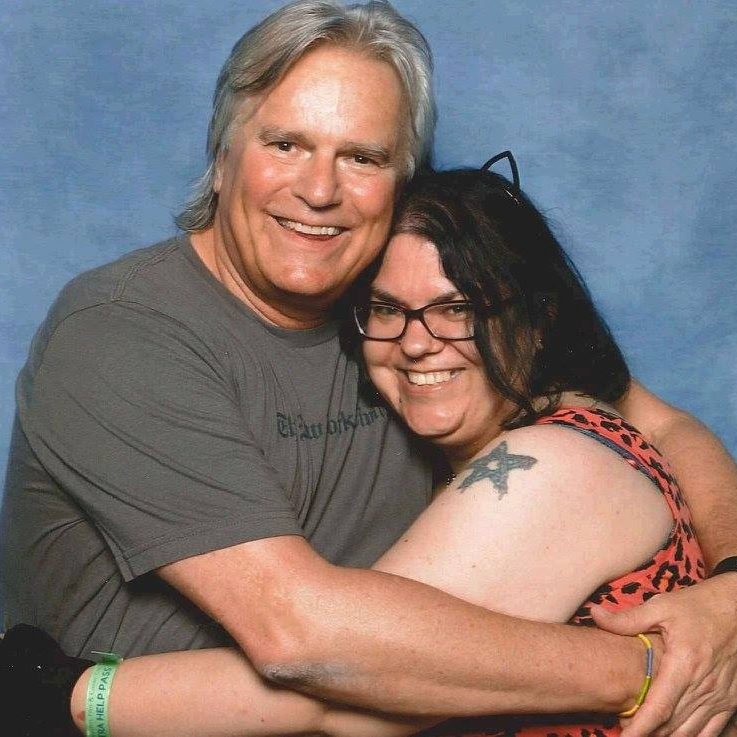
20525816_10155481906651760_5441401518469357549_n Hi, I’m Cassie (they/them) —
43 | AuDHD | non-binary | demisexual | kinky | queer
English fangirl, bibliophile, music lover, history nerd, and geek
Engaged to not-marry the love of my life, Li 💍
Crutches user | Disabled | Mental health advocate

📚 Studying History & Classical Studies (OU)
📅 Obsessed with planners, to-do lists & stationery
📺 Stargate SG-1, Riley Smith, Raintown = instant ramble
🎧 Swiftie | Sci-fi conventions | Gigs | Bad movies
🦴 Arthritis + asymmetric pelvis = constant chaos
🦙 Loves llamas, pizza, chocolate, and naming inanimate objects

Current hyperfixations:
🎾 Tennis (especially Jannik Sinner)
📖 Reading (always)
🎤 Taylor Swift

updated May 2025
badfalcon: (Tennis Darren)
OK So. Li and I booked a tennis court for an hour at our local sports centre yesterday evening. We almost didn't go because the weather was crappy - it was drizzling, I didn't sleep well last night, was a little work stressed.

But in the end, we did go. I was so excited that there was like no anxiety. Although it helped that we went and saw the place on Sunday and knew it was going to be quiet (yay safety behaviours, or something?) It flared a couple of times when I realised people on treadmills in the gym could see us, and there was a couple of times some kids on the skate park were watching us. I get super paranoid about being a fat person trying to exercise :/

Slight tangent. Anyway. So we borrowed a couple of rackets and balls from the place. We were both completely convinced we were never going to be able to hit the ball, that we were only going to manage like 5, maybe 10 minutes, because we're both very unfit, and I had no idea how my joints were going to behave.

Y'all, we were out there for the entire hour and by the end of it, we were both moving pretty well. I was even almost jogging for balls at one point - I wasn't thinking about how I was moving, I wasn't scared I was going to fall or throw something out, I was just reacting to and reaching for the ball. I hurt like fuck two hours later, doped up nicely on naproxen and cocodamol and cbd and I'm very glad I took my crutches for the walk home.

We were basically doing drop feeds from the service box, initially just trying to connect ball to racket and over the net. Then go retrieve it from the back of the court cos neither of us could return it and there were no ball kids 😂 But as time went on, we were starting to hit returns, I tried out a few backhands. My aim is terrible but I'm starting to figure out power and reach. Li's the other way around - their aim is good but they haven't figured out the power. By the end of the hour, we managed like a 3 or 4 shot rally. Like, the ball was still bouncing two or three times but we were reaching it, hitting it back.

We were maybe 30 minutes in and we were both like 'yeah no i want my own racket' so tomorrow (maybe Sunday depending on my legs) we're going to go to the wee sports shop in town, try out some of their rackets, pick up some low-compression balls. If we don't find anything, we're heading into Exeter next weekend and there's a Sports Direct there. Li also wants some new trainers. I do not need new trainers but I am eyeing a pair of Nike Air Monarch IV.

One thing's for sure. We are absolutely going back to that tennis court next week!
badfalcon: (Mischevious Sinner)
March had absolutely no plan.
No TBR. No structure. No 'I will read X books this month.' Just vibes, mood shifts, and whatever my brain decided it could focus on that day.
And somehow... I finished five books.

🌱 March Intentions
📖 Read gently
🎨 Create something small
🧡 Protect my energy
😴 Rest often
📝 Simplify tasks
Looking back, March really did lean into these. The reading wasn't forced, creativity stayed small and manageable, and I gave myself permission to rest without turning it into a failure.

📊 By the Numbers
Books read: 5
Average rating:3.9 ⭐
A very solid, quietly successful month - especially coming out of February's one-book energy.

⭐ Standout Vibes
Not a single overwhelming five-star this month, but a strong run of *consistently good* reads - the kind that keep you engaged without wrecking you emotionally (which, honestly, was exactly the energy I needed).

📚 Everything I Read
Ali Hazelwood - Loathe to Love You ⭐⭐⭐⭐
Bill Bailey's Remarkable Guide to Happiness ⭐⭐⭐⭐
Alison Maloney - Life Below Stairs ⭐⭐⭐½
Seanan McGuire - Beneath the Sugar Sky ⭐⭐⭐⭐
Nancy Warren - Mosaics and Magic ⭐⭐⭐⭐
A genuinely chaotic mix of romance, nonfiction, cosy mystery, and portal fantasy - which feels very on-brand for an unplanned reading month.

🧭 Reading Mood
March felt like a recovery month

After February's lack of focus, I found myself:
Picking up whatever held my attention fastest
Letting go of books without guilt
Leaning into comfort, familiarity, and lower-pressure reads
No overthinking. No forcing it. Just following the thread of 'does this work for me right now?'
And it worked.

💬 Mini Thoughts
Ali Hazelwood continues to be ridiculously readable - perfect for getting out of a slump
Beneath the Sugar Sky scratched that slightly surreal, emotional fantasy itch
Mosaics and Magic delivered peak cosy mystery vibes
Life Below Stairs was interesting, but didn't quite grip me the same way
Bill Bailey was exactly the kind of gentle, thoughtful nonfiction I needed this month

🌱 Final Thoughts
March didn't need structure to be successful.
It just needed permission.
Permission to read inconsistently. To follow moods. To enjoy books without turning them into a checklist.
And somehow, that led to one of the most balanced reading months I've had in a while.
If February was about softness, March was about trust.
Let's see what April brings.
badfalcon: (SG-1)
I've just renewed my premium paid account, so I should probably start using this thing again 😂 So starting with a little check-in of what's been filling my brain lately: books, tennis, studying, and small bits of everyday joy.
 
📚 Reading:
I've somehow ended up with a whole bunch of books in progress again, and I'm attempting to work my way through them with varying levels of success. The main ones at the moment are Deadline, Loathe to Love You, and Mosaics and Magic. It's a slightly chaotic mix of vibes, but that does seem to be my natural reading state these days.
 
🎧 Listening To: 
A lot of old-school Good Charlotte lately. It's been a very nostalgic week - so many good memories of gigs and the general early-2000s pop-punk era.
 
📺 Watching: 
We just caught up on the latest season of Great Pottery Throwdown, and I was absolutely thrilled that my favourite potter won! It's such a comforting show - wholesome, creative, and occasionally emotional when someone's glaze finally works. And I cry every time Keith does!
 
🎾 Tennis: 
Jannik won Indian Wells! The statistics coming out of that run are genuinely ridiculous. He's now the youngest man to win all the North American hard court titles, the youngest to win all the hard court Masters, and the fastest to complete them - Djokovic took seven years, Federer took nine… Jannik did it in two. He's also the only player to have won two back-to-back Masters without dropping a set. Just absolutely absurd levels of tennis.
 
🖊 Writing: 
Mostly working on my essay about gender in early modern Europe at the moment. Fic has taken a bit of a back seat this year - I've barely written any - but I do really want to get back to it once my brain has a little more space again. The Priest AU is starting to wave at me again.
 
🏫 Studying: 
I'm very behind on my course right now and honestly pretty stressed about it. I have a two-week extension on my current essay, which is now due on Thursday. Once that's submitted, I'm planning to sit down and make a proper catch-up plan before the next assignment at the end of next month. One step at a time.
 
💭 Thinking About:
How to rebuild some kind of routine again. The last few months have been a bit all over the place, and I think my brain really needs some structure - even if it's just small, manageable blocks of reading, writing, and actual rest. I'm also settling into the new job and getting used to WFH full-time again. Naturally, I'll probably just find the perfect rhythm right before the contract ends in May.
 
📅 Planning:
This week is mostly about getting the essay finished and handed in, and then giving myself a little breathing room to figure out the next few weeks of study. I'm also quietly hoping I might find a bit of time to open a fic document again.
 
💖 Loving: 
Planner joy! I've found a bunch of stickers I really like and I feel like I've finally figured out my style. Now when I look at my planner it actually makes me want to use it, which feels like a small miracle. Every page looks a little creative, a little chaotic, and very made-with-love. planner picture under the cut )
badfalcon: (Book Kitty)
The One-Book Month
February was... quieter. Not in life - absolutely not in life - but in reading.

I finished one book.

And instead of pretending that didn't happen, or dressing it up as something hyper-productive, I want to be honest about it - because this year I'm trying to let my reading life reflect my actual life.

📊 By the Numbers
Books read: 1
Pages read: 1,184
Average rating: 5 stars

That's it. That's the stats.

🌧️ What February Actually Looked Like
February was a month of:

Mental health wobbling in ways I didn't fully anticipate
University deadlines looming and then arriving all at once
Settling into a new job (which is good, but still takes energy)
Keeping up with tennis, because of course I am

And somewhere in the middle of that… a reading slump
Not the dramatic, “I hate books now” kind. Just the soft, heavy kind where picking up a book feels like one more task instead of an escape.

And I've learned enough about myself to know that when that happens, it's usually not about the book.

It's about bandwidth.

📖 The Book
The one book I finished in February was Heated Rivalry by Rachel Reid - 368 pages of sharp tension, aching intimacy, and characters who completely took up residence in my brain.

But here's the thing: while I only finished one book, I didn't only read one book.

I read 1,184 pages in total this month. I started things. I dipped in and out of stories. I got halfway through books and then set them down because my brain needed something different.

February wasn't a no-reading month. It was a no-finishing month.

And that feels like an important distinction.

Heated Rivalry just happened to be the one that carried me all the way to the end - the one that held my attention when my focus felt fractured. There's something fitting about a romance built on long-term tension being the story I could commit to in a month where everything else felt unsettled.

🧠 Reading Slumps & Soft Expectations
I'm trying not to measure my reading in productivity terms.

Eight books in January doesn't make me “better” than one book in February. It just means January had more space.

This year - especially with university and work balancing each other out - I want my bookstagram and blog to reflect reality, not output. Some months will be chaotic stacks and genre deep dives. Some months will be one dog-eared paperback and a lot of late nights staring at ceilings.

Both count.

🌱 Looking Ahead
If February was about surviving and stabilising, maybe March can be about rediscovering joy.

No pressure. No strict TBR. Just following whatever mood feels gentle and manageable.

If you also had a slow month - you're not alone. And if you devoured twelve books, I'm cheering for you too.

Reading seasons shift. We're allowed to shift with them.
badfalcon: (About To Break)
So, after a number of years on multiple waiting lists, I have my autism diagnosis

I don’t really know how I’m supposed to feel about it, but there’s a lot of “oh… that explains everything” and a lot of relief that I’m not a bad or broken person.

I spent a long time thinking I was wrong somehow - cold, lacking empathy, too intense about the “wrong” things. It turns out my brain just works differently.

Right now I mostly feel... buffering. Numb, but not in a bad way. Like my system is quietly re-sorting years of memories with new labels.

I’m not ready to be insightful or inspirational about this. I just wanted to say it out loud.

I wasn’t a psycho. I was autistic, without the information I needed.
badfalcon: (Default)
So I have chronic insomnia, right? It’s pretty normal for me to still be awake at 2, 3 in the morning. 
 
And usually this comes in extremely handy at certain times of year when the tennis is happening in the middle of the night.
 
Except.
 
EXCEPT.
 
I am sleeping really well right now??
 
Like… going to bed. Actually falling asleep. Turning off the 1:30 alarm for Sunshine. Having a day off today, not getting up for work, and turning off the 08:00 alarm for Jannik. And I’ve only woke up at 11:00 this morning like some kind of well-adjusted adult human. Who authorised this?
 
I don’t know if it’s since handing my notice in at my job (which, honestly, feels suspiciously relevant), but apparently my brain has chosen now - during prime nocturnal tennis season - to be like: “ah yes, rest. healing. circadian rhythm. wellness.”
 
Absolute traitor behaviour.
 
Li is also wondering if having an alarm set for the middle of the night makes my brain go “it’s okay, you’re only sleeping for a few hours,” like I’m tricking myself into thinking I’m just having a nap and that’s why it’s working?? Which is extremely stupid if true, but also… uncomfortably plausible. We might try it post-AO, because at this point I am open to psychological warfare against my own brain.
 
So now I’ve got some matches to catch up on while I finish the reading for my assignment, like a fool who accidentally became well-rested.
 
Honestly, I’m not mad about sleeping better. I am mad about the timing.
 
My insomnia saw the AO on the calendar and said “actually no 🧡”.
badfalcon: (Garcia)
One of the things Insurgent makes harder to ignore than Divergent ever did is this: the faction system is not just restrictive - it is actively violent.

Not always in loud, obvious ways. Not only through executions or faction wars. But through the constant, grinding demand that people reduce themselves to a single acceptable version of who they are, and then perform that version perfectly or suffer the consequences.

The series' language insists this is about choice. You choose a faction. You decide where you belong. But Insurgent exposes how hollow that promise really is.

Because a choice made under threat is not a choice. It's compliance.

From the moment someone fails to fit cleanly into a faction, the system closes around them. Be factionless, be invisible. Be insufficiently Abnegation, insufficiently Dauntless, insufficiently Erudite - and your value drops instantly. Identity isn't something you explore or grow into; it's something you must prove, again and again, under surveillance.

What Insurgent does particularly well is show how exhausting that is.

This isn't a world where people are allowed to be contradictory, or messy, or unfinished. You are brave, selfless, intelligent, or honest. Any overlap is dangerous. Any ambiguity is suspicious. And Divergence isn't terrifying because it's powerful - it's terrifying because it exposes the lie at the heart of the system: that people can never be reduced to one thing.

In that sense, Divergents aren't rebels by choice. They are problems simply by existing.

What complicates this further is that the narrative itself sometimes seems torn between critiquing the system and reproducing its logic. Even as Insurgent condemns faction rigidity, it still relies on exceptional individuals - people who are more than others - to drive change. The system is wrong, yes, but it's still the special, resilient, unusually capable people who are allowed to survive it.

That tension sits at the heart of the book for me. Is Insurgent asking us to imagine a world beyond rigid categorisation or is it reinforcing the idea that only certain kinds of people can transcend it?

Tris's journey embodies that conflict. Her struggle isn't just external; it's internalised faction pressure. She has absorbed the idea that worth must be proven through suffering, that identity must be earned through pain, that choosing wrongly deserves punishment. The system doesn't just control bodies, it reshapes how people think about themselves.

By the time Insurgent reaches its midpoint, the cost of choice is everywhere. Choice fractures alliances. Choice isolates. Choice becomes something characters are punished for making and for refusing to make. The novel becomes less about freedom and more about endurance: how long can someone survive being forced into shapes that don't fit?

Reading it now, that feels like the book's most interesting legacy.

Not the action, or the twists, or the escalating rebellion - but the quiet insistence that systems which demand singular identities will always break the people inside them. Even - maybe especially - the ones who appear to choose them freely.
badfalcon: (Jack)
⭐️⭐️⭐️ (3 stars)

Insurgent is an interesting but uneven middle book - one that kept my attention without ever fully winning me over.

I'm very aware that I'm not the target audience for this series, and I think that colours my response here. There's a lot in Insurgent that will work well for readers invested in the characters and the world, particularly the escalating stakes and constant forward momentum.

At the same time, the novel often feels busy rather than deep. The plot is packed with movement, faction politics, and shifting alliances, but emotional beats are rushed through in favour of action. As a result, moments that should land hard sometimes pass by without much impact.

That said, I was intrigued. The world-building continues to raise interesting questions about control, identity, and rebellion, and the series' larger ideas kept me turning pages even when the execution didn't fully work for me. Tris remains a compelling central figure, even if I never felt as emotionally connected as the story seemed to want me to be.

Ultimately, Insurgent is a solid, readable sequel that does what it needs to do to move the story forward. It didn't quite click for me, but I can absolutely see why it resonates with its intended audience.
badfalcon: (Who Are You Calling Weird?)
 I am feeling sad and frustrated and ridiculous tonight, and also not like myself, which is perhaps the most annoying part of all of this.

So. The planner.

I got a new planner. It’s good. The layout is right, the paper feels right, my brain went oh, yes, this will work. I’ve got a whole bunch of new planner stickers. I am, objectively, very close to planner peace. I even have more sticker orders arriving this week, because apparently hope is my dominant personality trait.

And the thing is — most of what I use fits fine.

I mostly plan with icon stickers. Script stickers. Little visual cues. Those are perfect. No issues. They sit exactly where they’re meant to. They behave. They understand the assignment.

But this week I had some big things going on. Capital-B Big. The kind of things where I wanted to block out space and make it very clear, at a glance, that Shit Was Going On Here.

So I used some flags and half boxes and quarter boxes from older kits.

And those are all just ever so slightly too wide.

Not unusably so. Just enough. Enough that my eye keeps snagging on them. Enough that I now know — with horrible clarity — that most sticker kits are designed for 1.5" columns, and my planner columns are 1.25".

Which means that the one time I don’t usually plan this way — the one time I actually need big, obvious visual space — is the time everything feels wrong.

And suddenly it feels like I’ve picked the wrong planner. Like I’ve broken some arbitrary but Very Important Planner Rule that everyone else somehow knows. Like I am Doing Planning Incorrectly™, despite the fact that this system works for me 90% of the time.

Never mind that icon and script planning is how I actually function. Never mind that I don’t usually need big boxes. Never mind that stickers are meant to be tools, not tests I can fail.

My brain has latched onto this tiny mismatch and decided it is Evidence.

I know this is not actually about stickers.

It’s about wanting space to acknowledge that things are hard. Wanting a system that can hold big days as well as small ones. Wanting one area of my life to feel contained and legible when the rest of it isn’t.

Tonight that has manifested as 0.25 inches of wrongness and the feeling that I’ve somehow messed up something that was meant to help me.

I’m aware this is absurd. I’m also aware that feelings don’t care about that.

badfalcon: (I Need A Hug)
It has been a week, y'all. It has been a week

I quit my job.

There isn't a shiny next thing lined up, no dramatic leap to a new role, no tidy narrative arc where I immediately land on my feet. Just... an ending, and the quiet (and slightly terrifying) space that comes after it.

A lot of this comes down to the airport and the ongoing issues there that have been grinding me down for a long time. Throw in the recent sale and murmurings of 're-organisation (but apparently our jobs are safe... uh-huh, not my first rodeo, my dude). Add in my disabilities - the ones that don't get better if you just push harder, the ones that flare when the world decides to be loud and unpredictable and physically demanding - and something finally clicked into place this week.

Full-time, on-site work is no longer sustainable for me.

That's not an easy thing to admit. I've circled around it for ages, tried to negotiate with myself, told myself I could just adjust one more thing, power through one more rough patch. But the reality is that the cost keeps getting higher, and I'm the one paying it with my health.

Li and I talked it through properly - not in a panicked way, but in that calm, practical, loving way that says okay, let's actually look at what life needs to look like now. And we've landed on a plan that feels... doable. Not perfect, not magically fixed, but realistic.

I'm going to start looking for either:
  • full-time remote work, or
  • part-time work that gets me out of the house without breaking me in the process.
It's a shift. It's also a bit of grief, if I'm honest - for the version of me who could just do full-time work without it costing everything else. But it's also a relief. Naming the limit instead of constantly crashing into it feels like an act of self-respect, even if it's a hard-won one.

Right now, I'm trying to sit in the in-between without spiralling too far ahead. Rest a little. Breathe. Let my nervous system unclench. Trust that making a choice in favour of my health isn't failure, even if it doesn't look like success the way it used to.

If nothing else, this week has been a reminder that I don't have to keep proving I can survive things that are actively harming me. I'm allowed to build a life that fits the body and brain I actually have.

More soon, probably. But for now: this is where I am. 
badfalcon: (Forgive Me Father)
A Bit of a Stretch is funny, furious, and quietly devastating in equal measure.

Written as a diary of Chris Atkins' time in prison, the book is sharply observational and often laugh-out-loud witty, even as it documents a system that is chronically underfunded, overcrowded, and casually cruel. The humour never blunts the reality; instead, it makes the injustice land harder.

Atkins is particularly good at capturing the small, grinding absurdities of prison life - the bureaucracy, the petty rules, the boredom - and showing how they erode people over time. What makes the book so effective is its refusal to sensationalise. Violence is not the point here; degradation, neglect, and indifference are.

There's a clear awareness of the author's own privilege and the ways it buffers him from the worst excesses of the system, and that self-reflection adds weight rather than defensiveness. The book is angry, but it's also humane, empathetic, and deeply concerned with how easily society accepts cruelty once it's hidden behind walls.

The only reason this isn't a full five stars is that the diary format can occasionally feel repetitive - though that repetition arguably mirrors the reality of incarceration itself.

A compelling, important read that manages to be entertaining without ever losing sight of the human cost of prison.
badfalcon: (Folklore)
One of the things The Time Hop Coffee Shop does particularly well is sit with nostalgia without romanticising it.

Nostalgia is seductive. It smooths edges. It filters memory through warmth and familiarity, making the past feel safer than the present. We remember how things felt, not how they actually were - and even then, we remember only certain feelings. The ones that comfort us. The ones that reassure us that there was a time when things made sense.

But comfort is not the same as happiness.

In The Time Hop Coffee Shop, the chance to revisit the past isn't framed as a gift without consequence. Returning to old moments doesn't magically restore joy or fix what went wrong. Instead, it exposes something quieter and more unsettling: how easy it is to confuse “I miss this” with “this was good for me.”

There are moments in our lives that glow in hindsight because they belong to a version of ourselves that felt younger, more hopeful, or more certain. But that glow often comes from distance, not truth. When we look closer, the happiness we think we're remembering is threaded with anxiety, exhaustion, compromise, or unspoken hurt. Those things didn't disappear - they were just edited out of the highlight reel.

The book gently suggests that nostalgia is less about wanting the past back and more about wanting relief from the present. When life feels uncertain, heavy, or unkind, the past becomes a refuge - not because it was perfect, but because it's finished. Nothing new can go wrong there.

And yet, revisiting the past doesn't offer the safety we expect. It can't give us the things we didn't know to ask for at the time. It can't make people behave differently, or turn near-misses into fulfilled dreams. What it can do is show us how far we've come, and how much we survived without realising we were surviving at all.

What I loved most about The Time Hop Coffee Shop is that it doesn't shame nostalgia. It understands why we cling to it. But it also refuses to let nostalgia pretend it's happiness. The book treats memory as something to be acknowledged and honoured - not something to live inside.

Because happiness isn't a place we can return to. It's something that has to be built, slowly and imperfectly, in the present we're standing in now.

Sometimes the most meaningful thing the past can offer us isn't a second chance - it's permission to stop chasing one.
badfalcon: (Flyboys)
⭐️⭐️⭐️⭐️ (4 stars)

The Time Hop Coffee Shop is a gentle, heart-warming novel about second chances, nostalgia, and the quiet realisation that the life we imagine isn't always the one we want.

Greta Perks once embodied the perfect TV wife and mother in a series of glossy coffee commercials. Years later, her real life feels far messier: her marriage is faltering, her relationship with her teenage daughter is strained, and her career feels firmly in the past. When she stumbles into a mysterious coffee shop and wishes for the life she once portrayed on screen, she wakes up in Mapleville - a town that looks like perfection poured into a mug.

What works so well here is the way Patrick lets that perfection slowly unravel. Watching the cracks appear in Mapleville as Greta begins to question what she truly wants is handled with warmth and care. The novel gently explores the idea that fantasy often smooths over the hard, human edges that make life meaningful.

The plot is predictable in places, but in this case, that felt like part of the comfort rather than a flaw. The themes - be careful what you wish for, the value of second chances, and choosing reality over illusion - are familiar, but they're delivered with sincerity and emotional intelligence. The ending, in particular, feels earned and true to the characters.

This was my first Phaedra Patrick novel, and it made me smile more than once. A cozy, uplifting read that understands both the pull of nostalgia and the courage it takes to let it go.
badfalcon: (Eyes)
There's a particular kind of grief that Every Heart a Doorway understands instinctively: not the grief for something that died, but for something that *was real* and is now unreachable. A world that fit. A version of yourself that made sense. A door that opened once - and then closed.

Seanan McGuire doesn't treat portal fantasy as escapism. She treats it as truth. The children who come back from their doors aren't delusional or confused; they're bereaved. And the cruelty of the so‑called real world isn't that it doubts their stories - it's that it insists they should be fine now. That they should move on. That whatever made them *whole* somewhere else was a childish phase, best forgotten.

That insistence is where the harm lives.

Nancy's grief is quiet, bone-deep, and constantly misunderstood. She doesn't express her pain in ways that make adults comfortable. She doesn't soften it, decorate it, or rush toward recovery. Instead, she carries it with her - the stillness, the restraint, the refusal to pretend she wants what the world expects of her. And for that, she is punished.

What struck me on this read was how much of that punishment is rooted in gendered expectations. Nancy's refusal to be warm, expressive and compliant - her resistance to the emotional labour so often demanded of girls - is framed as a problem to be solved. She is cold. She is difficult. She is wrong. The school exists to help children who've returned from impossible worlds, but even there, the pressure to become legible, palatable, *normal* seeps in.

Normal, in this book, is not neutral.

Normal is enforced.

McGuire is especially careful - and radical - in how she writes asexuality. Nancy's asexuality isn't a puzzle, a symptom, or a phase to be corrected. It's simply part of who she is, as intrinsic as her longing for the Halls of the Dead. Yet it's precisely this refusal of expected desire - romantic, sexual, reproductive - that places her further outside what the adults around her are willing to accept.

There's an unspoken rule in our world that healing looks like reintegration. That recovery means wanting what you're supposed to want. That if you don't crave the right things - romance, ambition, domesticity, forward momentum - then something must be broken in you.

Every Heart a Doorway quietly but firmly rejects that.

The children who found their doors didn't escape because they were weak. They escaped because those worlds *recognised* them. Some needed logic, some needed chaos, some needed rules, some needed blood and shadow and endings. None of those needs is treated as lesser. None are pathologised — until the children are forced back.

That's where the real violence happens.

The book keeps circling one devastating idea: that being forced to abandon the self you were allowed to be is a form of trauma. And that pretending otherwise doesn't make it kinder - it just makes it lonelier.

What makes this hit especially hard is how familiar it all feels. You don't need to have walked through a literal door to recognise the shape of this grief. Many of us have known spaces - identities, communities, ways of being - where we were briefly, astonishingly at home. And many of us have been told, explicitly or implicitly, that those selves were unsustainable. Unrealistic. Inappropriate. Something to grow out of.

Queer people. Asexual people. Disabled people. Neurodivergent people. Anyone whose existence disrupts the tidy story of what a life is supposed to look like.

We're often asked to trade authenticity for acceptability. To sand ourselves down until we fit back into the world that never quite wanted us.

McGuire doesn't offer easy comfort here. The doors don't reopen on command. Not everyone gets to go back. Some losses remain permanent. But what the book does offer is recognition - and the insistence that this grief is real, that it matters, and that refusing to "get over it" can be an act of truth rather than failure.

There's something profoundly compassionate in a story that says: you were not wrong for loving that world. You were not broken for wanting to stay. And you are not obligated to desire the life you were handed simply because it's the only one currently available.

Some doors close.

That doesn't mean what was on the other side stops being part of you.

And maybe the quiet, radical hope of Every Heart a Doorway is this: that even when the world insists on normalcy at all costs, there will always be people - and stories - who understand the cost of that insistence, and who will sit with you in the grief of what almost was.
badfalcon: (Default)
Dear fandom,

I don't think I'd have the life I have without you.

That's not hyperbole.

You've been one of the most consistent threads in my life, even when everything else has shifted around you.

I found you young, in my teens, when being intensely passionate about fictional worlds and Australian pop stars was all I knew. At school, I had basically no friends - I was into the wrong things, the things that marked you out as odd rather than interesting. I listened to the wrong music, watched the wrong TV shows, and wore the wrong clothes, and I liked reading.

I know now that I'm autistic and non-binary, but I didn't know it then - I was just... weird. I wasn't like the girls, so they didn't want to know me, and the boys who liked sci-fi wouldn't talk to me because they thought I was a girl.

But online, I found you. And I found people who cared about the same things I did, in the same way. You were where I learned how to talk to people, how to connect, how to build relationships around shared enthusiasm instead of small talk. You gave me community when I didn't have one.

Honestly, I don't think I'd have any friends without fandom. I met everyone in my life either through bands or TV shows (mostly Good Charlotte, Supernatural and Leverage) - all of us blogging our fears, our hopes and dreams on LJ.

I even met my partner through fandom, via commenting on her kinky SG-1 fanfic on AO3 - which has somehow, five years later, turned into a whole life together. It still feels slightly unreal when I stop and think about it. We're having a civil partnership ceremony in April, which we affectionately call “not getting married”.

You've been there through so many versions of me. Younger me, who needed you desperately. Older me, who wanders off sometimes and then finds their way back. You've changed shape over the years - different platforms, different cultures, different rules - and not all of those changes have been easy. Sometimes you're messy. Sometimes you're exhausting. Sometimes you're sharp in ways that hurt.

And yet

You've given me joy that doesn't need to justify itself. You've given me people who get it, who speak the same strange shorthand, who understand why caring deeply about fictional characters or real-life athletes can matter so much. You've taught me that enthusiasm is not something to grow out of, and that loving something - openly, thoughtfully, obsessively - can be a form of resilience

These days, fandom looks like tennis feelings and fic, like small, niche corners of the internet where a handful of people care just enough about the same things I do. It looks like late-night rabbit holes, shared jokes, collective gasps, and moments of tenderness I didn't know I needed until they appeared on my screen.

I don't love you uncritically. I know your flaws well. But I love you honestly, and I'm still here. You've shaped my friendships, my writing, my sense of self - and even my romantic life.

Thank you for growing with me. Thank you for waiting when I wandered off. Thank you for still making room for me now. Thank you for the people. Thank you for the connections. Thank you for still being here, and for letting me still be here too.
badfalcon: (Lindsey)
This week's reading stack feels very deliberately split between intensity and comfort, which honestly says a lot about where my head is at right now.

On one side, I'm continuing with Insurgent. It's fast-paced and emotionally charged, full of difficult choices and escalating consequences. I'm always struck by how much this book is about identity under pressure - how people behave when the systems around them are breaking down, and neutrality stops being an option. It's the kind of read that pulls you along whether you're ready or not, and it definitely demands attention.

On the other side of the stack is Time Hop Coffee Shop, which couldn't feel more different if it tried. This one is all warmth and whimsy — alternate universes filtered through steaming mugs, quiet conversations, and the discovery of the things in life that really matter can be surprising. It's gentle without being dull, and it feels like the sort of book you read slowly, letting it settle.

Together, they make an oddly satisfying pairing. One is about upheaval and rebellion; the other is about pauses, connection, and care. Big stakes versus small kindnesses. Sprinting through plot versus lingering in atmosphere.

I think that balance is exactly what I want from my reading right now - something to engage me fully, and something to remind me to breathe.

If you've read either, I'd love to know how they landed for you. And if your reading week looks completely different, tell me what mood you're in - I'm always curious how other people balance their stacks.
badfalcon: (Leia)
If there's a [community profile] tennisslash community here on DW, but it hasn't been updated in like 15 years, where do we stand on posting my latest fic to it? Like, what's the etiquette here?

[edit] turns out the comm is locked to members posting only, the membership is moderated. and it doesn't look like the mod has been active on DW since like 2018. So guess that's a not happening.
badfalcon: (King Of Bored)
⭐️⭐️⭐️⭐️⭐️ (5 stars)

Every Heart a Doorway is a small book that carries an astonishing amount of emotional weight.

At its heart, this is a story about children who have been somewhere else - worlds that loved them, shaped them, and made sense in ways this one never quite does. Eleanor West's Home for Wayward Children offers care, understanding, and the quiet acknowledgement that returning is often its own kind of loss.

What Seanan McGuire does so beautifully here is refuse to frame those experiences as delusion or escapism. The portal worlds matter. The longing matters. The grief of being shut out of a place where you belonged is treated with seriousness and compassion.

The writing is sharp, spare, and deeply empathetic. In a very short space, McGuire creates characters who feel fully realised, each carrying their own kind of ache. Themes of identity, belonging, queerness, and neurodivergence are woven into the story without spectacle - simply allowed to exist.

There's darkness here, and tragedy, but also a fierce insistence that every child's story is real and worthy of care. This is fantasy as emotional truth, and it lingered with me long after I finished.
badfalcon: (Joely)
I don't actually have any pets, and haven't for... nearly twenty years now. So this challenge sent me rummaging around my fandoms rather than my living room.

I briefly considered writing about Jannik's cat, Yeti - especially since we finally got a picture of him during Cincinnati - but the more I thought about it, the more it felt a little disingenuous. Jannik is very protective of his personal life, and anything that isn't directly related to tennis performance tends to stay carefully private. Enjoying the existence of Yeti from afar feels fine; dissecting it less so.

What I kept coming back to instead was something I genuinely love about the North American swing: the way tournaments often partner with local shelters and rescues, bringing in adoptable puppies and dogs for players to meet. It's good publicity, yes, but it's also genuinely lovely, and it reliably produces some of the softest, most joyful content of the season.

There's something about watching elite athletes, usually framed as machines of focus and discipline, sitting on the floor making kissy noises at a puppy that is deeply grounding. It also has a way of reminding you just how young so many of these players are. Stripped of competition and expectations, they're just... kids with dogs )
(and, as I'm realising, some of these are from Roland Garros!)

And for me, personally, last year delivered some particularly excellent examples.

At Cincinnati, we got Darren with a puppy ) - all warmth and ease, completely at home with a small, wiggly creature in his arms and a smile that killed me utterly DED
(also, the man posts pictures of his own dogs to Instagram, including him asleep with them ) So. Really. What's a llama to do?!)

[edit] OH! Also, this lovely pupper that Darren and Jannik had been playing with actually got adopted by one of the security guards at the tournament, who changed the pupper's name to Jannik!

And then at the US Open, we got Simone with a puppy ), which was... exactly as soft and quietly devastating as you'd expect.
(Simone, on the other hand, posts pictures of his cat ) like a proper millennial 🤣
badfalcon: (Tennis Dads)
Title: Begin Again
Fandom: Tennis RPF
Chapters: 1/1
Rating: Teen And Up Audiences
Warnings: No Archive Warnings Apply
Relationships: Darren Cahill/Simone Vagnozzi
Characters: Darren Cahill, Simone Vagnozzi
Additional Tags: First Kiss, Mutual Pining, Getting Together, Coffee Shops, Rain, Inspired by Taylor Swift
Summary: Eight months after a breakup, Darren has convinced himself that love only ever breaks and burns.

On a quiet Wednesday afternoon in a café near the courts, Simone proves him wrong.

Link to fic on AO3

Profile

badfalcon: (Default)
Cassie Morgan

April 2026

S M T W T F S
   123 4
567891011
121314151617 18
19202122232425
2627282930  

Syndicate

RSS Atom

Most Popular Tags

Style Credit

Expand Cut Tags

No cut tags
Page generated Apr. 28th, 2026 11:09 pm
Powered by Dreamwidth Studios