


 这篇博客介绍了物联网的新技术,涵盖了短距无线技术如Bluetooth、Wi-Fi、ZigBee和Z-Wave,以及长距无线技术如SigFox、LoRa、NB-IoT和eMTC。内容详细讨论了各技术的特点、应用场景和优缺点,特别强调了蓝牙的低功耗和LoRa的广泛部署。NB-IoT作为关键的物联网技术,其解决方案架构和关键特性也得到了阐述。
souce: 华为HCIA-5G V2.0
date: 2021-11-21
老师以念PPT为主,笔记主要扩展了解物联网技术。其他如云计算、大数据、AI和应用案例等没有太多深入内容,略。
1 物联网新技术的特征与现状
1.1 短距无线技术
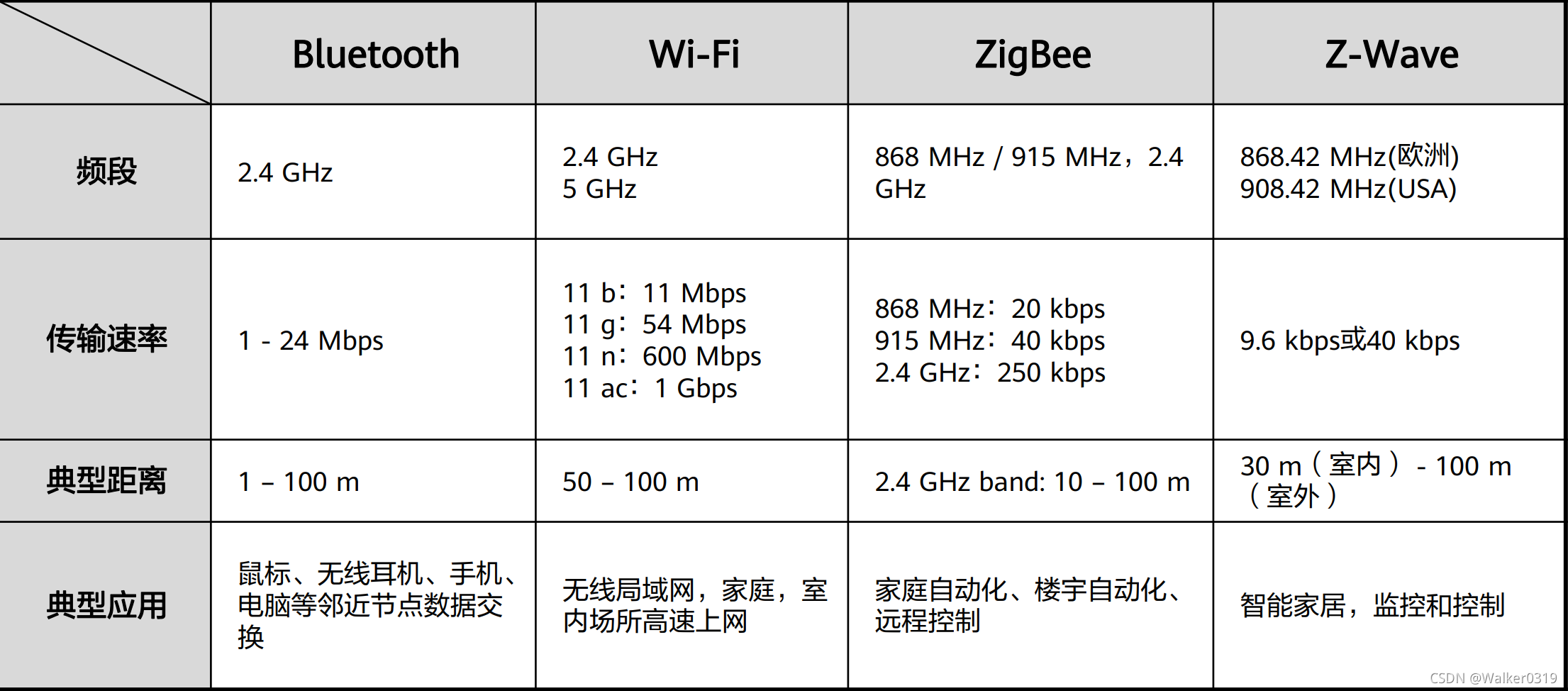
1.1.1 Bluetooth蓝牙(bluetooth.com)
Origin of the Bluetooth Name, bluetooth.com
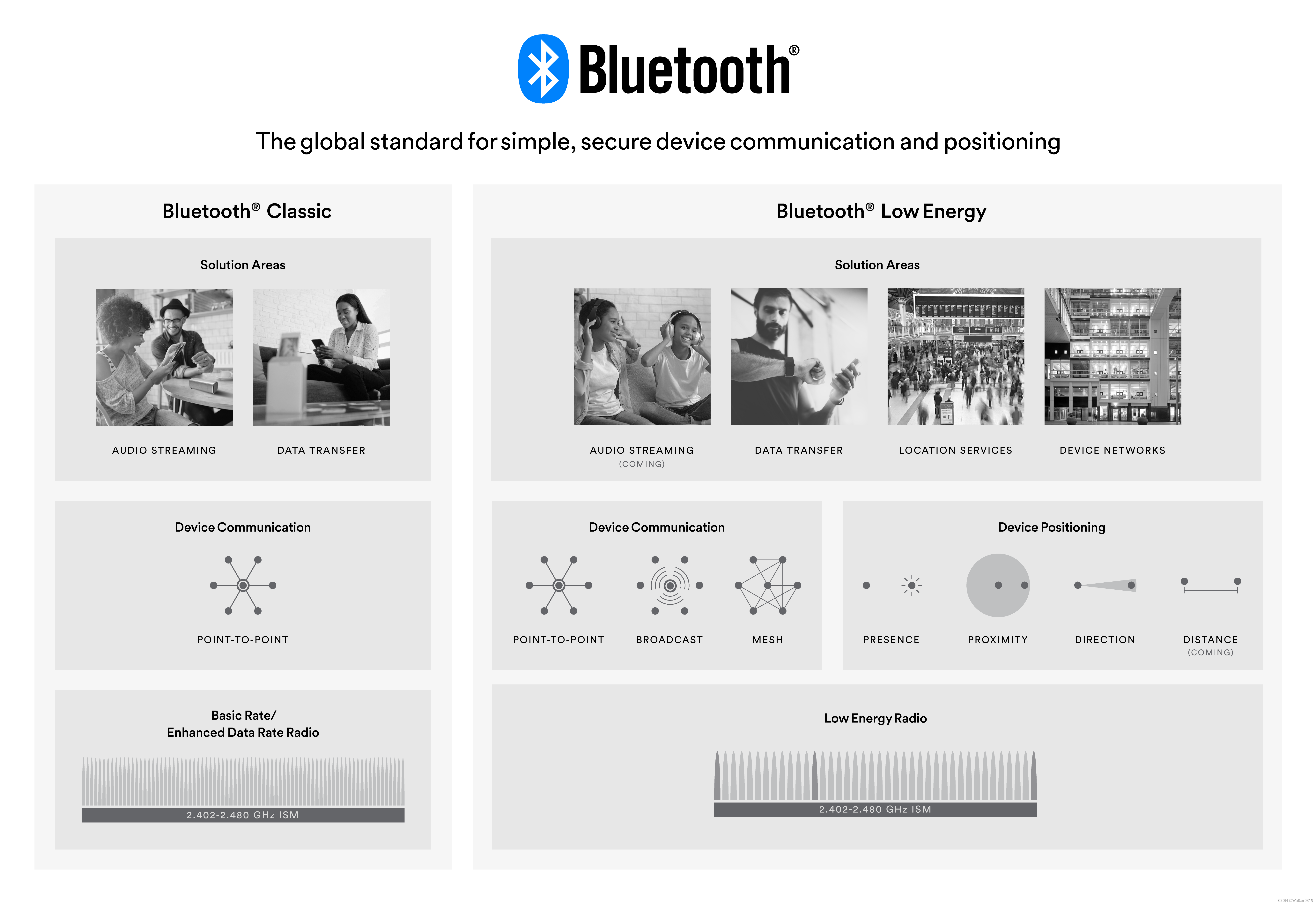
- Bluetooth Classic(无线音频流传输)
The Bluetooth Classic radio, also referred to as Bluetooth Basic Rate/Enhanced Data Rate (BR/EDR), is a low power radio that streams data over 79 channels in the 2.4GHz unlicensed industrial, scientific, and medical (ISM) frequency band. Supporting point-to-point device communication, Bluetooth Classic is mainly used to enable wireless audio streaming and has become the standard radio protocol behind wireless speakers, headphones, and in-car entertainment systems. The Bluetooth Classic radio also enables data transfer applications, including mobile printing.
- Bluetooth Low Energy (LE)(低电力、Mesh组网、定位)
The Bluetooth Low Energy (LE) radio is designed for very low power operation. Transmitting data over 40 channels in the 2.4GHz unlicensed ISM frequency band, the Bluetooth LE radio provides developers a tremendous amount of flexibility to build products that meet the unique connectivity requirements of their market. Bluetooth LE supports multiple communication topologies, expanding from point-to-point to broadcast and, most recently, mesh, enabling Bluetooth technology to support the creation of reliable, large-scale device networks. While initially known for its device communications capabilities, Bluetooth LE is now also widely used as a device positioning technology to address the increasing demand for high accuracy indoor location services. Initially supporting simple presence and proximity capabilities, Bluetooth LE now supports Bluetooth Direction Finding and soon, high-accuracy distance measurement.
- parameter comparison (LE版本Mesh组网和定位功能)
| Bluetooth Low Energy (LE) | Bluetooth Classic | |
|---|---|---|
| Frequency Band | 2.4GHz ISM Band | 2.4GHz ISM Band |
| Channels | 40 channels with 2 MHz spacing | 79 channels with 1 MHz spacing |
| Channel Usage | Frequency-Hopping Spread Spectrum (FHSS) | Frequency-Hopping Spread Spectrum (FHSS) |
| Modulation | GFSK | GFSK, π/4 DQPSK, 8DPSK |
| Data Rate | LE 2M PHY: 2 Mb/s | EDR PHY (8DPSK): 3 Mb/s |
| LE 1M PHY: 1 Mb/s | EDR PHY (π/4 DQPSK): 2 Mb/s | |
| LE Coded PHY (S=2): 500 Kb/s | BR PHY (GFSK): 1 Mb/s | |
| Communication Topologies | Point-to-Point | Point-to-Point |
| Broadcast | ||
| Mesh | ||
| Positioning Features | Presence (Advertising) | None |
| Proximity (RSSI, Received Signal Strength Indicator) | <







 扫一扫
扫一扫


 3676
3676

 被折叠的 条评论
为什么被折叠?
被折叠的 条评论
为什么被折叠?
 到【灌水乐园】发言





