(1) RINGMASTER. Abigail Nussbaum continues “The Great Tolkien Reread: The Shadow of the Past” at Asking the Wrong Questions.
…It is not simply that two of the most quotable passages in the novel—“I wish it need not have happened in my time” and “do not be so eager to deal out death in judgment”—appear in this chapter, barely fifty pages into the story and before the journeying and adventuring have even begun. Every idea that ends up playing into the conclusion of the quest to destroy the Ring is spelled out in these pages: that Frodo may conceal the Ring and refrain from using it, but is incapable of giving it up or making a direct effort to destroy it; that Gollum is drawn to the Ring; that both the Ring itself and Sauron are acting to effect their reunion; that some force put the Ring in Bilbo and then Frodo’s path in order to prevent this; and that Gollum has some role to play in that force’s plans.
A reader coming to the novel for the first time will most likely not be able to see the outcome that these separate facts are all pointing towards, but nevertheless the shape of the novel’s conclusion has been laid out….
(2) BESPOKE FLUKES. [Item by Jeffrey Smith.] Aside from the fantasy cosplay angle, I just love the photograph at the top of the article. “Meet the merpeople: ‘Once I put the tail on, my life was changed forever’ | Swimming | The Guardian in the Guardian.
Propelled by a shimmering silicon tail, Katrin Gray spins underwater, blowing kisses to the audience as her long, copper hair floats around her face. Her seemingly effortless movement is anything but – a professional mermaid’s free diving and performance skills require training, practice and total concentration.
Mermaiding has become a global cottage industry, with pageants, conventions, retreats and meet-ups, where people gather in “pods” to practise their dolphin kicks. Makers create bespoke tail flukes, bejewelled bras, mermaid hair and even prosthetic gills for professional and hobbyist “seasters”. There is even a Netflix reality series called MerPeople, which documents the occasionally perilous journey of several aspiring professional merfolk. “No dead mermaids” is the motto of one business featured.
Gray, who goes by Mermaid Kat, is an industry veteran. While working as a scuba diving instructor in Phuket, a childhood obsession with Disney’s Little Mermaid led to her asking a wetsuit maker to fashion a cover for her monofin.
“Phuket is quite a small island and it didn’t take too long for people to notice a crazy girl swimming around in a mermaid tail,” she says. People asked her to perform at birthday parties and public events, and soon after she was working as a mermaid full-time. “It just took off.”
In 2012, Gray founded the world’s first mermaid school. Since then, more than 12,000 students have attended her classes and workshops in Germany, Thailand and Australia….
(3) OUR RADIOACTIVE NEIGHBORS. ASU’s Center for Science and the Imagination today announced the publication of Our Radioactive Neighbors: Collaborative Imagination, Community Futures, and Nuclear Siting Practices, a book of speculative fiction, essays, and art that aims to help communities consider the complexities and decisions around the potential siting of nuclear waste storage facilities.


The book was supported by a grant from the U.S. Department of Energy that was awarded back in 2023; more information about the larger research and community engagement project of which the book is part is available at https://3c.cspo.org/about.
Our Radioactive Neighbors features, among other things, original short stories by Andrew Dana Hudson, Justina Ireland, Carter Meland, and Sarena Ulibarri. It’s free to read and download across a variety of digital format, or folks can order print-on-demand hard copies at cost (currently, $12.48).
You’ll find a more thorough description and full list of contributors at the link above. Also available at that link are previews of the four artworks created for the book by Dwayne Manuel, plus an extensive facilitation guide with activities, discussion questions, and other resources for using the book in classrooms, community meetings, reading groups, library activities, and the like.
(4) CLASSIC BIT OF SOCIAL SF ON BBC RADIO 4. [Item by SF Concatenation’s Jonathan Cowie.] The BBC has aired a neat ten-minute documentary on the War of the Worlds broadcast that shook America. (Actually it was a repeat of a 2025 episode of Witness History.) Originally, they – the US broadcasters — planned a straight radio play adaptation of Wells’ story and this was written. But come the broadcast, the show’s director binned it as too boring. That was when they had the idea of re-setting it in then present-day US America… The rest, as they say, is history. The documentary includes a clip of an interview with Orson Wells himself.

The night before Halloween in 1938, 23-year-old Orson Welles and his Mercury Theatre on the Air performed a radio adaptation of HG Wells’s The War of the Worlds. It would become one of the most notorious radio broadcasts in history. In their own words, from the BBC’s archive, Orson Welles, producer John Houseman and writer Howard Koch describe how it was “a very boring show” until they had the idea to update the science fiction story, using reportage and the name of a real location in New Jersey in the United States, as the scene for where aliens from Mars would invade. Up to six million people tuned in, most of whom had no idea that what they were listening to was fictional. It prompted mass panic. Orson Welles delights in recalling “Suddenly everyone started driving at 125 miles per hour,” saying, “I’m going to the hills”.
You can access the programme here.
Or alternatively download here.
A BBC subscription may be required.
(5) BBC PROFILES STEPHEN KING. [Item by SF Concatenation’s Jonathan Cowie.] Stephen King was the subject of BBC Radio 4’s 45 minute cinema arts show Screenshot. “Stephen King”,

Fifty years on from the release of the film Carrie, directed by Brian DePalma and based on the first novel by Stephen King, Ellen E Jones and Mark Kermode look at King adaptations on screen, from The Shawshank Redemption to The Shining. Why is the work of the modern horror maestro so often adapted? And what is the best ever Stephen King adaptation?
Ellen hears from US critic and writer Maitland McDonagh, who has been a front-row witness to King on screen for five decades, about her favourite adaptations of his work – from Misery to The Monkey.
And Ellen speaks to Edgar Wright – the director of Shaun Of The Dead, Baby Driver and the most recent King adaptation to reach cinema screens – The Running Man.
Meanwhile, Mark talks to Mike Flanagan – the filmmaker who, perhaps more than any other in recent years, has helped keep King’s work vividly alive on screen, with adaptations of Gerald’s Game, Doctor Sleep, The Life of Chuck and a forthcoming new take on Carrie.
BBC subscription required.
(6) TRAILER PARK. Here’s another in the series of Avengers: Doomsday teasers. In theaters December 18.
(7) ONE OF SFF’S FOUNDING FAMILIES. Fanac.org has posted the first part of the fanhistory Zoom about “Astrid Anderson Bear, and the Family that Built Worlds, w/ interviewer Joe Siclari (Pt 1 of 2)”.
If ever anyone was born into fandom, it was Astrid Anderson Bear. As the child of Poul & Karen Anderson, two of fandom and indeed, science fiction’s best, Astrid grew up with fans and pros, conventions and fan activity as her “normal”. It never ended: she married Greg Bear, a fan, a pro, an artist and writer all-in-one, and stayed true to her roots. In part 1, we learn what it was like to grow up in one of the best known families in science fiction. Astrid attended her first Worldcon at the age of 6 weeks, was present at the very first meeting of the Society of Creative Anachronism, and was a central figure in the first masquerade costume to come with a plot and pre-recorded soundtrack (at the 1969 Worldcon in St. Louis). Unsurprisingly, Astrid became a fan. Her family stories are full of familiar names – Jack Vance, Alva Rogers, Reginald Bretnor, Tony Boucher, Diana Paxson, and evocative anecdotes like that of the Bootleg Bookseller. Astrid pubbed her ish, was active in costuming and was part of the SFCon70 committee. In the early 80s, she married Greg Bear, himself a founding father of ComicCon. From the invention of the word “filk”, to fanzines and costuming, to the social fannish whirl of the Bay Area in the last part of the 20th century, and the beginning of the SCA, Astrid Anderson Bear and her family have been at the center of a pivotal time in the history of fandom. The interview continues with part 2.
(8) SCOTT ADAMS (1957-2026). Dilbert creator Scott Adams died January 13 reports Deadline: “Scott Adams Dead: Controversial ‘Dilbert’ Cartoonist Was 68”. Adams announced in May that he had aggressive prostate cancer and that he probably had only a few months to live.
…At its peak, Dilbert, was published in 2,000 newspapers in 65 countries, according to reports. But in 2023 its syndicator said that it was dropping the comic strip following racist remarks made by Adams. The publisher of Adams’ non-Dilbert books also has terminated an upcoming project, according to The Wall Street Journal. Adams wrote on then-Twitter that the publisher also canceled his backlist…
…Dilbert, which poked fun at office humor by following the workplace indignities of put-upon engineer Dilbert, was first published in 1989 and spawned numerable books, games, merchandise and in 1999 a two-season UPN animated comedy series….
(9) TODAY’S BIRTHDAY.
[Written by Cat Eldridge.]
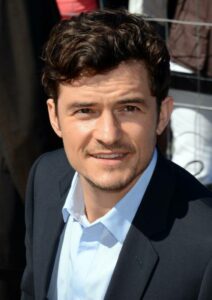
January 13, 1977 — Orlando Bloom, 49.
Speaking of The Lord of The Rings: The Fellowship of the Rings, let’s talk about Orlando Bloom who I think magnificently played Legolas. Mind you this is one of the reasons I didn’t watch The Hobbit films as he wasn’t in the novel, was he?
So what else for genre work? Well there’s being Will Turner in the Pirates of the Caribbean film series. I’ve seen just the first but I immensely enjoyed it and thought he was quite good in it.

Carnival Row which sounds like someone read Bill Willingham’s Fables and crossed it with a police procedural has him as Rycroft “Philo” Philostrate, an inspector of a Constabulary. It’s on Amazon, it’s well worth watching.
He was the Duke of Buckingham in The Three Musketeers. Yes, I consider it genre. Really I do.
He was Tommy Hambleton was in Needle in a Timestack, script by John Ridley from the Robert Silverberg story which first was published in the June 1983 issue of Playboy.
He has a single mystery to his name, a Midsomer Murders, “Judgement Day” in which he plays Peter Drinkwater, a petty thief who gets murdered. I mention this because acting on that series is a coveted affair indeed in Britain.
(10) COMICS SECTION.
- Frazz has a tense moment.
- Diamond Lil starts the Hercules movie marathon.
- Reality Check delivers a horrible pun.
- Rhymes with Orange has a cover story.
- xkcd lists sails.
(11) DOOM CALLING. This April, Doctor Doom of 2099 strikes back!
Following his return in last year’s Doomed 2099 one-shot, Doom 2099’s next chapter, DOOM 2099: RAGE OF DOOM #1, arrives in April. The one-shot will be written by acclaimed writer Frank Tieri, returning to continue the epic saga he set in motion in Doomed 2099, this time alongside rising star artist Von Randal (All-New Spider-Gwen: The Ghost-Spider). The infamous future version of Doctor Doom, who experienced a resurgence in popularity thanks to his role in Marvel Rivals, embarked on a startling journey to the present in Doomed 2099—only to return to his future humbled by his past self! Having lost everything, his only hope to reverse his cruel fate and reconquer his destiny lies in the megalomaniacal machine known as ULTRON!
ULTRON VS. DOOM!
Doctor Doom’s spell didn’t just annihilate his enemies – it wiped out all life on Earth, leaving even him to regret the cost. In the desolate future of DOOMED 2099, Doom discovers Ultron’s buried head and risks everything to repair his time machine. But awakening a dangerously powerful machine intelligence invites new rebellion, and the path to redemption may demand a price even Doom never anticipated.
Cover by JUNGGEUN YOON. Variant Cover by DERRICK CHEW. Variant Cover by PEACH MOMOKO.


(12) PURR! “A Cat Left Paw Prints on the Pages of This Medieval Manuscript When the Ink Was Drying 500 Years Ago” recalls Smithsonian.
More than 500 years ago, after dedicating hours to the meticulous transcription of a crucial manuscript, a Flemish scribe set the parchment out to dry—only to later return and discover the page smeared, filled with inky paw prints.
Perhaps the world’s first known instance of a so-called “keyboard cat,” that manuscript is the inspiration for and centerpiece of an exhibition currently on display at Baltimore’s Walters Art Museum. Running through late February, “Paws on Parchment” explores the roles of cats in the Middle Ages—and the myriad ways humans showed affection for their feline friends hundreds of years ago.
“Objects like [the manuscript] have a way of bridging across time, as it’s just so relatable for anyone who has ever had a cat,” Lynley Anne Herbert, the museum’s curator of rare books and manuscripts, tells Artnet’s Margaret Carrigan. “Many medieval people loved their cats just as much as we do.”…
(13) FLY ME TO A MOON. “Flight Engineers Give NASA’s Dragonfly Lift” reports NASA.
In sending a car-sized rotorcraft to explore Saturn’s moon Titan, NASA’s Dragonfly mission will undertake an unprecedented voyage of scientific discovery. And the work to ensure that this first-of-its-kind project can fulfill its ambitious exploration vision is underway in some of the nation’s most advanced space simulation and testing laboratories.
Set for launch in in 2028, the Dragonfly rotorcraft is being designed and built at the Johns Hopkins Applied Physics Laboratory (APL) in Laurel, Maryland, with contributions from organizations around the world. On arrival in 2034, Dragonfly will exploit Titan’s dense atmosphere and low gravity to fly to dozens of locations, exploring varied environments from organic equatorial dunes to an impact crater where liquid water and complex organic materials essential to life (at least as we know it) may have existed together.
Aerodynamic testing
When full rotorcraft integration and testing begins in February, the team will tap into a trove of data gathered through critical technical trials conducted over the past three years, including, most recently, two campaigns at the Transonic Dynamics Tunnel (TDT) facility at NASA’s Langley Research Center in Hampton, Virginia….
…“When Dragonfly enters the atmosphere at Titan and parachutes deploy after the heat shield does its job, the rotors are going to have to work perfectly the first time,” said Dave Piatak, branch chief for aeroelasticity at NASA Langley. “There’s no room for error, so any concerns with vehicle structural dynamics or aerodynamics need to be known now and tested on the ground. With the Transonic Dynamics Tunnel here at Langley, NASA offers just the right capability for the Dragonfly team to gather this critical data.”…
(14) ROBOTS AS FIRST RESPONDERS. “Robots Take Center Stage in DARPA Triage Challenge” – IEEE Spectrum has the story.
Last September, the Defense Advanced Research Projects Agency (DARPA) unleashed teams of robots on simulated mass-casualty scenarios, including an airplane crash and a night ambush. The robots’ job was to find victims and estimate the severity of their injuries, with the goal of helping human medics get to the people who need them the most.
The final event of the DARPA Triage Challenge will take place in November, and Team Chiron from Carnegie Mellon University will be competing, using a squad of quadruped robots and drones. The team is led by Kimberly Elenberg, whose 28-year career as an army and U.S. Public Health Service nurse took her from combat surgical teams to incident response strategy at the Pentagon.
Why do we need robots for triage?
Kimberly Elenberg: We simply do not have enough responders for mass-casualty incidents. The drones and ground robots that we’re developing can give us the perspective that we need to identify where people are, assess who’s most at risk, and figure out how responders can get to them most efficiently.
When could you have used robots like these?
Elenberg: On the way to one of the challenge events, there was a four-car accident on a back road. For me on my own, that was a mass-casualty event. I could hear some people yelling and see others walking around, and so I was able to reason that those people could breathe and move.
In the fourth car, I had to crawl inside to reach a gentleman who was slumped over with an occluded airway. I was able to lift his head until I could hear him breathing. I could see that he was hemorrhaging and feel that he was going into shock because his skin was cold. A robot couldn’t have gotten inside of the car to make those assessments.
This challenge involves enabling robots to remotely collect this data—can they detect heart rate from changes in skin color or hear breathing from a distance? If I’d had these capabilities, it would have helped me identify the person at greatest risk and gotten to them first….
(15) TRAVEL TO FOREIGN SF CONVENTION CONCERNS ARE ECHOED BY SCIENTISTS. [Item by SF Concatenation’s Jonathan Cowie.] Reporting and online discussion in various fora, including File770, has revealed some fans reluctance to travel to the US given increasing immigration scrutiny, including now new proposals for compulsory revealing social media data. I myself probably could not enter the US as border officials might not buy into my not having or owning a smartphone, and not being on the internet at home. Meanwhile, some US-based pros and fans have been reluctant to leave the US for fear of difficulty getting back in.
These concerns are echoed by scientists travelling to international symposia and conferences. The latest such expression of scientist concern was in a piece in the latest issue of Nature. It noted that attendance at several of last year’s (2025) biggest science conferences fell and more are expected to be reduced in size this year.
For example, the latest AI conference, NeurIPS, held its main meeting in San Diego but also its first ever alternative location in Mexico City. Meanwhile, a group of AI researchers hosted a spin-off conference, EurIPS in Copenhagen.
The Society for neurosciences annual gathering fell by 6% and they escaped fairly lightly. The annual American Geophysical Union Conference saw over 30,000 participants in 2024 (which kind of puts Worldcon in its place) but last year numbers dropped by around a third!
Next year it is likely to drop further after this year the organisers had to announce to participants mid-event that they could not prevent immigration agents to enter the conference to do checks.
But it is not all to do with tougher entry. Quite a few Canadian scientists, along with tourists after Trump’s tariff tantrum and his saying that he wants to make Canada ‘the 51st’ state, are actively boycotting US meetings.
And then there is nervousness by trans and non-binary folk.
What happens in science fiction today, happens in science tomorrow.
[Thanks to Andrew Porter, John King Tarpinian, Cat Eldridge, Jim Janney, Jeffrey Smith, Francis Hamit, Joey Eschrich, SF Concatenation’s Jonathan Cowie, Mark Roth-Whitworth, Kathy Sullivan, Steven French, and Mike Kennedy for some of these stories. Title credit belongs to File 770 contributing editor of the day Cat Eldridge.]