🗾やんごとなき不敬罪 第六話📖「昭和のはじまりと庶民のリアル」

🗓 1926年、大正天皇崩御
病弱だった大正天皇が亡くなり、25歳の皇太子・裕仁が即位。
ここに「昭和天皇」が誕生しました。
⸻
👑 即位の印象
若き昭和天皇は軍服姿で国民の前に現れ、
庶民は「ありがたや〜!」と手を合わせ、拝みました。
新聞も「軍人天皇」の姿を大きく取り上げ、
忠誠心をあおっていました。
⸻
☕ 都市の庶民(モガ・モボ)
一方、都市では
モダンガール(モガ)やモダンボーイ(モボ)が
カフェでジャズを楽しみ、
「新しい昭和の時代やね〜」
と浮かれていました。
⸻
🌾 農村の庶民
しかし農村では貧困が深刻で、
娘を身売りに出す家も少なくありませんでした。
「ありがたや」と拝む一方で、
現実は生活に苦しむ人が多かったのです。
人々が「ありがたや」と拝み、
神に祈りを捧げていたその足元には、
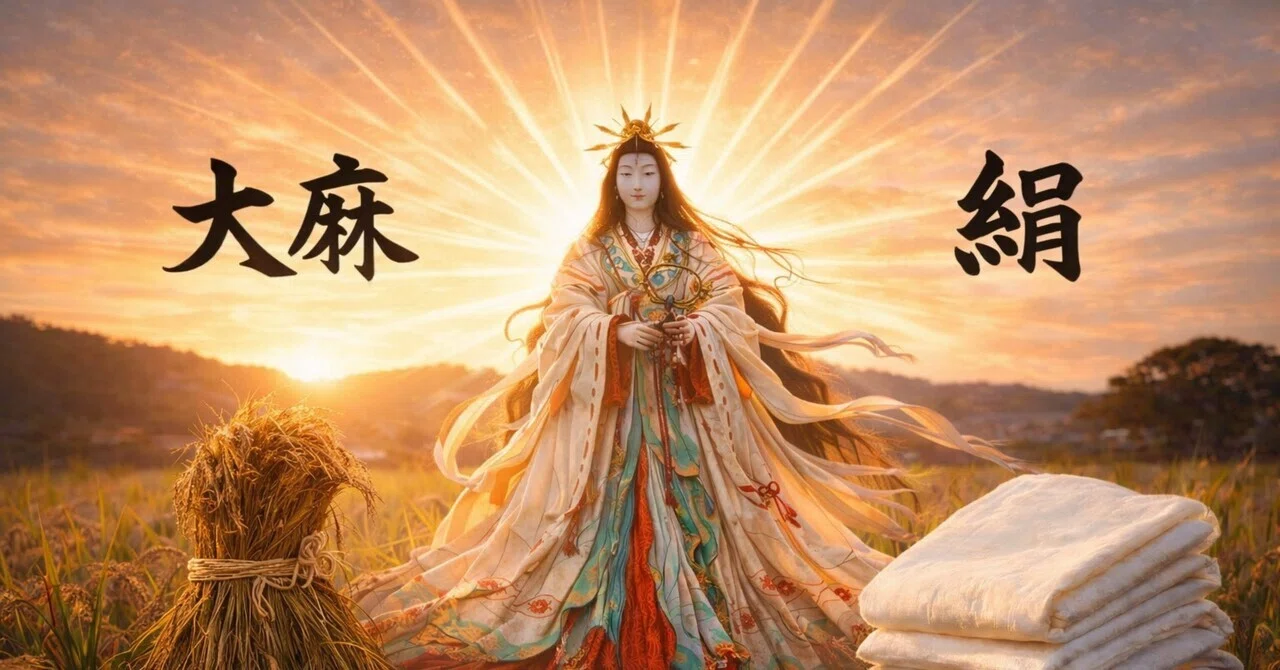
荒栲(あらたえ)と
和栲(にぎたえ)がありました。
荒栲(あらたえ)は大麻、
和栲(にぎたえ)は絹。
日本神話では、
この二つの布が神への奉献物として
対で語られています。
荒く、清らかな自然の象徴としての大麻。
やわらかく、整えられた文明の象徴としての絹。
清浄と調和、
自然と文明、
その両極を司る存在として位置づけられてきたのが、
天照大神です。
参考資料
天皇が即位の儀式として執り行う践祚大嘗祭で欠かせない祭祀具「麁服(あらたえ)」と「繪服(にぎたえ)」。
この神聖なる二つの布の成り立ちと歴史に迫り、天皇即位の秘儀を読み解くものです。
忌部神社や愛知県稲武町の献糸会から提供される貴重な写真も多数掲載。
あらたえとにぎたえとは
天皇即位の皇室儀礼である大嘗祭は、7世紀には既に行われていたと言われている。天皇に即位する者たちによる口伝のため、この儀礼自体が秘儀とされてきた。
その中でも大変重要な調度品が、大麻繊維で織られた布「あらたえ」と絹布の「にぎたえ」と呼ばれる二種類の反物である。
令和の大嘗祭でも用意されたが、秘儀であるこの儀礼の根幹であるため、その使い方は明かされていない。通説では、即位する皇子が儀礼が行われる深夜に、
これらの布を身に纏い、祖霊である神々とひとつになることで、本当の天皇になると言われている。
古式に則り作られ供される二種類の布にフォーカスしながら、大嘗祭と日本文化について探っていく。
「あらたえ」は徳島県阿波の三木家によって作られる。三木家は古代から天皇の祭祀を務めていた氏族である忌部氏の末裔だ。彼らの手により育てられ、
糸を紡ぎ忌部神社で織られた大麻織物「あらたえ」は宮中へと運ばれる。大麻(おおあさ)は結界やお祓いの幣、神社の注連縄などにも使われており、
日本では古来から神の宿る植物として大切にされていた。この霊力を使って神々との一体化をはかる。
一方の絹織物である「にぎたえ」は愛知県豊田市の稲橋八幡神社を中心に作られる植物由来のあらたえと、動物由来のにぎたえを使って神々とどのように儀礼を結ぶのか。
誰もそれは知らない。
Aratae (coarse hemp cloth) and Nigitae (fine silk cloth) are indispensable ritual implements used in the Senso–Daijōsai, the sacred ceremony performed upon the accession of a new Emperor.
This work explores the origins and history of these two sacred textiles and seeks to interpret the secret rites of imperial enthronement.
The book also includes many rare photographs provided by Imbe Shrine and the Kenshi-kai (Offering Thread Association) of Inabu Town, Aichi Prefecture.
The Daijōsai, an imperial ritual conducted upon the Emperor’s accession, is said to have already been practiced in the 7th century. Because it has been transmitted orally among those who ascend to the throne, the ritual itself has long been regarded as a secret ceremony.
Among its most important ritual furnishings are two types of cloth: aratae, a textile woven from hemp fibers, and nigitae, a silk textile.
These were also prepared for the Reiwa Daijōsai; however, because this ritual is secret and forms the very core of the ceremony, the manner in which they are used has not been disclosed. According to prevailing accounts, it is said that the imperial heir, in the depths of night when the ritual is performed, dons these textiles and becomes one with the ancestral deities, thereby becoming the true Emperor.
While focusing on these two textiles, which are produced and offered in accordance with ancient rites, this work explores the Daijōsai and Japanese culture.
Aratae is produced by the Miki family of Awa, Tokushima Prefecture. The Miki family are descendants of the Imbe clan, a lineage that has served imperial rituals since ancient times. Hemp cultivated by their hands is spun into thread and woven at Imbe Shrine, after which the hemp textile known as aratae is transported to the Imperial Court.
Hemp (ōasa) has also been used for sacred boundaries, purification offerings, and shrine shimenawa ropes, and in Japan it has long been cherished as a plant in which the divine resides. Through this spiritual power, unity with the gods is sought.
On the other hand, nigitae, a silk textile, is produced primarily around Inahashi Hachiman Shrine in Toyota City, Aichi Prefecture. How rituals are conducted using plant-derived aratae and animal-derived nigitae to unite with the gods—
no one knows.
Yango to Naki Fuseikei — Episode 6
📖 “The Beginning of the Shōwa Era and the Reality of Ordinary People”
⸻
🗓 1926: The Death of Emperor Taishō
Emperor Taishō, who had long been in poor health, passed away in 1926.
At the age of 25, Crown Prince Hirohito ascended the throne.
Thus, the era of Emperor Shōwa began.
⸻
👑 The Impression of the Enthronement
The young Emperor Shōwa appeared before the public in military uniform.
Ordinary people clasped their hands and bowed, saying,
“Arigataya!” (“How grateful we are!”).
Newspapers prominently featured the image of a “military emperor,”
encouraging loyalty and devotion among the populace.
⸻
☕ Urban Life (Modern Girls & Modern Boys)
Meanwhile, in the cities,
Modern Girls (Moga) and Modern Boys (Mobo)
enjoyed jazz in cafés.
“This is a brand-new Shōwa era,”
they said, carried away by the mood of modernity.
⸻
🌾 Rural Life
In contrast, poverty in rural areas was severe.
There were not a few families who were forced to sell their daughters.
While people bowed and prayed, saying “Arigataya,”
the reality was that many struggled simply to survive.
本シリーズは第1話から読むことで、日本社会の「前提」がどこから来たのかが見えてきます。
初めての方は、ぜひこちらから。
Reading from Episode 1 helps reveal the foundations behind many unspoken assumptions in Japanese society.
New readers are encouraged to start here.
あわせてどうぞ。
🌸「文明開花」とは何だったのか——
近代日本が形づくられていく過程を、身体と制度の視点から読み解いています。
🌸
You may also like this.
What did “Civilization and Enlightenment” really mean?
This piece examines how modern Japan was formed, through the lens of the body and social systems.
