
📰 【cebudailynews.inquirer.net】たった一粒のお菓子が学校の安全を揺らした日

子どもたちが何気なく食べた手作りキャンディーが、地域全体に「食の安全」を問い直させた。便利さや善意の裏側にあるリスクを、学校・家庭・行政の目線で考えるニュースです。
Owner:cebudailynews.inquirer.net
タイトル:Probe continues on alleged food poisoning in Asturias, Cebu
日時:2023/09/20
“https://cebudailynews.inquirer.net/528570/probe-continues-on-alleged-food-poisoning-that-downed-11-students-in-asturias-cebu”
🌐 Detailed English Summary
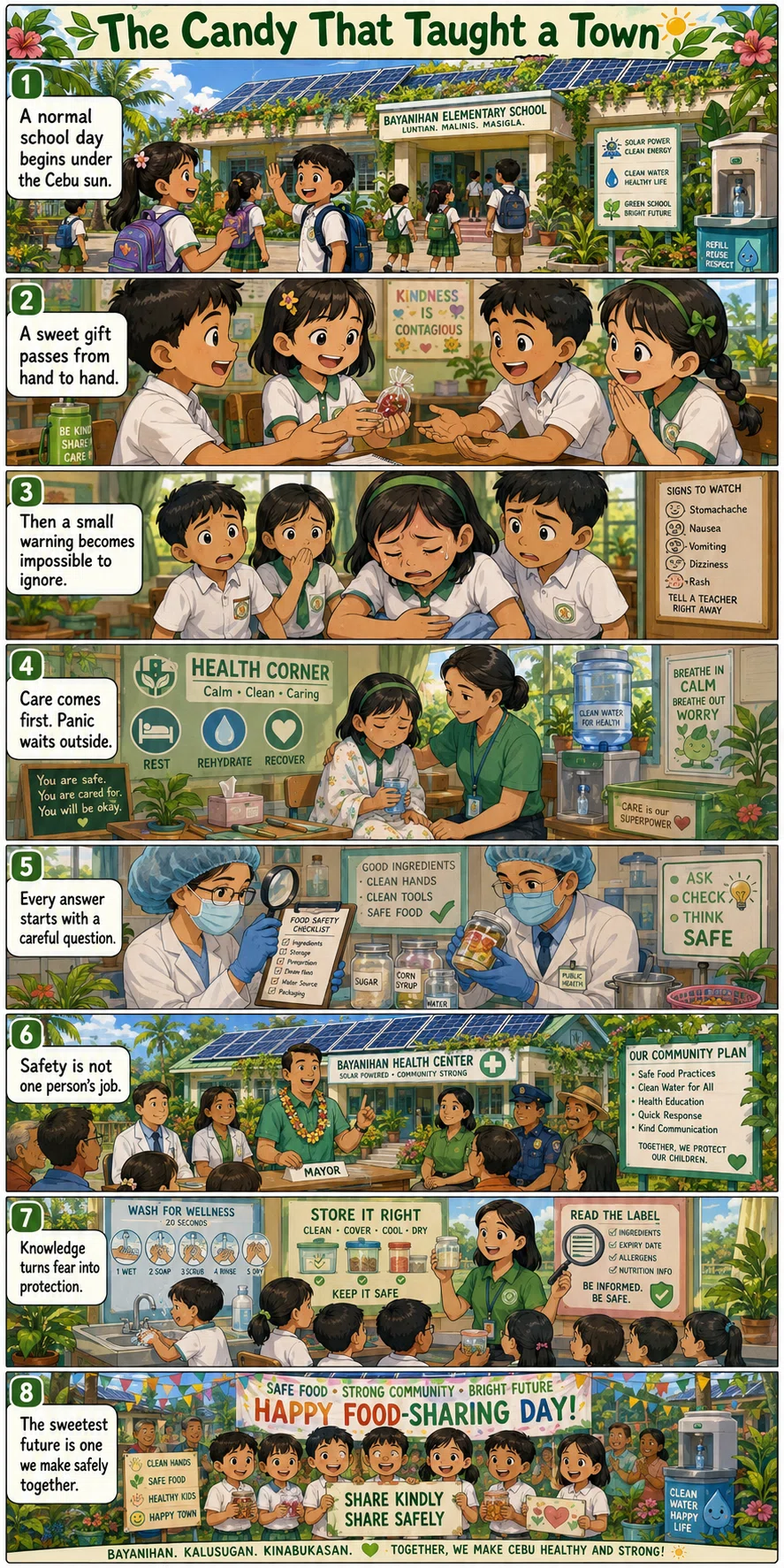
The article reports an ongoing investigation into an alleged food poisoning incident in Asturias, Cebu, where at least 11 elementary students became ill after eating homemade candies. The incident reportedly happened on September 15, 2023, involving third-grade pupils from a school in Barangay Manguiao. The affected children were brought to a hospital after showing symptoms such as abdominal discomfort, vomiting, weakness, and sunken eyes. According to related reporting, all of the students recovered and were discharged on the same day.
The Department of Health in Central Visayas, known as DOH-7, confirmed that the case was being treated as suspected food poisoning and that laboratory testing of candy samples was still pending. Local officials, including Asturias Mayor Dana Andrew Dumdum, expressed concern and emphasized the need for transparency, community vigilance, and stronger food-safety practices. The municipality was reportedly considering reviews of food-safety rules, including possible school inspections, to prevent similar incidents.
The broader issue is not only whether the candies were contaminated, but how communities manage informal or homemade food products consumed by children. The case highlights the importance of handwashing, utensil sanitation, safe ingredient sourcing, avoiding cross-contamination, proper storage, and quick medical attention when symptoms appear. It also shows how a small local incident can become a public-health lesson: food safety depends on families, vendors, schools, health offices, and local governments working together before a problem becomes an emergency.
🌐 日本語詳報要約
この記事は、フィリピン・セブ州アストゥリアス町で起きた、児童11人の食中毒疑いに関する続報です。問題となったのは、2023年9月15日にバランガイ・マングイアオの学校で、3年生の児童たちが手作りキャンディーを食べた後、体調不良を訴えたという事案です。報道によると、児童たちは腹部の不快感、嘔吐、脱力感、目のくぼみなどの症状を示し、病院に運ばれました。幸い、全員が同日中に回復し、退院したとされています。
中部ビサヤ地域の保健当局DOH-7は、この事案を「食中毒疑い」として確認し、原因とみられる手作りキャンディーの検体について検査結果を待っている段階だと伝えられています。つまり、記事時点では「原因食品」と断定されたわけではなく、あくまで疑いの段階で調査が継続している点が重要です。
アストゥリアス町のダナ・アンドリュー・ドゥムドゥム町長は、子どもたちの安全を地域全体で守る必要があると強調しました。また、手作り食品や出どころのはっきりしない食品を口にする際には注意が必要だとし、調査過程の透明性も約束したと報じられています。町としては、学校での検査を含む食品安全規則の見直しも検討しているとされ、単なる個別事故ではなく、地域の食品管理体制を点検するきっかけになっています。
このニュースの核心は、「手作り=安全」とは限らないという点です。家庭的で親しみやすい食品でも、材料の鮮度、調理器具の衛生、手洗い、保存温度、加熱・冷却、包装、配布時の管理が不十分であれば、子どもたちの健康リスクにつながります。DOH-7は、手洗い、器具の消毒、食品用手袋・ヘアネット・マスクの使用、信頼できる場所からの材料調達、生食品と調理済み食品の交差汚染防止、適切な保存を呼びかけています。
学校現場では、善意で持ち込まれる食品や地域の小規模販売品が子どもたちに届くことがあります。だからこそ、責任を個人だけに押しつけるのではなく、学校、家庭、自治体、保健当局が「何を許可するか」「誰が確認するか」「異変時にどう報告するか」を共有する必要があります。小さなお菓子をめぐる事件ですが、食の安全、子どもの保護、地域行政の危機管理を考える大きなテーマを含んでいます。
📘 CEFR B1以上 重要語彙12語
investigation:調査
The investigation continued after the students became sick.alleged:疑いのある、申し立てられた
Officials investigated the alleged food poisoning case.poisoning:中毒
Food poisoning can cause vomiting and stomach pain.consume:消費する、食べる
The students consumed homemade candies at school.homemade:手作りの
Homemade food still needs careful hygiene control.symptom:症状
Vomiting was one symptom reported by the children.hospitalized:入院した、病院に運ばれた
Several students were hospitalized after feeling ill.discharged:退院した
The children were discharged on the same day.regulation:規則、規制
The town may review food safety regulations.inspection:検査、視察
School food inspections can reduce health risks.contamination:汚染
Food contamination can happen during preparation or storage.sanitation:衛生管理
Good sanitation is essential when preparing snacks for children.
📺 外部参照情報
YouTube関連動画:Five Signs of Severe Food Poisoning — CDC
Reddit関連トピック:r/foodsafety: I ate a caramel apple from Disneyland that had sat on my…
手作り・加工菓子の保存や温度管理に関する食品安全の議論として関連性があります。
🗺️ 地名・人名・キーワード調査
Asturias, Cebu
フィリピン・セブ島北西部にある自治体で、西側はタニョン海峡に面しています。公式プロフィールでは、アストゥリアスはセブ島内の町で、地理座標や沿岸部としての特徴が示されています。漁業・農業・地域コミュニティが生活基盤となる地方自治体です。
Barangay Manguiao
アストゥリアス町内のバランガイの一つです。町公式サイトでは、2024年第1四半期のRBI記録で人口2,179人、7つのシティオを持つ地域として紹介されています。今回の事案では、学校の所在地として報じられています。
Dana Andrew Matela Dumdum
アストゥリアス町長。町公式プロフィールによると、2022年5月に35歳で町長に選出され、「Dongkoy」として知られています。機械工学を学んだ経歴を持ち、記事では児童の安全と調査の透明性に言及した人物として登場します。
DOH-7
Department of Health Central Visayasの通称で、中部ビサヤ地域の保健行政を担う機関です。今回の事案では、食中毒疑いを確認し、検体検査の結果を待っていると報じられました。
Foodborne illness
食品の生産、調理、保存、流通、消費の過程で発生する汚染によって起こる病気です。CDCは予防策として「Clean, Separate, Cook, Chill」を掲げています。
🌏 日本・米国の比較情報
Japan — English
Japan’s food-safety system is centered on prevention, local-government reporting, and early containment. The Ministry of Health, Labour and Welfare provides information to consumers and businesses to prevent food poisoning and works with local governments to identify causes and stop outbreaks early. Japan’s Food Sanitation Act also aims to prevent sanitation hazards from eating and drinking and protect public health.
日本 — 日本語
日本では、厚生労働省が食中毒予防に関する情報を消費者・事業者向けに提供し、発生時には自治体と連携して原因究明と拡大防止を図る仕組みがあります。食品衛生法も、飲食に起因する衛生上の危害を防ぎ、国民の健康を守ることを目的としています。
United States — English
In the United States, the CDC emphasizes four basic food-safety steps: Clean, Separate, Cook, and Chill. FoodSafety.gov says an estimated 1 in 6 Americans gets sick from food poisoning each year, and food poisoning sends about 128,000 Americans to the hospital annually.
米国 — 日本語
米国では、CDCが「清潔にする、分ける、加熱する、冷やす」という4原則を推奨しています。FoodSafety.govによると、米国では年間で約6人に1人が食中毒にかかると推定され、毎年約12万8,000人が入院するとされています。
💭 応用・ディスカッション展開
Theme 1: Should schools allow homemade food to be shared with students?
A balanced policy is better than a total ban. Homemade food can build community, especially in local schools where parents, neighbors, and small vendors often support events. However, children are a vulnerable group, and schools have a duty to reduce preventable risks. The Asturias case shows that even a small snack can become a public-health concern when many children consume the same item. The question is not whether homemade food is “good” or “bad,” but whether it is traceable, safely prepared, and properly monitored.
Schools could create clear rules: food must come from an approved source, ingredients must be listed, preparation time must be recorded, and risky foods should be avoided unless refrigeration or temperature control is available. Teachers should not have to act as food inspectors, so local health offices can provide simple checklists. Parents and vendors also need education, not just punishment. A community that understands handwashing, clean utensils, safe storage, and cross-contamination will protect children more effectively than a rule that nobody understands.
In my view, homemade food should be allowed only under basic safety conditions. Food sharing is part of culture, but child safety must come first. The best solution is a practical approval system that respects community traditions while preventing avoidable illness.
Theme 2: Who is responsible when children become sick from food at school?
Responsibility should be shared, but it must also be clearly defined. In a food-related school incident, many actors may be involved: the person who prepared the food, the person who brought it to school, school staff who allowed distribution, local officials who regulate food safety, and health authorities who investigate. If responsibility is too vague, everyone may assume someone else is checking the risk. That is dangerous.
The first responsibility belongs to the adults who prepare and distribute food. They must use clean hands, safe ingredients, sanitized tools, and proper storage. However, schools also have institutional responsibility because students consume food under their supervision. A school should know what foods are being shared and should have a policy for rejecting unsafe or unverified items. Local governments and health agencies have another role: they must educate communities, inspect high-risk food sources, and respond quickly when symptoms appear.
The goal should not be to blame one person immediately. Investigations must confirm the actual cause through evidence, such as lab testing and interviews. But after the cause is identified, accountability matters. If negligence occurred, corrective action is necessary. More importantly, systems must change so the same mistake does not happen again.
Theme 3: How can communities turn a food poisoning scare into long-term safety education?
A food poisoning scare can become a powerful learning moment if leaders communicate clearly and act quickly. Many communities only discuss food safety after a crisis, but the real value is turning fear into habits. In the Asturias case, the illness of 11 students created public attention. That attention can be used to teach families, vendors, teachers, and students how foodborne illness happens and how it can be prevented.
The first step is transparent communication. Authorities should explain what is known, what is still under investigation, and what people should do if symptoms appear. The second step is simple education. Instead of technical lectures, communities need practical messages: wash hands, use clean utensils, separate raw and cooked food, store food properly, and avoid selling or sharing food with unknown ingredients. The third step is school-based practice. Children can learn food safety through posters, classroom activities, and health drills, then bring those habits home.
Long-term change also requires trust. If small vendors feel attacked, they may hide problems. If they are trained and supported, they become part of the solution. A good community response protects children while helping local food sellers improve safety. In that sense, a scare can become a turning point for stronger public health.
🏷️ 記事の背景
English :
A school snack incident in rural Cebu raised concern over homemade food safety, child health, and local inspection systems.
日本語:
セブ州の学校で手作り菓子を食べた児童が体調不良となり、地域の食品衛生、学校管理、行政対応の重要性が改めて問われた事案です。
🏷️ ハッシュタグ
#食の安全 #食中毒 #フィリピンニュース #セブ島 #学校安全 #子どもの健康 #衛生管理 #手作り食品 #地域ニュース #公衆衛生 #食品衛生 #海外ニュース #教育現場 #リスク管理 #保健行政 #家庭と学校 #危機管理 #ニュース解説 #英語学習 #時事英語 #FoodSafety #FoodPoisoning #Cebu #Philippines #PublicHealth #SchoolSafety #HomemadeFood #HealthNews #Sanitation #FoodborneIllness #CommunityHealth #RiskManagement #StudentHealth #NewsEnglish #CurrentEvents #HealthEducation #教育 #英会話 #習い事
↓👍イイネを押してもらえると嬉しいです
🎧 語彙ダジャレ暗記
investigation(インヴェスティゲイション)=調査
「インベス着て現場へ行くション!」で調査開始。alleged(アレジド)=疑いのある
「あれ?事実?」と疑うから alleged。poisoning(ポイズニング)=中毒
「ポイ捨てした物を食べてズニング…」で中毒注意。consume(コンスーム)=食べる・消費する
「コーンスープをconsume」して食べる。homemade(ホームメイド)=手作りの
「ホームでメイド」したから手作り。symptom(シンプトム)=症状
「しんどむ…」と感じたらsymptom。hospitalized(ホスピタライズド)=病院に運ばれた
「ホスピタルにライズ」して病院へ。discharged(ディスチャージド)=退院した
「ディス=離れる、チャージ完了」で病院から離れる。regulation(レギュレーション)=規則
「レギュラーが守る」ルールがregulation。inspection(インスペクション)=検査
「インしてスペックを見る」からinspection。contamination(コンタミネーション)=汚染
「コンタクトに何かミネーション」ついたら汚染。sanitation(サニテーション)=衛生管理
「さ、煮て消毒しよう」くらい清潔に、sanitation。
