
[EN] Fashion & Snapshots: Ways to Use Them

*こちらは英語版ページです。
▷ 日本語版は、こちらからご覧いただけます ◁
Hi! It’s Hilda.
Typically, I write ▷ “From My Closet To You” ◁ as stand‑alone episodes―a narrative essay series weaving fashion and heart.
Today, I’m sharing “how to look at fashion snaps and use them in your own outfits.”
This article covers the ability to interpret fashion snaps, the role of trends, how to look at fashion snaps, and what to do after looking at them.
Regardless of age or gender, this article is “for a wide range of readers,” from those who are just starting to learn about fashion to those who want to enjoy it even more.
Fashion snaps can be found in many places, from social media to magazines. It is always fun to come across different kinds of fashion. I often look at them myself. But at one point, I had this question.
I look at so many of them, but… am I actually making use of them in my own outfits…?
I often struggled when choosing my own clothes. More than once, I thought an outfit looked good at home, only to step outside and feel, “Wait… something feels off.” It would put me in a low mood.
Through those experiences, I began looking into and researching, in my own way, “how I could make use of fashion snaps in my own outfits.”
I hope this article gives you a chance to see your outfits from a slightly different perspective.
Also, the outfit photos in this article are from my Instagram posts. If you’d like, please take a look for reference.
▷ Here’s my Instagram (@hilda_tu.tu) ◁
*This account does not sell paid content, pressure anyone to make purchases, or collect personal information.
Alright, let's get started!
1. The ability to interpret fashion snaps
Looking at fashion snaps has many benefits. By seeing different outfits, you can get a clearer sense of your own taste and discover combinations you may not have thought of before.
However, “just looking” at them does not mean you will improve your styling skills for your own outfits right away. An outfit is made up of multiple elements, and without being aware of those elements, it is difficult to take what you see and make it work in your own outfits.
The experience I mentioned at the beginning of this article, “I look at so many of them, but it still does not work when I try it myself,” is exactly this situation.
To move past that, you need the ability to interpret fashion snaps.
This is not about having a natural sense for fashion. It is an ability anyone can develop by learning “what to look at and how to think about it.”
2. The role of trends
When looking at fashion snaps, you come across so many outfits that catch your eye. Some feature new items, while others incorporate vintage pieces. In many cases, they have something “current” or “fresh” about them that reflects the mood of the times, and that is what draws us in.
Fashion strongly reflects the values and lifestyles of its time. As times change, items and styling change in response. That is what trends are.
That is why, if you dismiss trends as “things everyone has for no particular reason” or “things younger generations wear,” you miss their essence. For example, think of clothes that are easy to move in and comfortable to wear, along with sizes and silhouettes that are not bound by gender. Fashion reflects what each era carries with it.
For this reason, it is important to take an interest in trends when looking at fashion snaps.
This does not mean being swept along by trends or giving up your individuality. It is an important perspective for understanding the values behind fashion today and moving forward as “the person you are now.”
3. How to Look at fashion snaps
The value of looking at fashion snaps lies in interpreting the structure of an outfit while also getting a sense of trends. With that in mind, how should you look at them? I will explain it step by step.
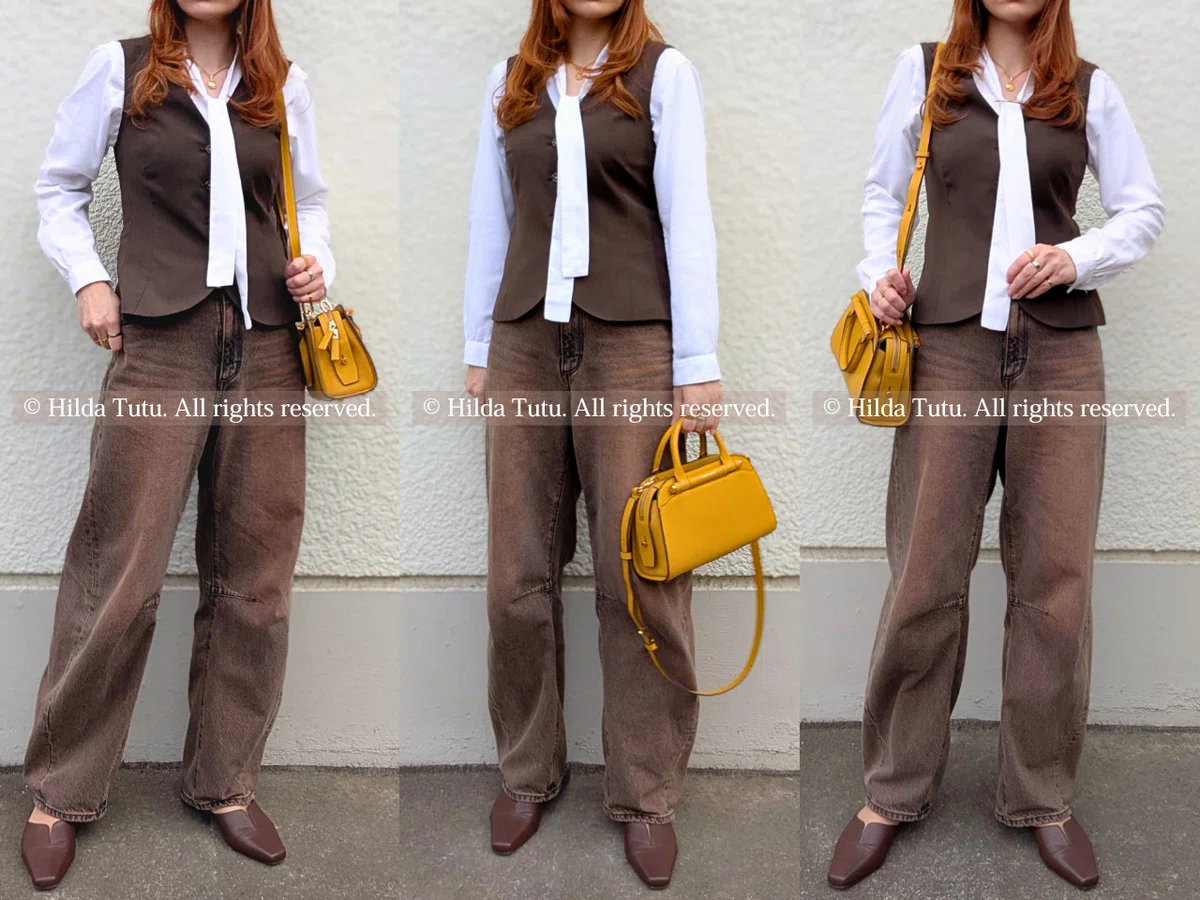
It is easier to understand with photos, so I will use photos of my outfits as examples. If you have a fashion snap you like, try following along while looking at it.
---------------------------------------------------------
<What we will look at in this section>
・The outfit as a whole
・Tops
・Waist position
・Bottoms
・Belts, bags,
accessories, and shoes
・Color/pattern placement
*To keep this approach applicable across seasons, I explain it based on general outfit categories, excluding outerwear.
*Because it is difficult to clearly identify “materials” from fashion snaps, I do not cover them as a rule. (Except for one part.)
---------------------------------------------------------
(1) Look at “the outfit as a whole”
First, look at the outfit as a whole. Many people, even when they think they are seeing the overall look, unconsciously end up focusing first on the things that catch their interest, such as “I like that” or “this item looks good.” Start by consciously checking how the whole outfit looks.
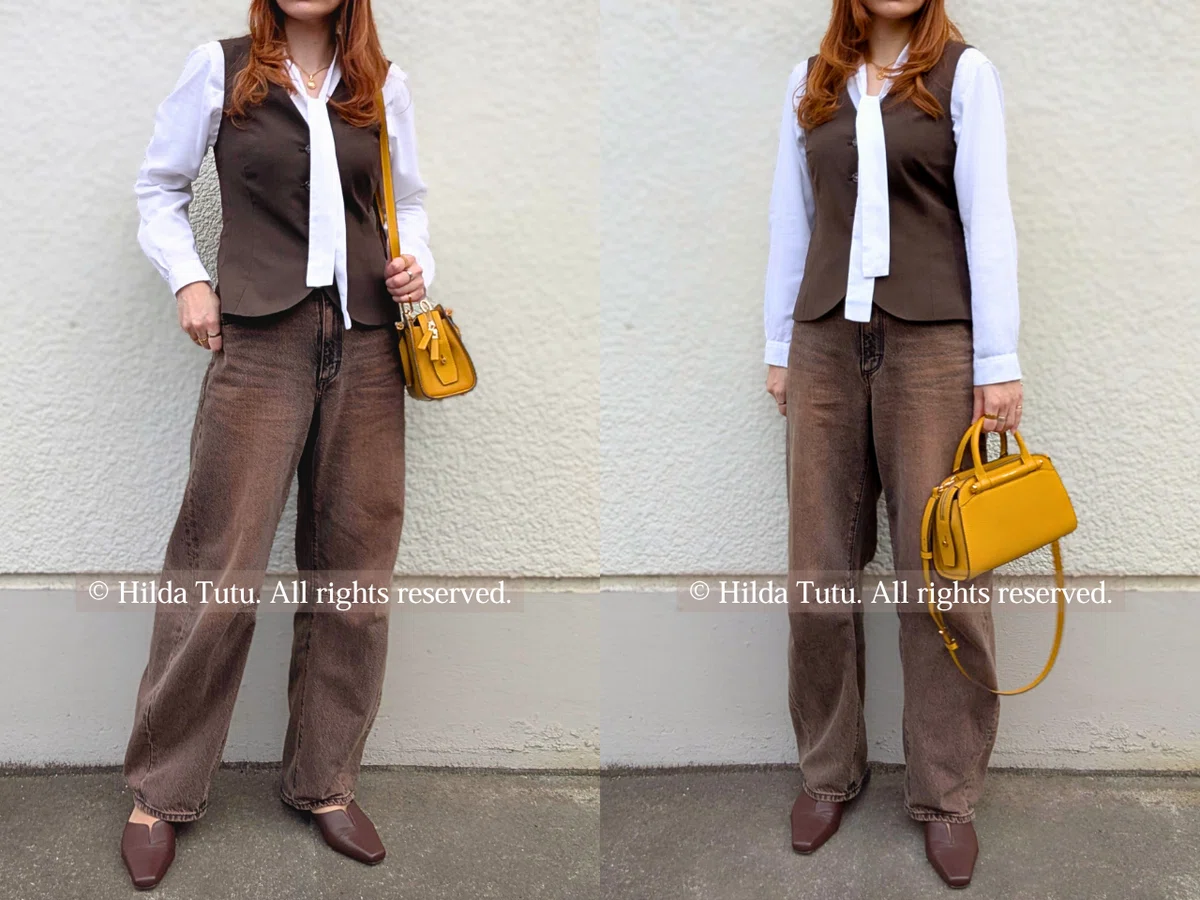
◆Overall silhouette
When looking at the outfit as “one connected look,” what kind of silhouette does it create? For example, is it a soft A-line silhouette, or a slim I-line silhouette?
◆Overall length / fit
In the same way, is the overall length long or short? Is the fit relaxed or slim?
<Key point>
The overall silhouette, length, and fit of an outfit reflect the mood of the times. Actually, these are also trends, and they tend to last longer than trends in colors, patterns, or specific items. If you can understand these points well, your outfits can still look stylish even without new items, and you can keep applying them over time. Outfits that make you think, “It’s basic, but somehow it looks great!” usually have these points firmly in place.
(2) Look at “tops”
Tops have a major influence on the impression of an outfit. The impression they give can change somewhat depending on the bottoms and accessories styled with them, but they still play a large role in the first impression and affect the outfit as a whole. From the tops, try to grasp the overall impression the outfit is aiming for.
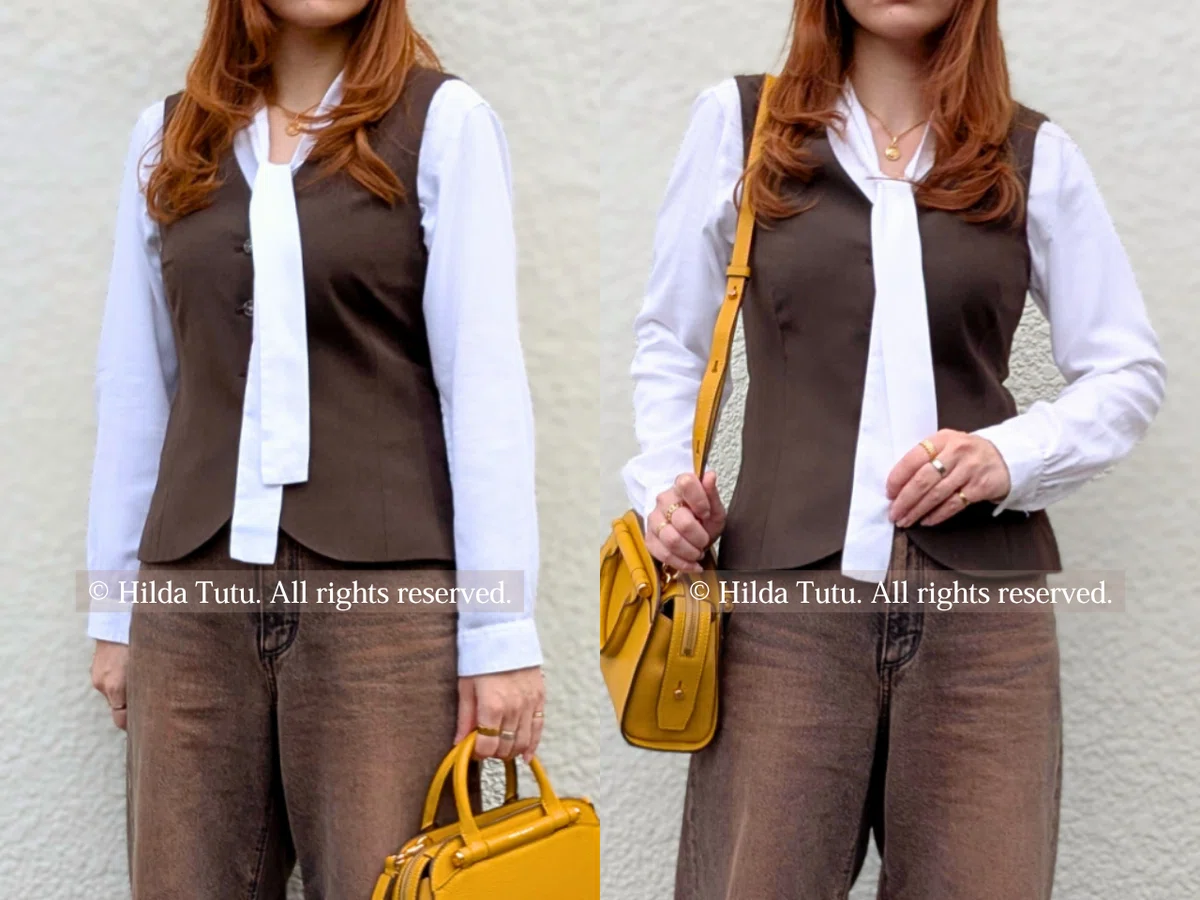
◆Impression
What kind of impression do they give? For example, do they look casual, more polished, or something else?
◆Length / Fit
Are they long or short? Is the fit relaxed or tight?
◆Silhouette
What shape do they have, such as the neckline, sleeves, shoulder line, and hem?
◆Layering
Are they layered with other clothes? Which parts are shown?
◆Color / Pattern / Other Details
What colors are used? Do they have a pattern, or are they solid?
<Key point>
When incorporating trends in tops into your own outfits, “length” and “fit” are the first things to look at. Trends also appear in necklines, sleeves, colors, and patterns, but layering and accessories (jewelry, scarves, etc.) can change how those details come across. However, if the “length” and “fit” feel far from current trends, they affect the impression of the entire outfit. Try adjusting the balance with the clothes you own.
(3) Look at “waist position”
The waist position determines the balance of an outfit. The overall balance changes depending on where tops and bottoms are visually separated, or whether there is no clear division between them. Try to grasp what kind of balance the outfit creates.
*When a belt is used, the waist position is easy to identify. If not, look at the visual boundary between tops and bottoms. For dresses and similar items, look at where the waist narrows.
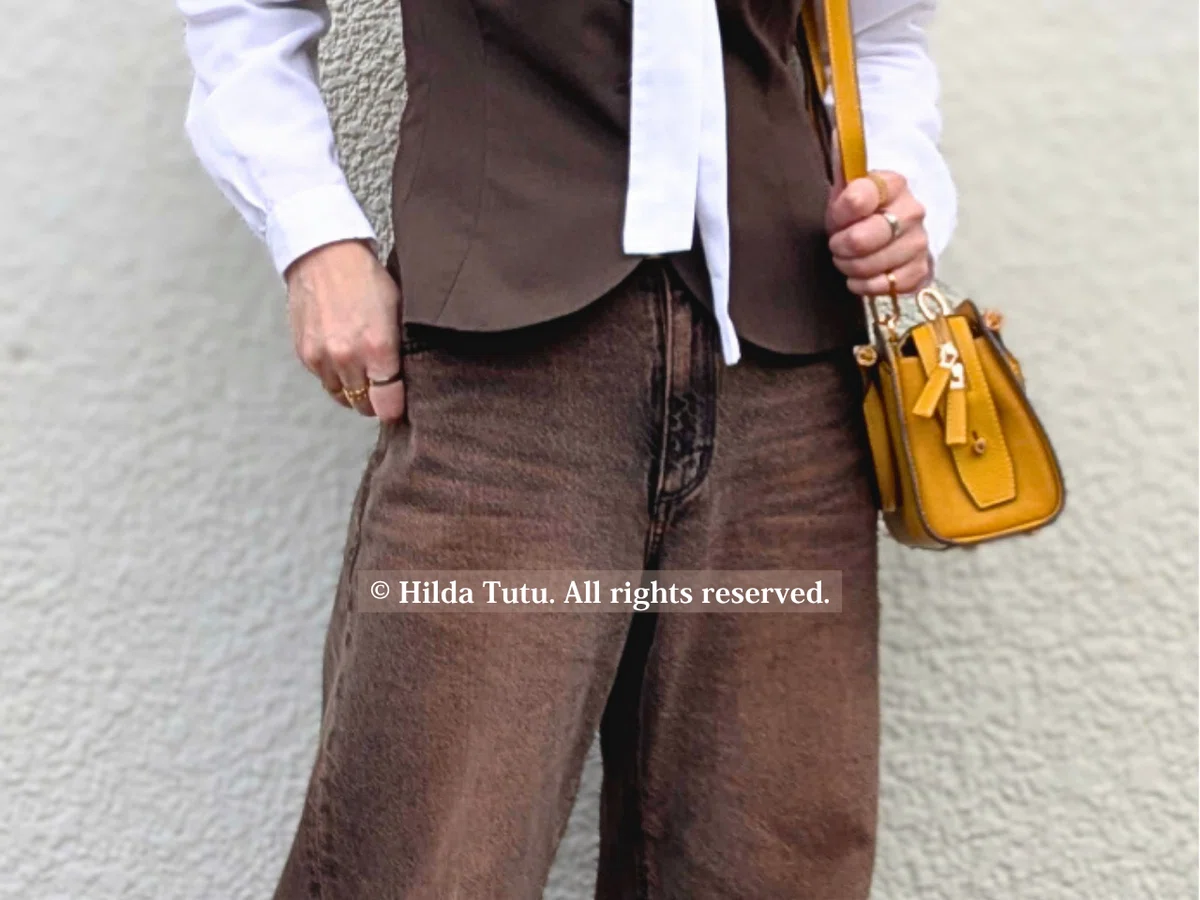
◆Tucked In / Untucked
Are tops tucked in, or worn untucked?
◆Position
Is the waist position high, low, or somewhere in between? Or is the waist position not clearly shown?
<Key point>
Trends also appear in whether tops are tucked in or left untucked, and where that line falls. Once you understand this, you can create a balance that feels current, even with the clothes you own.
(4) Look at “bottoms”
Because bottoms take up a large area, they affect the overall silhouette. They also play a supporting role in adjusting the impression created by tops. For example, bottoms may strengthen that impression by following the same style direction as the tops, or soften it by bringing in a different one. Look at how the bottoms shape the silhouette and how they adjust the impression created by tops. These two points are important.
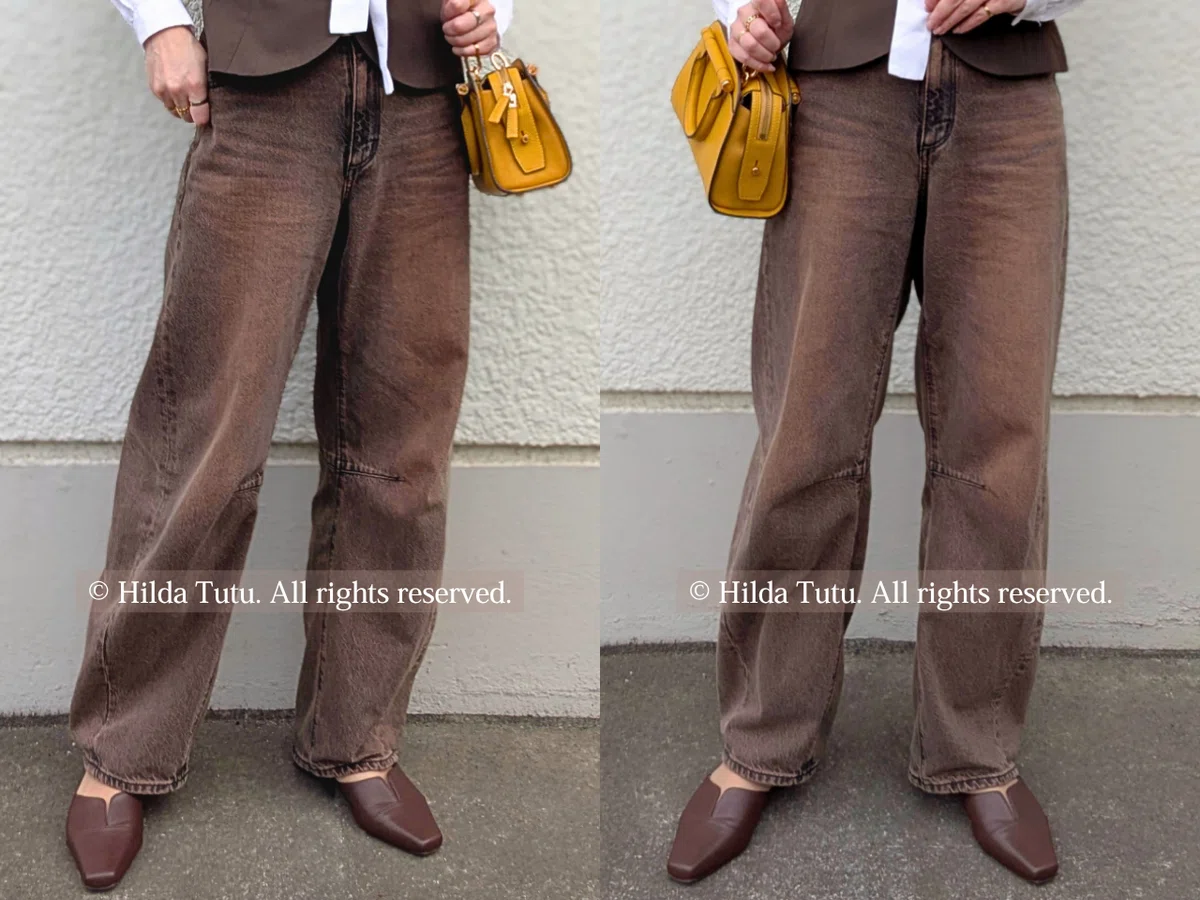
◆Silhouette
What shape do the bottoms have? For example, are they straight, A-line, or something else?
◆Length / Fit
Are the bottoms long or short? Is the fit relaxed or tight?
◆Impression
Are they in the same style direction as the top, or in a different direction?
◆Color / Pattern / Other Details
What colors are used? Do they have a pattern, or are they solid?
◆Layering
Are they layered with other clothes? Which parts are shown?
<Key point>
With bottoms, changes in trends tend to appear strongly in the silhouette. They also tend to move through trend cycles faster than other items. Of course, length also has its trends, but it does not change as quickly as silhouettes do. It shifts in stages. If possible, check bottoms regularly. On the other hand, if you want to keep the trend element subtle and make the look more basic, I recommend choosing pants or skirts with a shape close to straight, and making sure the length does not feel too far from current trends.
(5) Look at “belts, bags, accessories, and shoes”
Belts, bags, accessories, and shoes help make an outfit feel more complete. Even when the clothes themselves are simple, adding these items can make the outfit look styled, rather than just worn. Check what is being added to raise the overall level of the outfit.
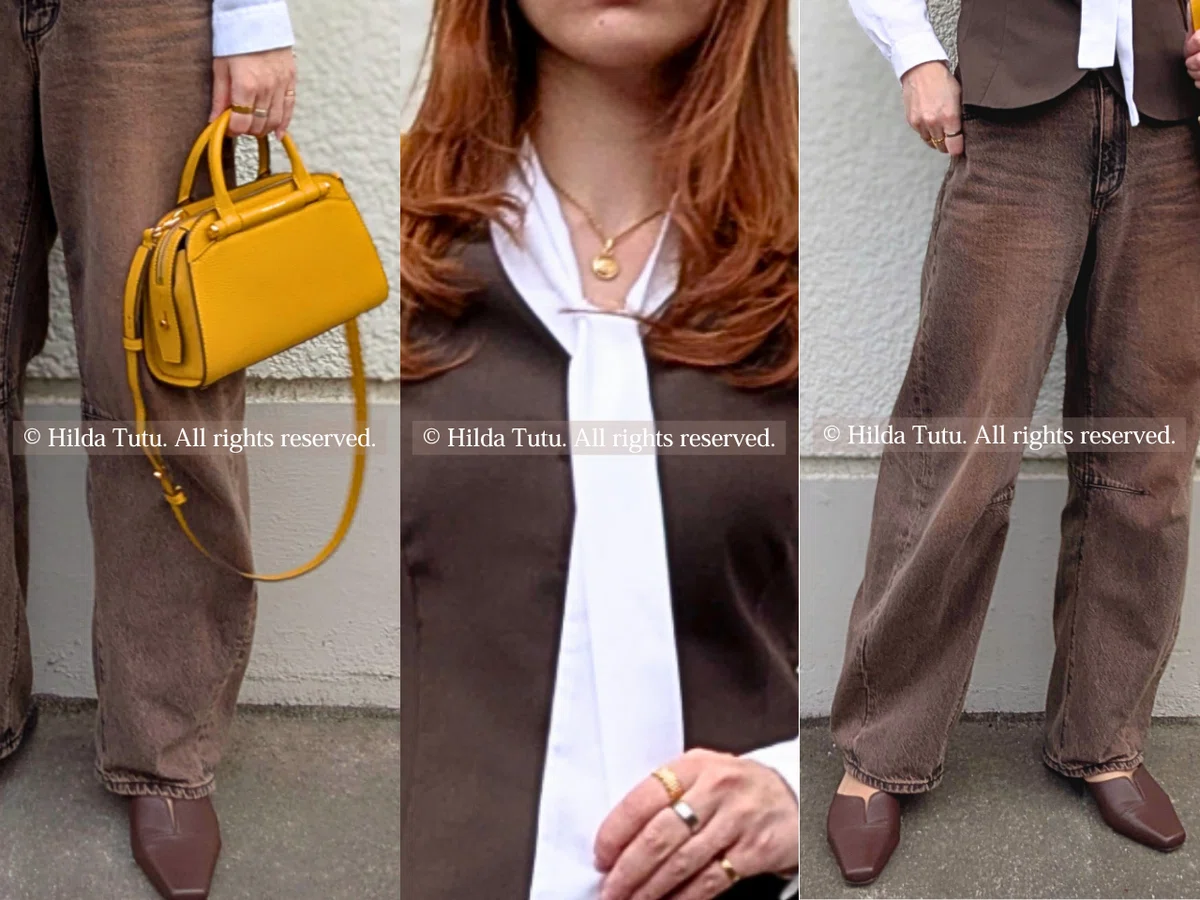
◆Silhouette
Are they round or pointed? Are they more linear or curved?
◆Size
Are they large or small?
◆Color / Pattern / Other Details
What colors are used? Do they have a pattern, or are they solid?
◆Material
What materials are used? Are they shiny or matte?
<Key point>
Belts, bags, accessories, and shoes are smaller than clothes, which makes them easier to experiment with when bringing in trends. They are also well suited for adding items that express your individuality. Think about what to add by considering both trends and your own taste.
(6) Look at “color / pattern placement”
Finally, look at the “placement” of colors and patterns across the outfit as a whole. You have already looked at them item by item, but now check how they are placed from a wider view.
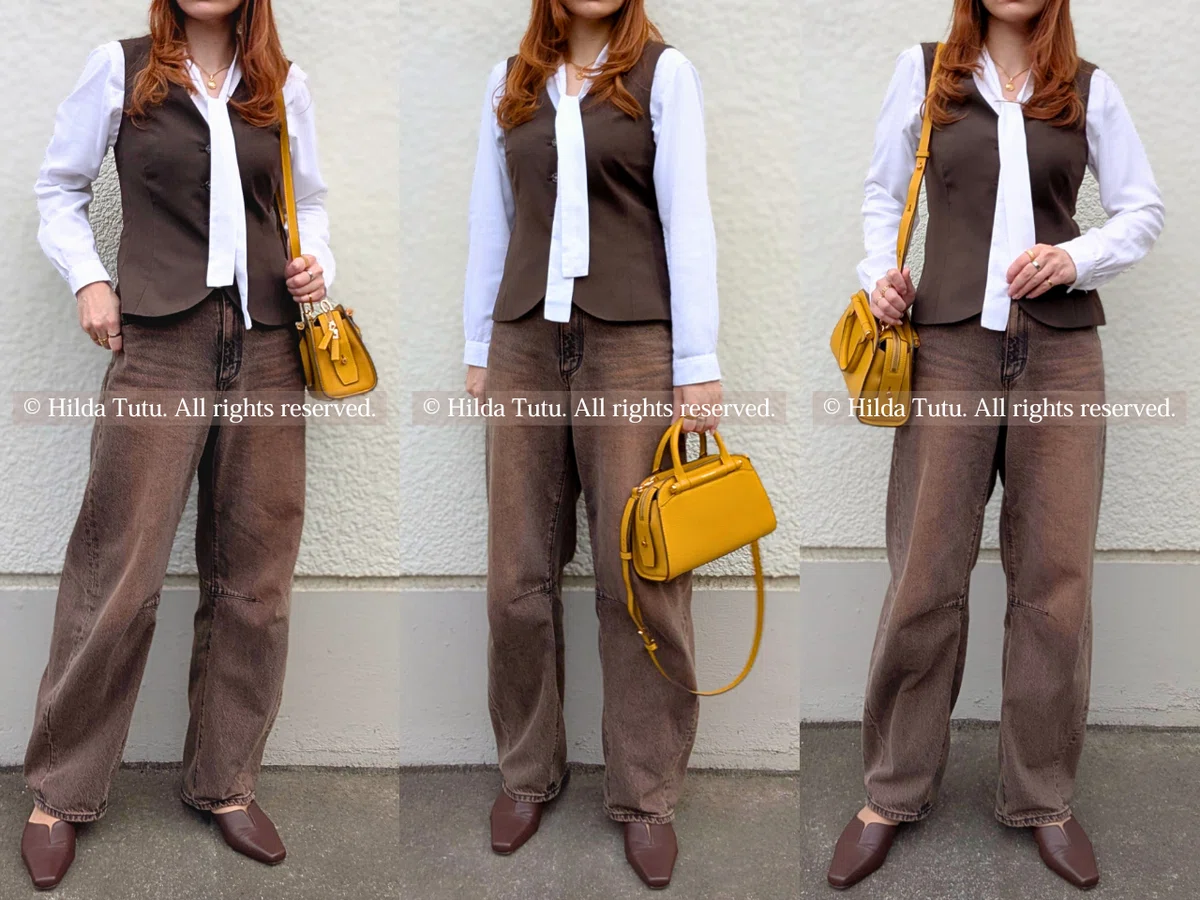
<Key point>
Colors and patterns are areas where trends tend to appear. Looking at them across the outfit as a whole makes it easier to see how trends are being used. It is useful not only for understanding trends, but also as a way of thinking about color coordination that you can apply to your own outfits over the long term.
4. What to do after looking
Now, what you should not forget is “putting it into practice.” You may have looked closely up to this point, but as time passes, your memory will gradually become less clear. While it is still fresh in your mind, try doing the following two things.
・Think about which things or elements you liked from (1) to (6).
・Using the items you already own, try to recreate those things or elements as much as possible.
The final key to making fashion snaps work for you is to clearly understand what you like and not let it end at just looking.
5. In closing
There is a lot you can learn from fashion snaps. Of course, it is also important to simply enjoy looking at them. But as you repeat this way of looking, you will gradually become able to interpret the key elements of an outfit, even in a short amount of time. This repeated practice can also help improve your styling skills for your own outfits. Try it with a fashion snap you like.
Starting next time, I will talk about the outfits and items that appeared in my narrative-essay series while also looking at them alongside fashion snaps.
▷ Reading Fashion―At the Beginning― ◁
▷ Upcoming Fashion Articles ◁
Also, on Instagram, I post photos of my outfits.I hope you find them useful as a reference.
▷ Here’s my Instagram (@hilda_tu.tu) ◁
*As for this account, you can find more details below.
▷ How It Differs from This Platform ◁
Psst―I’ll say this quietly…if you’d like to support me, comments, likes, or follows on Instagram really encourage me (haha).
▷ Profile ◁
▷ Fashion Writing ◁
▷ About “From My Closet To You” ◁
▷ List of Available Pieces (Stand-Alone Episodes) ◁
I’ll continue to offer this world of “fashion” and “words” to you.
See you again here!
― Hilda Tutu ―
© Hilda Tutu. All rights reserved.
Unauthorized reproduction, modification, or distribution is prohibited.
Contact ▷ Inquiries ◁
