
Part 6-2: Who Is Responsible for the Human Rights Violations Against Me? — Analysis and Synthesis Based on Observed Phenomena —

Editor’s Note (April 10, 2026)
A new section (including a figure) has been added at the beginning of Chapter 2 to improve the overall structure. The conclusion of this article (Chapter 3) has also been revised to refine its logical organization.
Summary
Overview of This Article
This article organizes unusual events observed across multiple institutions and organizations, and extracts common patterns to examine: the nature of the actors involved, and
the scale of their involvement (individual vs. organizational).
Building on the findings of Part 6-1, it further considers the entity responsible for the ongoing human rights violations against me.
Note: This article is not an academic paper, but an analysis conducted by an individual based on personal records and publicly available information.

Position of This Article Within the Series
This article corresponds to the portion under consideration indicated by the pink frame in the analytical structure of this series shown in the figure below.
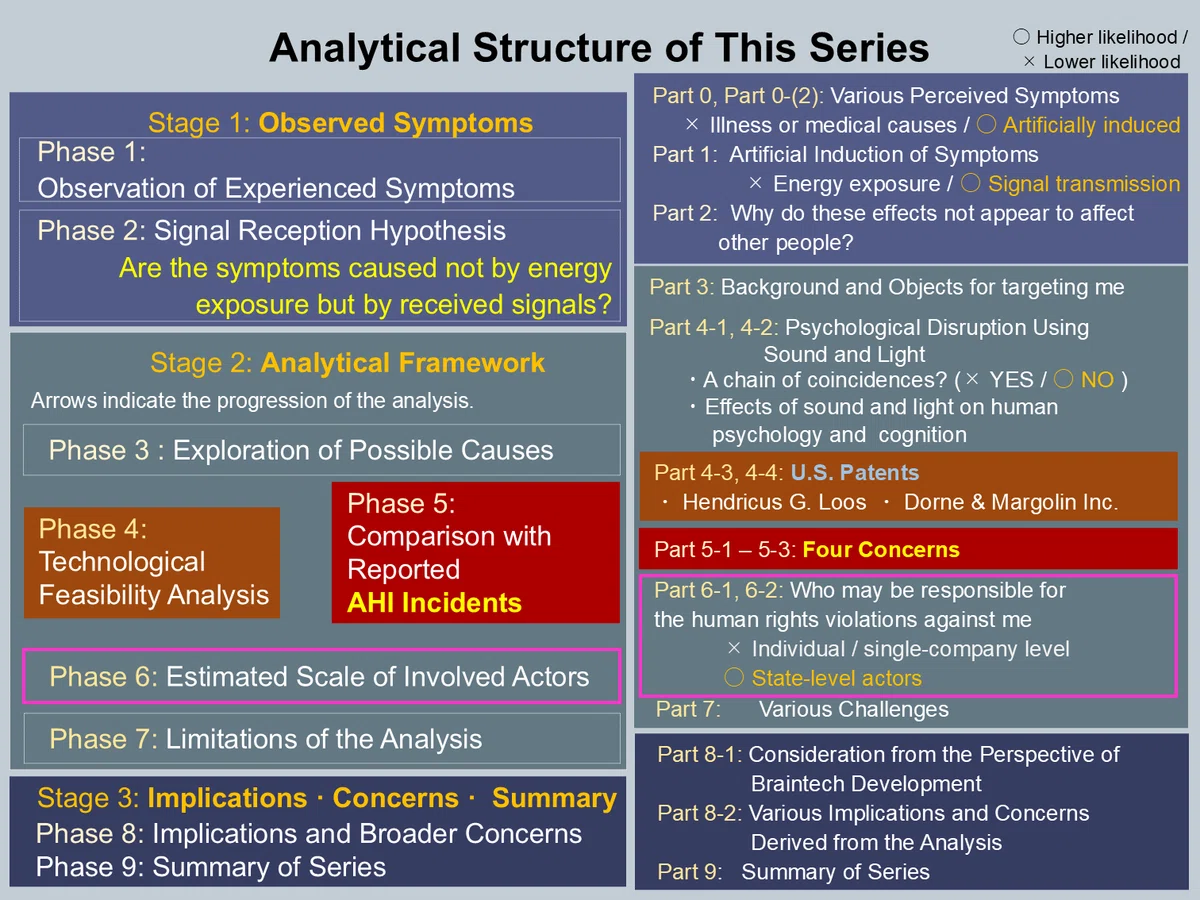
This diagram illustrates the relationship between the structure of the articles in this series and the stages of analysis.
The discussion is developed step-by-step, including the organization of observed phenomena, examination of analytical frameworks, verification of technical feasibility, and consideration of the entities involved.

Overview of the Series
For an overview of the entire series, please refer to the Series Guide and the list provided at the end of this article.

1. Introduction
As discussed in Parts 4-1 and 5-2 of this series, since encountering what I describe as “psychological disruption involving sound and light” on March 5, 2018, I have experienced a wide range of unusual events across multiple institutions, including police, medical facilities, and media organizations.
While these events have been documented in chronological form in a previous article, the purpose of this chapter is not to verify each individual case in isolation, but to examine the overall structure underlying these experiences.
Accordingly, the analysis focuses on the following points:
• whether common patterns exist across events
• whether a single actor can explain these events
• whether coordination or information sharing is required
This chapter therefore focuses on identifying structural patterns rather than evaluating individual incidents in isolation.

2. Examples of Unusual Experiences Across Multiple Institutions and Organizations
2-1. Chronological and Geographical Organization of Suspicious Incidents
Figure 1 organizes the main incidents I have experienced across multiple locations and institutions.
When viewed from both chronological and geographical perspectives, certain aspects emerge that are difficult to explain as a mere sequence of isolated, coincidental events.
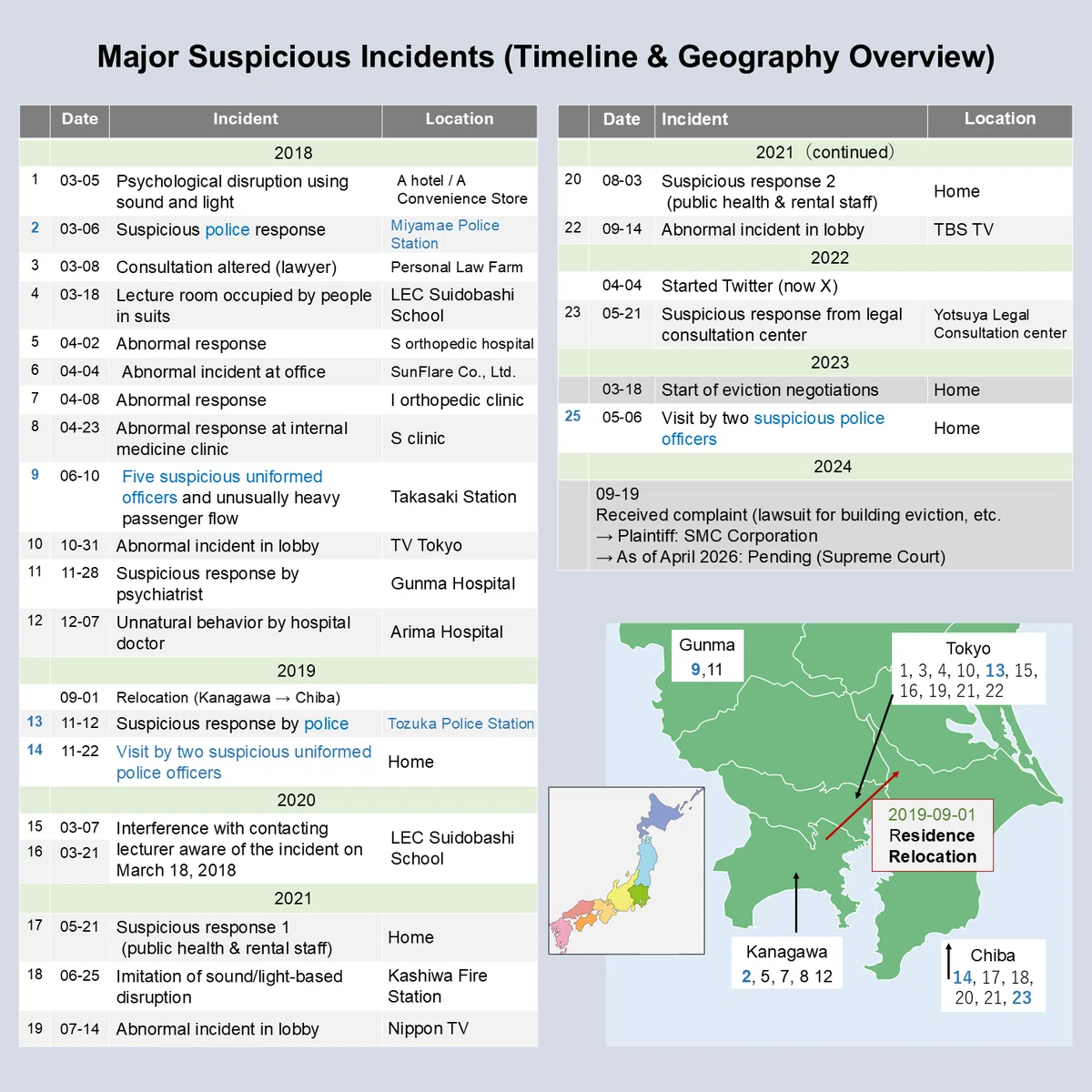
These incidents themselves are considered to have little direct connection with symptom perception similar to AHI.
On the other hand, among the incidents observed across multiple institutions and organizations, as shown in Figure 1, certain common characteristics can be identified.
Specifically, such characteristics include the occurrence of incidents even in cases where no prior notification of visits had been made, as well as the continued lack of appropriate explanations in response to inquiries.
In light of these points, it is considered that these incidents cannot be sufficiently explained solely as independent, coincidental events.
While it is difficult to determine the exact background or intent behind these incidents, considering my overall experiences, the following possibilities may be suggested:
・To suppress the public disclosure of the human rights violations I am experiencing
・To impose psychological stress in order to make resistance more difficult
・To create conditions under which some form of influence may be more easily exerted through changes in mental state
Sections 2-2 through 2-4 present specific examples of suspicious incidents experienced in contexts such as interactions with the police and television broadcasters.

2-2. Example: Chiba Prefectural Police
I currently reside in Kashiwa City, Chiba Prefecture.
I have experienced multiple suspicious incidents related to the police.
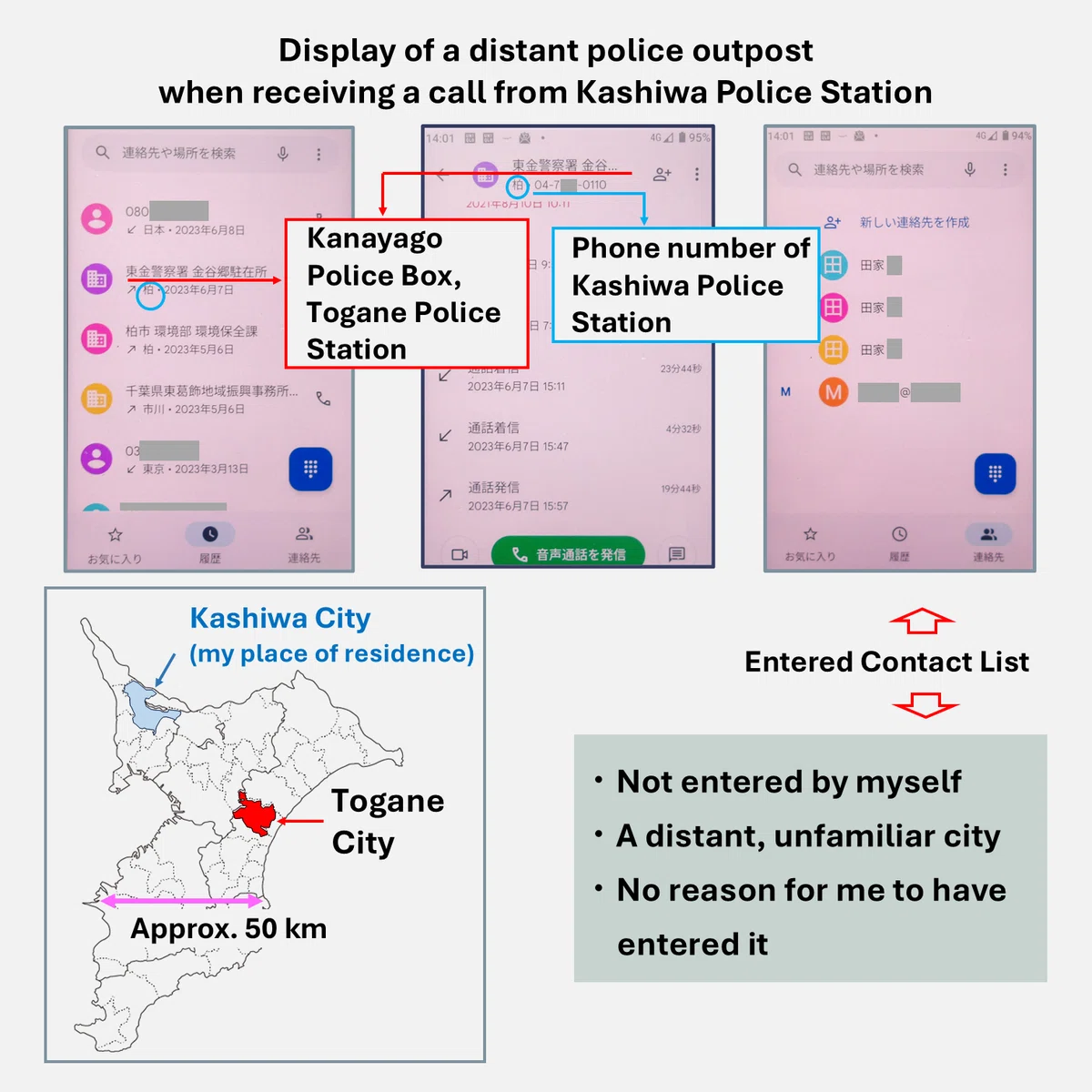
One example is that although my smartphone displayed the phone number of the Kashiwa Police Station, the location information indicated a police box in Togane City, far from Kashiwa.
This may be a form of “spoofing,” which was publicly warned about by the National Police Agency in March 2025 and reported by NHK.
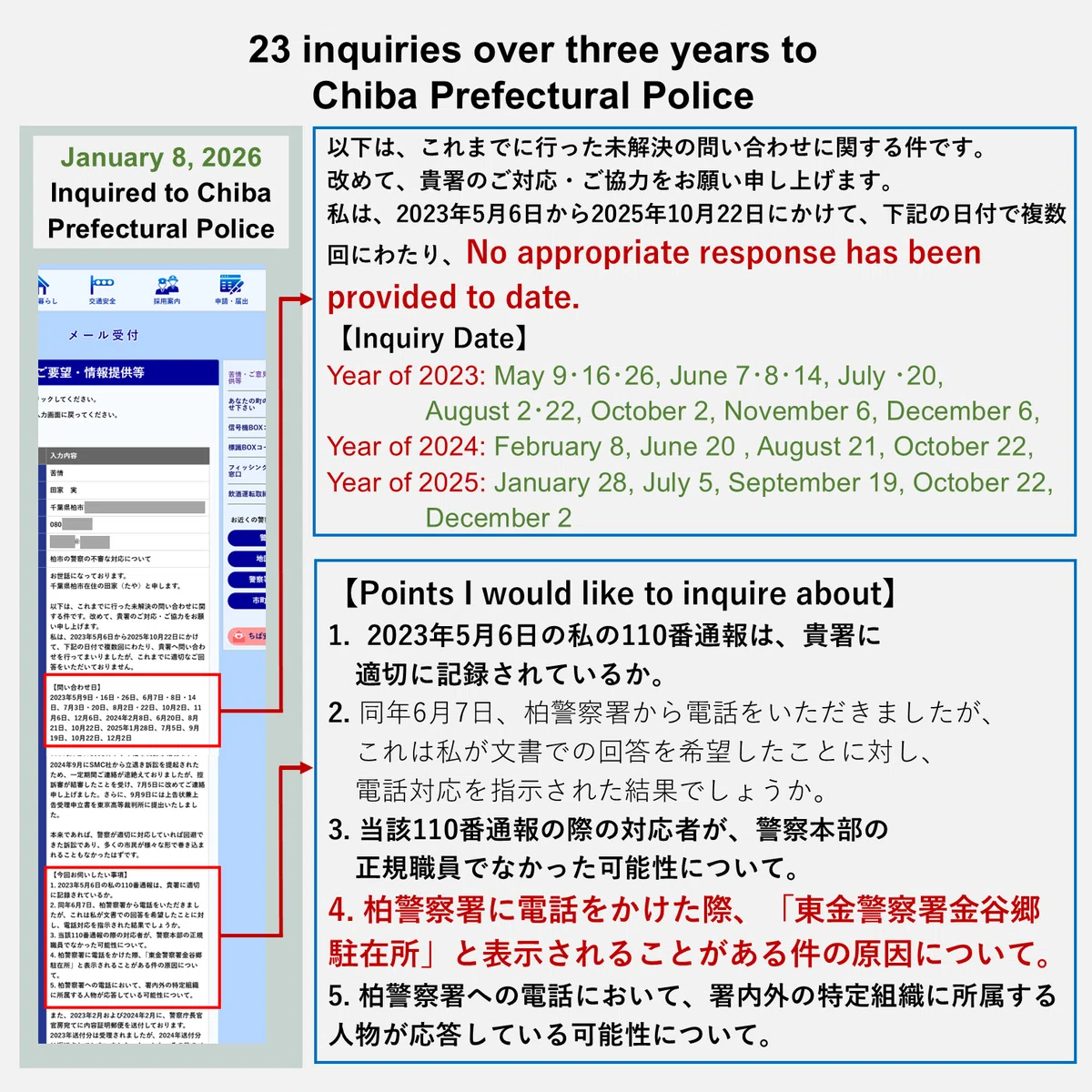
Despite requesting written responses regarding another matter since May 2023, I received only a phone response stating that a similar case was under investigation.
Since then, repeated inquiries—including requests for written explanations—have gone unanswered.

2-3. Example: Television Stations
I visited three television stations to report the human rights violations I have experienced.
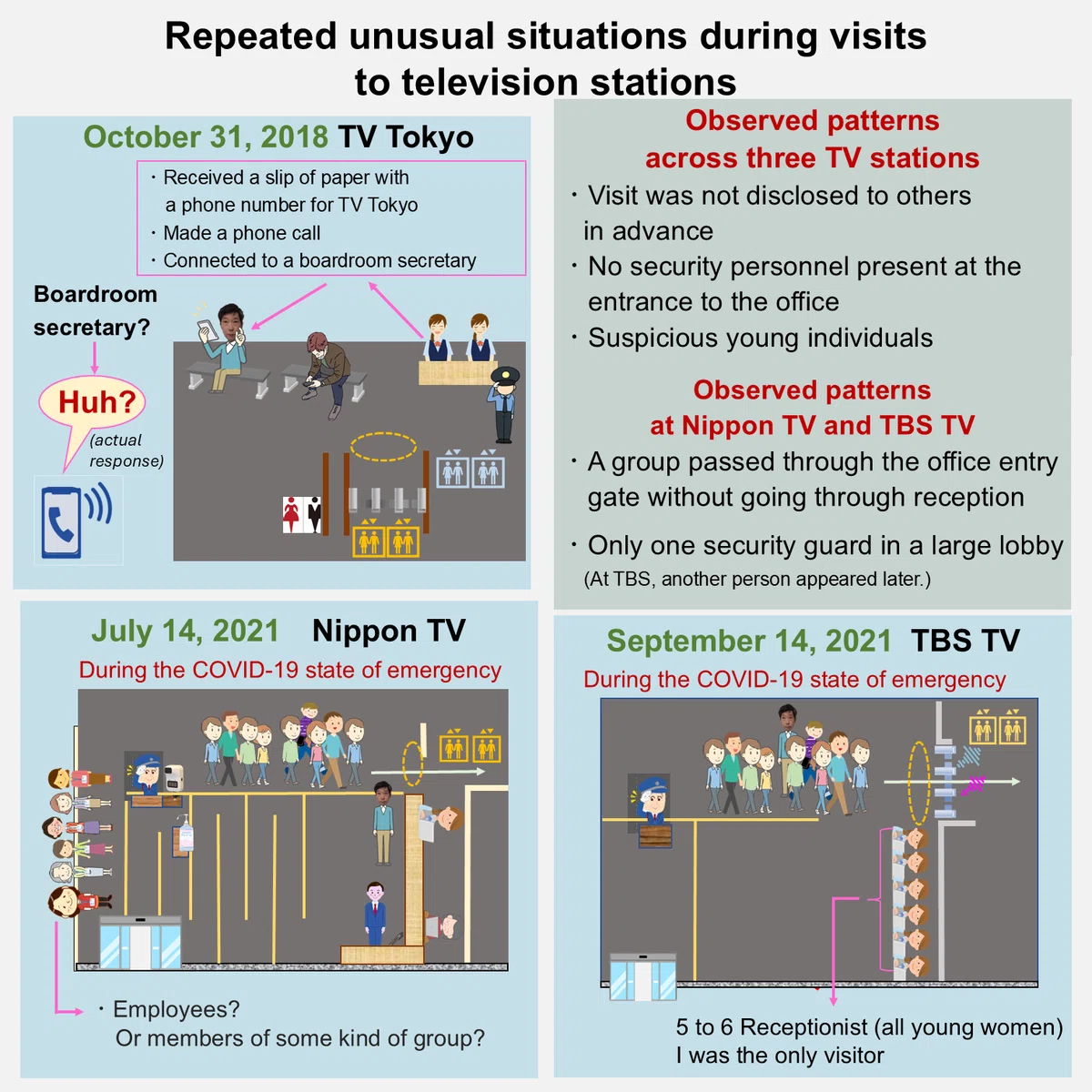
(July 23, 2026: Some wording in the figure was revised.)
Across all three, I encountered unusual responses and situations.
One common feature is that I did not inform others in advance of my visit.
Although I notified Nippon TV and TBS one week prior, I did not inform TV Tokyo at all.
Nevertheless, I experienced similar unusual situations at all three.
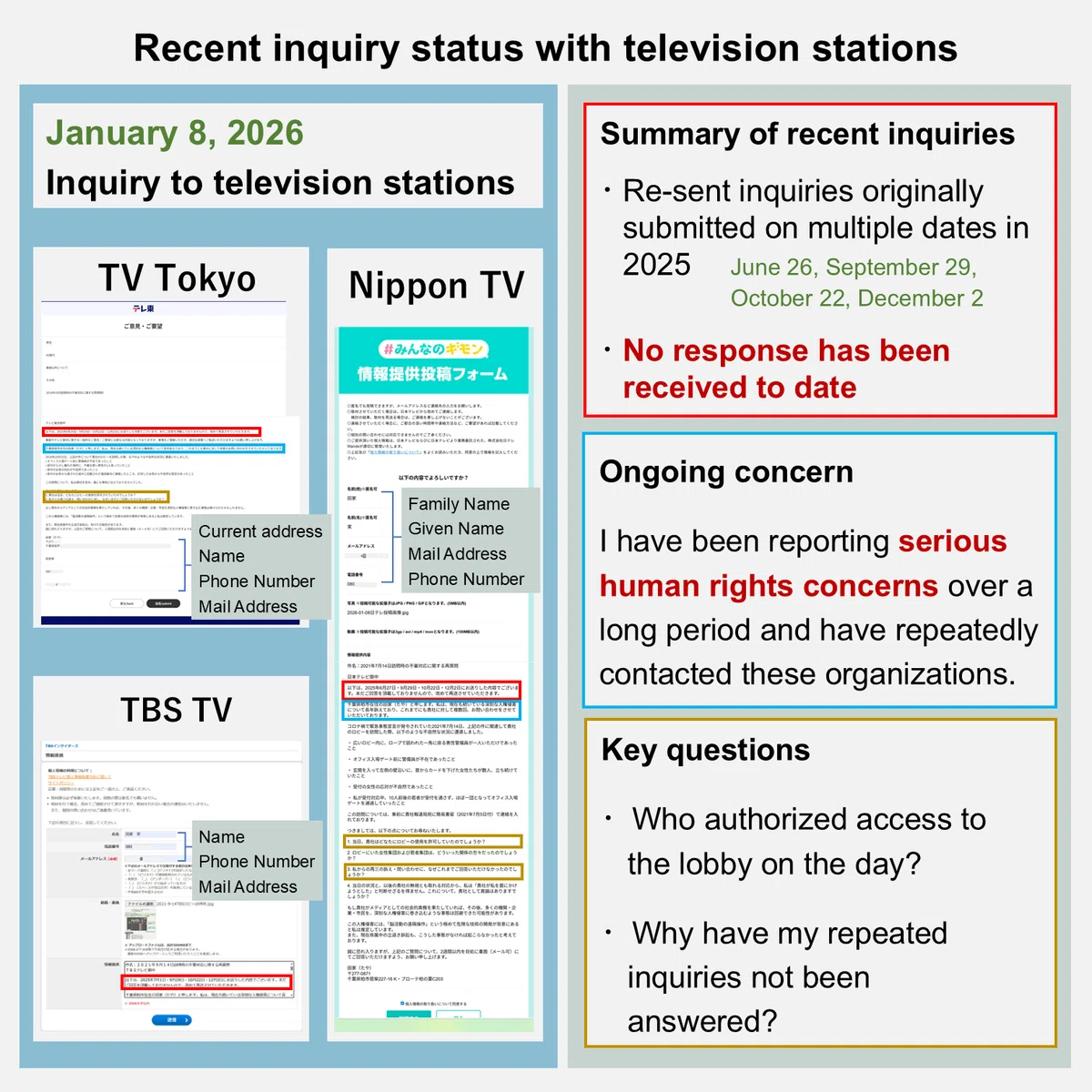
After the visits, I repeatedly requested explanations regarding these incidents, but none of the stations have responded.

2-4. Other Examples
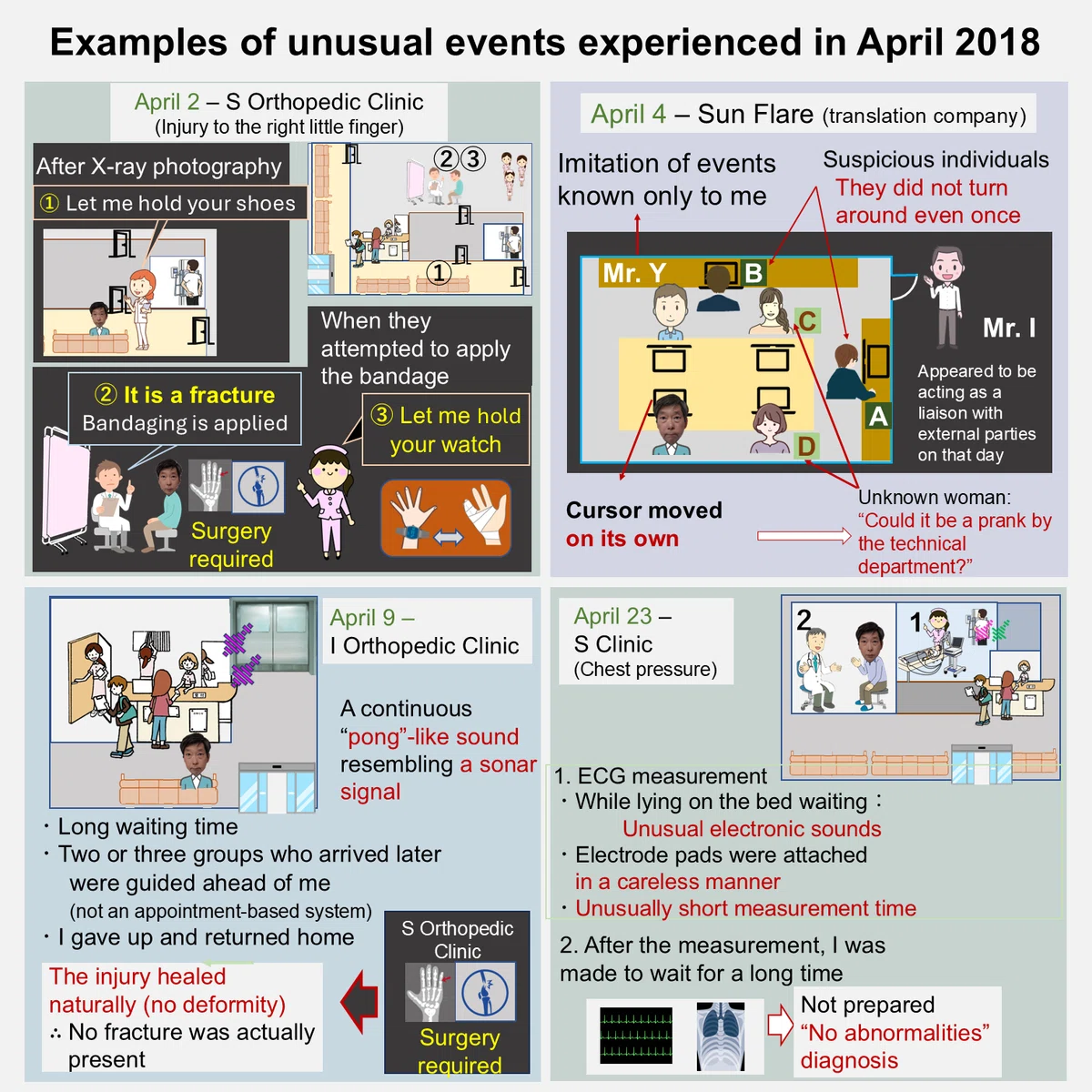
Figure 6 presents additional examples of unusual events I experienced in April 2018, while living in Kawasaki City, Kanagawa Prefecture.
Notably:
I visited certain clinics without prior notice
In one case, after leaving due to excessive waiting, I was unexpectedly contacted and asked to return
At a translation company (Sunflare), I had arrangements to work in their office during the period of the incident
The phrase “imitation of events known only to me” corresponds to examples discussed in Part 4-2 (revised).
Additionally, I may have experienced an event comparable to an AHI-related impact while on my way to Sunflare on April 4.

2-5. Summary of This Chapter
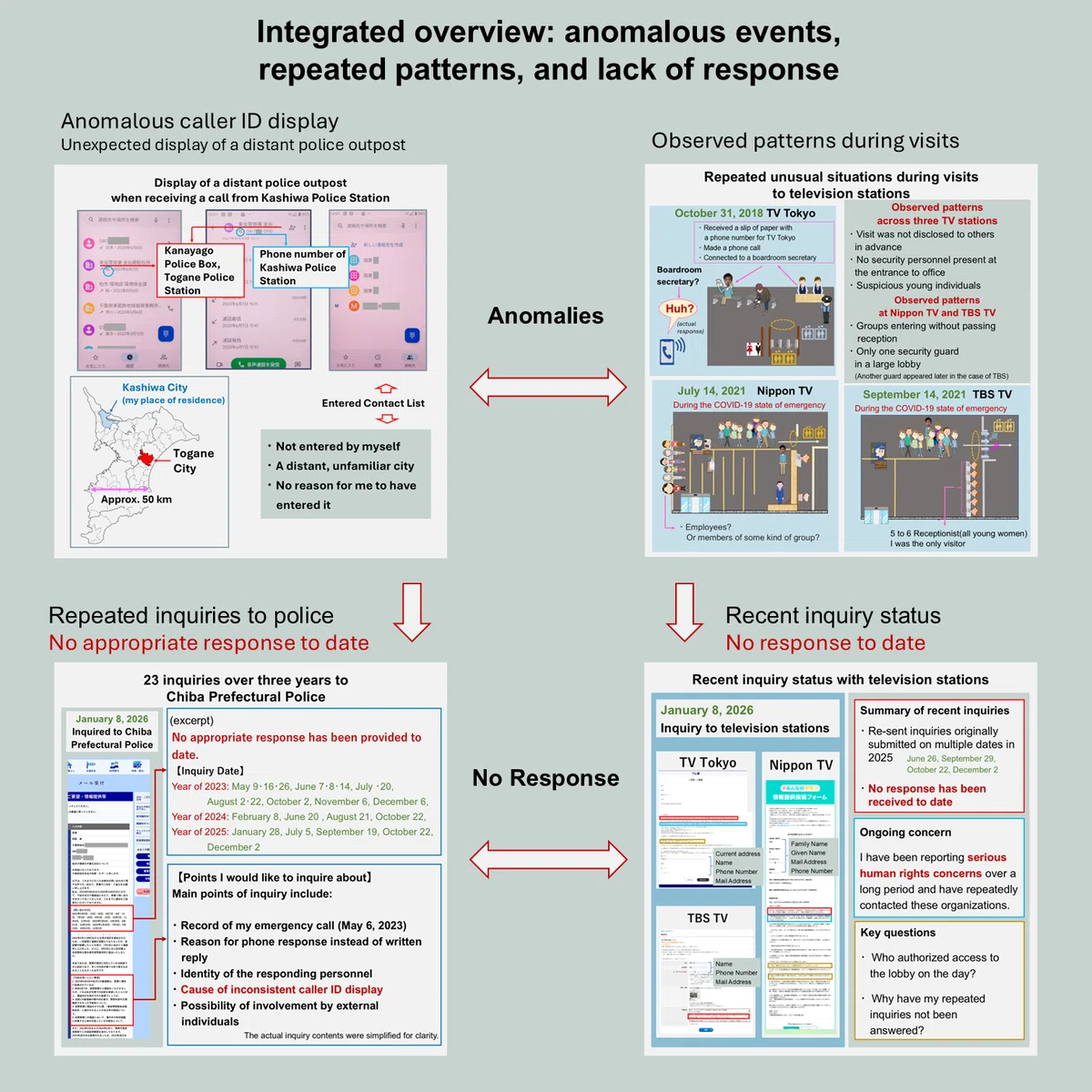
Key observation: Repeated anomalous events and consistent patterns were observed. Despite multiple inquiries to relevant organizations, no appropriate response has been provided to date.
The examples presented above represent only a portion of the unusual events I have experienced across different institutions and organizations.
It is difficult to assume that each organization independently chose to respond in such atypical ways toward a single individual.
Rather, it appears more plausible that these responses may have been influenced by requests or instructions originating from an external entity.
Across these cases, several common features can be observed:
incidents occurring within public institutions such as police and medical facilities
incidents occurring even without prior notification of visits
incidents occurring regardless of geographic location
similar patterns recurring across different organizations
a consistent lack of substantive responses to inquiries
While it is theoretically possible to interpret these as independent and coincidental events, a more consistent explanation may involve the assumption of some level of coordination or information sharing.
Taken together, these observations suggest that the events described here are unlikely to be the result of isolated actions by independent actors, and instead may reflect some form of coordinated or integrated involvement.

3. Conclusion
Based on the above, while each incident described in this article could, in isolation, be interpreted as an accidental or unrelated occurrence, there are limitations to viewing them merely as a collection of independent events.
In particular,
・the occurrence of events even without prior notification of visits,
・the repeated observation of suspicious situations across multiple institutions and organizations, and
・the consistent lack of appropriate responses to inquiries,
suggest that these events cannot be sufficiently understood as independent phenomena.
Rather, they may be more coherently interpreted by assuming the presence of some form of coordination or information sharing.
From this perspective, the case cannot be sufficiently explained solely by independent individuals or a single private entity. At the same time, it also appears to extend beyond the conventional framework of public institutions alone.
Therefore, it may be necessary to consider the possibility of a structural form of involvement that includes connections with public institutions while also extending beyond their formal boundaries.
When considered together with the institutional-level observations presented in Part 6-1, the events discussed in this article may be more consistently interpreted as arising from a shared structural background rather than as unrelated phenomena.
Within the scope of this series, the entity responsible for the ongoing human rights violations against me cannot be reduced to a simple dichotomy of state or non-state actors (i.e., a single government body or a single private entity).
Rather, it is suggested that the responsible actor may possess a complex structure that presupposes broad coordination capabilities and information sharing.
This structure can be conceptually illustrated as follows:
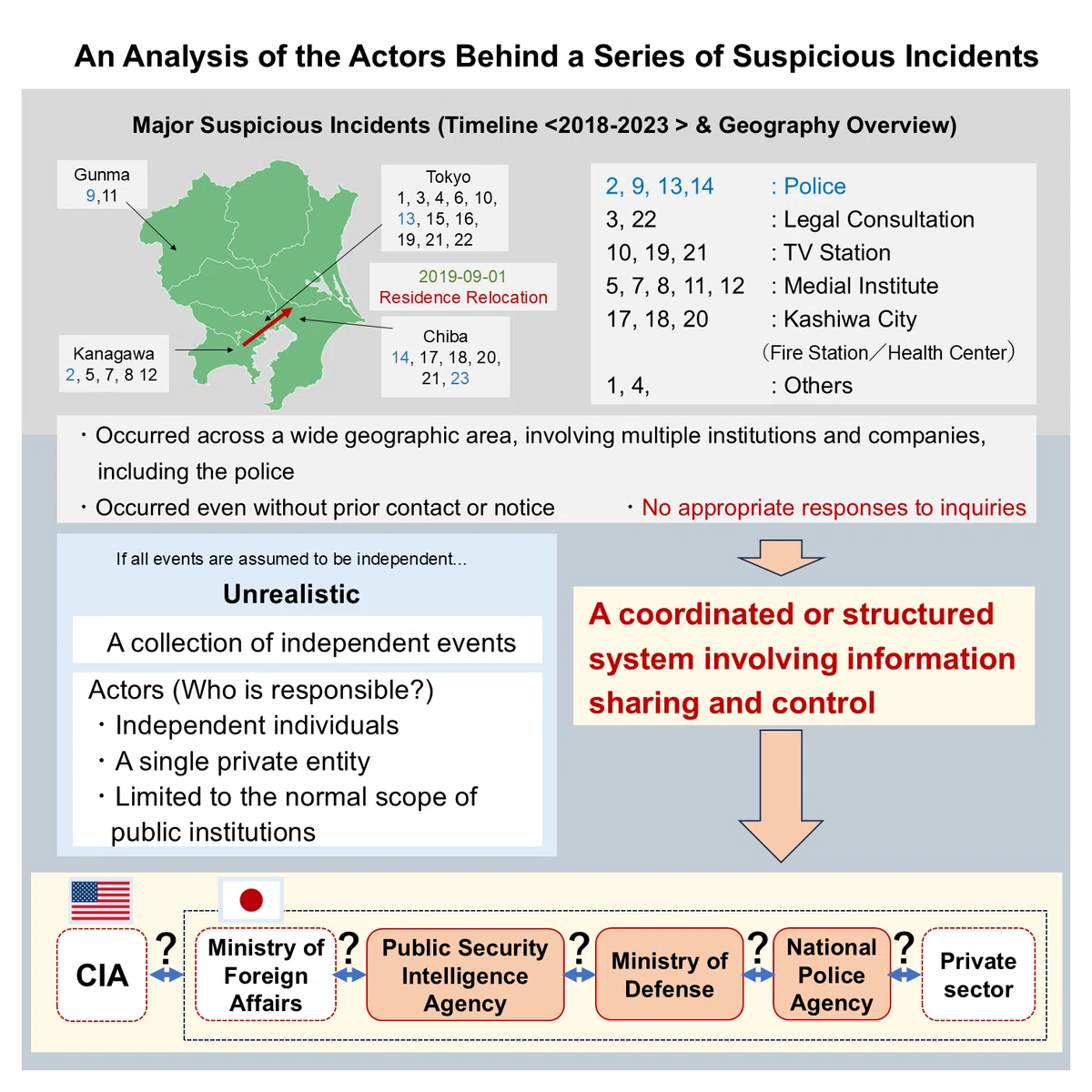
This figure presents a conceptual summary of the possible structural involvement inferred from recurring patterns observed across multiple institutions and organizations.
This is a hypothetical representation and does not assert the involvement of any specific institutions.
Added on April 15, 2026.

4. Future Work
In the next part, I plan to further examine the various challenges surrounding AHIs and the human rights violations I have experienced, building on the findings presented throughout this series.
<Update: April 23, 2026>
On April 22, I published Part 7 as a continuation of the series.

