




































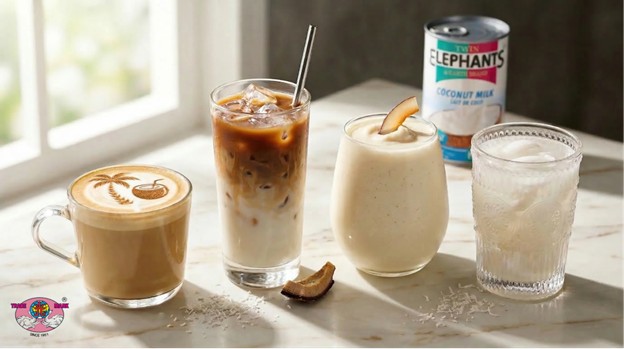
As global consumer preferences shift toward plant-based alternatives and dairy-free innovation, coconut milk has emerged as one of the most versatile and commercially valuable ingredients in the beverage industry. From barista-style lattes and ready-to-drink smoothies to functional wellness beverages, coconut milk is now positioned at the center of beverage formulation worldwide.
Amid this growing demand, Thailand has strengthened its reputation as a preferred sourcing hub for beverage manufacturers seeking high-quality, export-ready coconut milk. With its rich agricultural resources, established processing infrastructure, and international food safety compliance, Thailand is increasingly recognized as a global leader in producing what many brands consider the best coconut milk for beverages.
The Rise of Coconut Milk in Modern Beverage Innovation

The surge in dairy-free and plant-based consumption has fundamentally reshaped the beverage landscape. Consumers are demanding alternatives that are not only lactose-free but also creamy, flavorful, and suitable for specialty drinks. Coconut milk delivers on all fronts.
For café chains and baristas, coconut milk offers a naturally smooth texture and subtle sweetness that complements espresso and tea-based drinks. For product developers, it provides a stable base for functional beverages enriched with vitamins, proteins, or adaptogens. As a result, sourcing a reliable coconut milk supplier for baristas and beverage manufacturers has become a strategic priority.
Thailand’s coconut milk industry has responded to this demand by scaling both quality and capacity, positioning itself as a trusted OEM coconut milk UHT supplier for international brands.
Strategic Sourcing from High-Yield Coconut Regions
One of Thailand’s key advantages lies in its agricultural geography. Regions such as Thap Sakae District in Prachuap Province are renowned for cultivating coconuts with exceptionally high fat yields and naturally aromatic profiles. These coconuts are particularly suited for beverage applications that require creaminess without artificial thickeners.
The tropical climate allows for consistent harvesting cycles, ensuring seasonal availability and supply predictability throughout the year. For international beverage companies, this means reduced raw material risk and greater pricing stability.
Thai coconuts are known for:
- Naturally sweet flavor profiles
- Aromatic characteristics that enhance beverage formulations
- High fat content ideal for creamy textures
These attributes are especially important for brands developing high fat coconut milk for export markets, where consistency and sensory quality directly impact brand perception.
This dual-region sourcing model, combined with Bangkok’s role as a major Southeast Asian logistics hub, gives Thai manufacturers a distinct edge in supply reliability and export speed. International buyers benefit from access to diversified growing zones and efficient port connectivity, reducing both lead times and raw material risk.
From Extraction to UHT Sterilization: Manufacturing Excellence
Behind every high-quality coconut milk product is a sophisticated manufacturing process. Leading Thai producers employ advanced extraction systems that begin with fresh coconut meat pressing and proceed through precise blending to achieve targeted fat levels.
Manufacturers typically offer customizable fat content ranging from 5 percent for lighter beverage blends to 22% for rich, cream-forward formulations. This flexibility allows beverage brands to tailor their products according to market preferences, whether for low-calorie smoothies or indulgent coconut-based lattes.
UHT sterilization technology plays a critical role in maintaining both safety and shelf life. Through ultra-high temperature treatment, coconut milk can be preserved for extended periods without refrigeration prior to opening. This makes Thailand a reliable OEM coconut milk UHT supplier for international markets where long transit times are common.
Packaging options include:
- Retail cans suitable for supermarkets
- Aseptic cartons designed for beverage production lines
- Bulk packaging for industrial-scale use
Export logistics are optimized for both cold chain and ambient shipping, depending on product specifications and client requirements. For beverage companies managing global distribution networks, this logistical flexibility provides a clear operational advantage.
What Differentiates Thai Coconut Milk Suppliers
In an increasingly competitive global market, differentiation comes down to compliance, stability, and innovation.
Leading Thai factories operate under internationally recognized certifications such as BRC, IFS, GHPs, and BSCI. These certifications ensure that production meets stringent food safety, hygiene, and ethical standards, allowing smoother access to markets in the European Union, the United States, Japan, and the Middle East.
Beyond certification, formulation stability is a crucial factor for beverage applications. Coconut milk used in ready-to-drink products must maintain emulsion stability, prevent separation, and retain flavor consistency over time. Thai manufacturers invest in homogenization and quality control processes to ensure batch-to-batch reliability.
The industry’s ability to support product innovation further enhances its global appeal. Coconut milk is now being integrated into:
- Barista-style coconut lattes
- Plant-based protein beverages
- Functional wellness drinks
- Dairy-free iced teas and specialty coffees
As demand for plant-based drink ingredients Thailand continues to grow, manufacturers are increasingly collaborating with beverage brands to co-develop tailored solutions.
OEM and Private Label: Accelerating Brand Growth
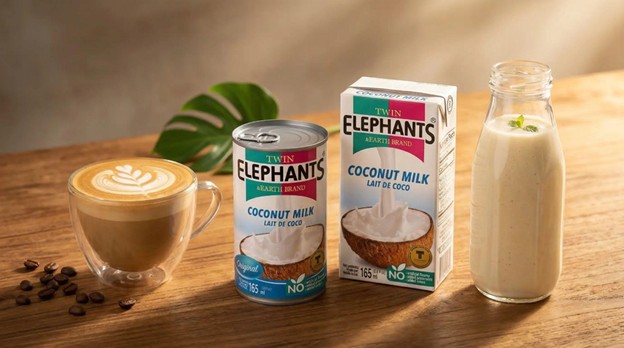
For emerging beverage brands and established café chains alike, OEM production in Thailand offers a strategic pathway to market expansion.
Thai coconut milk manufacturers provide private label and OEM services that include customized fat ratios, packaging design, labeling compliance, and flexible minimum order quantities. This enables both startups and multinational beverage companies to develop proprietary coconut milk products without investing in their own processing facilities.
Several café chains and wellness-focused beverage brands have leveraged Thailand’s OEM capabilities to introduce coconut-based drink lines that align with clean-label and plant-based positioning. By partnering with an experienced manufacturer, brands can accelerate time to market while maintaining full control over product identity.
The advantage lies not only in production scale but also in responsiveness. Shorter lead times and streamlined export documentation allow brands to react quickly to shifting consumer trends and seasonal demand.
Supporting the Global Plant-Based Movement
The global transition toward sustainable, plant-based consumption continues to influence purchasing decisions across regions. Coconut milk stands out as a naturally dairy-free ingredient that appeals to environmentally conscious consumers.
Thailand’s well-established coconut farming and processing ecosystem supports this shift by offering traceability and responsible sourcing practices. Beverage brands seeking a coconut milk supplier for baristas or large-scale production benefit from working with manufacturers who understand both quality and sustainability expectations.
In a market where consumers increasingly scrutinize ingredient origins and production standards, transparency has become a competitive advantage.
A Strategic Partner for Beverage Innovation
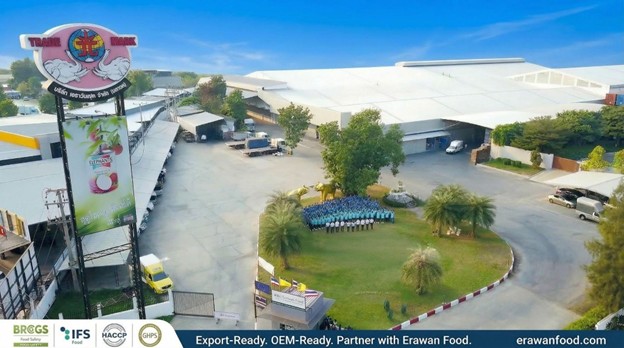
As global beverage brands compete to meet evolving consumer demands, sourcing decisions play a critical role in long-term success. Thailand’s combination of agricultural strength, advanced manufacturing, international compliance, and OEM flexibility makes it a preferred destination for companies seeking the best coconut milk for beverages.
Finding the Right Manufacturing Partner
For beverage brands evaluating sourcing options, the difference between a reliable partner and a generic commodity supplier often comes down to formulation flexibility and regulatory readiness.
Manufacturers based in Thailand’s central processing corridor, including Bangkok-based facilities with direct export infrastructure, are increasingly preferred by international brands for their ability to handle both small-batch development runs and large-scale commercial production under a single OEM framework.
One example of this integrated approach is Erawan Food, a Thailand-based manufacturer specializing in high fat coconut milk for export and UHT coconut milk supply across beverage categories. The company’s OEM program supports private label development from formulation to export documentation — a structure that has attracted partnerships with café chains, wellness drink brands, and specialty importers across Asia, Europe, and the Middle East.
For beverage companies at the product development stage, the priority should be selecting a supplier that offers not just raw material, but formulation support, compliance documentation, and consistent batch-to-batch quality. These are the factors that separate a short-term vendor from a long-term growth partner.
As the plant-based beverage segment continues to mature, sourcing strategies will increasingly determine product differentiation. Brands that invest in understanding their ingredient supply chain — from coconut variety and fat content to UHT processing and shelf stability — will be better positioned to meet evolving consumer expectations.
For those ready to explore OEM production or private label development in Thailand, reviewing manufacturer capabilities early in the formulation process typically leads to faster time-to-market and stronger product outcomes.
For brands ready to elevate their coconut milk product line or explore OEM and export partnerships, Erawan Food welcomes direct inquiries from beverage innovators, distributors, and private label businesses worldwide.
Interested companies can reach the team at [email protected] or contact the sales department directly at +66 86 900 7777 for product specifications and partnership discussions.