
A year ago I embarked upon a journey that I had hoped would enrich my life, deepen my knowledge of the cultures of the world, and lead me to live a more joyful and spiritual human experience. My goals was to celebrate every day, for whatever reason possible and I had hoped to keep a record of my gained knowledge, experiences, and actions.
I failed. I managed to keep up with my attempts for a while, but eventually the daily collection of information and blogging, while trying to keep other blogs, and working, and reading, and writing, and doing all those other things I do daily became too much and I abandoned the pursuit. But I didn't turn my back on the challenge completely.
This year, I do resolve to celebrate every day. To be happy that I am alive, and to find reason to sing, laugh, learn or reflect among the culture, traditions, holidays, and celebrations of anyone that make up the 6 billion beings on this planet. More than likely not every day will be documented. Not every day will have major significance this year. But every day will still be celebrated. And this journal will chronicle those events this year, next year, and every year following until I have a calendar filled with a celebration that has taken place and has been documented for every single day of the year. This is about more than resolving to do something for this year; it is about enjoying everything that is around us within the small amount of time allotted to us on this planet.
Driving home from work last night after midnight the lights had gone out on a state highway I travel down daily. That part of town being completely in darkness was a bit eerie, not to mention dangerous considering the higher potential for risky driving on New Year's Eve. Most of the ride home was cast in darkness where light had been before, but near the end of the highway a single house that had not been affected by the power outage stood, completely covered in Christmas lights still shining brightly. As my truck passed the house a single bottle rocket flew from the yard, out in front of my vehicle, and exploded on the other side of the highway. Had it moved any slower I might have had time to be scared of it, but it was so quick that I was able to simultaneously note what had occurred and that I was out of danger. All that was left was one brief flash of light and the sound of explosive powder cracking. One fleeting moment of joy and happiness and merriment. That's all any of the chronicles of this journal will be; moments suspended in time only by our memories, beautiful in their fragility.
And so a new year begins. A renewed attempt at a past goal, and a pile of new tasks, goals, accomplishments and adventures to complete. It's only fitting to start the year off with a familiar song and poem.
And so a new year begins. A renewed attempt at a past goal, and a pile of new tasks, goals, accomplishments and adventures to complete. It's only fitting to start the year off with a familiar song and poem.
Should Old Acquaintance be forgot,and never thought upon;The flames of Love extinguished,and fully past and gone.Is thy sweet Heart now grown so cold,that loving Breast of thine,That thou canst never once reflectOn Old long syne?On Old long syne my Jo,On Old long syne,That thou canst never once reflect,On Old long syne.
The original Scots poem, boiled down to simpler components and expanded upon have found their way into New Year tradition beyond just the English-speaking world. The song has been translated into many other languages, or has had the lyrics changed but still remained in use for similar occasions. In Japan, the song is known popularly as Hotaru no Hikari (蛍の光) and is a celebration of a lifelong and unwavering devotion to study and enrichment. The song has almost nothing to do with Auld Lang Syne or the new year in general, but the Japanese still do sing it at the end of each year, though it is used to signify the end of many other events, even the close of a shopping day. Still this song permeates culture and language and has found itself a staple of global new year celebrations. And so as a new day of a new year begins I leave you with these words, looking forward to what the future has in store.
蛍の光 窓の雪書よむ月日 重ねつついつしか年も すぎの戸をあけてぞ今朝は 別れゆくLight of fireflies, snow by the window,Many suns and moons spent readingYears have gone by without noticeDay has dawned; this morning, we part.
May this be the end of many poor practices, and the beginning of many wonderful, new ones.
- Current Mood:
 cheerful
Celebrated every year on 12 January since 1985, National Youth Day has brought celebration to the fields of education, art and culture as a source of inspiration for the children if India. The holiday takes place on the birthday of Swami Vivekananda who thought very strongly of the youth of India as the nation's future.
Posted via LiveJournal app for Android.
Break out the Gekkeikan, it's Kagami Biraki! Over 300 years ago, the fourth Tokugawa Shogun, Tokugawa Ietsuna, first held this ceremony with his daimyo, breaking open a cask of sake before going into battle. The outcome of the battle was successful, and the opening of a cask of sake is now a wish of good fortune for the celebration or event being held. In modern Japan, the celebration falls on 11 January (11 being an oddnumber and attributed to luck), though the tradition of Kagami Biraki can be seen at weddings, business launches, and other important events. It is now highly tied to New Year celebrations in the Gregorian calendar where households will set out round mochi balls (gelatinous rice cakes) during the holidays to take and eat them on the eleventh (Kagami Mochi).
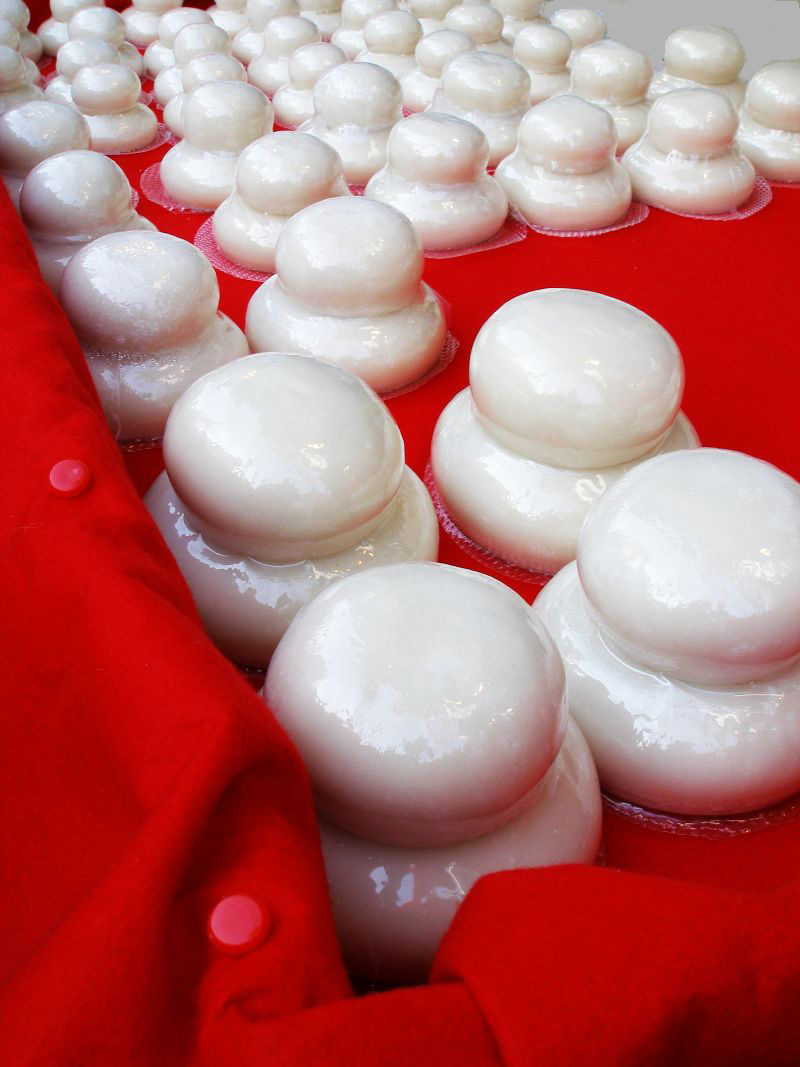
The breaking of the mochi is symbolic of breaking the cask of sake. Many martial arts dojos use the tradition of Kagami Biraki and Kagami Mochi to signify the first practice of the new year. Kigami Mochi can be simply the rice cakes found above or they can be seen with more elaborate, decorative elements.
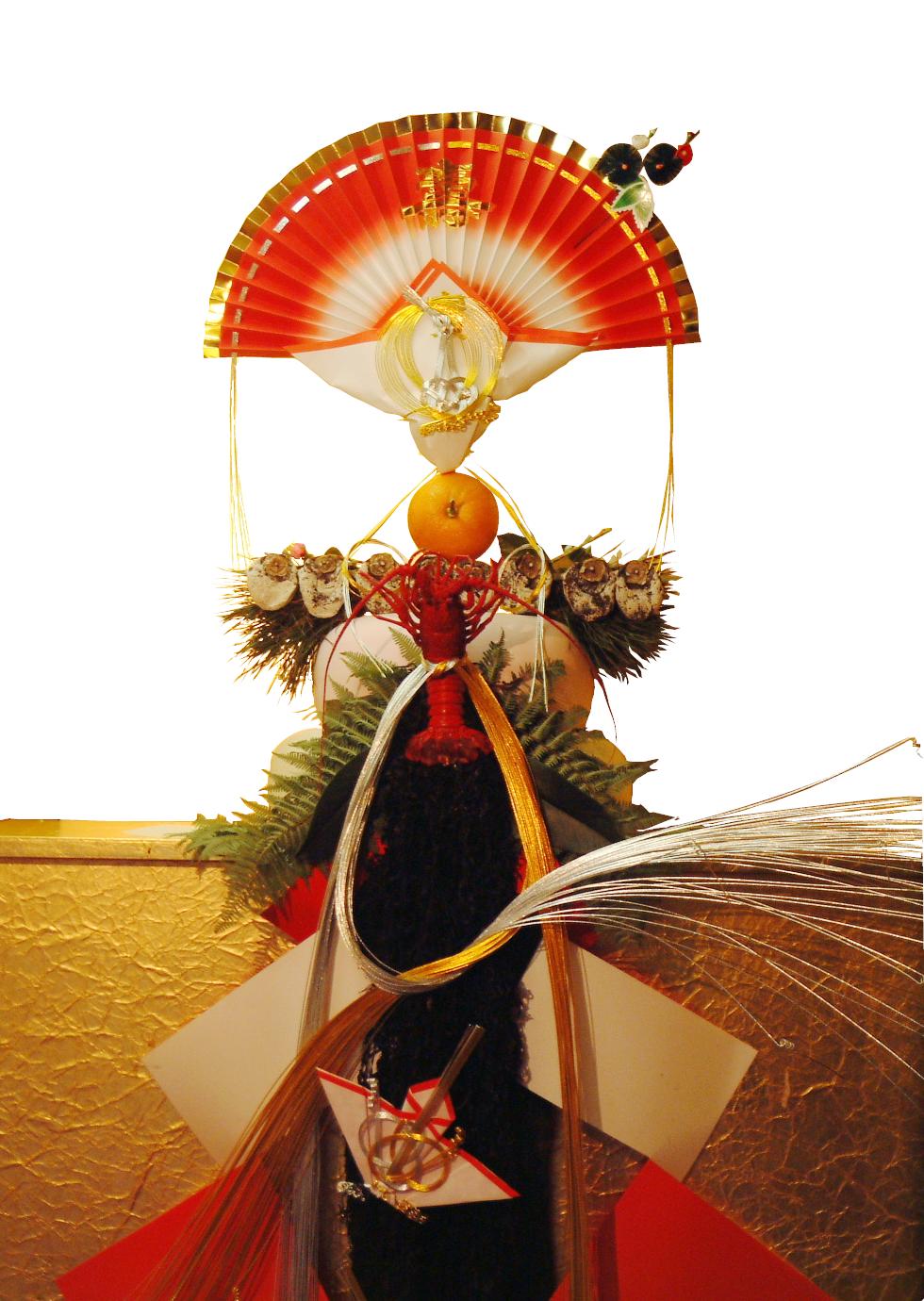
If mochi isn't available in your area, your liquor store is sure to have a bottle of sake somewhere. Just ask, sit back, and pray that the gods bless you with luck this year (and to wake up without a hangover).

The breaking of the mochi is symbolic of breaking the cask of sake. Many martial arts dojos use the tradition of Kagami Biraki and Kagami Mochi to signify the first practice of the new year. Kigami Mochi can be simply the rice cakes found above or they can be seen with more elaborate, decorative elements.
If mochi isn't available in your area, your liquor store is sure to have a bottle of sake somewhere. Just ask, sit back, and pray that the gods bless you with luck this year (and to wake up without a hangover).
Happy Traditional Religions Day! Today is Traditional Religions Day in Benin, which is the face-saving way of saying Festival of Voudoun which is the liberal way of saying CRAZY GOAT SLAUGHTERING VOODOO DAY which is the conservative way of saying Voodoo Festival. Got that?
Vodoun is an oft-misunderstood West African, pantheistic religion that is the basis of many blended folk religions throughout the world, most commonly Voodoo in Haiti and the United States. The term vodoun refers to the spirits of all things around us from the guiding forces of nature to the individual spirits of streams to vodoun of tribes and nations themselves. Every element has its own vodoun to which the practitioner can appeal. Vodoun and voodoo are often viewed solely as a practice in black arts, notoriety of which was spread with the prevalence of the voodoo doll in popular Western culture. While poppets play a part in voodoo and Vodoun, they are not the sole essence of the religion.
In 1996, the nation of Benin, free from its previous Marxist dictatorship for half a decade, declared Vodoun a recognized religion, and a year later declared January 10th to be Traditional Religions Day and soon, thousands of devotees and tourists would visit Benin to partake in the great voodoo festivals held there annually. The spirit of the Vodoun Festival seems to be centered around the city of Ouidah, an important cultural and historical center in the tradition of Vodoun.
The festival begins with the slaughter of a goat in honor of the spirits of Vodoun, and then the celebrants dance, chant, sing, pray, and drink gin in the name of Vodoun.
Very few dolls are stabbed.
Vodoun is an oft-misunderstood West African, pantheistic religion that is the basis of many blended folk religions throughout the world, most commonly Voodoo in Haiti and the United States. The term vodoun refers to the spirits of all things around us from the guiding forces of nature to the individual spirits of streams to vodoun of tribes and nations themselves. Every element has its own vodoun to which the practitioner can appeal. Vodoun and voodoo are often viewed solely as a practice in black arts, notoriety of which was spread with the prevalence of the voodoo doll in popular Western culture. While poppets play a part in voodoo and Vodoun, they are not the sole essence of the religion.
In 1996, the nation of Benin, free from its previous Marxist dictatorship for half a decade, declared Vodoun a recognized religion, and a year later declared January 10th to be Traditional Religions Day and soon, thousands of devotees and tourists would visit Benin to partake in the great voodoo festivals held there annually. The spirit of the Vodoun Festival seems to be centered around the city of Ouidah, an important cultural and historical center in the tradition of Vodoun.
The festival begins with the slaughter of a goat in honor of the spirits of Vodoun, and then the celebrants dance, chant, sing, pray, and drink gin in the name of Vodoun.
Very few dolls are stabbed.
- Current Mood: cheerful
Yes, the mighty apricot. Linked in history to health, education, and most notably deliciousness, the 9th of January is when the U.S. commemorates this tasty fruit. The apricot has an early, short cultivating season, so finding apricots can be difficult at times. Luckily for me, I have a local market that is sure to have apricots in stock on this, the day of apricots.

Ah, the produce section of my favorite local, grocery store (name withheld). Never mind that load-bearing wall in the center of the picture. It's easy enough to shop around. Let's get us some apricots!

Hrm, none here in the organics.

And none on the endcap opposite. Perhaps the packaged produce will yield the desired fruit.

Nope. Not here. Not anywhere apparently.

Aha! There it is! See it? No, not the bags of apples or mixed fruit. No not the plastic lime and lemon juice bottles. No not the rows and rows and rows of apples. AAAAAALL the way at the back. In the preserves. Next to the peanut butter. Yeah, I couldn't see it either, but that's about all I could find. At least I'm sure I'll find something to wash it down with.

Good ol' Odwalla. When I need a random fruit made into a drink, Odwalla is the company of choice of all major retai... no apricot. No apricot blend? Smoothie? Power drink? Flavored water? Anything?

Even the organic juice section failed me. Just like the rest of the organic section really does when I have fat kid cravings.

The regular person juice aisle. It doesn't even have the modesty to get stocked decently. There it is with its corrugated boxes all hanging out. Go put on some clothes, grocery store aisle. At least these shelves did find me something suitable to drink. I took my simple purchases and checked out.

St. Dalfour and Jumex. When my local produce suppliers let me down, I know I can always count on you to stick any fruit in a can. Sorry, Goya. You may be good at sticking corn smut in aluminum, but when it comes to fruit, Jumex has got you beat.

My Apricot Day Feast! Unfortunately, the slice on the left suffered a brutal accident in which it fell to the ground and landed preserve-side down as is the custom with anything tasty you want to eat. At least the tile floor got to participate in the festivities.
Ah, the produce section of my favorite local, grocery store (name withheld). Never mind that load-bearing wall in the center of the picture. It's easy enough to shop around. Let's get us some apricots!
Hrm, none here in the organics.
And none on the endcap opposite. Perhaps the packaged produce will yield the desired fruit.
Nope. Not here. Not anywhere apparently.
Aha! There it is! See it? No, not the bags of apples or mixed fruit. No not the plastic lime and lemon juice bottles. No not the rows and rows and rows of apples. AAAAAALL the way at the back. In the preserves. Next to the peanut butter. Yeah, I couldn't see it either, but that's about all I could find. At least I'm sure I'll find something to wash it down with.
Good ol' Odwalla. When I need a random fruit made into a drink, Odwalla is the company of choice of all major retai... no apricot. No apricot blend? Smoothie? Power drink? Flavored water? Anything?
Even the organic juice section failed me. Just like the rest of the organic section really does when I have fat kid cravings.
The regular person juice aisle. It doesn't even have the modesty to get stocked decently. There it is with its corrugated boxes all hanging out. Go put on some clothes, grocery store aisle. At least these shelves did find me something suitable to drink. I took my simple purchases and checked out.
St. Dalfour and Jumex. When my local produce suppliers let me down, I know I can always count on you to stick any fruit in a can. Sorry, Goya. You may be good at sticking corn smut in aluminum, but when it comes to fruit, Jumex has got you beat.
My Apricot Day Feast! Unfortunately, the slice on the left suffered a brutal accident in which it fell to the ground and landed preserve-side down as is the custom with anything tasty you want to eat. At least the tile floor got to participate in the festivities.
- Current Mood: peaceful
8 January is the Catholic Feast Day of Our Lady Of Prompt Succor. During the French revolution, persecution of the Church in french-controlled territories was prevalent and many of the Ursuline nuns who were teaching in French-reclaimed Louisiana fled to Cuba. French nuns appealed to their Bishop to allow the transfer of sisters in France to the Ursuline academy in New Orleans, but were turned down with the reasoning that in the current political climate, only the Pope could grant such a request. Pope Pius VII was a prisoner of Napoleon at the time and there were few avenues for communication that would be able to reach him. In Catholic tradition, Agathe Gensoul (who was not using her religious name Mother St. Michel for fear of the revolution) prayed before a statue of the Blessed Mother and promised to honor her as Our Lady of Prompt Succor if she could reach the Pope and receive a response. A month later the Ursuline nuns were granted the ability to go to New Orleans from the imprisoned Pope and on December 30, 1810 a statue commemorating Our Lady of Prompt Succor was enshrined at the Ursuline convent.

The statue enshrined at the Ursuline convent in New Orleans.

A mosiac dedicated to Our Lady of Prompt Succor in the French Quarter (Chartres street).
The statue enshrined at the Ursuline convent in New Orleans.
A mosiac dedicated to Our Lady of Prompt Succor in the French Quarter (Chartres street).
No, I haven't gone stark, raving mad. Okay, maybe I have but not on this point. Today is Christmas for people using the Julian calendar to mark feast days, so the Eastern Orthodox national churches of Serbia, Montenegro, Macedonia, Ukraine, Georgia, Russia, and the Greek Patriarchate of of Jerusalem all celebrate Christmas today. Not all Orthodox churches follow the traditional Julian calendar for their feasts. A revised Julian calendar which is almost exactly like the Gregorian calendar the western Church uses today; the two calendars will finally be off by a single day in 800 years.
So, today, in Serbia, Montenegro, Macedonia, et. al. is Christmas. Go buy your loved ones more presents. For Jesus. Because that makes Him happy, or something.
So, today, in Serbia, Montenegro, Macedonia, et. al. is Christmas. Go buy your loved ones more presents. For Jesus. Because that makes Him happy, or something.
I bet you thought I was going to celebrate the Epiphany, didn't you?
Well, I am, in a way. The tradition of Befana is rooted in both the pagan celebration of Saturnalia as well as the Christian observance of the Epiphany. Many believe that references from Saturnalia are the basis of the Befana character, but the legend as it is remembered today is purely a Christian-based celebration.
The legend of Befana begins on Twelfth Night, (yesterday) where the three Magi who were on the way to visit the newborn Jesus stopped at Befana's home to ask the way. She was unable to provide them with directions but invited them to stay and rest before they continued on their journey. As they set out to meet their Redeemer, the Magi invited Befana to join them in bringing their gifts to the newborn-king. Befana refused saying she had too much housework to do. The Magi left Befana, who was sweeping, cleaning up her household.
Later, Befana regrets not having joined the Magi, collects the finest gifts she can, and races off in the direction the Magi went, in the hopes of catching up with them and locating the baby Jesus. However, Befana never does catch up with them. Now Befana rides the night sky atop her broom, looking for Jesus, and bringing good presents to children who have been good, and coal and garlic and onions to children who have been bad.
The celebration of what appears to be a classical witch in Befana is highly popular among Italians who hold great festivals on Epiphany in their country with people dressed in costume and carrying dolls of witches in a tradition that has crept into the basis of Santa Claus folklore. Santa isn't even unique in the tradition of leaving out snacks for his consumption. The Italians, however, ditch the milk and cookies for plates of sausage and local vegetables served with wine.

Italian wine! You can't celebrate an Italian tradition without Italian wine. Note, this bottle is empty, not because I had a lot of people with which to share the wine, but because I was really thirsty.

That's a lot of sausage. Like whoa. Also, the flash gave the wine this radioactive yellow color. It did not look like that in the bottle or in the glassbut it might look like that coming out.
Well, I am, in a way. The tradition of Befana is rooted in both the pagan celebration of Saturnalia as well as the Christian observance of the Epiphany. Many believe that references from Saturnalia are the basis of the Befana character, but the legend as it is remembered today is purely a Christian-based celebration.
The legend of Befana begins on Twelfth Night, (yesterday) where the three Magi who were on the way to visit the newborn Jesus stopped at Befana's home to ask the way. She was unable to provide them with directions but invited them to stay and rest before they continued on their journey. As they set out to meet their Redeemer, the Magi invited Befana to join them in bringing their gifts to the newborn-king. Befana refused saying she had too much housework to do. The Magi left Befana, who was sweeping, cleaning up her household.
Later, Befana regrets not having joined the Magi, collects the finest gifts she can, and races off in the direction the Magi went, in the hopes of catching up with them and locating the baby Jesus. However, Befana never does catch up with them. Now Befana rides the night sky atop her broom, looking for Jesus, and bringing good presents to children who have been good, and coal and garlic and onions to children who have been bad.
The celebration of what appears to be a classical witch in Befana is highly popular among Italians who hold great festivals on Epiphany in their country with people dressed in costume and carrying dolls of witches in a tradition that has crept into the basis of Santa Claus folklore. Santa isn't even unique in the tradition of leaving out snacks for his consumption. The Italians, however, ditch the milk and cookies for plates of sausage and local vegetables served with wine.
Italian wine! You can't celebrate an Italian tradition without Italian wine. Note, this bottle is empty, not because I had a lot of people with which to share the wine, but because I was really thirsty.
That's a lot of sausage. Like whoa. Also, the flash gave the wine this radioactive yellow color. It did not look like that in the bottle or in the glass
- Current Mood: cheerful
On the twelfth day of Christmas my true love gave to me twelve Lords a-leaping, eleven Ladies dancing, ten pipers piping, nine drummers drumming, eight maids a-milking, seven swans a-swimming, six geese a-laying, five gold rings (not actually rings of the elemental symbol Au, check out the link), four colly birds, three French hens, two turtledoves and a partridge on a pear tree.
Get out the wassail and start baking those king cakes, it's Twelfth Night! The last celebration of Christmastime before the Epiphany, Twelfth Night celebrations date back to Medieval times where they signified the end of the winter festival that began on All Hallows' Eve. On the Twelfth Night, disorder and unreason are celebrated in the tradition of the Lord of Misrule, and the ruling family would take their place as peasants while the poor would pretend to be of a higher class. The ruler of the feast of Twelfth Night was determined by hiding away a bean inside a cake. The person who located the bean would be honorary King until midnight.
In American tradition, "King Cakes" are baked, sold, and consumed from the Twelfth Night until Shrove Tuesday (also known as Mardi Gras). It's association with religious holidays have been furthered by replacing the bean inside the cake with a small, plastic baby, a representation of the baby Jesus. It is often tradition for the person finding the baby to purchase the next King Cake or to prepare the party at which the cake was served for the following year.

The nice girl at the checkout counter was confused when she saw the King Cake. As the box points out that it's a Mardi Gras confection, she was quick to note that it was not yet Mardi Gras. I was happy to be able to educate someone on the tradition of the King Cake while people behind me were waiting to pay for their Bud Light and Doritos. Tradition before blind revelry, folks.

Mmmmmm... doesn't that look... sugary? And slightly burned? My favorite.

Courtesy of our litigious friends we so lovingly call "Americans," this warning cautions the eater that their baby Jesus cake has a little baby Jesus in it. This warning should cover the company's ass from anyone who tries to sue them over the plastic baby. Well, anyone except Atheists petitioning for the separation of Church and Cake.
Get out the wassail and start baking those king cakes, it's Twelfth Night! The last celebration of Christmastime before the Epiphany, Twelfth Night celebrations date back to Medieval times where they signified the end of the winter festival that began on All Hallows' Eve. On the Twelfth Night, disorder and unreason are celebrated in the tradition of the Lord of Misrule, and the ruling family would take their place as peasants while the poor would pretend to be of a higher class. The ruler of the feast of Twelfth Night was determined by hiding away a bean inside a cake. The person who located the bean would be honorary King until midnight.
In American tradition, "King Cakes" are baked, sold, and consumed from the Twelfth Night until Shrove Tuesday (also known as Mardi Gras). It's association with religious holidays have been furthered by replacing the bean inside the cake with a small, plastic baby, a representation of the baby Jesus. It is often tradition for the person finding the baby to purchase the next King Cake or to prepare the party at which the cake was served for the following year.
The nice girl at the checkout counter was confused when she saw the King Cake. As the box points out that it's a Mardi Gras confection, she was quick to note that it was not yet Mardi Gras. I was happy to be able to educate someone on the tradition of the King Cake while people behind me were waiting to pay for their Bud Light and Doritos. Tradition before blind revelry, folks.
Mmmmmm... doesn't that look... sugary? And slightly burned? My favorite.
Courtesy of our litigious friends we so lovingly call "Americans," this warning cautions the eater that their baby Jesus cake has a little baby Jesus in it. This warning should cover the company's ass from anyone who tries to sue them over the plastic baby. Well, anyone except Atheists petitioning for the separation of Church and Cake.
- Current Mood:
 silly
silly
On this date in 1785, Jacob Ludwig Karl Grimm was born in Hanau, now Germany, then part of the Holy Roman Empire. The older of the Brothers Grimm, Jacob and his brother, Wilhelm, were most popularly know for their work on Kinder und Hausmärchen (Children's and Household Tales) more commonly known as Grimm's Fairy Stories (or Tales). Jacob himself is a noted author and philologist whose breadth of work goes beyond the most recognizable märchen, though his work as a mythologist will be what made him a household name forever. Today, we celebrate the preservation of folk tales, the rich tradition of historic cultures and the labor of love undertaken by Jacob Grimm, the first volume of which was published 200 years ago in 1812.
With the winter holiday season ending, I found it most appropriate to pay tribute to a classic icon of Christmas and winter tradition, the gingerbread house.
HANSEL AND GRETHEL
Once upon a time there dwelt near a large wood a poor woodcutter, with his wife and two children by his former marriage, a little boy called Hansel, and a girl named Grethel. He had little enough to break or bite; and once, when there was a great famine in the land, he could not procure even his daily bread; and as he lay thinking in his bed one evening, rolling about for trouble, he sighed, and said to his wife, "What will become of us? How can we feed our children, when we have no more than we can eat ourselves?"
"Know, then, my husband," answered she, "we will lead them away, quite early in the morning, into the thickest part of the wood, and there make them a fire, and give them each a little piece of bread; then we will go to our work, and leave them alone, so they will not find the way home again, and we shall be freed from them." "No, wife," replied he, "that I can never do. How can you bring your heart to leave my children all alone in the wood, for the wild beasts will soon come and tear them to pieces?"
"Oh, you simpleton!" said she, "then we must all four die of hunger; you had better plane the coffins for us." But she left him no peace till he consented, saying, "Ah, but I shall regret the poor children."
The two children, however, had not gone to sleep for very hunger, and so they overheard what the stepmother said to their father. Grethel wept bitterly, and said to Hansel, "What will become of us?" "Be quiet, Grethel," said he; "do not cry--I will soon help you." And as soon as their parents had fallen asleep, he got up, put on his coat, and, unbarring the back door, slipped out. The moon shone brilliantly, and the white pebbles which lay before the door seemed like silver pieces, they glittered so brightly. Hansel stooped down, and put as many into his pocket as it would hold; and then going back, he said to Grethel, "Be comforted, dear sister, and sleep in peace; God will not forsake us." And so saying, he went to bed again.
The next morning, before the sun arose, the wife went and awoke the two children. "Get up, you lazy things; we are going into the forest to chop wood." Then she gave them each a piece of bread, saying, "There is something for your dinner; do not eat it before the time, for you will get nothing else." Grethel took the bread in her apron, for Hansel's pocket was full of pebbles; and so they all set out upon their way. When they had gone a little distance, Hansel stood still, and peeped back at the house; and this he repeated several times, till his father said, "Hansel, what are you peeping at, and why do you lag behind? Take care, and remember your legs."
"Ah, father," said Hansel, "I am looking at my white cat sitting upon the roof of the house, and trying to say good-bye." "You simpleton!" said the wife, "that is not a cat; it is only the sun shining on the white chimney." But in reality Hansel was not looking at a cat; but every time he stopped, he dropped a pebble out of his pocket upon the path.
When they came to the middle of the forest, the father told the children to collect wood, and he would make them a fire, so that they should not be cold. So Hansel and Grethel gathered together quite a little mountain of twigs. Then they set fire to them; and as the flame burnt up high, the wife said, "Now, you children, lie down near the fire, and rest yourselves, while we go into the forest and chop wood; when we are ready, I will come and call you."
Hansel and Grethel sat down by the fire, and when it was noon, each ate the piece of bread; and because they could hear the blows of an axe, they thought their father was near: but it was not an axe, but a branch which he had bound to a withered tree, so as to be blown to and fro by the wind. They waited so long that at last their eyes closed from weariness, and they fell fast asleep. When they awoke, it was quite dark, and Grethel began to cry, "How shall we get out of the wood?" But Hansel tried to comfort her by saying, "Wait a little while till the moon rises, and then we will quickly find the way." The moon soon shone forth, and Hansel, taking his sister's hand, followed the pebbles, which glittered like new-coined silver pieces, and showed them the path. All night long they walked on, and as day broke they came to their father's house. They knocked at the door, and when the wife opened it, and saw Hansel and Grethel, she exclaimed, "You wicked children! why did you sleep so long in the wood? We thought you were never coming home again." But their father was very glad, for it had grieved his heart to leave them all alone.
Not long afterward there was again great scarcity in every corner of the land; and one night the children overheard their stepmother saying to their father, "Everything is again consumed; we have only half a loaf left, and then the song is ended: the children must be sent away. We will take them deeper into the wood, so that they may not find the way out again; it is the only means of escape for us."
But her husband felt heavy at heart, and thought, "It were better to share the last crust with the children." His wife, however, would listen to nothing that he said, and scolded and reproached him without end.
He who says A must say B too; and he who consents the first time must also the second.
The children, however, had heard the conversation as they lay awake, and as soon as the old people went to sleep Hansel got up, intending to pick up some pebbles as before; but the wife had locked the door, so that he could not get out. Nevertheless, he comforted Grethel, saying, "Do not cry; sleep in quiet; the good God will not forsake us."
Early in the morning the stepmother came and pulled them out of bed, and gave them each a slice of bread, which was still smaller than the former piece. On the way, Hansel broke his in his pocket, and, stooping every now and then, dropped a crumb upon the path. "Hansel, why do you stop and look about?" said the father; "keep in the path." "I am looking at my little dove," answered Hansel, "nodding a good-bye to me." "Simpleton!" said the wife, "that is no dove, but only the sun shining on the chimney." But Hansel still kept dropping crumbs as he went along.
The mother led the children deep into the wood, where they had never been before, and there making an immense fire, she said to them, "Sit down here and rest, and when you feel tired you can sleep for a little while. We are going into the forest to hew wood, and in the evening, when we are ready, we will come and fetch you."
When noon came Grethel shared her bread with Hansel, who had strewn his on the path. Then they went to sleep; but the evening arrived and no one came to visit the poor children, and in the dark night they awoke, and Hansel comforted his sister by saying, "Only wait, Grethel, till the moon comes out, then we shall see the crumbs of bread which I have dropped, and they will show us the way home." The moon shone and they got up, but they could not see any crumbs, for the thousands of birds which had been flying about in the woods and fields had picked them all up. Hansel kept saying to Grethel, "We will soon find the way"; but they did not, and they walked the whole night long and the next day, but still they did not come out of the wood; and they got so hungry, for they had nothing to eat but the berries which they found upon the bushes. Soon they got so tired that they could not drag themselves along, so they lay down under a tree and went to sleep.
It was now the third morning since they had left their father's house, and they still walked on; but they only got deeper and deeper into the wood, and Hansel saw that if help did not come very soon they would die of hunger. At about noonday they saw a beautiful snow-white bird sitting upon a bough, which sang so sweetly that they stood still and listened to it. It soon ceased, and spreading its wings flew off; and they followed it until it arrived at a cottage, upon the roof of which it perched; and when they went close up to it they saw that the cottage was made of bread and cakes, and the window-panes were of clear sugar.
"We will go in there," said Hansel, "and have a glorious feast. I will eat a piece of the roof, and you can eat the window. Will they not be sweet?" So Hansel reached up and broke a piece off the roof, in order to see how it tasted, while Grethel stepped up to the window and began to bite it. Then a sweet voice called out in the room, "Tip-tap, tip-tap, who raps at my door?" and the children answered, "the wind, the wind, the child of heaven"; and they went on eating without interruption.
Hansel thought the roof tasted very nice, so he tore off a great piece; while Grethel broke a large round pane out of the window, and sat down quite contentedly. Just then the door opened, and a very old woman, walking upon crutches, came out. Hansel and Grethel were so frightened that they let fall what they had in their hands; but the old woman, nodding her head, said, "Ah, you dear children, what has brought you here? Come in and stop with me, and no harm shall befall you"; and so saying she took them both by the hand, and led them into her cottage. A good meal of milk and pancakes, with sugar, apples, and nuts, was spread on the table, and in the back room were two nice little beds, covered with white, where Hansel and Grethel laid themselves down, and thought themselves in heaven. The old woman behaved very kindly to them, but in reality she was a wicked witch who waylaid children, and built the bread-house in order to entice them in, but as soon as they were in her power she killed them, cooked and ate them, and made a great festival of the day. Witches have red eyes, and cannot see very far; but they have a fine sense of smelling, like wild beasts, so that they know when children approach them. When Hansel and Grethel came near the witch's house she laughed wickedly, saying, "Here come two who shall not escape me." And early in the morning, before they awoke, she went up to them, and saw how lovingly they lay sleeping, with their chubby red cheeks, and she mumbled to herself, "That will be a good bite." Then she took up Hansel with her rough hands, and shut him up in a little cage with a lattice-door; and although he screamed loudly it was of no use. Grethel came next, and, shaking her till she awoke, the witch said, "Get up, you lazy thing, and fetch some water to cook something good for your brother, who must remain in that stall and get fat; when he is fat enough I shall eat him." Grethel began to cry, but it was all useless, for the old witch made her do as she wished. So a nice meal was cooked for Hansel, but Grethel got nothing but a crab's claw.
Every morning the old witch came to the cage and said, "Hansel, stretch out your finger that I may feel whether you are getting fat." But Hansel used to stretch out a bone, and the old woman, having very bad sight, thought it was his finger, and wondered very much that he did not get fatter. When four weeks had passed, and Hansel still kept quite lean, she lost all her patience, and would not wait any longer. "Grethel," she called out in a passion, "get some water quickly; be Hansel fat or lean, this morning I will kill and cook him." Oh, how the poor little sister grieved, as she was forced to fetch the water, and fast the tears ran down her cheeks! "Dear good God, help us now!" she exclaimed. "Had we only been eaten by the wild beasts in the wood, then we should have died together." But the old witch called out, "Leave off that noise; it will not help you a bit."
So early in the morning Grethel was forced to go out and fill the kettle, and make a fire. "First, we will bake, however," said the old woman; "I have already heated the oven and kneaded the dough"; and so saying, she pushed poor Grethel up to the oven, out of which the flames were burning fiercely. "Creep in," said the witch, "and see if it is hot enough, and then we will put in the bread"; but she intended when Grethel got in to shut up the oven and let her bake, so that she might eat her as well as Hansel. Grethel perceived what her thoughts were, and said, "I do not know how to do it; how shall I get in?" "You stupid goose," said she, "the opening is big enough. See, I could even get in myself!" and she got up, and put her head into the oven. Then Grethel gave her a push, so that she fell right in, and then shutting the iron door she bolted it! Oh! how horribly she howled; but Grethel ran away, and left the ungodly witch to burn to ashes.
Now she ran to Hansel, and, opening his door, called out, "Hansel, we are saved; the old witch is dead!" So he sprang out, like a bird out of his cage when the door is opened; and they were so glad that they fell upon each other's neck, and kissed each other over and over again. And now, as there was nothing to fear, they went into the witch's house, where in every corner were caskets full of pearls and precious stones.
"These are better than pebbles," said Hansel, putting as many into his pocket as it would hold; while Grethel thought, "I will take some too," and filled her apron full. "We must be off now," said Hansel, "and get out of this enchanted forest." But when they had walked for two hours they came to a large piece of water. "We cannot get over," said Hansel; "I can see no bridge at all." "And there is no boat, either," said Grethel; "but there swims a white duck, and I will ask her to help us over." And she sang:
"Little Duck, good little Duck, Grethel and Hansel, here we stand; There is neither stile nor bridge, Take us on your back to land."
So the duck came to them, and Hansel sat himself on, and bade his sister sit behind him. "No," answered Grethel, "that will be too much for the duck; she shall take us over one at a time." This the good little bird did, and when both were happily arrived on the other side, and had gone a little way, they came to a well-known wood, which they knew the better every step they went, and at last they perceived their father's house.
Then they began to run, and, bursting into the house, they fell into their father's arms. He had not had one happy hour since he had left the children in the forest; and his wife was dead. Grethel shook her apron, and the pearls and precious stones rolled out upon the floor, and Hansel threw down one handful after the other out of his pocket. Then all their sorrows were ended, and they lived together in great happiness.
My tale is done. There runs a mouse; whoever catches her may make a great, great cap out of her fur.
(Note, this translation comes from a second edition of Grimm's Fairy Tales. In the original story, the woodcutter's wife is the biological mother of Hansel and Gretel, and both parents share in the decision to abandon their children to save their own lives.)
With the winter holiday season ending, I found it most appropriate to pay tribute to a classic icon of Christmas and winter tradition, the gingerbread house.
HANSEL AND GRETHEL
Once upon a time there dwelt near a large wood a poor woodcutter, with his wife and two children by his former marriage, a little boy called Hansel, and a girl named Grethel. He had little enough to break or bite; and once, when there was a great famine in the land, he could not procure even his daily bread; and as he lay thinking in his bed one evening, rolling about for trouble, he sighed, and said to his wife, "What will become of us? How can we feed our children, when we have no more than we can eat ourselves?"
"Know, then, my husband," answered she, "we will lead them away, quite early in the morning, into the thickest part of the wood, and there make them a fire, and give them each a little piece of bread; then we will go to our work, and leave them alone, so they will not find the way home again, and we shall be freed from them." "No, wife," replied he, "that I can never do. How can you bring your heart to leave my children all alone in the wood, for the wild beasts will soon come and tear them to pieces?"
"Oh, you simpleton!" said she, "then we must all four die of hunger; you had better plane the coffins for us." But she left him no peace till he consented, saying, "Ah, but I shall regret the poor children."
The two children, however, had not gone to sleep for very hunger, and so they overheard what the stepmother said to their father. Grethel wept bitterly, and said to Hansel, "What will become of us?" "Be quiet, Grethel," said he; "do not cry--I will soon help you." And as soon as their parents had fallen asleep, he got up, put on his coat, and, unbarring the back door, slipped out. The moon shone brilliantly, and the white pebbles which lay before the door seemed like silver pieces, they glittered so brightly. Hansel stooped down, and put as many into his pocket as it would hold; and then going back, he said to Grethel, "Be comforted, dear sister, and sleep in peace; God will not forsake us." And so saying, he went to bed again.
The next morning, before the sun arose, the wife went and awoke the two children. "Get up, you lazy things; we are going into the forest to chop wood." Then she gave them each a piece of bread, saying, "There is something for your dinner; do not eat it before the time, for you will get nothing else." Grethel took the bread in her apron, for Hansel's pocket was full of pebbles; and so they all set out upon their way. When they had gone a little distance, Hansel stood still, and peeped back at the house; and this he repeated several times, till his father said, "Hansel, what are you peeping at, and why do you lag behind? Take care, and remember your legs."
"Ah, father," said Hansel, "I am looking at my white cat sitting upon the roof of the house, and trying to say good-bye." "You simpleton!" said the wife, "that is not a cat; it is only the sun shining on the white chimney." But in reality Hansel was not looking at a cat; but every time he stopped, he dropped a pebble out of his pocket upon the path.
When they came to the middle of the forest, the father told the children to collect wood, and he would make them a fire, so that they should not be cold. So Hansel and Grethel gathered together quite a little mountain of twigs. Then they set fire to them; and as the flame burnt up high, the wife said, "Now, you children, lie down near the fire, and rest yourselves, while we go into the forest and chop wood; when we are ready, I will come and call you."
Hansel and Grethel sat down by the fire, and when it was noon, each ate the piece of bread; and because they could hear the blows of an axe, they thought their father was near: but it was not an axe, but a branch which he had bound to a withered tree, so as to be blown to and fro by the wind. They waited so long that at last their eyes closed from weariness, and they fell fast asleep. When they awoke, it was quite dark, and Grethel began to cry, "How shall we get out of the wood?" But Hansel tried to comfort her by saying, "Wait a little while till the moon rises, and then we will quickly find the way." The moon soon shone forth, and Hansel, taking his sister's hand, followed the pebbles, which glittered like new-coined silver pieces, and showed them the path. All night long they walked on, and as day broke they came to their father's house. They knocked at the door, and when the wife opened it, and saw Hansel and Grethel, she exclaimed, "You wicked children! why did you sleep so long in the wood? We thought you were never coming home again." But their father was very glad, for it had grieved his heart to leave them all alone.
Not long afterward there was again great scarcity in every corner of the land; and one night the children overheard their stepmother saying to their father, "Everything is again consumed; we have only half a loaf left, and then the song is ended: the children must be sent away. We will take them deeper into the wood, so that they may not find the way out again; it is the only means of escape for us."
But her husband felt heavy at heart, and thought, "It were better to share the last crust with the children." His wife, however, would listen to nothing that he said, and scolded and reproached him without end.
He who says A must say B too; and he who consents the first time must also the second.
The children, however, had heard the conversation as they lay awake, and as soon as the old people went to sleep Hansel got up, intending to pick up some pebbles as before; but the wife had locked the door, so that he could not get out. Nevertheless, he comforted Grethel, saying, "Do not cry; sleep in quiet; the good God will not forsake us."
Early in the morning the stepmother came and pulled them out of bed, and gave them each a slice of bread, which was still smaller than the former piece. On the way, Hansel broke his in his pocket, and, stooping every now and then, dropped a crumb upon the path. "Hansel, why do you stop and look about?" said the father; "keep in the path." "I am looking at my little dove," answered Hansel, "nodding a good-bye to me." "Simpleton!" said the wife, "that is no dove, but only the sun shining on the chimney." But Hansel still kept dropping crumbs as he went along.
The mother led the children deep into the wood, where they had never been before, and there making an immense fire, she said to them, "Sit down here and rest, and when you feel tired you can sleep for a little while. We are going into the forest to hew wood, and in the evening, when we are ready, we will come and fetch you."
When noon came Grethel shared her bread with Hansel, who had strewn his on the path. Then they went to sleep; but the evening arrived and no one came to visit the poor children, and in the dark night they awoke, and Hansel comforted his sister by saying, "Only wait, Grethel, till the moon comes out, then we shall see the crumbs of bread which I have dropped, and they will show us the way home." The moon shone and they got up, but they could not see any crumbs, for the thousands of birds which had been flying about in the woods and fields had picked them all up. Hansel kept saying to Grethel, "We will soon find the way"; but they did not, and they walked the whole night long and the next day, but still they did not come out of the wood; and they got so hungry, for they had nothing to eat but the berries which they found upon the bushes. Soon they got so tired that they could not drag themselves along, so they lay down under a tree and went to sleep.
It was now the third morning since they had left their father's house, and they still walked on; but they only got deeper and deeper into the wood, and Hansel saw that if help did not come very soon they would die of hunger. At about noonday they saw a beautiful snow-white bird sitting upon a bough, which sang so sweetly that they stood still and listened to it. It soon ceased, and spreading its wings flew off; and they followed it until it arrived at a cottage, upon the roof of which it perched; and when they went close up to it they saw that the cottage was made of bread and cakes, and the window-panes were of clear sugar.
"We will go in there," said Hansel, "and have a glorious feast. I will eat a piece of the roof, and you can eat the window. Will they not be sweet?" So Hansel reached up and broke a piece off the roof, in order to see how it tasted, while Grethel stepped up to the window and began to bite it. Then a sweet voice called out in the room, "Tip-tap, tip-tap, who raps at my door?" and the children answered, "the wind, the wind, the child of heaven"; and they went on eating without interruption.
Hansel thought the roof tasted very nice, so he tore off a great piece; while Grethel broke a large round pane out of the window, and sat down quite contentedly. Just then the door opened, and a very old woman, walking upon crutches, came out. Hansel and Grethel were so frightened that they let fall what they had in their hands; but the old woman, nodding her head, said, "Ah, you dear children, what has brought you here? Come in and stop with me, and no harm shall befall you"; and so saying she took them both by the hand, and led them into her cottage. A good meal of milk and pancakes, with sugar, apples, and nuts, was spread on the table, and in the back room were two nice little beds, covered with white, where Hansel and Grethel laid themselves down, and thought themselves in heaven. The old woman behaved very kindly to them, but in reality she was a wicked witch who waylaid children, and built the bread-house in order to entice them in, but as soon as they were in her power she killed them, cooked and ate them, and made a great festival of the day. Witches have red eyes, and cannot see very far; but they have a fine sense of smelling, like wild beasts, so that they know when children approach them. When Hansel and Grethel came near the witch's house she laughed wickedly, saying, "Here come two who shall not escape me." And early in the morning, before they awoke, she went up to them, and saw how lovingly they lay sleeping, with their chubby red cheeks, and she mumbled to herself, "That will be a good bite." Then she took up Hansel with her rough hands, and shut him up in a little cage with a lattice-door; and although he screamed loudly it was of no use. Grethel came next, and, shaking her till she awoke, the witch said, "Get up, you lazy thing, and fetch some water to cook something good for your brother, who must remain in that stall and get fat; when he is fat enough I shall eat him." Grethel began to cry, but it was all useless, for the old witch made her do as she wished. So a nice meal was cooked for Hansel, but Grethel got nothing but a crab's claw.
Every morning the old witch came to the cage and said, "Hansel, stretch out your finger that I may feel whether you are getting fat." But Hansel used to stretch out a bone, and the old woman, having very bad sight, thought it was his finger, and wondered very much that he did not get fatter. When four weeks had passed, and Hansel still kept quite lean, she lost all her patience, and would not wait any longer. "Grethel," she called out in a passion, "get some water quickly; be Hansel fat or lean, this morning I will kill and cook him." Oh, how the poor little sister grieved, as she was forced to fetch the water, and fast the tears ran down her cheeks! "Dear good God, help us now!" she exclaimed. "Had we only been eaten by the wild beasts in the wood, then we should have died together." But the old witch called out, "Leave off that noise; it will not help you a bit."
So early in the morning Grethel was forced to go out and fill the kettle, and make a fire. "First, we will bake, however," said the old woman; "I have already heated the oven and kneaded the dough"; and so saying, she pushed poor Grethel up to the oven, out of which the flames were burning fiercely. "Creep in," said the witch, "and see if it is hot enough, and then we will put in the bread"; but she intended when Grethel got in to shut up the oven and let her bake, so that she might eat her as well as Hansel. Grethel perceived what her thoughts were, and said, "I do not know how to do it; how shall I get in?" "You stupid goose," said she, "the opening is big enough. See, I could even get in myself!" and she got up, and put her head into the oven. Then Grethel gave her a push, so that she fell right in, and then shutting the iron door she bolted it! Oh! how horribly she howled; but Grethel ran away, and left the ungodly witch to burn to ashes.
Now she ran to Hansel, and, opening his door, called out, "Hansel, we are saved; the old witch is dead!" So he sprang out, like a bird out of his cage when the door is opened; and they were so glad that they fell upon each other's neck, and kissed each other over and over again. And now, as there was nothing to fear, they went into the witch's house, where in every corner were caskets full of pearls and precious stones.
"These are better than pebbles," said Hansel, putting as many into his pocket as it would hold; while Grethel thought, "I will take some too," and filled her apron full. "We must be off now," said Hansel, "and get out of this enchanted forest." But when they had walked for two hours they came to a large piece of water. "We cannot get over," said Hansel; "I can see no bridge at all." "And there is no boat, either," said Grethel; "but there swims a white duck, and I will ask her to help us over." And she sang:
"Little Duck, good little Duck, Grethel and Hansel, here we stand; There is neither stile nor bridge, Take us on your back to land."
So the duck came to them, and Hansel sat himself on, and bade his sister sit behind him. "No," answered Grethel, "that will be too much for the duck; she shall take us over one at a time." This the good little bird did, and when both were happily arrived on the other side, and had gone a little way, they came to a well-known wood, which they knew the better every step they went, and at last they perceived their father's house.
Then they began to run, and, bursting into the house, they fell into their father's arms. He had not had one happy hour since he had left the children in the forest; and his wife was dead. Grethel shook her apron, and the pearls and precious stones rolled out upon the floor, and Hansel threw down one handful after the other out of his pocket. Then all their sorrows were ended, and they lived together in great happiness.
My tale is done. There runs a mouse; whoever catches her may make a great, great cap out of her fur.
(Note, this translation comes from a second edition of Grimm's Fairy Tales. In the original story, the woodcutter's wife is the biological mother of Hansel and Gretel, and both parents share in the decision to abandon their children to save their own lives.)
- Current Mood: cheerful
Profile
 moosimusmaximus
- moosimusmaximus
- IgnorantMale
Syndicate


Comments
Yeah, I've read through the rules twice, and I'm going to play on my own a couple of times before introducing new people. I found a site with a…