Problem-based Evidence-Baced Medicine, PB-EBM(根拠にもとづく医療、いーびーえむ)

根拠にもとづく医療概念の検討
Problem-based Evidence-Baced Medicine, PB-EBM(根拠にもとづく医療、いーびーえむ)
解説:池田光穂
EBM, Evidence Based Medicine の外来語としてそのまま定着した言葉で、いーびーえむ、と呼び「根拠にもとづく医療」がその意味である(→詳しい説明は「根拠にもとづく医療」を参照)。
どのような医学=医療においても、それぞ れの文化や社会が規定する根拠ないしは合意(コンセンサス)にもとづいておこなわれるので、EBM というのは、西洋近代医療に特有の概念に由来する医学である。
英国の医学者(疫学者)である、アーチ・ コクランは、西洋近代医学が本当に効果をもつのかという疑問を、第二次大戦期の捕虜としての軍医体 験から抱いた(→科学としての戦争神学)。つまり、かなりの低栄養状態と貧弱な医療資源 のもとでも、人間の治癒力は病気に抵抗する効力があり、それが医学的治療の効果に対して、大きな役割を果たしているのかどうかという疑問である。
コクランは、だからといって人間の治癒力 万歳とか、自然治癒力の生物医学的な秘密を探ろうとはしなかった。むしろ彼は、人間の治癒力と、医 学的治療効果の相対的な力の差を実際に「測定」し、後者(=医学的治療効果)の効力を正当に評価したいと願ったのだ。
コクランの関心や西洋近代医療、とくに臨 床医学の治療的効果に対する相対的なものの見方は、同じ英国の公衆衛生学者であるトマス・マッケオ ン、さらにはチャドウィック(もっと広く思想史的にみればジェレミー・ベンサムなどにも通底する)と共通するものがある。
そこで考え出されたのが、統計的手法であ る「ランダム化対照試験」(Randomised Controlled Trial, RCT)を使うことによる、医療の実施効果による、医療の効果についてである。
EBMとは、治療法の選択は、統計という 高水準の根拠にもとづかねばならないという基本理念を表したものである。EBMすなわち「根拠にも とづく医療」というスローガンを掲げたのはマックマスター大学のゴードン・ガイヤーとディビッド・サケットであり、それは1992年のことであった (JAMA, 2420:268, 1992)。[ちなみにマックマスター大学は「PBL, 問題にもとづく学習」(思想背景はこちら)の発祥の地でもある。]
EBMは、この実験的手法を体系化したも のである。
もちろん、第二次大戦の捕虜経験から生ま れたEBMが、熱病のように今日の医学者の間に感染し、呪文のごとく語られるのに半世紀かかったの には、臨床統計学的資料収集にまつわる制限があったからである。それは、国勢調査や世論調査のような大規模な社会調査と異なり、今日の医療が取り扱う病 気・疾患の数は膨大なものであり、その臨床基準もしばしば変わる。そのために個々の病気と治療に関するRCTにかなうデータの収集には、膨大な時間と手間 がかかったからである。
EBMが実際に使えるようになった背景に は、1960年代以降の臨床データのコンピュータのデータベースへの蓄積、コンピュータ補助医療 (computer assisted medicine, CAM)の発達、さらには、インターネットによる世界の医療データベース間の相互参照の結果生まれたものである。
EBMによる情報革命は、医療実践の形態 に情報論的転回をもたらしたばかりでなく、医療システムや医師そのものの権威構造を変えつつある。
医療システムの信頼性は、規格化・標準化 された医療の維持水準と、誤診や治療過誤といったリスクレベルにより定義されるようになったのであ る。
「EBMは医療の革命である」とか「患者 に福音をもたらす」という道徳企業家や原理主義者の言うことを鵜呑みにせず、医療システムのあり方 や、そのなかで振る舞う医療者や患者の行動を変えつつある〈社会要因〉として把握しない限り、このシステム論的制約(=EBMそれ自体)の秘密を理解する ことはできないだろう。
■ 医学的推論はEBMの 誕生後に変化したのか?(2018年時点での日本の理論家の解説より)
以 下の図式は「医学の本質」とされているEBM登場後にした植田真一郎による「治療に活かせる解釈キホン」を図式化したものだという(座談会「臨床研究の本 質を知るのはけっこう楽しい」医学界新聞3279, 2018年7月2日)。
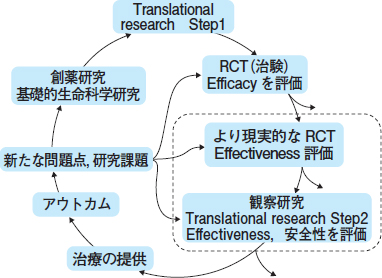
植 田真一郎*.論文 を正しく読むのはけっこう難しい——診療に活かせる解釈のキホンとピットフォール.医学書院;2018.(下線で紹介ページにリンクする/作図で ネット上の出典にリンクする)
*1985 年横浜市大医学部卒。同大病院,市中病院で研修後,91年より5年間日本臨床薬理学会海外派遣研究員として英グラスゴー大内科薬物療法学講座留学,96年 横浜市大第二内科助手,2001年より琉球大学大学院医学研究科臨床薬理学講座教授。
★EBM批判| Limitations and criticism |
限界と批判 |
| There are a number of
limitations and criticisms of evidence-based medicine.[87][88][89] Two
widely cited categorization schemes for the various published critiques
of EBM include the three-fold division of Straus and McAlister
("limitations universal to the practice of medicine, limitations unique
to evidence-based medicine and misperceptions of
evidence-based-medicine")[90] and the five-point categorization of
Cohen, Stavri and Hersh (EBM is a poor philosophic basis for medicine,
defines evidence too narrowly, is not evidence-based, is limited in
usefulness when applied to individual patients, or reduces the autonomy
of the doctor/patient relationship).[91] |
エビデンスに基づく医療(EBM)には、多くの限界や批判が存在する。
[87][88][89]
EBMに対する様々な批判を分類する、広く引用されている2つの枠組みとして、ストラウスとマカリスターによる3つの区分(「医療の実践に普遍的な限界、
エビデンスに基づく医療に特有の限界、およびエビデンスに基づく医療に対する誤解」)
[90]、およびコーエン、スタヴリ、ハーシュによる5つの分類(EBMは医学の哲学的基盤として不十分である、エビデンスの定義が狭すぎる、エビデンス
に基づいていない、個々の患者に適用した場合の有用性に限りがある、あるいは医師と患者の関係における自律性を損なう)[91]である。 |
| In no particular order, some published objections include: |
順不同ではあるが、公表されている反論には以下のようなものがある: |
| Research produced by EBM, such
as from randomized controlled trials (RCTs), may not be relevant for
all treatment situations.[92] Research tends to focus on specific
populations, but individual persons can vary substantially from
population norms. Because certain population segments have been
historically under-researched (due to reasons such as race, gender,
age, and co-morbid diseases), evidence from RCTs may not be
generalizable to those populations.[93] Thus, EBM applies to groups of
people, but this should not preclude clinicians from using their
personal experience in deciding how to treat each patient. One author
advises that "the knowledge gained from clinical research does not
directly answer the primary clinical question of what is best for the
patient at hand" and suggests that evidence-based medicine should not
discount the value of clinical experience.[72] Another author stated
that "the practice of evidence-based medicine means integrating
individual clinical expertise with the best available external clinical
evidence from systematic research."[2] Use of evidence-based guidelines often fits poorly for complex, multimorbid patients. This is because the guidelines are usually based on clinical studies focused on single diseases. In reality, the recommended treatments in such circumstances may interact unfavorably with each other and often lead to polypharmacy.[94][95] The theoretical ideal of EBM (that every narrow clinical question, of which hundreds of thousands can exist, would be answered by meta-analysis and systematic reviews of multiple RCTs) faces the limitation that research (especially the RCTs themselves) is expensive; thus, in reality, for the foreseeable future, the demand for EBM will always be much higher than the supply, and the best humanity can do is to triage the application of scarce resources. Research can be influenced by biases such as political or belief bias,[96][97] publication bias and conflict of interest in academic publishing. For example, studies with conflicts due to industry funding are more likely to favor their product.[98][99] It has been argued that contemporary evidence based medicine is an illusion, since evidence based medicine has been corrupted by corporate interests, failed regulation, and commercialisation of academia.[100] Systematic Reviews methodologies are capable of bias and abuse in respect of (i) choice of inclusion criteria (ii) choice of outcome measures, comparisons and analyses (iii) the subjectivity inevitable in Risk of Bias assessments, even when codified procedures and criteria are observed.[101][102] An example of all these problems can be seen in a Cochrane Review.[103] A lag exists between when the RCT is conducted and when its results are published.[104] A lag exists between when results are published and when they are properly applied.[105] Hypocognition (the absence of a simple, consolidated mental framework into which new information can be placed) can hinder the application of EBM.[106] Values: while patient values are considered in the original definition of EBM, the importance of values is not commonly emphasized in EBM training, a potential problem under current study.[107][108][109][110] A 2018 study, "Why all randomised controlled trials produce biased results", assessed the 10 most cited RCTs and argued that trials face a wide range of biases and constraints, from trials only being able to study a small set of questions amenable to randomisation and generally only being able to assess the average treatment effect of a sample, to limitations in extrapolating results to another context, among many others outlined in the study.[87] |
無作為化比較試験(RCT)など、EBMによって生み出された研究結果
は、すべての治療状況に適用できるとは限らない。[92]
研究は特定の集団に焦点を当てる傾向があるが、個人は集団の基準から大きく外れることがある。特定の集団(人種、性別、年齢、併存疾患などの理由により)
は歴史的に研究が不十分であったため、RCTからのエビデンスはそれらの集団に一般化できない可能性がある。[93]
したがって、EBMは集団に対して適用されるものであるが、それによって臨床医が個々の患者の治療法を決定する際に自身の臨床経験を活用することを妨げる
べきではない。ある著者は、「臨床研究から得られた知見は、目の前の患者にとって何が最善かという主要な臨床的疑問に直接答えるものではない」と指摘し、
エビデンスに基づく医療が臨床経験の価値を軽視すべきではないと提言している。[72]
別の著者は、「エビデンスに基づく医療の実践とは、個々の臨床的専門知識と、系統的な研究から得られた最良の外部臨床エビデンスとを統合することを意味す
る」と述べている。[2] エビデンスに基づくガイドラインの適用は、複雑で多疾患を抱える患者にはしばしば不適切である。これは、ガイドラインが通常、単一の疾患に焦点を当てた臨 床研究に基づいているためである。現実には、そのような状況下で推奨される治療法は互いに悪影響を及ぼし合い、多剤併用につながることが多い。[94] [95] EBMの理論上の理想(数十万にも及ぶ可能性のあるあらゆる限定的な臨床的疑問が、複数のRCTのメタ分析やシステマティックレビューによって解決される という考え方)は、研究(特にRCT自体)には多額の費用がかかるという制約に直面している。したがって現実には、当面の間、EBMへの需要は常に供給を 大幅に上回り続けることになり、人類にできる最善の策は、限られた資源の配分を優先順位付けすることである。 研究は、政治的バイアスや信念バイアス[96][97]、出版バイアス、学術出版における利益相反などのバイアスの影響を受ける可能性がある。例えば、産 業界からの資金提供による利益相反がある研究は、自社の製品を有利に扱う傾向が強い[98][99]。エビデンスに基づく医療は、企業の利益、規制の不 備、および学術界の商業化によって歪められているため、現代のエビデンスに基づく医療は幻想であるとの主張がなされている。[100] システマティック・レビューの手法には、(i)対象選定基準の選択、(ii)アウトカム指標、比較対象、分析方法の選択、(iii)定型化された手順や基 準が遵守された場合でも避けられないバイアスリスク評価における主観性、といった点において、バイアスや悪用が生じる可能性がある。[101][102] これらすべての問題の例は、コクラン・レビューに見ることができる。[103] RCTが実施されてからその結果が公表されるまでにはタイムラグが存在する。[104] 結果が公表されてから適切に適用されるまでにはタイムラグが存在する。[105] ヒポコグニション(新しい情報を組み込むための単純で統合された精神的枠組みの欠如)は、EBMの適用を妨げる可能性がある。[106] 価値観:EBMの本来の定義では患者の価値観が考慮されているものの、EBMの研修において価値観の重要性が十分に強調されていないことが、現在検討されている潜在的な問題である。[107][108][109][110] 2018年の研究「なぜすべてのランダム化比較試験(RCT)は偏った結果を生むのか」では、最も多く引用された10件のRCTを評価し、試験には幅広い バイアスや制約が存在すると論じている。具体的には、ランダム化に適したごく限られた質問しか検討できないこと、一般的にサンプルにおける平均的な治療効 果しか評価できないこと、結果を別の文脈に外挿することの限界など、本研究で概説されている多くの問題点が挙げられている。[87] |
| 87. Krauss A (June 2018). "Why
all randomised controlled trials produce biased results". Annals of
Medicine. 50 (4): 312–322. doi:10.1080/07853890.2018.1453233. PMID
29616838. S2CID 4971775. Timmermans S, Mauck A (2005). "The promises and pitfalls of evidence-based medicine". Health Affairs. 24 (1): 18–28. doi:10.1377/hlthaff.24.1.18. PMID 15647212. Jureidini J, McHenry LB (March 2022). "The illusion of evidence based medicine". BMJ. 376: o702. doi:10.1136/bmj.o702. PMID 35296456. S2CID 247475472. 90. Straus SE, McAlister FA (October 2000). "Evidence-based medicine: a commentary on common criticisms" (PDF). CMAJ. 163 (7): 837–841. PMC 80509. PMID 11033714. Cohen AM, Stavri PZ, Hersh WR (February 2004). "A categorization and analysis of the criticisms of Evidence-Based Medicine" (PDF). International Journal of Medical Informatics. 73 (1): 35–43. CiteSeerX 10.1.1.586.3699. doi:10.1016/j.ijmedinf.2003.11.002. PMID 15036077. Archived from the original (PDF) on 3 July 2010. Upshur RE, VanDenKerkhof EG, Goel V (May 2001). "Meaning and measurement: an inclusive model of evidence in health care". Journal of Evaluation in Clinical Practice. 7 (2): 91–96. doi:10.1046/j.1365-2753.2001.00279.x. PMID 11489034. Rogers WA (April 2004). "Evidence based medicine and justice: a framework for looking at the impact of EBM upon vulnerable or disadvantaged groups". Journal of Medical Ethics. 30 (2): 141–145. doi:10.1136/jme.2003.007062. PMC 1733835. PMID 15082806. Greenhalgh, Trisha; Howick, Jeremy; Maskrey, Neal (13 June 2014). "Evidence based medicine: a movement in crisis?". BMJ. 348 g3725. doi:10.1136/bmj.g3725. PMC 4056639. PMID 24927763. Sheridan, Desmond J.; Julian, Desmond G. (July 2016). "Achievements and Limitations of Evidence-Based Medicine". Journal of the American College of Cardiology. 68 (2): 204–213. doi:10.1016/j.jacc.2016.03.600. PMID 27386775. Scheitle, Christopher P. (2023). The faithful scientist: experiences of anti-religious bias in scientific training. New York: New York University Press. ISBN 978-1-4798-2371-0. Cym, Rule Anthony (2019). Risk and Reason in Clinical Diagnosis. Oxford University Press. ISBN 978-0-19-094402-5. Every-Palmer S, Howick J (December 2014). "How evidence-based medicine is failing due to biased trials and selective publication". Journal of Evaluation in Clinical Practice. 20 (6): 908–914. doi:10.1111/jep.12147. PMID 24819404. Friedman LS, Richter ED (January 2004). "Relationship between conflicts of interest and research results". Journal of General Internal Medicine. 19 (1): 51–56. doi:10.1111/j.1525-1497.2004.30617.x. PMC 1494677. PMID 14748860. 100. Jureidini J, McHenry LB (March 2022). "The illusion of evidence based medicine". BMJ. 376: o702. doi:10.1136/bmj.o702. PMID 35296456. Kicinski M, Springate DA, Kontopantelis E (September 2015). "Publication bias in meta-analyses from the Cochrane Database of Systematic Reviews". Statistics in Medicine. 34 (20): 2781–2793. Bibcode:2015StMed..34.2781K. doi:10.1002/sim.6525. PMID 25988604. S2CID 25560005. Egger M, Smith GD, Sterne JA (November–December 2001). "Uses and abuses of meta-analysis". Clinical Medicine. 1 (6): 478–484. doi:10.7861/clinmedicine.1-6-478. PMC 4953876. PMID 11792089. Popp M, Reis S, Schießer S, Hausinger RI, Stegemann M, Metzendorf MI, et al. (June 2022). "Ivermectin for preventing and treating COVID-19". The Cochrane Database of Systematic Reviews. 2022 (6) CD015017. doi:10.1002/14651858.CD015017.pub3. PMC 9215332. PMID 35726131. Yitschaky O, Yitschaky M, Zadik Y (May 2011). "Case report on trial: Do you, Doctor, swear to tell the truth, the whole truth and nothing but the truth?". Journal of Medical Case Reports. 5 (1) 179. doi:10.1186/1752-1947-5-179. PMC 3113995. PMID 21569508. "Knowledge Transfer in the ED: How to Get Evidence Used". Best Evidence Healthcare Blog. Retrieved 8 October 2013. Mariotto A (January 2010). "Hypocognition and evidence-based medicine". Internal Medicine Journal. 40 (1): 80–82. doi:10.1111/j.1445-5994.2009.02086.x. PMID 20561370. S2CID 24519238. Yamada S, Slingsby BT, Inada MK, Derauf D (1 June 2008). "Evidence-based public health: a critical perspective". Journal of Public Health. 16 (3): 169–172. doi:10.1007/s10389-007-0156-7. ISSN 0943-1853. S2CID 652725. Kelly MP, Heath I, Howick J, Greenhalgh T (October 2015). "The importance of values in evidence-based medicine". BMC Medical Ethics. 16 (1) 69. doi:10.1186/s12910-015-0063-3. PMC 4603687. PMID 26459219. Fulford KW, Peile H, Carroll H (March 2012). Essential Values-Based Practice. Cambridge University Press. ISBN 978-0-521-53025-5. 110. Engebretsen, Eivind; Baker, Mona (2022). Rethinking Evidence in the Time of Pandemics: Scientific vs Narrative Rationality and Medical Knowledge Practices. Cambridge: Cambridge University Press. doi:10.1017/9781009030687. ISBN 978-1-316-51660-7. |
87. Krauss A (2018年6月).
「なぜすべてのランダム化比較試験は偏った結果を生むのか」. Annals of Medicine. 50 (4): 312–322.
doi:10.1080/07853890.2018.1453233. PMID 29616838. S2CID 4971775. Timmermans S, Mauck A (2005). 「エビデンスに基づく医療の約束と落とし穴」. Health Affairs. 24 (1): 18–28. doi:10.1377/hlthaff.24.1.18. PMID 15647212. Jureidini J, McHenry LB (2022年3月). 「エビデンスに基づく医療の幻想」. BMJ. 376: o702. doi:10.1136/bmj.o702. PMID 35296456. S2CID 247475472. 90. Straus SE, McAlister FA (2000年10月). 「エビデンスに基づく医療:一般的な批判に関する論評」 (PDF). CMAJ. 163 (7): 837–841. PMC 80509. PMID 11033714. Cohen AM, Stavri PZ, Hersh WR (2004年2月). 「エビデンスに基づく医療に対する批判の分類と分析」 (PDF). International Journal of Medical Informatics. 73 (1): 35–43. CiteSeerX 10.1.1.586.3699. doi:10.1016/j.ijmedinf.2003.11.002. PMID 15036077. 2010年7月3日にオリジナル (PDF) からアーカイブ. Upshur RE, VanDenKerkhof EG, Goel V (2001年5月). 「意味と測定:医療におけるエビデンスの包括的モデル」. Journal of Evaluation in Clinical Practice. 7 (2): 91–96. doi:10.1046/j.1365-2753.2001.00279.x. PMID 11489034. Rogers WA (2004年4月). 「エビデンスに基づく医療と正義:脆弱な立場や不利な立場にある集団に対するEBMの影響を検討するための枠組み」. Journal of Medical Ethics. 30 (2): 141–145. doi:10.1136/jme.2003.007062. PMC 1733835. PMID 15082806. グリーンハルグ, トリシャ; ハウイック, ジェレミー; マスクレイ, ニール (2014年6月13日). 「エビデンスに基づく医療:危機に瀕する運動か?」. BMJ. 348 g3725. doi:10.1136/bmj.g3725. PMC 4056639. PMID 24927763. シェリダン, デズモンド・J.; ジュリアン, デズモンド・G. (2016年7月). 「エビデンスに基づく医療の成果と限界」. Journal of the American College of Cardiology. 68 (2): 204–213. doi:10.1016/j.jacc.2016.03.600. PMID 27386775. シェイトル, クリストファー・P. (2023). 『忠実な科学者:科学教育における反宗教的偏見の体験』. ニューヨーク: ニューヨーク大学出版局. ISBN 978-1-4798-2371-0. サイム, ルール・アンソニー (2019). 『臨床診断におけるリスクと理性』. オックスフォード大学出版局. ISBN 978-0-19-094402-5. エブリ=パーマー S、ハウウィック J(2014年12月).「偏った臨床試験と選択的出版によりエビデンスに基づく医療が失敗している理由」.『Journal of Evaluation in Clinical Practice』.20 (6): 908–914.doi:10.1111/jep.12147.PMID 24819404. Friedman LS, Richter ED (2004年1月). 「利益相反と研究結果の関係」. Journal of General Internal Medicine. 19 (1): 51–56. doi:10.1111/j.1525-1497.2004.30617.x. PMC 1494677. PMID 14748860. 100. Jureidini J, McHenry LB (2022年3月). 「エビデンスに基づく医療の幻想」. BMJ. 376: o702. doi:10.1136/bmj.o702. PMID 35296456. Kicinski M, Springate DA, Kontopantelis E (2015年9月). 「コクラン・システマティック・レビュー・データベースにおけるメタアナリシスの出版バイアス」. Statistics in Medicine. 34 (20): 2781–2793. Bibcode:2015StMed..34.2781K. doi:10.1002/sim.6525. PMID 25988604. S2CID 25560005. Egger M, Smith GD, Sterne JA (2001年11月–12月). 「メタアナリシスの利用と濫用」. Clinical Medicine. 1 (6): 478–484. doi:10.7861/clinmedicine.1-6-478. PMC 4953876. PMID 11792089. Popp M, Reis S, Schießer S, Hausinger RI, Stegemann M, Metzendorf MI, et al. (2022年6月). 「COVID-19の予防および治療のためのイベルメクチン」。コクラン・データベース・オブ・システマティック・レビュー。2022 (6) CD015017. doi:10.1002/14651858.CD015017.pub3. PMC 9215332. PMID 35726131. Yitschaky O、Yitschaky M、Zadik Y(2011年5月)。「臨床試験に関する症例報告:先生、あなたは真実、全き真実、そして真実以外の何物も語らないと誓いますか?」。『Journal of Medical Case Reports』。5 (1) 179. doi:10.1186/1752-1947-5-179. PMC 3113995. PMID 21569508. 「救急部門における知識の移転:エビデンスを活用する方法」. Best Evidence Healthcare Blog. 2013年10月8日閲覧. Mariotto A (2010年1月). 「認知機能低下とエビデンスに基づく医療」. Internal Medicine Journal. 40 (1): 80–82. doi:10.1111/j.1445-5994.2009.02086.x. PMID 20561370. S2CID 24519238. Yamada S, Slingsby BT, Inada MK, Derauf D (2008年6月1日). 「エビデンスに基づく公衆衛生:批判的視点」. Journal of Public Health. 16 (3): 169–172. doi:10.1007/s10389-007-0156-7. ISSN 0943-1853. S2CID 652725. Kelly MP, Heath I, Howick J, Greenhalgh T (2015年10月). 「エビデンスに基づく医療における価値観の重要性」. BMC Medical Ethics. 16 (1) 69. doi:10.1186/s12910-015-0063-3. PMC 4603687. PMID 26459219. Fulford KW, Peile H, Carroll H (2012年3月). 『Essential Values-Based Practice』. ケンブリッジ大学出版局. ISBN 978-0-521-53025-5. 110. Engebretsen, Eivind; Baker, Mona (2022). 『パンデミックの時代におけるエビデンスの再考:科学的合理性と物語的合理性、そして医療知識の実践』. ケンブリッジ:ケンブリッジ大学出版局. doi:10.1017/9781009030687. ISBN 978-1-316-51660-7. |
| https://en.wikipedia.org/wiki/Evidence-based_medicine |
根拠にもとづく医療 |
【文献】
Oxford Center for Evidenced-Based Medicine, Glossary of Terms in Evidence-Baced Medicine.

Copyleft,
CC, Mitzub'ixi Quq Chi'j, 1996-2099

