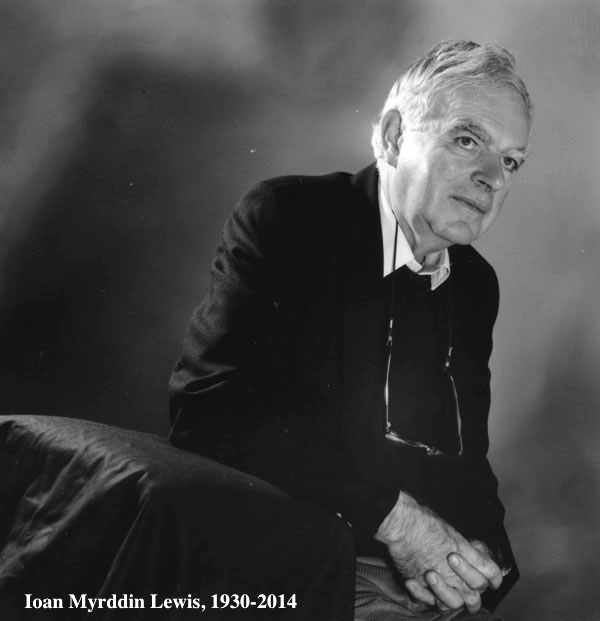
イオアン・マイルディン・ルイス
Ioan Myrddin Lewis, or I.M. Lewis, 1930-2014
イオアン・マイルディン・ルイス:Ioan Myrddin Lewis FBA、1930年1月30日 - 2014年3月14日)は、I. M. Lewisの名で親しまれたロンドン大学経済学部人類学名誉教授[1]である。日本では、『エクスタシーの人類学 : 憑依とシャーマニズム』法政大学出 版局(1985)の著作で有名だった。
| Ioan Myrddin Lewis
FBA (January 30, 1930 – March 14, 2014),[1] popularly known as I. M.
Lewis, was a professor emeritus of anthropology at the London School of
Economics. |
Ioan Myrddin Lewis
FBA、1930年1月30日 - 2014年3月14日)は、I. M.
Lewisの名で親しまれたロンドン大学経済学部人類学名誉教授[1]である。 |
| Born in Scotland to a Welsh
father and a Scottish mother, Lewis lived in Glasgow after the death of
his father during his childhood. He was educated at Glasgow High School before receiving a Bachelor of Science in Chemistry from the University of Glasgow in 1951.[1] He proceeded to St Catherine's College, Oxford, where he obtained a diploma in Anthropology in 1952 with the aid of a grant from the Nuffield Foundation, and a Bachelor of Letters in 1953. He studied under Franz Steiner and social anthropologist Sir Edward Evan Evans-Pritchard, who was himself an authority on the Nuer and Azande people of South Sudan, as a graduate student – finishing with a doctorate in 1957.[1][2] Steiner was working on a multi-language bibliography on the Somali, Afar (Danakil), and Saho peoples, a project for the International African Institute. After his death, Lewis completed the task of bringing it to publication.[3] |
ウェールズ人の父とスコットランド人の母の間に生まれたルイスは、幼少
期に父を亡くし、グラスゴーに住んでいた。 グラスゴー高校を経て、1951年にグラスゴー大学で化学の理学士号を取得[1]。オックスフォード大学のセント・キャサリンズ・カレッジに進み、ナ フィールド財団の助成を受けて1952年に人類学のディプロマを取得し、1953年には文学士号を取得した。大学院ではフランツ・シュタイナーと、南スー ダンのヌア族とアザンデ族の権威である社会人類学者エドワード・エヴァンズ=プリチャード卿に師事し、1957年に博士号を取得する[1][2]。 スタイナーは、国際アフリカ研究所のプロジェクトとして、ソマリア、アファール(ダナキル)、サホの各民族に関する多言語文献目録の作成に取り組んでい た。彼の死後、ルイスがその出版を完成させた[3]。 |
| He was renowned internationally
as the foremost scholar on Somali history and culture, on which he has
published numerous articles and books. Zitelmann characterized him as
"the doyen of 'Somali studies'".[4] Lewis taught at the University of Rhodesia. Returning to the United Kingdom, he lectured at Glasgow and UCL. He then proceeded to the London School of Economics and Political Science in 1969 as a professor, where he remained until his retirement in 1992.[2] "In 1969 Lewis was considered to be the youngest professor in Great Britain."[3] He was also the editor of Man (Journal of the Royal Anthropological Institute; 1959–1972), as well as the Honorary Director of the London-based International African Institute from 1982 to 1988.[3] His academic interests in Somalia were broad, including published studies in varied fields:[5] Somali and other oral poetry in the Horn of Africa; clan, nation, state building and failure in Somalia and beyond; types of Islam among the Somali and in sub-Saharan Africa; possession cults and ecstatic religions; last but not least taking position in general anthropology. Lewis was not appreciated by the Somali President and Dictator Siyad Barre (1969–1990), so he and his team were prevented from conducting a planned refugee survey in Somalia on behalf of the UNHCR. |
ソマリアの歴史と文化に関する研究の第一人者として国際的に知られ、数
多くの論文や著書を発表している。ジテルマンは彼を「『ソマリア研究』の大御所」と評している[4]。 ローデシア大学で教鞭をとる。英国に戻り、グラスゴーとUCLで教鞭をとった。1969年当時、ルイスは英国で最も若い教授であった」[3]。また、『マ ン』(王立人類学研究所の雑誌、1959-1972)の編集者、1982年から1988年までロンドンの国際アフリカ研究所の名誉所長を務めた[3]。 ソマリアに関する彼の学術的関心は幅広く、次のような様々な分野の研究を発表している[5]。 アフリカの角におけるソマリおよびその他の口承詩。 ソマリアとその周辺における氏族、国家、国家建設と失敗。 ソマリ人およびサハラ以南のアフリカにおけるイスラム教の種類。 憑依カルトと恍惚宗教。 そして最後に、人類学全般における位置づけである。 ルイスは、ソマリアの大統領兼独裁者シヤド・バーレ(1969-1990)に嫌われ、彼とそのチームは、UNHCRのために計画されたソマリアでの難民調 査を阻止された。 |
| Books Lewis, Ioan (1994). Peoples of the Horn of Africa (Somali, Afar and Saho): North Eastern Africa, Part I. London: Haan Associates. ISBN 9781569021040. Lewis, Ioan (2008). Understanding Somalia and Somaliland. New York: Columbia University Press. ISBN 9780231700849. Lewis, Ioan (2003). Ecstatic Religion: A Study of Shamanism and Spirit Possession. New York: Routleldge. ISBN 9780415301244. Journal articles Lewis, Ioan (1962). "Historical Aspects of Genealogies in Northern Somali Social Structure". The Journal of African History. 3 (1): 35–48. doi:10.1017/s0021853700002723. JSTOR 179798. Lewis, Ioan (1961). "Force and Fission in Northern Somali Lineage Structure". American Anthropologist. 63 (1): 94–112. doi:10.1525/aa.1961.63.1.02a00060. JSTOR 667340. Lewis, I. M. (1963). "Pan-Africanism and Pan-Somalism". The Journal of Modern African Studies. 1 (2): 147–161. doi:10.1017/s0022278x00001038. JSTOR 159026. Lewis, I. M. (1958). "The Gadabuursi Somali Script". Bulletin of the School of Oriental and African Studies, University of London. 21 (1/3): 134–156. doi:10.1017/s0041977x00063278. JSTOR 610496. Lewis, I. M. (1959). "Clanship and Contract in Northern Somaliland". Africa: Journal of the International African Institute. 29 (3): 274–293. doi:10.2307/1157617. JSTOR 1157617. Lewis, I. M. (1967). "Recent Developments in the Somali Dispute". African Affairs. 66 (263): 104–112. doi:10.1093/oxfordjournals.afraf.a095586. JSTOR 720296. |
書籍 ルイス、イオアン(1994年)。『アフリカの角の諸民族(ソマリ、アファール、サホ)』(北東アフリカ、第一部)。ロンドン:ハーン・アソシエイツ。 ISBN 9781569021040。 ルイス、イオアン(2008)。『ソマリアとソマリランドを理解する』。ニューヨーク:コロンビア大学出版局。ISBN 9780231700849。 ルイス、イオアン(2003)。『エクスタティック宗教:シャーマニズムと霊憑きの研究』。ニューヨーク:ラウトルッジ。ISBN 9780415301244。 学術論文 ルイス、イオアン(1962)。「北部ソマリ社会構造における系譜の歴史的側面」。『アフリカ史ジャーナル』。3巻1号:35–48頁。doi: 10.1017/s0021853700002723。JSTOR 179798。 ルイス、イオアン(1961)。「北部ソマリ氏族構造における力と分裂」。『アメリカ人類学雑誌』。63巻1号:94–112頁。doi: 10.1525/aa.1961.63.1.02a00060。JSTOR 667340。 ルイス、I. M. (1963). 「汎アフリカ主義と汎ソマリ主義」. 『現代アフリカ研究ジャーナル』. 1 (2): 147–161. doi:10.1017/s0022278x00001038. JSTOR 159026. ルイス、I. M. (1958). 「ガダブールシ・ソマリ文字」. ロンドン大学東洋アフリカ研究学院紀要. 21 (1/3): 134–156. doi:10.1017/s0041977x00063278. JSTOR 610496. ルイス、I. M. (1959). 「北部ソマリランドにおける氏族制と契約」. アフリカ:国際アフリカ研究所紀要. 29 (3): 274–293. doi:10.2307/1157617. JSTOR 1157617. ルイス、I. M. (1967). 「ソマリ紛争における最近の動向」. アフリカ問題. 66 (263): 104–112. doi:10.1093/oxfordjournals.afraf.a095586. JSTOR 720296. |
| https://en.wikipedia.org/wiki/Ioan_Lewis |
◎Ecstatic religion : a study of shamanism and spirit possession, Routledge, 2003
1. Towards a Sociology
of Ecstasy
2. Trance and
Possession
3. Affliction and its
Apotheosis
4. Strategies of
Mystical Attack: Protest and its Containment
5. Possession and
Public Morality -
6. Possession and
Public Morality - II Other Cosmological Systems
7. Possession and
Psychiatry
・憑依現象はしばしば精神科医や心理学者たちから狂気ととらえられることがあるが、仮にそのような状態になったとしても、一時的であり、当事者やその集団により憑依状態が管理されているために、狂気とみなすことはできない。
・憑依状態はしばしば女性や貧しい人たちのように周縁化されている人たちが生じ、憑依の最中にはその日常的属性からは解放されているように思われる。非日常的エクスタシー経験が日常的なノーマルな世界の抑圧的なものを解放させる機能をもっているようだ。
・その意味で、シャーマニズムは精神医学「以上」の意義をもっている(邦訳 p.268)。
☆人間にとっての精霊の意味/位置付け

An anthropological study of
spirits / Christine S. VanPool, Todd L. VanPool, p.242.
| THE GODS HAD TO BE removed from the canoe of the ranking Tikopia chief (Ariki
Kafika) so that it could be repaired. The chief wanted one of these divinities, his
sister’s dead son, to remain present, so an attendant medium became possessed
by him. Noting this was a common occurrence and of no particular interest to the
bystanders, the New Zealand–born anthropologist Raymond Firth remarks that
“it is difficult in fact to find what may be called a purely technical or economic
activity” (1950, 120). Indeed, when a borer was discovered in the hull, the expert
craftsman immediately summoned the gods of the canoe. “Look you hither on
the canoe that I am handling here.” A borer “can be coped with not only by
physical means but also by the power [mana] of the gods” (121). For the mana
part, a famous adze of divine origin had to be borrowed from another chief, an
instrument especially useful in canoe work because it embodied a certain god in
his manifestation as a gray reef eel known for its sharp teeth and its ferocity. On
striking with the adze, the craftsman would invoke the eel-god, and then, it is
said, “the decay and the borer disappear. He eats them on the instant, they
vanish, and the insect dies” (122). So, it happened in this instance: the repairs
were accomplished, and in the end the gods of the canoe were restored to the
vessel. |
ティ
コピア族の最高首長(アリキ・カフィカ)のカヌーを修理するため、神々をカヌーから降ろさなければならなかった。首長は、その神々の一体――姉の亡き息子
――をその場に留めておきたかったため、付き添いの霊媒が彼に取り憑かれた。ニュージーランド生まれの人類学者レイモンド・ファースは、これがよくあるこ
とであり、傍観者にとっては特に興味を引くものではなかったと指摘し、「実際、いわゆる純粋に技術的あるいは経済的な活動を見つけるのは難しい」と述べて
いる(1950,
120)。実際、船体に虫食い穴が見つかった際、熟練の職人は直ちにカヌーの神々を呼び寄せた。「私が今扱っているこのカヌーをよく見てくれ。」
虫食いは「物理的な手段だけでなく、神々の力[マナ]によっても対処できる」(121)。マナに関しては、神聖な由来を持つ有名な鑿を別の首長から借りな
ければならなかった。この道具は、鋭い歯と獰猛さで知られる灰色の礁ウナギの姿をとったある神を体現していたため、カヌー製作において特に有用であった。
鑿で打つ際、職人はウナギの神を呼び出し、そうすると、「腐敗と虫食いは消え去る。神が即座にそれらを食い尽くし、それらは消え、虫は死ぬ」と言われてい
る(122)。こうして、この事例でも同様のことが起きた。修理は完了し、最終的にカヌーの神々は船へと戻されたのである。 |
| Marshall Sahlins , Jr. Henry, Frederick B.The New Science of the Enchanted Universe: An Anthropology of Most of Humanity. 2022 |
リンク
文献
その他の情報


++
Copyleft,
CC, Mitzub'ixi Quq Chi'j, 1996-2099
